The thought of an interview can be nerve-wracking, but the right preparation can make all the difference. Explore this comprehensive guide to Understanding of wildlife population dynamics interview questions and gain the confidence you need to showcase your abilities and secure the role.
Questions Asked in Understanding of wildlife population dynamics Interview
Q 1. Explain the concept of carrying capacity in wildlife populations.
Carrying capacity represents the maximum population size of a species that an environment can sustainably support given the available resources. Think of it like a stadium: it only has so many seats. If you try to cram more people in, they won’t be comfortable, and some might even be left out in the cold. Similarly, if a wildlife population exceeds its carrying capacity, individuals will face shortages of food, water, shelter, and breeding sites, leading to increased mortality and reduced reproduction.
Several factors determine carrying capacity, including food availability, water sources, habitat quality, predation pressure, and disease prevalence. These factors fluctuate over time, leading to changes in carrying capacity. For instance, a good rainy season might increase the carrying capacity for herbivores by boosting vegetation growth. Conversely, a severe drought can drastically reduce it.
Understanding carrying capacity is crucial for wildlife management. If a population is consistently above its carrying capacity, it’s likely to experience a crash. Conversely, managing habitat to increase carrying capacity can enhance the resilience and growth potential of a species.
Q 2. Describe different methods for estimating wildlife population size (e.g., mark-recapture, distance sampling).
Estimating wildlife population size is challenging, but several techniques exist, each with its strengths and limitations.
- Mark-recapture: This method involves capturing a sample of animals, marking them (e.g., with tags or paint), releasing them, and then capturing a second sample later. The proportion of marked animals in the second sample provides an estimate of the total population size. For example, if you capture 100 animals, mark them, and then recapture 50 animals with 10 marked, you can estimate a total population of 500 (10/50 = x/500).
- Distance sampling: This technique is useful for animals that are relatively easy to detect. Observers move along transects (straight lines) and record the distance to each detected animal. Statistical models then use these distances to estimate the density and total population size. This method often requires accounting for factors like detection probability.
- Other methods: Other methods include aerial surveys (counting animals from planes or helicopters), spot mapping (mapping animal locations), and camera trapping (using motion-activated cameras to capture images of animals). The choice of method depends on the species, habitat, and available resources.
It’s important to note that all these methods have sources of error (e.g., imperfect detection, animal movement, and marking effects). Therefore, multiple methods are often used to get a more reliable estimate.
Q 3. What are the key factors influencing wildlife population growth and decline?
Wildlife population dynamics are influenced by a complex interplay of factors. Think of it as a delicate ecosystem balancing act.
- Birth rate and death rate: The number of births and deaths directly impacts population size. Factors such as food availability, disease, predation, and environmental stress affect these rates.
- Immigration and emigration: Movement of individuals into (immigration) and out of (emigration) a population can significantly alter its size. Habitat connectivity and dispersal abilities play a critical role.
- Environmental factors: Climate change, habitat loss, pollution, and natural disasters can drastically impact populations. For instance, a severe drought can lead to widespread mortality among drought-sensitive species.
- Human activities: Hunting, poaching, habitat destruction, and introduction of invasive species are major drivers of population decline. These are often considered anthropogenic (human-caused) factors.
These factors often interact in complex ways. For example, habitat loss can increase competition for resources, leading to higher mortality rates. Understanding these interactions is crucial for effective conservation management.
Q 4. How do you analyze wildlife population data using statistical software (e.g., R, SAS)?
Statistical software like R and SAS are essential tools for analyzing wildlife population data. They allow for sophisticated analyses that go beyond simple descriptive statistics.
Here’s a general approach:
- Data cleaning and exploration: Begin by cleaning your data (removing errors and inconsistencies), exploring its structure, and visualizing patterns using graphs and summaries (histograms, boxplots, etc.).
- Model selection: Select an appropriate statistical model based on your research question and data type. This might involve population growth models (exponential, logistic, etc.), survival analysis, or regression models to investigate relationships between population size and environmental variables.
- Model fitting and parameter estimation: Use the chosen model to analyze the data and estimate key parameters (e.g., population growth rate, survival probabilities).
- Model validation and interpretation: Assess the model’s fit and evaluate the reliability of the parameter estimates. Interpret the results in the context of your research question.
Example in R (simplified):
# Example using a simple linear regression to model population size against habitat area
model <- lm(population ~ habitat_area, data = my_data)
summary(model)
This code snippet shows a basic linear regression in R. More complex analyses would require more advanced techniques, but the general workflow remains similar. Proper statistical analysis is critical for drawing robust conclusions about population trends and conservation needs.
Q 5. Explain the concept of metapopulation dynamics.
A metapopulation is a network of spatially separated populations of the same species that interact through dispersal (movement of individuals). Imagine a group of islands each supporting a small population of a particular bird species. These smaller populations are connected by the birds flying between the islands.
Metapopulation dynamics are governed by the balance between local extinction and colonization. Small, isolated populations are more vulnerable to extinction due to random events or environmental fluctuations. However, if some populations persist, they can act as sources for recolonizing patches where the species has gone locally extinct. The overall metapopulation persistence depends on the balance between these processes.
Understanding metapopulation dynamics is critical for conservation. By creating habitat corridors or managing individual patches effectively, we can influence the connectivity and persistence of metapopulations. For example, protecting suitable habitat in different locations will enhance the chances of successful colonization after local extinction events.
Q 6. Describe different types of population growth models (e.g., exponential, logistic).
Population growth models are mathematical representations of how population size changes over time. Different models capture different aspects of population dynamics.
- Exponential growth: This model assumes unlimited resources and constant per capita growth rate. It leads to an ever-increasing population size, represented by the equation:
Nt = N0ert, whereNtis the population size at time t,N0is the initial population size,ris the per capita growth rate, andeis the base of the natural logarithm. This model is rarely observed in nature for extended periods, as resource limitations always come into play eventually. - Logistic growth: This model incorporates carrying capacity (K) and assumes that the per capita growth rate decreases as the population approaches its carrying capacity. It results in an S-shaped curve, initially rapid growth followed by a plateauing near K. The equation is:
dN/dt = rN(1 - N/K). This model is a more realistic representation of many natural populations.
Other models, such as density-dependent models and stochastic models, incorporate additional complexities like fluctuating environmental conditions and random events. The choice of model depends on the species, the available data, and the research question.
Q 7. How do you assess the impact of habitat loss on wildlife populations?
Habitat loss has devastating impacts on wildlife populations, often leading to range contractions, population declines, and even extinctions. Assessing this impact requires a multi-faceted approach.
- Population monitoring: Track population size and trends in areas experiencing habitat loss and compare them to populations in unaffected areas. This can involve mark-recapture studies, distance sampling, or other methods.
- Habitat suitability analysis: Assess how much suitable habitat remains using GIS (Geographic Information Systems) and remote sensing. This involves mapping habitat types and evaluating their quality and connectivity.
- Species distribution modelling: Use statistical models to predict the distribution of a species based on environmental factors and habitat characteristics. This allows us to assess how changes in habitat affect the potential range of a species.
- Impact assessment studies: Conduct more in-depth studies to investigate specific impacts of habitat loss on key aspects of the species’ biology, such as survival, reproduction, and movement patterns.
The approach will depend on the resources and the specific conservation issue. For example, if we’re assessing the impact of deforestation on an endangered primate, we might combine population monitoring with habitat suitability analysis to determine how much suitable habitat remains and how this reduction affects the population’s viability.
Q 8. Explain the concept of source-sink dynamics in metapopulations.
Source-sink dynamics describe a metapopulation (a group of spatially separated populations of the same species that interact) where some populations (sources) are productive and contribute individuals to other populations (sinks), which are unproductive and rely on immigration to persist. Imagine a butterfly population. A sunny meadow might be a source, producing more butterflies than it can support. These excess butterflies then migrate to a nearby shaded forest, a sink habitat, which can’t support a self-sustaining population on its own. The sink habitat persists because of immigration from the source. Without the influx of butterflies from the source, the sink population would decline and eventually disappear. Understanding source-sink dynamics is crucial for conservation efforts, as protecting only the seemingly thriving source populations might be insufficient if sinks are crucial for the overall metapopulation’s persistence.
In practice, identifying sources and sinks involves analyzing demographic data like birth rates, death rates, and migration rates across different patches of habitat. Techniques like mark-recapture studies or genetic analyses can be employed to track individual movements and estimate population parameters.
Q 9. What are the ethical considerations involved in wildlife population management?
Ethical considerations in wildlife population management are paramount. They involve balancing human needs with the well-being of wildlife. Key considerations include:
- Animal welfare: Minimizing suffering during capture, handling, translocation, or culling. This involves using humane methods and adhering to strict ethical guidelines.
- Biodiversity conservation: Prioritizing actions that benefit the long-term survival of species and their habitats, considering the interconnectedness of ecosystems.
- Precautionary principle: Taking action to prevent potential harm even if scientific certainty is lacking, particularly in cases of endangered species.
- Social justice: Ensuring equitable distribution of benefits and costs associated with wildlife management among stakeholders, particularly local communities whose livelihoods may be affected.
- Transparency and accountability: Openly communicating management plans and decisions to the public, allowing for participation and oversight.
For example, a decision to cull an overpopulated deer herd to prevent habitat degradation needs to be made transparently, considering alternative solutions and weighing the potential negative impacts on animal welfare against the benefits to the overall ecosystem.
Q 10. How do you design a robust wildlife monitoring program?
A robust wildlife monitoring program needs careful planning. It involves defining clear objectives, selecting appropriate methods, and ensuring data quality and analysis. Here’s a step-by-step approach:
- Define objectives: What specific information do you need? (e.g., population size, distribution, habitat use, survival rates).
- Select study area: Consider the species’ range and habitat characteristics.
- Choose monitoring methods: This depends on the species and objectives. Options include: distance sampling, mark-recapture, camera trapping, scat surveys, GPS tracking.
- Develop a sampling design: Decide on the number and location of sampling units to ensure adequate statistical power. This often involves spatial stratification to account for habitat heterogeneity.
- Data collection and quality control: Establish clear protocols for data collection, ensuring data accuracy and consistency.
- Data analysis and interpretation: Use appropriate statistical methods to analyze the data and draw meaningful conclusions.
- Reporting and communication: Clearly communicate results to stakeholders, including managers, researchers, and the public.
For example, a program to monitor a threatened bird species might involve a combination of point counts (to estimate abundance) and nest monitoring (to estimate productivity), coupled with GPS tracking of individuals to understand their movement patterns and habitat use.
Q 11. Describe the challenges of managing invasive species impacting native wildlife populations.
Managing invasive species that impact native wildlife populations is incredibly challenging. Invasive species often lack natural predators and competitors, allowing them to outcompete native species for resources, leading to population declines and even extinctions. Challenges include:
- Early detection: Identifying invasive species before they become widespread is crucial but often difficult.
- Control methods: Effective and cost-efficient control methods vary depending on the species and environment. Options may include physical removal, chemical control, biological control (introducing natural predators), or a combination of approaches.
- Economic impacts: Controlling invasive species is often expensive, requiring significant resources.
- Unintended consequences: Control methods can have unintended consequences, potentially harming non-target species.
- Public awareness and cooperation: Preventing the spread of invasive species requires public awareness and cooperation, for example, through proper disposal of invasive plant material.
For instance, managing the impact of the brown tree snake in Guam, which devastated native bird populations, involves a multi-pronged approach with limited success, highlighting the difficulty of controlling well-established invasive species.
Q 12. Explain different techniques for estimating wildlife survival rates.
Estimating wildlife survival rates is crucial for understanding population dynamics. Several techniques exist, each with strengths and weaknesses:
- Mark-recapture methods: Animals are captured, marked, and released. Subsequent captures provide estimates of survival based on the proportion of marked individuals. Variations like the Cormack-Jolly-Seber model account for imperfect detection.
- Radio telemetry: Animals are equipped with radio transmitters, allowing researchers to track their movements and survival directly. This method is more expensive but provides detailed information.
- Cohort analysis: Following a group of animals born in the same year (cohort) throughout their lives, recording survival and other vital rates. This is suitable for species with relatively long lifespans.
- Mortality surveys: Examining carcasses to determine causes of death. This can be combined with other methods to get a fuller picture.
The choice of method depends on factors such as the species, its behaviour, the resources available, and the research question. For example, estimating survival of elusive species might rely on non-invasive methods like scat surveys combined with mark-recapture in a small subset of the population for calibration.
Q 13. How can GIS be used to analyze wildlife habitat suitability?
Geographic Information Systems (GIS) are invaluable tools for analyzing wildlife habitat suitability. GIS combines spatial data with other information to create maps and models that predict where wildlife is likely to occur and thrive. This involves:
- Gathering spatial data: This includes data on elevation, vegetation cover, proximity to water sources, land use, and other environmental variables.
- Creating habitat suitability models: These models use statistical techniques (e.g., logistic regression, MaxEnt) to relate wildlife occurrences to environmental variables. The output is a map showing the predicted probability of habitat suitability across the study area.
- Integrating multiple data layers: GIS allows combining different data layers to create more comprehensive models. For example, combining vegetation maps with road density maps can predict habitat fragmentation.
- Spatial analysis: GIS offers various tools for spatial analysis, including measuring habitat area, connectivity, and distance to key resources.
For example, a GIS model might predict the suitable habitat for a particular bird species by integrating data on forest cover, distance to water, and proximity to human settlements. The results can be used to identify areas for conservation or habitat restoration.
Q 14. How do you interpret wildlife population viability analysis (PVA) results?
Wildlife Population Viability Analysis (PVA) is a powerful tool for assessing the extinction risk of a population. Interpreting PVA results involves several key aspects:
- Extinction probability: PVA models estimate the probability of a population going extinct within a given time frame (e.g., 100 years). A high probability indicates a high extinction risk.
- Minimum viable population size (MVP): PVAs help estimate the minimum population size needed to ensure long-term persistence, considering factors like environmental stochasticity (random fluctuations) and demographic stochasticity (random variation in birth and death rates).
- Sensitivity analysis: This involves systematically varying model parameters to see how sensitive the extinction probability is to changes in each parameter. This identifies the most important factors affecting the population’s viability.
- Management recommendations: PVA results should inform management strategies, such as habitat restoration, population augmentation, or reducing threats. For instance, if a PVA shows that habitat loss is the most significant threat, conservation efforts should prioritize habitat protection.
It’s important to remember that PVAs are models, and their accuracy depends on the quality of the input data and the assumptions made. The results should be interpreted cautiously and used in conjunction with other ecological information.
Q 15. Describe different methods for controlling wildlife populations.
Wildlife population control involves various methods, each with its own ethical and practical considerations. The goal is often to manage populations to prevent ecological damage or human-wildlife conflict, not necessarily to eradicate a species.
- Hunting and Trapping: This is a common method, often used to regulate populations of game animals or invasive species. Strict regulations and licensing are crucial to ensure sustainability and prevent overharvesting. For example, controlled hunts for deer can prevent overgrazing in forests.
- Sterilization or Contraception: This approach focuses on reducing reproductive rates without killing animals. Techniques include vasectomies, immunocontraception (using vaccines to prevent reproduction), and hormonal contraceptives. This is particularly useful for endangered species or those with low reproductive rates where lethal methods are undesirable. For instance, immunocontraception has been used to manage feral horse populations.
- Habitat Management: Modifying the environment to influence population size is a crucial, often overlooked, method. This can include creating barriers, altering food availability, or providing alternative habitats to discourage wildlife from entering human-populated areas. Examples include building fences to keep animals out of agricultural fields or restoring wetlands to provide habitat for migratory birds.
- Translocation: Relocating animals from high-density areas to areas with lower densities can ease pressure on resources and reduce conflict. However, careful consideration of habitat suitability and potential impacts on existing populations in the receiving area is paramount. Success depends heavily on proper acclimatization and monitoring.
- Predator Control (Controversial): In some cases, controlling predator populations may be considered to protect vulnerable prey species. However, this is a highly contentious issue, as it can have unintended consequences on the entire ecosystem. Careful assessment and rigorous monitoring are absolutely necessary.
Career Expert Tips:
- Ace those interviews! Prepare effectively by reviewing the Top 50 Most Common Interview Questions on ResumeGemini.
- Navigate your job search with confidence! Explore a wide range of Career Tips on ResumeGemini. Learn about common challenges and recommendations to overcome them.
- Craft the perfect resume! Master the Art of Resume Writing with ResumeGemini’s guide. Showcase your unique qualifications and achievements effectively.
- Don’t miss out on holiday savings! Build your dream resume with ResumeGemini’s ATS optimized templates.
Q 16. What are the key threats to biodiversity and how do they affect population dynamics?
Biodiversity faces numerous threats, all impacting population dynamics. These threats interact and often amplify one another’s effects.
- Habitat Loss and Fragmentation: Destruction, degradation, and division of habitats reduce available resources and increase isolation, making populations more vulnerable to extinction. This limits gene flow and reduces adaptability to environmental changes.
- Climate Change: Altered temperatures, precipitation patterns, and extreme weather events disrupt ecological processes, affecting species’ distributions, breeding cycles, and food availability. Shifting climates can cause habitat mismatches, where species are no longer adapted to their environment.
- Pollution: Air, water, and soil pollution can directly harm wildlife, reduce reproductive success, and weaken immune systems. This leads to reduced survival and overall population decline.
- Invasive Species: Introduced species can outcompete native species for resources, introduce diseases, or prey upon them. These disruptions can lead to dramatic population crashes of native species.
- Overexploitation: Unsustainable hunting, fishing, and harvesting of wildlife deplete populations faster than they can recover. This is a major threat to many commercially valuable species.
These threats influence population dynamics by altering birth rates, death rates, and migration patterns. For example, habitat loss can directly decrease birth rates due to resource scarcity, while climate change might cause increased mortality from heat stress.
Q 17. Explain the role of environmental stochasticity in wildlife population fluctuations.
Environmental stochasticity refers to unpredictable, random fluctuations in environmental conditions that affect wildlife populations. These fluctuations are not related to population density; they are external events.
Imagine a population of rabbits. A severe drought (unpredictable event) might drastically reduce food availability, leading to a population decline regardless of the initial rabbit population size. Similarly, an unexpected wildfire or a sudden outbreak of disease can significantly impact population size without any relation to the population’s density.
These random events can cause significant year-to-year variations in population size, even in seemingly stable environments. Incorporating environmental stochasticity into population models is crucial for accurate predictions, as it acknowledges the inherent uncertainty in natural systems and prevents oversimplification.
Q 18. How do you incorporate climate change into wildlife population models?
Incorporating climate change into wildlife population models requires considering multiple aspects.
- Altered Habitat Suitability: Climate models can predict shifts in suitable habitats, allowing us to assess how species’ ranges might change and whether they can adapt or migrate effectively. We might use GIS mapping to visualize these changes.
- Changes in Resource Availability: Climate change can affect food availability, water sources, and breeding sites. Models can incorporate these changes by adjusting parameters related to birth and death rates.
- Increased Frequency of Extreme Events: We can include increased frequency and intensity of extreme events like droughts, floods, or wildfires, which cause increased mortality and habitat disruption.
- Phenological Mismatches: Changes in the timing of seasonal events (e.g., plant flowering and animal migration) can cause mismatches, impacting foraging success and reproduction. Models can simulate such mismatches by adjusting the timing of critical life cycle events.
Software packages like RAMAS GIS and other spatially explicit models are essential for incorporating climate change data (like projected temperature and precipitation changes) into these population projections. These models require integrating climate data with species-specific life history information and habitat characteristics. Often, this involves using statistical projections of climate variables and incorporating uncertainty about future climate scenarios.
Q 19. Describe your experience with wildlife population modeling software.
My experience with wildlife population modeling software includes extensive use of programs such as:
- Program MARK: For capture-recapture analyses to estimate population size and survival rates.
- RAMAS GIS: A powerful tool for spatially explicit population modeling, which is crucial for considering habitat fragmentation and climate change impacts.
- R with packages like `adehabitatHR` and `nimble`: R provides a flexible platform for building custom models, including Bayesian approaches for incorporating uncertainty and complex ecological interactions.
adehabitatHRis particularly useful for home range analysis, while `nimble` facilitates Bayesian inference for complex systems. - Vortex: Used for population viability analysis (PVA) – predicting the probability of a population’s extinction within a specified timeframe. This is particularly valuable for conservation planning for threatened species.
I’m proficient in data management, model parameterization, and interpretation of results from these programs. I’ve used these tools in numerous projects, ranging from small-scale population assessments to large-scale conservation planning.
Q 20. How do you communicate complex wildlife population data to non-technical audiences?
Communicating complex wildlife population data to non-technical audiences requires clear, concise, and engaging strategies.
- Visualizations: Graphs, charts, maps, and infographics are extremely effective at conveying key findings. Avoid technical jargon in graph labels and titles.
- Analogies and Stories: Relating population trends to familiar concepts (e.g., comparing population growth to a savings account) or using relatable stories about individual animals can improve understanding and engagement.
- Simplified Language: Avoid technical terminology. Define any necessary technical terms clearly and simply.
- Focus on Key Messages: Prioritize the most important findings and present them in a clear and straightforward manner. Avoid overwhelming the audience with excessive detail.
- Interactive Presentations: Incorporating interactive elements such as Q&A sessions, hands-on activities, or engaging multimedia can enhance understanding and maintain audience interest.
For example, when presenting data on declining bird populations, I might start with a captivating image of a bird and then use a simple bar graph to show the population trend over time, explaining the decline in simple terms before discussing potential causes.
Q 21. Explain the concept of density-dependent and density-independent factors.
Density-dependent and density-independent factors are two broad categories influencing population growth.
- Density-dependent factors: These factors have a greater impact on populations as density increases. As population size grows, the effect of the factor intensifies. Examples include:
- Competition for resources: As population density increases, individuals compete more intensely for food, water, and shelter. This competition can limit birth rates or increase mortality rates.
- Predation: Predators may focus on denser prey populations, increasing mortality rates as density grows.
- Disease: Disease transmission is often more efficient in denser populations, leading to outbreaks and increased mortality.
- Density-independent factors: These factors affect populations regardless of density. The impact is the same whether the population is large or small. Examples include:
- Natural disasters: Extreme weather events like floods, droughts, or wildfires can affect populations irrespective of their size.
- Climate change: Long-term changes in climate can affect populations even when their density is low.
- Human activities: Habitat destruction or pollution may impact populations regardless of their density.
Understanding these factors is crucial for comprehending population dynamics. For example, a population of deer might be limited by density-dependent factors like food availability at high densities, but simultaneously affected by a density-independent factor such as a wildfire that impacts the entire population regardless of size.
Q 22. How do you assess the genetic health of a wildlife population?
Assessing the genetic health of a wildlife population is crucial for understanding its long-term viability. A healthy gene pool provides resilience against diseases, environmental changes, and inbreeding depression. We use several approaches, primarily focusing on genetic diversity and identifying potential threats.
Genetic diversity analysis: This involves analyzing DNA samples from a representative subset of the population to measure the variation in genes. Low genetic diversity is a significant concern, indicating a higher risk of extinction. Techniques like microsatellite analysis and SNP genotyping are commonly used. For example, a study might compare the genetic diversity of a cheetah population experiencing severe bottlenecks with a more genetically diverse lion population.
Inbreeding coefficient estimation: This quantifies the probability that two alleles in an individual are identical by descent. High inbreeding coefficients signal a reduced genetic diversity and increased risk of recessive genetic disorders. This is particularly important in small, isolated populations. For instance, captive breeding programs meticulously monitor inbreeding coefficients to prevent harmful genetic effects.
Analysis of adaptive genetic variation: This assesses the genetic basis of traits that help the species adapt to its environment. Loss of adaptive variation reduces the population’s ability to cope with future changes. This could involve examining genes associated with disease resistance or tolerance to extreme temperatures.
By combining these approaches, we can build a comprehensive picture of the genetic health of a wildlife population and develop strategies to mitigate any identified threats. This may include habitat restoration, captive breeding programs with genetic management, or translocation of individuals to enhance gene flow.
Q 23. Describe the importance of landscape connectivity for wildlife populations.
Landscape connectivity refers to the degree to which the landscape facilitates or hinders the movement of wildlife. It’s absolutely vital for maintaining healthy and genetically diverse populations. Think of it like a highway system for animals – a well-connected landscape allows for dispersal, gene flow, and access to resources. Lack of connectivity can lead to isolated populations, increasing their vulnerability to extinction.
Maintaining genetic diversity: Connectivity allows for gene flow between different populations, preventing inbreeding depression and promoting adaptation. Imagine a fragmented forest; isolated populations within these fragments will have reduced genetic diversity, making them more susceptible to diseases and environmental changes.
Facilitating dispersal and colonization: Animals need to move to find mates, food, and suitable habitats. Connectivity enables these movements, particularly important for species with wide-ranging home ranges. For instance, corridors connecting different forest patches allow for the migration of large mammals like elephants.
Resilience to environmental change: A connected landscape allows animals to shift their ranges in response to changing environmental conditions. Climate change, for example, is altering habitat suitability, and connectivity becomes crucial for species to track suitable conditions.
Conservation strategies often focus on improving landscape connectivity through habitat restoration, creation of wildlife corridors, and mitigation of human-made barriers like roads and fences. This requires careful planning and collaboration with landowners and other stakeholders.
Q 24. How do you evaluate the effectiveness of wildlife conservation strategies?
Evaluating the effectiveness of wildlife conservation strategies requires a multi-faceted approach. We need robust monitoring programs, rigorous data analysis, and adaptive management.
Setting clear objectives and measurable indicators: Before implementing any strategy, we must establish specific, measurable, achievable, relevant, and time-bound (SMART) objectives. For instance, if aiming to increase the population size of a specific species, we need a baseline population estimate and a target population size to measure success.
Long-term monitoring: Continuous monitoring of population size, distribution, and other relevant parameters is essential to track the impact of conservation efforts. Methods include population surveys, camera trapping, and genetic analysis.
Data analysis and statistical modeling: Collected data needs to be analyzed statistically to determine if conservation actions have achieved the desired outcomes. This might involve comparing population trends before and after the intervention, or evaluating the effectiveness of different management strategies.
Adaptive management: Conservation is an iterative process. Regular evaluation allows us to adjust our strategies based on the available data. If a particular strategy proves ineffective, we need to revise our approach and possibly test alternative interventions.
Evaluating conservation success isn’t just about numbers; it also involves assessing the broader ecological impacts and societal benefits. It’s a continuous learning process, requiring flexibility, adaptation, and a commitment to long-term monitoring.
Q 25. Explain different methods for monitoring wildlife diseases.
Monitoring wildlife diseases is crucial for preventing outbreaks and managing their impacts on populations. Multiple methods are used depending on the species, disease, and available resources.
Surveillance of dead animals: Necropsies (animal autopsies) allow for the identification of disease pathogens and the determination of the cause of death. This is particularly important for understanding disease outbreaks.
Non-invasive sampling: Samples like feces, urine, hair, or blood can be collected without handling the animals, reducing stress and the risk of transmission. PCR testing on these samples is widely used to detect pathogens.
Live animal examination: In some cases, direct examination of live animals is necessary. This can involve physical examination, blood tests, and other diagnostic procedures. This approach is commonly used in captive breeding programs or for endangered species.
Remote sensing: Techniques such as satellite imagery can be used to monitor the distribution of disease vectors, such as mosquitoes, providing early warning signals of potential outbreaks.
Serological testing: This method detects antibodies produced by an animal in response to a pathogen, providing an indication of past exposure to a particular disease.
The choice of method often depends on practical considerations, such as the accessibility of animals, the resources available, and the specific disease being investigated.
Q 26. Describe the challenges of working with endangered or threatened species.
Working with endangered or threatened species presents unique challenges. Their rarity makes data collection difficult, and their vulnerability requires careful consideration of every action taken.
Limited data availability: Studying rare species is inherently difficult due to their low numbers. This scarcity can hamper the development of accurate population models and conservation strategies.
High vulnerability to disturbance: Endangered species are particularly sensitive to human disturbance, including research activities. Minimizing our impact on these species is paramount.
Ethical considerations: Any intervention, even with good intentions, may have unintended consequences. Careful consideration must be given to the potential risks and benefits of all conservation actions.
Funding constraints: Conservation efforts require substantial funding, which can be particularly challenging for endangered species with limited public awareness or political support.
Complex threats: Endangered species often face multiple overlapping threats, such as habitat loss, poaching, climate change, and disease. Addressing these complex issues requires an integrated approach.
Effective conservation of endangered species requires careful planning, collaboration among scientists, conservationists, and stakeholders, and a dedication to long-term commitment.
Q 27. How do you handle data uncertainty and variability in wildlife population assessments?
Data uncertainty and variability are inherent in wildlife population assessments. These uncertainties arise from various sources, including sampling limitations, imperfect detection methods, and natural population fluctuations.
Robust sampling designs: Employing statistically sound sampling techniques can minimize bias and reduce uncertainty. This involves carefully selecting sample sites, using appropriate sample sizes, and employing robust statistical methods.
Accounting for detection probability: Not all animals are detected during a survey. We need to account for this detection probability (or imperfect detection) when estimating population sizes. This often involves using capture-recapture models or other occupancy models.
Use of Bayesian statistics: Bayesian methods allow us to incorporate prior knowledge or information into our analyses, which can help reduce uncertainty. For example, we might incorporate previous population estimates or habitat suitability models into our analyses.
Sensitivity analysis: Evaluating how sensitive our results are to changes in assumptions or model parameters can help us understand the extent of uncertainty in our estimates.
Transparent reporting: It is crucial to clearly communicate the sources and extent of uncertainty in our estimates. This allows for informed decision-making and avoids overconfidence in our results.
By acknowledging and addressing uncertainty, we can make more informed and realistic conservation decisions.
Q 28. Explain the use of demographic models in wildlife conservation.
Demographic models are mathematical representations of the population dynamics of a species. They are invaluable tools in wildlife conservation, allowing us to project future population trends and evaluate the effectiveness of different management interventions.
Population viability analysis (PVA): PVA uses demographic models to estimate the probability of a population persisting over a specified time period. This is crucial for assessing extinction risk and guiding conservation efforts.
Sensitivity analysis: Demographic models allow us to identify which demographic parameters (e.g., survival rates, birth rates) have the biggest impact on population growth. This information can inform management strategies by targeting the most influential factors.
Evaluating management strategies: We can use demographic models to simulate the effects of different management interventions, such as habitat restoration, translocation, or hunting regulations. This helps us predict the likely outcomes of these interventions and choose the most effective strategies.
Informing harvest regulations: Demographic models can be used to set sustainable harvest levels for game species, ensuring that hunting does not jeopardize the long-term viability of the population.
While demographic models require data, and assumptions are inherent within their structure, they are powerful tools for forecasting, planning, and ultimately, ensuring the long-term survival of wildlife populations. For example, a PVA for a critically endangered bird might highlight the importance of protecting nest sites, suggesting that conservation resources would be best used to secure those sites rather than expanding the overall habitat area.
Key Topics to Learn for Understanding of Wildlife Population Dynamics Interview
- Population Growth Models: Understanding exponential, logistic, and other growth models; their assumptions and limitations; and their application to real-world wildlife scenarios.
- Population Regulation: Exploring density-dependent and density-independent factors influencing population size, including predation, competition, disease, and environmental changes. Practical application: analyzing population data to identify limiting factors.
- Life History Strategies: Examining the trade-offs between reproduction and survival, and how these strategies influence population dynamics. Practical application: predicting population responses to habitat alteration.
- Metapopulation Dynamics: Understanding how subpopulations interact and contribute to the overall population viability, including concepts like source-sink dynamics and extinction risks. Practical application: designing conservation strategies for fragmented habitats.
- Population Viability Analysis (PVA): Learning techniques for assessing the risk of extinction and informing conservation management decisions. Practical application: interpreting PVA outputs and applying them to real-world conservation challenges.
- Data Analysis & Modeling: Proficiency in statistical methods for analyzing population data, including mark-recapture techniques and demographic modeling. Practical application: Developing and interpreting population models to predict future trends.
- Conservation Implications: Understanding how population dynamics informs conservation strategies, including habitat management, species reintroduction, and invasive species control. Practical application: Evaluating the effectiveness of different conservation interventions.
Next Steps
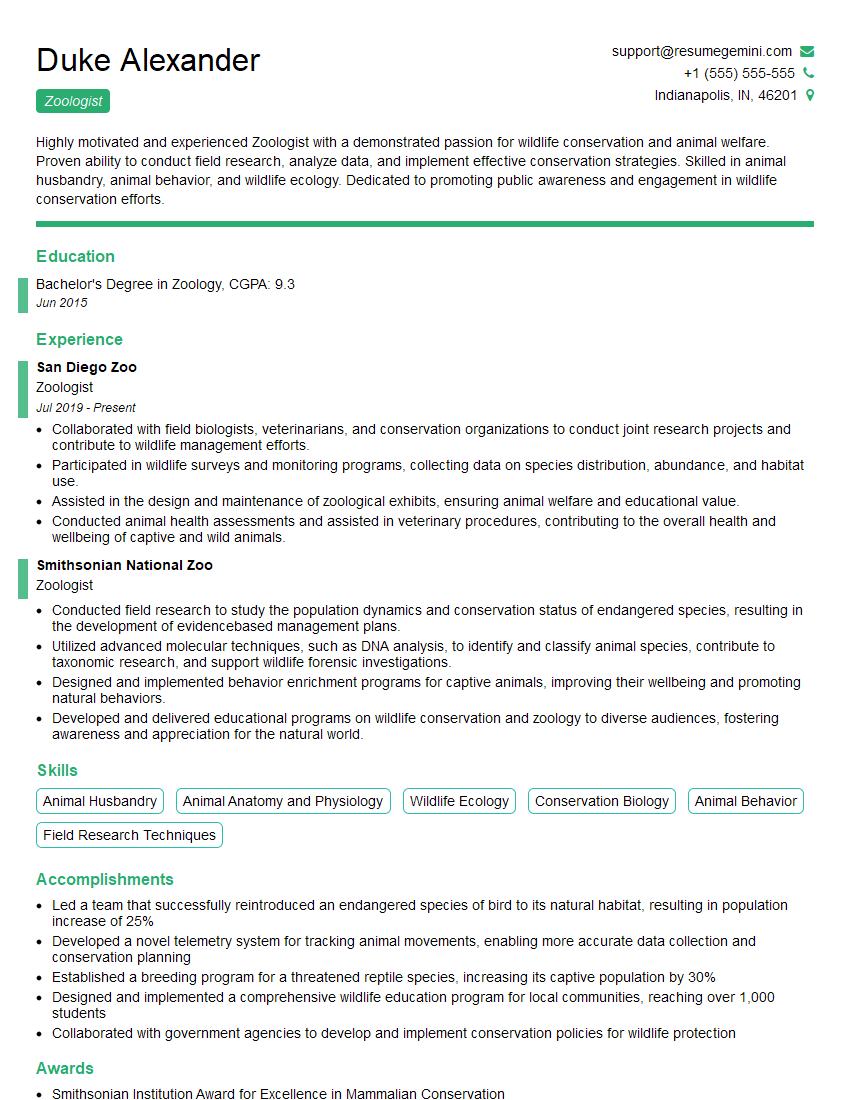
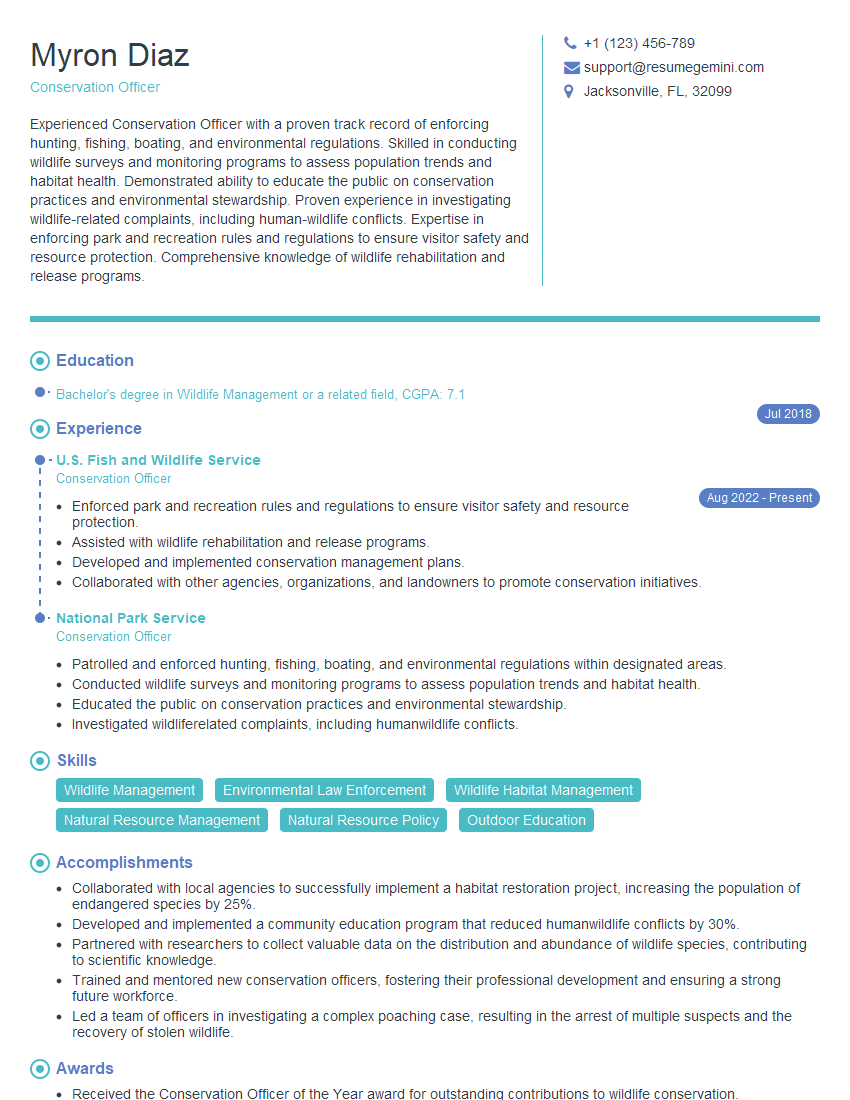
Mastering wildlife population dynamics is crucial for career advancement in wildlife management, conservation biology, and related fields. A strong understanding of these principles opens doors to impactful roles where you can contribute to the preservation of biodiversity. To significantly boost your job prospects, it’s vital to present your skills effectively. Creating an ATS-friendly resume is key to getting your application noticed. We strongly encourage you to leverage ResumeGemini, a trusted resource for building professional and impactful resumes. ResumeGemini provides examples of resumes tailored to Understanding of wildlife population dynamics to help you showcase your expertise effectively.



Explore more articles
Users Rating of Our Blogs
Share Your Experience
We value your feedback! Please rate our content and share your thoughts (optional).
What Readers Say About Our Blog
To the interviewgemini.com Webmaster.
Very helpful and content specific questions to help prepare me for my interview!
Thank you
To the interviewgemini.com Webmaster.
This was kind of a unique content I found around the specialized skills. Very helpful questions and good detailed answers.
Very Helpful blog, thank you Interviewgemini team.