Interviews are more than just a Q&A session—they’re a chance to prove your worth. This blog dives into essential Understanding of Woodworking Materials and Properties interview questions and expert tips to help you align your answers with what hiring managers are looking for. Start preparing to shine!
Questions Asked in Understanding of Woodworking Materials and Properties Interview
Q 1. Explain the differences between hardwood and softwood.
The difference between hardwood and softwood lies primarily in the tree’s reproductive structure. Hardwoods come from deciduous trees—trees that lose their leaves annually—and possess broad leaves. Softwoods, on the other hand, come from coniferous trees—evergreens with needle-like or scale-like leaves. This fundamental difference influences their cellular structure and, consequently, their properties.
Hardwoods generally have more complex cellular structures, resulting in greater density, hardness, and strength. They also often exhibit a more intricate grain pattern. Think of the beautiful figuring in a piece of figured maple. They tend to be more expensive and harder to work with than softwoods due to their density.
Softwoods, due to their simpler cellular structure, are generally softer, lighter, and easier to work with. Their grain patterns are usually simpler, though some softwoods like curly pine can display interesting patterns. They are typically less expensive than hardwoods, making them a common choice for construction and less demanding woodworking projects.
It’s crucial to note that the terms “hardwood” and “softwood” are not always perfectly correlated with actual hardness. Some softwoods, like yew, can be exceptionally hard, while some hardwoods, like balsa, are quite soft. The classification is primarily botanical.
Q 2. Describe the characteristics of oak, maple, and pine wood.
Let’s explore the characteristics of oak, maple, and pine:
- Oak: Known for its strength, durability, and beautiful grain patterns. It’s a classic hardwood choice for furniture, flooring, and cabinetry. Its density makes it resistant to wear and tear. Different oak species (red oak, white oak) have slightly varying properties.
- Maple: Another hardwood, maple is prized for its hardness, fine texture, and light color. It’s commonly used for flooring, furniture, and musical instruments. Its tight grain makes it suitable for detailed work and fine finishes. Hard maple is harder and denser than soft maple.
- Pine: A softwood, pine is known for its affordability, ease of working, and availability. Its grain is typically more prominent than hardwoods, giving it a rustic look. It’s commonly used in construction, general carpentry, and crafting projects. Different pine species vary in color and density.
Imagine building a sturdy table: Oak would be an excellent choice for its strength and longevity, maple for its smooth surface and fine detail, and pine for a quick, less expensive project, perhaps a simple workbench.
Q 3. What are the common defects found in wood, and how do they affect its use?
Wood defects can significantly affect a piece’s strength, appearance, and workability. Some common defects include:
- Knots: Branches embedded in the wood. Large, loose knots weaken the wood and can be problematic in furniture making but can add character to rustic designs.
- Splits and Checks: Cracks that run along the grain, often caused by drying stresses. They can reduce strength and make the wood more susceptible to further damage.
- Shakes: Separations between the wood’s growth rings, usually resulting from stress during tree growth. These can be internal and may not always be visible.
- Wane: The presence of bark or the rounded edge of a log, typically found on the edges of boards. It’s often removed during milling.
- Decay: Fungal or insect damage that weakens the wood and makes it unsuitable for many applications.
The impact of these defects depends on their severity and location. Small, tight knots might be acceptable in some projects, while large splits would render a board unusable for structural applications. Carefully inspecting wood before use is essential to avoid problems later on.
Q 4. How does wood grain orientation impact the strength and stability of a piece?
Wood grain orientation significantly impacts a piece’s strength and stability. Grain refers to the direction of the wood fibers. Imagine the wood as a collection of long, thin straws bundled together. The straws’ alignment defines the grain.
Strength: Wood is strongest when the load is applied parallel to the grain. Think of trying to break a bundle of straws by pulling them along their length versus breaking them across their width. The parallel alignment offers significantly more resistance. This is why furniture legs are typically made with the grain running vertically.
Stability: The grain orientation also influences dimensional stability. Wood tends to shrink and swell more across the grain than along it. This is why wood often warps or cups. Proper grain orientation during construction minimizes this effect, ensuring the piece remains stable over time.
For example, a board with the grain running horizontally in a tabletop is more prone to warping than a board with the grain running vertically. Careful planning and selection of lumber are crucial for creating strong, stable woodworking projects.
Q 5. Explain the process of wood seasoning and its importance.
Wood seasoning is the process of removing moisture from green (freshly cut) wood to prevent warping, cracking, and decay. This is a critical step before using wood in most woodworking projects.
The process typically involves two methods: air drying and kiln drying. Air drying is a slower, more natural process where wood is stacked and allowed to dry slowly over several months or even years. Kiln drying uses controlled heat and humidity to accelerate the drying process, usually taking a few weeks.
Importance: Properly seasoned wood is more dimensionally stable, less prone to cracking, and easier to work with. It’s also more resistant to insect infestation and decay. Using unseasoned wood leads to significant problems such as warping, checking, and even structural failure in finished products.
Think of it like baking a cake. You wouldn’t put a wet batter directly into a hot oven; you need it to be properly prepared first. Similarly, seasoning wood prepares it for the stresses of shaping, finishing, and use.
Q 6. What are the different types of wood finishes, and when would you use each?
Many wood finishes are available, each serving a different purpose:
- Oil finishes (e.g., linseed oil, tung oil): Penetrate the wood, enhancing its natural beauty and providing some protection. They are easy to apply and repair but offer less durability than other finishes.
- Varnish: Forms a hard, protective film that resists scratches and water damage. It provides a high-gloss finish and is ideal for high-traffic areas.
- Lacquer: Dries quickly and offers a durable, smooth finish. It’s often used for furniture and musical instruments.
- Shellac: A natural resin-based finish that is durable and easy to apply. It offers a warm, amber tone.
- Polyurethane: A synthetic finish available in various gloss levels. It’s highly durable, waterproof, and resistant to scratches.
The choice of finish depends on the project’s requirements and desired aesthetic. For example, a delicate wooden bowl might be finished with food-safe oil, while a kitchen table would benefit from the durability of polyurethane.
Q 7. How do you select the appropriate wood for a specific project?
Selecting the right wood for a project involves considering several factors:
- Project requirements: What will the finished piece be used for? Will it be subjected to moisture, stress, or impact? This determines the necessary strength, durability, and water resistance.
- Aesthetic preferences: What look are you aiming for? Do you prefer a rustic, smooth, or highly figured appearance? Different woods offer a wide range of grain patterns and colors.
- Budget: Some woods are significantly more expensive than others. Setting a budget helps narrow down the options.
- Workability: Some woods are easier to work with than others. If you’re a beginner, choosing a softer, more forgiving wood might be a wise decision.
- Availability: Consider the availability of the wood in your area. Locally sourced wood can often be more sustainable and cost-effective.
For example, building a sturdy outdoor bench requires a durable, weather-resistant hardwood like teak or cedar. A delicate jewelry box might be made from a finer hardwood like cherry or maple. By carefully considering these factors, you can select the appropriate wood to achieve the desired result.
Q 8. Describe the different types of wood joints and their applications.
Wood joints are the crucial connections that hold woodworking projects together. Choosing the right joint depends heavily on the project’s requirements, the type of wood, and the desired aesthetic. Here are some common types:
- Butt Joint: The simplest, where two ends meet squarely. It’s weak on its own but can be strengthened with glue, screws, or dowels. Great for simple frames or boxes where strength isn’t paramount.
- Miter Joint: Two pieces are angled and joined, creating a neat corner. Requires precise cuts and is often strengthened with glue and/or biscuits. Used extensively in picture frames and decorative moldings.
- Lap Joint: One piece overlaps the other, creating a strong, flush connection. Variations include half-lap, where both pieces are equally recessed, and through-lap, where one piece completely overlaps. Excellent for shelving or strong, invisible joins.
- Dovetail Joint: Interlocking ‘tails’ and ‘pins’ create an incredibly strong joint, famously used in drawers and fine furniture. Requires skill but offers exceptional strength and durability.
- Mortise and Tenon Joint: A tenon (projection) fits into a mortise (hole), forming a robust connection. Variations include through-tenons, blind tenons, and wedged tenons. Used in chairs, tables, and virtually any structural component needing strength.
- Finger Joint: Interlocking ‘fingers’ create a strong, visually appealing joint often used in edge-joining boards for wider panels or in intricate decorative work.
The choice of joint is a crucial design decision. For example, a simple butt joint might be sufficient for a small shelf, but a dovetail joint would be preferred for a high-quality drawer that needs to withstand daily use.
Q 9. How do you identify different types of wood?
Identifying different types of wood requires a combination of skills and observation. Here’s a breakdown of common methods:
- Visual Inspection: Examine the wood’s color, grain pattern, texture, and presence of knots. Each species has a unique appearance. For example, oak has a prominent grain with large pores, while maple is typically fine-grained and light-colored.
- Smell and Feel: Some woods have distinct smells (e.g., cedar’s aromatic scent). Texture can also be a clue—some are smooth, while others are rougher.
- Hardness Test: Push a fingernail into the wood’s surface. Hardwoods generally resist indentation better than softwoods.
- Density: Weigh a sample of known volume to calculate density. This is a more scientific approach, useful for precise identification.
- Microscopic Examination: Analyzing wood’s cellular structure under a microscope is the most definitive method, revealing distinctive features specific to each species.
- Reference Materials: Wood identification guides, books, and online resources (with caution about the reliability of some sources) are invaluable tools for comparing your sample to known species.
Combining these methods provides a higher degree of accuracy. Remember that variation exists within a single species, so don’t rely on just one characteristic. Experience significantly improves one’s ability to identify wood.
Q 10. What are the advantages and disadvantages of using plywood?
Plywood, a layered composite material, offers a compelling balance of properties but has some drawbacks.
- Advantages:
- Strength-to-weight ratio: Plywood is surprisingly strong for its weight, making it ideal for applications where lightness is crucial.
- Dimensional Stability: The cross-ply layering minimizes warping and shrinking compared to solid wood.
- Cost-effectiveness: It is generally less expensive than solid wood, especially for large sheets.
- Availability: Comes in consistent sizes and thicknesses, readily available.
- Versatility: Suitable for various applications, from furniture to construction.
- Disadvantages:
- Limited edge strength: The edges are weaker than the face, so careful design is necessary, especially for load-bearing applications.
- Susceptibility to delamination: Improper handling or exposure to moisture can cause the layers to separate.
- Not suitable for fine woodworking: Its layered structure isn’t as aesthetically pleasing as solid wood for projects requiring high visual quality.
- Formaldehyde concerns: Some plywood uses adhesives containing formaldehyde, which is a health concern. Look for formaldehyde-free options.
For example, plywood is excellent for shelving units needing strength and a flat surface. However, it wouldn’t be the best choice for a high-end piece of furniture where the beauty of the wood grain is essential.
Q 11. Explain the concept of wood density and its impact on strength.
Wood density refers to the mass of wood per unit volume, typically expressed as kilograms per cubic meter (kg/m³) or pounds per cubic foot (lbs/ft³). It’s a crucial factor influencing wood strength.
Higher density generally correlates with greater strength and stiffness. Denser wood contains more lignin and cellulose, the components providing structural integrity. This means it can withstand greater stress before failure. Imagine comparing a tightly packed box of oranges (high density) to one with loosely packed oranges (low density) – the tightly packed one is stronger and more resistant to being crushed.
However, density isn’t the sole determinant of strength; factors like grain orientation, moisture content, and the presence of defects also play significant roles. For instance, a dense wood with significant knots will be weaker than a less dense wood with straight grain.
Understanding density helps in selecting the appropriate wood for a given application. For load-bearing components, high-density hardwoods like oak or ash are preferred, whereas softer, lower-density woods like balsa are suitable for lightweight models or carvings.
Q 12. What are the effects of moisture content on wood?
Moisture content significantly impacts wood’s properties. Wood is hygroscopic, meaning it absorbs and releases moisture from the surrounding environment.
High moisture content: leads to swelling, increased weight, reduced strength, and greater susceptibility to fungal attack and decay. Wood can become softer and more prone to warping or checking (cracking).
Low moisture content: can cause shrinkage, leading to cracks and splits. While stronger and more dimensionally stable than high-moisture wood, excessively dry wood can become brittle and prone to breakage.
Equilibrium moisture content (EMC) is the moisture level at which wood is in balance with its surrounding environment. The EMC varies depending on the temperature and relative humidity. Woodworkers aim to control moisture content to minimize movement and ensure the longevity and stability of their projects.
Methods to control moisture content include kiln drying (artificially reducing moisture), air drying (natural reduction), and using moisture meters to monitor wood’s condition.
Q 13. How does temperature affect wood properties?
Temperature affects wood primarily through its influence on moisture content. Extreme temperatures can cause significant changes in wood properties:
High temperatures: can lead to increased drying, potentially causing shrinkage, cracking, and weakening of the wood. Prolonged exposure to very high temperatures can even cause wood to degrade chemically.
Low temperatures: don’t directly damage wood’s structure, but they can indirectly affect it. Frozen wood can become more brittle and susceptible to damage during handling or machining. Rapid temperature changes can cause internal stresses, leading to cracking.
Temperature’s impact on wood is often more pronounced when combined with changes in relative humidity. The interaction between temperature and humidity is crucial in predicting and mitigating wood movement, especially in furniture design and construction.
Q 14. How do you account for wood movement in furniture design?
Wood movement, caused by changes in moisture content and temperature, is a significant factor in furniture design. Failing to account for it can lead to warping, cracking, and structural failure.
Several strategies help mitigate wood movement:
- Material Selection: Choosing wood species with inherent dimensional stability reduces movement. Certain hardwoods are naturally more resistant to shrinkage and swelling than others.
- Proper Acclimation: Allowing wood to acclimate to the environment where the furniture will be used helps minimize movement after construction.
- Design Techniques:
- Wood movement joints: Incorporating joints that allow for expansion and contraction, such as tongue-and-groove joints or sliding dovetails.
- Case construction: Building furniture with panels that are free to move within a frame, allowing for expansion and contraction without causing stress.
- Avoidance of through-tenons: Through tenons can restrict movement and cause stress in the wood, so they are often avoided in sensitive areas.
- Using wood in appropriate orientation: Understanding the grain and direction of the wood and properly orienting the pieces in construction can minimize problems.
- Finish Selection: While a finish won’t prevent movement, it can slow down the rate of moisture exchange, minimizing the effect of seasonal fluctuations.
By carefully considering these factors, furniture designers can create pieces that are less prone to damage from seasonal wood movement, ensuring their longevity and aesthetic appeal.
Q 15. What are the common woodworking glues, and their properties?
Woodworking glues are the backbone of many projects, providing strong, lasting bonds between wood pieces. The choice of glue depends heavily on the project’s demands and the type of wood involved. Here are some common types:
- Polyvinyl Acetate (PVA) Glue (Wood Glue): This is the workhorse of woodworking, known for its relatively low cost, ease of use, water-clean up, and good strength when properly applied. It’s excellent for general carpentry and furniture making. Think of it as the everyday staple in your glue arsenal.
- Yellow Glue: A common type of PVA glue, often used because of its color and consistency. Many woodworking hobbyists find the color easier to see when applying.
- Exterior Wood Glue: Formulated for outdoor use, it offers increased water resistance compared to standard PVA glues. Essential for projects exposed to the elements like decks and outdoor furniture.
- Polyurethane Glue: This two-part glue offers exceptionally high strength and water resistance, ideal for projects demanding extreme durability. It’s less forgiving in terms of clamping and cleanup, though.
- Epoxy Glue: Extremely strong and versatile, epoxies are used for filling gaps, repairing cracks, and bonding dissimilar materials. It can be a bit more complex to use and often requires specific mixing ratios.
Remember, proper surface preparation is crucial for any glue to achieve its maximum bond strength. Clean, dry, and tightly fitting surfaces are key to success.
Career Expert Tips:
- Ace those interviews! Prepare effectively by reviewing the Top 50 Most Common Interview Questions on ResumeGemini.
- Navigate your job search with confidence! Explore a wide range of Career Tips on ResumeGemini. Learn about common challenges and recommendations to overcome them.
- Craft the perfect resume! Master the Art of Resume Writing with ResumeGemini’s guide. Showcase your unique qualifications and achievements effectively.
- Don’t miss out on holiday savings! Build your dream resume with ResumeGemini’s ATS optimized templates.
Q 16. Describe different types of wood fasteners (screws, nails, dowels).
Wood fasteners are essential for holding wood components together, each having its own strengths and weaknesses. The right fastener for the job depends on factors like the wood type, joint design, and the project’s required strength.
- Screws: Offer strong clamping force and are easily adjustable. Different screw types cater to specific needs – wood screws, drywall screws, machine screws, etc. They are versatile and great for furniture making. For example, a pocket hole screw offers strong, hidden joinery.
- Nails: Faster to install than screws, but offer less clamping force. Common nail types include finish nails (for fine woodworking), common nails (for general construction), and brads (for smaller pieces). Nails are best for quick assembly projects.
- Dowels: Cylindrical wooden pins used to create strong, hidden joints. They offer clean aesthetics and high strength when combined with glue. Great for cabinet making where hidden fasteners are preferred. They require precise drilling for optimal results. Imagine using them for the legs on a sturdy table.
Properly pre-drilling pilot holes for screws and nails prevents wood splitting. This is an essential aspect of successful woodworking.
Q 17. What safety precautions should be taken when working with wood?
Safety in woodworking is paramount. Ignoring safety precautions can lead to serious injuries. Always prioritize these steps:
- Eye Protection: Always wear safety glasses or a face shield to protect your eyes from flying debris.
- Hearing Protection: Loud machinery like table saws and routers require hearing protection like earplugs or earmuffs.
- Respiratory Protection: When working with dust, always use a dust mask or respirator to prevent inhaling harmful particles.
- Hand Protection: Wear gloves when handling rough lumber or working with chemicals.
- Proper Clothing: Avoid loose clothing or jewelry that could get caught in machinery.
- Tool Safety: Always ensure your tools are sharp and well-maintained. Dull tools are more dangerous because they require more force to use. Keep your workspace clean and organized.
- Machine Guards: Always use safety guards provided with machinery. Never override safety features.
Remember, rushing a project is a recipe for disaster. Take your time and focus on safety to avoid accidents. A safe woodworker is a successful woodworker.
Q 18. How do you deal with warping or splitting wood?
Warping and splitting are common wood defects caused by moisture changes. Here’s how to address them:
- Prevention: Properly acclimating wood (allowing it to adjust to the humidity of its environment) is the best prevention. Kiln-dried lumber is less prone to these issues, but proper storage is still crucial.
- Warping: Minor warping can sometimes be corrected by using clamps and moistening or drying the affected area to encourage it to straighten. For severe warping, you may need to cut the piece and re-join it or use it in a way that hides the warp.
- Splitting: Small splits can sometimes be filled with wood filler or epoxy. Larger splits may require more significant repair or the piece may need to be replaced. Pre-drilling pilot holes before driving screws or nails helps prevent splitting.
Understanding the properties of wood and how moisture affects it is key to minimizing these issues. If you are working with large or expensive pieces of wood, it is wise to consult a professional if severe warping or splitting occurs.
Q 19. What is the difference between kiln-dried and air-dried wood?
The difference between kiln-dried and air-dried wood lies in the drying method, impacting the wood’s properties.
- Kiln-Dried Wood: Dried in a controlled environment (kiln), this process is faster and more predictable, resulting in more consistent moisture content. It minimizes the risk of warping and splitting, making it preferable for many woodworking projects. It also tends to be more expensive.
- Air-Dried Wood: Dried naturally outdoors, this process is slower and more dependent on weather conditions. It can lead to more variations in moisture content and an increased risk of warping and checking. However, some believe it results in a more stable final product, and the slower drying method potentially leads to a stronger wood with less internal stress.
Choosing between kiln-dried and air-dried wood depends on the project, your budget, and your tolerance for potential issues. Kiln-dried is generally preferred for precision work, while air-dried may be better suited for certain traditional projects or those with more forgiving designs.
Q 20. Explain the process of sanding and finishing wood.
Sanding and finishing are crucial for achieving a smooth, durable, and aesthetically pleasing final product. It’s a multi-step process.
- Sanding: Begin with coarser grits (e.g., 80-grit) to remove imperfections and gradually move to finer grits (e.g., 220-grit) for a smooth finish. Always sand with the grain to avoid scratches. Using a sanding block helps maintain a consistent sanding pressure. Be sure to frequently change and clean sandpaper to avoid clogging.
- Finishing: This protects the wood from damage and enhances its appearance. Options include:
- Varnish: Provides a hard, protective finish and accentuates the wood’s grain.
- Polyurethane: Another durable finish, offering good protection and water resistance. Water-based polyurethane is generally easier to clean up.
- Lacquer: A fast-drying finish, offering a smooth and even surface.
- Shellac: A natural resin-based finish providing a warm, amber tone. It’s less durable than other options but easy to work with.
- Oil: Penetrates the wood, enhancing its color and providing a degree of protection. Tung oil, linseed oil, and mineral oil are popular choices. Often requires multiple coats.
Remember to apply thin, even coats, allowing adequate drying time between each coat. The number of coats needed depends on the finish and desired level of protection. Proper sanding before applying the finish is critical for a successful outcome.
Q 21. What are the various methods for preserving wood?
Preserving wood extends its lifespan and protects it from decay and insect infestation. Several methods exist:
- Pressure Treatment: Chemically treating wood under pressure to protect it from rot and insect damage. Common for outdoor projects like decks and fences. This is done industrially.
- Oil-Based Finishes: Penetrating oils like linseed oil or tung oil can provide some protection against moisture and decay. They also enhance the wood’s beauty.
- Water-Based Finishes: Polyurethane and varnish offer excellent protection, but are not as environmentally friendly as the other methods.
- Wood Sealants: Apply a sealant to prevent moisture penetration and thus rot and decay.
- Paint: A good barrier against moisture and UV radiation.
The best preservation method depends on the wood type, the intended use, and the environmental conditions. For outdoor applications, pressure treatment is often necessary, while for indoor projects, a good quality finish is usually sufficient.
Q 22. What are some common wood finishing problems and their solutions?
Common wood finishing problems often stem from inadequate preparation or application. Let’s explore some frequent issues and their solutions:
- Problem: Uneven finish. Solution: Ensure the wood surface is properly sanded (gradually progressing through finer grits) before applying any finish. Apply thin, even coats, allowing each to dry completely before the next. Use a high-quality brush or sprayer for consistent application.
- Problem: Brush marks or runs. Solution: Use a high-quality brush appropriate for the finish type. Avoid overloading the brush. Work with the grain of the wood. For larger projects, a sprayer can provide a smoother finish.
- Problem: Dust nibs. Solution: Work in a clean, dust-free environment. Use a tack cloth to remove any dust before applying each coat. Consider using a dust mask.
- Problem: Finish not curing properly. Solution: Ensure proper ventilation and the correct temperature and humidity conditions for the specific finish being used. Refer to the manufacturer’s instructions.
- Problem: Finish discoloration or yellowing. Solution: Choose a finish that is UV resistant and less prone to yellowing. Avoid using finishes with excessive amounts of oil.
Careful preparation is key. Think of it like painting a house—a poorly prepared surface will always lead to a poor finish.
Q 23. Describe the different types of wood stains and their effects.
Wood stains alter the color of the wood without significantly changing its texture or grain. There are several types:
- Water-based stains: Easy to clean up, dry quickly, and raise the grain less than oil-based stains. However, they may not penetrate as deeply, resulting in less color saturation.
- Oil-based stains: Penetrate wood more deeply, resulting in richer, more durable color. They require mineral spirits for cleanup and dry more slowly, potentially leading to more grain raising. They offer a more natural look.
- Gel stains: Thicker than water or oil-based stains, ideal for vertical surfaces as they don’t run or drip easily. They provide excellent coverage and hide imperfections well.
- NGR (No Grain Raising) stains: Designed to minimize grain raising, often preferred for furniture where a perfectly smooth surface is crucial.
- Dye stains: Highly transparent; they don’t mask the wood’s grain as much. Used often for creating unique colors or subtle shades.
The choice depends on the project: water-based is best for quick projects and easy cleanup; oil-based provides richer color and better penetration; gel is ideal for vertical surfaces and masking imperfections; NGR stains minimizes grain raising; and dye stains allow for highly custom color effects. Always test your stain on a scrap piece of the same wood to see how the color will look before applying it to your project.
Q 24. How do you choose the right tools for a specific woodworking task?
Selecting the right tools is paramount in woodworking. The task dictates the tool. For example:
- Cutting: For rough cuts, a handsaw or circular saw is suitable. For intricate cuts, a jigsaw or bandsaw is necessary. For fine details, chisels and carving tools are essential.
- Shaping: Planers and thickness planers are used for creating flat surfaces, while routers are for creating intricate shapes and grooves. Sandpaper and sanding blocks are crucial for smoothing surfaces.
- Joining: Clamps are essential for holding pieces together while glue dries. A biscuit joiner or dowel jig creates strong and precise joints.
- Finishing: Brushes, rollers, and sprayers are used for applying finishes. Tack cloths are used for removing dust before finishing.
Consider the scale of your project: For a small project, hand tools might suffice. For larger projects, power tools offer efficiency. Always prioritize safety by wearing appropriate safety gear (eye protection, hearing protection, dust mask, etc.) and using tools correctly.
Q 25. What are some sustainable practices in woodworking?
Sustainable woodworking practices are crucial for environmental responsibility. Key aspects include:
- Sourcing wood responsibly: Using wood from certified sustainable forests (e.g., FSC certified) ensures that trees are harvested responsibly without harming the environment. Look for reclaimed wood whenever possible.
- Minimizing waste: Careful planning and efficient cutting techniques reduce scrap wood. Consider using off-cuts for smaller projects or crafts.
- Using low-VOC finishes: Volatile organic compounds (VOCs) can be harmful to the environment and human health. Opt for water-based or low-VOC finishes.
- Recycling and disposal: Properly dispose of wood waste and finishes according to local regulations. Explore options for recycling or repurposing wood scraps.
- Energy efficiency: Use energy-efficient tools and machinery whenever possible. For example, consider air-powered tools in place of more energy-intensive options.
Sustainability is not just a trend; it’s a commitment to preserving our planet for future generations. Choosing sustainable practices in woodworking is a crucial step.
Q 26. How do you calculate the amount of wood needed for a project?
Calculating the amount of wood needed involves careful planning. Here’s a breakdown:
- Detailed design: Create detailed plans with precise dimensions of each component. Note the type and thickness of wood for each part.
- Material list: Generate a list of materials, specifying the quantity and dimensions of each piece. Account for waste during cutting (add extra to compensate for imperfections or miscuts).
- Calculate board feet: For larger pieces, use board feet (1 board foot = 12 inches x 12 inches x 1 inch). To calculate, multiply the length (in feet) x width (in inches) x thickness (in inches) / 12. For example: A 6-foot long, 6-inch wide, 1-inch thick board is (6 x 6 x 1) / 12 = 3 board feet.
- Add extra: Always add extra material to account for mistakes, unexpected problems, or future repairs.
Example: Let’s say you need five 2x4s, each 8 feet long. That’s 40 feet of lumber. However, to account for potential errors you might purchase 45 feet. Accurately calculating your needs helps minimize waste and cost.
Q 27. Explain the concept of wood grain and its influence on design.
Wood grain refers to the pattern created by the arrangement of wood fibers as the tree grows. It’s a critical factor in woodworking design:
- Visual appeal: Wood grain significantly impacts the aesthetic of a project. The direction, color, and density of the grain create unique visual effects.
- Strength and stability: The orientation of the grain influences the strength and stability of the wood. Wood is stronger along the grain and weaker across it. Working with the grain during construction improves durability.
- Design choices: Wood grain can inspire design. Using the grain as a design feature, like highlighting a beautiful curl or flame figure in a piece of wood, can make a project truly unique.
- Finish application: The grain can affect how a finish is applied and how it looks. Some grains will show the finish more than others. A smooth, fine grain will typically accept a finish evenly while a coarse, open grain might require more attention during finishing.
Understanding wood grain allows woodworkers to choose the right wood for a specific application and to plan construction and design to leverage its visual and structural qualities. A skilled woodworker will often select and orient wood to highlight the grain in a visually appealing way.
Q 28. Describe the properties of different types of wood veneer.
Wood veneer is a thin layer of wood glued to a core material (like plywood or MDF). Different types exist, each with distinct properties:
- Solid wood veneer: Cut directly from a log, offering the highest quality and most natural grain patterns. It is durable and can be refinished multiple times.
- Rotary cut veneer: Peeled from a log in a continuous sheet, resulting in a more uniform appearance with a characteristic linear grain pattern. It is more affordable than other types.
- Sliced veneer: Cut from a log using a slicing technique, offering superior quality to rotary cut veneer, with less grain distortion and a more varied grain pattern.
- Quarter-sliced veneer: Cut from a log at a 90-degree angle to the growth rings, resulting in a distinct grain pattern and superior stability. This is a very expensive option.
The choice of veneer depends on the project’s budget and aesthetic requirements. Solid wood veneer provides superior quality and longevity, while rotary cut is more economical for large projects where appearance is less crucial. Sliced and quarter-sliced provide a good balance between cost and quality.
Key Topics to Learn for Understanding of Woodworking Materials and Properties Interview
- Wood Species Identification and Properties: Learn to identify common hardwood and softwood species, understanding their grain patterns, density, strength, and workability. Consider the impact of these properties on project selection and design.
- Wood Drying and Moisture Content: Understand the importance of proper wood drying techniques and the effects of moisture content on dimensional stability, strength, and susceptibility to defects like checking and warping. Be prepared to discuss practical applications like kiln drying and air drying.
- Wood Defects and Their Impact: Familiarize yourself with common wood defects such as knots, shakes, splits, and decay. Understand how these defects affect the structural integrity and aesthetic appeal of wood, and how to mitigate their impact in woodworking projects.
- Wood Finishing Techniques and Materials: Explore various finishing techniques, including staining, sealing, and varnishing. Understand the properties and application methods of different finishes, and how to select the appropriate finish for a given project and wood species.
- Wood Adhesives and Fasteners: Gain a strong understanding of different types of wood adhesives (e.g., PVA, polyurethane) and fasteners (e.g., screws, nails, dowels), their strengths, weaknesses, and appropriate applications. Be ready to discuss selecting the best options based on project requirements.
- Woodworking Tools and Their Applications: Demonstrate familiarity with hand tools and power tools commonly used in woodworking, including their safe and effective operation. Be prepared to discuss tool selection based on material and project needs.
- Wood Preservation and Treatment: Understand methods for protecting wood from decay, insects, and weathering, including pressure treatment and surface applications. Discuss the impact of different preservation methods on wood properties.
Next Steps
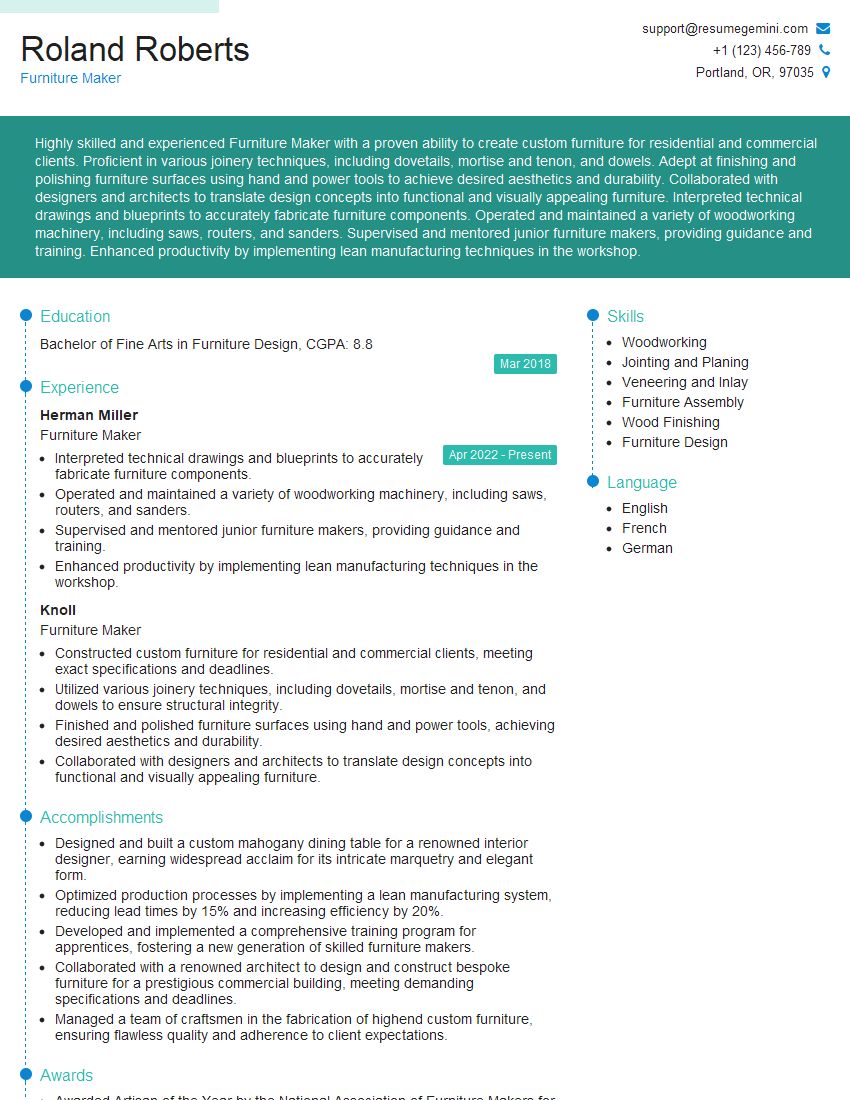
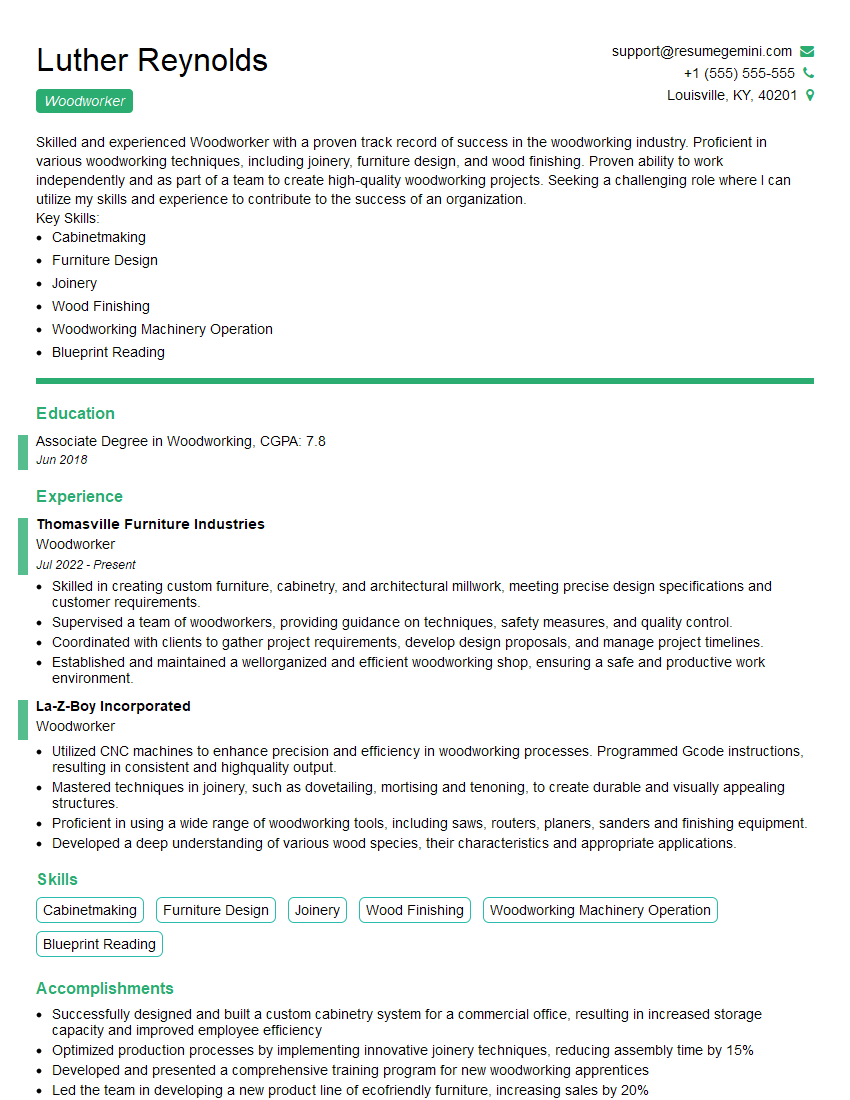
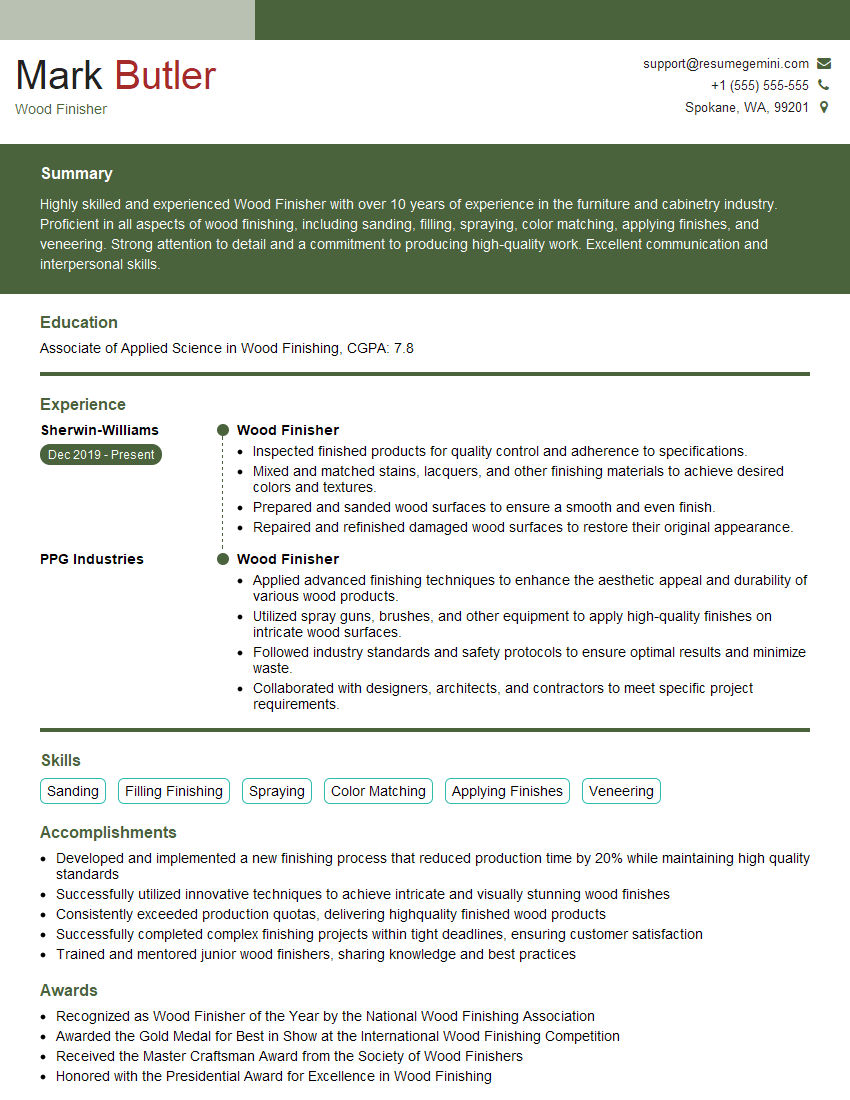
Mastering the understanding of woodworking materials and properties is crucial for career advancement in this field. A deep understanding allows you to make informed decisions, optimize project outcomes, and troubleshoot challenges effectively. To enhance your job prospects, create an ATS-friendly resume that highlights your skills and experience. ResumeGemini is a trusted resource that can help you build a professional and impactful resume. We provide examples of resumes tailored to showcase expertise in Understanding of Woodworking Materials and Properties, helping you present your qualifications in the best possible light.






Explore more articles
Users Rating of Our Blogs
Share Your Experience
We value your feedback! Please rate our content and share your thoughts (optional).
What Readers Say About Our Blog
To the interviewgemini.com Webmaster.
Very helpful and content specific questions to help prepare me for my interview!
Thank you
To the interviewgemini.com Webmaster.
This was kind of a unique content I found around the specialized skills. Very helpful questions and good detailed answers.
Very Helpful blog, thank you Interviewgemini team.