Every successful interview starts with knowing what to expect. In this blog, we’ll take you through the top Use of CAD and PV Design Software interview questions, breaking them down with expert tips to help you deliver impactful answers. Step into your next interview fully prepared and ready to succeed.
Questions Asked in Use of CAD and PV Design Software Interview
Q 1. Explain the difference between 2D and 3D CAD modeling in PV system design.
In PV system design, 2D and 3D CAD modeling serve distinct purposes. 2D CAD, like using AutoCAD for creating simple layouts, is excellent for initial planning and schematic representation. You can efficiently plan the array layout, showing the placement of panels, and calculate the overall area needed. Think of it as a blueprint. However, it lacks the depth to accurately model shading, 3D obstructions, or complex roof geometries.
3D CAD modeling, on the other hand, uses software like Revit or SketchUp to create a realistic, three-dimensional representation of the system. This allows for much more accurate shading analysis, particularly important in complex environments with nearby buildings or trees. You can virtually ‘walk’ around your design, assessing potential issues visually and performing more detailed calculations of energy production. For example, a 3D model can precisely show how the angle of a neighboring building affects the sunlight reaching your panels throughout the day, something impossible to achieve with a 2D model alone.
In essence, 2D CAD is useful for initial design and area calculations, while 3D CAD is crucial for accurate shading analysis and system optimization, leading to more efficient and reliable designs.
Q 2. What CAD software are you proficient in? (Specify versions)
I’m proficient in several CAD software packages. My expertise includes AutoCAD (versions 2018-2024), Revit (versions 2020-2024), and SketchUp (versions 2020-2024). I’m also experienced with industry-specific extensions and plugins tailored for PV system design within these platforms. My experience extends to utilizing these tools for generating detailed drawings, creating 2D and 3D models, performing shading analyses, and developing comprehensive documentation packages for various PV projects, from residential rooftops to large-scale ground-mounted systems.
Q 3. Describe your experience with PVSyst or similar PV design software.
I have extensive experience with PVsyst, specifically versions 7 and 8. I’ve used it to model and analyze numerous PV projects, ranging in size from small residential systems to large utility-scale installations. My workflow typically involves importing CAD data from Revit or AutoCAD into PVsyst to create an accurate representation of the site conditions and PV array. Then, I use PVsyst’s advanced features to simulate the energy production of the system, accounting for various factors such as solar irradiance, temperature, shading, and system losses. This allows me to optimize system design, including tilt angle, azimuth, and module selection, to maximize energy yield and minimize costs. I also use the software’s reporting capabilities to generate detailed performance analysis reports for clients. One memorable project involved using PVsyst to identify and mitigate significant shading issues on a large commercial rooftop installation, ultimately increasing the projected annual energy production by over 10%.
Q 4. How do you calculate the optimal tilt angle and azimuth for a PV array?
Calculating the optimal tilt and azimuth angles for a PV array involves a multifaceted approach considering geographic location and seasonal variations in sunlight. The ideal tilt angle is typically close to the latitude of the location, maximizing year-round energy production. However, this can be adjusted based on whether you prioritize energy production in winter or summer. For instance, a steeper tilt might be beneficial in higher-latitude regions where winter sunlight is lower in the sky.
The azimuth angle, which is the orientation of the array relative to true south (in the Northern Hemisphere), should ideally be 0 degrees, meaning facing due south. However, obstructions or site constraints might necessitate a deviation from this optimal angle.
Sophisticated PV design software, like PVsyst, utilizes advanced algorithms considering solar irradiance data specific to the location, panel characteristics, and shading to precisely determine the optimal tilt and azimuth angles. For simpler situations, using online calculators or empirical formulas based on latitude can provide a reasonable estimate, but accurate software-based analysis is always recommended for large or complex projects.
Q 5. Explain the importance of shading analysis in PV system design.
Shading analysis is paramount in PV system design because even minimal shading can significantly reduce a PV system’s overall energy output. Imagine a single shadow cast on just one cell within a panel; this can severely curtail the entire panel’s production. A comprehensive shading analysis accounts for various sources, including buildings, trees, hills, and even other PV arrays.
The analysis helps identify periods of the day and year when shading might occur, allowing for design modifications such as adjusting the array’s orientation, using specific module layouts to minimize the impact of shading or even adding additional panels to compensate for potential losses. Neglecting shading analysis can lead to significant underperformance of the system, negating a portion of the investment and impacting the long-term profitability of the project.
Software like PVsyst excels in simulating shading scenarios and predicting the resulting power loss. This allows us to make informed decisions during the design phase, thus maximizing energy production.
Q 6. How do you account for different types of solar irradiance in your designs?
Solar irradiance, the amount of solar energy received per unit area, varies significantly based on geographic location, time of day, time of year, and atmospheric conditions. Accurate PV system design requires accounting for these variations to accurately predict energy output.
We incorporate different types of solar irradiance data, such as those from meteorological stations, satellite data, or online databases, into our design software (like PVsyst). These data sets provide information on global horizontal irradiance (GHI), direct normal irradiance (DNI), and diffuse horizontal irradiance (DHI). These inputs help the software precisely model how much energy the panels will receive throughout the year. Furthermore, factors like cloud cover and atmospheric conditions (aerosol content, water vapor) can affect solar irradiance and are often accounted for in advanced modeling techniques.
Q 7. What are the key factors to consider when selecting inverters for a PV system?
Selecting the right inverter is critical for the efficient operation and longevity of a PV system. Key factors to consider include:
- Inverter size (kW): This needs to match the total power output of the PV array. Oversizing is inefficient, while undersizing can limit system performance.
- Maximum Power Point Tracking (MPPT) channels: More MPPT channels allow for better energy harvesting, particularly in systems with varying shading or string lengths.
- Efficiency: Higher efficiency inverters translate to greater energy output and lower operational costs.
- Safety certifications: Ensuring the inverter meets relevant safety standards and regulations is paramount.
- Monitoring capabilities: Inverters with remote monitoring features simplify system maintenance and troubleshooting.
- Warranty: A long warranty period provides peace of mind and protects against potential failures.
- Compatibility: The inverter must be compatible with the specific modules and other system components chosen.
The selection process often involves comparing different inverters based on these criteria, considering the specific requirements of the project and optimizing the balance between cost and performance.
Q 8. Describe your experience with electrical design related to PV systems.
My experience in electrical design for PV systems spans over seven years, encompassing all phases from initial site assessment to final system commissioning. I’m proficient in designing both grid-tied and off-grid systems, considering factors like array sizing, string configuration, inverter selection, and grounding. For example, on a recent project for a commercial building, I designed a 100kW system using AutoCAD to lay out the optimal panel placement on the rooftop, minimizing shading and maximizing energy production. I then used PVsyst software to model the system’s performance and ensure it met the client’s energy needs. This involved detailed calculations of energy yield, power losses, and system efficiency.
I have extensive experience with NEC (National Electrical Code) and other relevant electrical codes and standards, ensuring all designs are safe and compliant. This includes detailed calculations for wire sizing, overcurrent protection, and grounding, crucial for preventing electrical hazards.
Q 9. How do you ensure compliance with relevant building codes and safety standards in your designs?
Compliance with building codes and safety standards is paramount in my design process. I meticulously follow the National Electrical Code (NEC), local building codes, and relevant international standards like IEC 60364. My process starts with a thorough review of all applicable regulations specific to the project’s location. I use specialized software, such as PVsyst, which incorporates these standards in its calculations and simulations, ensuring compliance is built into the design from the outset.
For instance, proper grounding is critical for safety. My designs always include detailed grounding plans, complying with NEC Article 250, to protect against electrical shocks and equipment damage. Regularly, I review my work against checklists to guarantee compliance in all areas, such as arc flash analysis, ensuring the safety of personnel involved in installation and maintenance.
Q 10. What are the common challenges faced during PV system design and how do you overcome them?
PV system design presents numerous challenges. One common issue is shading from trees, buildings, or even other panels. This can significantly reduce energy production. To overcome this, I use specialized software that allows for detailed shading analysis, enabling me to optimize panel placement and potentially incorporate techniques like bypass diodes to mitigate the impact of shading. Another challenge involves microinverters’ mismatch losses. I choose and size microinverters carefully, considering the panel characteristics and utilizing software to minimize these losses, thereby enhancing the overall system efficiency. A final significant challenge is budget constraints. I work closely with clients to identify cost-effective solutions while maintaining system performance and safety by exploring different PV panel and inverter options, and optimizing the system design.
Q 11. Explain your experience with creating detailed drawings and specifications for PV installations.
I create detailed drawings and specifications using AutoCAD and other CAD software. These include site plans showing panel layout, equipment location, and wiring diagrams. I also produce detailed electrical schematics showing all components and their interconnections. My specifications include detailed descriptions of all materials, equipment, and installation procedures, ensuring that the installers have all the necessary information. For example, I’ll specify the exact type of mounting hardware, wire gauge, and conduit size needed, referencing manufacturer’s datasheets. This level of detail ensures consistency and reduces the risk of errors during installation. I also ensure my drawings are clearly labeled and easy to understand for both contractors and inspectors.
Q 12. How do you handle design changes or revisions during a project?
Design changes are handled through a formal change management process. Any proposed change is documented, reviewed for its impact on the system’s performance, safety, and budget, and approved by the relevant stakeholders. I use version control in my CAD software to track all revisions and ensure everyone is working with the latest drawings. For example, if a client wants to add more panels, I’ll update the system design, recalculate energy production, and check for impacts on the inverter capacity and wiring requirements. All changes are documented, and new drawings and specifications are issued.
Q 13. What is your experience with bill of materials (BOM) generation for PV systems?
I’m proficient in generating accurate and detailed Bills of Materials (BOMs). My process typically involves using the design software’s built-in BOM generation features to export a comprehensive list of all materials and equipment needed for the PV system. This includes PV modules, inverters, racking systems, wiring, conduit, disconnects, grounding materials, and other components. The BOM includes detailed descriptions, quantities, part numbers, and manufacturer information for each item. This is crucial for accurate cost estimation and efficient procurement. I carefully review the BOM to ensure completeness and accuracy before submitting it for purchasing.
Q 14. Describe your experience with site surveys and data collection for PV system design.
Site surveys are a critical first step in PV system design. I conduct thorough site visits to collect essential data, including roof dimensions, shading analysis, available mounting locations, building orientation, and access to utilities. I use measuring tools, such as laser distance meters and inclinometers, to accurately record measurements. I also use software and tools to capture high-resolution images and create 3D models for a complete understanding of the site. Data collected is used to determine optimal panel placement, system size, and overall system design. A detailed site report summarizing all findings is produced and forms the basis for the subsequent design phase.
Q 15. How do you incorporate energy storage systems into your PV system designs?
Incorporating energy storage systems (ESS) into PV system designs is crucial for maximizing self-consumption and grid independence. The choice of ESS technology – battery-based (e.g., lithium-ion, lead-acid) or other forms (e.g., pumped hydro, thermal storage) – depends on factors like project scale, budget, and energy needs.
My approach involves a detailed energy analysis to determine the optimal ESS size. This analysis considers daily and seasonal energy demand profiles, PV generation patterns, and desired backup power duration. I utilize PVsyst or similar software to model the system’s behavior with and without storage, optimizing the sizing of both the PV array and the battery bank to achieve the desired energy balance. For example, if a client wants to cover 80% of their nighttime energy consumption with stored solar energy, the simulation will help size the battery bank accordingly. The software helps account for battery round-trip efficiency losses to ensure accurate capacity estimates. Furthermore, I consider safety aspects, such as battery thermal management and protection systems, while integrating the ESS into the overall system design.
Career Expert Tips:
- Ace those interviews! Prepare effectively by reviewing the Top 50 Most Common Interview Questions on ResumeGemini.
- Navigate your job search with confidence! Explore a wide range of Career Tips on ResumeGemini. Learn about common challenges and recommendations to overcome them.
- Craft the perfect resume! Master the Art of Resume Writing with ResumeGemini’s guide. Showcase your unique qualifications and achievements effectively.
- Don’t miss out on holiday savings! Build your dream resume with ResumeGemini’s ATS optimized templates.
Q 16. What are your preferred methods for modeling and analyzing the performance of PV systems?
My preferred methods for modeling and analyzing PV system performance hinge on using specialized software like PVsyst, Helioscope, and HOMER. These tools allow for detailed simulations considering various factors, including:
- Irradiance data: Utilizing high-resolution solar irradiance data specific to the project location ensures accurate generation estimates.
- Module and inverter specifications: I input detailed specifications of the selected PV modules and inverters to reflect their performance characteristics.
- Shading analysis: I meticulously model shading effects from surrounding structures or trees using tools within the software, accounting for their impact on system output.
- Temperature modeling: Accounting for temperature variations is critical, as PV module efficiency is sensitive to temperature fluctuations.
- System losses: The software helps quantify various system losses (e.g., wiring, soiling, mismatch) to provide a realistic performance prediction.
The software produces detailed reports including energy yield predictions, performance curves, and financial analyses. This allows for informed decision-making on system sizing and component selection. For example, I used Helioscope to assess the impact of different roof orientations on a residential installation, ultimately recommending the south-facing roof to maximize energy generation.
Q 17. Explain your familiarity with different PV module technologies (monocrystalline, polycrystalline, etc.)
My familiarity with PV module technologies extends across monocrystalline, polycrystalline, thin-film (amorphous silicon, CdTe, CIGS), and even emerging technologies like perovskites. Each technology presents a unique trade-off between efficiency, cost, and durability:
- Monocrystalline silicon: Offers the highest efficiency, but typically commands a higher price.
- Polycrystalline silicon: Presents a balance between efficiency and cost, making it a popular choice.
- Thin-film technologies: Are generally less efficient but can be more flexible and suitable for integration into building materials, often at a lower cost per watt.
The selection depends on project-specific constraints such as budget, available roof space, aesthetic considerations, and desired performance. For instance, in a high-value project where space is limited, monocrystalline modules might be preferred for their high power output per unit area. Conversely, for a large-scale ground-mounted system with budget constraints, polycrystalline or even thin-film options could be more economical.
Q 18. How do you ensure the structural integrity of a PV mounting system?
Ensuring structural integrity is paramount. My approach involves a multi-faceted strategy:
- Site assessment: I begin with a thorough site survey to evaluate roof or ground conditions, wind loads, snow loads (if applicable), and potential seismic activity.
- Load calculations: I perform detailed load calculations to determine the forces acting on the mounting system, considering the weight of the PV modules, racking, and any potential snow or wind loads. This often involves using engineering software or established design standards.
- Component selection: I select high-quality mounting components (e.g., rails, clamps, ground screws) that meet or exceed the calculated load requirements. Material specifications, corrosion resistance, and manufacturer certifications are carefully reviewed.
- Detailed CAD drawings: Using CAD software like AutoCAD, I create detailed drawings that specify the mounting system’s layout, component specifications, and connection details. These drawings serve as the basis for installation.
- Inspections: Regular inspections throughout the installation process are vital to ensure the system is assembled according to the design and meets safety standards.
Neglecting structural integrity can lead to system failure, posing safety risks and economic losses. My rigorous approach ensures a safe and reliable installation.
Q 19. Describe your experience with using AutoCAD or other similar CAD software for PV design.
My proficiency in AutoCAD and other CAD software is extensive. I leverage these tools throughout the design process:
- Site surveys: I import site survey data (e.g., building plans, aerial imagery) into AutoCAD to create accurate 3D models of the installation site.
- System layout: I design the optimal layout of the PV array, considering factors such as shading, orientation, and available space. The ability to visualize the array in 3D is particularly helpful in identifying potential shading issues.
- Mounting system design: I design the mounting system, creating detailed drawings that specify the location and type of each component. This ensures that the system is structurally sound and meets all safety standards.
- Wiring diagrams: I create detailed wiring diagrams that show the interconnection of PV modules, inverters, and other system components. This is crucial for ensuring proper installation and system functionality.
- Documentation: I use AutoCAD to create detailed as-built drawings that accurately reflect the completed installation. These drawings are essential for future maintenance and system upgrades.
For example, I used AutoCAD to design a complex rooftop system for a commercial building, accurately modeling the roof’s contours and integrating the PV array seamlessly into the building’s aesthetics.
Q 20. How do you perform energy yield estimations for PV systems?
Energy yield estimations are crucial for PV system design and financial analysis. My approach involves a combination of software-based simulations and manual calculations. I start by collecting detailed site-specific data:
- Solar irradiance data: I use historical solar irradiance data from reputable sources (e.g., NREL, PVGIS) specific to the project location. This data accounts for variations in solar radiation throughout the year.
- Climate data: Temperature, humidity, and other climatic factors influence PV module performance and are incorporated into the estimation.
- System losses: I account for various losses, such as those due to shading, wiring, soiling, temperature, and mismatch between modules.
I use specialized PV design software (e.g., PVsyst, Helioscope) to model the PV system and simulate its performance over a typical year, producing accurate estimates of energy generation. I then compare these software results with manual calculations using simplified models to ensure consistency and identify potential discrepancies. This dual-approach ensures accuracy and validates the software outputs. The final energy yield estimation includes uncertainty ranges to account for variability in weather patterns.
Q 21. What is your experience with using design software for micro-inverter systems?
My experience with design software for micro-inverter systems is quite substantial. While many PV design software packages accommodate micro-inverters, some offer more specific features for these systems. For example, some software allows for detailed modeling of the individual performance of each micro-inverter within the array, accounting for slight variations in module characteristics.
I’ve used software to simulate and design systems employing micro-inverters, focusing on features that facilitate this type of design:
- Detailed module-level modeling: The ability to simulate each module’s performance individually is crucial to account for shading impacts and module mismatch, which can be particularly significant in systems with micro-inverters.
- Micro-inverter selection tools: Software that includes a database of micro-inverter models facilitates optimal component selection based on system requirements and cost considerations.
- System-level optimization: I use the software to optimize the placement and configuration of the micro-inverters to maximize energy yield and minimize losses.
Using specialized software provides a deeper understanding of performance characteristics and enables optimization in the design process for micro-inverter systems, often resulting in more efficient and cost-effective solutions.
Q 22. How do you account for losses due to wiring, temperature, and other factors in PV system design?
Accurately estimating losses in a PV system design is crucial for ensuring the system performs as expected. We account for losses across various stages, from the initial solar irradiance to the energy delivered to the load. These losses are typically categorized into several key areas:
- Wiring Losses: These are resistive losses in the cables connecting the PV modules, inverters, and the load. We use specialized software to calculate these losses based on cable length, gauge, and current. For instance, longer cable runs necessitate thicker gauge cables to minimize voltage drop. The software considers the specific cable properties and operating temperature to calculate the precise loss. A simple analogy would be a garden hose – a narrower hose results in greater water pressure loss over a longer distance, just like thinner cables lead to higher voltage drop.
- Temperature Losses: PV module efficiency decreases as temperature rises. We use module datasheets that provide the temperature coefficient of power. These coefficients are input into the design software to model the system’s performance at various ambient temperatures and operating conditions. Shade from trees or buildings can also influence temperature locally and must be considered.
- Mismatch Losses: Variations in the power output of individual modules within a string due to manufacturing tolerances, shading, or soiling lead to mismatch losses. Advanced PV design software accounts for this through various simulation techniques.
- Soiling Losses: Dust, dirt, and bird droppings reduce the light reaching the modules. We estimate soiling losses based on the local climate and geographic conditions, considering factors such as rainfall frequency and wind patterns. Regular cleaning schedules and the impact on overall system performance are also incorporated into the design.
- Inverter Losses: Inverters convert the DC power from the modules to AC power for use in a building. They have inherent losses due to their conversion process, often expressed as efficiency ratings that must be factored into the overall system design and performance prediction.
By carefully considering and quantifying these losses, we can accurately predict the system’s energy production and size the system appropriately to meet the client’s energy demands.
Q 23. What is your experience with using PV design software to generate system simulations?
I have extensive experience using PVSyst, Helioscope, and Aurora software for generating system simulations. These tools allow for detailed modeling of various aspects of a PV system, including:
- Site Assessment: Inputting geographical coordinates, shading analysis using satellite imagery or 3D models, and weather data.
- Component Selection: Specifying the type and number of PV modules, inverters, and other system components based on manufacturer data.
- System Simulation: Running simulations to predict energy production, taking into account the various losses discussed previously. These simulations produce graphs and reports illustrating daily, monthly, and annual energy generation.
- Performance Analysis: Evaluating the system’s performance under various scenarios, including different weather conditions and shading patterns. This allows for optimization of the system design.
For example, in a recent project, Helioscope’s 3D modeling capability allowed me to precisely assess shading effects from nearby trees, leading to an optimal panel layout that maximized energy generation. The detailed reports generated by these software packages serve as crucial documentation for clients and contractors.
Q 24. How do you present your PV designs to clients or stakeholders?
Presenting PV designs to clients requires a clear and concise communication strategy that effectively conveys both technical details and the overall value proposition. My approach involves a multi-faceted strategy:
- Visual Presentations: I use high-quality visuals, including CAD drawings, system schematics, and energy production graphs generated by PV design software, to illustrate the system’s design and predicted performance. These visuals are visually appealing and easy for clients to understand, regardless of their technical background.
- Clear and Concise Explanations: I avoid technical jargon and explain complex concepts using simple language and analogies. I focus on the key performance indicators, such as annual energy production, system cost, and return on investment (ROI).
- Interactive Sessions: I conduct interactive sessions to answer questions and address concerns. This collaborative approach ensures that the client fully understands the design and its implications. I may also incorporate interactive simulations to show how the system’s performance can change based on various inputs.
- Written Reports: A comprehensive written report summarizes the design details, simulations, and financial projections. This document provides a permanent record of the project and serves as a reference for future maintenance and upgrades.
My goal is to empower clients with the information they need to make informed decisions, making the design process transparent and collaborative.
Q 25. Explain your experience with different types of PV mounting systems (e.g., roof-mounted, ground-mounted).
My experience encompasses various PV mounting systems, each with its own advantages and challenges:
- Roof-Mounted Systems: I’ve worked extensively with various roof-mounted systems, including tile-integrated, rail-mounted, and ballast systems. The choice depends on the roof type, structural integrity, and building codes. Careful consideration of roof load capacity, wind resistance, and potential shading from chimneys or other roof features is essential.
- Ground-Mounted Systems: Ground-mounted systems offer flexibility in terms of array orientation and layout, maximizing energy production. I’ve designed systems using ground-mounted racking systems, focusing on factors like land availability, soil conditions, and local regulations related to ground-penetrating structures. Considerations for mitigating potential environmental impact are a significant aspect of these projects.
- Building-Integrated Photovoltaics (BIPV): I have experience with BIPV systems, where PV modules are integrated into building materials such as roofing tiles or facades. These systems offer aesthetic integration and potential benefits in terms of reduced building energy consumption. However, they often involve greater design complexity and require a deeper understanding of building construction techniques.
Each project requires a thorough assessment of site conditions, client preferences, and relevant codes to select the most appropriate mounting system. My expertise lies in optimizing system design for both performance and safety.
Q 26. Describe your experience with using CAD software to create detailed shop drawings for contractors.
I’m proficient in AutoCAD and Revit, using these CAD software packages to create detailed shop drawings for contractors. These drawings are crucial for accurate and efficient system installation. My shop drawings typically include:
- Precise module layout: Showing the exact position of each module, including dimensions and spacing. This ensures proper module placement and minimizes shading effects.
- Racking and mounting details: Detailed drawings showing the mounting system components and their installation methods. This allows for streamlined installation and reduces errors.
- Wiring diagrams: Clear and concise wiring diagrams to guide the electrical connections between modules, inverters, and the main panel. These diagrams are essential for safe and compliant installation.
- Grounding and bonding details: Specific details on grounding and bonding requirements to ensure system safety and compliance with electrical codes.
- Component specifications: Clear specifications for all components to be used, including manufacturer details and part numbers.
I ensure my drawings are clear, accurate, and easy for contractors to follow, thus contributing to a smooth and efficient installation process. I frequently collaborate with the contractors during the design phase to resolve any ambiguities and ensure seamless integration with their workflow. This collaboration reduces the chances of errors during construction.
Q 27. What is your familiarity with the National Electrical Code (NEC) or relevant international standards for PV installations?
I have a thorough understanding of the National Electrical Code (NEC) and relevant international standards, such as IEC 60364, for PV installations. My familiarity extends to specific articles and sections related to PV system design, installation, and safety, including:
- Grounding and bonding requirements: Ensuring proper grounding and bonding to protect against electrical shocks and equipment damage.
- Overcurrent protection: Selecting appropriate overcurrent protection devices, such as circuit breakers and fuses, to prevent equipment failure and fire hazards.
- Wiring methods and materials: Adhering to specific wiring methods and materials to ensure system safety and compliance.
- Rapid Shutdown requirements: Incorporating rapid shutdown systems to facilitate safe emergency response and maintenance operations.
- Arc Flash mitigation: Designing systems to mitigate arc flash hazards, which are potential electrical hazards during maintenance.
Compliance with these codes is not just a legal requirement, but a crucial aspect of ensuring system safety and reliability. I regularly update my knowledge of these codes to incorporate the latest advancements and best practices.
Q 28. How do you stay up-to-date with the latest advancements in PV design and technology?
Staying current in the rapidly evolving field of PV design requires a multi-pronged approach:
- Industry Publications and Journals: I regularly read industry publications such as Solar Power World and PV Magazine, along with peer-reviewed journal articles, to stay abreast of the latest research and technological advancements.
- Industry Conferences and Webinars: Attending conferences like Intersolar and attending online webinars provides opportunities to learn from experts and network with other professionals in the field.
- Manufacturer Websites and Training: I regularly visit manufacturer websites and participate in their training programs to learn about new products and technologies. This ensures I’m familiar with the latest components and their specifications.
- Online Courses and Certifications: I actively pursue online courses and certifications to enhance my knowledge and skills in various aspects of PV design and technology. This commitment ensures continuous professional development.
- Networking with Professionals: Engaging with other professionals in the field through online forums, professional organizations, and local chapter meetings fosters collaboration and sharing of knowledge.
This ongoing commitment to learning ensures I’m equipped to deliver innovative and effective PV system designs that meet the evolving needs of my clients.
Key Topics to Learn for Use of CAD and PV Design Software Interview
- CAD Software Fundamentals: Understanding 2D and 3D modeling principles, proficiency in at least one major CAD software (AutoCAD, Revit, SolidWorks etc.), managing layers and object properties, and utilizing drawing tools effectively.
- PV Design Software Proficiency: Familiarity with PVsyst, Helioscope, or similar software. This includes understanding solar irradiance modeling, system sizing and optimization, performance analysis, and creating detailed system designs.
- Electrical Design Principles within PV Systems: Knowledge of circuit design, understanding of electrical components (inverters, panels, etc.), and applying these concepts within the CAD/PV design workflow.
- Practical Application: Be prepared to discuss real-world projects where you utilized CAD and PV design software. Highlight your problem-solving skills and ability to overcome design challenges.
- Data Analysis and Reporting: Demonstrate your ability to interpret results from PV design simulations, generate reports, and present findings clearly and concisely.
- Industry Standards and Best Practices: Familiarize yourself with relevant industry codes and standards related to solar PV system design and installation. Show your understanding of safety regulations.
- Troubleshooting and Optimization: Discuss your approach to identifying and resolving issues in designs. Explain how you optimize designs for efficiency and cost-effectiveness.
Next Steps
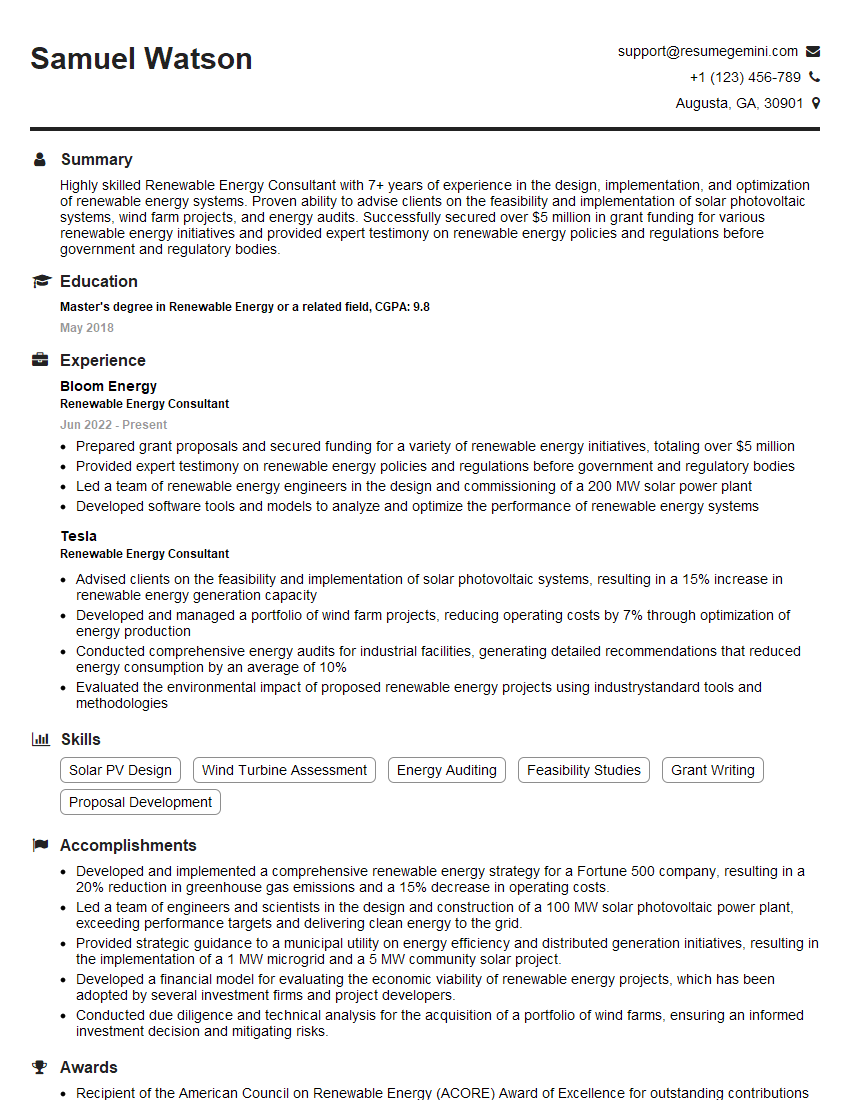
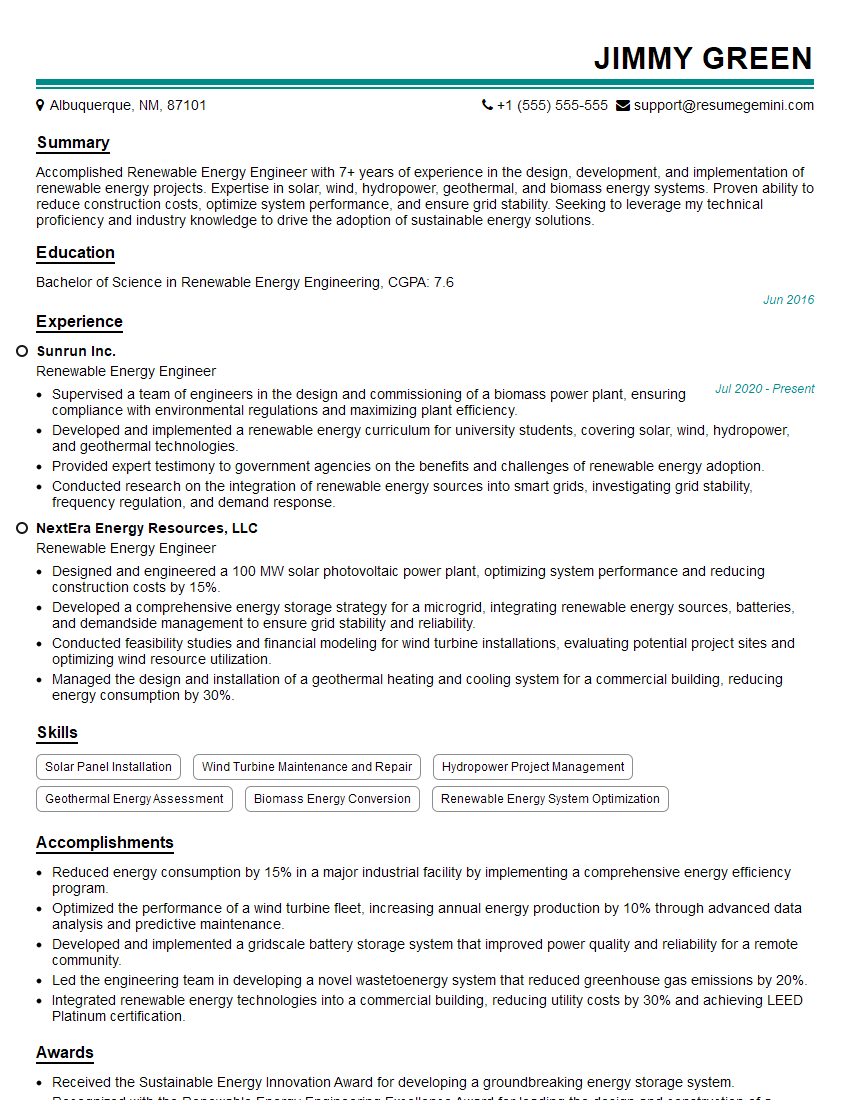
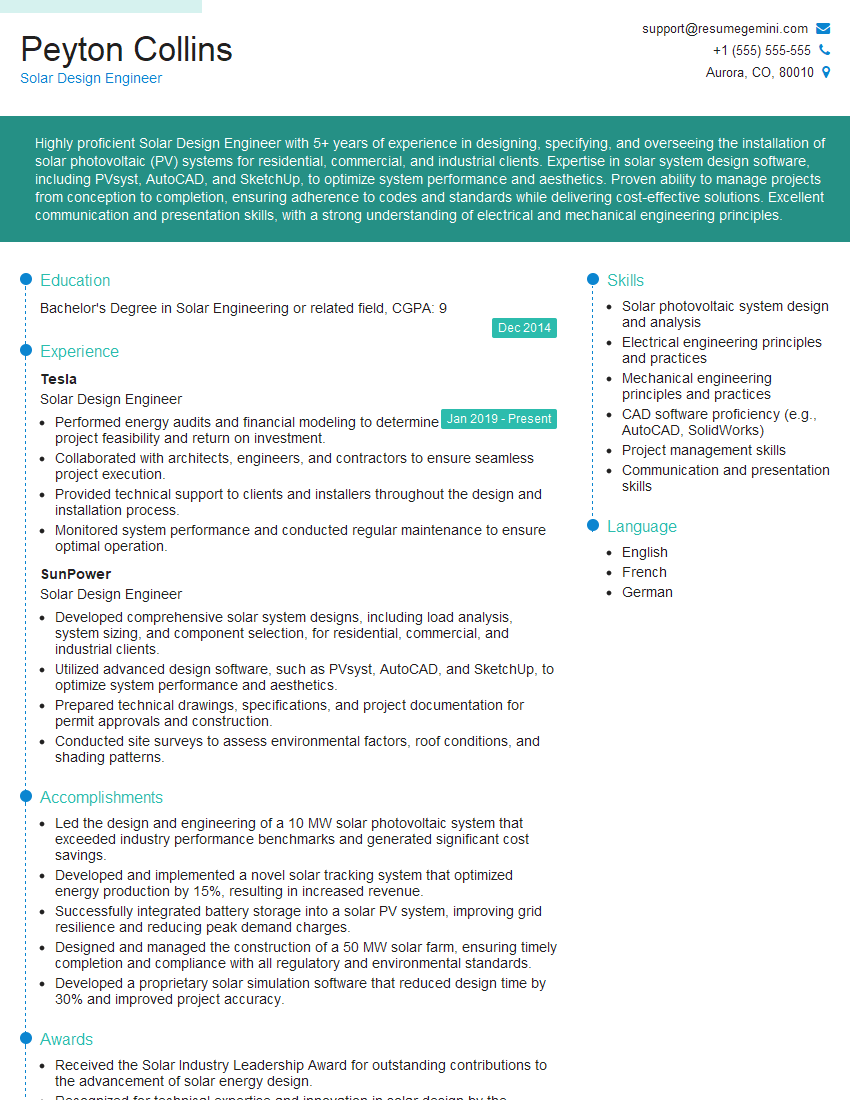
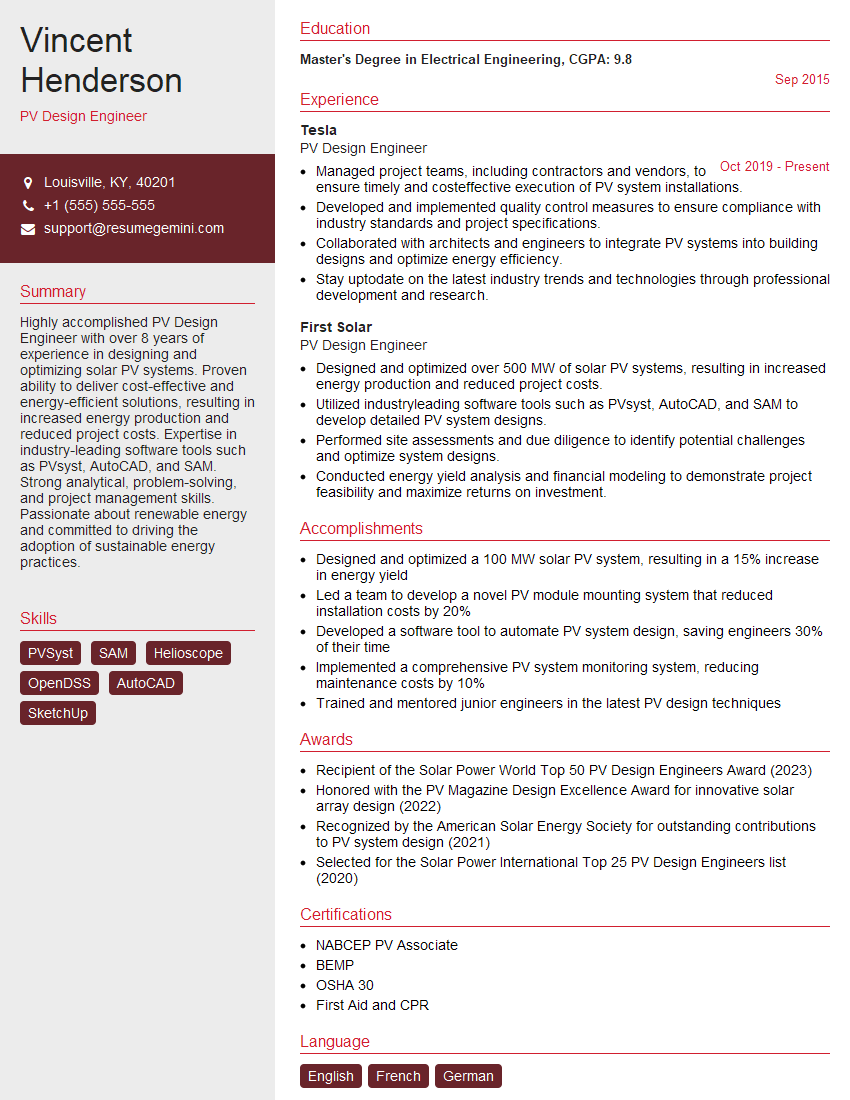
Mastering CAD and PV design software is crucial for career advancement in the rapidly growing renewable energy sector. These skills are highly sought after, opening doors to diverse and rewarding roles. To maximize your job prospects, it’s essential to have a resume that showcases your expertise effectively. An ATS-friendly resume is key to getting your application noticed by recruiters. We strongly recommend using ResumeGemini to build a professional and impactful resume that highlights your skills in CAD and PV design software. ResumeGemini provides examples of resumes tailored to this field, ensuring your application stands out from the competition.
Explore more articles
Users Rating of Our Blogs
Share Your Experience
We value your feedback! Please rate our content and share your thoughts (optional).
What Readers Say About Our Blog
To the interviewgemini.com Webmaster.
Very helpful and content specific questions to help prepare me for my interview!
Thank you
To the interviewgemini.com Webmaster.
This was kind of a unique content I found around the specialized skills. Very helpful questions and good detailed answers.
Very Helpful blog, thank you Interviewgemini team.