The right preparation can turn an interview into an opportunity to showcase your expertise. This guide to Use of Drywall Lifts and Equipment interview questions is your ultimate resource, providing key insights and tips to help you ace your responses and stand out as a top candidate.
Questions Asked in Use of Drywall Lifts and Equipment Interview
Q 1. Describe your experience operating various types of drywall lifts.
Throughout my career, I’ve operated a wide range of drywall lifts, from simple manual lifts to sophisticated powered models with various lifting capacities and features. This includes manual swing-arm lifts, electric chain hoists, and pneumatic lifts used on scissor lifts or boom lifts. For instance, on a recent large commercial project, we utilized a heavy-duty electric chain hoist lift capable of handling multiple sheets simultaneously. On smaller residential jobs, a simpler manual swing-arm lift often sufficed. My experience encompasses not only operating these lifts but also understanding their limitations and selecting the appropriate lift for a specific task and jobsite conditions.
I’m proficient in using both the controls and safety features of each type, including emergency stops, overload protection, and load-leveling mechanisms. I’ve even had experience with lifts that require specific rigging techniques depending on the size and type of drywall panels being installed.
Q 2. Explain the safety procedures you follow when using a drywall lift.
Safety is paramount when operating drywall lifts. My safety procedures always begin with a thorough pre-operation inspection (detailed in a later answer). After the inspection, I ensure the work area is clear of obstructions and that the lift is positioned correctly to minimize swing radius and prevent collisions. I always wear appropriate personal protective equipment (PPE), including safety glasses, gloves, and steel-toed boots. Before lifting, I carefully secure the drywall sheets to the lift using appropriate straps and securing mechanisms, ensuring they are evenly distributed to prevent tipping or imbalance.
During operation, I maintain a safe distance from the moving load and never work under a suspended load. I’m trained to react to any unexpected situations – for instance, I know what to do if the power fails on an electric lift or if I encounter a problem with the load. Regular communication with my coworkers is critical to ensure everyone is aware of the lift’s movements. After completing the lift, I carefully lower the load, disconnect it, and properly secure the lift for storage or transport. Following company-mandated safety protocols and adhering to OSHA regulations is second nature to me.
Q 3. What are the different types of drywall lifts and their applications?
Drywall lifts come in various types, each suited for different applications:
- Manual Swing-Arm Lifts: These are simple, hand-operated lifts ideal for smaller jobsites and lighter loads. They are relatively inexpensive and easy to use but require more manual effort.
- Electric Chain Hoists: These provide more lifting power and smoother operation, particularly beneficial for larger sheets and higher ceilings. They typically involve a motorized hoist and a trolley system.
- Pneumatic Drywall Lifts: Powered by compressed air, these are often integrated into larger scissor lifts or boom lifts, allowing for greater reach and mobility. They are efficient for larger projects.
- Portable Drywall Lifts: These are self-contained units, designed for easy maneuverability on the job site. Often they include features for easy setup and breakdown.
The choice of lift depends on factors like the weight of the drywall, ceiling height, jobsite accessibility, and budget. For instance, a manual lift may be suitable for a small residential project, while a powerful electric chain hoist would be necessary for a large commercial building.
Q 4. How do you inspect a drywall lift before operation?
Inspecting a drywall lift before operation is a crucial safety step. My inspection checklist covers several points:
- Structural Integrity: I visually inspect the lift’s frame, arms, and all supporting components for any signs of damage, cracks, bends, or wear. I pay close attention to welds and pivot points.
- Mechanical Components: I check the condition of cables, chains, pulleys, and other moving parts, ensuring they are lubricated and free of damage or excessive wear. I test the brakes and safety mechanisms.
- Electrical Components (if applicable): For electric lifts, I check the power cord for any damage and ensure all electrical connections are secure. I test the controls to make sure they respond correctly. I inspect the emergency stop button to ensure it’s operational.
- Hydraulic System (if applicable): For hydraulic lifts, I check the fluid levels and look for leaks. I test the hydraulic functions to ensure smooth operation and proper lifting capacity.
- Safety Devices: I thoroughly inspect all safety devices, including load limiters, overload protection systems, and emergency stops, to ensure they are functional and correctly calibrated.
If any issues are found, I immediately report them and do not operate the lift until the repairs are made. Proper pre-operation inspections prevent accidents and ensure safe and efficient operation.
Q 5. What are the common causes of drywall lift malfunctions?
Malfunctions in drywall lifts can stem from various sources:
- Mechanical Wear and Tear: Over time, moving parts like chains, cables, and pulleys can wear down, leading to breakage or malfunction. This is common due to the heavy loads and repetitive motions.
- Electrical Problems: Faulty wiring, damaged motors, or malfunctioning controls can cause problems in electric lifts. This often manifests as reduced power or complete failure.
- Hydraulic Issues (if applicable): Leaks in hydraulic systems, low fluid levels, or malfunctioning pumps can impact lift operation. This can result in slow lifting, reduced power, or complete failure.
- Improper Maintenance: Lack of regular lubrication, inspection, and maintenance can contribute to premature wear and tear and potential malfunctions.
- Operator Error: Overloading the lift beyond its capacity, improper securing of the drywall, or incorrect operation can cause malfunctions or accidents.
Understanding these common causes helps in preventive maintenance and troubleshooting.
Q 6. How do you troubleshoot a malfunctioning drywall lift?
Troubleshooting a malfunctioning drywall lift involves a systematic approach:
- Safety First: Never attempt to troubleshoot a malfunctioning lift while it is under load. Ensure the lift is completely lowered and disconnected from the power source.
- Visual Inspection: Conduct a thorough visual inspection for any obvious signs of damage, wear, or loose connections, focusing on the areas mentioned in the common causes above.
- Check Safety Devices: Test all safety devices to ensure their functionality, such as emergency stops and overload protection mechanisms.
- Identify the Problem: Based on the visual inspection and your knowledge of the lift’s mechanics and electrical system, try to identify the root cause of the malfunction. This may involve checking electrical connections, hydraulic fluid levels, or inspecting mechanical components for wear and tear.
- Consult Documentation: Refer to the lift’s operation and maintenance manual for troubleshooting guides, diagrams, and specifications.
- Seek Professional Assistance: If the problem is beyond your capabilities or if you are unsure about any repair, contact a qualified technician or the lift’s manufacturer for assistance. Never attempt repairs beyond your skillset.
Remember: Safety is paramount. If you’re unsure about anything, don’t attempt to fix it yourself.
Q 7. Describe your experience with different types of drywall materials.
My experience with various drywall materials is extensive. I’ve worked with standard gypsum drywall, moisture-resistant drywall (MR), fire-resistant drywall (Type X), and even specialized types for soundproofing. Each material has its unique properties and requires appropriate handling. For instance, Type X drywall is considerably heavier than standard gypsum board, necessitating the use of stronger and more appropriately rated lifts. Moisture-resistant drywall is often used in bathrooms and other damp areas, and requires careful handling to prevent damage during transport and installation.
Understanding the weight and physical characteristics of different drywall materials is essential to select the right lift and employ proper handling techniques. Heavier boards or larger panels necessitate stronger lifts and more secure strapping to prevent damage or injury. In addition, the fragility of some specialized drywall types requires extra caution to avoid cracking or breaking the board during handling.
Q 8. How do you calculate the weight capacity of a drywall lift?
Calculating the weight capacity of a drywall lift isn’t a simple matter of looking at a single number. It depends on several factors, and exceeding the stated capacity is extremely dangerous. The manufacturer’s label always provides a maximum weight limit, but this is often under ideal conditions. You need to consider the lift’s model, its condition (regular maintenance is key!), and the distribution of the weight on the platform. Think of it like this: a perfectly balanced load of 100lbs is safer than a poorly balanced 80lbs load. Uneven weight distribution can lead to tipping or structural failure. Therefore, always err on the side of caution. Never exceed the manufacturer’s stated capacity, and carefully distribute the load to ensure even weight balance.
For example, if a lift has a stated capacity of 200 lbs, loading 100lbs of drywall on one side and 100 lbs on the other (evenly distributed), is far safer than stacking 200 lbs on one side only. Always check the load’s center of gravity.
In some scenarios, a site assessment might be necessary to confirm the load’s weight and the structural integrity of the floor supporting the lift.
Q 9. Explain the proper techniques for loading and unloading drywall using a lift.
Loading and unloading drywall safely requires methodical planning and execution. Before starting, always conduct a thorough site inspection to confirm sufficient space and clearance. Firstly, position the drywall sheet carefully on the lift platform; never just throw it. Ensure the sheet is balanced, preventing it from shifting during lifting. The center of gravity should be over the platform’s center. Use lifting straps or a similar system to secure the sheet to the platform, preventing any movement. When using straps always ensure they are correctly fitted and secured. Once secured, slowly raise the lift; avoid jerky movements. Always have a spotter assist with the positioning to ensure even distribution of weight, and safe movement.
Unloading follows a similar procedure in reverse. Slowly lower the lift, keeping a steady hand. Ensure a smooth transition and clear area for receiving the drywall. Never attempt to lift or move drywall that is too heavy for the lift. Always prioritize safe lifting practices. Remember to always lower the lift completely and disconnect it before placing more sheets on the platform.
Q 10. How do you ensure the stability of the drywall lift during operation?
Stability is paramount when using a drywall lift. Several factors contribute to this. The first and most obvious is ensuring the lift is on a level, stable surface. Uneven ground or a soft surface will compromise stability, increasing the risk of tipping. Always check for obstructions like loose debris or cables. Proper leveling of the lift’s base is crucial and often overlooked. The lift’s wheels (if present) should be locked to prevent accidental movement during operation. The structural integrity of the lift is equally important; regular maintenance is key here. Inspect for any signs of damage, wear and tear or defects before use. Lastly, even weight distribution of the drywall sheets is crucial as discussed earlier.
Imagine trying to balance a book on your hand, if the book’s weight isn’t centered it will fall. The same principle applies to the drywall lift.
Q 11. What are the potential hazards associated with using a drywall lift?
The potential hazards associated with drywall lifts are significant if safety isn’t prioritized. The most obvious risk is the potential for the lift to tip over, causing injury or damage. This can be due to overloading, uneven weight distribution, or unstable ground. Crushing injuries are another major concern, especially if the lift malfunctions or collides with a person. Electrical hazards also exist, particularly if the lift is used near electrical wires or power sources. Lastly, falls from height can occur if the operator isn’t adequately trained or careful. In addition to these, there’s a risk of impact or collision, especially in confined spaces or crowded work areas.
Always prioritize safety through proper training and following safety protocols.
Q 12. How do you maintain a drywall lift to prevent accidents?
Preventing accidents with a drywall lift requires a robust maintenance schedule. Regular inspections should be conducted, checking for any signs of wear, tear, or damage to the lift’s structure, including wheels, cables, and the lifting mechanism. Ensure all nuts, bolts, and connections are tightened and secure. Grease moving parts per the manufacturer’s instructions. Replace any damaged or worn components immediately. Keep the lift clean and free of debris, preventing malfunctions. A logbook detailing inspections and maintenance is recommended. Following the manufacturer’s recommendations for maintenance is critical; it usually includes a schedule of checks and maintenance. Consider investing in regular inspections by a qualified professional.
Think of it like car maintenance. Regular servicing prevents major breakdowns and accidents.
Q 13. Describe your experience working at heights.
I have extensive experience working at heights, encompassing various construction projects where drywall lifts were essential. This experience includes operating drywall lifts, supervising their operation, and conducting safety briefings for teams. I’m comfortable and skilled in using fall arrest systems, ensuring both my own safety and the safety of the crew. My experience also involves adhering to stringent safety regulations and protocols concerning work at height. In addition to the technical skills, I’ve developed strong situational awareness in evaluating risks and adapting strategies to maintain safety during challenging situations while working at heights. I also hold a valid and current certification for working at heights.
Q 14. How do you handle unexpected situations during drywall lift operation?
Handling unexpected situations during drywall lift operation requires calm, quick thinking, and adherence to established emergency protocols. If the lift malfunctions, immediately stop the operation and lower the load slowly and carefully. Never attempt to repair the lift while it’s loaded or in operation; call for assistance from a qualified technician. If a worker is in danger near a falling drywall sheet or the lift itself, always prioritize their immediate safety and initiate emergency procedures, contacting emergency services as needed. For instance, if the lift begins to tilt, immediately lower the load and ensure the area is clear. Every site should have a clear emergency plan that’s practiced regularly.
Preparation and planning are vital in mitigating risk and effectively dealing with unexpected events.
Q 15. What are your experience with different types of lifting straps/sling?
My experience encompasses a wide range of lifting straps and slings used with drywall lifts. The choice depends heavily on the panel size, weight, and the specific lift mechanism. I’ve worked extensively with:
- Webbing slings: These are versatile and relatively inexpensive, ideal for lighter panels. However, they can be prone to damage from sharp edges, so careful inspection before each use is crucial. I always check for fraying, cuts, or weakening before using them.
- Chain slings: Stronger and more durable than webbing slings, chain slings are suitable for heavier loads and are less susceptible to damage from sharp objects. Regular lubrication and inspection for wear are key to their longevity and safety. I’ve used these primarily on larger commercial jobs with heavier panels.
- Wire rope slings: These are the strongest option and often used for extremely heavy or awkward loads. They require regular inspection for broken wires or kinks. They are less common in residential settings but are a necessity in larger construction projects. I always ensure proper crimping and the use of appropriate safety clips.
Proper sling selection and usage are non-negotiable for safety. Incorrect selection can lead to damage to the drywall, injury to personnel, or even equipment failure.
Career Expert Tips:
- Ace those interviews! Prepare effectively by reviewing the Top 50 Most Common Interview Questions on ResumeGemini.
- Navigate your job search with confidence! Explore a wide range of Career Tips on ResumeGemini. Learn about common challenges and recommendations to overcome them.
- Craft the perfect resume! Master the Art of Resume Writing with ResumeGemini’s guide. Showcase your unique qualifications and achievements effectively.
- Don’t miss out on holiday savings! Build your dream resume with ResumeGemini’s ATS optimized templates.
Q 16. What are your experience with different types of drywall panels?
My experience covers a variety of drywall panels, each presenting unique handling challenges:
- Standard 1/2-inch drywall: This is the most common type and relatively easy to handle with a drywall lift. However, even these can be heavy, so proper lifting techniques are essential.
- 5/8-inch drywall: Significantly heavier than 1/2-inch panels, requiring more care and attention during lifting. The increased weight makes accurate placement and balance crucial to avoid accidents.
- Moisture-resistant drywall: While the lifting process is similar, it’s crucial to handle these carefully to avoid damage to the surface.
- Fire-resistant drywall: These are heavier and sometimes more brittle than standard drywall, requiring extra caution to prevent cracking or breakage during transport. I always use appropriate lifting straps that distribute the weight evenly.
Understanding the specific characteristics of each panel type is vital for safe and efficient handling. This involves assessing weight, size, fragility, and potential for damage during the lifting process.
Q 17. How do you ensure the safety of others while using a drywall lift?
Safety is paramount. Before using a drywall lift, I always:
- Inspect the area: Ensure the area is clear of obstructions and that there’s sufficient headroom to avoid collisions. I clearly mark the area to keep people away from the lifting zone.
- Check the lift: A thorough pre-operation inspection is done to verify that all mechanisms, such as brakes, straps, and hoist, are functioning correctly. I never use a lift that shows any sign of damage or malfunction.
- Communicate clearly: I use hand signals and verbal instructions to coordinate with the team, ensuring everyone understands their role and position during the lift. This avoids miscommunication and prevents potential accidents.
- Wear appropriate safety gear: Safety glasses, gloves, and sturdy work boots are always worn.
- Train others: I ensure that all team members are properly trained in the safe operation of drywall lifts and procedures.
By diligently following these steps, I minimize risks and ensure the safety of everyone on the job site.
Q 18. What is your understanding of OSHA regulations related to drywall lifts?
My understanding of OSHA regulations concerning drywall lifts is extensive. OSHA standards emphasize the importance of proper training, equipment inspection, safe operating procedures, and the use of personal protective equipment. Key regulations include:
- Proper training: All personnel operating drywall lifts must receive adequate training on safe operation, maintenance, and emergency procedures.
- Regular inspection: The lift must be inspected regularly for defects, and any issues must be addressed before use. I maintain meticulous records of these inspections.
- Load capacity: The weight of the drywall must not exceed the lift’s rated capacity. Overloading can cause serious accidents.
- Safe operating practices: Specific procedures must be followed to avoid hazards, such as proper signaling, keeping the area clear, and using the correct lifting techniques.
I am familiar with all relevant OSHA guidelines and am committed to maintaining a safe work environment. Ignoring OSHA regulations can result in serious penalties and, more importantly, injuries.
Q 19. What is your experience with preventative maintenance of drywall lifts?
Preventative maintenance is critical for extending the lifespan of drywall lifts and ensuring their safe operation. My routine involves:
- Daily inspections: Checking all components before each use for damage, wear, and tear.
- Regular lubrication: Keeping moving parts lubricated to prevent friction and wear.
- Cable inspection: Regularly checking the hoisting cable for fraying, kinks, or damage.
- Brake testing: Ensuring the brakes are functioning correctly.
- Scheduled maintenance: Following the manufacturer’s recommendations for periodic servicing.
Proactive maintenance prevents costly repairs and, more importantly, prevents accidents resulting from equipment failure. I keep a detailed log of all maintenance activities.
Q 20. How do you communicate effectively with your team while using a drywall lift?
Effective communication is crucial for safe and efficient drywall lift operations. I utilize a combination of methods:
- Clear hand signals: A standardized system of hand signals is used to communicate directions and actions during lifting.
- Verbal instructions: Clear, concise, and unambiguous instructions are given before and during each lift.
- Pre-lift briefings: Before starting, I conduct a brief discussion outlining the plan, roles, and potential hazards.
- Radio communication: On larger projects, radio communication can be used to maintain consistent coordination.
Open communication, mutual understanding, and a commitment to safety are integral to a smooth and efficient work process.
Q 21. How do you adapt to changing work conditions when using a drywall lift?
Adapting to changing work conditions is essential. This might include variations in:
- Ceiling height: Adjusting the lift’s height to accommodate different ceiling heights.
- Panel size and weight: Selecting appropriate straps and adjusting the lift’s configuration based on the panel dimensions and weight.
- Obstacles: Modifying the lifting path or using alternative techniques to navigate obstacles such as pipes or beams.
- Weather conditions: Taking appropriate safety measures when working in adverse weather such as rain or wind.
Flexibility, problem-solving skills, and a commitment to safety are essential for adapting to changing conditions. I always prioritize safety and adapt procedures as needed to address any unexpected challenges.
Q 22. Describe a time you had to solve a problem related to a drywall lift.
One time, we were installing drywall on a particularly high ceiling, and the standard drywall lift we were using was struggling to reach the top. The lift’s hoist mechanism seemed to be binding, resulting in slow and jerky operation. This created a safety hazard as the sheet could swing unexpectedly. Instead of forcing it, I stopped the lift immediately. After a thorough inspection, I discovered a small piece of debris lodged in the hoist mechanism, preventing smooth operation. We carefully removed the debris, lubricated the moving parts according to the manufacturer’s instructions, and tested the lift before resuming work. The problem was resolved, and the rest of the installation proceeded without further issue. This highlighted the importance of regular maintenance checks and immediate action when a safety issue is suspected. Ignoring the problem could have resulted in a serious accident.
Q 23. What are the weight limitations of different types of drywall lifts?
Weight limitations vary significantly depending on the type and model of drywall lift. Manual lifts are generally rated for lighter loads, typically ranging from 50 to 150 pounds, while electric lifts can handle significantly more weight, often up to 400 pounds or more. Some specialized heavy-duty lifts can support even greater weights. It’s crucial to always check the manufacturer’s specifications before use. Never exceed the rated capacity of the lift, as this significantly increases the risk of accidents and equipment damage. Think of it like this: exceeding the weight limit is like overloading a truck – it compromises the structural integrity of the equipment and poses a severe risk.
Q 24. How do you work safely around electrical wiring when using a drywall lift?
Safety around electrical wiring is paramount when using a drywall lift. Before operating the lift, always locate and mark the position of all electrical wiring in the area. This might involve using a stud finder with wire detection capabilities or consulting the building’s electrical plans. Never lift drywall directly over exposed wiring. If wiring is in close proximity to the lift’s operational area, ensure a sufficient clearance distance is maintained to prevent accidental contact. If there’s any doubt about safety, it’s always best to consult a qualified electrician to ensure safe working conditions. Furthermore, ensure all team members are aware of the wiring’s location and maintain a safe working distance from them.
Q 25. How do you secure the drywall lift to prevent movement during operation?
Securing the drywall lift depends on the type of lift. Most lifts utilize outrigger legs or base plates that need to be firmly planted on the ground for stability. These should be extended fully and ensure they are on a level and stable surface to prevent tipping. On uneven terrain, use leveling plates or blocks to create a stable base. For some models, additional bracing or anchoring might be required. Always refer to the manufacturer’s instructions for the specific model you are using. Think of it like setting up a tripod – you need a solid, three-point base for optimal stability. Any instability can lead to tipping and serious injury.
Q 26. What is your understanding of load-bearing capacities of different drywall lifts?
Load-bearing capacities, as mentioned before, are crucial and vary widely. Manual lifts usually have a lower capacity than electric lifts. The load-bearing capacity is always specified by the manufacturer on the lift’s data plate. It’s crucial to understand that exceeding this capacity dramatically increases the risk of equipment failure, which can lead to injury and property damage. This information is always clearly stated in the equipment’s operational manual. Never attempt to lift a load exceeding the specified limit – safety always comes first.
Q 27. Explain the process of properly securing a load on a drywall lift.
Properly securing a load on a drywall lift involves several steps. First, ensure the sheet of drywall is evenly positioned and centered on the lift’s platform. Use straps or clamps provided with the lift to secure the drywall firmly. These straps should be tightened evenly to prevent the sheet from shifting. Avoid using makeshift straps or methods. The sheet should be secure before the lift is raised. Once raised, regularly check the load for any movement or slippage. If any slippage is detected, lower the load immediately and readjust the straps. Always prioritize safety; a securely fastened load is crucial to prevent accidents.
Q 28. What actions would you take if you noticed a damaged component on a drywall lift?
If a damaged component is noticed on a drywall lift – be it a bent outrigger, cracked base plate, frayed wiring, or anything else – the lift should be taken immediately out of service. Do not attempt to use a damaged lift. Report the damage to the supervisor immediately. The damaged lift should be clearly marked and secured to prevent accidental use. A damaged lift poses a significant safety hazard, and using it could lead to serious injury or equipment malfunction. Repair or replacement should be done by a qualified professional following the manufacturer’s recommendations.
Key Topics to Learn for Use of Drywall Lifts and Equipment Interview
- Safe Operation Procedures: Understanding and adhering to all safety regulations and procedures for operating various drywall lifts and equipment, including pre-operation checks and emergency protocols.
- Equipment Selection: Knowing which type of lift or equipment is appropriate for different job sites and drywall panel sizes and weights. This includes understanding the limitations of each type of equipment.
- Load Capacity and Stability: Accurately assessing the weight of materials and ensuring the lift’s capacity is not exceeded. Understanding how to maintain stability during lifting and maneuvering operations.
- Maintenance and Troubleshooting: Recognizing potential mechanical issues, performing routine maintenance checks, and troubleshooting common problems with drywall lifts and related equipment.
- Practical Application: Demonstrating proficiency in setting up, operating, and safely securing various drywall lifting equipment in different work environments and scenarios (e.g., confined spaces, varying ceiling heights).
- Teamwork and Communication: Effectively communicating with team members to coordinate lifting operations and ensure a safe working environment. Understanding the importance of clear communication to prevent accidents.
- Regulations and Compliance: Familiarity with relevant industry regulations, safety standards, and best practices for the use of drywall lifts and equipment.
Next Steps
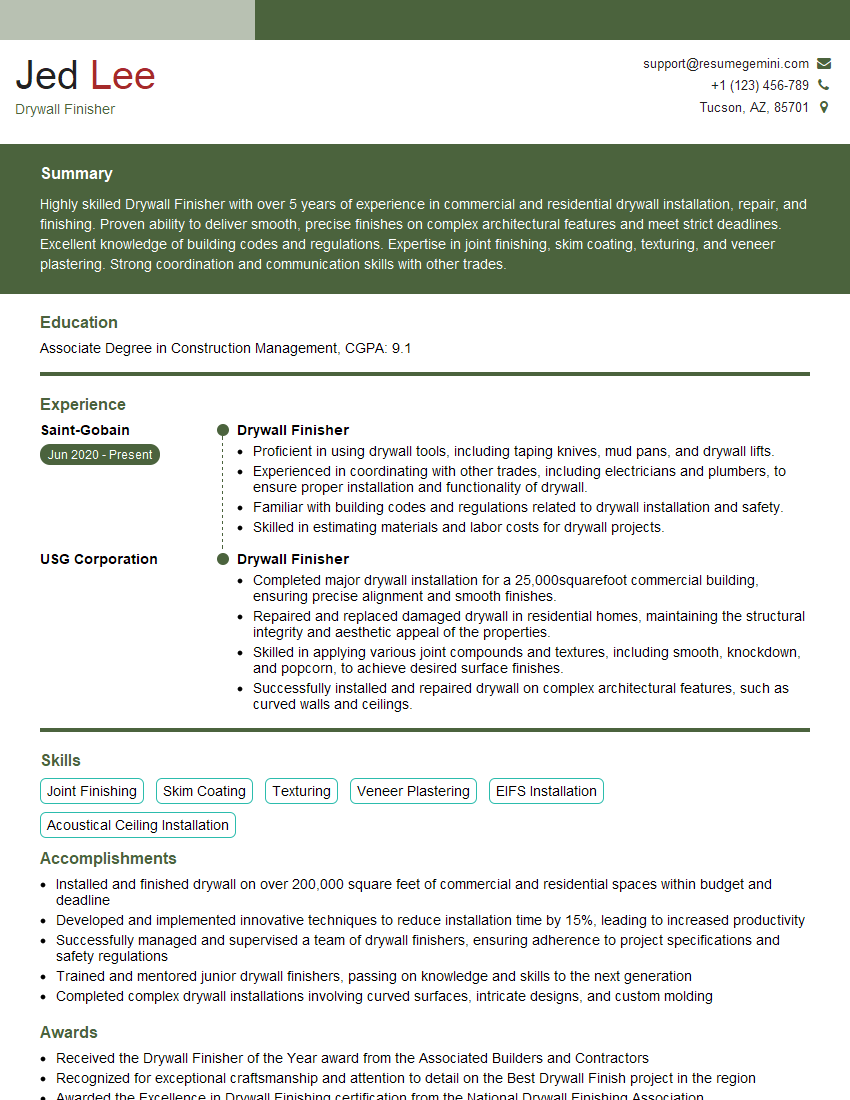
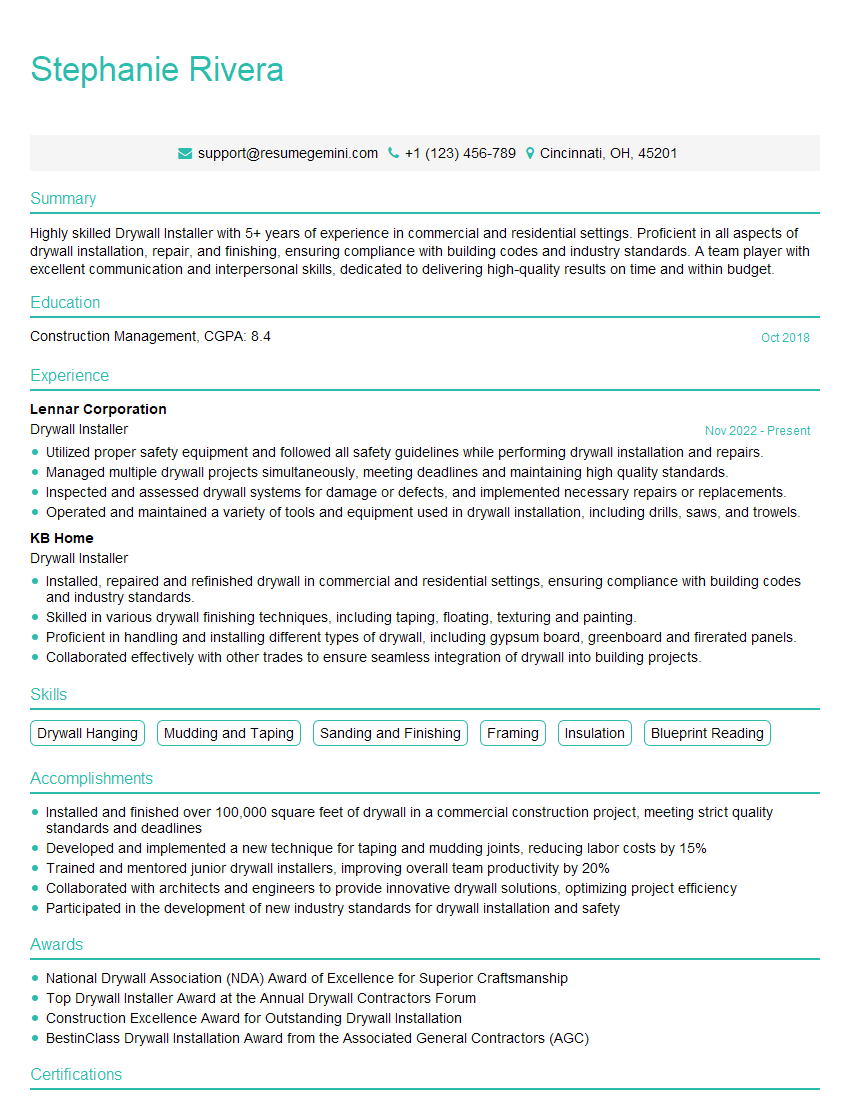
Mastering the use of drywall lifts and equipment is crucial for career advancement in the construction industry. It demonstrates your commitment to safety and efficiency, opening doors to more challenging and rewarding roles. To significantly improve your job prospects, focus on creating an ATS-friendly resume that highlights your skills and experience. ResumeGemini is a trusted resource to help you build a professional and impactful resume. We provide examples of resumes tailored specifically to highlight expertise in the use of drywall lifts and equipment, assisting you in showcasing your capabilities to potential employers.
Explore more articles
Users Rating of Our Blogs
Share Your Experience
We value your feedback! Please rate our content and share your thoughts (optional).
What Readers Say About Our Blog
To the interviewgemini.com Webmaster.
Very helpful and content specific questions to help prepare me for my interview!
Thank you
To the interviewgemini.com Webmaster.
This was kind of a unique content I found around the specialized skills. Very helpful questions and good detailed answers.
Very Helpful blog, thank you Interviewgemini team.