Every successful interview starts with knowing what to expect. In this blog, we’ll take you through the top Vehicle Maintenance and Safety Checks interview questions, breaking them down with expert tips to help you deliver impactful answers. Step into your next interview fully prepared and ready to succeed.
Questions Asked in Vehicle Maintenance and Safety Checks Interview
Q 1. Explain the importance of regular oil changes.
Regular oil changes are crucial for the longevity and performance of your vehicle’s engine. Engine oil lubricates all the moving parts, preventing friction and wear. Over time, this oil degrades, accumulating contaminants like dirt, metal particles, and fuel residue. These contaminants reduce the oil’s lubricating properties, leading to increased engine wear, reduced fuel efficiency, and ultimately, engine failure.
Think of it like this: your engine is a complex machine with thousands of moving parts rubbing against each other. Oil acts like a protective cushion, preventing metal-on-metal contact. Without fresh oil, that cushion wears thin, leading to damage.
The frequency of oil changes depends on the type of oil used (conventional, synthetic, etc.), your vehicle’s make and model, and your driving habits. Consult your owner’s manual for the recommended interval. Ignoring oil changes can lead to expensive repairs down the line, potentially costing thousands of dollars.
Q 2. Describe the process of checking tire pressure and tread depth.
Checking tire pressure and tread depth are essential safety checks that should be performed regularly. Proper tire inflation ensures optimal handling, fuel efficiency, and prevents premature tire wear. Sufficient tread depth provides necessary grip on the road, especially in wet or icy conditions.
- Checking Tire Pressure: Use a reliable tire pressure gauge. Check the pressure when the tires are cold (before driving). The recommended tire pressure is usually found on a sticker inside the driver’s side doorjamb or in your owner’s manual. Inflate or deflate the tires as needed to reach the recommended pressure.
- Checking Tread Depth: The easiest way is to use a tread depth gauge. Alternatively, you can use the penny test: insert a penny into the tread groove with Lincoln’s head upside down. If you can see the top of Lincoln’s head, the tread is worn and needs replacement. Generally, 2/32 of an inch is the minimum legal tread depth, but replacing tires before reaching this limit is recommended for optimal safety.
Ignoring these checks can lead to accidents, reduced fuel economy, and costly tire replacements. Regularly checking your tire pressure and tread depth will extend tire life and contribute to a safer driving experience.
Q 3. How do you identify and diagnose brake system problems?
Diagnosing brake system problems requires a systematic approach. Symptoms can range from soft or spongy brakes to grinding noises, pulsating pedals, or pulling to one side while braking. A visual inspection is the first step, checking for brake fluid leaks, worn brake pads or rotors, and damaged brake lines or hoses.
Common problems and their identification:
- Worn brake pads: A visual inspection will show thin brake pads or metal-on-metal contact. This will also produce a squealing or grinding noise when braking.
- Worn rotors: Rotors show grooves, scoring, or excessive wear. This can cause vibration or pulsation in the brake pedal.
- Brake fluid leaks: Look for wet spots under the vehicle or low brake fluid level in the master cylinder reservoir. This is a serious safety issue.
- ABS problems: The ABS warning light will illuminate if there’s a problem with the anti-lock braking system. This usually requires professional diagnosis.
If you suspect a brake problem, do not drive the vehicle. Get it professionally inspected and repaired immediately. Brake failure is a significant safety hazard.
Q 4. What are the common causes of engine overheating?
Engine overheating is a serious issue that can lead to significant engine damage. Several factors can contribute to this:
- Low coolant level: A lack of coolant reduces the engine’s ability to dissipate heat.
- Faulty thermostat: A malfunctioning thermostat can prevent coolant from circulating properly.
- Clogged radiator: Debris or buildup inside the radiator restricts coolant flow.
- Faulty water pump: The water pump circulates coolant; a malfunctioning pump hinders this process.
- Faulty radiator fan: The radiator fan helps cool the coolant; a malfunctioning fan reduces cooling capacity.
- Head gasket failure: This allows coolant to leak into the cylinders or oil, leading to overheating.
If your engine overheats, pull over immediately and turn off the engine to prevent further damage. Never open the radiator cap when the engine is hot; the pressurized coolant can cause serious burns.
Q 5. Explain the function of a vehicle’s cooling system.
A vehicle’s cooling system is vital for maintaining the optimal operating temperature of the engine. An internal combustion engine generates a significant amount of heat, and if this heat isn’t managed effectively, it can lead to engine damage or failure. The cooling system works to remove this excess heat.
The system typically consists of:
- Engine coolant (antifreeze): A mixture of water and antifreeze that circulates through the engine block and radiator, absorbing heat.
- Water pump: Pumps the coolant through the engine block and radiator.
- Radiator: A heat exchanger that dissipates heat from the coolant to the outside air.
- Thermostat: Regulates coolant flow to maintain optimal engine temperature.
- Radiator fan: Assists in cooling the radiator, especially at low speeds or when the engine is under heavy load.
- Pressure cap: Maintains pressure within the system, preventing boiling and enhancing heat transfer.
A properly functioning cooling system is essential for preventing engine damage and ensuring safe and efficient vehicle operation.
Q 6. How do you inspect a vehicle’s suspension system?
Inspecting a vehicle’s suspension system involves checking for wear, tear, and damage to various components that affect the vehicle’s ride, handling, and safety.
The inspection process involves:
- Visual inspection: Examine the shocks/struts for leaks, damage, or excessive wear. Check the springs for sagging or broken coils. Inspect the ball joints, tie rod ends, and control arms for any play or damage. Look for cracks or damage in the bushings and other rubber components.
- Bounce test: Push down on each corner of the vehicle. A properly functioning suspension will return smoothly and evenly. Excessive bouncing or slow return indicates problems with shocks/struts.
- Steering wheel check: While driving, check for any unusual steering wheel play or vibration, which can be indicative of suspension component failure.
- Road test: Drive the vehicle over various road surfaces to evaluate the handling and smoothness of the ride. Uneven tire wear or abnormal handling can be an indicator of suspension issues.
Regular suspension inspections are important for safety and handling. Worn or damaged suspension components can lead to loss of control, accidents, and premature tire wear.
Q 7. Describe the process of performing a pre-trip inspection.
A pre-trip inspection is a critical safety procedure performed before operating any vehicle, especially commercial vehicles. It helps identify potential mechanical problems that could lead to accidents or breakdowns.
The inspection typically includes:
- Exterior check: Inspect tires for proper inflation, tread depth, and damage. Check lights, turn signals, brake lights, and reflectors. Verify that mirrors are adjusted and secure. Examine the body for damage or leaks.
- Interior check: Check the functionality of the gauges and warning lights. Ensure that the seat belts are in good condition and functioning. Make sure the steering wheel is not damaged and operates smoothly. Check the vehicle’s documentation and permits.
- Undercarriage check: Inspect the exhaust system for leaks or damage. Examine the suspension components for wear or damage. Check the brakes, including brake lines and hoses, for leaks or damage. Examine the fuel system for leaks or damage. Inspect the steering system for damage or leaks.
- Engine compartment check: Check the levels of oil, coolant, brake fluid, and power steering fluid. Examine the belts and hoses for wear or damage. Inspect the battery terminals for corrosion.
A thorough pre-trip inspection helps prevent accidents and ensures the safe operation of the vehicle. It’s a critical aspect of responsible driving and essential for commercial drivers.
Q 8. What are the safety regulations related to vehicle maintenance?
Vehicle safety regulations regarding maintenance vary by location (country, state, etc.), but generally revolve around ensuring the vehicle is roadworthy and doesn’t pose a risk to the driver or others. These regulations often mandate regular inspections and maintenance of critical systems.
- Brake System: Regular checks of brake pads, rotors, calipers, fluid levels, and lines are crucial and often legally required. Failing to maintain these can lead to catastrophic brake failure.
- Steering and Suspension: Regular checks for proper alignment, tire wear, and suspension component integrity are essential for safe handling. Worn components can lead to loss of control.
- Lighting: All lights (headlights, taillights, brake lights, turn signals) must function correctly. Faulty lighting compromises visibility and safety.
- Tires: Tire tread depth, pressure, and overall condition are regularly inspected. Under-inflated or worn tires significantly impact handling and braking.
- Exhaust System: Leaks in the exhaust system can lead to dangerous carbon monoxide buildup in the passenger compartment. Regular visual inspections are necessary.
- Windshield Wipers and Washers: Ensuring clear visibility is paramount. Wipers must be in good condition and washer fluid must be topped up.
Failure to comply with these regulations can result in fines, vehicle impoundment, or even legal action in case of accidents.
Q 9. How do you troubleshoot electrical system malfunctions?
Troubleshooting electrical system malfunctions requires a systematic approach. It often begins with a visual inspection, followed by using a multimeter to test circuits and components.
- Visual Inspection: Look for obvious signs of damage like frayed wires, corroded connections, burnt fuses, or loose components.
- Multimeter Testing: A multimeter is your best friend. You can test voltage, current, and resistance to pinpoint the faulty component. For example, checking for voltage at a fuse to see if power is reaching it, or checking continuity in a circuit to identify a break.
- Component Testing: Once a faulty component (e.g., alternator, starter, sensor) is identified, it can be tested separately using the multimeter or specialized testing equipment. This often involves checking its output voltage or resistance against manufacturer specifications.
- Wiring Diagrams: Consult a wiring diagram to trace the circuit and understand the flow of electricity. This helps to narrow down the area of the problem.
Example: If your headlights don’t work, you’d first check the fuses. If the fuses are okay, you’d move on to testing the headlight switch, wiring, and eventually the headlights themselves with a multimeter.
Q 10. Explain the importance of proper wheel alignment.
Proper wheel alignment is crucial for vehicle safety, fuel efficiency, and tire longevity. It ensures that the wheels are pointing in the correct direction, relative to each other and the vehicle’s frame.
- Tire Wear: Incorrect alignment causes uneven tire wear, leading to premature tire replacement. This translates into higher maintenance costs.
- Vehicle Handling: Misaligned wheels affect steering responsiveness and stability. The car might pull to one side, making it difficult to control, especially at higher speeds.
- Fuel Efficiency: Proper alignment minimizes friction, leading to better fuel economy. Misalignment forces the engine to work harder.
- Vehicle Stability: Alignment contributes to better vehicle stability, reducing the risk of skidding or loss of control, particularly during cornering or in adverse weather conditions.
Think of it like a shopping cart – if the wheels are not aligned, pushing it becomes difficult and it might veer off course unexpectedly. The same applies to a vehicle; proper alignment ensures smooth and predictable handling.
Q 11. Describe the different types of brake systems.
Several types of brake systems exist, but the most common are:
- Drum Brakes: These use brake shoes that press against a rotating drum to slow the vehicle. They are relatively simple and inexpensive but can be less effective in wet conditions.
- Disc Brakes: These use brake pads that squeeze against a rotating disc to slow the vehicle. They offer better braking performance, especially in wet conditions, and are more common in modern vehicles.
- Anti-lock Braking System (ABS): This electronic system prevents wheel lockup during braking, allowing for better steering control and shorter stopping distances in emergency situations. ABS is a safety feature and increasingly standard on modern vehicles.
- Electronic Stability Control (ESC): While not directly a brake system, ESC works in conjunction with the brakes and engine to maintain vehicle stability, particularly during cornering and skidding.
Many vehicles utilize a combination of disc brakes (front) and drum brakes (rear) for cost-effectiveness and performance. ABS and ESC are increasingly integrated into modern braking systems.
Q 12. How do you identify and repair a flat tire?
Identifying and repairing a flat tire involves several steps:
- Safety First: Pull over to a safe location away from traffic. Turn on hazard lights.
- Engage Parking Brake: Secure the vehicle using the parking brake.
- Gather Supplies: Locate your spare tire, jack, lug wrench, and owner’s manual.
- Loosen Lug Nuts: Slightly loosen the lug nuts on the flat tire using the lug wrench before jacking up the vehicle.
- Jack Up Vehicle: Place the jack securely under the vehicle’s frame near the flat tire, following the instructions in your owner’s manual. Raise the vehicle until the flat tire is off the ground.
- Remove Flat Tire: Unscrew the lug nuts completely and remove the flat tire.
- Mount Spare Tire: Mount the spare tire onto the wheel studs.
- Tighten Lug Nuts: Tighten the lug nuts by hand, then lower the vehicle slightly using the jack to allow the tire to make full contact.
- Fully Tighten Lug Nuts: Once the tire is on the ground, tighten the lug nuts fully using the lug wrench in a star pattern to ensure even pressure.
- Stow Flat Tire: Securely place the flat tire and tools in the vehicle.
- Check Tire Pressure: Check the spare tire’s pressure and inflate if needed.
Remember to get your flat tire repaired or replaced as soon as possible; spare tires are usually temporary solutions.
Q 13. What are the signs of a failing transmission?
Several signs indicate a failing transmission:
- Difficulty Shifting: The transmission may struggle to shift gears smoothly, experiencing delays or harsh shifts. It might feel like the car is slipping out of gear.
- Slipping Gears: The engine may rev up without a corresponding increase in speed, indicating the transmission is not properly engaging the gears.
- Strange Noises: Whining, grinding, or clunking noises coming from the transmission are often signs of internal problems.
- Leaking Fluid: Transmission fluid leaks are a serious problem that can cause significant damage if not addressed.
- Burning Smell: A burnt smell indicates that the transmission fluid is overheating, which might be due to low fluid levels or internal problems.
- Check Engine Light: The check engine light might illuminate, indicating a transmission-related fault code stored by the car’s computer.
Ignoring these signs can lead to significant and costly transmission repair or even replacement. Regular transmission fluid checks and professional servicing are crucial for extending its life.
Q 14. How do you perform a visual inspection of a vehicle’s exhaust system?
A visual inspection of a vehicle’s exhaust system focuses on identifying leaks, rust, damage, and proper connections.
- Leaks: Look for holes, cracks, or other damage to the exhaust pipes, muffler, catalytic converter, or other components. Exhaust leaks can lead to loss of power, noise, and dangerous carbon monoxide fumes.
- Rust and Corrosion: Check for rust or corrosion, which weakens the exhaust system and can lead to failure. Pay particular attention to areas where moisture and road salt accumulate.
- Proper Connections: Ensure that all components are securely connected, using clamps, gaskets, or welding, as appropriate. Loose connections can lead to leaks and noise.
- Exhaust System Position: Check that the exhaust system components are correctly positioned and not excessively close to any parts of the vehicle’s body. Exhaust pipes running too close to fuel lines, for example, are dangerous.
- Catalytic Converter Condition: Inspect the catalytic converter for damage, particularly if you’ve noticed a decrease in fuel efficiency or a check engine light.
During a visual inspection, it is important to utilize a flashlight, gloves, and potentially a mirror to reach hard-to-see areas under the vehicle.
Q 15. Explain the importance of regular fluid checks (transmission, coolant, etc.).
Regular fluid checks are crucial for maintaining your vehicle’s health and preventing costly repairs. Think of your car’s fluids like the lifeblood of its various systems. Each fluid plays a vital role, and low levels or contamination can lead to significant problems.
- Engine Coolant: Keeps the engine from overheating. Low coolant can lead to engine damage, potentially requiring a complete engine rebuild. Regular checks ensure adequate levels and prevent costly repairs.
- Transmission Fluid: Lubricates and cools the transmission. Low or dirty fluid leads to poor shifting, slipping, and eventual transmission failure. This is a major, expensive repair.
- Engine Oil: Lubricates all moving parts in the engine. Low oil can cause catastrophic engine damage, resulting in thousands of dollars in repairs. Regular oil changes and level checks are essential for a long engine lifespan.
- Brake Fluid: Transmits pressure from the brake pedal to the brakes. Contaminated or low brake fluid compromises braking ability, a serious safety hazard. It’s vital for safe operation.
- Power Steering Fluid: Assists in steering. Low fluid leads to difficult steering, potentially causing accidents.
Checking these fluids is a simple, quick process and should be part of any routine vehicle maintenance. It’s a preventative measure that can save you considerable time and money in the long run. Refer to your owner’s manual for specific fluid level checks and recommended intervals.
Career Expert Tips:
- Ace those interviews! Prepare effectively by reviewing the Top 50 Most Common Interview Questions on ResumeGemini.
- Navigate your job search with confidence! Explore a wide range of Career Tips on ResumeGemini. Learn about common challenges and recommendations to overcome them.
- Craft the perfect resume! Master the Art of Resume Writing with ResumeGemini’s guide. Showcase your unique qualifications and achievements effectively.
- Don’t miss out on holiday savings! Build your dream resume with ResumeGemini’s ATS optimized templates.
Q 16. How do you diagnose and repair a faulty starter motor?
Diagnosing a faulty starter motor involves a systematic approach. First, we need to verify that the problem is actually the starter and not something else like a dead battery or a faulty ignition switch.
- Verify Battery and Cables: Check battery voltage using a multimeter. A low voltage indicates a battery issue. Inspect the battery terminals and cables for corrosion and loose connections. Clean and tighten them if needed.
- Listen for Clicks: When the ignition is turned, a clicking sound indicates the starter is engaging but not turning. This often points to a low battery or faulty solenoid within the starter.
- Check for Power at the Starter: With the ignition on, use a multimeter to test for voltage at the starter motor’s terminals. No voltage suggests a problem in the wiring or ignition switch.
- Testing the Starter Solenoid: The solenoid is a component of the starter motor. If you have power at the starter but no cranking, the solenoid may be faulty and require replacement.
- Starter Motor Testing: For a more thorough assessment, the starter motor can be bench tested using a dedicated starter tester. This device applies voltage directly to the starter and can pinpoint faulty components like brushes or windings.
- Replacement: Once the faulty component is identified, it can be replaced. Starter motor replacement usually involves removing the old starter and installing a new one, adhering to proper safety procedures and torque specifications.
Remember, safety first! Always disconnect the battery’s negative terminal before working on the electrical system. Working on a starter motor requires basic mechanical skills and familiarity with automotive electrical systems. If you lack the experience, it’s advisable to seek professional help.
Q 17. Describe your experience with diagnostic tools (OBD-II scanners, etc.).
I have extensive experience using a variety of diagnostic tools, most notably OBD-II scanners. These devices are indispensable in modern vehicle diagnostics. They connect to a vehicle’s onboard diagnostic system and can retrieve trouble codes (DTCs) from various control modules like the engine control module (ECM) and transmission control module (TCM).
I’m proficient in interpreting these codes, identifying potential problems, and using the data to guide further diagnostics and repairs. For instance, a P0171 code (System Too Lean Bank 1) indicates a problem with fuel delivery or air intake on one side of the engine. This could mean anything from a faulty oxygen sensor to a vacuum leak. The OBD-II scanner gives me a starting point for a more focused investigation.
Beyond trouble code retrieval, some advanced scanners allow live data monitoring, allowing me to observe sensor readings in real time. This is extremely helpful in diagnosing intermittent problems or verifying the functionality of components after repairs. I’ve also used specialized diagnostic software and interfaces to access manufacturer-specific diagnostic information for various makes and models of vehicles, making my diagnostic process more efficient and comprehensive. For example, I’ve used specialized software to calibrate various systems like the electronic throttle control or steer-by-wire systems which require specialised tools and knowledge.
Q 18. What are the common causes of a dead battery?
A dead battery is a common problem, and several factors can contribute to it.
- Parasitic Drains: This is a frequent culprit. A small electrical draw from something left on (lights, radio, etc.) or a faulty component can slowly drain the battery over time, leaving it dead when you need to start the car. This is like a small leak slowly emptying a water tank.
- Age: Batteries have a limited lifespan, typically 3-5 years. As they age, their capacity to hold a charge decreases, eventually leading to failure.
- Alternator Problems: The alternator charges the battery while the engine is running. A faulty alternator won’t properly charge the battery, causing it to discharge over time.
- Extreme Temperatures: Both extreme heat and cold can affect battery performance, reducing its capacity to hold a charge.
- Corrosion: Corrosion on the battery terminals prevents proper electrical contact, reducing charging efficiency and leading to a dead battery.
- Short Circuits: A short circuit in the electrical system can rapidly drain the battery. This can be caused by damaged wiring or faulty electrical components.
Diagnosing the cause requires testing the battery and alternator. A multimeter can test battery voltage and the alternator’s charging output. A thorough inspection of the electrical system can identify parasitic drains or short circuits. It is best practice to always check the battery’s health before replacing it with a new one.
Q 19. Explain the process of replacing a serpentine belt.
Replacing a serpentine belt is a relatively straightforward job, but safety and proper procedure are crucial. The serpentine belt drives multiple accessories like the alternator, power steering pump, and air conditioning compressor.
- Gather Tools: You’ll need a socket wrench, possibly a ratchet and extensions, and potentially a belt tensioner tool (specific to the vehicle).
- Loosen the Belt Tensioner: Use the appropriate tool to release the tension on the belt. This is usually done by turning a bolt or lever on the tensioner pulley.
- Remove the Belt: Once the tension is released, carefully remove the old belt from around the pulleys.
- Install New Belt: Route the new belt around the pulleys in the same order as the old one. Consult your vehicle’s repair manual or diagram if unsure.
- Check Tension: Ensure the new belt is properly tensioned. Too loose, and it will slip. Too tight, and it will stress the components.
- Retighten Tensioner: Once the belt is properly seated, re-tighten the belt tensioner.
Always refer to your vehicle’s repair manual for specific procedures and torque specifications. Improper tension can lead to premature belt failure, potentially causing damage to the components it drives. Remember safety precautions; ensure the vehicle is properly secured, engine is off, and the battery is disconnected if working near the electrical components.
Q 20. How do you perform a thorough inspection of a vehicle’s lighting system?
A thorough lighting system inspection involves checking all exterior lights – headlights, taillights, brake lights, turn signals, reverse lights, and license plate lights. It’s not just about checking if they work but assessing their overall condition.
- Visual Inspection: Begin by visually examining each light for cracks, discoloration, or damage to the lenses or housings. This can cause light dispersion issues and affect visibility.
- Functionality Check: Test each light individually, ensuring they illuminate properly. Use a helper to assist with the rear lights. Check high beams, low beams, turn signals, and brake lights as well as fog lamps if equipped.
- Brightness and Alignment: Check the brightness of the bulbs and make sure they are not misaligned. Dim headlights or misaligned lights are less effective and could be dangerous.
- Bulb Condition: Examine the bulbs themselves for burns, cracks, and overall condition. Cloudy or darkened bulbs need replacing as they will significantly reduce the brightness.
- Wiring and Connectors: Inspect the wiring and connectors for any signs of damage, corrosion, or loose connections. This can cause intermittent light failure or complete failure of individual lights.
A well-functioning lighting system is vital for safety, both for the driver and other road users. Regular checks and prompt replacement of faulty components will ensure optimal visibility and reduce the risk of accidents.
Q 21. What are the safety procedures for working under a vehicle?
Safety procedures for working under a vehicle are non-negotiable. Ignoring them can have fatal consequences.
- Secure the Vehicle: Use jack stands, never rely solely on a jack. Ensure the stands are properly positioned and rated for the vehicle’s weight. Chock the wheels to prevent accidental movement.
- Use Wheel Chocks: Even with jack stands, chock the wheels opposite to the jacked-up side for added security.
- Adequate Lighting: Ensure you have sufficient lighting to work safely under the vehicle. A well-lit workspace helps to avoid potential hazards.
- Wear Protective Gear: Always wear safety glasses or goggles, gloves, and closed-toe shoes. Some jobs may require additional protective equipment.
- Proper Posture and Positioning: Avoid awkward positions that could cause injury or strain. If possible use a creeper to properly position yourself.
- Know your Vehicle: Be aware of any sharp edges, hot components, or other potential hazards associated with the specific vehicle you are working on.
- Never work alone: If possible have another person present as a spotter and someone to call for help in case of emergency.
Never compromise on safety. Following these procedures will significantly reduce the risks associated with working under a vehicle, ensuring a safer and more efficient work environment.
Q 22. How do you handle hazardous materials during vehicle maintenance?
Handling hazardous materials during vehicle maintenance is paramount for safety. It begins with proper identification – using the Safety Data Sheets (SDS) provided by the manufacturer for each substance. This document outlines the risks, handling procedures, and emergency response protocols.
Next, I always ensure I’m wearing the appropriate Personal Protective Equipment (PPE), which might include gloves, safety glasses, respirators, and protective clothing depending on the specific hazard. For example, when working with brake fluid, I’d wear nitrile gloves to avoid skin irritation. When handling battery acid, I’d use acid-resistant gloves and eye protection.
Proper ventilation is crucial. If working in a closed space with potentially hazardous fumes, I always use exhaust fans or work outdoors. Spills are handled immediately and meticulously, using absorbent materials and following the specific cleanup procedures from the SDS. Contaminated materials are disposed of according to local regulations – never just tossed in the trash. Finally, I always maintain a clean and organized workspace to minimize the risk of accidents. Think of it like a surgical operation – precision and safety are non-negotiable.
Q 23. Describe your experience with different types of engine repair.
My experience in engine repair spans various makes and models, covering both internal combustion engines (ICE) and, more recently, some hybrid systems. I’m proficient in diagnosing and repairing issues such as worn piston rings (leading to low compression and oil consumption), damaged valve seals (causing oil leaks), faulty timing chains or belts (resulting in misfires or catastrophic engine damage), and various sensor problems (affecting fuel delivery and ignition timing).
I’ve tackled complex engine overhauls, which involve disassembling, cleaning, inspecting, and replacing worn components. For instance, I recently overhauled a V6 engine that had significant bearing wear. This required meticulous attention to detail, precise measurements, and the use of specialized tools. I also have experience with engine block repairs, including crack repairs and cylinder honing. I consistently use diagnostic tools like OBD-II scanners to pinpoint problems before initiating major repair work. It’s a combination of mechanical skill and technological know-how.
Q 24. How do you ensure the accuracy of your maintenance records?
Accuracy in maintenance records is crucial for legal compliance and for ensuring the long-term health of the vehicle. I use a digital system that minimizes errors. I input all information directly into a database linked to the vehicle’s identification number (VIN). This system cross-references parts replaced with manufacturer’s numbers, ensuring accuracy. I also include specific details about the work performed, including mileage, date, time, and any relevant observations. Photos of the work are often included to document the condition before and after repairs, and to show the replaced parts.
Regularly, I review the records for consistency and completeness. Any discrepancies are investigated and corrected promptly. For instance, if there’s a mismatch between parts ordered and parts installed, it would immediately be flagged for investigation. Maintaining accurate and detailed records is not just a job requirement; it’s vital for the vehicle’s reliability and my professional reputation.
Q 25. What are your strategies for time management during vehicle repairs?
Effective time management in vehicle repair is critical for productivity and customer satisfaction. I use a combination of strategies. First, a thorough diagnosis is essential. This involves understanding the problem fully before ordering parts or starting work. Then, I prioritize tasks based on urgency and complexity. Critical safety-related issues always come first.
I break down complex repairs into smaller, manageable tasks. This allows for better organization and helps to avoid costly mistakes. I also utilize visual aids, like checklists and flowcharts, to ensure all steps are covered. Regular communication with the customer updates them on progress, manages expectations, and prevents unnecessary delays. Finally, I make use of specialized tools whenever possible to expedite certain procedures. My goal is not only to complete the repair but also to complete it efficiently and correctly. Time wasted on mistakes is the most expensive time of all.
Q 26. Describe your experience with various types of vehicle maintenance software.
I have experience with several vehicle maintenance software programs, including Mitchell 1, ALLDATA, and AutoVitals. These programs vary in functionality but generally provide diagnostic trouble codes (DTC) lookups, repair procedures, wiring diagrams, and parts information. I find that ALLDATA is particularly useful for accessing detailed repair information on various vehicle makes and models.
AutoVitals helps to efficiently manage customer communication and maintain detailed records. The software allows for easy scheduling, parts ordering, and invoice generation. My proficiency in these tools allows me to access the information I need quickly and accurately. This efficiency translates directly to faster turnaround times and improved customer service. Keeping up-to-date with the latest versions of these software packages is important to have access to the most accurate and current information.
Q 27. Explain your approach to working on complex vehicle repair tasks.
My approach to complex vehicle repair tasks involves a systematic and methodical process. First, I gather all relevant information—vehicle history, customer complaints, and any preliminary diagnostic information. Then, I conduct a thorough inspection, using diagnostic tools and visual checks. This may involve road tests, or more complex diagnostic procedures, depending on the nature of the problem.
Once the problem is correctly diagnosed, I create a detailed plan, outlining the necessary steps, parts required, and estimated time. For complex repairs, I might consult technical manuals or seek advice from other experienced technicians. Throughout the repair process, I carefully document every step. I maintain meticulous records that include photos, measurements, and test results. This detailed documentation is essential for troubleshooting any unforeseen complications and for ensuring the quality of the work. It’s like solving a complex puzzle; each piece needs to be carefully considered and placed correctly for a successful outcome.
Q 28. How do you prioritize different maintenance tasks to ensure safety and efficiency?
Prioritizing maintenance tasks requires a balance between safety, efficiency, and cost-effectiveness. I prioritize tasks based on a risk assessment. Safety-critical items such as brakes, steering, and lighting always come first. For example, worn brake pads will be addressed immediately to ensure safe stopping power. Next, I address critical items that could lead to more significant or costly issues down the line. This might include fluid changes, filter replacements, or addressing any identified leaks.
Routine maintenance tasks are scheduled based on the manufacturer’s recommendations and the vehicle’s mileage. This approach ensures the vehicle maintains its reliability and value. Finally, any cosmetic or less urgent repairs are scheduled for after the critical items have been addressed. Essentially, the strategy is to avoid potentially catastrophic issues and plan preventative maintenance to ensure the longevity and safety of the vehicle. It’s a proactive approach that minimizes downtime and maximizes safety.
Key Topics to Learn for Vehicle Maintenance and Safety Checks Interview
- Preventive Maintenance: Understanding scheduled maintenance procedures, including oil changes, filter replacements, fluid checks, and tire rotations. Practical application: Explain the importance of adhering to manufacturer’s recommended service intervals and how neglecting this can impact vehicle longevity and safety.
- Diagnostic Techniques: Familiarize yourself with common diagnostic tools and techniques used to identify mechanical and electrical issues. Practical application: Describe your experience using diagnostic equipment (e.g., OBD-II scanners) to troubleshoot problems and explain the process of interpreting diagnostic trouble codes (DTCs).
- Brake Systems: Deep understanding of brake components, functionality, and inspection procedures. Practical application: Explain how to assess brake pad wear, identify brake fluid leaks, and describe the importance of proper brake bleeding techniques.
- Suspension and Steering Systems: Knowledge of suspension and steering components, their function, and common issues. Practical application: Describe how to inspect for worn suspension components (e.g., ball joints, tie rod ends) and explain the importance of proper wheel alignment.
- Safety Checks and Inspections: Thorough understanding of vehicle safety regulations and inspection procedures, including lights, wipers, tires, and emissions. Practical application: Outline the steps involved in a comprehensive pre-trip inspection and explain how to identify and address safety hazards.
- Electrical Systems: Knowledge of vehicle electrical systems, including starting, charging, and lighting circuits. Practical application: Describe troubleshooting techniques for common electrical problems, such as a malfunctioning alternator or faulty wiring.
- Problem-Solving and Troubleshooting: Ability to systematically diagnose and repair vehicle problems. Practical application: Describe your approach to troubleshooting a complex mechanical issue, emphasizing your methodical diagnostic process and ability to reach a solution.
Next Steps
Mastering Vehicle Maintenance and Safety Checks is crucial for career advancement in this field, opening doors to higher-paying roles and greater responsibility. A strong resume is your key to unlocking these opportunities. Building an ATS-friendly resume is essential to get your application noticed by employers. We encourage you to use ResumeGemini, a trusted resource, to craft a professional and impactful resume that showcases your skills and experience effectively. ResumeGemini provides examples of resumes tailored to Vehicle Maintenance and Safety Checks to help guide you in the process. Invest time in creating a compelling resume – it’s your first impression with potential employers.

Maintenance Supervisor Resume Sample

Safety Inspector Resume Sample

Service Manager Resume Sample
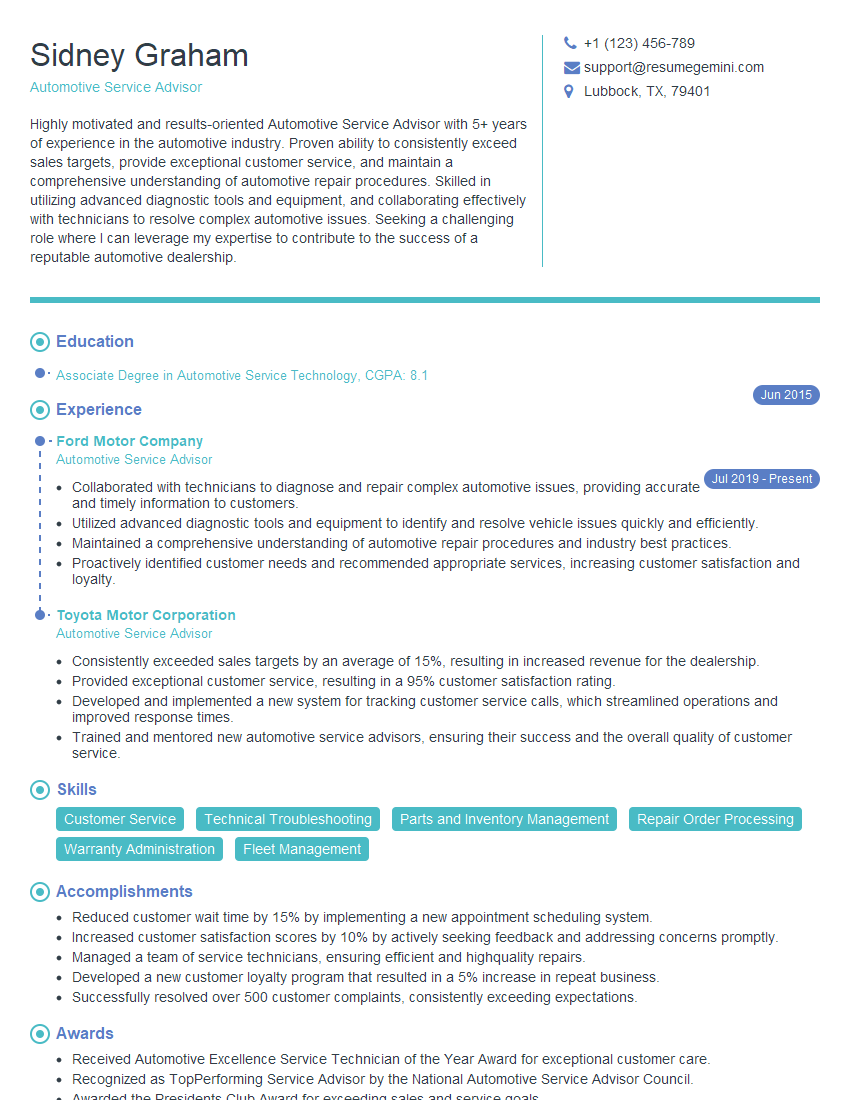
Automotive Service Advisor Resume Sample
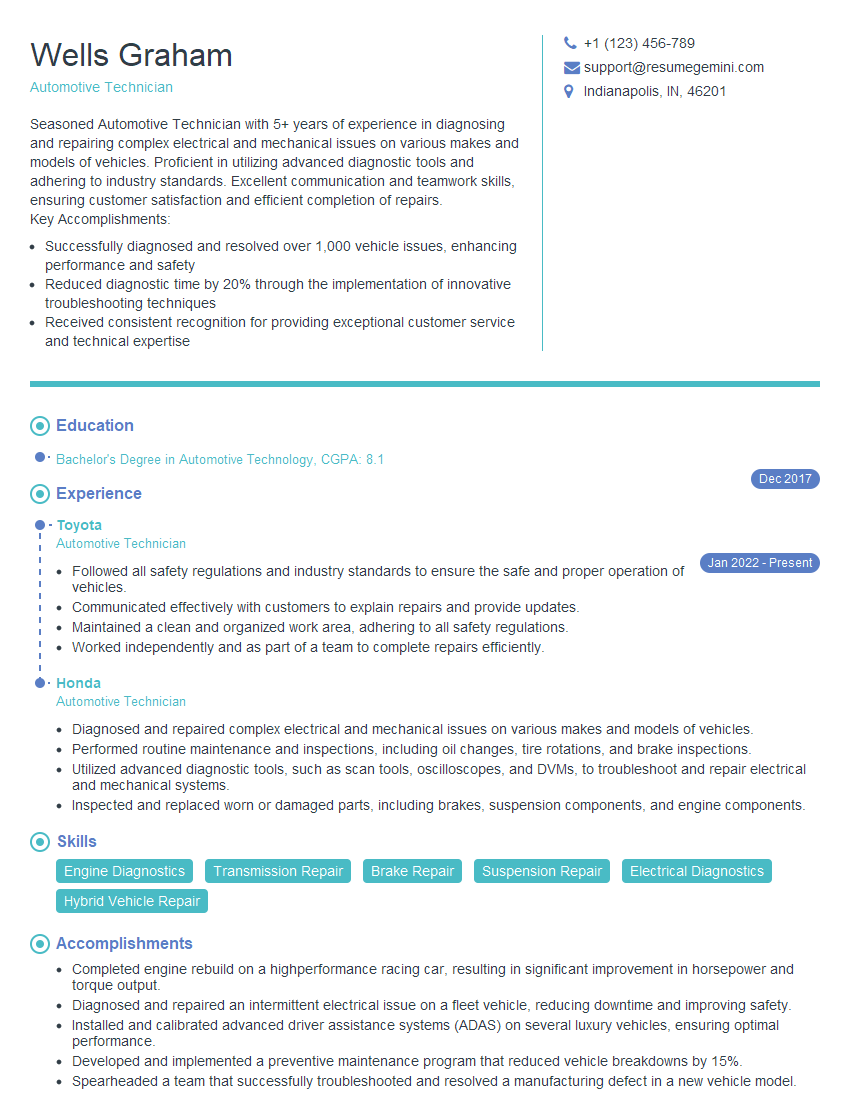
Automotive Technician Resume Sample
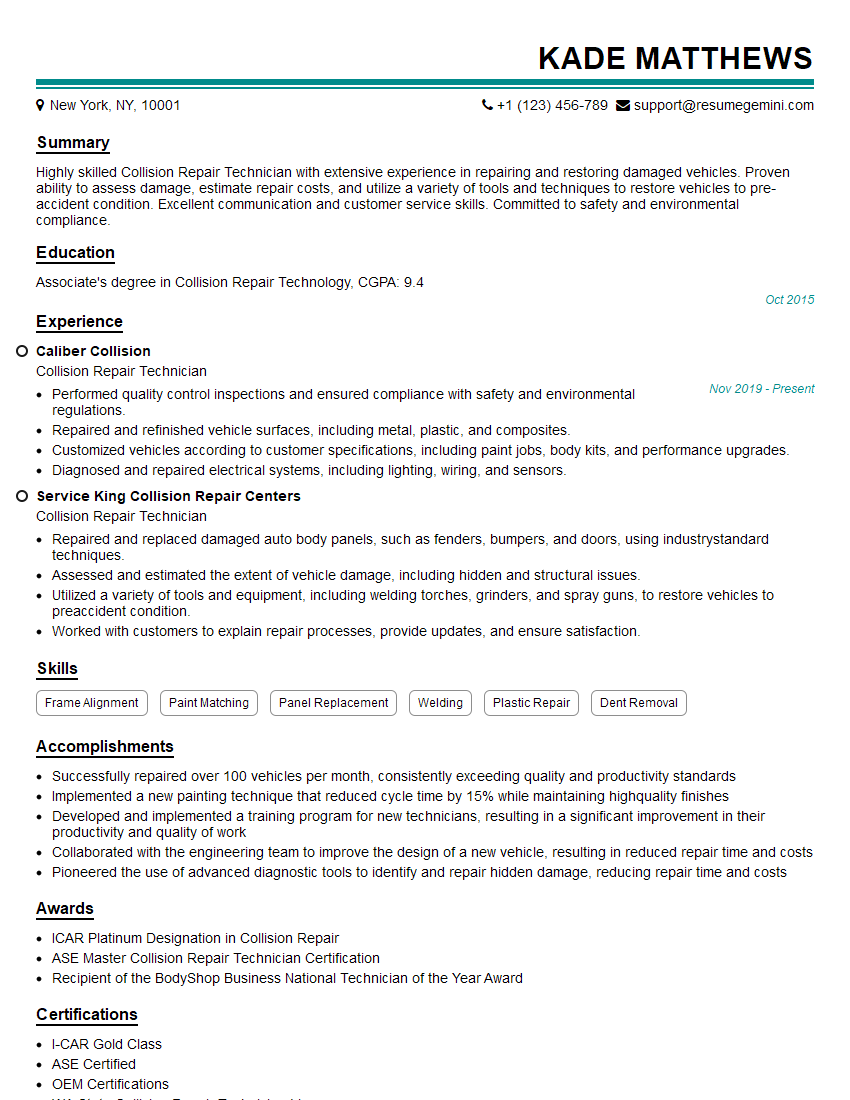
Collision Repair Technician Resume Sample

Automotive Mechanic Resume Sample
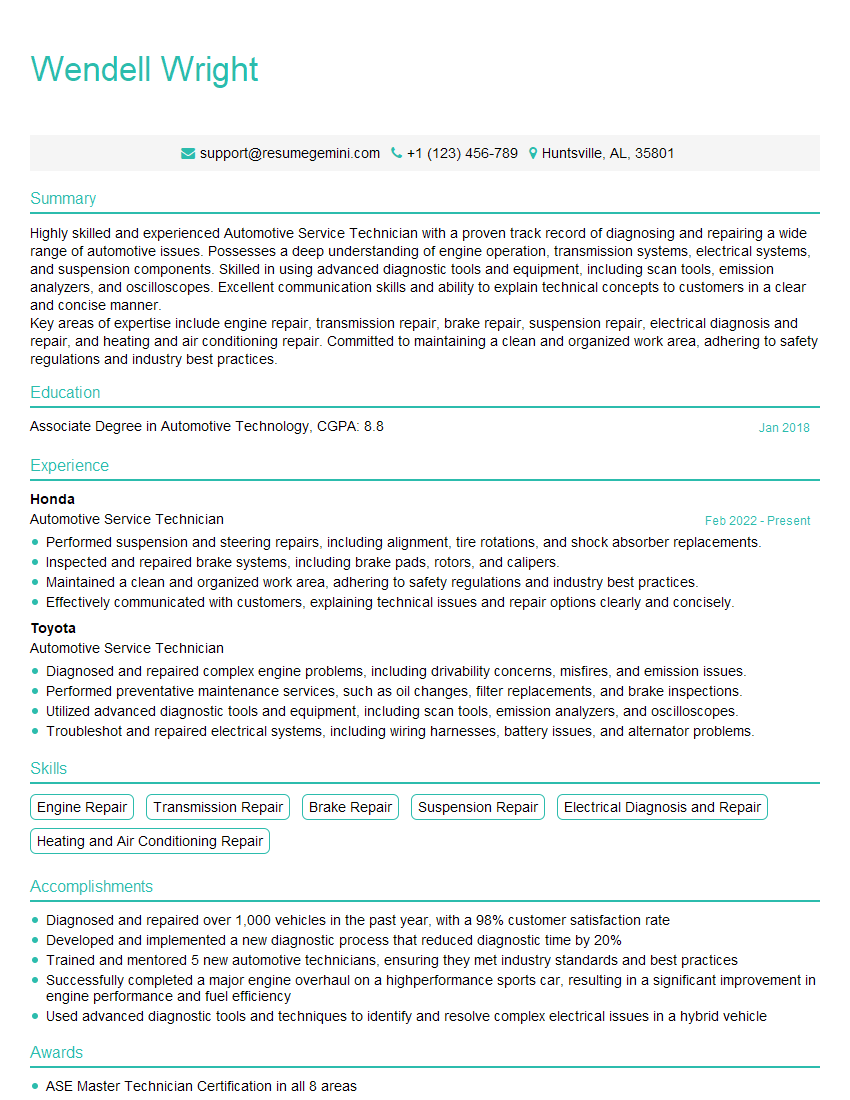
Automotive Service Technician Resume Sample
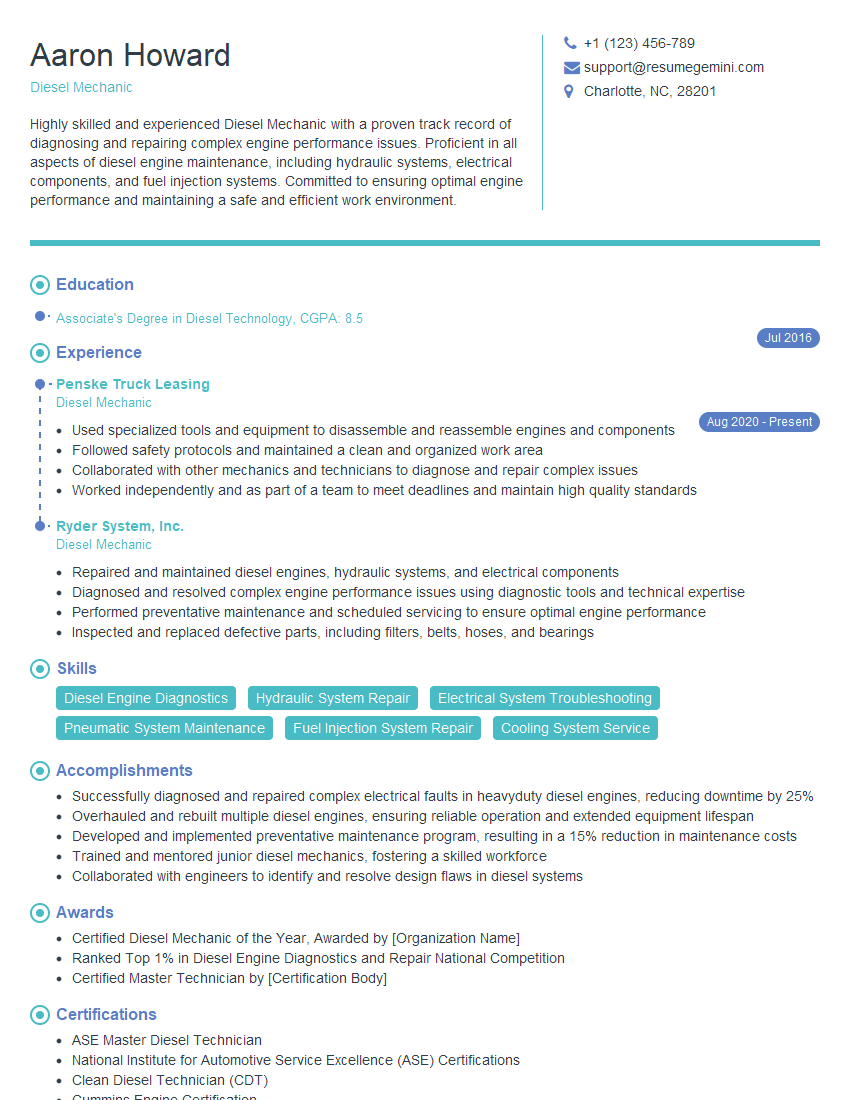
Diesel Mechanic Resume Sample
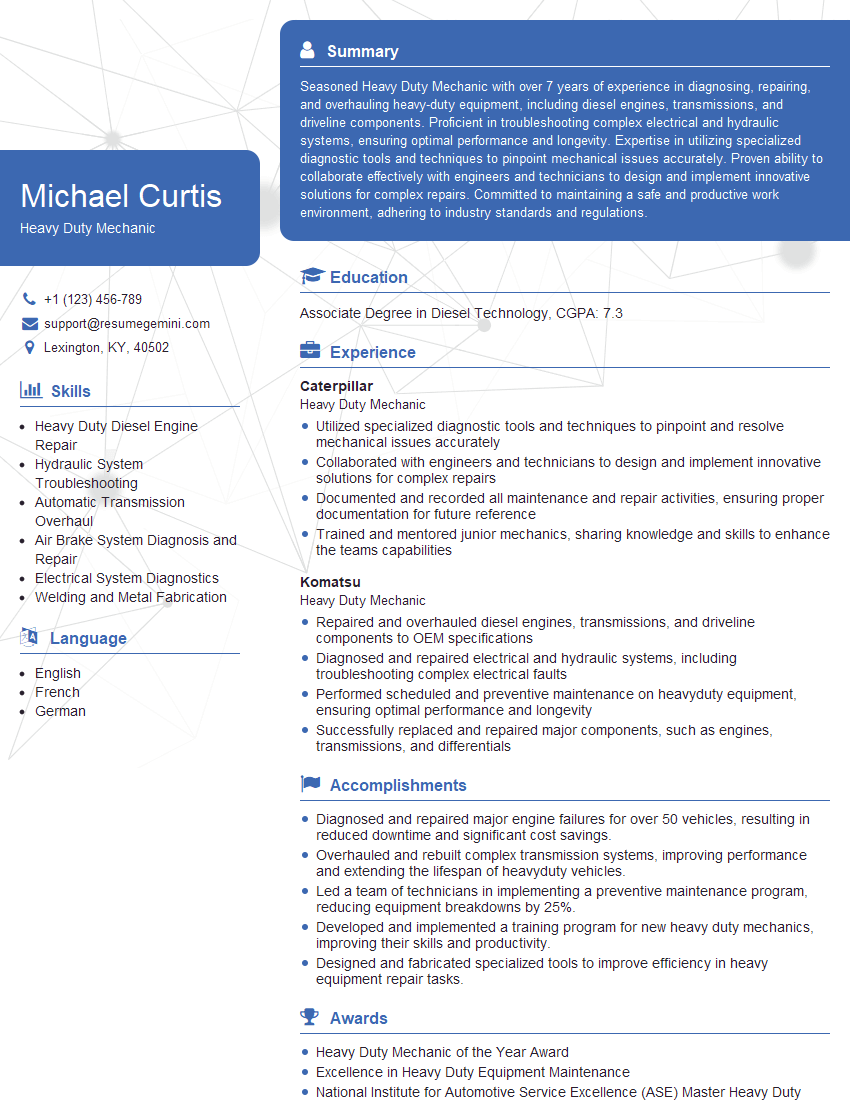
Heavy Duty Mechanic Resume Sample
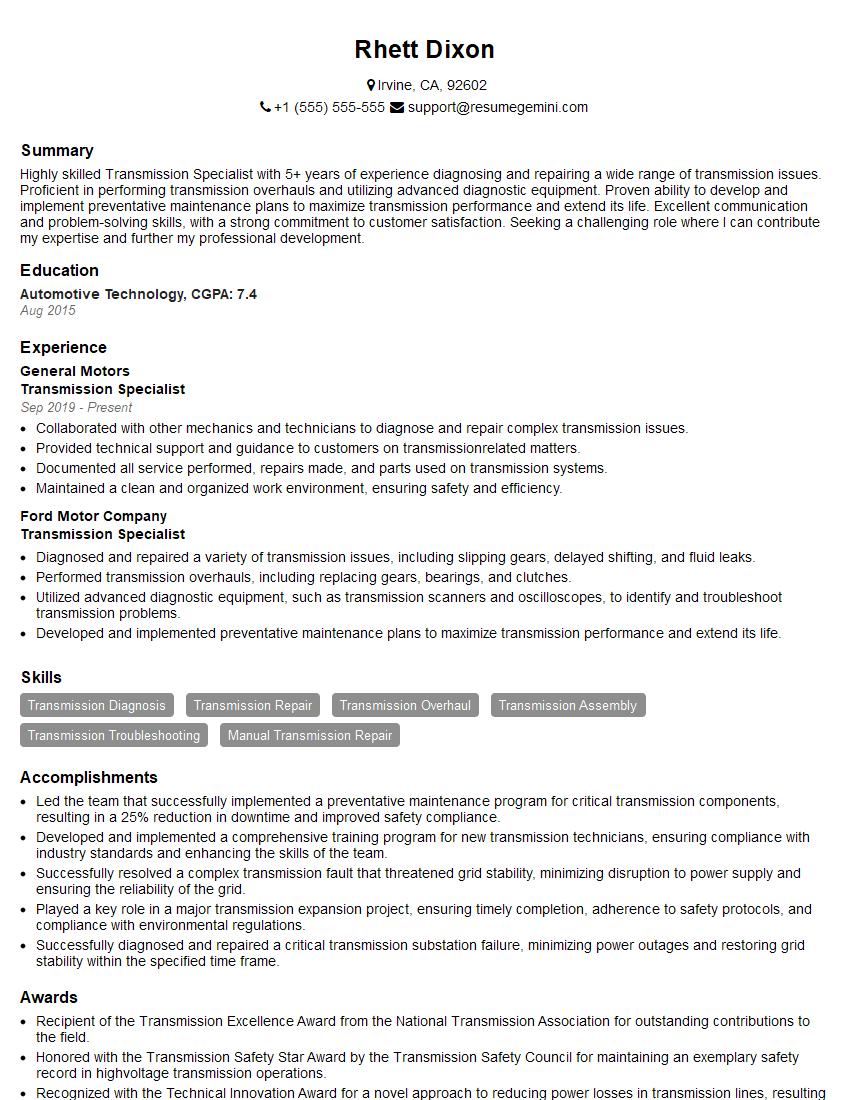
Transmission Specialist Resume Sample

Brake Specialist Resume Sample
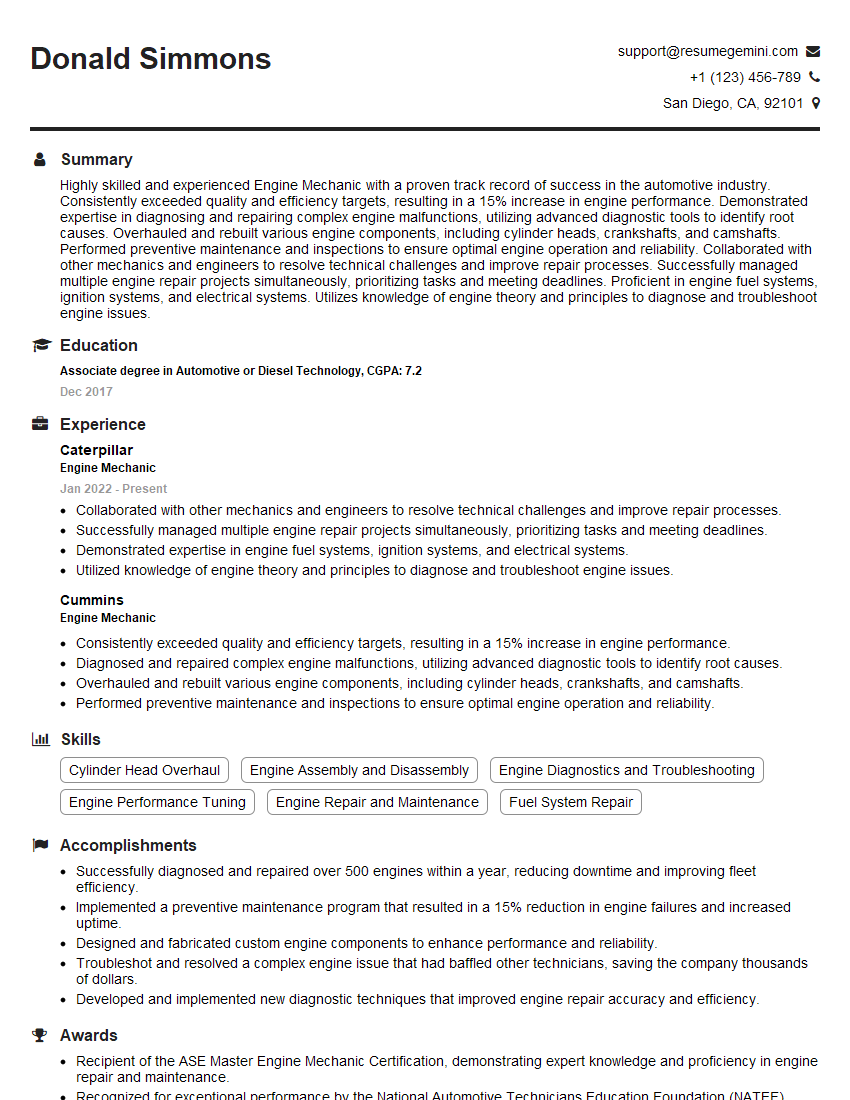
Engine Mechanic Resume Sample

Master Mechanic Resume Sample

Alignment Technician Resume Sample

Tire Technician Resume Sample
- Maintenance Supervisor
- Safety Inspector
- Service Manager
- Automotive Service Advisor
- Automotive Technician
- Collision Repair Technician
- Automotive Mechanic
- Automotive Service Technician
- Diesel Mechanic
- Heavy Duty Mechanic
- Transmission Specialist
- Brake Specialist
- Engine Mechanic
- Master Mechanic
- Alignment Technician
- Tire Technician
Explore more articles
Users Rating of Our Blogs
Share Your Experience
We value your feedback! Please rate our content and share your thoughts (optional).
What Readers Say About Our Blog
To the interviewgemini.com Webmaster.
Very helpful and content specific questions to help prepare me for my interview!
Thank you
To the interviewgemini.com Webmaster.
This was kind of a unique content I found around the specialized skills. Very helpful questions and good detailed answers.
Very Helpful blog, thank you Interviewgemini team.