Interviews are opportunities to demonstrate your expertise, and this guide is here to help you shine. Explore the essential Veneer Pressing Machine Operation interview questions that employers frequently ask, paired with strategies for crafting responses that set you apart from the competition.
Questions Asked in Veneer Pressing Machine Operation Interview
Q 1. Describe your experience operating veneer pressing machines.
My experience with veneer pressing machines spans over 10 years, encompassing various machine types and applications. I’ve worked extensively in high-volume production environments as well as smaller custom shops. This experience has given me a comprehensive understanding of the entire process, from initial setup and material preparation to troubleshooting and quality control. I’m proficient in operating both automatic and manual presses, and I have a strong track record of consistently producing high-quality veneer products while meeting tight deadlines.
For example, in my previous role, I was responsible for operating a high-speed, automated veneer press used for producing large quantities of hardwood veneer for furniture manufacturing. I optimized the pressing parameters to improve efficiency by 15% without compromising quality, leading to significant cost savings for the company.
Q 2. What types of veneer pressing machines are you familiar with?
I’m familiar with a wide range of veneer pressing machines, including:
- Cold Press: These use lower temperatures and longer press times, ideal for delicate veneers or certain wood species.
- Hot Press: These use higher temperatures and shorter press times, leading to faster production cycles. They are often preferred for larger-scale operations.
- Hydraulic Press: These use hydraulic cylinders to generate even pressure across the veneer sheets, making them suitable for large panels and consistent results.
- Pneumatic Press: These rely on compressed air to apply pressure, offering a more cost-effective option for smaller operations.
- Roll Press: Continuous presses that are highly efficient for mass production, particularly for thinner veneers.
My experience extends to machines with various sizes and capabilities, allowing me to adapt to different production needs and requirements.
Q 3. Explain the process of setting up a veneer pressing machine for a specific job.
Setting up a veneer pressing machine involves several crucial steps. It begins with understanding the job specifications – the type of veneer (wood species, thickness, etc.), the desired final dimensions, and the required quality standards. This dictates the parameters you’ll configure on the machine.
- Preparing the Veneer and Core Materials: This involves carefully inspecting for defects and ensuring the veneer sheets are correctly aligned and free of any contaminants. The core material, if used, should also be checked for flatness and moisture content.
- Setting the Temperature and Pressure: The optimal temperature and pressure vary significantly depending on the wood species and thickness of the veneer. Specific guidelines from the wood supplier or previous successful runs are crucial. Incorrect settings can lead to defects like blisters or uneven bonding.
- Adjusting the Press Time: The press time needs to be long enough to ensure complete bonding while avoiding over-pressing, which could cause damage. This is also wood-species dependent.
- Placing the Materials in the Press: The veneers are carefully placed in the press, ensuring even contact with the platens. Caul plates, if used, should be properly positioned to ensure uniform pressure distribution.
- Initiating the Press Cycle: Once everything is in place, the press cycle is initiated, and the machine operates under the predetermined parameters.
Imagine it like baking a cake; you wouldn’t bake a sponge cake at the same temperature as a bread loaf. Similarly, each type of veneer requires a unique set of parameters to achieve optimal results.
Q 4. How do you ensure the quality of the finished veneer?
Ensuring the quality of the finished veneer involves a multi-step approach that starts even before the pressing process.
- Pre-Press Inspection: Thoroughly examine the veneers and core materials before pressing to identify any defects.
- Precise Parameter Control: Maintain consistent temperature, pressure, and time settings throughout the pressing process.
- Post-Press Inspection: After pressing, carefully check for defects like voids, glue squeeze-out, blisters, or uneven bonding. This often involves visual inspection and sometimes specialized testing tools.
- Moisture Content Monitoring: Accurate monitoring of moisture content in both the veneer and core materials ensures optimal bonding and minimizes the risk of warping.
- Calibration and Maintenance: Regular calibration and maintenance of the press are crucial for maintaining consistent quality. This includes checking the platen flatness and ensuring that the heating elements are functioning correctly.
Think of it like a chef preparing a meal – the quality of the ingredients, the precision in cooking, and the final presentation all contribute to the overall excellence of the dish. Similarly, the quality of the finished veneer depends on a multitude of factors.
Q 5. What are the common causes of veneer defects during pressing?
Common veneer defects during pressing can be attributed to several factors:
- Uneven Pressure: This leads to areas of the veneer that are not properly bonded, resulting in voids or weak spots.
- Improper Temperature Control: Too low a temperature results in incomplete bonding, while too high a temperature can scorch or burn the veneer.
- Insufficient Press Time: Insufficient time doesn’t allow for complete adhesion of the glue, causing weak spots and delamination.
- Moisture Content Issues: Excessive moisture can cause blistering or warping, while insufficient moisture can lead to cracking.
- Glue Problems: Incorrect glue type, improper glue application, or expired glue can cause bonding problems.
- Defective Veneer or Core: Imperfections or knots in the veneer or core material can result in defects in the finished product.
Identifying the root cause requires a careful analysis of the process, material, and machine settings. This is where experience and a methodical approach are key.
Q 6. How do you troubleshoot common problems with a veneer pressing machine?
Troubleshooting veneer pressing problems requires a systematic approach. I typically follow a process of elimination, starting with the most obvious causes.
- Check Machine Settings: Verify that the temperature, pressure, and time settings are correct for the material being pressed. Calibration of the machine should also be reviewed.
- Inspect the Veneer and Core: Examine the veneer and core for any defects such as knots, splits, or uneven thickness.
- Examine Glue Application: Ensure that the glue has been properly applied and is the correct type for the materials being pressed.
- Assess Platen Condition: Check the press platens for any damage, dirt, or unevenness that might affect pressure distribution.
- Review Pressing Cycle: Observe the pressing cycle to ensure everything is functioning correctly – no unusual sounds, vibrations, or temperature fluctuations.
For example, if I notice uneven bonding, I would first check the pressure settings and the platen’s condition for any irregularities. If the problem persists, I would investigate the glue application and material quality. This methodical approach ensures a quicker resolution to the issue, minimizing downtime.
Q 7. What safety procedures do you follow when operating a veneer pressing machine?
Safety is paramount when operating a veneer pressing machine. My safety procedures include:
- Personal Protective Equipment (PPE): Always wear appropriate PPE, including safety glasses, gloves, and hearing protection.
- Lockout/Tagout Procedures: Always follow lockout/tagout procedures before performing any maintenance or repairs on the machine.
- Safe Material Handling: Use proper lifting techniques to avoid injuries when handling veneer sheets and other heavy materials.
- Regular Machine Inspections: Conduct regular inspections of the machine to identify and address any potential safety hazards.
- Emergency Shutdown Procedures: Be familiar with and practice emergency shutdown procedures in case of unexpected events.
- Following Manufacturer’s Instructions: Strictly adhere to all manufacturer’s instructions and safety guidelines.
Think of it like driving a car; you always follow traffic rules and ensure that the vehicle is in good condition before setting off. Similarly, operating a veneer press requires careful adherence to safety procedures to ensure a safe working environment.
Q 8. What is your experience with different types of adhesives used in veneer pressing?
My experience encompasses a wide range of adhesives used in veneer pressing, each with its own properties and application requirements. The choice of adhesive depends heavily on the type of veneer, substrate, and the desired final product characteristics.
- Polyvinyl Acetate (PVAc): This is a common, water-based adhesive known for its good bonding strength, ease of use, and relatively low cost. It’s ideal for many standard veneer applications.
- Polyurethane (PU): PU adhesives offer superior water resistance and high bond strength, making them suitable for exterior applications or situations where moisture is a concern. However, they typically require more specialized handling and application techniques.
- Phenolic Resins: These are thermosetting resins providing exceptional heat and moisture resistance. They are often preferred for high-pressure laminates and demanding applications, but require careful handling due to their curing process.
- Melamine Resins: Similar to phenolic resins, these are thermosetting and offer excellent bonding strength, durability, and chemical resistance. Often used in high-pressure decorative laminates.
I’ve worked extensively with all these adhesive types, understanding their specific application temperatures, open times, and clamping pressures to ensure optimal bonding in each scenario. For instance, a PVAc might require a lower pressing temperature and pressure compared to a Phenolic resin which demands a higher temperature and pressure for proper curing.
Q 9. How do you monitor the temperature and pressure during the pressing process?
Precise monitoring of temperature and pressure is critical for successful veneer pressing. Inaccurate control can lead to poor adhesion, scorching, or delamination.
We utilize sophisticated control systems, typically incorporating:
- Digital Temperature Gauges: These provide real-time readings of the platen temperature, allowing for precise adjustments during the pressing cycle. We regularly calibrate these gauges to ensure accuracy.
- Pressure Gauges: These measure the pressure exerted on the veneer and substrate, ensuring consistent and even pressure distribution across the entire surface. We check these gauges before each pressing cycle.
- Programmable Logic Controllers (PLCs): Many modern presses use PLCs to automate the entire process, including temperature and pressure control, ensuring consistent and repeatable results. The PLC manages the pre-programmed pressing cycle, adjusting parameters as needed.
Imagine baking a cake; just like you need the right temperature and baking time, veneer pressing requires precise temperature and pressure control to achieve the desired results. Any deviation can result in a ‘failed’ veneer pressing, similar to a burnt or underbaked cake.
Q 10. Explain your understanding of veneer specifications and tolerances.
Understanding veneer specifications and tolerances is paramount to ensuring quality and consistency. Veneer specifications detail various parameters like:
- Species: The type of wood (e.g., oak, maple, cherry).
- Grade: Indicates the quality and visual characteristics of the veneer (e.g., A-grade, B-grade, etc.).
- Thickness: Measured in millimeters or thousandths of an inch. Tolerances are crucial here to ensure uniform thickness across sheets.
- Width and Length: Dimensions of the veneer sheets.
- Moisture Content: The percentage of water in the veneer; critical for preventing warping and delamination during pressing.
Tolerances define the acceptable range of variation from the specified values. For example, a veneer specified as 0.6mm thick might have a tolerance of ±0.05mm. Exceeding these tolerances can lead to issues during pressing or in the final product’s appearance and functionality. I’ve encountered situations where veneers outside the specified tolerances resulted in uneven pressing, causing either weak bonding or damage to the veneer.
Q 11. How do you maintain and perform preventative maintenance on a veneer pressing machine?
Preventative maintenance is crucial for the longevity and efficiency of a veneer pressing machine. My maintenance routine includes:
- Regular Inspection: Daily visual inspections check for signs of wear, leaks, or damage to components.
- Cleaning: Regular cleaning of the platens, caul plates, and other surfaces removes adhesive residue and prevents build-up, which can affect heat transfer and pressure distribution.
- Lubrication: Regular lubrication of moving parts such as hydraulic cylinders and hinges ensures smooth operation and prevents premature wear.
- Calibration: Periodic calibration of temperature and pressure gauges maintains accuracy and consistency.
- Scheduled Maintenance: Following the manufacturer’s recommended schedule for major maintenance tasks, including hydraulic system checks, electrical system checks, and component replacements.
Think of it like maintaining a car – regular oil changes, tire rotations, and inspections prevent major breakdowns. Similarly, regular maintenance on the veneer press prevents costly repairs and downtime.
Q 12. Describe your experience with different types of wood veneers.
My experience spans a diverse range of wood veneers, each with its unique characteristics affecting the pressing process:
- Hardwoods: Such as oak, maple, cherry, and walnut. These typically require more careful handling and pressing parameters due to their density and potential for cracking.
- Softwoods: Like pine, fir, and cedar. These are generally easier to press but may require adjustments to pressing times and temperatures to achieve optimal bonding.
- Exotic Veneers: From species like zebrawood, rosewood, and mahogany, require specialized knowledge due to their variations in density and moisture content. They may require customized pressing cycles to prevent damage or discoloration.
- Reconstructed Veneers: These are made from wood particles or fibers and are often less sensitive to variations in pressing parameters.
Understanding the specific properties of each veneer type allows for optimization of the pressing process. For example, a delicate exotic veneer may require a lower pressing temperature and shorter pressing time than a durable hardwood like oak.
Q 13. How do you handle different veneer thicknesses and densities?
Handling different veneer thicknesses and densities requires adjustments to the pressing parameters. Thicker veneers require longer pressing times and potentially higher pressures to ensure complete adhesion. Denser veneers often require lower pressing temperatures to avoid scorching.
For instance, a thin veneer might only require a few minutes of pressing at a moderate temperature and pressure, while a thicker, denser veneer might require significantly longer pressing time and higher pressure, but potentially lower temperature. I carefully consider both factors to achieve a consistent, high-quality result. Incorrect adjustments can lead to either weak bonding or damage to the veneer.
I utilize specialized caul plates and pressure distribution systems to ensure even pressure across the entire veneer surface, regardless of thickness variations. This prevents uneven pressing and ensures a consistent final product.
Q 14. What is your experience with different pressing cycles and times?
Pressing cycles and times are crucial for achieving optimal bonding while avoiding damage to the veneer. They are determined by factors like veneer type, thickness, adhesive type, and desired final product properties.
I have experience with a variety of pressing cycles, ranging from short cycles for thin veneers to longer cycles for thicker, denser veneers. The parameters, including temperature and pressure profiles, are carefully controlled and monitored during the entire cycle. A typical cycle might involve a gradual increase in temperature and pressure to a peak level, followed by a holding period, and then a gradual decrease.
For example, a cycle for a thin hardwood veneer might be around 5-7 minutes at a moderate temperature and pressure, while a thicker veneer might require 15-20 minutes, or even longer, at carefully controlled temperature and pressure. I regularly tweak these cycles based on the specifics of the job and material, leveraging my experience to optimize each press cycle for optimal results.
Q 15. How do you ensure the proper alignment of veneers during pressing?
Ensuring proper veneer alignment during pressing is crucial for achieving a high-quality, defect-free final product. Misaligned veneers can lead to unsightly gaps, uneven surfaces, and compromised structural integrity. My approach involves a multi-step process. First, I meticulously inspect each veneer sheet for any imperfections or warping before placing it on the caul plate. This preliminary check prevents issues from propagating during the pressing process. Next, I utilize alignment tools such as precision rollers and jigs to carefully position each veneer layer, ensuring the grain direction is consistent and the edges are perfectly matched. This minimizes the possibility of shifting during pressing. Finally, I use a combination of visual inspection and pressure-sensitive indicators to verify alignment throughout the pressing cycle, making adjustments as needed to ensure optimal results. Think of it like assembling a complex puzzle – each piece must be placed correctly to achieve the desired outcome. Careful attention to detail at each stage is paramount to achieving perfect alignment.
Career Expert Tips:
- Ace those interviews! Prepare effectively by reviewing the Top 50 Most Common Interview Questions on ResumeGemini.
- Navigate your job search with confidence! Explore a wide range of Career Tips on ResumeGemini. Learn about common challenges and recommendations to overcome them.
- Craft the perfect resume! Master the Art of Resume Writing with ResumeGemini’s guide. Showcase your unique qualifications and achievements effectively.
- Don’t miss out on holiday savings! Build your dream resume with ResumeGemini’s ATS optimized templates.
Q 16. Describe your experience with the use of caul plates and other pressing equipment.
My experience with caul plates and other pressing equipment is extensive. Caul plates are essential for distributing pressure evenly across the veneer pack, preventing localized pressure points that can cause damage. I’m proficient in selecting the appropriate caul plate material (e.g., steel, aluminum, or composite materials) based on the specific veneer type and pressing parameters. Beyond caul plates, I’m familiar with various pressing equipment, including hydraulic presses, vacuum presses, and roller presses. I understand the nuances of each type of press and how to adjust its settings to optimize pressing time and pressure for different materials and thicknesses. For example, I’ve worked extensively with hydraulic presses, understanding the importance of slow, controlled pressure application to avoid sudden shocks that could cause veneer damage. In one project, we used a vacuum press for a particularly delicate veneer, ensuring even distribution of pressure and preventing air pockets that could result in imperfections. This versatility allows me to tailor the pressing process to achieve the best possible results for any given project.
Q 17. How do you calculate the required pressing pressure for different materials?
Calculating the required pressing pressure is a critical aspect of veneer pressing, directly impacting the final product’s quality and durability. It’s not a simple calculation but depends on several factors. The most important considerations are the type of veneer (e.g., hardwood, softwood, or engineered veneer), the thickness of the veneers, the type of adhesive used, and the desired final panel density. There isn’t a single formula, but rather a process of informed decision-making. I often refer to manufacturers’ recommendations for the adhesive and veneer type as a starting point. Then, I adjust the pressure based on my experience and observations from previous projects involving similar materials. For example, hardwoods generally require higher pressure than softwoods to achieve adequate bond strength. I carefully monitor the press’s pressure gauge and make adjustments throughout the pressing cycle, ensuring that the pressure remains consistent and within the acceptable range for the specific materials. Excessive pressure can crush the veneer, while insufficient pressure may lead to an inadequate bond. It’s a delicate balance that requires both theoretical knowledge and hands-on expertise.
Q 18. Explain your understanding of different pressing techniques (e.g., cold pressing, hot pressing).
My understanding of pressing techniques encompasses both cold pressing and hot pressing. Cold pressing involves applying pressure at room temperature, often used with adhesives that cure at ambient temperatures. This method is generally slower but can be more gentle on delicate veneers. Hot pressing, on the other hand, involves applying pressure at elevated temperatures, often used with thermosetting adhesives that require heat for curing. Hot pressing is usually faster and can produce stronger bonds, but requires careful control to prevent burning or scorching of the veneers. The choice of technique depends on several factors, including the type of veneer, adhesive, and the desired final product properties. For example, I would use cold pressing for a delicate hardwood veneer with a slow-curing adhesive, ensuring that the heat doesn’t degrade the wood. But if I’m working with a thick panel and a fast-curing, thermosetting adhesive, hot pressing would be the more efficient and effective method. Proper selection and control of the pressing technique are key to success.
Q 19. What are the key performance indicators (KPIs) you monitor during veneer pressing operations?
Several key performance indicators (KPIs) are crucial for monitoring veneer pressing operations. These KPIs provide valuable insights into the efficiency and quality of the process. First, I monitor the pressing cycle time – this tells me if the process is running smoothly and efficiently. Next, I track the number of defects, such as gaps, delamination, or surface imperfections – this directly indicates the quality of the output. Another critical KPI is the yield, representing the percentage of usable panels produced relative to the total input materials. This helps identify material waste and inefficiencies. Finally, I analyze the energy consumption of the press and the adhesive usage rate – these measures help in optimizing resource utilization. By carefully tracking these KPIs, I can identify areas for improvement and ensure the overall effectiveness of the veneer pressing process. Regular monitoring allows me to react quickly to any emerging issues and maintain consistent, high-quality output.
Q 20. How do you manage production output and ensure efficiency?
Managing production output and ensuring efficiency requires a multifaceted approach. First, I optimize the press settings to minimize cycle time without compromising quality. This involves carefully calibrating the pressure, temperature (if hot pressing), and pressing time based on the material being processed. Second, I implement a well-organized workflow, ensuring a smooth flow of materials through the pressing process. This includes optimizing material handling, reducing downtime between batches, and proactively addressing any potential bottlenecks. Third, I rely on preventative maintenance schedules for the pressing equipment, minimizing downtime due to unforeseen equipment failure. This proactive approach includes regular inspections and timely repairs to maintain optimal operational performance. Finally, I utilize production monitoring software to track key KPIs and identify areas for improvement. This data-driven approach helps me identify and resolve issues that affect efficiency, leading to optimal output and a consistently high-quality product.
Q 21. Describe your experience working with different types of panel materials.
My experience extends across a wide variety of panel materials, each presenting unique challenges and opportunities. I’ve worked with various hardwood veneers, including oak, maple, cherry, and walnut, each requiring a specific approach to pressing to achieve the desired aesthetic and structural properties. I’m also proficient in handling softwood veneers, such as pine and fir, which require different pressure and temperature settings compared to hardwoods. Furthermore, I have significant experience with engineered veneers, such as plywood and composite veneers. These materials require precise control of the pressing process to ensure proper bonding and dimensional stability. Understanding the specific properties of each material – its strength, moisture content, and grain structure – is essential to adjusting the press settings for optimal results. This diverse experience has allowed me to develop a nuanced understanding of how different panel materials behave under pressure, allowing me to fine-tune the process for maximum efficiency and quality.
Q 22. How do you handle and resolve issues related to veneer delamination?
Veneer delamination, the separation of veneer layers, is a significant issue in pressing. It’s often caused by insufficient glue, improper glue application, uneven pressure distribution during pressing, or the use of substandard veneer.
To resolve this, I first identify the root cause. This involves carefully inspecting the delaminated veneer to assess the extent of the damage and look for patterns. For example, if delamination occurs consistently along one edge, it suggests an issue with glue application or pressure on that side of the press.
- Insufficient Glue: We would adjust the glue application system, ensuring proper coverage and amount.
- Uneven Pressure: We’d check the press platens for flatness, ensuring proper caul placement, and potentially adjust the pressure distribution system. This often involves calibrating pressure sensors and adjusting hydraulic systems.
- Substandard Veneer: We would initiate a thorough investigation of our veneer supply chain, potentially switching suppliers or requiring stricter quality control measures.
Once the cause is identified, corrective action is taken and the process is carefully monitored. We often implement preventative measures, such as regular maintenance of the glue system and press platens, to minimize future occurrences.
Q 23. What is your experience with automated veneer pressing systems?
My experience with automated veneer pressing systems spans several years, working with both PLC-controlled and computerized systems. I’m proficient in operating, maintaining, and troubleshooting various automated features, including automated feeding systems, pressure control systems, and temperature monitoring and regulation.
In one instance, we upgraded to a system with automated pressure profiling. This allowed us to create custom pressure curves for different veneer types and thicknesses, significantly improving the quality and consistency of the pressed panels. We saw a reduction in delamination and improved overall production efficiency. I’m comfortable working with different control panels and programming interfaces, and I am adept at troubleshooting issues through diagnostic software and sensor readings. For example, I recently solved a recurring issue of premature shutdown by diagnosing a faulty pressure sensor using the system’s diagnostics and replacing the component.
Q 24. How do you document and record production data?
Production data is meticulously documented and recorded using a combination of digital and physical methods. We utilize a computerized Manufacturing Execution System (MES) to track key parameters such as cycle times, pressure levels, temperature profiles, and glue consumption. This system generates detailed reports that are readily accessible for analysis.
Beyond the MES, physical records are kept, including daily logs of machine operation, maintenance schedules, and quality inspection reports. These physical records serve as a backup and provide detailed information for each production run. This dual recording system ensures data integrity and allows for comprehensive analysis of production efficiency and quality control.
Q 25. Describe your understanding of relevant safety regulations and standards.
My understanding of safety regulations and standards is extensive, covering OSHA (Occupational Safety and Health Administration) guidelines, relevant industry-specific standards, and company-specific safety protocols. I’m familiar with lockout/tagout procedures for equipment maintenance, personal protective equipment (PPE) requirements, including safety glasses, gloves, and hearing protection, and emergency shutdown procedures.
I understand the hazards associated with high-pressure hydraulic systems, high-temperature processes, and heavy machinery. I’m trained to identify and mitigate these risks through regular inspections, preventative maintenance, and adherence to established safety protocols. I am also aware of proper handling and disposal of glues and other chemicals involved in the veneer pressing process.
Q 26. How do you identify and report machine malfunctions or safety hazards?
Machine malfunctions or safety hazards are identified through regular inspections, operator reports, and automated alarm systems. When a problem is detected, I immediately follow established reporting procedures. This involves documenting the malfunction or hazard, including the time of occurrence, the nature of the problem, and any potential contributing factors.
The report is then escalated through the appropriate channels, depending on the severity of the issue. Minor problems might be addressed directly, while major malfunctions or safety hazards require immediate notification of supervisors and maintenance personnel. The machine is then taken out of service until the issue is resolved and deemed safe to operate.
Q 27. How do you contribute to a safe and efficient working environment?
Contributing to a safe and efficient working environment is paramount. I actively participate in safety training programs and regularly review and follow all safety protocols. I also ensure that my workstation and the surrounding area are kept clean, organized, and free of hazards.
In terms of efficiency, I strive to optimize machine performance by adhering to best practices, proactively identifying and addressing potential issues before they impact production, and actively seeking opportunities to improve processes. For example, I recently implemented a new caul cleaning schedule that reduced downtime and improved the overall quality of the pressed veneers.
Q 28. What are your salary expectations for this position?
My salary expectations are commensurate with my experience and skills in this field. Based on my research of similar roles and considering my expertise in automated veneer pressing systems, maintenance, and troubleshooting, I am seeking a salary in the range of [Insert Salary Range Here]. I am open to discussing this further and am confident that my contributions will significantly benefit your organization.
Key Topics to Learn for Veneer Pressing Machine Operation Interview
- Machine Setup and Calibration: Understanding the various settings and adjustments needed for different veneer types and thicknesses, including temperature, pressure, and time parameters. This includes pre-press procedures and safety checks.
- Veneer Handling and Preparation: Proper techniques for loading and aligning veneer sheets to ensure consistent quality and minimize waste. This involves understanding veneer characteristics and identifying defects.
- Operational Procedures: Safe and efficient operation of the veneer pressing machine, including starting, monitoring, and stopping procedures. This also encompasses understanding the machine’s control panel and emergency shut-off procedures.
- Quality Control and Inspection: Methods for inspecting pressed veneer for defects such as voids, delamination, or uneven bonding. Understanding how to identify and troubleshoot common problems.
- Maintenance and Troubleshooting: Basic preventative maintenance tasks and recognizing signs of malfunction. Understanding common problems and how to perform simple repairs or report issues effectively.
- Safety Regulations and Procedures: Adherence to all safety protocols and regulations related to operating heavy machinery, including proper personal protective equipment (PPE) and lockout/tagout procedures.
- Material Science (Veneer Types): Understanding the properties of different veneer types and their impact on the pressing process. Knowing how wood grain orientation influences the final product.
- Production Optimization: Strategies for maximizing efficiency and minimizing downtime, including understanding production targets and identifying bottlenecks.
Next Steps
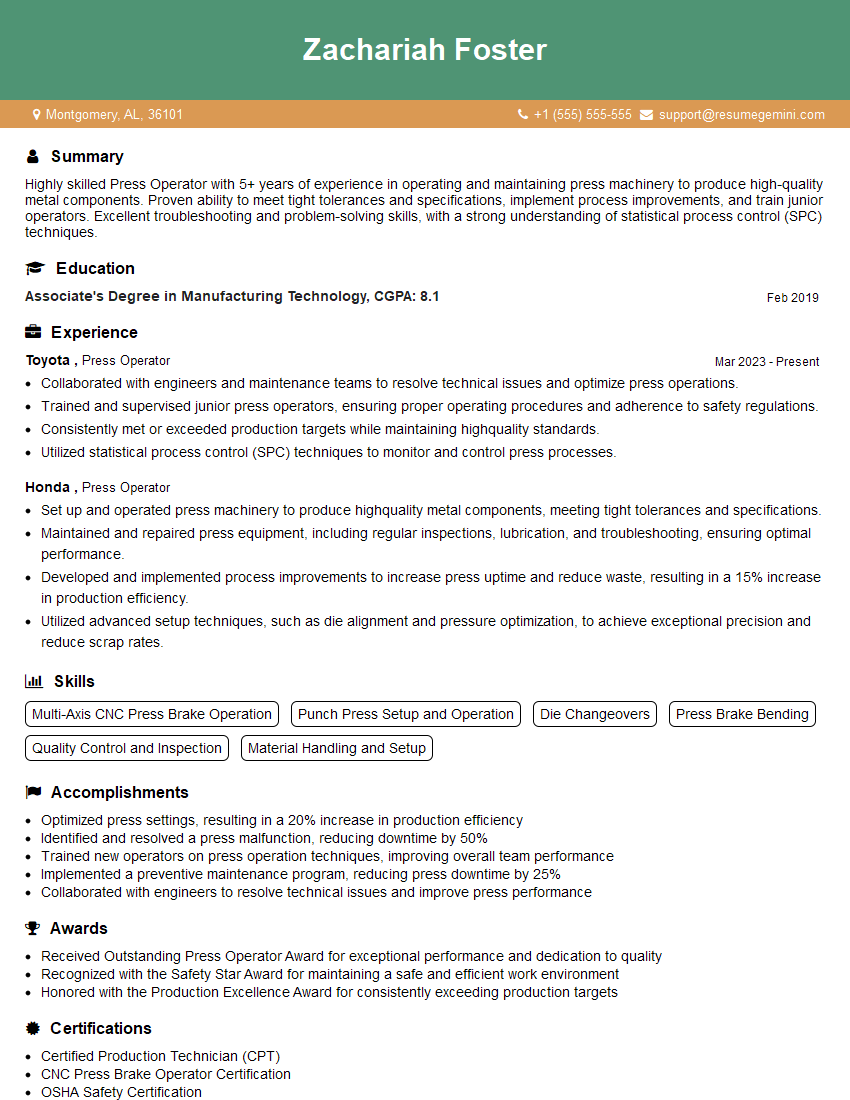
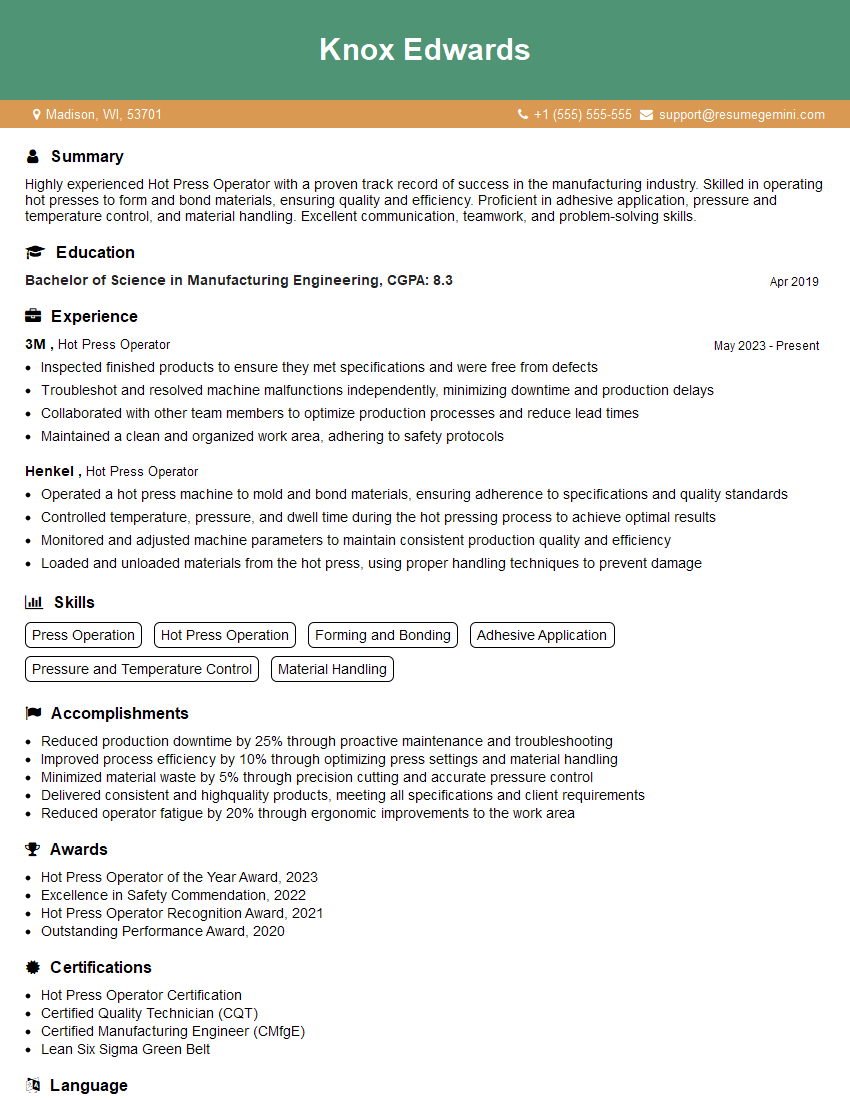
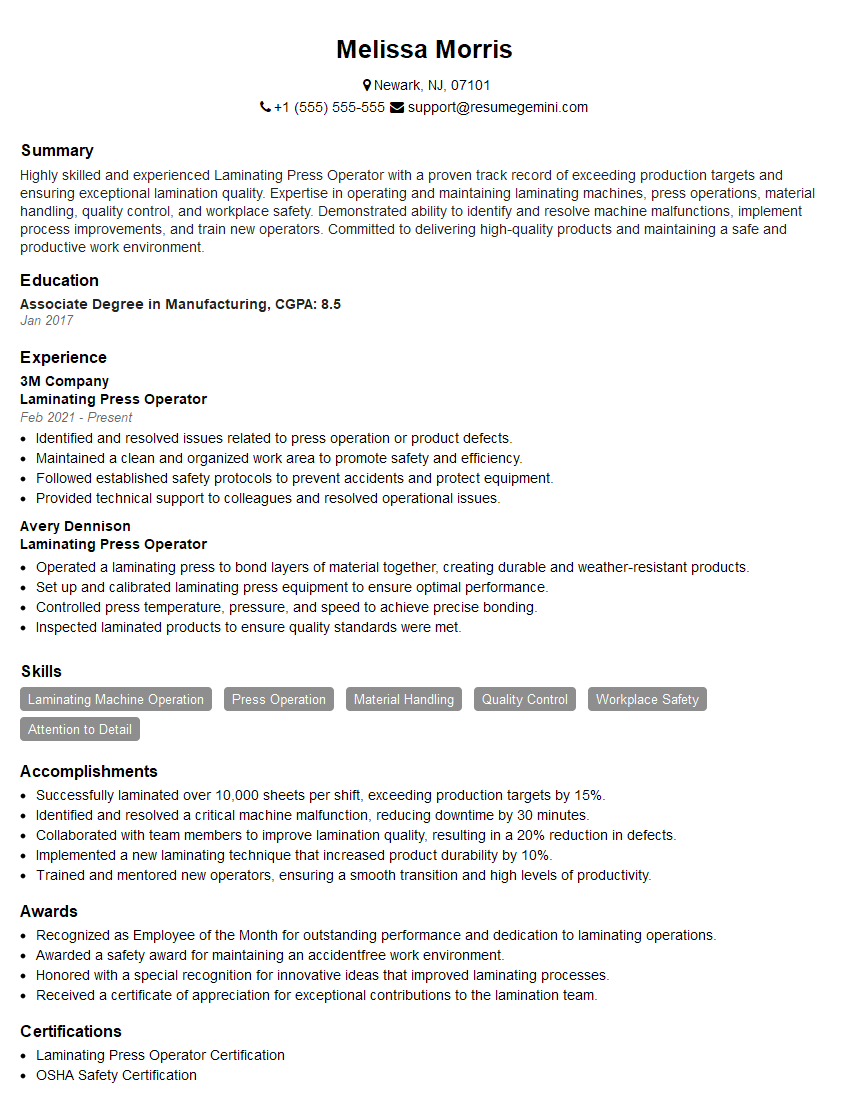
Mastering Veneer Pressing Machine Operation opens doors to a rewarding career with opportunities for advancement and specialization. A strong understanding of these processes is highly valued by employers. To increase your chances of landing your dream job, focus on creating a compelling and ATS-friendly resume that highlights your skills and experience. ResumeGemini is a trusted resource that can help you craft a professional resume that showcases your abilities effectively. Examples of resumes tailored to Veneer Pressing Machine Operation are available to help guide you.
Explore more articles
Users Rating of Our Blogs
Share Your Experience
We value your feedback! Please rate our content and share your thoughts (optional).
What Readers Say About Our Blog
To the interviewgemini.com Webmaster.
Very helpful and content specific questions to help prepare me for my interview!
Thank you
To the interviewgemini.com Webmaster.
This was kind of a unique content I found around the specialized skills. Very helpful questions and good detailed answers.
Very Helpful blog, thank you Interviewgemini team.