Every successful interview starts with knowing what to expect. In this blog, we’ll take you through the top Voter Contact and Mobilization interview questions, breaking them down with expert tips to help you deliver impactful answers. Step into your next interview fully prepared and ready to succeed.
Questions Asked in Voter Contact and Mobilization Interview
Q 1. Describe your experience with voter registration drives.
My experience with voter registration drives spans several years and various campaign settings, from grassroots efforts to large-scale coordinated initiatives. I’ve been involved in all aspects, from planning and logistics to direct engagement with potential voters. For instance, in one campaign, we organized a series of pop-up registration booths at community events like farmers’ markets and festivals. This approach proved highly effective, reaching a diverse demographic in a relaxed and informal setting. We also partnered with local organizations, like libraries and community centers, to host registration events on their premises, leveraging their existing networks and trust within the community. In another instance, we utilized a targeted digital approach, creating an online registration portal and promoting it through social media and email campaigns, maximizing reach and convenience. The success of each drive hinged on meticulous planning, targeted outreach, and effective volunteer management.
- Pre-planning: Identifying locations with high foot traffic and demographics we wanted to reach.
- Logistics: Securing necessary permits, arranging for volunteers, procuring supplies (registration forms, tables, chairs, etc.).
- Outreach: Promoting the drive through various channels, both online and offline.
- Post-drive: Ensuring all forms were accurately completed and submitted to the appropriate authorities.
Q 2. How do you identify and target key demographics for voter outreach?
Identifying key demographics for voter outreach requires a multi-faceted approach, combining data analysis with on-the-ground insights. We start by analyzing voter registration data, looking at age, ethnicity, party affiliation, and past voting patterns. This gives us a baseline understanding of the electorate. We then supplement this data with geographic information, considering factors like population density, socioeconomic indicators, and community characteristics. For example, in a recent campaign, we identified a specific neighborhood with a high concentration of young, first-time voters. Understanding their concerns and preferred communication methods allowed us to tailor our messaging and outreach strategies for maximum impact. We might use targeted social media campaigns or organize events specifically appealing to that demographic. We also utilize tools like voter file analysis software to pinpoint specific individuals based on their likelihood to vote and their political leaning. This targeted approach optimizes resource allocation and maximizes engagement.
Q 3. What strategies have you used to increase voter turnout?
Increasing voter turnout involves a comprehensive strategy employing various methods. One key strategy is personalized communication. Instead of generic messages, we craft tailored appeals based on the individual voter’s interests and concerns. We utilize data-driven targeting to ensure our messages are relevant and resonant. We also rely heavily on volunteer engagement, leveraging their connections within the community for grassroots mobilization. Organizing canvassing efforts, phone banks, and text message campaigns helps reach voters directly. Furthermore, early and consistent contact is crucial. We initiate contact well in advance of the election, providing voters with information on registration deadlines, candidate information, and polling locations. Finally, we employ get-out-the-vote (GOTV) drives in the final days leading up to the election, making personal contact with voters who haven’t yet confirmed their participation. This involves reminding them of the election, offering rides to polling places if needed, and addressing any potential barriers to voting.
Q 4. Explain your experience with phone banking and its effectiveness.
Phone banking is a vital tool in voter contact, allowing for direct interaction with potential voters. My experience has shown that it’s particularly effective when combined with data-driven targeting. For example, we can use voter file data to identify likely supporters and tailor our scripts accordingly. Success hinges on training volunteers to be engaging, respectful, and persuasive. We provide detailed scripts, emphasizing active listening and addressing voter concerns effectively. We also monitor calls in real-time to provide feedback and address any issues. Effectiveness is tracked by monitoring call completion rates, the number of confirmed voters, and voter feedback. We often incorporate A/B testing different scripts to optimize our approach. While phone banking faces challenges like declining response rates, it remains a valuable tool, particularly for reaching older voters who may not be as active on social media. It also provides an opportunity for direct engagement and answering questions promptly.
Q 5. How do you track and measure the success of your voter contact efforts?
Tracking and measuring the success of voter contact efforts is crucial for optimizing future strategies. We use a combination of quantitative and qualitative data. Quantitatively, we track metrics like the number of contacts made (phone calls, texts, emails, canvassing visits), the number of voters registered, and the voter turnout rate in targeted areas. We also utilize tools to monitor the effectiveness of our digital campaigns, analyzing website traffic, social media engagement, and email open rates. Qualitatively, we gather feedback through post-election surveys and volunteer reports, understanding what resonated with voters and identifying areas for improvement. For example, if a particular phone banking script yielded a higher turnout rate in a specific demographic, we’ll adjust future campaigns based on those results. This comprehensive approach allows us to evaluate the effectiveness of different strategies, pinpoint areas needing improvement, and ultimately improve future voter mobilization efforts.
Q 6. Describe your experience managing volunteers in a political campaign.
Managing volunteers effectively is essential for successful voter mobilization. It begins with clear communication and well-defined roles. Before the campaign, we provide thorough training on the various tasks, including canvassing techniques, phone banking protocols, and data entry procedures. We empower volunteers by giving them ownership of their tasks and recognizing their contributions. Regular check-ins and feedback sessions ensure everyone feels supported and understands their impact on the overall campaign. We also create a positive and inclusive environment, fostering teamwork and camaraderie. For example, in one campaign, we organized weekly team meetings where volunteers could share their experiences, challenges, and successes. This fostered a strong sense of community and improved morale, ultimately resulting in increased productivity and commitment. Effective volunteer management requires careful planning, clear communication, and a focus on creating a supportive team environment.
Q 7. How do you handle objections or negative responses during voter contact?
Handling objections or negative responses during voter contact requires empathy, respect, and a positive attitude. We train our volunteers to listen actively to voters’ concerns, acknowledging their perspectives without becoming defensive. The goal is to find common ground and address their anxieties. For example, if a voter expresses skepticism about a particular candidate, we might shift the conversation to focus on the shared values and policy priorities. We also emphasize reframing objections into opportunities for engagement, using questions to understand the voter’s point of view and offering relevant information to address their concerns. It’s important to remember that not every conversation will result in a positive outcome, but every interaction represents an opportunity to engage with a potential voter and contribute to the overall campaign. Respectful and understanding communication is paramount in building rapport and potentially changing minds.
Q 8. What software or tools are you proficient in for voter data management?
Effective voter data management relies heavily on robust software. My proficiency spans several platforms, including tools like VAN (Voter Activation Network), which is a widely used system for managing voter information, organizing volunteers, and tracking outreach efforts. I’m also experienced with NGP VAN (NationBuilder Government and Political VAN), a more comprehensive suite offering similar features, and smaller, more targeted platforms depending on the campaign’s scale and resources. These tools allow for importing voter files, segmenting voters based on demographics and past behavior, tracking contact attempts, and analyzing campaign effectiveness. For instance, with VAN, I can create targeted lists of likely voters based on specific criteria like age, party affiliation, and past voting records, then assign tasks to volunteers based on those segments, ensuring efficient outreach.
Beyond these larger platforms, I’m comfortable using spreadsheet software like Excel and Google Sheets to manage and analyze data, particularly for smaller-scale campaigns or specific aspects of a larger effort. My skills extend to data cleaning and manipulation to ensure data accuracy and integrity which is crucial for successful voter contact.
Q 9. How do you adapt your voter contact strategy to different demographics?
Adapting voter contact strategies to different demographics is crucial for maximizing engagement. A one-size-fits-all approach simply doesn’t work. My strategy involves understanding the unique communication preferences and cultural nuances of each demographic.
- Age: For younger voters (18-35), digital channels like text messaging, social media, and targeted online ads are highly effective. Older voters (65+) might respond better to traditional methods like phone calls or mailed postcards.
- Ethnicity and Culture: I tailor messaging to resonate with the specific cultural values and languages of different communities. This might involve using bilingual materials or partnering with community leaders who can effectively bridge the communication gap.
- Socioeconomic Status: For low-income communities, I prioritize methods that are easily accessible and don’t require expensive technology or internet access. This could include door-to-door canvassing or phone banking.
For example, in a recent campaign, we noticed significantly lower engagement with a particular Latino community through our initial text messaging campaign. We adapted by partnering with a local community radio station to deliver targeted messages in Spanish, resulting in a significant increase in voter registration and participation.
Q 10. Explain your understanding of different voter contact methods (e.g., canvassing, phone banking, text messaging).
Voter contact employs diverse methods, each with its strengths and weaknesses.
- Canvassing (Door-to-door): This provides a personal touch and allows for direct interaction, building trust and addressing voter concerns immediately. However, it’s resource-intensive and time-consuming.
- Phone Banking: Efficient for reaching a large number of voters in a relatively short time. Allows for more in-depth conversations than text but can face higher rejection rates.
- Text Messaging: Cost-effective and allows for targeted messaging at scale. However, response rates can be lower than phone banking, and it’s crucial to abide by legal regulations regarding consent and frequency.
A successful strategy often combines these methods for a multi-channel approach. For example, a text message might be used to schedule a follow-up phone call or invite someone to a canvassing event. This creates a more comprehensive and impactful contact strategy.
Q 11. How do you ensure data privacy and compliance during voter contact?
Data privacy and compliance are paramount in voter contact. I strictly adhere to all relevant federal and state laws, including regulations under the CAN-SPAM Act, the Telephone Consumer Protection Act (TCPA), and any state-specific regulations regarding voter data.
- Data Security: All voter data is stored securely, using encryption and access controls to prevent unauthorized access. I ensure that all software and platforms used comply with data protection standards.
- Consent and Opt-Out: I always obtain explicit consent before contacting voters via phone, text, or email. Voters are clearly informed about how their data will be used and are provided with a simple mechanism to opt out of future communications.
- Data Minimization: We collect only the necessary voter information, avoiding unnecessary data collection that could raise privacy concerns.
- Regular Audits: Regular audits are conducted to ensure compliance with all relevant laws and best practices.
Maintaining data privacy builds trust with voters and helps ensure the integrity of the campaign.
Q 12. Describe a time you had to overcome a challenge in a voter mobilization campaign.
During a local mayoral election campaign, we faced a significant challenge when our primary phone banking system failed just days before the election. This meant we lost the ability to contact a large segment of our target voters.
To overcome this, we immediately mobilized a multi-pronged strategy. First, we utilized our backup system, a smaller, less sophisticated platform, focusing our efforts on our most likely voters. Second, we quickly organized a massive volunteer effort for direct canvassing, targeting neighborhoods where phone banking had been our primary strategy. Finally, we leveraged social media and email to disseminate important information and encourage voters to head to the polls. While this was a stressful situation, our quick thinking and decisive action mitigated the impact. The results showed a lower than expected turnout but significantly better than what would have been expected had we not adapted so quickly. We learned the importance of robust contingency planning and having multiple communication channels in place.
Q 13. How do you build relationships with community leaders to facilitate voter engagement?
Building strong relationships with community leaders is essential for successful voter engagement. It’s about building trust and demonstrating respect for their roles in the community.
- Identify Key Leaders: I start by identifying influential figures in the community—religious leaders, local business owners, community organization heads, school principals, etc.
- Personal Outreach: I initiate contact personally, introducing myself and explaining the campaign’s goals. I avoid asking for immediate favors; instead, I focus on building rapport and understanding their concerns.
- Collaboration and Partnership: I look for ways to collaborate. This could be providing resources, promoting their events, or seeking their advice on how best to engage their community members.
- Mutual Respect: I demonstrate respect for their perspectives, even if they differ from mine. The goal is to work together for the common good.
In one instance, by partnering with a local pastor, we were able to effectively reach a significant number of voters in his congregation, who had previously felt disconnected from the political process.
Q 14. How familiar are you with the legal regulations regarding voter contact?
I possess a comprehensive understanding of the legal regulations governing voter contact. This includes a strong grasp of federal laws like the Help America Vote Act (HAVA) and the National Voter Registration Act (NVRA), as well as relevant state-specific laws. I’m also deeply familiar with the restrictions surrounding automated telephone dialing systems (ATDS) and text message marketing under the TCPA. Understanding these laws is crucial to avoid legal penalties and maintain the integrity of the campaign.
I regularly update my knowledge on relevant legislation and best practices to ensure compliance. I am committed to conducting all voter contact activities ethically and legally. Non-compliance could have serious consequences, including hefty fines and damage to the campaign’s reputation. Staying informed allows for proactive compliance and helps ensure the campaign operates with the highest ethical standards.
Q 15. How do you motivate volunteers to participate effectively in voter contact efforts?
Motivating volunteers is crucial for successful voter contact. It’s about tapping into their intrinsic motivation and providing a supportive environment. I begin by clearly articulating the campaign’s goals and the impact volunteers will have. I emphasize the importance of their individual contributions in a larger effort towards positive change.
- Clear Communication: Regular updates, clear instructions, and open channels of communication keep volunteers informed and engaged.
- Meaningful Roles: Assigning roles that align with volunteers’ skills and interests boosts their sense of ownership and accomplishment. For example, someone with strong social media skills might manage online outreach, while someone who enjoys personal interaction could focus on phone banking.
- Recognition and Appreciation: Public acknowledgment of volunteer contributions, whether through social media shout-outs or small appreciation events, goes a long way in boosting morale and fostering a sense of community.
- Training and Support: Providing comprehensive training on voter contact techniques, including scripting and handling objections, empowers volunteers and increases their effectiveness. Ongoing support and mentorship are equally important.
- Team Building: Organizing team-building activities or social gatherings helps create a strong sense of camaraderie and shared purpose.
For instance, in a past campaign, we created a volunteer leaderboard recognizing top performers, which boosted friendly competition and overall participation. We also held weekly debriefs to celebrate successes and address challenges, fostering a sense of team cohesion.
Career Expert Tips:
- Ace those interviews! Prepare effectively by reviewing the Top 50 Most Common Interview Questions on ResumeGemini.
- Navigate your job search with confidence! Explore a wide range of Career Tips on ResumeGemini. Learn about common challenges and recommendations to overcome them.
- Craft the perfect resume! Master the Art of Resume Writing with ResumeGemini’s guide. Showcase your unique qualifications and achievements effectively.
- Don’t miss out on holiday savings! Build your dream resume with ResumeGemini’s ATS optimized templates.
Q 16. What metrics do you use to assess the effectiveness of different voter contact approaches?
Measuring the effectiveness of voter contact requires a multi-faceted approach. We use a combination of quantitative and qualitative metrics.
- Quantitative Metrics: These include the number of contacts made (phone calls, texts, door knocks), the number of conversations held, voter registration rates, and ultimately, voter turnout in the targeted areas. We also track response rates to different messaging strategies.
- Qualitative Metrics: These capture the sentiment and engagement level of voters. We might analyze feedback from volunteers on the effectiveness of scripts, or conduct post-election surveys to understand voters’ experiences and how contact efforts influenced their decisions.
For example, we might compare the voter turnout in areas targeted by phone banking with areas where we focused on direct mail. By analyzing the data, we can identify which methods are most efficient and refine our strategies accordingly. Qualitative data, such as volunteer feedback, provides valuable insights into areas for improvement, such as script clarity or messaging resonance.
Q 17. How do you integrate technology into your voter contact strategies?
Technology plays a vital role in modern voter contact. We leverage several tools to streamline operations and enhance efficiency.
- Voter Database Management Systems (VDMS): These systems store and manage voter information, enabling targeted outreach based on demographics, voting history, and other relevant data. We use this to identify likely voters, undecided voters, and those who might require additional attention.
- Phone Banking Software: This automates many aspects of phone banking, including dialing, call recording, and data capture. It allows for efficient tracking of contacts and response rates.
- Text Messaging Platforms: Text messaging is a cost-effective way to reach a large number of voters quickly with important information and reminders. These platforms allow for automated messaging, segmentation of voters, and tracking of open and click-through rates.
- Social Media and Digital Advertising: We use social media platforms to disseminate campaign information, engage voters in online conversations, and run targeted advertising campaigns reaching specific voter segments based on their online activity.
- Geographic Information Systems (GIS): GIS helps visualize voter data geographically, allowing us to identify high-priority areas for ground game efforts like canvassing.
For instance, we might use a VDMS to segment voters based on their likelihood to vote and then deploy targeted text messages to those identified as likely voters, reminding them of election day and providing polling place information. Data-driven approaches like these ensure that our efforts are focused on the most impactful areas.
Q 18. Describe your experience with identifying and contacting undecided voters.
Identifying and contacting undecided voters is a crucial aspect of any successful campaign. We employ several strategies to locate and engage them.
- Voter File Analysis: We analyze voter registration data to identify voters with no voting history or those who have voted inconsistently across parties. These individuals often represent a pool of likely undecided voters.
- Public Opinion Polls and Surveys: Public opinion polls and surveys provide insights into voter sentiment and identify key undecided voter demographics.
- Targeted Outreach: Once identified, we use various methods to contact undecided voters, including personalized phone calls, mailers that address their specific concerns, and targeted online advertisements.
- Community Engagement: Participating in community events and forums allows us to engage directly with undecided voters and address their concerns in an informal setting.
- Data-Driven Messaging: Our messaging to undecided voters is carefully crafted to address their specific concerns and reflect their values. We avoid divisive language and focus on issues that resonate with them.
In a previous campaign, we used a combination of data analysis and community engagement to identify undecided voters in a particular neighborhood. We then organized a community town hall where candidates addressed their questions directly, leading to a significant increase in support among the previously undecided group.
Q 19. How do you handle situations where voter information is inaccurate or incomplete?
Inaccurate or incomplete voter information is a common challenge. To mitigate this, we employ several methods:
- Data Cleaning and Validation: Before any voter contact effort begins, we rigorously clean and validate our voter data. This process involves identifying and correcting errors, such as misspelled names, incorrect addresses, or outdated registration information. We use data matching techniques to identify and consolidate duplicate records.
- Multiple Data Sources: We supplement our voter registration data with information from other sources, such as commercial data providers, to improve data accuracy and completeness. This can help fill gaps in information and improve our ability to target specific voter groups.
- Data Verification: We sometimes perform targeted verification efforts, contacting voters directly to confirm their information and update any inaccuracies. This is particularly helpful when dealing with potentially sensitive data like phone numbers or email addresses.
- Data Governance Policies: We establish and maintain strict data governance policies to ensure the accuracy, integrity, and security of our voter data. This includes measures to prevent unauthorized access, protect data from breaches, and ensure compliance with all relevant privacy regulations.
For instance, we might use address standardization software to correct inconsistencies in addresses, and cross-reference information with publicly available databases to identify possible duplicates or missing information. Careful data handling is critical to prevent wasted resources and ensure compliance with regulations.
Q 20. What is your approach to dealing with voter apathy?
Addressing voter apathy requires understanding its root causes and employing strategies that resonate with apathetic voters.
- Personalization: Rather than generic messaging, we personalize our communications to reflect voters’ individual concerns and interests. This shows that we are listening and value their opinions.
- Addressing Barriers to Participation: We proactively identify and address barriers to participation, such as lack of transportation or information about polling places. This may involve offering ride-sharing services or providing clear, easy-to-understand voting information.
- Community Engagement: Building a strong sense of community and civic participation helps overcome apathy. We encourage participation in local events and forums where voters can connect with candidates and engage in meaningful dialogue.
- Positive Messaging: We focus on positive messaging that highlights the importance of civic engagement and the benefits of voting. We avoid negative campaigning and concentrate on inspiring hope and change.
- Peer-to-Peer Outreach: Engaging trusted community members to reach out to apathetic voters can be very effective. Social influence and community networks often play a stronger role than generic campaign messages.
In one campaign, we successfully engaged apathetic voters by organizing community clean-up drives, demonstrating the impact of collective action and linking civic engagement to tangible, positive outcomes for the community.
Q 21. Explain your understanding of the voter lifecycle and how it informs your strategies.
Understanding the voter lifecycle is fundamental to effective voter contact. It’s the journey a voter takes from first registration to casting their ballot and beyond. This framework allows for strategic engagement at each stage.
- Registration: We focus on registering new voters, particularly those who may be eligible but haven’t yet registered. This involves outreach through various channels, addressing barriers to registration and simplifying the process.
- Early Engagement: Contacting voters early in the election cycle builds relationships and establishes a connection. This provides an opportunity to educate voters about candidates and issues.
- Persuasion and Mobilization: As the election approaches, our focus shifts to persuading undecided voters and mobilizing our base to turn out on election day. This includes targeted messaging, reminders, and get-out-the-vote (GOTV) activities.
- Post-Election Engagement: Even after the election, we continue to engage with voters. This includes thanking them for their participation, conducting post-election surveys to gauge campaign effectiveness and maintaining relationships for future election cycles.
By viewing the voter lifecycle holistically, we can tailor our strategies to the specific needs and circumstances of voters at each stage, ultimately maximizing our effectiveness.
Q 22. How do you prioritize different voter contact tasks based on campaign goals?
Prioritizing voter contact tasks hinges on aligning them with the campaign’s overarching goals. Think of it like this: your campaign is a journey, and voter contact is the vehicle. You need to optimize the route (tasks) to reach your destination (election victory).
- Identify Key Demographics: First, we analyze voter data to pinpoint crucial demographics (e.g., undecided voters, likely supporters who need reminding to vote). These groups become the focus of our highest-priority tasks.
- Strategic Allocation: Next, we allocate resources based on the persuadability and turnout likelihood of each segment. High-potential voters who are persuadable might get personalized calls or in-person visits, while those already strongly committed could receive automated reminders or social media engagement.
- Task Prioritization Matrix: I often use a matrix prioritizing tasks based on impact and urgency. High-impact, urgent tasks (like contacting persuadable voters close to election day) get top priority. Less urgent, lower impact tasks (e.g., general volunteer outreach) are scheduled accordingly.
- Data-Driven Adjustments: We continuously monitor the effectiveness of each task and adjust accordingly. For instance, if phone banking proves ineffective for a particular demographic, we might shift to email or text messaging.
For example, in a recent campaign, we identified a segment of young, undecided voters. We prioritized personalized text messages to them, focusing on issues relevant to their concerns, leading to a significant increase in engagement and ultimately, voter turnout.
Q 23. Describe your experience working with voter databases and CRM systems.
I have extensive experience managing and leveraging voter databases and CRM systems. My proficiency encompasses data cleaning, segmentation, list building, and reporting. I’m familiar with various systems, including VAN (Voter Activation Network), NGP VAN, and other custom-built platforms.
My workflow typically involves:
- Data Import and Cleaning: Ensuring data accuracy is paramount. This includes identifying and correcting duplicate records, updating addresses, and standardizing data formats.
- Segmentation and Targeting: I segment voters based on demographics, voting history, issue stances, and other relevant factors to tailor communication strategies. This allows for more efficient and effective outreach.
- List Building and Management: I create targeted lists for specific outreach campaigns (e.g., a list of likely voters who haven’t yet returned their absentee ballots).
- Reporting and Analysis: I use CRM systems to track campaign performance, analyzing metrics such as contact rates, response rates, and voter turnout. This data is crucial for optimizing future strategies.
In one instance, I identified a significant number of inaccurate addresses in our database which could impact the success of our direct mail campaign. By cleaning the data, we significantly improved delivery rates and saw a 15% increase in response.
Q 24. What are the ethical considerations you prioritize in voter contact and mobilization?
Ethical considerations are fundamental to voter contact. My approach is guided by principles of transparency, accuracy, and respect for voter autonomy.
- Truthful and Accurate Information: We only share accurate and verifiable information. Misleading or deceptive tactics are strictly prohibited.
- Respect for Privacy: We adhere to all relevant privacy laws and regulations, ensuring voter data is handled securely and confidentially.
- Transparency in Communication: Our communications clearly identify the sender and purpose of the message. We never attempt to disguise our identity or mislead voters about our affiliation.
- Voluntary Participation: Voters have the right to opt out of any communication at any time. We respect their decision and remove them from our contact lists promptly.
- Avoiding Harassment or Intimidation: We maintain respectful and courteous communication, avoiding any language or actions that could be interpreted as harassing or intimidating.
For example, we always include clear opt-out instructions in every communication, and we meticulously track all unsubscribes to ensure compliance with privacy regulations.
Q 25. How do you measure the ROI of your voter contact and mobilization efforts?
Measuring the ROI of voter contact and mobilization involves tracking various metrics and analyzing their impact on campaign goals. It’s not just about the number of contacts, but the resulting actions.
- Turnout Rate: A key indicator of success is the increase in voter turnout among contacted individuals compared to a control group.
- Contact Rates: Measuring the success rate of different contact methods (e.g., phone calls, emails, text messages) helps us optimize future strategies.
- Response Rates: Monitoring how many voters respond to our outreach (e.g., attending events, donating, volunteering) gives insights into engagement levels.
- Survey Data: Pre- and post-election surveys can measure changes in voter opinions and knowledge regarding the candidate or issues.
- Election Results: Ultimately, the election results themselves provide the most significant measure of success. We analyze voting patterns in targeted areas to see which strategies had the biggest effect.
In one campaign, we used A/B testing on email subject lines. The version that highlighted local issues led to a 20% increase in open rates and a higher number of volunteers recruited. This demonstrated a clear ROI on testing and refinement of outreach communications.
Q 26. How do you ensure compliance with campaign finance regulations during voter outreach?
Compliance with campaign finance regulations during voter outreach is crucial to maintain transparency and avoid legal issues. This is a matter of legal and ethical responsibility.
- Proper Disclosure: All communications must clearly identify the campaign or organization responsible for the outreach.
- Coordination with Finance Team: Close collaboration with the campaign’s finance team ensures that all expenses related to voter contact are properly recorded and reported. This includes the costs of printing materials, phone calls, text messages, etc.
- Independent Expenditures: We strictly adhere to regulations regarding independent expenditures and ensure no coordination with the candidate or campaign on such spending.
- Record Keeping: Meticulous record-keeping is essential. We maintain detailed records of all voter contact activities, including communication methods, costs, and results.
- Compliance Training: All staff involved in voter outreach receive thorough training on campaign finance laws and regulations.
We utilize a system of double-checking every campaign finance transaction to guarantee accuracy and compliance with state and federal regulations. This process helps to avoid any potential legal violations.
Q 27. Describe your experience collaborating with other campaign departments (e.g., communications, fundraising).
Collaboration is key to a successful campaign. My role in voter contact necessitates close working relationships with other departments.
- Communications Department: I work closely with communications to ensure consistent messaging across all outreach channels. We coordinate messaging on key issues and events.
- Fundraising Department: Voter contact data informs fundraising strategies. For instance, we identify high-potential donors from our voter database and pass that information to the fundraising team.
- Field Organizing Department: I coordinate with field organizers to deploy volunteers for phone banking, canvassing, and other voter contact activities. We use data to determine where volunteers are most needed.
- Data Team: I partner with data analysts to gain insights from our voter data, developing targeted strategies and tracking campaign performance.
For instance, I worked closely with our communications team to craft compelling messaging for our direct mail campaign, resulting in a higher response rate compared to previous campaigns.
Q 28. How would you address a sudden drop in voter engagement during a campaign?
A sudden drop in voter engagement is a serious issue. It requires a rapid, multi-faceted response.
- Identify the Cause: First, we conduct a thorough analysis to pinpoint the reason for the decline. This might involve analyzing contact data, conducting polls, or reviewing media coverage. Is it message fatigue? A negative news story? Changes in the political climate?
- Adjust the Strategy: Based on the identified cause, we adapt our voter contact strategies. Perhaps we need to refine our messaging, change our communication channels, or target a different demographic.
- Enhance Messaging: If the issue is message fatigue, we may refresh our messaging with new content and different angles. A new poll on a relevant issue could bring renewed focus.
- Boost Volunteer Engagement: A drop in voter engagement often impacts volunteer participation. We reinvigorate our volunteer base with motivational activities, improved training, or better communication about the campaign’s progress and needs.
- Crisis Communication: If a negative news event is impacting engagement, a well-crafted crisis communication plan is crucial to manage the narrative and address voter concerns.
In a previous campaign, a sudden dip in engagement was attributed to a controversial statement made by a rival candidate. We rapidly responded with a statement reinforcing our candidate’s stance and effectively counteracted the negative impact.
Key Topics to Learn for Voter Contact and Mobilization Interview
- Voter Database Management: Understanding and utilizing voter databases, including data cleaning, segmentation, and analysis for targeted outreach.
- Campaign Strategy & Planning: Developing effective strategies for voter contact and mobilization, considering various demographics and communication channels.
- Communication Techniques: Mastering persuasive communication across multiple platforms (phone banking, canvassing, text messaging, social media) and adapting your approach based on the audience.
- Volunteer Management & Training: Recruiting, training, and managing volunteers effectively to maximize campaign impact and efficiency.
- Data Analysis & Reporting: Tracking key metrics, analyzing campaign performance, and reporting results to stakeholders using data visualization techniques.
- Get-Out-The-Vote (GOTV) Strategies: Implementing effective GOTV plans, including identifying and prioritizing key voter groups and deploying resources strategically.
- Compliance & Ethics: Understanding and adhering to all relevant campaign finance laws and ethical guidelines in voter contact and mobilization efforts.
- Technological Proficiency: Familiarity with voter outreach software, CRM systems, and data analysis tools commonly used in campaigns.
- Problem-Solving & Adaptability: Demonstrating the ability to troubleshoot challenges, adapt to changing circumstances, and find creative solutions to overcome obstacles in real-time.
- Teamwork & Collaboration: Highlighting experience working effectively within a team, coordinating efforts, and contributing to a shared goal.
Next Steps
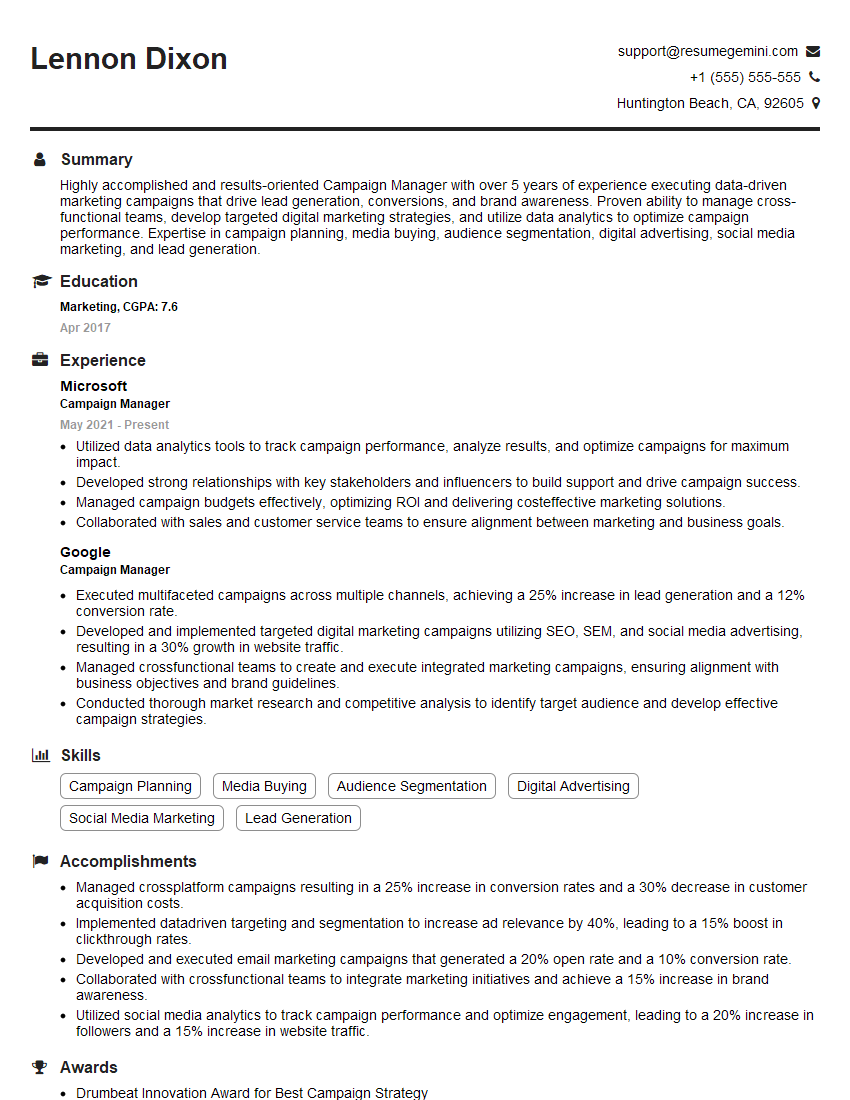
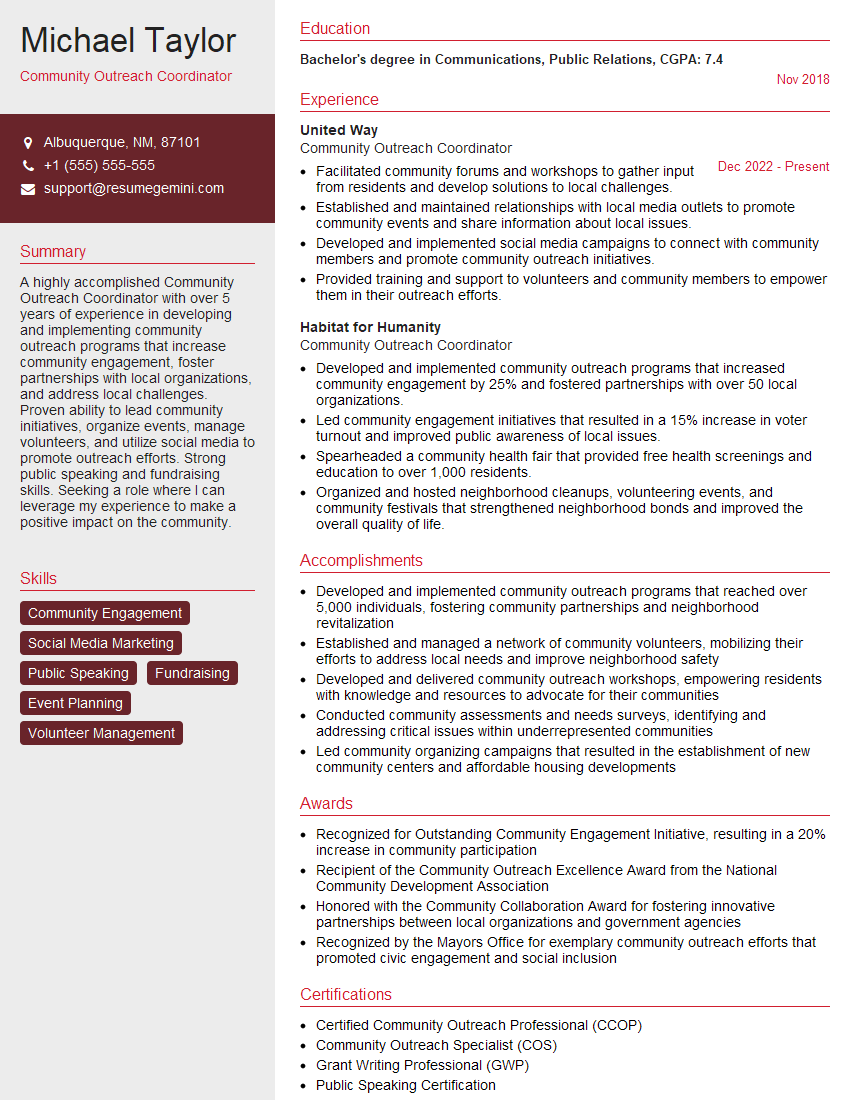
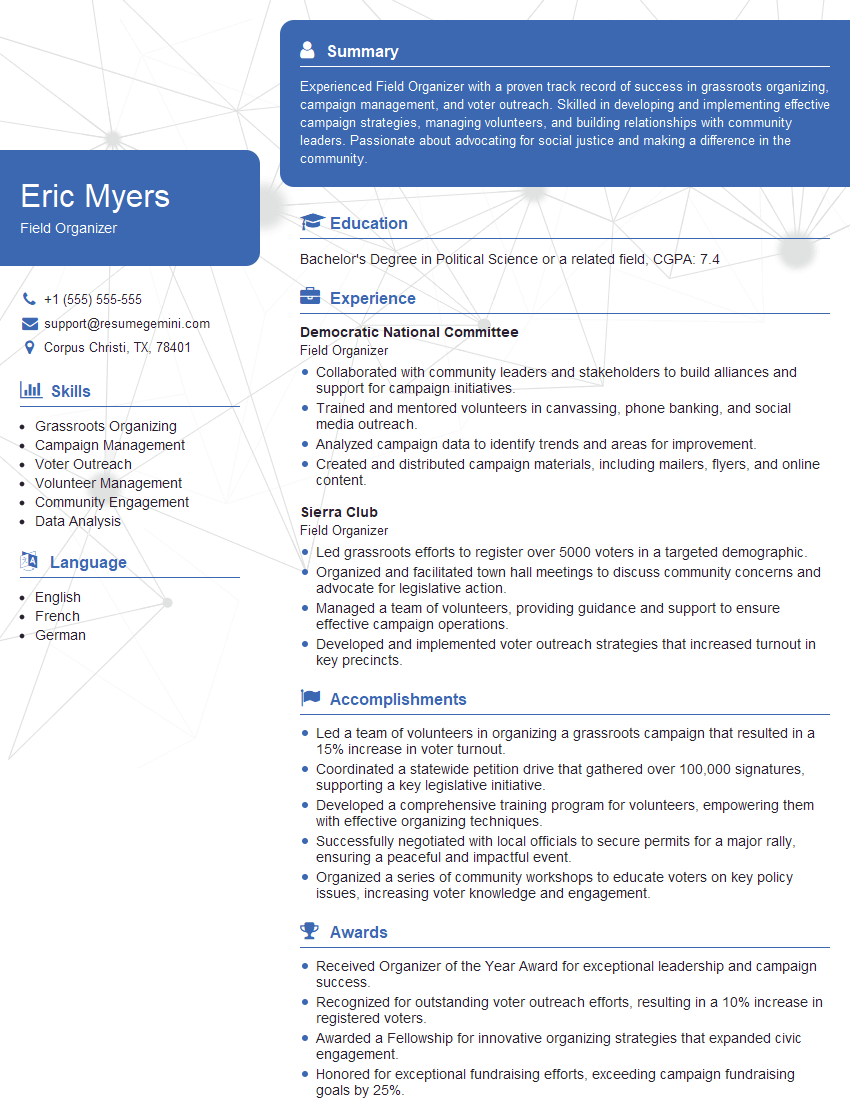
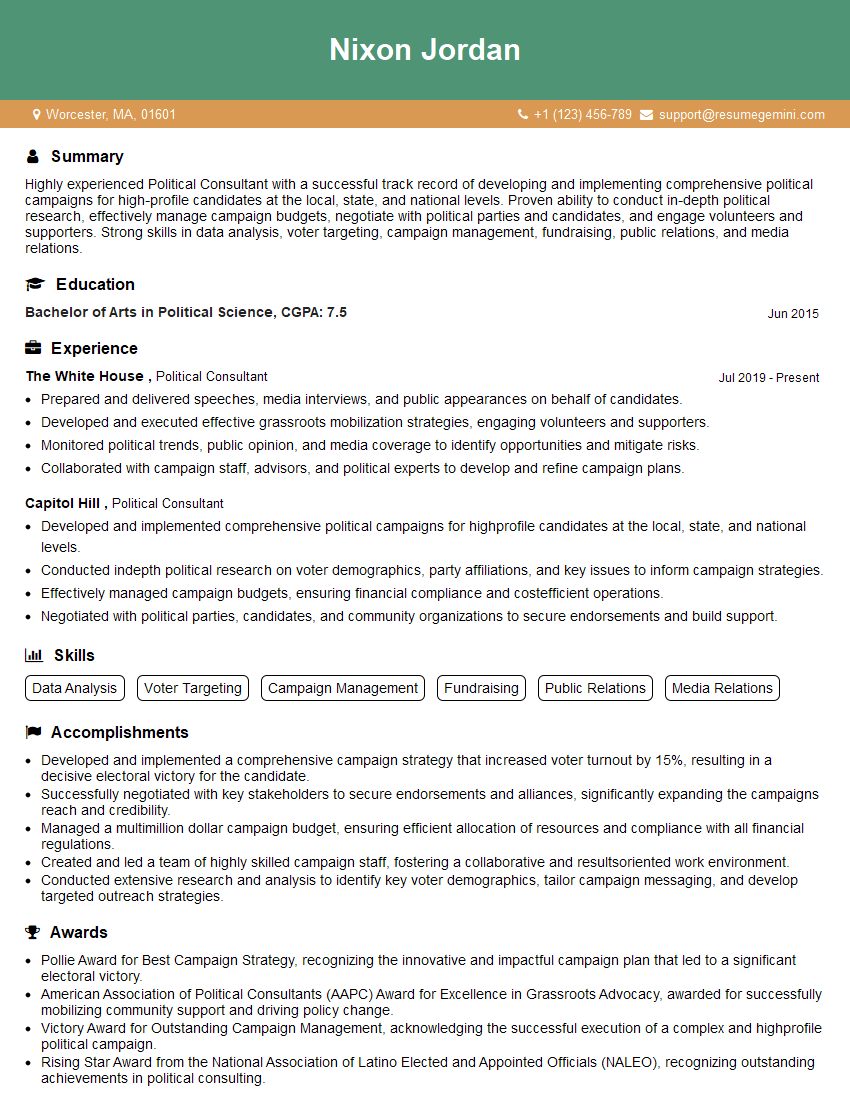
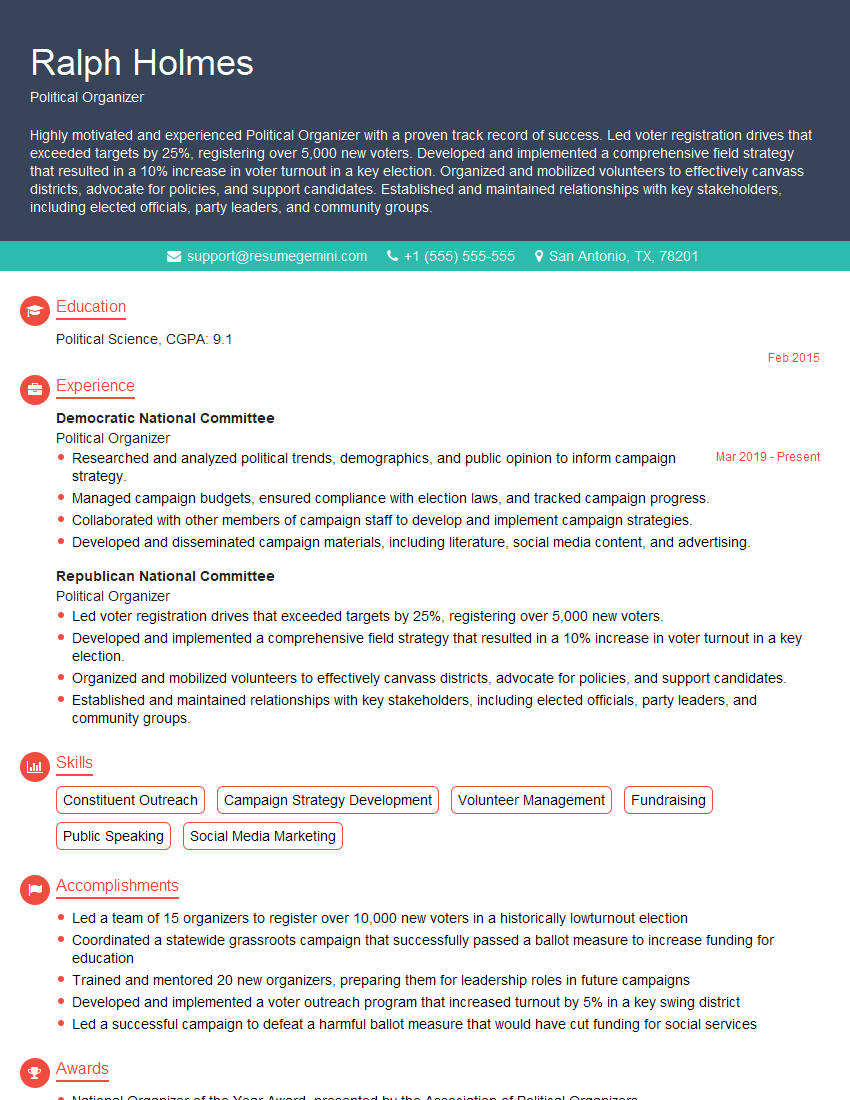
Mastering Voter Contact and Mobilization is crucial for a successful career in political campaigns and advocacy. It demonstrates valuable skills in communication, strategy, data analysis, and project management, opening doors to diverse and impactful roles within the field. To significantly boost your job prospects, crafting a compelling and ATS-friendly resume is essential. ResumeGemini is a trusted resource to help you build a professional resume that highlights your qualifications effectively. We provide examples of resumes tailored to Voter Contact and Mobilization to guide you through the process. Investing time in building a strong resume will significantly increase your chances of landing your dream job.

Explore more articles
Users Rating of Our Blogs
Share Your Experience
We value your feedback! Please rate our content and share your thoughts (optional).
What Readers Say About Our Blog
To the interviewgemini.com Webmaster.
Very helpful and content specific questions to help prepare me for my interview!
Thank you
To the interviewgemini.com Webmaster.
This was kind of a unique content I found around the specialized skills. Very helpful questions and good detailed answers.
Very Helpful blog, thank you Interviewgemini team.