Interviews are more than just a Q&A session—they’re a chance to prove your worth. This blog dives into essential Voter Targeting interview questions and expert tips to help you align your answers with what hiring managers are looking for. Start preparing to shine!
Questions Asked in Voter Targeting Interview
Q 1. Explain the difference between macro-targeting and micro-targeting in voter outreach.
Macro-targeting and micro-targeting represent different scales of voter outreach. Think of it like this: macro-targeting is fishing with a net, while micro-targeting is using a spear.
Macro-targeting focuses on broad demographic groups. We might target all registered Democrats in a specific county, or all likely voters aged 18-25 across the state. It’s efficient for reaching a large audience, but the message is less personalized. For example, a campaign might send a general email blast to all registered Republicans advocating for lower taxes.
Micro-targeting, on the other hand, involves creating highly specific segments based on detailed data. This could include factors like voter history, consumer behavior, online activity, and even personality traits. This allows for highly personalized messages tailored to resonate deeply with each individual. For instance, a micro-targeted campaign might send a Facebook ad highlighting environmental protection to a specific group of registered Independents known to be environmentally conscious based on their social media engagement and past donations.
In essence, macro-targeting prioritizes reach, while micro-targeting prioritizes relevance and engagement. Often, successful campaigns effectively blend both approaches, using macro-targeting for initial outreach and then using micro-targeting to refine messaging and maximize impact among key segments.
Q 2. Describe your experience using voter databases and CRM systems.
My experience with voter databases and CRM systems is extensive. I’ve worked with various platforms, including commercial solutions like VAN (Voter Activation Network) and NGP VAN (NationBuilder’s political CRM), as well as custom-built systems. I’m proficient in data import, cleaning, and manipulation, ensuring data accuracy and consistency. This includes handling data from various sources, including voter registration rolls, consumer data providers, and campaign-specific surveys.
I’m skilled in using these systems to segment voters, track interactions (emails, phone calls, canvassing efforts), and analyze campaign performance. I understand the importance of data security and compliance with all relevant regulations when managing sensitive voter information. For example, in one campaign, I integrated voter data with online donation records to identify high-value donors and tailor communication to maintain their engagement and encourage further contributions. Another project involved utilizing a CRM to track volunteer activity, optimizing deployment based on individual skills and location.
Q 3. How do you identify and prioritize key voter segments for a campaign?
Identifying and prioritizing key voter segments requires a strategic approach. It begins with a clear understanding of the campaign’s goals and the target audience. We typically start by analyzing available voter data to identify potential segments. This data may include demographic information (age, race, gender), geographic location, voter history (past voting patterns, party affiliation), and consumer data (purchasing habits, media consumption).
We then employ various statistical methods such as clustering and regression analysis to refine these segments. For instance, we might identify a segment of undecided voters living in swing districts who exhibit strong interest in education reform based on their online activity and past donations to education-related charities. These segments are then prioritized based on their potential impact on the election outcome. Those with the highest probability of being persuadable and having a significant influence on the election result will receive the greatest attention.
Finally, we create detailed voter personas for each key segment, describing their characteristics, concerns, and motivations. These personas help guide the development of targeted messaging and outreach strategies.
Q 4. What metrics do you use to measure the effectiveness of a voter targeting strategy?
Measuring the effectiveness of a voter targeting strategy relies on a combination of quantitative and qualitative metrics. Key quantitative metrics include:
- Turnout rate: The percentage of targeted voters who actually cast their ballots.
- Conversion rate: The percentage of contacted voters who take the desired action (e.g., register to vote, donate, volunteer).
- Cost per acquisition (CPA): The cost of acquiring a new voter or donor through a specific targeting strategy.
- Engagement rate: Metrics like open rates for emails, click-through rates for online ads, and response rates to phone calls.
Qualitative metrics are also crucial and include:
- Voter feedback: Surveys, focus groups, and social media monitoring can provide valuable insights into voter sentiment and the effectiveness of messaging.
- Volunteer feedback: Understanding the challenges and successes of volunteers on the ground is critical.
By analyzing these metrics, we can evaluate the ROI of different targeting strategies, identify areas for improvement, and optimize future outreach efforts.
Q 5. How do you handle conflicting data sources when building a voter profile?
Handling conflicting data sources requires careful attention to detail and a structured approach. When inconsistencies arise, I prioritize data quality and accuracy. This involves a multi-step process:
- Data Source Evaluation: We assess the reliability and accuracy of each data source. Sources with known biases or outdated information are given less weight.
- Data Reconciliation: We use data matching techniques to identify and resolve discrepancies. This might involve manual review or algorithmic matching based on unique identifiers (e.g., voter registration ID).
- Data Validation: We use data validation rules and algorithms to identify and flag potential errors or inconsistencies. This could include checks for impossible values or inconsistencies between different data fields.
- Prioritization of Data: When conflicts remain after reconciliation and validation, we prioritize the most reliable and up-to-date sources. We document the rationale for these decisions.
- Transparency and Documentation: We maintain detailed records of all data handling procedures, including decisions made when resolving conflicts. This ensures auditability and accountability.
For example, if a voter registration record shows a different address than a consumer data provider, we might attempt to reconcile the information using other data points (e.g., past voter history). If the discrepancy can’t be resolved, we’ll prioritize the official voter registration record.
Q 6. Explain your experience with A/B testing in voter outreach campaigns.
A/B testing is a cornerstone of successful voter outreach. I extensively use this method to optimize campaign messages and outreach channels. This involves creating two or more versions of a message (e.g., different subject lines, calls to action, images) and randomly assigning them to different segments of voters. We then compare the performance of each version based on key metrics like open rates, click-through rates, and conversion rates. For example, we might test two different email subject lines: one emphasizing policy details and another focusing on emotional appeal. By comparing which subject line leads to higher open rates and click-through rates, we can determine which approach is more effective.
Through A/B testing, we can fine-tune messaging to maximize effectiveness across different channels (email, social media, SMS). This iterative process allows us to continuously refine our approach, improving the campaign’s overall impact and efficiency. For instance, in a recent campaign, we A/B tested different ad creatives on Facebook, ultimately identifying a creative which generated a significantly higher click-through rate and conversion rate than the original version.
Q 7. What is your experience with predictive modeling in voter targeting?
Predictive modeling plays a crucial role in optimizing voter targeting. I have significant experience using various machine learning techniques to predict voter behavior. This involves building models that use historical voter data, along with other relevant information, to predict factors such as voter turnout, vote choice, and likelihood of responding to campaign outreach.
Common algorithms used include logistic regression, decision trees, and support vector machines. For example, we might build a model to predict which undecided voters are most likely to vote for our candidate based on factors like their demographic profile, online activity, and past donation history. This allows us to prioritize our resources and outreach efforts on voters with the highest likelihood of supporting our campaign. These models are constantly refined and updated as more data becomes available, improving their accuracy and predictive power.
The output of these predictive models helps us optimize resource allocation, personalize messaging, and ultimately increase the effectiveness of our voter outreach efforts.
Q 8. Describe your process for identifying persuadable voters.
Identifying persuadable voters is the cornerstone of effective voter targeting. It’s not about targeting everyone; it’s about focusing resources on the individuals most likely to be swayed by your campaign’s message. My process involves a multi-step approach combining data analysis with strategic insights.
- Data Segmentation: I begin by segmenting voter data based on demographics (age, income, ethnicity), geographic location, past voting behavior, and engagement with political messaging (social media activity, email opens).
- Identifying Likely Persuadables: I focus on voters who haven’t consistently voted for a particular party or who have shown interest in issues relevant to our campaign platform, but haven’t yet made a clear commitment. For example, a voter who previously voted for both Republican and Democratic candidates might be more persuadable than a long-time partisan.
- Predictive Modeling: I leverage predictive modeling techniques to score voters based on their likelihood of supporting our candidate. This involves using machine learning algorithms to identify patterns and correlations in the data that predict voting behavior.
- Validation and Refinement: The models are continuously validated and refined using A/B testing and ongoing campaign feedback. We might test different messaging strategies on different segments of persuadable voters to optimize our approach.
For example, in a recent campaign, we identified a segment of ‘swing voters’ – young professionals in suburban areas concerned about environmental issues. By tailoring messaging to these specific concerns, we significantly increased our engagement with this demographic.
Q 9. How do you adapt your voter targeting strategy based on real-time campaign feedback?
Adapting to real-time campaign feedback is crucial for success. My approach involves a continuous feedback loop that informs adjustments to our targeting strategy throughout the campaign.
- Real-Time Data Monitoring: We constantly monitor key metrics such as website traffic, social media engagement, donation rates, and volunteer sign-ups. This data provides valuable insights into which messaging resonates and which segments are most responsive.
- A/B Testing: We conduct A/B tests on different messaging, targeting segments, and channels (e.g., email vs. text vs. social media) to see which strategies yield the best results.
- Adjusting Targeting Parameters: Based on the feedback, we dynamically adjust our targeting parameters. For instance, if a particular message performs poorly with a specific demographic, we may refine the message or shift resources to other more responsive segments.
- Resource Allocation: We reallocate resources (volunteers, funds, and media buys) to the segments that show the highest potential for conversion. This ensures we maximize our impact within the available resources.
Imagine we’re running a Get Out The Vote (GOTV) campaign. If early data shows low response rates from a particular demographic group reached via email, we might shift to phone banking or targeted social media advertising for that group. This agility is key to optimizing campaign performance.
Q 10. What tools and technologies are you proficient in for voter data analysis?
My proficiency in voter data analysis relies on a combination of tools and technologies.
- Statistical Software: I’m highly proficient in R and Python, utilizing packages such as
pandas,scikit-learn, andstatsmodelsfor data manipulation, statistical modeling, and machine learning. - Data Visualization Tools: I use Tableau and Power BI to create insightful visualizations of voter data, enabling quick identification of trends and patterns.
- Database Management Systems (DBMS): I have experience working with SQL and NoSQL databases to manage and query large voter datasets.
- Campaign Management Platforms: I am familiar with various campaign management platforms that integrate voter data, communication tools, and analytics dashboards.
For example, I might use Python and scikit-learn to build a predictive model to identify likely voters based on historical voting data and demographic information, then visualize the model’s performance and insights in Tableau.
Q 11. How do you ensure data privacy and compliance when working with voter information?
Data privacy and compliance are paramount in voter targeting. My approach is built upon a foundation of ethical data handling and strict adherence to all relevant regulations.
- Data Security: I ensure all voter data is stored securely using encryption and access control measures.
- Data Minimization: We only collect and use the minimum necessary data required for our targeting objectives.
- Compliance with Regulations: We strictly adhere to regulations like the GDPR (General Data Protection Regulation) and CCPA (California Consumer Privacy Act), ensuring compliance with all data privacy laws.
- Transparency and Consent: We are transparent about our data collection practices and obtain explicit consent from voters whenever necessary.
- Data Anonymization and De-identification: Where feasible, we anonymize or de-identify voter data to minimize the risk of re-identification.
We maintain detailed records of our data handling practices and conduct regular audits to ensure ongoing compliance. Data privacy is not just a legal requirement, but a moral imperative.
Q 12. Explain your experience with GOTV (Get Out The Vote) strategies.
GOTV (Get Out The Vote) strategies are critical for maximizing voter turnout. My experience involves developing and implementing comprehensive GOTV plans that leverage data-driven insights to optimize canvassing, phone banking, and digital outreach efforts.
- Identifying Likely Voters: We start by identifying voters most likely to support our candidate and those who may need encouragement to vote. This often involves predictive modeling based on past voting behavior and engagement levels.
- Targeted Outreach: We utilize various communication channels, including personalized text messages, emails, phone calls, and social media outreach, tailored to different voter segments.
- Volunteer Coordination: We effectively coordinate volunteer efforts, assigning them to specific tasks based on their skills and the needs of the campaign. We utilize voter contact databases to track progress and ensure optimal volunteer deployment.
- Tracking and Optimization: We closely monitor the effectiveness of our GOTV efforts, tracking response rates, volunteer productivity, and voter turnout. We then use this data to refine our strategies and optimize resource allocation.
In one campaign, we significantly boosted turnout by using a combination of targeted text messages reminding voters of election day and deploying volunteer teams for last-minute canvassing in identified high-potential areas.
Q 13. How do you handle data cleaning and validation in voter targeting?
Data cleaning and validation are essential for ensuring the accuracy and reliability of our voter targeting efforts. Inaccurate data can lead to wasted resources and ineffective campaign strategies.
- Data Deduplication: Removing duplicate records to avoid sending multiple messages to the same voter.
- Handling Missing Values: Addressing missing data points (e.g., missing phone numbers or email addresses) through imputation or removal, depending on the extent of missing data and its impact on analysis.
- Data Standardization: Ensuring consistency in data formats (e.g., date formats, address formats) for accurate analysis.
- Data Validation: Checking the accuracy and consistency of the data, for example by verifying address information against postal databases.
- Outlier Detection: Identifying and handling extreme values or outliers that might skew analysis results.
For example, before conducting any analysis, I would use Python’s pandas library to identify and handle missing values, ensuring data quality and integrity for accurate segmentation and predictive modeling.
Q 14. What are the ethical considerations involved in voter targeting?
Ethical considerations are central to voter targeting. The power of data-driven campaigning requires a responsible approach that avoids manipulation and protects voter rights.
- Transparency: Being open about our data collection and usage practices, ensuring voters understand how their information is being used.
- Avoiding Misinformation and Disinformation: Refusing to spread false or misleading information that could influence voters’ decisions.
- Respecting Privacy: Prioritizing data security and compliance with relevant regulations to protect voters’ privacy.
- Avoiding Targeting Based on Sensitive Attributes: Not using discriminatory practices by targeting voters based on sensitive attributes such as race or religion.
- Promoting Fair and Open Political Discourse: Using data to promote informed participation and healthy political debate.
Ethical voter targeting is not just a matter of compliance, it’s a commitment to ensuring fair and democratic elections. It’s about using data to empower voters, not to manipulate them.
Q 15. How would you address a situation where your voter targeting model is underperforming?
Underperforming voter targeting models require a systematic diagnostic approach. First, I’d examine the model’s accuracy metrics, such as precision and recall, to identify specific areas of weakness. A low precision score, for instance, suggests the model is identifying too many individuals who aren’t likely to vote for the candidate, wasting resources. Conversely, low recall indicates the model is missing potential voters.
Next, I’d investigate the data quality. Are there biases in the data? Is the data current and representative of the actual electorate? Outdated data, missing variables, or errors in data collection can significantly impact model performance. I might consider exploring additional data sources, such as social media activity or consumer behavior data, to improve prediction accuracy.
Furthermore, I’d review the model’s features and algorithms. Perhaps the model is overly complex or relies on irrelevant predictors. A simpler model might perform better if the signal-to-noise ratio in the data is low. I might explore different algorithms (e.g., logistic regression, random forest, gradient boosting) or feature selection techniques to improve model performance.
Finally, A/B testing different targeting strategies is crucial. By comparing the performance of various approaches, we can identify the most effective methods for reaching and persuading voters. For example, we might test different messaging approaches or targeting specific demographic segments.
Career Expert Tips:
- Ace those interviews! Prepare effectively by reviewing the Top 50 Most Common Interview Questions on ResumeGemini.
- Navigate your job search with confidence! Explore a wide range of Career Tips on ResumeGemini. Learn about common challenges and recommendations to overcome them.
- Craft the perfect resume! Master the Art of Resume Writing with ResumeGemini’s guide. Showcase your unique qualifications and achievements effectively.
- Don’t miss out on holiday savings! Build your dream resume with ResumeGemini’s ATS optimized templates.
Q 16. Describe your experience with different voter segmentation techniques.
My experience encompasses a range of voter segmentation techniques, each offering unique advantages depending on the campaign’s goals and available data. I’ve worked extensively with:
- Demographic Segmentation: This classic approach groups voters based on readily available information such as age, gender, race, income, education, and geographic location. For example, targeting young, urban voters with a specific message focused on climate change.
- Geographic Segmentation: This focuses on location, dividing voters into precincts, districts, or even neighborhoods based on historical voting patterns and demographics. This is helpful for optimizing resource allocation and identifying high-priority areas.
- Psychographic Segmentation: This delves into voters’ values, lifestyles, attitudes, and interests. For example, identifying voters who prioritize religious freedom or economic security and crafting tailored messaging accordingly. This often uses survey data, online behavior, or inferred data from social media.
- Behavioral Segmentation: This approach looks at past voting behavior, campaign engagement (e.g., email opens, website visits), and donations to identify likely supporters and those who may be persuadable. This helps in identifying voters who have shown past engagement and focus efforts on them.
- Hybrid Segmentation: This combines elements of the above to create more nuanced segments. For example, combining geographic and behavioral data to identify high-potential areas with voters who show inclination towards a specific candidate through their online behavior.
Q 17. Explain your understanding of voter suppression tactics and countermeasures.
Voter suppression is the deliberate attempt to reduce voter turnout, often targeting specific demographic groups. Tactics can range from restrictive voter ID laws and purging voter rolls to misinformation campaigns and intimidation. Countermeasures involve:
- Legal challenges: Filing lawsuits against discriminatory practices or policies.
- Voter education: Providing clear and accessible information about voting procedures, deadlines, and requirements to combat misinformation.
- Community organizing: Mobilizing volunteers to assist voters with registration and transportation, particularly in underserved communities.
- Monitoring polling places: Having observers present to ensure fair and transparent voting processes.
- Data analysis and reporting: Tracking instances of voter suppression and using data to advocate for policy changes and legal action.
It’s crucial to proactively identify and counteract these tactics to ensure fair and equitable access to the ballot box for all eligible voters.
Q 18. How do you incorporate demographic and psychographic data in your targeting strategies?
Demographic and psychographic data are integral to effective voter targeting. Demographic data provides a broad overview of a population, allowing us to identify potential voter segments based on readily observable characteristics. For example, we might focus on young, college-educated voters living in urban areas.
Psychographic data, on the other hand, reveals deeper insights into voters’ values, beliefs, and lifestyles. This information is invaluable for crafting targeted messaging that resonates with individual segments. We might use surveys, social media listening, and other techniques to gather psychographic data and identify key issues voters care about.
Combining these data types allows us to create highly targeted campaigns. For example, we might identify a segment of environmentally conscious, middle-aged women living in suburban areas who are concerned about their children’s future. We would then craft a message that addresses this specific demographic’s values and concerns, increasing the likelihood of engagement and support.
Q 19. Explain your experience using social media data in voter targeting.
Social media data offers a wealth of insights for voter targeting. By analyzing users’ posts, likes, shares, and comments, we can infer their political leanings, values, and engagement with specific issues. This data can be used to:
- Identify potential supporters and opponents: Social media activity helps identify individuals who are likely to support or oppose a candidate, enabling more efficient resource allocation.
- Craft targeted messaging: By understanding the language and issues that resonate with particular segments, we can tailor our messaging to maximize its impact.
- Monitor public opinion and sentiment: Real-time monitoring of social media conversations helps us understand how public perception of a candidate or issue is evolving and adapt our strategy accordingly.
- Micro-target specific groups: Social media allows us to reach highly specific segments with tailored messages, optimizing campaign reach and engagement.
However, it’s important to use social media data ethically and responsibly, respecting users’ privacy and avoiding misleading or manipulative practices.
Q 20. How do you measure the return on investment (ROI) of voter targeting efforts?
Measuring the ROI of voter targeting efforts requires a multifaceted approach. It’s not simply about the number of votes obtained, but also about the efficiency and effectiveness of the resources deployed. Key metrics include:
- Cost per vote: This measures the cost of acquiring each vote, allowing us to compare the efficiency of different targeting strategies.
- Voter turnout rate: Tracking the percentage of targeted voters who actually cast a ballot provides insights into the effectiveness of our efforts.
- Conversion rates: Measuring the percentage of targeted individuals who take desired actions, such as registering to vote, donating, or volunteering.
- Change in vote share: Comparing the vote share before and after the campaign helps assess the overall impact of voter targeting efforts.
- Return on advertising spend (ROAS): Analyzing the return generated from ad spend directed towards targeted voter segments.
By analyzing these metrics, we can optimize our strategies to maximize the impact of our investments and achieve the best possible return on our voter targeting efforts.
Q 21. How do you communicate complex data findings to non-technical stakeholders?
Communicating complex data findings to non-technical stakeholders requires clear and concise language, avoiding jargon and technical terms whenever possible. I often use:
- Visualizations: Charts, graphs, and maps are highly effective for conveying data patterns and trends in an accessible way. For example, a map showing the geographic distribution of potential voters or a bar chart comparing different targeting strategies’ effectiveness.
- Storytelling: Framing data findings within a narrative makes them more engaging and memorable. I might tell a story about how a specific targeting strategy led to a significant increase in voter turnout in a particular region.
- Analogies and metaphors: Using simple analogies can help non-technical audiences grasp complex concepts. For example, comparing the model’s accuracy to the accuracy of a weather forecast.
- Summaries and key takeaways: Providing concise summaries of key findings highlights the most important information without overwhelming the audience with details.
- Interactive dashboards: Allow stakeholders to explore the data themselves, fostering understanding and engagement.
By focusing on clear communication and audience engagement, we can ensure that everyone understands the insights gained from our voter targeting efforts and can use them to make informed decisions.
Q 22. What is your experience with voter registration drives?
My experience with voter registration drives is extensive. I’ve led and participated in numerous drives, ranging from small-scale, community-based efforts to large-scale statewide initiatives. My approach is always data-driven. We begin by identifying unregistered likely voters through voter file analysis, focusing on demographics known to have lower registration rates. Then, we develop targeted outreach strategies. This might involve direct mail campaigns personalized to each individual, digital advertising on social media platforms frequented by the target demographic, text message reminders, and on-the-ground canvassing events in key locations. We track our progress meticulously, using campaign management software to monitor registration rates and identify areas requiring additional attention. For example, in one campaign, we saw a significant increase in youth voter registration by partnering with local colleges and universities and offering convenient, on-campus registration events. Success also relies heavily on volunteer recruitment and training; enthusiastic and well-trained volunteers are key to a successful drive.
Q 23. How do you handle unexpected challenges or setbacks during a campaign?
Handling unexpected challenges is crucial in political campaigns. My approach is proactive and adaptable. We start with comprehensive contingency planning, anticipating potential problems like unexpected negative press, candidate health issues, or shifts in public opinion. When a setback does occur, I focus on swift, decisive action. This involves assessing the situation quickly, identifying the root cause, and developing a tailored response. Open communication with the campaign team and transparency with the public are paramount. For example, when a key endorsement fell through in a recent campaign, we immediately pivoted to highlighting other endorsements and focusing on our candidate’s strengths in areas where the endorsement was perceived to be particularly helpful. This allowed us to mitigate the damage and maintain momentum. The key is to remain calm, analyze, adapt, and communicate effectively.
Q 24. How do you manage and prioritize multiple projects simultaneously within a campaign?
Managing multiple projects requires a structured approach. I utilize project management methodologies, such as Agile, prioritizing tasks based on their impact on the overall campaign goals. This often involves creating a detailed project timeline with clear deadlines and milestones, assigning responsibilities to team members, and regularly monitoring progress. Effective communication is critical; I use regular team meetings, project management software (such as Asana or Trello), and clear reporting mechanisms to ensure everyone is informed and on track. For instance, during a recent campaign, we simultaneously managed voter outreach, fundraising, media relations, and event planning. By using a Kanban board to visualize tasks and their dependencies, we ensured that all projects were completed efficiently and effectively, without compromising quality.
Q 25. How would you optimize a voter turnout strategy for a specific demographic group?
Optimizing voter turnout for a specific demographic requires a deep understanding of that group’s values, concerns, and media consumption habits. It’s not a one-size-fits-all strategy. First, we conduct thorough research using data analysis, surveys, and focus groups to gain valuable insights. Then, we tailor our messaging and outreach methods accordingly. For example, targeting young voters might involve utilizing social media platforms like TikTok and Instagram, while reaching older voters could require more traditional methods like direct mail and community events. Furthermore, we need to consider the specific needs and concerns of the group. For instance, if targeting low-income voters, we might focus on messaging about economic issues and provide convenient transportation to polling places. Personalization is also crucial – sending targeted messages reflecting their particular concerns is far more effective than generic appeals.
Q 26. What is your experience with working with different campaign management software?
I have extensive experience with various campaign management software, including tools like NGP VAN, VoterReach, and VAN. My expertise extends beyond simply inputting data; I understand how to leverage the features of these systems to build effective voter targeting models, analyze voter behavior, and manage field operations. I can efficiently import and cleanse voter data, segment audiences based on various criteria (demographics, past voting history, issue positions), and create custom reports to track progress and identify areas for improvement. My understanding extends to the practical application of these tools in real-world scenarios, ensuring data integrity, security, and efficient workflow integration across the campaign team. For instance, I’ve utilized NGP VAN to create highly targeted micro-campaigns for specific demographic groups within a larger electoral district.
Q 27. Explain how you would build a voter suppression model.
Building a voter *suppression* model is ethically problematic and often illegal. It involves identifying and targeting specific groups to discourage voting. This is fundamentally different from voter *turnout* strategies which aim to increase participation. However, understanding how such models *might* be constructed (for purely academic purposes) requires analyzing voter data to identify groups perceived as less likely to support a particular candidate. This could include identifying voters with low historical turnout, those with specific demographic characteristics, or those living in certain geographic locations. However, I want to stress that manipulating this information to suppress votes is unethical and illegal. Any modeling I undertake always focuses on increasing voter participation and engagement, respecting the democratic process.
Q 28. Describe your experience identifying and engaging with swing voters.
Identifying and engaging swing voters is critical to campaign success. My approach starts with data analysis. We use voter file data and other publicly available information (polling data, surveys) to identify individuals whose voting patterns are less predictable. We then develop targeted messaging and outreach tailored to their specific concerns. For example, if a swing voter shows interest in environmental issues, we might highlight our candidate’s green initiatives. Personalized communication is key—direct mail, email, or even phone calls tailored to their interests are more effective than generic messages. Furthermore, engaging these voters requires building trust and demonstrating authenticity. This is achieved through consistent, transparent communication and by highlighting policy positions that address their specific concerns. For example, hosting town hall meetings or organizing small-group discussions can be highly effective ways to engage and win over swing voters.
Key Topics to Learn for Voter Targeting Interview
- Voter Data Analysis: Understanding data sources (voter registration databases, surveys, social media), data cleaning and preprocessing techniques, and applying statistical methods to analyze voter behavior and preferences.
- Targeted Messaging & Communication: Crafting persuasive messaging tailored to specific voter segments based on demographic, geographic, and psychographic data. This includes understanding the nuances of different communication channels (email, text, social media) and their effectiveness.
- Campaign Strategy & Planning: Developing effective voter targeting strategies aligned with campaign goals. This includes identifying key target audiences, resource allocation, and measuring campaign performance.
- Predictive Modeling & Forecasting: Utilizing statistical models and machine learning techniques to predict voter turnout, identify likely voters, and forecast election outcomes. Understanding the limitations and ethical implications of predictive modeling is crucial.
- Geographic Information Systems (GIS): Applying GIS tools and techniques to visualize voter data geographically, identify key demographics within specific regions, and optimize campaign resource allocation.
- Legal & Ethical Considerations: Understanding and adhering to all relevant laws and regulations related to voter data privacy, campaign finance, and political advertising. Ethical considerations around data use and potential biases are also critical.
- Technology & Tools: Familiarity with relevant software and tools used in voter targeting, such as data management systems, CRM platforms, and campaign management software.
Next Steps
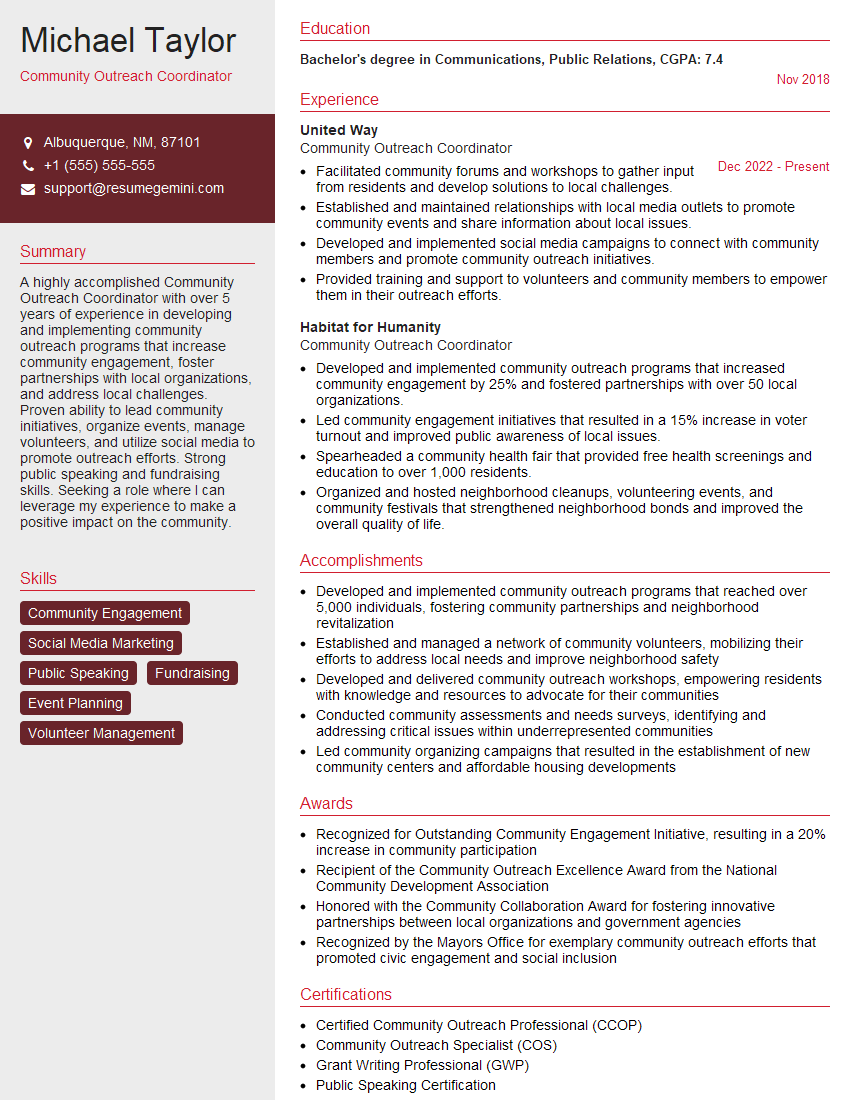
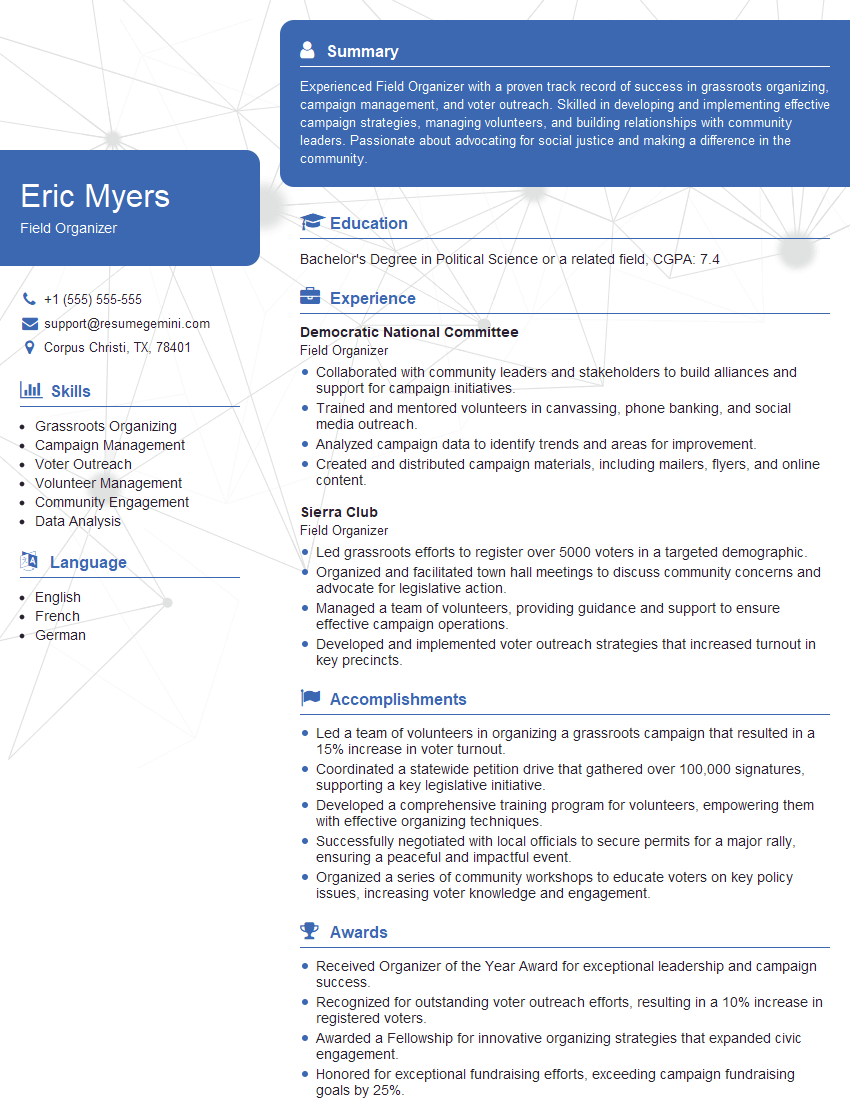
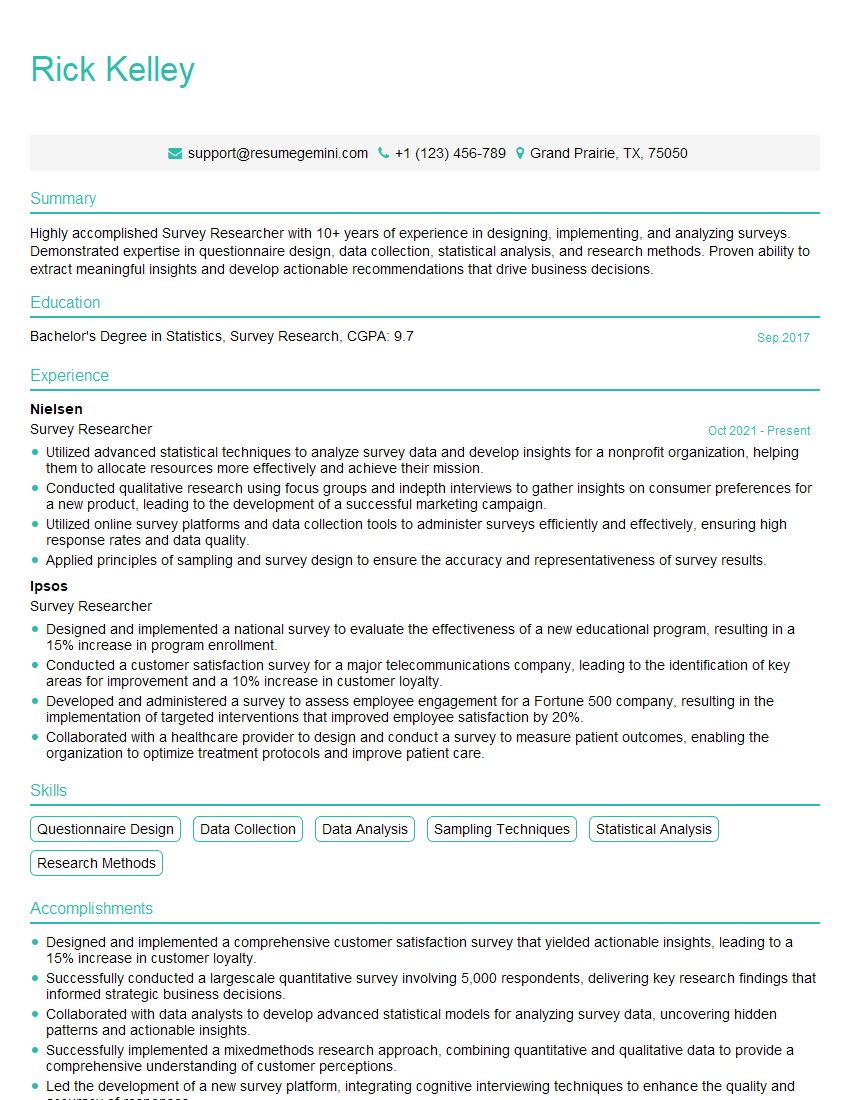
Mastering voter targeting opens doors to exciting and impactful career opportunities in political campaigns, advocacy groups, and research organizations. To maximize your job prospects, it’s crucial to create a resume that effectively showcases your skills and experience to Applicant Tracking Systems (ATS). Building an ATS-friendly resume significantly increases your chances of landing an interview. We highly recommend using ResumeGemini to build a professional and compelling resume that highlights your qualifications in voter targeting. ResumeGemini provides examples of resumes tailored to this specific field, guiding you through the process of creating a document that truly stands out. Invest in your future; invest in your resume.
Explore more articles
Users Rating of Our Blogs
Share Your Experience
We value your feedback! Please rate our content and share your thoughts (optional).
What Readers Say About Our Blog
To the interviewgemini.com Webmaster.
Very helpful and content specific questions to help prepare me for my interview!
Thank you
To the interviewgemini.com Webmaster.
This was kind of a unique content I found around the specialized skills. Very helpful questions and good detailed answers.
Very Helpful blog, thank you Interviewgemini team.