The thought of an interview can be nerve-wracking, but the right preparation can make all the difference. Explore this comprehensive guide to Wastewater Systems Design interview questions and gain the confidence you need to showcase your abilities and secure the role.
Questions Asked in Wastewater Systems Design Interview
Q 1. Explain the different stages of wastewater treatment.
Wastewater treatment is a multi-stage process designed to remove pollutants from wastewater before it’s safely returned to the environment. Think of it like cleaning a very dirty dish – you wouldn’t just rinse it, right? We need several steps to ensure a thorough job.
- Preliminary Treatment: This initial stage removes large debris like rags, grit, and sand through screening and grit removal. Imagine a strainer catching large food particles before washing dishes.
- Primary Treatment: This involves settling out heavier solids in a sedimentation tank (clarifier). This is like letting the dirt settle at the bottom of a glass of water.
- Secondary Treatment: This is the core of the treatment, where biological processes break down organic matter. This often uses the activated sludge process (explained in more detail in question 4) or trickling filters, where microorganisms consume the pollutants. This is similar to composting – microorganisms break down organic waste into simpler, less harmful substances.
- Tertiary Treatment (Optional): This advanced treatment removes remaining nutrients (nitrogen and phosphorus) and pathogens. Techniques include filtration, disinfection, and advanced oxidation processes. Think of this as polishing the dish after the main wash, ensuring it’s sparkling clean.
- Sludge Treatment: The solids removed during primary and secondary treatment (sludge) are further processed through thickening, digestion, and dewatering before disposal or reuse. This is like properly disposing of the waste generated during the cleaning process.
The specific stages and their intensity depend on the wastewater source, environmental regulations, and the desired level of treatment.
Q 2. Describe the function of a clarifier in wastewater treatment.
A clarifier, also known as a sedimentation tank, is a crucial component of wastewater treatment, primarily used in primary and secondary treatment. Its function is to separate solids from the wastewater through gravity settling. Imagine a calm lake – the heavier sediment naturally sinks to the bottom. The clarifier mimics this process.
Wastewater flows slowly into the clarifier, allowing the heavier solids (sludge) to settle to the bottom, while the lighter clarified effluent flows out from the top. The settled sludge is then removed from the bottom for further processing. The design incorporates mechanisms like rakes to gently scrape settled sludge towards a central collection point for removal. Effective clarification is crucial for efficient secondary treatment, as it removes a significant amount of suspended solids which could hinder the biological processes.
Q 3. What are the key design considerations for a wastewater treatment plant?
Designing a wastewater treatment plant requires careful consideration of many factors, encompassing both technical and logistical aspects. Here are key design considerations:
- Influent characteristics: The quality and quantity of incoming wastewater (flow rate, BOD, suspended solids, etc.) are paramount.
- Treatment level required: This is dictated by environmental regulations and effluent discharge standards.
- Site selection: Proximity to wastewater sources, accessibility, land availability, and potential environmental impacts must be evaluated.
- Process selection: Choosing appropriate treatment technologies (activated sludge, trickling filters, membrane bioreactors, etc.) that best suit the influent characteristics and treatment requirements.
- Capacity and future expansion: The plant must handle current and projected future flows, allowing for adequate expansion possibilities.
- Sludge management: Plans for sludge handling, treatment, disposal, or reuse must be carefully considered.
- Energy efficiency: Designing for reduced energy consumption through process optimization and energy recovery is important for environmental and financial sustainability.
- Instrumentation and control: A robust control system is crucial for monitoring and optimizing plant performance.
- Health and safety: The design must prioritize worker and public safety by minimizing risks associated with wastewater handling.
- Cost-effectiveness: Balancing initial capital cost with operational and maintenance costs is a crucial aspect of the design process.
Proper design ensures efficient, reliable, and environmentally sound wastewater treatment.
Q 4. Explain the Activated Sludge Process and its limitations.
The Activated Sludge Process (ASP) is a widely used secondary treatment method for wastewater. It’s a biological process relying on microorganisms to consume and break down organic matter in the wastewater. Think of it as a miniature ecosystem, where microorganisms act like tiny cleanup crews.
Wastewater is mixed with activated sludge (a concentrated suspension of microorganisms) in an aeration tank. Oxygen is supplied to maintain aerobic conditions, allowing the microorganisms to thrive and consume organic matter. The mixture then passes through a clarifier, separating the treated effluent from the activated sludge. A portion of the sludge is returned to the aeration tank to maintain the microbial population (return activated sludge), while the excess sludge is removed (waste activated sludge) for further processing.
Limitations of ASP:
- Sensitivity to shock loads: Sudden influxes of high-strength wastewater can disrupt the delicate microbial balance.
- Bulking sludge: Under certain conditions, the sludge can become too fluffy and difficult to settle, impacting clarification efficiency.
- Energy intensive: Aeration requires significant energy, leading to operational costs.
- Nutrient removal limitations: ASP alone may not achieve the stringent nutrient removal standards required in many regions, necessitating additional tertiary treatment.
- Sludge management challenges: The disposal or reuse of waste activated sludge requires careful management to minimize environmental impacts.
Q 5. Describe the different types of wastewater filtration systems.
Wastewater filtration systems are used in various stages of treatment, primarily in tertiary treatment for polishing the effluent and removing remaining suspended solids. Several types exist:
- Rapid sand filters: These use a bed of sand to filter out suspended solids. Think of it like a very fine sieve, removing even smaller particles.
- Dual-media filters: These combine different filter media (e.g., sand and anthracite) for enhanced filtration efficiency.
- Membrane filtration: This advanced filtration technique utilizes membranes with very small pore sizes to remove even smaller particles, including bacteria and viruses. Membrane filtration includes microfiltration, ultrafiltration, and nanofiltration.
- Pressure filters: These filters operate under pressure, allowing for a higher filtration rate compared to gravity filters (e.g. rapid sand filters).
The choice of filtration system depends on factors such as the desired effluent quality, the influent characteristics, available space, and cost constraints.
Q 6. How do you design for peak flow in a wastewater collection system?
Designing a wastewater collection system for peak flow is critical to prevent overflows and ensure the system’s functionality during periods of high rainfall or increased wastewater generation. Peak flow typically occurs during periods of heavy rainfall or high water usage.
The design process involves:
- Estimating peak flow: This requires analyzing historical rainfall data, population projections, and land use patterns to determine the maximum flow the system needs to handle. Rational method or statistical methods are commonly used.
- Sizing collection pipes and infrastructure: Pipes, manholes, and pumping stations need to be sized to accommodate the peak flow, accounting for pipe slopes, flow velocities, and friction losses.
- Incorporating storage capacity: Retention basins or storage tanks can help manage peak flows by temporarily storing excess water, reducing the strain on downstream infrastructure. This could be analogous to a larger sink to handle sudden surges of water.
- Overflow protection: Properly designed overflow systems prevent the system from becoming overloaded during extreme peak flow events. This may involve emergency bypasses or diversion structures.
- Pumping considerations: Pumping stations need to have sufficient capacity to lift the peak flow to the treatment plant.
Accurate peak flow estimation and appropriate design measures are essential to ensure the reliable performance of the wastewater collection system.
Q 7. What are the common types of wastewater disinfection methods?
Disinfection is the final stage of wastewater treatment, aiming to eliminate or reduce harmful pathogens before the treated effluent is discharged into the environment. Common methods include:
- Chlorination: This is a widely used method, employing chlorine gas, sodium hypochlorite, or other chlorine-based compounds to kill pathogens. Chlorine is a strong oxidant, effective against a wide range of microorganisms. However, it can lead to the formation of disinfection byproducts.
- Ultraviolet (UV) disinfection: UV radiation damages the DNA of microorganisms, rendering them unable to reproduce. It is an effective and environmentally friendly alternative to chlorination, with no disinfection byproduct formation. However, UV radiation’s effectiveness can be reduced by turbidity in the water.
- Ozone disinfection: Ozone is a powerful oxidant that effectively inactivates pathogens. It is highly effective but requires on-site generation, and its residual effect is limited.
- Chloramine disinfection: Chloramine is formed by combining chlorine with ammonia and offers longer-lasting disinfection compared to free chlorine. It is less effective than chlorine, but produces fewer disinfection byproducts.
The selection of a disinfection method depends on several factors, including effluent quality, cost, environmental regulations, and the desired level of pathogen inactivation.
Q 8. Explain the concept of hydraulic retention time (HRT) in wastewater treatment.
Hydraulic Retention Time (HRT) is a crucial design parameter in wastewater treatment, representing the average time wastewater spends in a treatment unit. Think of it like this: imagine a bathtub filling and emptying – HRT is the time it takes for the entire bathwater to be replaced.
It’s calculated by dividing the volume of the treatment unit (e.g., aeration tank) by the flow rate of wastewater entering the unit. For example, if an aeration tank holds 1000 cubic meters and the flow rate is 100 cubic meters per day, the HRT is 10 days (1000 m³/100 m³/day = 10 days).
HRT is vital because it determines the effectiveness of biological processes. A longer HRT allows more time for microorganisms to break down pollutants, improving treatment efficiency. However, excessively long HRTs can lead to sludge bulking and other operational problems. The optimal HRT varies depending on the treatment process and the characteristics of the wastewater.
Q 9. Describe the role of biological nutrient removal in wastewater treatment.
Biological Nutrient Removal (BNR) focuses on removing nitrogen and phosphorus, key nutrients that contribute to eutrophication (excessive algae growth) in receiving waters. These nutrients come from sources like human waste, fertilizers, and detergents.
BNR usually involves a series of processes:
- Nitrification: Bacteria convert ammonia (NH₃) to nitrite (NO₂⁻) and then to nitrate (NO₃⁻). This is an aerobic process (requiring oxygen).
- Denitrification: Other bacteria convert nitrate to nitrogen gas (N₂), which is released to the atmosphere. This is an anaerobic process (occurring without oxygen).
- Phosphorous removal: This often involves biological processes (enhanced biological phosphorus removal) using specific types of bacteria that accumulate phosphorus under anaerobic conditions and release it under aerobic conditions, making it easier to remove in the subsequent processes.
Proper BNR design considers factors like oxygen supply, carbon source availability (for denitrification), and the types of microorganisms used. Without effective BNR, treated wastewater can still cause significant environmental damage.
Q 10. How do you handle sludge management in a wastewater treatment plant?
Sludge management is a critical aspect of wastewater treatment, involving the handling and disposal of the solids (sludge) that are separated from the wastewater during treatment. Ignoring sludge management leads to serious environmental and operational issues.
The process typically involves:
- Thickening: Concentrating the sludge to reduce its volume and transportation costs. This is often achieved using gravity thickeners or other mechanical methods.
- Stabilization: Reducing the putrescibility (ability to decompose) of the sludge, typically through anaerobic digestion (explained in question 5) or aerobic digestion.
- Dewatering: Removing water from the stabilized sludge to further reduce its volume and make it easier to handle and transport. Methods include belt presses, centrifuges, and vacuum filters.
- Disposal: This may involve land application (as a fertilizer), incineration, landfilling, or other appropriate methods, depending on local regulations and sludge characteristics.
Effective sludge management requires careful consideration of cost, environmental impact, and regulatory compliance.
Q 11. What are the common regulatory requirements for wastewater discharge?
Regulatory requirements for wastewater discharge vary significantly depending on location (national, state/province, and local levels), but generally aim to protect receiving water quality and public health. Common requirements include:
- Effluent limits: Specific limits on the concentration of pollutants in the treated wastewater (e.g., BOD, COD, suspended solids, nutrients, pathogens).
- Monitoring and reporting: Regular testing and reporting of effluent quality to regulatory agencies.
- Permitting: Obtaining permits for discharge and operating the treatment plant.
- Spill prevention and response plans: Procedures for handling accidental spills and preventing them in the first place.
- Sludge management regulations: Guidelines on the handling, transportation, and disposal of sludge.
Failure to comply with regulations can result in penalties, including fines and plant closure.
Q 12. Explain the principles of anaerobic digestion.
Anaerobic digestion is a biological process where microorganisms break down organic matter in the absence of oxygen. It’s widely used for sludge stabilization in wastewater treatment plants, and also for biogas production.
The process involves several stages:
- Hydrolysis: Complex organic molecules are broken down into simpler sugars and amino acids.
- Acidogenesis: These simpler compounds are further broken down into volatile fatty acids, alcohols, and other organic acids.
- Acetogenesis: The volatile fatty acids are converted to acetic acid, hydrogen, and carbon dioxide.
- Methanogenesis: Methane-producing archaea convert acetic acid, hydrogen, and carbon dioxide into methane (CH₄) and carbon dioxide (CO₂).
The resulting biogas (a mixture of methane and carbon dioxide) can be used as a renewable energy source, reducing the plant’s overall energy consumption. Careful control of temperature and pH is crucial for optimal anaerobic digestion.
Q 13. Describe the different types of wastewater pumps and their applications.
Wastewater pumps are essential for moving wastewater through the treatment process. Different pump types are suited for various applications based on flow rate, head (pressure), solids handling capability, and other factors.
Common types include:
- Submersible pumps: Located directly in the wastewater, ideal for handling solids and preventing clogging. Often used in wet wells and lift stations.
- Centrifugal pumps: High flow rate capacity, suitable for transferring large volumes of wastewater with relatively low solids content. Commonly used in main pumping stations.
- Progressive cavity pumps: Can handle high viscosity liquids and materials with significant solids content, useful for sludge transfer.
- Diaphragm pumps: Suitable for handling abrasive or corrosive slurries and thick sludges.
Selecting the appropriate pump is critical for efficient and reliable plant operation. Pump selection involves careful consideration of the hydraulic characteristics of the system and the nature of the wastewater being pumped.
Q 14. How do you design for odor control in a wastewater treatment plant?
Odor control is crucial in wastewater treatment plants to protect both workers and the surrounding community. The sources of odors are many; biological processes generate hydrogen sulfide (H₂S), volatile organic compounds (VOCs), and ammonia.
Design strategies for odor control include:
- Proper ventilation: Ensuring adequate air exchange in treatment units and buildings to dilute and remove odor-causing gases.
- Biological treatment optimization: Efficient biological processes minimize the production of odor-causing compounds.
- Chemical treatment: Using chemicals to neutralize or remove odor-causing substances, such as chlorine or ozone.
- Odor scrubbing: Passing air through a scrubber containing a liquid that absorbs odor-causing gases.
- Biofiltration: Using microbial communities in a filter bed to remove odor-causing compounds.
- Activated carbon adsorption: Using activated carbon to adsorb odorous compounds.
Effective odor control requires a combination of these approaches, considering factors such as the type of treatment processes used, local climate, and the sensitivity of the surrounding community.
Q 15. What are the advantages and disadvantages of different wastewater treatment technologies?
Wastewater treatment employs various technologies, each with its strengths and weaknesses. The optimal choice depends on factors like influent characteristics, budget, land availability, and regulatory requirements.
Activated Sludge:
Advantages: Relatively simple to operate, widely used, effective at removing BOD (Biochemical Oxygen Demand) and suspended solids. Disadvantages: Susceptible to shock loads, requires significant energy input, and produces excess sludge requiring further treatment.
Trickling Filters:
Advantages: Robust, simple design, lower energy consumption than activated sludge. Disadvantages: Larger land footprint required, less efficient at removing nutrients, and susceptible to clogging and odor problems.
Lagoons:
Advantages: Low capital cost, simple operation, effective in warmer climates. Disadvantages: Large land area needed, slow treatment process, susceptible to environmental factors like temperature and rainfall, and less efficient in colder climates.
Membrane Bioreactors (MBRs):
Advantages: High effluent quality, smaller footprint than conventional activated sludge, effective nutrient removal. Disadvantages: Higher capital and operating costs, membrane fouling can be a challenge, and requires specialized expertise.
For example, a small community might opt for a trickling filter due to its lower cost and simplicity, while a large city might choose an MBR for its superior effluent quality and space-saving design. The selection process involves a thorough evaluation of multiple factors and often incorporates economic and environmental assessments.
Career Expert Tips:
- Ace those interviews! Prepare effectively by reviewing the Top 50 Most Common Interview Questions on ResumeGemini.
- Navigate your job search with confidence! Explore a wide range of Career Tips on ResumeGemini. Learn about common challenges and recommendations to overcome them.
- Craft the perfect resume! Master the Art of Resume Writing with ResumeGemini’s guide. Showcase your unique qualifications and achievements effectively.
- Don’t miss out on holiday savings! Build your dream resume with ResumeGemini’s ATS optimized templates.
Q 16. Explain the concept of solids retention time (SRT).
Solids Retention Time (SRT) is a crucial parameter in activated sludge wastewater treatment. It represents the average time that activated sludge microorganisms remain in the aeration basin. Think of it like this: the longer the microorganisms stay, the more time they have to break down pollutants.
SRT is calculated by dividing the total mass of solids in the system by the daily mass of solids wasted. A longer SRT promotes the growth of slow-growing organisms responsible for nitrification (converting ammonia to nitrates), while a shorter SRT favors faster-growing organisms that are more efficient at removing BOD. Optimizing SRT is key to achieving the desired effluent quality and maintaining a healthy sludge ecosystem. For instance, a longer SRT (e.g., 20 days) is often needed for enhanced biological nutrient removal, while a shorter SRT (e.g., 5 days) might be used for rapid BOD removal.
Q 17. Describe your experience with wastewater modeling software.
I have extensive experience using various wastewater modeling software packages, including SWMM (Storm Water Management Model), MIKE URBAN, and BioWin. I’ve used these tools for numerous projects, ranging from designing new wastewater treatment plants to optimizing the performance of existing facilities. My experience includes creating hydraulic models to simulate flow patterns within the treatment plant, developing biological models to predict the removal of pollutants, and conducting sensitivity analyses to evaluate the impact of various design parameters.
For example, in a recent project, I used SWMM to simulate the impact of a proposed development on an existing wastewater collection system. The model helped identify areas of potential surcharge and allowed us to optimize the design of the system to prevent flooding. In another project, I employed BioWin to simulate the performance of an activated sludge process, helping to determine the optimal SRT and sludge wasting rate to achieve the desired effluent quality while minimizing energy consumption. This involved calibrating the model to historical plant data and then using it to predict the plant’s performance under different operating conditions.
Q 18. How do you ensure the safety of wastewater treatment plant operators?
Ensuring the safety of wastewater treatment plant operators is paramount. This involves a multi-faceted approach encompassing engineering controls, administrative controls, and personal protective equipment (PPE).
Engineering Controls: This includes designing the plant with appropriate safety features such as enclosed spaces with proper ventilation, emergency shut-off systems, and containment measures for hazardous materials.
Administrative Controls: This involves establishing comprehensive safety procedures, providing regular safety training, implementing lockout/tagout procedures, and conducting regular safety inspections.
Personal Protective Equipment (PPE): Operators must be provided with and properly trained in the use of appropriate PPE, including respirators, gloves, eye protection, and protective clothing.
Beyond these measures, regular monitoring of air quality and the presence of hazardous substances is crucial, along with creating a strong safety culture that emphasizes reporting near misses and actively addressing safety concerns. It’s not just about compliance with regulations, but about fostering a proactive environment that prioritizes operator well-being.
Q 19. How do you troubleshoot problems in a wastewater treatment plant?
Troubleshooting in a wastewater treatment plant often involves a systematic approach. I typically start by gathering data – analyzing influent and effluent characteristics, reviewing operational logs, and checking equipment performance. This initial data analysis often points to the likely source of the problem.
For example, if the effluent BOD is elevated, I’d look at factors like the aeration tank DO levels, SRT, MLSS (Mixed Liquor Suspended Solids) concentration, and the efficiency of the secondary clarifier. If there’s a problem with sludge thickening, I’d examine polymer dosage, the condition of the thickener, and the characteristics of the sludge itself. A structured approach involving a systematic review of the process parameters, combined with understanding the interconnectedness of different treatment units, is crucial for effective troubleshooting.
Sometimes, troubleshooting involves trial-and-error adjustments, carefully monitoring the response of the system to each change. Documentation and clear communication are essential throughout the process.
Q 20. Explain the significance of dissolved oxygen (DO) in wastewater treatment.
Dissolved Oxygen (DO) is vital for aerobic biological processes in wastewater treatment. Aerobic bacteria require oxygen to break down organic matter, converting it into less harmful substances. Insufficient DO levels severely impair the efficiency of these processes, leading to poor effluent quality (high BOD and COD) and the potential for the formation of odorous anaerobic byproducts.
Maintaining adequate DO levels requires careful control of aeration, which is influenced by factors like the influent BOD load, the microbial population, and the temperature of the wastewater. Monitoring DO is, therefore, a critical aspect of wastewater treatment plant operation, ensuring efficient biological treatment and the production of a high-quality effluent.
Q 21. What are the environmental impacts of wastewater discharge?
Untreated or inadequately treated wastewater discharge can have significant environmental impacts, affecting both water quality and ecosystems.
Water Quality Degradation: High levels of BOD, nutrients (nitrogen and phosphorus), pathogens, and toxic substances can severely degrade water quality in receiving waters, making them unsuitable for drinking, recreation, and supporting aquatic life. This can lead to eutrophication (excessive algae growth) and oxygen depletion, resulting in fish kills and habitat loss.
Ecosystem Disruption: The introduction of pathogens can harm aquatic organisms and potentially pose risks to human health through contact with contaminated water. Toxic substances can bioaccumulate in the food chain, impacting wildlife and potentially entering the human food chain.
Human Health Impacts: Exposure to contaminated water can lead to various waterborne diseases. The presence of certain chemicals in wastewater can also have direct or indirect adverse effects on human health.
Effective wastewater treatment is essential to mitigate these impacts and protect the environment and public health. This includes employing appropriate treatment technologies and stringent discharge regulations to ensure that the effluent meets acceptable quality standards before being released into the environment.
Q 22. How do you design for energy efficiency in a wastewater treatment plant?
Designing for energy efficiency in a wastewater treatment plant (WWTP) is crucial for both environmental and economic reasons. It involves optimizing energy consumption at every stage, from pumping and aeration to sludge treatment. This is achieved through a multi-pronged approach.
- Process Optimization: Selecting energy-efficient equipment like high-efficiency pumps and motors is paramount. For example, variable-frequency drives (VFDs) can significantly reduce energy used by pumps by adjusting their speed based on demand. Similarly, optimizing aeration systems using dissolved oxygen (DO) control and advanced aeration strategies minimizes energy spent on aeration without compromising treatment efficiency.
- Renewable Energy Integration: Incorporating renewable energy sources, like solar panels or wind turbines, can significantly offset the plant’s energy needs. This reduces reliance on the grid and lowers the carbon footprint. For example, a WWTP could use solar power to run its laboratory equipment or office space.
- Waste Heat Recovery: Waste heat generated during processes like anaerobic digestion can be captured and reused for heating buildings or other plant operations. This is a cost-effective method to reduce reliance on fossil fuel-based heating systems.
- Sludge Management: Efficient sludge management practices, including optimizing digester operations and reducing sludge production, reduces energy needed for sludge handling and disposal. This involves techniques like optimizing the anaerobic digestion process and potentially using advanced dewatering technologies.
- Data-Driven Optimization: Utilizing advanced process control systems and real-time data monitoring enables fine-tuning of operational parameters for maximum efficiency. This allows operators to identify areas for improvement and optimize energy use based on real-time conditions.
For instance, in a project I worked on, we incorporated VFDs on all major pumps and implemented an advanced aeration control system which resulted in a 20% reduction in energy consumption compared to the original design.
Q 23. Describe your experience with different types of wastewater collection systems.
My experience encompasses various wastewater collection systems, each with its own strengths and weaknesses. I’ve worked with:
- Separate Sewers: These systems use distinct pipes for sanitary sewage and stormwater, offering better control over wastewater quality and reducing the burden on treatment plants during storm events. They are more expensive to construct initially but offer greater long-term benefits.
- Combined Sewers: These systems carry both sanitary sewage and stormwater in a single pipe. They are less expensive upfront, but can lead to overflows during heavy rainfall, posing environmental and public health risks. Careful management is critical, often involving overflow storage and treatment.
- Gravity Sewers: These rely on gravity to move wastewater downhill, usually suitable for areas with sufficient topography. They are simple and cost-effective, but require careful planning of pipe gradients and alignments.
- Pressure Sewers: These use pumps to move wastewater uphill or across long distances. They are more complex and require more maintenance but offer flexibility in routing and are essential in flat or hilly terrains.
I’ve also been involved in projects requiring the rehabilitation of aging collection systems, often employing techniques like cured-in-place pipe (CIPP) lining to extend the lifespan of existing infrastructure without extensive excavation.
Q 24. How do you handle spills or emergencies in a wastewater treatment plant?
Handling spills or emergencies in a WWTP requires a well-defined emergency response plan and a trained team. My approach involves:
- Rapid Assessment: Immediately assess the nature and extent of the spill or emergency. Identify the source, the affected area, and any potential risks to personnel, the environment, or the treatment process.
- Containment and Control: Implement immediate measures to contain the spill and prevent further spread. This might involve shutting down affected units, deploying booms or absorbent materials, and diverting flows.
- Notification and Communication: Notify relevant authorities (e.g., environmental agencies, emergency services) and inform the public as needed, according to established protocols. Clear and timely communication is crucial.
- Remediation and Cleanup: Implement appropriate remediation strategies to clean up the spill, which may involve specialized equipment and techniques depending on the nature of the spill (e.g., chemical spills vs. biological issues).
- Post-Incident Analysis: Conduct a thorough post-incident analysis to identify the root cause, evaluate the effectiveness of the response, and implement improvements to prevent future occurrences. This often includes updating the emergency response plan and providing training for staff.
For example, I once managed a response to a chemical spill into the influent stream. We quickly implemented our emergency plan, successfully contained the spill using activated carbon and prevented damage to the biological treatment processes.
Q 25. What is your experience with the design and operation of membrane bioreactors (MBRs)?
I have extensive experience with the design and operation of Membrane Bioreactors (MBRs). MBRs combine biological treatment with membrane filtration, resulting in a highly efficient and compact system capable of producing high-quality effluent. My experience covers:
- Design Considerations: This includes selecting appropriate membrane types (e.g., submerged, hollow fiber, flat sheet), considering membrane fouling characteristics, optimizing reactor design for efficient aeration and mixing, and sizing the system based on design flows and influent characteristics.
- Operational Management: This involves monitoring membrane performance (flux, permeate quality, cleaning frequency), managing membrane cleaning cycles (chemical cleaning, backwashing), and optimizing biological treatment parameters to minimize fouling. Effective monitoring and control is crucial for maximizing MBR lifespan and performance.
- Troubleshooting and Maintenance: I have a strong background in diagnosing and resolving operational issues such as membrane fouling, membrane breakage, and failures in the aeration system. This includes understanding the causes of these problems and implementing preventive measures.
- Energy Efficiency Considerations: Optimizing the energy use in MBR systems requires careful consideration of aeration strategies, membrane cleaning processes and sludge management. Incorporating energy-efficient components and optimizing operational strategies can significantly reduce the overall energy footprint.
In one project, I successfully implemented an MBR system for a small community, resulting in effluent that exceeded regulatory discharge limits and significantly reduced land footprint compared to conventional activated sludge systems.
Q 26. Describe your knowledge of different types of wastewater influent screening methods.
Wastewater influent screening is crucial for protecting downstream treatment processes from damage caused by large debris. Various screening methods exist, each with its own application and limitations:
- Bar Screens: These are commonly used for removing large debris such as rags, sticks, and plastics. They can be manually cleaned or mechanically raked, the latter offering greater efficiency. The spacing between bars determines the size of the debris removed.
- Fine Screens: These remove smaller debris than bar screens, often used as a secondary screening stage to improve the quality of influent before it enters the primary treatment process. Fine screens require more frequent cleaning than bar screens.
- Comminutors: These devices shred and cut larger debris into smaller pieces, reducing the potential for blockages in downstream processes. They are typically more efficient than manual removal, reducing labour costs.
- Grinders: These devices pulverize solids, creating a slurry that is easier to handle in subsequent treatment processes. They are effective in removing a wider range of materials than other screening methods.
The choice of screening method depends on factors like the expected influent characteristics, the desired level of debris removal, available space, and budget. For instance, in areas with high levels of debris, a combination of bar screens and comminutors may be optimal.
Q 27. Explain how you would design a wastewater treatment system for a specific site considering its unique characteristics.
Designing a wastewater treatment system for a specific site requires a thorough understanding of its unique characteristics. My approach involves a systematic process:
- Site Assessment: This involves evaluating factors like topography, soil conditions, available space, access to utilities, and proximity to sensitive ecosystems. The size and characteristics of the influent flow must also be determined.
- Influent Characterization: A detailed analysis of the wastewater influent is crucial to determine its characteristics (flow rate, BOD, COD, TSS, ammonia, etc.). This information dictates the type and size of the treatment system required.
- Regulatory Compliance: The design must meet all applicable local, regional, and national environmental regulations concerning wastewater discharge limits.
- Treatment Technology Selection: Based on the influent characteristics, regulatory requirements, site constraints, and budget, an appropriate treatment technology is selected. This could involve conventional activated sludge, MBR, constructed wetlands, or a combination of different technologies.
- Process Design: This involves determining the size and configuration of the treatment units, including primary clarifiers, aeration basins, secondary clarifiers, sludge treatment facilities, and disinfection units.
- Detailed Engineering: This phase involves creating detailed engineering drawings, specifications, and cost estimates.
For example, in a recent project involving a site with limited space and stringent discharge limits, we opted for an MBR system due to its compact nature and high effluent quality. The design also incorporated a system to recover biogas from the anaerobic digestion process, reducing the plant’s carbon footprint.
Q 28. What are your experiences with different types of aeration systems used in wastewater treatment?
Aeration systems are critical in wastewater treatment, providing the oxygen needed for aerobic biological processes. I have experience with several types:
- Surface Aerators: These are effective for smaller treatment plants and create surface turbulence to introduce oxygen. They are relatively simple and easy to maintain but less efficient than other types for larger plants.
- Diffused Aeration: This method uses diffusers to introduce air bubbles into the wastewater, providing more efficient oxygen transfer than surface aerators. Different diffuser types exist, including fine-bubble diffusers and coarse-bubble diffusers, each with its own advantages and disadvantages.
- Membrane Aeration: This advanced technology uses membranes to transfer oxygen into the wastewater, offering high oxygen transfer efficiency and reduced energy consumption compared to conventional diffused aeration systems. However, they are more complex and require higher maintenance.
- Combined Systems: Larger plants may utilize a combination of aeration methods, such as surface aerators in conjunction with diffused aeration, optimizing oxygen transfer and energy efficiency.
The selection of the appropriate aeration system depends on factors such as plant size, wastewater characteristics, oxygen demand, energy costs, and maintenance considerations. For example, in a recent project, we used fine-bubble diffused aeration in a large WWTP due to its high oxygen transfer efficiency and reliability.
Key Topics to Learn for Wastewater Systems Design Interview
- Preliminary Planning & Site Assessment: Understanding site conditions, regulatory requirements, and preliminary design considerations like hydraulic loading rates and influent characteristics.
- Pretreatment & Screening: Practical application of various pretreatment methods (e.g., bar screens, grit removal) and their impact on downstream processes. Understanding the selection criteria based on influent characteristics.
- Primary Treatment: Theory and practical aspects of sedimentation, including settling tank design, sludge characteristics, and removal efficiencies. Analyzing the impact of various design parameters on performance.
- Secondary Treatment: In-depth understanding of activated sludge processes (aeration, clarification, sludge return), trickling filters, and rotating biological contactors. Troubleshooting common operational issues and optimizing process performance.
- Tertiary Treatment: Exploring advanced treatment options such as filtration (sand, membrane), disinfection (UV, chlorine), and nutrient removal (nitrogen, phosphorus). Designing for specific effluent quality requirements.
- Sludge Handling & Disposal: Practical applications of sludge thickening, dewatering, digestion (anaerobic, aerobic), and disposal methods. Understanding the environmental and economic considerations.
- Instrumentation & Control: Familiarity with SCADA systems, process sensors, and control strategies for optimizing wastewater treatment plant performance. Troubleshooting and maintenance of instrumentation.
- Pumping Systems: Design considerations for pump selection, piping layouts, and energy efficiency. Analyzing hydraulic characteristics and optimizing pumping strategies.
- Design Calculations & Modeling: Applying fundamental engineering principles (fluid mechanics, mass balance, kinetics) to design and analyze wastewater treatment systems. Using simulation software to model treatment processes.
- Health & Safety: Understanding and applying relevant safety regulations and procedures in wastewater treatment facilities. Addressing potential hazards and implementing mitigation strategies.
Next Steps
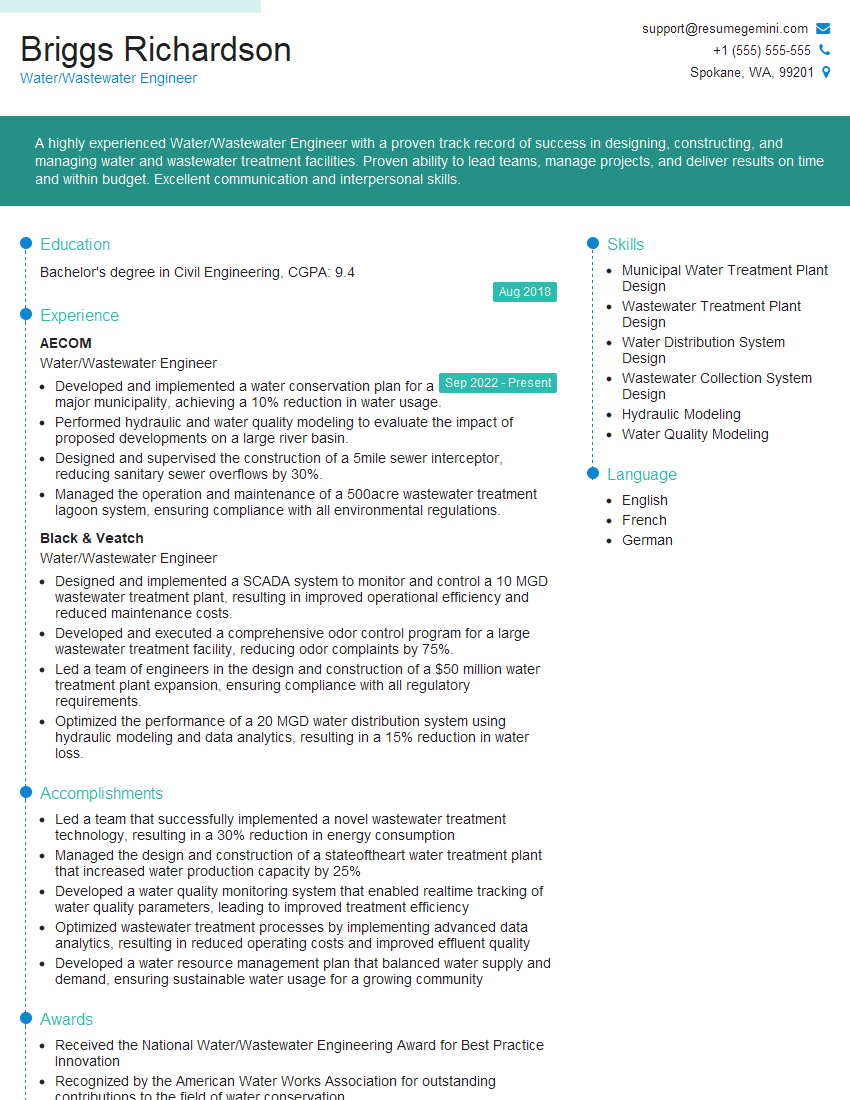
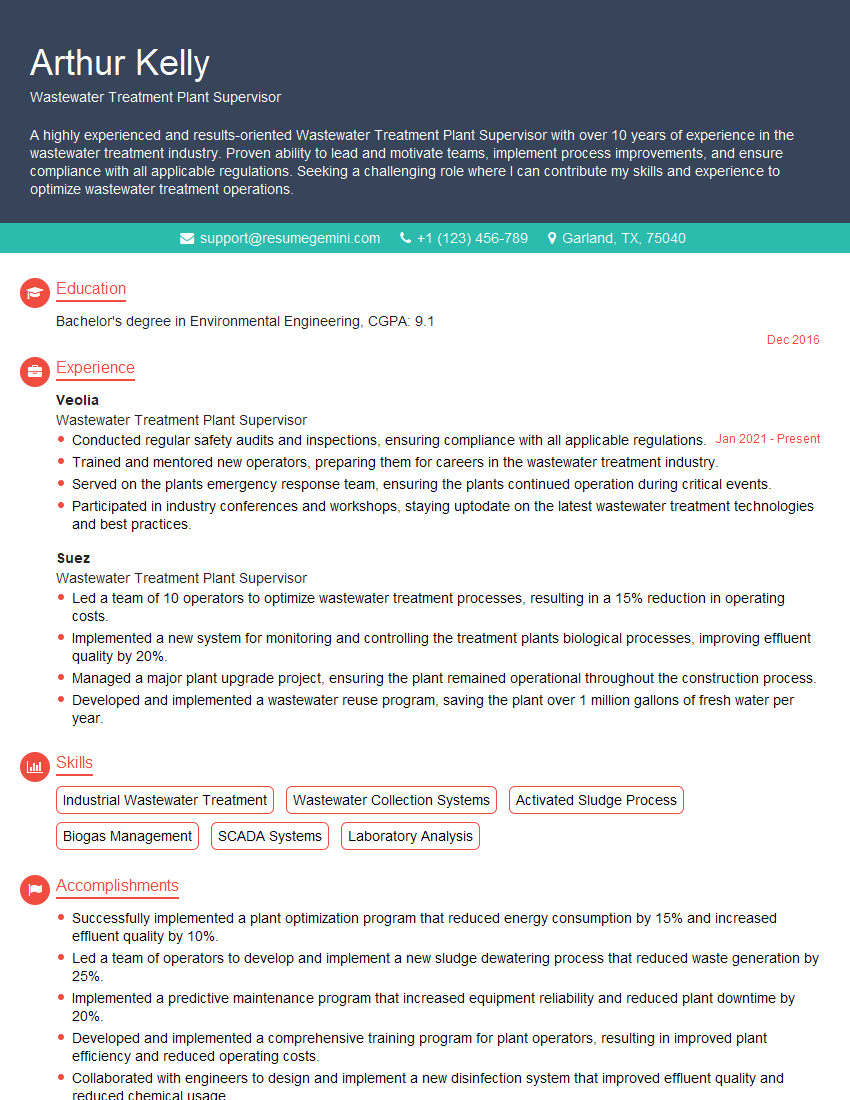
Mastering Wastewater Systems Design is crucial for career advancement in this vital field, opening doors to leadership roles and specialized projects. To significantly improve your job prospects, create a resume that is optimized for Applicant Tracking Systems (ATS). ResumeGemini is a trusted resource that can help you build a professional, ATS-friendly resume, ensuring your application gets noticed. Examples of resumes tailored to Wastewater Systems Design are available to guide you through the process.
Explore more articles
Users Rating of Our Blogs
Share Your Experience
We value your feedback! Please rate our content and share your thoughts (optional).
What Readers Say About Our Blog
To the interviewgemini.com Webmaster.
Very helpful and content specific questions to help prepare me for my interview!
Thank you
To the interviewgemini.com Webmaster.
This was kind of a unique content I found around the specialized skills. Very helpful questions and good detailed answers.
Very Helpful blog, thank you Interviewgemini team.