Preparation is the key to success in any interview. In this post, we’ll explore crucial Wastewater Treatment System Installation interview questions and equip you with strategies to craft impactful answers. Whether you’re a beginner or a pro, these tips will elevate your preparation.
Questions Asked in Wastewater Treatment System Installation Interview
Q 1. Explain the different types of wastewater treatment systems.
Wastewater treatment systems are categorized based on the level of treatment they provide. They range from simple, on-site systems for individual homes to large-scale municipal plants. The main types include:
- Septic Systems: These are primarily used for individual homes or small communities where connection to a municipal sewer system isn’t available. They rely on a septic tank for primary treatment (settling of solids) and a leach field for secondary treatment (soil filtration).
- Conventional Activated Sludge Systems: These are widely used in municipal plants. They involve a series of processes: primary treatment (screening, grit removal, sedimentation), biological treatment (activated sludge process using aeration tanks to break down organic matter), secondary clarification (settling of activated sludge), and disinfection (often using chlorine or UV light).
- Lagoons: These are natural or constructed ponds that use sunlight and bacteria to treat wastewater. They are often less expensive to build than other systems, but require a large land area and are more suitable for smaller communities or warmer climates.
- Membrane Bioreactors (MBRs): MBRs combine activated sludge with membrane filtration. This produces a higher-quality effluent, removing more solids and pathogens. They are ideal for situations requiring stringent effluent standards.
- Rotating Biological Contactors (RBCs): These systems use rotating discs coated with a biofilm of microorganisms to treat wastewater. The discs provide a large surface area for microbial growth and are effective in smaller applications.
The choice of system depends on factors such as the volume of wastewater, effluent discharge requirements, available land, and budget.
Q 2. Describe your experience with the installation of various wastewater treatment components (e.g., pumps, aeration systems, clarifiers).
My experience encompasses a wide array of wastewater treatment component installations. For instance, I’ve overseen the installation of various centrifugal pumps, ensuring proper sizing and placement to manage varying flow rates and heads. This includes selecting the right pump materials to resist corrosion from aggressive wastewater. I’ve also worked extensively with aeration systems, including both surface aerators and diffused aeration systems. The crucial aspect here was optimizing oxygen transfer efficiency to support the biological processes. In terms of clarifiers, I’ve been involved in installing both circular and rectangular clarifiers, carefully considering the settling characteristics of the wastewater to choose the optimal design. A recent project involved installing a clarifier with a sludge removal system, requiring precise mechanical adjustments to ensure efficient sludge withdrawal without compromising the clarification process. In each case, proper installation, ensuring alignment and leak-free connections, is paramount to system performance and longevity.
Q 3. What are the key considerations for selecting a wastewater treatment system for a specific application?
Selecting the right wastewater treatment system is crucial. It’s not a one-size-fits-all solution. Key considerations include:
- Wastewater characteristics: This includes flow rate, pollutant concentrations (BOD, COD, TSS, nutrients), and the presence of any toxic substances.
- Effluent discharge requirements: Environmental regulations dictate acceptable effluent quality, influencing the level of treatment needed.
- Site conditions: Available land area, soil type, topography, and accessibility all affect the feasibility of different systems. For instance, a site with limited space might necessitate a compact MBR system.
- Budget: Capital costs, operating costs (energy consumption, maintenance), and lifecycle costs must be considered.
- Community needs: The population served and future expansion plans will impact the size and capacity of the treatment plant.
For example, a large industrial facility with high pollutant loads might require an advanced treatment system like an MBR, while a small rural community might opt for a more cost-effective lagoon system.
Q 4. How do you ensure compliance with environmental regulations during installation?
Compliance with environmental regulations is non-negotiable. We achieve this through several key steps:
- Permitting: Obtaining all necessary permits from relevant regulatory agencies (e.g., EPA, state environmental departments) before commencing installation.
- Design adherence: Ensuring the design of the wastewater treatment system complies with all relevant regulations and standards.
- Construction monitoring: Closely monitoring construction activities to prevent environmental impacts (e.g., soil erosion, runoff). This may involve implementing erosion control measures.
- Quality control: Rigorous testing of the system’s components and performance to ensure compliance with effluent discharge limits.
- Record-keeping: Maintaining detailed records of all aspects of the installation process, including inspections, testing results, and any corrective actions taken.
Failing to comply can result in significant penalties, including fines and legal action. Therefore, proactive compliance is crucial.
Q 5. Describe your experience with troubleshooting and repairing wastewater treatment systems.
Troubleshooting and repair are an integral part of my work. My approach is systematic and involves:
- Data analysis: Reviewing operational data (flow rates, effluent quality) to identify potential problems.
- Visual inspection: Inspecting the system for any visible signs of damage, leaks, or blockages.
- Component testing: Testing individual components (pumps, blowers, sensors) to isolate the cause of the malfunction.
- Process optimization: Adjusting operational parameters (aeration rate, sludge retention time) to optimize performance.
- Repair or replacement: Repairing or replacing faulty components as needed.
For example, I recently solved a problem with reduced effluent quality by identifying a faulty aeration diffuser. Replacing it restored the system to optimal performance. A key skill is using process knowledge to narrow down the causes quickly and effectively.
Q 6. What safety measures do you implement during the installation process?
Safety is paramount. We implement comprehensive safety measures, including:
- Lockout/tagout procedures: Ensuring that equipment is properly de-energized before maintenance or repairs.
- Personal protective equipment (PPE): Requiring workers to wear appropriate PPE, such as hard hats, safety glasses, gloves, and respirators.
- Confined space entry procedures: Following strict procedures for entering confined spaces (e.g., tanks, manholes).
- Hazard communication: Clearly communicating potential hazards to workers and providing appropriate training.
- Emergency response plan: Having a well-defined emergency response plan in place to address any accidents or incidents.
Regular safety meetings and training are crucial to maintaining a safe work environment. We aim for zero incidents.
Q 7. Explain your understanding of different piping materials used in wastewater treatment systems and their suitability.
Piping material selection is critical for the longevity and efficiency of a wastewater treatment system. Common materials include:
- Ductile iron: Strong, durable, and resistant to corrosion, making it suitable for high-pressure applications and aggressive wastewater.
- PVC (polyvinyl chloride): Lightweight, corrosion-resistant, and cost-effective, but has limitations in terms of temperature and pressure resistance.
- High-density polyethylene (HDPE): Flexible, durable, and resistant to many chemicals, often used for gravity lines.
- Stainless steel: Highly corrosion-resistant, often used in specific applications where high strength and resistance to aggressive chemicals are required. However, it’s more expensive.
The choice depends on factors like pressure, chemical compatibility, temperature, and cost. For example, ductile iron is preferable for the high-pressure lines of a pumping station, while PVC might be suitable for low-pressure gravity lines. Proper material selection minimizes corrosion, leaks, and ensures system longevity.
Q 8. How do you manage project timelines and budgets for wastewater treatment installations?
Managing project timelines and budgets for wastewater treatment installations requires a meticulous approach. It starts with a thorough understanding of the project scope, including site conditions, required treatment capacity, and client specifications. This informs the creation of a detailed work breakdown structure (WBS) that breaks down the project into manageable tasks with assigned durations and costs.
We utilize project management software to track progress, manage resources, and monitor expenses. Critical path analysis helps identify tasks that are crucial for on-time completion. Regular meetings with the project team and client ensure transparency and allow for proactive problem-solving. Contingency planning is crucial; we allocate a buffer for unexpected delays or cost overruns, common in construction projects. For instance, unforeseen soil conditions or equipment delays might necessitate adjustments to the timeline and budget. Regular budget reviews and variance analysis help us stay on track and make necessary corrections promptly. Effective communication and collaboration are key to successful project delivery, ensuring the project is completed on time and within budget.
Q 9. What is your experience with SCADA systems in wastewater treatment?
My experience with SCADA (Supervisory Control and Data Acquisition) systems in wastewater treatment is extensive. I’ve worked with various SCADA platforms, from configuring and programming PLCs (Programmable Logic Controllers) to integrating sensors and actuators for real-time monitoring and control of treatment processes. SCADA systems are vital for efficient plant operation. They allow remote monitoring of parameters such as flow rates, dissolved oxygen levels, and pH, enabling proactive adjustments to maintain optimal treatment performance. For example, a sudden drop in dissolved oxygen detected by SCADA might trigger an automatic increase in aeration, preventing process upsets. Data collected by SCADA is also crucial for trend analysis, process optimization, and regulatory compliance reporting. I’m proficient in troubleshooting SCADA systems, diagnosing issues, and implementing corrective actions. I understand the importance of cybersecurity in SCADA systems and adhere to best practices for protecting plant operations from unauthorized access or cyberattacks.
Q 10. Describe your knowledge of different wastewater treatment processes (e.g., activated sludge, MBR, lagoons).
I have in-depth knowledge of various wastewater treatment processes. Activated sludge is a widely used biological process that utilizes microorganisms to break down organic matter. It involves aeration tanks where oxygen promotes microbial growth and degradation. Membrane bioreactors (MBRs) combine activated sludge with membrane filtration, achieving higher effluent quality and smaller footprints. Lagoons, simpler systems, rely on natural processes such as settling, oxidation, and biological degradation; these are cost-effective for smaller communities but require large land areas. The choice of treatment process depends on factors like wastewater characteristics, site conditions, budget, and regulatory requirements. For example, a community with limited space might opt for an MBR, while a rural area might choose lagoons. I have practical experience designing, installing, and commissioning plants using all three methods.
Q 11. How do you handle unexpected challenges during a wastewater treatment system installation?
Unexpected challenges are inevitable in wastewater treatment system installations. My approach involves proactive risk assessment to identify potential problems beforehand. However, when issues arise – such as unexpected underground utilities, adverse weather conditions, or equipment malfunctions – I follow a structured problem-solving process. This starts with a thorough assessment of the situation, involving the entire project team. We then explore potential solutions, prioritizing safety and minimizing downtime. For example, if unexpected bedrock is encountered during excavation, we might need to revise the foundation design. Open communication with the client is essential to keep them informed and obtain necessary approvals for changes. Detailed documentation of the issue, resolution, and lessons learned helps prevent similar problems in future projects. In essence, effective problem-solving relies on experience, adaptability, and strong teamwork.
Q 12. What is your experience with commissioning and start-up of wastewater treatment plants?
Commissioning and start-up of wastewater treatment plants are critical phases that ensure proper functionality and compliance. This involves a thorough inspection of all equipment and systems, followed by a series of tests to verify performance. We conduct start-up procedures according to manufacturer’s recommendations, gradually increasing the plant’s load to full capacity. Process monitoring is key during start-up, using SCADA and manual checks to identify and correct any issues. Operator training is integral, ensuring the plant staff can effectively operate and maintain the system. We meticulously document all activities and test results, ensuring regulatory compliance. For instance, we’d conduct effluent quality tests to ensure compliance with discharge permits. A successful commissioning and start-up phase delivers a smoothly functioning plant that meets regulatory requirements and client expectations.
Q 13. Explain your familiarity with relevant industry codes and standards (e.g., AWWA, ANSI).
Familiarity with industry codes and standards is paramount. I am well-versed in standards published by organizations like the American Water Works Association (AWWA) and the American National Standards Institute (ANSI). These standards cover various aspects of wastewater treatment, from design and construction to operation and maintenance. For example, AWWA standards provide guidance on material selection, pipeline design, and hydraulic calculations. Adherence to these standards ensures the safety, reliability, and longevity of the installed system. I understand the implications of non-compliance, including potential penalties and legal issues. My experience encompasses interpreting and applying these codes to various project scenarios, ensuring our installations are safe, efficient, and compliant.
Q 14. How do you ensure the quality of installed equipment and materials?
Ensuring the quality of installed equipment and materials is critical for the long-term success of a wastewater treatment plant. Our process starts with careful selection based on performance criteria, manufacturer reputation, and compliance with industry standards. We thoroughly inspect all materials upon delivery, verifying that they conform to specifications. During installation, we adhere to best practices to prevent damage or degradation. Regular quality control checks are performed throughout the project. We maintain detailed records of equipment and material sources, inspection reports, and installation procedures. This documentation provides traceability and ensures accountability. In addition to this, we often conduct independent testing or engage third-party inspectors to verify quality and conformance to specifications. This multifaceted approach ensures that the system is built using high-quality components, installed correctly, and designed for optimal performance.
Q 15. Describe your experience with site preparation and excavation for wastewater treatment systems.
Site preparation and excavation for wastewater treatment systems is crucial for a successful installation. It involves a detailed understanding of the soil conditions, local regulations, and the specific requirements of the treatment system being installed. My experience encompasses everything from initial site surveys and geotechnical investigations to overseeing the safe and efficient excavation, grading, and backfilling processes.
For example, on a recent project for a small municipality, we conducted a thorough site survey to identify underground utilities before commencing excavation. This prevented damage to existing infrastructure and potential delays. The soil analysis revealed a high water table, requiring us to employ specialized dewatering techniques to ensure a stable working environment and prevent flooding of the excavation pit. We also implemented strict safety protocols, including trench shoring and regular inspections to mitigate risks associated with excavation work. The entire process was meticulously documented, adhering to all relevant building codes and environmental regulations.
Another project involved a challenging site with rocky terrain. We used specialized rock-breaking equipment and adjusted the excavation plan to minimize disruption and maximize efficiency. Careful planning and the selection of appropriate excavation methods significantly reduced project costs and timelines.
Career Expert Tips:
- Ace those interviews! Prepare effectively by reviewing the Top 50 Most Common Interview Questions on ResumeGemini.
- Navigate your job search with confidence! Explore a wide range of Career Tips on ResumeGemini. Learn about common challenges and recommendations to overcome them.
- Craft the perfect resume! Master the Art of Resume Writing with ResumeGemini’s guide. Showcase your unique qualifications and achievements effectively.
- Don’t miss out on holiday savings! Build your dream resume with ResumeGemini’s ATS optimized templates.
Q 16. What are your skills in interpreting engineering drawings and specifications?
Interpreting engineering drawings and specifications is fundamental to my work. My skills extend beyond simply reading the drawings; I can understand the design intent, identify potential conflicts or ambiguities, and translate the technical information into practical, on-site implementation plans. I’m proficient in using AutoCAD, Civil 3D, and other relevant software to review and interpret plans, ensuring that the installation process aligns perfectly with the engineer’s design.
For instance, on a recent project involving a complex network of pipes and treatment units, I identified a potential clash between the proposed location of a pump station and an existing underground gas line. This was highlighted on the drawings but not explicitly detailed. By proactively flagging this issue, we avoided a potentially hazardous situation and implemented a cost-effective solution, altering the pump station’s location slightly.
Understanding specifications related to materials, tolerances, and performance criteria is equally vital. I ensure all components meet the required standards before installation, thereby guaranteeing a high-quality, functional system.
Q 17. How do you manage and motivate a team during a wastewater treatment installation project?
Managing and motivating a team is a key aspect of successful project delivery. I believe in fostering a collaborative environment where each team member feels valued and respected. My approach involves clear communication, setting realistic expectations, delegating tasks effectively, and providing regular feedback. I use a combination of leadership styles, adapting to the specific needs of each team member and the project’s demands.
For instance, I often use a participative leadership style, involving the team in decision-making processes and actively seeking their input. This approach not only improves morale and teamwork but also ensures that diverse perspectives are considered. When facing challenges, I encourage open communication and problem-solving, focusing on finding solutions collaboratively. Recognizing individual contributions and celebrating successes are also important elements of my approach; they boost morale and team cohesion.
Safety is paramount. I prioritize a safe working environment through regular safety meetings, training, and the strict enforcement of safety protocols. I’ve found that a well-trained and motivated team is more productive and delivers higher-quality work.
Q 18. What is your experience with different types of wastewater pumps and their applications?
My experience encompasses a broad range of wastewater pumps, including submersible pumps, centrifugal pumps, positive displacement pumps, and air-lift pumps. The selection of the appropriate pump type depends heavily on factors such as flow rate, head pressure, the characteristics of the wastewater (e.g., solids content, viscosity), and the specific application within the treatment system.
For example, submersible pumps are often used for lifting wastewater from wet wells, while centrifugal pumps are suitable for moving larger volumes of wastewater with lower head pressures. Positive displacement pumps are ideal for handling wastewater with high solids concentrations, and air-lift pumps can be employed where energy efficiency is a priority or in applications with clogging risks.
In my experience, proper pump selection, installation, and maintenance are crucial for ensuring the reliable operation of a wastewater treatment system. I can identify and troubleshoot pump issues, perform routine maintenance, and recommend appropriate repairs or replacements when necessary.
Q 19. Describe your understanding of the importance of proper disinfection in wastewater treatment.
Proper disinfection is critical in wastewater treatment to eliminate harmful pathogens and protect public health and the environment. The treated effluent must meet stringent regulatory standards before it can be safely discharged into surface waters or reused. Common disinfection methods include chlorination, ultraviolet (UV) disinfection, and ozonation.
The choice of disinfection method depends on several factors, including the characteristics of the wastewater, the required level of disinfection, and cost considerations. Chlorination, though effective, can produce disinfection by-products (DBPs), which can be harmful. UV disinfection and ozonation offer environmentally friendlier alternatives, although they might require higher capital investment.
My understanding encompasses not only the selection and implementation of appropriate disinfection methods but also the monitoring of disinfection effectiveness through regular testing and the proper handling and storage of disinfectants to ensure worker safety. I have experience designing and implementing systems that ensure compliance with all relevant environmental regulations, protecting both the public and the environment.
Q 20. How do you handle issues related to odor control during wastewater treatment system installations?
Odor control is an important aspect of wastewater treatment system installations, crucial for minimizing public nuisance and worker safety. Strategies for odor control can include engineering controls, such as proper ventilation, enclosed treatment processes, and the use of odor-absorbing materials. Biological methods, such as biofiltration, can also be highly effective.
Chemical methods, such as the application of odor masking agents or oxidizing agents, may be used as supplementary measures. However, these must be chosen and implemented carefully to prevent any negative environmental impacts. My experience includes designing and implementing effective odor control strategies tailored to the specific characteristics of the wastewater and the local environment.
For example, on a project involving a large-scale wastewater treatment plant, we implemented a combination of strategies, including enhanced ventilation, biofiltration, and the use of odor-absorbing media. This multi-faceted approach effectively minimized odors, ensuring compliance with stringent odor control regulations and the creation of a safe and pleasant working environment.
Q 21. What is your experience with the installation of biological treatment systems?
I have extensive experience in the installation of various biological treatment systems, including activated sludge processes, trickling filters, and constructed wetlands. These systems utilize microorganisms to break down organic matter in wastewater, significantly reducing its pollution load.
The design and installation of a biological treatment system require a detailed understanding of the wastewater characteristics, the specific requirements of the chosen process, and the local environmental conditions. This includes careful sizing of the treatment units, selection of appropriate media, ensuring adequate oxygenation (in the case of aerobic processes), and the monitoring of key process parameters such as dissolved oxygen, BOD, and suspended solids.
For example, I was involved in the installation of an activated sludge process for a food processing facility. This required careful consideration of the high organic load and the potential for fluctuating wastewater flows. We implemented a system with multiple aeration tanks and clarifiers, allowing for flexibility and redundancy. Regular monitoring and adjustments ensured optimal process performance and the achievement of stringent effluent quality standards.
Q 22. Describe your knowledge of different types of filtration systems used in wastewater treatment.
Wastewater treatment employs various filtration systems to remove solids and other contaminants. The choice depends on factors like the influent characteristics, treatment goals, and budget.
- Screenings: These are the first line of defense, typically bar screens or fine screens, removing large debris like rags, sticks, and plastics. Think of them as a giant strainer for the wastewater.
- Sedimentation: This involves settling tanks where gravity removes heavier solids. Imagine letting sand settle at the bottom of a glass of water; it’s a similar principle on a much larger scale. Primary clarifiers are a common example.
- Filtration: This can involve several types:
- Rapid Sand Filters (RSF): These use a bed of sand to remove suspended solids. Picture a very fine sieve trapping tiny particles.
- Dual Media Filters: These employ layers of different filter media (like sand and anthracite) for enhanced efficiency. This is like having a multi-layered sieve for more thorough filtration.
- Membrane Filtration (Microfiltration, Ultrafiltration, Nanofiltration): These use membranes with tiny pores to remove even smaller particles, bacteria, and viruses. This is the most advanced level of filtration, like using a super-fine mesh to catch everything.
In my experience, selecting the optimal filtration system requires a thorough understanding of the specific wastewater characteristics and the desired effluent quality. For instance, a food processing plant might require more stringent filtration than a residential wastewater treatment system.
Q 23. Explain your understanding of sludge handling and disposal methods.
Sludge handling and disposal is a critical aspect of wastewater treatment, involving the safe management of the solids removed during the treatment process. It’s essential to both protect the environment and comply with regulations.
- Thickening: This process concentrates the sludge to reduce its volume, often using gravity thickeners or centrifuges. Think of it as squeezing a sponge to remove excess water.
- Digestion: Anaerobic digestion breaks down organic matter in the sludge, producing biogas (a renewable energy source) and reducing the sludge volume. This is like composting, but on a much larger and more controlled scale.
- Dewatering: This further reduces the water content of the sludge, preparing it for disposal or beneficial reuse. Methods include belt filter presses, centrifuges, or lagoons.
- Disposal: Disposal options include land application (as fertilizer), incineration, landfilling (following strict regulations), or beneficial reuse (e.g., in construction materials).
During my career, I’ve been involved in projects where optimizing sludge handling significantly reduced disposal costs and environmental impact. For example, implementing anaerobic digestion resulted in a substantial reduction in landfill use and the generation of biogas, which can be used to power the treatment plant itself, making it more sustainable.
Q 24. What is your experience with instrumentation and control systems in wastewater treatment plants?
Instrumentation and control systems are vital for efficient and reliable operation of wastewater treatment plants. They allow for real-time monitoring, process optimization, and automated control.
- Sensors: These measure various parameters like pH, dissolved oxygen, flow rate, and sludge level. They provide the data necessary for effective control.
- Programmable Logic Controllers (PLCs): These are the brains of the system, automating processes based on sensor readings and pre-programmed logic. Think of them as the plant’s central nervous system.
- Supervisory Control and Data Acquisition (SCADA) Systems: These provide a centralized interface for monitoring and controlling the entire plant, often remotely. They’re like a dashboard displaying all the vital signs of the plant.
- Data Logging and Reporting: These systems record data and generate reports, essential for compliance and performance analysis.
My experience includes working with various SCADA systems and PLCs, from programming and troubleshooting to integrating new sensors and equipment. In one project, we upgraded the SCADA system, resulting in improved process efficiency and reduced energy consumption. This also allowed for better remote monitoring, allowing for quicker responses to potential issues.
Q 25. Describe your understanding of the principles of hydraulics and fluid mechanics as they apply to wastewater treatment.
Hydraulics and fluid mechanics are fundamental to wastewater treatment, governing flow patterns, pressure, and energy transfer throughout the system. Understanding these principles is crucial for designing, operating, and troubleshooting treatment plants.
- Flow Measurement and Control: Accurate measurement and control of flow rates are essential for optimizing treatment processes. This includes using weirs, flumes, and flow meters to monitor and regulate the flow.
- Pipe Sizing and Pumping: Proper pipe sizing and pump selection are crucial for ensuring adequate flow and pressure throughout the system. Miscalculation can lead to inefficient flow or even equipment failure.
- Sedimentation and Clarification: The design of sedimentation tanks relies heavily on fluid mechanics principles, ensuring proper settling of solids and efficient removal of clarified water.
- Energy Efficiency: Understanding hydraulics helps optimize energy consumption by reducing pressure drops and improving pump efficiency.
For example, inaccurate pipe sizing can lead to reduced flow and ineffective treatment. In one project, we redesigned a section of the pipe network to eliminate bottlenecks, improving efficiency and energy consumption. This also saved the plant money in the long run.
Q 26. How do you ensure the proper grounding and bonding of electrical systems in a wastewater treatment plant?
Proper grounding and bonding of electrical systems in a wastewater treatment plant is critical for safety and to prevent equipment damage. This is especially important given the presence of water and potentially corrosive environments.
The process typically involves:
- Establishing a grounding electrode system: This involves installing ground rods or connecting to existing grounding systems, providing a low-impedance path to earth for fault currents.
- Bonding metal pipes and equipment: This creates an equipotential plane, minimizing voltage differences between conductive elements and preventing shock hazards. Think of it as creating a safety net to prevent electric shock.
- Using grounding conductors: These connect equipment enclosures to the grounding electrode system, providing a safe path for fault currents. These are like safety cables, ensuring electrical safety.
- Regular inspection and testing: This is vital to ensure the grounding and bonding system remains effective and safe over time.
Ignoring grounding and bonding can lead to serious safety hazards and equipment damage. I always prioritize these aspects during installation and commissioning, following all applicable codes and standards. A failure in this area can result in severe electric shock hazards and costly repairs.
Q 27. What is your experience with the installation of UV disinfection systems?
UV disinfection systems are increasingly used in wastewater treatment to inactivate harmful microorganisms like bacteria and viruses, ensuring a safe effluent discharge.
My experience includes:
- System Selection and Design: This involves choosing appropriate UV lamps and reactors based on flow rate, required disinfection level, and wastewater characteristics.
- Installation: This includes mounting the UV system, connecting it to the piping system, and ensuring proper alignment of UV lamps.
- Commissioning and Testing: This involves verifying UV intensity, lamp operation, and overall system performance. Testing is crucial to guarantee effectiveness.
- Maintenance and Monitoring: Regular maintenance includes lamp replacement, cleaning of quartz sleeves, and monitoring of UV intensity. Monitoring is key to maintaining optimal efficiency.
In one project, we installed a UV disinfection system for a municipal wastewater treatment plant, resulting in significant improvements in effluent quality and compliance with discharge permits. We had to carefully consider the flow rate, lamp type, and the need for regular maintenance to ensure the system’s longevity and operational efficiency.
Q 28. Describe your understanding of the permit process for wastewater treatment projects.
The permit process for wastewater treatment projects can be complex, varying depending on location and project scope. It generally involves several stages:
- Preliminary Planning and Site Assessment: This stage involves site selection, preliminary design, and initial consultations with regulatory agencies.
- Permit Application Submission: This requires detailed design plans, environmental impact assessments, and other supporting documentation. This is where accuracy is critical.
- Regulatory Review and Approval: Agencies review the application, potentially requesting additional information or modifications to the design. This can be a lengthy process.
- Construction and Monitoring: Once approved, construction begins. Regulatory agencies may monitor construction activities to ensure compliance with permit conditions.
- Post-Construction Compliance: After completion, ongoing monitoring and reporting are required to ensure the plant operates within permit limits.
Navigating the permit process requires a thorough understanding of regulations and effective communication with regulatory agencies. I’ve successfully guided multiple projects through this process, ensuring timely approvals and compliance with all relevant rules. Proactive engagement and meticulous documentation are key to a smooth permit process.
Key Topics to Learn for Wastewater Treatment System Installation Interview
- Site Assessment and Planning: Understanding site conditions, regulatory requirements, and developing a comprehensive installation plan. This includes analyzing soil conditions, access limitations, and potential environmental impacts.
- System Design and Selection: Choosing appropriate treatment technologies based on site specifics and effluent discharge requirements. This involves evaluating various treatment processes (e.g., activated sludge, membrane bioreactors) and their suitability.
- Piping and Pumping Systems: Designing and installing efficient and reliable piping networks and pumping systems for optimal wastewater flow and treatment. Understanding pressure calculations and pump selection is crucial.
- Instrumentation and Controls: Familiarity with sensors, control systems, and SCADA (Supervisory Control and Data Acquisition) for monitoring and controlling the treatment process. Troubleshooting instrumentation issues is a valuable skill.
- Construction and Installation Practices: Safe and efficient installation techniques, including excavation, pipe laying, equipment installation, and adherence to safety regulations. Knowledge of relevant building codes and permits is vital.
- Commissioning and Startup: Testing and commissioning the entire system to ensure proper functionality and compliance with regulatory standards. Troubleshooting initial operational issues is a critical part of this phase.
- Troubleshooting and Maintenance: Identifying and resolving operational issues, performing routine maintenance, and understanding preventative maintenance schedules. This includes familiarity with common equipment malfunctions and repair procedures.
- Health and Safety Regulations: Strict adherence to OSHA and other relevant safety regulations throughout the entire installation and operation process. Understanding confined space entry procedures and personal protective equipment (PPE) is paramount.
- Sustainability and Environmental Considerations: Understanding the environmental impact of wastewater treatment and implementing sustainable practices throughout the project lifecycle. This includes energy efficiency and waste reduction strategies.
Next Steps
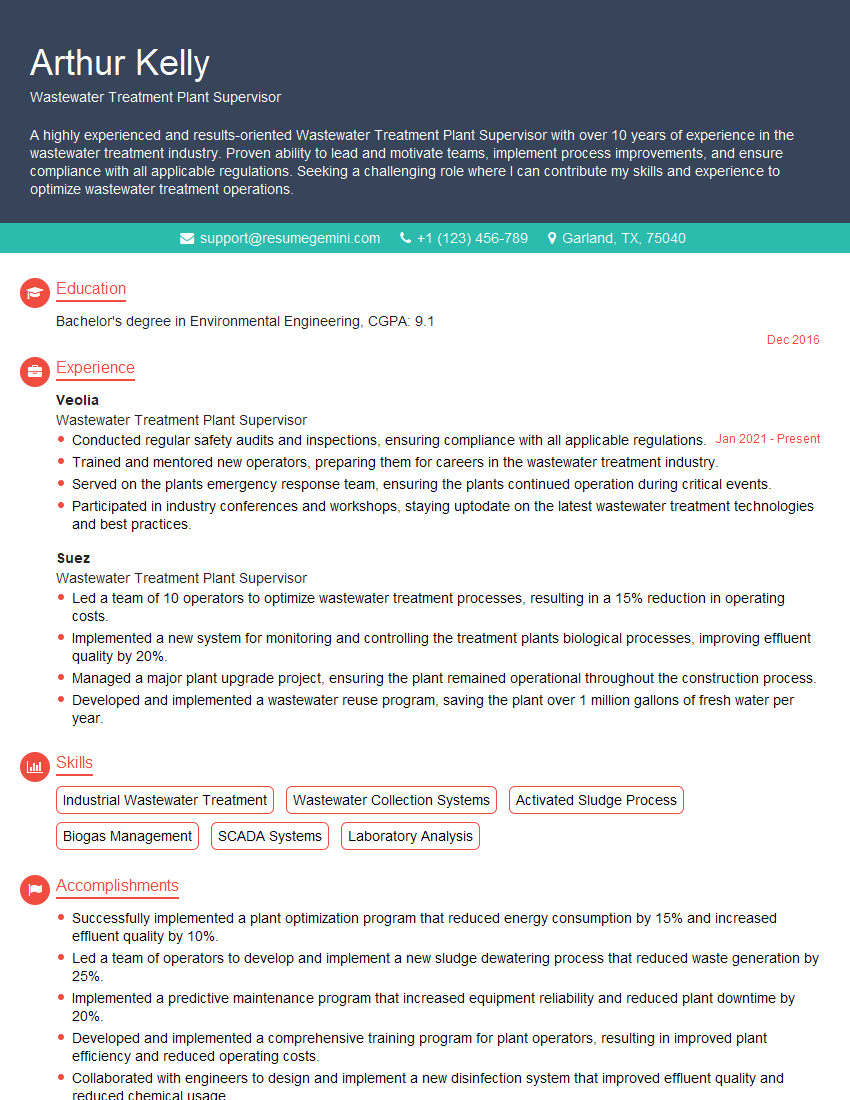
Mastering Wastewater Treatment System Installation opens doors to rewarding and impactful careers, offering opportunities for advancement and specialization. To maximize your job prospects, create a strong, ATS-friendly resume that highlights your skills and experience effectively. ResumeGemini is a trusted resource that can help you build a professional and compelling resume tailored to this specific field. Examples of resumes tailored to Wastewater Treatment System Installation are available, providing valuable templates and guidance for your application process.
Explore more articles
Users Rating of Our Blogs
Share Your Experience
We value your feedback! Please rate our content and share your thoughts (optional).
What Readers Say About Our Blog
To the interviewgemini.com Webmaster.
Very helpful and content specific questions to help prepare me for my interview!
Thank you
To the interviewgemini.com Webmaster.
This was kind of a unique content I found around the specialized skills. Very helpful questions and good detailed answers.
Very Helpful blog, thank you Interviewgemini team.