Interviews are more than just a Q&A session—they’re a chance to prove your worth. This blog dives into essential Whey Protein Concentration interview questions and expert tips to help you align your answers with what hiring managers are looking for. Start preparing to shine!
Questions Asked in Whey Protein Concentration Interview
Q 1. Explain the different methods used for whey protein concentration.
Whey protein concentrate (WPC) production relies on several methods to separate whey protein from other components in whey, a byproduct of cheese manufacturing. The most common methods are based on different principles of separation:
- Membrane Filtration: This is the dominant method, primarily using ultrafiltration (UF) and microfiltration (MF). UF selectively separates proteins based on size, retaining larger whey proteins while allowing smaller molecules like lactose and minerals to pass through. MF precedes UF, removing larger components like fat globules and bacteria.
- Ion Exchange Chromatography: This technique uses charged resins to bind and separate proteins based on their net charge. It’s a more precise method, allowing for higher purity protein isolates, but it’s more expensive and complex than membrane filtration.
- Precipitation Methods: These traditional methods utilize changes in pH or the addition of salts to selectively precipitate whey proteins. While less precise than membrane filtration or ion exchange, they are often employed as a preliminary step to enhance the efficiency of subsequent processes. For example, isoelectric precipitation exploits the fact that whey proteins have a minimum solubility at their isoelectric point (pI), usually around pH 4.6.
The choice of method depends on factors like desired protein concentration, purity, cost, and scale of production.
Q 2. Describe the principles of ultrafiltration in whey protein processing.
Ultrafiltration (UF) in whey protein processing uses semi-permeable membranes with pore sizes typically ranging from 1 to 100 kDa (kilodaltons), allowing smaller molecules (like lactose, minerals, and water) to pass through while retaining larger whey proteins. The process is driven by a pressure difference across the membrane, forcing the permeate (filtrate) through while concentrating the retentate (whey protein).
Imagine a sieve separating pebbles from sand – the membrane acts like the sieve, allowing the smaller sand particles (lactose etc.) to pass while retaining the larger pebbles (whey proteins). This results in a concentrated stream of whey protein. The key to effective UF is optimizing the pressure, temperature, and membrane properties to achieve the desired protein concentration and minimize fouling (build-up of material on the membrane).
Q 3. What are the key quality parameters for whey protein concentrate?
Key quality parameters for WPC include:
- Protein Content (%): This is the most crucial parameter, usually expressed as dry matter. Higher percentages indicate greater protein concentration.
- Protein Profile: The relative amounts of different whey proteins (e.g., β-lactoglobulin, α-lactalbumin, immunoglobulins) can affect functionality and nutritional value.
- Lactose Content (%): This is inversely related to protein content. Lower lactose levels indicate higher protein concentration, which is desirable in some applications.
- Ash Content (%): Indicates mineral content, which can impact taste and functionality.
- Fat Content (%): Should be low to prevent rancidity and undesirable flavors.
- Moisture Content (%): Affects stability and shelf life.
- Heavy Metals Content: Important for safety and regulatory compliance.
- Microbial Load: Indicates the level of bacteria and other microorganisms, ensuring product safety.
The specific requirements will vary depending on the intended application of the WPC – for example, WPC for infant formula will have stricter standards than for sports nutrition supplements.
Q 4. How do you determine the protein content of whey protein concentrate?
The protein content of WPC is primarily determined using the Kjeldahl method or its modifications. This method involves digesting the sample with sulfuric acid to convert organic nitrogen into ammonium sulfate. The ammonium is then distilled and titrated to determine the amount of nitrogen present. Since proteins contain a relatively constant amount of nitrogen (around 16%), the nitrogen content is used to calculate the protein content.
Other methods, such as Dumas combustion or near-infrared spectroscopy (NIRS), are increasingly being used due to their speed and automation, but the Kjeldahl method remains the standard reference method.
Q 5. Explain the impact of pH on whey protein concentration.
pH significantly impacts whey protein solubility and interactions. Whey proteins have a minimum solubility near their isoelectric point (pI), around pH 4.6. At this pH, they are least soluble and tend to aggregate or precipitate. This is often exploited in isoelectric precipitation methods to separate whey proteins from other components.
Conversely, at pH values significantly above or below the pI, whey proteins are more soluble. This increased solubility facilitates effective processing using ultrafiltration and other methods. Careful pH control is essential to optimize the efficiency and yield of WPC production. For example, adjusting the pH to around 7 is common before ultrafiltration to maximize solubility and minimize membrane fouling.
Q 6. Discuss the challenges associated with concentrating whey protein.
Challenges associated with concentrating whey protein include:
- Membrane Fouling: Build-up of proteins and other components on the membrane surface reduces filtration efficiency and necessitates cleaning or replacement of membranes. This increases operational costs and downtime.
- High Viscosity: Concentrated whey protein solutions become increasingly viscous, making processing more challenging and requiring high energy input for pumping and mixing.
- Heat Sensitivity: Whey proteins are susceptible to denaturation at high temperatures, potentially affecting functionality and nutritional value. This necessitates careful temperature control throughout the process.
- Cost: Membrane filtration can be capital-intensive, and energy costs associated with pumping and maintaining pressure can be significant.
- Waste Management: The permeate stream containing lactose, minerals, and other components needs careful management and disposal or further processing to avoid environmental concerns.
Overcoming these challenges often involves optimizing process parameters, employing advanced membrane technologies, and developing efficient waste management strategies.
Q 7. How do you optimize the yield and quality of whey protein concentrate?
Optimizing yield and quality of WPC involves a multi-faceted approach:
- Process Optimization: Careful control of pH, temperature, pressure, and transmembrane flux during ultrafiltration is crucial. This allows for efficient protein separation while minimizing denaturation and fouling.
- Membrane Selection: Choosing membranes with appropriate pore size and material properties is essential to balance permeate flux, protein retention, and fouling resistance.
- Pre-treatment: Effective pre-treatment of whey, such as removal of fat and clarification, minimizes fouling and enhances filtration efficiency.
- Cleaning-in-Place (CIP): Regular and efficient CIP procedures are essential to prevent membrane fouling and ensure consistent performance.
- Quality Control: Rigorous quality control measures throughout the process, including monitoring key parameters like protein content, lactose content, and microbial load, ensure consistent product quality that meets specifications.
By carefully managing these factors, manufacturers can maximize the yield of high-quality WPC, minimizing waste and operational costs.
Q 8. What are the different types of whey protein concentrate available?
Whey protein concentrate (WPC) is categorized based on its protein content. The higher the percentage, the more protein and less lactose and fat it contains. Common types include WPC30, WPC60, WPC80, and even higher concentrations. Think of it like this: a WPC80 is like a highly concentrated protein smoothie, whereas WPC30 is a more diluted version. The number indicates the minimum percentage of protein by dry weight. For example, WPC80 contains at least 80% protein.
- WPC30: A more economical option, containing around 30% protein. It has a higher lactose and fat content.
- WPC60: A middle ground, offering a balance between protein content and cost, usually containing around 60% protein.
- WPC80: A higher-protein option, containing at least 80% protein, making it a popular choice for athletes and fitness enthusiasts.
- WPC90+: These are ultra-concentrated versions with minimal lactose and fat.
Q 9. Describe the role of membrane technology in whey protein concentration.
Membrane technology is crucial in whey protein concentration. It’s like a super-efficient sieve that separates the whey proteins from other components in the whey stream. This is typically achieved using ultrafiltration (UF) and/or microfiltration (MF). These processes use membranes with specific pore sizes to selectively allow the passage of water, lactose, and other smaller molecules, while retaining the larger whey protein molecules.
Ultrafiltration (UF) utilizes membranes with smaller pore sizes, typically retaining proteins, while allowing smaller molecules like lactose and minerals to pass through. Microfiltration (MF) uses larger pores and is mainly used for removing larger particles like fats and bacteria. By combining these processes, we can achieve highly purified and concentrated whey protein.
Imagine a coffee filter; MF is like a coarse filter removing larger grounds, while UF is a finer filter that keeps the protein (the ‘good stuff’) while allowing the smaller particles to pass.
Q 10. Explain the importance of controlling temperature during whey protein processing.
Temperature control is paramount during whey protein processing to maintain protein quality and functionality. High temperatures can denature (damage) proteins, reducing their nutritional value and impacting their solubility and digestibility.
For instance, excessively high temperatures during the concentration process can lead to the formation of aggregates or insoluble protein particles, making the final product less desirable. Conversely, very low temperatures can also cause problems by slowing down the processing time and potentially allowing microbial growth.
Precise temperature control during each step, from pre-heating to pasteurization and drying, ensures a high-quality final product with optimal protein structure and functionality. Think of it like cooking an egg – too low a temperature and it won’t cook properly; too high and it becomes rubbery.
Q 11. What are the common impurities found in whey protein concentrate and how are they removed?
Whey protein concentrate can contain various impurities, including lactose, fat, minerals, and residual bacterial cells. These impurities are removed using a combination of methods.
- Lactose and fat removal: Primarily achieved through membrane filtration (as described above).
- Mineral removal: Can be partially addressed by membrane filtration but might require additional steps like ion exchange if higher purity is desired.
- Bacterial removal: Accomplished through heat treatment (pasteurization), which kills bacteria, and filtration to remove bacterial cells and endotoxins.
The specific purification methods employed depend on the desired quality of the final WPC product and the type of application. For example, WPC used in infant formula would require a higher degree of purity than that used in a general protein supplement.
Q 12. Describe the process of drying whey protein concentrate.
Drying is the final step in whey protein concentrate production, reducing the moisture content to extend shelf life and improve its handling. This usually involves concentrating the whey protein solution to a very high solids content (approximately 50-60%) before entering the dryer. Then, the concentrated solution undergoes a drying process, effectively removing almost all the water.
The drying process needs to be carefully controlled to prevent protein denaturation. This involves selecting the right drying method and parameters (temperature, air flow, etc.) to achieve the desired product characteristics. The goal is to retain the native structure and functionality of the protein while removing moisture efficiently.
Q 13. What are the different types of dryers used for whey protein concentrate?
Several types of dryers are used for whey protein concentrate, each with its advantages and disadvantages. The choice depends on factors like desired product quality, cost, and production scale.
- Spray Dryers: The most common method. The concentrated whey protein solution is atomized into a hot air stream, causing rapid evaporation of water and resulting in a powdered product. It is efficient but can lead to some protein denaturation if not properly controlled.
- Roller Dryers: The whey protein solution is spread in a thin film over heated rollers. Evaporation occurs as the film travels over the rollers. This is simpler and less expensive than spray drying but tends to produce a lower-quality product with higher denaturation levels.
- Freeze Dryers: This method freezes the whey protein solution and then sublimates the ice (transforms it directly from solid to gas). It produces a superior product with minimal denaturation but is significantly more expensive and slower than spray or roller drying.
Q 14. Explain the importance of sanitation in whey protein processing.
Sanitation is absolutely critical throughout the entire whey protein processing chain. Contamination with microorganisms can lead to spoilage, the production of toxins, and ultimately, unsafe products.
This involves strict adherence to Good Manufacturing Practices (GMP) and Hazard Analysis and Critical Control Points (HACCP) principles. Thorough cleaning and sanitization of all equipment, pipes, and processing areas are essential. Regular microbial testing is also necessary to ensure the product meets safety and quality standards.
Imagine a hospital operating room – everything needs to be sterile to prevent infection. Similarly, rigorous sanitation in whey protein processing is essential to guarantee a safe and high-quality product.
Q 15. How do you ensure the safety and quality of whey protein concentrate?
Ensuring the safety and quality of whey protein concentrate (WPC) involves a multi-stage process encompassing stringent quality control measures throughout the entire production chain. This starts with selecting high-quality raw milk from reputable suppliers with robust hygiene protocols. Throughout processing, we rigorously monitor parameters like temperature, pH, and time to prevent microbial growth and protein degradation. This includes implementing Good Manufacturing Practices (GMP) and Hazard Analysis and Critical Control Points (HACCP) systems.
Testing is crucial. We conduct regular analyses for things like protein content (using methods like Kjeldahl or Dumas), heavy metals, pesticides, aflatoxins, and microbial contamination. These tests, carried out by accredited laboratories, guarantee that the final product meets established standards and safety regulations. Traceability is also paramount; we maintain detailed records of every step of the production process, from raw material sourcing to finished product distribution, allowing us to quickly identify and address any potential issues.
Furthermore, we use advanced technologies such as membrane filtration to remove undesirable components and ensure a consistent product quality. Finally, the finished WPC undergoes thorough sensory evaluation to verify its appearance, odor, taste, and texture, ensuring it meets the expected organoleptic profile.
Career Expert Tips:
- Ace those interviews! Prepare effectively by reviewing the Top 50 Most Common Interview Questions on ResumeGemini.
- Navigate your job search with confidence! Explore a wide range of Career Tips on ResumeGemini. Learn about common challenges and recommendations to overcome them.
- Craft the perfect resume! Master the Art of Resume Writing with ResumeGemini’s guide. Showcase your unique qualifications and achievements effectively.
- Don’t miss out on holiday savings! Build your dream resume with ResumeGemini’s ATS optimized templates.
Q 16. What are the regulatory requirements for whey protein concentrate?
Regulatory requirements for WPC vary depending on the country and region. However, common regulations focus on food safety, labeling, and composition. Generally, WPC production must adhere to GMP guidelines, ensuring hygienic practices and safe handling throughout the manufacturing process. Labeling requirements typically include accurate declaration of ingredients, nutritional information (protein content, fat, carbohydrates), allergen information, and net weight. Maximum limits are usually set for contaminants like heavy metals, mycotoxins (e.g., aflatoxins), and pesticide residues.
Specific protein content percentages are usually defined to meet a certain grade of WPC (e.g., 34%, 60%, 80%). For example, the FDA (Food and Drug Administration) in the US and the EFSA (European Food Safety Authority) in Europe have detailed guidelines that manufacturers must strictly adhere to. Non-compliance can lead to severe penalties, including product recalls and legal action. Regular audits and inspections by regulatory bodies are also common.
Q 17. Discuss the economic aspects of whey protein concentration.
The economics of WPC production involve several key factors. The cost of raw materials (milk) is a significant driver, influencing the overall price of WPC. Seasonal variations in milk supply and prices can significantly impact profitability. Energy costs associated with processing, including heating, cooling, and membrane filtration, are also substantial. The capital investment required for setting up a WPC production facility is significant, involving specialized equipment like evaporators, dryers, and membrane filtration systems.
Market demand for WPC plays a crucial role in pricing. Factors such as health trends (increased protein consumption), growth in the sports nutrition market, and the application of WPC in other food industries all affect pricing. Competition among WPC manufacturers also influences pricing strategies. The efficiency of the production process impacts the overall cost, with optimized processes reducing energy consumption and waste, thereby improving profitability.
Finally, value-added products such as WPC with enhanced functionalities (e.g., improved solubility, reduced bitterness) command a premium price in the market.
Q 18. Explain the role of whey protein concentrate in the food industry.
WPC plays a versatile role in the food industry, serving as a valuable ingredient in a wide range of products. Its high protein content and functional properties make it a desirable addition to many food formulations.
- Dairy Products: WPC enhances the protein content of yogurt, cheese, and ice cream, improving their nutritional profile and texture.
- Bakery Products: It improves the texture, moisture retention, and overall quality of bread, cakes, and other baked goods.
- Meat Products: WPC acts as a binder, improving the texture and reducing shrinkage in processed meats like sausages and patties.
- Beverages: It’s added to protein shakes, smoothies, and other beverages to increase their protein content and nutritional value.
- Infant Formula: WPC is a key component in infant formula, providing essential amino acids for growth and development (although tailored to this specific use and highly regulated).
The use of WPC significantly impacts the nutritional value and sensory properties of these products, appealing to health-conscious consumers seeking high-protein foods.
Q 19. How does whey protein concentration impact the functional properties of whey protein?
The concentration process impacts whey protein functionality significantly. While concentration removes water, it also affects the protein’s native structure. The degree of denaturation (loss of natural structure) depends on the processing parameters (heat, shear, pH). Denaturation can affect several functional properties:
- Solubility: Excessive heat during concentration can reduce solubility, leading to aggregation and precipitation of proteins.
- Emulsifying properties: Mild heat treatments can improve emulsification by exposing hydrophobic regions, while excessive heat can damage the protein structure, reducing its ability to stabilize emulsions.
- Foaming properties: WPC’s ability to form and stabilize foams is also influenced by denaturation. Some denaturation can enhance foaming, but excessive denaturation can negatively affect this property.
- Water-holding capacity: This property is often reduced by denaturation because the protein structures lose their ability to trap water effectively.
- Viscosity: Protein concentration increases viscosity, but excessive denaturation can lead to irregular viscosity profiles.
Therefore, carefully controlled processing parameters are crucial to optimize the functional properties of the concentrate for its intended application.
Q 20. Describe the impact of different processing parameters on the denaturation of whey proteins.
Different processing parameters significantly impact whey protein denaturation during concentration. Heat is a major factor. High temperatures lead to unfolding and aggregation of protein molecules, reducing solubility and other functional properties. pH also influences denaturation; extreme pH values (highly acidic or alkaline) can destabilize the protein structure and increase denaturation. Shear forces, generated during pumping and mixing, can cause physical disruption of protein molecules, leading to denaturation.
The time of exposure to these parameters is crucial. Even relatively mild conditions can cause significant denaturation if the exposure time is long enough. For example, prolonged exposure to lower temperatures can gradually lead to aggregation. The presence of salts can also influence protein stability and denaturation. Certain salts can protect proteins from denaturation, while others may accelerate it.
Careful optimization of these parameters is essential to minimize unwanted denaturation while efficiently concentrating the whey protein, maintaining the desired functional properties for the target application. Different processes (e.g., ultrafiltration, microfiltration, evaporation) will have different effects on these parameters.
Q 21. Explain the difference between whey protein concentrate and whey protein isolate.
Whey protein concentrate (WPC) and whey protein isolate (WPI) are both derived from whey, a byproduct of cheese production, but differ significantly in their protein content and processing.
- Protein Content: WPC has a lower protein content, typically ranging from 34% to 80%, while WPI has a much higher protein content, usually above 90%. This difference stems from the degree of processing.
- Processing: WPC is produced through simpler processing steps, usually involving membrane filtration and evaporation to concentrate the whey protein. WPI undergoes more extensive processing, often involving multiple filtration steps (including microfiltration and ultrafiltration) to remove lactose, fat, and other non-protein components, resulting in a purer protein product.
- Cost: WPI is generally more expensive than WPC because of the more extensive processing required to achieve higher protein purity.
- Applications: WPC is often used in applications where the lower protein content is acceptable, such as in bakery products or processed meats. WPI is preferred when a high protein concentration and purity are necessary, such as in sports nutrition supplements or infant formulas.
In short, WPC is a more economical option with a good source of protein, while WPI offers higher purity and a more concentrated protein source, reflecting its higher cost.
Q 22. What are the potential applications of whey protein concentrate in the pharmaceutical industry?
Whey protein concentrate (WPC) finds several niche applications within the pharmaceutical industry, primarily leveraging its biocompatibility and nutritional properties. It’s not used as a primary drug ingredient, but rather as a valuable excipient or component in various formulations.
- Drug Delivery Systems: WPC can act as a binder, filler, or coating agent in tablets and capsules, improving their stability and bioavailability. Its high protein content also allows for controlled release mechanisms in some advanced drug delivery systems.
- Nutritional Supplements in Pharmaceuticals: WPC is incorporated into pharmaceutical products designed for patients recovering from illness or surgery where enhanced protein intake is crucial for tissue repair and recovery. Think of post-operative recovery drinks or specialized nutritional supplements for the elderly.
- Wound Healing Applications: Research explores the potential of WPC in wound dressings due to its ability to promote cell growth and tissue regeneration. This is still an area of ongoing investigation, but shows promise.
- Bioactive Peptide Delivery: WPC naturally contains bioactive peptides with potential health benefits, such as anti-hypertensive or immunomodulatory properties. Pharmaceutical research focuses on isolating and purifying these peptides for use in targeted therapies.
For example, a pharmaceutical company might use WPC as a binder in a tablet formulation of an anti-inflammatory drug, enhancing the tablet’s structural integrity and making it easier to swallow.
Q 23. Discuss the environmental impact of whey protein processing.
The environmental impact of whey protein processing is a complex issue with both positive and negative aspects. The positive side is that whey is a byproduct of cheese production, which means it would otherwise be wasted. Converting it to WPC utilizes a valuable resource and reduces waste. However, the processing itself has environmental consequences:
- Water Usage: WPC production requires significant water for cleaning and processing steps. This can put a strain on water resources, especially in areas with water scarcity.
- Energy Consumption: The processes of separation, concentration, and drying require substantial energy, contributing to greenhouse gas emissions.
- Wastewater Treatment: Whey processing generates wastewater containing organic matter and potentially harmful substances. Effective wastewater treatment is essential to minimize environmental pollution.
- Transportation: The transportation of raw whey and the finished WPC product also adds to the carbon footprint.
Minimizing environmental impact requires implementing sustainable practices, such as optimizing water usage, utilizing renewable energy sources, improving wastewater treatment technologies, and exploring more efficient transportation methods. The industry is increasingly focusing on eco-friendly approaches, including the development of more energy-efficient processing equipment and closed-loop systems to reduce water consumption.
Q 24. How do you troubleshoot common problems encountered during whey protein concentration?
Troubleshooting WPC processing involves a systematic approach, combining process knowledge with careful observation and data analysis. Common problems include low protein yield, off-flavors, and inconsistent product quality.
- Low Protein Yield: This could result from inefficiencies in the initial separation steps (e.g., ultrafiltration), insufficient concentration, or losses during drying. Troubleshooting involves checking membrane integrity, optimizing process parameters (temperature, pressure, flow rate), and analyzing the protein composition of the different process streams.
- Off-Flavors: Off-flavors can arise from enzymatic activity, microbial contamination, or oxidation. Addressing this involves controlling temperature and pH throughout the process, implementing hygienic practices, and potentially incorporating antioxidants.
- Inconsistent Product Quality: Inconsistent protein content, moisture level, or color can point to variations in raw material quality, inconsistencies in processing steps, or problems with the drying process. Implementing Statistical Process Control (SPC) and regular quality checks are crucial here.
For example, if low protein yield is observed, a step-by-step approach would involve inspecting the ultrafiltration membranes, analyzing the permeate and retentate streams for protein content, and adjusting the cross-flow velocity to improve membrane performance.
Q 25. What are the advancements in whey protein concentration technology?
Advancements in WPC technology focus on increased efficiency, improved product quality, and reduced environmental impact. Key areas of progress include:
- Membrane Technology: The development of more efficient and durable membranes for ultrafiltration and microfiltration allows for higher protein yields and reduced processing times. This includes novel membrane materials and designs that minimize fouling and extend membrane lifespan.
- Drying Technologies: Spray drying remains dominant, but advancements such as improved atomization techniques and optimized drying conditions result in better powder properties (e.g., reduced particle size, improved solubility).
- Process Automation and Control: Automation and sophisticated process control systems improve consistency, reduce operator error, and optimize resource usage.
- Integration of Advanced Analytics: The application of techniques like process analytical technology (PAT) and machine learning enables real-time monitoring and control, leading to improved efficiency and product quality. This also helps optimize cleaning and sanitization procedures.
For instance, the use of advanced process control systems can automatically adjust parameters such as temperature and flow rates based on real-time data, ensuring consistent product quality despite variations in raw material properties.
Q 26. Describe your experience with statistical process control (SPC) in whey processing.
My experience with Statistical Process Control (SPC) in whey processing has been extensive. I’ve implemented and managed SPC programs to monitor key process parameters and product quality attributes. This involves collecting data on variables like protein concentration, moisture content, particle size, and color, and then using statistical tools to identify trends, variations, and potential problems.
Specifically, I have utilized control charts (e.g., X-bar and R charts, p-charts) to track these parameters over time. This allows us to detect deviations from established targets and take corrective actions before significant quality issues arise. Moreover, the data generated through SPC assists in optimizing process parameters, improving overall efficiency, and reducing waste. Data analysis allows for the identification of sources of variation and the implementation of process improvements to reduce variability.
For example, we used SPC to monitor the protein concentration of WPC during the ultrafiltration step. By establishing control limits based on historical data, we were able to quickly identify a sudden drop in concentration, indicating a potential problem with the membrane. This allowed for timely intervention, preventing a batch of substandard product.
Q 27. Explain your understanding of Good Manufacturing Practices (GMP) in the context of whey protein production.
Good Manufacturing Practices (GMP) are fundamental to ensuring the safety, quality, and consistency of whey protein products. GMP covers all aspects of production, from raw material handling to finished product packaging. In the context of whey protein production, key GMP aspects include:
- Hygiene and Sanitation: Maintaining a clean and sanitary processing environment is crucial to prevent microbial contamination. This involves regular cleaning and sanitation of equipment, surfaces, and utensils, and employing appropriate hygiene protocols for personnel.
- Raw Material Control: Thorough testing of incoming whey to ensure it meets quality standards in terms of composition, microbiological safety, and absence of contaminants.
- Process Validation: Ensuring that the processing steps consistently produce a product that meets predetermined specifications and quality standards. This involves validation of equipment and processes.
- Quality Control Testing: Regular testing of the finished WPC to ensure it meets established quality standards regarding protein content, moisture levels, microbiological purity, and other relevant parameters. This includes implementing robust sampling plans.
- Documentation: Meticulous record-keeping of all aspects of the production process, including raw material specifications, processing parameters, quality control results, and personnel training records.
Adherence to GMP guidelines is not just a matter of compliance; it’s crucial for producing safe, high-quality whey protein concentrate and maintaining consumer trust and market credibility.
Q 28. How would you approach optimizing a whey protein concentration process for increased efficiency?
Optimizing a whey protein concentration process for increased efficiency requires a multifaceted approach that leverages both process engineering principles and data-driven decision-making. The goal is to maximize protein yield while minimizing energy consumption, water usage, and processing time.
- Process Parameter Optimization: Careful analysis of process parameters such as temperature, pressure, flow rate, and pH is needed. This involves using experimental design techniques (e.g., Design of Experiments – DOE) to identify the optimal settings that maximize protein recovery and minimize losses.
- Membrane Selection and Optimization: Choosing the right type of membrane and operating it at optimal conditions is critical. Factors like membrane pore size, fouling characteristics, and cleaning protocols need to be considered.
- Energy Efficiency Improvements: Implementing energy-saving measures such as heat recovery systems, utilizing more efficient pumps and motors, and optimizing the drying process can significantly reduce energy consumption.
- Water Management: Reducing water consumption through efficient cleaning protocols, closed-loop systems for water recycling, and the implementation of membrane cleaning techniques can minimize environmental impact.
- Waste Minimization: Strategies such as optimizing the separation processes to minimize losses and implementing efficient wastewater treatment systems can reduce waste generation.
- Continuous Improvement Programs: Implementing a continuous improvement framework such as Lean Manufacturing or Six Sigma methodologies allows for continuous optimization of the process based on ongoing data collection and analysis.
For example, by implementing a DOE study, we were able to identify an optimal ultrafiltration operating pressure that resulted in a 15% increase in protein yield while simultaneously reducing energy consumption by 10%. This demonstrates the power of a systematic approach to process optimization.
Key Topics to Learn for Whey Protein Concentration Interview
- Whey Protein Sources and Properties: Understanding the different sources of whey protein (e.g., sweet whey, acid whey) and their unique characteristics (protein content, composition, functional properties).
- Concentration Methods: A detailed understanding of various whey protein concentration techniques, including ultrafiltration, diafiltration, and their impact on protein yield and quality.
- Process Optimization: Analyzing and optimizing the whey protein concentration process for maximum efficiency, minimizing losses, and ensuring consistent product quality. This includes exploring factors affecting yield, energy consumption, and cost-effectiveness.
- Quality Control and Assurance: Understanding the key quality parameters (protein content, purity, denaturation levels) and the methods used for their measurement and control throughout the concentration process. Knowledge of relevant regulatory standards is crucial.
- Downstream Processing: Familiarity with the steps following concentration, such as drying, formulation, and packaging, and how these processes impact the final product’s properties.
- Troubleshooting and Problem-Solving: Developing the ability to identify and solve common problems encountered during whey protein concentration, such as fouling, membrane clogging, and variations in protein yield.
- Economic and Environmental Considerations: Understanding the economic aspects of whey protein concentration, including cost analysis, market trends, and the environmental impact of the process and its sustainability.
Next Steps
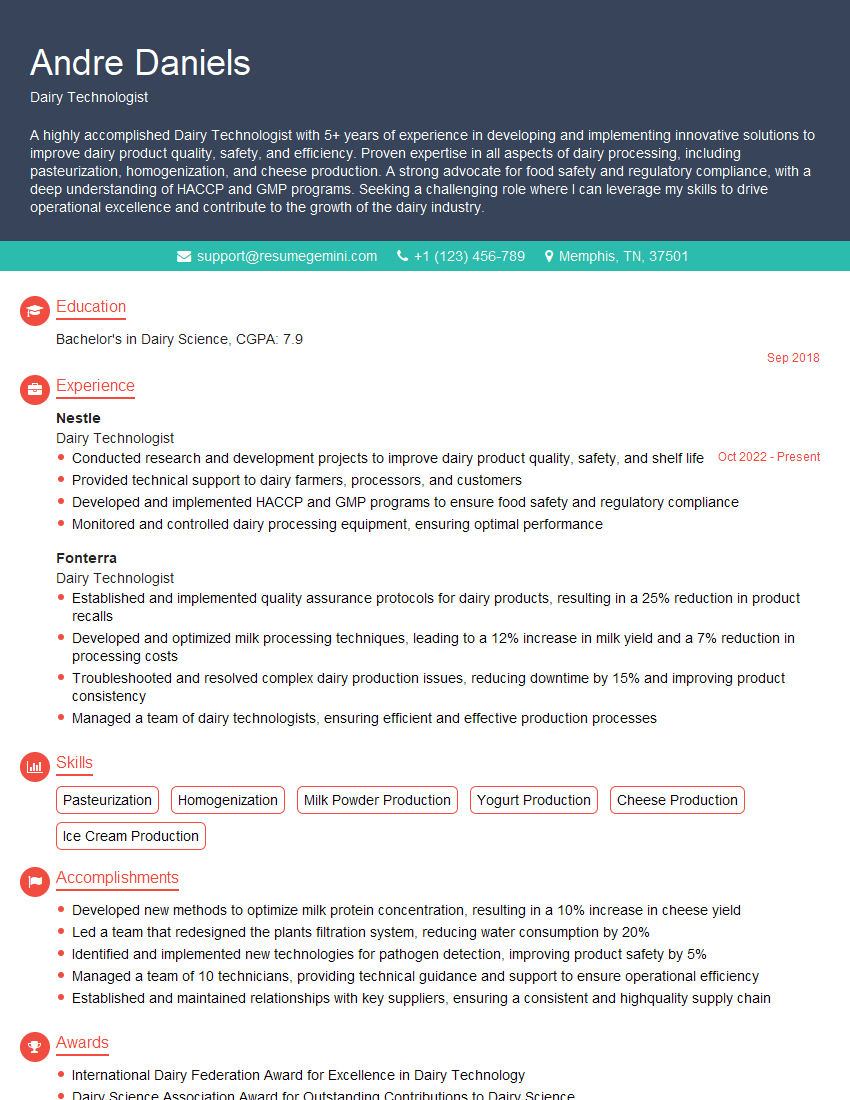
Mastering Whey Protein Concentration opens doors to exciting opportunities in the food science, biotechnology, and nutrition industries. A strong understanding of this process is highly valued by employers seeking skilled and knowledgeable professionals. To significantly boost your job prospects, creating an ATS-friendly resume is paramount. ResumeGemini is a trusted resource to help you build a professional resume that stands out. We offer examples of resumes tailored to Whey Protein Concentration to guide you in crafting a compelling application. Take the next step towards your dream career – build your best resume with ResumeGemini today!
Explore more articles
Users Rating of Our Blogs
Share Your Experience
We value your feedback! Please rate our content and share your thoughts (optional).
What Readers Say About Our Blog
To the interviewgemini.com Webmaster.
Very helpful and content specific questions to help prepare me for my interview!
Thank you
To the interviewgemini.com Webmaster.
This was kind of a unique content I found around the specialized skills. Very helpful questions and good detailed answers.
Very Helpful blog, thank you Interviewgemini team.