Unlock your full potential by mastering the most common Wildlife Law and Policy interview questions. This blog offers a deep dive into the critical topics, ensuring you’re not only prepared to answer but to excel. With these insights, you’ll approach your interview with clarity and confidence.
Questions Asked in Wildlife Law and Policy Interview
Q 1. Explain the Endangered Species Act (ESA) and its key provisions.
The Endangered Species Act (ESA) of 1973 is a landmark US law designed to protect and recover imperiled plants and animals. It’s built on the principle that species are a vital part of our nation’s heritage and should be conserved for the benefit of future generations.
Key provisions include:
- Listing of Endangered and Threatened Species: The Act empowers the US Fish and Wildlife Service (FWS) and the National Marine Fisheries Service (NMFS) to identify and list species as either endangered (facing imminent extinction) or threatened (likely to become endangered in the foreseeable future). This listing triggers critical protections.
- Habitat Protection: A crucial aspect is the protection of critical habitat, which are areas essential for the conservation of a listed species. This isn’t necessarily just land acquisition; it involves considerations like water quality, air quality and restricting activities that could harm the habitat.
- Prohibition of Harmful Actions: The ESA prohibits the taking (harassing, harming, pursuing, hunting, shooting, wounding, killing, trapping, capturing, or collecting) of listed species. This applies to both direct actions and activities that indirectly harm the species.
- Recovery Plans: For each listed species, the agencies must develop and implement recovery plans outlining specific actions to bring the species back from the brink of extinction. These plans detail conservation strategies, habitat restoration, population management, and research needs.
- Consultation Requirements: Federal agencies are required to consult with FWS or NMFS to ensure their actions don’t jeopardize listed species or destroy or modify their critical habitat. This ensures that federal projects, like dam construction or road building, are thoroughly reviewed for potential environmental impacts.
For example, the ESA played a vital role in the recovery of the bald eagle, once on the brink of extinction. Through habitat protection, restrictions on pesticide use (DDT was a major factor in eagle declines), and captive breeding programs, the eagle population has rebounded significantly.
Q 2. Describe the process of obtaining a permit under the Migratory Bird Treaty Act.
The Migratory Bird Treaty Act (MBTA) protects migratory birds and their nests. Obtaining a permit under the MBTA is a rigorous process designed to ensure that any activity involving these birds is done responsibly and with minimal impact. It’s not a simple process, and permits are usually only granted for specific research or conservation activities, rarely for commercial purposes.
The process typically involves:
- Application Submission: An application must be submitted to the US Fish and Wildlife Service (FWS), outlining the purpose of the activity, the specific species involved, the methods to be used, and the mitigation measures to minimize harm. The level of detail required can be extensive.
- Review and Evaluation: The FWS reviews the application to assess the potential impact on the birds and their habitats. They will evaluate whether the proposed activity is consistent with the conservation goals of the MBTA.
- Public Comment: Often, the application undergoes a period of public comment, allowing stakeholders and interested parties to express their opinions.
- Permit Issuance (or Denial): Based on the review, evaluation, and public comment, the FWS decides whether or not to issue the permit. It’s highly dependent on demonstrating minimal impact and scientific merit.
- Compliance Monitoring: Even with a permit, the activity is subject to monitoring to ensure compliance with its terms and conditions.
For instance, a researcher might apply for a permit to band birds for population studies. The permit would specify the number of birds that can be banded, the methods used, and the reporting requirements. Permitting ensures research doesn’t negatively impact the populations under study.
Q 3. What are the primary differences between state and federal wildlife laws?
Federal and state wildlife laws work together but have distinct jurisdictions and powers. Federal laws, such as the ESA and MBTA, apply nationwide and often deal with migratory species, endangered species, and interstate wildlife trade. State laws, on the other hand, are enacted by individual states and manage wildlife within their borders, focusing on species resident to that state.
Key differences include:
- Jurisdiction: Federal laws have broader reach (interstate commerce, migratory species), while state laws apply within a state’s boundaries.
- Species Focus: Federal laws tend to focus on endangered or migratory species, whereas states often manage a wider range of species common to their state.
- Enforcement: Federal agencies like the FWS are responsible for enforcing federal laws. States have their own wildlife agencies that enforce state regulations; often, cooperation exists between these levels of government.
- Regulatory Approaches: State laws may have different hunting seasons, bag limits, and other regulations that vary based on the state’s ecological circumstances and the local wildlife population dynamics.
An example is hunting regulations: Federal law may protect a migratory bird during certain times, while states set hunting seasons for resident game species. Conflicts can arise, and often federal law supersedes state law where there’s a direct conflict.
Q 4. How does the Convention on International Trade in Endangered Species (CITES) work?
The Convention on International Trade in Endangered Species of Wild Fauna and Flora (CITES) is an international agreement between governments that aims to ensure that international trade in specimens of wild animals and plants does not threaten their survival. It works by categorizing species into three appendices according to their conservation status and trade restrictions.
How CITES works:
- Appendix I: Includes species threatened with extinction; their trade is permitted only in exceptional circumstances.
- Appendix II: Includes species not necessarily threatened with extinction, but whose trade must be carefully controlled to avoid endangering them.
- Appendix III: Includes species that are protected in at least one country and which have asked other CITES Parties for assistance in controlling their trade.
- Permitting System: CITES employs a system of permits and certificates to regulate international trade. Importing, exporting, or re-exporting species listed under CITES requires permits demonstrating that the trade is legal and sustainable.
- Enforcement and Monitoring: CITES has mechanisms for monitoring trade and investigating illegal activities. National authorities work to enforce CITES regulations within their respective countries.
For example, the international trade of elephants is highly regulated under CITES to protect them from poaching and the illegal ivory trade. CITES provides a framework for global cooperation to curb illegal trafficking and promotes sustainable use of wildlife resources.
Q 5. What are some common legal challenges in wildlife conservation?
Wildlife conservation faces many legal challenges. These often stem from conflicting interests between conservation goals and other human activities.
Common legal challenges include:
- Balancing Private Property Rights and Conservation Needs: The ESA’s requirement to protect habitat can conflict with private property rights. Landowners may challenge the designation of critical habitat on their land or restrictions on land use.
- Enforcement Difficulties: Wildlife crimes such as poaching and illegal trafficking are challenging to detect and prosecute due to their clandestine nature and transnational scale.
- Defining ‘Harm’ under the ESA: Legal challenges arise from disagreements over what constitutes ‘harm’ to a listed species. This can involve indirect effects of activities on habitat or species health.
- Scientific Uncertainty: Defining the status of a species or the efficacy of conservation measures may be subject to scientific debate, creating legal ambiguities.
- Funding Limitations: Limited government funding constrains the ability to effectively enforce laws and implement conservation projects.
- Political Influences: Political pressures can influence the implementation and enforcement of wildlife laws.
A classic example is the debate over logging in old-growth forests, where the need to protect endangered species is weighed against economic interests of logging companies and local communities.
Q 6. Discuss the role of habitat conservation plans (HCPs) in balancing development and conservation.
Habitat Conservation Plans (HCPs) provide a mechanism to balance the needs of economic development with the conservation of threatened and endangered species. They are particularly relevant when development projects are likely to affect protected species and their habitats.
How HCPs Work:
- Incidental Take Permits: HCPs allow for the incidental take (unintentional harm or death) of listed species in exchange for commitments to conserve the species and its habitat over the long term. This is often in the context of a larger development project.
- Conservation Strategies: The HCP outlines specific measures to minimize and mitigate the impacts of the development on the species and its habitat. These might include habitat restoration, species translocation, or monitoring programs.
- Negotiated Agreements: HCPs are usually the result of negotiations between the developers, government agencies (like the FWS), and often, conservation groups and local communities.
- Long-term Commitments: HCPs are long-term agreements, typically spanning many years or even decades, ensuring that conservation measures are sustained over time.
For example, a large-scale housing development near a wetland area could include an HCP that commits to restoring degraded wetlands elsewhere, creating buffers around the remaining wetland to protect the habitat of an endangered frog, and implementing monitoring to track the frog population’s health. This allows development to proceed while mitigating its potential impact on the species.
Q 7. How do you balance the needs of different stakeholders in wildlife management decisions?
Balancing stakeholder needs in wildlife management requires careful consideration, collaboration, and often, compromise. Different stakeholders have varying interests and perspectives, and effective management necessitates integrating these diverse viewpoints.
Strategies for balancing stakeholder needs include:
- Stakeholder Engagement: Early and ongoing engagement with all affected parties is crucial. This involves open communication, consultations, and participatory decision-making processes.
- Transparency and Public Participation: Transparency in decision-making ensures that stakeholders understand the process and can contribute their perspectives. Public comment periods and opportunities for input are critical.
- Negotiation and Compromise: Reaching consensus requires negotiation and compromise. This may involve finding creative solutions that address competing interests, ensuring that no single stakeholder group completely dominates the decision.
- Science-based Decision-making: Decisions should be rooted in scientific evidence regarding species biology, ecology, and habitat requirements. Science provides a common basis for informed discussion and negotiation.
- Adaptive Management: Wildlife management plans should incorporate adaptive management principles. This means that management strategies are reviewed and adjusted regularly based on monitoring data and new information to ensure effectiveness.
- Conflict Resolution Mechanisms: Mechanisms for addressing disputes and resolving conflicts between stakeholders are essential. Mediation and arbitration are sometimes used to reach a resolution.
For instance, when managing a national park, balancing the needs of tourists, local communities dependent on the park’s resources, conservationists, and researchers requires a thoughtful approach that considers the ecological integrity of the park alongside its social and economic dimensions.
Q 8. Explain the concept of ‘taking’ under the ESA.
Under the Endangered Species Act (ESA), ‘taking’ is broadly defined as harming, harassing, pursuing, hunting, shooting, wounding, killing, trapping, capturing, or collecting any listed species. This definition goes far beyond simply killing an animal. ‘Harassment’ for instance, can include activities that significantly disrupt an animal’s behavior patterns, such as repeatedly approaching a nesting bird or disturbing a denning animal. This broad definition ensures robust protection for endangered and threatened species and covers a wide range of potential human impacts. For example, construction of a dam that impacts fish migration would be considered a ‘taking’ even without direct physical harm to the fish. Similarly, noise pollution from a nearby oil drilling operation disturbing the breeding grounds of a seabird can be considered harassment and therefore, a ‘taking’. The ESA’s ‘taking’ provision is crucial because it allows the government to prevent harm even before it results in death or injury to the species.
Q 9. What are the ethical considerations in wildlife management and conservation?
Ethical considerations in wildlife management and conservation are paramount. They revolve around principles of sustainability, fairness, and respect for all living creatures. We must ask ourselves: Are we prioritizing short-term economic gains over long-term ecological health? Are all stakeholders – including local communities and indigenous populations – having their voices heard and rights respected in decision-making processes? A crucial ethical concern is the balance between human needs and wildlife needs. For example, managing a population of an overabundant deer species might involve culling, but the ethical implementation of such a method must be carefully considered, minimizing animal suffering and being fully transparent to the public. Another challenge is addressing the complex issue of poaching and illegal wildlife trade. Ethical considerations here necessitate stringent enforcement, public awareness campaigns, and collaboration between countries to disrupt criminal networks.
- Intrinsic Value of Wildlife: Recognizing the inherent worth of every species, regardless of its economic value to humans.
- Precautionary Principle: Taking actions to prevent harm to wildlife even in the absence of complete scientific certainty.
- Interconnectedness of Ecosystems: Understanding that wildlife conservation requires a holistic approach, considering the broader ecosystem’s health.
Q 10. How do climate change and biodiversity loss intersect with wildlife law and policy?
Climate change and biodiversity loss are deeply intertwined and pose significant challenges to wildlife law and policy. Climate change alters habitats, disrupts species distribution, and increases the frequency and intensity of extreme weather events, putting many species at greater risk. This directly impacts the effectiveness of existing wildlife protection measures. For example, legislation designed to protect a specific habitat might become irrelevant if that habitat is no longer suitable due to changing climate conditions. Biodiversity loss exacerbates the situation as it reduces ecosystem resilience. The loss of keystone species can trigger cascading effects throughout the food web. Wildlife law and policy must adapt to these changes by incorporating climate change considerations into habitat protection plans, species recovery strategies, and conservation priorities. This could include developing climate adaptation strategies for endangered species, redesigning protected areas to accommodate shifting habitats, and integrating climate data into impact assessments of human activities.
Q 11. Describe the role of citizen science in wildlife conservation and enforcement.
Citizen science plays a vital role in both wildlife conservation and enforcement. It empowers ordinary citizens to contribute directly to scientific research and conservation efforts. For example, volunteers can participate in monitoring wildlife populations, collecting data on species distributions, or documenting illegal activities. This data can help inform policy decisions, improve enforcement strategies, and increase public awareness. Citizen science projects often leverage technology, such as mobile apps for data collection and online platforms for data sharing, making participation more accessible and efficient. A notable example is the use of smartphone apps to report wildlife sightings or poaching incidents, providing real-time information to authorities. Such projects not only provide valuable data, but also increase community engagement and fosters a sense of shared responsibility for wildlife conservation.
Q 12. What are some emerging trends in wildlife law and policy?
Several emerging trends are shaping the future of wildlife law and policy. One significant trend is the increasing focus on ecosystem-based management, which emphasizes the interconnectedness of species and habitats. This holistic approach aims to conserve entire ecosystems rather than focusing on individual species. Another trend is the growing use of market-based instruments, such as carbon credits or payments for ecosystem services, to incentivize conservation actions. There is also a growing recognition of the importance of incorporating Indigenous and local knowledge into wildlife management decisions. This acknowledges the deep connection between many communities and their natural environment and recognizes their valuable insights. Finally, there’s an increasing emphasis on tackling wildlife crime through international cooperation and the development of more sophisticated law enforcement techniques. This includes collaboration between countries to combat illegal wildlife trade, improved tracking technologies, and stricter penalties for offenders.
Q 13. How can technology be used to improve wildlife conservation efforts?
Technology offers powerful tools to improve wildlife conservation. Remote sensing technologies, such as satellite imagery and drones, can provide valuable data on habitat changes, species distributions, and human activities impacting wildlife. Genetic analysis can help identify poached animals and track their origin, assisting law enforcement. Artificial intelligence (AI) is being used to analyze large datasets from various sources, enabling more efficient monitoring and predictive modeling of wildlife populations and threats. For example, AI algorithms can analyze camera trap images to automatically identify species and count individuals, saving researchers considerable time and effort. GPS tracking collars can provide valuable data on animal movements and behavior, helping researchers understand their habitat use and identify potential threats. These technological advancements are transforming our ability to monitor, protect, and manage wildlife populations more effectively.
Q 14. Explain the concept of ecosystem services and their legal implications.
Ecosystem services are the benefits humans derive from ecosystems, including clean air and water, pollination, climate regulation, and recreation. These services have significant economic and social value, and their legal implications are increasingly recognized. Legal frameworks are evolving to incorporate the concept of ecosystem services, particularly in environmental impact assessments and resource management. For instance, the valuation of ecosystem services can be included in cost-benefit analyses for development projects, ensuring that the environmental costs and benefits are fully considered in decision-making. This may involve assigning monetary value to services like carbon sequestration by forests, thus creating an economic incentive for their protection. Legal protection might extend to regulating activities that negatively impact ecosystem services, such as deforestation or pollution, with penalties for causing harm. There’s also a growing movement to incorporate the concept of ‘rights of nature’ in legal systems, giving legal standing to ecosystems and their services, allowing for their protection through legal action.
Q 15. What are the legal frameworks surrounding wildlife trade?
The legal frameworks surrounding wildlife trade are complex and multifaceted, varying significantly between countries but generally aiming to balance conservation with economic and cultural interests. At the international level, the Convention on International Trade in Endangered Species of Wild Fauna and Flora (CITES) is the cornerstone. CITES lists species according to their threat level, regulating trade through permits and monitoring systems. This means that trade in endangered species is generally prohibited, while trade in less threatened species may be allowed under strict controls.
Nationally, countries implement their own legislation that often mirrors CITES but also incorporates domestic regulations addressing issues like hunting licenses, captive breeding programs, and domestic trade. Enforcement varies considerably, however, with challenges in tracking illegal wildlife trade routes and identifying traffickers. For instance, the US Endangered Species Act provides a domestic legal framework, with severe penalties for violating its provisions. Similarly, the European Union has its own wildlife trade regulations, harmonizing the laws across member states. Understanding these international and national frameworks is crucial to effectively combating illegal wildlife trade.
Career Expert Tips:
- Ace those interviews! Prepare effectively by reviewing the Top 50 Most Common Interview Questions on ResumeGemini.
- Navigate your job search with confidence! Explore a wide range of Career Tips on ResumeGemini. Learn about common challenges and recommendations to overcome them.
- Craft the perfect resume! Master the Art of Resume Writing with ResumeGemini’s guide. Showcase your unique qualifications and achievements effectively.
- Don’t miss out on holiday savings! Build your dream resume with ResumeGemini’s ATS optimized templates.
Q 16. How do you assess the effectiveness of wildlife conservation policies?
Assessing the effectiveness of wildlife conservation policies requires a multi-pronged approach. We need to go beyond simply looking at numbers. For example, increased numbers of a particular species doesn’t automatically mean a successful policy. We need to consider the underlying factors contributing to this increase.
- Population Trends: Monitoring changes in population size and distribution of target species is fundamental. This often involves long-term data collection and sophisticated statistical analysis. Are the populations increasing, stabilizing, or declining? Why?
- Habitat Quality: Assessing the health and extent of critical habitats is essential. Are protected areas effectively managed? Is habitat loss still occurring? Satellite imagery and field surveys are invaluable tools here.
- Threat Reduction: Policies should aim to mitigate threats such as poaching, habitat destruction, and human-wildlife conflict. Are these threats decreasing? Are the measures in place effectively addressing the root causes?
- Community Engagement: Successful conservation often relies on the participation and support of local communities. Are policies fostering collaboration and benefit-sharing? Are local people involved in the decision-making process?
- Economic Indicators: Analyzing economic data can show if conservation initiatives are generating sustainable livelihoods, such as ecotourism or sustainable harvesting of non-timber forest products.
By employing these indicators, and combining quantitative data with qualitative assessments of community perceptions and stakeholder engagement, we can develop a more comprehensive and realistic picture of policy effectiveness.
Q 17. Discuss the challenges of enforcing wildlife laws in remote areas.
Enforcing wildlife laws in remote areas presents numerous significant challenges. These areas are often characterized by limited infrastructure, difficult terrain, and sparse populations, making surveillance and patrolling incredibly difficult. Consider the vast Amazon rainforest or the remote reaches of the African savanna.
- Accessibility: Reaching remote areas often requires significant resources, specialized equipment (like helicopters or boats), and trained personnel equipped to handle challenging conditions.
- Limited Resources: Enforcement agencies often lack sufficient funding, personnel, and equipment to effectively patrol vast and remote areas. This includes technology like drones and surveillance systems, but also basic needs like fuel and transportation.
- Corruption: Corruption can undermine enforcement efforts, particularly in areas with weak governance and limited oversight. Bribery of officials can allow illegal activities to continue.
- Transnational Nature of Crime: Illegal wildlife trade is frequently transnational, with criminal networks operating across borders. This makes coordinating enforcement efforts between countries crucial, but also difficult due to differing laws and priorities.
- Lack of Community Support: Lack of awareness or community engagement can hinder enforcement. Local people may be involved in or benefit from illegal activities, making it harder to gain support for conservation efforts.
Addressing these challenges necessitates innovative approaches, including community-based conservation initiatives, technological advancements in surveillance, and increased international cooperation.
Q 18. What are the legal implications of using wildlife for recreational purposes?
The legal implications of using wildlife for recreational purposes are highly dependent on the specific activity, the species involved, and the jurisdiction. Generally, engaging in recreational activities that involve wildlife requires permits or licenses.
Hunting: Many jurisdictions regulate hunting through licensing systems, specifying seasons, bag limits, and permissible methods. Hunting endangered or threatened species is typically prohibited. Failure to obtain a license or violating hunting regulations can lead to fines, license revocation, or even criminal charges.
Wildlife Viewing/Ecotourism: While generally considered acceptable, ecotourism often requires permits or operates under strict guidelines to ensure the well-being of the animals and their habitats. Disturbing wildlife, approaching them too closely, or engaging in activities that cause stress or harm can have legal consequences.
Fishing: Similar to hunting, fishing is usually subject to licensing and regulations, covering things like catch limits, fishing methods, and protected species. Illegal fishing can result in severe penalties.
Specific regulations vary considerably, depending on factors like the type of species and location. Always check your local and national laws before engaging in any recreational activity involving wildlife.
Q 19. Explain the difference between in-situ and ex-situ conservation.
In-situ and ex-situ conservation represent two fundamentally different approaches to protecting biodiversity.
In-situ conservation focuses on preserving species within their natural habitats. This typically involves establishing protected areas such as national parks, wildlife reserves, and biosphere reserves. The aim is to maintain the species’ ecological relationships and genetic diversity in their natural environment. For example, preserving a rainforest ecosystem to protect the various species that inhabit it is an example of in-situ conservation.
Ex-situ conservation, on the other hand, involves protecting species outside their natural habitats. This includes measures like zoos, botanical gardens, seed banks, and captive breeding programs. Ex-situ conservation is often used as a last resort for critically endangered species, where the in-situ approach is not feasible. For instance, breeding pandas in captivity to increase their population is an ex-situ approach. Ex-situ conservation can be valuable for research, education, and reintroduction programs, but ideally, it should be a temporary measure, with the ultimate goal of returning species to their natural environments.
Q 20. How do you approach conflicts between wildlife and human interests?
Conflicts between wildlife and human interests are inevitable, given increasing human populations and expanding infrastructure. Addressing these conflicts requires a holistic and integrated approach.
- Mitigation Measures: This might involve implementing measures such as electric fences, crop protection techniques, or livestock guarding dogs to reduce human-wildlife encounters. For example, providing farmers with beehives to deter elephants from raiding their crops.
- Compensation Schemes: Providing financial compensation to farmers or individuals who suffer losses due to wildlife damage can be crucial in encouraging tolerance and reducing retaliatory actions.
- Community Engagement: Involving local communities in developing and implementing solutions is critical to achieving lasting success. Engaging communities in conservation efforts, ensuring they benefit from conservation projects, and making them active participants leads to much more successful outcomes.
- Habitat Management: Creating buffer zones between wildlife habitats and human settlements can help to reduce conflict. Careful land-use planning and habitat restoration projects also play a crucial role.
- Education and Awareness: Raising public awareness of wildlife behavior, the importance of coexistence, and the legal consequences of harming wildlife can foster a more harmonious relationship between humans and wildlife.
A successful approach will involve collaboration between government agencies, conservation organizations, and local communities. Finding solutions that are both socially acceptable and ecologically sound is crucial.
Q 21. What are the economic aspects of wildlife conservation?
Wildlife conservation has significant economic aspects, both in terms of costs and benefits. Initially, conservation can be expensive, requiring funding for protected area management, research, anti-poaching efforts, and community engagement programs.
However, the economic benefits are considerable and often outweigh the costs.
- Ecotourism: Wildlife viewing and other nature-based tourism activities generate significant revenue for local communities and national economies. This can provide jobs and incentives for conservation.
- Sustainable Use: Sustainable harvesting of non-timber forest products (e.g., medicinal plants, fruits) can provide livelihoods for local communities while conserving biodiversity. The use of certain products must be done responsibly and be monitored.
- Biodiversity as a Resource: Wildlife plays a crucial role in maintaining ecosystem services, such as pollination, water purification, and soil fertility, which are essential for agriculture and human well-being. Loss of biodiversity can have substantial economic repercussions.
- Carbon Sequestration: Intact ecosystems, especially forests, play a significant role in carbon sequestration, helping to mitigate climate change. Conservation efforts can be recognized as a carbon sink.
- Research and Development: Biodiversity provides a vast source of genetic resources that can be used for developing new medicines, crops, and other products. Maintaining biodiversity ensures future access to such resources.
Recognizing the economic value of wildlife conservation can provide a powerful argument for investing in its protection and promoting sustainable practices.
Q 22. Describe the role of international cooperation in wildlife protection.
International cooperation is absolutely crucial for wildlife protection because many species migrate across borders, and the threats they face—like poaching and habitat loss—often transcend national boundaries. Think of elephants migrating across multiple African countries, or migratory birds traversing continents. No single nation can effectively address these transnational challenges alone.
International Treaties and Agreements: Organizations like CITES (Convention on International Trade in Endangered Species) establish legally binding agreements to regulate the trade of endangered species. These treaties require signatory nations to cooperate on enforcement and monitoring.
Joint Conservation Efforts: Many international organizations and NGOs facilitate collaborative projects for habitat preservation, anti-poaching initiatives, and species reintroduction programs. For example, collaborative efforts are often focused on protecting shared river systems or transboundary protected areas.
Information Sharing: International cooperation allows for the sharing of crucial data on wildlife populations, trafficking routes, and effective conservation strategies. This facilitates a more coordinated and efficient global response.
Financial and Technological Assistance: Wealthier nations can provide funding and technological support to developing countries to bolster their wildlife protection efforts, creating a more equitable approach to conservation.
Ultimately, effective wildlife protection demands a global perspective and concerted action. The interconnectedness of ecosystems and the global nature of threats underscore the necessity of international collaboration in this area.
Q 23. How do you analyze environmental impact assessments related to wildlife?
Analyzing environmental impact assessments (EIAs) related to wildlife requires a thorough and multi-faceted approach. The core objective is to determine the potential effects of a proposed project (e.g., a dam, road, or mining operation) on wildlife populations and their habitats.
Identifying Affected Species: First, we need to identify all the wildlife species that could be directly or indirectly impacted. This requires detailed knowledge of the local biodiversity.
Assessing Habitat Impacts: Next, we evaluate the potential impacts on various habitats, such as deforestation, fragmentation, and pollution. We might use GIS mapping and habitat modeling techniques.
Evaluating Population Impacts: We would then predict the consequences for wildlife populations, considering factors like mortality rates, breeding success, and population viability. Sophisticated population modeling is frequently used here.
Mitigation Measures: EIAs should propose mitigation measures to reduce negative impacts. This could include habitat restoration, wildlife crossings, or stricter operational guidelines.
Cumulative Impacts: It’s vital to consider cumulative impacts, meaning the combined effect of multiple projects or stressors on wildlife populations. Often, individual projects may have minor impacts, but collectively, they can lead to severe consequences.
Scientific Validity: The scientific rigor of the methods used in the EIA must be meticulously evaluated. This involves scrutinizing data sources, methodology, and assumptions made by the assessment’s authors.
Essentially, a robust EIA regarding wildlife should be a predictive tool, identifying potential threats and guiding the development of protective measures to ensure that the project minimizes harm to wildlife and their ecosystems.
Q 24. What are the legal considerations related to wildlife rehabilitation?
Wildlife rehabilitation raises several crucial legal considerations. The primary concern is ensuring the actions taken comply with both federal and state wildlife laws and regulations.
Permits and Licenses: In most jurisdictions, handling and rehabilitating wildlife requires permits or licenses. These permits often restrict the types of species that can be handled and specify the necessary qualifications and facilities.
Species Protection Laws: Rehabilitation efforts must adhere to the Endangered Species Act (ESA) and other relevant legislation protecting endangered and threatened species. Improper handling or release could incur penalties.
Public Safety: Wildlife rehabilitators have a duty to ensure public safety. This includes proper handling techniques to prevent injury to both themselves and the public, as well as secure containment of potentially dangerous animals.
Ethical Considerations: There is an ethical responsibility to ensure that the rehabilitation process is humane and effective. Animals should receive proper veterinary care, appropriate nutrition, and a stimulating environment to maximize their chances of successful reintroduction into the wild.
Release Protocols: Releasing rehabilitated animals requires careful planning. Laws often dictate the conditions under which animals can be released, the location of release, and post-release monitoring.
Violation of wildlife laws during rehabilitation can lead to fines, license revocation, or even criminal charges. Therefore, strict adherence to regulations and best practices is vital for responsible wildlife rehabilitation.
Q 25. Discuss the potential impacts of invasive species on native wildlife.
Invasive species—non-native species that outcompete native organisms—pose significant threats to native wildlife. Their impacts can be devastating and far-reaching.
Competition for Resources: Invasive species often outcompete native species for food, water, and shelter, leading to population declines and even extinctions.
Predation: Some invasive species are predators that prey on native animals, depleting their populations. The introduction of feral cats or brown tree snakes serves as prime examples.
Disease Transmission: Invasive species can introduce diseases to which native species have no immunity, causing widespread mortality.
Habitat Alteration: Some invasives drastically alter habitats, making them unsuitable for native species. For example, invasive plants can shade out native vegetation, reducing available food and cover.
Hybridization: Invasive species can hybridize with native species, potentially reducing the genetic integrity and viability of the native population.
The consequences of invasive species can ripple through the entire ecosystem, affecting biodiversity, ecosystem services, and even human economies. Prevention and control of invasive species are therefore vital aspects of wildlife conservation.
Q 26. How do you evaluate the scientific validity of data used in wildlife management decisions?
Evaluating the scientific validity of data used in wildlife management decisions is paramount. Poor data can lead to ineffective or even harmful management strategies.
Data Source Reliability: We need to assess the reliability of the data sources, considering the sampling methodology, sample size, and potential biases.
Statistical Rigor: The statistical analysis used to interpret the data should be robust and appropriate. We would look for evidence of appropriate statistical tests and consideration of uncertainty.
Peer Review: Has the data and its analysis been subjected to peer review? Peer-reviewed publications offer greater assurance of quality.
Data Transparency: The data and its underlying assumptions should be transparent and accessible. This promotes scrutiny and allows for independent verification.
Potential Bias: We need to consider potential biases in data collection, analysis, or interpretation. For instance, certain methodologies might systematically over- or under-represent certain species or populations.
By critically evaluating the data’s quality and methods, we can ensure that wildlife management decisions are based on solid scientific evidence, ultimately leading to more effective and successful conservation outcomes.
Q 27. What are some effective strategies for communicating complex conservation issues to the public?
Communicating complex conservation issues effectively requires tailoring the message to the audience and using a variety of communication channels.
Plain Language: Avoid jargon and technical terms whenever possible. Use simple, clear, and concise language.
Storytelling: Connect with the audience emotionally through storytelling. Share compelling narratives about individual animals or conservation successes.
Visual Aids: Use photos, videos, and infographics to make information more engaging and accessible.
Interactive Tools: Consider using interactive maps, games, or virtual reality experiences to engage audiences actively.
Targeted Communication: Tailor messaging to specific audiences (e.g., policymakers, landowners, or the general public). Different messages will resonate with different groups.
Multiple Platforms: Use a variety of channels, such as social media, websites, educational programs, and community events, to reach a broader audience.
Successful communication is crucial for building public support for conservation efforts. Engaging and informative approaches can galvanize public action to safeguard wildlife and their habitats.
Q 28. Describe your experience with environmental litigation, if any.
While I can’t disclose specifics due to client confidentiality, I have been involved in several environmental litigation cases relating to wildlife protection. My role has primarily been as an expert witness, providing scientific expertise and analysis to support the legal arguments of my clients. This often involves reviewing scientific data, conducting independent analyses, and preparing reports and testimony for court proceedings. The types of cases I’ve worked on included challenges to habitat destruction, illegal wildlife trade, and the inadequacy of environmental impact assessments. My experience has provided valuable insights into the legal frameworks governing wildlife conservation and the practical application of scientific knowledge in legal settings.
Key Topics to Learn for Your Wildlife Law and Policy Interview
Preparing for your interview requires a comprehensive understanding of Wildlife Law and Policy. Focus your studies on these key areas to showcase your expertise and passion.
- International Wildlife Treaties and Conventions: Understand the frameworks governing international wildlife trade and conservation, such as CITES and CMS. Consider the practical implications of these agreements on national policy and enforcement.
- National Wildlife Legislation and Regulations: Deeply familiarize yourself with relevant laws and regulations in your target jurisdiction. Be prepared to discuss case studies demonstrating your understanding of their practical application and limitations.
- Endangered Species Protection: Explore the legal and policy mechanisms designed to protect endangered species, including habitat conservation, captive breeding programs, and enforcement strategies. Be ready to analyze potential conflicts and solutions.
- Wildlife Crime Enforcement: Understand investigative techniques, prosecution strategies, and the challenges of combating wildlife trafficking and poaching. Consider the role of international collaboration in tackling these complex issues.
- Environmental Impact Assessment and Permitting: Learn the process of evaluating the environmental impact of projects on wildlife populations and habitats. Understand how permitting processes work and how to navigate potential conflicts.
- Conservation Planning and Policy: Explore the various approaches to conservation planning, from protected area management to community-based conservation initiatives. Be ready to discuss the policy challenges involved in implementing effective conservation strategies.
- Indigenous Rights and Wildlife Management: Understand the intersection of indigenous rights and wildlife conservation. Analyze the legal frameworks and policy approaches that aim to balance these competing interests.
Next Steps: Unlock Your Career Potential
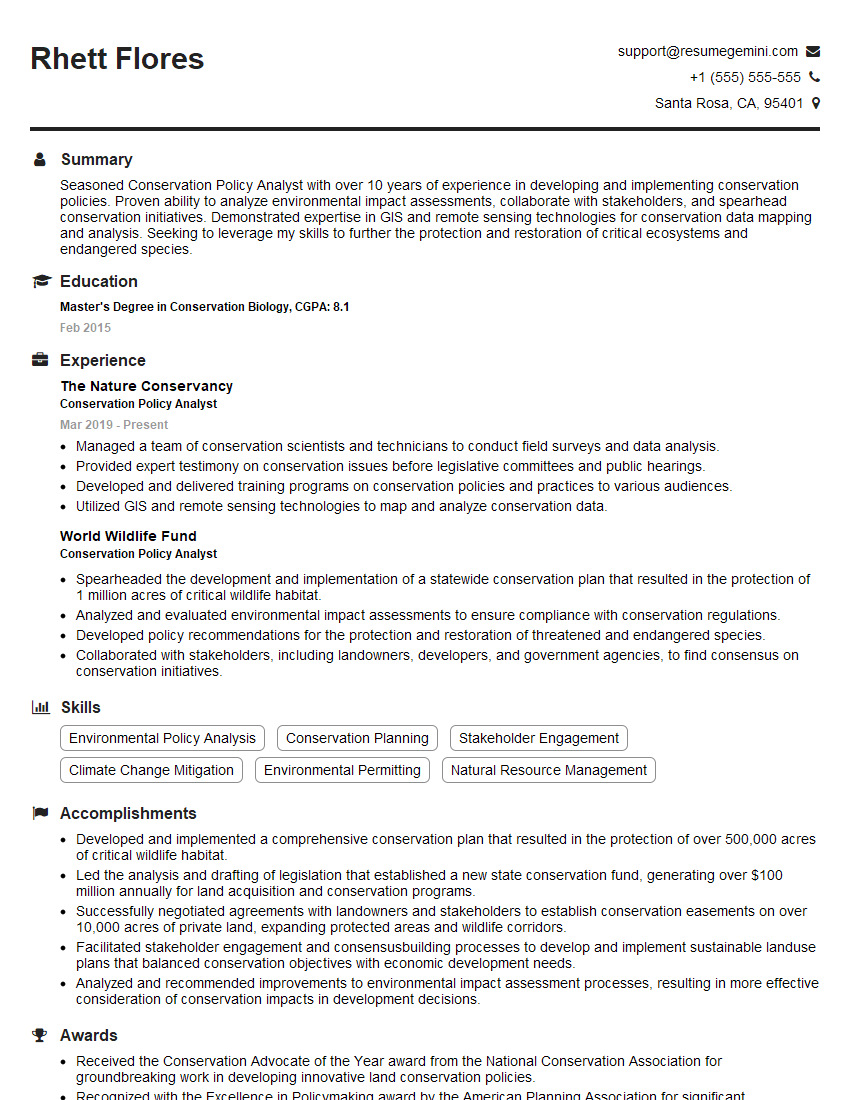
Mastering Wildlife Law and Policy is crucial for a successful career in this dynamic field. It demonstrates a commitment to conservation and a deep understanding of the legal and ethical frameworks shaping environmental protection. To maximize your job prospects, creating a strong, ATS-friendly resume is essential. This ensures your qualifications are effectively highlighted to potential employers. We recommend leveraging ResumeGemini, a trusted resource for building professional resumes that make you stand out. ResumeGemini provides examples of resumes tailored specifically to Wildlife Law and Policy, giving you a head start in crafting a compelling application.
Explore more articles
Users Rating of Our Blogs
Share Your Experience
We value your feedback! Please rate our content and share your thoughts (optional).
What Readers Say About Our Blog
To the interviewgemini.com Webmaster.
Very helpful and content specific questions to help prepare me for my interview!
Thank you
To the interviewgemini.com Webmaster.
This was kind of a unique content I found around the specialized skills. Very helpful questions and good detailed answers.
Very Helpful blog, thank you Interviewgemini team.