Every successful interview starts with knowing what to expect. In this blog, we’ll take you through the top Wine Education and Research interview questions, breaking them down with expert tips to help you deliver impactful answers. Step into your next interview fully prepared and ready to succeed.
Questions Asked in Wine Education and Research Interview
Q 1. Describe the different stages of winemaking.
Winemaking is a fascinating process, transforming simple grapes into a complex beverage. It can be broadly divided into several key stages:
- Harvesting: This crucial first step involves selecting ripe grapes at optimal ripeness, determined by factors like sugar levels and acidity. The timing significantly impacts the wine’s final character.
- Crushing and Destemming: Grapes are crushed to release their juice. Destemming, the removal of stems, is optional and depends on the winemaker’s style and grape variety. Stems can add tannins and herbaceous notes.
- Fermentation: This is where yeast converts grape sugars into alcohol, carbon dioxide, and other byproducts. Red wine fermentation typically involves skin contact, extracting color and tannins. White wine fermentation usually excludes skin contact.
- Malolactic Fermentation (Optional): This secondary fermentation converts harsh malic acid into softer lactic acid, often resulting in a smoother, rounder wine (explained further in question 6).
- Pressing: After fermentation, the wine is pressed to separate the juice from the solids (skins, seeds, etc.).
- Aging: The wine matures, developing complexity and softening its harsh edges. This can occur in oak barrels (adding vanilla and spice notes) or stainless steel tanks (preserving fruitiness). The aging time varies greatly depending on the wine style.
- Bottling and Aging: Finally, the wine is bottled, often after filtration and fining, and may continue to age in the bottle.
Each stage requires careful monitoring and adjustments to ensure the wine reaches its full potential. A winemaker’s skill lies in mastering these stages and adapting them to the specific characteristics of the grapes and the desired wine style.
Q 2. Explain the impact of terroir on wine characteristics.
Terroir, a French term, encompasses all the environmental factors that influence a wine’s characteristics. Think of it as the ‘fingerprint’ of a particular place. It’s a complex interplay of several elements:
- Climate: Temperature, sunshine, rainfall, and wind affect the grape’s ripening process, resulting in different sugar and acid levels. A cool climate might produce wines with higher acidity, while a warm climate might yield wines with higher alcohol.
- Soil: The soil composition (e.g., clay, sand, limestone) impacts water retention, nutrient availability, and drainage, all affecting the grape’s growth and flavor development. Limestone soils, for instance, are often associated with elegant, minerally wines.
- Topography: Altitude, slope, and aspect (direction the vineyard faces) influence sunlight exposure, temperature variation, and drainage. South-facing slopes often receive more sunlight, leading to riper grapes.
- Human Factors: Though not strictly part of the natural environment, vineyard practices like pruning, training, and canopy management can also influence the final product. These are part of the larger terroir story.
For example, a Pinot Noir from Burgundy, France, will taste distinctly different from a Pinot Noir from Oregon, USA, even with similar viticultural practices, due to the unique terroir of each region. Understanding terroir is crucial for appreciating the nuances and regional distinctions in wine.
Q 3. Discuss the key varietals of Bordeaux and their typical flavor profiles.
Bordeaux, a renowned wine region in France, is known for its blends, typically combining several grape varieties. The key varietals are:
- Cabernet Sauvignon: Known for its structure, tannins, and aromas of blackcurrant, cedar, and graphite. It provides the backbone of many Bordeaux blends.
- Merlot: Softer and more approachable than Cabernet Sauvignon, Merlot offers plush tannins, and aromas of plum, cherry, and chocolate.
- Cabernet Franc: A less dominant but important grape, Cabernet Franc brings herbal notes (e.g., bell pepper, mint), and a lighter body compared to Cabernet Sauvignon.
- Petit Verdot: Often used in smaller proportions, Petit Verdot adds intense color, dark fruit flavors (blackberry, blueberry), and strong tannins.
- Malbec: Although more associated with Argentina today, Malbec was historically an important component of Bordeaux blends, contributing dark fruit flavors and a slightly jammy character.
The proportions of these varietals vary considerably depending on the specific appellation (sub-region) and the winemaker’s style. A classic Bordeaux blend might be 60% Cabernet Sauvignon, 30% Merlot, and 10% Cabernet Franc, but this can differ drastically.
Q 4. How do you assess the quality of a wine using sensory evaluation?
Sensory evaluation is a crucial step in assessing wine quality. It involves a systematic approach using all five senses, but primarily sight, smell, and taste.
- Sight: Observe the wine’s color, clarity, and viscosity (legs or tears). This can indicate age, grape variety, and overall quality.
- Smell (Aroma): Swirl the wine to release aromas. Identify primary aromas (derived from the grape), secondary aromas (from fermentation), and tertiary aromas (from aging). Descriptors like fruity, floral, spicy, earthy, or smoky help.
- Taste: Take a sip, noting the wine’s sweetness, acidity, tannins, body, and alcohol. Identify the flavor profile (e.g., red fruit, black fruit, oak). Then pay attention to the finish (the lingering sensation after swallowing).
Experienced tasters use a standardized approach and descriptive vocabulary to communicate their findings objectively. Beyond individual sensory qualities, factors such as balance (harmonious integration of elements), complexity (variety of flavors and aromas), and length (lasting impression) are considered when assessing overall quality. It’s important to remember that preferences play a role; a high-quality wine isn’t necessarily one you personally enjoy most.
Q 5. What are the major wine-producing regions of the world and their signature styles?
The world boasts numerous wine-producing regions, each with its unique signature style. Here are some major examples:
- Bordeaux (France): Blend-driven wines, Cabernet Sauvignon-dominant reds, elegant whites.
- Burgundy (France): Pinot Noir (reds) and Chardonnay (whites) known for elegance, terroir expression, and high acidity.
- Rioja (Spain): Tempranillo-based reds, often aged in oak, with notes of vanilla, leather, and spice.
- Tuscany (Italy): Sangiovese-based reds (e.g., Chianti Classico), known for their acidity and fruitiness.
- Napa Valley (California, USA): Cabernet Sauvignon and Merlot dominate, producing powerful, opulent wines.
- Barossa Valley (Australia): Shiraz-based reds, known for their ripe fruit, spice, and high alcohol.
- Marlborough (New Zealand): Sauvignon Blanc, renowned for its herbaceous and citrusy character.
This list is not exhaustive; many other regions like the Rhône Valley (France), Piedmont (Italy), and Mendoza (Argentina) also contribute significantly to the global wine landscape, each with its distinctive style and grape varieties.
Q 6. Explain the process of malolactic fermentation and its impact on wine.
Malolactic fermentation is a secondary fermentation process that converts malic acid (a harsher acid) into lactic acid (a softer, milkier acid). It’s frequently used in red winemaking, and sometimes in white wines like Chardonnay.
The process involves bacteria (typically Oenococcus oeni) consuming malic acid and producing lactic acid, carbon dioxide, and other compounds. This conversion often results in a smoother, rounder, and more buttery texture, reducing the wine’s acidity and adding complexity.
The impact of malolactic fermentation can be significant:
- Softer Acidity: The resulting lactic acid contributes a creamy mouthfeel and reduces the wine’s sharpness.
- Enhanced Flavor Complexity: Diacetyl, a byproduct of malolactic fermentation, can impart buttery or creamy notes to the wine.
- Increased Microbial Stability: Lactic acid bacteria can inhibit the growth of spoilage organisms, leading to improved wine stability.
However, malolactic fermentation is not always desirable. In some cases, it might mask delicate fruit aromas or produce unwanted flavors. Therefore, winemakers carefully decide whether or not to induce malolactic fermentation based on the grape variety, desired style, and overall wine profile.
Q 7. Describe different wine faults and their causes.
Wine faults are undesirable characteristics that negatively impact a wine’s quality and appeal. They can stem from various sources, including improper vineyard practices, fermentation issues, or storage problems.
- Cork Taint (TCA): Caused by 2,4,6-trichloroanisole (TCA), a compound that develops in corks, resulting in a musty, earthy, or moldy aroma.
- Acetic Acid (Vinegar): Excessive acetic acid leads to a vinegary or sour taste, often due to oxidation or bacterial spoilage.
- Brett (Brettanomyces): A yeast that produces barnyard, sweaty, or horsey aromas, often present in older or poorly handled wines.
- Hydrogen Sulfide (Rotten Eggs): A foul-smelling sulfur compound, typically caused by yeast during fermentation.
- Mercaptans: Sulfur-containing compounds that produce unpleasant aromas like onion or garlic, resulting from yeast metabolism.
- Oxidation: Exposure to oxygen can lead to browning, loss of fruitiness, and the development of nutty or sherry-like characteristics, though in some cases, this can be a desirable aging process.
Preventing wine faults involves meticulous vineyard management, sterile equipment, careful fermentation control, and proper storage conditions. Identifying wine faults requires experience and a keen sense of smell and taste. These faults can ruin an otherwise excellent wine and should be recognized during the winemaking process and avoided through strict quality control.
Q 8. What are the key differences between red and white winemaking techniques?
The most significant difference between red and white winemaking lies in the treatment of grape skins. Red wine production involves fermenting the juice with the grape skins, seeds, and stems, which imparts color, tannins, and flavor compounds. White wine, conversely, is made by fermenting the juice without the skins, resulting in a lighter color and a different flavor profile.
- Red Winemaking: Think of it like stewing a rich tomato sauce – the longer the skins remain in contact with the juice (maceration), the more intense the color and flavor become. Techniques like cold soak (pre-fermentation maceration at low temperatures) or pump-over (circulating juice over the cap of skins) influence the final product.
- White Winemaking: This is more like making a clear broth – the goal is to extract flavor from the juice without the tannins and color from the skins. Pressing the grapes before fermentation is crucial, and techniques like malolactic fermentation (converting malic acid to lactic acid, softening the wine) are commonly employed.
Ultimately, while both processes involve fermentation, the inclusion or exclusion of grape skins marks a fundamental divergence in the techniques and desired characteristics of the final wines.
Q 9. Explain the principles of sustainable viticulture.
Sustainable viticulture is a holistic approach to grape growing that prioritizes environmental stewardship, social responsibility, and economic viability. It aims to minimize the negative impacts of wine production while enhancing the positive aspects. This involves a multifaceted strategy:
- Minimizing Environmental Impact: Reducing water usage through drip irrigation and drought-resistant rootstocks, conserving biodiversity by avoiding excessive pesticide use and promoting beneficial insects, and reducing carbon emissions through efficient farming practices. Organic and biodynamic farming are examples of this.
- Social Responsibility: Ensuring fair labor practices, supporting local communities, and contributing to the overall well-being of the workforce.
- Economic Viability: Adopting long-term strategies that ensure the economic health of the vineyard and its surrounding area. This involves efficient resource management and a focus on high-quality yields rather than maximizing quantity.
Imagine a vineyard that thrives in harmony with nature, employing methods that minimize waste, protect the environment, and ensure the long-term health of the land. This is the essence of sustainable viticulture – building a profitable business while being responsible environmental stewards.
Q 10. How do you identify and describe wine aromas using the aroma wheel?
The aroma wheel is a visual tool used to identify and describe the vast range of aromas found in wine. It’s organized into families of scents, progressing from simple primary aromas to more complex tertiary ones.
To use it, you systematically sniff the wine and try to match the perceived aromas to the categories on the wheel. For example, you might identify fruity aromas like red cherry or blackberry (primary aromas, often derived directly from the grape variety), then move towards secondary aromas such as earthy or spicy notes (developed during fermentation), and finally to tertiary aromas like vanilla or oak (acquired through aging in oak barrels).
Describing these aromas requires precise language. Instead of simply stating ‘fruity’, one might specify ‘ripe plum’ or ‘black currant’. The level of detail reflects the wine’s complexity and the taster’s experience.
Practice and a keen sense of smell are key. Comparing wines and referring to the aroma wheel repeatedly strengthens your ability to articulate the subtle differences in aromas and build a comprehensive vocabulary for wine description.
Q 11. Discuss the impact of oak aging on wine.
Oak aging profoundly impacts wine’s characteristics, contributing complexity, texture, and aroma. The type of oak (French, American, etc.), the level of toast, and the length of aging all influence the final result.
- Aromas: Oak imparts vanilla, spice (cinnamon, clove), toasty, smoky, and coconut notes depending on the oak’s treatment. American oak tends to be more assertive, while French oak provides a subtler influence.
- Tannins: Oak contributes to the wine’s mouthfeel. It can soften tannins in red wines, making them more approachable, or add a subtle astringency.
- Color: Oak aging can slightly darken the color of the wine, especially reds.
- Flavor: Oak adds complexity and depth to the overall flavor profile of the wine. The level of oak influence is carefully managed by winemakers, who may use new or used oak barrels to achieve the desired balance.
Think of oak aging like carefully seasoning a piece of meat – it adds layers of flavor and enhances the overall experience, but too much can overpower the natural qualities of the wine itself.
Q 12. What are the legal requirements for wine labeling in your region?
(Note: Wine labeling laws vary significantly by region. This answer provides a general framework and should not be considered legal advice. Always consult the specific regulations of the relevant region.)
Wine labeling typically includes:
- Name of the wine: Often reflecting the grape variety or vineyard location.
- Vintage: The year the grapes were harvested.
- Alcohol content: Usually expressed as a percentage by volume.
- Producer’s name and address: Including the bottling company or winery.
- Region of origin: Indicating the geographic area where the grapes were grown.
- Net volume: The quantity of wine in the bottle.
- Allergen information: Often including sulfites, if present.
Specific requirements regarding permitted terms, geographic designations (like Appellation d’Origine Contrôlée in France), and organic or biodynamic certifications also apply. These regulations ensure clarity, authenticity, and protect consumers from misleading information. Violation of labeling laws can result in serious penalties for producers.
Q 13. How does climate change affect grape cultivation?
Climate change poses significant challenges to grape cultivation worldwide. Rising temperatures, altered precipitation patterns, and more frequent extreme weather events disrupt the delicate balance required for optimal grape growth and ripening.
- Increased Temperatures: Higher temperatures can lead to early ripening, resulting in grapes with less acidity and intense aromas. Heat stress can also damage the vines.
- Changes in Precipitation: Droughts reduce yields and can stress vines, while excessive rainfall can lead to disease and rot.
- Extreme Weather Events: Hailstorms, frost, and wildfires can cause devastating damage to vineyards.
- Shifting Growing Regions: Some regions may become unsuitable for viticulture, while others may become more favorable. This requires adaptation in planting and farming practices.
Winemakers are employing various strategies to adapt, including planting different grape varieties that thrive in warmer climates, implementing more efficient irrigation systems, and using protective netting against hail. Research into climate-resilient rootstocks and farming practices is crucial for the future of wine production.
Q 14. Explain the different types of wine closures and their impact on wine aging.
Wine closures protect the wine from oxidation and contamination. Different types impact the wine’s aging potential:
- Cork: Traditional closure made from oak bark. Provides good oxygen permeability, allowing for micro-oxidation, which can be beneficial for slow aging in some wines. However, cork taint (TCA) can be a problem, imparting a musty aroma.
- Screwcap: Metal cap sealed with a screw thread. Provides an airtight seal, preventing oxidation and preventing cork taint. Popular for wines intended for early consumption or those where preserving freshness is paramount.
- Synthetic Cork: Made from plastic materials that mimic the properties of natural cork. Offers a good compromise between cork and screwcap, minimizing the risk of cork taint while allowing some micro-oxidation.
- Glass Stopper: Aesthetically appealing but may not provide the same level of airtight sealing as screwcaps or synthetic corks.
The choice of closure is crucial. For wines intended for long aging, where micro-oxidation is desirable, cork might be preferred. Screwcaps are often used for wines meant for immediate or shorter-term consumption, while synthetic corks are a versatile alternative that balances the benefits of both.
Q 15. Describe various wine service protocols.
Wine service protocols encompass a range of procedures designed to enhance the guest experience and preserve wine quality. These protocols vary depending on the setting (fine dining, casual restaurant, private event), but generally follow these key principles:
- Order of Service: Generally, lighter-bodied wines precede fuller-bodied wines. Sparkling wines often begin the meal, followed by whites, rosés, and then reds. The specific order depends on the menu pairing.
- Temperature: Serving temperature is crucial. Whites are usually chilled (around 45-55°F), reds served slightly below room temperature (60-65°F), and sparkling wines very cold (around 40°F). Improper temperature can mask the wine’s nuances.
- Presentation: The wine should be presented in a clean, polished glass appropriate for the wine style. The server should identify the wine to the guest, offering a brief description. Pouring should be done smoothly, without splashing, typically beginning with a small pour for the host to inspect for imperfections (cork taint, sediment).
- Pouring Etiquette: Pouring should be done with the bottle held by the base (avoiding fingerprints on the glass) and avoiding filling the glass completely (to leave room for swirling and sniffing). Guests are typically served from the right, with the wine poured into the right hand.
- Cork Management: The cork should be inspected to check for signs of damage that might indicate a spoiled bottle. After removing the cork, it’s usually presented to the host. If using a screwcap, open carefully to avoid splashing.
- Bread and Water: Bread and water are often served before the wine to cleanse the palate. Fresh water should be offered throughout the meal.
For example, in a fine dining setting, meticulous attention to detail is paramount; correct glassware, precise temperature control, and an explanation of the wine’s characteristics are essential. In a more casual setting, the focus might be on simple, efficient service that ensures a pleasurable experience.
Career Expert Tips:
- Ace those interviews! Prepare effectively by reviewing the Top 50 Most Common Interview Questions on ResumeGemini.
- Navigate your job search with confidence! Explore a wide range of Career Tips on ResumeGemini. Learn about common challenges and recommendations to overcome them.
- Craft the perfect resume! Master the Art of Resume Writing with ResumeGemini’s guide. Showcase your unique qualifications and achievements effectively.
- Don’t miss out on holiday savings! Build your dream resume with ResumeGemini’s ATS optimized templates.
Q 16. How would you educate a beginner about wine tasting?
Educating a beginner about wine tasting is about fostering an appreciation for sensory experiences rather than memorization. I start with the five S’s:
- See: Observe the wine’s color, clarity, and viscosity (the ‘legs’ or tears running down the glass). A deep ruby red might indicate a mature red, while a pale yellow could signify a young white.
- Swirl: Gently swirl the wine in the glass to release its aromas. This increases the surface area exposed to oxygen.
- Smell: Inhale deeply, focusing on different aromas. Are they fruity, floral, earthy, spicy? This is where descriptive vocabulary is crucial. I’d guide them to identify common aromas, like red fruit (cherry, strawberry), black fruit (blackberry, plum), or oaky notes.
- Sip: Take a small sip, letting it coat the tongue. Pay attention to the taste, texture (tannins, acidity), and length of finish (the lingering flavor after swallowing).
- Savor: Reflect on the overall impression of the wine. Consider the balance (harmony between acidity, sweetness, tannins, and alcohol), and whether you enjoyed it. This step encourages personal reflection and a subjective appreciation.
I use analogies to make abstract concepts more relatable. For instance, explaining tannins as the ‘astringent’ feeling like strong tea or unripe persimmon helps bridge the gap between technical terms and sensory experiences. Practicing with various wines from different regions and grape varietals is essential. Taste-bud fatigue can set in, so palate cleansers (water, bread) are crucial during tastings.
Q 17. What are some common wine-related diseases and how are they managed?
Wine is susceptible to various diseases and spoilage issues, both in the vineyard and during production and storage. Some common ones include:
- Downy Mildew (Plasmopara viticola): A fungal disease affecting grape leaves and fruit, causing lesions and rot. It’s managed using copper-based fungicides and preventative measures like good vineyard hygiene and appropriate planting density.
- Powdery Mildew (Uncinula necator): Another fungal disease that covers leaves and fruit with a white powdery coating, impacting yield and quality. Management involves sulfur-based fungicides and resistant grape varieties.
- Botrytis Bunch Rot (Botrytis cinerea): A fungal infection that causes rot, often desirable in the production of sweet wines like Sauternes. It’s managed through vineyard management practices to promote air circulation and minimize humidity, but controlled infection is sometimes sought after for specific wine styles.
- Bacterial Diseases: Several bacterial diseases can cause leaf spots, wilting, and fruit rot. These are often managed through sanitation, removal of infected plants, and use of bacteriostatic treatments.
- Cork Taint (TCA): A chemical compound that imparts a musty or moldy odor to wine, often originating from contaminated corks. This is mainly controlled by better cork production and the increasing use of screw caps.
Effective management relies on integrated pest management (IPM) strategies, combining preventative practices, biological control agents, and carefully applied chemical treatments. Regular vineyard monitoring and early intervention are crucial for preventing major outbreaks.
Q 18. Explain the concept of wine pairing.
Wine pairing is the art of selecting wines that complement the flavors and textures of food. The goal is to create a harmonious experience where the wine and food enhance each other, rather than clashing. Several principles guide successful wine pairings:
- Weight and Body: Lighter dishes pair well with lighter wines, while richer dishes need bolder wines to stand up to them. For example, a delicate fish dish pairs well with a crisp Sauvignon Blanc, while a rich steak might be better with a full-bodied Cabernet Sauvignon.
- Acidity and Fat: High acidity in wine cuts through richness in food. A crisp white wine can balance the richness of fatty fish or creamy sauces.
- Sweetness and Saltiness: Sweet wines pair surprisingly well with spicy or salty dishes. A slightly sweet Riesling can beautifully complement Thai curry or prosciutto.
- Tannins and Protein: Tannins in red wines often pair well with protein-rich foods, as the protein binds to the tannins and softens their astringency.
- Flavor Profiles: Consider complementary flavor profiles. For instance, fruity wines often pair well with fruity desserts, while earthy wines complement earthy dishes.
However, pairing is not a strict science; personal preference plays a significant role. The most important aspect is enjoyment. Experimentation is key to developing your own palate and preferences.
Q 19. Discuss the history and evolution of wine production.
Wine production boasts a rich history, tracing back thousands of years. Archaeological evidence suggests winemaking began in the Near East, possibly as early as 8000 BCE. The ancient civilizations of Mesopotamia, Egypt, and Greece developed sophisticated winemaking techniques, using amphorae for fermentation and storage.
The Romans played a critical role in spreading viticulture and winemaking throughout Europe. They developed efficient methods for vineyard management and wine production, influencing the winemaking practices in many regions. The Middle Ages saw the rise of monastic orders that played a key role in preserving winemaking knowledge and developing techniques.
The Renaissance period witnessed significant advancements in viticulture and winemaking, with the emergence of new grape varietals and improved winemaking techniques. The development of glass bottles revolutionized wine storage and transport. The 19th century brought about the devastating phylloxera epidemic, which nearly wiped out European vineyards. The grafting of European vines onto American rootstock saved the industry.
The 20th and 21st centuries have seen a global surge in wine production, with technological advances leading to more precise control over every stage of the process, from vineyard management to fermentation and bottling. The focus has increasingly shifted to sustainable practices and winemaking that reflects terroir and regional identity.
Q 20. What are some current trends in the wine industry?
The wine industry is dynamic, constantly evolving. Current trends include:
- Sustainable and Organic Winemaking: Growing consumer demand for environmentally friendly wines drives the adoption of sustainable vineyard practices and organic certification.
- Low Intervention/Natural Wines: A shift towards minimal intervention winemaking, using indigenous yeasts and minimizing additives, results in wines that reflect the characteristics of the grape and its environment.
- Increased Focus on Terroir: Emphasis on the unique characteristics of a region’s climate, soil, and landscape to produce wines with distinctive regional identities.
- Growing Demand for Rosé Wines: Rosé wines have experienced a significant popularity surge globally, driven by their versatility and refreshing character.
- Craft Winemaking: Smaller, independent wineries are gaining popularity, producing unique and high-quality wines focusing on specific grape varietals and regional characteristics.
- Direct-to-Consumer Sales: Wineries increasingly bypass traditional distribution channels by selling directly to consumers through online platforms and winery tasting rooms.
- Experiential Tourism: Wine tourism is booming, with consumers increasingly looking for unique experiences at wineries, combining wine tasting with tours and events.
These trends indicate a broader shift toward greater transparency and sustainability, a commitment to unique regional expressions, and a more personalized consumer experience.
Q 21. How do you conduct a blind tasting?
A blind tasting involves evaluating wines without knowing their origin, producer, or vintage. It allows for unbiased assessment of the wine’s qualities. Here’s how I conduct one:
- Preparation: Select wines to be tasted. Ideally, they should be from the same category (e.g., all Cabernet Sauvignon from different regions) to facilitate comparison.
- Numbering: Label each wine with a unique number or code, ensuring no identifying information is visible.
- Pouring: Pour the wines into identical glasses, ensuring the same amount is poured into each glass to avoid bias.
- Tasting: Tasters evaluate each wine independently, using the five S’s (See, Swirl, Smell, Sip, Savor) methodology discussed earlier. They note the characteristics of each wine and score them according to predetermined criteria (e.g., aroma, taste, balance).
- Discussion: After tasting all wines, tasters discuss their observations and compare their assessments, revealing the identity of each wine only at the end.
- Record Keeping: Comprehensive notes are essential; documenting the sensory attributes, scoring, and final identification.
Blind tastings are invaluable for improving sensory skills, training palates, and objectively assessing wines without preconceived notions. They’re commonly used in competitions and professional wine education.
Q 22. Describe your experience with wine analysis techniques.
My experience with wine analysis techniques is extensive, encompassing both sensory evaluation and instrumental analysis. Sensory evaluation, the cornerstone of wine assessment, involves using all five senses to describe a wine’s characteristics. This includes visual assessment (color, clarity), olfactory analysis (aroma, bouquet), and gustatory evaluation (taste, texture, finish). I’m proficient in creating detailed tasting notes, employing standardized terminology like the wine aroma wheel to ensure consistency and accuracy.
Instrumental analysis provides objective data supplementing sensory observations. I’m familiar with techniques like spectrophotometry (measuring color intensity and absorbance), gas chromatography (analyzing volatile compounds contributing to aroma), and high-performance liquid chromatography (HPLC) (identifying phenolic compounds influencing taste and color stability). For instance, using HPLC, we can quantify tannins and anthocyanins, providing insights into a wine’s aging potential and structure. I’ve also used techniques such as titration to determine acidity levels, a crucial aspect of wine balance.
Integrating both sensory and instrumental analysis is key. Sensory observations provide a holistic understanding of the wine’s character, while instrumental data offers a more precise and quantifiable perspective. This combined approach allows for comprehensive wine assessment and supports research into quality and production optimization.
Q 23. What are your strengths and weaknesses in wine education?
My strengths in wine education lie in my ability to connect with diverse learners, tailoring my approach to their individual backgrounds and knowledge levels. I excel at creating engaging and interactive learning experiences, employing a variety of teaching methods including lectures, hands-on tastings, and group discussions. I’m adept at explaining complex concepts in a clear and accessible manner, making wine education enjoyable and informative even for beginners. My extensive knowledge base, spanning viticulture, enology, and wine history, allows me to provide a well-rounded and comprehensive education.
One area for development is further refining my skills in utilizing advanced technology in wine education. While I’m comfortable using digital platforms for delivery and communication, I aim to become more proficient in leveraging virtual reality (VR) or augmented reality (AR) to create immersive learning experiences. Furthermore, I’m constantly seeking to expand my knowledge of specific regional wine styles, particularly those less widely known.
Q 24. How do you handle conflicts or disagreements among team members?
Handling conflicts within a team requires a proactive and collaborative approach. My strategy prioritizes open communication and active listening. When a disagreement arises, I encourage team members to express their perspectives clearly and respectfully, creating a safe space for honest dialogue. I facilitate constructive discussion by focusing on the underlying issues rather than personalities.
For example, during a wine education program development, a disagreement arose regarding the inclusion of a specific wine region in the curriculum. Instead of imposing a decision, I facilitated a discussion exploring the pedagogical merits and drawbacks of different approaches. By encouraging collaborative problem-solving, we arrived at a mutually agreeable solution that incorporated elements from both viewpoints. Mediation and finding common ground are always my preferred approach. If needed, I will escalate the conflict to a higher authority only as a last resort.
Q 25. Explain your approach to creating a wine education program.
My approach to creating a wine education program begins with a thorough needs assessment. This involves identifying the target audience’s prior knowledge, learning objectives, and desired outcomes. I then design a curriculum that aligns with these needs, incorporating a mix of theoretical and practical components. The program structure is modular, allowing for flexibility and adaptation to different contexts and time constraints.
The curriculum incorporates a variety of learning methods: lectures, tastings, guest speakers from the wine industry, field trips to vineyards (where feasible), and potentially online resources and interactive exercises. Assessment methods may include written examinations, practical assessments (blind tastings), and presentations. A strong emphasis is placed on creating an engaging and enjoyable learning experience that fosters a genuine appreciation for wine. For example, a program for beginners might start with an introduction to grape varietals and basic winemaking techniques, progressing to regional studies and wine pairing. A more advanced program could incorporate sensory analysis training or wine business aspects.
Q 26. Describe your experience with developing and delivering wine tasting workshops.
I have extensive experience in developing and delivering wine tasting workshops, both for beginners and experienced enthusiasts. My workshops emphasize sensory exploration, guiding participants through a structured tasting process that encourages observation, analysis, and interpretation. I use a variety of teaching aids, including aroma kits, flavor charts, and visual aids, to enhance the learning experience.
For example, in a beginner’s workshop, I’ll focus on building a foundational understanding of basic wine characteristics, teaching participants how to assess color, aroma, taste, and mouthfeel. I might choose wines showcasing different grape varietals or winemaking styles to illustrate key concepts. For more advanced participants, workshops might concentrate on specific regions, wine flaws, or advanced techniques such as blind tasting and comparative analysis. Feedback is crucial, so I always incorporate opportunities for questions and discussion throughout the workshops, and solicit feedback afterward to refine future offerings.
Q 27. How do you stay up-to-date on the latest research and developments in the wine industry?
Staying current in the dynamic wine industry requires a multi-faceted approach. I regularly read peer-reviewed scientific journals, such as the American Journal of Enology and Viticulture, and industry publications like Wine Spectator and Decanter.
I also actively participate in professional organizations such as the Society of Wine Educators and attend industry conferences and workshops. These events offer opportunities to network with other professionals, learn about the latest research and technologies, and stay abreast of emerging trends. I frequently consult online databases and resources, including university research repositories and governmental publications related to viticulture and enology. This combination of formal publications and networking allows me to maintain a broad and up-to-date understanding of the field.
Q 28. Describe a time you had to solve a challenging problem related to winemaking or wine education.
During a wine education program, we encountered a significant challenge: low student engagement in a module on wine chemistry. Initial lectures proved ineffective; students struggled to grasp the underlying chemical principles. To address this, I restructured the module.
Instead of abstract lectures, I incorporated hands-on experiments. We conducted simple experiments demonstrating concepts like acid-base reactions and oxidation processes in wine, using readily available materials. I also linked the chemical concepts directly to practical winemaking aspects, showing how pH affects fermentation or how oxidation impacts flavor profiles. This practical and relatable approach transformed student engagement. The active learning environment fostered greater understanding, and the subsequent assessments showed a significant improvement in student comprehension. This experience highlighted the crucial role of active learning and context in wine education.
Key Topics to Learn for Your Wine Education & Research Interview
- Viticulture & Vinification: Understand the entire winemaking process, from grape growing to bottling. Be prepared to discuss different techniques and their impact on wine quality.
- Wine Chemistry & Sensory Evaluation: Demonstrate knowledge of the chemical compounds influencing wine characteristics and articulate your experience with blind tastings and sensory analysis techniques. This includes understanding flaws and their causes.
- Wine History & Geography: Showcase your knowledge of the history of wine production in different regions, including the impact of terroir and climate on grape varietals and resulting wine styles.
- Wine Appellations & Regulations: Discuss the importance of wine laws and regulations, particularly regarding appellation systems and their influence on wine production and marketing.
- Wine Service & Pairing: Explain your understanding of proper wine service techniques, including storage, temperature control, and appropriate glassware. Demonstrate knowledge of food and wine pairing principles.
- Research Methods & Data Analysis: If applicable to the role, showcase your familiarity with research methodologies used in wine science, including data collection, analysis, and interpretation. Discuss relevant statistical software and techniques.
- Communication & Education: Highlight your abilities to effectively communicate complex wine-related information to diverse audiences, whether through written reports, presentations, or educational programs.
- Problem-Solving in Winemaking: Be ready to discuss challenges encountered in wine production and your approach to troubleshooting and finding solutions. Think about practical examples.
Next Steps: Unlock Your Career Potential
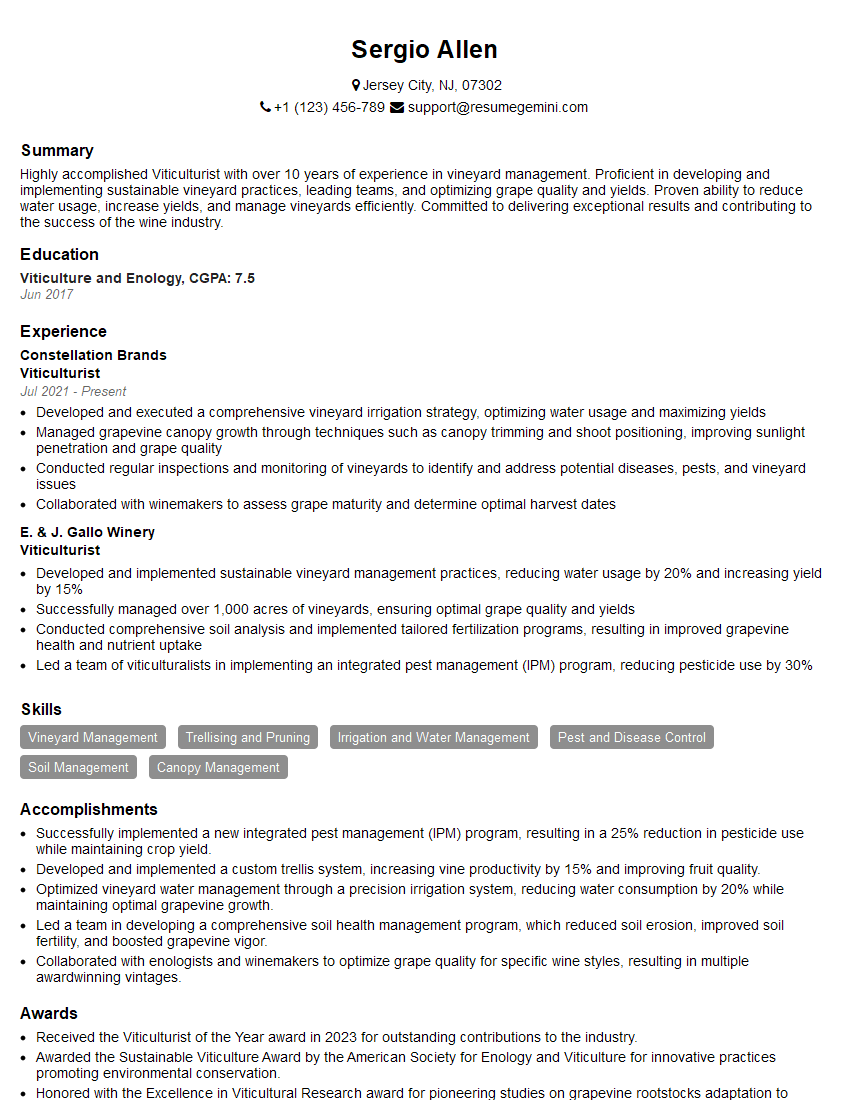
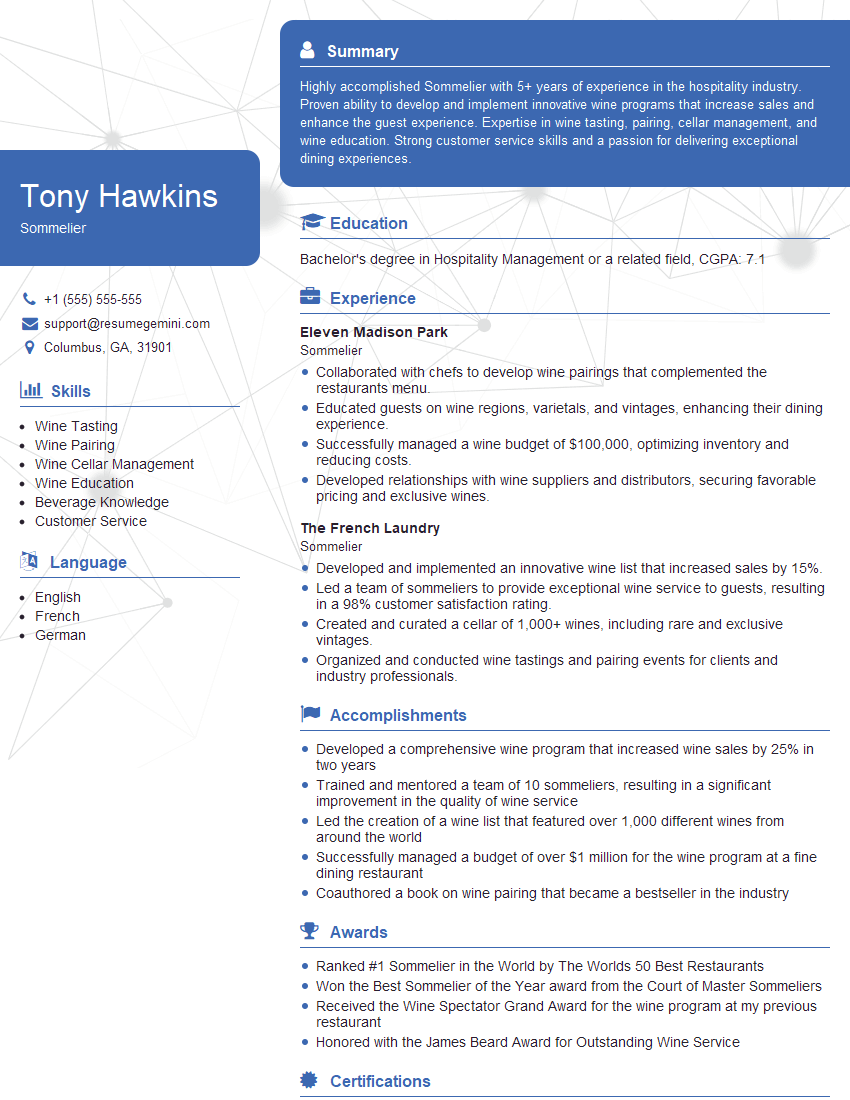
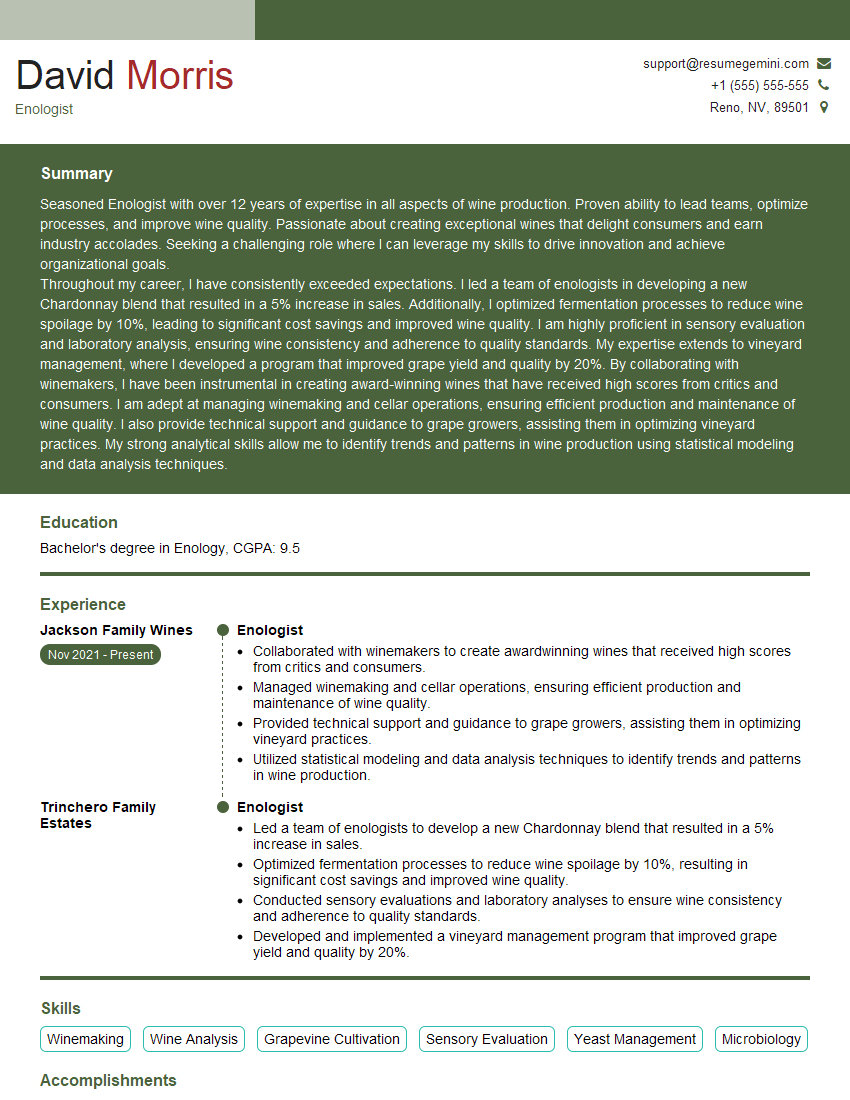
Mastering Wine Education and Research opens doors to exciting careers in the vibrant wine industry. To maximize your job prospects, a strong, ATS-friendly resume is crucial. It’s your first impression—make it count! ResumeGemini is a trusted resource to help you create a professional and impactful resume that highlights your unique skills and experience. We offer examples of resumes tailored specifically to Wine Education and Research roles, guiding you toward interview success. Invest in your future; build a resume that reflects your expertise and passion.
Explore more articles
Users Rating of Our Blogs
Share Your Experience
We value your feedback! Please rate our content and share your thoughts (optional).
What Readers Say About Our Blog
To the interviewgemini.com Webmaster.
Very helpful and content specific questions to help prepare me for my interview!
Thank you
To the interviewgemini.com Webmaster.
This was kind of a unique content I found around the specialized skills. Very helpful questions and good detailed answers.
Very Helpful blog, thank you Interviewgemini team.