Are you ready to stand out in your next interview? Understanding and preparing for Wine Sustainability interview questions is a game-changer. In this blog, we’ve compiled key questions and expert advice to help you showcase your skills with confidence and precision. Let’s get started on your journey to acing the interview.
Questions Asked in Wine Sustainability Interview
Q 1. Describe the key principles of sustainable wine production.
Sustainable wine production aims to minimize the environmental impact of winemaking while ensuring economic viability and social equity. It’s about balancing the three pillars of sustainability: environmental, social, and economic. This holistic approach considers the entire lifecycle of wine, from grape growing to bottling and distribution.
- Environmental Stewardship: Protecting soil health, water resources, biodiversity, and minimizing greenhouse gas emissions.
- Social Responsibility: Fair labor practices, community engagement, and responsible land management.
- Economic Viability: Ensuring the long-term financial health of wineries and vineyards.
For example, a sustainable winery might use cover crops to improve soil health, reduce water consumption through efficient irrigation, and source energy from renewable sources.
Q 2. Explain the importance of water management in sustainable viticulture.
Water is crucial in viticulture, accounting for a significant portion of a vineyard’s environmental footprint. Efficient water management is paramount for sustainable wine production. Over-irrigation leads to water waste and can negatively impact soil health and plant vigor.
- Precision Irrigation: Techniques like drip irrigation deliver water directly to the vine’s roots, minimizing water loss through evaporation and runoff. Soil moisture sensors can help optimize irrigation scheduling based on actual need.
- Water Harvesting and Recycling: Collecting rainwater for irrigation and reusing wastewater after processing can significantly reduce reliance on external water sources.
- Drought-Resistant Varieties: Choosing grape varieties adapted to local climatic conditions reduces the need for excessive irrigation.
Imagine a vineyard using satellite imagery to monitor soil moisture levels, then adjusting irrigation schedules accordingly. This precision minimizes water waste and ensures the vines receive exactly the water they need, leading to healthier plants and better quality grapes.
Q 3. What are the benefits of using organic or biodynamic farming methods in vineyards?
Organic and biodynamic farming methods prioritize natural processes, minimizing the use of synthetic pesticides, herbicides, and fertilizers. This leads to several benefits:
- Improved Soil Health: Organic matter increases, enhancing soil structure, water retention, and nutrient availability.
- Biodiversity Enhancement: Natural pest control and increased beneficial insect populations.
- Reduced Water Pollution: Absence of synthetic chemicals reduces the risk of water contamination.
- Healthier Grapes: Generally leading to improved grape quality and potentially higher wine quality.
For example, a biodynamic vineyard might use compost tea to nourish the soil, plant cover crops to prevent erosion and attract beneficial insects, and prepare specific herbal preparations for vine health. These practices promote a more balanced and resilient ecosystem within the vineyard.
Q 4. How can energy consumption be reduced in a winery?
Energy consumption in wineries is significant, primarily from refrigeration, processing equipment, and lighting. Reducing energy use is crucial for sustainability.
- Energy-Efficient Equipment: Investing in high-efficiency chillers, pumps, and other equipment.
- Renewable Energy Sources: Utilizing solar power, wind power, or geothermal energy to reduce reliance on fossil fuels.
- Improved Insulation: Reducing energy loss through better insulation of winery buildings and tanks.
- Process Optimization: Streamlining processes to minimize energy-intensive steps.
Consider a winery installing solar panels on its roof to generate clean energy for its operations. This reduces its carbon footprint and lowers its energy bills, making it both environmentally and economically sustainable.
Q 5. Discuss various strategies for minimizing waste generation in wine production.
Minimizing waste generation in wine production involves careful management of byproducts and efficient resource utilization.
- Wastewater Treatment: Implementing efficient wastewater treatment systems to reduce pollution and recover valuable resources.
- Pomace Management: Utilizing grape pomace (skins, seeds, and stems) for animal feed, compost, or other value-added products.
- Recycling and Composting: Recycling materials like glass, cardboard, and plastic, and composting organic waste.
- Process Optimization: Minimizing waste generation through efficient production techniques.
For example, a winery might partner with a local farmer to provide grape pomace as animal feed, diverting this waste stream from landfills and creating a valuable resource for the agricultural community.
Q 6. What are the environmental impacts of different wine packaging materials?
Different wine packaging materials have varying environmental impacts. The most common are glass, lightweight glass, and alternative materials (e.g., Tetra Pak, cans).
- Glass Bottles: Traditionally favored for their inertness, but heavy and energy-intensive to produce and transport. Lightweight glass bottles offer a compromise.
- Alternative Packaging: Tetra Pak and cans offer lighter weight and reduced transportation costs, but raise concerns regarding recyclability and material composition.
The environmental impact needs to consider the entire lifecycle, including production, transport, and end-of-life management. Choosing packaging involves balancing the trade-offs between weight, recyclability, and material sourcing.
Q 7. How do you measure and reduce a winery’s carbon footprint?
Measuring and reducing a winery’s carbon footprint involves a comprehensive approach.
- Carbon Footprint Assessment: Conducting a life cycle assessment (LCA) to quantify greenhouse gas emissions at each stage of production.
- Emission Reduction Strategies: Implementing strategies to reduce emissions from energy use, transportation, and agricultural practices.
- Carbon Offset Projects: Investing in carbon offset projects to compensate for unavoidable emissions.
- Transparency and Reporting: Publicly reporting on carbon emissions and sustainability initiatives.
A winery might use software to track its energy consumption, transportation distances, and other emission sources. This data informs its sustainability efforts, allowing them to identify areas for improvement and track their progress over time. Transparency in reporting builds trust with consumers and stakeholders.
Q 8. Describe your understanding of Life Cycle Assessment (LCA) in the wine industry.
Life Cycle Assessment (LCA) is a comprehensive methodology used to evaluate the environmental impacts of a product or service throughout its entire lifecycle, from raw material acquisition to disposal. In the wine industry, an LCA would examine everything from vineyard management practices (fertilizers, pesticides, water usage) and grape harvesting, through winemaking processes (energy consumption, water use, waste generation), packaging, transportation, and finally, the consumer’s disposal of the bottle.
For example, an LCA might quantify the greenhouse gas emissions associated with different wine production methods, comparing organic viticulture to conventional methods. It could also assess the water footprint of a winery, identifying areas for water conservation. The results of an LCA provide a detailed profile of a wine’s environmental impact, guiding improvements and informing sustainability certifications.
Imagine a winery wanting to reduce its carbon footprint. An LCA would pinpoint the most significant contributors – perhaps transportation or energy-intensive processes in the cellar. This allows for targeted interventions, maximizing impact for sustainability efforts.
Q 9. What are the major environmental regulations relevant to wine production in your region?
Environmental regulations vary significantly by region. However, common themes across many wine-producing areas include water usage limitations, restrictions on pesticide and herbicide application (often favoring Integrated Pest Management or IPM strategies), wastewater treatment requirements, and regulations related to waste management (e.g., reducing landfill waste from packaging). In many regions, there’s a growing emphasis on carbon footprint reduction, leading to regulations or incentives that encourage sustainable practices like renewable energy use in wineries.
For instance, in certain regions, wineries may be subject to strict limits on water withdrawal from rivers or groundwater, pushing them to implement water-efficient irrigation techniques. Furthermore, regulations may mandate the use of specific approved pesticides and limit their application rates to minimize harm to biodiversity and water quality. These regulations are crucial for safeguarding the environment and ensuring the long-term viability of the wine industry.
Q 10. Explain the importance of biodiversity in vineyard ecosystems.
Biodiversity in vineyard ecosystems is essential for maintaining healthy, resilient, and productive vineyards. A diverse range of plants, insects, birds, and other organisms contributes to natural pest control, soil health, and pollination. For example, beneficial insects can help control pests, reducing the need for pesticides. Diverse plant communities enhance soil structure and fertility, improving water retention and nutrient availability. Healthy ecosystems are also more resistant to disease outbreaks and climate change impacts.
Think of a vineyard as a complex web of life. If you lose key elements of that web (e.g., through overuse of pesticides), the entire system becomes vulnerable. Promoting biodiversity through practices like integrating cover crops, creating habitat for beneficial insects, and reducing pesticide use is crucial for long-term sustainability. It’s akin to diversifying your investment portfolio – a more varied ecosystem is less vulnerable to shocks and uncertainties.
Q 11. How do you assess soil health and its impact on sustainable viticulture?
Assessing soil health is critical for sustainable viticulture because healthy soil is the foundation of a thriving vineyard. Methods for assessing soil health include measuring various parameters such as:
- Soil organic matter content: Indicates soil fertility and water retention capacity.
- Soil structure: Relates to aeration, drainage, and root penetration.
- Nutrient levels: Essential for plant growth and fruit quality.
- Biodiversity of soil organisms: Microorganisms contribute to nutrient cycling and soil structure.
- Soil pH: Impacts nutrient availability.
These measurements help determine the impact of different practices on soil health. For example, comparing soil health indicators between vineyards using conventional tillage versus no-till farming can reveal the positive impacts of no-till on soil structure and organic matter. Improvements in soil health translate to healthier vines, better fruit quality, reduced need for inputs (fertilizers, pesticides), and enhanced resilience to environmental stresses.
Q 12. What are the challenges in implementing sustainable practices in a traditional winery?
Implementing sustainable practices in a traditional winery can present several challenges. Often, traditional methods are deeply ingrained in the winery’s culture and operations, making shifts towards sustainability seem disruptive and costly. For example, transitioning from conventional to organic viticulture can mean a reduction in yield in the short term, posing a financial challenge. Upgrading equipment to reduce energy consumption or installing renewable energy sources requires significant capital investment. Furthermore, a lack of awareness or understanding of sustainable practices among staff can hinder implementation. Finally, the market demand for sustainably produced wine may not always justify the higher production costs.
Overcoming these challenges requires a phased approach, starting with small, manageable changes that demonstrate positive results. This builds confidence and momentum for further improvements. Investing in staff training, seeking external expertise, and communicating the benefits of sustainability to both employees and consumers are key aspects of successful implementation.
Q 13. How do you balance the economic viability of a winery with its environmental sustainability?
Balancing economic viability and environmental sustainability is crucial for the long-term success of any winery. It’s not an either/or situation; rather, it’s about finding synergies between these two aspects. For instance, reducing water usage can lead to direct cost savings, while investing in renewable energy sources can reduce energy costs over time. Adopting sustainable practices can also enhance a winery’s brand image, attracting environmentally conscious consumers who are willing to pay a premium for sustainable products.
One example is a winery that implements precision viticulture, using sensors and data analytics to optimize irrigation and fertilizer application. This improves yields, minimizes waste, and enhances the environmental footprint while remaining economically competitive. It’s important to view sustainability as a long-term investment that delivers both environmental and economic benefits.
Q 14. Describe your experience with sustainable supply chain management in the wine industry.
Sustainable supply chain management in the wine industry involves ensuring that all stages of the supply chain – from grape sourcing to packaging and distribution – adhere to sustainable practices. This includes working with suppliers who share the same commitment to sustainability, using recycled and recyclable materials for packaging, optimizing transportation routes to minimize carbon emissions, and ensuring fair labor practices throughout the supply chain.
My experience involves collaborating with growers to implement sustainable vineyard practices, selecting suppliers committed to environmental responsibility, and tracking the environmental impact of our packaging and distribution processes. This requires close collaboration and transparent communication with all stakeholders across the supply chain, ensuring everyone is aligned with the winery’s sustainability goals. Traceability is crucial here, allowing consumers to understand the sustainability credentials of the product.
Q 15. What are the social responsibilities of wineries regarding their employees and local communities?
Social responsibility in wineries extends beyond producing quality wine; it encompasses fair labor practices and positive community engagement. It’s about creating a positive impact on the lives of employees and the surrounding community.
Fair Labor Practices: This includes paying fair wages, providing safe working conditions, offering benefits like health insurance and retirement plans, and promoting diversity and inclusion within the workforce. For example, a winery might implement a mentorship program for underrepresented groups or ensure fair compensation across different roles.
Community Engagement: Wineries can contribute to the local economy by sourcing goods and services locally, supporting local charities and community events, and creating opportunities for local businesses. A winery might partner with a local school to offer educational programs about viticulture or donate a portion of its profits to a community development project.
Environmental Stewardship: Social responsibility often overlaps with environmental sustainability. By adopting eco-friendly practices, wineries minimize their environmental footprint and contribute to the well-being of the community. For example, reducing water usage and implementing waste management programs benefits both the environment and the local community.
Career Expert Tips:
- Ace those interviews! Prepare effectively by reviewing the Top 50 Most Common Interview Questions on ResumeGemini.
- Navigate your job search with confidence! Explore a wide range of Career Tips on ResumeGemini. Learn about common challenges and recommendations to overcome them.
- Craft the perfect resume! Master the Art of Resume Writing with ResumeGemini’s guide. Showcase your unique qualifications and achievements effectively.
- Don’t miss out on holiday savings! Build your dream resume with ResumeGemini’s ATS optimized templates.
Q 16. How do you track and report on sustainability metrics in a winery?
Tracking and reporting sustainability metrics requires a systematic approach. It involves establishing clear indicators, collecting data consistently, and using appropriate tools to analyze and present the findings.
Establish Key Performance Indicators (KPIs): Identify crucial metrics relevant to the winery’s operations and sustainability goals. These might include water usage per bottle, energy consumption, waste generated, carbon footprint, pesticide use, and biodiversity levels.
Data Collection: Implement a system for regular data collection. This could involve using sensors for automated data gathering, manual record-keeping, and software programs designed for sustainability tracking.
Data Analysis and Reporting: Use software or spreadsheets to analyze collected data, identify trends, and generate reports. Visualizations like charts and graphs can make data more accessible and understandable. Reports should be clear, concise, and easily shared with stakeholders.
Third-Party Verification: Consider seeking third-party verification of your sustainability data and claims. This enhances transparency and builds trust among consumers and other stakeholders.
Example: A winery might use a software platform to track its water usage, setting a target reduction of 15% over three years. Regular reporting on progress towards this goal allows for course correction and demonstrates accountability.
Q 17. Explain the difference between organic, biodynamic, and sustainable wine certifications.
While all three – organic, biodynamic, and sustainable – aim for environmentally friendly wine production, their approaches and certifications differ significantly.
Organic Wine: Focuses on prohibiting the use of synthetic pesticides, herbicides, and fertilizers in the vineyard. It emphasizes natural soil management and biodiversity. Certification usually involves rigorous inspections and audits by a recognized certifying body (e.g., USDA Organic, EU Organic).
Biodynamic Wine: Builds upon organic principles by incorporating holistic farming practices based on lunar cycles, planetary influences, and the concept of a self-sustaining farm ecosystem. It often involves using specific biodynamic preparations to enhance soil health and plant vigor. Certification processes are more complex and vary among certifying bodies (e.g., Demeter).
Sustainable Wine: Encompasses a broader range of environmental, social, and economic considerations. It might include aspects of organic and biodynamic viticulture, but also focuses on water conservation, energy efficiency, waste management, fair labor practices, and community engagement. Sustainability certifications often have more flexible standards and vary widely in scope and rigor (e.g., Sustainable Winegrowing Australia, California Sustainable Winegrowing).
In short: Organic focuses solely on inputs, biodynamic adds holistic farming practices, and sustainable takes a broader, holistic view across all aspects of the winery’s operations.
Q 18. What are the potential economic incentives for wineries to adopt sustainable practices?
Adopting sustainable practices can offer significant economic incentives for wineries, although initial investments might be necessary.
Reduced Input Costs: Sustainable practices often lead to lower reliance on expensive synthetic inputs (pesticides, fertilizers). This can result in long-term cost savings.
Improved Yields and Quality: Healthy soils and biodiversity can lead to improved grape quality and higher yields, boosting profitability.
Enhanced Brand Reputation and Market Access: Consumers are increasingly demanding sustainably produced products. Sustainable certifications can command premium prices and attract environmentally conscious customers, expanding market access.
Access to Grants and Subsidies: Many governments and organizations offer grants and financial incentives to wineries adopting sustainable practices.
Reduced Risk and Insurance Costs: Sustainable practices can mitigate risks related to climate change, pest infestations, and soil degradation, potentially reducing insurance premiums.
Carbon Credits: Some wineries can generate carbon credits by implementing carbon sequestration projects in their vineyards, creating an additional revenue stream.
Q 19. How can innovation and technology contribute to sustainable winemaking?
Innovation and technology play a crucial role in advancing sustainable winemaking. They offer solutions for optimizing resource use, minimizing waste, and improving overall efficiency.
Precision Viticulture: Technologies like drones, remote sensing, and GPS-guided machinery allow for targeted applications of water, fertilizers, and pesticides, reducing inputs while maximizing yields. This leads to both environmental and economic benefits.
Smart Irrigation Systems: Sensors and automated irrigation systems monitor soil moisture and adjust watering accordingly, minimizing water waste and optimizing water use efficiency.
Renewable Energy Sources: Switching to solar or wind power can significantly reduce a winery’s carbon footprint and operational costs.
Waste Management Technologies: Innovative technologies like anaerobic digestion can process winery waste (pomace, wastewater) to generate biogas for energy or compost for soil amendment.
Data Analytics: Collecting and analyzing data on various aspects of wine production (water usage, energy consumption, yields) allows wineries to identify areas for improvement and optimize their sustainability performance.
Q 20. What are the key performance indicators (KPIs) for measuring sustainability success in a winery?
Key Performance Indicators (KPIs) for measuring sustainability success in a winery should encompass environmental, social, and economic dimensions.
Environmental KPIs: Water usage per bottle, energy consumption per bottle, greenhouse gas emissions, waste generation, pesticide use, biodiversity levels in the vineyard.
Social KPIs: Employee satisfaction and turnover rates, fair wages, diversity and inclusion metrics, community engagement initiatives, and health and safety record.
Economic KPIs: Reduction in input costs, improvement in yields, revenue generated from sustainable certifications, return on investment from sustainability initiatives.
The specific KPIs selected will vary depending on the winery’s size, context, and sustainability goals. It’s important to set baselines, track progress over time, and regularly review and adjust KPIs as needed.
Q 21. Describe your experience with stakeholder engagement in relation to sustainability initiatives.
Stakeholder engagement is paramount for successful sustainability initiatives. It requires open communication and collaboration with a diverse range of stakeholders.
Internal Stakeholders: Engaging employees through training, awareness campaigns, and participatory decision-making processes is crucial. Their buy-in is essential for implementing and maintaining sustainable practices.
External Stakeholders: This includes suppliers, customers, local communities, regulators, and investors. Transparent communication about sustainability goals, progress, and challenges builds trust and fosters collaboration. For example, organizing community events or conducting consumer surveys to understand their preferences and feedback.
Collaboration and Partnerships: Collaborating with other wineries, research institutions, and NGOs can facilitate knowledge sharing and the adoption of best practices. This collaborative approach can unlock opportunities for innovation and drive collective action.
Example: In my experience, we established a stakeholder advisory group with representatives from local communities, environmental organizations, and employees. This group helped shape our sustainability strategy and provided valuable insights for improvement.
Q 22. How do you address challenges related to consumer perception and the cost of sustainable wine?
Addressing consumer perception and the higher cost of sustainable wine requires a multi-pronged approach. Many consumers are willing to pay more for sustainably produced goods, but the price point needs to be justifiable. Transparency is key. We need to clearly communicate the added value—not just the environmental benefits, but also the potential improvements in wine quality resulting from healthier vines and soils. This involves educating consumers about the practices, certifications, and the positive impact on the environment and local communities.
Cost challenges are tackled through efficiency improvements. Precision viticulture, using technology like drones and sensors to optimize water and fertilizer use, can drastically reduce input costs. Exploring alternative, sustainable packaging options, such as lightweight glass bottles or recycled materials, also helps lower costs. Finally, collaborating with other wineries or creating a cooperative buying structure for sustainable inputs can provide economies of scale, making sustainable practices more cost-effective.
Q 23. What are the future trends in sustainable wine production?
The future of sustainable wine production is bright, driven by technological advancements and growing consumer demand. We’re likely to see increased adoption of precision viticulture techniques, leveraging data analytics and IoT sensors to optimize resource management. Regenerative agriculture, which focuses on soil health and biodiversity, is gaining traction. This approach aims to sequester carbon, enhance resilience to climate change, and improve wine quality. Furthermore, we will see a greater focus on closed-loop systems, minimizing waste and maximizing resource utilization, aligning with the circular economy model. Circular economy practices include composting grape pomace to enrich the soil and using wastewater for irrigation after proper treatment.
Innovation in packaging will continue, exploring biodegradable or compostable alternatives to reduce reliance on conventional glass and plastic. Finally, traceability and transparency will become even more important, allowing consumers to easily verify the sustainability claims of the wines they purchase through blockchain technology or QR codes linked to detailed information about the wine’s production.
Q 24. How would you educate and train vineyard workers on sustainable practices?
Educating and training vineyard workers is paramount to successful sustainable winemaking. Our approach involves a combination of on-the-job training, workshops, and online resources. We start with clear and simple explanations of the why behind sustainable practices, emphasizing the long-term benefits for both the environment and their livelihoods. Practical demonstrations are crucial, showing workers how to implement new techniques correctly. We use hands-on training sessions, focusing on specific tasks like pruning techniques that minimize stress on the vines, or demonstrating the proper use of cover crops to improve soil health.
Regular feedback and ongoing support are vital. We provide opportunities for workers to share their experiences and address any challenges they encounter. We also recognize and reward workers who actively participate in and excel at sustainable practices, fostering a culture of ownership and accountability. Investing in language support and culturally sensitive training is essential in diverse work environments. This comprehensive approach ensures that sustainable practices become deeply embedded in the vineyard’s daily operations.
Q 25. Describe a situation where you successfully implemented a sustainable initiative.
In one vineyard, we successfully implemented a water-efficient irrigation system. Previously, the vineyard relied on traditional flood irrigation, leading to significant water waste and uneven water distribution. We replaced the system with a drip irrigation network combined with soil moisture sensors. This allowed us to deliver water precisely to the roots of the vines, reducing water consumption by 40% while maintaining optimal yields and grape quality. The project involved collaborating with local irrigation specialists, educating vineyard workers on the new system’s operation and maintenance, and securing funding through government grants and private investment. The success of this initiative was measured through reduced water bills, improved grape yields, and positive environmental impact, showcasing a demonstrably successful sustainable initiative.
Q 26. How do you handle conflicts between sustainability goals and production efficiency?
Balancing sustainability goals with production efficiency requires a careful and strategic approach. It’s not about choosing one over the other, but rather finding synergistic solutions. For instance, implementing precision viticulture reduces reliance on excessive inputs (water, fertilizers, pesticides) while simultaneously optimizing yields. This demonstrates how efficiency and sustainability can work hand-in-hand. We use data-driven decision-making to identify areas where improvements can be made. We might prioritize practices that offer the highest environmental return while minimizing impacts on production efficiency.
Sometimes, compromises are necessary. For example, switching to organic farming might initially reduce yield, but the long-term benefits to soil health and biodiversity outweigh the short-term loss in quantity. Open communication with all stakeholders—from vineyard workers to management to consumers—is vital in navigating these trade-offs and ensuring everyone understands the rationale behind the decisions made.
Q 27. Explain your understanding of the circular economy model in wine production.
The circular economy model in wine production aims to minimize waste and maximize resource utilization. Instead of treating byproducts as waste, we view them as valuable resources. Grape pomace (the skins, seeds, and stems left after pressing) can be composted to enrich the soil, reducing the need for external fertilizers. Wastewater, after proper treatment, can be used for irrigation. Even the glass bottles can be recycled and reused. This closed-loop system reduces the winery’s environmental footprint and its reliance on external inputs.
Implementing a circular economy model necessitates careful planning and investment in infrastructure, such as composting facilities and wastewater treatment systems. It also requires collaboration with local businesses and communities to find appropriate uses for byproducts. For example, grape pomace can be sold to local farmers for compost, or it can be used to produce other products like natural dyes. The key is creating a system where waste from one process becomes a resource for another.
Q 28. What are your strategies for continuous improvement in sustainable winemaking?
Continuous improvement in sustainable winemaking relies on data-driven decision making, ongoing monitoring, and adaptation. We regularly track key environmental indicators, such as water consumption, energy use, and waste generation. We use this data to identify areas for improvement and to measure the effectiveness of our sustainability initiatives. Regular audits and certifications, such as those provided by recognized sustainability organizations, provide an external benchmark and help us identify areas needing improvement.
We foster a culture of innovation and experimentation by encouraging our team to explore new sustainable practices and technologies. We actively seek collaborations with researchers and other wineries to share knowledge and best practices. By integrating regular reviews, data analysis, and a commitment to ongoing learning, we ensure our sustainable winemaking practices are constantly evolving and improving.
Key Topics to Learn for Wine Sustainability Interview
- Environmental Impact Assessment: Understanding the carbon footprint of wine production, water usage, and waste management. Practical application: Analyzing a winery’s environmental performance using LCA (Life Cycle Assessment) methodologies.
- Sustainable Viticulture Practices: Exploring organic, biodynamic, and integrated pest management techniques. Practical application: Designing a sustainable vineyard management plan minimizing pesticide use and maximizing biodiversity.
- Water Management in Winemaking: Optimizing irrigation strategies, water recycling, and wastewater treatment. Practical application: Evaluating the efficiency of different irrigation systems and proposing improvements for water conservation.
- Energy Efficiency and Renewable Energy: Reducing energy consumption in wineries through process optimization and the adoption of renewable energy sources. Practical application: Assessing the feasibility of solar power implementation in a winery.
- Waste Reduction and Recycling: Minimizing waste generation throughout the winemaking process and implementing effective recycling programs. Practical application: Developing a comprehensive waste management plan for a winery, including grape pomace utilization.
- Social Responsibility and Fair Labor Practices: Ensuring ethical labor practices, fair wages, and community engagement. Practical application: Developing a social responsibility program for a winery, addressing worker well-being and community impact.
- Climate Change Adaptation and Mitigation: Understanding the impacts of climate change on viticulture and developing strategies for adaptation and mitigation. Practical application: Assessing a winery’s vulnerability to climate change and proposing adaptation measures.
- Certification and Labeling: Familiarizing yourself with various sustainability certifications (e.g., B Corp, Demeter) and their implications. Practical application: Analyzing the benefits and challenges of obtaining sustainability certifications for a winery.
- Supply Chain Sustainability: Evaluating the environmental and social impact of the entire wine supply chain, from grape growing to distribution. Practical application: Mapping a winery’s supply chain and identifying opportunities for improvement in sustainability.
Next Steps
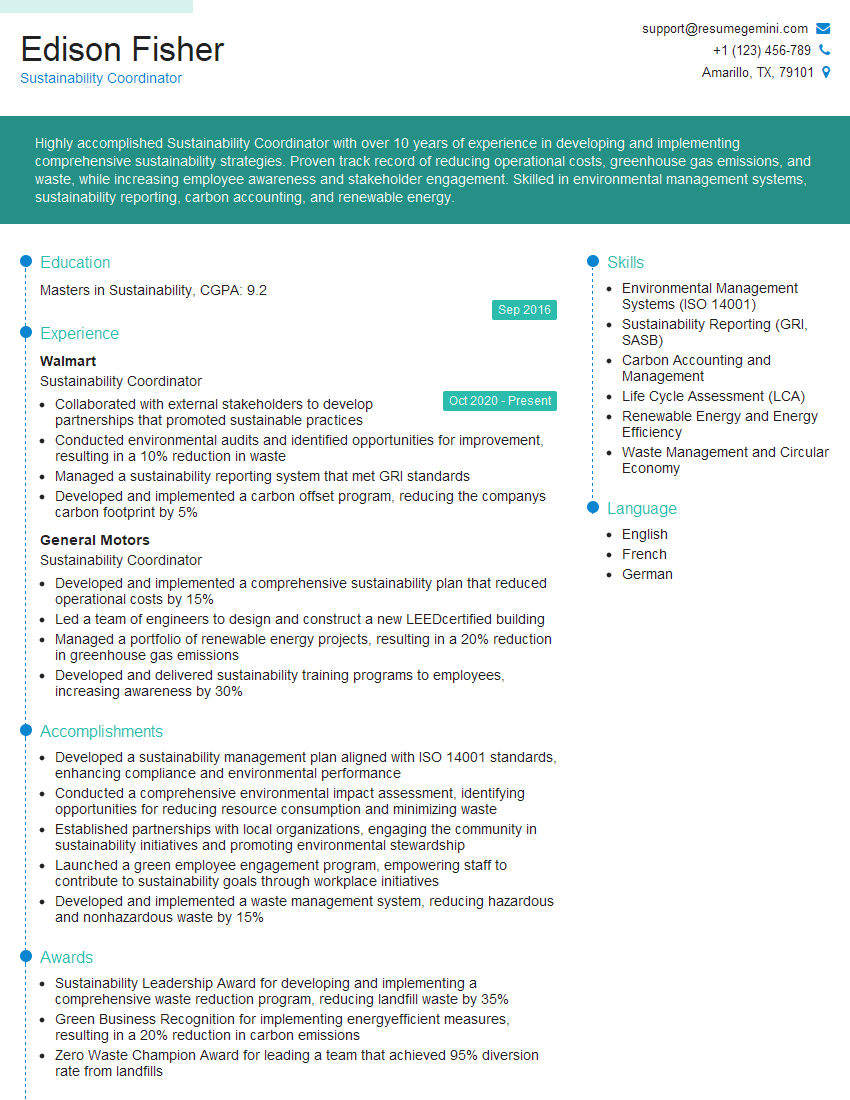
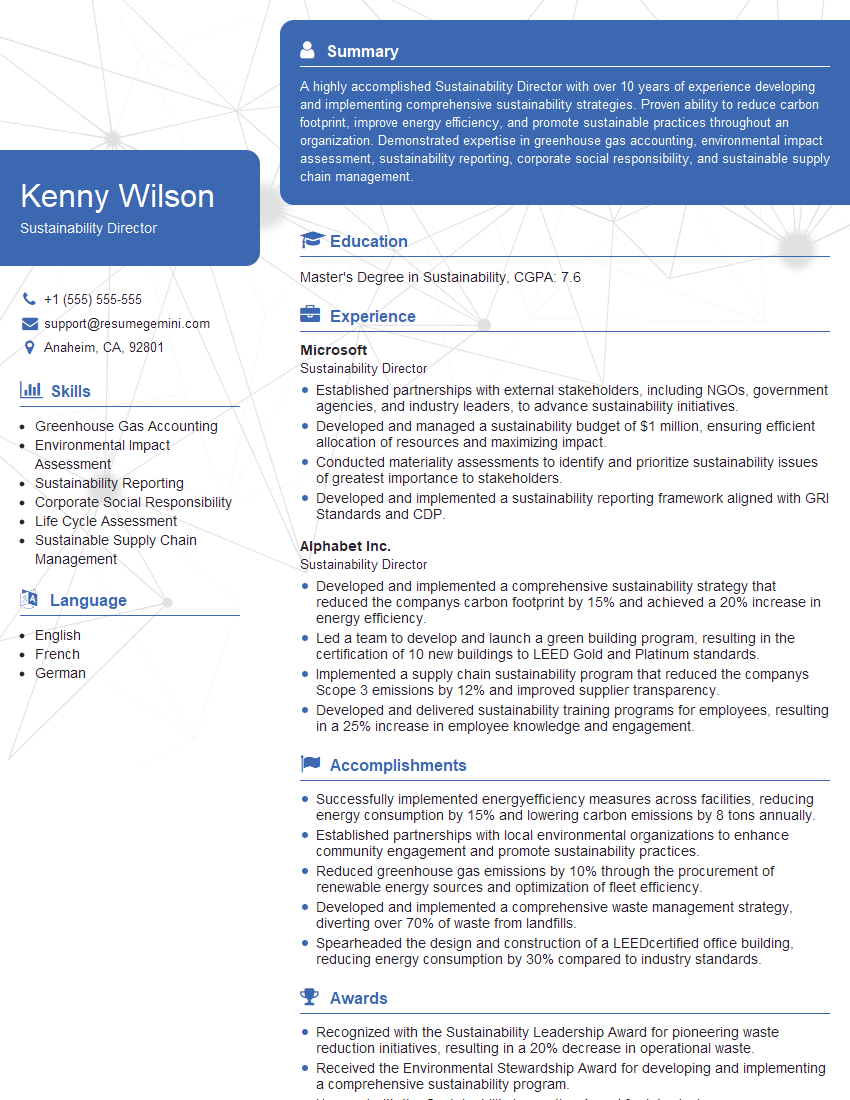
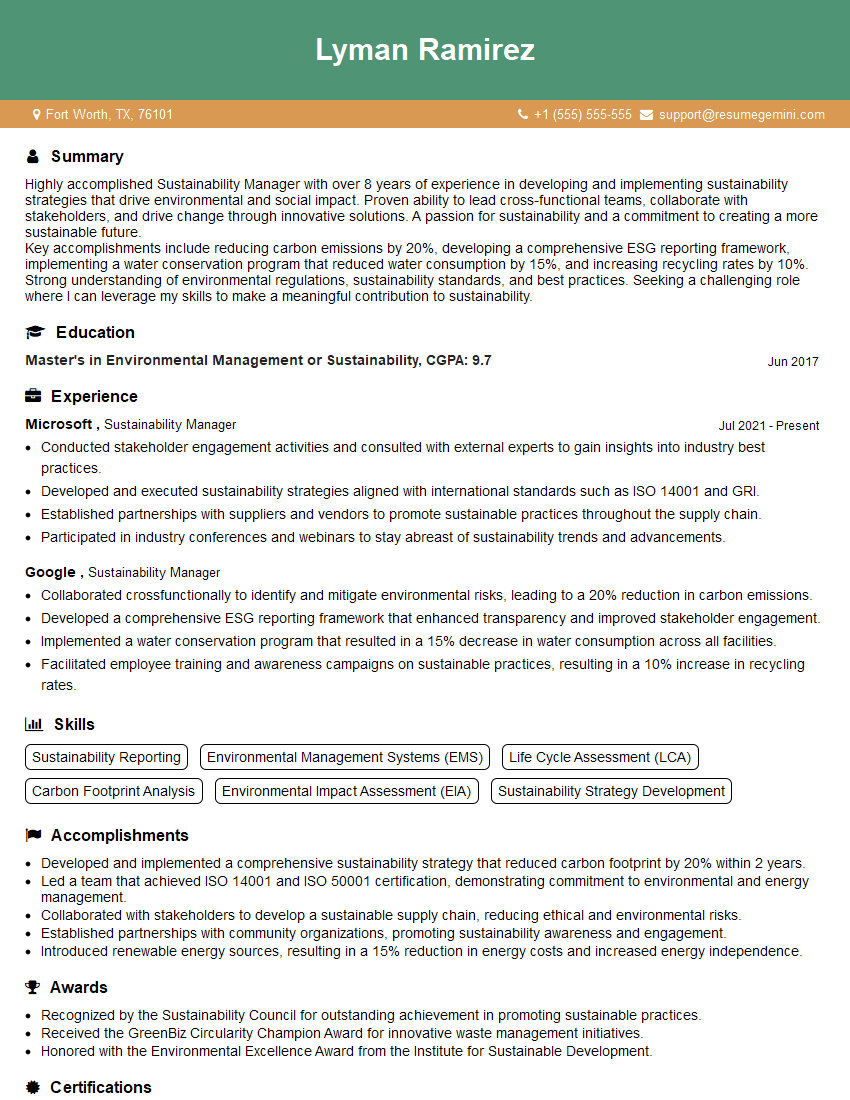
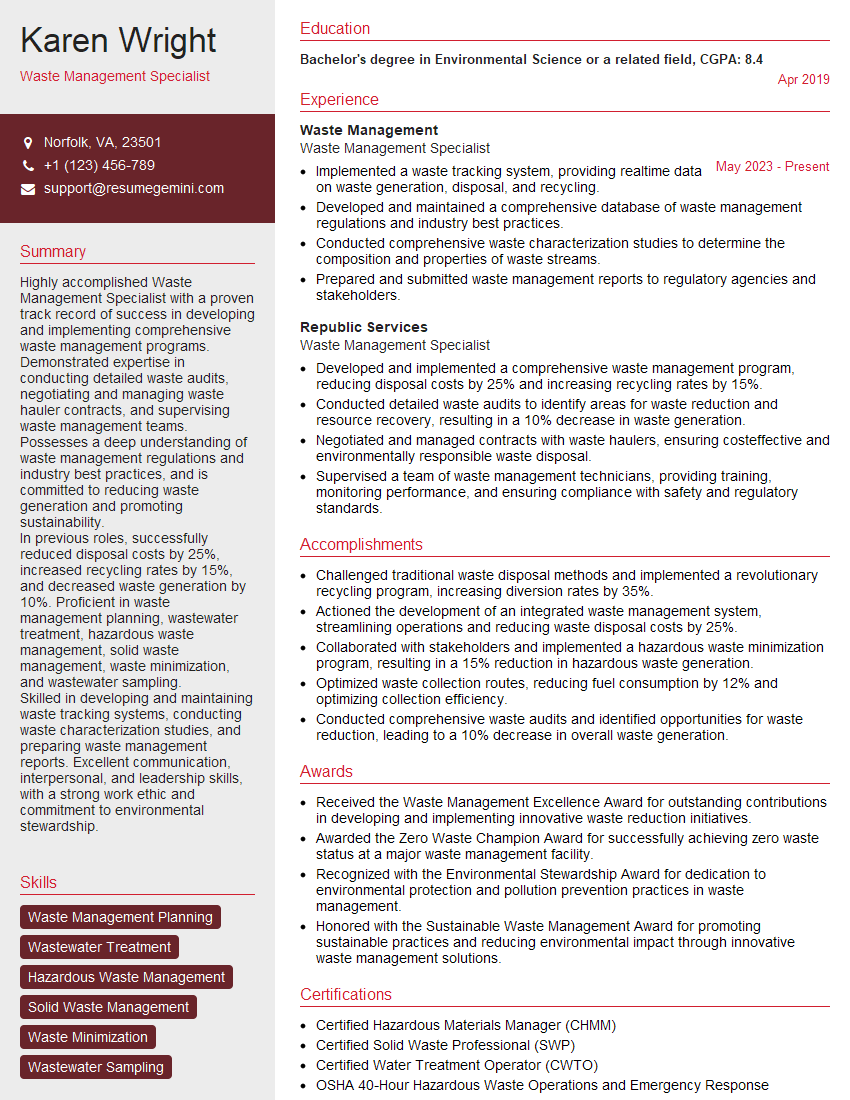
Mastering Wine Sustainability significantly enhances your career prospects in the increasingly conscious wine industry. Demonstrating a deep understanding of these practices positions you as a valuable asset to any winery or organization committed to responsible production. To boost your job search, create an ATS-friendly resume that highlights your relevant skills and experience. We strongly recommend using ResumeGemini to build a professional and impactful resume. ResumeGemini offers a streamlined process and provides examples of resumes tailored to Wine Sustainability, ensuring your application stands out from the competition.

Explore more articles
Users Rating of Our Blogs
Share Your Experience
We value your feedback! Please rate our content and share your thoughts (optional).
What Readers Say About Our Blog
To the interviewgemini.com Webmaster.
Very helpful and content specific questions to help prepare me for my interview!
Thank you
To the interviewgemini.com Webmaster.
This was kind of a unique content I found around the specialized skills. Very helpful questions and good detailed answers.
Very Helpful blog, thank you Interviewgemini team.