Cracking a skill-specific interview, like one for Wiring Installation, requires understanding the nuances of the role. In this blog, we present the questions you’re most likely to encounter, along with insights into how to answer them effectively. Let’s ensure you’re ready to make a strong impression.
Questions Asked in Wiring Installation Interview
Q 1. Explain the difference between AC and DC wiring.
The fundamental difference between AC (Alternating Current) and DC (Direct Current) wiring lies in the direction of electron flow. In DC wiring, electrons flow consistently in one direction, like water flowing down a river. This is the type of electricity produced by batteries. AC wiring, on the other hand, involves electrons that periodically change direction, oscillating back and forth like a pendulum. This is the type of electricity supplied by power grids to homes and businesses.
This difference affects wiring design significantly. DC systems generally require simpler wiring, as there’s no concern about inductive reactance or capacitive effects. AC systems, however, require careful consideration of wire gauge, insulation, and grounding to handle the fluctuating current and potential electromagnetic interference. For example, low-voltage DC systems, commonly used in electronics, might utilize smaller gauge wires compared to higher-voltage AC systems powering appliances and lighting. The choice between AC and DC depends entirely on the application. While most home wiring utilizes AC, you might find DC wiring in specialized situations such as solar power installations where the initial power generation is DC, or in low-voltage applications like LED lighting strips.
Q 2. Describe the National Electrical Code (NEC) and its relevance to your work.
The National Electrical Code (NEC) is a comprehensive set of standards for electrical installations in the United States. It’s a vital document for all those involved in electrical work, including myself. The NEC dictates safe practices and outlines requirements for materials, installation methods, and safety measures to prevent hazards like electric shocks, fires, and equipment damage. It’s regularly updated to keep pace with technological advancements and building codes.
My work is directly governed by the NEC. I constantly refer to it during planning, design, and execution of electrical projects. For example, the NEC specifies the minimum wire gauge for various circuits based on amperage requirements. It details the proper methods for grounding and bonding to prevent electrical hazards. It also covers requirements for circuit breakers, outlets, and wiring methods for different types of buildings. Non-compliance can lead to serious consequences, including legal liability, project delays, and safety risks. Therefore, staying updated on the latest NEC revisions is a critical part of my professional responsibility.
Q 3. What are the different types of wiring used in residential installations?
Residential installations commonly utilize several types of wiring, each suited for specific applications.
- NM-B (Non-Metallic Sheathed Cable): Commonly known as Romex, this cable is widely used for its affordability and ease of installation in residential settings. It consists of insulated conductors enclosed within a flexible plastic sheath.
- BX (Armored Cable): This cable has insulated conductors enclosed within a flexible metal sheath, offering better protection against physical damage compared to Romex. It’s often used in areas where the cable might be subjected to more abuse.
- UF (Underground Feeder): Specifically designed for underground installations, this cable has a durable outer jacket to withstand harsh environmental conditions and moisture.
- MC (Metal-Clad Cable): Similar to BX, but with a smoother, more flexible outer sheath. It is also suitable for applications where greater protection against physical damage is needed.
The selection of the appropriate wiring type depends on factors like the location of the wiring (underground, inside walls, exposed), the anticipated load, and the level of protection required. Each type is rated for specific voltage and amperage, and improper selection could lead to overheating or safety hazards.
Q 4. How do you identify and test a faulty wire?
Identifying and testing a faulty wire involves a methodical approach. First, visual inspection is crucial. I would look for signs of physical damage, such as cuts, burns, or exposed conductors.
Then, I would use a voltage tester to check for voltage at the suspected faulty wire. A non-contact voltage tester is safer for this initial check. If voltage is present where it shouldn’t be, or absent where it should, it points towards a problem. For more detailed diagnosis, I use a multimeter. I’d check for continuity (to confirm the wire’s integrity) and measure the resistance (to detect any significant internal damage). If I suspect a short circuit, I would use a clamp meter to measure the current to pinpoint the location of the fault.
For example, if a circuit breaker keeps tripping, a multimeter can help determine if there’s a short circuit, a ground fault, or an overloaded circuit. Similarly, if a light fixture is not working, a voltage tester will tell me if the power is reaching the fixture or not, narrowing down the problem to the fixture or the wiring itself.
Q 5. What safety precautions do you take when working with electrical wiring?
Safety is paramount in electrical work. I always follow a strict set of precautions:
- Lockout/Tagout (LOTO): Before working on any electrical circuit, I always de-energize it and implement a LOTO procedure to prevent accidental energization.
- Personal Protective Equipment (PPE): I use appropriate PPE, including insulated gloves, safety glasses, and non-conductive footwear.
- Proper Tools: Using correctly rated and insulated tools is essential. I always ensure my tools are in good condition and properly maintained.
- Working Alone Policy: I follow the company’s working alone policy, ensuring a buddy system if necessary for the task.
- Awareness of Surroundings: I am always aware of my surroundings, being mindful of potential hazards like water, sharp objects, and other workers.
In addition, I understand the importance of continuing education. Keeping up to date with industry best practices and local regulations is essential to ensure ongoing safety.
Q 6. Explain the importance of grounding and bonding in electrical systems.
Grounding and bonding are critical for safety and proper functioning of electrical systems.
Grounding connects non-current-carrying metal parts of an electrical system to the earth. This provides a path for fault currents to flow safely to the ground, preventing dangerous voltage buildup on exposed metal surfaces. Think of it as a safety valve – if a fault occurs, the current is directed away from people and equipment.
Bonding connects all the metallic parts of an electrical system to each other. This ensures that all the metal parts are at the same electrical potential, minimizing the risk of voltage differences that could lead to dangerous shocks. Imagine a building’s metal plumbing and electrical conduit – bonding these together prevents a dangerous voltage difference between them.
Both grounding and bonding work together to protect people and equipment. They are crucial for preventing electric shock and fires caused by faults. Improper grounding and bonding can have serious consequences, leading to electrical shocks, fires, and equipment damage. I always meticulously check and ensure proper grounding and bonding in every project.
Q 7. Describe your experience with different types of conduit.
My experience encompasses various types of conduit, each offering different advantages:
- Rigid Metal Conduit (RMC): A durable and strong conduit, ideal for high-traffic or exposed areas. It offers excellent protection against physical damage, but can be more challenging to install than other types.
- Intermediate Metal Conduit (IMC): Lighter and easier to install than RMC, with good protection against damage. It is often preferred where weight and ease of installation are crucial.
- Electrical Metallic Tubing (EMT): A lightweight and flexible conduit, widely used in residential and commercial settings. Its flexibility allows for easier routing around obstacles.
- PVC Conduit: A non-metallic conduit that is lightweight, corrosion-resistant, and easy to install. It’s commonly used in underground installations and areas with corrosive environments.
The choice of conduit depends heavily on the application requirements. Factors such as environmental conditions, protection requirements, cost, and ease of installation influence the selection. For example, in a corrosive environment, PVC conduit would be a suitable choice. In an area prone to physical impact, RMC might be more appropriate. I always select the conduit type that best meets the project’s specific needs and complies with the relevant codes.
Q 8. How do you calculate voltage drop in a circuit?
Voltage drop is the reduction in voltage between the source and the load in an electrical circuit. It’s crucial to calculate this because excessive voltage drop can lead to inefficient operation and even damage to equipment. We calculate it using the following formula:
Voltage Drop = 2 × I × L × R / 1000
Where:
I= Current (in Amperes)L= Length of the conductor (in meters – remember to use the total length of the wire, there and back)R= Resistance of the conductor (in ohms per 1000 meters – this is dependent on the wire gauge and material)
For example, let’s say we have a circuit with a current of 10 Amps, a wire length of 50 meters (100m total length run), and a wire with a resistance of 2 ohms per 1000 meters. The voltage drop would be:
Voltage Drop = 2 × 10 A × 100 m × 2 Ω / 1000 = 4 Volts
This means that 4 Volts are lost across the wire. Proper voltage drop calculations are vital in ensuring sufficient voltage reaches the load, preventing issues such as dim lighting or malfunctioning equipment. In practice, we always consult voltage drop tables and software to account for specific wire types, lengths, and load requirements to ensure safety and efficiency.
Q 9. What are the common causes of electrical shorts?
Electrical shorts, or short circuits, occur when an unintended path of low resistance is created between two points of differing potential (voltage). This often results in a large surge of current that can cause overheating, fire, or equipment damage. Common causes include:
- Damaged Insulation: Worn, frayed, or deteriorated wire insulation allows conductors to touch, creating a short circuit. This can happen due to age, physical damage, rodent activity, or exposure to harsh environments.
- Loose Connections: Poorly made or loose wire connections can create arcing (a spark) that can eventually damage the insulation and cause a short. This is a very common issue, especially in older wiring.
- Water Ingress: Moisture entering electrical enclosures or contacting wires can reduce insulation resistance, leading to shorts. This is a significant concern in damp basements or outdoor installations.
- Foreign Objects: Metal debris, tools, or other conductive materials can accidentally bridge the gap between conductors, causing a short circuit.
- Overloaded Circuits: While not a direct short, overloading can cause overheating and damage to insulation, eventually leading to a short.
Identifying the cause of a short requires careful inspection and testing using appropriate safety measures, such as isolating the circuit and using a multimeter.
Q 10. How do you troubleshoot a circuit breaker tripping?
A tripping circuit breaker indicates an overcurrent situation in the circuit. Troubleshooting involves a systematic approach:
- Safety First: Always turn off the power to the circuit at the breaker panel before any inspection or repair.
- Visual Inspection: Carefully examine all outlets, switches, appliances, and wiring connected to the circuit for any signs of damage, overheating (discoloration or burning smell), or loose connections.
- Check for Overloads: Determine if too many high-power appliances are connected to the circuit. Circuits have current limits and exceeding this can trip the breaker. Avoid plugging multiple high-draw appliances (like hair dryers and space heaters) into a single circuit.
- Check for Shorts: Listen for any buzzing or arcing sounds. Use a non-contact voltage tester to check for voltage at outlets – if there is voltage but no power, there may be a short in the wiring downstream.
- Check the breaker itself: Sometimes the breaker may have simply malfunctioned. Try resetting it. If it trips immediately, then there’s a problem in the circuit.
- Professional Help: If you can’t find the cause, it’s best to call a qualified electrician. Attempting to fix an electrical problem without the proper knowledge and safety equipment can be dangerous.
Remember, never attempt to bypass a circuit breaker. It’s a safety device designed to protect you and your property from electrical hazards.
Q 11. Explain your experience with different types of electrical connectors.
My experience encompasses a wide range of electrical connectors, including:
- Wire Nuts/Connectors: These are commonly used for joining wires of the same size and material within junction boxes. I’m proficient in selecting the appropriate size for various wire gauges and ensuring secure, code-compliant connections.
- Push-In Connectors: These offer quick and easy connections, but I understand their limitations in terms of current capacity and suitability for specific applications. I carefully select them based on the needs of the circuit.
- Terminal Blocks: These are essential for making neat and organized connections in control panels and other applications, where multiple wires need to be connected. I am familiar with various types and ensure correct torque to prevent overheating and loose connections.
- Compression Connectors: These provide extremely secure and durable connections, often used in high-vibration or demanding environments. I’m experienced in using the appropriate crimping tools and ensuring the correct amount of compression is achieved.
- Splices: While less common, I know how to create various types of splices based on the specific circumstance, always ensuring proper insulation and connection techniques.
Choosing the right connector is crucial for safety and reliability, which I always take into account.
Q 12. Describe your experience with wire pulling techniques.
Wire pulling is a critical skill in wiring installation. My experience includes using various techniques depending on the environment and conduit type:
- Hand Pulling: For shorter runs and smaller diameter conductors, hand pulling is efficient. I always use lubrication, like fish tape lubricant, for smoother pulling.
- Fish Tape: For longer runs or conduit with bends, a fish tape is used to pull a rope or string through the conduit, then attach the wires to the rope.
- Power Pulling Equipment: For large-diameter conductors or long runs, motorized pulling equipment provides the necessary force and control. Safety is paramount when using these tools.
- Conduit Lubrication: I always lubricate the conduit to reduce friction and prevent damage to the wires during pulling.
- Proper Tension Control: Over-tensioning can damage the wires or conduit, while under-tensioning can cause delays and potentially snag the wires. I am skilled in managing the tension.
I’ve successfully pulled wires through various conduit materials (PVC, EMT, Rigid) and encountered and successfully resolved obstacles like bends, multiple turns and obstructions within conduit.
Q 13. How do you terminate different types of wires?
Terminating wires involves preparing and connecting them to devices like outlets, switches, and junction boxes. The process varies based on the wire type and termination method:
- Solid Copper Wire: Requires careful stripping to avoid damaging the conductor, leaving enough for secure connection. I am proficient in using both wire strippers and utility knives for precise stripping.
- Stranded Copper Wire: Requires twisting the strands together securely before connecting. I ensure the strands are not frayed and the connection is tightly secured. I use appropriate wire connectors to prevent failure.
- Aluminum Wire: Requires special care due to its properties. Using proper anti-oxidant compounds is crucial to prevent corrosion and poor connections. I use specialized connectors designed for aluminum to ensure optimal safety and connectivity.
- Crimping Connectors: Using correct crimp tools and gauges to achieve a proper crimp ensures reliability. I never use substandard crimp tools.
- Screw Terminals: Ensuring proper wire placement and tightening to prevent overheating or loose connections.
Proper termination is crucial for safety and reliable operation of the electrical system. Improper termination can easily lead to overheating and potential fire hazards.
Q 14. What is your experience with fish tape and its usage?
Fish tape is a flexible ribbon of steel used to snake through conduit, pulling a rope or string through for wire pulling. My experience with fish tape includes:
- Selecting the right size: Choosing the appropriate fish tape diameter based on conduit size and bend radius to avoid kinking and breaking.
- Lubrication: Using fish tape lubricant to minimize friction and make the job easier.
- Techniques for navigating bends and obstacles: I am adept at guiding the fish tape around bends and obstructions using various pulling techniques.
- Using a helper to guide the tape: If a really challenging pull is required, another person is essential to help guide and manipulate the fish tape.
- Safety precautions: Avoiding pinching fingers and potential injury is paramount.
Fish tape is an essential tool for pulling wires in many situations, and proficiency in using it safely and efficiently is key to successful and timely project completion.
Q 15. Explain the process of installing a junction box.
Installing a junction box is a crucial step in any wiring project, ensuring safe and organized connections. Think of it as a central meeting point for your wires, preventing clutter and potential hazards. The process involves several key steps:
- Choosing the Right Box: Select a box appropriate for the number of wires and the application (e.g., a single-gang box for a standard switch, a larger box for multiple wires). Consider factors like material (metal or plastic) and mounting type (surface or in-wall).
- Preparing the Location: Ensure the chosen location is structurally sound and accessible. For in-wall installations, cut a hole of the correct size using a drywall saw, ensuring you avoid damaging existing wiring or plumbing.
- Mounting the Box: Securely fasten the box to the wall studs or joists using appropriate screws. For surface mounting, use the provided mounting brackets. Ensure the box is level and flush with the surface.
- Wiring the Box: Carefully feed the wires into the box, leaving sufficient slack for future maintenance. Securely connect the wires using appropriate connectors, such as wire nuts. Always follow local electrical codes regarding wire connections.
- Testing and Securing: After making the connections, test the continuity and voltage to ensure proper wiring. Ensure all wires are safely tucked away inside the box to prevent accidental contact.
For instance, in a recent renovation project, I installed several junction boxes in a kitchen remodel. Careful planning and installation ensured efficient wiring and a safe electrical system.
Career Expert Tips:
- Ace those interviews! Prepare effectively by reviewing the Top 50 Most Common Interview Questions on ResumeGemini.
- Navigate your job search with confidence! Explore a wide range of Career Tips on ResumeGemini. Learn about common challenges and recommendations to overcome them.
- Craft the perfect resume! Master the Art of Resume Writing with ResumeGemini’s guide. Showcase your unique qualifications and achievements effectively.
- Don’t miss out on holiday savings! Build your dream resume with ResumeGemini’s ATS optimized templates.
Q 16. How do you ensure proper wire labeling and documentation?
Proper wire labeling and documentation are essential for safety, troubleshooting, and future maintenance. Think of it as creating a roadmap for your electrical system. I use a two-pronged approach:
- Physical Labeling: I use heat-shrink tubing or permanent markers to clearly label each wire at the junction boxes and termination points. The labels should clearly identify the circuit, wire type, and destination (e.g., ‘Kitchen Lights,’ ’20A Circuit 1′).
- Detailed Documentation: I maintain a comprehensive wiring diagram, typically using CAD software. This diagram shows the complete layout of the electrical system, including circuit breakers, junction boxes, and wire routing. I always include dates, project details, and my signature to ensure traceability.
For example, in a large commercial project, I created detailed schematics with color-coded wiring diagrams. This made troubleshooting significantly easier when minor issues arose during the commissioning phase.
Q 17. What are your experiences with different types of cable (e.g., coaxial, fiber optic)?
My experience extends to various cable types, each with unique properties and installation techniques. I’ve worked extensively with:
- Coaxial Cable: Used for high-frequency signals like cable TV and internet. I understand the importance of proper connectors (F-type, BNC) and impedance matching to minimize signal loss. I’ve successfully terminated and tested coaxial cables in various settings, including residential and commercial.
- Fiber Optic Cable: Used for high-bandwidth data transmission. This requires specialized tools and techniques for splicing and termination. I am familiar with different fiber types (single-mode, multi-mode) and the importance of proper cleaning and handling to prevent signal degradation. I’ve worked on fiber optic installations in data centers and network infrastructure projects.
- Twisted-Pair Cable: Used for network connections (Ethernet). I have extensive experience with various types (Cat5e, Cat6, Cat6a), understanding the importance of proper termination (using punch-down tools and RJ45 connectors) and testing using a network cable tester to ensure proper connectivity.
Recently, I helped troubleshoot a network connectivity issue caused by a faulty RJ45 connector on a Cat6 cable in a small office setting. Replacing the connector swiftly resolved the problem, highlighting the importance of proper cable termination.
Q 18. Describe your experience with testing tools like multimeters and voltage testers.
Multimeters and voltage testers are indispensable tools in my daily work. They are essential for safe and effective electrical work:
- Multimeter: A versatile tool used to measure voltage, current, resistance, and continuity. I use it to verify proper circuit function, troubleshoot faults, and ensure the integrity of electrical connections. I’m proficient in using both analog and digital multimeters.
- Voltage Testers: Used to quickly and safely detect the presence of voltage in a circuit. This is crucial for safety before working on any electrical component. I always use a non-contact voltage tester before touching any wire or electrical component.
For example, during a recent electrical inspection, I used a multimeter to check the resistance of a ground wire and a non-contact voltage tester to ensure power was safely off before proceeding with repairs.
Q 19. How do you handle working at heights or in confined spaces?
Safety is paramount when working at heights or in confined spaces. I adhere strictly to all relevant safety regulations and utilize appropriate safety equipment:
- Working at Heights: I always use appropriate fall protection equipment, such as harnesses, lanyards, and safety lines, when working at heights. I ensure the stability of my work platform and adhere to all relevant safety regulations.
- Confined Spaces: Before entering a confined space, I ensure it’s properly ventilated and equipped with appropriate safety measures. I also utilize gas detectors to monitor for hazardous gases and use proper respiratory protection when necessary.
In a previous project involving cable installation in a high ceiling area, I used a harness and lifeline to ensure my safety throughout the process. This proactive approach prevented any potential accidents.
Q 20. What is your experience with different types of electrical panels?
My experience encompasses various types of electrical panels, each with its own characteristics and installation requirements:
- Standard Panelboards: These are commonly used in residential and small commercial settings. I’m experienced in installing, upgrading, and troubleshooting these panels, ensuring proper grounding and circuit protection.
- Load Centers: Often found in larger commercial and industrial settings, these panels handle higher current demands. I’m familiar with their unique installation requirements and safety considerations.
- Switchboards: These are large, complex panels commonly used in industrial settings to distribute high-voltage power. I have experience working with switchboards, adhering to stringent safety protocols and working under the guidance of qualified engineers and electricians.
I recently upgraded a residential load center to accommodate increased power demands from new appliances. Understanding the limitations of the existing panel and selecting the right upgrade was essential to ensuring a safe and efficient electrical system.
Q 21. Describe your experience with troubleshooting network cabling issues.
Troubleshooting network cabling issues requires a systematic approach, combining practical skills and technical knowledge. I typically follow these steps:
- Visual Inspection: I begin with a careful visual inspection of the cables, connectors, and patch panels for any physical damage or misconnections.
- Continuity Testing: I use a network cable tester to check the continuity of each wire pair in the cable, identifying any breaks or shorts.
- Signal Testing: I use a network analyzer or cable certification tool to test signal quality and identify potential attenuation or crosstalk issues.
- Pinpointing the Problem: By combining the results from the visual inspection and testing, I pinpoint the exact location of the problem, be it a faulty connector, damaged cable, or a miswired patch panel.
- Repair or Replacement: Once the problem is identified, I perform the necessary repair or cable replacement, always double-checking my work.
For example, I recently diagnosed and repaired a network outage in a small office caused by a faulty RJ45 connector. Through methodical testing and fault isolation, I quickly identified and resolved the problem, minimizing downtime.
Q 22. Explain your familiarity with various types of electrical schematics.
I’m proficient in reading and interpreting various electrical schematics, including single-line diagrams, wiring diagrams, and panel schedules. Single-line diagrams provide a simplified overview of the power system, showing the major components and their interconnections. Wiring diagrams, on the other hand, offer a detailed view of the wiring paths, including specific wire sizes, colors, and terminations. Panel schedules list the circuit breakers, their ratings, and the circuits they protect. Understanding each type is crucial for planning, installation, and troubleshooting.
For example, a single-line diagram might show the main power feed to a building and the distribution to different subpanels. A wiring diagram would then detail how the circuits are wired within each subpanel and to the various loads. Finally, the panel schedule allows for quick identification of specific circuit breakers and their associated circuits during maintenance or troubleshooting.
- Single-Line Diagrams: Excellent for understanding the overall system architecture.
- Wiring Diagrams: Essential for precise installation and tracing specific circuits.
- Panel Schedules: Critical for quick identification of breakers and circuits.
Q 23. What is your experience with installing and troubleshooting low-voltage systems?
I have extensive experience installing and troubleshooting low-voltage systems, including data networks (Cat5e, Cat6, fiber optic), security systems (CCTV, access control), and audio-visual systems. My work involves careful cable management, proper termination techniques (like crimping and punching down), and testing with appropriate tools (multimeters, cable testers, etc.). Troubleshooting often involves systematically checking connections, identifying shorts or opens, and tracing signals to pinpoint the fault.
For instance, I once had to troubleshoot a faulty CCTV camera. By systematically checking the cable, connections, and the camera itself, I identified a loose connection at a junction box, resulting in a weak signal. A simple reconnection resolved the issue, highlighting the importance of meticulous installation and testing procedures.
Q 24. How do you ensure the integrity of your wiring installations?
Ensuring the integrity of my wiring installations involves meticulous attention to detail at every stage, from planning to final inspection. This includes using the correct wire sizes based on load calculations to prevent overheating, employing appropriate cable routing and support to avoid damage, and adhering strictly to all applicable electrical codes and safety standards. Proper grounding and bonding are critical for safety and preventing electrical surges. Thorough testing using multimeters and other instruments verifies correct polarity, continuity, and insulation resistance before energizing any circuit. Documentation, including as-built drawings, is essential for future maintenance and modifications.
Think of it like building a house—a strong foundation is key. Similarly, a robust electrical system starts with careful planning, proper material selection, and precise execution. Regular inspection and testing act as quality control measures throughout the process. Regular inspections further assure a sustained level of safety and optimal performance.
Q 25. Describe a time you had to troubleshoot a complex wiring problem.
In one instance, I was tasked with troubleshooting intermittent lighting outages in a large commercial building. Initial investigation revealed seemingly random outages across different floors. Instead of immediately replacing components, I systematically checked circuit breakers, wiring, and junction boxes. I discovered that a rodent had chewed through a critical cable bundle in the ceiling void, causing intermittent shorts. The problem wasn’t immediately apparent because the damage was concealed. The solution involved carefully repairing the damaged cable, installing rodent-resistant conduit in the affected area, and thoroughly testing all circuits.
This experience highlighted the importance of methodical troubleshooting, careful examination of all potential causes (even unexpected ones), and proactive measures to prevent future issues. It wasn’t just about fixing the immediate problem; it was about addressing the root cause to prevent recurrence.
Q 26. What are your knowledge of relevant safety standards and regulations?
I possess a thorough understanding of relevant safety standards and regulations, including the National Electrical Code (NEC), local building codes, and OSHA guidelines. My knowledge covers electrical safety procedures, lockout/tagout procedures, arc flash hazards, and personal protective equipment (PPE) requirements. I ensure all installations comply with these standards to prevent accidents and ensure safe operation. I regularly attend training sessions and workshops to stay updated on any changes or updates to these codes. Safety is paramount in my work, and it guides every decision I make.
The NEC, for example, dictates wiring methods, conductor sizing, and grounding requirements. Understanding and adhering to these regulations is not only legally mandated but also crucial for preventing electrical hazards.
Q 27. How do you stay updated on the latest industry best practices and technologies?
To stay abreast of the latest industry best practices and technologies, I actively participate in professional development activities, including attending industry conferences and webinars, reading trade publications, and completing online courses focused on new materials and techniques. I also actively participate in online forums and groups dedicated to electrical work to gain exposure to the latest developments and participate in peer-to-peer learning. This continuous learning ensures that my skills remain current and aligned with the ever-evolving field of electrical wiring installation.
For example, I recently completed a course on the use of smart home technologies and integrated those concepts into several projects, improving efficiency and functionality for my clients. This reflects my dedication to continuous learning.
Q 28. Describe your experience working on commercial or industrial projects.
I have significant experience working on commercial and industrial projects, ranging from small office renovations to large-scale factory installations. This includes working with high-voltage systems, complex power distribution networks, and specialized equipment. My experience extends to collaborating with other tradespeople, such as HVAC technicians and plumbers, to coordinate installations and ensure proper integration within a larger system. I understand the unique challenges associated with commercial and industrial environments, including stringent safety requirements and adherence to specific operational protocols.
For instance, I worked on a project that involved installing a new power distribution system for a manufacturing plant. The project required careful planning, coordination with other trades, and strict adherence to safety protocols. The project’s success highlighted my ability to manage complex tasks within a high-pressure environment while maintaining safety.
Key Topics to Learn for Wiring Installation Interview
- Electrical Codes and Regulations: Understanding and applying relevant national and local electrical codes (e.g., NEC) to ensure safe and compliant installations. This includes understanding grounding, bonding, and safety regulations.
- Wiring Diagrams and Schematics: Interpreting and utilizing wiring diagrams to plan and execute installations efficiently and accurately. Practice reading complex schematics and translating them into practical installations.
- Wiring Methods and Techniques: Mastering various wiring methods, including conduit bending, cable pulling, termination techniques, and junction box installation. Be prepared to discuss the advantages and disadvantages of different methods.
- Troubleshooting and Diagnostics: Developing effective troubleshooting skills to identify and resolve common wiring problems. This includes understanding the use of testing equipment like multimeters and voltage testers.
- Different Wiring Types and Applications: Understanding the properties and applications of various wire types (e.g., THHN, Romex, armored cable) and their suitability for different environments and applications.
- Safety Procedures and Practices: Demonstrating a thorough understanding of safety protocols, including lockout/tagout procedures, personal protective equipment (PPE), and hazard identification.
- Tools and Equipment: Familiarity with common hand tools and power tools used in wiring installations, and their safe and effective operation.
- Residential vs. Commercial Installations: Understanding the differences in requirements, codes, and practices between residential and commercial wiring projects.
Next Steps
Mastering wiring installation opens doors to a rewarding career with excellent growth potential. From residential to industrial settings, skilled electricians are in high demand. To secure your dream role, a strong resume is crucial. An ATS-friendly resume increases your chances of getting noticed by recruiters and hiring managers. We highly recommend using ResumeGemini to craft a professional and impactful resume that highlights your skills and experience. ResumeGemini provides examples of resumes tailored to Wiring Installation to help you get started.
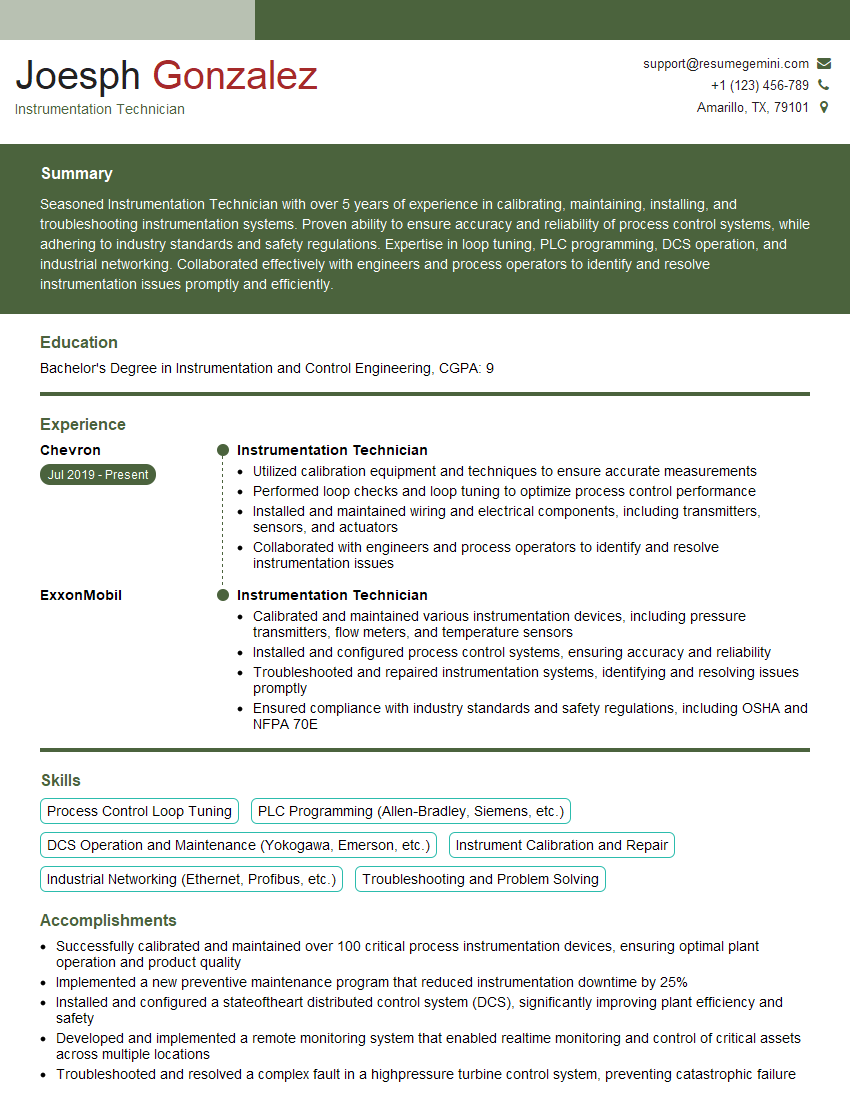
Instrumentation Technician Resume Sample
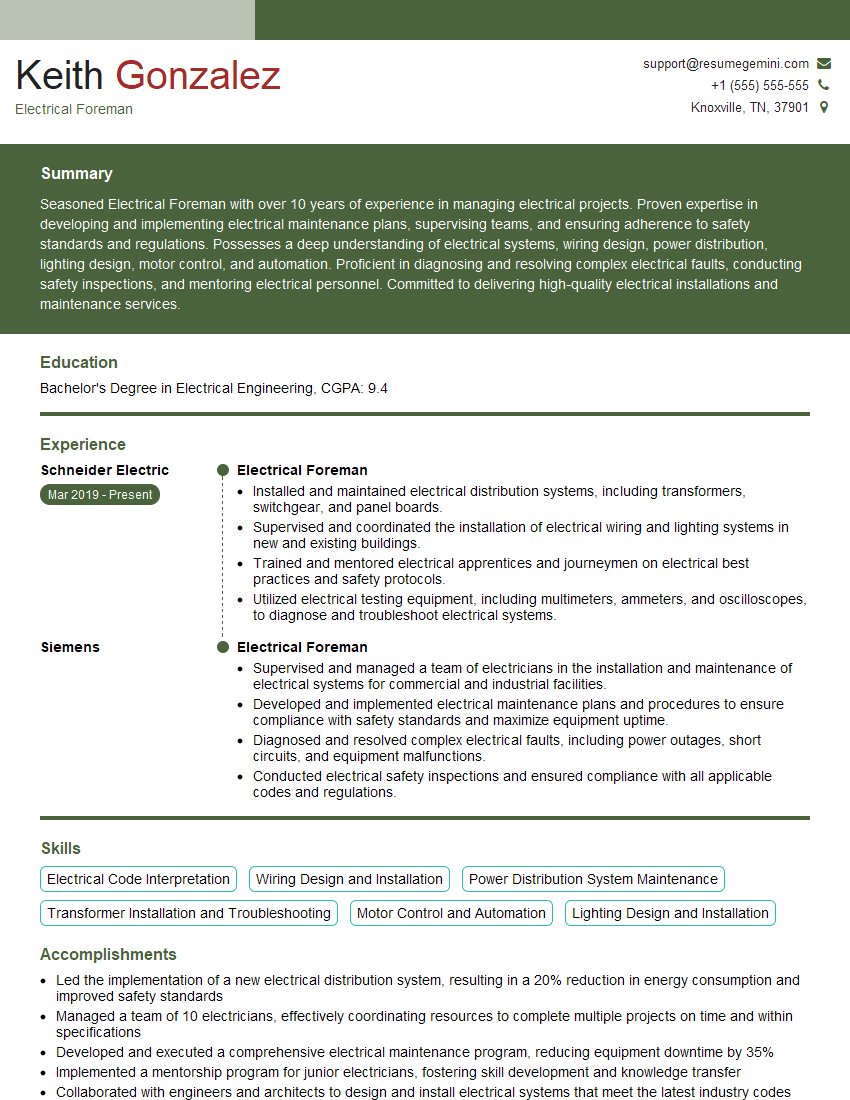
Electrical Foreman Resume Sample
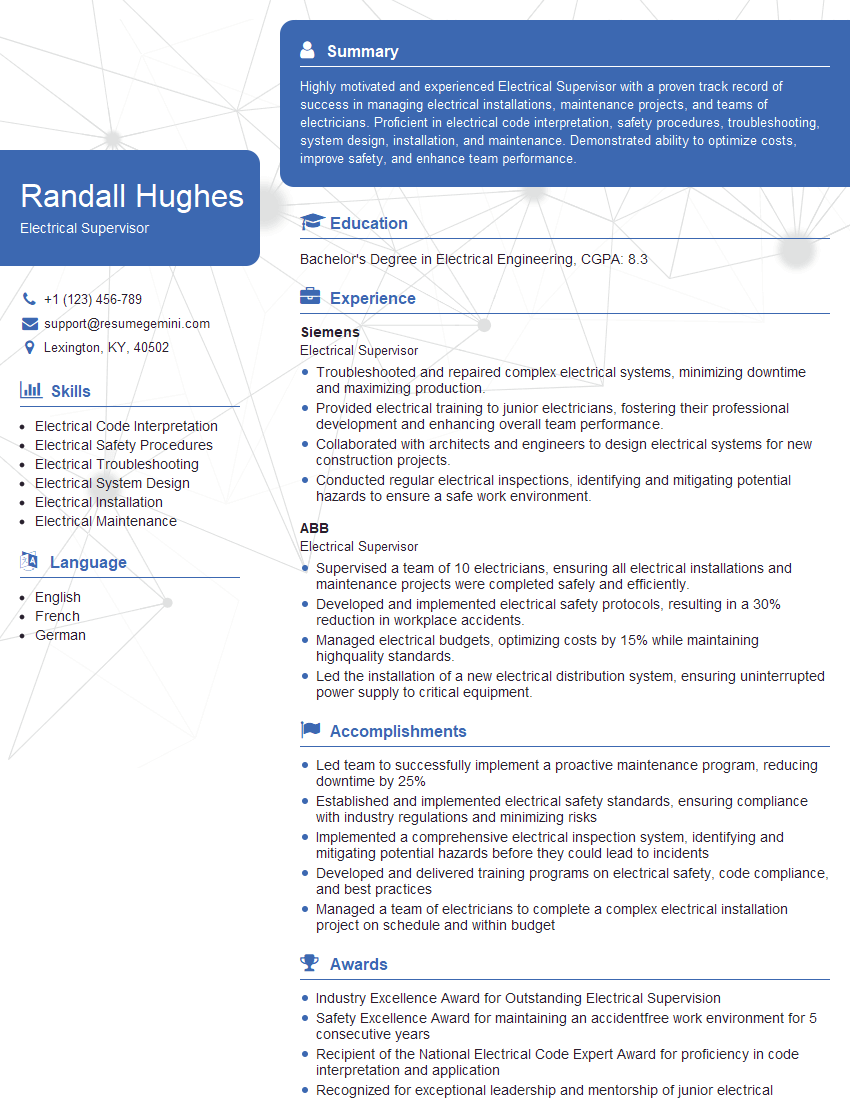
Electrical Supervisor Resume Sample
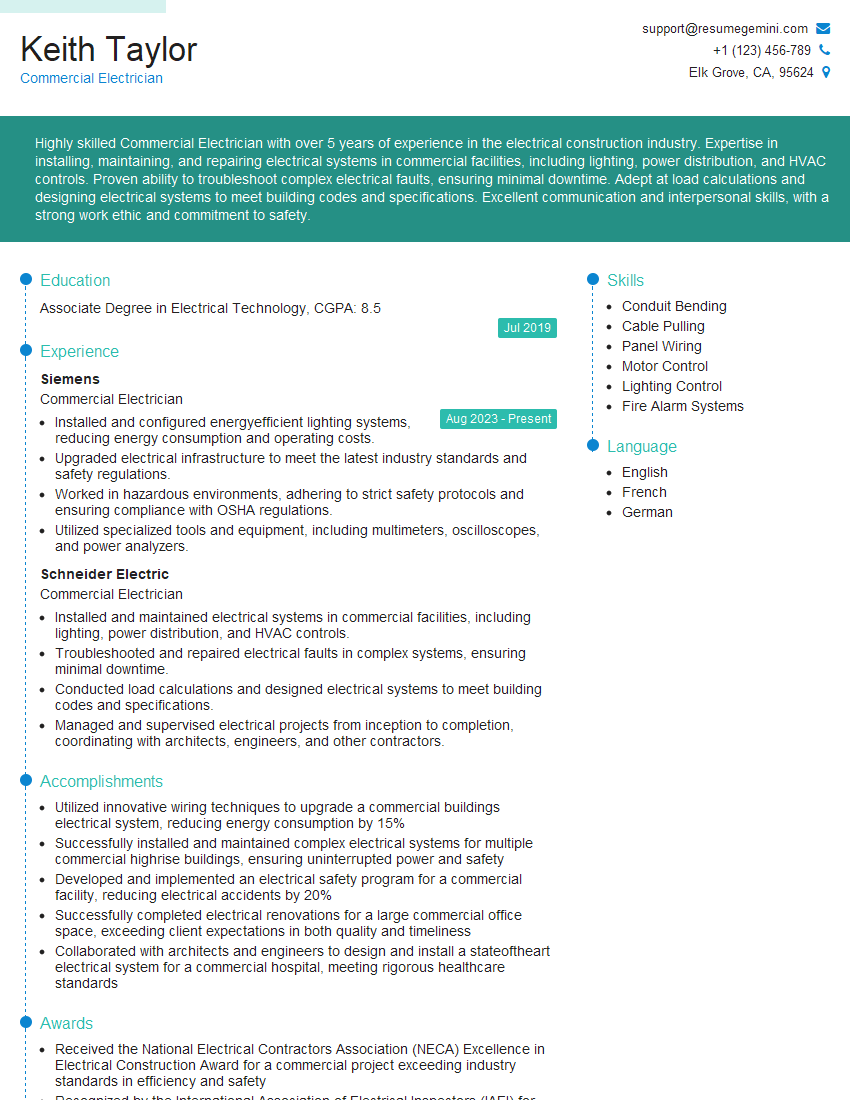
Commercial Electrician Resume Sample
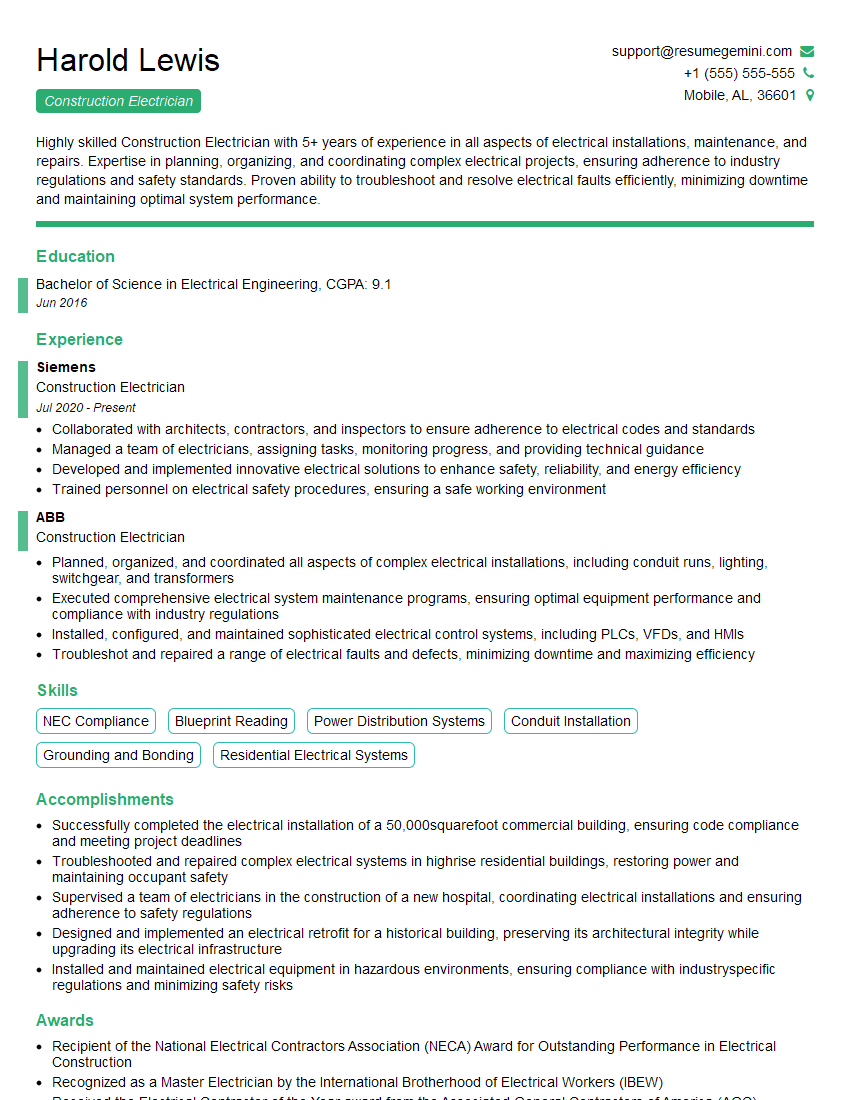
Construction Electrician Resume Sample
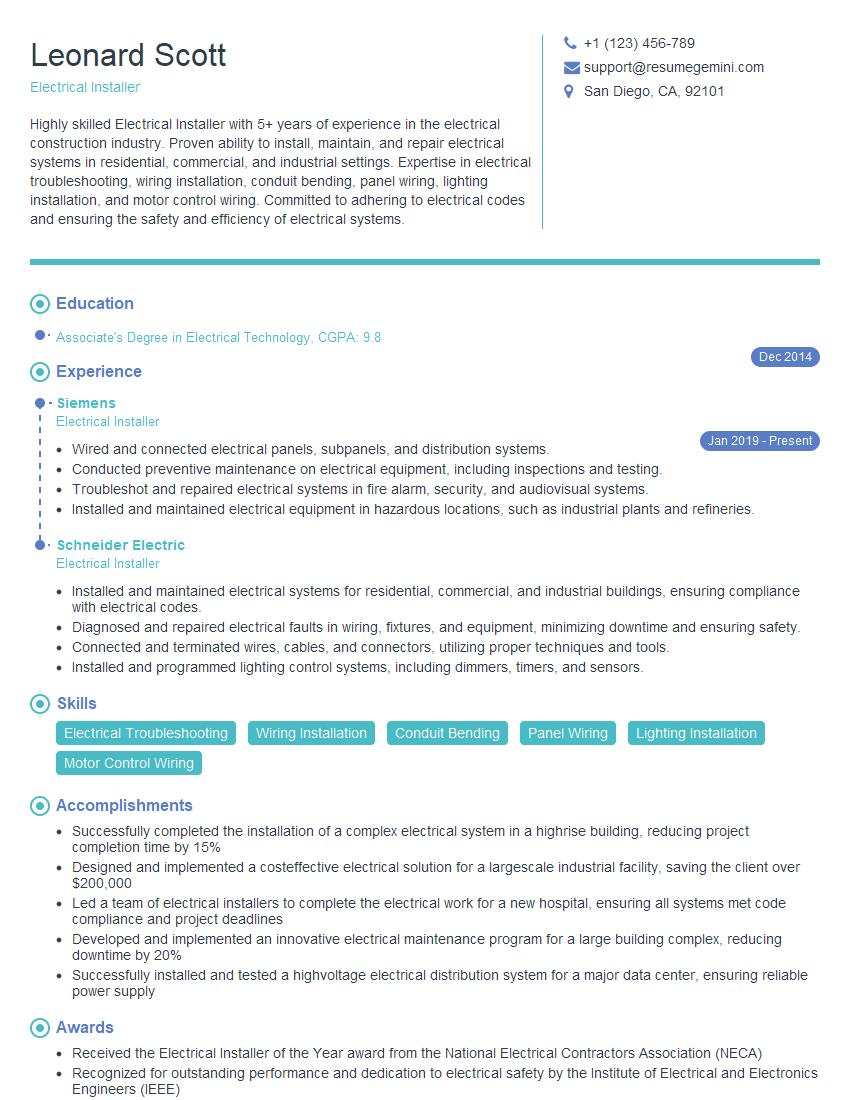
Electrical Installer Resume Sample
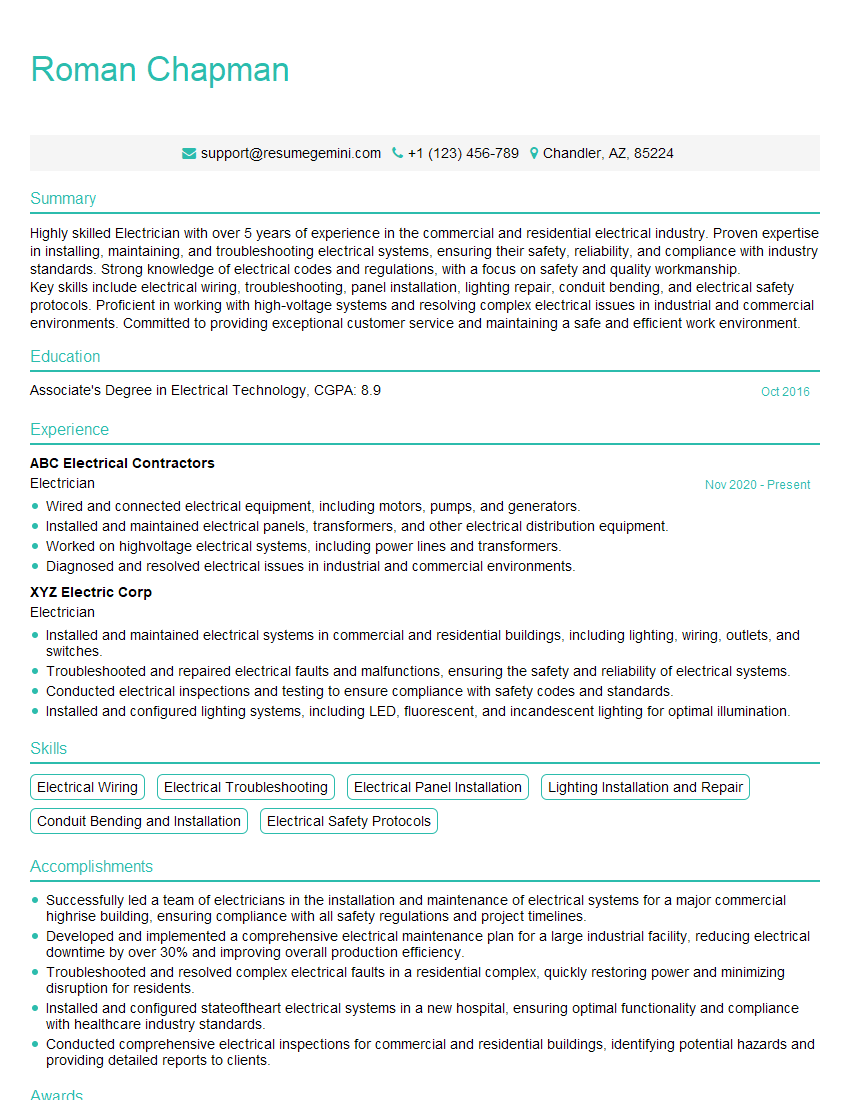
Electrician Resume Sample
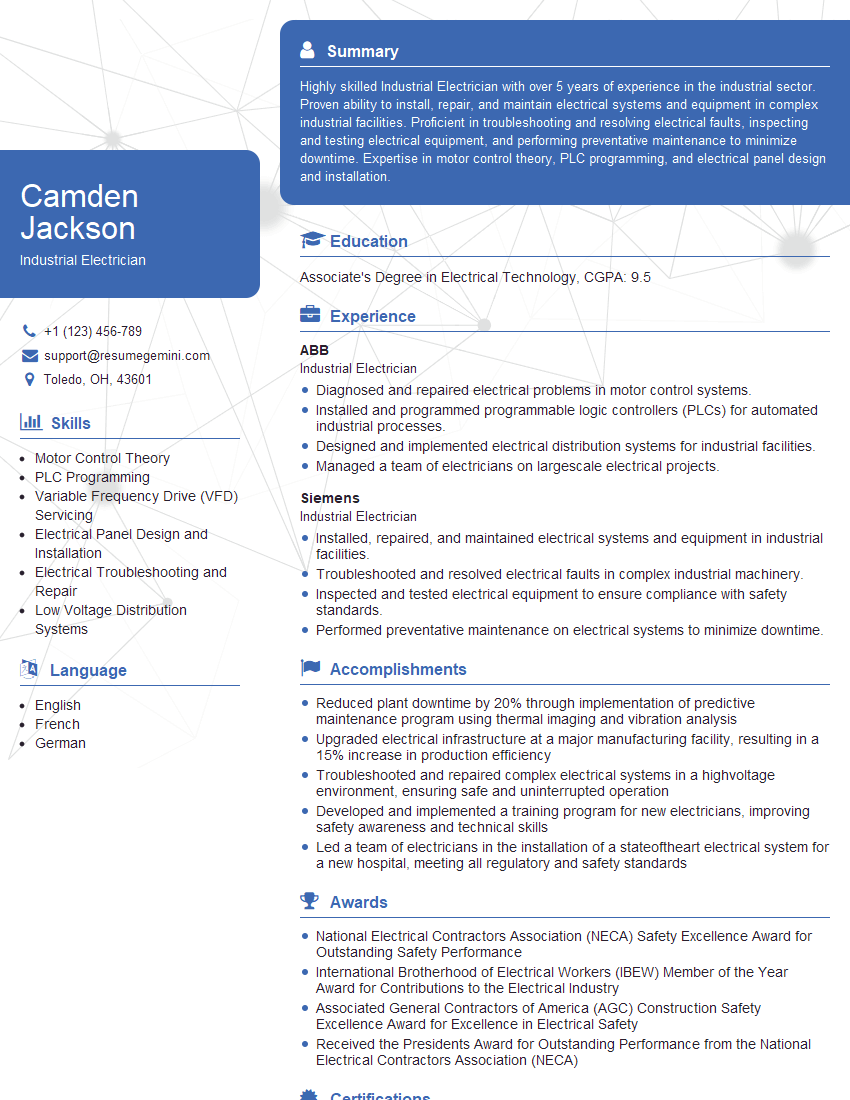
Industrial Electrician Resume Sample
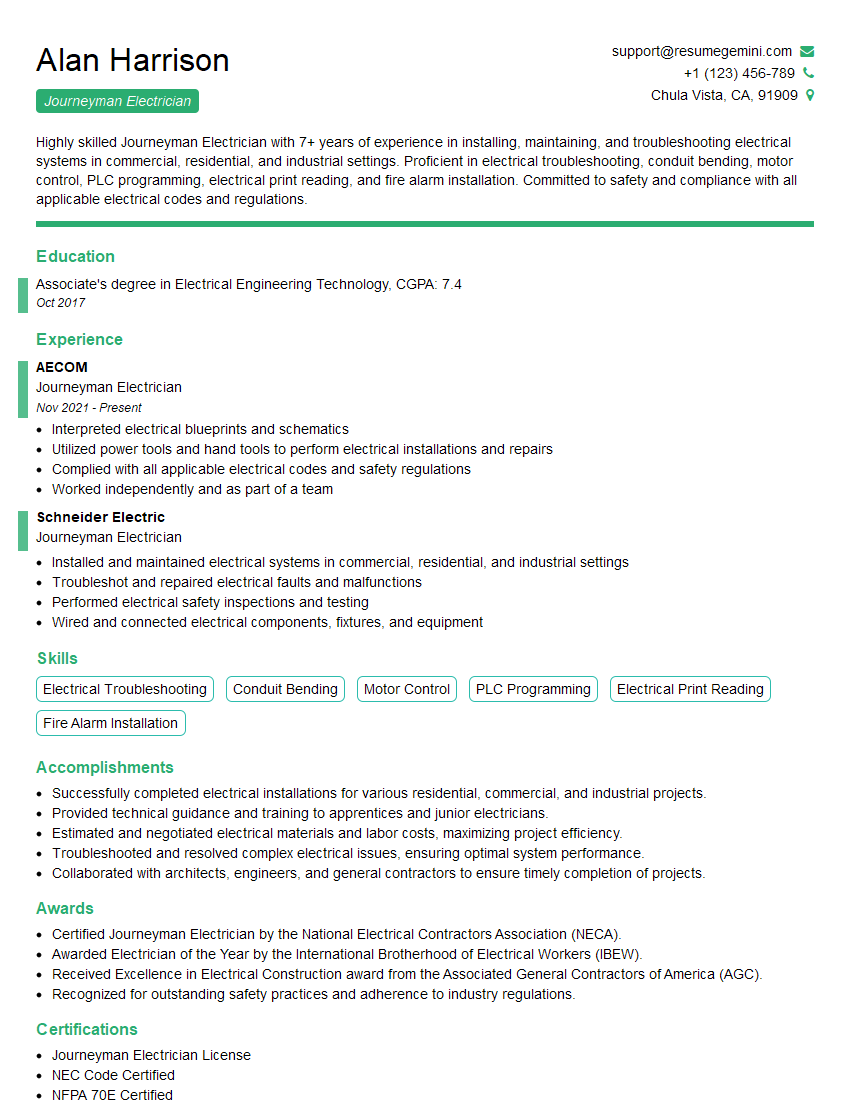
Journeyman Electrician Resume Sample
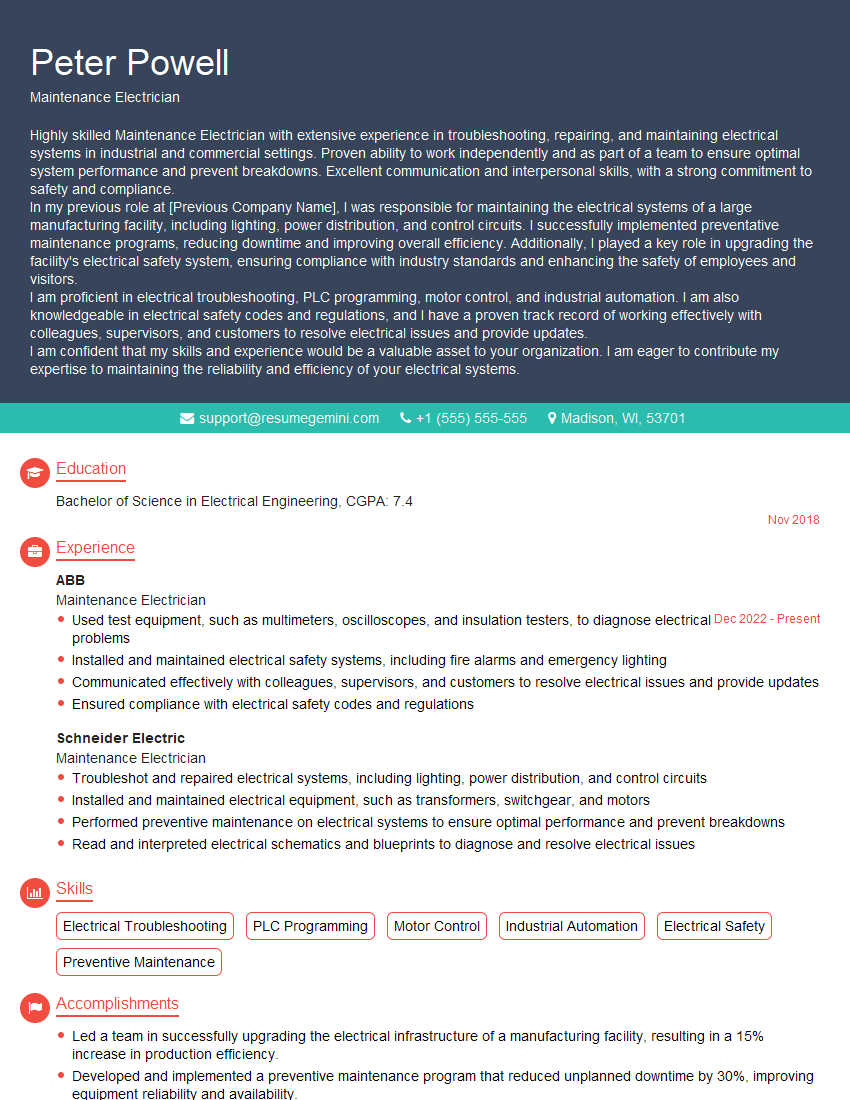
Maintenance Electrician Resume Sample
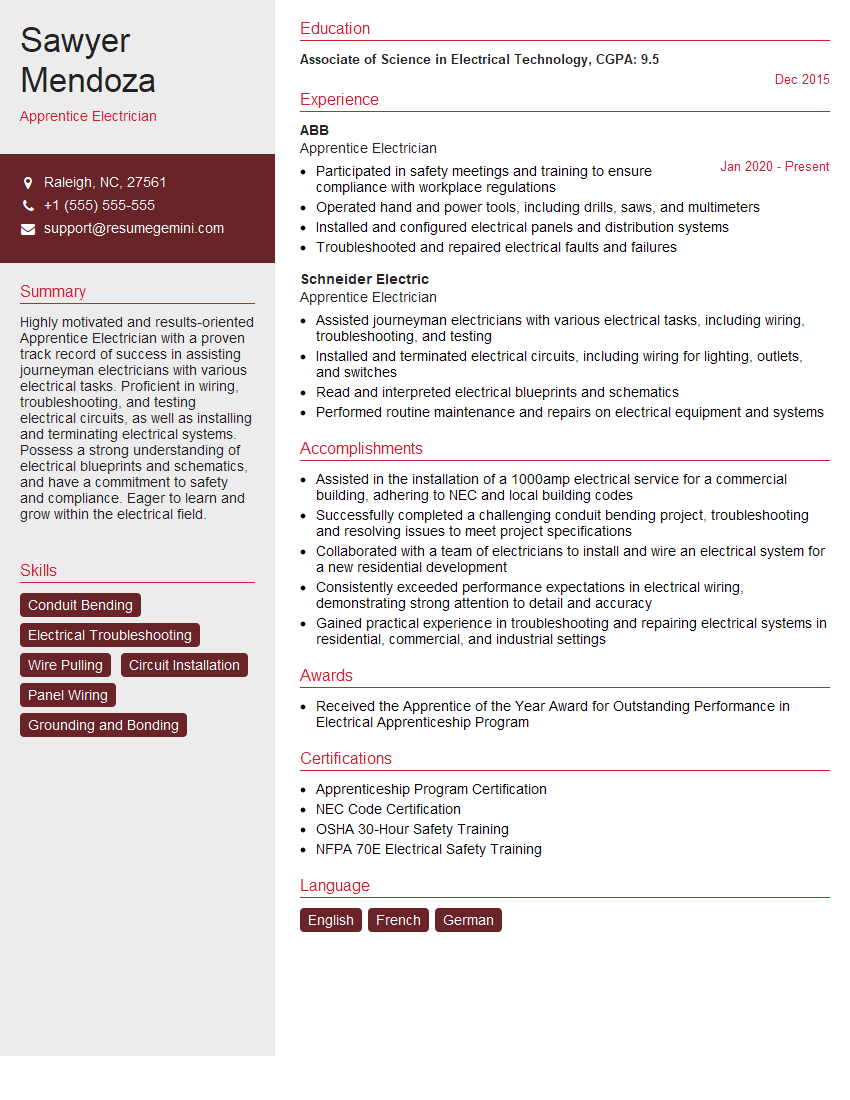
Apprentice Electrician Resume Sample
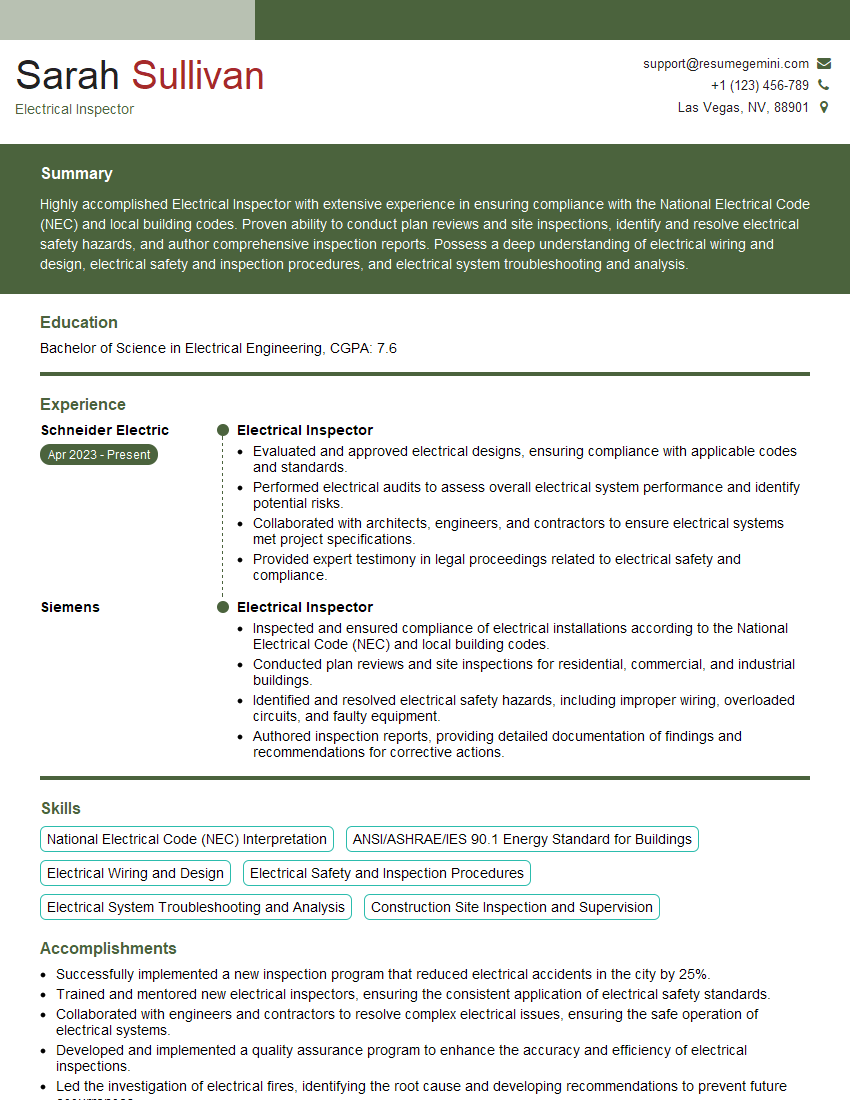
Electrical Inspector Resume Sample
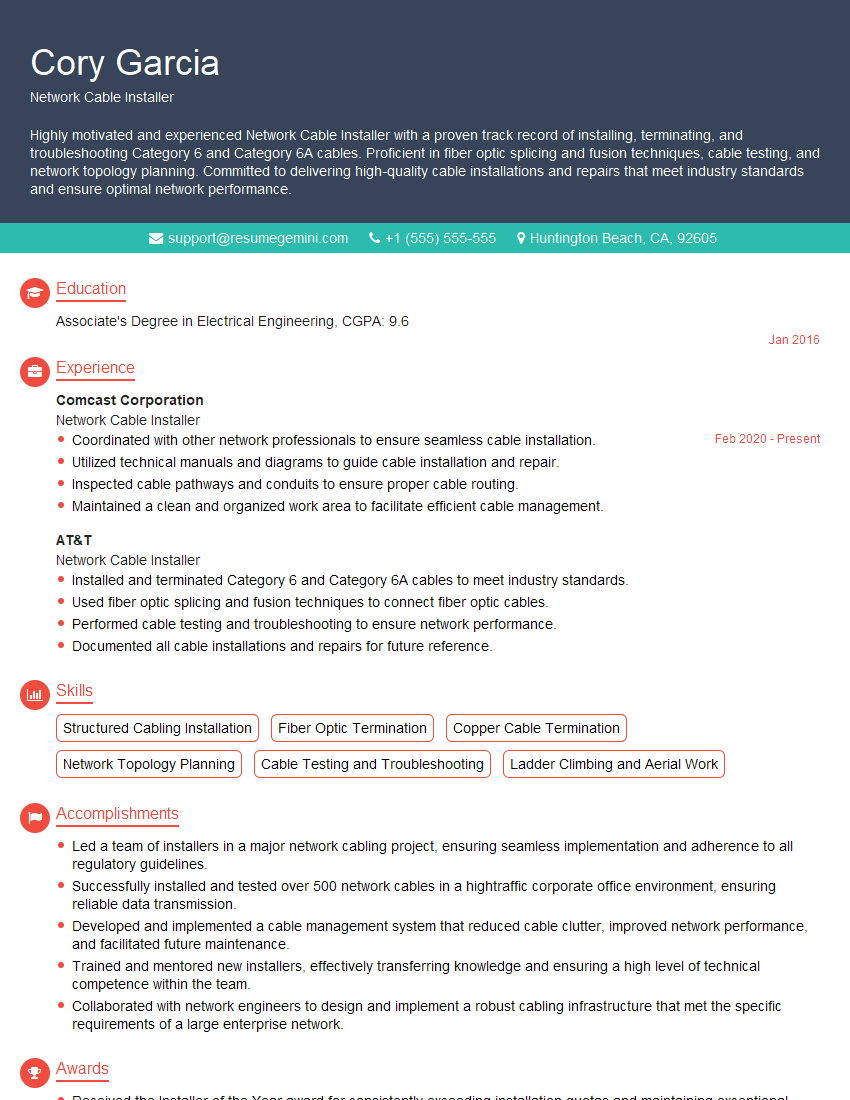
Network Cable Installer Resume Sample
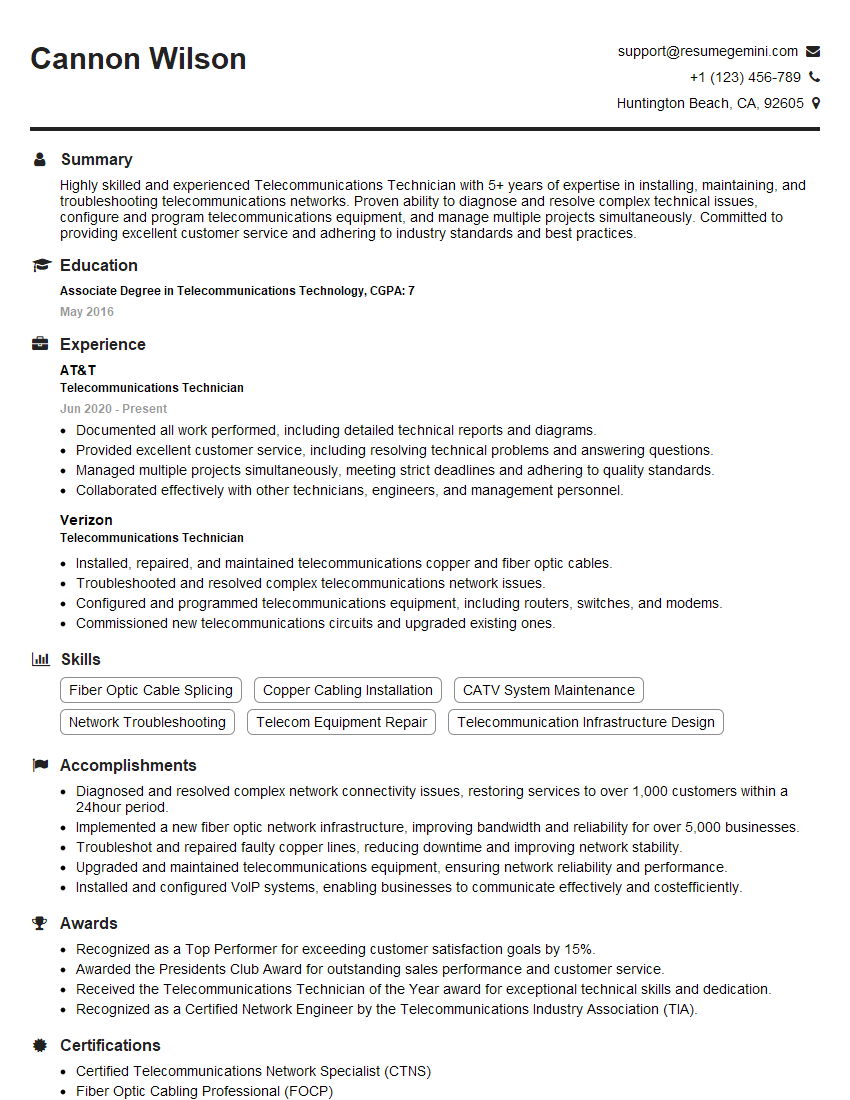
Telecommunications Technician Resume Sample
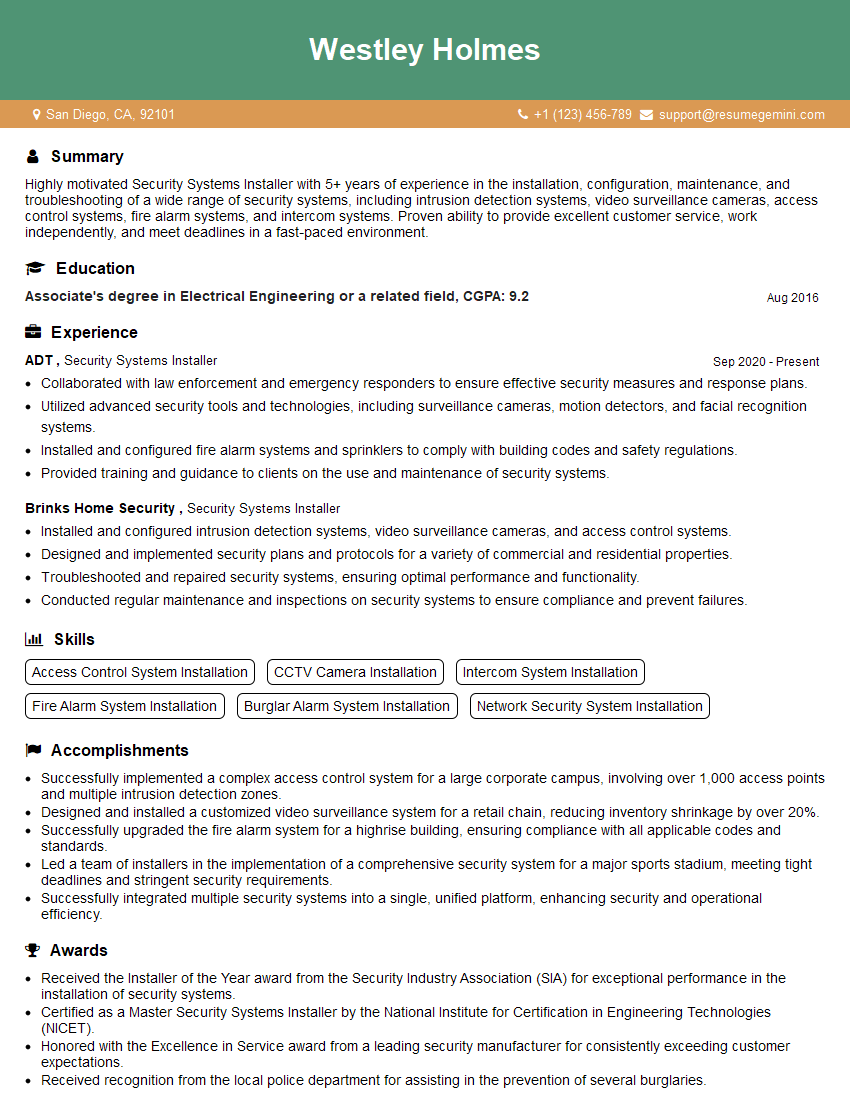
Security Systems Installer Resume Sample
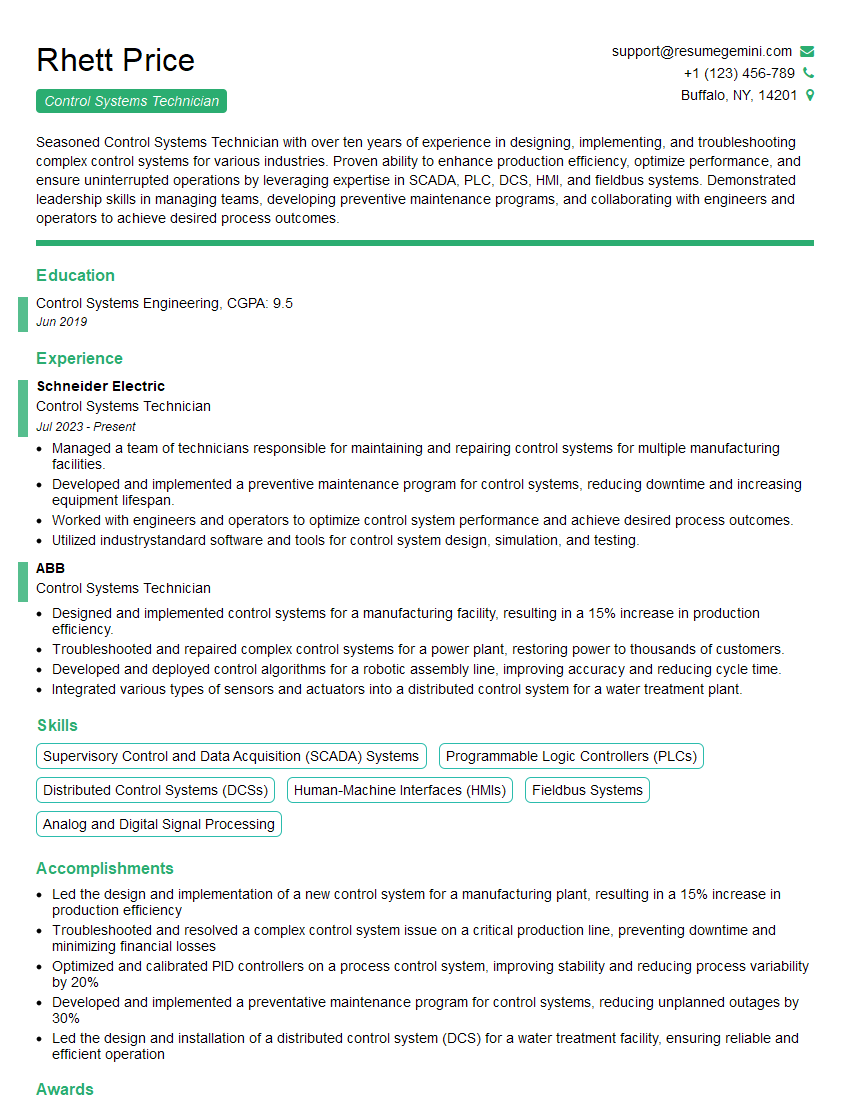
Control Systems Technician Resume Sample
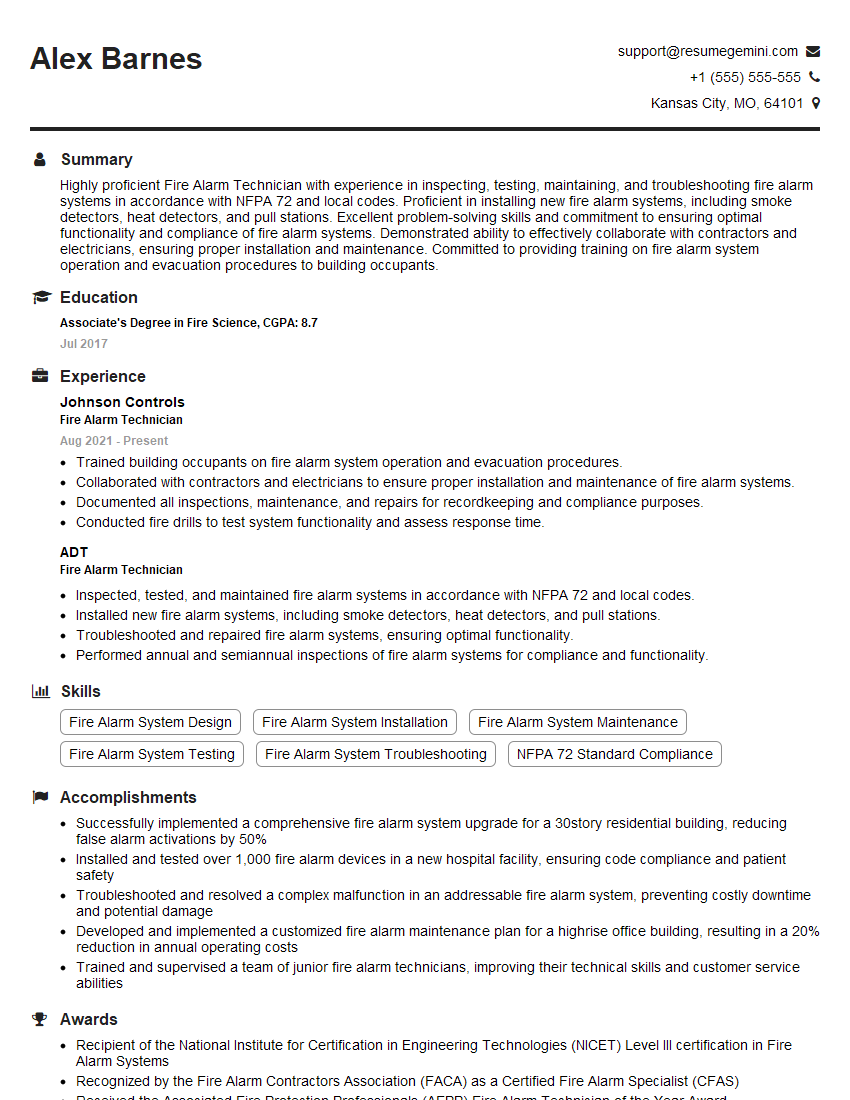
Fire Alarm Technician Resume Sample
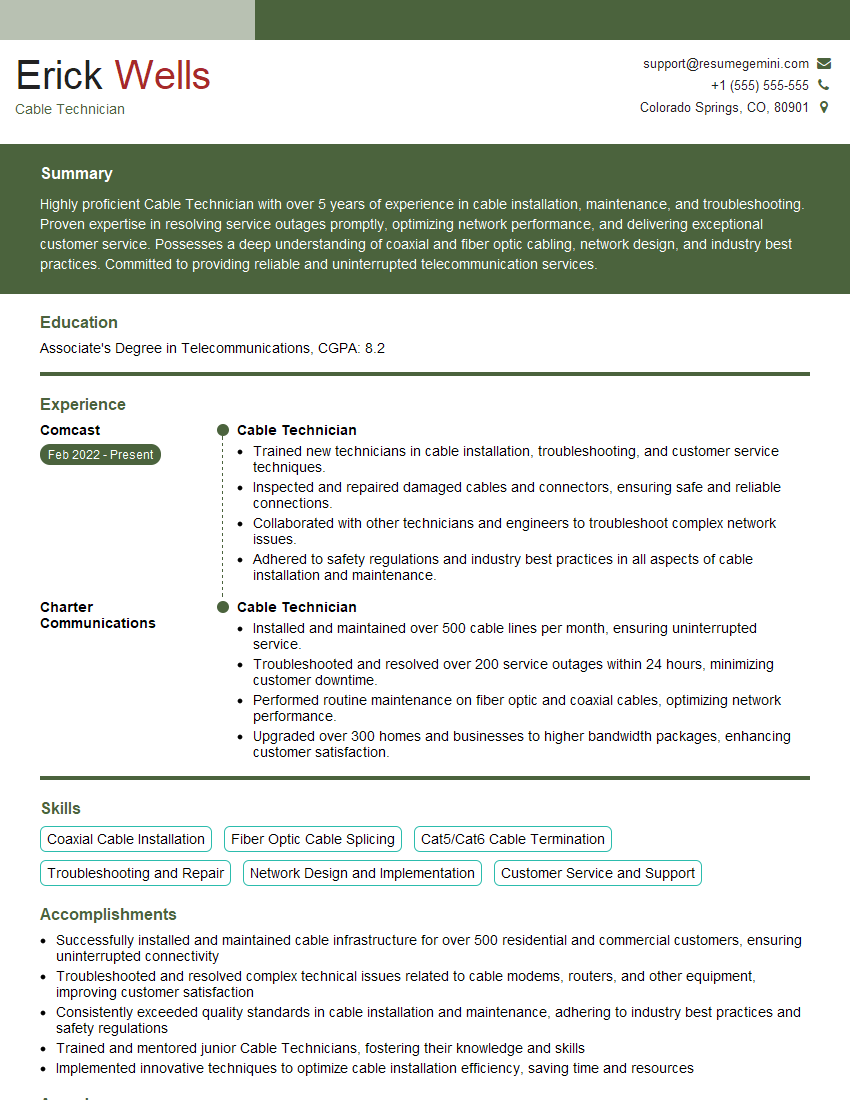
Cable Technician Resume Sample
- Instrumentation Technician
- Electrical Foreman
- Electrical Supervisor
- Commercial Electrician
- Construction Electrician
- Electrical Installer
- Electrician
- Industrial Electrician
- Journeyman Electrician
- Maintenance Electrician
- Apprentice Electrician
- Electrical Inspector
- Network Cable Installer
- Telecommunications Technician
- Security Systems Installer
- Control Systems Technician
- Fire Alarm Technician
- Cable Technician
Explore more articles
Users Rating of Our Blogs
Share Your Experience
We value your feedback! Please rate our content and share your thoughts (optional).
What Readers Say About Our Blog
To the interviewgemini.com Webmaster.
Very helpful and content specific questions to help prepare me for my interview!
Thank you
To the interviewgemini.com Webmaster.
This was kind of a unique content I found around the specialized skills. Very helpful questions and good detailed answers.
Very Helpful blog, thank you Interviewgemini team.