Unlock your full potential by mastering the most common Working Knowledge of Electrical and Mechanical Plant Maintenance interview questions. This blog offers a deep dive into the critical topics, ensuring you’re not only prepared to answer but to excel. With these insights, you’ll approach your interview with clarity and confidence.
Questions Asked in Working Knowledge of Electrical and Mechanical Plant Maintenance Interview
Q 1. Describe your experience with preventative maintenance programs.
Preventative maintenance (PM) programs are crucial for extending the lifespan of equipment and preventing costly breakdowns. My experience involves developing and implementing comprehensive PM schedules based on manufacturer recommendations, historical data analysis, and risk assessments. This includes creating detailed checklists for regular inspections, lubrication, and component replacements. For example, in a previous role, I implemented a PM program for a large fleet of conveyor systems, reducing downtime by 25% within the first year. This involved establishing a regular lubrication schedule, inspecting belt tension and alignment, and proactively replacing worn rollers. The program also included detailed record-keeping using a CMMS (Computerized Maintenance Management System), enabling us to track maintenance history, predict potential failures, and optimize maintenance intervals.
- Developing PM Schedules: This involves analyzing equipment criticality, failure modes, and maintenance costs to optimize schedules.
- Implementing PM Procedures: This includes creating detailed checklists and training technicians on proper procedures.
- Data Analysis and Improvement: Utilizing CMMS data to identify trends, improve efficiency, and refine PM strategies.
Q 2. Explain your troubleshooting process for a malfunctioning motor.
Troubleshooting a malfunctioning motor follows a systematic approach. My process begins with safety, ensuring the power is isolated before any investigation. I then gather information, observing any visible damage, listening for unusual noises (like grinding or humming), and checking for any unusual smells (burning insulation). Next, I check the simplest things first: power supply (voltage, amperage), motor connections, and fuses/breakers. If the problem persists, I use a multimeter to test the motor windings for continuity and insulation resistance, looking for shorts or opens. I also check the motor’s thermal overload protector. If the issue remains unresolved, more advanced diagnostics might be needed, such as using a vibration analyzer or thermal imaging camera. For instance, I once diagnosed a motor failure that was initially attributed to a bad motor winding. However, after a thorough investigation, I discovered a loose connection in the control panel that was causing intermittent power interruptions, ultimately saving the cost of a new motor.
- Safety First: Lockout/Tagout procedures are always followed before any work begins.
- Gather Information: Visual inspection, listening, and smelling for clues.
- Simple Checks First: Power supply, connections, fuses/breakers.
- Advanced Diagnostics: Multimeter testing, vibration analysis, thermal imaging.
Q 3. How do you prioritize maintenance tasks in a high-pressure environment?
Prioritizing maintenance tasks in a high-pressure environment requires a structured approach. I typically use a combination of techniques, including criticality analysis, risk assessment, and urgency ratings. Criticality refers to the impact of equipment failure on production. Risk assessment considers the likelihood of failure. Urgency considers the immediacy of the needed maintenance. A commonly used method is the prioritization matrix, plotting criticality against urgency. For example, a critical piece of equipment with a high likelihood of imminent failure will have top priority, whereas a less critical piece with a low likelihood of failure can be scheduled for later. This allows for efficient allocation of resources and minimizes downtime in situations with competing demands.
- Criticality Analysis: Assess the impact of equipment failure on production.
- Risk Assessment: Determine the likelihood of equipment failure.
- Urgency Ratings: Consider the time sensitivity of the maintenance task.
- Prioritization Matrix: Combine criticality and urgency to rank maintenance tasks.
Q 4. What are the common causes of bearing failure?
Bearing failure is a common problem in rotating machinery, and several factors contribute. Lubrication issues are a major cause, including insufficient lubrication, improper lubrication type, or contaminated lubricant. Overloading the bearing beyond its design capacity can also lead to premature failure. Misalignment of shafts or other components can induce excessive stress on the bearings. Contamination, whether from dust, debris, or corrosive substances, can damage the bearing surfaces. Finally, improper installation or handling can cause damage. A classic example I encountered was a bearing failure on a pump due to a combination of insufficient lubrication and misalignment. By addressing these factors through preventative maintenance, we significantly reduced bearing failures.
- Lubrication Issues: Insufficient, improper, or contaminated lubricant.
- Overloading: Exceeding the bearing’s design capacity.
- Misalignment: Shaft or component misalignment causing excessive stress.
- Contamination: Dust, debris, or corrosive substances.
- Improper Installation/Handling: Damage during installation or handling.
Q 5. Describe your experience with PLC programming and troubleshooting.
I have extensive experience with PLC programming and troubleshooting using various platforms like Allen-Bradley and Siemens. My skills encompass ladder logic programming, creating and modifying PLC programs, and utilizing HMI (Human-Machine Interface) software for visualization and control. Troubleshooting PLCs involves systematic techniques, starting with reviewing alarm logs and program diagnostics. I utilize logic analyzers and oscilloscopes to trace signals and identify faulty components. My experience includes modifying existing PLC programs to improve efficiency and troubleshooting complex control systems. For instance, I once resolved a production bottleneck by optimizing a PLC program that controlled a robotic arm, reducing cycle time by 15%. This involved analyzing the program logic, identifying inefficiencies, and implementing changes to improve timing and coordination.
- Programming: Ladder logic, function block diagrams, structured text.
- Troubleshooting: Utilizing diagnostic tools, alarm logs, and systematic problem-solving.
- HMI Programming: Creating user-friendly interfaces for machine operation and monitoring.
- Network Communication: Experience with various communication protocols (e.g., Ethernet/IP, Profibus).
Q 6. How do you interpret and use electrical schematics?
Interpreting and using electrical schematics is fundamental to my work. I can read and understand various types of schematics, including single-line diagrams, wiring diagrams, and ladder diagrams. My skills include tracing circuits, identifying components, and understanding the flow of electricity through a system. I am proficient at using schematics to troubleshoot electrical faults, identify component failures, and plan maintenance activities. For example, using a schematic, I once quickly isolated a faulty relay causing an intermittent power failure in a critical process. Understanding symbols and their meaning, tracing circuits, and recognizing patterns within the schematic are essential. I find that understanding the overall system function before diving into the details enhances my ability to diagnose problems quickly and efficiently.
- Understanding Symbols: Recognizing and interpreting various electrical symbols.
- Circuit Tracing: Following the flow of electricity through a system.
- Component Identification: Identifying components using schematic symbols and labels.
- Troubleshooting: Using schematics to diagnose electrical faults and plan repairs.
Q 7. Explain your experience with different types of pumps and their maintenance.
My experience encompasses various pump types, including centrifugal pumps, positive displacement pumps (like gear pumps and piston pumps), and submersible pumps. Each type requires specific maintenance procedures. Centrifugal pumps require regular inspections of seals, bearings, and impeller wear. Positive displacement pumps need attention to the seals, internal clearances, and lubrication. Submersible pumps often require attention to motor cooling and cable integrity. For example, in a wastewater treatment plant, I maintained a fleet of centrifugal pumps, which involved regular lubrication, shaft alignment checks, and visual inspections for wear and corrosion. A well-structured preventive maintenance schedule and thorough understanding of each pump’s operation are vital to extending its lifespan and maximizing efficiency. Understanding the specific needs of each pump type, including their operating principles and potential failure points, is crucial for effective maintenance.
- Centrifugal Pumps: Seals, bearings, impeller wear, balancing.
- Positive Displacement Pumps: Seals, internal clearances, lubrication, valve adjustments.
- Submersible Pumps: Motor cooling, cable integrity, wear of submersible components.
- Preventive Maintenance Schedules: Regular inspections, lubrication, and component replacements.
Q 8. What are your methods for identifying and resolving electrical faults?
Identifying and resolving electrical faults requires a systematic approach combining diagnostic skills and safety precautions. My method begins with a thorough visual inspection, checking for obvious signs like loose connections, damaged insulation, or burn marks. I then use specialized testing equipment such as multimeters, insulation resistance testers, and clamp meters to pinpoint the exact fault. For instance, a multimeter can help identify a short circuit by measuring voltage drop across a circuit segment. If the voltage drop is unexpectedly high, it suggests a fault in that section. Further diagnostics might involve checking continuity, measuring resistance, and testing for ground faults. Once the fault is identified, the resolution involves safe isolation of the affected circuit, repair or replacement of faulty components, and thorough testing to ensure the system’s proper functioning before re-energizing. For complex systems, I utilize schematics and wiring diagrams to trace the electrical pathways efficiently.
For example, during a recent maintenance project on a conveyor system, I identified a faulty motor starter through a combination of visual inspection (burnt smell emanating from the starter) and multimeter readings (low resistance across terminals indicating a short). Replacing the faulty starter restored the system’s functionality. I always prioritize safety by following lockout/tagout procedures before beginning any repair work.
Q 9. How do you ensure compliance with safety regulations during maintenance?
Safety is paramount in all maintenance activities. Compliance with regulations is achieved through strict adherence to established safety procedures, thorough risk assessments, and ongoing training. This includes mandatory use of personal protective equipment (PPE) such as safety glasses, gloves, insulated tools, and arc flash suits when working with high voltage systems. Before starting any work, I always implement lockout/tagout procedures to ensure complete isolation of electrical power sources, preventing accidental energization. I’m proficient in various safety standards, including OSHA regulations and NEC guidelines. Regular safety meetings and toolbox talks reinforce these procedures, ensuring that all team members are fully aware of potential hazards and mitigation strategies. Detailed documentation of all maintenance activities, including safety checks, ensures accountability and traceability. Additionally, I encourage a proactive safety culture, where reporting near-miss incidents helps identify and address potential hazards before they lead to accidents.
For instance, before working on a high-voltage motor, I meticulously follow lockout/tagout procedures, verifying the absence of voltage with a non-contact voltage tester before proceeding with any maintenance. This diligent approach has prevented potential injury and maintained compliance with all relevant regulations.
Q 10. Describe your experience with predictive maintenance techniques.
Predictive maintenance involves using various techniques to predict potential equipment failures before they occur, allowing for proactive maintenance scheduling. My experience includes utilizing vibration analysis, oil analysis, infrared thermography, and ultrasonic testing. Vibration analysis identifies imbalances or bearing issues in rotating equipment. Oil analysis reveals the presence of contaminants or wear particles, indicating wear and tear within the system. Infrared thermography detects overheating components, which are often a precursor to failure. Ultrasonic testing helps identify leaks in pressurized systems and corrosion in pipework. Data gathered from these techniques is analyzed to identify trends and predict potential failures, enabling optimized maintenance scheduling, minimizing downtime, and reducing maintenance costs. The data is usually collected using sophisticated instrumentation, and analyzed using specialized software.
For example, during a routine predictive maintenance check on a large industrial pump, vibration analysis revealed abnormal vibrations indicating potential bearing failure. This early detection allowed us to schedule a timely bearing replacement, preventing a costly and disruptive unplanned shutdown.
Q 11. Explain the importance of lubrication in mechanical systems.
Lubrication is critical in mechanical systems, acting as a vital component in reducing friction, wear, and heat generation. Proper lubrication minimizes wear on moving parts, extending the lifespan of machinery and reducing maintenance requirements. Lubricants also provide a protective barrier against corrosion and contamination. Different lubricants are appropriate for different applications; factors to consider include operating temperature, load, speed, and the type of materials in contact. The selection of the wrong lubricant can lead to premature failure of equipment components. Implementing a proper lubrication schedule, employing the right lubrication techniques, and ensuring the cleanliness of components are all essential aspects of maintaining equipment.
Think of it like oiling a bicycle chain. Without lubrication, the chain would quickly wear out due to friction. Similarly, in industrial machinery, proper lubrication significantly extends the lifespan of components, reduces energy consumption, and prevents costly breakdowns.
Q 12. What are your skills in welding and fabrication?
My welding and fabrication skills encompass various techniques, including MIG, TIG, and stick welding, enabling me to repair and fabricate various metal components. I am proficient in both ferrous and non-ferrous metals. My experience extends to the fabrication of various structures, including custom brackets, enclosures, and pipe supports, often required for modifications or repairs in plant equipment. I am also skilled in the use of various cutting and shaping tools, such as plasma cutters, grinders, and drills. I always adhere to safety protocols while performing welding and fabrication tasks, including the use of appropriate PPE and adherence to fire safety regulations. My work consistently meets required precision and quality standards.
In a recent project, I used MIG welding to repair a cracked component on a large press. My expertise allowed me to complete the repair quickly and efficiently, ensuring minimal downtime for the production line.
Q 13. How do you manage spare parts inventory?
Effective spare parts inventory management involves balancing the need for readily available components with the costs of storage and obsolescence. I utilize a computerized maintenance management system (CMMS) to track inventory levels, monitor usage patterns, and forecast future needs. The CMMS helps in establishing optimal stock levels based on historical data, lead times from suppliers, and the criticality of each component. Regular inventory audits ensure accuracy and identify discrepancies. A robust system for receiving, storing, and issuing spare parts helps in maintaining organized and readily accessible inventory. The use of barcodes and RFID technology can further enhance the efficiency of inventory management. Regular review of obsolete parts allows for timely disposal or transfer, minimizing storage costs and preventing unnecessary accumulation.
Implementing a well-organized system allows for quick identification and retrieval of needed parts, minimizing downtime during maintenance and repair operations.
Q 14. Describe your experience with hydraulic and pneumatic systems.
I have extensive experience with hydraulic and pneumatic systems, including troubleshooting, repair, and maintenance. My knowledge covers system components such as pumps, valves, actuators, compressors, and related circuitry. I can diagnose issues using pressure gauges, flow meters, and other diagnostic tools. I understand the principles of hydraulic and pneumatic circuits, including pressure regulation, flow control, and actuation. I am experienced in working with both simple and complex systems, and am familiar with various types of hydraulic and pneumatic fluids and their properties. Safety procedures are always followed when working with high-pressure systems. I have a strong understanding of preventative maintenance practices for extending the life and reliability of hydraulic and pneumatic components.
For instance, I once troubleshooted a faulty hydraulic press by systematically checking pressure levels at various points in the system, ultimately identifying a leak in a hydraulic hose. Replacing the hose restored the press to full functionality.
Q 15. How do you handle emergency maintenance situations?
Emergency maintenance demands immediate, decisive action. My approach prioritizes safety first, then damage control, and finally, restoration of functionality. I follow a structured process:
- Assessment: Quickly assess the situation, identifying the nature of the emergency, its potential impact (safety, production, environmental), and immediate hazards. For example, a leaking pipe might cause flooding and electrical hazards. I’d immediately isolate the area and ensure personnel safety.
- Emergency Response: Implement immediate corrective actions to mitigate the problem – this might involve shutting down equipment, isolating power, or deploying emergency equipment. Imagine a failed compressor causing a production line halt; I’d immediately switch to a backup system while addressing the failed compressor.
- Damage Control: Contain any damage to prevent further escalation. For instance, if a motor has burned out, we must prevent further damage to the wiring or connected components.
- Temporary Repair: Implement temporary repairs to restore partial or full functionality, buying time for a more thorough repair. This might involve using temporary patching or bypass solutions. A temporary fix might be a bypass valve until a permanent pump repair is made.
- Root Cause Analysis & Permanent Repair: Once the immediate crisis is managed, a detailed root cause analysis is performed to determine why the emergency occurred and to prevent recurrence. This leads to permanent repairs and potentially process improvements.
Clear communication is crucial throughout this process. I ensure all relevant personnel are informed and updated on the situation and the repair progress.
Career Expert Tips:
- Ace those interviews! Prepare effectively by reviewing the Top 50 Most Common Interview Questions on ResumeGemini.
- Navigate your job search with confidence! Explore a wide range of Career Tips on ResumeGemini. Learn about common challenges and recommendations to overcome them.
- Craft the perfect resume! Master the Art of Resume Writing with ResumeGemini’s guide. Showcase your unique qualifications and achievements effectively.
- Don’t miss out on holiday savings! Build your dream resume with ResumeGemini’s ATS optimized templates.
Q 16. What is your experience with root cause analysis?
Root cause analysis (RCA) is fundamental to preventing equipment failures. I’m proficient in several RCA methodologies, including the ‘5 Whys’, fault tree analysis, and Fishbone diagrams. My approach always involves:
- Data Gathering: Collecting all relevant data, including maintenance logs, operating data, and witness statements. This is like putting together the pieces of a puzzle.
- Teamwork: Collaborating with operators, engineers, and other technicians to brainstorm possible causes. Diverse perspectives are key.
- Method Application: Applying an appropriate RCA method to systematically identify the root cause. For instance, the ‘5 Whys’ helps drill down to the fundamental reason behind successive failures. If a pump keeps failing, I’d ask: ‘Why did the pump fail?’ (bearing failure), ‘Why did the bearing fail?’ (lack of lubrication), ‘Why was there a lack of lubrication?’ (blocked lubrication line), ‘Why was the line blocked?’ (debris), ‘Why was there debris?’ (inadequate filtration).
- Verification: Verifying the identified root cause through further investigation or testing to ensure accuracy. This is about confirming our findings.
- Corrective Actions: Implementing corrective actions to eliminate the root cause and prevent future occurrences, which might include replacing components, improving maintenance procedures, or enhancing operator training. I’d document these meticulously and track their effectiveness.
Effective RCA leads to significant improvements in reliability and reduces downtime, ultimately saving money and improving safety.
Q 17. How familiar are you with CMMS software (e.g., SAP PM, Maximo)?
I have extensive experience using CMMS software, including SAP PM and Maximo. My skills encompass:
- Work Order Management: Creating, scheduling, and tracking work orders efficiently and accurately.
- Inventory Management: Managing spare parts inventory levels to ensure availability for repairs.
- Preventive Maintenance Scheduling: Developing and implementing preventive maintenance schedules based on equipment criticality and manufacturer recommendations.
- Reporting and Analysis: Generating reports on equipment performance, maintenance costs, and downtime to identify trends and opportunities for improvement.
- Data Analysis: Utilizing CMMS data to optimize maintenance strategies and improve equipment reliability. For example, I can analyze historical data to determine optimal intervals for preventive maintenance tasks.
I’m comfortable with all aspects of CMMS systems, from data entry and reporting to advanced features like predictive maintenance capabilities.
Q 18. Describe your experience with rotating equipment maintenance (e.g., pumps, compressors).
My experience with rotating equipment includes pumps, compressors, and motors. I’m familiar with their operation, maintenance, and troubleshooting. This involves:
- Inspections: Performing thorough visual inspections, checking for leaks, vibrations, unusual noises, and proper lubrication.
- Alignment and Balancing: Aligning coupled equipment to minimize vibrations and extending bearing life. I’ve used laser alignment tools and balancing equipment.
- Lubrication: Implementing appropriate lubrication schedules and using the correct lubricants. Understanding grease types, oil analysis, and lubrication systems is vital.
- Troubleshooting: Diagnosing and resolving issues such as bearing failure, seal leaks, and cavitation in pumps. I’m adept at using vibration analysis and other diagnostic tools.
- Overhauls: Performing planned overhauls, including disassembly, inspection, repair, and reassembly of rotating equipment. I understand the criticality of proper torque settings and procedures.
I understand the importance of adhering to manufacturer recommendations and safety procedures when working with high-speed rotating equipment.
Q 19. What is your experience with vibration analysis and its applications?
Vibration analysis is a powerful predictive maintenance technique. I’m experienced in using vibration analysis equipment to diagnose machinery problems before they lead to major failures. This involves:
- Data Acquisition: Using handheld vibration analyzers and sensors to collect vibration data from various locations on rotating equipment.
- Data Analysis: Analyzing vibration data to identify abnormal frequencies and patterns indicative of specific faults (e.g., unbalance, misalignment, bearing defects). I’ve used both spectral analysis and time waveform analysis.
- Fault Diagnosis: Interpreting vibration data to diagnose specific faults and recommend appropriate corrective actions. For instance, a high amplitude at a specific frequency could indicate an imbalance in a rotor.
- Trend Analysis: Tracking vibration levels over time to monitor equipment condition and predict potential failures. Early detection allows for timely intervention, preventing costly breakdowns.
Vibration analysis helps avoid catastrophic failures, minimizing downtime and optimizing maintenance scheduling. For example, detecting a bearing fault early allows us to replace the bearing proactively instead of reacting to a complete failure.
Q 20. Explain your understanding of different types of motors (AC, DC, servo).
I have a solid understanding of various motor types:
- AC Motors (Alternating Current): These are widely used due to their simplicity and robustness. Sub-types include induction motors (most common, simple and rugged), synchronous motors (precise speed control, used in applications like clocks), and single-phase motors (used in smaller applications like fans).
- DC Motors (Direct Current): These offer precise speed control and high torque at low speeds. They require more complex control circuitry compared to AC motors, often using brushes and commutators.
- Servo Motors: These are high-precision motors used in applications requiring precise positioning and speed control, commonly found in robotics, CNC machines, and automated systems. They typically incorporate feedback systems for accurate control.
My understanding extends to motor control systems, including variable frequency drives (VFDs) which are commonly used to control the speed and torque of AC motors. I also understand the importance of proper motor selection for various applications based on factors like power requirements, speed, torque, and operating environment.
Q 21. How do you conduct a thorough equipment inspection?
A thorough equipment inspection goes beyond a simple visual check. My approach is systematic and follows a checklist based on the equipment’s type and criticality. It typically includes:
- Visual Inspection: Examining the equipment for any obvious signs of damage, wear, or leaks. This includes checking for cracks, corrosion, loose connections, and abnormal wear patterns.
- Operational Check: Testing the equipment’s functionality to ensure it operates as expected. This may involve running the equipment under controlled conditions and monitoring key parameters.
- Functional Tests: Checking safety devices like emergency shut-offs, limit switches, and safety interlocks to ensure their proper operation. This ensures safe operation and prevents accidents.
- Lubrication Check: Inspecting lubrication levels and condition. This can often reveal early signs of wear or pending failure.
- Measurements: Taking relevant measurements, such as vibration levels, temperature, and pressure, to identify potential problems. This is where specialized equipment like thermocouples and vibration meters come in handy.
- Documentation: Recording all observations, measurements, and test results in a detailed inspection report. This creates a valuable history of the equipment’s condition.
The specific steps and depth of the inspection will depend on the equipment’s criticality and the type of inspection (e.g., routine, preventative, or predictive). A thorough inspection is crucial for preventing unexpected failures and ensuring safe, efficient operation.
Q 22. What are your skills in using diagnostic tools (e.g., multimeters, oscilloscopes)?
My proficiency with diagnostic tools like multimeters and oscilloscopes is extensive. A multimeter is my everyday companion for basic electrical troubleshooting – checking voltage, current, and resistance. I use it to diagnose issues ranging from simple blown fuses to more complex circuit malfunctions. For instance, I recently used a multimeter to pinpoint a faulty wiring connection in a motor control circuit, preventing a costly production shutdown.
Oscilloscopes are invaluable for analyzing waveforms and identifying more subtle electrical problems. I’ve used them extensively to diagnose issues with motor drives, identifying problems like harmonic distortion, phase imbalance, and short circuits that wouldn’t be apparent with a multimeter alone. One specific example involved troubleshooting a variable frequency drive (VFD) where an oscilloscope revealed a significant voltage spike causing premature failure of the motor. This allowed for targeted repairs instead of a complete VFD replacement.
Q 23. Describe your experience with working on high-voltage equipment.
Working on high-voltage equipment requires meticulous attention to safety and a thorough understanding of electrical principles. I have extensive experience with systems up to 480V AC, adhering strictly to lockout/tagout procedures and employing appropriate personal protective equipment (PPE), including insulated gloves, safety glasses, and arc flash suits as required. I’ve worked on high-voltage motor control centers, transformers, and switchgear, performing tasks such as preventative maintenance, troubleshooting, and repairs. A memorable project involved the complete overhaul and testing of a 480V motor control center in a critical manufacturing facility. This required a detailed understanding of electrical schematics, safety protocols, and meticulous testing procedures to ensure safe and reliable operation.
Q 24. Explain your understanding of different types of bearings and their applications.
Bearings are crucial for the smooth operation of rotating equipment. I’m familiar with various types, including ball bearings, roller bearings (cylindrical, tapered, spherical), and journal bearings (sleeve bearings).
- Ball bearings are best for high-speed, low-load applications. Think of them in smaller motors or fans.
- Roller bearings offer higher load-carrying capacity and are suitable for heavier machinery like conveyor systems or large pumps.
- Journal bearings, often lubricated with oil, are used in situations requiring high load capacity and slow speeds, like large turbines or compressors.
The choice of bearing depends entirely on the specific application, considering factors like load, speed, operating temperature, and lubrication conditions. A mismatched bearing can lead to premature failure and costly downtime.
Q 25. How do you ensure the proper alignment of rotating equipment?
Proper alignment of rotating equipment is critical to prevent premature wear, vibration, and ultimately, catastrophic failure. I use a combination of methods to achieve precise alignment, including:
- Laser alignment: This is the most precise method, using laser beams to measure the shaft misalignment. It provides accurate readings for both horizontal and vertical misalignments.
- Dial indicator alignment: This method uses dial indicators to measure the runout and offset of shafts. While less precise than laser alignment, it’s a valuable tool when laser equipment is unavailable.
- Shim kits: After measuring misalignment, shim kits are used to adjust the position of the feet of the equipment to achieve proper alignment.
In my experience, careful planning and precise measurement are key to successful alignment. A poorly aligned machine will generate excessive vibration, leading to premature bearing failure and other mechanical issues. This highlights the importance of using precise alignment tools and proper techniques.
Q 26. What is your experience with steam systems and their maintenance?
My experience with steam systems encompasses both high-pressure and low-pressure systems. I’m familiar with all aspects of their maintenance, from boiler operation and water treatment to steam trap maintenance and condensate return systems. I understand the importance of water chemistry in preventing scaling and corrosion within the boiler and its associated piping. We use regular water testing and chemical treatment to maintain optimal conditions. I’ve performed preventative maintenance tasks such as inspecting and cleaning boiler tubes, checking safety valves, and ensuring the proper functioning of pressure reducing valves. A key experience involved troubleshooting a steam leak in a high-pressure system. By carefully isolating the section and using non-destructive testing methods, I was able to locate and repair the leak, minimizing downtime and preventing a potential safety hazard.
Q 27. Describe your experience with HVAC system maintenance.
My HVAC experience includes maintaining a wide range of systems, from rooftop units to large chillers. This includes preventative maintenance tasks such as filter changes, cleaning coils, checking refrigerant levels, and inspecting blower motors. I also have experience troubleshooting issues like low airflow, temperature inconsistencies, and refrigerant leaks. For instance, I recently diagnosed a refrigerant leak in a chiller using specialized leak detection equipment, allowing for a targeted repair and minimizing environmental impact. Understanding the intricacies of HVAC systems is critical for maintaining comfortable and energy-efficient environments. For example, I’ve used data logging equipment to track system performance and identify opportunities for optimization, leading to significant energy savings.
Q 28. How do you document maintenance activities and generate reports?
Documentation and reporting are critical for efficient maintenance management. I meticulously document all maintenance activities using Computerized Maintenance Management Systems (CMMS). This includes recording work orders, parts used, labor hours, and any observations or findings during inspections or repairs. The CMMS allows for the generation of reports that track maintenance costs, equipment performance, and preventative maintenance schedules. Clear and concise reporting helps stakeholders understand the overall health of equipment and provides data for informed decision-making. For example, generating trend reports on equipment failures helps predict potential issues and proactively schedule maintenance, minimizing downtime and improving operational efficiency.
Key Topics to Learn for Working Knowledge of Electrical and Mechanical Plant Maintenance Interview
- Electrical Systems: Understanding basic electrical principles (Ohm’s Law, circuit analysis), troubleshooting common electrical faults in plant equipment (motors, drives, control systems), safety procedures related to high-voltage equipment, and preventative maintenance practices for electrical components.
- Mechanical Systems: Knowledge of mechanical components (bearings, pumps, valves, compressors), understanding of lubrication systems and practices, troubleshooting mechanical failures, applying preventative maintenance techniques, and familiarity with hydraulic and pneumatic systems.
- Predictive Maintenance: Implementing techniques like vibration analysis, thermal imaging, and oil analysis to identify potential problems before they lead to costly breakdowns. Understanding the importance of data analysis for improved maintenance scheduling.
- Safety and Regulations: Demonstrating a thorough understanding of relevant safety regulations (OSHA, etc.), lockout/tagout procedures, and the importance of safe work practices in plant maintenance.
- Instrumentation and Control Systems: Familiarity with various sensors, actuators, and control systems used in plant automation, including PLC programming basics and troubleshooting control loops.
- Problem-Solving and Root Cause Analysis: Applying systematic approaches to diagnose and solve equipment malfunctions, utilizing techniques like 5 Whys and fault tree analysis.
- Preventative Maintenance Scheduling: Understanding the principles of creating and adhering to a comprehensive preventative maintenance schedule to optimize equipment uptime and reduce unexpected failures.
- Report Writing and Documentation: Ability to clearly and concisely document maintenance activities, repairs, and findings for traceability and future reference.
Next Steps
Mastering Working Knowledge of Electrical and Mechanical Plant Maintenance opens doors to rewarding careers with excellent growth potential. To significantly boost your job prospects, it’s crucial to present your skills effectively. An ATS-friendly resume is essential for getting your application noticed by recruiters and hiring managers. We strongly recommend using ResumeGemini to build a professional and impactful resume that highlights your expertise. ResumeGemini offers a streamlined process and provides examples of resumes tailored to Working Knowledge of Electrical and Mechanical Plant Maintenance, helping you showcase your qualifications effectively and land your dream job.
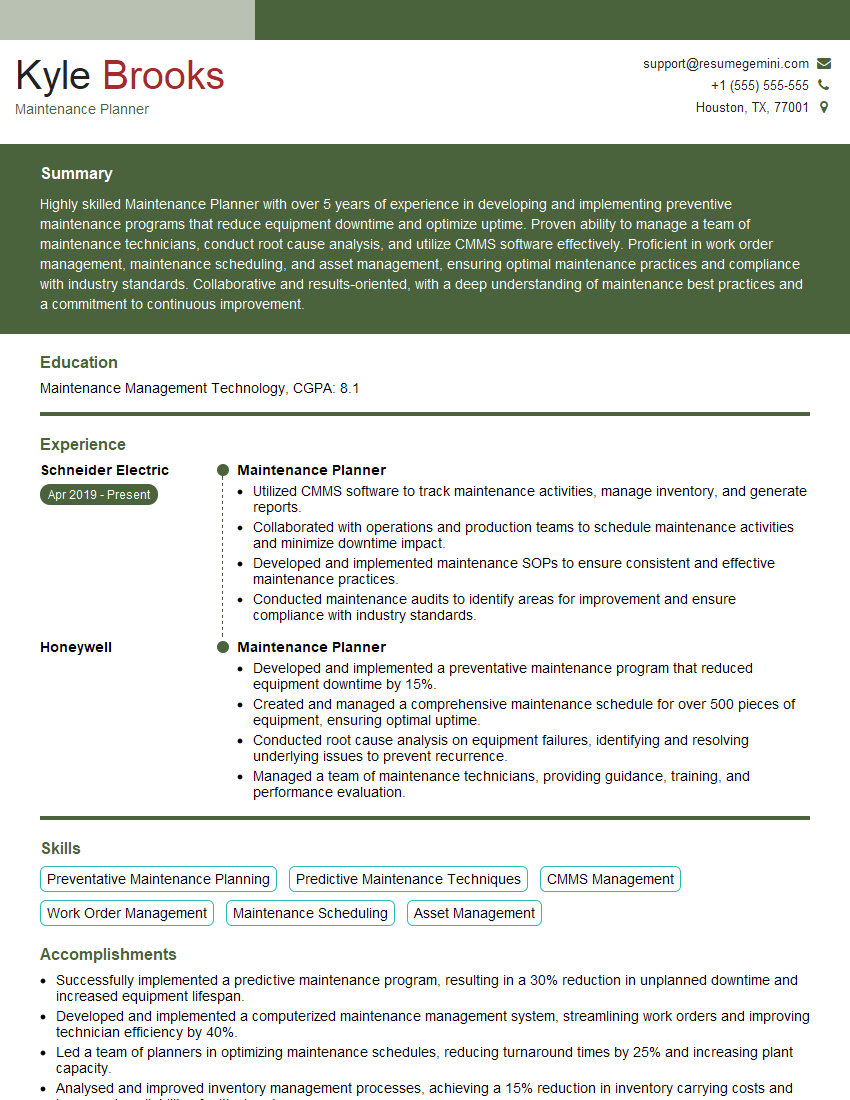
Maintenance Planner Resume Sample
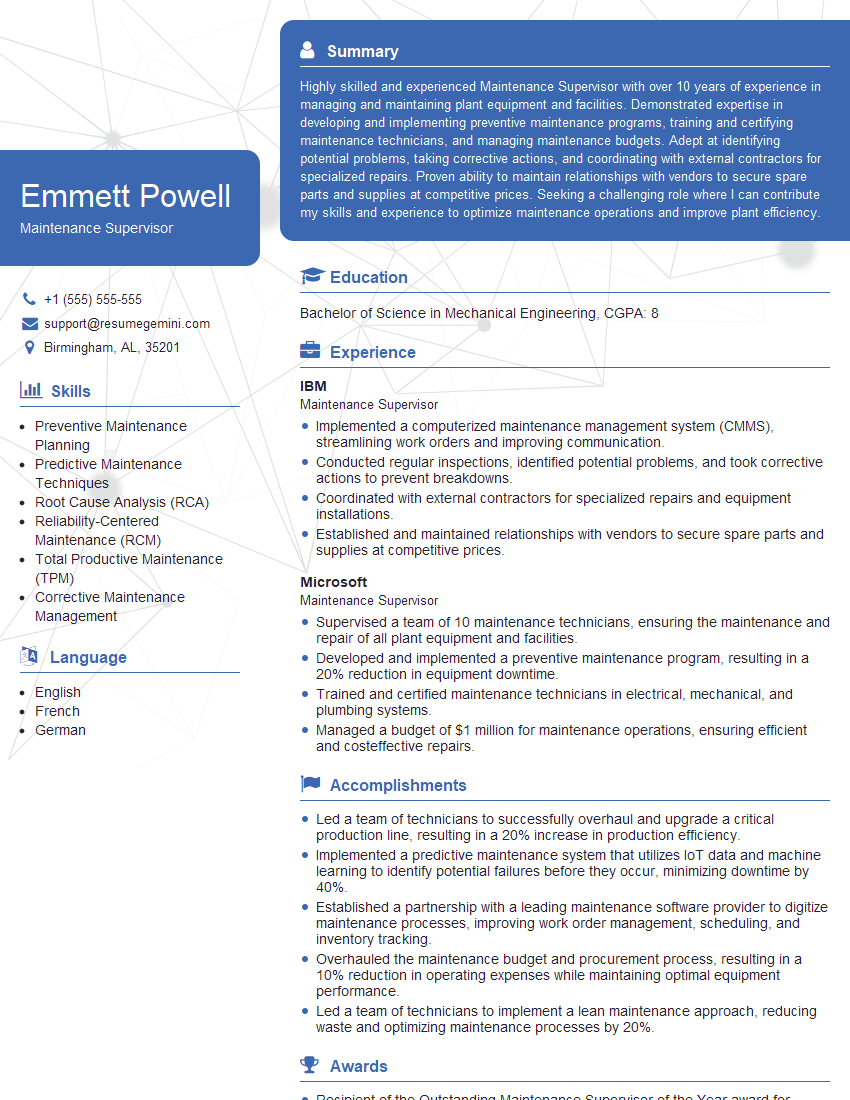
Maintenance Supervisor Resume Sample
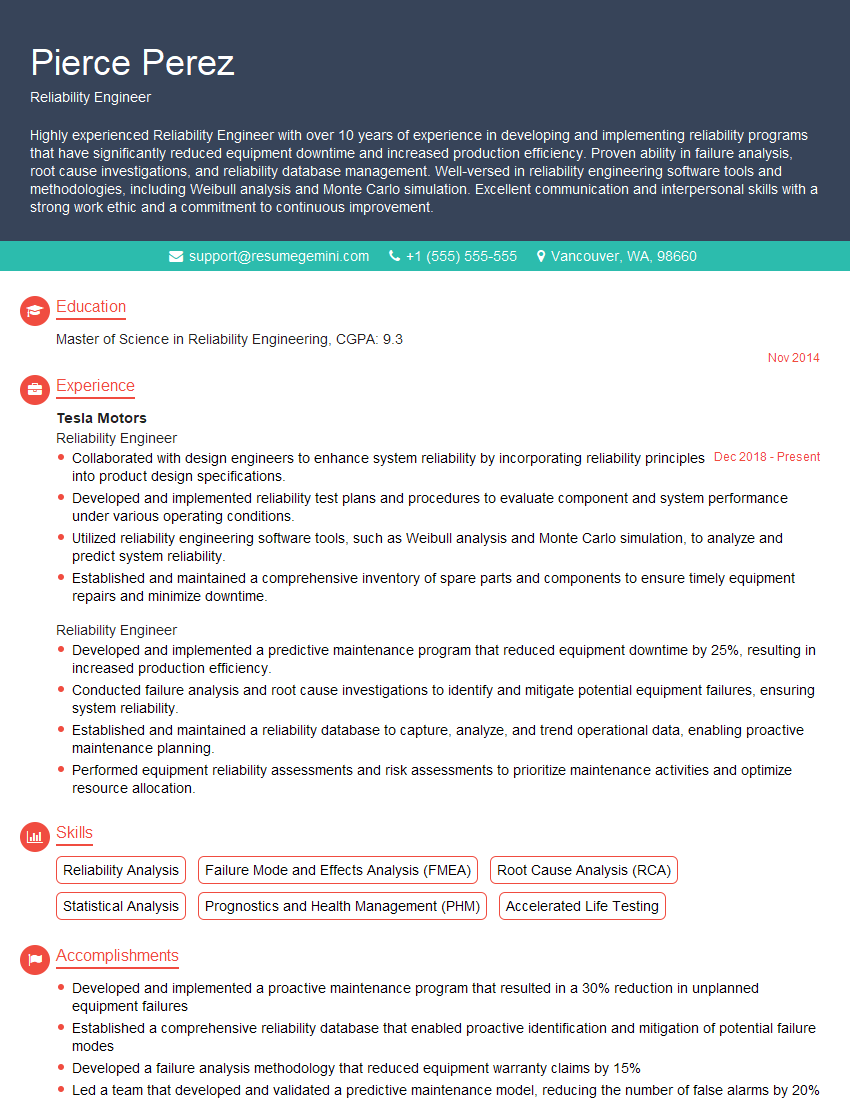
Reliability Engineer Resume Sample
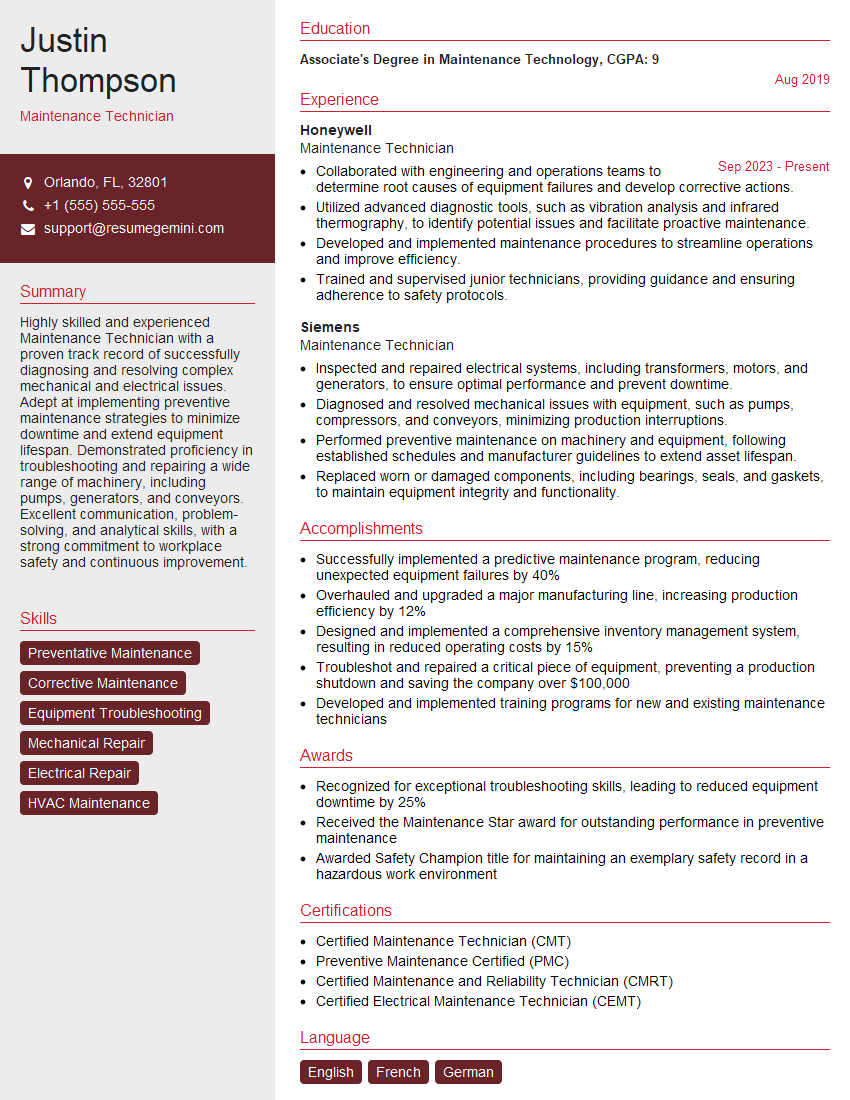
Maintenance Technician Resume Sample
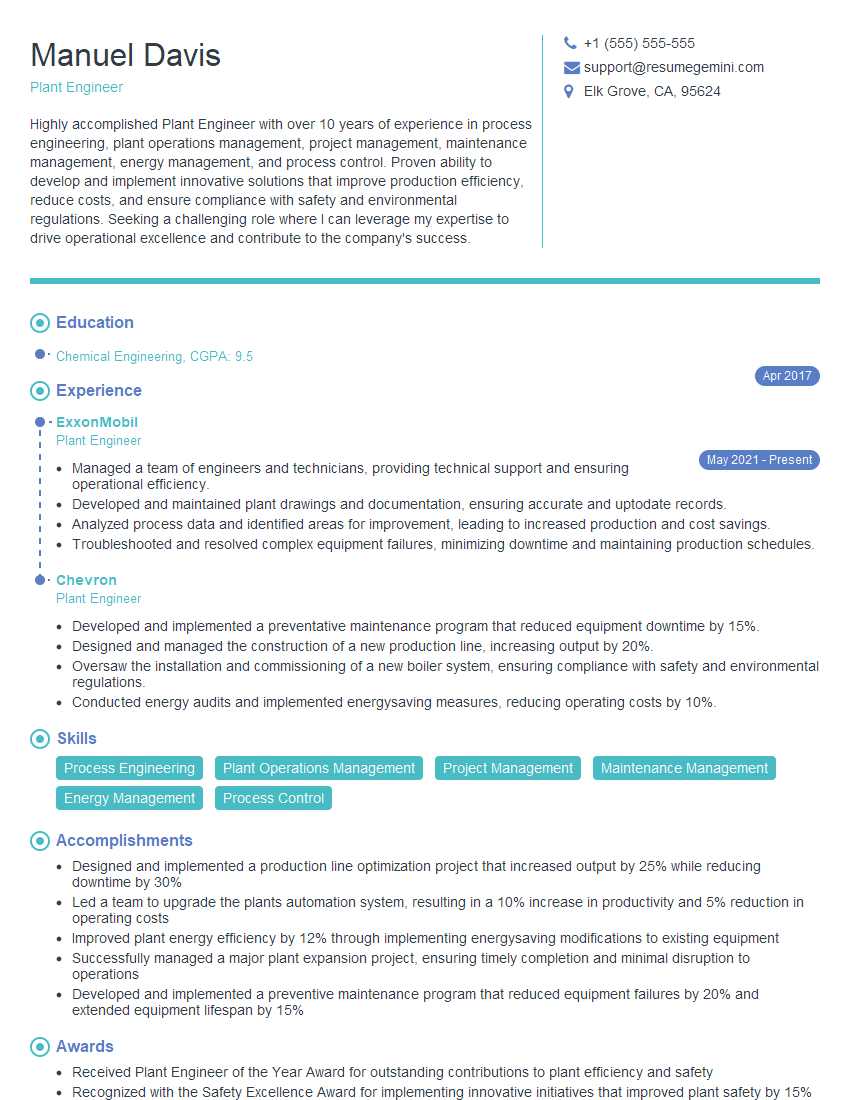
Plant Engineer Resume Sample
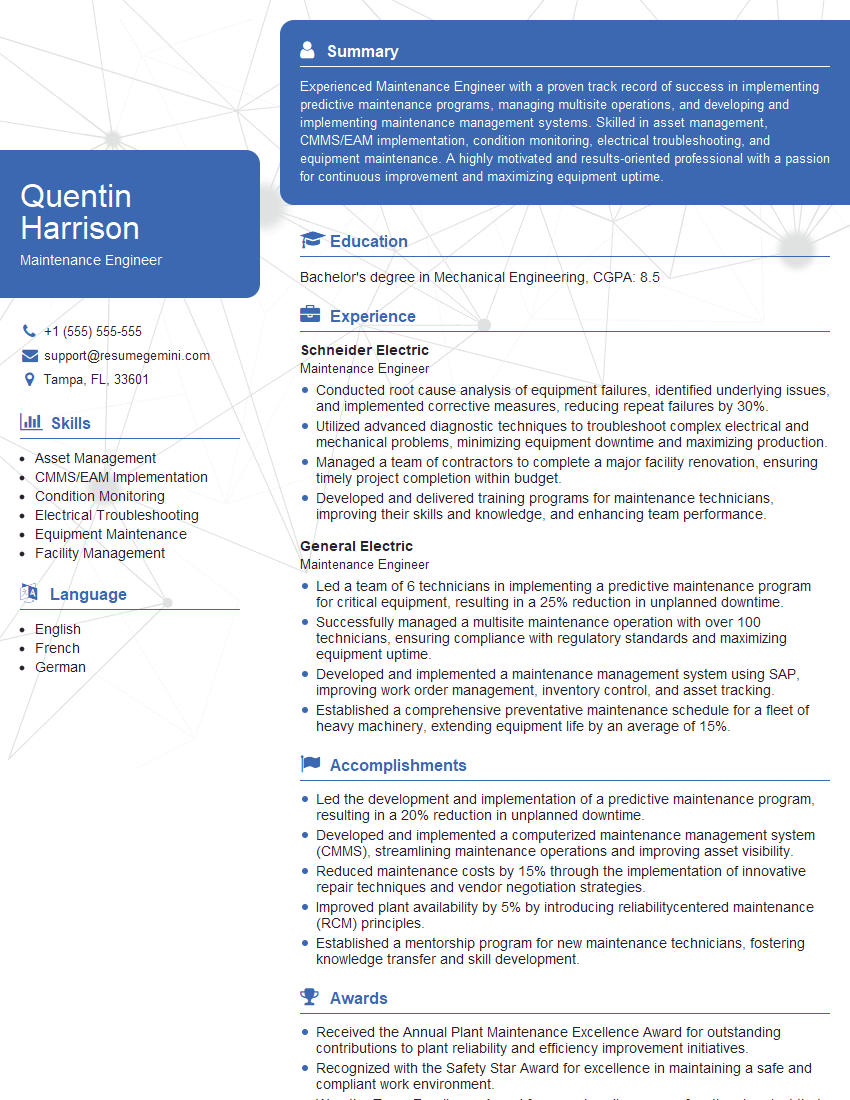
Maintenance Engineer Resume Sample
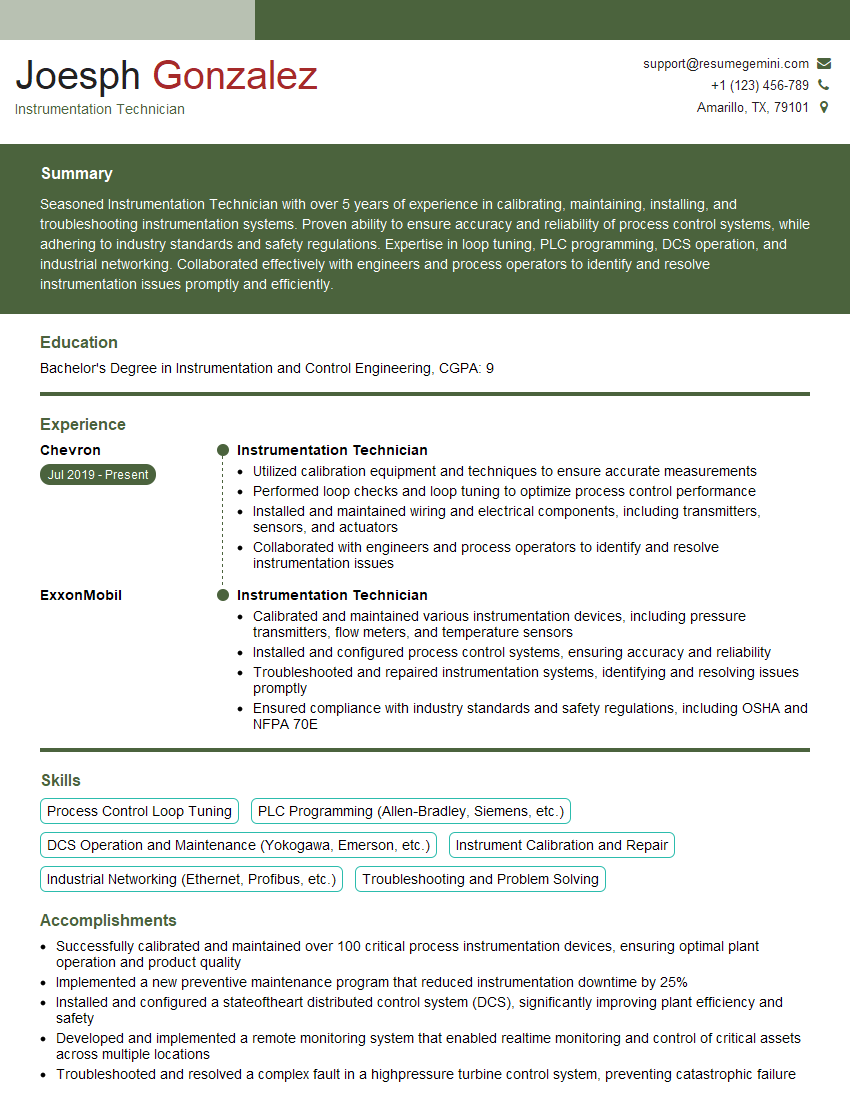
Instrumentation Technician Resume Sample
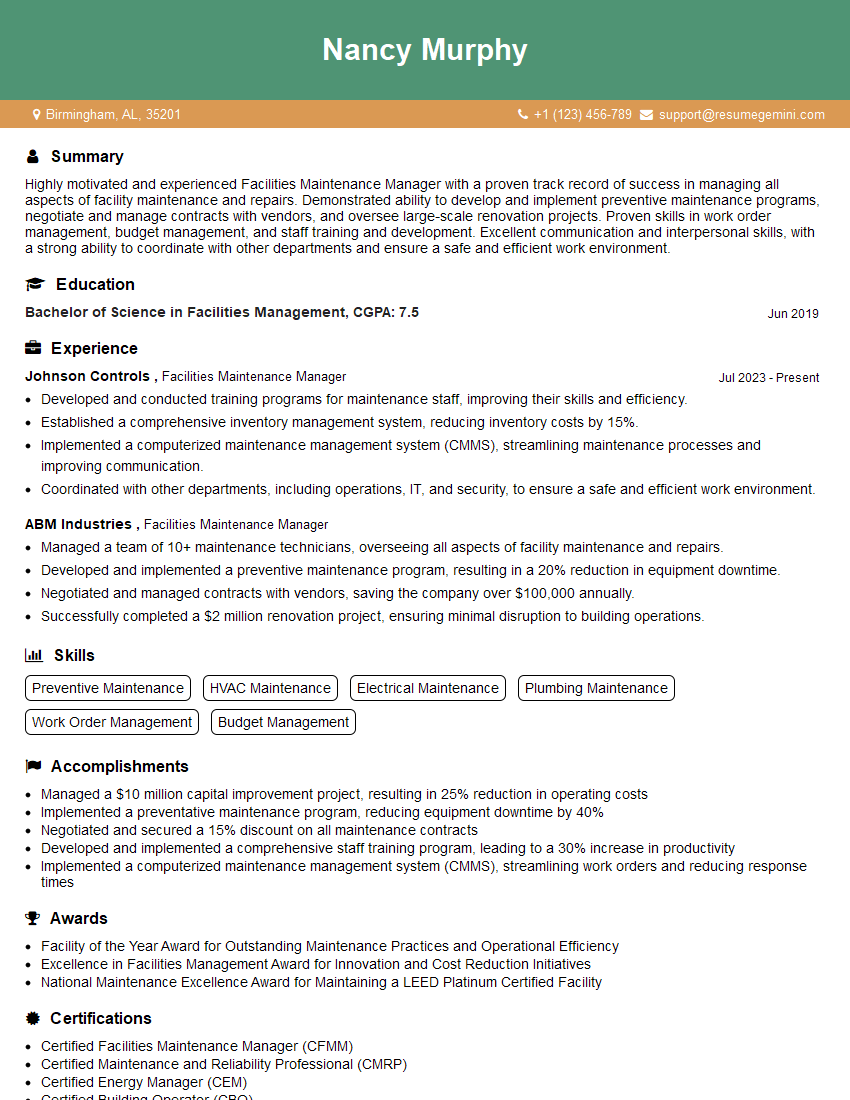
Facilities Maintenance Manager Resume Sample

Maintenance Scheduler Resume Sample
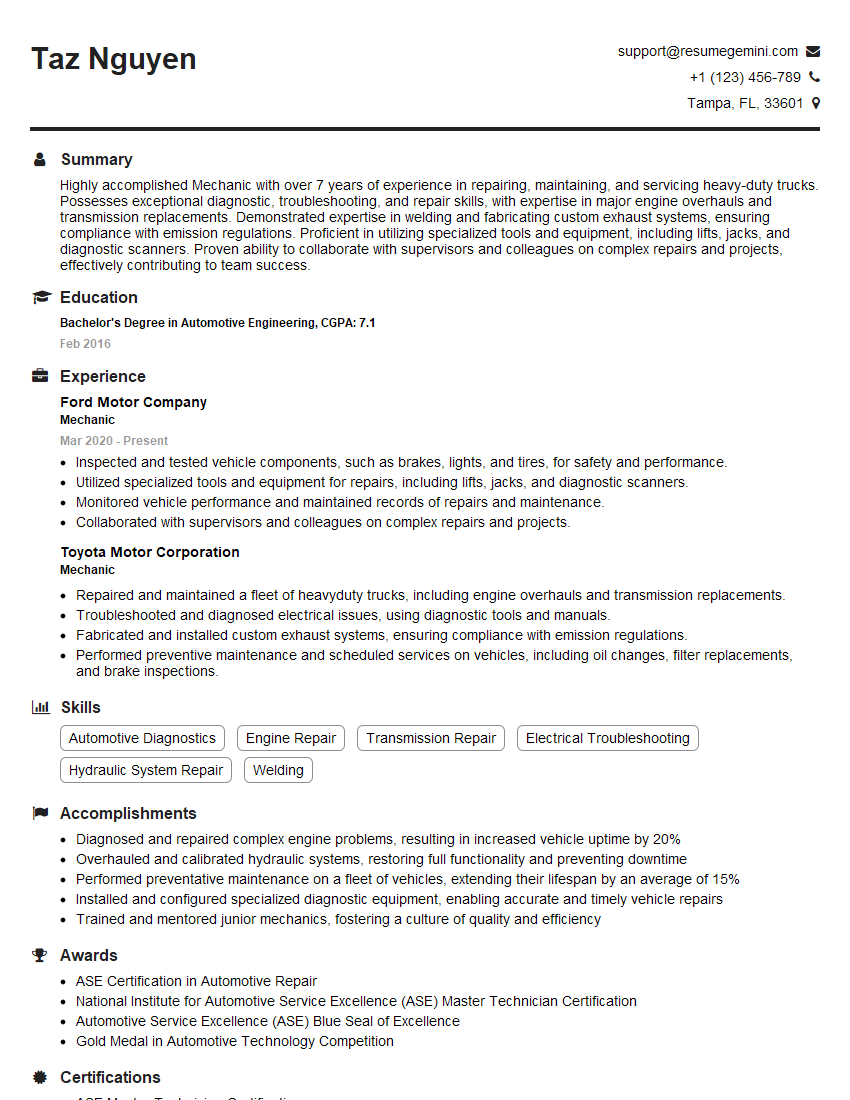
Mechanic Resume Sample
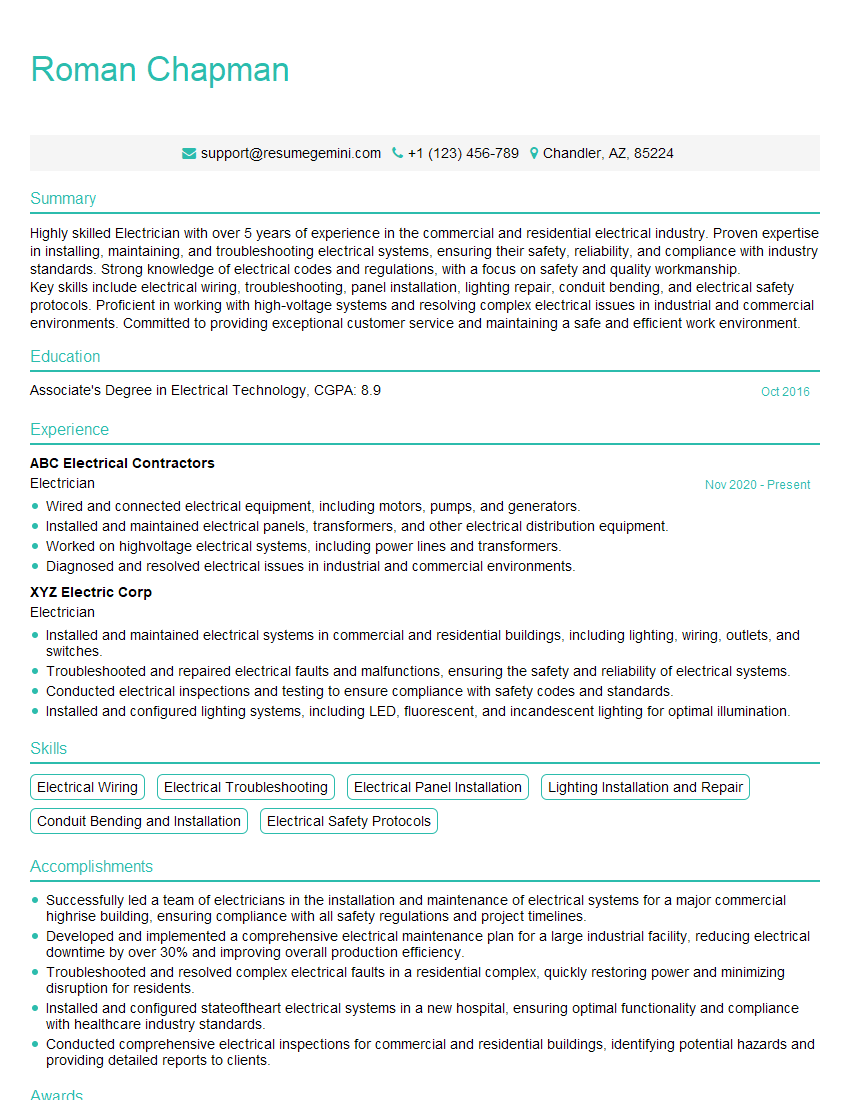
Electrician Resume Sample
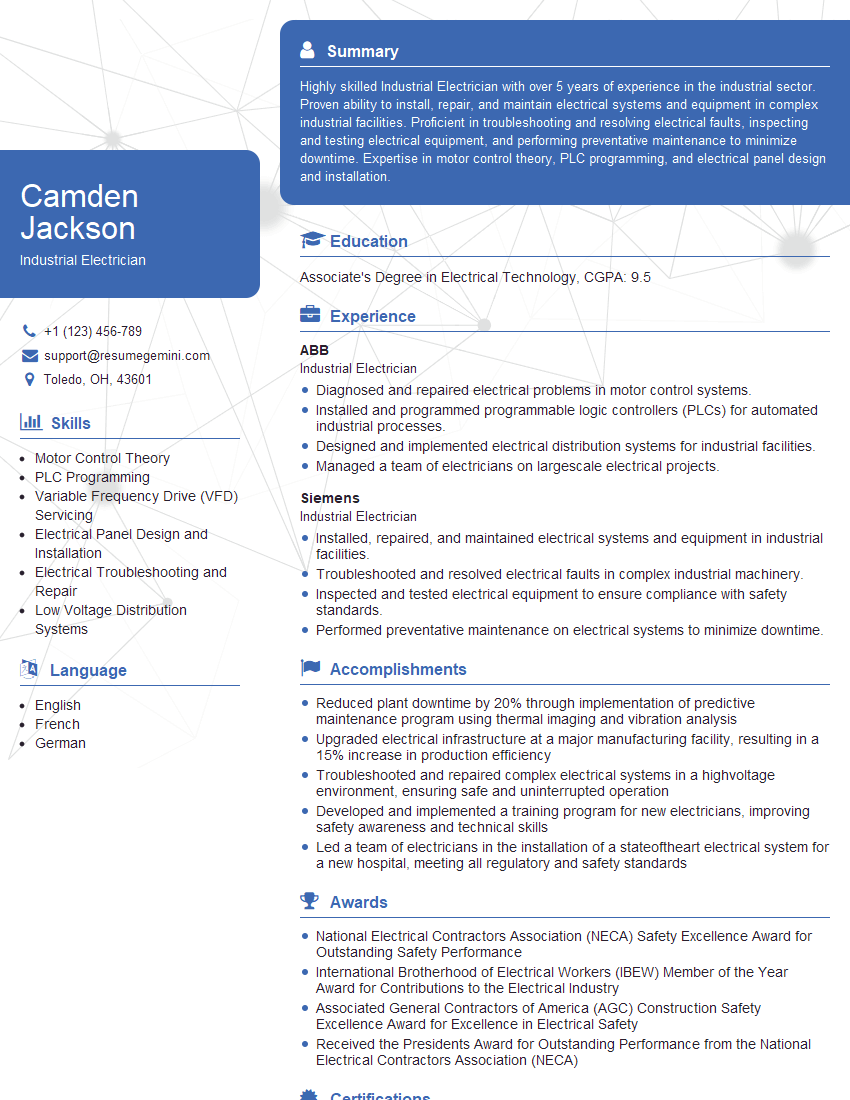
Industrial Electrician Resume Sample
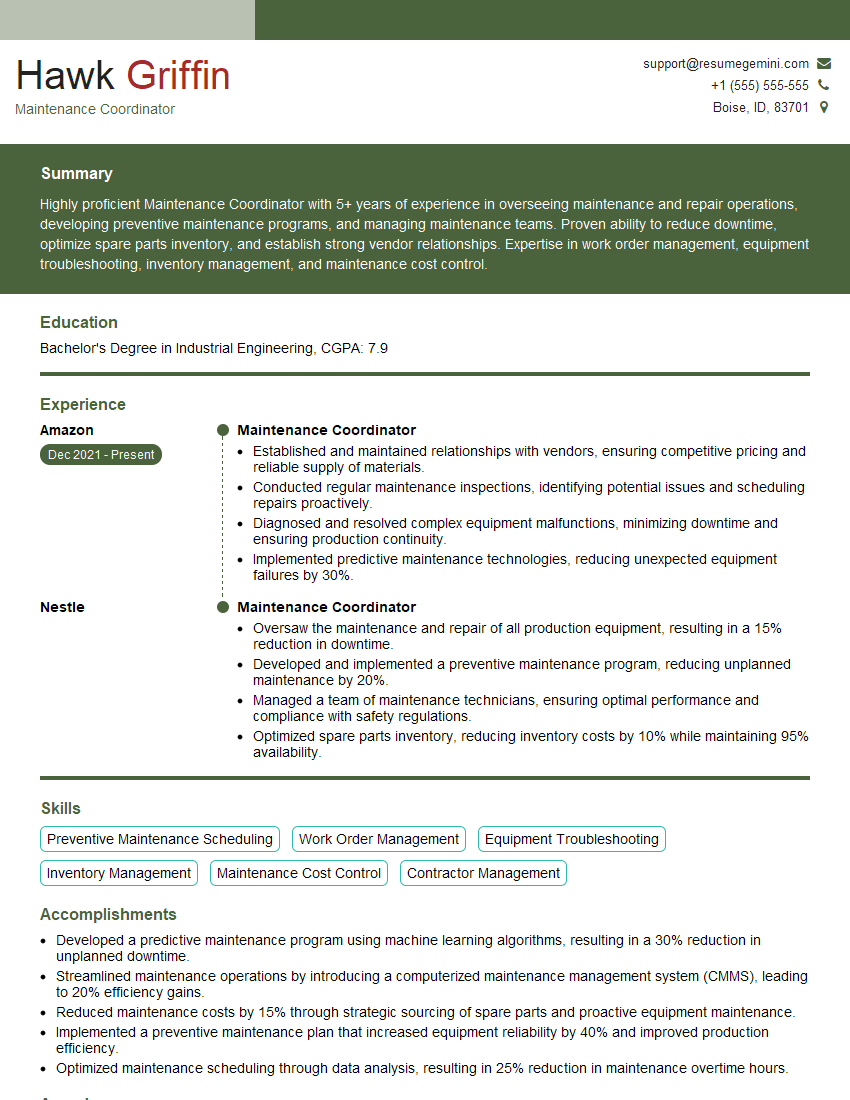
Maintenance Coordinator Resume Sample
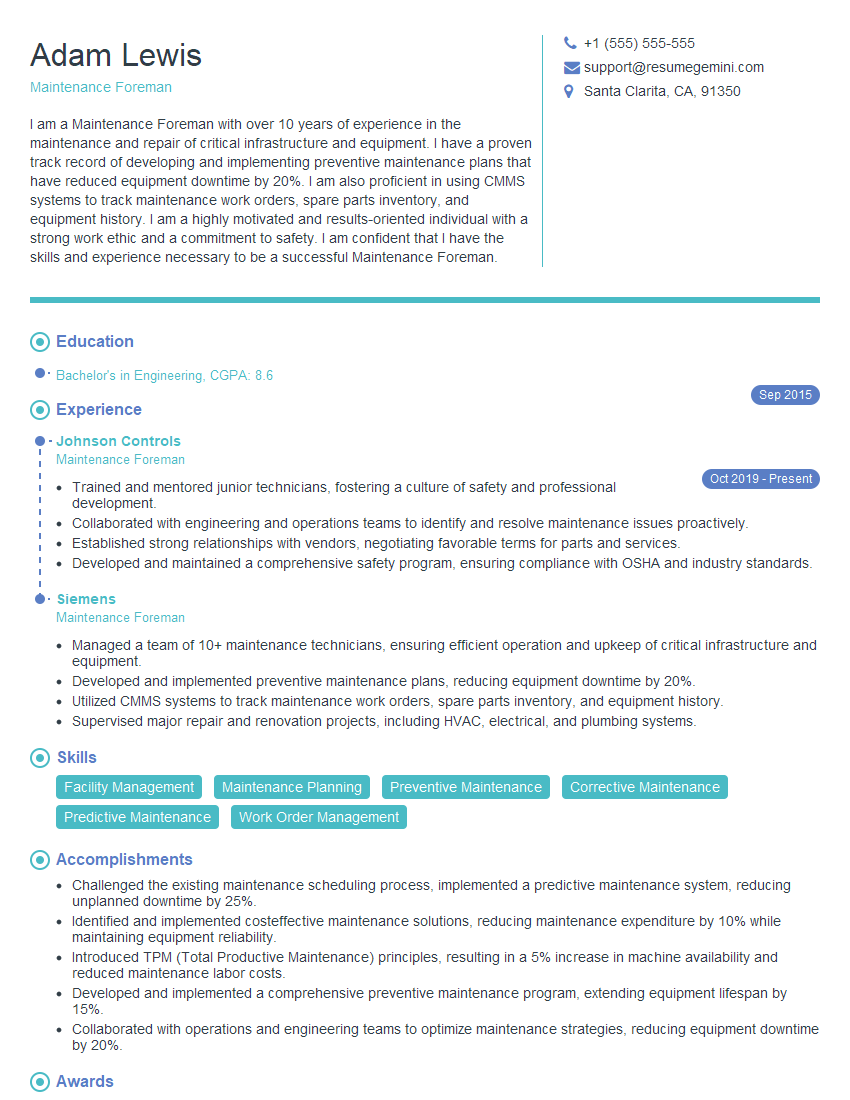
Maintenance Foreman Resume Sample

Electrical Maintenance Technician Resume Sample
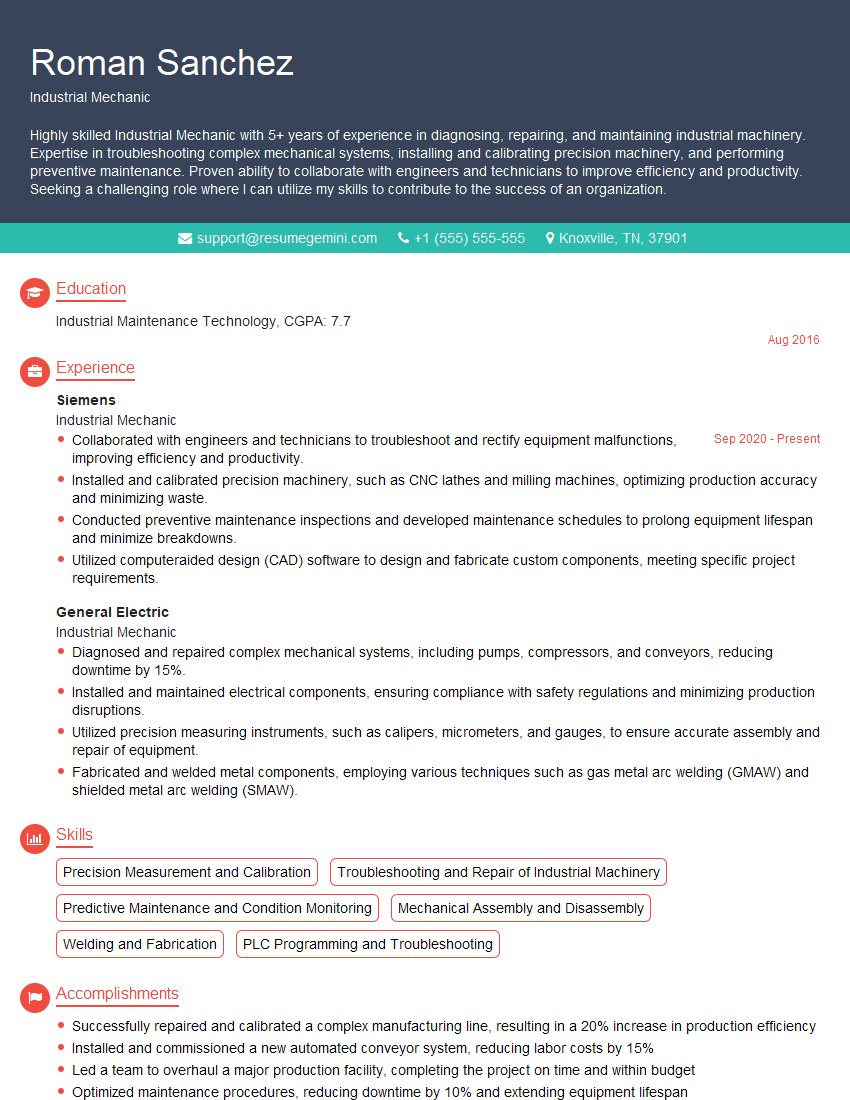
Industrial Mechanic Resume Sample

Millwright Resume Sample
- Maintenance Planner
- Maintenance Supervisor
- Reliability Engineer
- Maintenance Technician
- Plant Engineer
- Maintenance Engineer
- Instrumentation Technician
- Facilities Maintenance Manager
- Maintenance Scheduler
- Mechanic
- Electrician
- Industrial Electrician
- Maintenance Coordinator
- Maintenance Foreman
- Electrical Maintenance Technician
- Industrial Mechanic
- Millwright
Explore more articles
Users Rating of Our Blogs
Share Your Experience
We value your feedback! Please rate our content and share your thoughts (optional).
What Readers Say About Our Blog
To the interviewgemini.com Webmaster.
Very helpful and content specific questions to help prepare me for my interview!
Thank you
To the interviewgemini.com Webmaster.
This was kind of a unique content I found around the specialized skills. Very helpful questions and good detailed answers.
Very Helpful blog, thank you Interviewgemini team.