Preparation is the key to success in any interview. In this post, we’ll explore crucial Wort Storage and Transfer interview questions and equip you with strategies to craft impactful answers. Whether you’re a beginner or a pro, these tips will elevate your preparation.
Questions Asked in Wort Storage and Transfer Interview
Q 1. Describe the optimal temperature and pressure ranges for wort storage.
Optimal wort storage temperature and pressure are crucial for maintaining wort quality and preventing spoilage. Ideally, wort should be stored at temperatures between 0°C and 4°C (32°F and 39°F). This low temperature slows down enzymatic activity and microbial growth, preventing unwanted changes in flavor and aroma. Higher temperatures increase the risk of bacterial and wild yeast infection.
Pressure is also important. While wort doesn’t need to be under significant pressure for storage, maintaining a slight positive pressure (e.g., with CO2 blanketing) prevents oxidation and the ingress of unwanted microorganisms. This helps retain the fresh, desirable qualities of the wort. Excessive pressure, however, could lead to tank damage.
Q 2. Explain the importance of maintaining wort sterility during transfer.
Maintaining wort sterility during transfer is paramount to preventing beer spoilage. Any contamination introduced during this stage can ruin the entire batch. Unwanted bacteria and wild yeasts can produce off-flavors, sourness, or even make the beer undrinkable. A sterile environment ensures only the desired yeast strain participates in fermentation, resulting in a consistent and high-quality product. Imagine a chef meticulously preparing a dish, only to have it contaminated right before serving – that’s the risk of a non-sterile wort transfer.
Q 3. What are the different types of wort storage tanks and their applications?
Several types of tanks are used for wort storage, each with specific advantages and applications:
- Stainless Steel Tanks: These are the most common due to their durability, cleanability, and inertness. They’re suitable for both large-scale and smaller breweries. Different designs like jacketed tanks (allowing for temperature control) are widely used.
- Bright Beer Tanks (Brite Tanks): Specifically designed for final beer storage before packaging, Brite tanks are typically pressure vessels ensuring carbonation and clarity.
- Uni-tanks: These combine fermentation and storage functions in a single vessel, often incorporating temperature control and CO2 blanketing systems. They are increasingly popular in craft breweries for their space-saving design.
- Plastic Tanks (e.g., Polypropylene): While less common for large-scale production, plastic tanks can be suitable for smaller breweries or specific applications due to their lower cost. However, they can be more prone to scratching and are not always as easily sanitized.
Q 4. How do you prevent oxidation during wort transfer?
Oxidation is a significant concern during wort transfer as it leads to undesirable flavors, like stale cardboard or papery notes, and can reduce shelf life. Here’s how to minimize it:
- Minimize Headspace: Keep the tanks as full as possible to reduce the amount of air in contact with the wort.
- CO2 Blanketing: Purge the headspace with carbon dioxide before and during transfer to displace oxygen. This creates an inert atmosphere.
- Closed Transfer Systems: Use closed transfer systems that minimize exposure to air. Pumping systems connected directly between tanks are ideal.
- Avoid Excessive Agitation: Minimize agitation of the wort to prevent unnecessary oxygen incorporation.
Remember, oxygen is the enemy of quality beer, especially during the transfer stage.
Q 5. Describe the process of cleaning and sanitizing wort storage and transfer equipment.
Cleaning and sanitizing wort storage and transfer equipment is a rigorous process crucial for preventing infections. It typically involves these steps:
- Pre-rinse: Remove loose debris using water.
- Cleaning: Use a detergent solution to remove organic matter (e.g., CIP – Clean In Place). This might require a caustic cleaning agent.
- Rinse: Thoroughly rinse away all detergent residue.
- Sanitization: Apply a sanitizer (e.g., iodine, peracetic acid, or star san) to kill remaining microorganisms. Follow manufacturer’s instructions for contact time.
- Final Rinse (optional): A final rinse with sterile water is sometimes used, particularly with certain sanitizers.
Regular, thorough cleaning and sanitization are fundamental for producing consistent, high-quality beer.
Q 6. What are the common causes of wort spoilage and how can they be prevented?
Wort spoilage is primarily caused by microbial contamination. Common culprits include:
- Bacteria: Lactic acid bacteria can cause souring, while other bacteria can produce various off-flavors.
- Wild Yeasts: These can compete with the desired yeast strain, resulting in off-flavors or stalled fermentation.
- Mold: Mold contamination can render the wort unusable.
Prevention strategies include meticulous sanitation, proper temperature control, and using high-quality ingredients. Regular testing of wort can also identify potential problems early.
Q 7. Explain the principles of wort chilling and its impact on fermentation.
Wort chilling is the process of rapidly cooling the wort after boiling to prepare it for fermentation. Rapid chilling is essential because it minimizes the risk of bacterial contamination and enzymatic reactions that degrade wort quality. The ideal chilling rate is usually to reach fermentation temperature within 1-2 hours.
Wort chilling’s impact on fermentation is significant:
- Reduces Infection Risk: Faster cooling reduces the time the wort spends at temperatures favorable for microbial growth.
- Protects Wort Quality: Prevents unwanted enzymatic activity which can alter hop aroma and other flavor compounds.
- Improves Yeast Health: Allows for a healthier yeast pitch and better fermentation performance.
Efficient wort chilling is a crucial step that directly influences the final beer quality and reduces the chances of spoilage.
Q 8. What are the safety protocols associated with wort handling and transfer?
Wort handling and transfer demand strict adherence to safety protocols to prevent contamination and accidents. Think of it like handling a delicate, nutrient-rich broth – any mishap could ruin the entire batch.
- Personal Protective Equipment (PPE): Always wear appropriate PPE, including gloves, safety glasses, and closed-toe shoes. This protects you from splashes, spills, and potential injuries.
- Sanitation: All equipment, including pumps, hoses, and tanks, must be meticulously sanitized before and after each use to prevent bacterial growth and off-flavors. We use specialized cleaning agents and follow strict cleaning-in-place (CIP) procedures.
- Pressure Relief: During transfer, ensure adequate pressure relief valves are in place and functioning correctly to prevent over-pressurization and potential explosions. This is particularly critical when working with pressurized vessels.
- Spill Containment: Have appropriate spill containment measures in place. Imagine a wort spill – it’s sticky, messy, and can create a serious sanitation problem. We use spill trays and absorbent materials to quickly and safely contain any spills.
- Lockout/Tagout (LOTO): Before performing any maintenance or repairs on wort handling equipment, ensure LOTO procedures are followed to prevent accidental starts and injuries. This is a crucial safety measure to protect personnel.
Q 9. How do you monitor and control the temperature and pressure of wort during storage and transfer?
Precise temperature and pressure control are vital for maintaining wort quality and preventing spoilage. Think of it like keeping a delicate soufflé just right – too much heat or pressure can cause collapse.
We use a combination of sensors, controllers, and automated systems to monitor and control these parameters.
- Temperature Sensors: Thermocouples or RTDs (Resistance Temperature Detectors) are strategically placed within the wort storage and transfer lines to provide real-time temperature data.
- Pressure Sensors: Pressure transducers monitor the pressure within the system. This is crucial for preventing leaks and ensuring smooth flow.
- Control Systems: Programmable Logic Controllers (PLCs) or distributed control systems (DCS) automatically adjust heating or cooling elements and control valves to maintain the desired temperature and pressure setpoints.
- Data Logging: All temperature and pressure data is logged for traceability and quality control purposes. This provides an audit trail of the entire process.
For example, during wort cooling, we might use a plate chiller combined with a PLC to automatically maintain the wort temperature at the optimal range for fermentation.
Q 10. Describe different methods for transferring wort (e.g., pumping, gravity flow).
Several methods exist for transferring wort, each with its advantages and disadvantages. It’s like choosing the right tool for the job – a hammer isn’t suitable for screwing in a screw.
- Pumping: Centrifugal pumps are commonly used for efficient and controlled wort transfer, especially over longer distances or when transferring to elevated vessels. They offer precise flow rate control.
- Gravity Flow: This method relies on the difference in height between the wort source and the destination vessel to drive the flow. It’s simpler and requires less equipment, but it’s slower and less controllable. Ideal for short distances and smaller breweries.
- Positive Displacement Pumps: These pumps, like peristaltic pumps, are used when precise and gentle transfer is needed, minimizing shear stress on the wort.
Q 11. What are the potential problems associated with each wort transfer method?
Each wort transfer method presents potential problems. Anticipating and mitigating these issues is crucial for successful brewing.
- Pumping: Potential issues include pump cavitation (formation of vapor bubbles), shear stress damaging the wort, and pump seal leaks. Improper pump sizing can also lead to inefficient transfer.
- Gravity Flow: The main limitations are slow transfer rates and the inability to control flow precisely. It’s also unsuitable for long distances or when transferring to higher elevations.
Q 12. How do you troubleshoot common issues encountered during wort transfer?
Troubleshooting wort transfer issues involves a systematic approach. Think of it like diagnosing a car problem – you need to identify the symptom before fixing the root cause.
- No Flow: Check for blockages in the lines, ensure the pump is primed correctly (if applicable), and verify that power is supplied to the pump.
- Low Flow Rate: Examine for partial blockages, check pump pressure, and ensure valves are fully open.
- Leaking Valves or Fittings: Tighten fittings, replace worn seals, or repair leaks promptly to avoid loss of wort and contamination.
- High Pressure: Check for blockages, ensure pressure relief valves are functioning correctly, and verify that the system is properly vented.
For example, if we experience low flow during pumping, we’d first inspect the lines for any blockages using a camera. If the issue persists, we’d check pump pressure and potentially inspect the pump impeller for damage.
Q 13. What are the key quality control parameters for wort during storage and transfer?
Maintaining wort quality during storage and transfer is paramount for consistent beer quality. This involves regular monitoring of several key parameters.
- Temperature: Maintaining consistent temperature prevents spoilage and undesirable enzymatic activity.
- Oxygen Levels: Minimizing oxygen exposure reduces oxidation and prevents off-flavors.
- pH: Monitoring pH ensures the wort is within the optimal range for fermentation.
- Specific Gravity: Accurate measurement reflects the sugar content, crucial for fermentation control.
- Microbial Contamination: Regular microbiological testing ensures the wort remains free from unwanted microorganisms.
Q 14. How do you ensure accurate measurement of wort volume and density?
Accurate measurement of wort volume and density is crucial for process control and recipe consistency. Imagine baking a cake – incorrect measurements will result in a subpar product.
- Volume Measurement: We use calibrated sight glasses on tanks, flow meters in the transfer lines, and level sensors for accurate volume determination. Sight glasses are like measuring cups for larger volumes.
- Density Measurement: A hydrometer or digital density meter provides precise density measurements. The hydrometer floats in the wort and its reading corresponds to the specific gravity.
- Calibration: Regular calibration of all measurement equipment ensures accuracy and traceability. This is crucial for consistent brewing.
Q 15. Explain the role of automation in wort storage and transfer systems.
Automation plays a crucial role in modern wort storage and transfer systems, enhancing efficiency, consistency, and safety. Imagine a large brewery – manually transferring hundreds of gallons of wort would be incredibly labor-intensive and prone to error. Automation eliminates much of this.
- Automated Valves: Programmable logic controllers (PLCs) control the opening and closing of valves, ensuring precise wort flow to different vessels (e.g., whirlpool, fermenters). This prevents overflows and ensures accurate batching.
- Automated Pumps: Automated pumps precisely control the wort transfer rate, preventing damage to equipment from excessive pressure or overly fast transfers. They can also be programmed for specific transfer profiles based on the wort’s temperature and viscosity.
- Level Sensors and Control Systems: These systems continuously monitor wort levels in tanks and automatically adjust pump and valve operation to maintain optimal fill levels. This prevents overfilling and underfilling, crucial for consistent brewing.
- Data Logging and Reporting: Automated systems record crucial parameters like transfer times, volumes, and temperatures. This data is invaluable for process optimization and troubleshooting.
For example, a system might automatically transfer wort from the lauter tun to the whirlpool after the mash is complete, based on predefined parameters such as wort gravity and temperature. This automation saves time, reduces human error, and improves overall brewing consistency.
Career Expert Tips:
- Ace those interviews! Prepare effectively by reviewing the Top 50 Most Common Interview Questions on ResumeGemini.
- Navigate your job search with confidence! Explore a wide range of Career Tips on ResumeGemini. Learn about common challenges and recommendations to overcome them.
- Craft the perfect resume! Master the Art of Resume Writing with ResumeGemini’s guide. Showcase your unique qualifications and achievements effectively.
- Don’t miss out on holiday savings! Build your dream resume with ResumeGemini’s ATS optimized templates.
Q 16. Describe the different types of valves and pumps used in wort transfer systems.
Wort transfer systems utilize a variety of valves and pumps, each chosen based on the specific application and the properties of the wort (temperature, viscosity, etc.).
- Valves:
- Ball Valves: Simple, reliable, and offer full on/off control. Good for general use but can be less precise for fine control.
- Butterfly Valves: Used for larger flow rates, often automated for quick opening and closing. Suitable for rougher service but offer less precise control than some other types.
- Diaphragm Valves: Ideal for sanitary applications as the diaphragm prevents wort from contacting internal valve components. Provide good shut-off and are commonly used in food and beverage processing.
- Control Valves: Offer precise control of wort flow, often used in conjunction with automation systems. They can maintain a constant flow rate despite pressure fluctuations.
- Pumps:
- Centrifugal Pumps: Commonly used for their high flow rates, but they’re less efficient at high viscosities. Good for transferring large volumes.
- Positive Displacement Pumps: These pumps deliver a consistent volume per revolution, regardless of pressure changes. Excellent for transferring viscous wort or handling delicate materials but may have lower flow rates than centrifugal pumps.
- Peristaltic Pumps: These pumps use a flexible tube to move the wort; the tube is compressed and relaxed, creating a pumping action. They’re ideal for sanitary applications and are gentle on the wort.
The selection of valves and pumps depends on factors such as wort volume, viscosity, desired flow rate, required level of automation, and sanitary design requirements. A brewery might use centrifugal pumps for transferring large volumes of low-viscosity wort and peristaltic pumps for handling smaller volumes of more sensitive materials.
Q 17. How do you perform preventative maintenance on wort storage and transfer equipment?
Preventative maintenance is crucial for ensuring the longevity and reliability of wort storage and transfer equipment. A comprehensive program involves:
- Regular Inspections: Visual inspections should be conducted daily to identify any leaks, damage, or corrosion. Weekly inspections should be more thorough, checking for wear and tear on moving parts.
- Cleaning and Sanitization: Thorough cleaning and sanitation are essential to prevent bacterial growth and maintain product quality. This often involves chemical cleaning agents and high-temperature rinsing.
- Lubrication: Moving parts of pumps and valves should be lubricated according to the manufacturer’s recommendations to ensure smooth operation and reduce wear.
- Calibration and Testing: Level sensors, flow meters, and other instrumentation should be regularly calibrated to ensure accuracy. Pressure testing of valves and pipes helps detect potential leaks.
- Component Replacement: Wearable parts such as seals, gaskets, and pump bearings should be replaced proactively, according to a schedule based on usage and manufacturer recommendations. This prevents unexpected downtime.
A well-documented maintenance schedule, using a Computerized Maintenance Management System (CMMS), ensures all tasks are completed on time, and records are kept for regulatory compliance and troubleshooting.
Q 18. What is the importance of proper wort aeration?
Proper wort aeration is critical for healthy yeast fermentation. Yeast requires oxygen to reproduce and create sterols, which are essential for cell membrane function. Without sufficient oxygen, fermentation can be sluggish or incomplete, leading to off-flavors and reduced alcohol yield.
Think of it like a marathon runner – they need oxygen to perform optimally. Yeast is similar; oxygen provides the energy they need for the strenuous process of fermentation. Insufficient oxygen can lead to stressed yeast, resulting in a poor fermentation and potentially flawed beer.
Aeration is typically done after the wort is cooled, using either a sparger (for gentle aeration) or a high-speed aerator (for rapid aeration). The amount of oxygen introduced should be carefully controlled to avoid excessive oxidation, which can result in off-flavors.
Q 19. Describe the process for managing wort inventory and tracking usage.
Managing wort inventory and tracking usage involves a combination of manual and automated systems. Accurate tracking is crucial for production planning, cost control, and quality assurance.
- Tank Level Monitoring: Automated level sensors provide continuous monitoring of wort levels in storage tanks. This data can be integrated into a brewery’s management system for real-time inventory updates.
- Batch Tracking: Each batch of wort should be clearly identified and tracked throughout the brewing process. This information is essential for tracing the origin of any issues and for maintaining accurate records.
- Usage Reporting: Automated systems can generate reports on wort usage for each brewhouse run, allowing brewers to monitor efficiency and identify areas for improvement.
- Inventory Management Software: Dedicated software packages can integrate with automated systems and provide comprehensive tools for managing inventory, predicting demand, and optimizing production scheduling.
Think of it like a supermarket inventory system – they need to know exactly how much of each product they have on hand to ensure they can meet customer demand and avoid waste. Breweries operate similarly, needing to track wort to optimize production and ensure they have enough for planned brews.
Q 20. How do you handle wort spills or leaks?
Wort spills or leaks are serious incidents that must be addressed immediately to minimize waste, prevent contamination, and ensure worker safety. The response should be swift and methodical:
- Emergency Shutdown: Immediately shut down the affected equipment to prevent further spillage.
- Containment: Contain the spill using absorbent materials to prevent its spread and contamination of surrounding areas.
- Cleanup: Thoroughly clean and sanitize the affected area to remove all traces of wort and prevent bacterial growth. This may involve specialized cleaning agents and equipment.
- Waste Disposal: Properly dispose of the spilled wort according to environmental regulations.
- Root Cause Analysis: Conduct a thorough investigation to determine the cause of the leak and implement corrective measures to prevent future occurrences.
- Documentation: Meticulously document the entire incident, including the cause, cleanup procedures, and any corrective actions taken. This documentation is essential for insurance purposes and regulatory compliance.
A well-defined spill response plan, regularly practiced through drills, is essential for effective response in real-world situations.
Q 21. What are the regulatory compliance requirements for wort handling?
Regulatory compliance for wort handling varies by location but generally focuses on food safety, environmental protection, and worker safety. Key areas include:
- Food Safety Regulations: Wort handling must adhere to food safety regulations (e.g., HACCP principles) to prevent contamination and ensure the safety of the final product. This involves rigorous sanitation procedures, temperature control, and proper storage practices.
- Environmental Regulations: Disposal of wastewater containing wort and cleaning agents must comply with local and national environmental regulations. This often involves pretreatment to reduce pollutants before discharge.
- Occupational Safety and Health Regulations: Wort handling equipment must be designed and maintained safely to protect workers from injury. This includes proper guarding of moving parts, use of personal protective equipment (PPE), and adherence to lockout/tagout procedures.
- Record Keeping: Detailed records of all wort handling procedures, including cleaning, sanitation, and maintenance, must be maintained for auditing purposes. These records are essential for demonstrating compliance with regulations.
Staying informed about current regulations and best practices is crucial for maintaining compliance. Regular audits and training for personnel are important aspects of a comprehensive compliance program.
Q 22. Explain the importance of documentation in wort storage and transfer.
Thorough documentation in wort storage and transfer is paramount for maintaining consistent beer quality, complying with regulations, and troubleshooting potential issues. Think of it as the brewery’s recipe book, but for the entire wort handling process. It ensures everyone involved, from brewers to quality control, is on the same page.
- Batch Records: Detailed records for each brewing batch, including wort volume, gravity readings (specific gravity), temperature, transfer times, and any deviations from the standard operating procedure (SOP).
- Tank Logs: Maintaining logs for each storage tank noting fill levels, cleaning and sanitization dates, temperature monitoring data, and any observations regarding the wort’s condition (e.g., cloudiness, off-odors).
- Transfer Records: Documenting the transfer of wort between vessels, including the source tank, destination tank, volume transferred, date, time, and any associated equipment used. This helps in identifying potential contamination points.
- Cleaning and Sanitization Logs: Comprehensive records of cleaning and sanitation procedures for all equipment involved in wort storage and transfer. This is crucial for maintaining hygiene and preventing microbial contamination.
Poor documentation can lead to inconsistencies in beer quality, difficulty in identifying the root cause of problems, and potential regulatory non-compliance. Imagine trying to recreate a successful brew without knowing the exact parameters used! Proper documentation ensures reproducibility and quality control.
Q 23. How do you ensure traceability of wort throughout the brewing process?
Traceability in wort handling is achieved through a combination of meticulous record-keeping, unique batch identifiers, and potentially advanced technology. It’s like having a detailed passport for each batch of wort, allowing us to track its journey from the brew kettle to fermentation.
- Unique Batch IDs: Assigning unique identifiers to each wort batch at the beginning of the brewing process. This ID follows the wort through every stage.
- Integrated Systems: Employing Brewery Management Systems (BMS) that integrate data from different stages, automating data collection, and providing a centralized database for tracking. This could include data on wort production, transfer, storage, and analysis.
- Manual Logs and Checklists: Maintaining accurate manual logs and checklists for all processes to serve as backup and aid in real-time tracking, even in case of system malfunctions.
- Sampling and Analysis: Regularly sampling wort at various stages and documenting the results. This adds another layer of data to the traceability chain, highlighting any changes or anomalies.
For example, if a quality issue arises, we can easily trace the wort back to its origin, identifying the specific batch, its processing parameters, and potentially the source of the problem. This allows for rapid investigation and corrective actions.
Q 24. What are the different types of wort analyzers and their applications?
Several types of wort analyzers are used to assess wort quality and ensure consistent brewing. They provide critical data during the brewing process.
- Refractometer: Measures the refractive index of wort, which is directly related to its specific gravity. It’s a quick and easy way to determine the sugar concentration.
- Hydrometer: Another method to measure specific gravity, providing a slightly less precise but more readily available measurement.
- pH Meter: Measures the acidity (pH) of the wort, a crucial factor influencing yeast health and fermentation.
- Spectrophotometer: Measures the absorbance or transmission of light through a wort sample, allowing for the determination of various components, such as color, bitterness (IBU), and potentially other compounds.
- Automated Wort Analyzers: More advanced systems that can perform multiple analyses simultaneously, including specific gravity, pH, color, and potentially other parameters, offering greater efficiency and accuracy.
The choice of analyzer depends on the specific needs and resources of the brewery. Smaller breweries might rely on simpler tools like refractometers and hydrometers, while larger facilities may utilize automated systems for higher throughput and data consistency.
Q 25. How do you interpret wort analysis results and adjust processes accordingly?
Interpreting wort analysis results requires understanding the expected values and how deviations might affect the final product. It’s a bit like being a detective, piecing together clues to solve the mystery of perfect beer.
Example: Let’s say our target specific gravity is 1.050, but the reading is 1.045. This indicates a lower-than-expected sugar concentration. We would investigate possible causes, such as incomplete mash conversion or losses during lautering (grain separation). Adjustments might include optimizing the mashing process or adjusting the grain bill in subsequent batches.
Another example: If the pH is too high, it might affect yeast health and fermentation efficiency, leading to off-flavors. We might adjust the mash pH by using different acids or water treatments to achieve the optimal range.
Process adjustments depend on the specific deviation. They might involve changes to the mash schedule, grain bill, water chemistry, or even fermentation parameters. Detailed record-keeping of these adjustments and their effects is essential for continuous improvement.
Q 26. Describe your experience with different wort storage tank materials (e.g., stainless steel).
Stainless steel is the dominant material for wort storage tanks due to its inertness, durability, and ease of sanitation. It prevents unwanted chemical reactions with the wort and resists corrosion, ensuring the integrity of the product. However, other materials, though less common, may find niche applications.
- Stainless Steel (304 and 316): The most common choice, offering excellent corrosion resistance and ease of cleaning. 316 stainless steel is preferred in some applications due to its enhanced resistance to chloride attack.
- Glass-lined Steel: Offers similar benefits to stainless steel while providing a smoother interior surface, minimizing the potential for wort sticking or bacterial growth.
- Plastic (e.g., polyethylene): Used occasionally for smaller vessels or less critical applications, but its limitations in temperature resistance and sanitation might restrict its widespread use.
My experience mainly involves working with stainless steel tanks of various sizes and designs. The proper selection of stainless steel grade, along with appropriate tank design (including surface finish and weld quality), are crucial factors for preventing contamination and ensuring the long-term durability of the equipment.
Q 27. Explain the difference between batch and continuous wort transfer systems.
Batch and continuous wort transfer systems differ significantly in their operation and suitability for different brewery scales.
- Batch Transfer: This is a simpler system where wort is transferred from one vessel to another in discrete batches. Think of it as filling a bucket from a larger container. It’s generally suitable for smaller breweries or those with less frequent brewing operations. It’s cost-effective but less efficient at a large scale.
- Continuous Transfer: A more sophisticated system designed for larger-scale breweries where wort flows continuously between vessels. Imagine a constant stream of liquid rather than discrete transfers. It provides greater efficiency and reduces downtime, improving throughput. This requires more complex piping and control systems.
The choice between batch and continuous systems depends on factors such as brewery size, production volume, and budget. Small breweries often prefer batch systems due to their lower initial investment and simpler operation, whereas larger breweries benefit greatly from the increased efficiency of continuous transfer systems.
Q 28. What are your skills in using relevant software for wort management and tracking?
I am proficient in using various software solutions for wort management and tracking, including Brewery Management Systems (BMS) and specialized spreadsheet software. My skills extend to both data input and analysis, enhancing efficiency and providing actionable insights.
- Brewery Management Systems (BMS): Experience using industry-standard BMS software for managing brewing operations, including wort production, inventory, and quality control. I can input data, generate reports, and analyze trends to optimize brewing processes.
- Spreadsheet Software (Excel, Google Sheets): Highly skilled in using spreadsheets to track wort parameters, perform calculations, create graphs and charts to visualize data, and maintain detailed records. This allows for quick data analysis and facilitates informed decision-making.
- Data Analysis and Visualization Tools: Experience using tools like Tableau or Power BI for creating interactive dashboards to visualize wort data, track key performance indicators, and identify areas for improvement.
These skills help in streamlining wort management, improving traceability, and facilitating data-driven decisions to enhance the brewing process. For example, I can use a BMS to track wort production in real-time, generate reports for compliance, and analyze trends to optimize resource utilization.
Key Topics to Learn for Wort Storage and Transfer Interview
- Wort Handling and Properties: Understanding the characteristics of wort (its density, temperature sensitivity, and potential for contamination) and appropriate handling procedures throughout the storage and transfer process.
- Storage Tank Systems: Familiarity with various tank types (e.g., horizontal, vertical, jacketed), their functionalities, and maintenance requirements. Practical application includes understanding the selection criteria for different tank types based on wort volume and processing needs.
- Transfer Methods and Equipment: Knowledge of pumps (centrifugal, positive displacement), piping systems, valves, and other equipment used for efficient and safe wort transfer. Problem-solving approaches include troubleshooting common transfer issues like leaks or blockages.
- Hygiene and Sanitation: Deep understanding of sanitation protocols and cleaning-in-place (CIP) systems to maintain wort quality and prevent microbial contamination. This includes knowledge of relevant regulations and safety procedures.
- Process Control and Automation: Familiarity with instrumentation and control systems used to monitor and regulate parameters such as temperature, pressure, and flow rate during wort storage and transfer. Understanding data acquisition and analysis techniques is crucial.
- Safety Procedures and Regulations: Thorough knowledge of relevant safety regulations and procedures related to handling wort, operating equipment, and maintaining a safe working environment. This includes understanding emergency response protocols.
- Troubleshooting and Maintenance: Ability to diagnose and resolve common issues related to wort storage and transfer systems, including preventative maintenance strategies.
Next Steps
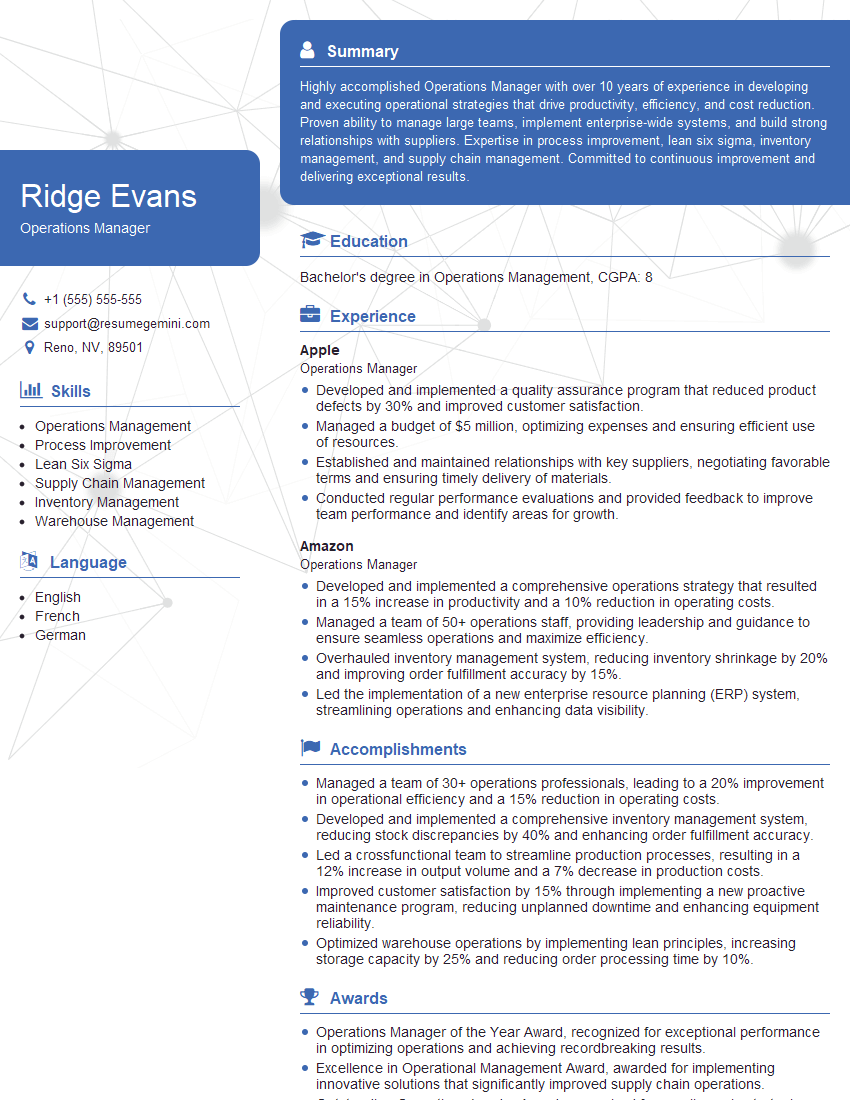
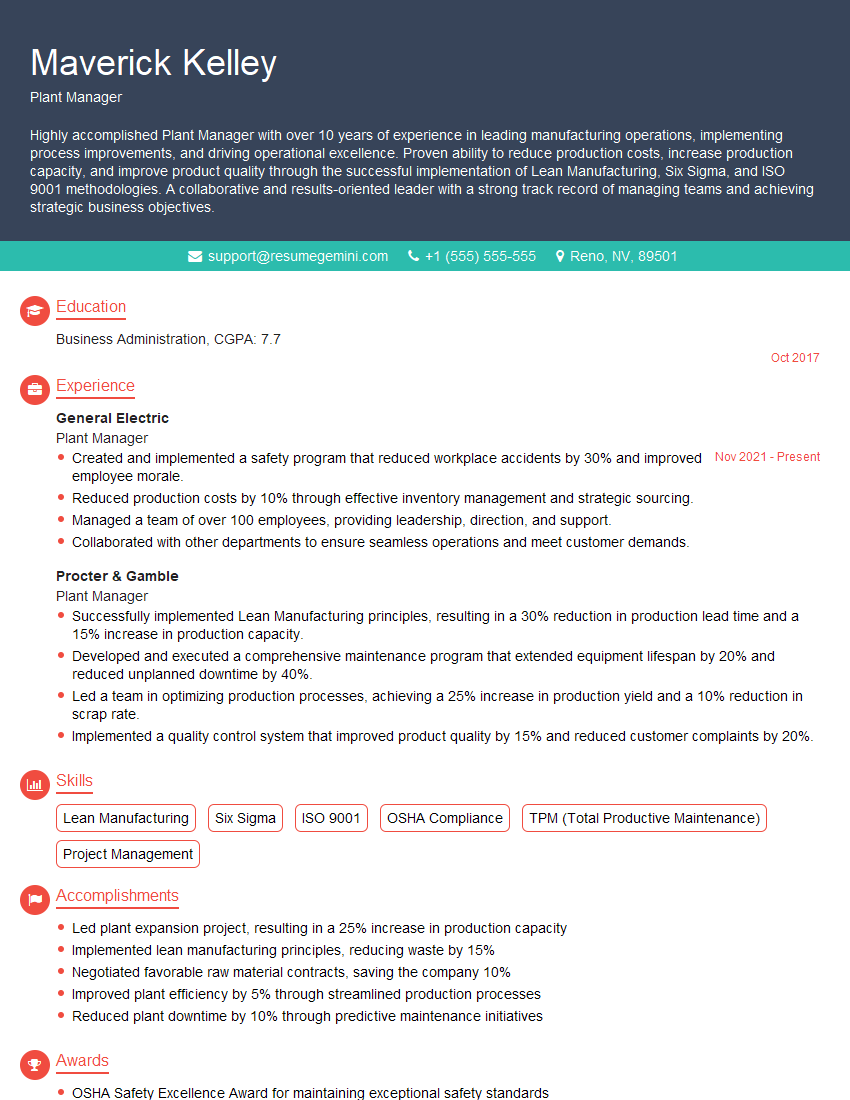
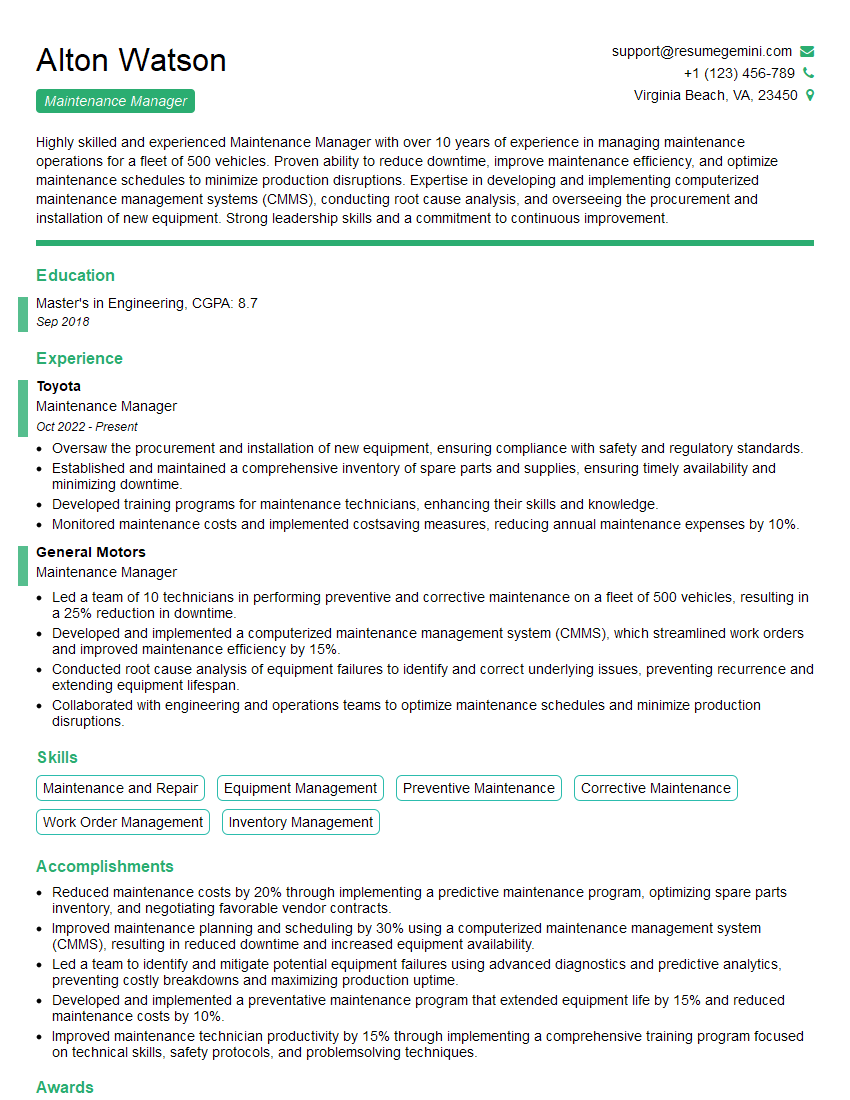
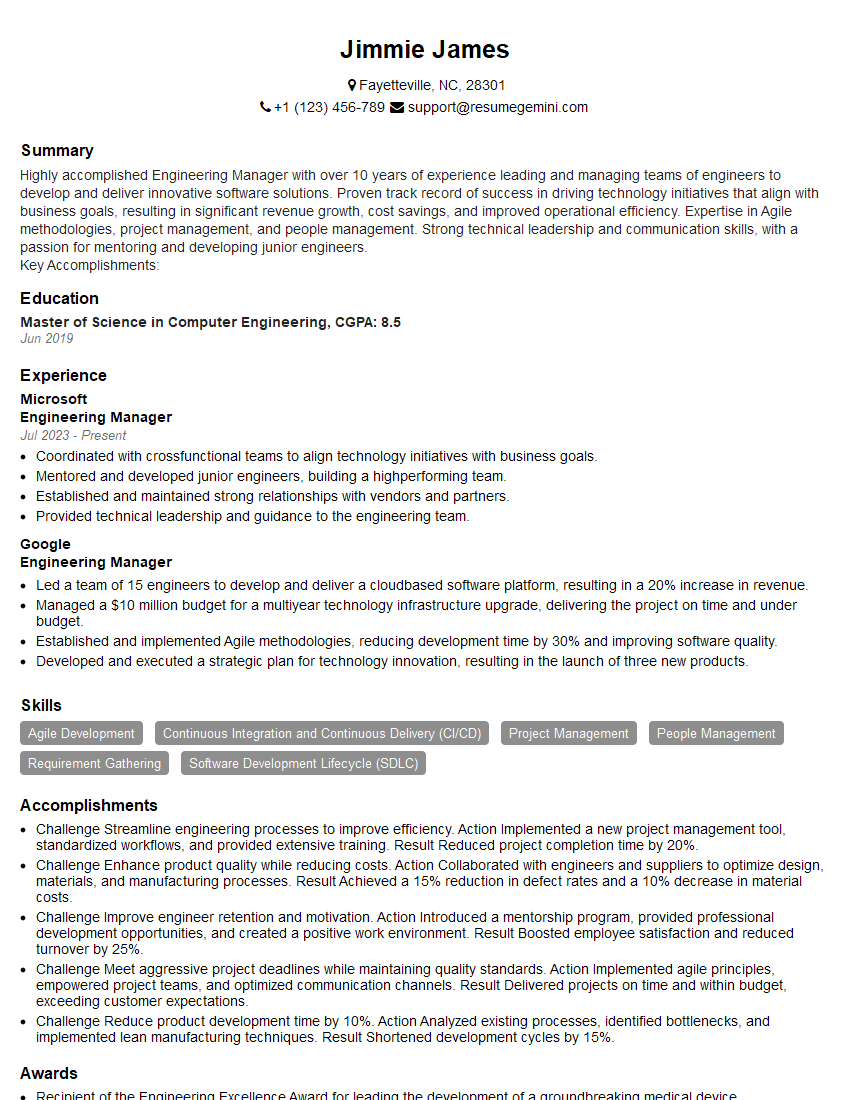
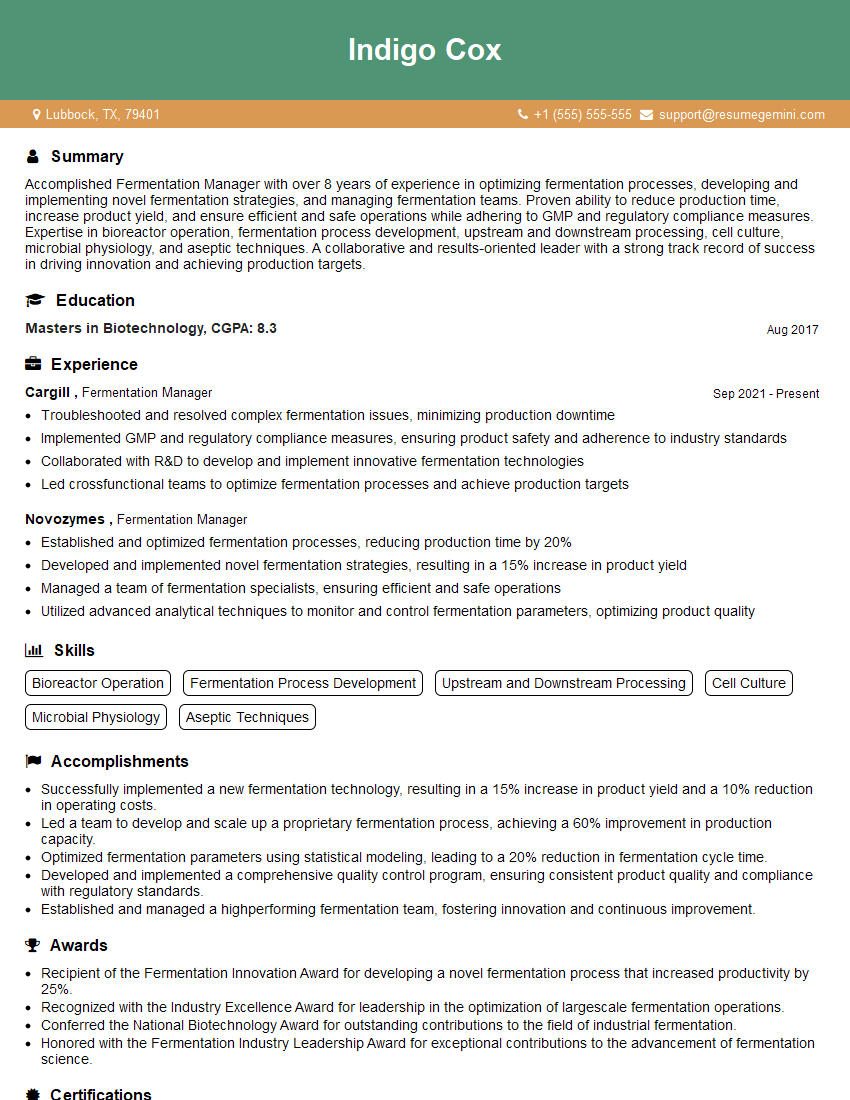
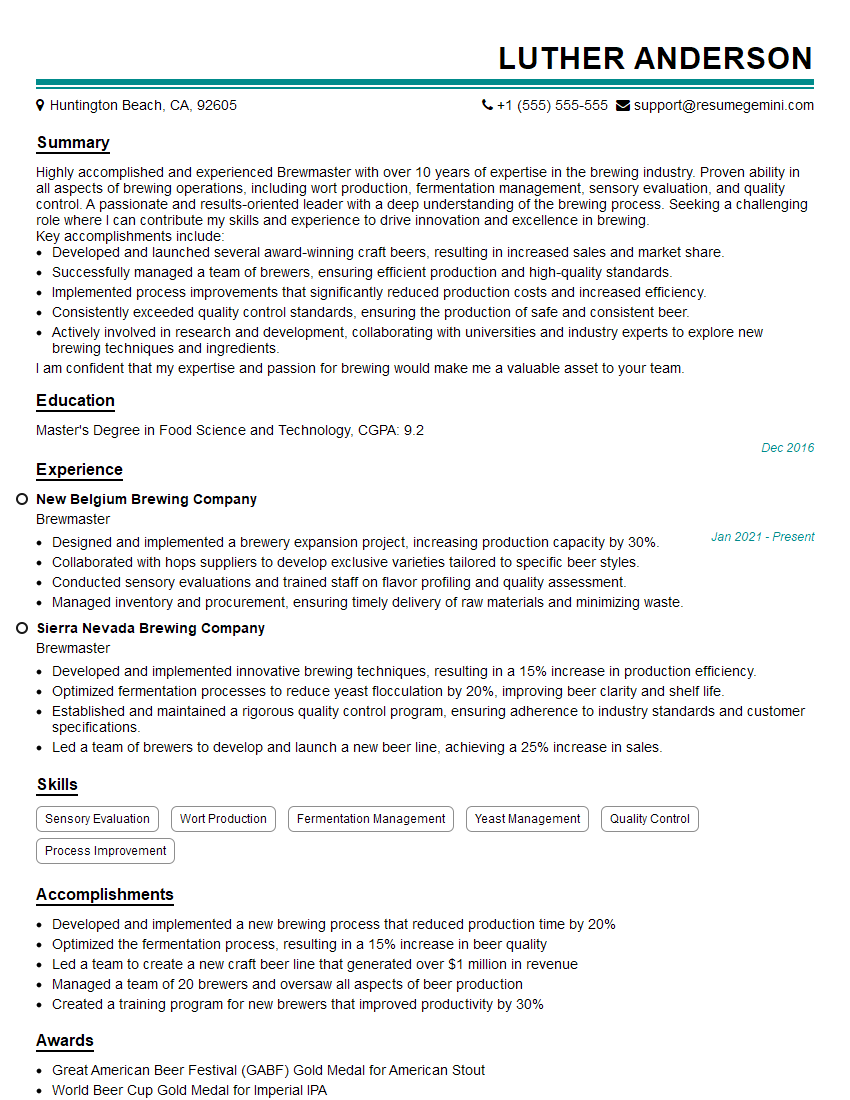
Mastering Wort Storage and Transfer is crucial for career advancement in the brewing and beverage industries, opening doors to specialized roles and increased responsibilities. To maximize your job prospects, it’s essential to create an ATS-friendly resume that effectively highlights your skills and experience. We strongly encourage you to use ResumeGemini, a trusted resource, to build a professional and impactful resume. Examples of resumes tailored to Wort Storage and Transfer roles are available to guide you through this process. Investing time in crafting a strong resume will significantly improve your chances of securing your desired position.

Explore more articles
Users Rating of Our Blogs
Share Your Experience
We value your feedback! Please rate our content and share your thoughts (optional).
What Readers Say About Our Blog
To the interviewgemini.com Webmaster.
Very helpful and content specific questions to help prepare me for my interview!
Thank you
To the interviewgemini.com Webmaster.
This was kind of a unique content I found around the specialized skills. Very helpful questions and good detailed answers.
Very Helpful blog, thank you Interviewgemini team.