Every successful interview starts with knowing what to expect. In this blog, we’ll take you through the top Writing (Creative and Technical) interview questions, breaking them down with expert tips to help you deliver impactful answers. Step into your next interview fully prepared and ready to succeed.
Questions Asked in Writing (Creative and Technical) Interview
Q 1. Explain your process for writing a technical document.
My process for writing a technical document is methodical and iterative, prioritizing clarity and accuracy above all else. It starts with a deep understanding of the subject matter. I’ll spend time researching, interviewing subject matter experts, and reviewing existing documentation to ensure a comprehensive grasp of the topic. Then, I outline the document, creating a logical flow that guides the reader smoothly from introduction to conclusion. This outline serves as a roadmap, ensuring consistency and avoiding tangents. Next, I write the first draft, focusing on conveying information clearly and accurately. Once the draft is complete, I begin the crucial editing and revision process, paying close attention to detail, grammar, and style. This often involves multiple rounds of self-editing, peer review (if available), and finally, a thorough proofread before finalizing the document. For example, when writing a technical guide for a software application, I’d start by using the software myself, identifying key features and potential user hurdles. The outline would then structure the guide around common user tasks, ensuring a user-friendly flow.
Q 2. How do you ensure clarity and conciseness in your writing?
Clarity and conciseness are paramount in technical writing. I achieve this through careful word choice, avoiding jargon whenever possible. If I must use technical terms, I define them clearly within the text. I also break down complex information into smaller, more digestible chunks using headings, subheadings, bullet points, and numbered lists. Active voice is crucial; it makes the writing more direct and easier to understand. For instance, instead of writing ‘The report was prepared by the team,’ I’d write ‘The team prepared the report.’ I constantly aim for simplicity, eliminating unnecessary words and phrases, and revising sentences for brevity. Think of it like sculpting: I start with a block of information and carefully chip away until only the essential elements remain. Regular self-editing and asking questions like ‘Could this be said more simply?’ or ‘Is this information truly necessary?’ helps ensure conciseness.
Q 3. Describe your experience with different writing styles (e.g., persuasive, informative, technical).
My experience spans a range of writing styles. Informative writing, like that found in technical documentation, focuses on conveying factual information clearly and accurately. I have extensive experience crafting user manuals, API documentation, and white papers, all requiring precise and unambiguous language. Persuasive writing, on the other hand, involves engaging the reader and convincing them of a particular viewpoint. I’ve worked on marketing materials and proposals that required a compelling narrative to persuade clients or stakeholders. In a technical context, this might involve demonstrating the value proposition of a new product or technology. Finally, technical writing sits at the intersection of these two. While accuracy is paramount, effective technical writing requires making complex information accessible and engaging. For example, while writing a technical report, the tone and style need to remain informative and objective; however, presenting the findings in a visually appealing format with well-crafted summaries is crucial for achieving a persuasive effect.
Q 4. How do you adapt your writing style for different audiences?
Adapting my writing style for different audiences is crucial. I consider the audience’s prior knowledge, their technical expertise, and their goals when crafting my message. For instance, a user manual for software should be written differently than a technical white paper for software engineers. The user manual needs simple, step-by-step instructions, while the white paper can employ more technical jargon and delve into the intricacies of the software’s architecture. I adjust vocabulary, sentence structure, and overall tone to match the audience’s level of understanding. If writing for a non-technical audience, I’ll use analogies and avoid technical terms unless absolutely necessary. For a technical audience, I can use more specialized language and focus on the technical details. Essentially, I tailor the communication to resonate with the specific needs and background of the reader.
Q 5. What software or tools do you use for writing and editing?
My writing and editing workflow relies heavily on several tools. Microsoft Word remains my primary tool for document creation, offering robust features for formatting, collaboration, and track changes. For more complex projects, I use LaTeX, particularly beneficial for producing high-quality documents with complex equations or extensive formatting requirements. Grammarly is indispensable for catching grammatical errors and improving clarity. Additionally, I use version control software like Git to manage different revisions of my documents, ensuring I can track changes and revert if necessary. For collaborative projects, I leverage tools like Google Docs, enabling real-time editing and feedback.
Q 6. How do you handle feedback and revisions on your work?
Handling feedback and revisions is an integral part of the writing process. I view feedback as an opportunity to improve the quality of my work. I approach it constructively, considering all suggestions carefully. I prioritize understanding the rationale behind any critique before making changes. If I disagree with a suggestion, I try to explain my reasoning clearly and professionally. I maintain open communication with stakeholders, asking clarifying questions if needed to ensure I fully grasp their expectations. I also track revisions using tools like Microsoft Word’s ‘track changes’ feature or Git, making it easy to review changes and revert if needed. The iterative nature of feedback and revision is fundamental to producing high-quality work. It’s a collaborative process, and I actively seek to incorporate feedback in a way that strengthens the document.
Q 7. Describe your experience with content management systems (CMS).
My experience with Content Management Systems (CMS) is extensive, primarily with WordPress. I’m comfortable creating and managing content within a CMS environment, including writing, editing, and publishing articles, blog posts, and other forms of digital content. I understand the importance of SEO (Search Engine Optimization) best practices when working within a CMS, ensuring the content is easily discoverable online. My experience extends beyond just content creation; I’m also familiar with managing users, permissions, and other administrative aspects within a CMS. For example, I’ve used WordPress to build and manage websites for clients, often integrating custom plugins and themes to meet specific needs. This involves not only understanding the CMS itself but also the technical aspects of website development, ensuring content is visually appealing, well-structured, and functional. Understanding how a CMS works is critical for ensuring the smooth and efficient dissemination of information.
Q 8. How do you conduct research for your writing projects?
My research process is meticulous and tailored to the project. For creative writing, I might begin with brainstorming and freewriting, exploring themes and characters through journaling and mind-mapping. This is followed by extensive reading – novels, articles, and even relevant blog posts – to immerse myself in the subject matter and identify authentic voices and details. For technical writing, the approach is more structured. It involves reviewing existing documentation, interviewing subject matter experts, and conducting experiments or observations to verify information. I often use a combination of online databases (like JSTOR or Google Scholar), library resources, and primary research methods like surveys or interviews, depending on the project’s needs. For example, when writing a short story set in Victorian England, my research involved studying Victorian fashion, social norms, and historical events. For a technical document on a new software feature, my research would involve working directly with the development team and studying the codebase.
Q 9. How do you ensure accuracy and consistency in your writing?
Accuracy and consistency are paramount. I employ several strategies. First, I meticulously fact-check all information using reputable sources, citing them appropriately. Second, I develop a style guide for each project, outlining consistent formatting, terminology, and tone. This guide acts as a reference throughout the writing process. For instance, I might specify the use of APA or Chicago style for citations. Third, I leverage tools like Grammarly and ProWritingAid to identify grammatical errors and inconsistencies. Fourth, and critically, I always have a thorough review process. This might involve self-editing, peer review, and professional editing, depending on the project’s complexity. For example, when writing a scientific paper, I’d ensure all data and methodologies are rigorously verified by peers before submission. For a marketing brochure, I would involve the marketing team in the review process to ensure the message aligns with the brand’s voice and objectives.
Q 10. How familiar are you with SEO best practices?
I’m very familiar with SEO best practices. My understanding extends beyond keyword stuffing; it encompasses a holistic approach that optimizes content for search engines while maintaining readability and user experience. This includes keyword research using tools like SEMrush or Ahrefs, optimizing title tags and meta descriptions, ensuring proper header structure (H1-H6 tags), building internal and external links, creating high-quality, original content, and focusing on user engagement metrics like dwell time. For instance, when writing blog posts, I carefully select relevant keywords with appropriate search volume and competition. I then weave these keywords naturally into the text, avoiding keyword stuffing which can negatively impact SEO rankings. Furthermore, I incorporate elements like image optimization (alt text) and schema markup to enhance the search engine’s understanding of the content.
Q 11. Explain your approach to writing engaging and persuasive copy.
Engaging and persuasive copywriting relies on understanding the target audience and their needs. I begin by defining the desired action (e.g., purchase, sign-up, download). Then, I craft a compelling narrative that connects emotionally with the audience. This often involves using strong storytelling techniques, highlighting benefits rather than just features, and incorporating persuasive language devices such as rhetorical questions or calls to action. For instance, instead of saying “Our software is fast,” I might write “Experience unparalleled speed and efficiency with our software – get your tasks done faster than ever before!” I also employ AIDA (Attention, Interest, Desire, Action) and other established copywriting frameworks to ensure a clear and effective message. Visual elements also play a crucial role, and I work closely with designers to ensure that the copy complements the visuals to create a cohesive and impactful message.
Q 12. How do you measure the success of your writing?
Measuring the success of my writing depends heavily on the project’s goals. For marketing materials, key performance indicators (KPIs) might include website traffic, conversion rates, and sales figures. For technical documentation, success might be measured by user satisfaction surveys, reduced support tickets, and improved task completion times. For creative writing, metrics can be more subjective and include reader reviews, awards, book sales, and social media engagement. For instance, if I’m writing a blog post, I’d track metrics like bounce rate, time on page, and shares on social media. If I’m writing a novel, I’d look at reader reviews and sales figures. It’s about aligning the measurement methods with the specific objectives and the nature of the writing itself.
Q 13. Describe a time you had to meet a tight deadline for a writing project.
I once had to write a 50-page white paper on a complex technological subject within just two weeks. To meet this deadline, I employed a highly structured approach. First, I created a detailed outline, breaking down the paper into manageable sections. Then, I allocated specific time blocks for research, writing, and editing each section, adhering to a strict schedule. I also prioritized the most crucial sections and focused on completing those first. Furthermore, I utilized efficient writing techniques, focusing on clarity and conciseness to avoid unnecessary wordiness. Finally, I enlisted the help of a colleague for proofreading, accelerating the review process. While stressful, this experience highlighted the importance of meticulous planning, efficient writing, and effective collaboration in managing tight deadlines. The project was successfully delivered on time and to a high standard.
Q 14. How do you handle writer’s block?
Writer’s block is a common challenge, but I have several strategies to overcome it. First, I step away from the project for a while – going for a walk, listening to music, or engaging in a completely different activity. This allows my mind to rest and approach the task with fresh perspective. Second, I try freewriting or brainstorming, jotting down any ideas that come to mind, no matter how random or irrelevant they seem. This can often spark new directions for my writing. Third, I might change my writing environment – working in a coffee shop, library, or even outdoors. A change of scenery can sometimes be all that’s needed to break through the mental barrier. Finally, if the block persists, I might seek feedback from a colleague or writing group. A fresh pair of eyes can often provide valuable insights and suggestions.
Q 15. What is your experience with different types of creative writing?
My creative writing experience spans various genres, including fiction (short stories, novellas), poetry, and scriptwriting. I’ve worked on everything from whimsical children’s stories to gritty crime thrillers, and even dabbled in dramatic playwriting. This diversity allows me to adapt my style and approach to suit the specific demands of each project. For instance, crafting a children’s story requires a simpler vocabulary and a focus on vivid imagery, while a crime thriller necessitates a more suspenseful narrative structure and attention to detail in portraying complex characters.
- Fiction: I’ve completed several short story collections, focusing on character-driven narratives with elements of magical realism and social commentary.
- Poetry: My poetic work explores themes of nature, loss, and the human condition, utilizing various forms and styles.
- Scriptwriting: I have experience writing short films and screenplays, focusing on dialogue-driven narratives and visual storytelling.
Career Expert Tips:
- Ace those interviews! Prepare effectively by reviewing the Top 50 Most Common Interview Questions on ResumeGemini.
- Navigate your job search with confidence! Explore a wide range of Career Tips on ResumeGemini. Learn about common challenges and recommendations to overcome them.
- Craft the perfect resume! Master the Art of Resume Writing with ResumeGemini’s guide. Showcase your unique qualifications and achievements effectively.
- Don’t miss out on holiday savings! Build your dream resume with ResumeGemini’s ATS optimized templates.
Q 16. How do you develop compelling narratives?
Developing compelling narratives involves a multi-faceted approach. It begins with a strong foundation: a captivating premise, well-defined characters with compelling motivations, and a clear narrative arc. I build narratives around conflict—internal or external—that drives the plot forward and keeps the reader engaged. I also pay close attention to pacing, ensuring a balanced rhythm between action and reflection. World-building, particularly in fiction, is crucial; establishing a believable setting, whether fantastical or realistic, enriches the reader’s experience.
For example, when writing a historical fiction novel, I meticulously research the period to accurately portray the social, political, and cultural context. This detail adds authenticity and depth to the narrative, making it more immersive and engaging for the reader. A compelling narrative also necessitates a satisfying resolution, leaving a lasting impression on the audience.
Q 17. How do you use storytelling techniques to improve your writing?
Storytelling techniques are fundamental to effective writing. I utilize several key strategies: Show, don’t tell; using vivid descriptions and sensory details to immerse the reader in the story instead of simply stating facts. I employ narrative devices such as foreshadowing, flashbacks, and cliffhangers to maintain suspense and control the pace. Character development is paramount; I create relatable, multi-dimensional characters with strengths, weaknesses, and internal conflicts. I also use dialogue to reveal character, advance the plot, and create tension. Finally, a strong theme or message underpins the narrative, providing a deeper meaning and resonance for the reader.
For instance, in a technical document explaining a complex software program, I might use an analogy to simplify a difficult concept, making it more accessible and understandable to the target audience. This transforms a potentially dry explanation into an engaging story that helps the reader grasp the information quickly.
Q 18. Describe your process for creating compelling headlines and calls to action.
Creating compelling headlines and calls to action (CTAs) requires understanding the target audience and the desired outcome. Headlines must be concise, impactful, and accurately reflect the content. I often use techniques like posing a question, highlighting a benefit, or creating intrigue. CTAs should be clear, concise, and direct, guiding the reader toward the desired action. A/B testing different headlines and CTAs is essential for optimizing results.
Example: Instead of a headline like “New Software Update,” I might use “Boost Productivity with Our Latest Software Update!” The CTA would be clear and action-oriented, such as “Download Now” or “Learn More.” The key is to make both the headline and the CTA irresistible and relevant to the reader’s needs.
Q 19. What is your understanding of different writing formats (e.g., blog posts, articles, website copy)?
My understanding of different writing formats is comprehensive. I know that each format demands a distinct approach:
- Blog posts: Conversational, informal tone; optimized for SEO; often include visuals and internal links.
- Articles: More formal tone; in-depth analysis; often longer than blog posts; may include citations and references.
- Website copy: Concise, persuasive; focuses on conversion; optimized for specific keywords; carefully tailored to the target audience.
I tailor my writing style, structure, and tone to suit the specific requirements of each format. For example, a blog post about a new product might use a more casual tone and incorporate personal anecdotes, while an academic article on the same topic would require a formal tone and rigorous citation of sources.
Q 20. How do you ensure your writing is free of grammatical errors and typos?
Ensuring grammatically correct and typo-free writing is crucial. My process involves multiple stages: careful writing and editing, proofreading, and using grammar and spell-checking tools. I proofread my work multiple times, often reading it aloud to catch errors that my eyes might miss. I utilize grammar and spell-checkers like Grammarly, but I don’t rely on them solely, as they can sometimes miss context-specific errors. I also ask others to review my work, providing fresh eyes and perspectives. A final step is to compare the final version with the initial draft to ensure consistency and identify any overlooked issues.
Q 21. How do you collaborate with designers and other stakeholders on writing projects?
Collaboration with designers and stakeholders is integral to successful writing projects. I actively solicit feedback, participate in brainstorming sessions, and ensure open communication throughout the process. I work closely with designers to ensure consistency between the visual and written content. I present my work clearly and concisely, explaining my choices and rationale. I’m receptive to feedback and willing to adapt my writing based on the input received. Ultimately, successful collaboration requires clear communication, mutual respect, and a shared understanding of project goals. I consider myself a team player, and I enjoy leveraging others’ expertise to make the final product as strong as possible.
Q 22. What is your experience with different writing styles (e.g., AP, Chicago, MLA)?
My experience spans a wide range of writing styles, encompassing the most common academic and journalistic formats. I’m proficient in AP (Associated Press) style, known for its brevity and clarity, often used in news reporting. I’ve extensively utilized Chicago style, which is more detailed and preferred for academic works and books, particularly those in the humanities. Finally, I’m also well-versed in MLA (Modern Language Association) style, commonly used in literature and humanities papers, emphasizing author-page citation. Think of it like this: AP style is like a concise news bulletin, Chicago is a meticulously researched academic paper, and MLA focuses on crediting sources within a literary analysis. Each style has its own specific rules regarding punctuation, citations, and formatting, and I adapt my approach seamlessly based on the project’s requirements.
For example, in a recent project using AP style, I focused on clear, concise sentences and avoided jargon. In contrast, a subsequent project requiring Chicago style involved a more formal tone and extensive footnote citations. I’m confident in navigating these diverse stylistic requirements and producing polished, error-free work.
Q 23. Describe your experience with using style guides.
Style guides are my constant companions. They aren’t just sets of rules; they’re roadmaps ensuring consistency and professionalism. I’m adept at utilizing various style guides, including but not limited to the Chicago Manual of Style, the AP Stylebook, and the MLA Handbook. My approach goes beyond simply following rules; I understand the why behind them—why certain conventions exist to improve clarity, readability, and credibility. This understanding allows for intelligent adaptation when dealing with nuances or special circumstances within a project.
For instance, I recently worked on a technical document that required a unique house style. I meticulously studied the existing documentation, established a style guide based on their preferences, and maintained consistency throughout the project. This resulted in a professional and easily understandable document for their target audience. My experience ensures consistent, professional writing across diverse projects.
Q 24. How do you manage multiple writing projects simultaneously?
Managing multiple writing projects concurrently requires meticulous organization and time management. My strategy involves a combination of tools and techniques. I begin with a detailed project breakdown for each assignment, outlining deadlines, key deliverables, and research needs. I use project management software to track progress and deadlines, prioritizing tasks based on urgency and importance. I allocate specific time blocks for each project to avoid context switching and maintain focus. I also utilize techniques like the Pomodoro Technique to maintain productivity throughout the day.
Think of it as orchestrating a symphony: each project is a different instrument requiring its unique attention, yet the overall composition needs to be harmonious and cohesive. Consistent prioritization and efficient time management are key to achieving this balance and successfully delivering on all commitments.
Q 25. What are your strengths and weaknesses as a writer?
My greatest strength is my ability to adapt my writing style to suit any audience or purpose. I can effortlessly switch between formal and informal tones, technical and creative styles, depending on the specific needs of the project. I’m also a strong researcher, capable of digging deep to uncover accurate and compelling information. I’m confident in my ability to meet tight deadlines and consistently deliver high-quality work.
My area for continued development is refining my speed when writing long-form content. While accuracy and quality remain my top priorities, I’m working on improving my efficiency to manage even larger workloads. I constantly seek opportunities to refine my skills and enhance my capabilities.
Q 26. How do you stay up-to-date with current writing trends?
Staying current in the dynamic world of writing requires continuous learning. I actively follow industry blogs, subscribe to relevant newsletters, and participate in online writing communities to engage with new trends and best practices. I regularly attend workshops and webinars, and I actively seek feedback on my work to identify areas for improvement. Reading widely across different genres and styles also helps broaden my perspective and keep my writing fresh and engaging.
Staying updated is not just about following trends, but also about honing my understanding of audience needs and technological advancements in the writing space. This proactive approach ensures that my skills remain sharp and relevant.
Q 27. What are your salary expectations for this role?
My salary expectations for this role are commensurate with my experience and skills, and within the industry standard for similar positions. I am open to discussing a specific range after learning more about the complete compensation package and the specific responsibilities of this role.
Q 28. Do you have any questions for me?
I have several questions. First, can you elaborate on the company’s writing culture and collaborative processes? Second, what opportunities for professional development are available within the organization? Finally, what are the key performance indicators (KPIs) for this position, and how will my success be measured?
Key Topics to Learn for Writing (Creative and Technical) Interview
- Understanding Your Audience: Learn to tailor your writing style and tone to different audiences (e.g., technical vs. lay audiences, internal vs. external stakeholders).
- Style and Tone: Master the art of adapting your writing style to suit various contexts – from formal reports to engaging blog posts, or concise technical documentation to persuasive marketing copy.
- Clarity and Conciseness: Practice crafting clear, concise, and impactful messages, avoiding jargon where unnecessary and ensuring your writing is easily understood.
- Structure and Organization: Develop strong organizational skills to structure your writing logically, whether it’s a complex technical document or a creative narrative.
- Grammar and Mechanics: Brush up on your grammar, punctuation, and spelling to ensure error-free and professional-quality writing.
- SEO and Keyword Optimization (Technical Writing): For technical roles, understand how to incorporate relevant keywords for improved searchability and accessibility.
- Content Strategy (Creative Writing): For creative roles, demonstrate an understanding of content strategy and planning, ensuring your writing aligns with broader marketing or editorial goals.
- Proofreading and Editing: Develop a rigorous proofreading and editing process to catch errors and enhance the overall quality of your work.
- Collaboration and Feedback: Understand how to effectively collaborate with others, incorporate feedback, and work within a team environment.
- Problem-solving through writing: Demonstrate your ability to address complex issues and communicate solutions clearly and effectively through written communication.
Next Steps
Mastering both creative and technical writing is crucial for career advancement in a variety of fields, opening doors to exciting opportunities and higher earning potential. A strong resume is your first step towards showcasing these skills. Crafting an ATS-friendly resume is essential for getting your application noticed. To help you create a compelling and effective resume that highlights your writing abilities, we recommend using ResumeGemini. ResumeGemini provides a user-friendly platform and offers examples of resumes tailored specifically to Writing (Creative and Technical) roles, helping you present yourself in the best possible light to potential employers.

Creative Director Resume Sample
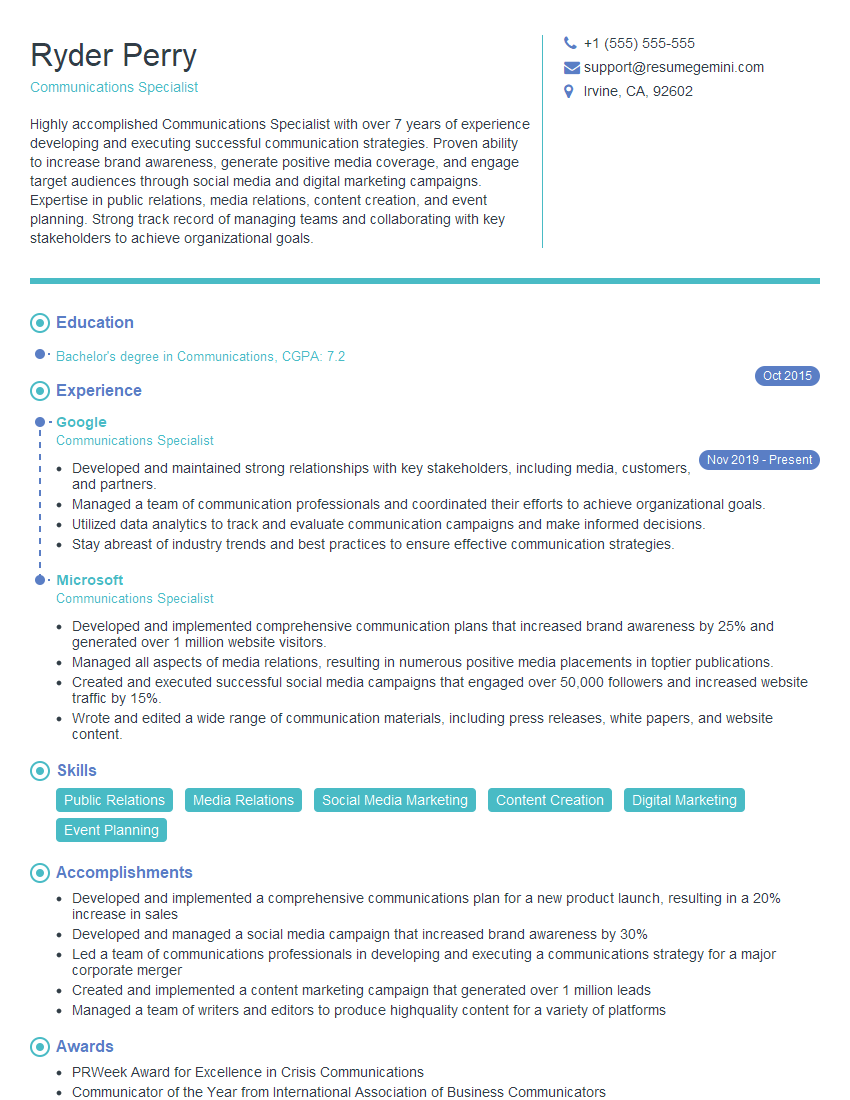
Communications Specialist Resume Sample

Social Media Manager Resume Sample
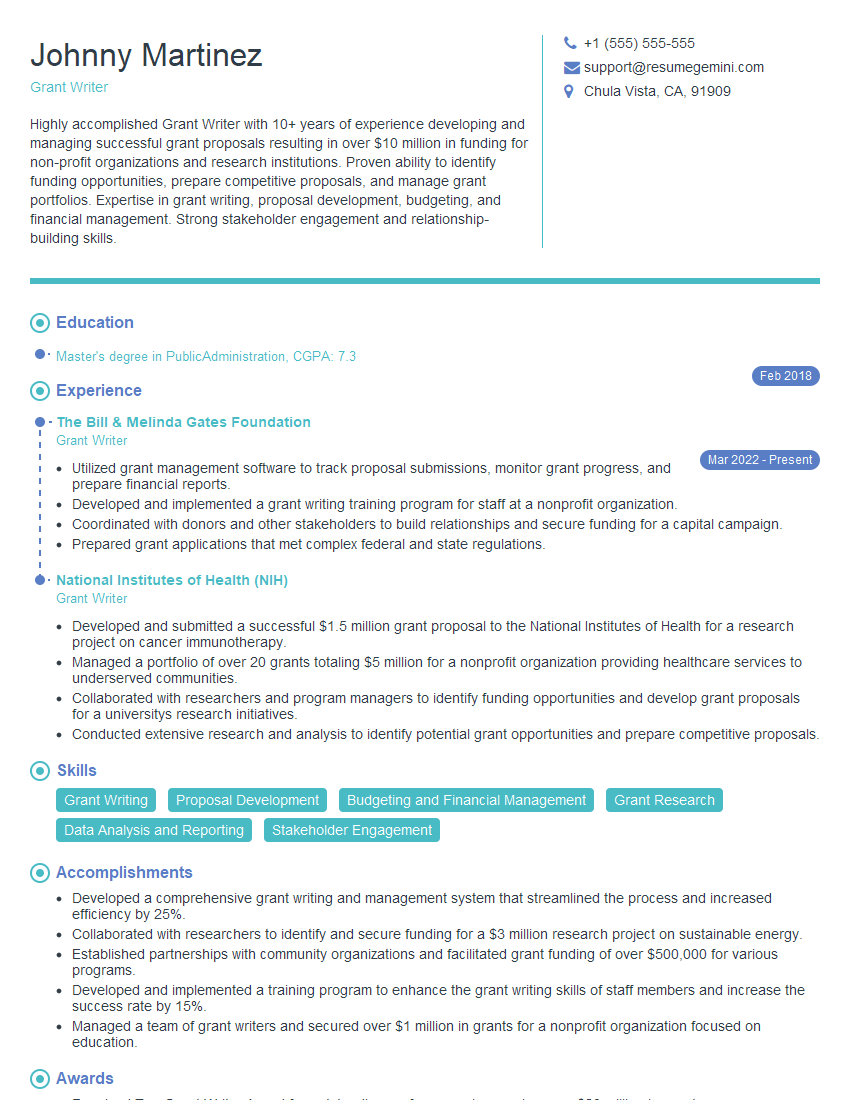
Grant Writer Resume Sample
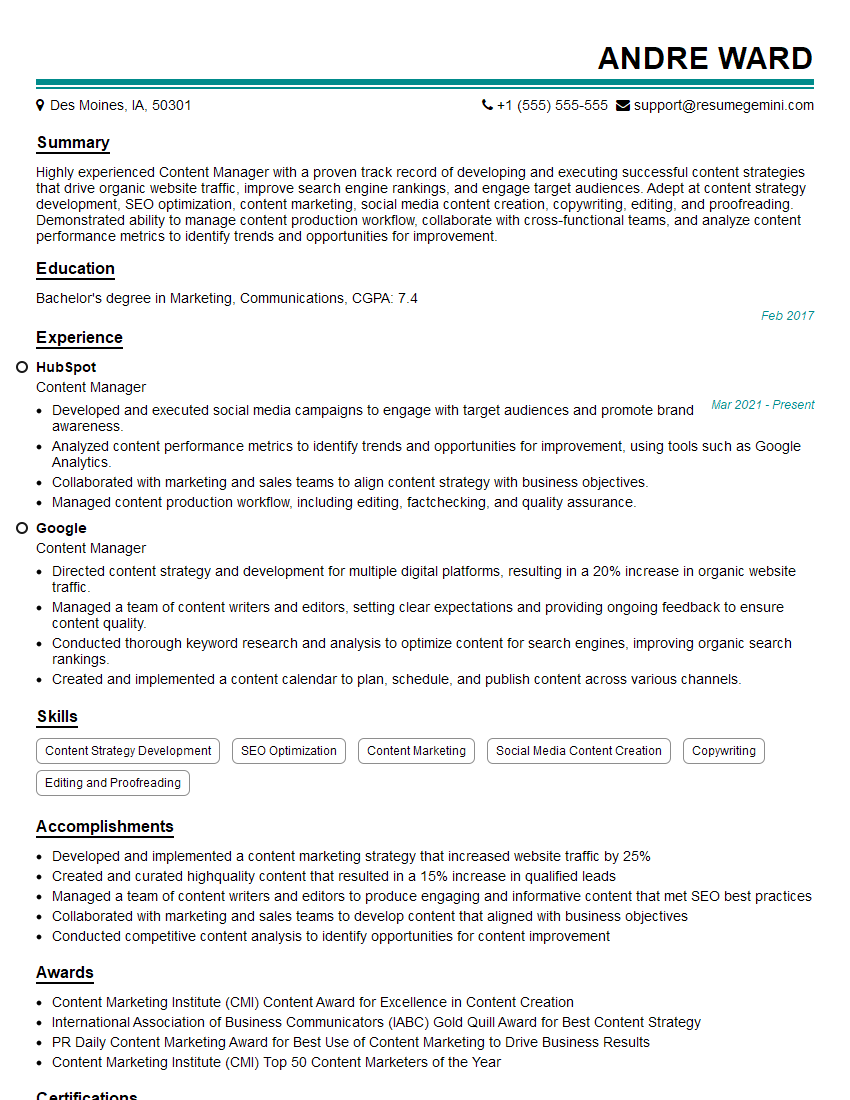
Content Manager Resume Sample

Content Strategist Resume Sample
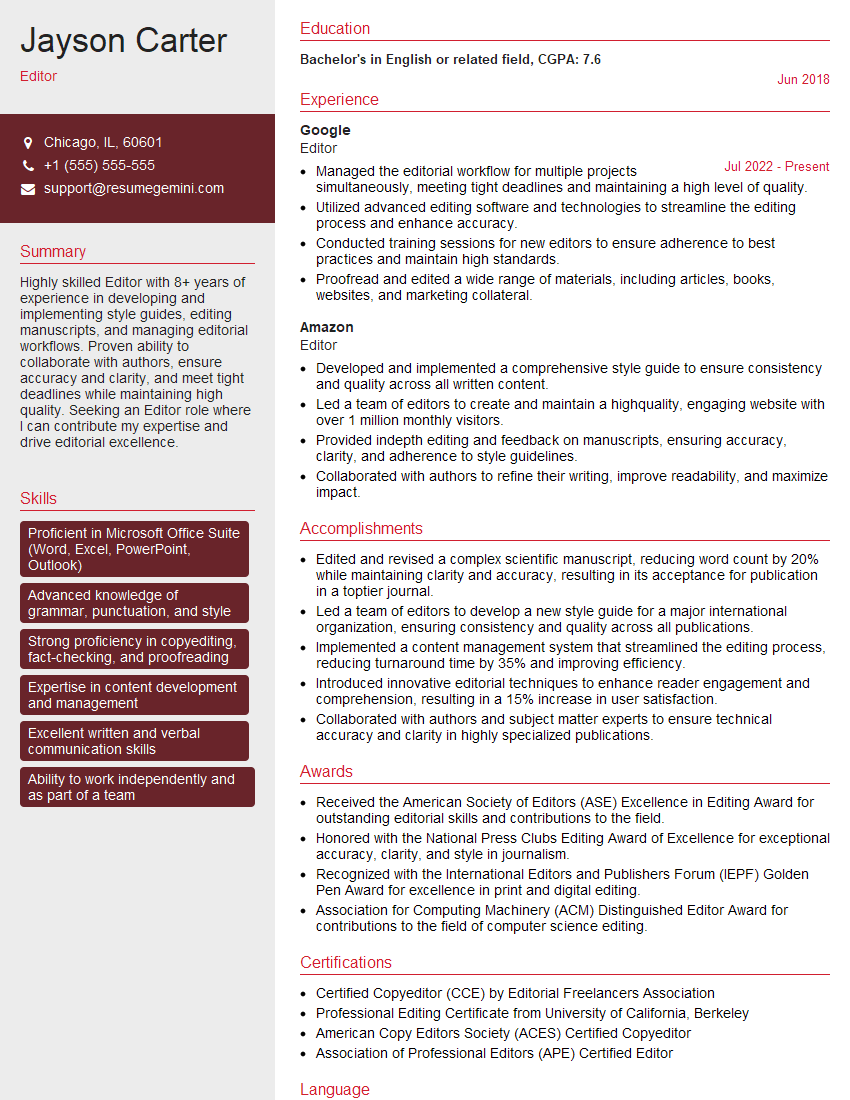
Editor Resume Sample
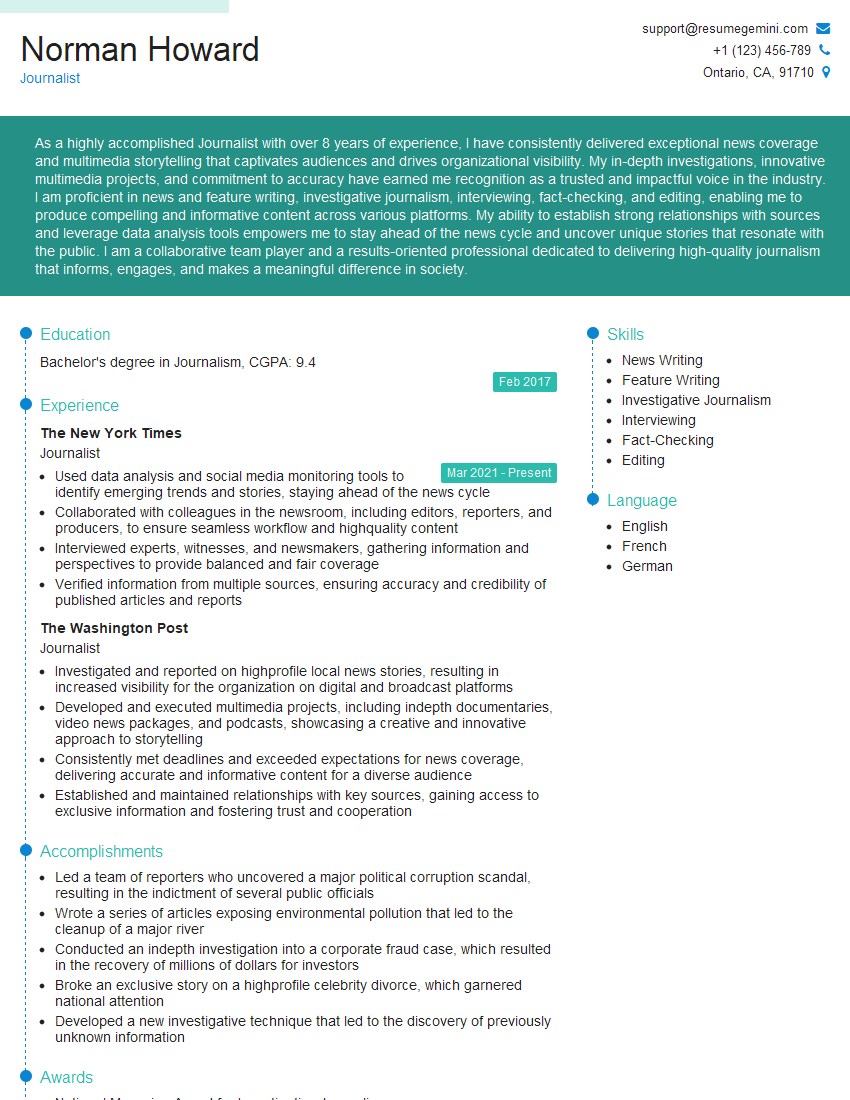
Journalist Resume Sample
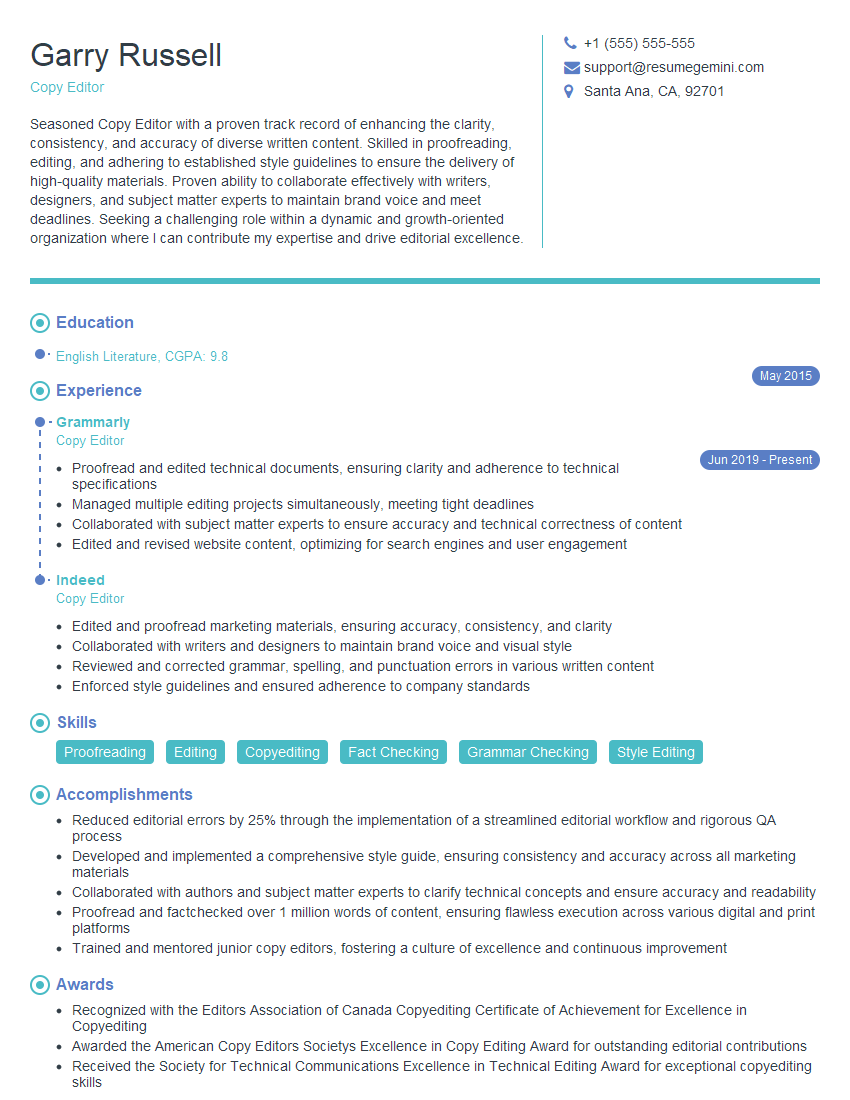
Copy Editor Resume Sample
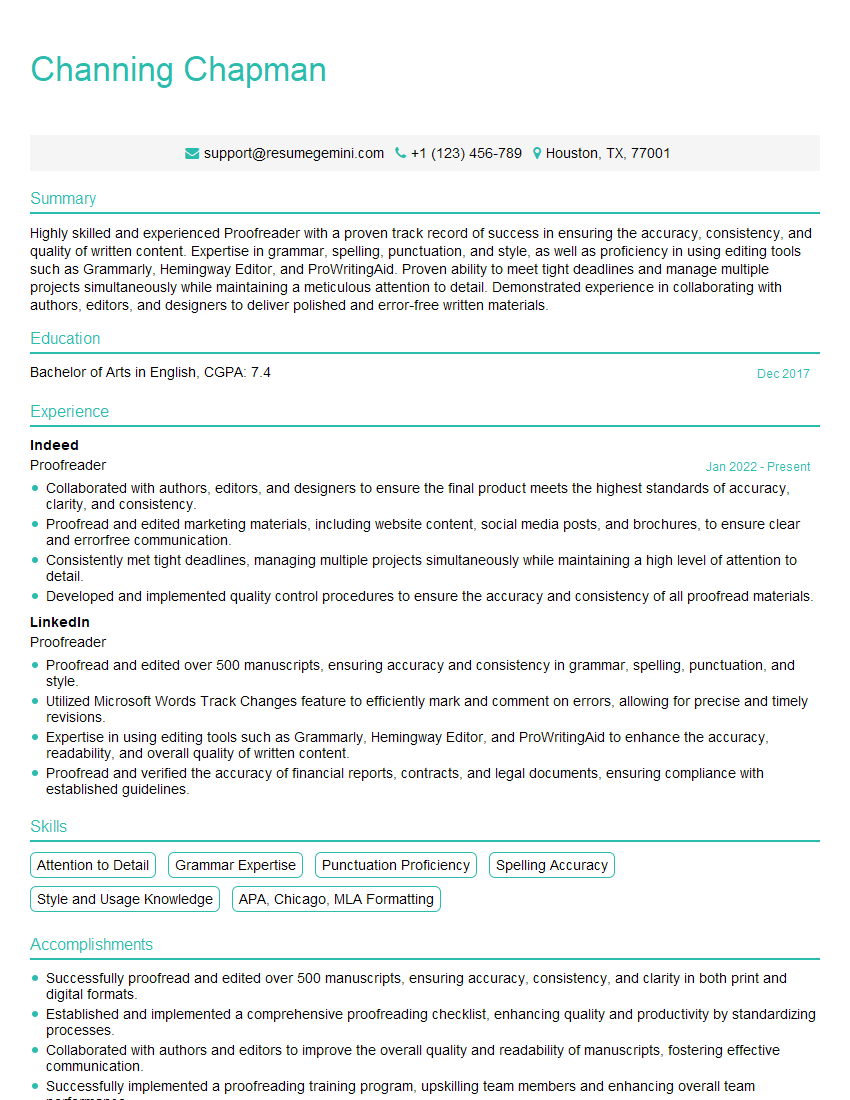
Proofreader Resume Sample
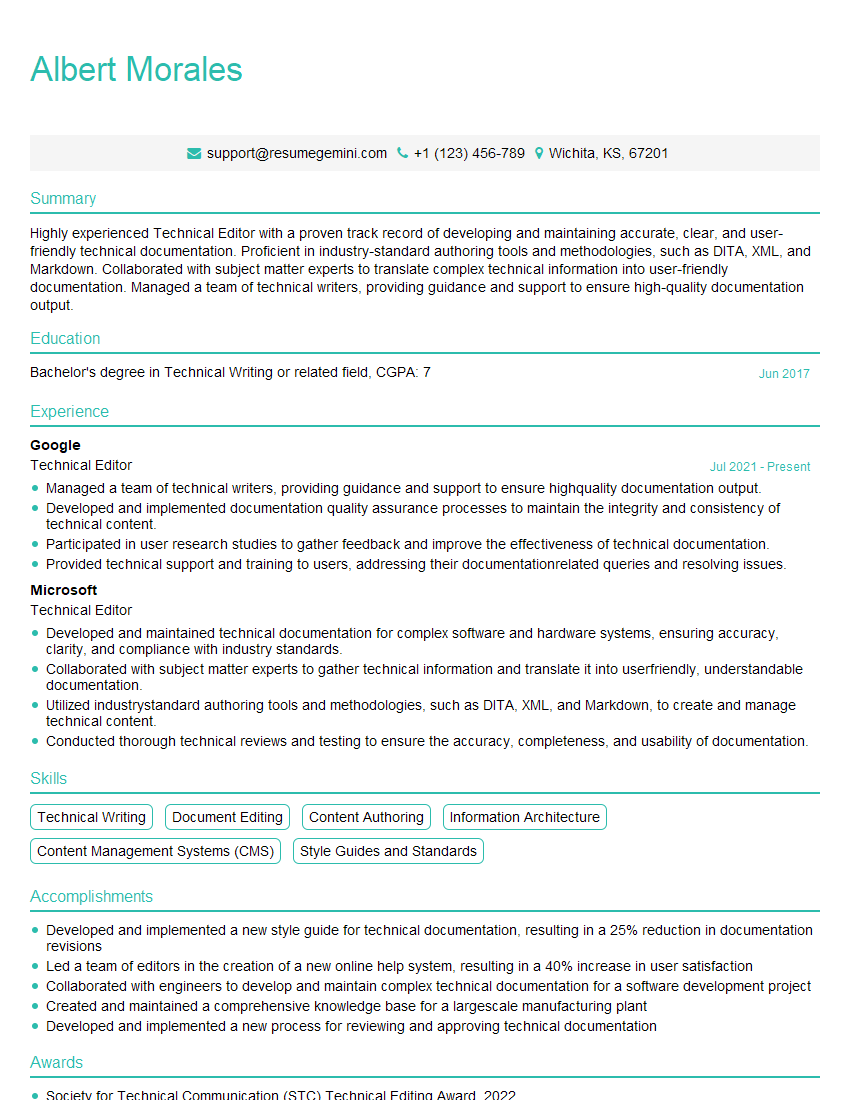
Technical Editor Resume Sample
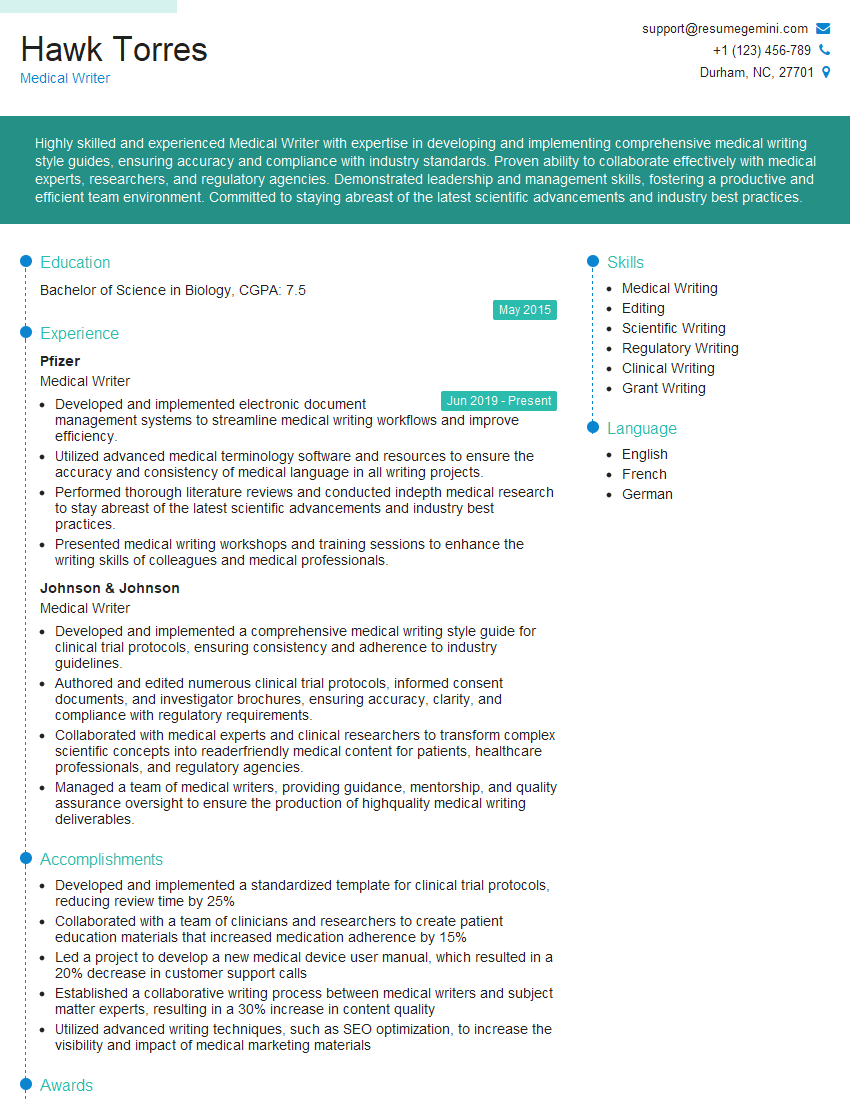
Medical Writer Resume Sample

Technical Writer Resume Sample

Copywriter Resume Sample
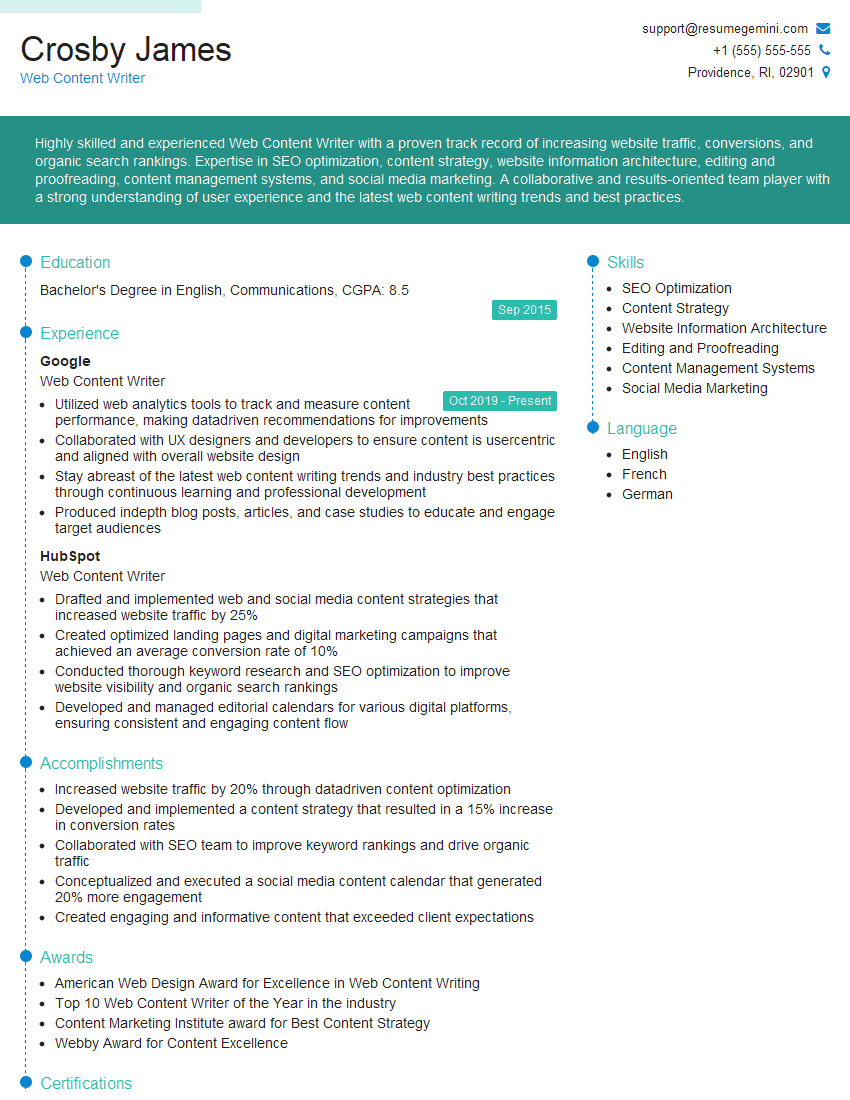
Web Content Writer Resume Sample
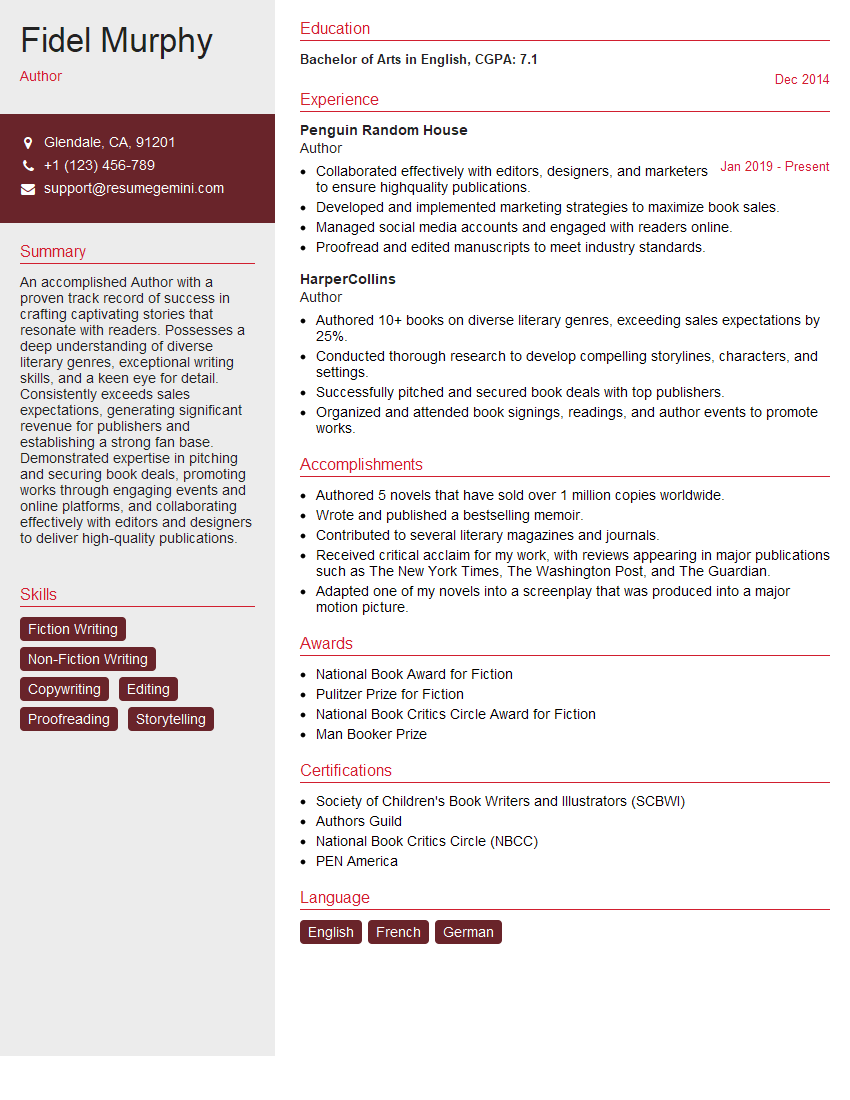
Author Resume Sample
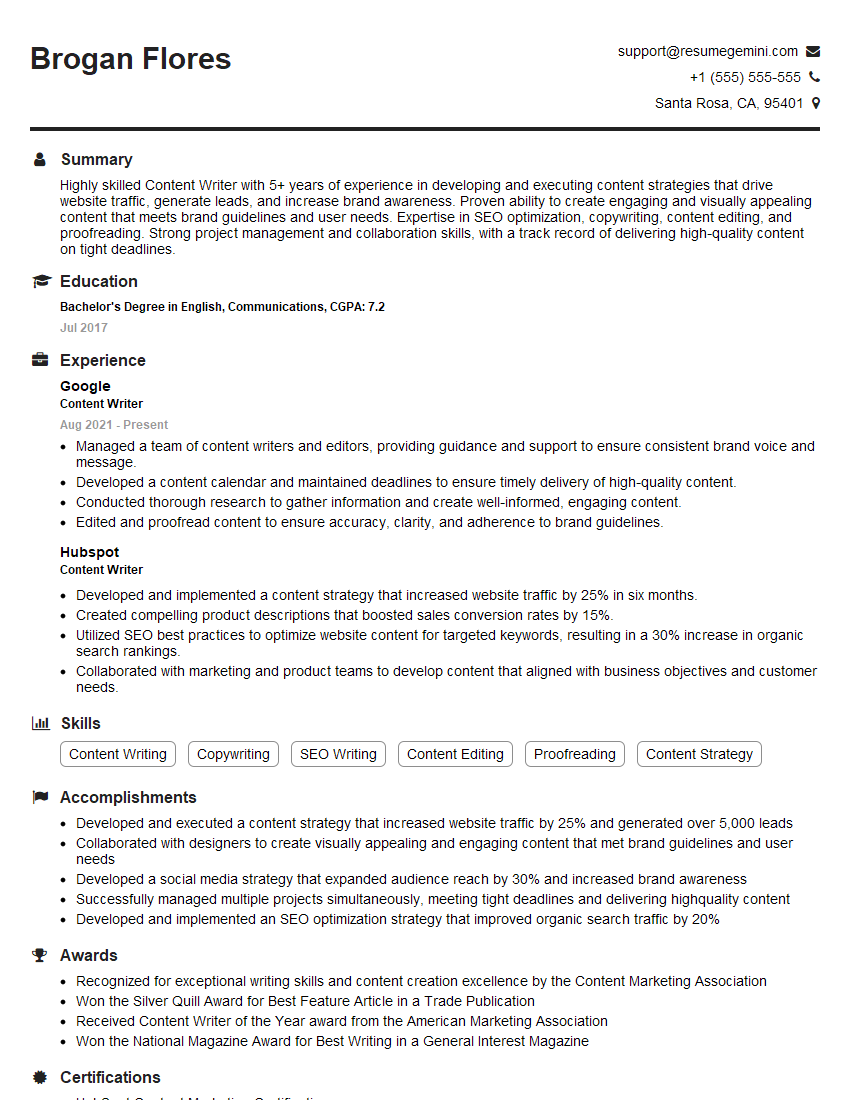
Content Writer Resume Sample
Explore more articles
Users Rating of Our Blogs
Share Your Experience
We value your feedback! Please rate our content and share your thoughts (optional).
What Readers Say About Our Blog
To the interviewgemini.com Webmaster.
Very helpful and content specific questions to help prepare me for my interview!
Thank you
To the interviewgemini.com Webmaster.
This was kind of a unique content I found around the specialized skills. Very helpful questions and good detailed answers.
Very Helpful blog, thank you Interviewgemini team.