Interviews are opportunities to demonstrate your expertise, and this guide is here to help you shine. Explore the essential Zoning Plan Review interview questions that employers frequently ask, paired with strategies for crafting responses that set you apart from the competition.
Questions Asked in Zoning Plan Review Interview
Q 1. Explain the process of reviewing a zoning plan application.
Reviewing a zoning plan application is a multi-step process that ensures the proposed development aligns with local regulations and community goals. It begins with a thorough examination of the submitted documents to ensure completeness. This includes checking for all necessary permits, surveys, and detailed plans.
- Completeness Check: We verify the application includes all required forms, maps, and supporting documentation as stipulated in the zoning ordinance.
- Compliance Review: The plan is then carefully reviewed against the applicable zoning regulations. This involves assessing things like setbacks (distance from property lines), building height restrictions, lot coverage, parking requirements, and permitted land uses.
- Impact Assessment: We evaluate the potential impacts of the proposed development on the surrounding area, considering factors like traffic, noise, environmental concerns, and visual impacts. This often involves analyzing site characteristics and context.
- Public Comment Period: Many jurisdictions incorporate a public comment period, allowing neighbors and other stakeholders to voice their opinions and concerns. We analyze these comments and address any legitimate issues raised.
- Decision & Notification: After a comprehensive review, a decision is made whether to approve, conditionally approve (with stipulations), or deny the application. The applicant is notified of the decision in writing.
For instance, a proposed apartment building might be denied if it exceeds the allowed height limit or fails to meet the minimum parking requirements outlined in the zoning code. A conditional approval might be issued if the applicant agrees to implement mitigating measures to address identified concerns, such as adding noise barriers or landscaping to screen the building.
Q 2. Describe your experience with different zoning classifications (e.g., residential, commercial, industrial).
My experience encompasses a wide range of zoning classifications, providing me with a comprehensive understanding of their nuances and the associated regulations.
- Residential Zoning: I’ve worked extensively with various residential designations, from single-family homes (R-1) to multi-family dwellings (R-3), understanding density restrictions, allowed building types, and setbacks specific to each zone. For example, R-1 zones usually have stricter limitations on density and building height compared to R-3 zones.
- Commercial Zoning: My experience includes reviewing plans for various commercial uses, such as retail spaces, office buildings, and restaurants. Understanding the parking requirements, signage regulations, and building size limitations for different commercial zones is crucial. For example, a busy retail district will typically have higher parking demands than a quiet office park.
- Industrial Zoning: I’ve reviewed plans for light and heavy industrial uses, taking into account regulations related to hazardous materials, noise pollution, and environmental impact. Safety and the impact on surrounding areas are prioritized in this context. I understand the need for appropriate buffer zones and environmental protection measures.
This diverse background allows me to effectively assess zoning applications across a wide spectrum of land uses, ensuring each project aligns with its designated zoning classification.
Q 3. How do you identify inconsistencies or conflicts within a zoning plan?
Identifying inconsistencies or conflicts within a zoning plan requires a meticulous approach. It’s like finding a mismatch in a complex jigsaw puzzle; one incorrect piece can disrupt the whole picture.
- Cross-referencing with the Zoning Ordinance: I meticulously compare the proposed plan against the relevant zoning ordinances to pinpoint any deviations in permitted uses, building heights, setbacks, or parking requirements.
- Checking for Internal Consistency: I look for inconsistencies within the plan itself. For example, a discrepancy between the site plan and the building elevations can point to a design flaw or an oversight.
- Analyzing Adjacent Properties: I assess the plan’s compatibility with neighboring properties and their zoning designations. This helps reveal potential conflicts, such as incompatible land uses or excessive overshadowing.
- Reviewing Infrastructure Capacity: I assess whether the proposed development can be adequately served by existing or planned infrastructure, including roads, utilities, and sanitation. An insufficient capacity might trigger conflicts and require adjustments to the plan.
For example, a conflict might arise if a proposed commercial building’s parking lot encroaches upon the required setback for an adjacent residential property or exceeds the permissible lot coverage.
Q 4. What are the key elements of a compliant zoning plan submission?
A compliant zoning plan submission must include several key elements to ensure a smooth and efficient review process. Think of it as a well-organized legal brief – it needs to clearly state its case.
- Complete Application Forms: All necessary forms must be accurately and completely filled out, providing all required information.
- Detailed Site Plan: This should clearly illustrate the proposed development’s location, size, orientation, and relationship to existing buildings and infrastructure. This includes boundary lines, building footprints, parking areas, and landscaping.
- Building Plans: Detailed architectural plans including elevations, sections, and floor plans are essential for assessing compliance with building codes and zoning regulations.
- Engineering Reports (if necessary): Depending on the scale and nature of the project, engineering reports may be necessary to demonstrate compliance with relevant standards for things like drainage, utilities, and structural integrity.
- Environmental Impact Assessment (if necessary): Projects that could significantly impact the environment often require an environmental impact assessment to demonstrate compliance with environmental regulations.
- Compliance Certification: A signed declaration by the applicant affirming that the plans adhere to all applicable zoning regulations.
Missing documentation or incomplete information can lead to delays and ultimately rejection of the application. A well-prepared submission shows professionalism and significantly increases the likelihood of approval.
Q 5. Explain your understanding of zoning ordinances and regulations.
Zoning ordinances and regulations are the legal framework that governs land use within a jurisdiction. They are essentially the rule book for development.
My understanding extends to interpreting and applying these ordinances in the review of zoning plans. This includes familiarity with:
- Permitted Uses: The types of activities allowed in each zoning district, such as residential, commercial, or industrial.
- Dimensional Regulations: Restrictions on building height, setbacks, lot coverage, and other physical dimensions of structures.
- Density Requirements: The allowable number of dwelling units or other structures per unit of land area.
- Parking Requirements: Minimum parking spaces required for different types of development.
- Sign Regulations: Restrictions on the size, placement, and design of signs.
- Procedural Requirements: The steps involved in applying for and obtaining zoning approvals.
Understanding these regulations is paramount in determining if a proposed development conforms to the local laws and policies. A solid understanding of these ordinances allows for objective assessment and ensures fairness in the review process.
Q 6. How do you handle zoning variances and appeals?
Zoning variances and appeals are mechanisms for addressing situations where strict adherence to zoning regulations poses undue hardship or presents an unusual circumstance. They represent opportunities for exceptions to the rules.
- Zoning Variances: A variance allows a property owner to deviate from a specific zoning regulation, typically due to unique site conditions that would make strict compliance impractical or unreasonable. This requires demonstrating that the variance is necessary and won’t negatively impact the neighborhood. For example, a variance might be granted for a smaller setback if a steep slope prevents the building from meeting the standard setback requirement.
- Appeals: Appeals are filed when an applicant disagrees with a zoning decision. Appeals are heard by a designated body, such as a zoning board of appeals, which will review the decision and relevant evidence to determine if the decision was made appropriately based on the zoning ordinance. Appeals could be regarding the denial of an application, or the imposition of certain conditions on an approval.
Handling these requires a deep understanding of the zoning ordinance, legal precedent, and procedural requirements. I approach these situations by carefully reviewing the request, conducting thorough research, and recommending an appropriate decision based on the specific facts and the applicable laws.
Q 7. Describe your experience with GIS software in the context of zoning plan review.
GIS (Geographic Information System) software is an indispensable tool in zoning plan review. It allows for spatial analysis and visualization, making the review process more efficient and accurate.
My experience with GIS software includes:
- Visualizing Site Context: GIS helps visualize the proposed development’s location relative to existing land uses, infrastructure, and environmental features. This is crucial for assessing potential impacts and compatibility.
- Overlaying Zoning Data: I use GIS to overlay zoning maps and other relevant data layers (e.g., topography, utilities) onto the site plan to quickly identify potential conflicts or non-compliance.
- Analyzing Setbacks and Buffer Zones: GIS software facilitates precise measurement of setbacks and buffer zones to ensure compliance with zoning regulations. It provides accuracy and speed compared to manual measurements.
- Assessing Impacts: GIS allows for the analysis of potential impacts like traffic flow, noise pollution, and shadowing, enabling informed decision-making.
- Documenting Review Findings: GIS helps to create maps and diagrams to visually document the review process and any identified issues or areas of concern. This enhances transparency and communication.
Using GIS software streamlines the review process, improving both efficiency and accuracy, ultimately leading to better decision-making and more effective zoning plan management. For example, I have used GIS to identify potential conflicts between a proposed development and nearby wetlands, leading to recommendations for modifications to minimize environmental impact.
Q 8. How do you ensure the accuracy and completeness of zoning plan reviews?
Ensuring accuracy and completeness in zoning plan reviews is paramount. My approach is multifaceted and involves a rigorous, systematic process. It begins with a thorough review of the submitted plan against all applicable zoning ordinances, codes, and regulations. This includes checking for compliance with building codes, environmental regulations, and any specific requirements outlined in the local zoning plan.
- Cross-referencing: I meticulously cross-reference all aspects of the plan with the relevant legal documents, ensuring no discrepancies exist. This includes checking setbacks, building heights, lot coverage, parking requirements, and allowable uses.
- Data Verification: I verify all data provided within the plan, such as site surveys, topographical maps, and utility plans, using independent sources when necessary to confirm accuracy.
- Checklist Approach: I utilize a comprehensive checklist tailored to the specific zoning district to guarantee that all necessary elements are addressed and compliant. This helps avoid overlooking critical details.
- Consultation: Where ambiguity or uncertainty exists, I proactively consult with other relevant departments, such as engineering, environmental review, and legal, to resolve any potential issues.
For example, if a proposed building exceeds the maximum allowable height for its zone, I will clearly flag this discrepancy and propose a solution, such as a variance request or plan modification.
Q 9. Explain your process for identifying potential environmental impacts within a zoning plan.
Identifying potential environmental impacts is a crucial step in zoning plan reviews. My process involves a tiered approach, starting with a preliminary screening to determine the potential sensitivity of the site. This initial assessment considers factors like proximity to wetlands, endangered species habitats, floodplains, and other ecologically significant areas.
- Environmental Impact Assessment Review: If the preliminary screening indicates a potential for significant environmental impact, I would carefully review any submitted environmental impact assessments (EIAs). I ensure these EIAs adhere to established standards, are comprehensive in their scope, and adequately address potential mitigation strategies.
- GIS Mapping & Analysis: I utilize Geographic Information Systems (GIS) technology to analyze the proposed development’s location in relation to sensitive environmental features. This allows for precise visual identification and assessment of potential overlaps or impacts.
- Stakeholder Consultation: I often engage with environmental agencies and experts to ensure a thorough and objective evaluation of potential environmental impacts. This collaboration helps avoid unforeseen problems and promotes compliance with environmental regulations.
- Mitigation Planning: My review focuses not only on identifying potential impacts but also on evaluating the adequacy of the proposed mitigation measures. I ensure these measures are feasible, effective, and compliant with all relevant regulations.
For instance, if a proposed development is near a wetland, I’d carefully review the mitigation plan to ensure it adequately protects the wetland’s ecological functions and complies with applicable regulations like the Clean Water Act.
Q 10. How do you manage multiple zoning plan reviews simultaneously?
Managing multiple zoning plan reviews concurrently requires a highly organized and efficient approach. I employ several strategies to ensure timely and effective review of all projects.
- Project Prioritization: I prioritize projects based on several factors such as deadline, complexity, and potential impact. Urgent or high-impact projects receive immediate attention.
- Workflow Management Tools: I leverage project management software to track progress, deadlines, and communications associated with each project. This provides a centralized platform for managing all aspects of the review process.
- Dedicated Teams (where applicable): In larger organizations, assigning dedicated teams to different projects allows for parallel processing and increased efficiency.
- Regular Meetings & Updates: Regular team meetings ensure effective communication, coordination, and problem-solving amongst team members, promoting consistency across multiple projects.
Think of it like a conductor leading an orchestra – each musician (reviewer) plays their part, but the conductor ensures harmony and timely execution of the overall performance (the completion of all reviews).
Q 11. How do you prioritize conflicting development proposals within the zoning framework?
Prioritizing conflicting development proposals within the zoning framework necessitates a fair and transparent process that adheres strictly to the zoning regulations and established procedures. My approach emphasizes objectivity and adherence to established criteria.
- Application Date & Completeness: In many jurisdictions, proposals are prioritized based on the date of application and the completeness of the submitted documentation. First-come, first-served approaches often apply, provided applications are complete and compliant.
- Zoning Compliance: Proposals that fully comply with all applicable zoning regulations are given preference. Non-compliant proposals require modifications or may be rejected.
- Public Interest: The potential impact on the surrounding community and the public interest are critical factors. Proposals that demonstrably benefit the community often receive higher priority.
- Mediation & Negotiation: In cases of irreconcilable conflicts, I facilitate mediation or negotiation between the involved parties to find mutually acceptable solutions, always keeping the zoning framework at the forefront.
For instance, if two proposals conflict due to overlapping land use designations, I might prioritize the proposal that better aligns with the overall zoning plan’s goals, or the one that demonstrates greater public benefit, after ensuring both meet all relevant compliance requirements.
Q 12. Describe your experience with public engagement regarding zoning plan reviews.
Public engagement is an integral part of the zoning plan review process. Meaningful public participation ensures transparency, addresses community concerns, and leads to better informed and more accepted development outcomes.
- Public Forums & Hearings: I facilitate and manage public forums, hearings, and meetings to provide opportunities for stakeholders to voice their opinions and concerns regarding proposed development plans.
- Community Outreach: I actively engage in community outreach through various channels such as newsletters, websites, and social media to ensure broad dissemination of information and encourage public participation.
- Online Feedback Mechanisms: I utilize online platforms to collect feedback, enabling convenient and accessible engagement for community members.
- Response & Feedback Incorporation: I carefully analyze all public comments and incorporate constructive feedback into the review process where appropriate. I ensure that all concerns are addressed and transparently communicated to the public.
In one instance, public feedback during a review process highlighted a lack of adequate green space in a proposed development. Incorporating this feedback, I worked with the developer to incorporate additional green areas, resulting in a plan that was more acceptable to the community.
Q 13. How do you address discrepancies between zoning plans and existing site conditions?
Discrepancies between zoning plans and existing site conditions require careful attention and resolution to avoid legal and practical issues. My approach focuses on accurate assessment and effective reconciliation.
- Site Verification: I conduct thorough site visits to verify existing conditions and compare them to the zoning plan. This could involve reviewing topographic surveys, environmental assessments, and existing utility plans.
- Data Reconciliation: I reconcile discrepancies through a careful analysis of existing data and documentation. This may involve updating the zoning plan to reflect actual site conditions or requesting modifications to the development proposal.
- Variance Requests: If the discrepancies are significant and cannot be easily resolved, I may recommend variance requests to allow for adjustments to the zoning regulations.
- Legal Review: For complex or contentious discrepancies, a legal review may be necessary to ensure that proposed solutions comply with all legal requirements.
For example, if a zoning plan indicates a particular lot size but a site survey reveals a smaller actual size, I will need to determine whether this difference requires modification of the zoning plan or necessitates rejection of the proposal until corrected.
Q 14. Explain your understanding of zoning regulations related to building height, density, and setbacks.
My understanding of zoning regulations related to building height, density, and setbacks is comprehensive. These parameters are fundamental in shaping the physical character of a community and are strictly governed by zoning ordinances.
- Building Height: Zoning ordinances typically specify maximum building heights for different zoning districts, often expressed in feet or stories. These limits aim to prevent overshadowing, preserve views, and maintain the overall aesthetic character of an area.
- Density: Zoning regulations control density, which refers to the number of dwelling units or buildings per unit of land area. Density regulations aim to manage population growth, traffic congestion, and strain on infrastructure. Density is often expressed as dwelling units per acre (du/ac).
- Setbacks: Setbacks define the minimum distance a building must be from property lines or other features like streets, sidewalks, or waterways. They provide open space, protect against hazards, and maintain visual appeal. Setbacks are typically specified as distances in feet from property lines.
For example, a particular zoning district might limit building height to 35 feet, allow a maximum density of 10 du/ac, and mandate a minimum front setback of 25 feet and a side setback of 10 feet. Any proposal that violates these requirements would require modification or a variance request.
Q 15. How do you handle complex zoning issues involving multiple stakeholders?
Handling complex zoning issues with multiple stakeholders requires a structured, collaborative approach. Think of it like orchestrating a symphony – each stakeholder has a unique voice (concerns, interests), and it’s my job to harmonize them to create a functional and agreeable outcome. I start by establishing clear communication channels and holding regular meetings. This isn’t just about informing everyone; it’s about active listening and understanding each perspective. I create a common platform where everyone can express their concerns without interruption, and I facilitate productive dialogue.
Next, I document every interaction, outlining points of agreement and disagreement. This record serves as a reference point as we progress. Compromise is key; I often utilize techniques like mediation and negotiation to find common ground. Sometimes this means identifying creative solutions that address the concerns of all stakeholders, even if it requires minor adjustments to the initial proposal. Finally, I ensure transparency throughout the entire process, clearly communicating decisions and their rationale. This prevents misunderstandings and builds trust.
- Example: In one project involving a residential development near a park, residents were concerned about increased traffic and noise. By working with the developer, we incorporated sound barriers and designated green spaces within the development, mitigating resident concerns while still allowing the project to proceed.
Career Expert Tips:
- Ace those interviews! Prepare effectively by reviewing the Top 50 Most Common Interview Questions on ResumeGemini.
- Navigate your job search with confidence! Explore a wide range of Career Tips on ResumeGemini. Learn about common challenges and recommendations to overcome them.
- Craft the perfect resume! Master the Art of Resume Writing with ResumeGemini’s guide. Showcase your unique qualifications and achievements effectively.
- Don’t miss out on holiday savings! Build your dream resume with ResumeGemini’s ATS optimized templates.
Q 16. What are your strategies for effective communication regarding zoning plan review decisions?
Effective communication is crucial for transparent and fair zoning plan reviews. I believe in a multi-pronged approach. First, I utilize clear and concise language, avoiding jargon and technical terms wherever possible. Imagine explaining a complex musical score to someone unfamiliar with musical notation – the explanation must be clear and understandable. I prepare comprehensive reports and presentations that summarize findings and decisions in a straightforward manner. These reports include visual aids like maps and diagrams to enhance comprehension.
Secondly, I use multiple communication channels to ensure everyone is informed. This might include formal letters, email updates, public meetings, and even online platforms for interactive feedback and document sharing. For example, we can provide an online portal where all stakeholders can access the project documents and contribute their comments. Finally, I actively encourage feedback and address concerns promptly and professionally. Open communication builds trust and ensures buy-in from all parties involved.
Q 17. Describe your experience working with various zoning-related software or databases.
My experience encompasses several zoning-related software and databases. I’m proficient in Geographic Information Systems (GIS) software like ArcGIS, which allows for spatial analysis of zoning data, visualizing proposed developments against existing land use patterns. I’m also familiar with databases used for managing zoning permits, applications, and compliance records. This includes experience with both proprietary and open-source solutions. Knowing how to efficiently navigate these systems is critical for rapid processing of applications and ensuring data accuracy. For example, I’ve used GIS to overlay proposed zoning changes on existing infrastructure, identifying potential conflicts early in the process, which prevents issues down the line. I am also adept at using software to create detailed reports and presentations to communicate findings.
Q 18. Explain your familiarity with legal precedents related to zoning and land use.
My understanding of legal precedents related to zoning and land use is thorough. I’m familiar with landmark Supreme Court cases like Euclid v. Ambler Realty, which established the legal basis for zoning, and I understand the nuances of various legal doctrines including substantive due process, equal protection, and takings clauses. This knowledge ensures that all zoning decisions are made within the confines of the law and are defensible in court. I regularly consult legal databases, legal journals and attend continuing education sessions to remain updated on any changes or new interpretations of the law.
Example: In a case involving a challenge to a historical preservation ordinance, my knowledge of relevant legal precedent helped me structure the argument for the city, highlighting the legitimate governmental interest in preserving historical landmarks and ensuring the ordinance complied with due process requirements. This led to a successful outcome for the city.
Q 19. How do you ensure compliance with federal, state, and local zoning regulations?
Ensuring compliance with federal, state, and local zoning regulations is paramount. My approach involves a multi-step process. First, I conduct a thorough review of all relevant regulations at each level of government—Federal, State, and local. This includes studying the zoning ordinances, building codes, environmental regulations, and any relevant court decisions. I use checklists and templates to ensure no regulations are overlooked.
Second, I implement a robust review process for all zoning applications, carefully checking that the proposed development meets all the required criteria. This often includes verifying property lines, reviewing site plans, and assessing the potential environmental impacts. Finally, I regularly update my knowledge of the regulations to ensure that the review process remains current and effective. This is done through professional development courses, conferences, and subscriptions to relevant publications. Regular audits and inspections of developments post-approval further enhance compliance.
Q 20. Describe a challenging zoning plan review you encountered and how you resolved it.
One particularly challenging review involved a proposed mixed-use development in a historically significant neighborhood. The developers wanted to build a high-rise building which generated significant concerns from residents about preserving the neighborhood’s character and causing increased traffic and strain on local infrastructure. The situation also involved navigating various overlapping regulations, including those related to historical preservation, building heights, and environmental protection.
My approach involved bringing all stakeholders – developers, residents, and city officials – together for a series of facilitated workshops. We used collaborative mapping exercises to visualize the potential impacts of the development. This process facilitated open communication, allowing us to identify areas of compromise. Ultimately, we negotiated a revised plan that reduced the building height, incorporated elements to enhance neighborhood character, and provided solutions for addressing traffic concerns, ensuring the project was both economically viable and acceptable to the community.
Q 21. How do you stay updated on changes to zoning codes and regulations?
Staying current with changes in zoning codes and regulations is an ongoing process. I subscribe to professional journals and newsletters published by organizations like the American Planning Association. I attend conferences and workshops to learn about best practices and emerging trends in zoning. I also actively monitor online resources, including government websites and legal databases, for updates and changes to relevant laws. Furthermore, I network with other zoning professionals, exchanging information and insights on new developments in the field. This multi-faceted approach ensures that my knowledge base remains up-to-date and accurate, allowing me to provide the best possible service in zoning plan reviews.
Q 22. What are your methods for verifying the accuracy of information provided in zoning applications?
Verifying the accuracy of information in zoning applications is crucial for ensuring compliance and preventing future issues. My approach is multifaceted and involves a systematic check across several key areas.
- Cross-referencing data: I meticulously compare the information provided in the application with other official sources, such as tax assessor records, utility maps, and existing zoning ordinances. Discrepancies are immediately flagged for further investigation.
- On-site verification: Where necessary, I conduct site visits to verify the accuracy of information regarding property boundaries, existing structures, and topographical features. This is particularly important for applications involving significant land development.
- Review of supporting documentation: Applications often include supporting documents like surveys, site plans, and environmental impact assessments. I carefully review these documents for completeness, consistency, and accuracy, ensuring that they align with the information provided in the application itself. Any inconsistencies or missing information are identified and addressed.
- Consultation with relevant stakeholders: Depending on the complexity of the application, I might consult with other departments or agencies, such as the engineering department (for infrastructure impact) or the environmental protection agency (for ecological considerations). This collaborative approach helps identify potential oversights or inconsistencies.
For instance, I once discovered a discrepancy between the applicant’s stated property lines and the official county survey. This could have resulted in an illegal encroachment on neighboring properties had it gone unnoticed. Early detection and verification saved the applicant significant time and potential legal complications.
Q 23. How do you incorporate environmental considerations into your zoning plan reviews?
Environmental considerations are paramount in modern zoning plan reviews. Integrating these factors requires a holistic approach that anticipates and mitigates potential negative impacts.
- Compliance with environmental regulations: I ensure that the proposed zoning plan adheres to all relevant federal, state, and local environmental regulations, including those related to water quality, air quality, endangered species protection, and habitat preservation.
- Environmental impact assessments: I carefully review any submitted environmental impact assessments (EIAs) to evaluate the potential effects of the project on the surrounding ecosystem. I assess the methodology used, the scope of the assessment, and the conclusions drawn.
- Mitigation strategies: I analyze proposed mitigation strategies to determine their effectiveness in reducing or eliminating negative environmental impacts. This may involve evaluating stormwater management plans, erosion control measures, or plans to offset habitat loss.
- Sustainable design principles: I encourage and evaluate the incorporation of sustainable design principles, such as energy efficiency, water conservation, and the use of green building materials. This promotes environmentally responsible development.
In one instance, a proposed development lacked a comprehensive stormwater management plan. By highlighting this omission and requiring the inclusion of a robust plan, we prevented potential water pollution and flooding in the surrounding area.
Q 24. Explain your experience with the use of site plans, surveys, and other relevant documentation.
Site plans, surveys, and other relevant documentation are the bedrock of accurate zoning plan reviews. My experience with these materials is extensive and informs every step of my evaluation process.
- Site plans: I analyze site plans to understand the proposed land use, building locations, infrastructure layouts, and landscaping features. I check for compliance with setbacks, height restrictions, and other zoning regulations.
- Surveys: Surveys are crucial for verifying property boundaries and topographical features. I ensure that the survey is current, accurate, and properly certified. This is crucial for preventing boundary disputes and ensuring the proposed development fits within the legal property limits.
- Other relevant documentation: This can include geotechnical reports, hydrological studies, traffic impact studies, and environmental assessments. I analyze this information to fully understand the project’s potential impact and compliance with regulations.
A recent project involved a complex site with challenging topography. By carefully analyzing the survey data and geotechnical reports, we were able to identify potential risks and ensure that the proposed foundation design could withstand the site conditions, preventing potential structural problems.
Q 25. How do you evaluate the impact of zoning plans on traffic and infrastructure?
Evaluating the impact of zoning plans on traffic and infrastructure is critical for ensuring the long-term viability and sustainability of development projects. My approach involves a thorough assessment of several key factors.
- Traffic impact studies: I review traffic impact studies (TIS) to assess the potential increase in traffic volume, congestion, and safety concerns resulting from the proposed development. I ensure that the TIS methodology is sound and the conclusions are supported by data.
- Infrastructure capacity: I assess the capacity of existing infrastructure, including roads, water and sewer lines, and utilities, to handle the increased demand created by the development. Potential upgrades or expansions needed are identified.
- Transportation planning: I consider the broader transportation planning context, including local and regional transportation plans, to ensure that the proposed development is consistent with overall transportation goals.
- Pedestrian and bicycle access: I evaluate the plan’s provisions for pedestrian and bicycle access, ensuring safe and convenient connections to surrounding areas. This promotes alternative transportation modes and contributes to a more sustainable environment.
One project highlighted the need for road widening to accommodate increased traffic flow predicted by the traffic impact study. This early identification allowed for proactive planning and prevented potential future bottlenecks.
Q 26. Describe your familiarity with different zoning map interpretations.
Familiarity with different zoning map interpretations is essential for accurate plan review. Zoning maps are visual representations of land use regulations and understanding their nuances is critical.
- Overlay zones: I am proficient in understanding overlay zones, which impose additional restrictions or requirements on top of base zoning districts (e.g., floodplain overlays, historic preservation overlays).
- Zoning district boundaries: I accurately identify and interpret zoning district boundaries, recognizing that even small variations can have significant implications for development.
- Legend and key: I thoroughly review the map legend and key to understand the meaning of different symbols and colors used to represent various zoning districts and land use designations.
- Amendments and updates: I stay current with any recent zoning map amendments or updates to ensure that the interpretations used are the most up-to-date.
For example, I once assisted an applicant who was unaware of a newly implemented overlay zone affecting their property. My knowledge of this amendment prevented them from undertaking construction that would have been in violation of the updated regulations.
Q 27. What is your experience with zoning plan amendments and their review process?
Zoning plan amendments are common occurrences, and their review process requires careful attention to detail and legal procedure.
- Application review: I evaluate the application for the amendment, ensuring it is complete and meets all procedural requirements.
- Public notice and comment: I ensure that proper public notice is given and that public comments are received and considered.
- Impact assessment: I assess the potential impact of the amendment on the surrounding area, including its effects on property values, traffic, and the environment.
- Compliance with zoning ordinances: I verify that the proposed amendment is consistent with the overall zoning ordinance and does not conflict with other regulations.
- Recommendation: I prepare a comprehensive recommendation to the zoning authority, outlining the findings of the review and advising on the approval or denial of the amendment.
I once reviewed an amendment to increase density in a residential zone. Through careful analysis, I identified potential negative traffic impacts, leading to modifications in the amendment that mitigated these concerns.
Q 28. How do you ensure fairness and transparency in your zoning plan reviews?
Fairness and transparency are cornerstones of my zoning plan review process. I strive to create an equitable and open process for all applicants.
- Consistent application of standards: I apply the zoning regulations consistently and impartially to all applicants, regardless of their background or connections.
- Clear communication: I maintain clear and open communication with applicants, providing timely feedback and explaining the rationale behind decisions.
- Documentation: I thoroughly document all aspects of the review process, including the application, supporting documents, comments received, and the final decision. This ensures accountability and allows for easy review of past decisions.
- Public access: I ensure that zoning applications and related documents are accessible to the public, promoting transparency and allowing for community participation.
I believe in treating every applicant fairly and with respect, ensuring that the zoning review process is perceived as equitable and just. This fosters trust and collaboration between the zoning authority and the community.
Key Topics to Learn for Zoning Plan Review Interview
- Zoning Ordinances and Regulations: Understanding the legal framework governing land use and development, including permitted uses, setbacks, density requirements, and height restrictions.
- Plan Review Process: Familiarize yourself with the step-by-step process of reviewing zoning plans, from initial application to final approval or denial, including plan interpretation, code compliance checks, and stakeholder communication.
- Site Analysis and Assessment: Mastering the ability to analyze site characteristics (topography, drainage, environmental factors) and their impact on proposed developments, ensuring compliance with zoning regulations.
- Variances and Exceptions: Understanding the process for obtaining variances and exceptions to zoning regulations, including the criteria for approval and potential legal challenges.
- Environmental Impact Considerations: Knowing how to assess potential environmental impacts of proposed projects and ensure compliance with environmental regulations. This includes understanding relevant sustainability standards.
- Public Participation and Stakeholder Engagement: Grasping the importance of engaging with the public and other stakeholders throughout the plan review process, including handling public comments and addressing concerns effectively.
- Problem-solving and Decision-making: Developing your skills in analyzing complex zoning issues, identifying potential conflicts, and proposing solutions that balance competing interests and uphold regulatory requirements.
- Technical Drawing Interpretation: Proficiency in understanding and interpreting technical drawings, site plans, and other documents submitted as part of zoning applications.
- Case Studies and Examples: Reviewing successful and unsuccessful zoning plan reviews to understand best practices and potential pitfalls.
Next Steps
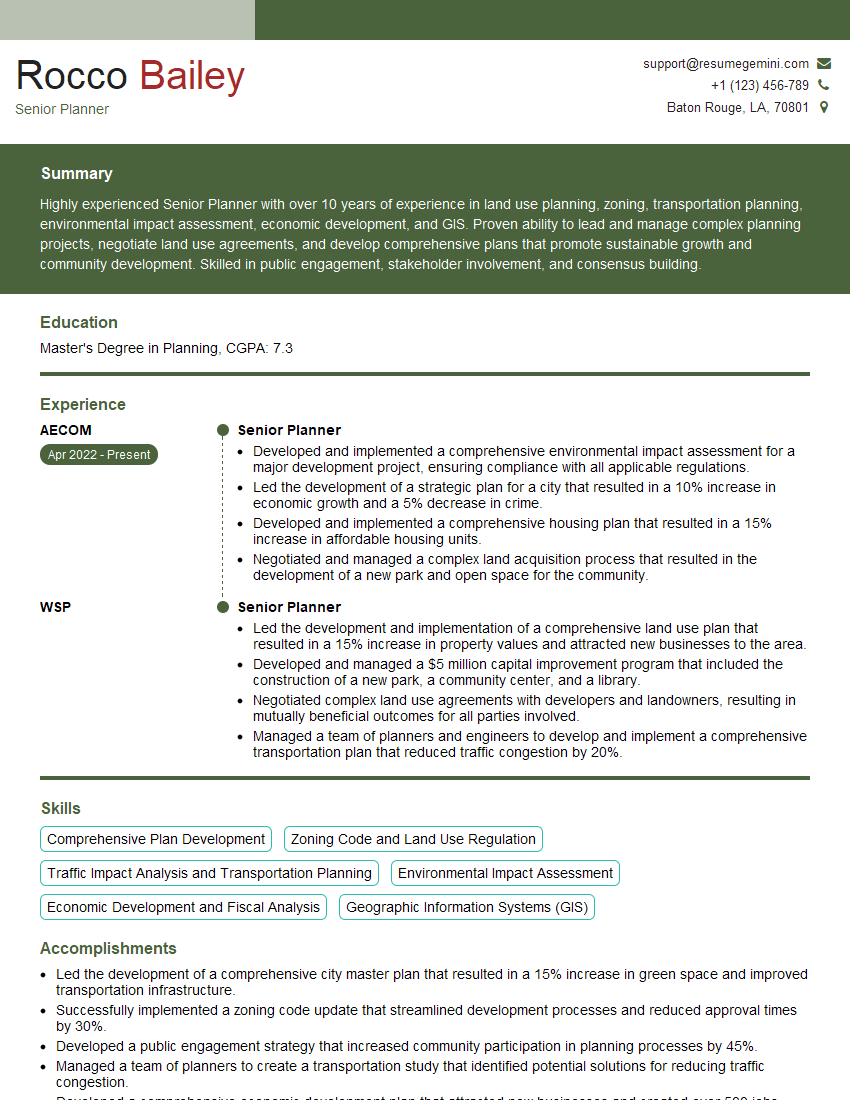
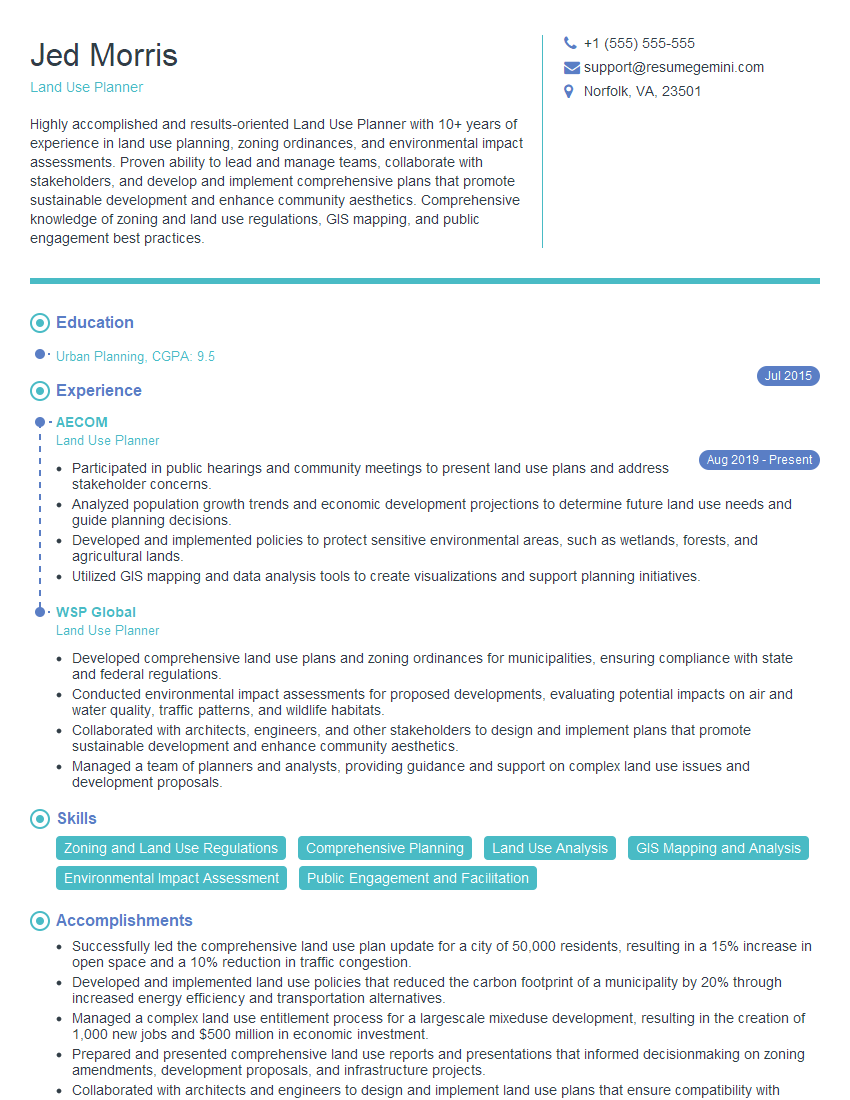
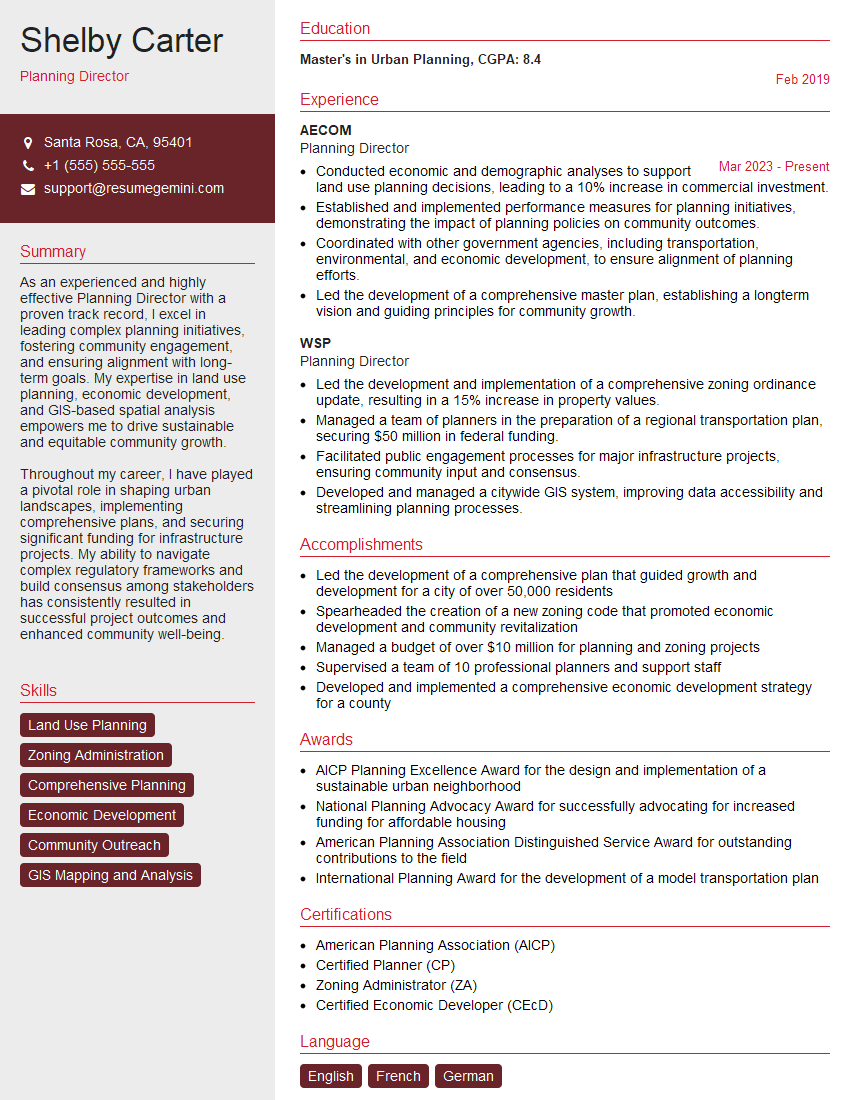
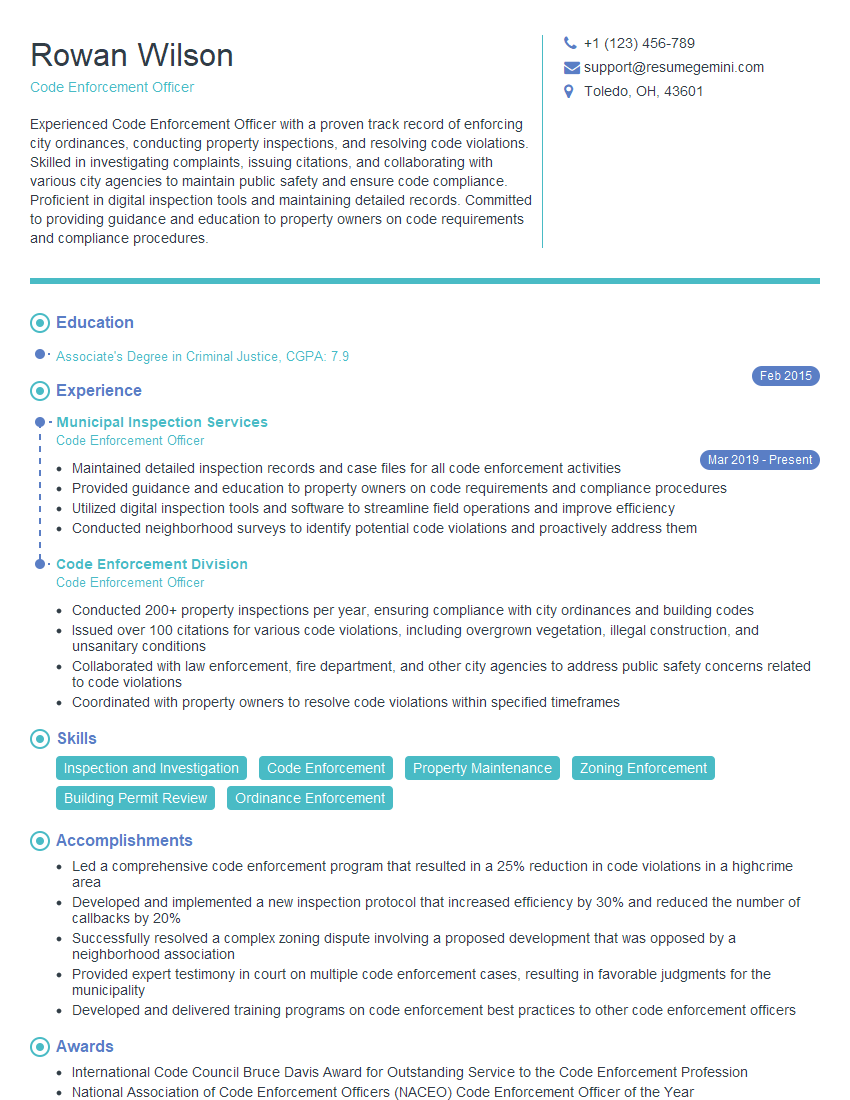
Mastering Zoning Plan Review is crucial for advancing your career in urban planning, development, and related fields. A strong understanding of these principles will open doors to exciting opportunities and demonstrate your expertise to potential employers. To maximize your chances of landing your dream job, creating a compelling and ATS-friendly resume is paramount. ResumeGemini is a trusted resource that can help you build a professional and effective resume that highlights your skills and experience. Examples of resumes tailored to Zoning Plan Review are available to help guide you in crafting your perfect application. Take the next step toward your career success today!
Explore more articles
Users Rating of Our Blogs
Share Your Experience
We value your feedback! Please rate our content and share your thoughts (optional).
What Readers Say About Our Blog
To the interviewgemini.com Webmaster.
Very helpful and content specific questions to help prepare me for my interview!
Thank you
To the interviewgemini.com Webmaster.
This was kind of a unique content I found around the specialized skills. Very helpful questions and good detailed answers.
Very Helpful blog, thank you Interviewgemini team.