Cracking a skill-specific interview, like one for Ability to set up and operate turning machines independently, requires understanding the nuances of the role. In this blog, we present the questions you’re most likely to encounter, along with insights into how to answer them effectively. Let’s ensure you’re ready to make a strong impression.
Questions Asked in Ability to set up and operate turning machines independently Interview
Q 1. Describe your experience setting up a turning machine.
Setting up a turning machine involves a methodical approach to ensure safe and efficient operation. First, I meticulously review the engineering drawings and specifications to understand the part’s dimensions, tolerances, and material. This informs all subsequent steps. Next, I select the appropriate chuck and workpiece-holding mechanism, ensuring a secure grip to prevent slippage during machining. I then mount the workpiece, carefully centering it to minimize runout and vibrations. This is critical for accuracy. The cutting tool is chosen based on the material and desired finish. Finally, I program the machine parameters (speed, feed, depth of cut) according to the selected tool and material properties. For example, when working with a hard material like hardened steel, I’d use carbide tooling and select a lower cutting speed to prevent tool breakage. I always perform a test cut on a scrap piece of the same material before commencing the final operation. This allows for fine-tuning of parameters and ensures the final product meets the required specifications.
Q 2. Explain the process of selecting the correct cutting tools for a specific turning operation.
Selecting the right cutting tool is paramount for achieving the desired surface finish, accuracy, and tool life. The choice depends on several factors: the material being machined (e.g., steel, aluminum, brass), the desired finish (e.g., roughing, finishing), and the operation itself. For example, when roughing steel, I’d choose a high-speed steel (HSS) tool with a larger positive rake angle to remove material quickly. However, for finishing operations on aluminum, I’d select a carbide insert with a smaller rake angle for a fine surface finish. Tool geometry—such as rake angle, relief angle, and cutting edge—also plays a crucial role. Sharp tools are essential, and dull or chipped tools should be immediately replaced to prevent damage to the workpiece and the machine. I regularly inspect tools before each job, and I always follow the manufacturer’s recommended cutting parameters for each tool.
Q 3. How do you determine the optimal cutting speed and feed rate for various materials?
Determining optimal cutting speed (CS) and feed rate (FR) is a balancing act between productivity and tool life. There are established formulas and charts based on material properties, but experience is key. The cutting speed depends on the material’s machinability; harder materials require slower speeds to prevent tool breakage. The feed rate is the speed at which the tool advances into the workpiece; a higher feed rate means faster material removal but can lead to tool wear and poor surface finish. I often refer to manufacturer’s data sheets for specific cutting tool recommendations. For example, turning stainless steel may require a lower cutting speed than turning aluminum, even with the same tool. I always start with conservative values for CS and FR, gradually increasing them while closely monitoring the tool’s condition and the workpiece’s surface finish. If vibrations or excessive tool wear are observed, I reduce the parameters accordingly. This iterative process ensures optimal results while safeguarding against damage.
Q 4. What safety precautions do you take when operating a turning machine?
Safety is my top priority when operating turning machines. Before starting any operation, I always ensure the machine is properly grounded and all guards are in place. I wear appropriate personal protective equipment (PPE), including safety glasses, hearing protection, and work gloves. I inspect the workpiece and tools before starting, ensuring they are free from defects. Long hair is tied back, and loose clothing is avoided. I never reach into the cutting zone while the machine is running. Machine operation is always approached with concentration and attention to detail. Regular maintenance and adherence to the manufacturer’s safety guidelines are also integral to preventing accidents. I’m trained and certified in machine safety protocols, and I actively participate in workplace safety meetings and training sessions.
Q 5. How do you troubleshoot common turning machine malfunctions?
Troubleshooting turning machine malfunctions requires a systematic approach. I start by identifying the symptoms, such as unusual noises, vibrations, or inaccurate cuts. Then, I systematically check the common causes: Is the workpiece properly secured? Are the tools sharp and correctly indexed? Are the machine parameters (speed, feed, depth of cut) appropriately set? Is there sufficient lubrication? Are there any signs of machine wear or damage? I’ll systematically check electrical connections, coolant flow, and hydraulic pressure as needed. For example, if the machine produces excessive vibrations, it might indicate a problem with the spindle bearings or an imbalance in the workpiece. A systematic approach, combined with experience and a good understanding of the machine, helps diagnose and resolve most issues quickly and efficiently. Documentation of troubleshooting steps is crucial for future reference.
Q 6. Explain your experience with different types of turning machines (e.g., CNC, manual).
My experience encompasses both manual and CNC turning machines. With manual lathes, I’m skilled in setting up and operating using handwheels and dials for precise control of cutting parameters. This hands-on experience provides a deep understanding of the machining process itself. With CNC lathes, I’m proficient in programming and operating machines using CAD/CAM software (e.g., Mastercam, Fusion 360) to create and execute complex turning programs, generating highly accurate and repeatable parts. I’m comfortable with G-code programming and troubleshooting CNC machine issues. I can accurately interpret CNC program outputs to ensure parts are manufactured within specified tolerances. For example, I’ve worked with machines from different manufacturers (e.g., Haas, Fanuc) and can adapt to various control interfaces. This diverse experience allows me to address a wide range of turning applications efficiently and effectively.
Q 7. How do you ensure dimensional accuracy in your turned parts?
Ensuring dimensional accuracy in turned parts requires attention to detail at every stage of the process. This begins with careful planning and selection of the appropriate tools, machine settings, and workholding methods. I regularly check and calibrate the machine using precision measuring instruments such as micrometers and calipers. Maintaining the machine in optimal condition—regular lubrication and cleaning—is also crucial. I use various techniques to ensure accuracy, such as carefully centering the workpiece, setting the correct cutting depths and feeds, and utilizing specialized tooling for specific finishing operations. The accuracy of the initial setup is critical—a slight error in workpiece alignment or tool positioning can lead to significant dimensional inaccuracies in the finished part. Post-processing inspection using CMM (Coordinate Measuring Machine) or other high precision instruments verifies the final dimensions and tolerances are met.
Q 8. Describe your experience with G-code programming for CNC turning machines.
G-code is the language of CNC machines. It’s a series of instructions that tell the machine exactly what to do, including the speed, feed rate, depth of cut, and toolpath. My experience with G-code for turning involves writing, modifying, and troubleshooting programs for a variety of parts and materials. I’m proficient in using common G-codes like G00 (rapid traverse), G01 (linear interpolation), G02/G03 (circular interpolation), and various canned cycles for common turning operations. For example, I’ve written programs for creating intricate threads using G32 and for facing operations utilizing G73. I’m also comfortable using G-code simulators to test programs before running them on the machine, preventing potential damage and wasted material. A recent project involved creating a complex part with multiple diameters and shoulders, requiring careful sequencing of G-code commands to ensure accurate machining and toolpath optimization.
For instance, a simple G-code snippet to perform a turning operation might look like this:
G00 X1.0 Z1.0 ; Rapid traverse to starting point
G01 X5.0 Z0.0 F0.1 ; Linear interpolation for turning, feeding at 0.1 mm/rev
This demonstrates the precision and control offered by G-code programming. I understand the importance of proper commenting in G-code for maintainability and easy debugging.
Q 9. How do you perform a tool change on a CNC turning machine?
Performing a tool change on a CNC turning machine is a crucial safety procedure. It requires following a strict protocol to prevent accidents. The first step is to bring the machine to a complete stop in a safe position – usually with the turret indexed to a safe position or the tool retracted. Then, the machine’s control panel is used to engage the tool change function, which typically involves an automated turret indexing system. Once the desired tool is indexed into position, the machine’s control panel is used to verify that the correct tool is in place and ready. It’s critical to visually inspect the tool and its clamping to ensure it’s securely mounted. Only after visual verification is complete should the machining process continue. Safety protocols must always be adhered to – this includes using appropriate safety glasses and hearing protection, and verifying the machine’s safety interlocks are working correctly. Failure to do so could result in serious injury or damage to the machine.
Q 10. What are the common causes of surface defects in turned parts and how do you prevent them?
Surface defects in turned parts can stem from various causes, including improper tooling, incorrect machining parameters, or material inconsistencies. Common defects include chatter marks (wavy surfaces), tear-out (rough edges), surface scratches, and burrs. Prevention strategies focus on addressing these root causes:
- Tooling: Using sharp, correctly sized, and properly indexed tools is paramount. Dull or damaged tools lead to poor surface finish and increased wear. Regular tool inspection and replacement are essential.
- Machining Parameters: Incorrect speed, feed rate, and depth of cut can induce chatter or tear-out. Optimal parameters are determined based on the material being machined, the tool geometry, and the desired surface finish. Experimentation and monitoring are important for finding the ideal settings.
- Workpiece Material: Inconsistent material hardness or composition can cause defects. Careful selection of material and ensuring the material is correctly prepared (e.g., properly annealed) helps prevent these issues.
- Machine Setup: Ensuring the workpiece is securely clamped and the machine is properly aligned is critical for preventing vibration and deflection that can cause defects. Regular machine maintenance contributes significantly to preventing this kind of defect.
- Coolant: Adequate coolant application helps prevent built-up edge formation and reduces heat-related defects. The correct coolant type for the material is also important.
By carefully controlling these factors, I can consistently produce high-quality, defect-free turned parts.
Q 11. How do you measure and inspect turned parts to ensure they meet specifications?
Measuring and inspecting turned parts involves using a combination of tools and techniques to verify that the final product meets the specified dimensions and tolerances. Common tools include:
- Micrometers: For precise measurements of diameters and lengths.
- Calipers: For quick measurements of diameters, lengths, and depths.
- Gauge Blocks: For precise checking of dimensions.
- Coordinate Measuring Machine (CMM): For complex shapes and high-precision measurements.
- Optical Comparators: To check the shape and overall profile of the part.
The inspection process begins by referencing the engineering drawings and specifications. I’ll then systematically measure key dimensions of the finished part, recording these measurements. This data is compared to the specified tolerances. If the measurements fall outside the specified tolerance, root cause analysis is conducted to identify the source of the error. This might involve reviewing the G-code, checking the machine setup, or analyzing the material characteristics. It’s important to maintain meticulous records of measurements and any corrective actions taken.
Q 12. Explain your understanding of different turning operations (e.g., facing, turning, boring).
Turning operations encompass a variety of processes used to shape cylindrical parts. They include:
- Facing: Machining a flat surface on the end of a workpiece. This is often the first operation performed to create a flat surface for subsequent operations.
- Turning: Reducing the diameter of a cylindrical workpiece to a specified dimension. This is a fundamental turning operation.
- Boring: Enlarging a hole already present in a workpiece. This operation is used to create precise internal diameters.
- Chamfering: Creating a bevel at the edge of a part to remove sharp corners. This improves handling and prevents damage.
- Threading: Cutting threads on the external or internal surface of a workpiece. This operation allows for screw connections.
- Parting Off: Separating a completed part from the rest of the material using a parting tool.
Understanding the nuances of each operation is crucial for programming and setting up the CNC turning machine efficiently. Each operation requires different tool geometries, speeds, feeds, and depths of cut for optimal results.
Q 13. How do you handle material inconsistencies during turning?
Material inconsistencies, such as variations in hardness or composition, can significantly impact turning operations. The most effective strategy is to address this issue proactively. This starts with a thorough material inspection before machining to identify any inconsistencies and plan accordingly. If significant variations exist, the material may need to be sorted or re-homogenized before processing to ensure uniform machining. During the machining process itself, closely monitoring the cutting forces and surface finish can help detect material variations. An increase in cutting force or changes in surface finish can be indicators of localized material inconsistencies. If inconsistency is discovered during machining, appropriate adjustments to speed, feed, and depth of cut can often mitigate the effect. In extreme cases, the tool path may even need to be adjusted to accommodate the material variation. Careful documentation is crucial for future reference and to improve future material selection and process optimization.
Q 14. How do you maintain and clean your turning machine to prevent wear and tear?
Regular maintenance and cleaning are vital for preserving the accuracy, lifespan, and overall performance of a turning machine. My maintenance routine includes:
- Daily Cleaning: Removing chips and debris from the machine bed, turret, and tool holders. This prevents buildup that can hinder proper operation and cause damage.
- Weekly Inspection: Checking for wear and tear on critical components, such as the ways, spindle bearings, and coolant system. Lubrication as needed should be completed during this check.
- Monthly Maintenance: More comprehensive lubrication of the machine, checking the coolant concentration, and inspecting the electrical components. This helps identify any developing problems.
- Periodic Servicing: Professional servicing by qualified technicians to perform more extensive inspections and repairs. This includes more intensive cleaning, checks of the control system, and any necessary replacements or repairs.
Following a structured maintenance schedule not only prevents costly breakdowns and repairs but also ensures the machine produces consistently high-quality parts. This translates to reduced waste, improved efficiency, and increased overall productivity. A well-maintained machine is a safe machine.
Q 15. Describe your experience working with different materials (e.g., steel, aluminum, brass).
My experience encompasses a wide range of materials commonly used in turning operations. Steel, aluminum, and brass each present unique challenges. Steel, for example, requires sharper tools and often more aggressive cutting parameters to achieve a smooth finish, while its hardness necessitates careful consideration of tool life. Aluminum, being softer, allows for higher cutting speeds, but its tendency to work-harden means we need to be mindful of chip evacuation to prevent built-up edge and ensure consistent quality. Brass, with its ductility, offers a good compromise – it machines relatively easily and produces clean cuts, but its softness makes it susceptible to chatter if the machine isn’t properly set up.
For instance, I once had to machine a complex part from high-carbon steel. This required selecting a carbide insert with high hardness and wear resistance. I had to optimize the cutting parameters – speed, feed, and depth of cut – carefully to avoid excessive heat generation, which could lead to tool failure and poor surface finish. Conversely, on another project involving aluminum, I utilized higher cutting speeds and feeds to enhance productivity, whilst monitoring the tool’s condition closely to prevent it from being prematurely worn out.
Career Expert Tips:
- Ace those interviews! Prepare effectively by reviewing the Top 50 Most Common Interview Questions on ResumeGemini.
- Navigate your job search with confidence! Explore a wide range of Career Tips on ResumeGemini. Learn about common challenges and recommendations to overcome them.
- Craft the perfect resume! Master the Art of Resume Writing with ResumeGemini’s guide. Showcase your unique qualifications and achievements effectively.
- Don’t miss out on holiday savings! Build your dream resume with ResumeGemini’s ATS optimized templates.
Q 16. How do you interpret engineering drawings and specifications for turning operations?
Interpreting engineering drawings is fundamental to successful turning. I start by thoroughly reviewing the drawing’s dimensions, tolerances, surface finish requirements, and material specifications. This includes understanding the various views (orthographic projections) and identifying any special features like threads, tapers, or keyways. The specifications will indicate the required accuracy and the limits of acceptable variation. I pay particular attention to tolerance values, as these directly dictate the machining parameters and the need for any post-machining operations.
For example, a drawing might specify a shaft with a diameter of 25mm +/- 0.05mm. This tolerance indicates that the final diameter must fall between 24.95mm and 25.05mm. In the practical setting, I would select cutting tools and parameters that allow me to meet this tolerance consistently and efficiently, which may involve making adjustments to compensate for tool wear.
Q 17. Explain your experience with using different types of cutting fluids.
Cutting fluids play a crucial role in turning operations. They lubricate the cutting zone, reduce friction and heat, improve surface finish, and help to evacuate chips. My experience includes using various cutting fluids, from soluble oils (emulsions) to synthetic fluids. The selection of a suitable fluid depends heavily on the material being machined and the specific cutting conditions. Soluble oils are widely used for their versatility and relatively low cost. However, for materials that react with them or in cases where a superior surface finish is required, synthetic fluids are preferable.
For example, when machining stainless steel, I frequently use a synthetic cutting fluid specifically formulated for that type of metal to prevent excessive heat build-up and maintain a crisp surface finish. Conversely, when working with aluminum, I’ve found that soluble oil does an effective job while being more cost-effective.
Q 18. How do you calculate the machining time for a specific turning operation?
Calculating machining time involves several factors. The primary components are the length of the cut, the feed rate, the cutting speed, and the number of passes required to reach the final dimensions. The formula is typically: Machining Time = (Length of Cut / Feed Rate) * Number of Passes. However, this is a simplified calculation. We need to account for additional factors such as setup time, tool changes, and allowance for part handling.
For example, if I’m turning a 100mm long shaft with a feed rate of 0.2mm/rev and a cutting speed resulting in 100 revolutions per minute, the basic machining time would be (100mm / 0.2mm/rev) / (100 rev/min) = 5 minutes. This doesn’t include the time for setup, tool changes, or potential interruptions.
Q 19. How do you ensure the proper alignment and setup of workpieces on the turning machine?
Proper alignment and setup of workpieces are critical for ensuring accuracy and safety. It starts with securely clamping the workpiece in the chuck or between centers. The workpiece must be concentric with the machine’s spindle; otherwise, we’ll have inaccuracies and potential damage. This requires careful use of aligning tools and precision measurement instruments. The tailstock center, if used, needs to be precisely aligned with the headstock spindle. We might use a dial indicator to check for any runout (eccentricity).
I have encountered situations where improperly mounted workpieces resulted in vibrations during machining, leading to poor surface finish and even tool breakage. I use a combination of visual inspection and precision measuring tools, like dial indicators, to confirm the alignment before starting the operation. This meticulous attention to detail ensures the final product’s quality and accuracy.
Q 20. What are the common causes of tool breakage and how do you avoid them?
Tool breakage is a common issue, often stemming from several causes, including improper tool selection, incorrect cutting parameters, dull or chipped tools, and inadequate clamping of the workpiece. Over-feeding, excessive cutting depths, and high cutting speeds beyond the tool’s capacity are frequent culprits. Also, using the wrong type of tool for the given material can result in tool failure. Workpiece defects and improper clamping can introduce unexpected forces, leading to tool breakage.
Prevention involves meticulous planning. I select appropriate tools for the material and the operation, carefully checking for any chips or damage on the cutting edges. I adhere to recommended cutting speeds and feeds, regularly monitor the machine’s vibrations, and ensure the workpiece is securely clamped. Regular tool inspection and timely replacement are essential preventative measures. Thinking ahead, anticipating potential issues and making adjustments before they cause problems is paramount.
Q 21. Describe your experience with using various measuring instruments (e.g., calipers, micrometers).
My experience includes extensive use of various measuring instruments, including vernier calipers, micrometers, dial indicators, and height gauges. Calipers and micrometers allow for precise measurement of dimensions, ensuring that the machined parts meet the specified tolerances. Dial indicators are crucial for checking alignment and runout of workpieces, and height gauges measure the vertical dimensions accurately. The correct and consistent use of these tools is essential for maintaining the quality and accuracy of machined components. I am proficient in using both digital and analogue versions of these instruments.
For instance, after turning a component, I would use a micrometer to precisely measure the critical dimensions and verify that the tolerance requirements of the engineering drawing are satisfied. If the measurements reveal any deviation, we can use various tools and processes to correct any error in a timely manner. Such a systematic approach guarantees the required precision in our machined products.
Q 22. How do you handle emergency situations during turning machine operation?
Emergency situations on a turning machine demand immediate, calm action. My priority is always safety – both personal and for the machine itself.
- Immediate Shutdown: My first response is to immediately hit the emergency stop button. This halts all machine processes and prevents further damage or injury.
- Assess the Situation: Once the machine is safely stopped, I carefully assess the nature of the emergency. Is it a tooling issue, a material problem, or a machine malfunction? Understanding the root cause is crucial for a safe resolution.
- Isolate the Hazard: If there’s a risk of further damage or injury (e.g., a leaking coolant line), I take steps to isolate the hazard. This might involve turning off power to specific components or evacuating the immediate area.
- Report and Seek Assistance: Depending on the severity, I report the incident to my supervisor and request assistance from maintenance personnel or other skilled machinists. Accurate reporting ensures future prevention.
- Documentation: Following the resolution, I thoroughly document the incident, including the cause, actions taken, and any damage incurred. This contributes to a safer working environment.
For example, if a tool breaks during operation, the immediate shutdown prevents further damage to the workpiece and machine. After assessment, I’d replace the broken tool, inspect the workpiece for damage, and document the incident to avoid future tool failures.
Q 23. What is your experience with different types of chucks and collets?
Chuck and collet selection is critical for secure workpiece holding and efficient turning. My experience encompasses various types, including:
- 3-Jaw Chucks: These are versatile and commonly used for quick workpiece changes. I’m adept at properly centering and tightening workpieces to avoid runout and vibration.
- 4-Jaw Chucks: Offering independent jaw adjustments, these are ideal for precise workpiece alignment and gripping irregular shapes. I have experience with both independent and concentric jaw setups.
- Collets: I’m familiar with various collet types, including ER collets (for tools and smaller workpieces) and hydraulic collets (for larger, heavier workpieces). Choosing the right collet ensures a secure and accurate grip.
- Mandrels: I’ve used mandrels extensively for holding long, slender workpieces, ensuring proper support and minimizing deflection during turning.
The choice depends on the workpiece material, size, shape, and the turning operation. For example, a delicate brass part would necessitate a collet for precise grip, while a large steel cylinder requires a sturdy 4-jaw chuck for secure holding.
Q 24. How do you troubleshoot and resolve issues related to machine vibrations?
Machine vibrations can significantly affect part accuracy and surface finish. My troubleshooting approach is systematic:
- Identify the Source: I first determine the source of the vibration. Is it from an unbalanced workpiece, worn bearings, loose components, excessive cutting speeds, or improper tool setup?
- Check Workpiece Balance: I meticulously check the workpiece for balance. An unbalanced workpiece is a common cause of vibration, requiring either careful balancing or changing the chucking method.
- Inspect Tooling and Setup: I then carefully inspect the tooling and setup. A dull tool, poorly clamped workpiece, or incorrectly set cutting parameters can induce vibration. Proper tool alignment and correct overhang are crucial.
- Examine Machine Components: If the issue persists, I move to inspect the machine’s components – looking for worn bearings, loose fasteners, or misalignment in the machine spindle or bed.
- Adjust Cutting Parameters: Often, adjusting cutting parameters – reducing cutting speed or feed rate – can mitigate vibration. This is a less intrusive solution than overhauling machine components.
For instance, if high-frequency vibration is present, a loose component is likely. I would systematically tighten all fasteners and check for any obvious damage or wear in the machine structure.
Q 25. How do you perform machine maintenance and preventative maintenance?
Preventative maintenance is crucial for ensuring optimal machine performance and longevity. My routine includes:
- Regular Cleaning: I regularly clean the machine, removing chips, coolant residue, and debris. This prevents buildup that can lead to malfunctions or damage.
- Lubrication: I lubricate moving parts according to the machine’s maintenance schedule. Proper lubrication reduces friction, wear, and tear.
- Inspection of Wear Parts: I inspect tools, chucks, collets, and bearings regularly for wear. I replace worn parts promptly to prevent failures.
- Checking for Leaks: I check for coolant or hydraulic fluid leaks. Leaks can cause damage and create hazardous working conditions.
- Testing Machine Functions: I periodically test the machine’s functions – such as spindle speed control, feed rates, and coolant system – to ensure they are operating correctly.
Corrective maintenance is tackled as needed. This might include replacing worn bearings, repairing damaged components, or addressing specific issues identified during routine inspections.
Q 26. Explain your experience with using CAM software for turning operations.
I’m proficient in using CAM (Computer-Aided Manufacturing) software for turning operations, primarily Mastercam and Fusion 360. This allows for efficient programming and optimization of turning processes.
- Part Programming: I can create CNC programs directly from CAD models, defining toolpaths, speeds, feeds, and other machining parameters.
- Toolpath Optimization: I utilize CAM software to optimize toolpaths for efficient material removal, minimizing cycle times and improving surface finish. I understand techniques like roughing and finishing passes and the importance of tool selection.
- Simulation: Before running a program on the machine, I simulate it in the CAM software to detect potential collisions or errors. This prevents damage to the machine or workpiece.
- Post-Processing: I’m familiar with post-processing to generate the correct machine code for the specific CNC turning machine I’m using.
For example, I recently used Mastercam to program the turning of a complex part with multiple features, achieving a significant reduction in cycle time compared to manual programming by optimizing toolpaths and utilizing the right cutting tools.
Q 27. What are your strengths and weaknesses in relation to turning machine operation?
Strengths: My strengths lie in my methodical approach to problem-solving, my meticulous attention to detail, and my ability to quickly learn and adapt to new equipment and processes. I’m also adept at optimizing turning processes for efficiency and quality.
Weaknesses: While I’m highly skilled, I sometimes focus too intently on detail and might benefit from delegating simpler tasks more effectively in a team setting to enhance overall productivity. I’m actively working on improving my time management skills in this area.
Q 28. Describe a time you had to troubleshoot a complex turning machine problem.
I once encountered a complex issue where a new batch of stainless steel caused unexpected chatter during turning. The part was a critical component, and the chatter led to unacceptable surface finish.
My troubleshooting steps included:
- Rule out Machine Issues: I first eliminated machine-related issues, carefully checking for spindle imbalance, bearing wear, and other mechanical problems. All checked out fine.
- Investigate Material Properties: I then focused on the material. I learned that this particular batch of stainless steel had slightly different mechanical properties (higher hardness) than previous batches.
- Adjust Cutting Parameters: I systematically adjusted the cutting parameters – reducing the cutting speed and feed rate, increasing the depth of cut incrementally and experimenting with different cutting fluids – until the chatter was minimized.
- Optimize Tool Selection: I also considered the tool geometry and material. Switching to a more rigid carbide insert significantly reduced the chatter.
The solution involved a combination of carefully adjusting cutting parameters and choosing the right tooling. The experience underscored the importance of understanding material properties and their influence on machining parameters.
Key Topics to Learn for Ability to set up and operate turning machines independently Interview
- Machine Selection and Setup: Understanding the different types of turning machines, their capabilities, and selecting the appropriate machine for a specific job. This includes analyzing blueprints and specifications to determine the necessary tooling and settings.
- Tooling and Fixturing: Proper selection, mounting, and adjustment of cutting tools, chucks, and other fixtures. Understanding tool geometry, wear, and the importance of proper clamping for accurate and safe operation.
- Programming and Operation: Familiarity with CNC programming (G-code or other) or manual setup procedures, including entering dimensions, speeds, feeds, and other parameters. Safe and efficient operation of the machine, including monitoring for potential issues.
- Material Handling and Safety: Safe handling of materials, including loading and unloading procedures. Adherence to all relevant safety regulations and best practices to prevent accidents and injuries.
- Quality Control and Inspection: Understanding quality control methods and performing necessary inspections to ensure parts meet specifications. Identifying and troubleshooting common machining errors.
- Troubleshooting and Maintenance: Recognizing and addressing common machine malfunctions. Performing basic preventative maintenance tasks to keep the machine running efficiently.
- Blueprint Reading and Interpretation: Accurately interpreting engineering drawings and specifications to ensure correct part production.
Next Steps
Mastering the ability to set up and operate turning machines independently is crucial for career advancement in manufacturing and engineering. It demonstrates a valuable skill set sought after by many employers and opens doors to higher-paying positions and increased responsibility. To maximize your job prospects, creating a strong, ATS-friendly resume is essential. ResumeGemini is a trusted resource to help you build a professional and effective resume that highlights your skills and experience. Examples of resumes tailored to showcase proficiency in setting up and operating turning machines independently are available through ResumeGemini, providing you with valuable templates and guidance.

Production Supervisor Resume Sample

Manufacturing Engineer Resume Sample

Automation Technician Resume Sample

Manufacturing Technician Resume Sample

Shop Supervisor Resume Sample

Manufacturing Supervisor Resume Sample
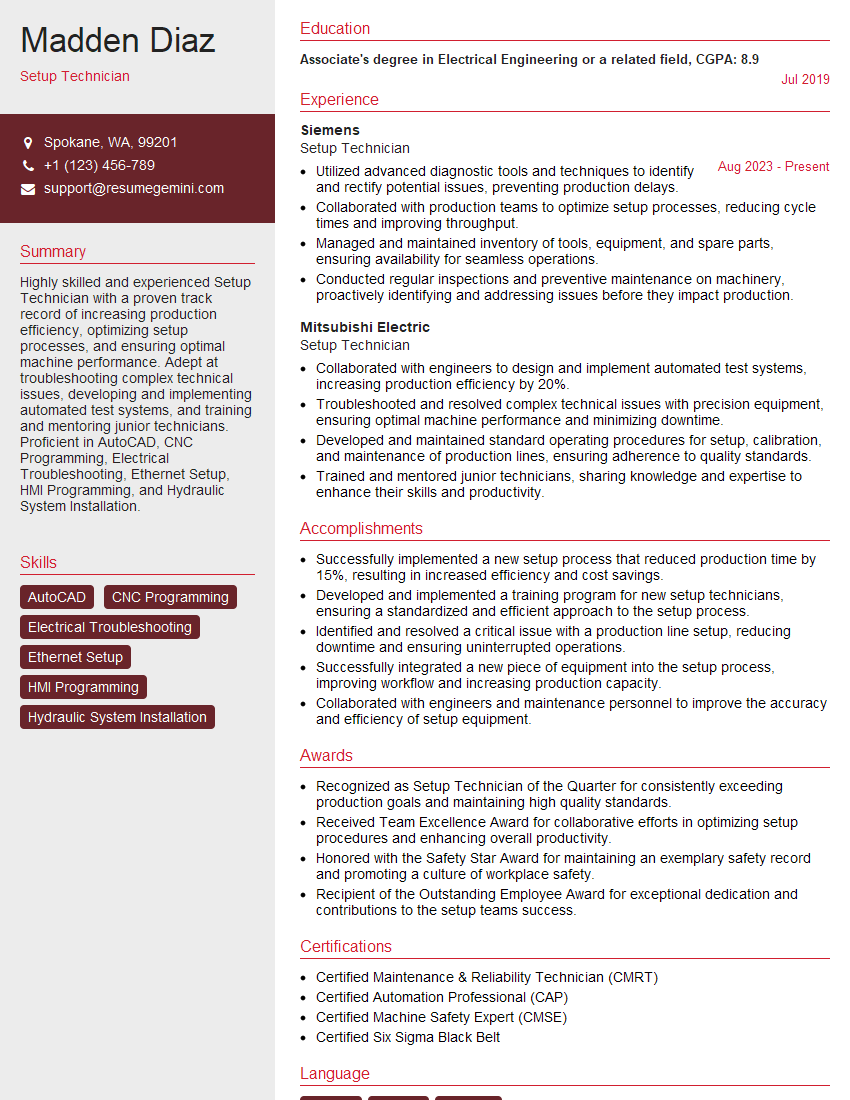
Setup Technician Resume Sample

Lathe Operator Resume Sample

Turning Machine Operator Resume Sample

Precision Machinist Resume Sample
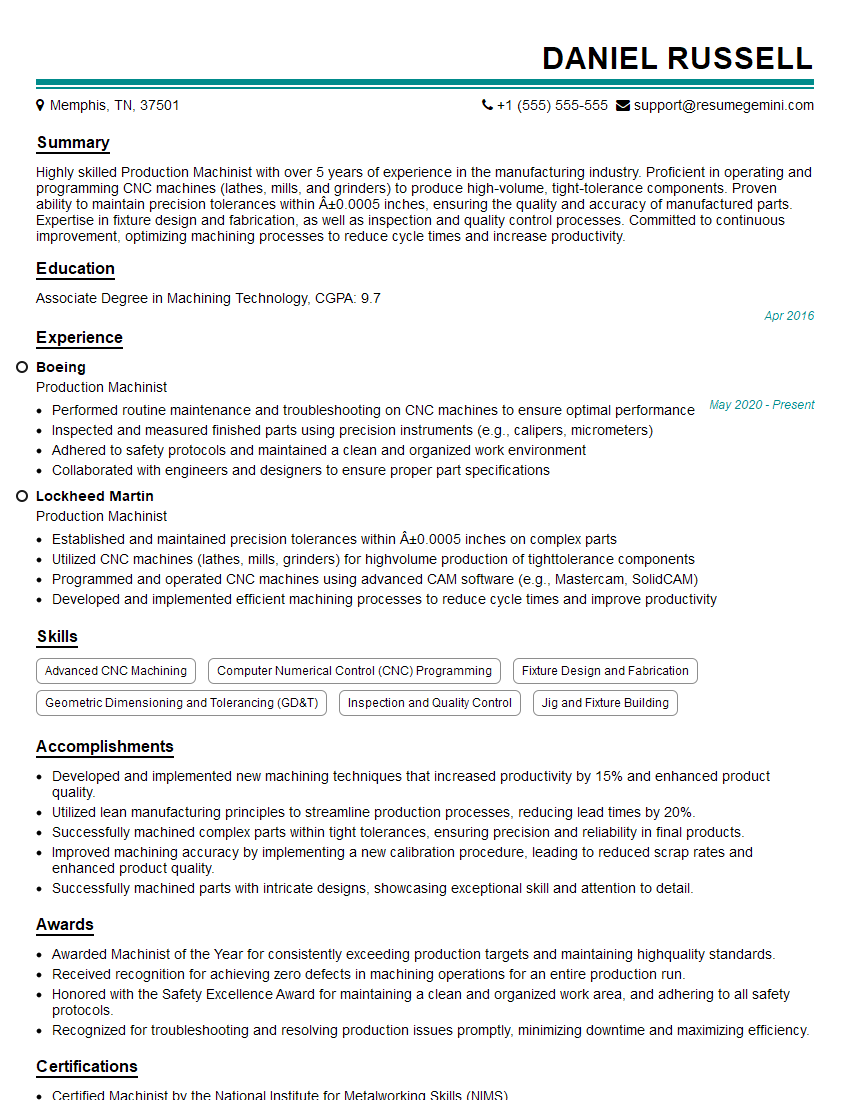
Production Machinist Resume Sample
Explore more articles
Users Rating of Our Blogs
Share Your Experience
We value your feedback! Please rate our content and share your thoughts (optional).
What Readers Say About Our Blog
To the interviewgemini.com Webmaster.
Very helpful and content specific questions to help prepare me for my interview!
Thank you
To the interviewgemini.com Webmaster.
This was kind of a unique content I found around the specialized skills. Very helpful questions and good detailed answers.
Very Helpful blog, thank you Interviewgemini team.