Every successful interview starts with knowing what to expect. In this blog, we’ll take you through the top Silviculture and Agroforestry interview questions, breaking them down with expert tips to help you deliver impactful answers. Step into your next interview fully prepared and ready to succeed.
Questions Asked in Silviculture and Agroforestry Interview
Q 1. Explain the principles of sustainable forest management.
Sustainable forest management (SFM) aims to balance the economic, social, and environmental needs of forests, ensuring their productivity and health for present and future generations. It’s not just about harvesting timber; it’s about maintaining biodiversity, protecting water resources, mitigating climate change, and providing recreational opportunities.
- Maintaining Biodiversity: SFM strategies focus on preserving diverse tree species, age classes, and forest structures. This supports a wider range of wildlife and ecological processes.
- Protecting Water Resources: Healthy forests regulate water flow, preventing erosion and ensuring clean water supplies. SFM practices minimize soil disturbance during logging and planting to protect watersheds.
- Mitigating Climate Change: Forests act as carbon sinks, absorbing CO2 from the atmosphere. SFM promotes forest expansion and prevents deforestation, helping to combat climate change. Sustainable harvesting practices also minimize carbon emissions from logging activities.
- Economic Viability: SFM practices ensure the long-term economic benefits of forests through sustainable timber production, non-timber forest products (NTFPs) harvesting, and ecotourism.
- Social Equity: SFM incorporates the needs and rights of local communities, recognizing their dependence on forest resources. Participatory forest management ensures fair and equitable benefit sharing.
For example, a sustainable logging operation might use selective harvesting, leaving behind enough mature trees to regenerate the forest naturally and minimize habitat disruption. They would also consider the impact on local communities, perhaps engaging them in the operation and offering job opportunities.
Q 2. Describe different silvicultural systems (e.g., clearcutting, shelterwood, selection cutting).
Silvicultural systems are the methods used to manage forest regeneration and growth. Different systems have varying impacts on forest structure, biodiversity, and timber production.
- Clearcutting: This involves removing all trees in a designated area. It’s often used for fast-growing species on relatively uniform sites. It creates a dramatic change in forest structure and can lead to increased erosion and changes in water quality initially.
- Shelterwood Cutting: A series of partial cuts are made over several years, leaving some mature trees to provide shelter for regenerating seedlings. This mimics natural forest regeneration processes better than clearcutting.
- Selection Cutting: Individual trees or small groups of trees are harvested selectively, leaving the rest of the forest largely undisturbed. This system maintains continuous forest cover and is particularly suited for maintaining biodiversity.
Imagine clearcutting as a blank canvas, where you can create a new forest from scratch. Shelterwood is like gradually thinning a dense forest to create space for new growth. Selection cutting is like continually pruning a garden, maintaining diversity and vigor.
Q 3. What are the benefits and drawbacks of each silvicultural system?
Each silvicultural system has advantages and disadvantages:
- Clearcutting:
- Benefits: Efficient, cost-effective, good for fast-growing species.
- Drawbacks: Environmental impact (soil erosion, water quality changes), loss of biodiversity, aesthetic impact.
- Shelterwood Cutting:
- Benefits: Gradual change, better regeneration, improved biodiversity compared to clearcutting, better protection of soil and water resources.
- Drawbacks: More complex to implement, may require longer periods to achieve regeneration.
- Selection Cutting:
- Benefits: High biodiversity, maintains continuous forest cover, minimizes environmental impact, higher quality timber in some cases.
- Drawbacks: Less efficient, high labor cost, more skilled labor needed, not ideal for all species.
The choice of system depends on the specific objectives, site conditions, species, and socioeconomic factors. For example, in a watershed area, shelterwood or selection cutting might be preferred to minimize erosion and protect water quality.
Q 4. How do you assess site suitability for different tree species?
Site suitability assessment involves evaluating environmental factors to determine which tree species will thrive in a particular location. This considers climate, soil, topography, and existing vegetation.
- Climate: Temperature, precipitation, frost frequency, and growing season length affect tree growth. Some species are adapted to cold climates, while others prefer warmer temperatures.
- Soil: Soil texture, drainage, pH, nutrient content, and depth influence root growth and nutrient availability. For instance, oaks prefer well-drained soils, while some pines can tolerate poorly drained conditions.
- Topography: Slope, aspect (direction the slope faces), and elevation affect sunlight exposure, temperature, and moisture availability. South-facing slopes are generally warmer and drier than north-facing slopes.
- Existing Vegetation: The presence of competing vegetation and potential pests or diseases needs consideration. Planting a species that is highly susceptible to local diseases may lead to failure.
Site suitability is often assessed using maps, field surveys, and soil analysis. A simple example: If a site is frequently flooded, you wouldn’t plant a species intolerant of waterlogging.
Q 5. Explain the concept of tree improvement and its role in silviculture.
Tree improvement involves selecting and breeding superior trees to enhance desirable traits such as growth rate, wood quality, disease resistance, and adaptability to changing climate conditions. This significantly enhances silviculture efforts.
- Selection: Identifying superior trees based on their desirable traits, such as fast growth, straight stems, and high-quality wood. This is often done through measurements and visual assessment.
- Breeding: Controlled pollination and crossing of selected trees to combine desirable traits in their offspring. Advanced techniques like genetic engineering are also used to improve traits.
- Vegetative Propagation: Using cuttings, grafting, or tissue culture to propagate superior genotypes quickly and efficiently. This ensures that the offspring retains the improved characteristics.
For example, breeding programs have developed pine varieties with higher resistance to pine beetles, reducing the need for extensive pest control measures.
Q 6. Describe methods for controlling pests and diseases in forests.
Pest and disease control in forests involves a variety of integrated strategies aimed at minimizing damage while protecting ecological balance. It often requires a combination of methods:
- Silvicultural Practices: Selecting resistant tree species, promoting healthy forest structure, and avoiding practices that stress trees (e.g., overstocking) can reduce pest and disease susceptibility. Proper spacing can improve air circulation and prevent fungal infections.
- Biological Control: Introducing natural enemies (predators or parasites) to control pest populations. This is a more environmentally friendly approach compared to chemical methods.
- Chemical Control: Using pesticides to control outbreaks, ideally as a last resort and with careful consideration of ecological impacts. Targeted application minimizes environmental damage.
- Monitoring and Early Detection: Regular forest monitoring and early detection of pest and disease infestations are critical to timely intervention and preventing widespread damage. Regular surveys and traps can provide crucial information.
A practical example is using pheromone traps to monitor and control bark beetle populations. The traps lure the beetles and provide an estimate of the population, alerting forest managers to potential outbreaks.
Q 7. How do you monitor forest health and growth?
Forest health and growth monitoring involves regular assessment of various parameters to evaluate forest condition and inform management decisions. This is crucial for SFM.
- Tree Growth Measurements: Periodic measurements of tree height, diameter, and volume to assess growth rates and overall stand productivity. This might involve using dendrometers and forest inventory techniques.
- Forest Health Assessment: Evaluating tree health and assessing the presence of pests, diseases, or other stressors. This may include visual inspections, sampling of foliage, and analysis of soil conditions.
- Remote Sensing: Using aerial photographs, satellite imagery, and LiDAR to monitor forest cover, assess damage from disturbances, and track changes in forest health over time. This is especially valuable for large areas.
- Data Analysis: Analyzing collected data to track trends, identify problem areas, and evaluate the effectiveness of management practices. GIS and statistical software aid in data analysis and visualization.
Imagine a doctor regularly checking a patient’s vital signs – forest monitoring is similar. Regular assessments help us to detect problems early and take appropriate action before they escalate.
Q 8. Explain the role of prescribed burning in forest management.
Prescribed burning, a crucial tool in forest management, involves carefully planned and controlled fires to achieve specific ecological and silvicultural objectives. It’s not about uncontrolled wildfires; instead, it’s a precise technique used to mimic natural fire regimes and improve forest health.
Benefits of Prescribed Burning:
- Reducing fuel loads: Burning removes accumulated deadwood, leaves, and other flammable materials, lowering the risk of catastrophic wildfires. Think of it like cleaning out a cluttered attic – less fuel means a smaller, safer fire.
- Improving wildlife habitat: Many plant and animal species depend on fire for germination, foraging, and habitat creation. For instance, some pine trees require fire to open their cones and release seeds.
- Controlling invasive species: Prescribed burns can target invasive plants, giving native species a competitive edge. This can be particularly effective in areas where invasive plants have outcompeted native vegetation.
- Enhancing forest regeneration: Fire can stimulate seed germination and create favorable conditions for seedling establishment. This promotes the growth of young trees and ensures forest renewal.
- Improving forest structure: By removing understory vegetation, prescribed burns can open up the forest canopy, promoting better tree growth and creating a more diverse forest structure.
Careful Planning is Key: Successful prescribed burning requires meticulous planning, considering factors like weather conditions, fuel type, topography, and proximity to human settlements. Highly trained professionals conduct these burns with safety as the top priority.
Q 9. What are the key principles of agroforestry?
Agroforestry is a land-use system that integrates trees and shrubs with crops and/or livestock. The key is synergy; the different components interact to enhance productivity and sustainability, often surpassing the yields of monoculture systems.
Key Principles:
- Species selection: Choosing appropriate tree and crop species that are compatible in terms of growth habits, nutrient requirements, and climate conditions is crucial.
- Spatial arrangement: The layout of trees and crops (e.g., alley cropping, silvopasture) significantly influences resource utilization and overall productivity.
- Resource optimization: Effective agroforestry maximizes the use of land, water, nutrients, and sunlight, minimizing waste and maximizing efficiency.
- Diversification: Diversifying species reduces the risk of crop failure or pest outbreaks, enhancing resilience to environmental stresses.
- Sustainability: Agroforestry aims to maintain and enhance soil fertility, water quality, and biodiversity, ensuring long-term productivity without environmental degradation.
Imagine a farm where fruit trees shade coffee plants below, reducing water stress and providing habitat for pollinators. This illustrates the efficient resource use and biodiversity advantages.
Q 10. Describe different agroforestry systems (e.g., alley cropping, silvopasture).
Agroforestry encompasses diverse systems; here are a few examples:
- Alley cropping: Crops are grown in alleys between rows of trees. This system provides shade for crops, reduces soil erosion, and can improve soil fertility. Example: Maize or beans grown between rows of Leucaena trees.
- Silvopasture: Integrating trees with grazing livestock. Trees provide shade for animals, improve forage quality, and enhance biodiversity. Example: Cattle grazing in a pasture interspersed with oak trees.
- Windbreaks/shelterbelts: Rows of trees planted to reduce wind speed and protect crops from wind damage. This can increase yields and reduce soil erosion. Example: Eucalyptus or acacia trees protecting a field of wheat.
- Taungya: A system where farmers cultivate crops temporarily within a newly established forest plantation. Once the trees mature, the farmers move to another area. This helps accelerate forest regeneration.
- Homegardens: Diverse mixtures of trees, shrubs, herbs, and crops cultivated around homes. This offers food security and a diversity of products.
The choice of system depends on the site conditions, climate, available species, and farmer preferences. For example, alley cropping might be suitable for drier regions, while silvopasture works well in areas with ample rainfall and grazing potential.
Q 11. What are the ecological benefits of agroforestry?
Agroforestry offers substantial ecological benefits, contributing to both local and global environmental health.
- Improved biodiversity: The integration of trees into agricultural landscapes creates diverse habitats, supporting a wider array of plants and animals. Increased biodiversity means a more resilient ecosystem.
- Enhanced carbon sequestration: Trees absorb atmospheric carbon dioxide, reducing greenhouse gas emissions and mitigating climate change. Agroforestry systems can significantly increase carbon storage in the soil and biomass.
- Reduced soil erosion: Tree roots stabilize the soil, reducing erosion caused by wind and water. This protects topsoil and maintains soil fertility.
- Improved water quality: Trees help filter pollutants from runoff water, preventing contamination of rivers and streams. They also improve water infiltration into the soil, reducing surface runoff.
- Protection from extreme weather events: Windbreaks and shelterbelts reduce the impact of wind and extreme weather events on crops and livestock, enhancing resilience to climate change impacts.
For instance, a silvopasture system may sequester more carbon than a conventional pasture while also offering shade for livestock and reducing soil erosion. This demonstrates the multiple ecological benefits achieved through this system.
Q 12. How do you design an agroforestry system for a specific site?
Designing an agroforestry system requires careful consideration of several factors:
- Site assessment: Evaluate soil type, water availability, climate, topography, and existing vegetation. This will determine suitable tree and crop species.
- Species selection: Choose species that are well-adapted to the site conditions, have desirable economic value, and are compatible with each other. Consider their growth rates, nutrient requirements, and allelopathic effects (chemicals released by plants that affect other plants).
- System design: Select the appropriate agroforestry system based on site characteristics and goals (e.g., alley cropping, silvopasture). Consider spatial arrangements of trees and crops to maximize resource use and minimize competition.
- Management plan: Develop a plan for managing the system, including planting, pruning, weeding, pest and disease control, and harvesting. This should consider the needs of both trees and crops.
- Monitoring and evaluation: Regularly monitor the growth of trees and crops, soil conditions, and other relevant parameters. Adjust management practices as needed to optimize productivity and sustainability.
Imagine a farmer wanting to establish an agroforestry system on a sloping land with poor soil fertility. A suitable design would likely include deep-rooted nitrogen-fixing trees to improve soil health, coupled with drought-tolerant crops suited for the slopes, possibly interspersed with windbreaks to control erosion. The farmer would regularly monitor soil health and tree/crop growth and adjust management based on their observations.
Q 13. What are the economic considerations in agroforestry?
Economic considerations are crucial in agroforestry, balancing upfront investments with long-term returns.
- Establishment costs: Planting trees, land preparation, and initial management practices require upfront investment.
- Maintenance costs: Ongoing maintenance, including pruning, weeding, and pest control, contributes to the overall cost.
- Harvesting costs: The cost of harvesting both tree and crop products must be factored in.
- Market prices: The market value of the products (timber, fruits, nuts, forage) influences the profitability of the system. Fluctuations in market prices can significantly impact economic returns.
- Risk mitigation: Diversification reduces the risk of crop failure or price volatility, enhancing economic stability.
- Long-term returns: Agroforestry systems are often characterized by delayed returns, with income generation typically starting after several years.
A thorough economic analysis, considering all costs and potential revenue streams throughout the lifespan of the agroforestry system, is crucial for determining its economic viability. This might include cost-benefit analysis, discounted cash flow analysis, or break-even analysis to assess the profitability.
Q 14. How do you manage competition between trees and crops in agroforestry?
Managing competition between trees and crops requires careful planning and execution.
- Species selection: Selecting compatible species that have different resource needs can minimize competition. For example, choosing trees with deep roots and crops with shallow roots can reduce competition for water and nutrients.
- Spatial arrangement: Strategic spacing of trees and crops can optimize light interception and nutrient uptake. Wide spacing may reduce competition but may also reduce overall productivity. Careful consideration of sunlight and root systems is crucial.
- Pruning and shaping: Pruning trees can reduce shading on crops, improving light availability for photosynthesis. However, excessive pruning can affect tree growth and long-term productivity.
- Nutrient management: Applying fertilizers can reduce nutrient limitations for both trees and crops. A balanced fertilization plan caters to the specific needs of both.
- Intercropping: Using nitrogen-fixing cover crops or intercropping legumes with other crops can improve soil fertility and reduce the need for chemical fertilizers.
For example, in an alley cropping system with nitrogen-fixing trees, the trees may provide some shade for the crops, but strategic pruning would ensure that sufficient light reaches the crops without hindering the trees’ growth. Proper nutrient management would support both tree and crop needs, ensuring a balance between the two.
Q 15. Describe the role of biodiversity in forest management.
Biodiversity is absolutely crucial for healthy and resilient forest ecosystems. Think of a forest like a finely tuned orchestra – each species, from the tiniest insect to the largest tree, plays a vital role. A diverse forest is more resistant to pests, diseases, and climate change impacts because it has a wider range of species with different tolerances and adaptations.
- Increased Productivity: Diverse forests often exhibit higher overall productivity due to complementary resource use and niche partitioning amongst species. For example, different tree species may have different root systems, accessing nutrients at varying depths in the soil.
- Improved Nutrient Cycling: A variety of organisms, including fungi, bacteria, and insects, decompose organic matter, releasing essential nutrients back into the soil. This intricate process supports healthy tree growth and overall ecosystem health. A lack of diversity can disrupt this cycle.
- Enhanced Resilience: If one species is affected by a disease or pest, a diverse forest is less likely to suffer a catastrophic collapse. The presence of other species can compensate for the loss and maintain ecosystem function.
- Greater Ecosystem Services: Biodiversity supports a wide range of ecosystem services, such as carbon sequestration, water purification, and pollination. These services are essential for human well-being.
In forest management, promoting biodiversity involves strategies like mixed-species plantations, maintaining diverse age classes, and protecting old-growth forests which are hotbeds of biodiversity.
Career Expert Tips:
- Ace those interviews! Prepare effectively by reviewing the Top 50 Most Common Interview Questions on ResumeGemini.
- Navigate your job search with confidence! Explore a wide range of Career Tips on ResumeGemini. Learn about common challenges and recommendations to overcome them.
- Craft the perfect resume! Master the Art of Resume Writing with ResumeGemini’s guide. Showcase your unique qualifications and achievements effectively.
- Don’t miss out on holiday savings! Build your dream resume with ResumeGemini’s ATS optimized templates.
Q 16. What are the impacts of climate change on forests?
Climate change is significantly impacting forests worldwide, leading to a variety of detrimental effects. Rising temperatures, altered precipitation patterns, and increased frequency of extreme weather events are all taking a toll.
- Increased Stress and Mortality: Higher temperatures and droughts stress trees, making them more susceptible to pests, diseases, and wildfires. We’re seeing increased tree mortality in many regions.
- Range Shifts: As climates change, species are shifting their ranges in search of suitable habitats. Some species may not be able to adapt quickly enough, leading to population declines or local extinctions.
- Changes in Forest Composition: Some species are thriving in the new climate conditions, while others are struggling. This is leading to changes in forest composition and structure, potentially impacting ecosystem services.
- Increased Wildfire Risk: Warmer and drier conditions increase the risk of wildfires, which can devastate vast areas of forest and release significant amounts of carbon into the atmosphere.
- Pest and Disease Outbreaks: Climate change can alter the distribution and prevalence of forest pests and diseases, leading to increased outbreaks and damage.
For example, the mountain pine beetle outbreaks in western North America have been exacerbated by warmer winters, allowing the beetles to survive and spread more readily.
Q 17. How can forests mitigate climate change?
Forests play a crucial role in mitigating climate change, acting as both carbon sinks and sources. Healthy forests absorb significant amounts of atmospheric carbon dioxide through photosynthesis, storing it in biomass (trees, understory vegetation, soil).
- Carbon Sequestration: Forests are the largest terrestrial carbon sinks, absorbing and storing atmospheric CO2. Sustainable forest management practices, like reforestation and afforestation, enhance this capacity.
- Reduced Emissions: Sustainable forestry practices reduce emissions from deforestation and forest degradation (REDD+). Avoiding deforestation prevents the release of stored carbon.
- Improved Soil Carbon Storage: Healthy forest soils store large amounts of carbon. Sustainable forestry practices protect and enhance soil health, increasing carbon storage.
- Enhanced Biodiversity: Biodiverse forests are more effective at carbon sequestration and resilience. This highlights the importance of considering biodiversity in climate change mitigation strategies.
Protecting existing forests is paramount, as deforestation releases substantial amounts of stored carbon. Furthermore, investing in afforestation and reforestation projects is essential for expanding forest cover and strengthening carbon sequestration.
Q 18. Explain the importance of forest certification schemes.
Forest certification schemes, such as the Forest Stewardship Council (FSC) and the Programme for the Endorsement of Forest Certification (PEFC), provide independent verification that forests are managed sustainably. Think of it as a quality control label for wood and paper products.
- Ensuring Sustainable Forest Management: Certification schemes set standards for responsible forest management, ensuring that environmental, social, and economic considerations are integrated into forest operations.
- Promoting Traceability: Certified products are traceable throughout the supply chain, allowing consumers and businesses to make informed choices about the origin of their wood and paper products.
- Improving Market Access: Certification can improve market access for producers, as many consumers and businesses prefer to buy certified products.
- Enhancing Environmental Protection: Certification helps protect biodiversity, water resources, and soil health by promoting sustainable forest management practices.
- Encouraging Social Responsibility: Some certification schemes address social aspects of forest management, such as worker rights and community involvement.
Consumers can actively support sustainable forestry by choosing products with FSC or PEFC labels, thus driving demand for sustainably managed forests.
Q 19. Describe methods for forest inventory and data analysis.
Forest inventory involves systematically collecting data on forest resources to assess their current state and predict future trends. This data is vital for forest management planning and decision-making. Data analysis helps interpret this information, allowing informed management actions.
- Field Measurements: This includes measuring tree diameter, height, species, and assessing forest structure using various techniques such as sampling plots and distance measurements. Advanced tools like laser scanners (LiDAR) are increasingly used for efficient data acquisition.
- Remote Sensing: Aerial photography and satellite imagery provide valuable data on forest cover, extent, and condition over large areas. This is particularly useful for monitoring deforestation and forest degradation.
- Data Analysis: Statistical methods and software packages are used to analyze inventory data, estimating forest volume, biomass, carbon stock, and other relevant parameters. Advanced techniques, such as spatial statistics and modeling, allow for detailed analysis and prediction.
Example: A forest manager might use inventory data to determine the optimal cutting schedule for a forest stand, balancing timber production with maintaining forest health and biodiversity.
Q 20. How do you use GIS in forest management?
Geographic Information Systems (GIS) are powerful tools for visualizing, analyzing, and managing spatial data in forest management. They allow for efficient planning and decision-making based on location-specific information.
- Spatial Data Integration: GIS integrates various spatial data layers, such as forest inventory data, elevation models, soil maps, and road networks, creating a comprehensive view of the forest landscape.
- Forest Planning and Design: GIS is used to plan and design forest operations, such as road construction, harvesting plans, and reforestation projects, minimizing environmental impact.
- Monitoring and Assessment: GIS facilitates monitoring forest health, changes in forest cover, and the effects of forest management practices over time.
- Predictive Modeling: GIS can be used to develop predictive models of forest growth, wildfire risk, and pest outbreaks, assisting in proactive management strategies.
For example, a GIS could be used to identify suitable locations for reforestation based on factors like soil type, slope, and proximity to water sources. It can also model potential wildfire spread to guide fire prevention and suppression efforts.
Q 21. What are the challenges of reforestation?
Reforestation, the process of restoring forests on previously forested land, faces various challenges that require careful planning and execution.
- Site Conditions: Poor soil conditions, erosion, and lack of water can hinder tree establishment and survival. Site preparation is crucial to improve these conditions.
- Species Selection: Choosing appropriate tree species adapted to the local climate and site conditions is essential for success. Selecting diverse species increases resilience.
- Pest and Disease Outbreaks: Reforestation efforts can be impacted by pest and disease outbreaks, particularly if monocultures are planted. Diversity helps mitigate this risk.
- Funding and Resources: Reforestation projects require significant financial resources and human resources, including labor for planting and maintenance. Securing sufficient funds is often a major challenge.
- Community Involvement: Success often depends on local community involvement, ensuring the long-term sustainability of reforestation efforts. Community engagement is key.
- Climate Change: Climate change exacerbates many of the challenges, creating more extreme weather events that may affect survival rates.
Addressing these challenges requires careful planning, utilizing appropriate techniques, selecting the right species, and ensuring community engagement for long-term success. For example, using mycorrhizal fungi inoculants can improve nutrient uptake and tree survival in degraded soils.
Q 22. Describe different methods for reforestation.
Reforestation, the process of replanting trees in areas where forests have been lost, employs various methods tailored to specific site conditions and objectives. These methods can be broadly categorized into:
- Direct Seeding: This involves sowing seeds directly into the ground. It’s cost-effective for large areas but success depends heavily on site preparation, seed quality, and protection from pests and weather. For example, using helicopters to disperse seeds in mountainous terrain.
- Planting Seedlings: This involves planting young trees raised in nurseries. It offers better control over species and survival rates, but is more labor-intensive and expensive than direct seeding. Choosing appropriate species that thrive in the specific soil and climate is critical, for instance, selecting drought-resistant species for arid regions.
- Natural Regeneration: This allows forests to regenerate naturally from existing seed sources or root suckers. It’s the most cost-effective and environmentally friendly approach, but it requires careful management to ensure the desired species composition and density. This might involve protecting existing seedlings from grazing animals or controlling invasive species.
- Assisted Natural Regeneration: This combines natural regeneration with human intervention, such as site preparation, weed control, or planting a few key species to jump-start the process. This balanced approach often offers the best results. For example, removing competing vegetation to give native tree seedlings a competitive edge.
The choice of method depends on factors like budget, available resources, site conditions (e.g., soil type, topography, climate), and desired species composition.
Q 23. How do you assess the success of reforestation efforts?
Assessing reforestation success requires a multi-faceted approach, monitoring various parameters over time. Key indicators include:
- Survival Rate: The percentage of planted seedlings or naturally regenerated trees that survive after a specific period (e.g., 1, 3, or 5 years). This is a fundamental measure of success.
- Growth Rate: Monitoring the height and diameter of trees to assess their health and vigor. Slow growth might indicate environmental limitations or pest infestations.
- Species Composition: Evaluating whether the desired tree species are establishing themselves and dominating the area. The presence of unwanted species indicates potential problems.
- Density: Measuring the number of trees per unit area to determine if the target density is being achieved. Too low a density might compromise the ecological functions of the forest, whereas too high a density leads to competition and suppressed growth.
- Biodiversity: Assessing the diversity of plant and animal life within the reforested area. A thriving ecosystem is a sign of successful reforestation.
- Soil Health: Monitoring soil properties like organic matter content, nutrient levels, and water infiltration to evaluate the impact of reforestation on soil quality. Improved soil health contributes to long-term forest stability.
Regular monitoring, ideally using permanent sample plots, combined with statistical analysis is crucial for reliable assessment.
Q 24. What are the legal and regulatory aspects of forestry?
Legal and regulatory aspects of forestry are complex and vary widely depending on the jurisdiction. Generally, they aim to ensure sustainable forest management and protect forest resources. Key areas include:
- Forest Ownership and Access Rights: Laws define who owns forests (government, private individuals, communities) and the rights associated with that ownership, including access for logging, recreation, and other uses.
- Forest Harvesting Regulations: These control how and when trees can be harvested, often specifying allowable cut levels, reforestation requirements, and logging methods to minimize environmental impact.
- Environmental Protection Laws: These protect endangered species, water quality, and other environmental values. They might involve permitting processes, environmental impact assessments, and restrictions on logging near sensitive areas.
- Land Use Planning: Forestry is often integrated into broader land use plans, with regulations determining how different land uses can coexist.
- Forest Certification Schemes: These voluntary programs (e.g., Forest Stewardship Council, PEFC) provide independent verification that forestry operations meet certain environmental and social standards.
Compliance with these laws and regulations is crucial for responsible forest management and avoiding legal penalties. Professional foresters need a thorough understanding of the relevant legislation in their area of operation.
Q 25. Explain the concept of carbon sequestration in forests.
Carbon sequestration refers to the process by which carbon dioxide (CO2) from the atmosphere is absorbed and stored in trees and soil. Trees absorb CO2 during photosynthesis, converting it into biomass (wood, leaves, roots). This carbon is stored in the tree’s structure until the tree dies and decomposes, or is harvested. Soil also acts as a significant carbon sink, storing carbon in organic matter.
Forests play a vital role in mitigating climate change by removing significant amounts of CO2 from the atmosphere. The amount of carbon sequestered depends on factors like forest type, age, growth rate, and management practices. Sustainable forest management practices, including reforestation and afforestation (planting trees in areas that haven’t been forested for a long time), can enhance carbon sequestration and contribute to climate change mitigation. For example, protecting existing old-growth forests is crucial as they store a tremendous amount of carbon.
Q 26. How can agroforestry improve soil health?
Agroforestry, the integration of trees and shrubs into agricultural systems, significantly improves soil health through several mechanisms:
- Increased Organic Matter: Tree leaves and other organic matter decompose, adding nutrients and organic matter to the soil, improving its structure and water-holding capacity. This reduces erosion and improves nutrient cycling.
- Reduced Erosion: Tree roots and canopies protect the soil from wind and water erosion, preventing topsoil loss and maintaining soil fertility.
- Improved Soil Structure: Tree roots improve soil structure by creating channels that enhance water infiltration and aeration. This improves root development of other plants.
- Nutrient Cycling: Trees take up nutrients from deeper soil layers and return them to the surface through leaf litter. This provides a continuous supply of nutrients for crops.
- Nitrogen Fixation: Some tree species have symbiotic relationships with nitrogen-fixing bacteria, enriching the soil with nitrogen, a crucial nutrient for plant growth.
For example, alley cropping, where crops are grown between rows of trees, is a highly effective agroforestry system for improving soil health and crop yields. The choice of tree species depends on the local climate and soil conditions as well as the agricultural needs.
Q 27. How do you assess the water quality impact of forestry practices?
Assessing the water quality impact of forestry practices requires monitoring various water quality parameters both before, during, and after forestry operations. This includes:
- Sedimentation: Measuring suspended sediment levels in streams and rivers to assess erosion caused by logging activities. Increased sedimentation can negatively affect aquatic life and water quality.
- Nutrient Levels: Monitoring levels of nitrogen, phosphorus, and other nutrients to determine if forestry activities are leading to nutrient runoff, which can cause eutrophication (excessive plant growth) in water bodies.
- pH: Assessing the acidity or alkalinity of water to detect changes caused by forestry operations. Changes in pH can harm aquatic organisms.
- Temperature: Monitoring water temperature to assess the impact of forest cover on stream temperature. Changes in temperature can stress aquatic organisms.
- Toxicity: Checking for the presence of pesticides, herbicides, or other chemicals used in forestry operations. These can contaminate water sources and harm aquatic life.
Water quality monitoring should be conducted at multiple locations upstream and downstream of forestry operations to determine the extent of any impacts. Best management practices, such as buffer strips along streams, can help mitigate the negative effects of forestry on water quality.
Q 28. Describe your experience with forest harvesting techniques.
My experience encompasses a range of forest harvesting techniques, from traditional methods to more advanced, sustainable approaches. I’ve been involved in:
- Clearcutting: This involves removing all trees in a designated area. While efficient, it can have significant environmental impacts if not properly managed, requiring careful planning and reforestation efforts. We employed this method only in situations where it was deemed essential for site renewal, followed immediately by replanting and careful erosion control measures.
- Shelterwood Cutting: This method removes trees in stages, leaving some mature trees to provide shelter for regeneration. It helps maintain forest cover and protects the soil, leading to a more gradual transition and healthier regeneration. I found this method very effective for maintaining biodiversity and promoting natural regeneration.
- Selection Cutting: This method involves removing individual trees or small groups of trees, leaving the majority of the forest intact. It’s less disruptive but can be more time-consuming and requires skilled labor. We used selection cutting frequently in mature forests to maintain a healthy, diverse stand.
- Pre-Commercial Thinning: Removing smaller trees to improve the growth of remaining trees. This technique enhances the overall stand quality and is often undertaken early in the rotation. This method is crucial for the efficient utilization of forest resources.
The choice of harvesting technique depends on many factors including forest type, species composition, economic considerations, environmental concerns, and landowner objectives. Sustainable forest management requires careful consideration of all these factors, and my experience has always prioritized minimizing environmental impact while maximizing long-term productivity.
Key Topics to Learn for Silviculture and Agroforestry Interview
Ace your upcoming interview by mastering these key areas of Silviculture and Agroforestry. Understanding both the theoretical underpinnings and practical applications will significantly boost your confidence and showcase your expertise.
- Silvicultural Systems: Explore different silvicultural systems (e.g., clearcutting, shelterwood, selection) and their suitability for various forest types and objectives. Consider the ecological impacts and long-term sustainability of each system.
- Tree Physiology and Genetics: Understand tree growth, development, and the genetic factors influencing these processes. This includes knowledge of factors affecting tree health and productivity.
- Forest Mensuration and Inventory: Master techniques for measuring and estimating forest resources, including tree height, diameter, volume, and biomass. Understand the use of various tools and technologies in forest inventory.
- Agroforestry Systems: Explore the design, implementation, and management of diverse agroforestry systems (e.g., alley cropping, silvopasture, taungya). Analyze the benefits and challenges of integrating trees and crops or livestock.
- Sustainable Forest Management: Understand the principles of sustainable forest management, including biodiversity conservation, carbon sequestration, and the social and economic aspects of forest resource utilization.
- Soil Science and Site Preparation: Understand the role of soil properties in tree growth and the techniques used for site preparation, including soil testing and nutrient management.
- Pest and Disease Management: Familiarize yourself with common forest pests and diseases, and the methods used for their prevention and control. This includes integrated pest management strategies.
- Forest Ecology and Biodiversity: Develop a strong understanding of forest ecosystems, biodiversity conservation, and the ecological interactions within forest environments.
- Problem-Solving and Decision-Making: Practice applying your knowledge to solve real-world problems related to silviculture and agroforestry. Be prepared to discuss your approach to challenges encountered in field situations.
Next Steps
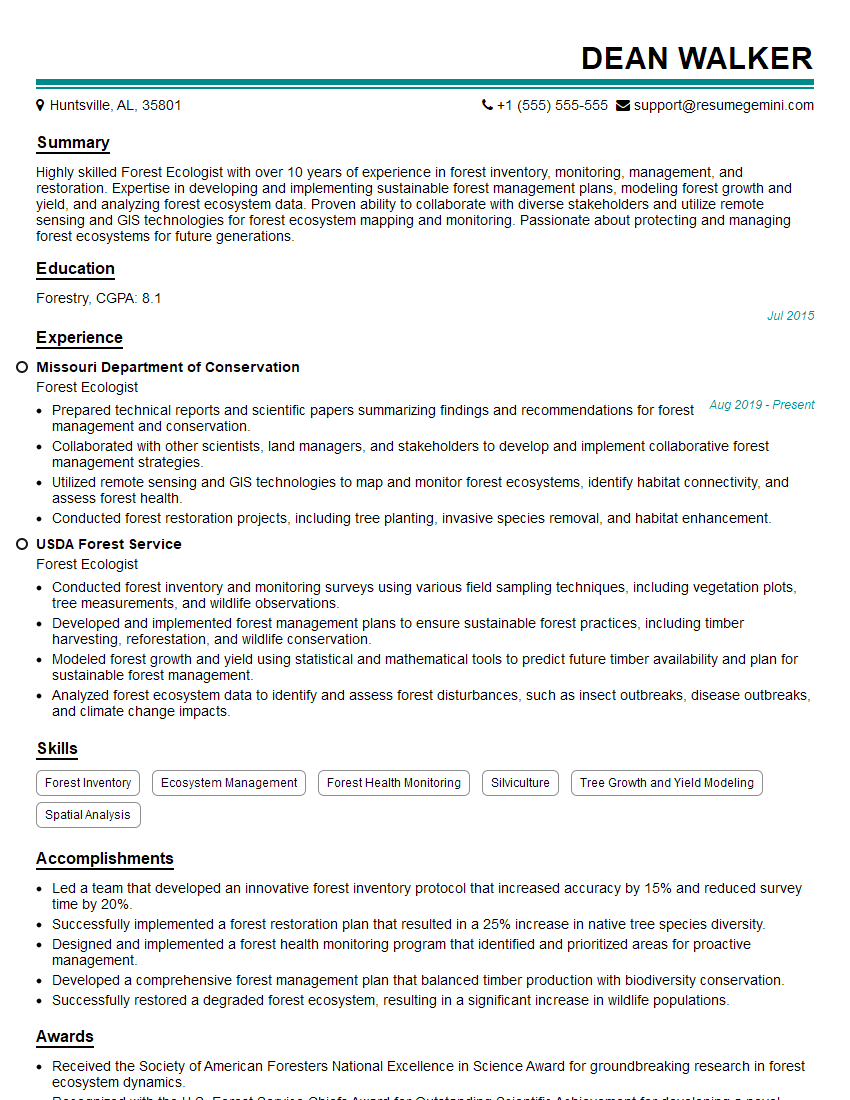
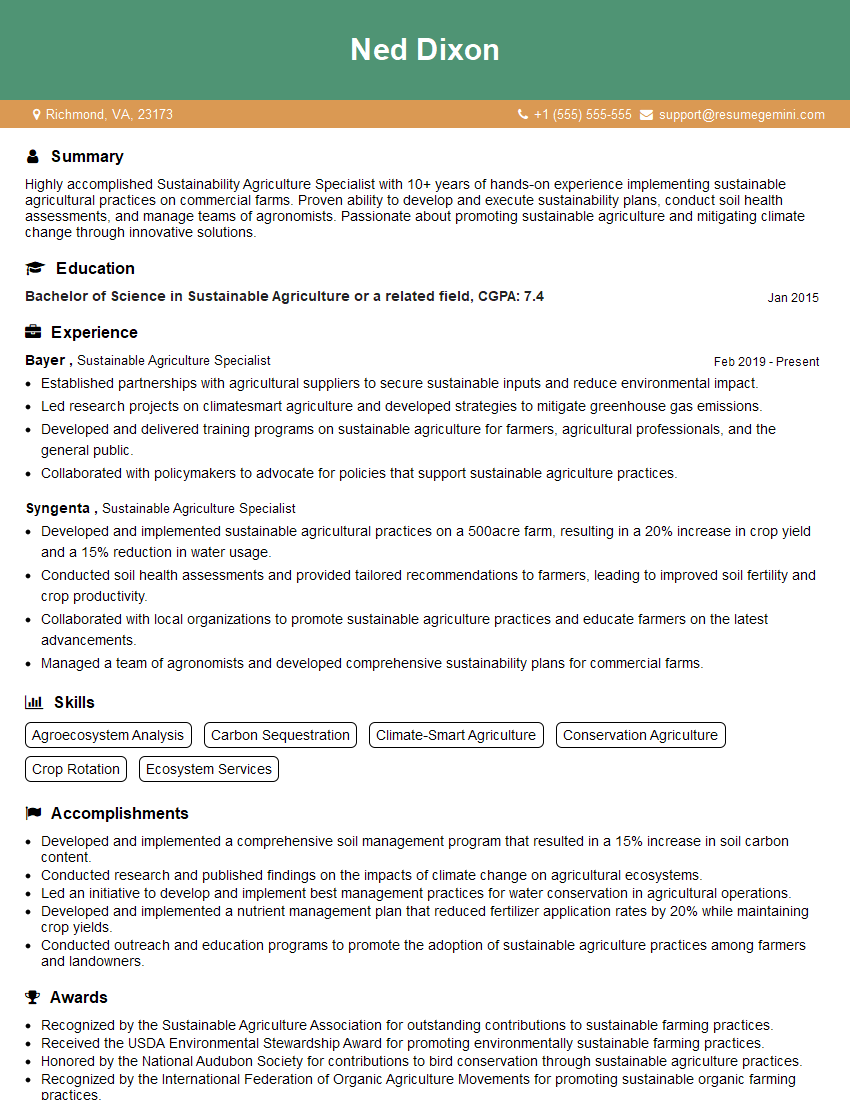
Mastering Silviculture and Agroforestry opens doors to exciting and impactful careers in environmental conservation, sustainable resource management, and agricultural innovation. To maximize your job prospects, creating a strong, ATS-friendly resume is crucial. ResumeGemini is a trusted resource that can help you build a professional resume that highlights your skills and experience effectively. They provide examples of resumes tailored to Silviculture and Agroforestry to help you get started. Invest time in crafting a compelling resume—it’s your first impression on potential employers.


Explore more articles
Users Rating of Our Blogs
Share Your Experience
We value your feedback! Please rate our content and share your thoughts (optional).
What Readers Say About Our Blog
To the interviewgemini.com Webmaster.
Very helpful and content specific questions to help prepare me for my interview!
Thank you
To the interviewgemini.com Webmaster.
This was kind of a unique content I found around the specialized skills. Very helpful questions and good detailed answers.
Very Helpful blog, thank you Interviewgemini team.