Unlock your full potential by mastering the most common Hyperspectral Data Fusion interview questions. This blog offers a deep dive into the critical topics, ensuring you’re not only prepared to answer but to excel. With these insights, you’ll approach your interview with clarity and confidence.
Questions Asked in Hyperspectral Data Fusion Interview
Q 1. Explain the concept of hyperspectral data fusion.
Hyperspectral data fusion combines information from multiple hyperspectral images or integrates hyperspectral data with other data sources like multispectral or LiDAR data to enhance the overall information content and improve the accuracy and reliability of analysis. Imagine you’re trying to understand a painting – a multispectral image might give you the broad strokes of color, while hyperspectral data reveals the subtle nuances of each pigment, and LiDAR adds information about the canvas’s texture. Combining these gives a far richer understanding than any single source could provide.
The goal is to leverage the strengths of each data source. For example, hyperspectral data excels at spectral detail, but might have lower spatial resolution. Combining it with high-resolution multispectral imagery can improve spatial accuracy while retaining the spectral richness.
Q 2. What are the different types of hyperspectral data fusion methods?
Hyperspectral data fusion methods can be broadly categorized as pixel-level, feature-level, and decision-level fusion.
- Pixel-level fusion: This approach directly combines the pixel values from different data sources. Methods include simple averaging, weighted averaging (where weights are assigned based on data quality), and more sophisticated techniques like wavelet transforms or IHS (Intensity-Hue-Saturation) transformation. Think of this as mixing paint – you directly combine the colors to create a new one.
- Feature-level fusion: This involves extracting features (like spectral indices or textures) from each data source independently and then combining these features using methods like principal component analysis (PCA) or support vector machines (SVM). This is like analyzing the ingredients of each paint separately and then combining the key attributes to describe the final mixed paint.
- Decision-level fusion: Here, individual classifications or decisions made from each data source are combined using techniques like majority voting, Bayesian methods, or Dempster-Shafer theory. This is analogous to having several experts independently assess the painting and then combining their judgments to arrive at a final assessment.
Q 3. Describe the advantages and disadvantages of using different data fusion methods.
Each fusion method has its own strengths and weaknesses:
- Pixel-level fusion: Simple to implement, computationally efficient, but can be sensitive to noise and misregistration.
- Feature-level fusion: Less sensitive to noise and misregistration than pixel-level fusion, but requires careful feature selection and can be computationally more expensive.
- Decision-level fusion: Can effectively handle uncertainty and inconsistencies in individual data sources, but requires reliable classifiers for each source and might lose some detail in the process.
The optimal choice depends heavily on the specific application, the quality of the data, and the computational resources available. For example, in a real-time application with limited computing power, pixel-level fusion might be preferred, while a detailed analysis might benefit from the robustness of feature-level or decision-level fusion.
Q 4. How do you handle noise and artifacts in hyperspectral data?
Noise and artifacts are common challenges in hyperspectral data. Handling them requires a multi-pronged approach:
- Pre-processing techniques: These include atmospheric correction to remove atmospheric effects, radiometric calibration to ensure consistent measurements, and noise reduction filters like median filters or wavelet denoising. Imagine cleaning a dirty canvas before starting to paint.
- Robust fusion methods: Choosing a fusion method less sensitive to noise, like feature-level or decision-level fusion, is crucial. This is like using a high-quality paint that resists smudging.
- Post-processing techniques: After fusion, further filtering or smoothing might be necessary to refine the results. This is like gently blending the colors to get a smooth finish.
The specific techniques employed will depend on the nature of the noise and artifacts present. For example, striping noise, common in hyperspectral imagery, might require specialized algorithms to correct.
Q 5. Explain the process of image registration for hyperspectral data fusion.
Image registration is critical for accurate hyperspectral data fusion. It ensures that corresponding pixels from different datasets align spatially. This is like aligning two photographs of the same scene taken from slightly different angles – you need to ensure that the same features are in the same place in both images.
The process typically involves:
- Feature extraction: Identifying common features (e.g., control points) across the images.
- Transformation estimation: Determining a geometric transformation (e.g., affine, projective) that maps one image to another.
- Resampling: Applying the transformation to warp one image and align it with the other. This might involve interpolation techniques to fill in missing pixels.
Sophisticated algorithms, like those based on mutual information or normalized cross-correlation, are often used to ensure accurate registration. Failure to properly register images can lead to inaccurate fusion results, so robust registration techniques are paramount.
Q 6. What are the common challenges in hyperspectral data fusion?
Hyperspectral data fusion presents several challenges:
- High dimensionality: Hyperspectral data has a large number of spectral bands, leading to computational complexity and the curse of dimensionality.
- Data volume: Hyperspectral datasets are very large, requiring significant storage and processing resources.
- Misregistration: Inaccurate alignment of data from different sources can lead to errors.
- Noise and artifacts: As mentioned earlier, noise and artifacts can significantly affect the quality of the fused data.
- Computational cost: Many advanced fusion methods are computationally expensive.
Addressing these challenges requires careful consideration of data pre-processing, efficient algorithms, and robust fusion techniques.
Q 7. How do you evaluate the performance of a hyperspectral data fusion algorithm?
Evaluating the performance of a hyperspectral data fusion algorithm requires quantitative metrics. Commonly used metrics include:
- Spectral angle mapper (SAM): Measures the spectral similarity between the fused image and a reference image.
- Root mean square error (RMSE): Quantifies the difference between the fused image and the reference image.
- Correlation coefficient: Measures the linear relationship between the fused image and the reference image.
- Classification accuracy: If the goal is classification, accuracy metrics like overall accuracy, kappa coefficient, and producer’s/user’s accuracy are used.
The choice of metrics depends on the specific application. A comprehensive evaluation might involve several metrics to provide a holistic assessment of the algorithm’s performance. Visual inspection of the fused image is also important to identify any artifacts or inconsistencies.
Q 8. Describe your experience with different hyperspectral sensors.
My experience with hyperspectral sensors spans a range of platforms, from airborne systems like the AISA Eagle and the HyMap to spaceborne sensors such as Hyperion and the WorldView-3. I’ve worked extensively with pushbroom and whiskbroom scanners, understanding the nuances of their data acquisition methods. For instance, with pushbroom scanners, the spatial resolution can vary depending on the altitude and flight parameters, requiring careful geometric correction. I’m familiar with the calibration processes for different sensors, including radiometric and geometric corrections, which are crucial for accurate analysis. Working with diverse sensors has honed my ability to adapt to different data formats and characteristics, ensuring consistent and reliable results.
Specifically, I’ve worked on projects involving the integration of data from multiple sensors to create a more comprehensive dataset, which has involved understanding the spectral and spatial characteristics of each sensor and accounting for differences in their viewing angles. For example, I used AISA Eagle data for detailed analysis of vegetation health in a specific region, while simultaneously using coarser resolution Hyperion data for broader regional mapping.
Q 9. What software and tools are you familiar with for hyperspectral data processing?
My toolkit for hyperspectral data processing is extensive and includes both commercial and open-source software. I’m proficient in ENVI, which is a robust platform for image processing, analysis and visualization. I also frequently use MATLAB, leveraging its powerful computational capabilities for advanced algorithms such as spectral unmixing and dimensionality reduction. For more specific tasks, I use Python libraries like scikit-learn (for machine learning algorithms), spectral (for spectral analysis) and GDAL/OGR (for geospatial data handling). Additionally, I have experience using QGIS for geographic visualization and analysis. The choice of software depends heavily on the specific project needs and data volume. For instance, while ENVI excels at visualization, MATLAB or Python offer greater flexibility for customizing algorithms and workflows.
Q 10. How do you handle large hyperspectral datasets?
Handling large hyperspectral datasets requires a multi-pronged approach. First, I leverage cloud computing platforms like Google Earth Engine or AWS to store and process the data. Cloud-based solutions offer scalable storage and parallel processing capabilities, enabling faster analysis of datasets that would be impractical to handle on a local machine. Second, I utilize efficient data formats like HDF5, which allow for optimized storage and access. Third, I employ techniques such as data subsetting and tiling to break down large datasets into smaller, manageable chunks for processing. This allows for parallel processing, significantly reducing processing time. Finally, I explore dimensionality reduction techniques, discussed further in the next question, to decrease the computational load while maintaining essential information. For example, when working with a terabyte-sized dataset of airborne hyperspectral imagery, I would first upload it to Google Earth Engine, then subset it into smaller tiles based on geographical areas of interest before processing each tile individually.
Q 11. Explain your understanding of dimensionality reduction techniques in hyperspectral data analysis.
Dimensionality reduction is crucial in hyperspectral data analysis because hyperspectral images possess a high number of spectral bands, leading to high dimensionality and computational complexity. This is often referred to as the ‘curse of dimensionality’. I utilize several techniques to address this. Principal Component Analysis (PCA) is a commonly used linear transformation that identifies the principal components (PCs) that capture the maximum variance in the data. Often, a small number of PCs retain a significant portion of the information, allowing for dimensionality reduction while minimizing information loss. Other methods include Minimum Noise Fraction (MNF) transformation, which is particularly effective in removing noise, and Independent Component Analysis (ICA), which aims to find statistically independent components. The choice of technique depends on the specific application and the nature of the data. For example, if noise reduction is a primary concern, MNF is often preferred. If the goal is to separate mixed spectral signatures, ICA might be a better choice. I always carefully evaluate the trade-off between dimensionality reduction and information preservation by examining the explained variance and the resulting data quality.
Q 12. What are the applications of hyperspectral data fusion in your field of expertise?
Hyperspectral data fusion plays a vital role in many applications within my field. One prominent application is precision agriculture, where fusing hyperspectral data with other data sources like multispectral imagery or LiDAR provides a comprehensive understanding of crop health, soil conditions, and water stress. For example, I have been involved in projects that integrate hyperspectral imagery with drone-based multispectral imagery and soil moisture data to optimize irrigation strategies. Another critical application is environmental monitoring, where hyperspectral data fusion is used to map pollutants, identify invasive species, and monitor deforestation. I’ve used hyperspectral data fused with satellite imagery to map the extent and severity of algal blooms in coastal waters. In the realm of mineral exploration, fusing hyperspectral imagery with geological data helps in identifying potential mineral deposits. The combination of different data sources enhances the accuracy and reliability of the analyses, leading to more informed decisions.
Q 13. Describe your experience with cloud computing platforms for hyperspectral data processing.
My experience with cloud computing platforms for hyperspectral data processing is substantial. I’ve extensively used Google Earth Engine (GEE) and Amazon Web Services (AWS) for large-scale processing and analysis of hyperspectral datasets. GEE is particularly well-suited for large datasets due to its pre-integrated algorithms and access to various earth observation data. AWS provides more flexibility in terms of customization, allowing for the deployment of specific algorithms and workflows optimized for hyperspectral data. The choice between GEE and AWS depends on the specific needs of the project. GEE excels in its accessibility and ready-to-use tools for geospatial analysis, while AWS offers more customization control at the cost of slightly more technical expertise. I regularly leverage the parallel processing capabilities of these platforms to drastically reduce processing times, particularly when dealing with large volumes of data. A recent project involved processing a massive hyperspectral dataset using GEE’s scalable infrastructure, allowing us to complete the analysis in a fraction of the time it would have taken using traditional methods.
Q 14. How do you ensure the accuracy and reliability of your results in hyperspectral data fusion?
Ensuring the accuracy and reliability of results in hyperspectral data fusion is paramount. My approach involves several key steps. First, rigorous pre-processing is crucial, including atmospheric correction, geometric correction, and radiometric calibration. Any inaccuracies in these steps will propagate throughout the analysis. Second, I meticulously validate the data by comparing the results with ground truth data or independent measurements. This helps identify potential biases or errors. Third, I employ robust statistical methods to assess the uncertainty associated with the results. This involves calculating confidence intervals and error matrices to understand the reliability of the derived information. Fourth, I utilize multiple data fusion techniques and compare the results to evaluate the consistency and robustness of the findings. Using multiple approaches helps identify discrepancies and improve the confidence in the final interpretation. Finally, I carefully document all steps of the processing workflow, ensuring transparency and reproducibility. A detailed record of the methods and parameters used is critical for assessing the validity and quality of the derived information and allows for future verification.
Q 15. What are some common spectral indices used in hyperspectral remote sensing?
Hyperspectral remote sensing provides data across a vast range of wavelengths, allowing us to extract far more information than traditional multispectral imagery. Many spectral indices leverage this rich data to quantify specific phenomena. Common examples include:
Normalized Difference Vegetation Index (NDVI): Calculated as
(NIR - Red) / (NIR + Red), where NIR is near-infrared reflectance and Red is red reflectance. NDVI is a robust indicator of vegetation health and biomass.Normalized Difference Water Index (NDWI): Similar to NDVI, but uses green and near-infrared bands:
(Green - NIR) / (Green + NIR). It’s effective in identifying water bodies and assessing water stress.Simple Ratio (SR): A straightforward index often used for vegetation analysis:
NIR / Red. It’s sensitive to changes in vegetation cover but can be less robust than NDVI in certain conditions.Modified Normalized Difference Water Index (MNDWI):
(Green - SWIR) / (Green + SWIR), where SWIR is shortwave infrared reflectance. This improves upon NDWI by minimizing the influence of soil and built-up areas.
The choice of index depends heavily on the specific application and the characteristics of the target material. For example, while NDVI is widely used for vegetation monitoring, MNDWI is preferred when dealing with urban areas with water features.
Career Expert Tips:
- Ace those interviews! Prepare effectively by reviewing the Top 50 Most Common Interview Questions on ResumeGemini.
- Navigate your job search with confidence! Explore a wide range of Career Tips on ResumeGemini. Learn about common challenges and recommendations to overcome them.
- Craft the perfect resume! Master the Art of Resume Writing with ResumeGemini’s guide. Showcase your unique qualifications and achievements effectively.
- Don’t miss out on holiday savings! Build your dream resume with ResumeGemini’s ATS optimized templates.
Q 16. Explain the concept of spectral unmixing.
Spectral unmixing is a crucial technique in hyperspectral image analysis that aims to decompose a mixed pixel into its constituent materials and their corresponding abundances. Imagine a pixel containing both soil and vegetation; spectral unmixing would identify the proportion of each material within that pixel. This process often involves linear mixing models, assuming that the reflectance of a mixed pixel is a linear combination of the reflectances of its pure components (endmembers).
The process typically involves:
- Endmember selection: Identifying the pure spectral signatures representing the different materials present in the image. This can be done using various algorithms like Pixel Purity Index (PPI) or N-FINDR.
- Abundance estimation: Determining the fractional abundance of each endmember in each pixel. Common methods include least squares regression or constrained non-negative least squares (NNLS) to ensure physically meaningful abundances (between 0 and 1).
Spectral unmixing is vital for applications such as identifying mineral compositions in geology, mapping urban land cover, and monitoring vegetation health with greater accuracy than simply looking at single-band indices. For instance, in precision agriculture, it can be used to create detailed maps of crop types and their health conditions, leading to more targeted fertilization and irrigation strategies.
Q 17. How do you address issues related to atmospheric correction in hyperspectral data?
Atmospheric correction is a critical preprocessing step in hyperspectral data processing because atmospheric effects (scattering and absorption by gases and aerosols) significantly alter the measured spectral signatures. Ignoring these effects can lead to inaccurate results and misinterpretations.
Several methods address atmospheric correction, each with its strengths and limitations:
Empirical Line Methods: These methods rely on the relationship between reflectance in specific spectral regions. They are relatively simple but may not be accurate in all conditions.
Radiative Transfer Models (RTMs): RTMs like MODTRAN or 6S simulate the atmospheric effects and provide corrections based on atmospheric parameters (e.g., water vapor, aerosol content). These are more complex but provide greater accuracy, requiring accurate knowledge of atmospheric conditions.
Dark Object Subtraction (DOS): This simple method assumes that some pixels in the scene are entirely dark, thus offering a baseline to remove atmospheric path radiance. It is useful for quick corrections but can introduce inaccuracies.
The choice of method depends on the desired accuracy, available information about atmospheric conditions, and computational resources. In practice, I often employ RTMs for high-accuracy applications, but I will select simpler methods such as DOS for quick assessments or when atmospheric information is limited. Validation with ground truth data is crucial to verify the accuracy of the chosen atmospheric correction method.
Q 18. What is your experience with different data formats used for hyperspectral data?
My experience encompasses a wide range of hyperspectral data formats, including:
ENVI .hdr/.dat: A popular format used by the ENVI software package. It stores both spectral and spatial information efficiently.
GeoTIFF: A widely used geospatial format that can accommodate hyperspectral data. Its strength lies in its integration with GIS software and its support for georeferencing.
HDF-EOS: The Hierarchical Data Format-Earth Observing System is a format commonly used for satellite data, often containing extensive metadata alongside the hyperspectral data.
Spectra Cube format: These formats represent the data as a 3D cube (x, y, wavelength). The specifics may vary depending on the acquisition system.
Working with these formats involves understanding their structure and using appropriate software tools for data manipulation, visualization, and analysis. I’m proficient in using tools like ENVI, MATLAB, Python (with libraries like GDAL and Rasterio) to handle diverse hyperspectral data formats effectively.
Q 19. Describe your experience with deep learning techniques for hyperspectral image analysis.
Deep learning has revolutionized hyperspectral image analysis, offering powerful tools for tasks like classification, segmentation, and unmixing. My experience involves using convolutional neural networks (CNNs) and recurrent neural networks (RNNs) for various applications.
Specifically, I’ve worked with:
3D-CNNs: These networks directly process the entire hyperspectral cube, capturing both spatial and spectral features simultaneously. They are particularly effective for tasks like classification and object detection.
Recurrent Convolutional Neural Networks (RCNNs): These are beneficial when dealing with sequential data or when considering the spectral context of neighboring bands.
Autoencoders: These are unsupervised learning methods utilized for dimensionality reduction and feature extraction, helping to manage the high dimensionality of hyperspectral data.
One project involved using a 3D-CNN to classify different types of vegetation in a hyperspectral image dataset. We achieved significantly higher accuracy compared to traditional methods. This highlights deep learning’s ability to extract complex, non-linear relationships between spectral signatures and material properties. The challenge lies in handling the large datasets and computational resources required for training deep learning models. Strategies like data augmentation and transfer learning are essential to address these issues.
Q 20. How do you handle spatial and spectral misregistration in hyperspectral data?
Spatial and spectral misregistration in hyperspectral data is a common problem that arises from sensor limitations or atmospheric effects. Misregistration refers to a lack of perfect alignment between the spatial and spectral dimensions, meaning that the spectral information isn’t accurately matched to the correct spatial location.
Addressing this issue typically involves:
Geometric Correction: Using ground control points (GCPs) or other reference data to georeference the image and rectify geometric distortions.
Image Coregistration: Aligning multiple hyperspectral images or aligning hyperspectral data with other datasets (e.g., multispectral or LiDAR data) using image registration techniques. Methods may include cross-correlation or feature-based matching.
Subpixel Registration: Employing more advanced techniques to achieve sub-pixel accuracy in aligning data, particularly important for high-resolution hyperspectral data.
Ignoring misregistration can lead to errors in analysis, particularly in tasks such as spectral unmixing and classification. Thorough geometric correction and coregistration are crucial steps in ensuring the accuracy and reliability of any results obtained from hyperspectral data.
Q 21. Explain the difference between pixel-level and object-level fusion.
Pixel-level and object-level fusion are two distinct approaches for integrating data from different sensors or data sources. The key difference lies in the level at which the fusion occurs.
Pixel-level fusion combines data at the individual pixel level. Imagine merging information from a hyperspectral sensor (with detailed spectral information but possibly lower spatial resolution) and a multispectral sensor (with higher spatial resolution but fewer spectral bands). Pixel-level fusion would directly integrate the spectral information from the hyperspectral data with the spatial information from the multispectral data at each pixel location. Methods include principal component analysis (PCA), wavelet transforms, or various linear/nonlinear transformations. The advantage lies in maximizing the use of spectral detail at a fine spatial resolution. However, it can be computationally expensive and sensitive to misregistration.
Object-level fusion works at a higher level of abstraction, operating on objects or regions of interest (ROIs) identified within the data. First, segmentation or classification algorithms extract objects from the individual datasets, and then the features extracted from the objects are combined, allowing for more robust integration. For example, object-based image analysis (OBIA) approaches are commonly used for this purpose. Object-level fusion can be more robust to noise and misregistration, but it loses some fine-scale detail compared to pixel-level fusion.
The choice between pixel-level and object-level fusion depends on factors like the desired level of detail, the quality of the input data, computational resources, and the specific application. Often, a hybrid approach might prove beneficial, leveraging the strengths of both methods.
Q 22. What are some of the ethical considerations related to using hyperspectral data?
Ethical considerations in using hyperspectral data are crucial because of its potential for revealing sensitive information. Think of it like having incredibly detailed satellite imagery – you can see far more than with standard imagery. This raises several concerns:
- Privacy: Hyperspectral data can reveal details about individuals and their activities that might not be visible in other types of imagery. For example, it could potentially identify specific individuals based on subtle spectral signatures of their clothing or even detect their physiological state. Appropriate anonymization techniques and strict data governance are essential.
- Security: The high resolution and rich information in hyperspectral data make it a valuable target for malicious actors. Robust security measures, including encryption and access control, are critical to prevent unauthorized access and misuse.
- Bias and Discrimination: Algorithms used to process and interpret hyperspectral data can inherit biases present in the training data, potentially leading to unfair or discriminatory outcomes. Careful attention must be paid to algorithm design and data selection to mitigate this risk. For example, if training data predominantly features one demographic, the resulting algorithms might not perform well for other groups.
- Environmental Impact: The acquisition and processing of hyperspectral data can require significant energy consumption and computing resources. Minimizing environmental impact through sustainable practices is vital. For instance, optimizing data acquisition strategies and using energy-efficient algorithms can help.
- Transparency and Accountability: Clear guidelines and regulations regarding the use of hyperspectral data are needed to ensure transparency and accountability. This includes defining clear guidelines on data ownership, usage rights, and liability in case of misuse.
Addressing these ethical considerations is paramount to ensure the responsible and beneficial application of this powerful technology.
Q 23. How do you select appropriate fusion methods for specific applications?
Selecting the right hyperspectral data fusion method depends heavily on the application and the characteristics of the data. There’s no one-size-fits-all approach. We must consider several factors:
- Data Sources: Are we fusing data from different sensors (e.g., LiDAR, multispectral, thermal)? Different fusion methods are better suited for different sensor combinations.
- Application Requirements: What information are we trying to extract? High-resolution spatial detail? Accurate spectral information? The application dictates the desired trade-off between spatial and spectral resolution.
- Computational Resources: Some fusion methods are computationally intensive. The available resources will constrain the choice of methods.
- Data Quality: The quality of the individual data sources significantly impacts the fusion outcome. Noisy or poorly calibrated data requires robust fusion techniques that can handle uncertainty.
For instance, if we’re targeting precise land cover classification in a high-resolution application, a pixel-level fusion technique like wavelet transform or a deep learning method might be suitable. If we are interested in broad-scale vegetation monitoring and computational efficiency is a major concern, a spatial-spectral feature extraction technique followed by a simplified classification model may be a better option. In practice, I often employ a trial-and-error approach, testing several algorithms and comparing performance metrics to select the optimal method for a particular project.
Q 24. Describe your experience with validating hyperspectral data fusion results.
Validating hyperspectral data fusion results is a critical step. I typically use a multi-faceted approach that combines quantitative and qualitative assessments:
- Accuracy Assessment: Using ground truth data (e.g., field measurements, high-resolution reference images) to assess the accuracy of the fused data. Metrics like overall accuracy, kappa coefficient, and producer’s/user’s accuracy are commonly used to quantify the performance of different classification schemes derived from the fusion results.
- Visual Inspection: Examining the fused data visually to identify any artifacts, inconsistencies, or anomalies. This qualitative assessment can reveal issues not immediately apparent in quantitative metrics.
- Comparison with Reference Data: Comparing the fused data to reference data from other sources (e.g., high-resolution imagery, detailed maps). This helps to assess the consistency and reliability of the fusion results.
- Uncertainty Analysis: Assessing the uncertainty associated with the fusion process, considering factors like sensor noise, atmospheric effects, and the accuracy of the fusion algorithms. This allows for a more complete understanding of the reliability of the results.
For example, in a recent project involving mineral mapping, we compared our fusion-based results against in-situ spectral measurements taken by geologists in the field. The high level of correlation between the two datasets validated the accuracy of our approach. We also visually assessed the fused image for artifacts or anomalies that may indicate errors in the fusion process, leading to refinements in our methodology.
Q 25. How do you communicate complex technical information to non-technical audiences?
Communicating complex technical information to non-technical audiences is a skill I’ve honed over time. I believe in using clear, concise language, avoiding jargon, and employing effective visual aids. Think of it like translating a complex scientific paper into everyday language.
- Analogies and Metaphors: I use simple analogies to explain complex concepts. For example, I might compare spectral signatures to fingerprints, highlighting their uniqueness in identifying different materials.
- Visualizations: I leverage charts, graphs, and maps to visually represent data and results. A well-designed image can often convey information more effectively than lengthy explanations.
- Storytelling: I weave a narrative around the technical details, focusing on the problem being solved and the value proposition of the technology. This helps keep the audience engaged and focused on the big picture.
- Interactive Demonstrations: Whenever possible, I utilize interactive demonstrations to showcase the capabilities of the technology and allow audiences to visualize the results themselves.
In essence, I aim to make the information accessible and relevant to the audience’s needs and level of understanding.
Q 26. What are your future aspirations in the field of hyperspectral data fusion?
My future aspirations center around pushing the boundaries of hyperspectral data fusion, particularly in the areas of:
- Developing advanced fusion algorithms: I’m particularly interested in exploring the use of artificial intelligence and machine learning to improve the accuracy and efficiency of hyperspectral data fusion techniques.
- Real-time data fusion: Developing systems that can perform hyperspectral data fusion in real-time, enabling immediate insights and decision-making in dynamic environments.
- Applications in precision agriculture: Applying hyperspectral data fusion to enhance crop monitoring, yield prediction, and precision fertilization techniques, contributing to sustainable agriculture.
- Expanding applications to environmental monitoring: Extending the use of hyperspectral data fusion to address environmental challenges, such as monitoring water quality, detecting pollution, and assessing biodiversity.
I envision a future where hyperspectral data fusion is a routine tool, seamlessly integrated into various applications, offering unparalleled insights and solutions across diverse sectors.
Q 27. Describe a challenging project involving hyperspectral data fusion and how you overcame the challenges.
One particularly challenging project involved fusing hyperspectral imagery with LiDAR data to create a 3D model of a complex urban environment for infrastructure assessment. The challenge stemmed from:
- Data heterogeneity: Integrating the vastly different characteristics of hyperspectral and LiDAR data presented significant technical hurdles. Hyperspectral provides spectral information, while LiDAR provides 3D point clouds.
- Computational complexity: Processing the large volume of data involved required significant computational power and optimization strategies. We needed to minimize processing time without sacrificing accuracy.
- Data alignment: Precise alignment of the two datasets was critical. Even small misalignments could significantly affect the accuracy of the resulting 3D model.
We overcame these challenges by:
- Developing a custom fusion algorithm: We developed a novel algorithm that effectively integrated the spectral and spatial information from both datasets, addressing the heterogeneity challenge.
- Employing parallel computing techniques: To handle the large volume of data, we utilized parallel computing on a high-performance computing cluster, dramatically reducing processing time.
- Implementing rigorous geometric correction: We implemented a sophisticated geometric correction procedure to ensure accurate alignment of the hyperspectral and LiDAR data. We achieved this using precise ground control points and advanced co-registration techniques.
The resulting 3D model provided incredibly detailed information, enabling accurate assessment of infrastructure condition and supporting informed decision-making regarding maintenance and repairs.
Q 28. What are your salary expectations?
My salary expectations are commensurate with my experience and expertise in hyperspectral data fusion, and the specific requirements of the role. I am open to discussing this further based on the details of the position and the overall compensation package.
Key Topics to Learn for Hyperspectral Data Fusion Interview
- Fundamentals of Hyperspectral Imaging: Understanding the principles of hyperspectral data acquisition, spectral signatures, and data preprocessing techniques (e.g., atmospheric correction, noise reduction).
- Data Fusion Techniques: Exploring various data fusion methods, including pixel-level fusion (e.g., wavelet transforms, principal component analysis), feature-level fusion, and decision-level fusion. Understanding their strengths and weaknesses in different applications.
- Specific Fusion Algorithms: Deep dive into algorithms like Maximum Likelihood Classification, Support Vector Machines, and Neural Networks in the context of hyperspectral data. Be prepared to discuss their implementation and performance considerations.
- Practical Applications: Familiarize yourself with real-world applications of hyperspectral data fusion, such as precision agriculture, remote sensing, medical imaging, and environmental monitoring. Be ready to discuss specific use cases and the challenges involved.
- Data Preprocessing and Analysis: Mastering techniques for handling the large datasets involved, including dimensionality reduction, feature extraction, and classification strategies. Understanding the impact of these steps on final results.
- Software and Tools: Gain familiarity with commonly used software packages and programming languages for hyperspectral data processing and analysis (e.g., ENVI, MATLAB, Python libraries like scikit-learn).
- Challenges and Limitations: Acknowledge the limitations of hyperspectral data fusion, including computational complexity, data heterogeneity, and the need for robust preprocessing techniques. Be prepared to discuss potential solutions.
Next Steps
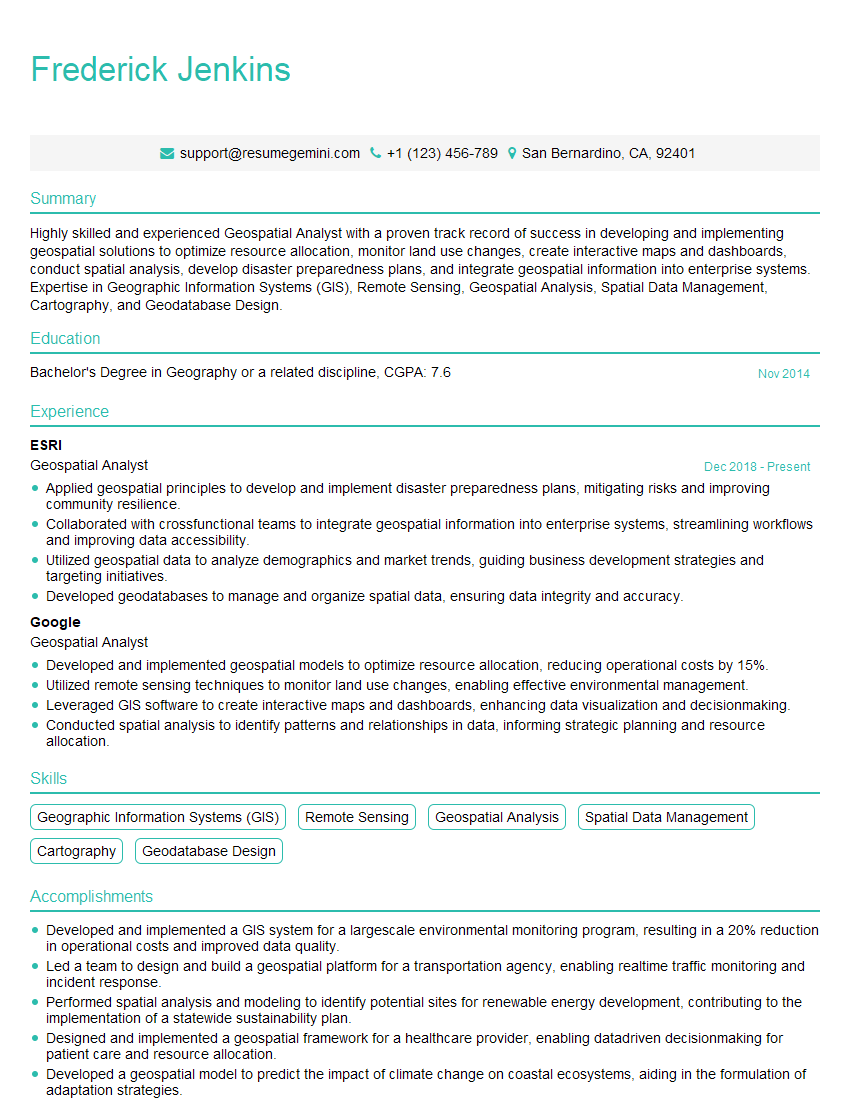
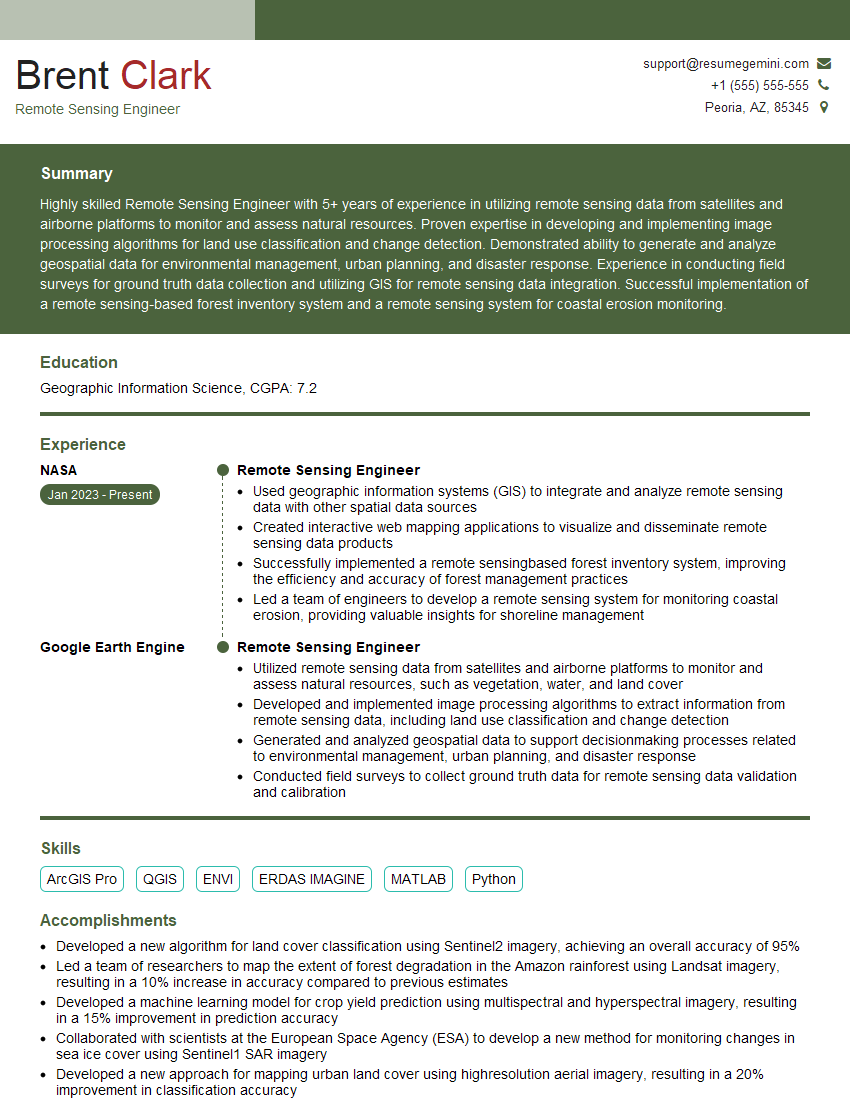
Mastering hyperspectral data fusion opens doors to exciting and impactful careers in various high-tech fields. To maximize your job prospects, crafting a compelling and ATS-friendly resume is crucial. ResumeGemini is a trusted resource that can help you build a professional resume tailored to highlight your skills and experience in this specialized area. Examples of resumes tailored to the Hyperspectral Data Fusion field are available to guide you in showcasing your unique capabilities. Take the time to build a strong resume – it’s an investment in your future.

Explore more articles
Users Rating of Our Blogs
Share Your Experience
We value your feedback! Please rate our content and share your thoughts (optional).
What Readers Say About Our Blog
To the interviewgemini.com Webmaster.
Very helpful and content specific questions to help prepare me for my interview!
Thank you
To the interviewgemini.com Webmaster.
This was kind of a unique content I found around the specialized skills. Very helpful questions and good detailed answers.
Very Helpful blog, thank you Interviewgemini team.