The right preparation can turn an interview into an opportunity to showcase your expertise. This guide to Grid Operations interview questions is your ultimate resource, providing key insights and tips to help you ace your responses and stand out as a top candidate.
Questions Asked in Grid Operations Interview
Q 1. Explain the difference between transmission and distribution systems.
The power grid is like a vast network delivering electricity from generation sources to consumers. Transmission and distribution systems are the two major components of this network, differing primarily in voltage level, distance covered, and the type of consumers they serve.
Transmission System: This is the backbone of the grid, carrying high-voltage electricity (typically 115 kV and above) over long distances from power plants to substations. Think of it as the interstate highway system, moving large volumes of electricity efficiently. It focuses on bulk power transfer and relies on large-scale transformers and extensive transmission lines.
Distribution System: This system takes the high-voltage electricity from the transmission substations and steps it down to lower voltages (typically 12 kV to 480 V) for delivery to individual consumers and businesses. It’s like the local roads connecting homes and businesses to the interstate. It’s characterized by numerous smaller transformers, distribution lines, and protection devices.
In essence, the transmission system focuses on efficient long-distance transport, while the distribution system concentrates on local delivery and voltage regulation to meet individual consumer needs.
Q 2. Describe the role of a SCADA system in grid operations.
A Supervisory Control and Data Acquisition (SCADA) system is the nervous system of the grid. It’s a centralized system that monitors and controls the power grid’s various components in real-time. Imagine a sophisticated dashboard displaying the status of thousands of devices simultaneously.
Monitoring: SCADA continuously collects data from various points across the grid, including voltage levels, current flows, equipment status, and system conditions. This data provides operators with a comprehensive overview of the entire system’s health.
Control: SCADA allows operators to remotely control various grid devices, such as circuit breakers, transformers, and generators, enabling quick responses to changing conditions and system disturbances. For instance, it can automatically isolate a faulty line to prevent a widespread outage.
Alarm Management: SCADA issues alerts when abnormal conditions are detected, allowing operators to take timely corrective actions. These alerts can range from minor voltage fluctuations to critical equipment failures.
SCADA systems are crucial for ensuring grid reliability, efficiency, and safety. They enable operators to make informed decisions, manage resources effectively, and quickly respond to disturbances.
Q 3. What are the key components of an Energy Management System (EMS)?
An Energy Management System (EMS) is the brain of the grid, responsible for real-time operation and optimization of the power system. It leverages advanced algorithms and data analysis to ensure secure and economic power system operation.
State Estimation: This module uses measured data to determine the current state of the power system, providing an accurate snapshot of voltage magnitudes, angles, and power flows.
Optimal Power Flow (OPF): This module calculates the optimal generation dispatch, voltage levels, and reactive power compensation to minimize generation costs and improve system performance while adhering to operational constraints.
Security Assessment: This module assesses the system’s security against various contingencies, such as equipment outages or sudden load changes. It identifies potential vulnerabilities and suggests remedial actions.
Alarming and Data Management: Provides comprehensive alarming functionalities and tools for storing, managing, and analyzing vast quantities of system data.
Human-Machine Interface (HMI): A user-friendly interface that allows operators to monitor, control, and analyze system data efficiently.
By integrating various functionalities, the EMS enables grid operators to effectively manage the power system and maintain its stability and reliability in the face of dynamic conditions.
Q 4. How does load forecasting impact grid operations?
Load forecasting is crucial for grid operation because it allows operators to anticipate future electricity demand. Accurate forecasting enables them to proactively manage resources and maintain grid stability.
Generation Scheduling: Based on predicted load, grid operators can schedule power plant output to meet demand, preventing shortages or surpluses.
Transmission and Distribution Planning: Load forecasts aid in planning upgrades and maintenance of transmission and distribution infrastructure to ensure adequate capacity.
Reserve Management: Accurate forecasting ensures sufficient operating reserves are available to meet unexpected demand fluctuations or generator outages.
Market Operations: In deregulated markets, load forecasts are vital for efficient energy trading and pricing.
For example, if a heatwave is predicted, increasing the load forecast helps dispatchers bring additional generation online before the demand surge hits the system, thus preventing blackouts.
Q 5. Explain the concept of power system stability.
Power system stability refers to the ability of the power system to maintain a state of equilibrium under both normal operating conditions and after being subjected to a disturbance. It encompasses several aspects:
Angle Stability (Rotor Angle Stability): This deals with the ability of synchronous generators to remain synchronized after a disturbance. It’s crucial for maintaining the coherent operation of the entire power system.
Voltage Stability: This concerns the ability of the system to maintain acceptable voltage levels following a disturbance. Voltage collapse, a severe instability, can lead to widespread outages.
Frequency Stability: This relates to the system’s ability to maintain frequency at its nominal value (e.g., 50 Hz or 60 Hz) after a disturbance. Large frequency deviations can cause cascading outages.
Maintaining power system stability is paramount for reliable electricity supply. Loss of stability can lead to widespread blackouts and significant economic consequences.
Q 6. Describe different types of power system protection schemes.
Power system protection schemes are designed to safeguard equipment and prevent cascading failures. They operate on the principle of rapidly detecting faults and isolating the affected components.
Overcurrent Protection: This is the most common type, using relays to detect excessive current flow, indicative of a fault. It isolates the faulty section by tripping circuit breakers.
Distance Protection: This scheme estimates the distance to a fault along a transmission line using voltage and current measurements. It’s particularly useful for protecting long transmission lines.
Differential Protection: This compares the current entering and leaving a protected zone (e.g., a transformer or generator). Any significant difference indicates an internal fault, triggering immediate isolation.
Underfrequency/Overfrequency Protection: These schemes monitor the system frequency and trip generators or disconnect loads if the frequency deviates excessively from the nominal value.
Under/Overvoltage Protection: These protect against excessive voltage fluctuations that can damage equipment or compromise system stability.
The selection of appropriate protection schemes depends on factors like the equipment type, voltage level, and fault characteristics. Proper coordination among these schemes is crucial to ensure rapid and selective fault clearing.
Q 7. What is the role of reactive power in grid operation?
Reactive power is essential for maintaining voltage levels and system stability. Unlike active power, which performs useful work, reactive power is needed to maintain the voltage profile within acceptable limits. It’s analogous to the pressure in a water pipe system – you need sufficient pressure to maintain flow, even though the pressure itself doesn’t perform work.
Voltage Regulation: Reactive power is consumed by inductive loads (e.g., motors, transformers) and generated by capacitive loads. Balancing these through reactive power compensation is vital for maintaining voltage levels within the acceptable range.
Power Factor Correction: Improving the power factor (the ratio of active to apparent power) reduces reactive power flow, improving system efficiency and reducing losses.
System Stability: Adequate reactive power support enhances system stability, preventing voltage collapse and improving the ability to withstand disturbances.
Reactive power management involves strategically placing and controlling reactive power sources (e.g., capacitors, reactors) across the grid to ensure optimal voltage profiles and enhanced system stability. This contributes to a more robust and reliable power system.
Q 8. Explain the impact of renewable energy sources on grid stability.
Renewable energy sources like solar and wind power introduce unique challenges to grid stability due to their intermittent and unpredictable nature. Unlike traditional fossil fuel plants, which can provide a consistent power output, renewables fluctuate based on weather conditions. This intermittency can lead to frequency deviations and voltage instability.
For example, a sudden drop in solar irradiance on a sunny day can cause a significant decrease in power generation, potentially leading to frequency dips. Similarly, a sudden gust of wind can cause a rapid increase in wind power output, potentially overwhelming the grid and causing voltage spikes. To mitigate these issues, sophisticated forecasting models, energy storage solutions (like batteries), and demand-side management strategies are employed.
Imagine a balancing act: The grid needs a constant supply of power to meet demand. Renewables are like a slightly unreliable partner in this act – sometimes contributing a lot, sometimes very little. Grid operators use various tools and techniques to manage this variability and maintain a stable balance.
Q 9. How do you handle a grid emergency situation?
Handling a grid emergency requires a swift and coordinated response. My approach follows a structured protocol prioritizing safety and minimizing disruption. First, I’d initiate emergency response procedures, activating established communication channels and escalating the issue to relevant teams. A detailed assessment of the situation is crucial; identifying the root cause – whether a fault, outage, or cyberattack – guides the subsequent actions.
Next, I’d implement corrective actions, such as isolating the affected area, rerouting power flows, and deploying reserve generation capacity. This might involve bringing online backup generators or implementing load shedding – strategically reducing power supply to non-critical areas to prevent a system-wide collapse. Simultaneously, I’d prioritize restoring power to critical infrastructure like hospitals and communication centers.
Throughout the emergency, clear and timely communication with stakeholders, including the public and regulatory bodies, is paramount. Post-incident analysis is vital to identify vulnerabilities and implement improvements to prevent future occurrences. A real-world example I experienced involved a major lightning strike that caused a widespread outage. Our quick response, including rapid load shedding and restoration using backup generators, minimized the overall impact on customers.
Q 10. What is the significance of NERC standards in grid operations?
NERC (North American Electric Reliability Corporation) standards are crucial for ensuring the reliability and security of the bulk power system in North America. They set minimum reliability requirements for grid operators, covering various aspects like planning, operations, and cyber security. Compliance with these standards is vital for maintaining grid stability, preventing widespread outages, and protecting critical infrastructure.
- Planning Standards: These help ensure the grid has enough capacity to meet future demand and withstand potential disruptions.
- Operating Standards: These govern day-to-day grid operations, setting guidelines for things like frequency and voltage control.
- Cybersecurity Standards: These are increasingly critical given the growing threat of cyberattacks on critical infrastructure.
Failure to comply with NERC standards can lead to significant penalties and, more importantly, jeopardize the reliability of the power system. Imagine a scenario where a power plant doesn’t meet the NERC standards for cybersecurity and is subsequently compromised by a cyberattack – the consequences could be devastating.
Q 11. Describe your experience with power flow studies.
Power flow studies are a fundamental part of grid planning and operation. These studies use software tools to simulate the flow of electricity through a power system under various conditions. My experience with power flow studies encompasses both steady-state and dynamic simulations.
In my previous role, I extensively used software like PSS/E and PowerWorld Simulator to perform power flow analysis. This involved modeling the entire power system, including generators, transformers, transmission lines, and loads. These studies helped to identify potential overloads, voltage violations, and stability issues, which then informed grid operational decisions and expansion planning. For instance, we used power flow studies to assess the impact of adding new renewable energy resources to the grid, ensuring that the existing infrastructure could handle the increased generation without exceeding its capacity.
Furthermore, I have experience with contingency analysis – simulating the impact of various system disturbances (e.g., loss of a generator or transmission line) to identify system vulnerabilities. This helps to improve grid resilience and prepare for unforeseen events.
Q 12. Explain the concept of voltage regulation in power systems.
Voltage regulation is critical for maintaining the quality and stability of the power system. It ensures that the voltage at all points in the grid remains within acceptable limits, typically between 0.95 and 1.05 per unit. Maintaining voltage within this range is vital for the proper operation of equipment and preventing damage.
Voltage regulation is achieved through various methods, including:
- Transformers: Tap-changing transformers allow for adjustment of the voltage level.
- Voltage Regulators: These devices automatically adjust the voltage at specific points in the grid.
- Reactive Power Compensation: Adding capacitors or reactors to the grid can help to regulate voltage levels.
Think of it like water pressure in a plumbing system. Voltage is analogous to the water pressure; if the pressure is too low, appliances won’t function properly; if it’s too high, damage can occur. Voltage regulation ensures the ‘pressure’ remains optimal throughout the system.
Q 13. What are the challenges of integrating distributed generation into the grid?
Integrating distributed generation (DG), such as rooftop solar panels and small wind turbines, presents several challenges to grid operations. These challenges primarily stem from the decentralized and unpredictable nature of DG:
- Voltage Regulation: DG can cause voltage fluctuations, particularly during peak generation periods.
- Protection Coordination: Protection schemes need to be updated to ensure that faults in the DG systems don’t trigger cascading outages.
- Islanding: DG units can sometimes continue to operate after a grid fault, creating an island of generation, posing risks to both the DG units and line workers.
- Forecast Uncertainty: Predicting the output of distributed resources is more challenging than large power plants due to variations in location and individual system characteristics.
For instance, integrating significant amounts of solar PV without adequate voltage control measures can cause voltage rises in the distribution network, damaging equipment. Solutions include advanced grid management systems, smart inverters with voltage control capabilities, and better forecasting methods to effectively integrate DG and maintain a stable, reliable grid.
Q 14. How do you ensure grid security and cyber protection?
Ensuring grid security and cyber protection is of paramount importance. This involves implementing a multi-layered security strategy to protect against both physical and cyber threats.
Physical Security: This includes measures like access control, surveillance, and physical barriers to prevent unauthorized access to critical grid infrastructure. Regular physical inspections and maintenance are critical to detect and mitigate potential vulnerabilities.
Cybersecurity: This is a much broader area involving multiple layers of protection:
- Network Security: Implementing firewalls, intrusion detection/prevention systems, and secure network configurations.
- Data Security: Encrypting sensitive data, access control lists, and regular security audits.
- System Hardening: Regular patching, updates, and security assessments of grid control systems and software.
- Incident Response Plan: Establishing procedures for detecting, responding to, and recovering from cyberattacks.
A layered approach is crucial. Imagine a castle with multiple walls and defenses; a single breach isn’t enough to compromise the entire system. Similarly, a multi-layered approach to grid security makes it far more resilient to threats.
Q 15. Explain your understanding of FACTS devices and their applications.
FACTS, or Flexible AC Transmission Systems, are power electronic-based devices used to enhance the controllability and stability of AC transmission systems. Think of them as smart valves for the flow of electricity. They dynamically adjust voltage and power flow, improving system efficiency and reliability.
- Static Synchronous Compensators (STATCOMs): These devices provide fast-acting voltage support by injecting or absorbing reactive power. Imagine a STATCOM as a quick-response voltage regulator, preventing voltage dips and sags.
- Static Synchronous Series Compensators (SSSCs): These devices control the series impedance of the transmission line, effectively altering the power flow. This is like adjusting the resistance in a circuit to precisely control the current.
- Thyristor Controlled Series Compensators (TCSCs): These use thyristors to control the reactance of a series capacitor, allowing for smooth and continuous control of power flow. They act like a variable resistor in the transmission line, allowing for fine-tuning of power transfer.
Applications include improving power transfer capability, enhancing transient stability, damping oscillations, and mitigating voltage fluctuations. For example, a STATCOM can prevent a voltage collapse during a sudden increase in demand, ensuring continuous power supply. Similarly, an SSSC can enhance the power transfer capacity of a heavily loaded transmission line.
Career Expert Tips:
- Ace those interviews! Prepare effectively by reviewing the Top 50 Most Common Interview Questions on ResumeGemini.
- Navigate your job search with confidence! Explore a wide range of Career Tips on ResumeGemini. Learn about common challenges and recommendations to overcome them.
- Craft the perfect resume! Master the Art of Resume Writing with ResumeGemini’s guide. Showcase your unique qualifications and achievements effectively.
- Don’t miss out on holiday savings! Build your dream resume with ResumeGemini’s ATS optimized templates.
Q 16. Describe the role of phasor measurement units (PMUs) in grid monitoring.
Phasor Measurement Units (PMUs) are synchronized measurement devices that provide high-precision, time-synchronized measurements of voltage and current phasors across the power grid. Imagine them as super-precise clocks for the electrical system, measuring not just the magnitude but also the phase angle of the electricity at various points. This synchronized information is crucial for real-time grid monitoring and control.
Their role is vital for:
- State Estimation: PMUs provide accurate and comprehensive data for real-time monitoring of the grid’s operating state, allowing operators to know the exact conditions of the entire system at any given moment.
- Wide-Area Monitoring and Control (WAMC): PMUs facilitate advanced control schemes that coordinate actions across wide geographical areas, improving stability and reliability. Think of it as having a bird’s-eye view and coordinated control of the entire power system.
- Fault Location, Isolation, and Service Restoration (FLISR): PMUs enable faster and more accurate fault location identification, leading to quicker restoration of power after an outage. This means less downtime for customers and a more resilient grid.
- Protection and Control: PMUs enhance the speed and accuracy of protective relays, enabling faster response to faults and reducing the risk of cascading outages. It’s like having a highly sophisticated security system that acts faster and more efficiently.
In essence, PMUs provide the high-fidelity data needed for sophisticated grid management strategies in the modern power system.
Q 17. What is your experience with outage management systems?
My experience with Outage Management Systems (OMS) is extensive. I’ve worked with several different OMS platforms, from deploying new systems to optimizing existing ones. OMS are the central nervous system for grid operations during disruptions. They integrate data from various sources, such as SCADA, PMUs, and GIS, to provide a comprehensive view of the power system during outages. This holistic view is crucial in coordinating restoration efforts efficiently.
My responsibilities included:
- System Configuration and Maintenance: Setting up, testing, and maintaining the OMS database and associated components. This is vital for the system’s functionality and reliability.
- Outage Analysis and Restoration Planning: Using OMS data to analyze the cause and extent of outages, and developing strategies for quick and safe power restoration. Speed and efficiency in this process minimizes disruption to customers and the overall grid.
- Crew Dispatch and Coordination: Using the OMS to manage field crews efficiently, providing them with real-time information and coordinating their activities. Effective crew management speeds up the restoration process.
- Reporting and Performance Analysis: Generating reports to analyze outage performance and identify areas for improvement in system design and operational procedures. This iterative process of analysis and improvement is key to reducing the occurrence and duration of outages.
Through my experience, I’ve seen how an effective OMS directly translates into reduced outage durations, improved customer satisfaction, and a more resilient grid.
Q 18. Explain different methods for demand response management.
Demand response (DR) management involves incentivizing customers to modify their electricity consumption patterns to better match the grid’s supply. It’s like having a flexible tap on the demand side, adjusting consumption based on grid needs. This is crucial for managing peak demand and integrating renewable energy sources.
Methods include:
- Time-of-Use (TOU) Pricing: Charging different rates depending on the time of day, encouraging consumers to shift their usage to off-peak hours. This is a simple yet effective way to flatten the demand curve.
- Incentive-Based Programs: Offering financial incentives or rebates for reducing energy consumption during peak demand periods. This provides a direct benefit to customers for their participation.
- Critical Peak Pricing (CPP): Charging significantly higher rates during very short periods of high demand, typically on hot summer days. This is a more forceful approach for situations when reducing consumption is crucial.
- Direct Load Control (DLC): Using automated systems to remotely control specific loads, such as water heaters or air conditioners, during peak demand. This approach requires direct control over devices which is typically performed with customer agreement.
- Demand Bidding Programs: Allowing large consumers to bid into the electricity market, offering to reduce their demand based on market signals. This is more common for large industrial users.
Successful DR programs require effective communication, reliable technology, and fair pricing mechanisms to incentivize customer participation. A well-designed DR program can significantly improve grid reliability and integrate renewable energy more smoothly.
Q 19. How do you ensure grid reliability and resilience?
Ensuring grid reliability and resilience requires a multi-faceted approach that combines planning, technology, and operational strategies. Think of it as building a strong, flexible system that can withstand shocks and adapt to changing conditions.
Key strategies include:
- Investing in Modern Grid Infrastructure: Upgrading transmission and distribution networks with advanced technologies, such as smart meters, PMUs, and advanced control systems. This provides the foundation for a more robust and responsive grid.
- Implementing Advanced Grid Management Systems: Using state-of-the-art software and tools for real-time monitoring, prediction, and control of the power grid. These systems enhance situational awareness and enable faster responses to disruptions.
- Integrating Renewable Energy Sources: Effectively integrating renewable energy sources, such as solar and wind, while ensuring grid stability and reliability. This is a crucial aspect of building a sustainable and resilient grid.
- Improving Grid Flexibility and Adaptability: Implementing demand response programs and advanced grid control technologies to enhance the grid’s ability to adapt to fluctuating demand and supply. This improves grid performance under stress conditions.
- Strengthening Cybersecurity Measures: Protecting the grid from cyber threats through robust security measures and protocols. This is vital to maintain the system’s integrity and operational security.
- Robust Emergency Response Planning: Developing comprehensive plans for handling various contingencies, including major natural disasters and cyberattacks. This reduces the impact of unforeseen events on the grid.
A continuous cycle of planning, investment, and operational improvements is essential to ensure long-term grid reliability and resilience.
Q 20. Describe your experience with power system simulation software.
I have extensive experience using various power system simulation software packages, including PSS/E, PowerWorld Simulator, and DIgSILENT PowerFactory. These tools are crucial for planning, analysis, and training in grid operations. They allow us to model the power system and test various scenarios to predict its behavior under different conditions, helping us prepare for potential challenges.
My experience includes:
- Power Flow Studies: Using these tools to analyze power flow patterns under normal and contingency conditions. This helps identify potential bottlenecks and optimize power flow.
- Transient Stability Studies: Modeling system behavior during and after major disturbances, such as short circuits or loss of generation. This allows us to predict and prevent cascading outages.
- Fault Analysis: Simulating various fault scenarios to design effective protection schemes. This ensures swift isolation of faults and protection of critical grid components.
- Optimal Power Flow (OPF): Running OPF studies to optimize power generation dispatch and improve grid efficiency while adhering to operational constraints. This enhances the overall economic performance of the grid.
- State Estimation: Testing and validating the accuracy of state estimation algorithms, using actual grid data for model calibration. This improves the reliability of real-time grid monitoring.
These simulations are invaluable for training operators, planning grid upgrades, and ensuring the system’s safe and efficient operation.
Q 21. What are the key performance indicators (KPIs) for grid operations?
Key Performance Indicators (KPIs) for grid operations are crucial for monitoring performance, identifying areas for improvement, and demonstrating the effectiveness of grid management strategies. They help to quantify the success in meeting the goals of safe, reliable, and efficient electricity delivery.
Important KPIs include:
- System Average Interruption Duration Index (SAIDI): The average outage duration experienced by each customer. A lower SAIDI indicates higher reliability.
- System Average Interruption Frequency Index (SAIFI): The average number of interruptions experienced by each customer per year. A lower SAIFI indicates fewer outages.
- Customer Average Interruption Duration Index (CAIDI): The average time it takes to restore service after an outage. A lower CAIDI reflects faster restoration times.
- Transmission Line Loading: The percentage of capacity utilized by transmission lines. High loading indicates potential bottlenecks.
- Voltage Stability: Ensuring voltages remain within acceptable limits across the entire grid. Voltage instability can lead to widespread outages.
- Frequency Stability: Maintaining system frequency close to its nominal value (e.g., 50Hz or 60Hz). Frequency deviations can signal instability.
- Renewable Energy Integration: The percentage of electricity generated from renewable sources. This metric tracks progress towards sustainable energy goals.
- Grid Modernization Progress: Measuring progress on smart grid initiatives, such as smart meter deployment and advanced control system implementation.
Regular monitoring of these KPIs is essential for identifying trends, evaluating the effectiveness of grid management initiatives, and driving continuous improvement in grid operations.
Q 22. Explain your understanding of smart grid technologies.
Smart grid technologies represent a fundamental shift in how we manage and operate power grids. They leverage advanced sensors, communication networks, and data analytics to enhance efficiency, reliability, and sustainability. Think of it as upgrading a traditional power grid from a purely mechanical system to a sophisticated, interconnected, and intelligent network.
- Advanced Metering Infrastructure (AMI): Smart meters provide real-time data on energy consumption, enabling better demand-side management and reducing energy waste. For example, utilities can identify peak demand periods and offer time-of-use pricing to incentivize off-peak consumption.
- Distribution Automation: This involves using intelligent devices like automated switches and reclosers to isolate faults quickly and restore power to unaffected areas. Imagine a tree falling on a power line – with distribution automation, the affected section is isolated rapidly, minimizing outages for the rest of the neighborhood.
- Wide-Area Monitoring Systems (WAMS): These systems provide a comprehensive view of the entire grid, enabling proactive identification and management of potential issues like voltage instability or cascading failures. It’s like having a central nervous system for the grid, constantly monitoring its health.
- Renewable Energy Integration: Smart grids facilitate the seamless integration of renewable energy sources like solar and wind power, which are inherently intermittent. This includes advanced forecasting techniques and grid management strategies that account for the fluctuating nature of these sources.
- Demand Response Programs: These incentivize consumers to shift their energy consumption to off-peak times, thereby reducing strain on the grid during peak demand periods. For example, a utility might offer a discount on electricity bills for customers who reduce their consumption during a heatwave.
Q 23. How do you handle grid congestion issues?
Grid congestion occurs when the demand for power in a particular area exceeds the capacity of the transmission lines or transformers serving that area. This can lead to voltage fluctuations, equipment damage, and even blackouts. Handling congestion requires a multifaceted approach.
- Real-time Monitoring and Control: Constantly monitor power flows and identify potential congestion points using tools like state estimation and optimal power flow (OPF) algorithms. This gives us a clear picture of the grid’s health in real-time.
- Load Management: Implement load shedding (temporarily interrupting power supply to specific areas) as a last resort to prevent cascading failures. This is done strategically to minimize the impact on consumers.
- Transmission System Upgrades: Invest in new transmission lines, substations, and transformers to increase grid capacity. This is a long-term solution to address growing demand.
- Demand-Side Management: Encourage consumers to shift their energy consumption through time-of-use pricing and demand response programs. This helps balance the load and reduce peak demand.
- Advanced Control Strategies: Employ advanced control techniques like FACTS (Flexible AC Transmission Systems) devices, which can enhance power flow control and increase grid stability.
For instance, during peak demand on a summer afternoon, we might strategically reduce loads in certain areas while simultaneously encouraging consumers to reduce their energy use to avoid overloading the grid and causing a blackout.
Q 24. What is your experience with power system restoration procedures?
Power system restoration is a critical procedure that involves bringing a grid back online after a major outage. It’s a complex process requiring a detailed understanding of the grid topology, equipment status, and safety protocols.
- Islanding: Divide the affected area into smaller islands to isolate the fault and restore power to unaffected areas as quickly as possible. This is like separating a damaged section of a road to enable traffic flow on the remaining parts.
- System Restoration Plan: Develop a comprehensive plan that outlines step-by-step procedures for restoring power to different parts of the grid. This plan takes into account critical loads, such as hospitals and emergency services.
- Sequential Restoration: Restore power to critical loads first, followed by less crucial loads in a phased manner. This ensures essential services are available quickly.
- Coordination: Effective communication and coordination among different teams and personnel are crucial for successful restoration. This includes field crews, dispatchers, and engineers.
- Post-Outage Analysis: Conduct a thorough analysis of the outage cause to identify vulnerabilities and prevent similar incidents in the future. This analysis helps enhance grid resilience.
In my experience, I’ve been involved in several large-scale restoration efforts. One particular case involved a major storm that caused widespread damage. The restoration process took days, involving rigorous coordination and sequential restoration of critical infrastructure, followed by a systematic return of service to the rest of the affected areas.
Q 25. Explain your understanding of different types of transformers.
Transformers are essential components of the power grid, stepping up or stepping down voltage levels to efficiently transmit and distribute electricity. Different types cater to specific needs.
- Power Transformers: These large transformers are used in substations to step up voltage for long-distance transmission and step down voltage for local distribution. They are crucial for ensuring the efficient and safe flow of power.
- Distribution Transformers: Smaller transformers located on utility poles or in underground vaults, these step down voltage from the distribution lines to the level required by homes and businesses. They are ubiquitous in residential and commercial areas.
- Instrument Transformers: These transformers are used for metering and protection purposes, providing safe and accurate measurements of voltage and current. They are essential for monitoring and controlling the power system.
- Autotransformers: These transformers have a single winding, sharing a portion of the winding between the primary and secondary sides. They are often used for voltage regulation in transmission and distribution systems.
- Three-Phase Transformers: These transformers handle three-phase power, the standard for high-power applications in the power grid. They are essential for efficient transmission of large amounts of power.
Q 26. What are the challenges of operating a large-scale power grid?
Operating a large-scale power grid presents several significant challenges:
- Reliability and Security: Ensuring continuous and reliable power supply while safeguarding the grid against cyberattacks and physical threats is paramount. A grid failure can have widespread and devastating consequences.
- Balancing Supply and Demand: Maintaining a precise balance between power generation and consumption in real-time is crucial to prevent overloads and outages. This requires sophisticated control systems and accurate forecasting.
- Integration of Renewable Energy: The intermittent nature of renewable energy sources necessitates advanced grid management strategies and technologies to ensure grid stability. This is a growing challenge as we transition towards cleaner energy sources.
- Aging Infrastructure: Many parts of the grid are aging, requiring significant investments in upgrades and modernization to ensure continued reliability. This represents a huge capital expenditure.
- Environmental Concerns: Balancing the need for reliable energy with environmental sustainability is a major challenge. This includes reducing greenhouse gas emissions and mitigating the environmental impact of power generation and transmission.
- Economic Factors: The economic viability of the grid, including investment costs, operating expenses, and electricity pricing, is a critical consideration. Balancing the needs of consumers and investors is essential.
Q 27. Describe your experience with data analysis in grid operations.
Data analysis plays a crucial role in modern grid operations. We leverage vast amounts of data from various sources to enhance grid performance, optimize operations, and improve decision-making.
- Predictive Maintenance: Analyzing data from sensors and other monitoring devices enables us to predict potential equipment failures and schedule maintenance proactively, minimizing outages and maximizing equipment lifespan. This is like getting a car checkup before a long road trip to prevent breakdowns.
- Load Forecasting: Analyzing historical consumption patterns and weather data allows us to predict future energy demand, enabling us to optimize power generation and manage grid resources effectively. This helps ensure adequate power is available to meet consumer demand.
- Fault Detection and Isolation: Analyzing real-time data from various grid sensors helps to quickly identify and isolate faults, minimizing their impact on consumers. It’s like using diagnostic tools to identify the source of a problem in a car’s engine.
- Grid Stability Analysis: Analyzing power flow data and system parameters allows us to assess the stability of the grid and identify potential vulnerabilities. This improves grid resilience and reduces the risk of cascading failures.
- Optimization of Grid Operations: Utilizing advanced analytics techniques such as machine learning and artificial intelligence can help optimize power dispatch, enhance grid efficiency, and reduce operating costs. This is a very active area of ongoing research and development.
For example, I have used machine learning algorithms to develop more accurate load forecasts, leading to better grid management and reduced reliance on expensive peaking power plants. I have also used data analysis techniques to identify patterns in equipment failures, resulting in improved maintenance strategies and a reduction in unplanned outages.
Key Topics to Learn for Grid Operations Interview
- Power System Analysis: Understanding steady-state and dynamic system behavior, including load flow studies, fault analysis, and stability analysis. Practical application: Analyzing the impact of renewable energy integration on grid stability.
- Protection and Control Systems: Knowledge of protective relays, circuit breakers, and SCADA systems. Practical application: Troubleshooting system faults and ensuring grid reliability.
- Renewable Energy Integration: Understanding the challenges and opportunities presented by integrating renewable sources like solar and wind power. Practical application: Designing and implementing grid-scale energy storage solutions.
- Grid Optimization and Control: Familiarity with techniques for optimizing power flow, voltage control, and frequency regulation. Practical application: Implementing demand response programs to manage peak loads.
- Transmission and Distribution Systems: Knowledge of high-voltage transmission lines, substations, and distribution networks. Practical application: Planning and executing grid expansion projects.
- Market Operations: Understanding electricity markets, dispatch procedures, and ancillary services. Practical application: Optimizing energy trading strategies.
- Cybersecurity in Grid Operations: Awareness of threats and vulnerabilities in power grid systems and mitigation strategies. Practical application: Implementing robust cybersecurity protocols to protect critical infrastructure.
- Data Analytics and Big Data in Grid Operations: Utilizing data analytics to improve grid management and decision-making. Practical application: Predictive maintenance of grid equipment based on sensor data analysis.
Next Steps
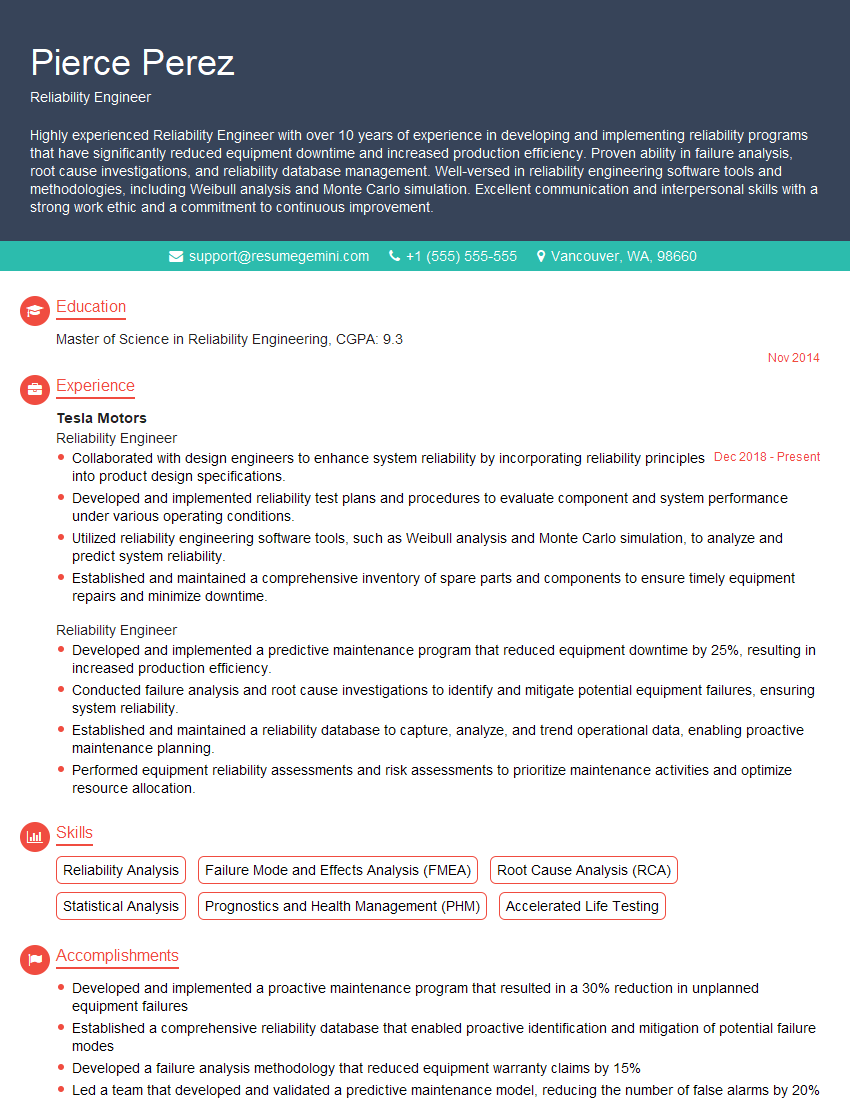
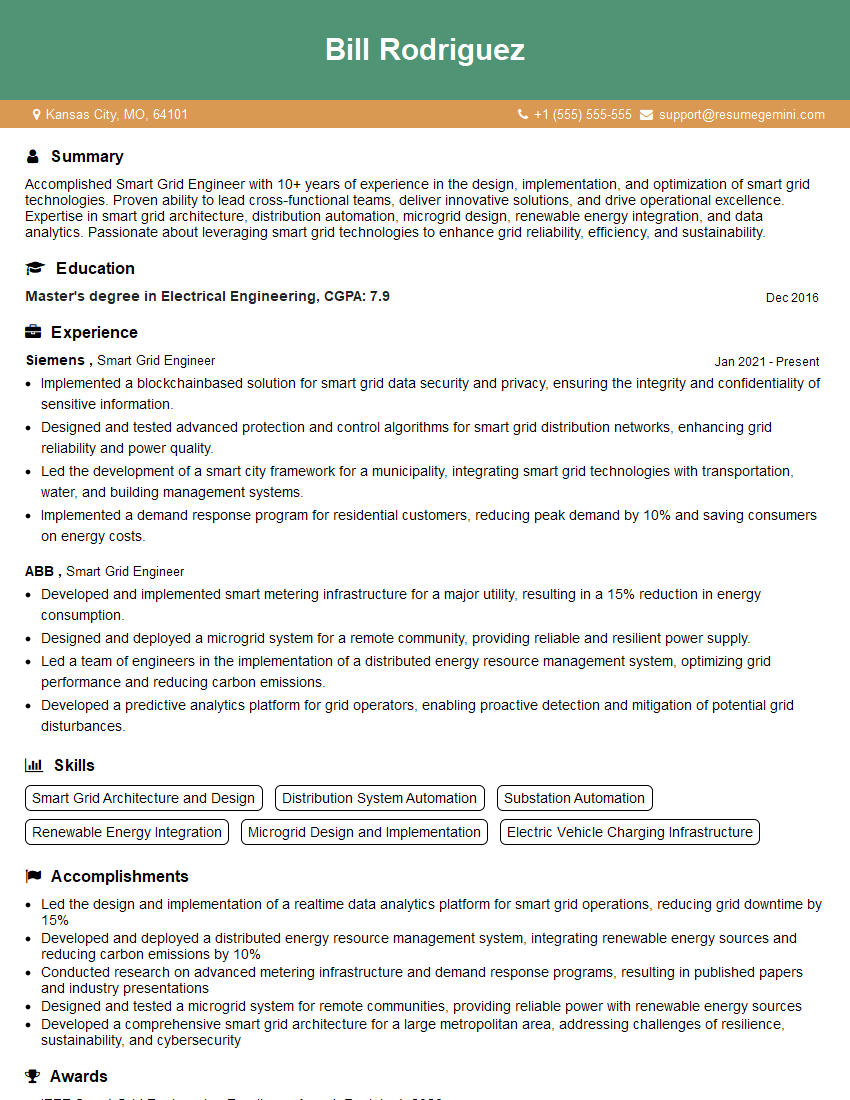
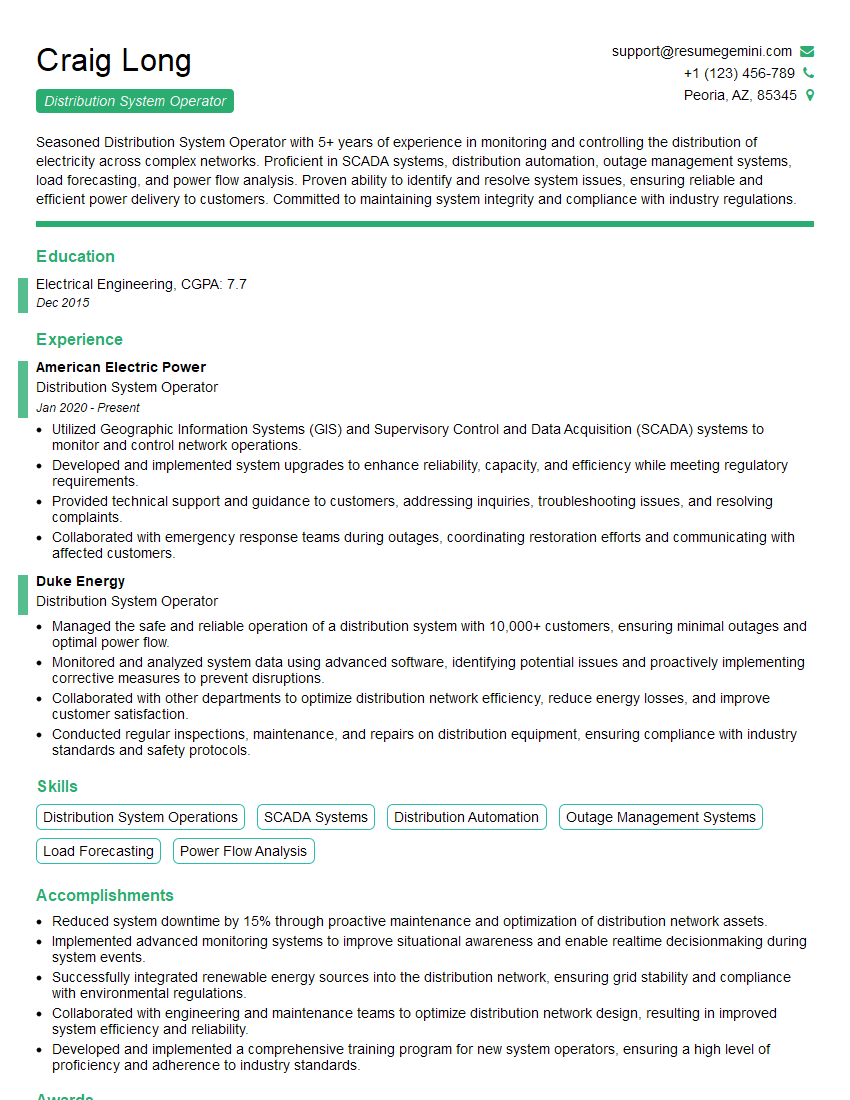
Mastering Grid Operations opens doors to a rewarding and impactful career in a crucial industry. The demand for skilled professionals in this field is consistently high, offering excellent growth potential and the chance to contribute to a sustainable energy future. To maximize your job prospects, it’s vital to create a resume that effectively communicates your skills and experience to Applicant Tracking Systems (ATS). We strongly encourage you to leverage ResumeGemini, a trusted resource for building professional, ATS-friendly resumes. Examples of resumes tailored to Grid Operations are available to help you showcase your qualifications effectively.
Explore more articles
Users Rating of Our Blogs
Share Your Experience
We value your feedback! Please rate our content and share your thoughts (optional).
What Readers Say About Our Blog
To the interviewgemini.com Webmaster.
Very helpful and content specific questions to help prepare me for my interview!
Thank you
To the interviewgemini.com Webmaster.
This was kind of a unique content I found around the specialized skills. Very helpful questions and good detailed answers.
Very Helpful blog, thank you Interviewgemini team.