The right preparation can turn an interview into an opportunity to showcase your expertise. This guide to Landfill Gas Flare Emissions Reduction interview questions is your ultimate resource, providing key insights and tips to help you ace your responses and stand out as a top candidate.
Questions Asked in Landfill Gas Flare Emissions Reduction Interview
Q 1. Explain the process of landfill gas generation and its composition.
Landfill gas (LFG) is generated by the anaerobic decomposition of organic waste in landfills. This process, called anaerobic digestion, occurs in the absence of oxygen. Bacteria break down the waste, producing a mixture of gases, primarily methane (CH₄) and carbon dioxide (CO₂).
The composition of LFG varies depending on factors such as the type of waste, the age of the landfill, and environmental conditions. A typical LFG composition might look like this:
- Methane (CH₄): 45-60%
- Carbon Dioxide (CO₂): 35-55%
- Nitrogen (N₂): 1-10%
- Oxygen (O₂): <1%
- Other trace gases: Hydrogen sulfide (H₂S), volatile organic compounds (VOCs)
Methane is a potent greenhouse gas, significantly more effective at trapping heat than carbon dioxide. Therefore, managing LFG is crucial for mitigating climate change.
Q 2. Describe different methods for capturing landfill gas.
Several methods exist for capturing LFG, ranging from simple to complex systems. The choice depends on factors such as landfill size, gas production rate, and available resources.
- Passive Collection Systems: These rely on natural pressure differences to draw gas from the landfill. They are generally less efficient than active systems but can be cost-effective for smaller landfills.
- Active Collection Systems: These employ vacuum pumps or blowers to extract LFG from wells installed within the landfill. This is the most common method for larger landfills, providing more efficient gas extraction.
- Vertical Wells: These wells are drilled vertically into the landfill, collecting gas from multiple depths. They’re effective for capturing gas from deeper sections of the landfill.
- Horizontal Wells: These wells extend horizontally beneath the waste, providing greater surface area for gas collection and improving gas extraction from areas with low permeability.
A well-designed system typically incorporates a network of collection wells, header pipes, and a central processing facility where the gas is processed and either flared or used for energy generation.
Q 3. What are the environmental impacts of flaring landfill gas?
Flaring LFG, while preventing its release directly into the atmosphere, is not without environmental impacts. Though it reduces the greenhouse effect from methane, it still releases carbon dioxide, a greenhouse gas, albeit less potent than methane.
Incomplete combustion during flaring can also result in the emission of other pollutants like particulate matter (PM), nitrogen oxides (NOx), and unburnt hydrocarbons, which negatively affect air quality and contribute to smog formation. Furthermore, the flaring process consumes energy, increasing overall energy consumption.
Therefore, while flaring is better than uncontrolled emissions, it’s a temporary solution, and the ideal scenario is to recover and utilize the LFG for energy generation.
Q 4. Explain the principles of different flare systems (e.g., elevated, ground flares).
Different flare systems utilize different principles to safely burn LFG. The key difference lies in their physical setup and how they manage combustion.
- Elevated Flares: These systems use a tall stack to elevate the flame, ensuring that combustion products are dispersed at higher altitudes, reducing ground-level pollution. They are generally preferred for larger landfills due to their ability to handle higher gas flow rates and better dispersion. They often incorporate features like pilot flames and flame monitors to ensure efficient and safe operation.
- Ground Flares: These systems burn LFG at ground level, typically using a burner head with multiple ports for gas distribution. They are simpler and cheaper to install than elevated flares but can lead to higher ground-level pollution if not designed and operated correctly. They are more suitable for smaller landfills with lower gas flow rates.
Both systems require safety features to prevent flashback and ensure complete combustion. Careful consideration of wind conditions is crucial to optimize dispersion and minimize pollution.
Q 5. How do you calculate landfill gas emissions?
Calculating LFG emissions involves several steps and requires data on gas composition and flow rates. Common methods include:
- Direct Measurement: This involves directly measuring gas flow rates using flow meters at different points in the collection system and analyzing the gas composition using gas chromatography. This provides the most accurate data.
- Mass Balance Calculations: This approach estimates emissions based on the amount of waste disposed of in the landfill and the methane generation potential of the waste. It requires data on the waste composition, its decomposition rate, and the fraction of gas captured.
- Emission Factors: These are default values that represent the average emission rate per unit of waste disposed. Emission factors are less accurate than direct measurement but can be used when direct data is not available.
The calculation typically involves converting measured gas flow rates (e.g., cubic meters per hour) to mass flow rates (e.g., kilograms per hour) using the gas density, then converting this to emissions in tonnes of CH₄ or CO₂ per year. The calculation should include emissions from both captured and uncaptured gas. Specialized software packages can greatly simplify this process.
Q 6. What are the regulatory requirements for landfill gas management?
Regulatory requirements for LFG management vary by location but generally aim to minimize environmental impacts and promote resource recovery. These regulations often include:
- Emission Limits: Regulations specify allowable levels of methane and other pollutants emitted from landfills.
- Gas Collection and Control Systems: Requirements for installing and maintaining gas collection systems, often based on landfill size and gas generation potential.
- Flaring Standards: Regulations on the design and operation of flare systems, including safety requirements and emission limits.
- Monitoring and Reporting: Requirements for regularly monitoring LFG emissions and reporting them to regulatory agencies.
- Alternative Energy Recovery: Incentives or mandates for utilizing captured LFG for energy generation, such as electricity production or combined heat and power (CHP).
Failure to comply with these regulations can result in significant penalties.
Q 7. What are the key performance indicators (KPIs) for a landfill gas management system?
Key performance indicators (KPIs) for a successful LFG management system provide a quantitative measure of its effectiveness. Important KPIs include:
- Gas Capture Rate: The percentage of generated LFG successfully captured by the collection system.
- Flare Efficiency: The percentage of LFG completely combusted in the flare, minimizing unburned emissions.
- Methane Oxidation Rate (for flares): The percentage of methane converted to carbon dioxide during flaring.
- Energy Recovery Rate: For systems utilizing LFG for energy, this KPI reflects the amount of energy generated relative to the gas volume captured.
- Greenhouse Gas Reduction: The total reduction in greenhouse gas emissions achieved through LFG management, often measured in tonnes of CO₂ equivalent.
- Operational Costs: Tracking costs related to gas collection, processing, and disposal or energy generation.
Regular monitoring of these KPIs allows for timely adjustments to the LFG management system, ensuring optimal performance and environmental protection.
Q 8. Describe common challenges in landfill gas collection and management.
Landfill gas (LFG) collection and management present numerous challenges. Think of it like trying to capture a constantly shifting, smelly gas cloud beneath a mountain of trash. The primary challenges stem from the heterogeneous nature of the waste itself.
- Waste Variability: The composition of waste changes over time, affecting gas generation rates and pathways. Some areas might be highly permeable, allowing gas to escape easily, while others are compacted, creating dead zones with trapped gas.
- Well Integrity: LFG collection wells can become clogged with debris, damaged by settling waste, or corroded by the corrosive nature of LFG itself, reducing their effectiveness. Imagine a straw clogging up when you try to drink a milkshake.
- Gas Migration: Gas can migrate through cracks and fissures in the landfill liner or surrounding soil, bypassing the collection system and escaping into the atmosphere. This is like trying to hold water in a leaky bucket.
- High Moisture Content: LFG often contains significant moisture, which can lead to condensation in the collection pipes and ultimately reduce the efficiency of the system and cause corrosion.
- Seasonal Variations: Gas generation rates fluctuate throughout the year, influenced by factors like temperature and rainfall. This makes consistent gas capture a dynamic challenge.
Q 9. How do you troubleshoot malfunctions in a landfill gas collection system?
Troubleshooting a malfunctioning LFG collection system requires a systematic approach, similar to diagnosing a medical problem. We start with observation and proceed to more invasive checks.
- Visual Inspection: Begin by visually inspecting the entire system, checking for leaks, blockages, or visible damage to pipes, wells, and the flare stack. Look for signs of corrosion or significant deterioration.
- Pressure and Vacuum Readings: Monitor pressure and vacuum levels throughout the system. Significant deviations from normal operating ranges indicate a problem. Lower-than-expected pressures could suggest leaks; higher-than-expected pressures might point to blockages.
- Gas Composition Analysis: Analyze the gas composition at various points in the system to identify any changes or impurities that might indicate a problem with gas generation, migration, or well integrity. This helps determine whether other processes within the landfill are affecting LFG production.
- Flow Rate Measurement: Measure the flow rate of the collected gas to determine whether the system is collecting the expected amount of LFG. A decrease in flow could suggest a blockage or leak.
- Well Testing: Perform individual well testing to isolate problems. This might involve temporarily sealing individual wells to check for pressure changes in the surrounding area.
- Leak Detection: Employ sophisticated leak detection techniques such as infrared cameras or tracer gases to pinpoint the precise location of leaks.
A combination of these techniques allows us to pinpoint the source of the malfunction and implement appropriate corrective measures.
Q 10. Explain different methods for reducing flare emissions.
Reducing flare emissions, which is essentially the burning of excess LFG, is crucial for environmental responsibility. Think of it as reducing unnecessary waste, but on a much larger scale. Several methods exist:
- Energy Recovery: This is the most effective approach, converting LFG into usable energy through combined heat and power (CHP) systems or using LFG as fuel for other processes. This turns a waste product into a valuable resource.
- Flare Optimization: Improve the efficiency of the flare itself through proper design, maintenance, and operation, minimizing incomplete combustion and unburned emissions. Think of making your bonfire burn hotter and cleaner.
- Gas Compression and Injection: In some cases, LFG can be compressed and injected into the natural gas pipeline. This requires rigorous treatment to ensure pipeline quality standards are met.
- Beneficial Use: Explore other potential beneficial uses of LFG, such as using it in industrial processes or as feedstock for biofuels production.
- Advanced Oxidation Processes: These technologies use advanced chemical processes to oxidize pollutants in the LFG before it reaches the flare. This method provides a higher degree of emissions control.
Q 11. What are the advantages and disadvantages of energy recovery from landfill gas?
Energy recovery from LFG offers significant environmental and economic advantages, but also presents challenges.
- Advantages:
- Reduced Greenhouse Gas Emissions: Burning LFG for energy is far less environmentally damaging than flaring it or leaving it to escape into the atmosphere. It significantly reduces methane emissions, a potent greenhouse gas.
- Renewable Energy Generation: LFG is a renewable energy source, providing a sustainable alternative to fossil fuels.
- Revenue Generation: Selling the generated electricity or heat can create a significant revenue stream for landfill operators.
- Disadvantages:
- High Initial Investment: Constructing and installing energy recovery systems requires a substantial upfront investment.
- Variable Gas Quality: Fluctuations in LFG composition and flow rate can impact the efficiency and reliability of energy recovery systems.
- Technological Complexity: Energy recovery systems are complex and require specialized expertise for operation and maintenance.
- Geographic Limitations: Energy recovery may not be economically feasible in all locations due to factors such as distance to the grid or lack of local demand for energy.
Q 12. How do you monitor and control flare emissions?
Monitoring and controlling flare emissions requires a multi-faceted approach, combining regular inspections, automated monitoring, and data analysis. It’s like keeping a close eye on a complex machine.
- Continuous Emission Monitoring Systems (CEMS): These systems provide real-time data on emission levels, allowing for immediate detection of any deviations from acceptable limits. Data is typically sent to central control systems allowing operators to monitor and adjust operational parameters.
- Regular Inspections: Visual inspections of the flare stack and surrounding area are essential to identify any potential problems such as leaks, blockages, or equipment malfunctions.
- Gas Flow Measurement: Continuous monitoring of gas flow rates helps maintain optimal flare operation and reduces the likelihood of incomplete combustion.
- Data Analysis and Reporting: Regular data analysis helps identify trends, optimize operations, and ensure compliance with emission regulations. This data is also necessary for environmental reporting requirements.
Using these methods, we maintain regulatory compliance while minimizing environmental impact.
Q 13. Discuss the safety procedures associated with landfill gas handling.
Safety procedures for handling LFG are paramount due to its flammability, toxicity, and potential for asphyxiation. We treat LFG with the respect it deserves.
- Lockout/Tagout Procedures: Strict lockout/tagout procedures must be followed before performing any maintenance or repair work on LFG equipment to prevent accidental gas release or ignition. No one touches equipment until it’s deemed safe.
- Personal Protective Equipment (PPE): Appropriate PPE, including respirators, safety glasses, and flame-resistant clothing, must be worn at all times when working with LFG. Safety is always the highest priority.
- Gas Detection: Portable gas detectors should be used to monitor LFG levels in confined spaces and during maintenance activities to prevent exposure to hazardous concentrations.
- Emergency Response Plan: A comprehensive emergency response plan should be in place to address potential incidents, including gas leaks, fires, or explosions. Regular drills and training ensure preparedness.
- Ventilation: Adequate ventilation in all areas where LFG is handled is crucial to prevent the accumulation of hazardous gas levels. Proper airflow is vital.
These safety measures are non-negotiable. Safety isn’t just a policy, it’s a mindset.
Q 14. What are the economic benefits of reducing flare emissions?
Reducing flare emissions offers significant economic benefits, beyond the environmental advantages. It’s not just about doing good; it’s also about doing well.
- Reduced Operational Costs: Minimizing gas flaring reduces the amount of fuel consumed, leading to lower operational costs. Less waste equals lower expenditure.
- Increased Energy Revenue: Converting LFG into usable energy generates additional revenue through electricity or heat sales. This can greatly increase overall landfill profitability.
- Compliance with Regulations: Meeting stricter emission regulations avoids potential penalties and legal issues, saving the company from significant financial risks.
- Improved Public Image: Demonstrating a commitment to reducing environmental impact can enhance the company’s public image, attracting customers, investors, and employees.
- Carbon Credits: Companies can potentially earn carbon credits for reducing greenhouse gas emissions, creating another revenue stream.
Implementing strategies for reducing flare emissions is a smart economic decision, balancing environmental responsibility with financial gains.
Q 15. Describe your experience with different types of landfill gas monitoring equipment.
My experience with landfill gas monitoring equipment spans a wide range of technologies, from basic to highly sophisticated systems. I’ve worked extensively with fixed and portable gas analyzers that measure methane (CH4) and carbon dioxide (CO2) concentrations. These analyzers often employ infrared spectroscopy or gas chromatography for accurate readings. I’m also familiar with using pressure transducers to monitor pressure within the landfill gas collection system, indicating the effectiveness of extraction. Furthermore, I have experience with more advanced systems incorporating remote sensing technologies and data loggers, which enable real-time monitoring and data analysis, even in remote locations. For example, in one project, we utilized a network of wireless sensors deployed throughout the landfill, transmitting data via a cellular network to a central monitoring platform. This allowed us to identify leaks promptly and optimize the collection system efficiently. The choice of equipment depends heavily on factors such as budget, landfill size, the level of automation desired, and the specific regulatory requirements.
Career Expert Tips:
- Ace those interviews! Prepare effectively by reviewing the Top 50 Most Common Interview Questions on ResumeGemini.
- Navigate your job search with confidence! Explore a wide range of Career Tips on ResumeGemini. Learn about common challenges and recommendations to overcome them.
- Craft the perfect resume! Master the Art of Resume Writing with ResumeGemini’s guide. Showcase your unique qualifications and achievements effectively.
- Don’t miss out on holiday savings! Build your dream resume with ResumeGemini’s ATS optimized templates.
Q 16. Explain the role of data analysis in optimizing landfill gas management.
Data analysis is absolutely crucial for optimizing landfill gas management. Think of it as the brain of the operation. By analyzing data from monitoring equipment, we can identify trends, pinpoint areas of inefficiency, and predict potential problems. For instance, a sudden increase in methane concentration at a specific well could indicate a leak or a change in waste decomposition rates. We use statistical methods to identify these anomalies and then correlate this information with weather data, waste input, and other relevant factors. This process helps us fine-tune our extraction system, predict future gas production, and make informed decisions about treatment strategies. Sophisticated data analysis techniques, including machine learning, are increasingly being used to build predictive models and improve the overall efficiency and environmental performance of landfill gas management systems. We might use regression analysis to model gas production based on historical waste data, or use clustering techniques to group similar well performance characteristics for targeted maintenance.
Q 17. How do you ensure compliance with environmental regulations for landfill gas?
Ensuring compliance with environmental regulations for landfill gas is paramount. It involves a multi-faceted approach. First, we meticulously document all aspects of the landfill gas management system, from monitoring data to maintenance records. This documentation ensures traceability and helps demonstrate compliance to regulatory agencies. We use specialized software to track and manage the data, maintaining a comprehensive audit trail. We also conduct regular inspections and calibrations of monitoring equipment to ensure data accuracy. Furthermore, we conduct regular leak detection surveys using technologies such as infrared cameras or tracer gas techniques to proactively identify and repair any leaks. It’s crucial to understand and adhere to all relevant local, state, and federal regulations regarding methane emissions, air quality, and reporting requirements. Non-compliance can lead to hefty fines and potential legal action.
Q 18. Describe your experience with designing and implementing landfill gas management projects.
My experience in designing and implementing landfill gas management projects encompasses all stages, from initial site assessment and feasibility studies to final commissioning and ongoing monitoring. This includes developing comprehensive site-specific plans, selecting appropriate technologies (considering factors like gas composition, volume, and budget), and overseeing the installation and integration of various components like gas collection wells, pipelines, and flare or energy recovery systems. For example, I was part of a team that designed a system for a large municipal landfill, incorporating a combined heat and power (CHP) unit to generate electricity from the captured landfill gas. This not only reduced emissions but also generated revenue for the landfill operator. The design process also involves conducting thorough risk assessments and developing contingency plans to address potential problems. Successful implementation requires effective communication and collaboration with various stakeholders, including landfill operators, engineers, contractors, and regulatory agencies.
Q 19. What are the potential risks associated with improper landfill gas management?
Improper landfill gas management poses several significant risks. The most obvious is uncontrolled emissions of greenhouse gases, particularly methane, a potent contributor to climate change. Uncontrolled gas migration can lead to explosions or fires in surrounding areas, posing a serious safety hazard. Furthermore, the gas can contaminate groundwater with harmful substances if it’s not properly controlled. This contamination could render the groundwater unsuitable for drinking or other uses. Lastly, the odors emanating from poorly managed landfills can cause significant nuisance and negatively impact the quality of life for nearby residents. These risks highlight the importance of a proactive and comprehensive approach to landfill gas management, emphasizing both safety and environmental protection. A failure to address these risks can result in substantial financial losses, reputational damage, and legal consequences.
Q 20. How do you manage unexpected events or emergencies related to landfill gas?
Managing unexpected events or emergencies related to landfill gas requires a well-defined emergency response plan. This plan should outline clear procedures for addressing various scenarios, such as gas leaks, fires, or equipment malfunctions. This includes having readily available emergency contact information for personnel, contractors, and regulatory agencies. Our response involves immediate isolation of the affected area, contacting emergency services if necessary, and initiating repairs or mitigation measures. We also regularly conduct emergency drills to ensure the plan is effective and personnel are adequately trained. A key component is continuous monitoring of the landfill gas system, enabling early detection of anomalies and enabling quick response. Real-time data alerts can trigger automatic shutdown mechanisms or notify personnel of potential issues, allowing rapid intervention and minimizing the impact of any emergency.
Q 21. Explain your experience with different types of landfill gas treatment technologies.
My experience encompasses various landfill gas treatment technologies. The most common is flaring, which involves burning the gas to reduce methane emissions. However, flaring is not the most efficient solution as it doesn’t recover the energy contained in the gas. Therefore, energy recovery technologies are becoming increasingly popular. These technologies utilize the landfill gas to generate electricity through combined heat and power (CHP) systems or to produce biogas for other purposes. I’ve also worked with anaerobic digestion, which uses microorganisms to further break down the organic waste in the landfill, increasing the biogas yield. Other technologies include gas purification systems for removing contaminants like siloxanes, which are harmful to the energy recovery systems. The selection of the optimal technology depends on several factors, including the landfill gas composition, volume, location, and available resources. The economic considerations, including the initial investment costs, operational expenses, and potential revenue generation, also play a significant role in the decision-making process.
Q 22. What are your strategies for minimizing methane emissions from landfills?
Minimizing methane emissions from landfills requires a multi-pronged approach focusing on prevention, capture, and utilization. Think of it like patching a leaky roof – you need to stop the leaks (prevention), collect the water that’s already leaked (capture), and then find a useful purpose for that water (utilization).
Improved Waste Management: Reducing the amount of organic waste going into landfills is crucial. This involves promoting recycling, composting, and source reduction strategies. For example, a community-wide composting program significantly reduces the volume of organic material, which is the primary source of landfill gas.
Effective Gas Collection Systems: Installing and maintaining a robust network of wells and pipes is essential to capture landfill gas effectively. This involves strategically placing wells based on landfill topography and waste composition. Proper well spacing is crucial; think of it as strategically placing sprinklers in a garden for optimal coverage.
Regular System Monitoring: Continuous monitoring of gas pressure, flow rates, and composition is vital to identify potential leaks and optimize system performance. Regular inspections and maintenance prevent leaks and maximize gas capture. This is like checking your car’s tire pressure regularly to ensure optimal performance and safety.
Flare Optimization: While flaring is a safety measure to prevent uncontrolled emissions, optimizing flare systems to minimize unnecessary venting is crucial. Modern flares incorporate technologies for more efficient combustion, reducing methane slip – the unburned methane that escapes into the atmosphere.
Q 23. How do you select appropriate equipment for landfill gas collection and treatment?
Selecting appropriate equipment depends on factors like landfill size, gas composition, and desired treatment method. It’s a process that combines engineering expertise, site-specific assessment, and regulatory compliance. We typically follow a structured approach:
Site Characterization: This involves a thorough investigation of the landfill, including gas generation rates, gas composition, and subsurface conditions. This step ensures we choose equipment appropriate for the specific landfill.
Gas Collection System Design: This considers well design, piping materials, and collection network layout, optimized for efficient gas extraction. For example, using high-permeability materials for pipes minimizes pressure drops and increases collection efficiency.
Treatment Technology Selection: This depends on the intended use of the recovered gas. Options include flaring (for destruction), energy generation (using engines or turbines), or biogas upgrading (for injection into natural gas pipelines). For instance, a large landfill may justify an energy generation system while a smaller one might opt for flaring.
Vendor Selection and Due Diligence: We carefully evaluate vendors based on their experience, equipment reliability, and maintenance capabilities. References, case studies, and independent verification are crucial to ensure we choose the right partner.
Q 24. Describe your experience with different types of landfill liners and their impact on gas management.
Landfill liners significantly impact gas management. Think of them as a barrier, preventing gas from escaping and potentially contaminating groundwater. Different liner types offer varying degrees of gas retention:
Composite Liners: These are typically made of a geomembrane (plastic liner) combined with a compacted clay liner (CCL). The geomembrane acts as a primary barrier, preventing gas migration, while the CCL provides redundancy and structural support. This is the gold standard for modern landfills.
Compacted Clay Liners (CCL): These are made of compacted clay soil and provide a natural barrier to gas migration. However, they are less impermeable than geomembranes and more susceptible to damage. Their effectiveness depends heavily on the quality of the clay and the compaction process.
Geomembrane Liners: High-density polyethylene (HDPE) geomembranes provide excellent gas retention. They’re durable and resistant to chemical degradation, but their installation requires specialized expertise and careful quality control to prevent punctures or tears.
The liner’s integrity directly affects the efficiency of gas collection systems. A compromised liner can lead to gas leakage, reducing the amount of gas captured and increasing the risk of environmental contamination. Regular liner inspections and maintenance are vital to ensure long-term performance.
Q 25. Explain the principles of biogas upgrading and its role in emissions reduction.
Biogas upgrading transforms raw biogas (primarily methane and carbon dioxide) into biomethane, a high-purity methane stream that meets pipeline quality standards. This is akin to refining crude oil into gasoline – you’re taking a raw product and upgrading it to a more valuable form.
The process typically involves several steps:
Pre-treatment: This removes impurities like siloxanes, hydrogen sulfide, and moisture that could damage downstream equipment.
CO2 Removal: This is the core of upgrading, using technologies like pressure swing adsorption (PSA) or membrane separation to remove carbon dioxide. PSA, for instance, uses pressure changes to selectively adsorb CO2 onto a solid material.
Compression and Dehydration: The resulting biomethane is compressed to pipeline pressure and dehydrated to ensure its quality meets injection standards.
Upgrading significantly reduces emissions by allowing the captured methane to be used as a renewable energy source, displacing fossil fuels. Injecting biomethane into the natural gas grid reduces greenhouse gas emissions compared to simply flaring or using the raw biogas for energy generation.
Q 26. How do you integrate sustainability considerations into landfill gas management projects?
Sustainability is paramount in landfill gas management. We integrate sustainability considerations throughout the project lifecycle:
Lifecycle Assessment (LCA): We conduct LCAs to assess the environmental impacts of the project, considering emissions, resource use, and waste generation throughout its life, from construction to decommissioning.
Renewable Energy Integration: We prioritize using renewable energy sources for powering gas collection and treatment facilities. This reduces the project’s overall carbon footprint.
Circular Economy Principles: We encourage the use of recycled materials in construction and strive to minimize waste generation during operations and maintenance.
Community Engagement: We actively engage local communities to address their concerns and build consensus on project implementation, emphasizing the environmental and economic benefits of the project.
Climate Change Mitigation: Our primary goal is to reduce greenhouse gas emissions, specifically methane, a potent greenhouse gas. This contributes to global climate change mitigation efforts.
Q 27. Describe your experience with lifecycle assessments of landfill gas management systems.
Lifecycle assessments (LCAs) are critical for evaluating the environmental performance of landfill gas management systems. We use established LCA methodologies like ISO 14040/44 to quantify environmental impacts, including greenhouse gas emissions, resource depletion, and waste generation. These are more than just theoretical exercises – they provide actionable data.
In practice, an LCA for a landfill gas management system would consider:
Upstream Impacts: Manufacturing and transportation of equipment, materials, and construction activities.
Operational Phase: Energy consumption, emissions from flaring or energy generation, and water usage.
End-of-Life Impacts: Decommissioning, waste disposal, and recycling of materials.
The results of the LCA help us identify areas for improvement and optimize the design and operation of the system for greater sustainability. For example, an LCA might reveal that using a specific type of biogas upgrading technology leads to lower overall emissions compared to another option.
Q 28. What are the future trends in landfill gas management and emission reduction?
Future trends in landfill gas management point towards increased efficiency, sustainability, and integration with broader energy systems:
Advanced Biogas Upgrading Technologies: Development and deployment of more efficient and cost-effective biogas upgrading technologies to produce high-quality biomethane for injection into natural gas pipelines.
Smart Sensors and IoT: Use of advanced sensors and internet of things (IoT) technologies for real-time monitoring and remote control of landfill gas management systems, enhancing operational efficiency and reducing maintenance needs.
Artificial Intelligence (AI) and Machine Learning (ML): Application of AI and ML to optimize gas collection, predict gas generation rates, and improve the overall performance of landfill gas systems.
Integration with Renewable Energy Systems: Combining landfill gas energy generation with other renewable energy sources, such as solar and wind power, to create hybrid energy systems that are more reliable and sustainable.
Carbon Capture and Utilization (CCU): Exploration of CCU technologies to capture carbon dioxide from biogas upgrading processes and utilize it in other applications, further reducing greenhouse gas emissions.
Key Topics to Learn for Landfill Gas Flare Emissions Reduction Interview
- Landfill Gas Composition and Properties: Understanding the methane, carbon dioxide, and other trace gas components and their impact on emissions.
- Flare System Design and Operation: Familiarize yourself with different flare types (e.g., elevated, ground flares), their components, and operational parameters for optimal efficiency and minimal emissions.
- Emission Monitoring and Measurement Techniques: Learn about methods used to quantify landfill gas emissions (e.g., direct measurement, flux chambers, remote sensing) and understand data interpretation.
- Emission Reduction Technologies: Explore various technologies for reducing flare emissions, such as thermal oxidation, catalytic oxidation, and energy recovery systems. Understand their advantages and limitations.
- Regulatory Compliance and Standards: Familiarize yourself with relevant environmental regulations and emission standards concerning landfill gas flaring. This includes understanding permit requirements and reporting obligations.
- Lifecycle Assessment and Environmental Impact: Understand the environmental impact of landfill gas flaring throughout its lifecycle, including greenhouse gas emissions and their contribution to climate change.
- Economic Considerations and Cost-Benefit Analysis: Analyze the economic aspects of implementing different emission reduction technologies, weighing costs against environmental benefits.
- Troubleshooting and Maintenance of Flare Systems: Develop your problem-solving skills by understanding common issues in flare systems and their solutions. This includes preventive maintenance strategies.
- Data Analysis and Reporting: Demonstrate proficiency in analyzing emission data, identifying trends, and preparing comprehensive reports for stakeholders.
- Best Practices and Future Trends: Stay updated on the latest advancements and best practices in landfill gas emission reduction strategies.
Next Steps
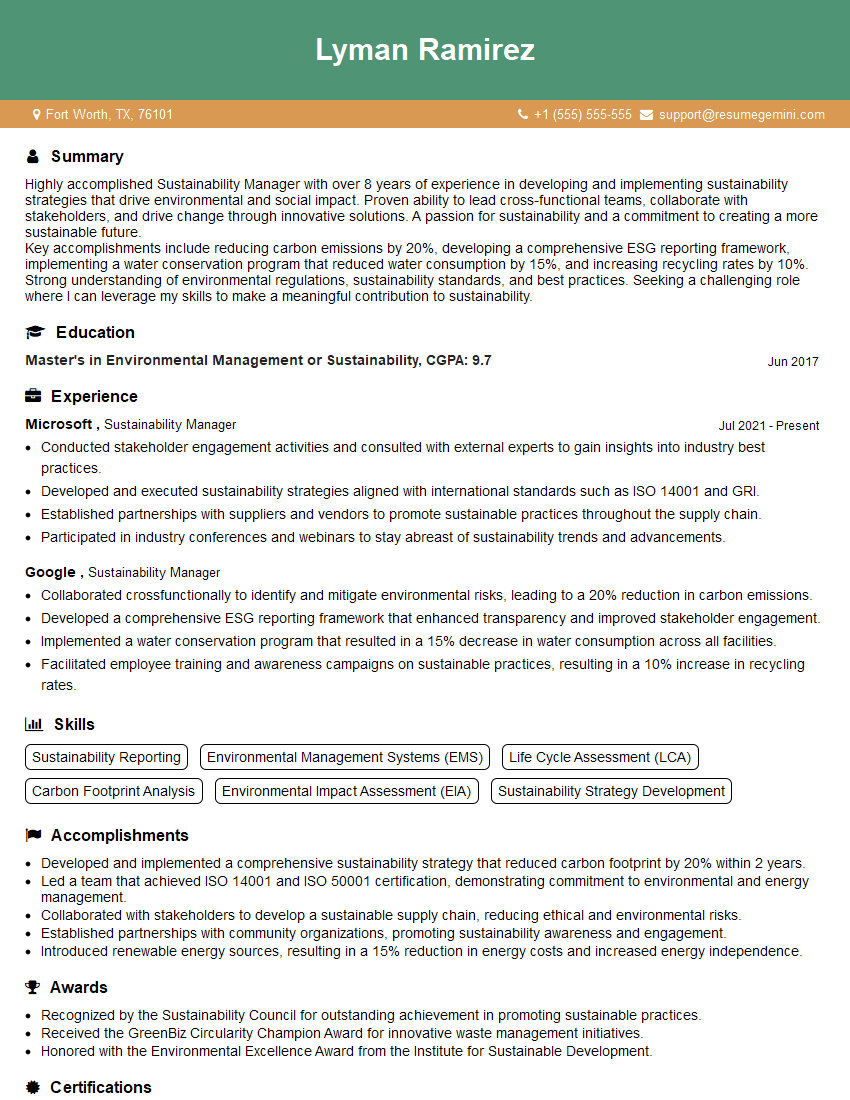
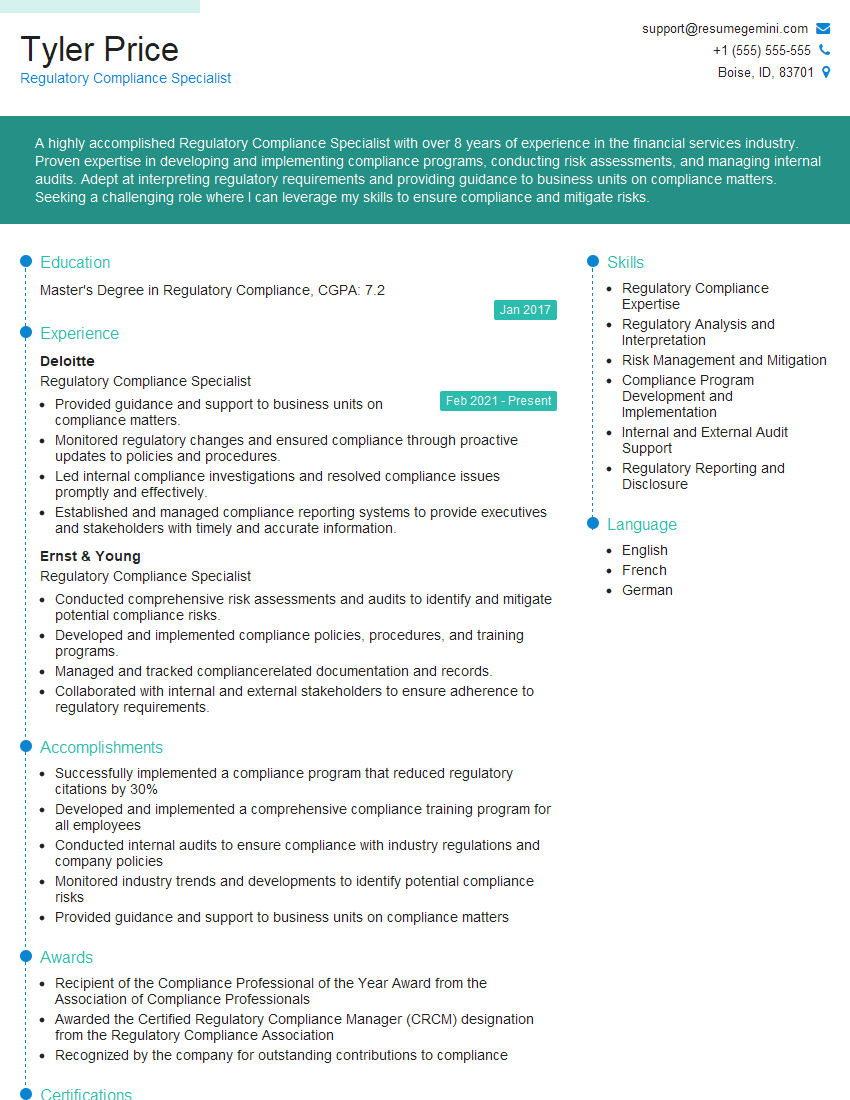
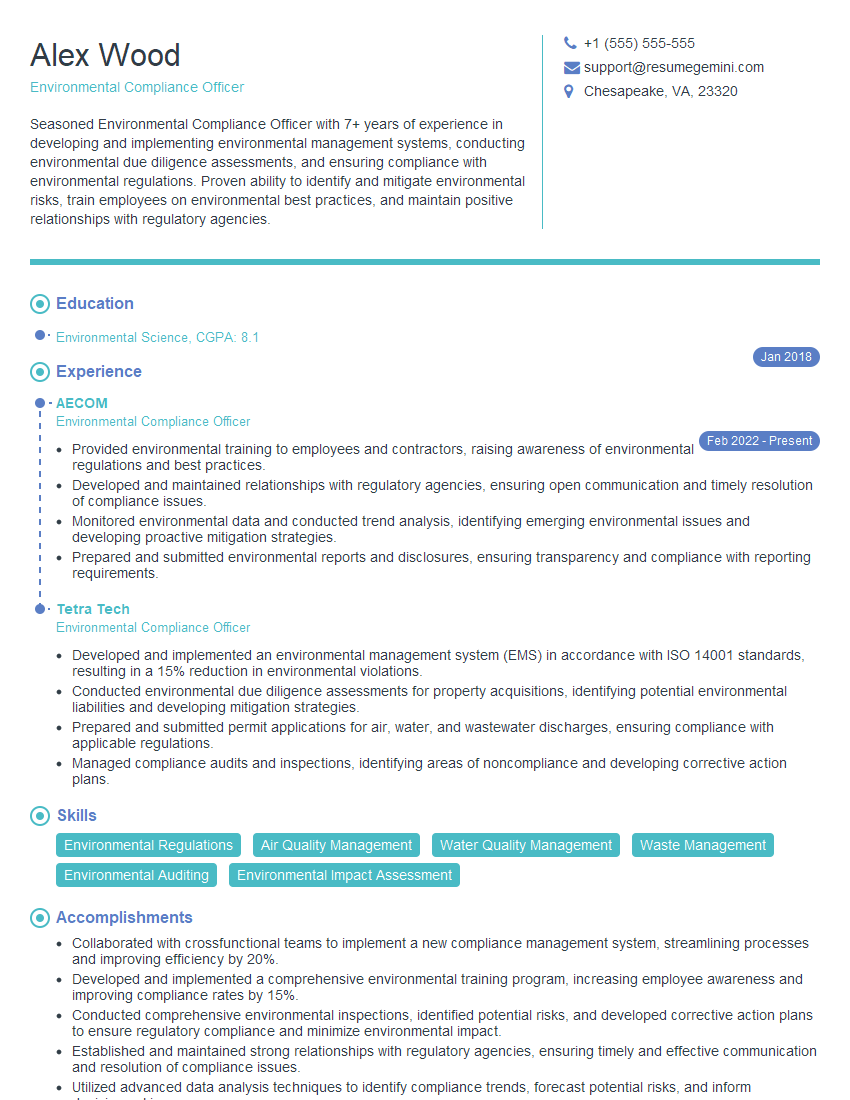
Mastering Landfill Gas Flare Emissions Reduction demonstrates a commitment to environmental stewardship and positions you for significant career advancement within the environmental engineering and waste management sectors. To enhance your job prospects, creating an ATS-friendly resume is crucial. ResumeGemini is a trusted resource that can help you build a professional and impactful resume tailored to showcase your expertise in this field. Examples of resumes tailored to Landfill Gas Flare Emissions Reduction are available to help you create a compelling application.

Explore more articles
Users Rating of Our Blogs
Share Your Experience
We value your feedback! Please rate our content and share your thoughts (optional).
What Readers Say About Our Blog
To the interviewgemini.com Webmaster.
Very helpful and content specific questions to help prepare me for my interview!
Thank you
To the interviewgemini.com Webmaster.
This was kind of a unique content I found around the specialized skills. Very helpful questions and good detailed answers.
Very Helpful blog, thank you Interviewgemini team.