Feeling uncertain about what to expect in your upcoming interview? We’ve got you covered! This blog highlights the most important Meat Grading Standards interview questions and provides actionable advice to help you stand out as the ideal candidate. Let’s pave the way for your success.
Questions Asked in Meat Grading Standards Interview
Q 1. Explain the different USDA meat grading standards.
The USDA employs a system for grading meat, primarily beef, pork, and poultry, focusing on both quality and yield. Quality grades assess the palatability of the meat – its flavor, tenderness, and juiciness – while yield grades predict the amount of usable, boneless, closely trimmed retail cuts from the carcass. For beef, the quality grades range from Prime (highest) to Standard (lowest), with Choice and Select falling in between. Pork quality is assessed based on factors like color, firmness, and marbling, resulting in grades like Acceptable and US No. 1. Poultry grading considers factors like conformation, fleshing, and freedom from defects.
- Beef: Prime, Choice, Select, Standard, Commercial, Utility, Cutter, Canner
- Pork: Acceptable, US No. 1, US No. 2, US No. 3, and Utility
- Poultry: A, B, C grades based on conformation, fleshing and freedom from defects.
Imagine choosing a steak: Prime would be the most tender and flavorful, while Select would be leaner but potentially less juicy. Understanding these grades helps consumers make informed decisions based on their preferences and budget.
Q 2. Describe the factors influencing beef marbling scores.
Beef marbling, the intramuscular fat dispersed within the lean muscle, is a key factor in determining its quality grade. Several factors influence its development:
- Genetics: Breed and lineage significantly impact marbling potential. Some breeds are naturally predisposed to higher marbling scores than others.
- Diet: The type and amount of feed given to cattle directly influence fat deposition. A diet rich in energy and nutrients will promote greater marbling.
- Age and Maturity: Younger cattle generally have less marbling than older, more mature animals. However, excessive maturity can lead to tougher meat.
- Growth Rate: Faster-growing cattle may have less marbling due to less time for fat deposition.
- Health and Stress: Illness or stress can negatively affect marbling development.
Think of it like a cake: the marbling is the butter throughout, contributing to moisture, flavor, and tenderness. A well-marbled steak is similar to a rich, moist cake, while a leaner steak is more like a drier, less flavorful cake.
Q 3. How do you assess the maturity of a carcass?
Assessing carcass maturity involves evaluating several bone characteristics, primarily focusing on the vertebrae and ribs. The more developed and ossified (hardened) these bones are, the more mature the animal. Here’s how it’s done:
- Bone Characteristics: Inspect the shape and texture of the cartilage and bones in the rib cage and spinal column. Mature animals exhibit more ossified cartilage, with less pliable and more hardened bone structure.
- Color and Texture of Bone: The color and texture of the bone provide additional clues to maturity. Older animals tend to have darker, denser bones.
- Lean Color: While not a direct maturity indicator, lean color can provide supporting evidence. Darker lean color might suggest older maturity.
Imagine comparing the bones of a young chicken to an older hen – the older bird’s bones will be significantly more hardened and less flexible. The same principle applies to beef carcasses.
Q 4. What are the key characteristics of prime-grade beef?
Prime-grade beef is the highest quality grade offered by the USDA. It’s characterized by exceptional flavor, tenderness, and juiciness, due to abundant marbling and other desirable characteristics:
- High Marbling: Abundant intramuscular fat, resulting in a rich, juicy, and flavorful product.
- Fine Texture: The muscle fibers are fine and tender.
- Bright Red Color: The lean meat exhibits a desirable bright red color.
- Good Conformation: The carcass shows good shape and proportions.
- Youthful Maturity: The carcass is from a relatively young animal.
Think of a perfectly marbled ribeye steak – that’s a quintessential example of Prime-grade beef. Its superior taste and tenderness command a higher price point.
Q 5. Differentiate between yield grades and quality grades.
Yield and quality grades serve different purposes in evaluating meat carcasses:
- Quality Grades: Predict the palatability of the meat – its flavor, tenderness, and juiciness. They are primarily determined by marbling, maturity, and other factors related to eating quality.
- Yield Grades: Estimate the amount of closely trimmed retail cuts (like steaks and roasts) that can be obtained from the carcass. They’re calculated based on factors like fat thickness, ribeye area, and carcass weight.
Analogy: Imagine two cars. One (high quality) has a luxurious interior and powerful engine but a smaller fuel tank (low yield). Another (high yield) has a large fuel tank, but a less sophisticated interior and engine (lower quality). Similarly, a high-quality beef carcass might be less efficient in terms of yield compared to a lower quality but higher-yielding one.
Q 6. Explain the process of evaluating pork quality.
Pork quality evaluation focuses on several key characteristics that directly influence its palatability and shelf life:
- Color: The lean meat should have a desirable light pink to pinkish-red color. Pale, dark, or grayish colors indicate potential quality issues.
- Firmness: The meat should be firm and not excessively soft or watery. Firmness reflects water-holding capacity.
- Marbling: While less significant than in beef, marbling in pork contributes to its overall flavor and juiciness.
- pH: The pH level of the pork influences its color and water-holding capacity. Desirable pH levels ensure better quality.
- Texture: A fine, smooth texture is preferred.
Imagine selecting a pork chop: you would look for a light pinkish-red color, firm texture, and an overall appealing appearance. These characteristics are indicative of high-quality pork.
Q 7. Describe the factors affecting the quality of poultry.
Poultry quality is affected by several factors impacting both its appearance and taste:
- Conformation: The overall shape and structure of the bird. Well-conformed birds have meaty breasts and legs.
- Fleshing: The amount of meat on the carcass. Plump birds with good fleshing are preferred.
- Freedom from Defects: The bird should be free from bruises, cuts, or deformities.
- Fat Cover: An appropriate amount of fat cover contributes to the flavor and juiciness of the meat, but excessive fat is undesirable.
- Color: The skin and flesh should have a normal, healthy color appropriate for the type of poultry.
Consider buying a whole chicken: you’d look for one that’s plump, well-shaped, with smooth skin and healthy color. These characteristics denote high-quality poultry.
Q 8. How do you identify and handle meat contamination?
Identifying and handling meat contamination requires a multi-faceted approach, starting with rigorous preventative measures throughout the entire production chain. This begins on the farm with ensuring animal health and proper handling. At the processing facility, strict hygiene protocols are crucial.
- Visual Inspection: Trained personnel visually inspect carcasses and cuts for signs of contamination, including discoloration, unusual odors, or the presence of foreign materials. For example, detecting bruises or abscesses is critical as these can indicate bacterial contamination.
- Microbial Testing: Samples are regularly taken and tested for the presence of harmful bacteria such as Salmonella, E. coli, and Listeria. This helps identify potential problems before they escalate into widespread contamination.
- Temperature Control: Maintaining the cold chain is paramount. Proper refrigeration and freezing temperatures prevent bacterial growth and slow down the spoilage process. Deviation from these standards triggers immediate investigation and corrective actions.
- Contamination Control Measures: This includes everything from proper sanitation of equipment and facilities to employee hygiene practices (handwashing, protective clothing). Strict procedures prevent cross-contamination between different types of meat and stages of processing.
- Recall Procedures: In the event of contamination, robust recall procedures are vital to swiftly remove affected products from the market to minimize the risk to consumers. This involves efficient tracing of the contaminated product through the entire supply chain.
Think of it like this: preventing contamination is like preventing a wildfire – much easier and less costly than dealing with the damage after it starts. A proactive, layered approach is key to ensuring meat safety.
Q 9. What are the regulations surrounding meat labeling?
Meat labeling regulations are complex and vary slightly between countries, but generally aim to provide consumers with accurate and complete information about the product. These regulations cover several key aspects:
- Species Identification: The label must clearly identify the species of animal (e.g., beef, pork, lamb). Mislabeling is a serious offense.
- Cut Designation: The specific cut of meat (e.g., sirloin, tenderloin) must be accurately stated. Consumers need this detail to make informed choices.
- Country of Origin: Consumers often want to know where the meat comes from. This helps address concerns about traceability and food safety.
- Weight and Packaging Date: The net weight and packaging date are essential for ensuring product freshness and preventing fraud.
- Additives and Processing Aids: Any additives or processing aids must be clearly listed. Consumers with allergies or sensitivities depend on this information.
- Nutritional Information: Labels typically include nutritional information such as calories, fat content, and protein, which consumers use for dietary planning.
Non-compliance with these labeling regulations can result in significant penalties, including fines and product recalls. The regulations exist to protect consumers and maintain fair competition in the meat industry. Imagine the confusion and potential health risks if these regulations weren’t in place.
Q 10. Explain your understanding of HACCP principles in meat processing.
Hazard Analysis and Critical Control Points (HACCP) is a preventative approach to food safety that focuses on identifying and controlling potential hazards throughout the meat processing chain. It’s not just about reacting to contamination; it’s about preventing it in the first place.
- Hazard Analysis: This step involves identifying potential biological, chemical, and physical hazards that could contaminate the meat during processing. For instance, Salmonella is a biological hazard while chemical hazards could include pesticide residues.
- Critical Control Points (CCPs): Once hazards are identified, critical control points are determined. These are points in the process where control is essential to prevent or eliminate the hazard. Examples include cooking temperature, chilling time, and sanitation procedures.
- Critical Limits: For each CCP, a critical limit is established. This is the measurable value that must be met to ensure the hazard is controlled. For example, a minimum cooking temperature of 70°C (158°F) to eliminate E. coli.
- Monitoring Procedures: Regular monitoring at each CCP is crucial to ensure the critical limits are being met. This may involve taking temperature readings or visual inspections.
- Corrective Actions: If monitoring shows that a critical limit is not being met, corrective actions must be taken immediately to bring the process back into compliance. This may involve reprocessing the product or adjusting the process parameters.
- Verification Procedures: Verification activities ensure the HACCP plan is working effectively. This could involve reviewing records, conducting audits, or testing for pathogens.
- Record Keeping: Detailed records of all aspects of the HACCP plan must be maintained, which are essential for traceability and potential investigations.
HACCP is not just a checklist; it’s a dynamic system requiring constant vigilance and adaptation to maintain the highest level of food safety. It is a critical element in modern meat processing.
Q 11. Describe your experience with meat inspection procedures.
My experience with meat inspection procedures spans many years and includes both pre-slaughter and post-slaughter inspections. I’ve worked alongside veterinary inspectors and meat graders to ensure compliance with regulations.
- Pre-slaughter Inspection: This involves assessing the health of animals before slaughter, looking for signs of disease or illness. Animals showing signs of disease are usually rejected. This helps prevent the spread of pathogens.
- Post-slaughter Inspection: This is a more detailed examination of carcasses, including visual inspection of organs and lymph nodes for any abnormalities. This is where we check for bruising, abscesses, or other defects that could compromise meat quality and safety. This often involves palpating lymph nodes and organs to check for abnormalities.
- Trimming and Condemnation: Any affected areas are trimmed away or the entire carcass may be condemned if the contamination is too severe. Condemned meat is disposed of safely to prevent it from entering the food supply.
- Documentation: Meticulous record keeping is crucial. Detailed inspection reports are filed and archived to ensure traceability and accountability.
- Compliance with Regulations: Inspectors are guided by specific national and sometimes regional regulations. Understanding and adhering to those rules is critical to ensure consistency in inspection standards across different facilities.
Meat inspection is not just a job; it’s a crucial role in safeguarding public health. It demands vigilance, attention to detail, and a thorough understanding of both animal health and food safety principles.
Q 12. How do you ensure food safety throughout the meat grading process?
Ensuring food safety throughout the meat grading process involves implementing a robust system of controls at every stage, from the arrival of carcasses to the final packaging of graded cuts. This is a continuous process, not a single event.
- Hygiene and Sanitation: Maintaining impeccable hygiene throughout the facility and amongst personnel is paramount. This includes regular cleaning and sanitization of equipment, work surfaces, and facilities.
- Temperature Control: Maintaining the cold chain is critical to prevent bacterial growth. This involves using refrigerated areas, proper chilling protocols, and monitoring temperatures at each stage.
- Personnel Training: Employees must be properly trained in food safety procedures, including hygiene protocols, handling procedures, and the recognition of contamination. Proper training helps in the identification of potential hazards.
- Traceability: A robust traceability system allows quick identification of the source of any contamination that may arise. This involves detailed record-keeping and batch tracking. Being able to trace the entire history of a meat product is essential in case of a food safety problem.
- Regular Inspections and Audits: Internal audits and regular inspections by regulatory authorities help identify weaknesses in food safety practices and ensure continuous improvement.
Food safety is not just about following rules; it’s about having a culture of safety within the organization. Everyone, from the management to the line workers, must be committed to maintaining the highest standards.
Q 13. What are the common defects found in meat and how are they addressed?
Meat can have various defects, impacting both its quality and safety. These defects can be categorized as:
- Physical Defects: These include bruises, cuts, tears, and bone fragments. Bruises, for example, can indicate bacterial contamination. These defects reduce the aesthetic appeal and potentially the value of the meat.
- Chemical Defects: These can stem from feed or medications that the animals received. Off-flavors or odors can also be chemical defects.
- Biological Defects: These include contamination with microorganisms like bacteria, parasites, or molds. The presence of these contaminants often leads to condemnation of the meat.
- Processing Defects: These can be caused by improper handling or processing. For example, freezer burn can affect appearance and taste.
Addressing these defects:
- Trimming: Minor physical defects like superficial bruises or small cuts can often be addressed by trimming the affected area. This ensures that the safe portion of the meat is preserved.
- Condemnation: Severe defects that compromise meat safety must result in condemnation. This includes cases of significant bacterial contamination or the presence of parasites.
- Processing Adjustments: Processing defects may require adjustment of processes. For example, improving temperature control during freezing to prevent freezer burn.
- Rejecting Animals: Serious pre-slaughter problems indicate the animal may be unsafe for consumption, leading to its rejection before slaughter.
The approach to dealing with defects depends on the severity and nature of the defect, prioritizing consumer safety above all else.
Q 14. Explain the use of instruments in meat grading (e.g., probes, scales).
Various instruments are used in meat grading to ensure objectivity and accuracy. These tools help in quantifying characteristics that might otherwise be subjective.
- Scales: Scales are used to determine the weight of carcasses and cuts, a crucial factor in pricing and yield calculations. Accurate weight measurement ensures fair pricing and reduces the likelihood of disputes.
- Probes: Meat probes, like temperature probes, are used to measure the internal temperature of meat. This is crucial for determining doneness and ensuring appropriate cooling protocols are followed. For example, ensuring that a carcass has cooled sufficiently to prevent bacterial growth.
- Fat Thickness Measurement Tools: These tools measure the thickness of fat covering on carcasses. Fat thickness is a key factor in determining the quality grade of meat, influencing its marbling and palatability. They often use calipers to ensure precise measurement.
- pH Meters: pH meters measure the acidity of the meat. This is important in determining meat quality and assessing its susceptibility to spoilage. Changes in pH can indicate early signs of spoilage.
- Colorimeters: Colorimeters objectively measure the color of the meat. This is essential for assessing factors such as the degree of oxidation in meat.
These instruments provide quantifiable data, enhancing the objectivity and consistency of the meat grading process. They move the process beyond subjective assessments, creating a more standardized and reliable system.
Q 15. How do you maintain accurate records during the meat grading process?
Maintaining accurate records in meat grading is paramount for traceability, quality control, and regulatory compliance. We utilize a robust, multi-stage system. Initially, each carcass or primal cut receives a unique identification number, linked to the animal’s history – from farm origin to processing. This information is recorded digitally, often using specialized software integrated with scales and grading equipment. Detailed grading criteria – including weight, fat thickness, marbling score, and any quality defects – are meticulously documented for each cut. These records are then verified by a second grader for quality control, ensuring accuracy and consistency. Finally, the data is securely stored in a database, allowing for easy retrieval and analysis. This comprehensive system minimizes errors and ensures transparency throughout the entire process. Think of it like a detailed medical chart for each piece of meat, guaranteeing its provenance and quality.
Career Expert Tips:
- Ace those interviews! Prepare effectively by reviewing the Top 50 Most Common Interview Questions on ResumeGemini.
- Navigate your job search with confidence! Explore a wide range of Career Tips on ResumeGemini. Learn about common challenges and recommendations to overcome them.
- Craft the perfect resume! Master the Art of Resume Writing with ResumeGemini’s guide. Showcase your unique qualifications and achievements effectively.
- Don’t miss out on holiday savings! Build your dream resume with ResumeGemini’s ATS optimized templates.
Q 16. Describe your experience with different types of meat cuts.
My experience encompasses a wide range of meat cuts, from beef (ribeye, tenderloin, sirloin, chuck), pork (loin, shoulder, ham, belly), and lamb (leg, loin, shoulder, rack). I’m familiar with the unique characteristics of each cut—its texture, fat content, and ideal cooking methods. For instance, a ribeye’s marbling directly impacts its flavor and tenderness, while a pork loin’s leanness dictates its cooking time and overall palatability. I also understand how different cuts are utilized in various culinary applications. For example, the chuck roast is well-suited for slow-cooking due to its higher connective tissue content, yielding a tender, flavorful result, whereas a tenderloin’s delicate nature makes it perfect for quick grilling or pan-searing.
Q 17. How do you handle disputes or disagreements regarding meat grading?
Disputes regarding meat grading are handled through a structured process that prioritizes objectivity and fairness. First, we review the grading criteria and the grader’s notes. Often, minor discrepancies can be resolved through a collaborative re-evaluation. For more significant disagreements, a senior grader or a panel of experts may be consulted. This panel independently assesses the meat based on established standards. In some cases, a third-party assessor might be brought in to provide an unbiased opinion. Maintaining open communication and utilizing established protocols helps ensure a fair and transparent resolution. Documentation throughout the entire process is crucial for future reference and accountability. Think of it like a judicial review, ensuring the fairness and accuracy of the original assessment.
Q 18. Explain your understanding of the impact of animal handling on meat quality.
Animal handling significantly influences meat quality. Stressful handling practices—such as rough transport or prolonged holding times—can lead to elevated cortisol levels in the animal, resulting in tougher, darker, and less desirable meat. Conversely, humane handling techniques— minimizing stress and ensuring a calm environment—produce meat with improved tenderness, juiciness, and color. Factors such as proper stunning and bleeding procedures also play a crucial role. For instance, inefficient stunning can cause stress and pain, impacting the quality of the meat. This understanding of pre-slaughter handling informs best practices throughout the entire supply chain, leading to improved animal welfare and better meat quality. It’s a matter of optimizing both the ethical treatment of animals and the quality of the final product.
Q 19. What are the challenges associated with meat grading?
Meat grading faces several challenges. One key challenge is maintaining consistency in grading across different graders and locations. Subjectivity in evaluating certain characteristics, such as marbling, can lead to variations in grading scores. Technological advancements are addressing this by implementing advanced imaging techniques for more objective assessment. Another challenge is keeping pace with evolving consumer preferences and market demands. For example, the increasing demand for naturally raised or organic meats requires adapting grading standards and protocols. Furthermore, ensuring traceability throughout the supply chain and combating fraudulent practices are ongoing concerns. The continuous improvement of grading systems and the enforcement of strict regulations are essential to meeting these challenges.
Q 20. How do you stay updated on the latest changes in meat grading standards?
Staying abreast of changes in meat grading standards is crucial for maintaining competency. I actively participate in professional organizations dedicated to meat science and technology, attending conferences and workshops to learn about new research, methodologies, and regulatory updates. I regularly consult industry publications, scientific journals, and government websites for the latest information. Furthermore, I maintain professional networks with other graders and industry experts, engaging in discussions and exchanging knowledge. Continuous learning is an essential aspect of my professional development, ensuring I’m applying the most current and accurate standards in my work. It’s a dynamic field, and staying informed is key to maintaining credibility and accuracy.
Q 21. Describe your experience with different types of meat processing equipment.
My experience involves a variety of meat processing equipment, ranging from automated carcass-cutting systems to specialized instruments for fat thickness measurement. I’m familiar with the operation and maintenance of band saws, grinders, mixers, and packaging machines. I understand the impact of different equipment on meat quality, for instance, the proper use of chilling equipment ensures efficient cooling and prevents bacterial growth. Furthermore, I’m proficient in using advanced imaging technologies, such as ultrasound and near-infrared spectroscopy, to assist in grading and quality assessment. Knowing the capabilities and limitations of various pieces of equipment allows me to contribute efficiently and effectively to the processing and grading workflow. It’s about understanding the tools of the trade and using them correctly to achieve optimal results.
Q 22. What are the ethical considerations in meat grading?
Ethical considerations in meat grading are paramount to ensuring fairness, transparency, and consumer trust. It’s not just about following the established standards, but also about upholding principles of integrity and avoiding any potential conflicts of interest. For example, a grader should never be influenced by external pressures from producers or buyers to assign a higher grade than the meat objectively deserves. This could lead to misrepresentation and potentially compromise food safety. Another key ethical aspect involves ensuring the grading process itself is equitable and doesn’t disadvantage smaller producers or those using alternative farming methods. Maintaining accurate record-keeping is also vital to ensure traceability and accountability.
- Avoiding bias: Graders must be trained to recognize and mitigate personal biases, such as favoring a certain type of livestock or a particular producer.
- Transparency and traceability: The entire grading process needs to be transparent and easily auditable. This involves maintaining detailed records of each assessment, including the date, time, grader’s ID, and any relevant notes.
- Fairness and non-discrimination: The grading criteria should be applied consistently to all meat regardless of its source, ensuring a level playing field for all producers.
Q 23. How do you maintain objectivity during the meat grading process?
Maintaining objectivity during meat grading is achieved through rigorous training, standardized procedures, and regular quality control checks. Graders are trained to apply objective criteria based on established standards, focusing solely on the physical characteristics of the meat, such as marbling, color, and firmness. To avoid bias, graders often work in teams and cross-check each other’s assessments. Furthermore, regular calibration exercises using sample cuts of known quality help ensure consistency across graders. Blind grading, where the grader is unaware of the source or producer, is another effective method to eliminate potential prejudice.
Imagine judging a baking competition – you wouldn’t let knowing the baker affect your evaluation of the cake’s texture and taste. Similarly, meat graders must separate their personal feelings from the objective assessment of the meat’s quality.
Q 24. Explain your proficiency in using relevant software for data management.
My proficiency in relevant software for data management is extensive. I’m experienced with database systems (e.g., SQL, Access) to manage large datasets of grading information, ensuring accurate storage and retrieval of results. I can efficiently create reports and analyses on grading trends, using tools like Excel or specialized statistical software such as R or SPSS. I’m also comfortable with cloud-based solutions for data storage and sharing, improving collaboration and accessibility. For example, I’ve used a system to track individual carcass data throughout the entire process, from initial grading to final sales, enabling thorough analysis of efficiency and quality control measures.
Example SQL query: SELECT COUNT(*) FROM Grades WHERE Grade = 'Prime' AND Date BETWEEN '2023-01-01' AND '2023-12-31'; -- This query counts the number of 'Prime' graded meats within a specific date range.
Q 25. How do you communicate meat grading results effectively to stakeholders?
Communicating meat grading results effectively is crucial for transparency and to ensure stakeholders understand the quality and value of the meat. I use clear and concise language, avoiding technical jargon whenever possible. For producers, I provide detailed feedback on the strengths and weaknesses of their product, offering suggestions for improvement. For buyers, I provide standardized reports that are easy to interpret and understand. Visual aids, such as charts and graphs, can be particularly helpful in summarizing key findings. I also make myself available to answer any questions and clarify any ambiguities. Building strong relationships with stakeholders is key; regular communication fosters trust and understanding.
For example, instead of simply stating “Choice Grade,” I would explain what that means in terms of marbling, tenderness, and overall eating quality, tailoring my communication to the specific audience’s understanding.
Q 26. Describe your problem-solving approach in handling unexpected issues.
My problem-solving approach involves a systematic process. When faced with an unexpected issue, such as a discrepancy in grading between two graders, I first gather all relevant data, including the graders’ notes, photographs of the meat, and the grading criteria. Then, I analyze the discrepancy to identify the root cause. Is it a difference in interpretation of the standards, a technical malfunction, or human error? Based on the analysis, I develop a solution, which might involve additional training for graders, adjustments to the grading process, or consultation with senior colleagues. Finally, I document the issue, solution, and any preventative measures to avoid similar situations in the future.
For instance, if a new cut of meat appears that isn’t clearly defined in the current standards, I would consult relevant resources, potentially seeking clarification from the governing body on how best to grade it.
Q 27. How do you ensure consistency and accuracy in your meat grading assessments?
Consistency and accuracy in meat grading assessments are maintained through rigorous training, standardized procedures, regular calibration, and quality control checks. Graders undergo extensive training to ensure a thorough understanding of the grading standards. Standardized procedures, including detailed checklists and scoring systems, ensure uniformity in the grading process. Regular calibration exercises, using sample cuts of known quality, help maintain consistency among graders over time. Regular audits and quality control checks, performed by experienced supervisors, ensure that graders are adhering to the established standards and identify any potential issues or inconsistencies early on. This is like a chef always using the same recipe and techniques to ensure the quality of their dishes is consistent.
Q 28. Describe your experience with training others on meat grading procedures.
I have extensive experience training others in meat grading procedures. My training approach combines theoretical instruction with hands-on practical experience. I begin with a review of the grading standards, followed by detailed explanations of the different criteria and their application. I utilize visual aids, such as photographs and videos, to illustrate key concepts. Trainees are then given the opportunity to practice their grading skills under my supervision, receiving feedback on their performance and areas for improvement. I regularly assess their progress through practical exams and provide ongoing mentorship to foster their expertise and confidence. The goal is to instill not only technical proficiency but also a deep understanding of the ethical and quality control considerations involved in meat grading.
Key Topics to Learn for Meat Grading Standards Interview
- Understanding Carcass Composition: Learn the different components of a carcass (muscle, fat, bone) and their impact on grade.
- Grading Systems & Standards: Familiarize yourself with the specific grading systems used in your region (e.g., USDA, EU) and their criteria for different meat types (beef, pork, lamb).
- Visual Assessment Techniques: Master the skills of visually assessing fat thickness, marbling, and muscle conformation. Practice identifying different maturity levels.
- Practical Application: Understand how grading standards translate into real-world scenarios, such as pricing, consumer expectations, and quality control in processing plants.
- Meat Quality Attributes: Go beyond visual assessment; understand factors influencing meat tenderness, juiciness, and flavor, and how they relate to grading.
- Yield Grade Determination: Learn how to calculate and interpret yield grade, understanding its importance for predicting the amount of usable meat from a carcass.
- Troubleshooting & Problem Solving: Prepare to discuss scenarios where grading might be ambiguous or challenging, and how to apply your knowledge to reach accurate assessments.
- Industry Regulations & Best Practices: Understand relevant regulations and ethical considerations related to meat grading and quality assurance.
- Technological Advancements: Explore how technology (e.g., imaging techniques) is impacting meat grading processes.
Next Steps
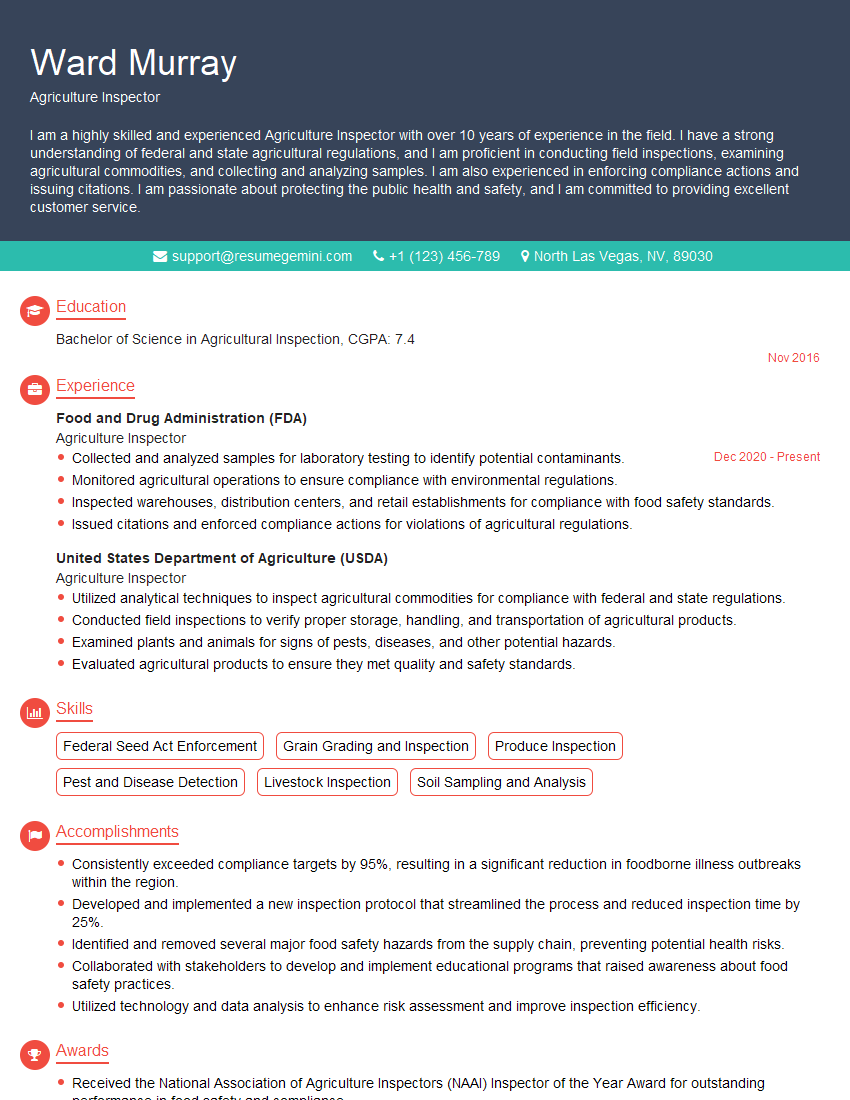
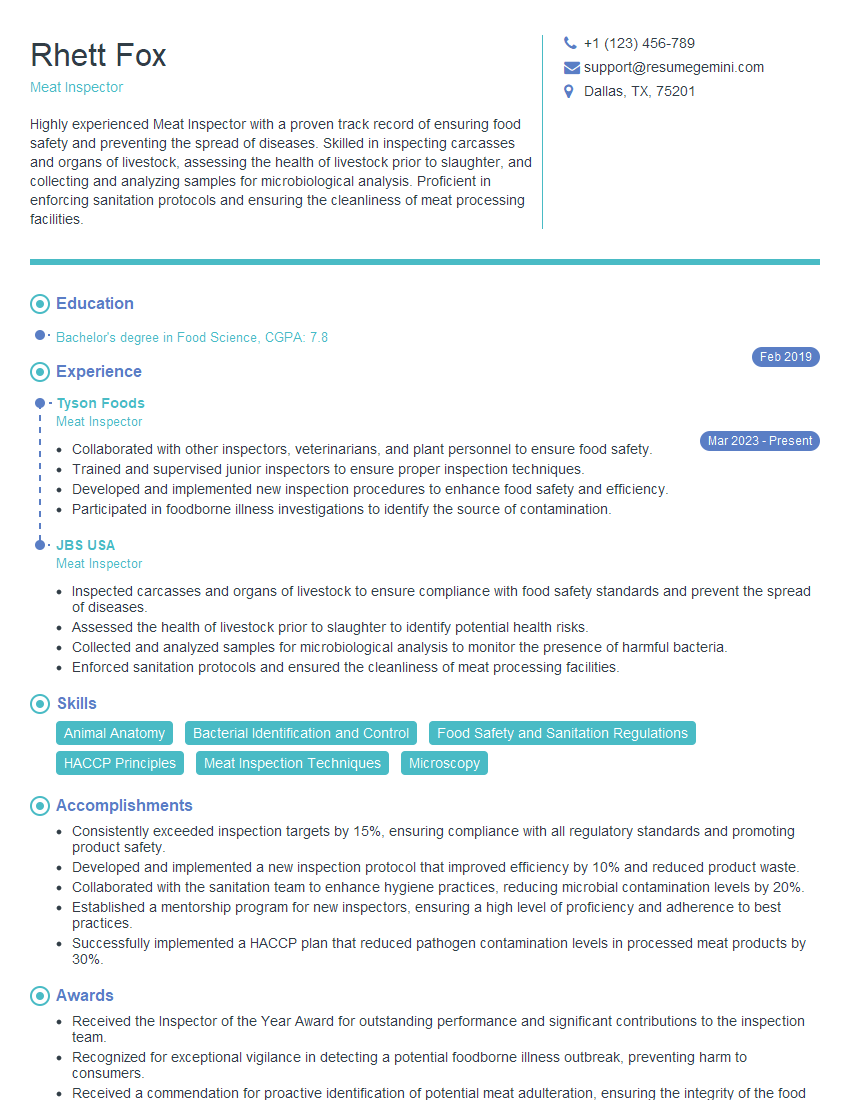
Mastering Meat Grading Standards is crucial for career advancement in the meat industry, opening doors to specialized roles and higher earning potential. A well-crafted resume is your key to unlocking these opportunities. Make sure your resume is ATS-friendly to ensure it gets noticed by potential employers. ResumeGemini is a trusted resource to help you build a professional and impactful resume that highlights your expertise in Meat Grading Standards. Examples of resumes tailored to this specific field are available to guide you through the process.


Explore more articles
Users Rating of Our Blogs
Share Your Experience
We value your feedback! Please rate our content and share your thoughts (optional).
What Readers Say About Our Blog
To the interviewgemini.com Webmaster.
Very helpful and content specific questions to help prepare me for my interview!
Thank you
To the interviewgemini.com Webmaster.
This was kind of a unique content I found around the specialized skills. Very helpful questions and good detailed answers.
Very Helpful blog, thank you Interviewgemini team.