Are you ready to stand out in your next interview? Understanding and preparing for Ethics and Standards of Interpreting Practice interview questions is a game-changer. In this blog, we’ve compiled key questions and expert advice to help you showcase your skills with confidence and precision. Let’s get started on your journey to acing the interview.
Questions Asked in Ethics and Standards of Interpreting Practice Interview
Q 1. Define confidentiality in the context of interpreting.
Confidentiality in interpreting means protecting the private information shared by individuals during an interpreting session. It’s a cornerstone of ethical practice, ensuring trust and safeguarding sensitive data. Think of it as a sacred oath – what is said in the interpreting setting stays within that setting, unless legally obligated to disclose otherwise.
This includes not only the content of the conversation but also the identities of the individuals involved. For example, I would never discuss a client’s medical diagnosis with anyone outside the interpreting session, even with colleagues. Similarly, I would never repeat details of a business negotiation or family conflict, unless expressly authorized by the client.
Breaches of confidentiality can have serious consequences, ranging from damaged professional reputation to legal repercussions. Maintaining confidentiality is not just an ethical obligation; it’s essential for building strong working relationships and fostering trust with clients.
Q 2. Explain the concept of impartiality in interpreting.
Impartiality in interpreting means remaining neutral and unbiased throughout the interpreting process. It requires avoiding any expression of personal opinions or preferences that might influence the message being conveyed. Imagine yourself as a transparent window: you let the message pass through without altering or coloring it.
This is achieved by accurately conveying both the linguistic and the cultural nuances of the messages, without injecting your own biases or interpretations. For instance, I would never subtly favor one party in a dispute by emphasizing certain aspects of their argument or downplaying others. My role is to be a faithful conduit, not an advocate.
Impartiality is crucial for ensuring fairness and equity in communication. It is important to maintain a professional distance and avoid expressing any personal judgments on the situation or the people involved. It builds trust with all parties involved, and prevents any misinterpretations resulting from personal leanings.
Q 3. Describe a situation where you had to prioritize accuracy over speed. How did you manage the situation?
During a medical interpreting assignment, a doctor was explaining a complex surgical procedure and its potential risks to a patient whose first language was Mandarin. The doctor used highly technical medical terms. Speed was important to keep the patient engaged, but accuracy was paramount to ensure the patient fully understood the implications of the procedure.
To manage this, I prioritized accuracy. I slowed the pace of interpreting, taking breaks to clarify complex terminology and ensure I had accurately captured the nuanced information. I used simpler language and visual aids where possible, and I confirmed understanding by asking the patient clarifying questions. While this approach took slightly longer, it ensured the patient received a clear and complete understanding of the situation, crucial for informed consent.
In situations where accuracy and speed are in conflict, accuracy always comes first. It’s better to take a little extra time to ensure a perfect interpretation than to sacrifice accuracy for speed, particularly in situations with high stakes.
Q 4. How do you handle requests to interpret information beyond your scope of competence?
If a client requests me to interpret information outside my scope of competence, my first step is to politely but firmly decline. I explain that I am not qualified to interpret in that specific area. This could involve technical terminology, specialized subject matter, or a language I don’t fluently interpret.
I would then recommend alternative solutions. This might involve referring the client to a colleague with relevant expertise, suggesting the use of a specialized dictionary, or proposing the use of written materials to bridge the communication gap. Honesty and transparency are key here, preventing potential miscommunication and ensuring the client receives accurate information.
It’s crucial to safeguard my professional reputation and ensure that the client’s needs are met properly. Attempting to interpret something beyond my capabilities would be unethical and potentially harmful.
Q 5. Describe your understanding of informed consent in interpreting.
Informed consent in interpreting means that all parties involved in a communication scenario—the interpreter, the client(s), and any other relevant parties—understand the purpose of the interpretation, their roles, and the limitations of the interpretation service. It’s about making sure everyone is on the same page.
This involves explaining the interpreter’s role as a neutral facilitator and clarifying any potential confidentiality issues. It also requires ensuring the client understands the limitations of the interpretation, for instance, that cultural nuances may not always be perfectly conveyed. The client needs to be aware of the potential risks and benefits of having an interpreter present.
Obtaining informed consent is essential to ensure ethical and responsible interpreting practices. It ensures that individuals are not only informed, but that they explicitly agree to the terms before the interpreting session begins.
Q 6. What are the ethical considerations when working with vulnerable populations?
When working with vulnerable populations—children, the elderly, people with disabilities, or those experiencing trauma—ethical considerations intensify. The interpreter has a heightened responsibility to ensure their well-being and safeguard their rights.
This includes being particularly mindful of confidentiality, ensuring appropriate communication methods are used, avoiding jargon or complex language, and creating a safe and comfortable environment. Special sensitivity is crucial, recognizing that these individuals may be more susceptible to manipulation or coercion.
Furthermore, it’s essential to be aware of power dynamics and potential biases that might exist. The interpreter must actively strive to protect vulnerable individuals from harm and ensure that they are treated with respect and dignity. If I have any concerns for a client’s safety, I am obligated to report it to the relevant authorities.
Q 7. How do you address an ethical conflict between the interpreter’s code of ethics and the client’s wishes?
Ethical conflicts between the interpreter’s code of ethics and a client’s wishes are challenging. My approach is always guided by the principles of the code of ethics, prioritizing the well-being and safety of all involved, while also seeking to find a solution that respects everyone’s concerns. I will always strive for ethical compliance.
First, I would attempt to address the conflict through open communication and professional dialogue. I would attempt to explain clearly why following the client’s wishes would violate my ethical obligations. If negotiation is unsuccessful, and the client insists on something unethical, I have a responsibility to withdraw from the assignment. This is a difficult, but necessary, step to uphold the integrity of the profession and safeguard against potential harm.
Documenting the situation thoroughly is critical. This ensures transparency and protects me from potential future allegations. I might seek guidance from professional organizations or legal counsel if needed.
Q 8. Explain the importance of cultural competence in interpreting.
Cultural competence in interpreting is paramount because it ensures accurate and effective communication across linguistic and cultural boundaries. It’s not just about knowing the languages; it’s about understanding the nuances of culture that influence communication, including non-verbal cues, social etiquette, and underlying values. A culturally competent interpreter recognizes that direct translations might not always convey the intended meaning due to cultural differences in communication styles.
For example, a direct translation of a seemingly simple phrase like “How are you?” might be inappropriate in certain cultures where it’s considered overly personal or intrusive. A culturally competent interpreter would adjust their approach, perhaps by using a more contextually appropriate greeting depending on the situation and the relationship between the individuals involved. This sensitivity prevents misinterpretations and fosters trust.
Another example involves interpreting legal proceedings. A lack of cultural understanding can lead to misunderstandings about legal concepts, or even inadvertently convey biases. A culturally competent interpreter will be mindful of how cultural differences might affect a client’s understanding of legal rights and procedures, ensuring they receive equitable access to justice.
Q 9. How do you manage interruptions or distractions during an interpreting assignment?
Managing interruptions or distractions during an interpreting assignment requires professionalism and quick thinking. My first priority is to maintain the integrity of the communication, ensuring that nothing is lost due to the disruption. If the interruption is minor, I might subtly pause and signal to the speaker to continue, once the distraction subsides. If the interruption is significant, I’ll politely address it. For instance, if someone enters the room inappropriately I might say something like, “Excuse me, we’re in the middle of a session. Could you wait or return later?”
Should the interruption significantly impact the flow of conversation, I might briefly summarize what was said prior to the interruption to bring everyone back up to speed. Maintaining a calm demeanor throughout the process is vital. My goal is to minimize the disruption’s impact while preserving the trust and confidence of all involved parties. I would also document the disruption in my notes, if appropriate, for future reference.
Q 10. Describe your process for preparing for an interpreting assignment.
My preparation for an interpreting assignment is methodical and thorough. It begins with a careful review of the assignment details – the subject matter, the participants, the setting, and the desired outcome. Research is key; I’ll familiarize myself with any relevant terminology or background information. For medical interpreting, this might involve researching specific medical conditions or procedures. For legal interpreting, it might include reviewing case files or legal statutes.
If possible, I reach out to the involved parties to discuss the assignment’s specifics and to understand their expectations. This allows me to tailor my approach to best meet their needs. For example, learning about cultural preferences, and anticipating potential communication challenges, proactively ensures a smoother experience. Finally, I ensure I have all the necessary equipment – pen, notepad, and any technological tools – and confirm the logistics, like meeting times and locations.
Preparation is not just about linguistic accuracy; it is about setting the stage for a successful and ethical interpretation, minimizing any potential misunderstandings or delays.
Q 11. How do you handle a situation where you witness unethical behavior from another interpreter?
Witnessing unethical behavior from another interpreter is a serious matter, requiring a measured and responsible response. My first step is to carefully document the incident, noting the time, location, and specific details of the unethical conduct. This documentation is crucial if I need to report the issue later. Then, I would consider the severity of the infraction. For minor issues, a private, informal conversation with the interpreter may be sufficient. However, for serious ethical breaches, such as misrepresentation, confidentiality breaches, or conflicts of interest, I would report the behavior through the appropriate channels. This might involve reporting to the interpreting agency or a professional organization’s ethics committee.
The key is to act with integrity, reporting the unethical behavior while respecting confidentiality as much as possible, only revealing necessary information to the appropriate governing bodies. My actions would be guided by the ethical code of conduct for interpreters, prioritizing the well-being of those involved and the integrity of the interpreting profession.
Q 12. Explain the difference between interpretation and translation.
While both interpretation and translation involve dealing with languages, they are distinct processes. Interpretation is the oral or sign language conversion of spoken or signed messages from one language to another. It happens in real-time, often in dynamic settings like meetings or medical consultations. Think of it as “on-the-fly” language conversion.Translation, on the other hand, involves the written conversion of a text from one language to another. It’s typically a more deliberate process, allowing for editing and revision. Think of translating a book, website, or legal document.
For instance, interpreting a doctor’s explanation of a patient’s condition requires immediate and accurate conversion of spoken words, while translating a legal contract requires careful attention to nuance and accuracy in the written word. Both are crucial for effective communication, but they demand different skill sets and approaches.
Q 13. What are some common ethical dilemmas faced by interpreters?
Interpreters frequently encounter ethical dilemmas. One common challenge is confidentiality. Maintaining the privacy of client information is paramount, and interpreters may face difficult situations where they need to uphold confidentiality even if faced with potentially harmful information. Another is impartiality. Interpreters should remain neutral and avoid imposing their own biases or opinions. This can be especially challenging in emotionally charged situations, such as legal proceedings or family disputes.
Competence is another area. Interpreters must honestly assess their capabilities and decline assignments if they lack the necessary skills or expertise in a specific field. This means prioritizing professional standards over the temptation of accepting work outside of one’s capabilities. Finally, advocacy can create an ethical dilemma. While interpreters should strive to provide accurate interpretation, they also need to navigate potential conflicts between advocacy for the client and their professional neutrality. It is vital to maintain professional boundaries and to avoid becoming overly involved in the client’s personal affairs.
Q 14. What resources do you consult to resolve ethical questions in your practice?
To resolve ethical questions in my practice, I consult several resources. The foremost are the codes of ethics established by professional interpreting organizations. These codes provide detailed guidelines for ethical conduct, offering frameworks for resolving dilemmas. I also refer to legal and regulatory frameworks relevant to my practice area, ensuring compliance with all applicable laws and regulations.
Furthermore, I seek advice from experienced colleagues and mentors within the interpreting community, utilizing their expertise and experience to gain perspectives on challenging ethical cases. Continuing education, attending workshops and conferences on ethics and professional development, keeps me up-to-date on best practices and emerging ethical considerations in the field. Finally, if necessary, I consult with legal counsel to obtain guidance on complex legal or regulatory issues.
Q 15. How do you maintain your professional development in the area of ethics and standards?
Maintaining ethical and professional standards in interpreting requires continuous learning and self-reflection. It’s not a one-time achievement but an ongoing commitment. My approach involves a multi-pronged strategy:
- Continuing Education: I regularly attend workshops, conferences, and webinars focused on ethics, new interpreting techniques, and relevant legal updates. This keeps me abreast of best practices and emerging challenges in the field. For example, recently I participated in a workshop on handling bias in interpreting, which significantly enhanced my awareness and skills.
- Mentorship and Peer Review: I actively seek feedback from experienced colleagues and mentors. Peer review allows for constructive criticism and helps identify areas for improvement in my ethical conduct and interpreting skills. A recent peer review highlighted the importance of explicitly clarifying ambiguities in source language to avoid misinterpretations.
- Professional Organizations: Membership in professional organizations like the [Name relevant professional organizations] provides access to resources, ethical guidelines, and networking opportunities. These organizations often host events dedicated to professional development and ethical dilemmas in interpreting.
- Self-Reflection and Case Studies: I regularly review my interpreting assignments, reflecting on my performance and identifying instances where I could have improved my ethical practice or interpreting accuracy. Studying case studies of ethical dilemmas in interpreting helps prepare me for similar situations in the future.
Career Expert Tips:
- Ace those interviews! Prepare effectively by reviewing the Top 50 Most Common Interview Questions on ResumeGemini.
- Navigate your job search with confidence! Explore a wide range of Career Tips on ResumeGemini. Learn about common challenges and recommendations to overcome them.
- Craft the perfect resume! Master the Art of Resume Writing with ResumeGemini’s guide. Showcase your unique qualifications and achievements effectively.
- Don’t miss out on holiday savings! Build your dream resume with ResumeGemini’s ATS optimized templates.
Q 16. What is your understanding of professional boundaries in interpreting?
Professional boundaries in interpreting are crucial to maintaining integrity and trust. They involve recognizing and respecting the limits of the interpreter’s role. This encompasses several key aspects:
- Impartiality: I remain neutral, avoiding any personal opinions or biases. My role is to convey the message accurately, not to influence the conversation.
- Confidentiality: I treat all information shared during interpreting assignments as strictly confidential. This includes respecting client privacy and not disclosing interpreted information to anyone not directly involved in the communication.
- Professional Distance: While maintaining a professional and courteous demeanor, I keep a healthy distance from clients, avoiding any social or personal relationships that could compromise my objectivity or create a conflict of interest.
- Scope of Practice: I only work within my areas of competence. If faced with a situation beyond my expertise (e.g., highly specialized medical terminology), I will decline the assignment or seek appropriate support.
- Appropriate Communication: My communication with clients is professional and respectful. I avoid informal language or inappropriate behavior.
Maintaining these boundaries ensures that my interpretations are unbiased, confidential, and ethically sound.
Q 17. How do you handle requests for privileged information?
Handling requests for privileged information requires adherence to strict confidentiality protocols. The core principle is that I do not disclose any information learned during an interpreting assignment without explicit consent from the client who shared that information. This applies to all forms of communication, including written or verbal information.
If a client inadvertently discloses privileged information, my first step is to politely but firmly remind them of the confidentiality aspect of our professional relationship. If the request for privileged information comes from a third party, I explain that I am bound by confidentiality agreements and cannot share any such information. In cases involving legal proceedings or subpoenas, I would seek legal counsel to understand my obligations and responsibilities under the law. I would never willingly compromise a client’s confidentiality, except when legally mandated.
Q 18. Describe a situation where you had to advocate for a client.
In one instance, I was interpreting for a refugee seeking asylum. The client, understandably nervous and unfamiliar with the legal processes, had difficulty articulating specific details of their persecution. Their narrative was fragmented and emotionally charged, making it difficult for the immigration officer to grasp the gravity of their situation.
I recognized the need to advocate for my client while remaining ethically neutral. I strategically paused the interpretation several times to clarify specific points. I carefully rephrased certain sections to ensure their narrative was coherent and understandable, making sure not to add any information or influence their testimony. I also helped the client structure their responses in a more organized and logical manner, ensuring that all crucial information was conveyed effectively. The immigration officer ultimately granted the asylum request, partly due to the clarity and coherence of the client’s testimony, which I helped shape during the interpretation.
Q 19. What strategies do you use to ensure accuracy in your interpreting?
Ensuring accuracy is paramount in interpreting. My strategies include:
- Thorough Preparation: Before any assignment, I research the subject matter if needed to gain sufficient background knowledge. This allows me to understand the context and terminology involved.
- Active Listening: I pay close attention to both the speaker’s words and their non-verbal cues. This helps me capture the full meaning and intent of the message.
- Note-Taking (for consecutive interpreting): I employ effective note-taking techniques, using symbols and abbreviations to capture the essence of the speech while listening.
- Verification: Whenever possible, I seek clarification from the speaker if I am unsure about a word, phrase, or concept. This is especially important in complex or ambiguous situations.
- Self-Monitoring: I regularly review my work, identifying areas for improvement and developing strategies for enhanced accuracy. This includes recording and reviewing my interpretations when appropriate.
- Continuous Learning: I continuously refine my linguistic and interpreting skills through ongoing education and practice.
Q 20. How do you maintain neutrality in situations where you have strong personal feelings about the subject matter?
Maintaining neutrality in emotionally charged situations requires a high degree of self-awareness and professional discipline. Even if I have strong personal feelings about a subject, my role is to convey the message objectively and accurately, not to inject my personal opinions. I accomplish this through:
- Mindfulness: I become aware of my own biases and feelings to avoid letting them influence my interpretation.
- Focus on the Message: I concentrate on the words and meaning being communicated, separating them from my personal sentiments.
- Controlled Delivery: I deliver the message with a neutral tone and avoid any emotional inflection that might betray my personal views.
- Professional Detachment: I maintain a professional distance from the subject matter, allowing me to interpret objectively without personal judgment.
- Seeking Supervision: If I find it exceptionally difficult to maintain neutrality, I may seek advice from a supervisor or mentor.
By employing these strategies, I strive to ensure that my interpretations are unbiased and reflect the speaker’s intended meaning, regardless of my personal feelings.
Q 21. Explain the concept of consecutive and simultaneous interpretation.
Consecutive and simultaneous interpretation are two primary modes of interpreting:
- Consecutive Interpretation: In this mode, the interpreter waits until the speaker completes a segment of speech (a sentence, paragraph, or longer) before rendering the interpretation. This allows the interpreter time to process the information, take notes if necessary, and then deliver the interpretation in the target language. It’s often used in meetings, interviews, and court settings.
- Simultaneous Interpretation: This involves interpreting the message in real time, as the speaker is delivering it. The interpreter listens to the source language through a headset and renders the interpretation simultaneously using a microphone. This technique is most commonly used in conferences, international broadcasts, and other situations requiring immediate and continuous interpretation. Simultaneous interpreting demands exceptional linguistic skills and concentration.
Both modes require different skill sets and preparation strategies. Consecutive interpreting emphasizes note-taking and comprehension, while simultaneous interpreting necessitates rapid processing and excellent memory.
Q 22. How do you ensure clear communication between parties in diverse linguistic and cultural contexts?
Ensuring clear communication across linguistic and cultural divides requires a multifaceted approach. It’s not just about accurate translation; it’s about understanding and conveying the nuances of meaning. I begin by establishing rapport with both parties, acknowledging their cultural backgrounds and communication styles. This sets a foundation of trust and mutual understanding. Then, I employ techniques like:
- Cultural Mediation: I explain cultural differences that might affect interpretation of language, such as differing nonverbal communication styles or indirect speech patterns.
- Confirmation Checks: Regularly, I ask for clarification and confirmation from both parties to make sure everyone is on the same page, using phrases like, “To confirm, you mean…” or “Is my understanding correct that…”
- Paraphrasing: I rephrase complex ideas in simpler terms to ensure comprehension. This helps bridge gaps in understanding caused by language or cultural differences.
- Adapting Register: I adjust my language to match the context, whether it is formal or informal. This shows cultural sensitivity and builds rapport.
For example, in a medical setting, I might need to explain complex medical terms in simple, culturally appropriate language to a patient who is a non-native English speaker. In a legal setting, I might need to ensure precise wording is conveyed to both parties to avoid misunderstandings.
Q 23. What are the legal implications of breaching confidentiality in interpreting?
Breaching confidentiality in interpreting carries serious legal and ethical ramifications. The penalties can vary depending on jurisdiction and the nature of the disclosed information, but they often include:
- Civil lawsuits: Individuals harmed by the breach can sue for damages, potentially leading to significant financial penalties.
- Professional sanctions: Professional interpreting organizations can revoke certifications or memberships, effectively ending or severely impacting your career.
- Criminal charges: In some cases, especially involving highly sensitive information like medical records or legal proceedings, criminal charges like violation of privacy laws could be filed, resulting in fines or imprisonment.
The consequences stem from the sacred trust placed in interpreters. Clients share highly personal and sensitive details assuming their confidentiality will be maintained. A breach of this trust not only undermines the client’s rights but also erodes public trust in the interpreting profession itself.
Q 24. Describe your experience with using technology in interpreting.
I have extensive experience utilizing technology in interpreting, embracing both video conferencing platforms and specialized interpreting software. Video Remote Interpreting (VRI) has become a vital tool, allowing me to connect with clients remotely, expanding access to language services globally. I’m proficient in using platforms like Zoom and Skype for interpreting. Additionally, I’m familiar with software that provides features such as real-time transcription, glossary creation, and secure data storage, enhancing efficiency and accuracy.
For example, I recently utilized VRI for a medical appointment involving a patient who lived in a remote area. The software allowed for seamless communication between the doctor and patient, overcoming geographical barriers. Another instance involved using transcription software to provide a written record of a meeting for later review and reference.
Q 25. How do you handle a situation where you are asked to interpret outside your language proficiency?
If asked to interpret outside my language proficiency, my absolute priority is ethical conduct. I would politely but firmly refuse the assignment. It is unethical and potentially harmful to attempt interpretation in a language you are not fully competent in. Misinterpretations can have severe consequences depending on the context. Instead of accepting, I would:
- Recommend a qualified interpreter: I would provide the client with a list of certified interpreters who possess the necessary linguistic skills.
- Explain the potential risks: I would clearly communicate the dangers of inaccurate interpretation to the client, emphasizing the importance of finding a proficient interpreter.
- Suggest alternative solutions: Depending on the situation, I might suggest using written materials or a translation service for less time-sensitive communication.
My professional integrity demands I prioritize accuracy and ethical behavior over the temptation to take on an assignment I’m not qualified for. The potential for harm far outweighs any temporary gain.
Q 26. What are some key elements of effective interpreter note-taking?
Effective interpreter note-taking is a crucial skill, especially for consecutive interpreting. It’s not about verbatim transcription, but creating a meaningful record to aid memory and ensure accurate rendering of the source message. Key elements include:
- Symbolism and abbreviations: Utilizing symbols and short forms for frequently used words or phrases to maximize efficiency.
- Keywords and core concepts: Focusing on capturing the essence of the message rather than every single word.
- Organizational structure: Employing clear visual organization – using lines, numbers, or other markers to structure ideas and keep track of the speaker’s flow of thought.
- Regular practice: Consistent practice of note-taking is crucial to develop and improve the speed and accuracy of note-taking.
Example: Instead of writing “The defendant strongly denies all allegations,” I might use symbols and abbreviations like “Def. – str. denies all allegs.”
Q 27. What are the professional responsibilities of an interpreter when dealing with potentially sensitive information?
When dealing with sensitive information, an interpreter’s professional responsibilities are paramount. These responsibilities include:
- Confidentiality: Maintaining absolute confidentiality of all information shared during interpreting assignments. This includes verbal, written, or visual information.
- Impartiality: Remaining neutral and objective, avoiding any personal opinions or biases. The interpreter’s role is to convey information accurately, not to influence the conversation.
- Accuracy: Ensuring the accurate conveyance of information, including nuances and subtleties, without omission or addition.
- Professional boundaries: Maintaining professional boundaries with all parties involved. Avoiding inappropriate relationships or disclosing personal information.
- Ethical decision-making: Being aware of and adhering to relevant ethical guidelines and codes of conduct.
For example, in a medical setting, an interpreter must keep information about a patient’s diagnosis, treatment, or personal history strictly confidential.
Q 28. Describe a time you had to explain an ethical guideline to a client or colleague.
In a recent legal interpreting assignment, I had to explain the importance of impartiality to a colleague. He was interpreting a contentious custody case and subtly favored one parent’s statements in his interpretation. I approached him privately and explained that our professional obligation demands neutrality; we must convey the meaning of both sides accurately, without favoring one party over another. I reminded him of the ethical code that prohibits bias and the potentially devastating consequences of influencing the legal proceedings due to personal preference. He understood and appreciated the feedback, and I offered to mentor him in future cases to avoid similar situations.
Key Topics to Learn for Ethics and Standards of Interpreting Practice Interview
- Confidentiality: Understanding the importance of maintaining client confidentiality and the legal ramifications of breaches. Practical application: Analyzing scenarios involving sensitive information and determining appropriate actions.
- Impartiality and Objectivity: Maintaining neutrality and avoiding bias in interpretation. Practical application: Recognizing potential biases and implementing strategies to mitigate their influence on your interpretation.
- Accuracy and Completeness: Ensuring faithful rendition of the source message, including nuances and cultural context. Practical application: Developing techniques for handling ambiguous or complex information while maintaining accuracy.
- Professional Conduct: Adhering to professional codes of conduct and ethical guidelines. Practical application: Evaluating hypothetical scenarios to determine the most ethical course of action.
- Role Boundaries: Understanding the limits of an interpreter’s role and avoiding inappropriate involvement in client matters. Practical application: Differentiating between appropriate and inappropriate interactions with clients and other stakeholders.
- Cultural Competence: Demonstrating awareness and sensitivity to diverse cultural backgrounds and communication styles. Practical application: Analyzing how cultural differences might impact interpretation and adapting strategies accordingly.
- Professional Development: The importance of ongoing learning and professional development to maintain competency and ethical standards. Practical application: Identifying resources for continuing education and professional growth in the field.
Next Steps
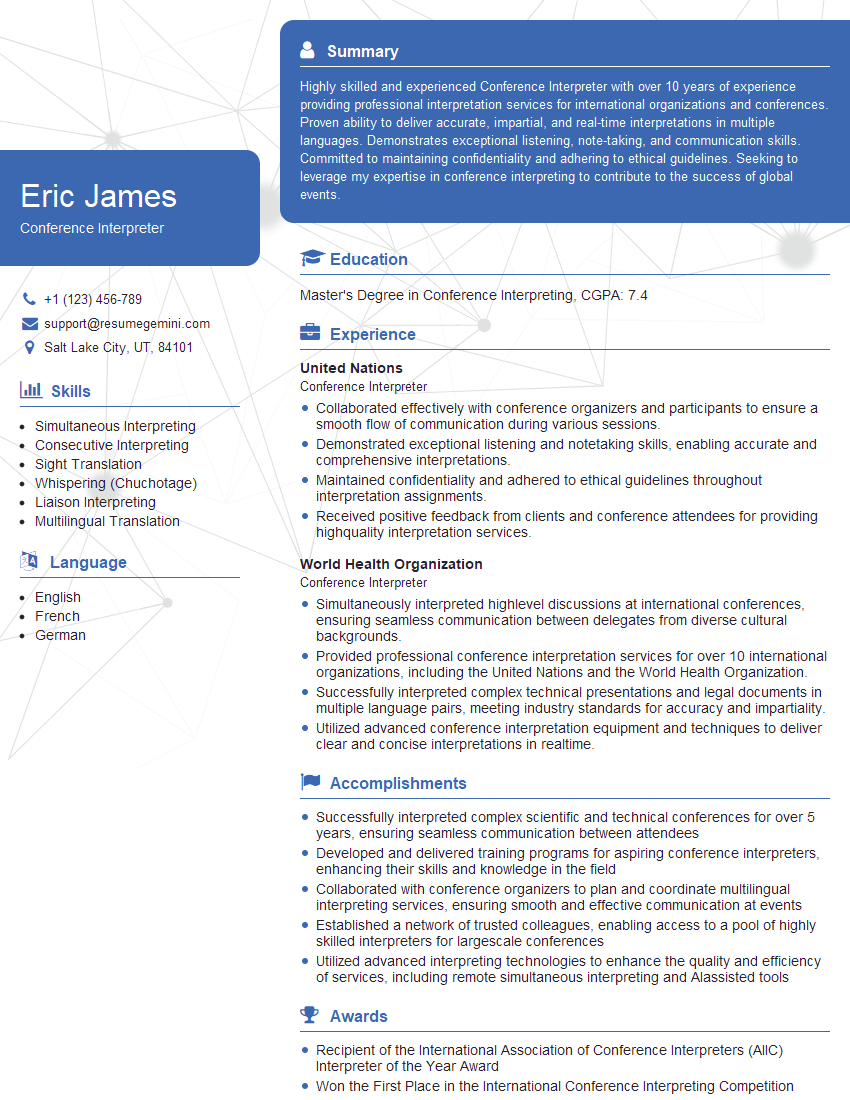
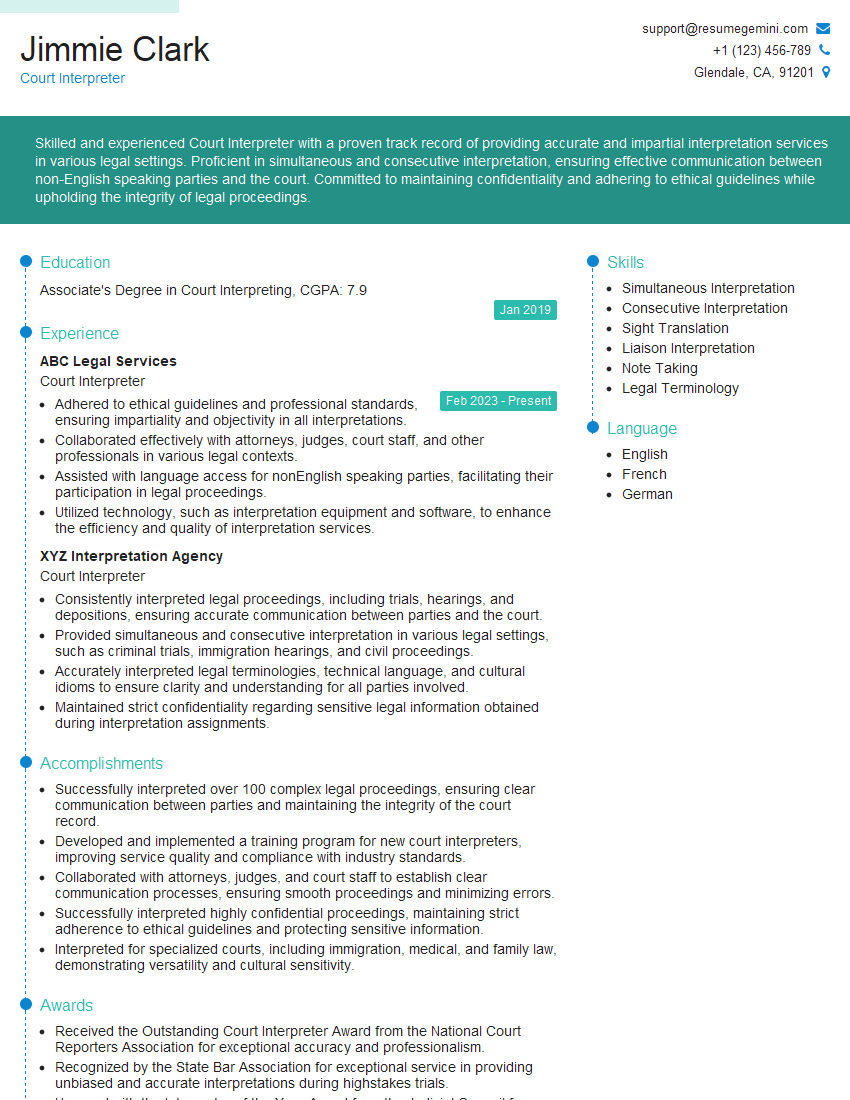
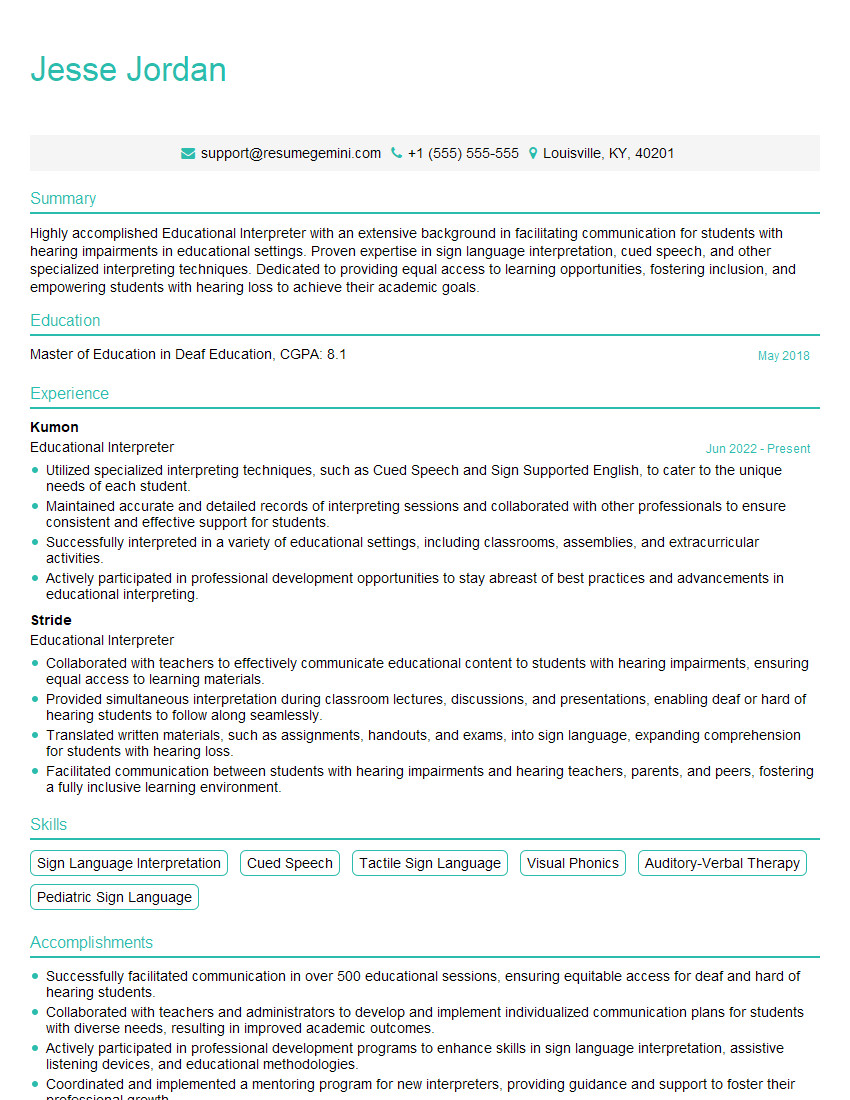
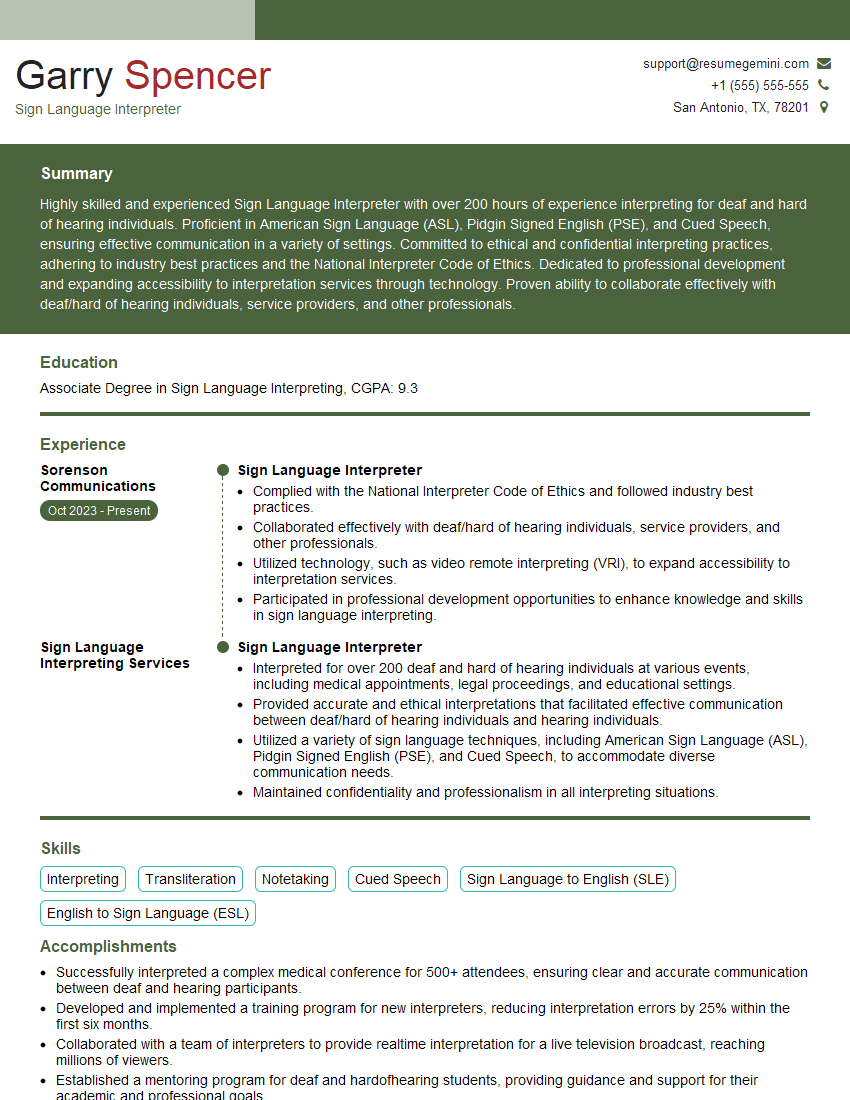
Mastering Ethics and Standards of Interpreting Practice is crucial for building a successful and reputable career. A strong understanding of these principles demonstrates professionalism and commitment to ethical conduct, setting you apart from other candidates. To further enhance your job prospects, focus on creating an ATS-friendly resume that highlights your skills and experience effectively. ResumeGemini is a trusted resource for building professional resumes that get noticed. We offer examples of resumes tailored to Ethics and Standards of Interpreting Practice to help you get started. Take the next step towards your dream career today!
Explore more articles
Users Rating of Our Blogs
Share Your Experience
We value your feedback! Please rate our content and share your thoughts (optional).
What Readers Say About Our Blog
To the interviewgemini.com Webmaster.
Very helpful and content specific questions to help prepare me for my interview!
Thank you
To the interviewgemini.com Webmaster.
This was kind of a unique content I found around the specialized skills. Very helpful questions and good detailed answers.
Very Helpful blog, thank you Interviewgemini team.