Interviews are opportunities to demonstrate your expertise, and this guide is here to help you shine. Explore the essential Advocacy and Legislative Initiatives interview questions that employers frequently ask, paired with strategies for crafting responses that set you apart from the competition.
Questions Asked in Advocacy and Legislative Initiatives Interview
Q 1. Describe your experience developing and implementing advocacy strategies.
Developing and implementing advocacy strategies is a multifaceted process that requires a deep understanding of the target audience, the issue at hand, and the political landscape. It begins with identifying the problem and defining clear, measurable goals. For example, in a campaign advocating for increased funding for public schools, a goal might be to secure a 10% budget increase within the next fiscal year.
Next, I develop a comprehensive strategy that outlines the tactics we’ll use to achieve these goals. This might include grassroots mobilization (organizing community events, petitions, etc.), media outreach (press releases, op-eds, social media campaigns), direct lobbying (meetings with legislators and their staff), and coalition building (partnering with organizations sharing similar goals). For the school funding campaign, this could involve mobilizing parents and teachers to contact their representatives, securing media coverage highlighting the negative impact of underfunding, and forming a coalition with other organizations advocating for education reform.
Implementation involves meticulously tracking progress, adapting the strategy based on feedback and results, and ensuring consistent communication across all involved parties. We constantly monitor the effectiveness of our tactics and make data-driven adjustments. For instance, if our media outreach is proving ineffective, we might shift resources towards more direct lobbying efforts. The key is iterative refinement based on real-time analysis.
Q 2. Explain your understanding of the legislative process.
My understanding of the legislative process is comprehensive, encompassing everything from bill introduction to enactment. It starts with the drafting of a bill, which can originate in either the House of Representatives or the Senate. The bill then goes through committees, where it undergoes scrutiny and potential amendments.
After committee consideration, the bill proceeds to the floor of the respective chamber for debate and a vote. If passed, it then moves to the other chamber, where the process repeats. If differences exist between the House and Senate versions, a conference committee is formed to reconcile them. Finally, once both chambers approve the reconciled version, the bill is sent to the executive branch for signature or veto. A veto can be overridden by a supermajority vote in both chambers.
I understand the importance of navigating this process strategically, understanding deadlines, identifying key players (committee chairs, influential lawmakers), and recognizing opportunities to influence the outcome at each stage. For instance, providing timely and relevant data to committee members during their review is crucial for increasing the likelihood of a bill’s passage.
Q 3. How do you identify and prioritize legislative issues?
Identifying and prioritizing legislative issues requires a strategic approach that blends data analysis with political acumen. I begin by assessing the needs and priorities of the community or organization I represent, using data to identify pressing problems and potential solutions. This might involve analyzing statistics on poverty rates, crime rates, or healthcare access, depending on the advocacy focus.
Simultaneously, I monitor the political climate, identifying areas where legislative action is both feasible and likely to yield significant impact. This involves tracking proposed legislation, understanding the priorities of elected officials, and anticipating potential policy shifts. For example, if there’s a growing public awareness and political will for climate action, that becomes a high priority area for advocacy.
I then prioritize issues based on their potential impact, feasibility of success, and alignment with our organizational goals. We use a matrix to rank issues based on these criteria, allowing for a data-driven approach to prioritize efforts where we can make the most significant difference.
Q 4. Describe your experience building coalitions and partnerships.
Building coalitions and partnerships is fundamental to effective advocacy. It leverages the collective resources and influence of multiple organizations to amplify our impact and achieve common goals. I start by identifying organizations that share similar interests and values, and whose goals align with our advocacy objectives.
I then engage in relationship-building, establishing trust and mutual understanding through open communication and collaborative planning. This involves sharing information, resources, and strategies, and working together to develop shared goals and objectives. For example, in a campaign to protect environmental resources, I might collaborate with conservation groups, community organizations, and businesses committed to sustainability.
Maintaining strong relationships within the coalition requires regular communication, transparency, and shared leadership. We use collaborative platforms and regular meetings to keep all partners informed and engaged. This collaborative approach makes advocacy efforts more effective and sustainable.
Q 5. How do you track legislation and regulatory changes?
Tracking legislation and regulatory changes requires a proactive and multifaceted approach. I utilize a combination of legislative tracking databases (e.g., state legislative websites, federal bill tracking systems), email alerts from relevant organizations, and direct engagement with government agencies. These tools provide real-time updates on bills, regulations, and committee hearings.
In addition, I maintain close relationships with legislative staff and agency officials, which provides insider information and allows for proactive engagement. This direct access often allows us to get early alerts about potential legislative or regulatory changes. Finally, we use sophisticated software to track relevant documents and deadlines, ensuring we remain informed and responsive throughout the legislative process.
Regular review and analysis of this information enables us to anticipate potential challenges and opportunities and to tailor our advocacy efforts accordingly.
Q 6. How do you communicate effectively with lawmakers and stakeholders?
Effective communication with lawmakers and stakeholders requires clarity, conciseness, and a deep understanding of their perspectives. I tailor my messaging to the specific audience, focusing on the aspects of the issue that are most relevant to their interests and priorities. For example, when communicating with a legislator, I emphasize the impact on their constituents; when talking to business leaders, I highlight the economic implications.
I utilize a variety of communication channels, including in-person meetings, emails, phone calls, letters, and presentations, to ensure the message reaches the right people in the most effective way. Visual aids like charts and graphs are often used to simplify complex information. Building personal relationships with key stakeholders fosters trust and enhances the receptiveness to our message.
Active listening is crucial to understanding the concerns and perspectives of others and adjusting our approach accordingly. Responding promptly to inquiries and demonstrating responsiveness further builds trust and strengthens relationships.
Q 7. How do you measure the success of an advocacy campaign?
Measuring the success of an advocacy campaign requires a clearly defined set of metrics aligned with the campaign’s goals. These metrics should be both qualitative and quantitative. Quantitative metrics might include the number of bills passed, budget allocations secured, policy changes implemented, or public awareness changes as measured by surveys or social media engagement.
Qualitative metrics assess the broader impact, such as shifts in public opinion, strengthened community partnerships, or increased political engagement. For instance, in a public health campaign, we might measure success based on changes in policy, increased public awareness, and shifts in behavior (e.g., increased vaccination rates). Tracking these metrics allows us to evaluate the effectiveness of our strategies and to make necessary adjustments throughout the campaign.
Post-campaign analysis, including detailed reports and presentations, is used to document the accomplishments, identify lessons learned, and inform future advocacy efforts. This data-driven approach ensures continuous improvement and maximizes the long-term impact of our work.
Q 8. How do you adapt your approach to different legislative environments?
Adapting to different legislative environments is crucial for successful advocacy. It requires understanding the unique political landscape, including the dominant ideologies, the power dynamics between various legislative bodies and committees, and the specific rules and procedures governing the legislative process. My approach involves a three-pronged strategy:
Research and Analysis: Before engaging, I thoroughly research the target legislature’s composition, past legislative successes and failures relevant to my advocacy area, key players (legislators, committee chairs, staff), and the prevailing political climate. This informs my messaging and strategic choices.
Relationship Building: I prioritize building relationships with key legislators and staff, regardless of their political affiliation. Understanding their perspectives and priorities is paramount. This allows for tailored communication and a more receptive audience for my advocacy efforts. For example, I might focus on bipartisan support for a bill by highlighting its economic benefits, rather than focusing solely on ideological arguments.
Strategic Adaptation: I tailor my advocacy tactics to the specific legislative environment. This may involve adjusting the messaging, the coalition-building strategy, or even the legislative vehicle used (e.g., a bill, a resolution, or an amendment). In a highly partisan environment, building broader coalitions might be crucial; in a more collaborative environment, a targeted approach might suffice.
Q 9. Describe your experience working with diverse stakeholders.
Working with diverse stakeholders is fundamental to effective advocacy. My experience includes collaborating with individuals and groups from various backgrounds, including community members, businesses, non-profit organizations, academics, and government officials. I employ several strategies to ensure successful collaborations:
Active Listening and Empathy: I actively listen to understand the perspectives and concerns of all stakeholders, even those with opposing viewpoints. Showing empathy and respect fosters trust and collaboration.
Collaborative Communication: I employ clear and concise communication, ensuring that messages are tailored to the specific audience. I utilize various communication channels, including meetings, emails, presentations, and social media, to reach diverse stakeholders effectively.
Conflict Resolution: I am adept at mediating disagreements and finding common ground among stakeholders with competing interests. This often involves identifying shared goals and framing the issue in a way that appeals to everyone’s priorities.
Example: In a recent campaign, I worked with environmental groups, local businesses, and community leaders to advocate for sustainable development. Each group had distinct concerns, yet by focusing on the shared goal of economic growth alongside environmental protection, we were able to forge a powerful and successful coalition.
Q 10. How do you handle opposition and resistance to your advocacy efforts?
Handling opposition and resistance requires a strategic and adaptable approach. It’s not about avoiding conflict but about managing it constructively. My strategy involves:
Understanding the Opposition: First, I identify the source and nature of the opposition. What are their concerns? What are their arguments? Understanding their perspective allows me to tailor my response effectively.
Data-Driven Rebuttal: I use evidence and data to counter inaccurate or misleading claims made by opponents. Strong factual evidence can effectively undermine their arguments.
Building Alliances: I actively seek out supporters and allies who can help counter the opposition. This can include individuals, organizations, or media outlets.
Framing the Narrative: I carefully craft the narrative around the issue, emphasizing the benefits of the proposed policy or action and addressing potential concerns. This helps to shape public opinion and gain support.
Strategic Compromise: In some cases, compromising on certain aspects of the proposal might be necessary to achieve a broader consensus and secure at least partial success. This doesn’t mean abandoning core principles, but rather finding mutually agreeable solutions.
Q 11. Explain your understanding of different advocacy tactics.
Advocacy tactics encompass a wide range of strategies and techniques. My understanding encompasses several key approaches:
Grassroots Advocacy: Engaging and mobilizing community members to influence policymakers (discussed in more detail below).
Lobbying: Directly influencing policymakers through meetings, written communications, and testimony.
Public Awareness Campaigns: Educating the public about an issue and mobilizing public opinion to pressure policymakers.
Media Advocacy: Using media outlets to disseminate information and shape public perception.
Coalition Building: Forming alliances with other organizations and individuals to amplify the advocacy message and increase influence.
Legal Advocacy: Using legal means such as lawsuits or regulatory challenges to influence policy.
The choice of tactic depends on the specific issue, the legislative environment, and the available resources.
Q 12. Describe your experience with grassroots advocacy.
Grassroots advocacy is about empowering citizens to participate directly in the political process. My experience in this area includes organizing community meetings, mobilizing volunteers for phone banking and letter-writing campaigns, and training activists on effective communication techniques. One successful campaign involved organizing a petition drive in support of a local park initiative. We utilized social media, local newspapers, and community events to garner signatures and raise public awareness, ultimately leading to the securing of the necessary funding for the park’s development.
Key elements of successful grassroots advocacy include identifying and engaging key community leaders, developing clear and compelling messaging, and providing opportunities for citizens to actively participate and feel ownership of the campaign. It’s about building a movement from the ground up.
Q 13. How do you use data to inform your advocacy work?
Data plays a critical role in informing my advocacy work. I use data to:
Identify the Problem: Data helps to quantify the scope and impact of the issue, demonstrating the need for policy change. For example, statistics on unemployment rates or pollution levels can highlight the severity of a problem.
Support Policy Arguments: Data provides evidence to support the proposed policy solutions. This might include studies demonstrating the effectiveness of similar programs in other jurisdictions or economic modeling predicting the positive impact of a proposed policy.
Measure Impact: Data is crucial for assessing the effectiveness of advocacy efforts and identifying areas for improvement. This might involve tracking changes in legislation, public opinion, or the relevant outcomes after a policy change.
Example: When advocating for increased funding for public education, I used data on graduation rates, test scores, and teacher-student ratios to demonstrate the need for investment and show the potential return on investment of proposed policy changes.
Q 14. How do you manage competing priorities in your advocacy work?
Managing competing priorities requires a systematic approach. I prioritize my advocacy efforts based on several factors:
Urgency and Impact: I prioritize issues with high urgency and potential for significant positive impact. This often involves assessing the potential consequences of inaction.
Feasibility: I evaluate the likelihood of success, considering the political climate, available resources, and potential opposition. I focus on achievable goals, even if they are incremental steps toward a larger objective.
Alignment with Values and Mission: I focus on issues that align with my organization’s mission and values, ensuring consistency and maximizing impact.
Resource Allocation: I allocate time, personnel, and financial resources strategically to maximize the overall impact of our advocacy efforts, focusing on high-priority areas and leveraging existing expertise. This may involve using a prioritization matrix or similar tools to make objective decisions.
Regular review and adjustment of the prioritization scheme is crucial as the situation changes and new information becomes available.
Q 15. Describe your experience writing policy briefs and memos.
Writing effective policy briefs and memos requires a keen understanding of the audience and a concise, data-driven approach. My experience involves crafting documents that clearly articulate complex policy issues, present compelling evidence supporting specific recommendations, and anticipate potential objections. I begin by thoroughly researching the topic, identifying key stakeholders and their perspectives, and defining the central problem or opportunity.
For example, in a recent project advocating for increased funding for early childhood education, I structured my policy brief to first highlight the long-term economic benefits of early intervention, supported by statistical data and peer-reviewed studies. Then, I addressed potential counterarguments regarding budget constraints by proposing a phased implementation plan and exploring alternative funding sources. My memos, on the other hand, are often more concise and action-oriented, serving as internal communications to summarize key findings and recommend specific actions to decision-makers.
I always strive to maintain a clear, objective tone while ensuring the writing is engaging and persuasive. Using visual aids like charts and graphs is also critical in making complex data easily digestible for the intended audience. The success of my briefs and memos is measured by their influence on policy decisions and the positive feedback I receive from policymakers and stakeholders.
Career Expert Tips:
- Ace those interviews! Prepare effectively by reviewing the Top 50 Most Common Interview Questions on ResumeGemini.
- Navigate your job search with confidence! Explore a wide range of Career Tips on ResumeGemini. Learn about common challenges and recommendations to overcome them.
- Craft the perfect resume! Master the Art of Resume Writing with ResumeGemini’s guide. Showcase your unique qualifications and achievements effectively.
- Don’t miss out on holiday savings! Build your dream resume with ResumeGemini’s ATS optimized templates.
Q 16. How do you build and maintain relationships with key decision-makers?
Building and maintaining relationships with key decision-makers is a crucial aspect of successful advocacy. It’s not just about networking; it’s about cultivating trust and demonstrating consistent value. I approach relationship building strategically. First, I invest time in understanding their priorities, perspectives, and working styles. I do this through research, informal conversations, and attending relevant events.
Secondly, I consistently provide them with high-quality, relevant information – well-researched policy briefs, timely updates on relevant legislation, and thoughtful analyses of potential impacts. I make myself readily available to answer questions and provide support. Thirdly, I maintain regular communication, not just when I need something, but proactively sharing relevant information and insights.
Think of it like gardening – you don’t just plant seeds and walk away. You nurture them with consistent attention and care. Similarly, maintaining relationships involves ongoing engagement, active listening, and demonstrating genuine respect for their time and expertise. For instance, I regularly send personalized updates to legislators on issues of mutual interest, ensuring that our interactions are not transactional but rather built on mutual respect and a shared commitment to positive change.
Q 17. How do you handle difficult conversations with stakeholders?
Difficult conversations with stakeholders are inevitable in advocacy. My approach centers on active listening, empathy, and finding common ground. Before engaging in such conversations, I prepare thoroughly, anticipating potential points of contention and formulating responses that address concerns respectfully.
During the conversation, I focus on understanding their perspective, even if I don’t agree with it. I use phrases like, “I understand your concern about…” or “Can you help me understand your perspective better?” This helps de-escalate tension and builds trust. I avoid interrupting or becoming defensive, focusing instead on finding shared goals or values.
For instance, when facing opposition to a proposed environmental regulation from a business group, I might acknowledge their concerns about potential economic impacts, while emphasizing the long-term benefits of environmental protection and offering potential solutions that mitigate negative impacts. The key is to approach these conversations as opportunities to build understanding and find mutually acceptable solutions. Sometimes, compromise is necessary, and finding that middle ground can lead to better outcomes for everyone involved.
Q 18. How do you manage competing demands and time constraints?
Managing competing demands and time constraints is a constant challenge in advocacy. I employ several strategies to stay organized and prioritize effectively. First, I utilize project management tools to track deadlines, tasks, and progress. Second, I prioritize tasks based on their urgency and importance, using methods like the Eisenhower Matrix (urgent/important). This helps me focus on high-impact activities and delegate or defer less critical tasks.
Third, I proactively communicate with stakeholders about potential delays or challenges, managing their expectations realistically. Fourth, I break down large projects into smaller, manageable steps, making the overall task less overwhelming. Finally, I set realistic deadlines, acknowledging that unforeseen issues can arise, and build in buffer time to accommodate unexpected delays. Effective time management isn’t just about working harder; it’s about working smarter, strategically prioritizing tasks, and communicating effectively with stakeholders about timelines and progress.
Q 19. Describe your experience in budget analysis and resource allocation.
My experience with budget analysis and resource allocation involves thoroughly reviewing budgets, identifying areas for improvement, and justifying requests for increased funding. This requires a deep understanding of both the program’s goals and the overall budget context. I utilize data analysis techniques to demonstrate program effectiveness and the return on investment for proposed funding increases. I also explore alternative funding mechanisms, such as grants, partnerships, and private donations.
For example, in a recent project, I analyzed the budget for a community health program, identifying inefficiencies and proposing cost-saving measures. Simultaneously, I presented a compelling case for increased funding based on the program’s significant impact on public health outcomes, using data to demonstrate a strong return on investment. My approach is data-driven and results-oriented, ensuring that resources are allocated effectively to achieve maximum impact.
Q 20. How do you navigate ethical considerations in advocacy work?
Ethical considerations are paramount in advocacy work. Transparency, honesty, and accountability are fundamental principles that guide my actions. I ensure all information presented is accurate and factual, avoiding misleading or manipulative tactics. I clearly disclose any potential conflicts of interest and strive to maintain objectivity in my analyses and recommendations.
For instance, if I receive funding from a specific organization, I ensure full transparency about this funding source in all communications. Furthermore, I prioritize the public interest over any personal or organizational agenda, recognizing that advocacy’s purpose is to serve the broader community. Maintaining strong ethical standards builds trust with stakeholders and strengthens the credibility of my work.
Q 21. How do you stay current on policy developments?
Staying current on policy developments is critical for effective advocacy. I employ a multi-pronged approach to ensure I am well-informed. This includes regularly monitoring relevant news sources, subscribing to policy newsletters and journals, attending conferences and workshops, and actively engaging with professional networks.
I also utilize legislative tracking tools and databases to monitor the progress of bills and regulations. Furthermore, I maintain strong relationships with individuals within relevant government agencies and think tanks, ensuring access to timely information and insights. Staying informed is not a passive activity; it requires proactive engagement and a commitment to continuous learning.
Q 22. Describe your experience using social media for advocacy purposes.
Social media is an indispensable tool for modern advocacy. My experience involves leveraging platforms like Twitter, Facebook, and Instagram to build community, raise awareness, and mobilize support for legislative initiatives. This includes crafting compelling narratives, utilizing relevant hashtags (e.g., #ClimateActionNow, #EducationReform), and engaging directly with constituents and policymakers. For example, during a campaign to increase funding for public libraries, we used Facebook to create targeted ads reaching specific demographics, highlighting the positive impact of libraries on the community. We also used Instagram to showcase photos and videos of library events, emphasizing the community engagement aspect. Furthermore, Twitter was critical for rapid response to breaking news related to the issue and to directly engage with legislators and their staff through mentions and direct messages.
Beyond simply broadcasting information, I focus on interactive engagement. This means responding to comments, running polls to gauge public opinion, and fostering two-way communication to build trust and credibility. Analyzing social media metrics – such as reach, engagement, and sentiment – helps us measure campaign effectiveness and adapt our strategies accordingly. This data-driven approach allows for continuous improvement and optimization.
Q 23. How do you prepare for and participate in legislative hearings?
Preparing for legislative hearings is a meticulous process requiring thorough research, strategic planning, and effective communication. I begin by deeply understanding the proposed legislation, reviewing relevant documents, and identifying key arguments for or against the bill. This includes anticipating potential questions from legislators and preparing concise, evidence-based answers.
My preparation involves collaborating with the advocacy team to identify key talking points and develop a cohesive message. We often practice delivering testimony through mock hearings, refining our responses and addressing potential challenges. During the hearing itself, I maintain a professional demeanor, speak clearly and confidently, and effectively present our arguments with supporting data and examples. I also ensure that my testimony stays focused on the core issue and remains respectful, even when facing challenging questions. After the hearing, I follow up with relevant legislators and staff, providing additional information if needed and continuing the dialogue.
Q 24. Describe your experience developing and executing lobbying strategies.
Developing and executing lobbying strategies requires a multifaceted approach combining research, relationship-building, and strategic communication. I begin by clearly defining the advocacy goals, identifying key decision-makers, and assessing their political priorities. This involves in-depth research on legislators’ voting records, public statements, and committee assignments to understand their potential positions on the issue.
Next, I develop a comprehensive strategy, identifying key stakeholders and determining the most effective methods for reaching them. This might involve direct lobbying (meeting with legislators and staff), grassroots advocacy (mobilizing public support), coalition building (partnering with like-minded organizations), and public awareness campaigns. For example, in a campaign advocating for stricter environmental regulations, we engaged in direct lobbying with key legislators, while simultaneously mobilizing grassroots support through a social media campaign and organizing community events. We also built a coalition with several environmental groups to amplify our message and increase our influence.
Throughout the process, I carefully track progress, adapt the strategy based on feedback and changing circumstances, and maintain meticulous records of all communications and meetings. Ultimately, success is measured not only by legislative outcomes but also by the strength of relationships built and the positive impact on the community.
Q 25. Explain your understanding of different types of lobbying.
Lobbying encompasses various approaches, each with its own strengths and limitations.
- Direct Lobbying: This involves face-to-face meetings with legislators and their staff to directly advocate for or against legislation. It is highly effective for building personal relationships and influencing policy decisions.
- Grassroots Lobbying: This approach focuses on mobilizing public support through petitions, phone calls, emails, and social media campaigns. It is particularly effective when public opinion plays a significant role in shaping policy.
- Coalition Lobbying: This involves partnering with other organizations to amplify the advocacy message and increase overall influence. By combining resources and expertise, coalitions can achieve greater impact than individual organizations.
- Indirect Lobbying (or Public Advocacy): This focuses on influencing public opinion through media outreach, public education campaigns, and other forms of communication. It helps to create a supportive environment for policy change.
The most effective lobbying strategy typically involves a combination of these approaches, tailored to the specific context and goals of the campaign. For example, a campaign to reform healthcare might employ direct lobbying to meet with influential committee members, grassroots lobbying to encourage constituents to contact their representatives, and coalition lobbying to work with related health organizations.
Q 26. How do you work effectively within a team environment?
Effective teamwork is paramount in advocacy. I believe in fostering a collaborative environment where each team member’s expertise is valued and utilized. My approach involves clear communication, shared goals, and a willingness to contribute to the collective effort. I actively participate in brainstorming sessions, sharing my insights and perspectives while respectfully listening to those of my colleagues.
I actively delegate tasks based on individual strengths, ensuring that everyone has a clear understanding of their roles and responsibilities. I also believe in regular check-ins and feedback sessions to monitor progress, address challenges, and ensure we remain aligned towards our shared objectives. Open and honest communication is key, enabling us to identify and address potential conflicts or disagreements proactively. I consider building consensus to be crucial, and I work diligently to ensure everyone feels heard and their contributions are valued.
Q 27. How do you handle setbacks and challenges in your advocacy work?
Setbacks and challenges are inevitable in advocacy work. My approach involves viewing these setbacks as opportunities for learning and growth. I start by analyzing what went wrong, identifying areas for improvement, and adjusting the strategy accordingly. This may involve refining our messaging, adjusting our targeting, or exploring alternative strategies.
It’s crucial to maintain perspective and not allow temporary setbacks to derail the overall campaign goals. This often involves seeking support from colleagues, mentors, or other trusted individuals. Sharing challenges and brainstorming solutions as a team can provide fresh insights and renewed motivation. Ultimately, persistence, resilience, and adaptability are critical attributes for navigating the challenges inherent in advocacy work.
Q 28. Describe your experience in crisis communication and risk management.
Crisis communication and risk management are critical aspects of effective advocacy. My experience involves developing and implementing comprehensive communication plans to address unexpected events and mitigate potential damage to the organization’s reputation or the campaign’s success. This begins with identifying potential risks and developing strategies to prevent or minimize their impact.
In the event of a crisis, I believe in swift, transparent, and consistent communication. This involves quickly gathering accurate information, formulating a clear message, and disseminating it through appropriate channels. This might involve engaging with media outlets, issuing press releases, and directly communicating with key stakeholders. The ability to remain calm under pressure and make decisive decisions is crucial. Post-crisis, it’s vital to review what happened, identify lessons learned, and improve preparedness for future challenges. A thorough analysis helps us refine our strategies, improving our responsiveness and overall resilience.
Key Topics to Learn for Advocacy and Legislative Initiatives Interview
- Understanding the Legislative Process: From bill introduction to enactment, grasp the intricacies of how legislation is created and passed. Consider researching specific legislative processes at the local, state, and federal levels.
- Policy Analysis and Research: Develop skills in identifying key policy issues, analyzing their impact, and synthesizing research to inform advocacy strategies. Practice evaluating the effectiveness of existing policies.
- Stakeholder Engagement and Coalition Building: Learn how to identify and engage with key stakeholders (e.g., legislators, community groups, businesses) to build support for policy initiatives. Understand the dynamics of coalition building and managing diverse perspectives.
- Advocacy Strategies and Techniques: Explore various advocacy approaches, including lobbying, grassroots mobilization, public awareness campaigns, and media engagement. Practice crafting compelling narratives and persuasive arguments.
- Political Communication and Messaging: Master the art of crafting clear, concise, and impactful messages tailored to different audiences. Practice communicating complex policy issues in a readily understandable manner.
- Campaign Management and Planning: Understand the practical aspects of planning and executing successful advocacy campaigns, including budgeting, timeline management, and evaluation of outcomes.
- Ethical Considerations in Advocacy: Familiarize yourself with ethical guidelines and best practices in advocacy and lobbying. Understand potential conflicts of interest and how to navigate them.
- Data Analysis and Reporting: Learn to utilize data to support policy arguments and measure the impact of advocacy efforts. Develop skills in presenting data effectively to various audiences.
Next Steps
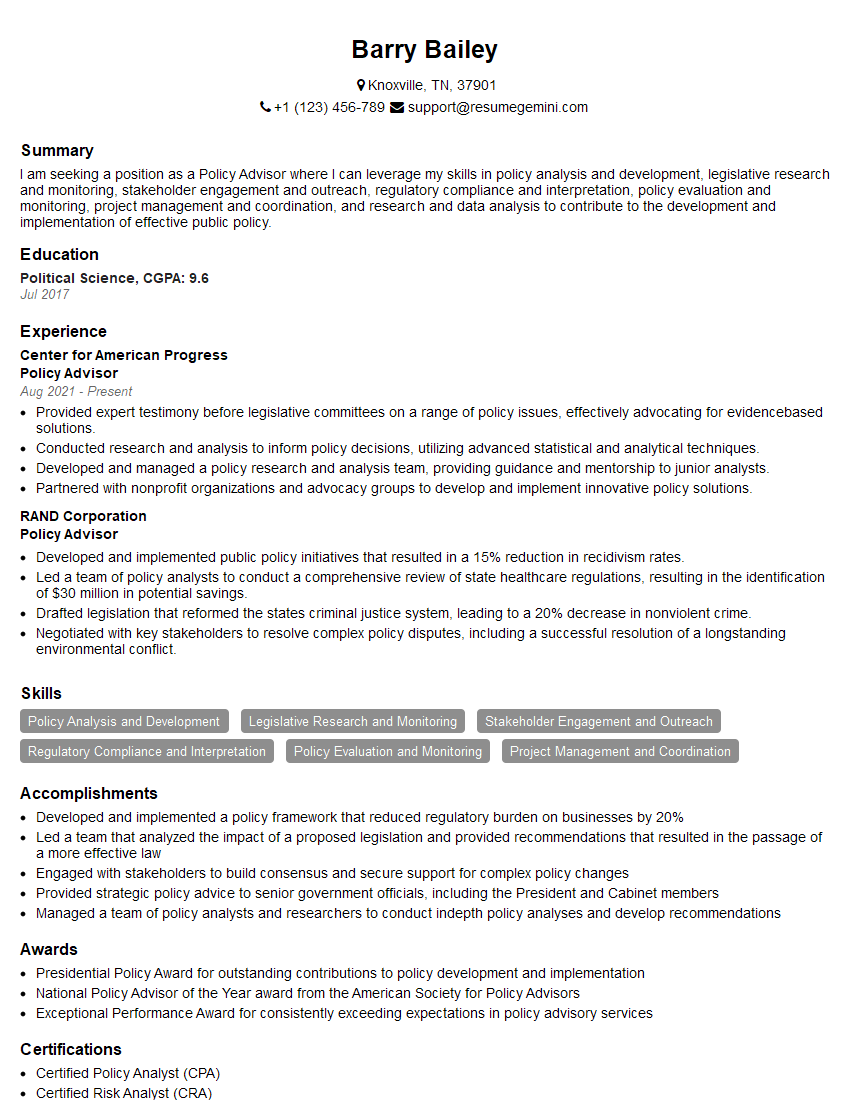
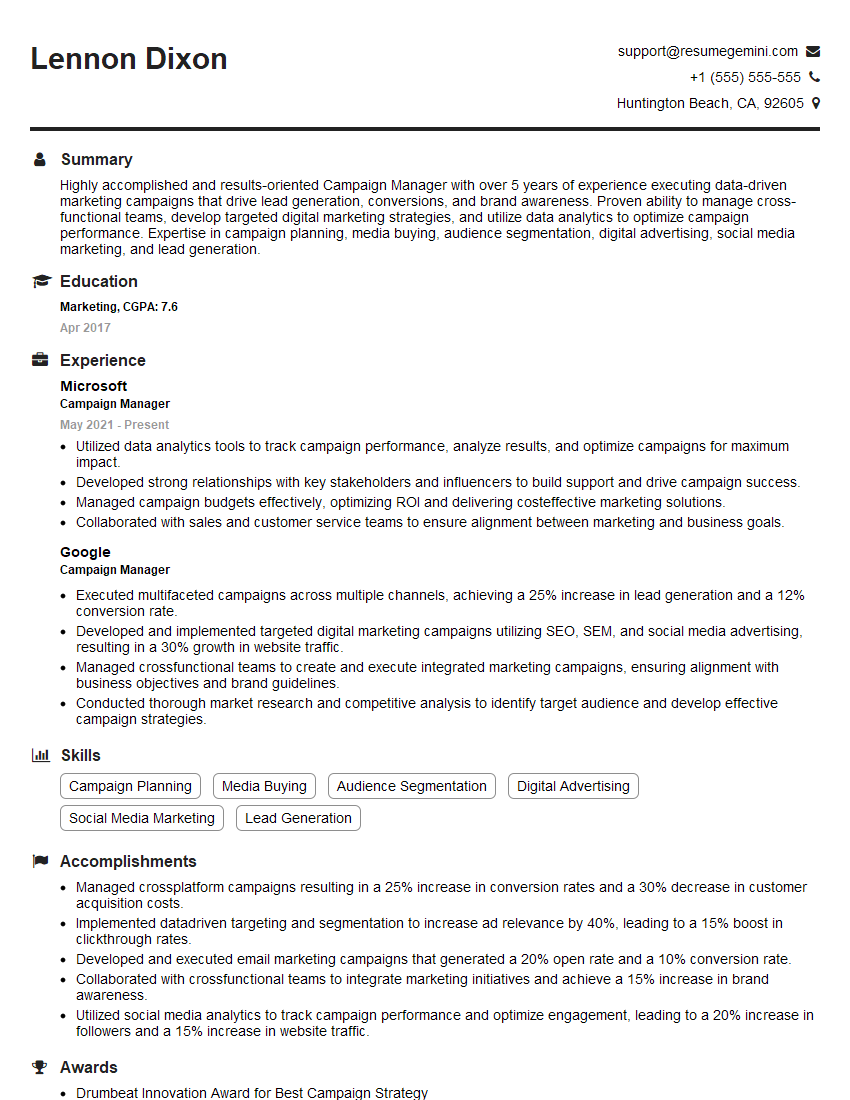
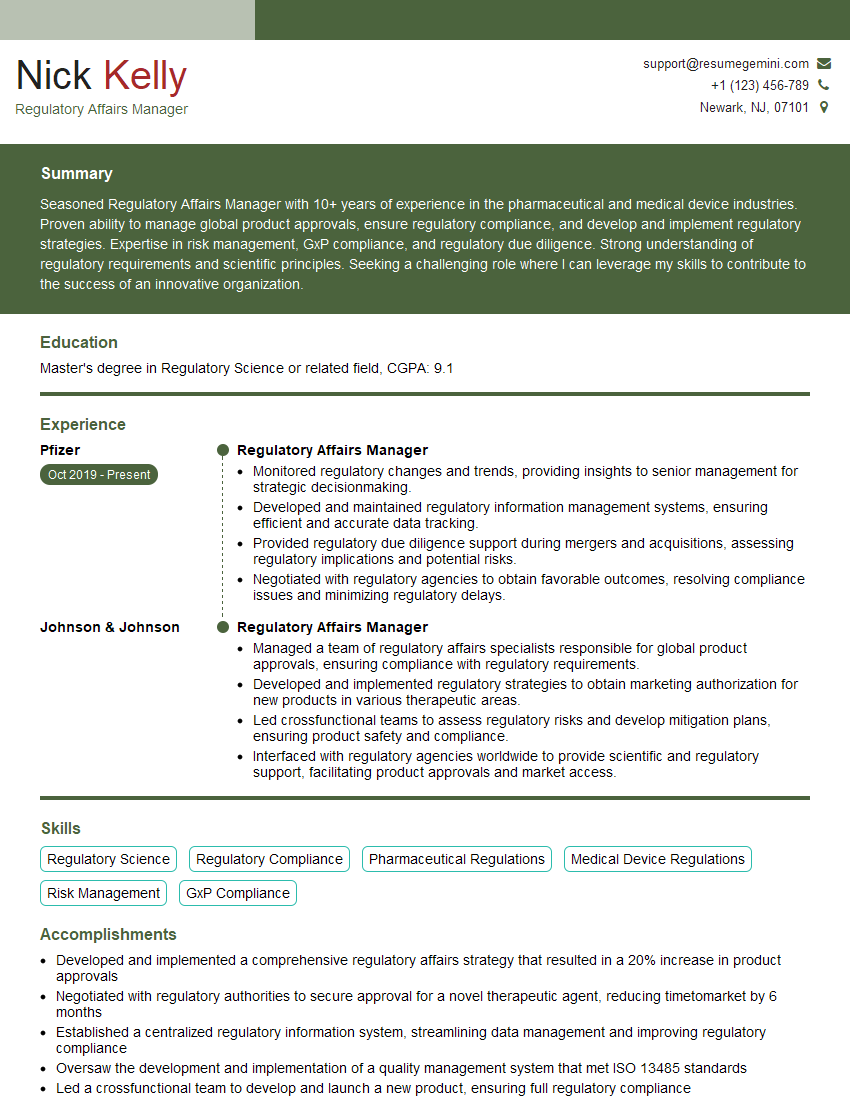
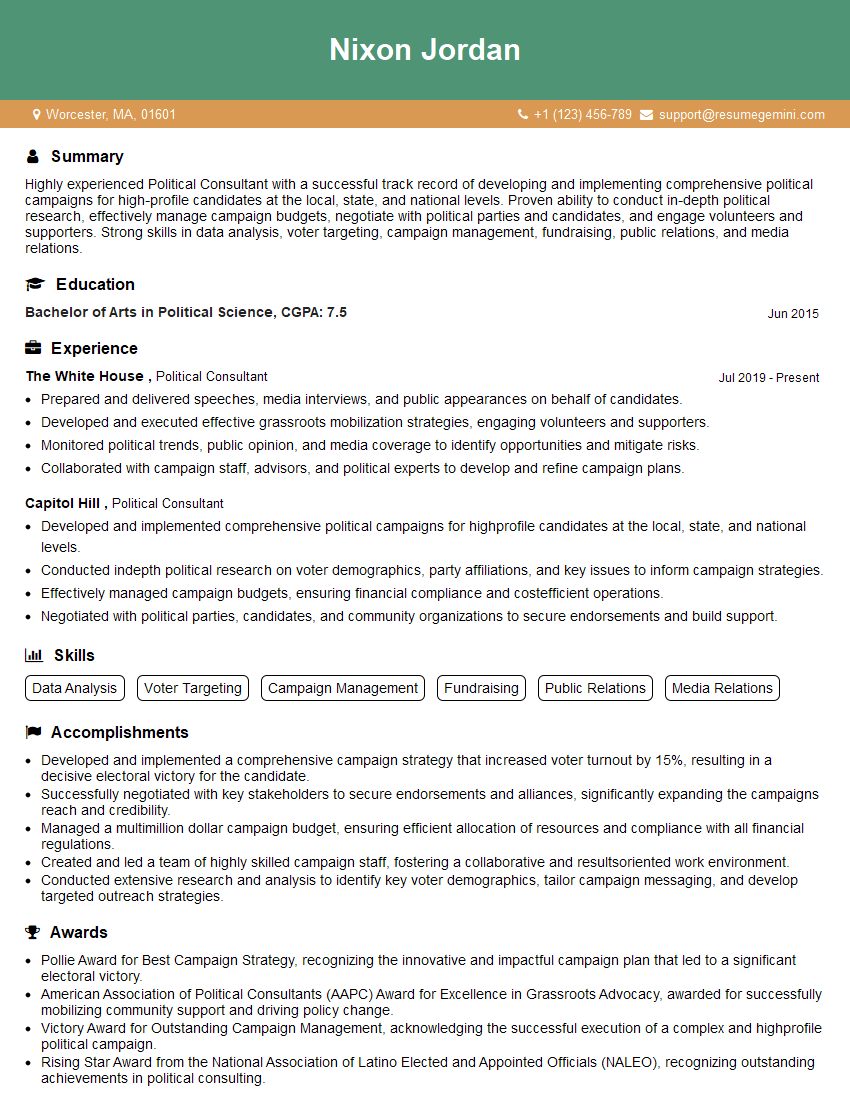
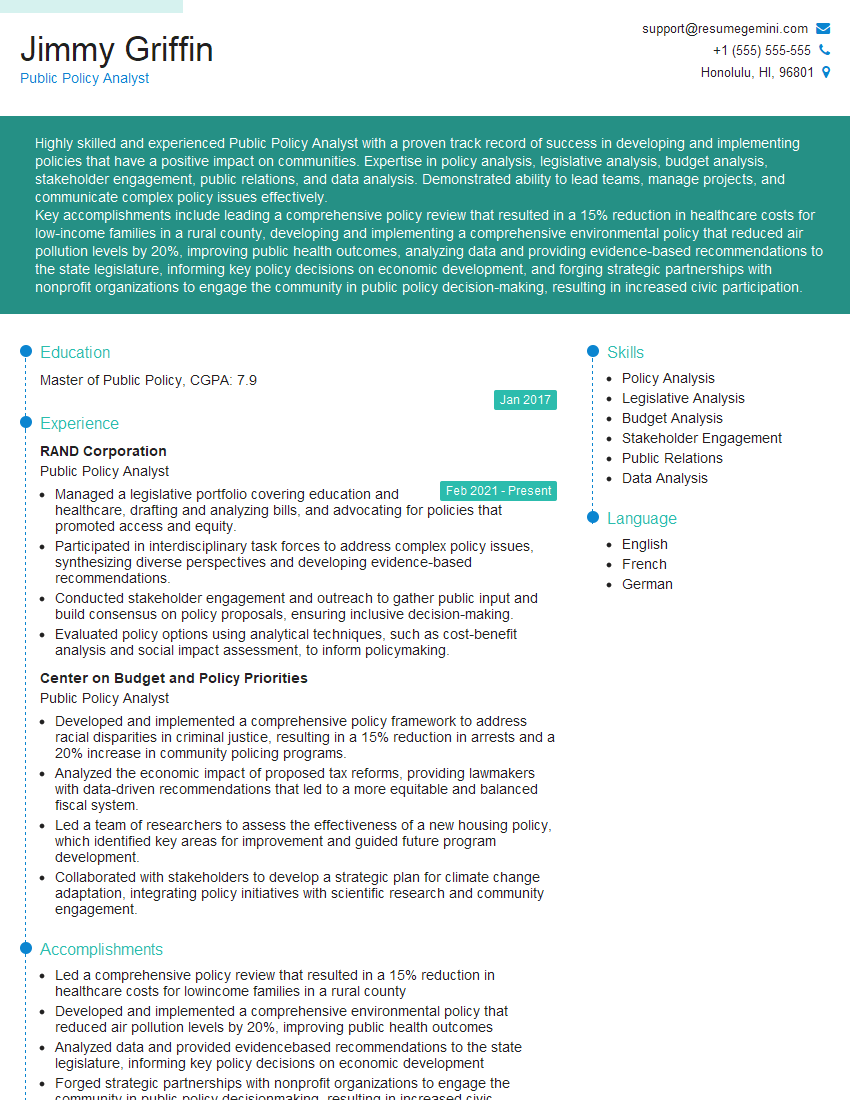
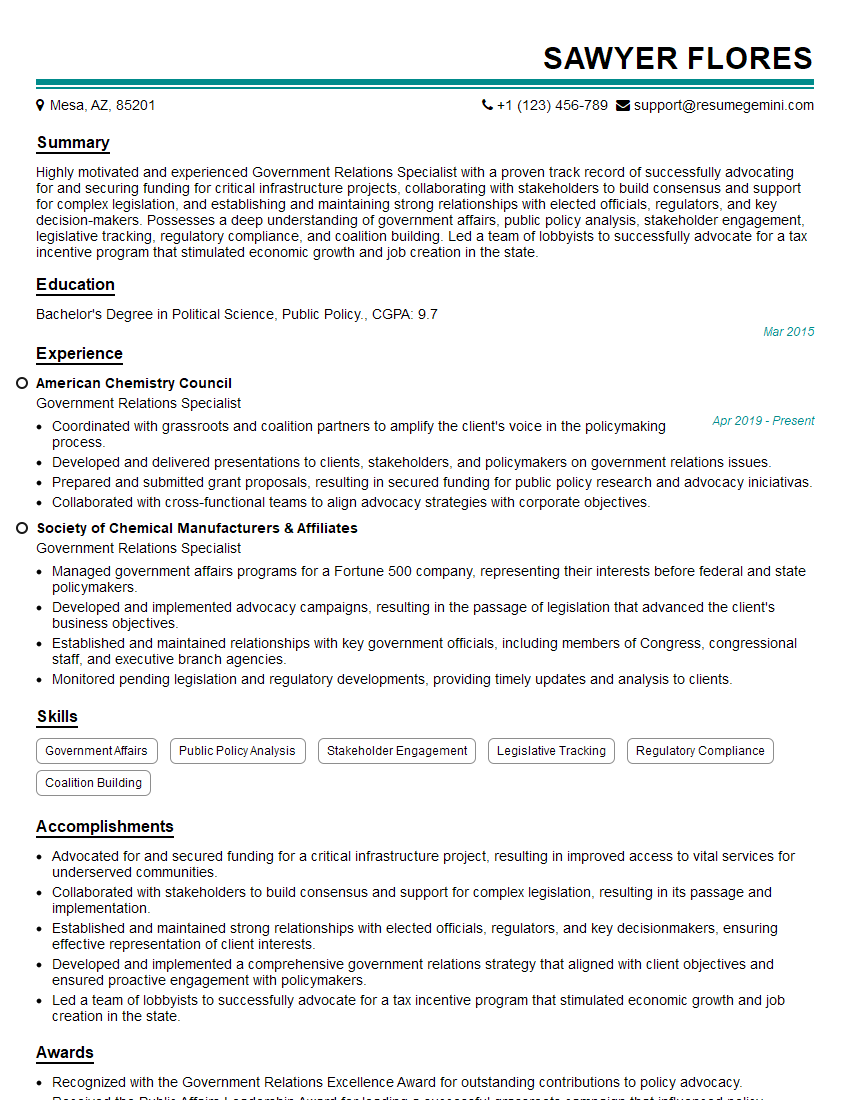
Mastering Advocacy and Legislative Initiatives opens doors to impactful careers shaping public policy and improving communities. A strong resume is crucial for showcasing your skills and experience to potential employers. Building an ATS-friendly resume is essential for getting your application noticed. ResumeGemini is a trusted resource to help you craft a professional and effective resume that highlights your unique qualifications. We provide examples of resumes tailored to Advocacy and Legislative Initiatives to guide you. Invest time in creating a compelling resume – it’s your first impression and a key to landing your dream job.


Explore more articles
Users Rating of Our Blogs
Share Your Experience
We value your feedback! Please rate our content and share your thoughts (optional).
What Readers Say About Our Blog
To the interviewgemini.com Webmaster.
Very helpful and content specific questions to help prepare me for my interview!
Thank you
To the interviewgemini.com Webmaster.
This was kind of a unique content I found around the specialized skills. Very helpful questions and good detailed answers.
Very Helpful blog, thank you Interviewgemini team.