Interviews are more than just a Q&A session—they’re a chance to prove your worth. This blog dives into essential Research Assistant interview questions and expert tips to help you align your answers with what hiring managers are looking for. Start preparing to shine!
Questions Asked in Research Assistant Interview
Q 1. Describe your experience with literature reviews. Give a specific example.
Literature reviews are crucial for any research project. They provide a comprehensive overview of existing research on a specific topic, allowing researchers to identify gaps in knowledge, build upon previous findings, and situate their own work within the broader academic context. I approach literature reviews systematically. First, I define precise keywords and search terms related to the research question. Then I utilize various academic databases such as PubMed, Web of Science, and Scopus to locate relevant articles, books, and other scholarly materials. I meticulously evaluate each source for its relevance, methodology, and credibility, paying close attention to the study design, sample size, and limitations. Finally, I synthesize the findings into a coherent narrative, highlighting key themes, controversies, and unanswered questions.
For example, during my work on a project investigating the effectiveness of different therapeutic interventions for anxiety disorders, I conducted a systematic review of randomized controlled trials published within the last decade. I used a pre-defined search strategy across multiple databases, screened studies for inclusion criteria, extracted key data points using a standardized data extraction form, and assessed the methodological quality of each study using validated assessment tools. This allowed me to present a robust synthesis of the existing evidence, helping to guide the design of the subsequent experimental study.
Q 2. Explain your proficiency in data analysis software (e.g., SPSS, R, Python).
I’m proficient in several data analysis software packages, including SPSS, R, and Python. My expertise extends beyond simply using the software to performing rigorous statistical analyses. I understand the underlying statistical principles behind various analytical methods and can select the most appropriate technique for a given research question and dataset.
For instance, in SPSS, I’m adept at conducting descriptive statistics, t-tests, ANOVAs, correlations, and regression analyses. In R, I’m comfortable using packages like ggplot2 for data visualization, dplyr for data manipulation, and lme4 for mixed-effects models. My Python skills encompass data cleaning and preprocessing with libraries such as pandas and NumPy, and statistical modeling with statsmodels and scikit-learn. I also have experience with data visualization libraries like matplotlib and seaborn in Python. Choosing the appropriate software and statistical technique depends heavily on the nature of the data and research aims. For example, if I am working with longitudinal data, I would lean towards using R with packages like lme4 to account for the correlation within participants over time. If I need a user-friendly interface for descriptive statistics, SPSS would be preferable.
Q 3. How do you ensure the accuracy and reliability of your research data?
Ensuring data accuracy and reliability is paramount in research. My approach is multi-faceted and begins with careful planning and design of the study. This includes clearly defining variables, developing precise measurement instruments, and establishing rigorous data collection protocols. During data collection, I meticulously document all procedures, paying close attention to potential sources of error or bias. For example, I might implement double-data entry to minimize transcription errors or conduct pilot studies to test the reliability of measurement tools.
Once the data is collected, I perform thorough data cleaning and validation. This includes checking for outliers, inconsistencies, and missing values. I might employ various techniques to handle missing data, such as imputation, depending on the pattern and nature of the missingness. Furthermore, I carefully consider potential biases introduced during data collection and analysis and attempt to mitigate these through appropriate statistical techniques and reporting strategies. Transparency is key; I meticulously document all data cleaning and analysis steps to ensure reproducibility and allow for scrutiny of my methods.
Q 4. Describe your experience with experimental design.
My experience with experimental design spans a variety of research methodologies, including randomized controlled trials, quasi-experimental designs, and within-subjects designs. I understand the importance of controlling for confounding variables, random assignment of participants to groups (when appropriate), and selecting appropriate statistical tests to analyze the resulting data. I’m familiar with different experimental designs, such as pre-post designs, factorial designs, and crossover designs, and understand their strengths and weaknesses.
For example, in a recent project exploring the effects of a new educational intervention on student learning, I helped design a randomized controlled trial. This involved randomly assigning students to either an intervention group or a control group, collecting pre- and post-intervention data on student performance, and analyzing the results using an ANOVA to compare the changes in learning outcomes between the two groups. The design was carefully crafted to minimize potential biases and maximize the internal validity of the study findings.
Q 5. How have you managed your time effectively when working on multiple research projects?
Juggling multiple research projects requires effective time management skills. My approach combines strategic planning with flexible adaptation. I begin by creating a detailed project schedule for each project, breaking down large tasks into smaller, manageable steps with assigned deadlines. I use project management tools like Trello or Asana to track progress and deadlines across projects. I prioritize tasks based on urgency and importance, focusing on the most critical tasks first.
Furthermore, I regularly review my schedule and adjust my priorities as needed, recognizing that unforeseen circumstances can impact timelines. Consistent communication with my supervisors and collaborators is crucial for maintaining project momentum and addressing potential roadblocks promptly. Setting realistic expectations and avoiding overcommitment are also essential for maintaining balance and preventing burnout. Regular breaks and self-care are critical to sustaining productivity over the long term.
Q 6. Explain your understanding of research ethics.
Research ethics are fundamental to my approach to research. I am well-versed in principles such as informed consent, confidentiality, anonymity, and the responsible use of data. I understand the importance of obtaining informed consent from participants before collecting any data, ensuring their participation is voluntary and that they are fully aware of the study’s purpose, procedures, and potential risks and benefits.
I strictly adhere to data privacy regulations and guidelines, ensuring the confidentiality and anonymity of participant data. I’m also aware of the potential for bias and strive to minimize it through careful study design and data analysis. I understand the importance of avoiding plagiarism and maintaining academic integrity in all aspects of my work, from literature reviews to data analysis and reporting. I am always mindful of ethical considerations and prioritize the well-being and rights of participants above all else. When faced with ethical dilemmas, I consult with my supervisor or relevant ethics review boards.
Q 7. Describe your experience with data collection methods (e.g., surveys, interviews, experiments).
My experience with data collection methods is extensive, encompassing surveys, interviews, and experiments. I’m adept at designing and administering surveys using platforms like Qualtrics or SurveyMonkey, ensuring the questions are clear, unambiguous, and relevant to the research question. I’m skilled in conducting both structured and semi-structured interviews, employing appropriate questioning techniques to elicit rich and insightful information from participants. I also have experience with observational studies, where I collect data on behaviors or events in a natural setting.
For example, in one study investigating employee satisfaction, I used a combination of methods: a quantitative survey measuring various aspects of job satisfaction, followed by qualitative interviews with a subset of employees to explore their responses in more depth. This mixed-methods approach allowed for a richer and more nuanced understanding of the research problem. The choice of data collection method depends entirely on the research question, the nature of the data being collected, and the resources available. Each method has its own strengths and limitations, and selecting the most appropriate method is crucial for ensuring the quality and validity of the research findings.
Q 8. How do you handle conflicting research findings?
Conflicting research findings are a common challenge in research. Instead of viewing them as a problem, I see them as an opportunity for deeper understanding. My approach involves a systematic process:
Critical Review of Methodology: I meticulously examine the methodologies of each study. Were the sample sizes adequate? Were the research designs appropriate for the research questions? Were there any biases in data collection or analysis? For example, if one study used a self-report questionnaire while another used observational data, the differences in findings might be explained by these methodological variations.
Contextual Analysis: I consider the context in which each study was conducted. Differences in participant demographics, cultural settings, or time periods can significantly influence results. For example, a study on the effectiveness of a certain treatment might yield different results in a rural versus an urban setting.
Meta-Analysis (if appropriate): If the studies are sufficiently similar, I might conduct a meta-analysis to combine the results and assess the overall effect size. This quantitative approach can help determine if the discrepancies are statistically significant or due to chance.
Synthesizing Findings: Finally, I synthesize the findings, highlighting both the consistencies and discrepancies. I aim to create a comprehensive picture that acknowledges the complexities and limitations of individual studies. A narrative synthesis might be more appropriate if a meta-analysis isn’t feasible.
Ultimately, addressing conflicting findings leads to a more nuanced understanding of the research topic and can even inspire further investigation to resolve the contradictions.
Q 9. Explain your experience with qualitative data analysis.
My experience with qualitative data analysis is extensive. I’m proficient in various techniques, including thematic analysis, grounded theory, and narrative analysis. I’ve worked with a range of data sources, such as interview transcripts, focus group recordings, and field notes.
For instance, in a recent project investigating patient experiences with a new medical device, I conducted semi-structured interviews with patients. I then used thematic analysis to identify recurring themes and patterns in their responses. This involved transcribing the interviews, carefully reading the transcripts, coding the data, and developing a thematic map illustrating the key themes and their relationships. Software like NVivo aided in this process, helping manage the large volume of data and facilitating the coding and analysis steps.
I’m comfortable with the iterative nature of qualitative analysis and understand the importance of reflexivity—acknowledging my own biases and how they might influence my interpretations. I believe in rigorous data handling and careful documentation of the analytical process to ensure transparency and replicability of the findings.
Q 10. Explain your experience with quantitative data analysis.
Quantitative data analysis is another area of strength. I’m skilled in using statistical software packages like SPSS and R to conduct various analyses, including descriptive statistics, inferential statistics, and regression analyses.
In a recent study on the impact of a new educational program, I analyzed pre- and post-test scores using paired t-tests to determine if there was a statistically significant improvement in student performance. I also employed regression analysis to investigate the relationship between various demographic factors and student outcomes. I’m adept at interpreting statistical outputs and communicating findings clearly, both verbally and in writing, ensuring that complex statistical concepts are presented in a readily understandable manner.
I understand the importance of choosing the appropriate statistical tests based on the research design and the type of data. I also know how to check for assumptions underlying the statistical tests and handle violations of these assumptions when necessary, for example, using non-parametric tests if the data isn’t normally distributed.
Q 11. How do you ensure the confidentiality of research data?
Confidentiality of research data is paramount. My approach involves a multi-layered strategy:
Data Anonymization: I always remove identifying information from the data as early as possible in the research process. This includes removing names, addresses, and other unique identifiers. I often replace these with unique identifiers or codes.
Secure Data Storage: I store all research data securely, using password-protected files and encrypted storage solutions. Sensitive data is stored on secure servers with access limited to authorized personnel.
Informed Consent: I ensure that all participants provide informed consent before participating in the study. This means they understand the purpose of the research, how their data will be used, and the safeguards in place to protect their privacy.
Data Access Control: I restrict access to research data to only those individuals who need it for the research project. Access is granted on a need-to-know basis.
Compliance with Regulations: I adhere to all relevant data protection regulations and guidelines, such as HIPAA (in the US) or GDPR (in Europe).
These measures ensure that research data is handled responsibly and ethically, protecting the privacy and confidentiality of participants.
Q 12. Describe your experience with statistical software.
I’m proficient in several statistical software packages. My expertise includes SPSS, R, and Stata. I’m comfortable performing a wide range of statistical analyses using these programs, from simple descriptive statistics to complex multivariate analyses. Beyond just running analyses, I’m skilled in data cleaning, data manipulation, and data visualization using these tools. For example, in R, I frequently use packages like ggplot2 to create high-quality graphs and visualizations for reports and presentations.
My experience extends beyond simply using pre-built functions; I can write custom scripts and functions in R to automate tasks and perform specific analyses tailored to the needs of a particular research project. This allows for flexibility and efficiency in handling large datasets and complex analyses. I am also familiar with importing and exporting data in various formats, ensuring seamless integration with other research tools and software.
Q 13. How do you prioritize tasks when working under pressure?
Prioritizing tasks under pressure requires a strategic approach. I use a combination of methods:
Task Prioritization Matrix: I use a matrix that categorizes tasks based on urgency and importance (Eisenhower Matrix). This helps me focus on high-impact tasks first, even if they aren’t necessarily urgent.
Time Blocking: I allocate specific time blocks for different tasks to enhance focus and avoid context switching. This is particularly helpful for managing multiple projects simultaneously.
Break Down Large Tasks: I break down large, overwhelming tasks into smaller, manageable steps. This makes progress feel more achievable and reduces feelings of being overwhelmed.
Communication and Delegation (when possible): Open communication with my supervisor or team members about workload and deadlines is crucial. If possible, I delegate tasks appropriately to maximize efficiency.
By combining these strategies, I can effectively manage competing priorities and deliver high-quality work even under tight deadlines.
Q 14. Describe a situation where you had to troubleshoot a technical problem during research.
During a recent project involving large-scale genomic data analysis, I encountered a problem with a specific R package that was crucial for processing the data. The package was throwing an error message that wasn’t immediately clear. My troubleshooting steps involved:
Replicating the Error: I first attempted to replicate the error to isolate the cause. I checked the input data, the package version, and the R environment settings.
Consulting Documentation: I thoroughly reviewed the package’s documentation and searched for similar error messages online. This led me to discover a compatibility issue with a different library I was using.
Seeking Help from Online Communities: I posted my question on relevant online forums and communities, such as Stack Overflow. This proved helpful in getting alternative solutions and perspectives on the problem.
Testing Alternative Solutions: Based on the feedback and my research, I tried several alternative approaches, including updating packages, using a different library, and modifying my code. Eventually, I found a workaround by using a different package with similar functionalities that was compatible with my environment.
This experience highlighted the importance of systematic troubleshooting, thorough documentation, and seeking help from the community when needed.
Q 15. How do you stay updated on the latest advancements in your field?
Staying current in the dynamic field of research requires a multi-pronged approach. It’s not just about reading papers; it’s about actively engaging with the research community.
- Journal Articles and Reviews: I subscribe to several key journals in my area of expertise and regularly scan their tables of contents. I also utilize review articles which provide excellent summaries of the current state of knowledge in specific subfields.
- Conferences and Workshops: Attending conferences allows me to network with leading researchers, hear about cutting-edge work before publication, and participate in discussions. Webinars and online workshops provide a more accessible alternative.
- Professional Organizations: Membership in relevant professional organizations offers access to newsletters, journals, and networking opportunities. It’s a great way to stay informed about upcoming events and research initiatives.
- Online Resources: I utilize platforms like Google Scholar, PubMed, and arXiv to search for relevant publications and preprints. Following key researchers on social media (like ResearchGate or Twitter) can also be a valuable source of information.
- Mentorship and Collaboration: Engaging in collaborative research projects provides first-hand exposure to novel methods and emerging findings. Regular discussions with mentors and colleagues offer insights into the latest trends and challenges in the field.
For example, recently, I was involved in a project focusing on AI in healthcare. By consistently monitoring relevant journals and attending conferences specialized in medical AI, I was able to incorporate cutting-edge techniques and methodologies into our research, resulting in a more robust and impactful study.
Career Expert Tips:
- Ace those interviews! Prepare effectively by reviewing the Top 50 Most Common Interview Questions on ResumeGemini.
- Navigate your job search with confidence! Explore a wide range of Career Tips on ResumeGemini. Learn about common challenges and recommendations to overcome them.
- Craft the perfect resume! Master the Art of Resume Writing with ResumeGemini’s guide. Showcase your unique qualifications and achievements effectively.
- Don’t miss out on holiday savings! Build your dream resume with ResumeGemini’s ATS optimized templates.
Q 16. Describe your experience working with different research methodologies.
My experience spans a variety of research methodologies, reflecting my adaptability and commitment to selecting the most appropriate approach for each research question. This includes both quantitative and qualitative methods, as well as mixed-methods designs.
- Quantitative Methods: I’m proficient in statistical analysis techniques, including regression analysis, ANOVA, and t-tests, employing software packages like R and SPSS to analyze data sets and test hypotheses. For instance, in a recent study on consumer behavior, I used regression analysis to determine the factors influencing purchasing decisions.
- Qualitative Methods: I have experience in conducting interviews, focus groups, and thematic analysis. For example, in a project investigating patient experiences with a new medical device, I conducted semi-structured interviews and used thematic analysis to identify key themes and patterns in the patient narratives.
- Mixed-Methods: I recognize the power of combining quantitative and qualitative approaches. In one project, we used surveys to gather quantitative data on patient satisfaction and followed up with qualitative interviews to understand the reasons behind the quantitative findings. This provided a richer, more nuanced understanding of the phenomenon.
My approach to methodology selection always starts with a clear understanding of the research question. I consider the strengths and limitations of each method in relation to the specific question, the available resources, and the desired outcome, striving for methodological rigor and ensuring the findings are reliable and valid.
Q 17. How do you maintain organized records and documentation for research projects?
Maintaining meticulous records is crucial for research integrity and reproducibility. My organizational strategies are designed to ensure efficient retrieval and transparency of all project-related materials.
- Cloud-Based Storage: I utilize cloud-based storage platforms like Google Drive or Dropbox to store data, documents, and code in a structured manner. This ensures data accessibility from multiple locations and allows for easy collaboration.
- Version Control: For code and documents, I employ version control systems like Git, allowing me to track changes, revert to previous versions if necessary, and collaborate efficiently with team members.
- Detailed Documentation: I maintain comprehensive documentation throughout the research process, including detailed research protocols, data dictionaries, code documentation, and meeting minutes. This documentation is essential for replicability and transparency.
- Data Management Plan: For large projects, I develop a data management plan that outlines data storage, access, sharing, and archiving strategies. This ensures data integrity, security, and long-term preservation.
- File Naming Conventions: I use clear and consistent file-naming conventions to easily locate and identify files. This could involve using a date-based system or incorporating project codes and relevant keywords.
For instance, in a recent study, we had terabytes of data. Implementing a structured data management plan with a clear filing system and version control was key to managing the data and ensuring our research was reproducible.
Q 18. How do you collaborate effectively with researchers and colleagues?
Effective collaboration is paramount in research. My approach emphasizes open communication, mutual respect, and a shared commitment to the research goals.
- Regular Meetings: I actively participate in regular team meetings, contributing ideas, sharing updates, and addressing challenges collaboratively. I make a point to actively listen to my colleagues’ perspectives.
- Clear Communication: I communicate clearly and concisely, both verbally and in writing, ensuring that everyone is informed and understands their roles and responsibilities. I always strive for transparent communication about project progress and potential roadblocks.
- Shared Platforms: I utilize collaborative platforms like Slack or Microsoft Teams for instant communication and to share documents and data seamlessly. This ensures everyone is on the same page and can access relevant information in real-time.
- Respectful Discourse: I foster a respectful and inclusive environment where everyone feels comfortable sharing their ideas and concerns. I actively listen to differing viewpoints and aim for consensus-building.
- Delegation and Support: I understand the value of teamwork and am comfortable delegating tasks appropriately, ensuring that everyone is utilizing their skills effectively. I also actively offer support and guidance to colleagues when needed.
In one project, I found that actively using shared platforms and establishing a regular communication cadence not only improved efficiency but also enhanced team morale and led to more innovative solutions.
Q 19. How do you interpret research findings and draw conclusions?
Interpreting research findings requires careful consideration of the data, the research design, and the broader context. It’s a process that involves critical thinking, statistical reasoning, and an understanding of the limitations of the study.
- Data Analysis: I carefully analyze the collected data using appropriate statistical techniques and visualize the results using graphs and tables. This process often involves exploring different analytical approaches to identify patterns and relationships.
- Contextualization: I consider the research question, hypotheses, and limitations of the study when interpreting the findings. This involves examining potential confounding factors and biases that may have influenced the results.
- Literature Review: I integrate the findings into the existing body of knowledge by reviewing relevant literature and comparing the results to previous studies. This helps to place the findings in a broader context and identify potential implications.
- Critical Evaluation: I critically evaluate the strengths and limitations of the study design, data collection methods, and analysis techniques, acknowledging any potential biases or limitations. This ensures a balanced and nuanced interpretation of the findings.
- Conclusion Formulation: Based on the data analysis and critical evaluation, I formulate clear and concise conclusions that address the research question and highlight the main findings. These conclusions should be supported by evidence and acknowledge any limitations.
For example, in a study analyzing the effectiveness of a new teaching method, we discovered a statistically significant improvement in student performance. However, through careful consideration of potential confounders such as student demographics, we were able to refine our conclusions and better articulate the impact of the teaching method.
Q 20. Describe your experience with preparing research reports or presentations.
Preparing effective research reports and presentations is a crucial skill for disseminating research findings to a wider audience. My experience covers various formats, from scientific publications to conference presentations.
- Scientific Writing: I am proficient in writing clear, concise, and well-structured scientific reports and manuscripts following established guidelines and style manuals. This includes crafting compelling introductions, detailed methods sections, and insightful discussions.
- Data Visualization: I create visually appealing and informative graphs, charts, and tables to effectively communicate complex data to a range of audiences. I ensure that the visualizations are accurate, easy to understand, and support the narrative of the report.
- Presentation Skills: I am comfortable presenting research findings to diverse audiences, adapting my communication style to the audience’s level of expertise. I develop engaging presentations that effectively convey key findings and stimulate discussion.
- Manuscript Preparation: I am familiar with the submission process for various journals, including formatting manuscripts according to journal guidelines and responding to reviewer comments.
- Software Proficiency: I am proficient in using software such as LaTeX, Microsoft Office, and presentation software (PowerPoint, Google Slides) to create high-quality reports and presentations.
In one instance, I was responsible for preparing a conference presentation on our research. I used storytelling techniques and engaging visuals to capture the audience’s attention and effectively communicate the significance of our findings, resulting in a lively Q&A session.
Q 21. How do you handle unexpected challenges during a research project?
Research projects inevitably encounter unexpected challenges. My approach to handling these challenges is proactive, problem-solving oriented, and focused on maintaining research integrity.
- Problem Identification and Assessment: The first step involves identifying the challenge and assessing its potential impact on the research project. This often involves brainstorming with colleagues to gain different perspectives and find potential solutions.
- Resource Allocation: Depending on the nature of the challenge, I may need to reallocate resources, such as time, budget, or personnel, to address the problem effectively. This might involve seeking additional funding or adjusting the research timeline.
- Methodological Adjustments: Sometimes, the challenge necessitates adjustments to the research methodology. This might involve modifying data collection methods, altering the analysis plan, or incorporating alternative approaches.
- Seeking Guidance: I don’t hesitate to seek guidance from experienced researchers, mentors, or supervisors when faced with significant challenges. This ensures that I am leveraging the expertise of others and making informed decisions.
- Documentation: I meticulously document all challenges encountered, the steps taken to address them, and the impact on the research findings. This ensures transparency and allows for learning from the experience.
For instance, in a field study, we encountered unforeseen logistical difficulties accessing a key study site. By working with the local community and adjusting our data collection methods, we successfully overcame this obstacle and completed the study. The entire process was documented to ensure the transparency and replicability of our work.
Q 22. Explain your understanding of research methodologies appropriate for your field.
Research methodologies are the specific procedures or techniques used to systematically investigate a research question. My understanding encompasses a range of qualitative and quantitative approaches, selected based on the research question and available resources.
- Quantitative methods often involve numerical data analysis, such as statistical tests to identify correlations or causal relationships. For example, I’ve worked on projects using surveys to gather data on student attitudes, followed by statistical analysis (e.g., t-tests, ANOVA) to determine significant differences between groups.
- Qualitative methods focus on in-depth understanding of experiences, perspectives, and meanings. This might involve conducting interviews, analyzing focus groups or textual data (e.g., thematic analysis of open-ended survey responses or transcripts) to understand complex social phenomena. For example, in a recent study on employee morale, I assisted in conducting semi-structured interviews to explore the nuanced factors influencing workplace satisfaction.
- Mixed methods combine both qualitative and quantitative approaches to leverage the strengths of each. This might involve using a questionnaire to gather quantitative data on the prevalence of a particular behavior, then using interviews to explore the reasons behind that behavior in greater depth. This integrated approach provides a more comprehensive understanding.
The choice of methodology is crucial and depends on factors such as the research question, resources available, the nature of the data, and ethical considerations. I am adept at selecting and applying appropriate methods for different research contexts.
Q 23. How familiar are you with various citation styles (e.g., APA, MLA, Chicago)?
I am proficient in several citation styles, including APA, MLA, and Chicago. Understanding these styles is essential for accurate attribution of sources and maintaining academic integrity.
- APA (American Psychological Association) is commonly used in social sciences and psychology. It emphasizes author-date citation within the text and a comprehensive reference list at the end. I am familiar with all aspects, from in-text citations to formatting reference list entries for various source types (books, articles, websites).
- MLA (Modern Language Association) is widely used in humanities disciplines such as literature and English. It focuses on author-page number in-text citations and a Works Cited page.
- Chicago offers both a notes-bibliography and author-date system. The notes-bibliography style employs footnotes or endnotes and a bibliography, while the author-date system resembles APA but with subtle variations in formatting.
I can accurately and consistently apply these styles to any research project, ensuring that all sources are properly cited to avoid plagiarism. I understand the nuances of each style and can adapt my approach to the specific requirements of different publications or institutions.
Q 24. Describe your experience with IRB protocols and ethical considerations in research.
IRB protocols (Institutional Review Board) are crucial for protecting the rights and well-being of human participants in research. My experience includes understanding and adhering to these protocols across all stages of a research project.
- Informed consent: I’ve assisted in developing and implementing informed consent procedures, ensuring that participants fully understand the study’s purpose, procedures, risks, and benefits before they agree to participate.
- Confidentiality and anonymity: I know how to protect participant data through anonymization, data encryption, and secure storage to ensure confidentiality. I am familiar with data anonymization techniques and compliant data storage practices.
- Vulnerable populations: I understand the special considerations required when working with vulnerable populations (children, individuals with cognitive impairments, etc.), including obtaining appropriate consent from guardians or representatives.
- Data security: I understand the importance of securely storing and managing research data to comply with IRB regulations and protect participant privacy.
I have experience working with IRB applications, ensuring that research proposals meet ethical standards before data collection commences. Ethical considerations are paramount in my work, and I am committed to conducting research responsibly and with the utmost respect for participants.
Q 25. How do you ensure the validity and reliability of research instruments?
Validity and reliability are essential aspects of any research instrument. Validity refers to the extent to which an instrument measures what it intends to measure, while reliability refers to the consistency of the instrument’s measurements.
- Validity: Assessing validity involves examining the content, criterion, and construct validity of the instrument. Content validity ensures that the instrument covers all relevant aspects of the construct. Criterion validity examines the instrument’s correlation with an external criterion. Construct validity assesses whether the instrument measures the theoretical construct it is intended to measure.
- Reliability: Reliability can be assessed using various methods, including test-retest reliability (consistency of scores over time), internal consistency (consistency among items within the instrument), and inter-rater reliability (consistency among raters).
For example, if developing a questionnaire, I would carefully review each item to ensure its relevance and clarity (content validity). I might also pilot-test the questionnaire with a smaller group to identify any issues with clarity or inconsistencies (reliability). Statistical analysis like Cronbach’s alpha could be used to assess the instrument’s internal consistency. Addressing concerns regarding validity and reliability ensures that the research findings are accurate and trustworthy.
Q 26. What software are you proficient in for data management and organization?
I am proficient in several software packages for data management and organization. My skills include:
- Microsoft Excel: I can use Excel for data entry, cleaning, and basic statistical analysis. I’m comfortable with functions like
SUMIF,VLOOKUP, and pivot tables for data organization and summarization. - SPSS (Statistical Package for the Social Sciences): I have experience conducting more advanced statistical analyses, including regression analysis, t-tests, ANOVA, and factor analysis, using SPSS.
- R or Python: While not my primary tool for basic data management, I have introductory experience with these programming languages for data analysis and statistical modeling. I am keen to expand my proficiency in these fields.
- Qualtrics: For creating and managing online surveys and gathering data, I utilize Qualtrics. This allows for efficient data collection and analysis.
- Zotero/Mendeley: For managing citations and references, I use Zotero or Mendeley to ensure proper citation management.
My software skills allow me to efficiently manage large datasets and perform various analyses, supporting the overall research process.
Q 27. How do you contribute to a positive and productive research environment?
Contributing to a positive and productive research environment involves several key aspects. I believe in teamwork, clear communication, and mutual respect.
- Collaboration: I actively participate in team meetings, sharing my ideas and offering support to colleagues. I’m always willing to help with tasks, even outside my assigned responsibilities, to promote a collaborative atmosphere.
- Communication: I ensure clear and concise communication, both written and verbal. This includes proactively seeking clarification when needed and promptly responding to inquiries.
- Organization: I maintain meticulous records of my work, including data files and research notes. This organization ensures that the research project remains well-structured and accessible to all team members. Using shared platforms and cloud storage keeps everything centralized.
- Problem-solving: I approach challenges proactively, identifying potential roadblocks and finding creative solutions to keep the research moving forward.
- Professionalism: I maintain a respectful and professional demeanor, fostering a positive and supportive environment for everyone.
I believe that a positive team environment enhances research quality and productivity. I strive to be a contributing member and promote a culture of mutual support and respect.
Q 28. Describe your experience with literature searching and database utilization.
Literature searching and database utilization are integral to any research project. I have extensive experience utilizing various databases to locate relevant scholarly articles, books, and other resources.
- Databases: I’m familiar with databases such as PubMed (for biomedical literature), Web of Science, Scopus, and Google Scholar. I understand database search strategies, including using keywords, Boolean operators (AND, OR, NOT), and filters to refine search results. For example, searching for “impact of social media on adolescent mental health” requires carefully selecting keywords, using Boolean operators to combine search terms, and applying filters by date and publication type.
- Search Strategies: I utilize advanced search techniques like truncation (using wildcards like * to retrieve variations of a word) and nested searches to find comprehensive information. I can effectively navigate complex database interfaces and interpret search results to identify relevant literature.
- Reference Management: I use reference management software (Zotero, Mendeley) to organize and manage citations, ensuring consistency and accuracy in referencing. I’m adept at creating bibliographies and formatted citations according to various styles.
My experience with literature searching enables me to efficiently gather and critically evaluate relevant research, forming a strong foundation for my own research contributions.
Key Topics to Learn for Research Assistant Interview
- Research Methodology: Understanding different research designs (qualitative, quantitative, mixed methods), data collection techniques, and analysis methods is crucial. Consider exploring specific methodologies relevant to the research area you’re applying for.
- Data Management and Analysis: Practical experience with data cleaning, organization, and analysis using relevant software (e.g., SPSS, R, Python) will be highly valued. Be prepared to discuss your proficiency and experience with specific statistical techniques.
- Literature Review and Synthesis: Demonstrate your ability to critically evaluate research papers, synthesize findings, and identify gaps in existing knowledge. Practice summarizing complex information concisely and effectively.
- Laboratory Skills (if applicable): If the role involves laboratory work, be ready to discuss your experience with relevant techniques and equipment. Highlight your attention to detail and adherence to safety protocols.
- Communication and Collaboration: Research is a collaborative endeavor. Prepare examples showcasing your ability to effectively communicate research findings, both orally and in writing, and to work effectively within a team.
- Problem-Solving and Critical Thinking: Research often involves unexpected challenges. Be ready to discuss your approach to problem-solving, highlighting your analytical skills and ability to adapt to changing circumstances.
- Ethical Considerations in Research: Understanding and adhering to ethical guidelines in research is paramount. Be prepared to discuss relevant ethical considerations and your commitment to responsible research practices.
Next Steps
Mastering the skills and knowledge required for a Research Assistant position is a significant step towards building a successful career in academia or research-intensive industries. A well-crafted resume is your key to unlocking these opportunities. Creating an ATS-friendly resume that highlights your relevant skills and experiences is essential to getting your application noticed. We strongly recommend using ResumeGemini to build a professional and impactful resume that showcases your qualifications effectively. ResumeGemini provides examples of resumes tailored to Research Assistant positions, guiding you through the process of crafting a compelling application that stands out from the competition.
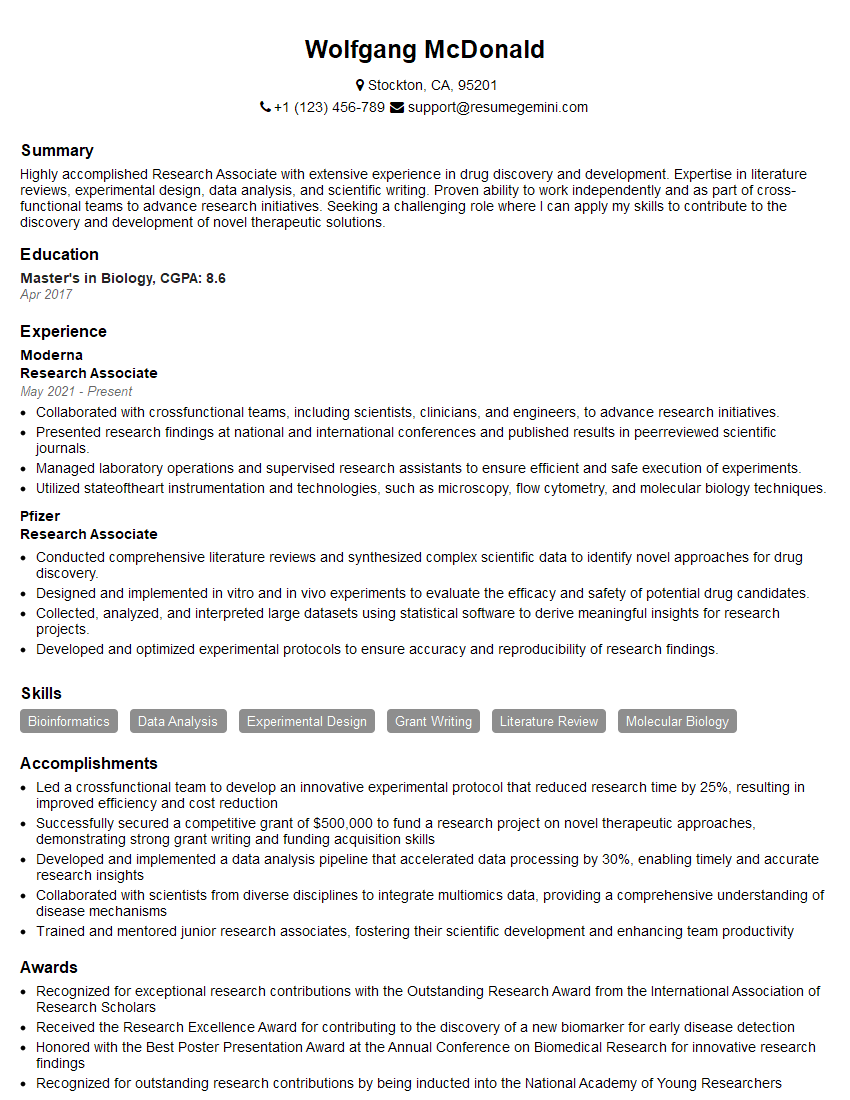
Research Associate Resume Sample
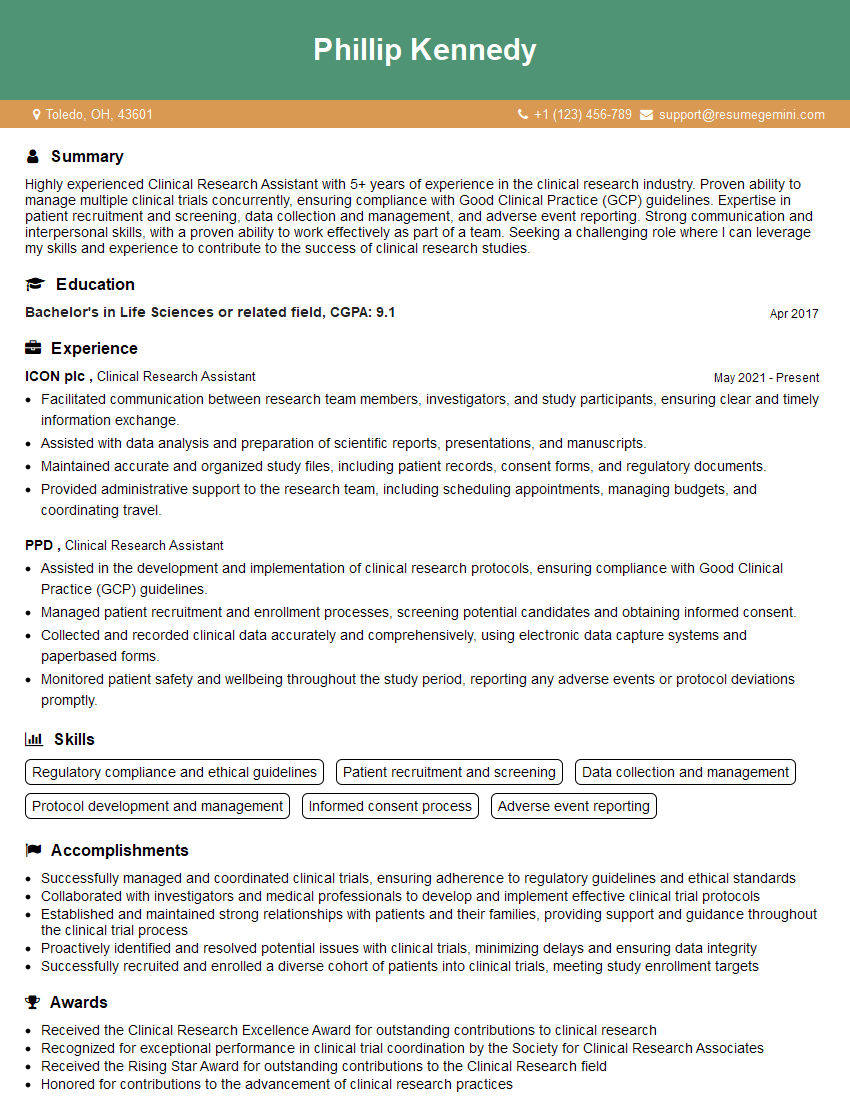
Clinical Research Assistant Resume Sample
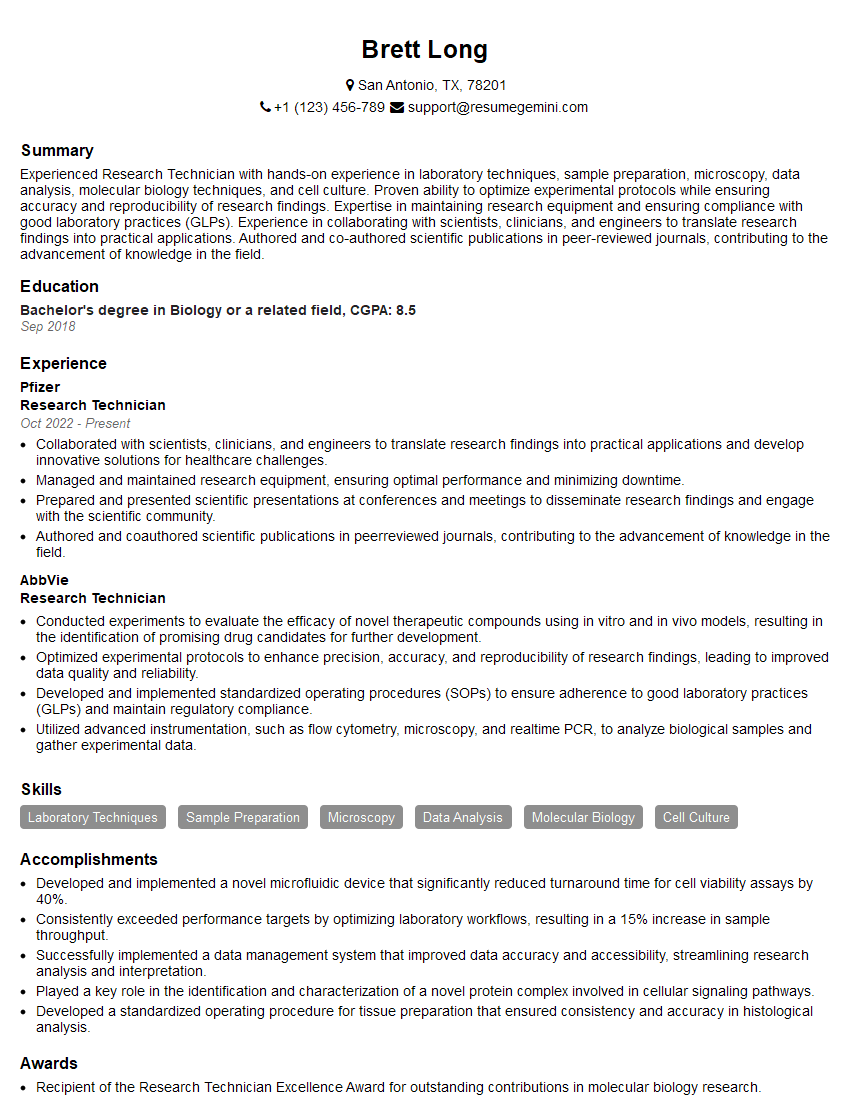
Research Technician Resume Sample
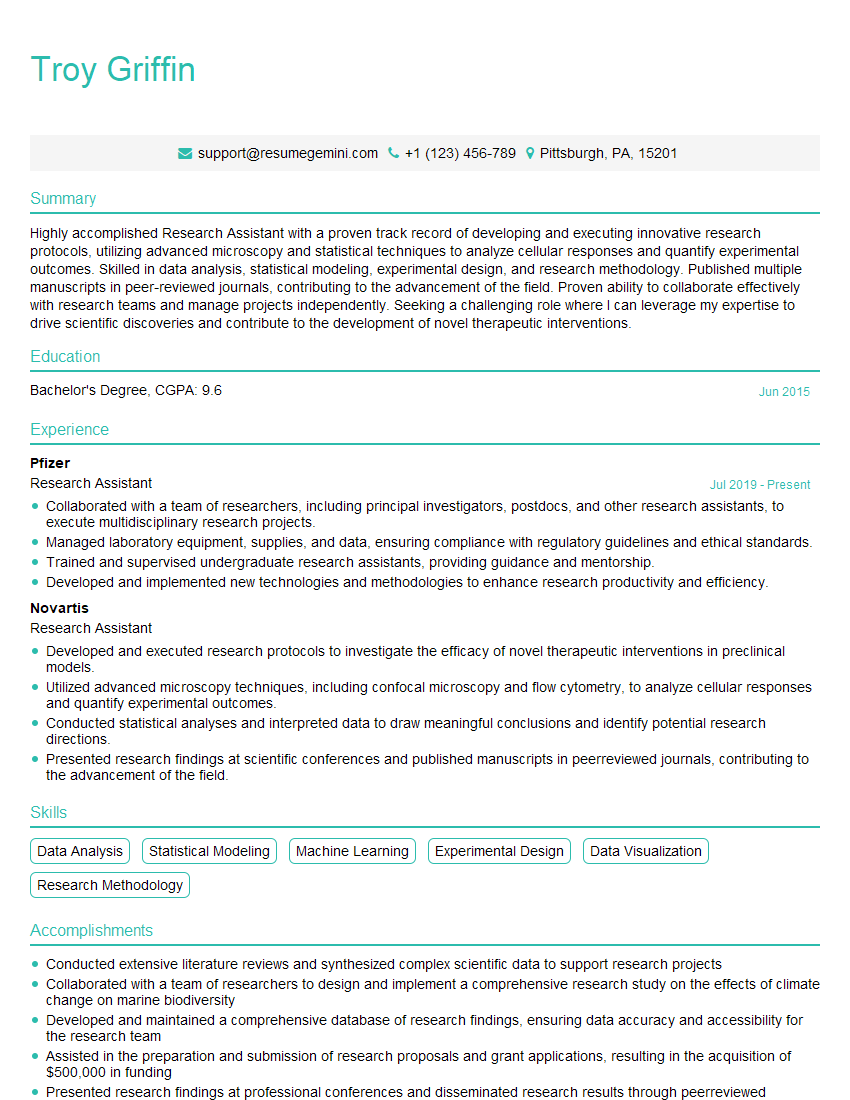
Research Assistant Resume Sample
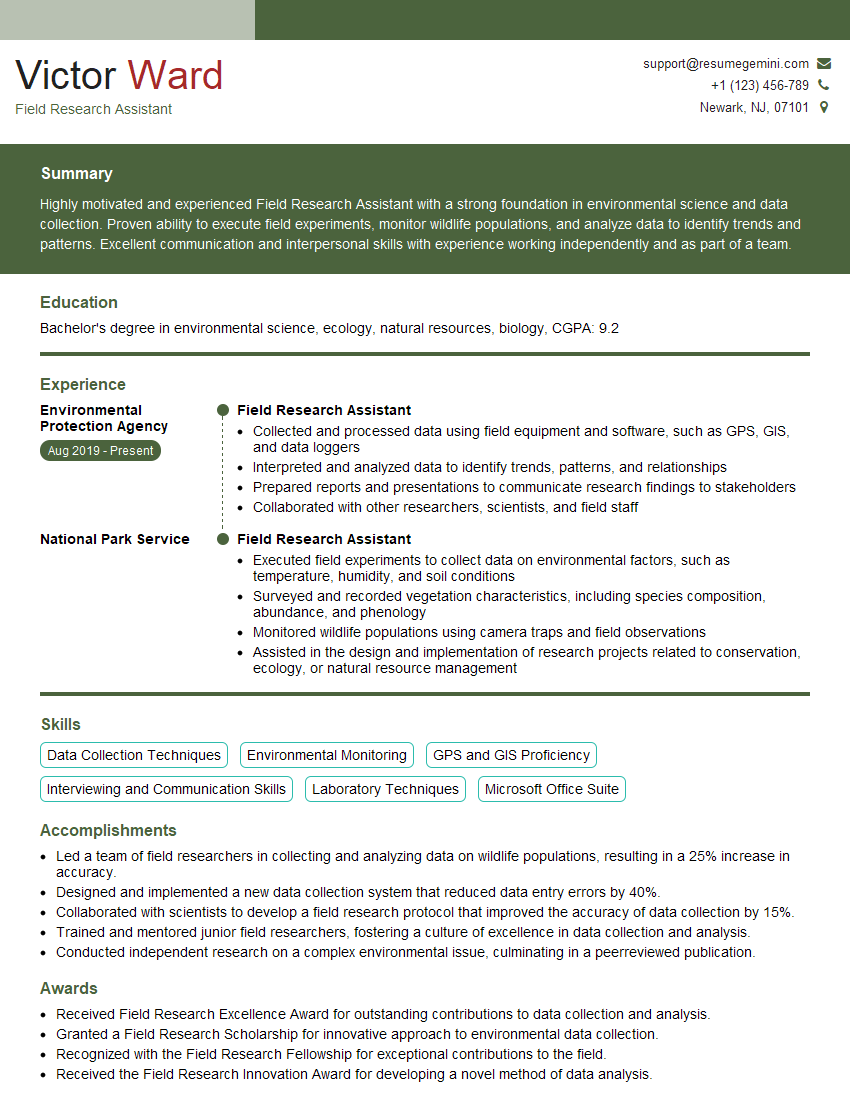
Field Research Assistant Resume Sample
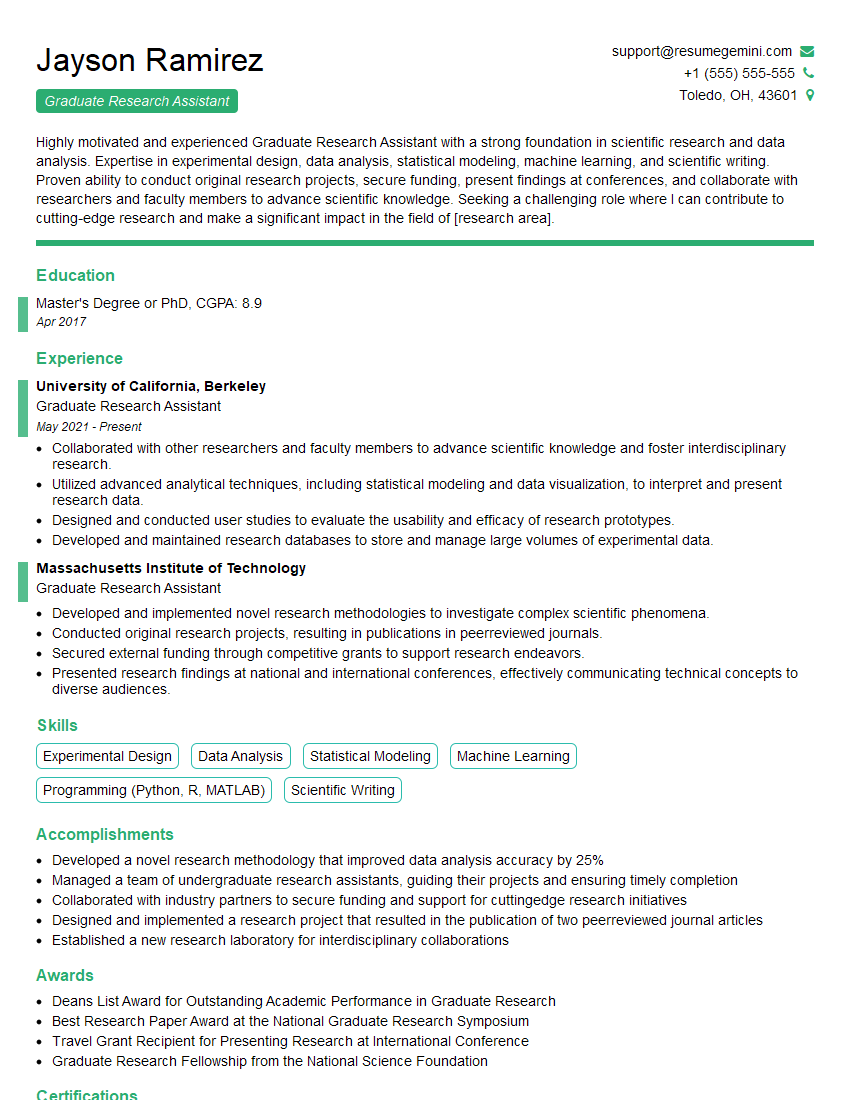
Graduate Research Assistant Resume Sample
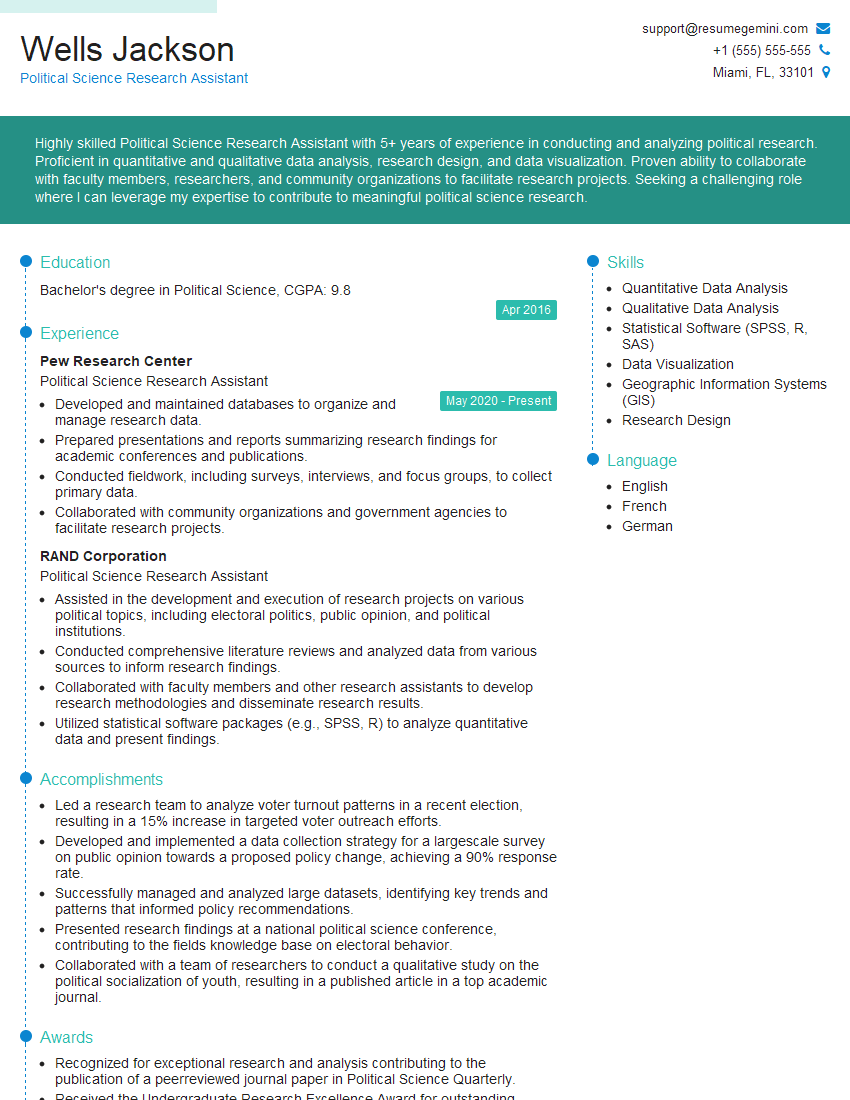
Political Science Research Assistant Resume Sample
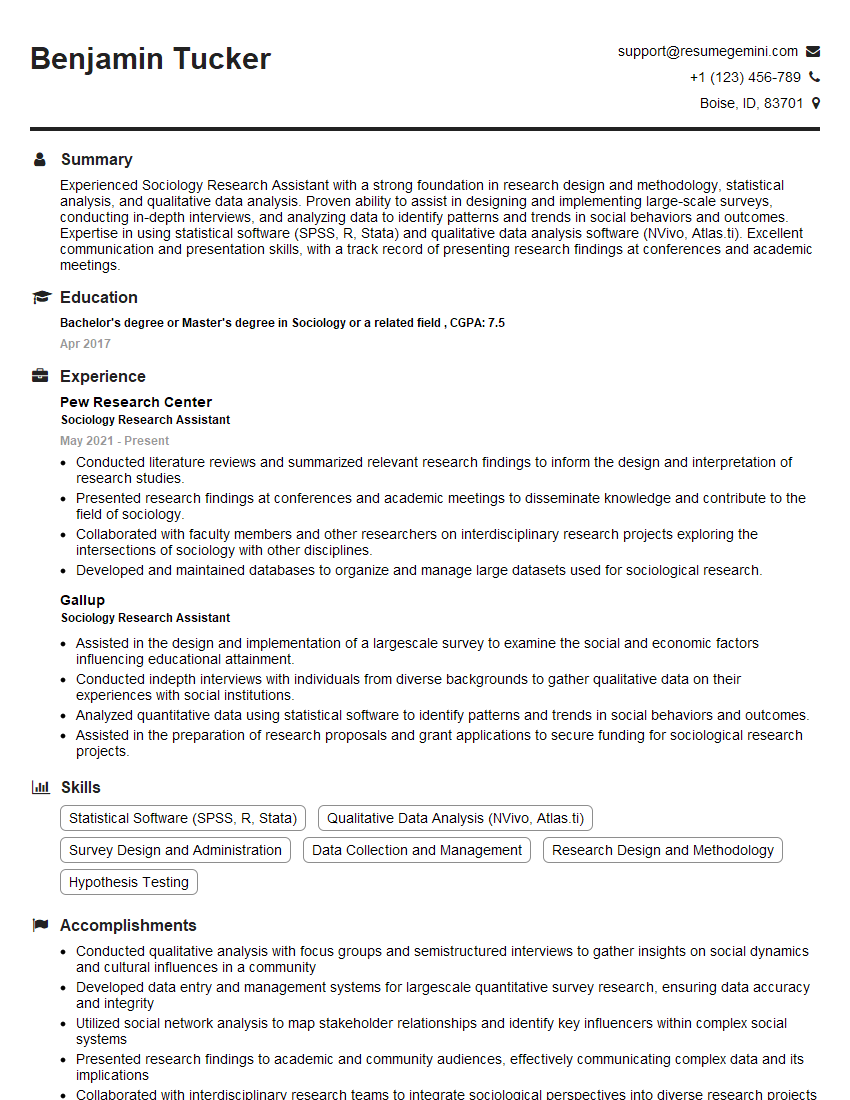
Sociology Research Assistant Resume Sample
Explore more articles
Users Rating of Our Blogs
Share Your Experience
We value your feedback! Please rate our content and share your thoughts (optional).
What Readers Say About Our Blog
To the interviewgemini.com Webmaster.
Very helpful and content specific questions to help prepare me for my interview!
Thank you
To the interviewgemini.com Webmaster.
This was kind of a unique content I found around the specialized skills. Very helpful questions and good detailed answers.
Very Helpful blog, thank you Interviewgemini team.