The right preparation can turn an interview into an opportunity to showcase your expertise. This guide to Mixed and poured concrete interview questions is your ultimate resource, providing key insights and tips to help you ace your responses and stand out as a top candidate.
Questions Asked in Mixed and poured concrete Interview
Q 1. Explain the different types of cement used in concrete mixes.
Several types of cement are used in concrete mixes, each with its own properties affecting the final product’s strength, durability, and setting time. The most common is Portland cement, a fine powder produced by heating limestone and clay. Different types of Portland cement exist, categorized by their chemical composition and performance characteristics.
- Type I/Ordinary Portland Cement (OPC): General-purpose cement suitable for most applications. It offers a good balance of strength and workability.
- Type II/Moderate Sulfate-Resisting Cement: Used in environments with moderate sulfate exposure, offering increased resistance compared to Type I.
- Type III/High-Early-Strength Cement: Sets and gains strength rapidly, ideal for projects requiring quick turnaround times, such as emergency repairs or cold weather concreting.
- Type IV/Low-Heat Cement: Generates less heat during hydration, crucial for massive concrete structures where excessive heat buildup can cause cracking.
- Type V/High Sulfate-Resisting Cement: Specifically designed for environments with high sulfate concentrations, such as coastal areas or where sulfate-rich groundwater is present.
Beyond Portland cement, other types include blended cements, which combine Portland cement with supplementary cementitious materials (SCMs) like fly ash or slag. These SCMs improve workability, reduce cost, and often enhance durability. The choice of cement depends heavily on the project requirements and environmental conditions.
Q 2. Describe the process of determining the water-cement ratio.
Determining the water-cement ratio is crucial because it directly influences the concrete’s strength and workability. A lower water-cement ratio generally results in higher strength, but reduced workability (making it harder to pour and finish). The process involves considering several factors:
- Desired Strength: Higher strength requirements necessitate a lower water-cement ratio.
- Aggregate Type and Grading: The type and size distribution of aggregates impact the amount of water needed for proper workability.
- Cement Type: Different cement types have varying hydration characteristics, influencing the required water content.
- Admixtures: Certain admixtures can modify the water requirement, allowing for lower water-cement ratios while maintaining workability.
In practice, this ratio is often determined through laboratory testing and experience. Mix design software and established standards (like ACI 318 in the US) provide guidance. The process often involves trial mixes, adjusting the water content until the desired slump (consistency) and strength are achieved.
Q 3. What are the effects of using too much or too little water in a concrete mix?
The water-cement ratio is paramount; getting it wrong has significant consequences.
- Too Much Water: Leads to a weaker, more porous concrete prone to cracking and reduced durability. The excess water creates more voids within the hardened concrete, weakening its structural integrity. It also increases the risk of segregation (separation of the cement paste from the aggregate) and bleeding (water rising to the surface). Imagine trying to build a sandcastle with too much water – it’ll be weak and crumbly.
- Too Little Water: Results in a stiff, difficult-to-place mix, making it hard to consolidate and finish properly. This can lead to honeycombing (voids within the concrete) and reduced strength due to incomplete hydration of the cement. Think of trying to build that sandcastle with almost no water – it’ll be impossible to mold properly.
Finding the optimal balance is essential for creating high-quality concrete.
Q 4. How do you ensure proper concrete slump consistency?
Ensuring proper concrete slump consistency is critical for achieving the desired workability. Slump is a measure of the concrete’s consistency, typically expressed in inches. The target slump depends on the application; for example, a higher slump is needed for placing concrete in congested reinforcement while a lower slump is suitable for applications requiring less flowability.
We achieve the right slump by carefully controlling the water content during mixing. The slump test, using a standard slump cone, is performed on-site to verify the consistency. If the slump is too high, less water (or potentially more aggregate) should be added; if it’s too low, more water is needed. This process may require adjustments to maintain the correct slump throughout the pour.
Experienced concrete professionals develop a sense of what a given mix looks and feels like at its optimal slump. They visually assess the mix and adjust water content accordingly, verifying it regularly using the slump test throughout the pour.
Q 5. What are the common admixtures used in concrete and their functions?
Admixtures are chemical additives that modify the properties of concrete. They are used to improve workability, strength, durability, or to control setting time. Common admixtures include:
- Water reducers: Increase workability without increasing the water content, leading to higher strength. Think of them as lubricants for the concrete mix.
- Superplasticizers (high-range water reducers): Significantly enhance workability allowing for very low water-cement ratios and higher strengths.
- Accelerators: Speed up the setting and hardening process, useful in cold weather concreting or when a quick turnaround is needed.
- Retarders: Slow down the setting time, beneficial for hot weather concreting or large pours where placement time needs to be extended.
- Air-entraining agents: Introduce tiny air bubbles into the concrete, improving its resistance to freeze-thaw cycles.
- Pozzolans (fly ash, silica fume): Supplementary cementitious materials that enhance strength, durability, and reduce permeability.
The choice and dosage of admixtures depend on the specific project needs and must be carefully considered to avoid negative impacts on the concrete’s final properties.
Q 6. Explain the importance of proper curing for concrete.
Proper curing is essential for the concrete to achieve its design strength and durability. Curing involves maintaining the moisture content and temperature of the concrete during the initial stages of hydration (the chemical reaction between cement and water). Without proper curing, the concrete will be significantly weaker, more prone to cracking, and have reduced resistance to environmental factors.
Think of it like baking a cake. You need the right temperature and time for it to properly set. Similarly, concrete needs the right moisture and time to properly hydrate and reach its full potential. Insufficient curing allows the concrete to dry out prematurely, arresting the hydration process and leading to a weakened structure.
Q 7. Describe different concrete curing methods.
Several methods ensure proper concrete curing:
- Water curing: Keeping the concrete surface continuously wet by ponding, spraying, or applying wet burlap sacks. This is a very effective method, particularly for longer curing periods.
- Membrane curing: Applying a curing compound (liquid membrane) to the surface to prevent moisture loss. This creates a barrier that retains moisture within the concrete.
- Steam curing: Exposing the concrete to steam in a controlled environment. This accelerates the curing process and is often used for precast concrete elements.
- Fogging: A method using a fine water mist to keep the concrete surface wet. It’s less labor-intensive than continuous ponding.
- Using moist curing blankets or mats: These materials retain moisture and prevent rapid drying.
The best method depends on factors like weather, concrete type, and project specifics. It’s crucial to follow the recommended curing duration and method specified by the project engineer or in the concrete mix design.
Q 8. What are the signs of improper concrete curing?
Improper concrete curing leads to a weakened and potentially damaged slab. Think of concrete curing as the crucial period where the cement hydration process completes, gaining its final strength. Signs of inadequate curing include:
- Cracking: Early cracking, often in a network pattern, indicates rapid drying and shrinkage stress. This is like a dry cake cracking as it shrinks.
- Dusting: A powdery surface layer suggests excessive water loss, leaving behind weak cement paste. It’s like the top layer of a poorly baked pie crumbling.
- Low Compressive Strength: This is a sign of incomplete hydration. Testing reveals the concrete is significantly weaker than designed.
- Scaling and Spalling: Surface deterioration (scaling) or chipping (spalling) is common in poorly cured concrete exposed to freeze-thaw cycles. It is like the paint peeling off your house.
- Discoloration: Uneven color can be due to uneven moisture loss during curing. This may be subtle but reveals inconsistencies.
Proper curing involves keeping the concrete moist for a sufficient period (typically 7 days, but this depends on the mix design, weather, and the type of cement used), preventing rapid water loss and ensuring complete cement hydration.
Q 9. How do you calculate the amount of concrete needed for a given project?
Calculating concrete quantity requires knowing the volume of the structure. Think of it like filling a box. First, determine the volume in cubic feet (or cubic meters) and then convert to cubic yards (since concrete is typically ordered in cubic yards).
For simple rectangular shapes:
Volume = Length x Width x Depth
Example: A slab 10ft long, 8ft wide, and 6 inches (0.5ft) deep requires:
Volume = 10ft x 8ft x 0.5ft = 40 cubic feet
To convert cubic feet to cubic yards, divide by 27 (since there are 27 cubic feet in a cubic yard):
40 cubic feet / 27 cubic feet/cubic yard ≈ 1.48 cubic yards
Always add extra for waste and spillage (typically 5-10%), bringing the total to roughly 1.6 cubic yards. More complex shapes require breaking them into smaller, simpler shapes and adding their volumes.
Q 10. Explain the different types of concrete finishes.
Concrete finishes enhance the appearance and functionality of a concrete surface. Common types include:
- Broomed Finish: A textured surface created by sweeping a stiff broom across the concrete while it’s still wet. Provides slip resistance. Imagine a slightly rough surface like a sidewalk.
- Smooth Finish: A troweled finish creating a flat, smooth surface. Often used for interior floors. This is like the polished surface of your kitchen counter.
- Exposed Aggregate Finish: Washing away the cement paste to reveal the aggregate (rocks and stones) underneath. Offers a unique, rustic look. Imagine a stony beach, smooth yet rugged.
- Stamped Finish: Impressing patterns into the concrete using stamps. Provides decorative designs, mimicking materials like brick or stone. Like paving stones but seamless.
- Stained Finish: Adding color to the concrete using stains, creating various effects. Allows for customization and creativity like painting, but more durable.
Q 11. Describe the process of finishing a concrete slab.
Finishing a concrete slab is a multi-step process requiring precision and timing. It’s like baking a cake – you need to follow each step carefully for the best result.
- Screeding: Leveling the concrete using a screed board, ensuring uniform thickness.
- Bull Floating: Using a bull float to level and consolidate the surface, removing excess water and smoothing the surface.
- Darbying: Smoothing the surface further using a darby, creating a smoother finish.
- Troweling: Using a trowel to produce the desired finish: smooth, broomed, etc.
- Edging: Creating neat, clean edges using an edging tool.
- Joint Cutting: Creating control joints to prevent random cracking.
- Curing: Protecting the concrete from rapid drying to ensure proper hydration and strength development.
Q 12. What are the common problems encountered during concrete placement?
Concrete placement can encounter several challenges. It’s like a delicate dance – each step requires attention to detail.
- Segregation: Separation of the concrete components (aggregate, cement, water), resulting in areas of weak concrete. This is like ingredients separating in a poorly mixed cake batter.
- Bleeding: Excess water rising to the surface, weakening the concrete and affecting the finish. It is like water seeping to the top of a poorly drained cake.
- Honeycombing: Voids or air pockets within the concrete, reducing strength and durability. Imagine holes in a sponge.
- Cold Joints: A weak area created when fresh concrete is placed against hardened concrete, creating a line of weakness. Similar to a poorly joined piece of wood.
- Lack of Consolidation: Insufficient vibration leading to trapped air and weakened concrete. The concrete structure would be brittle like a poorly made cookie.
Q 13. How do you handle cold weather concreting?
Cold weather concreting presents unique challenges due to the slower hydration rate of cement at low temperatures. Imagine trying to bake a cake in a cold oven – it won’t rise properly.
Key strategies include:
- Heating Aggregates and Water: Warming the materials before mixing accelerates the hydration process.
- Using Admixtures: Adding chemical admixtures (accelerators) to speed up the setting time.
- Protecting the Concrete: Insulating the concrete with blankets or using windbreaks to prevent heat loss.
- Using Insulated Forms: Using forms that retain heat to slow down the cooling of the concrete.
- Monitoring Temperature: Closely monitoring the concrete temperature during placement and curing.
Q 14. How do you handle hot weather concreting?
Hot weather concreting leads to rapid water loss and quick setting times, potentially resulting in cracking and reduced strength. It’s like baking a cake in an oven that’s too hot – it can burn and crack.
Mitigation strategies involve:
- Using Retarders: Adding chemical retarders to slow down the setting process.
- Cooling Aggregates and Water: Reducing the temperature of the materials before mixing.
- Increasing Water Content (with caution): Slightly increasing water content can help, but excessive water can weaken the concrete.
- Providing Shade and Moisture Retention: Protecting the concrete from direct sunlight and promoting moisture retention through curing methods such as ponding or covering with wet burlap.
- Accelerated Finishing: Ensuring prompt finishing operations to minimize drying.
Q 15. Describe the different types of concrete reinforcement.
Concrete reinforcement significantly boosts its strength and durability, allowing it to withstand tensile forces it’s inherently weak against. The primary type is steel reinforcement, commonly known as rebar. These steel bars come in various diameters and grades, each specified to handle different load capacities. They are placed within the concrete formwork before pouring, forming a skeletal structure that strengthens the entire mass.
- Deformed bars: These have surface patterns (deformations) that improve the bond with the concrete, preventing slippage under stress. Think of it like adding grip to a nail – it holds much more securely.
- Plain bars: These are smooth bars, used less frequently now except in specific applications like shear reinforcement or where deformation is not crucial.
- Fiber reinforcement: This involves incorporating fibers like steel, glass, or synthetic polymers into the concrete mix. These fibers improve the tensile strength and crack resistance, particularly useful in high-impact areas or where shrinkage cracking is a concern. Think of it as adding tiny reinforcing elements throughout the entire concrete mass.
- Welded wire mesh: This is a grid of pre-fabricated wire, useful for applications like slabs and pavements where rapid reinforcement placement is needed. Imagine a strong woven net embedded within the concrete.
The selection of reinforcement type and its placement are critical aspects of structural design and dictated by engineering calculations to ensure structural integrity.
Career Expert Tips:
- Ace those interviews! Prepare effectively by reviewing the Top 50 Most Common Interview Questions on ResumeGemini.
- Navigate your job search with confidence! Explore a wide range of Career Tips on ResumeGemini. Learn about common challenges and recommendations to overcome them.
- Craft the perfect resume! Master the Art of Resume Writing with ResumeGemini’s guide. Showcase your unique qualifications and achievements effectively.
- Don’t miss out on holiday savings! Build your dream resume with ResumeGemini’s ATS optimized templates.
Q 16. Explain the importance of proper concrete consolidation.
Proper concrete consolidation is paramount because it eliminates air pockets and ensures a homogenous, dense mixture. Air voids weaken the concrete, leading to reduced strength, increased permeability (allowing water ingress), and susceptibility to damage from freeze-thaw cycles. Imagine baking a cake – if there are air pockets, it won’t be as strong or appealing.
Insufficient consolidation results in honeycombing (voids near the surface), segregation (separation of aggregates and cement paste), and bleeding (water rising to the surface). These defects significantly compromise the structural integrity and durability of the concrete structure. A properly consolidated concrete structure will achieve its designed strength and resist the stresses applied to it for its intended lifetime.
Q 17. What are the different methods of concrete consolidation?
Several methods ensure effective concrete consolidation, chosen based on the project’s scale and the concrete’s properties:
- Rodding and Spading: Manual methods, suitable for smaller pours. Long metal rods or spades are used to work the concrete, forcing air out and ensuring proper placement around reinforcement.
- Vibration: This is the most common method, employing internal or external vibrators. Internal vibrators are submerged into the fresh concrete, causing vibrations that move the aggregates and release trapped air. External vibrators (form vibrators) are attached to the formwork, vibrating the entire form. Think of it like shaking a container of sand to settle it.
- Formwork Consolidation: Proper formwork design is crucial. Well-designed formwork with minimal gaps prevents concrete leakage and allows for better consolidation.
The choice of method is often determined by factors such as the size of the pour, type of concrete, and the presence of reinforcement. For large pours, vibration is indispensable, while for smaller jobs, rodding and spading might suffice.
Q 18. How do you identify and address honeycombing in concrete?
Honeycombing, characterized by large voids or porous areas, primarily occurs near the surface of the concrete. It’s easily identified visually as a rough, pitted texture. Often, honeycombing appears as a cluster of small cavities rather than one large void. It’s typically caused by insufficient consolidation, leading to trapped air bubbles. It also can be caused by improper formwork causing voids or segregation during placement.
Addressing honeycombing depends on its severity:
- Minor Honeycombing: In minor cases, surface patching might suffice, using a suitable repair mortar to fill the voids.
- Severe Honeycombing: For significant honeycombing, more extensive repairs may be necessary, possibly involving removal and replacement of the affected section. This is a more costly and time-consuming repair.
Prevention is always better than cure. Careful attention to consolidation techniques and proper formwork design effectively minimizes the risk of honeycombing.
Q 19. What are the safety precautions you take when working with concrete?
Safety is paramount when working with concrete. Precautions include:
- Personal Protective Equipment (PPE): Always wear safety glasses, gloves, and appropriate footwear to protect against splashes, slips, and cuts. A hard hat is essential if working at height.
- Respiratory Protection: Concrete dust can irritate the lungs; a respirator is necessary when mixing or working with dry concrete.
- Skin Protection: Concrete is alkaline and can cause skin irritation or burns; gloves are mandatory.
- Fall Protection: If working at heights, follow strict fall protection protocols.
- Lifting Techniques: Use proper lifting techniques to prevent muscle strains and injuries when handling heavy bags of cement or other materials.
- Awareness of Hazards: Be aware of the hazards posed by wet concrete (slips and falls), heavy machinery, and potential for chemical reactions.
Regular safety training and adherence to site safety regulations are crucial in minimizing risks and preventing accidents. A safe working environment benefits everyone.
Q 20. What is the significance of concrete compressive strength?
Concrete compressive strength is a critical indicator of its quality and ability to withstand loads. It represents the maximum stress the concrete can endure before failure under compression. Measured in units of pressure (e.g., psi or MPa), it dictates the structural capacity of concrete elements. A higher compressive strength implies better durability, load-bearing capacity, and resistance to cracking.
The specified compressive strength is determined during the design phase and influences the choice of cement type, mix proportions, and curing methods. For instance, a high-strength concrete might be required for bridge piers or high-rise buildings, whereas lower strength concrete may suffice for pavements. Regular testing ensures the concrete meets the specified strength requirements, verifying the quality of the construction.
Q 21. How do you perform a slump test?
The slump test is a simple yet effective method for determining the consistency or workability of fresh concrete. It measures the slump, or the degree of deformation, of a cone-shaped sample of freshly mixed concrete.
Procedure:
- A metal cone, with a specific height and diameter, is placed on a flat, non-absorbent surface.
- The cone is filled with fresh concrete in three layers, each compacted with 25 strokes of a standard tamping rod.
- The cone is carefully lifted vertically, leaving the concrete in a slumped shape.
- The slump is measured as the difference between the initial height of the cone and the height of the slumped concrete.
The slump value provides a qualitative indication of workability; a higher slump indicates higher workability. The slump test is a quick, on-site test that helps assess the consistency of the concrete mix and ensures it is suitable for placement and consolidation.
Q 22. What are the different types of concrete testing?
Concrete testing is crucial for ensuring the quality and performance of the final product. Different tests assess various properties. These tests can be broadly categorized into tests for:
- Strength: This is arguably the most important property. Common tests include compressive strength testing (using a compression machine on cylindrical samples), flexural strength testing (measuring the strength in bending), and splitting tensile strength testing.
- Workability: This refers to how easily the concrete can be mixed, placed, and finished. Tests include slump test (measuring the slump or sag of a cone of fresh concrete), flow table test (measuring the spread of concrete on a vibrating table), and Vebe test (measuring the vibration time needed for consolidation).
- Durability: This assesses how well the concrete will withstand environmental factors like freezing and thawing, chemical attack, and abrasion. Tests include air permeability, chloride ion penetration, and rapid chloride permeability tests.
- Setting Time: This determines how long the concrete takes to harden. The Vicat test and Gillmore test are commonly used.
- Other Properties: Other tests might examine properties like density, unit weight, and air content.
The choice of tests depends on the specific application and requirements of the project. For example, a high-performance concrete used in a marine environment would require more extensive durability testing than a simple foundation.
Q 23. Explain the concept of concrete durability.
Concrete durability refers to its ability to resist deterioration and maintain its properties over time when exposed to various environmental conditions and stresses. Think of it like the lifespan of the concrete. A durable concrete structure will last for decades without significant damage, while a less durable one may crack, spall, or weaken prematurely.
It’s essential for ensuring the longevity and safety of concrete structures. Poor durability can lead to costly repairs, structural failure, and even safety hazards. For instance, a bridge deck that isn’t durable enough to withstand de-icing salts could experience significant cracking and corrosion, jeopardizing the safety of drivers.
Q 24. What are the factors affecting concrete durability?
Many factors influence concrete durability. These can be broadly categorized as:
- Material Properties: The quality of the cement, aggregates (sand and gravel), and water significantly affects durability. Using poor quality materials or improper mix proportions can lead to weakness and susceptibility to damage.
- Mix Design: The water-cement ratio is a critical factor. A lower water-cement ratio generally leads to higher strength and durability. The type of cement and admixtures (chemicals added to modify concrete properties) also play a role.
- Environmental Conditions: Exposure to freeze-thaw cycles, chemicals (like de-icing salts or sulfates), and aggressive environments (like seawater) significantly affects durability. Concrete in a marine environment, for example, needs to be designed for resistance to chloride ion penetration.
- Construction Practices: Proper curing (keeping the concrete moist after pouring) is critical for achieving full strength and durability. Incorrect placement, consolidation, and finishing can also lead to defects and reduce durability.
- Design and Detailing: Proper design of the structure and detailing of joints and reinforcement can minimize stress concentrations and improve durability. For example, adequate cover for reinforcement bars protects them from corrosion.
Imagine building a house on a sandy foundation—the foundation needs to be durable enough to support the house without settling or collapsing. Similarly, concrete structures need durability to withstand their intended loads and environmental exposure.
Q 25. How do you determine the workability of concrete?
Workability refers to how easily concrete can be mixed, transported, placed, and finished. It’s a crucial factor in achieving a high-quality, homogenous structure. Several methods determine workability:
- Slump Test: This is the most common method. A cone-shaped mold is filled with concrete, then removed, and the slump or settlement of the concrete is measured. A higher slump indicates higher workability, but excessively high slump can lead to segregation (separation of components).
- Flow Table Test: A sample of concrete is placed on a table that vibrates at a specific frequency. The spread of the concrete is measured after a set number of drops. It’s often used for concrete with low slump.
- Vebe Test: This involves measuring the time it takes for a sample of concrete to consolidate under vibration. A shorter consolidation time indicates higher workability.
- Visual Assessment: Experienced concrete workers can often judge workability by observing the consistency and flow of the concrete.
Choosing the right method depends on the type of concrete and the specific requirements of the project. For example, high-performance concrete often uses more sophisticated methods like the Vebe test to ensure uniform placement.
Q 26. Describe your experience with different types of concrete pumping equipment.
My experience encompasses various concrete pumping equipment, including:
- Boom Pumps: These are versatile machines with a long, articulated boom that allows for concrete placement in difficult-to-reach areas. I’ve worked with both stationary and truck-mounted boom pumps, handling projects ranging from high-rise buildings to complex infrastructure projects.
- Line Pumps: These are simpler and more compact than boom pumps, typically used for smaller projects or when access is restricted. I have experience in troubleshooting line pump issues, ensuring efficient concrete delivery.
- Truck-Mounted Pumps: These are common for medium to large projects where mobility is required. I’ve coordinated logistics to ensure timely delivery of concrete to the job site, managing multiple trucks and minimizing delays.
- Trailer Pumps: These are stationary pumps mounted on trailers and provide a reliable concrete supply for larger scale projects. The selection of the right pump is critical to avoiding blockages and ensuring efficiency.
In each case, safety procedures were meticulously followed, including regular inspections and maintenance to prevent accidents and ensure smooth operation. I’m adept at identifying and resolving operational issues to minimize downtime and maintain project schedules.
Q 27. Explain your understanding of concrete specifications and standards.
Concrete specifications and standards are essential for ensuring consistent quality and performance. I’m familiar with various national and international standards, including ASTM (American Society for Testing and Materials) and ACI (American Concrete Institute) standards. These standards define requirements for:
- Material Properties: They specify acceptable ranges for the strength, workability, and durability of concrete. This is crucial for ensuring the structural integrity of the finished product.
- Mix Proportions: They provide guidelines for determining the appropriate ratios of cement, aggregates, and water to achieve the desired properties. This includes specifying the type of cement and aggregates and the addition of admixtures.
- Testing Procedures: They outline the methods used to test various properties of concrete. Ensuring compliance with these procedures is crucial to obtaining accurate and reliable test results.
- Construction Practices: They also specify requirements for concrete placement, consolidation, and finishing. This helps ensure the concrete is properly placed and compacted to prevent defects.
Understanding and adhering to these specifications is critical for ensuring project success. A deviation from specified standards can lead to quality issues and potential structural failures. I am also experienced with interpreting and adapting standards to the specific project requirements.
Q 28. Describe your experience with quality control procedures in concrete work.
Quality control (QC) is paramount in concrete work. My experience includes implementing and overseeing a comprehensive QC program that covers all aspects of the construction process:
- Material Inspection: This includes verifying the quality of cement, aggregates, and admixtures before they are used in the mix. This often involved reviewing certificates of compliance and performing on-site tests to ensure materials meet specifications.
- Mix Design Control: I’ve been involved in overseeing the preparation and testing of concrete mixes to ensure they meet the required strength, workability, and durability requirements. This included using statistical methods for quality assurance.
- In-Place Testing: I’ve monitored concrete placement, consolidation, and finishing to ensure proper techniques are used to avoid defects such as honeycombing or segregation. This involved performing tests like slump tests and visual inspections in the field.
- Strength Testing: This involves taking concrete samples at various stages of the project and testing them for compressive strength to verify that the concrete meets design requirements. Regular evaluation of the results is performed to identify trends and potential issues early.
- Documentation: Meticulous record-keeping is essential for demonstrating compliance with project specifications and standards. This includes maintaining detailed logs of all testing performed, and issues encountered.
A well-executed QC program is vital for minimizing risks and ensuring the construction of durable and safe concrete structures. It’s not just about ensuring that the concrete meets minimum standards, but also about achieving optimal performance and minimizing the risk of failure.
Key Topics to Learn for Mixed and Poured Concrete Interview
- Concrete Mix Design: Understanding the different components (cement, aggregates, water, admixtures), their proportions, and their impact on the final concrete properties (strength, workability, durability).
- Mixing Methods: Familiarize yourself with various mixing techniques, including batching plants, truck mixers, and on-site mixing. Understand the advantages and disadvantages of each method.
- Pouring and Placement Techniques: Learn about proper techniques for placing concrete, including vibration, consolidation, and finishing. Understand how to avoid common problems like segregation and honeycombing.
- Formwork and Reinforcement: Gain knowledge of different formwork systems and the importance of properly reinforcing concrete structures to ensure strength and stability. Understand how formwork design impacts the final concrete pour.
- Concrete Testing and Quality Control: Familiarize yourself with standard testing methods used to assess the quality of concrete, such as slump tests, compressive strength tests, and air content tests. Understand the importance of quality control throughout the entire process.
- Health and Safety: Understand the necessary safety precautions and regulations associated with working with concrete, including personal protective equipment (PPE) and potential hazards.
- Troubleshooting Common Issues: Be prepared to discuss common problems encountered during concrete mixing and pouring, such as cracking, bleeding, and segregation, and how to prevent or mitigate them.
- Sustainable Concrete Practices: Explore environmentally friendly concrete practices, including the use of recycled materials and techniques to reduce the carbon footprint of concrete production.
Next Steps
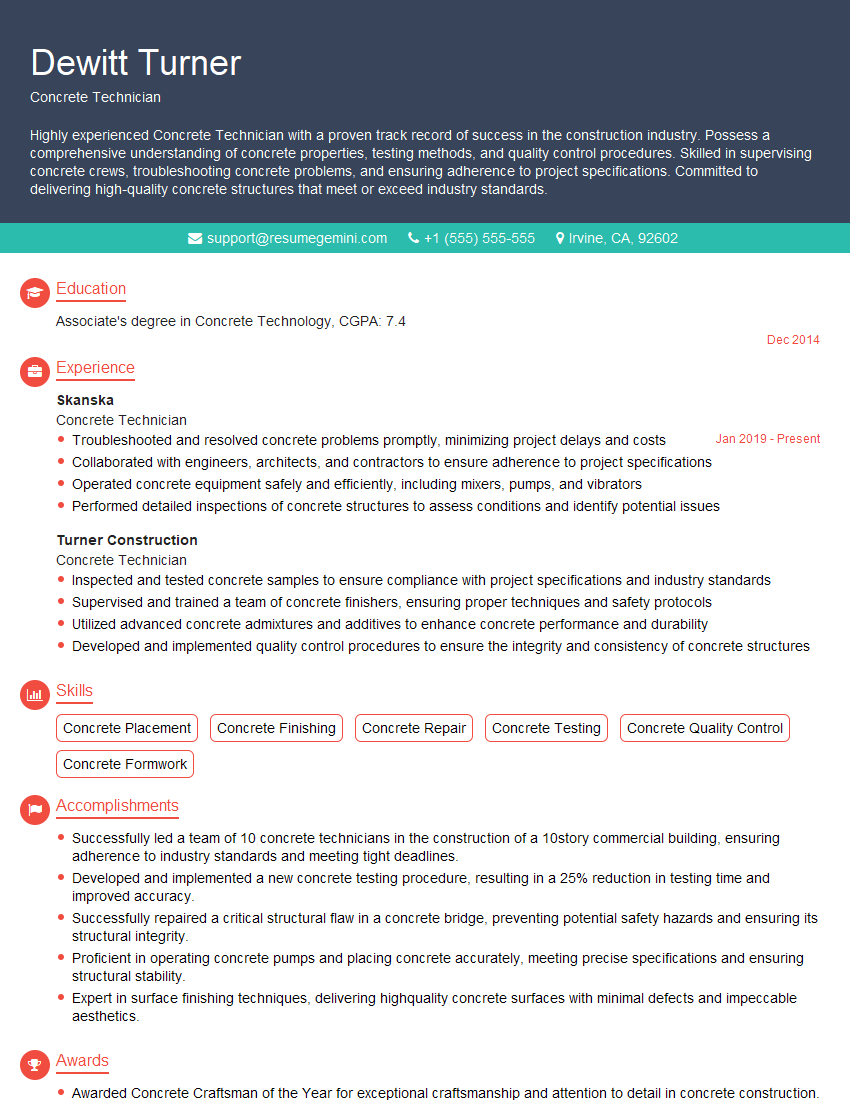
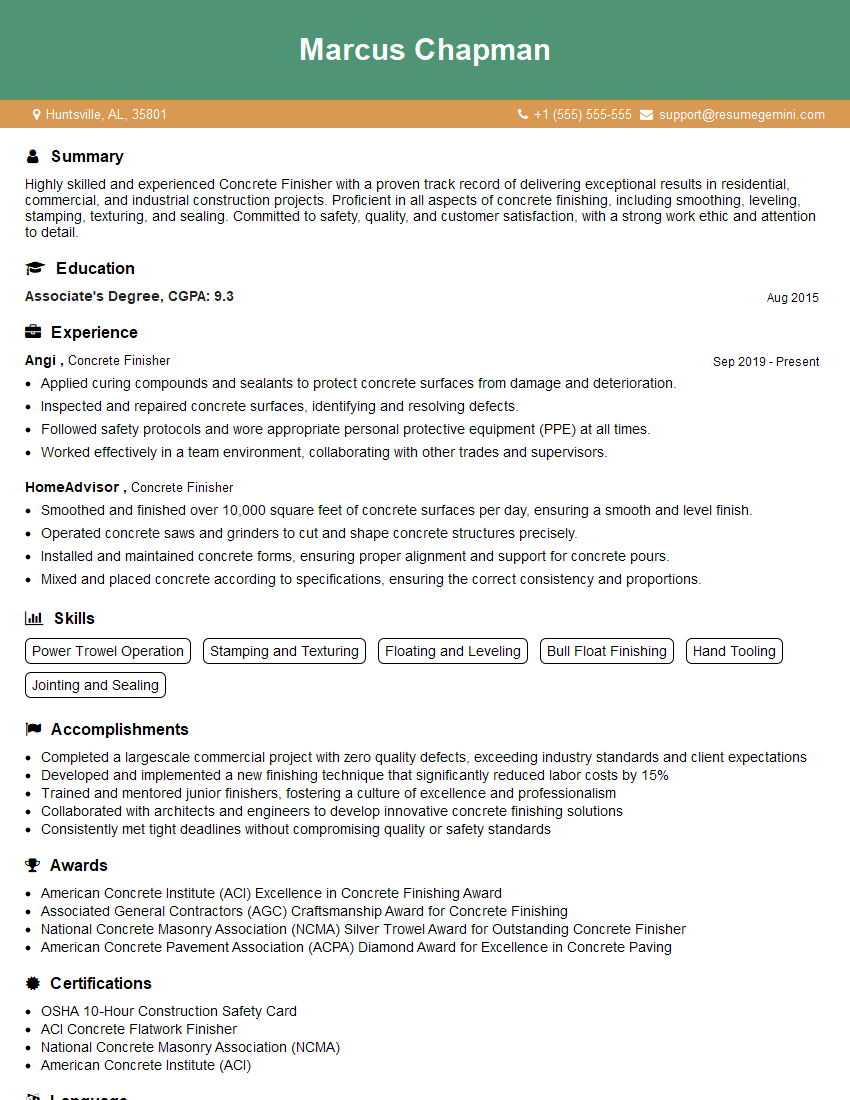
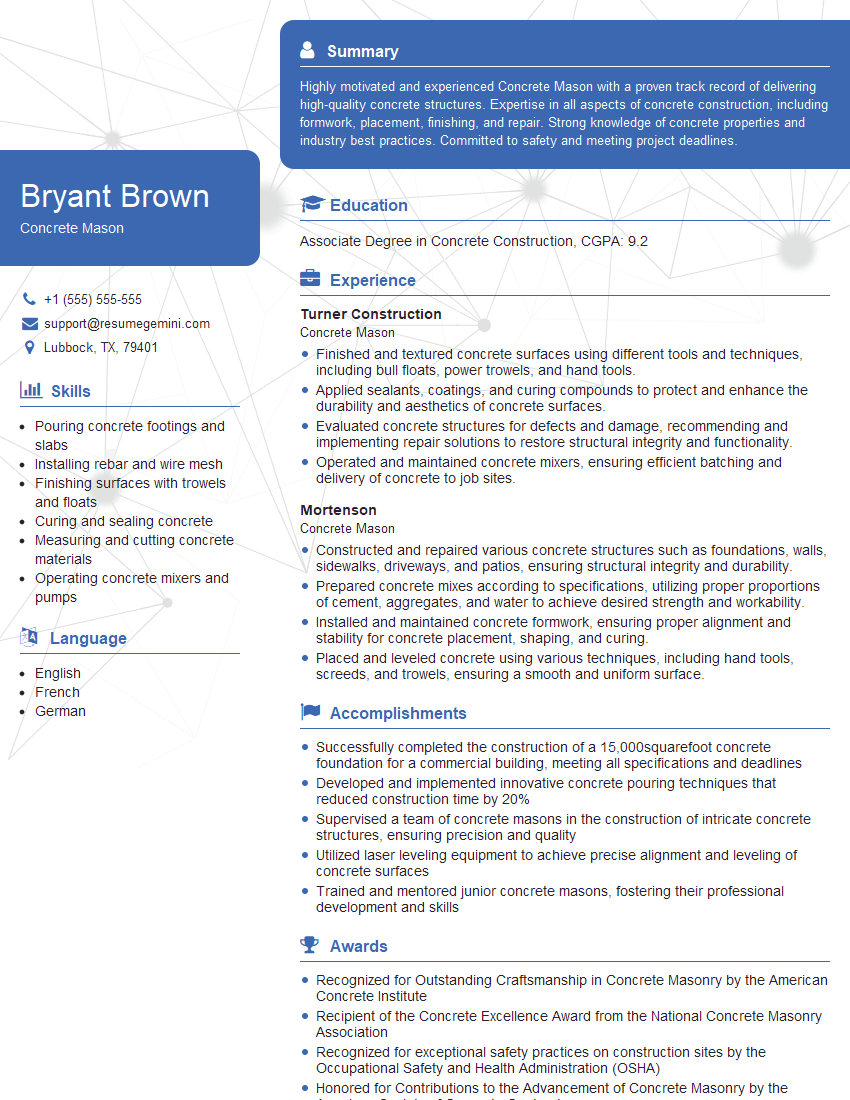
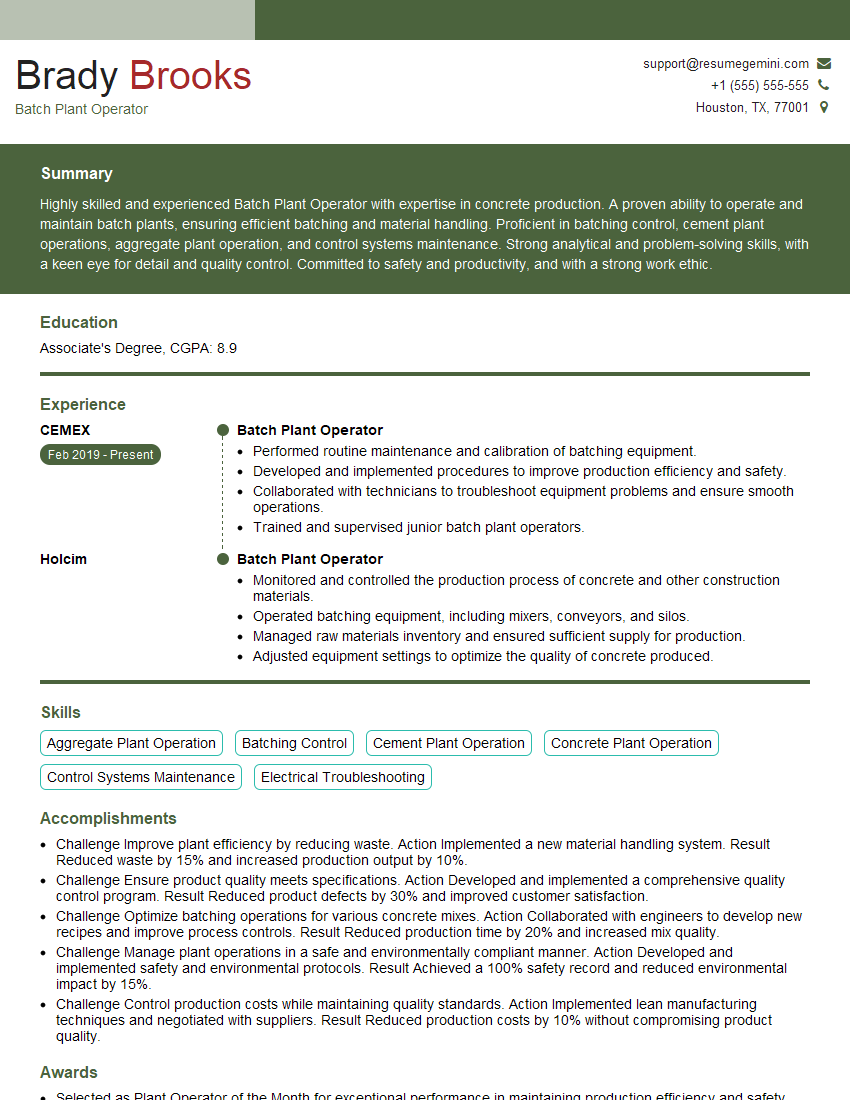
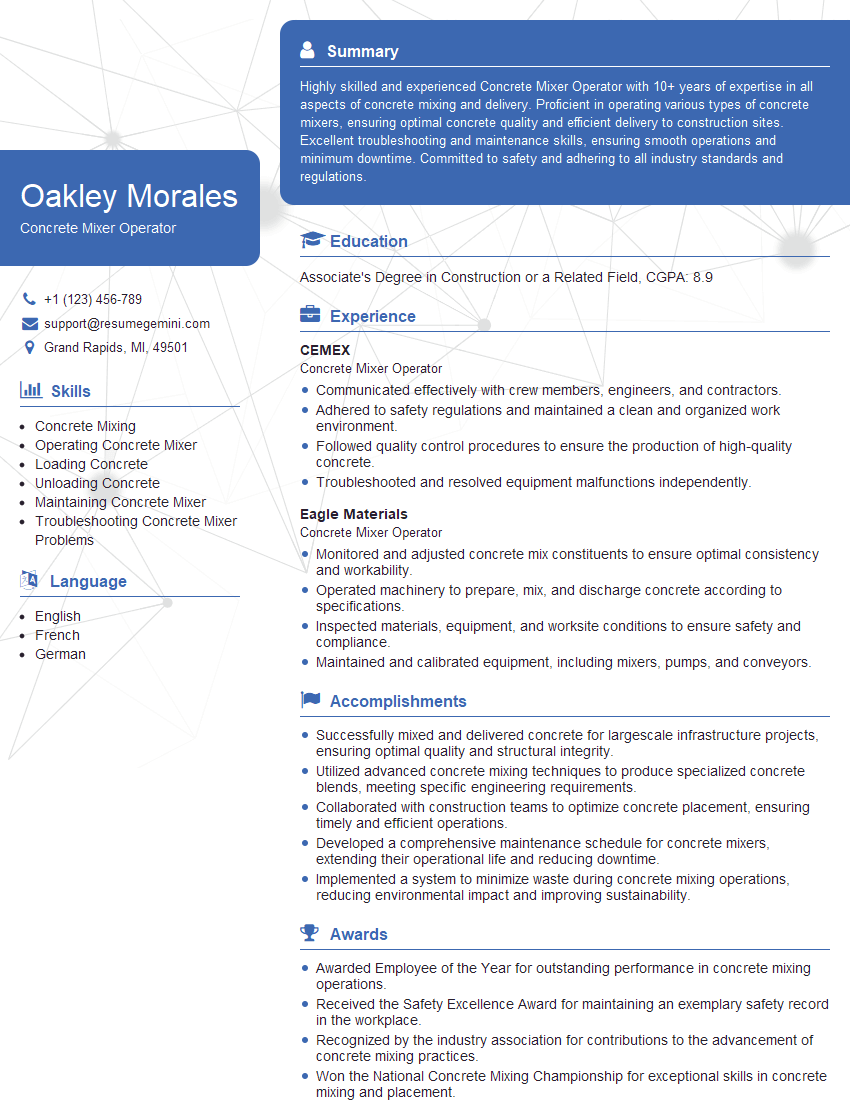
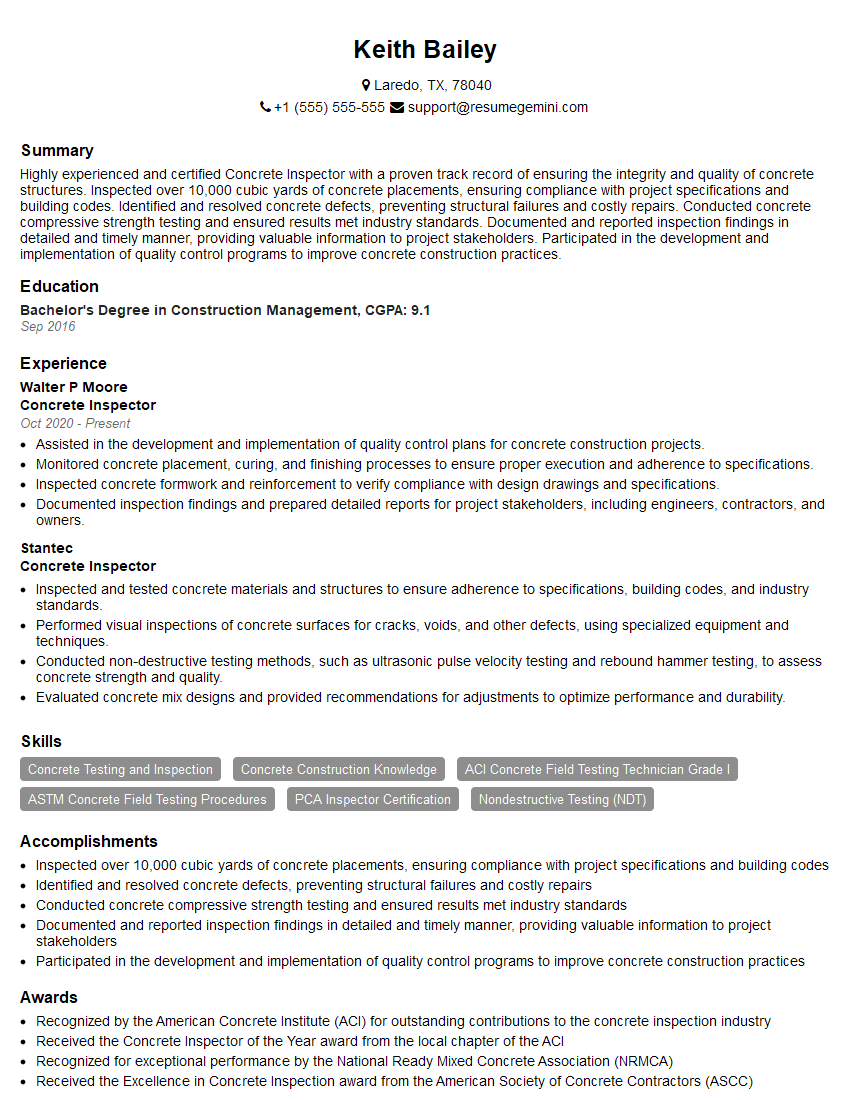
Mastering the intricacies of mixed and poured concrete opens doors to exciting career opportunities in construction and engineering. A strong understanding of these concepts will significantly enhance your interview performance and set you apart from other candidates. To further boost your job prospects, creating a compelling and ATS-friendly resume is crucial. ResumeGemini is a trusted resource to help you build a professional resume that highlights your skills and experience effectively. Examples of resumes tailored to the Mixed and Poured Concrete industry are available to guide you. Invest the time in crafting a strong resume; it’s your first impression to potential employers.

Explore more articles
Users Rating of Our Blogs
Share Your Experience
We value your feedback! Please rate our content and share your thoughts (optional).
What Readers Say About Our Blog
To the interviewgemini.com Webmaster.
Very helpful and content specific questions to help prepare me for my interview!
Thank you
To the interviewgemini.com Webmaster.
This was kind of a unique content I found around the specialized skills. Very helpful questions and good detailed answers.
Very Helpful blog, thank you Interviewgemini team.