The right preparation can turn an interview into an opportunity to showcase your expertise. This guide to Blending and Packaging interview questions is your ultimate resource, providing key insights and tips to help you ace your responses and stand out as a top candidate.
Questions Asked in Blending and Packaging Interview
Q 1. Explain the different types of blending equipment and their applications.
Blending equipment selection depends heavily on the product’s properties and the desired outcome. Let’s explore some common types:
Ribbon Blenders: These are excellent for dry, free-flowing powders and granules. Imagine a ribbon-shaped agitator moving material both radially and axially, ensuring thorough mixing. I’ve used them extensively in the food industry for blending spice mixes, achieving a consistent distribution of ingredients.
Double Cone Blenders: These are ideal for more delicate materials prone to degradation. The tumbling motion gently mixes the components, minimizing damage. I recall using one for a pharmaceutical project, where preserving the integrity of sensitive ingredients was paramount.
High Shear Mixers: These are powerful machines that combine high-speed mixing with shearing action. They are perfect for creating smooth, homogenous emulsions and suspensions—think mayonnaise or paints. In one project, we used a high-shear mixer to develop a stable cream-based cosmetic product.
Fluid Bed Processors: Useful for coating and granulation, these use a stream of air to suspend particles, allowing for even coating with liquids or other powders. I’ve seen these used to coat pills with protective layers or create customized food textures.
The choice of blender hinges on factors like batch size, material characteristics (viscosity, particle size), mixing time, and desired level of homogeneity. Selecting the wrong equipment can lead to poor mixing, product degradation, or inefficient production.
Q 2. Describe your experience with various packaging materials (e.g., plastic, glass, paper).
My experience encompasses a wide range of packaging materials, each with its own strengths and weaknesses:
Plastic: I’ve worked extensively with various plastics, from HDPE (high-density polyethylene) for its durability and recyclability in bottles and containers to PET (polyethylene terephthalate) for its clarity and suitability for beverages. The choice depends on factors like product stability, barrier requirements (oxygen, moisture), and cost-effectiveness.
Glass: Glass provides excellent barrier properties, protecting sensitive products from external factors. However, it’s heavier and more fragile than plastic, requiring careful handling and impacting transportation costs. I’ve been involved in projects using glass for premium food items and pharmaceuticals, where high-quality protection was paramount.
Paper: Paper-based packaging, especially cardboard and cartons, is increasingly popular due to its renewability and recyclability. It can be cost-effective, but its barrier properties are often less than optimal, requiring added layers or coatings for moisture and oxygen protection. I have experience optimizing designs to ensure product longevity and stability in paper packaging.
Material selection involves a detailed analysis of product requirements, regulatory compliance, environmental considerations, and cost optimization. Each material comes with its own set of challenges in terms of processing, sealing, and sustainability.
Q 3. How do you ensure the quality and consistency of blended products?
Ensuring consistent product quality relies on a multi-faceted approach:
Precise Recipe Control: We use automated weighing and dispensing systems to maintain exact ingredient ratios. Any deviations are flagged immediately, preventing inconsistencies.
Process Monitoring: Throughout the blending process, parameters such as temperature, mixing time, and shear rate are meticulously monitored and recorded. This data provides valuable insights into product consistency.
In-Process Quality Control: Regular sampling and analysis help assess the homogeneity and properties of the blend. We use techniques like particle size analysis and viscosity measurements to verify quality.
Statistical Process Control (SPC): SPC techniques are employed to track process variability and identify potential sources of inconsistency. This proactive approach enables timely intervention and prevents widespread issues.
By combining precise controls, meticulous monitoring, and robust statistical analysis, we maintain a consistent product quality that meets our stringent standards.
Q 4. What are the common challenges in packaging automation, and how have you overcome them?
Packaging automation presents various challenges:
Equipment Malfunctions: Mechanical failures, sensor errors, and software glitches are common. We employ preventative maintenance schedules and use robust diagnostic tools to minimize downtime.
Product Jamming: Material build-up can disrupt the flow, causing stoppages. Optimizing packaging line design, material handling, and product flow helps prevent this.
Integration Issues: Connecting different machines and systems requires careful planning and execution. We use standardized communication protocols and engage experienced integration specialists.
Changeovers: Switching between different products or packaging formats can be time-consuming. We use quick-change tooling and standardized procedures to minimize downtime.
Overcoming these requires a strong focus on preventative maintenance, proactive troubleshooting, robust automation systems, and skilled personnel. In one instance, we implemented a vision system to detect and remove defective packages, significantly reducing waste.
Q 5. Describe your experience with GMP (Good Manufacturing Practices) in a blending and packaging environment.
GMP compliance is integral to our operations. We adhere to strict guidelines covering:
Hygiene and Sanitation: Regular cleaning and sanitization protocols are in place to prevent contamination. Equipment surfaces are thoroughly cleaned, and personnel follow strict hygiene protocols.
Documentation and Traceability: Detailed records of all processes, including ingredients, equipment, and personnel, are maintained. This allows us to trace products back to their origin and identify any potential sources of issues.
Personnel Training: All personnel receive thorough training in GMP principles and procedures. Regular refresher courses ensure compliance.
Equipment Calibration and Maintenance: Equipment is regularly calibrated and maintained to ensure accuracy and reliability. We maintain a comprehensive maintenance log.
Facility Design: Our facility is designed to minimize contamination risks, with dedicated areas for different stages of production.
Regular internal audits and external inspections ensure continuous GMP compliance, protecting product quality and consumer safety.
Q 6. How do you troubleshoot issues on a packaging line?
Troubleshooting a packaging line involves a systematic approach:
Identify the Problem: Pinpoint the specific issue—is it a machine malfunction, material issue, or something else?
Gather Information: Collect data, such as error messages, production logs, and operator observations.
Check the Obvious: Begin with simple checks like power supply, material supply, and sensor readings.
Analyze the Data: Look for patterns or trends in the data to identify the root cause.
Isolate the Problem: Systematically test components to isolate the faulty part or process.
Implement Corrective Actions: Once the problem is identified, implement appropriate repairs or adjustments.
Verify the Solution: Confirm that the corrective actions resolved the problem.
Document the Issue and Resolution: Maintain records to help prevent similar issues in the future.
This methodical approach helps efficiently resolve issues and minimize production downtime. For example, a recurring jam in the sealing mechanism might indicate a need for improved material handling or adjustment of sealing parameters.
Q 7. What are your experiences with different types of packaging seals and closures?
My experience with packaging seals and closures is diverse:
Induction Seals: These use electromagnetic energy to heat and seal a foil liner onto a container, providing an airtight and tamper-evident seal. Ideal for extending shelf life and maintaining product integrity.
Heat Seals: These use heat to fuse together thermoplastic materials, commonly used for plastic films or pouches. The effectiveness depends on temperature, dwell time, and pressure.
Screw Caps: Widely used for bottles and jars, these offer easy opening and closing but might not provide the same level of airtight sealing as other options.
Press-on Lids: Simple and cost-effective but generally less tamper-evident and provide less protection against oxygen and moisture than other sealing options.
Crimp Seals: Commonly used for metal cans and tubes, these provide a durable and tamper-evident seal.
The choice of seal or closure depends on product characteristics, shelf life requirements, tamper evidence needs, cost, and ease of application. In one project, we switched to induction sealing to improve the shelf life of a food product, resulting in less waste and enhanced customer satisfaction.
Q 8. Explain your understanding of packaging design principles.
Packaging design isn’t just about aesthetics; it’s a crucial element ensuring product safety, preservation, and marketing success. Effective design considers several key principles:
- Protection: The packaging must safeguard the product from damage during handling, transportation, and storage. This involves selecting appropriate materials (e.g., cushioning, moisture barriers) and structural design (e.g., robust construction, shock absorption). For example, fragile items need significantly more protection than robust ones.
- Preservation: Packaging maintains product quality and extends shelf life. This might involve features like airtight seals to prevent oxidation or special coatings to prevent moisture absorption. Think about how milk cartons are designed to prevent spoilage.
- Convenience: The package should be easy to open, use, and dispose of responsibly. User-friendly features like tear notches, resealable closures, and clear instructions greatly enhance customer experience. A well-designed yogurt container is a prime example.
- Information: Packaging must clearly communicate essential information, such as product name, ingredients, usage instructions, and warnings. Legal compliance is crucial here.
- Marketing & Branding: Packaging acts as a silent salesperson. Effective design creates brand recognition, appeals to the target market, and helps differentiate the product from competitors. Consider the iconic Coca-Cola bottle.
These principles work in concert. For instance, a robust design that prioritizes protection might compromise convenience if it’s overly difficult to open. A balance must be struck to optimize all factors.
Q 9. How do you ensure the safety and integrity of packaged products during transportation and storage?
Ensuring product safety and integrity during transit and storage involves a multi-faceted approach:
- Material Selection: Choosing the right packaging materials is paramount. This includes considering factors like impact resistance, moisture resistance, temperature stability, and chemical compatibility with the product. For example, using corrugated cardboard for cushioning and a laminated inner layer for moisture protection.
- Structural Design: A well-designed package minimizes stress and shock during handling. Features like internal supports, reinforced corners, and appropriate cushioning materials are essential. Think of the way air cushions are used to fill void spaces.
- Proper Handling and Storage: Establishing clear guidelines for handling and storage is crucial. This includes proper stacking procedures, temperature control (where necessary), and protection from sunlight or humidity. Clear labeling with ‘fragile’ or ‘keep upright’ markings is key.
- Transportation Considerations: Selecting appropriate transportation methods and ensuring proper securing of the packaged goods during shipment is critical. Using pallets and shrink-wrapping to stabilize goods during transport is a standard practice.
- Monitoring and Quality Control: Regular checks throughout the process—from production to delivery—help identify and address potential issues early on. This may involve visual inspections, temperature monitoring, and even damage assessments of returned products.
A holistic approach combining these elements minimizes risks and maintains product quality throughout the supply chain.
Q 10. Describe your experience with statistical process control (SPC) in blending and packaging.
Statistical Process Control (SPC) is integral to maintaining consistent quality in blending and packaging. I’ve extensively used SPC methods to:
- Monitor Filling Weights: Regularly collecting data on filling weights allows us to identify trends and variations from the target weight. Control charts (like X-bar and R charts) help determine if the process is in control or requires adjustment.
Example: If the standard deviation exceeds pre-defined limits, it signals a need to investigate and recalibrate the filling machine. - Assess Blend Consistency: For blended products, SPC helps ensure that the ratios of ingredients remain consistent. Analyzing data from regular testing of blend composition allows us to identify and correct deviations.
- Track Packaging Defects: Monitoring the rate of defects (e.g., damaged packages, incorrect labels) allows for early detection of problems with the packaging process or machinery. Control charts help identify assignable causes of variation.
- Preventative Maintenance: SPC data can be used to predict potential equipment failures and schedule preventative maintenance, reducing downtime and improving efficiency. For example, noticing a gradual increase in variation in filling weight could signal the need for a machine overhaul before it results in widespread issues.
By using SPC, we can proactively address variations before they lead to significant quality problems, reducing waste and improving customer satisfaction.
Q 11. How do you manage inventory of packaging materials?
Effective inventory management of packaging materials is critical for smooth operations and cost control. My approach involves:
- Demand Forecasting: Predicting future demand based on sales forecasts, production schedules, and seasonal variations. This helps determine optimal order quantities.
- Inventory Tracking: Implementing a robust system for tracking inventory levels (e.g., using ERP software or dedicated inventory management systems). This provides real-time visibility into stock levels and alerts for low stock.
- Just-in-Time (JIT) Inventory: Where appropriate, using a JIT system minimizes storage costs and reduces the risk of obsolescence. This relies on reliable suppliers and efficient delivery systems.
- Safety Stock: Maintaining a buffer stock to account for unexpected demand fluctuations or supply chain disruptions. The level of safety stock depends on the lead time for replenishment and the variability of demand.
- Regular Audits: Conducting regular physical inventory audits to ensure accuracy and identify discrepancies between recorded and actual stock levels. This is crucial for accuracy.
A well-managed inventory system avoids stockouts, minimizes waste from expired materials, and optimizes storage costs, ensuring a consistent supply of packaging materials to support production.
Q 12. What are your experiences with different types of filling machines?
I have experience with a variety of filling machines, including:
- Volumetric Fillers: These machines dispense a predetermined volume of product, suitable for liquids and free-flowing solids. Accuracy depends on consistent product flow and accurate measurement.
- Net Weight Fillers: These machines fill containers to a specific weight, ensuring consistent product quantity regardless of variations in product density. They’re more accurate than volumetric fillers for products with varying densities.
- Liquid Fillers (various types): These include piston fillers, gravity fillers, and pump fillers, each suitable for different viscosity liquids and production rates. Choosing the right type depends on the product characteristics.
- Powder Fillers: Specialized machines designed to accurately fill containers with powders, often incorporating auger or volumetric filling mechanisms. Maintaining consistent flow and preventing bridging are important considerations.
My experience covers the operation, maintenance, and troubleshooting of these machines, as well as selecting the optimal filling machine based on product properties and production requirements.
Q 13. How familiar are you with different types of labeling machines?
My familiarity with labeling machines includes various types:
- Pressure-Sensitive Labelers: These apply adhesive labels to containers using a roll-fed label supply. They’re versatile and suitable for a wide range of applications.
- Wrap-Around Labelers: These machines apply labels that completely wrap around the container. They’re efficient for larger containers.
- Self-Adhesive Label Applicators: These are often used with smaller, individual labels and are commonly used for individual product labelling.
- Roll-fed Labelers: They use rolls of labels, suitable for high-volume production lines, and can include features like label verification and reject systems.
- Print-and-Apply Labelers: These machines print and apply labels simultaneously, offering flexibility and reducing potential for manual errors.
My expertise extends to choosing the right labeling technology based on production needs and label type, as well as ensuring accurate label placement and high-speed operation.
Q 14. Describe your experience with Lean Manufacturing principles in a packaging environment.
Lean Manufacturing principles are essential for optimizing efficiency and reducing waste in a packaging environment. My experience involves implementing the following:
- 5S Methodology: Organizing the workplace to improve efficiency and reduce waste through sorting, setting in order, shining, standardizing, and sustaining. This ensures a cleaner, safer, and more efficient work environment. For example, designating clear storage areas for packaging materials and tools.
- Value Stream Mapping: Mapping out the entire packaging process to identify bottlenecks and areas for improvement. This allows for targeted improvements to reduce lead times and waste.
- Kaizen Events: Holding regular improvement events focused on addressing specific problems and improving processes collaboratively. This fosters a culture of continuous improvement.
- Kanban Systems: Implementing Kanban systems to manage inventory levels and production flow, reducing excess inventory and ensuring a smooth supply of packaging materials.
- Total Productive Maintenance (TPM): Involving all employees in preventative maintenance to minimize equipment downtime and maximize uptime. This reduces disruptions and waste due to breakdowns.
By adopting these Lean principles, we’ve consistently improved efficiency, reduced costs, and improved overall quality in the packaging process.
Q 15. How do you minimize waste in the blending and packaging process?
Minimizing waste in blending and packaging is crucial for both environmental responsibility and cost-effectiveness. It’s a multi-pronged approach requiring careful planning and execution at every stage.
Precise Blending Formulas: Accurate formulation prevents over- or under-production of blends, reducing material waste. We use sophisticated software for precise recipe management and real-time adjustments based on production needs.
Optimized Packaging Sizes: Analyzing market demand and choosing appropriate packaging sizes minimizes excess material and product waste. For example, offering smaller package sizes for individual consumers alongside larger ones for bulk purchases can drastically cut down on unused product.
Efficient Cleaning Procedures: Implementing robust cleaning protocols for blending equipment minimizes product loss due to residue. This includes using specialized cleaning agents and adhering to strict time schedules to prevent cross-contamination.
Waste Recycling and Repurposing: Implementing a robust waste management system is crucial. This involves sorting different types of waste (packaging, materials, etc.) and utilizing recycling programs where possible. Exploring the possibility of repurposing certain byproducts within other production lines adds another layer to waste reduction.
Leakage Prevention: Regular maintenance of packaging machinery and quality control checks throughout the process minimize product leakage. Implementing automatic detection systems helps to immediately identify and correct any issues.
In my previous role, we reduced waste by 15% by implementing a comprehensive program incorporating all these elements. The focus was on data-driven decision-making, using real-time data from the production line to identify bottlenecks and optimize processes.
Career Expert Tips:
- Ace those interviews! Prepare effectively by reviewing the Top 50 Most Common Interview Questions on ResumeGemini.
- Navigate your job search with confidence! Explore a wide range of Career Tips on ResumeGemini. Learn about common challenges and recommendations to overcome them.
- Craft the perfect resume! Master the Art of Resume Writing with ResumeGemini’s guide. Showcase your unique qualifications and achievements effectively.
- Don’t miss out on holiday savings! Build your dream resume with ResumeGemini’s ATS optimized templates.
Q 16. What is your experience with different types of packaging testing methods?
My experience encompasses a wide range of packaging testing methods, focusing on both the structural integrity and the safety of the packaging material itself.
Drop Tests: These assess the ability of the packaging to withstand impacts during transportation and handling. We use controlled drop tests from varying heights to determine the packaging’s resilience.
Compression Tests: These determine how well the packaging resists being crushed under pressure, ensuring that the product remains protected from damage during stacking and storage.
Seal Strength Tests: We conduct tests to assess the strength of seals on packages to prevent leakage or contamination. This involves measuring the force needed to separate sealed components.
Climate Testing: We simulate various environmental conditions (temperature, humidity) to ascertain the packaging’s performance under varied storage conditions. This is particularly important for products sensitive to temperature fluctuations.
Migration Testing: This is vital, particularly when dealing with food products, to ensure no harmful substances from the packaging migrate into the contents.
For example, when working on a new line of cosmetic products, we rigorously tested the packaging’s resistance to UV light and high temperatures to ensure product quality and shelf life were maintained under various storage conditions. The results guided the selection of the final packaging material.
Q 17. How do you manage and resolve conflicts between blending and packaging processes?
Conflicts between blending and packaging can arise from production rate mismatches, quality discrepancies, or communication breakdowns. Effective conflict resolution requires a collaborative approach.
Open Communication: Establishing clear communication channels between the blending and packaging teams is crucial. Regular meetings and transparent information sharing prevent misunderstandings.
Production Scheduling: Careful production scheduling is essential to synchronize the output of the blending process with the packaging line’s capacity. This often involves using sophisticated scheduling software.
Quality Control Checks: Implementing rigorous quality control measures at each stage (blending and packaging) ensures that any issues are identified and addressed promptly.
Data Analysis: Utilizing production data to identify bottlenecks or inefficiencies is a proactive approach. This data-driven approach helps highlight areas for improvement and prevent future conflicts.
Cross-Functional Training: Providing cross-functional training to employees working in both blending and packaging can foster a better understanding of each other’s challenges and responsibilities.
In a previous project, we resolved a conflict between slower blending and faster packaging by optimizing the blending process using a new, higher-efficiency mixer. This increased output to match the packaging line’s capacity, eliminating the bottleneck.
Q 18. Explain your experience with different types of packaging regulations (e.g., FDA, EU).
Experience with various packaging regulations (FDA, EU, etc.) is paramount to ensuring product safety and compliance. This involves a deep understanding of labeling requirements, material restrictions, and testing protocols.
FDA Regulations (US): I’m familiar with the FDA’s requirements for food, drug, and cosmetic packaging, including the guidelines on material safety, labeling accuracy, and good manufacturing practices (GMP).
EU Regulations: I understand the EU’s stringent regulations, including REACH (Registration, Evaluation, Authorisation and Restriction of Chemicals) for materials and the various directives related to food contact materials.
Other Regulations: My experience also extends to other regional regulations, such as those in Canada, Australia, etc., each with its own specific requirements.
Compliance Tracking: We maintain meticulous records of all compliance-related activities, including testing reports, certifications, and supplier declarations of conformity.
For instance, when launching a new food product in the European market, we ensured all packaging materials were REACH-compliant and that the labels adhered strictly to the EU’s food labeling regulations. This involved working closely with regulatory experts and conducting thorough testing.
Q 19. How do you ensure traceability throughout the blending and packaging process?
Traceability is essential for quality control, recall management, and regulatory compliance. We ensure traceability by implementing a robust tracking system throughout the process.
Batch Tracking: Each batch of blended product is assigned a unique identification number, tracked from raw material intake to finished product packaging.
Barcode/RFID Technology: Barcodes or RFID tags are used to track materials and products throughout the process, allowing for real-time tracking and inventory management.
Data Logging: Detailed records of all process parameters (temperature, time, pressure, etc.) are maintained for each batch, providing a complete audit trail.
Supplier Management: We maintain a robust system for tracking the origin and quality of raw materials, ensuring traceability extends throughout the supply chain.
Software Integration: We use enterprise resource planning (ERP) systems to integrate all tracking data, providing a centralized platform for managing and accessing information.
In the event of a recall, our traceability system allows us to quickly identify and isolate the affected batches, minimizing the impact and protecting consumers.
Q 20. Describe your experience with implementing new packaging technologies.
Implementing new packaging technologies requires careful planning and execution. It’s a process that involves thorough assessment, testing, and integration.
Needs Assessment: We begin by identifying the need for new technology – this could be to improve efficiency, enhance sustainability, or meet evolving consumer preferences.
Technology Selection: Research and evaluation of available technologies, considering factors like cost, efficiency, and compatibility with existing systems.
Pilot Testing: Conducting pilot tests on a smaller scale to assess the technology’s performance and identify any potential challenges before full-scale implementation.
Training and Integration: Providing comprehensive training to staff on the new technology and integrating it smoothly into existing workflows.
Performance Monitoring: Continuous monitoring of the new technology’s performance after implementation, making adjustments as needed to optimize efficiency and effectiveness.
Recently, we successfully implemented automated packaging machinery, which increased our production rate by 20% while simultaneously reducing labor costs. The initial investment was significant, but the long-term gains in efficiency far outweighed the costs.
Q 21. How do you optimize the efficiency of blending and packaging processes?
Optimizing the efficiency of blending and packaging processes is an ongoing effort. This involves employing a combination of strategies:
Lean Manufacturing Principles: Implementing lean principles, such as eliminating waste, optimizing workflows, and improving value stream mapping, is critical to enhancing efficiency.
Automation: Automating repetitive tasks, such as filling and sealing, frees up human resources for more complex tasks and significantly increases production speed and consistency.
Process Optimization Software: Using software to analyze process data, identify bottlenecks, and simulate different scenarios for improvements.
Preventive Maintenance: Regular maintenance of equipment prevents downtime and ensures consistent operation, maximizing production time.
Employee Training and Skill Development: Investing in employee training ensures a skilled workforce capable of operating equipment efficiently and identifying potential issues.
For example, by implementing a new scheduling system and streamlining the material handling process, we improved our overall throughput by 12%. Continuous improvement is a key element in maintaining and optimizing efficiency.
Q 22. Explain your knowledge of different types of scales used in blending.
Accurate weighing is crucial in blending, and different scales cater to various needs and materials. We use several types, each chosen for its precision and capacity.
- Belt Scales: These are ideal for high-throughput applications, continuously weighing materials as they move along a conveyor belt. Think of blending large quantities of grains in a food processing plant. The accuracy is crucial for maintaining consistent product quality. Any deviation triggers an immediate alert, allowing for quick adjustments.
- Load Cell Scales: These scales, often found in smaller blending operations, use load cells to measure the weight of containers or directly in mixing vessels. They’re excellent for precise ingredient addition, particularly with smaller batch sizes, and offer a higher degree of precision than belt scales. I’ve used these extensively when blending specialty chemicals where even minor variations impact the final product’s properties.
- Platform Scales: Offering a large weighing platform, these are useful for weighing bulk materials or large containers before they are transferred to the blending vessel. Think of weighing a big bag of sugar before adding it to a mixing tank. They are often simpler and less expensive than other types, but still essential for initial ingredient measurements.
The choice of scale depends on factors like the production volume, material characteristics (bulk density, flowability), and required precision. Calibration and regular maintenance are vital to maintain accuracy across all scales.
Q 23. How do you handle deviations from established blending procedures?
Deviations from established blending procedures are addressed immediately and systematically. My approach involves a three-step process: Identify, Investigate, and Implement.
- Identify: Real-time monitoring systems, such as those integrated with the scales or the blending equipment, detect deviations immediately. This is often triggered by sensors that detect changes in weight, temperature, or mixing speed. For instance, if a mixer’s speed drops below a certain threshold, an alarm would sound.
- Investigate: Once a deviation is detected, a root cause analysis is conducted. This might involve checking the equipment for malfunctions, reviewing the raw material specifications (Was there a problem with the raw material quality?), or examining the operator’s log for any procedural errors. We meticulously document each step in a deviation report, and this report is carefully reviewed.
- Implement: Corrective actions are taken based on the root cause analysis, and preventative measures are put in place to avoid future occurrences. This might involve equipment repairs, retraining staff, revising the Standard Operating Procedure (SOP), or tightening quality control procedures around incoming raw materials. The corrective action taken is then documented and shared with relevant personnel.
A thorough deviation investigation isn’t just about fixing the immediate problem; it’s about improving our processes for consistent quality and efficiency. We use statistical process control (SPC) charts to continuously monitor our process and detect subtle shifts in performance, leading to proactive adjustments.
Q 24. What is your experience with different types of mixing techniques?
My experience encompasses a wide range of mixing techniques, each suitable for different materials and desired outcomes.
- High-Shear Mixing: This technique is excellent for creating very fine dispersions and emulsions, like incorporating small particles evenly into a liquid or creating a very uniform sauce. I’ve used this for creating highly viscous mixtures in pharmaceutical applications.
- Ribbon Blending: Ideal for blending dry powders, this method uses a ribbon-shaped agitator to lift and fold the materials, ensuring homogeneity. I’ve used this extensively in food blending for dry mixes and spice combinations.
- Nauta Mixer: A horizontal, rotating mixer ideal for heavy-duty, high-viscosity materials like pastes and doughs, this mixer is designed for thorough blending of high-density materials, ensuring consistent product quality.
- Fluidized Bed Mixing: For powders, this uses air to suspend the particles, allowing for excellent mixing and coating of granules. This is effective for creating uniform particle size and distribution for tablets or capsules.
The selection of mixing technique depends on the rheology (flow behavior) of the materials, the desired level of homogeneity, and the production scale. Understanding these factors is paramount to successful blending operations.
Q 25. How familiar are you with the principles of fluid dynamics related to blending?
Fluid dynamics plays a pivotal role in effective blending. Understanding principles like laminar and turbulent flow, shear rates, and mixing times is essential for designing efficient mixing processes.
In laminar flow, the fluid moves in parallel layers, leading to poor mixing. Turbulent flow, characterized by chaotic motion, is generally preferred for efficient blending. The goal is to create enough turbulence to ensure thorough mixing in the shortest possible time without causing damage to the product. We use Computational Fluid Dynamics (CFD) simulations to model and optimize the flow patterns inside our mixing vessels to ensure efficient and homogenous blending. These simulations help us determine optimal impeller design, speed, and vessel geometry for various materials.
For example, in blending viscous materials, we might need to use high-shear mixers or employ specific impeller designs to generate sufficient turbulence to overcome the material’s resistance to flow. Conversely, for delicate materials, we need to carefully control the shear rates to prevent product degradation.
Q 26. Describe your experience with validating and qualifying packaging equipment.
Validating and qualifying packaging equipment is crucial for ensuring product quality and safety. Validation is the process of demonstrating that a system consistently performs as intended; qualification ensures that the equipment is fit for its intended purpose.
- Installation Qualification (IQ): Verifies that the equipment is installed correctly according to manufacturer’s specifications. This involves checking dimensions, utilities connections, and safety features.
- Operational Qualification (OQ): Demonstrates that the equipment performs as designed within its operational parameters. This involves testing the equipment’s functionality, such as speed, temperature control, and filling accuracy, across a range of settings.
- Performance Qualification (PQ): Shows that the equipment consistently meets predetermined performance criteria under normal operating conditions. This involves running test batches and analyzing the output parameters, like fill weights, seal integrity, and container appearance.
For example, before packaging a new product, we perform these qualifications, ensuring each machine (filling, sealing, labeling) performs within the required tolerances, maintaining consistent product quality. We document all these procedures meticulously, maintaining a complete trail of evidence compliant with industry standards like GMP (Good Manufacturing Practices).
Q 27. How do you ensure accurate and timely documentation throughout the blending and packaging process?
Accurate and timely documentation is paramount in maintaining regulatory compliance and ensuring product traceability. We utilize a combination of electronic and paper-based systems.
- Batch Records: These detailed records track every step of the blending and packaging process, from raw material receipt to final product release. This includes weighing records, mixing parameters, packaging details, and quality control test results. These are usually electronic, allowing for real-time monitoring and data analysis.
- Electronic Data Capture (EDC): Our systems are equipped with automated data logging, capturing critical process parameters (like temperature and pressure) directly into the batch record. This minimizes manual data entry and reduces the risk of errors.
- Standard Operating Procedures (SOPs): Clearly defined SOPs guide all operators, ensuring consistency across batches and preventing deviations from established procedures. These are regularly reviewed and updated.
- Quality Control (QC) Documentation: This includes laboratory test results, which demonstrate the final product meets the required quality standards before release. This ensures that our product consistently meets the quality standards we’ve set for it.
All documentation is archived securely and accessible for audits, ensuring complete traceability of our processes. Proper documentation allows us to identify potential problems, trace the origin of defects (if any), and continually improve our processes.
Q 28. What are your experiences with different types of palletizing and depalletizing equipment?
My experience with palletizing and depalletizing equipment includes various automated systems designed for efficiency and safety.
- Robotic Palletizers: These high-speed systems automatically stack finished products onto pallets, significantly increasing throughput and reducing manual labor. They offer precise placement, leading to stable pallets and minimal product damage. I’ve worked with robotic palletizers that can handle various product sizes and shapes, adapting to the needs of the production line.
- Layer Palletizers: These systems form layers of products before stacking them onto pallets. They are suitable for products with consistent dimensions. This results in a very well-organized and stable pallet.
- Depalletizers: These machines automatically remove products from pallets. They are crucial for efficient unpacking in warehousing and further processing. I’ve used depalletizers that employ vacuum grippers or robotic arms to gently remove products, minimizing damage. The type of depalletizer employed depends on factors like product fragility, dimensions, and required throughput.
The choice of equipment depends on factors like production volume, product fragility, and pallet configuration. Proper maintenance and regular safety checks are essential to ensure efficient and safe operation of these machines.
Key Topics to Learn for Blending and Packaging Interview
- Ingredient Handling and Properties: Understanding the physical and chemical properties of various ingredients (powders, liquids, solids) and their impact on blending processes. Practical application: Explaining how different ingredient characteristics affect mixing time, homogeneity, and final product quality.
- Blending Equipment and Processes: Familiarization with various blending technologies (e.g., ribbon blenders, high-shear mixers, fluidized bed processors) and their suitability for different products. Practical application: Describing the selection criteria for a specific blending process based on product characteristics and production scale.
- Scale-Up and Optimization: Understanding the principles of scaling up blending processes from laboratory to pilot plant to industrial production. Practical application: Discussing challenges and solutions related to maintaining consistency and efficiency across different scales.
- Quality Control and Assurance: Implementing and interpreting quality control measures to ensure product consistency and meet regulatory requirements. Practical application: Explaining the role of sampling, testing, and data analysis in maintaining product quality.
- Packaging Technologies and Materials: Knowledge of various packaging methods (e.g., filling, sealing, labeling) and packaging materials (e.g., pouches, bottles, cartons) and their compatibility with different products. Practical application: Describing the selection of appropriate packaging materials and processes to ensure product safety, shelf life, and consumer appeal.
- Process Safety and Hazard Analysis: Understanding and applying principles of process safety, including hazard identification and risk assessment, to prevent accidents and ensure safe operation of blending and packaging equipment. Practical application: Describing safety protocols and procedures for handling hazardous materials.
- Automation and Control Systems: Familiarity with automated systems used in blending and packaging, including programmable logic controllers (PLCs) and supervisory control and data acquisition (SCADA) systems. Practical application: Explaining the role of automation in improving efficiency, consistency, and traceability.
- Troubleshooting and Problem-Solving: Developing skills in identifying and resolving issues related to blending and packaging processes, including equipment malfunctions, quality deviations, and production bottlenecks. Practical application: Describing a situation where you successfully troubleshooted a problem in a blending or packaging process.
Next Steps
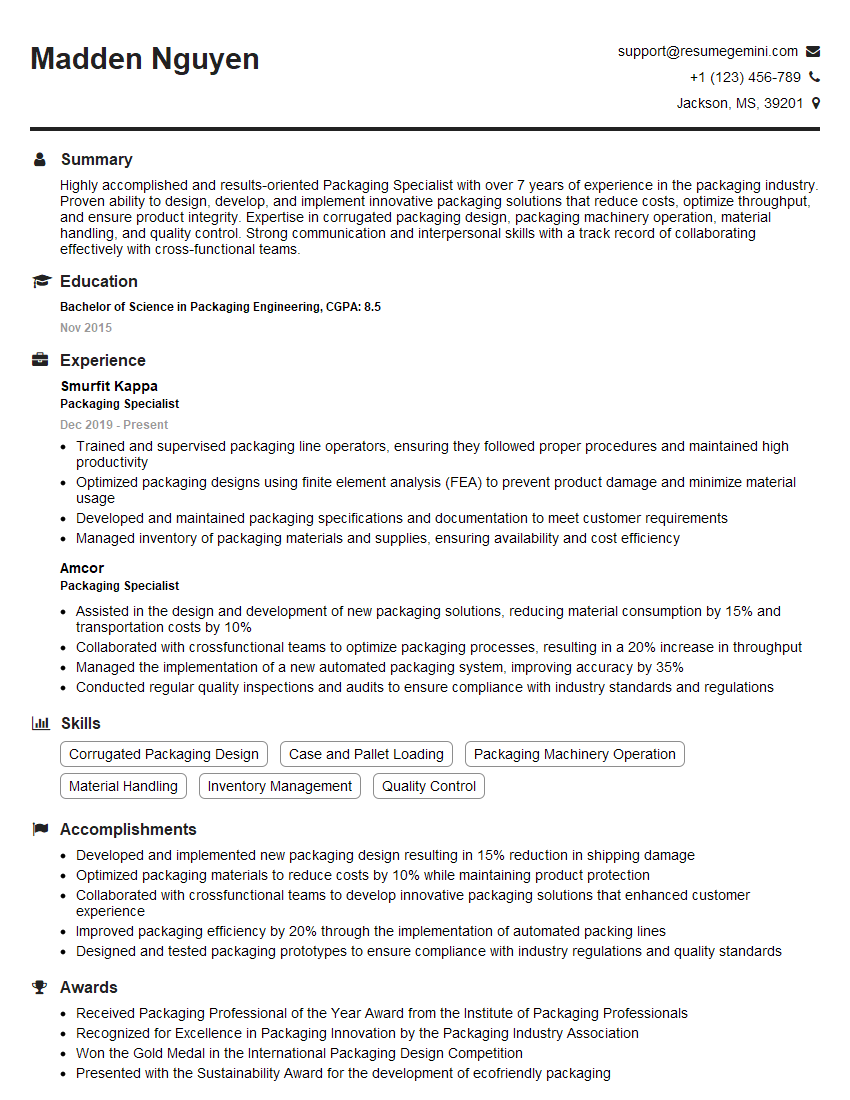
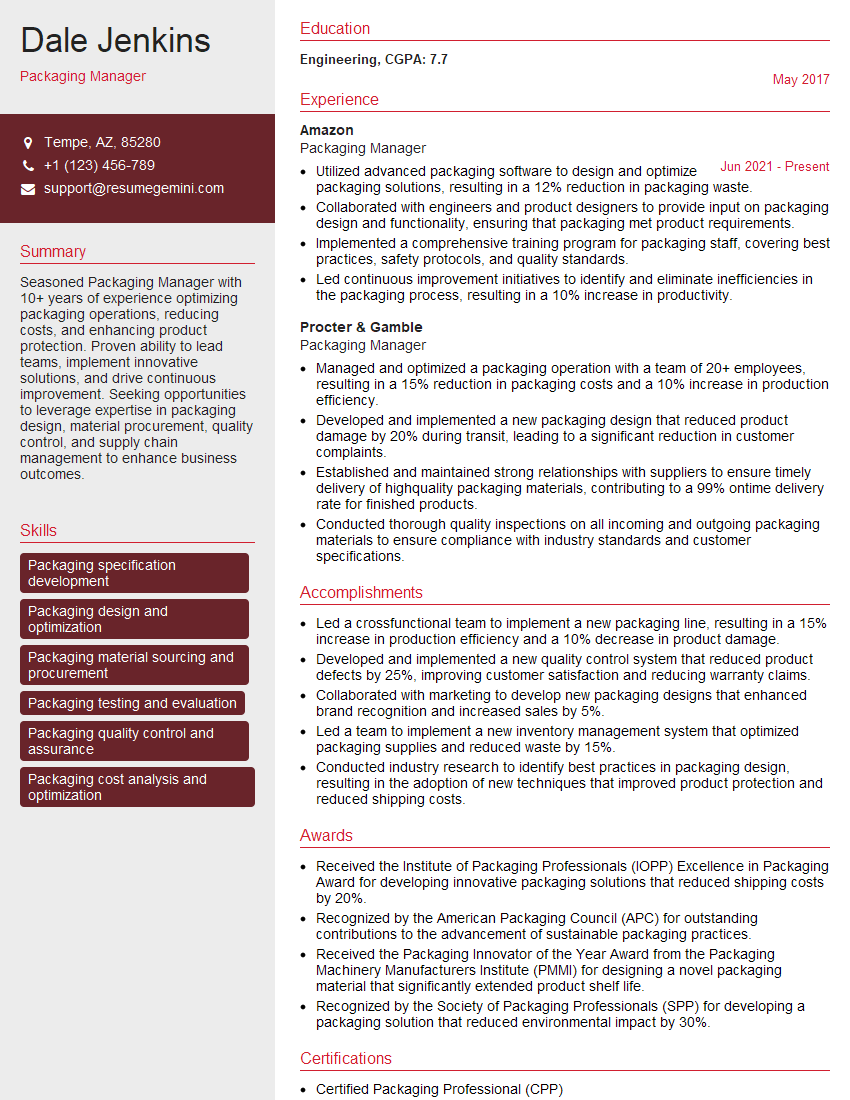
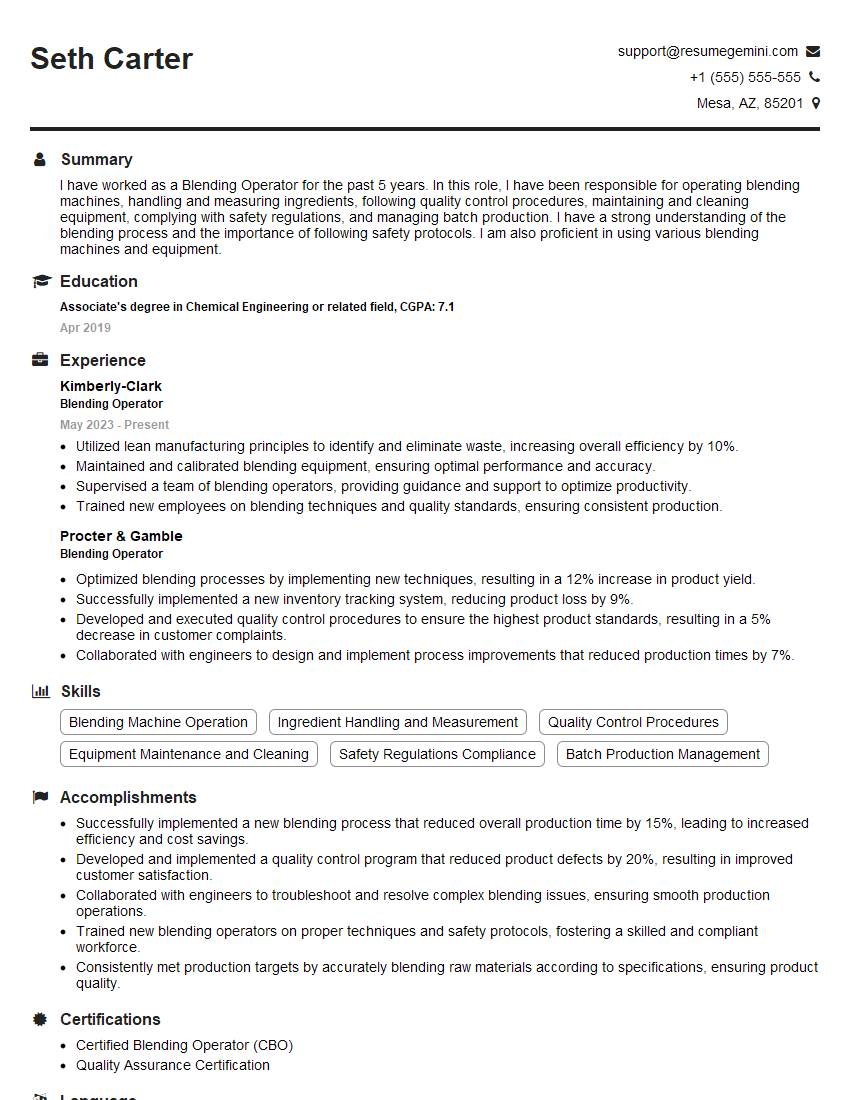
Mastering blending and packaging principles is crucial for a successful and rewarding career in the manufacturing industry, opening doors to diverse roles and opportunities for advancement. To maximize your job prospects, focus on building a strong, ATS-friendly resume that highlights your skills and experience effectively. ResumeGemini is a trusted resource that can help you craft a professional resume tailored to the demands of the Blending and Packaging sector. Examples of resumes tailored to this field are available to help guide you.
Explore more articles
Users Rating of Our Blogs
Share Your Experience
We value your feedback! Please rate our content and share your thoughts (optional).
What Readers Say About Our Blog
To the interviewgemini.com Webmaster.
Very helpful and content specific questions to help prepare me for my interview!
Thank you
To the interviewgemini.com Webmaster.
This was kind of a unique content I found around the specialized skills. Very helpful questions and good detailed answers.
Very Helpful blog, thank you Interviewgemini team.