Feeling uncertain about what to expect in your upcoming interview? We’ve got you covered! This blog highlights the most important Metabolic Equivalents (METs) Prescription interview questions and provides actionable advice to help you stand out as the ideal candidate. Let’s pave the way for your success.
Questions Asked in Metabolic Equivalents (METs) Prescription Interview
Q 1. Define Metabolic Equivalents (METs) and explain their significance in exercise prescription.
Metabolic Equivalents (METs) represent the ratio of a person’s working metabolic rate relative to their resting metabolic rate. One MET is defined as the energy expenditure at rest, approximately 3.5 milliliters of oxygen consumed per kilogram of body weight per minute (mL/kg/min). In exercise prescription, METs provide a standardized, easily understood measure of exercise intensity, making it easier to communicate and prescribe appropriate exercise levels for individuals with varying fitness levels and health conditions. Think of it like this: if an activity requires 3 METs, it means you’re expending three times the energy you would at rest.
Q 2. What are the factors to consider when prescribing exercise intensity using METs?
Prescribing exercise intensity using METs requires careful consideration of several factors. These include:
- Individual’s current fitness level: Sedentary individuals should start at lower MET levels and gradually increase. Highly fit individuals can tolerate much higher intensities.
- Health status and medical history: Individuals with cardiovascular disease, respiratory issues, or other health problems might need a more cautious approach, beginning at lower MET levels and with shorter durations.
- Exercise tolerance: The individual’s ability to maintain the prescribed intensity for the duration is crucial. Signs of intolerance include excessive breathlessness, chest pain, and dizziness.
- Type of exercise: Different activities have different MET values. Walking is generally lower than running, swimming, or cycling at the same perceived exertion. The choice of exercise should consider client preferences and any physical limitations.
- Goals of the exercise program: The target MET level will vary depending on the goals, whether it’s weight loss, improving cardiovascular fitness, or strength training. Each goal will necessitate different intensities and durations.
Q 3. How do you determine an individual’s appropriate MET level based on their health status and fitness level?
Determining an appropriate MET level involves a comprehensive assessment. This often begins with a thorough health history and risk stratification. For example, a sedentary individual with no underlying health conditions might start at a low MET level (e.g., 2-3 METs), performing activities like leisurely walking. A more fit individual with no health issues might begin at a higher MET level (e.g., 4-5 METs) engaging in brisk walking or cycling. For those with existing health conditions, a physician’s clearance and possibly a graded exercise test to assess functional capacity may be necessary. The initial MET level should be adjusted based on the individual’s response and progress, always prioritizing safety and comfort.
Consider this example: A 60-year-old with hypertension might initially start with 2 MET activities (e.g. slow walking), carefully monitoring blood pressure and heart rate response before progressing. On the other hand, a 30-year-old marathon runner might comfortably start at 8 METs (e.g. a vigorous run).
Q 4. Explain the process of calculating target heart rate using METs.
Calculating target heart rate (THR) using METs is indirect but feasible. It requires knowledge of the individual’s maximum heart rate (MHR), which can be estimated using age-predicted formulas (e.g., 220 – age) or more accurately determined via a graded exercise test. Then, one can estimate the heart rate corresponding to a specific MET level. This requires referencing MET tables that associate MET levels with percentage of MHR or understanding that 1 MET is roughly equivalent to approximately 30% of the maximal heart rate.
For example, if someone’s MHR is 180 bpm (beats per minute) and they aim for a 4 MET workout, a rough estimate places their target heart rate in the 60-70% range of their maximal heart rate which roughly translates to 108-126 bpm.
Important Note: This method is an estimate. Individual variability exists, and relying solely on MET-based heart rate calculations without considering individual physiological responses can be unreliable. Regular monitoring of the individual’s perceived exertion (RPE) is essential to confirm that the workout intensity aligns with the target METs.
Q 5. Describe the relationship between METs, VO2 max, and exercise intensity.
METs, VO2 max, and exercise intensity are intrinsically linked. VO2 max, the maximum amount of oxygen an individual can utilize during intense exercise, is a direct measure of cardiorespiratory fitness. One MET is roughly equivalent to a VO2 of 3.5 mL/kg/min. Therefore, a 5 MET activity represents a VO2 of 17.5 mL/kg/min (5 METs * 3.5 mL/kg/min/MET). Exercise intensity, expressed as a percentage of VO2 max or METs, indicates the relative effort during exercise. Higher MET levels and higher percentages of VO2 max reflect higher exercise intensities.
Q 6. How do you modify exercise prescriptions based on client response and progress using METs?
Modifying exercise prescriptions based on client response and progress is crucial for optimizing outcomes and ensuring safety. If a client easily tolerates the initial MET level and demonstrates progress (e.g., improved endurance, decreased symptoms), the intensity can be gradually increased in increments of 1-2 METs over several sessions, always monitoring for adverse reactions. Conversely, if a client experiences excessive fatigue, chest pain, shortness of breath, or other negative symptoms, the intensity should be reduced until the symptoms resolve before gradually increasing again. Monitoring RPE and heart rate responses are also crucial components of determining necessary adjustments.
For example, if a client comfortably achieves their target heart rate and RPE at 4 METs for 30 minutes, gradually increase the intensity or duration in subsequent sessions. If they struggle to maintain the heart rate and report breathlessness, reduce intensity to 3 METs until they adapt.
Q 7. What are the limitations of using METs in exercise prescription?
While METs are a valuable tool, they have limitations. They don’t account for individual variations in physiological responses to exercise. Two individuals at the same MET level might experience vastly different levels of exertion. MET values for specific activities are often averages and can vary based on factors like body mechanics, terrain, and equipment used. Furthermore, METs primarily focus on cardiorespiratory fitness and may not fully reflect the intensity or demands of strength training or flexibility exercises. Finally, relying solely on METs without considering other factors like perceived exertion and individual responses could lead to inappropriate exercise prescriptions and potentially harmful consequences.
Q 8. How would you explain the concept of METs to a patient with limited health literacy?
Imagine METs as a measure of how hard your body is working. One MET is the energy you use when you’re sitting quietly. Two METs is twice that energy expenditure, three METs is three times, and so on. Different activities have different MET levels. For example, walking slowly might be 3 METs, while jogging is closer to 8 METs. We use METs to plan safe and effective exercise programs, making sure they’re challenging enough to be beneficial but not so intense that they’re risky.
Q 9. Discuss the role of METs in designing exercise programs for patients with cardiovascular disease.
METs are crucial in cardiovascular disease (CVD) exercise prescription. We start by assessing a patient’s functional capacity, often through a graded exercise test, to determine their peak MET level. This tells us their current fitness level and helps us avoid overexertion. Then, we design a program using a percentage of their peak MET level. For example, a patient with a peak of 5 METs might start with exercises at 40-60% of their peak (2-3 METs) and gradually increase intensity over time. This gradual approach reduces the risk of cardiac events and promotes safe and effective rehabilitation. We also carefully consider any other risk factors like hypertension or recent heart events when setting the starting intensity and rate of progression.
Q 10. How do you use METs to prescribe exercise for individuals with pulmonary conditions?
For pulmonary conditions like COPD or asthma, METs are essential for tailoring exercise to the patient’s breathing capacity. We often begin with very low-intensity activities (1-2 METs) like slow walking or seated arm exercises. The goal is to improve endurance and reduce shortness of breath gradually. Regular monitoring of the patient’s respiratory rate, oxygen saturation, and perceived exertion (Borg scale) is vital. We carefully observe their response to each MET increment and avoid pushing them to a level that triggers significant dyspnea (shortness of breath) or fatigue. The rate of progression is often slower compared to other populations because of the potential for respiratory distress. We might use a smaller increment (e.g., 0.5 METs) when increasing the intensity.
Q 11. Explain how METs are used in the prescription of resistance training exercises.
While METs primarily relate to aerobic exercise, they can indirectly inform resistance training. The intensity of resistance training is typically measured by factors like weight lifted, repetitions, sets, and rest periods. But we can use METs to control the overall energy expenditure of the workout. We might prescribe a session that includes both aerobic and resistance exercises, setting targets for the combined MET level throughout the session. For example, a circuit training program could combine high-MET aerobic exercises like jumping jacks with lower-MET resistance exercises like squats, aiming for an average MET level appropriate to the patient’s fitness level. It is vital to monitor exercise intensity during resistance training as well, particularly if the individual is at higher risk of a cardiovascular event.
Q 12. What are the considerations for using METs in prescribing exercise for older adults?
Prescribing exercise for older adults using METs requires careful consideration of age-related physiological changes. Older adults often have lower peak MET levels than younger individuals. Therefore, we begin with even lower intensities than with younger populations, often focusing on maintaining functional fitness. We might start with a walking program at 1-2 METs and progress very gradually, increasing intensity and duration as tolerated. We must also consider comorbidities like arthritis or osteoporosis, which may limit certain movements. Flexibility and balance exercises are particularly important to prevent falls. Regular monitoring and close communication are crucial, and we might adjust the intensity based on individual feedback, rather than solely following a predetermined schedule.
Q 13. How do you incorporate METs into a comprehensive exercise plan?
METs are integrated into a comprehensive exercise plan by setting specific MET targets for different components of the plan. For example, a plan might include:
- Warm-up (1-2 METs): 5-10 minutes of light cardio.
- Cardiovascular training (3-6 METs): 20-30 minutes at a target MET level.
- Resistance training (2-4 METs): Focus on strength and endurance, but maintaining a safe overall energy expenditure.
- Cool-down (1-2 METs): 5-10 minutes of light activity and stretching.
The plan includes regular reassessments and adjustments to the MET targets based on the patient’s progress, ensuring the program remains safe and effective. We also emphasize proper form and technique to reduce injury risk.
Q 14. Describe different methods for assessing and monitoring exercise intensity using METs.
Several methods assess and monitor exercise intensity using METs:
- Graded Exercise Test (GXT): A supervised test that gradually increases exercise intensity to determine peak MET capacity.
- Heart Rate Monitoring: Heart rate is a good proxy for METs, with a linear relationship in many cases. However, this relationship varies across individuals, so individual calibration might be necessary.
- Perceived Exertion Scales (e.g., Borg Scale): Patients rate their perceived exertion on a scale, and this can be correlated to MET levels. This is particularly helpful for individuals who cannot use heart rate monitors easily.
- Metabolic Carts: (For research purposes). Measures oxygen consumption and carbon dioxide production to directly calculate METs.
Choosing the best method depends on the patient’s health status, available resources, and the overall goals of the exercise program. Regular monitoring of all indicators is important, not just reliance on one method alone.
Q 15. What are the ethical considerations in using METs for exercise prescription?
Ethical considerations in using METs for exercise prescription are paramount. We must prioritize patient autonomy and informed consent. This means clearly explaining the purpose of MET-based exercise, potential risks and benefits, and ensuring the patient understands their role in the process. We must also consider issues of equity and access. MET-based prescriptions are only as good as the data they’re based on, and if that data doesn’t accurately reflect the diverse population we serve (considering factors like age, ethnicity, and socioeconomic status), we risk creating inequitable outcomes. For example, using generic MET values for populations with unique physiological responses might lead to under- or over-prescription, creating harm. Finally, maintaining confidentiality and professional boundaries are crucial ethical considerations, just as in any healthcare setting. We should always document the exercise prescription and the patient’s progress accurately and responsibly.
Career Expert Tips:
- Ace those interviews! Prepare effectively by reviewing the Top 50 Most Common Interview Questions on ResumeGemini.
- Navigate your job search with confidence! Explore a wide range of Career Tips on ResumeGemini. Learn about common challenges and recommendations to overcome them.
- Craft the perfect resume! Master the Art of Resume Writing with ResumeGemini’s guide. Showcase your unique qualifications and achievements effectively.
- Don’t miss out on holiday savings! Build your dream resume with ResumeGemini’s ATS optimized templates.
Q 16. How do you adjust MET targets for individuals with comorbidities?
Adjusting MET targets for individuals with comorbidities requires a cautious and individualized approach. We can’t simply apply a blanket reduction. For instance, a patient with heart failure will have different MET limitations compared to someone with osteoarthritis. We need to consider the specific limitations imposed by each condition. A cardiologist’s input is crucial for cardiac patients, while a physical therapist’s expertise is invaluable for musculoskeletal issues. We may start with a lower MET level than what’s recommended for healthy individuals, and gradually increase it based on the patient’s response and tolerance, closely monitoring vital signs throughout. For example, a patient with hypertension might begin at 3 METs (light intensity) and progress slowly, while someone with severe COPD may start at a much lower level (1-2 METs) and progress incrementally. Regular reassessment and adjustments based on symptoms, vital signs, and progress are essential.
Q 17. What are some common errors made when prescribing exercise using METs and how to avoid them?
Common errors in MET-based exercise prescription include:
- Ignoring individual variability: Not all individuals respond similarly to the same MET level. Factors like age, fitness level, and medical history significantly influence an individual’s response.
- Overestimating or underestimating functional capacity: Inaccurate estimation of a patient’s baseline fitness can lead to inappropriate MET targets, resulting in either insufficient improvement or an increased risk of injury.
- Failing to monitor response to exercise: Exercise intensity should be adjusted based on the patient’s subjective and objective feedback, including heart rate, blood pressure, and perceived exertion (Borg scale). Ignoring these indicators can lead to overexertion and potential harm.
- Insufficient progression: Gradually increasing MET targets is crucial for preventing plateaus and optimizing results. Too rapid progression can lead to injury or burnout.
To avoid these errors, we should:
- Conduct thorough assessments: including medical history, physical examination, and functional capacity tests.
- Individualize prescriptions: tailoring MET targets based on assessment results and patient feedback.
- Monitor closely: tracking vital signs and perceived exertion during and after exercise sessions.
- Adjust accordingly: modifying the exercise prescription based on patient response.
Q 18. How would you interpret a client’s response to exercise based on their MET level?
Interpreting a client’s response to exercise based on their MET level involves analyzing both their physiological and subjective responses. Physiological responses include heart rate, blood pressure, and oxygen saturation. Subjective responses include perceived exertion (using scales like the Borg scale), fatigue levels, and presence of symptoms like chest pain or shortness of breath. For example, if a client is exercising at 4 METs and exhibits a significant increase in heart rate, along with complaints of breathlessness and chest discomfort, it suggests the intensity is too high. We would need to reduce the intensity to a lower MET level. Conversely, if the client comfortably maintains the 4 METs exercise with minimal physiological changes and reports feeling invigorated, it suggests the intensity is appropriate and can potentially be gradually increased. This requires a continuous dialogue with the client, ensuring we consider their feedback and adjust the plan accordingly.
Q 19. Describe the role of technology in METs based exercise prescription.
Technology plays a significant role in MET-based exercise prescription. Wearable fitness trackers, heart rate monitors, and smartphone apps can objectively measure physiological responses during exercise, providing valuable data for monitoring intensity and adjusting the exercise program accordingly. For instance, a heart rate monitor can ensure a client maintains their target heart rate zone, corresponding to a specific MET level. Activity trackers can quantify the duration and intensity of exercise, providing objective data for progress monitoring. Furthermore, telehealth platforms can facilitate remote monitoring of patients’ exercise activities and provide personalized feedback, especially beneficial for patients with limited mobility or those living in remote areas. The data gathered from these technologies provides more precise and individualized exercise prescriptions and enhances adherence by making the process engaging and easily monitored.
Q 20. How do you adapt exercise programs based on client feedback and progress monitoring?
Adapting exercise programs based on client feedback and progress monitoring is a dynamic process. Regular communication is vital. We need to understand how the client is feeling – physically and mentally. Are they experiencing any pain, fatigue, or other discomfort? Are they seeing or feeling improvement? Progress monitoring involves assessing various factors, such as changes in their MET capacity, improvements in functional capacity tests, and reductions in symptoms. For example, if a client initially struggles to maintain a 3 MET activity for 10 minutes, and after several sessions, they can easily do so with improved vital signs and less perceived exertion, we can gradually increase the intensity or duration. Conversely, if they experience persistent symptoms or plateaus despite consistent effort, we need to reassess their program, potentially adjusting the type of exercise, intensity, or frequency to optimize their progress and prevent discouragement. Regular feedback sessions are key for making these necessary adaptations.
Q 21. What are the benefits of using METs for exercise prescription compared to other methods?
METs offer several advantages compared to other exercise prescription methods. Firstly, METs provide a standardized and universally understood measure of exercise intensity, facilitating communication among healthcare professionals. It’s a simple, readily understandable metric. Secondly, it allows for the prescription of exercise across various modalities (walking, cycling, swimming etc.), providing flexibility. For instance, we can prescribe a specific MET target, and the client can choose the activity they prefer within that intensity range. Finally, METs provide a simple means of progressing exercise intensity, making it easy to follow and understand. Unlike methods that rely on complex calculations, METs offer a user-friendly approach that fosters adherence. While other methods might focus on specific physiological parameters or subjective ratings, METs bridge the gap between these approaches, offering a practical and widely applicable measure for exercise prescription.
Q 22. Explain how to use METs to determine the appropriate exercise duration and frequency.
METs, or Metabolic Equivalents, represent the energy expenditure of an activity relative to rest. Using METs for exercise prescription allows us to tailor programs based on a client’s fitness level and goals. Determining appropriate exercise duration and frequency involves considering the client’s target MET level, their current fitness level, and their overall goals.
For example, a client aiming for moderate-intensity cardio might target a 4-6 MET activity. This could translate to brisk walking or cycling. We might start with shorter durations (e.g., 15-20 minutes) and lower frequency (e.g., 3 days/week) for a beginner, gradually increasing both as fitness improves. A more advanced individual might sustain a 4-6 MET activity for 45-60 minutes, 5-7 days a week. The key is gradual progression to avoid injury and burnout.
The formula isn’t strictly mathematical; it’s more of a guideline. We need to consider individual factors like age, health conditions, and preferences. We also need to assess their response to the exercise, adjusting accordingly. The goal is to find the sweet spot: challenging enough for progress, but not so intense as to cause injury or deter adherence.
Q 23. Describe the progressive overload principle in the context of METs-based exercise prescription.
Progressive overload, in the context of METs-based exercise prescription, means systematically increasing the challenge over time. This can be achieved by increasing any of the components of the exercise prescription: intensity (METs level), duration, or frequency. It’s about gradually pushing the body beyond its comfort zone to stimulate further adaptation and improvement.
For instance, if a client starts with a 3 MET activity (light walking) for 20 minutes three times a week, we might progressively increase their activity to a 4 MET activity (brisk walking) for 25 minutes, three times a week after a few weeks. Once they adapt, we could further increase the duration, frequency, or intensity. The increases should be small and gradual, allowing the body to adapt to the new demands without experiencing undue stress or injury. We regularly monitor their progress and adjust the program based on their feedback and physiological responses.
Q 24. How do you incorporate METs into the goal setting process for client’s exercise program?
METs play a crucial role in goal setting. By using METs, we can translate a client’s goals into measurable objectives. For example, a client might aim for weight loss, improved cardiovascular fitness, or increased strength. We use METs to quantify these goals.
Let’s say a client wants to improve their cardiovascular health. We might set a goal to increase their exercise capacity to maintain a 6 MET activity for 30 minutes, 5 days a week, within a specific timeframe. This clear, measurable, attainable, relevant, and time-bound (SMART) goal, expressed in METs, provides a framework for monitoring progress. The client understands what they are aiming for, and we can track their progress objectively. We work collaboratively to ensure their goals align with their current fitness level and medical status to avoid pushing them too hard, too quickly.
Q 25. Describe different methods for increasing or decreasing exercise intensity using METs.
Increasing or decreasing exercise intensity using METs is straightforward. Increasing intensity means moving to activities with higher MET values. Decreasing intensity means reducing to lower MET values.
- Increasing Intensity: If a client is comfortably performing a 4 MET activity, we can increase intensity by gradually transitioning to a 5 or 6 MET activity, perhaps switching from a leisurely walk to a brisk walk or jogging. We could also increase the incline on a treadmill or the resistance on a stationary bike.
- Decreasing Intensity: Conversely, if a client is struggling with a 6 MET activity, we might decrease the intensity to a 4 or 5 MET activity by slowing down their pace, reducing incline, or lowering resistance. We might introduce rest intervals to manage their exertion.
These adjustments must be made gradually and monitored closely to ensure they are tolerated well. The client’s perceived exertion (RPE) is an important factor. We might use a Borg scale to assess their subjective feeling of effort during exercise.
Q 26. How do you address client resistance or lack of motivation towards prescribed MET levels?
Addressing client resistance or lack of motivation is crucial for successful program adherence. The key is understanding the root cause of their resistance.
First, we actively listen to their concerns. Is it a dislike for the prescribed activity? Are they feeling overwhelmed by the intensity or duration? Do they lack the time to commit to their program? Addressing this concern requires thoughtful conversation and collaboration. Perhaps adjusting the type of exercise or offering alternatives can help. We might substitute activities with similar MET values that they find more engaging. Setting smaller, more achievable goals, starting with short sessions and gradually increasing the duration or intensity, is also helpful. We might also provide positive reinforcement and celebrate their achievements, fostering a sense of accomplishment. It’s also important to understand any underlying barriers (such as health issues, lack of access to facilities, or financial constraints) that might contribute to their motivation issues.
Q 27. How do you use METs to monitor and evaluate the effectiveness of an exercise program?
Monitoring and evaluating the effectiveness of an exercise program using METs involves tracking the client’s progress over time. This might involve several methods:
- Subjective Measures: This involves questionnaires about their daily life and activities assessing if the exercise has improved their quality of life. Tracking their perceived exertion (RPE) is very helpful.
- Objective Measures: This focuses on measurable data, such as changes in their resting heart rate, blood pressure, body composition, and functional capacity. We can use graded exercise tests to assess their maximal oxygen uptake (VO2 max) which is closely related to MET capacity. This provides a quantitative assessment of their improvement.
- Functional Capacity: We might track improvements in activities of daily living (ADLs). Can they climb stairs more easily? Are they less fatigued throughout the day? This is an important measure that is often meaningful to the client.
By tracking these measures, we can determine whether the client is meeting their goals and make any necessary adjustments to the program. If progress is slow or plateaus, we need to re-evaluate their program and make changes to ensure continued improvement.
Q 28. Discuss the importance of proper documentation and communication related to METs-based exercise prescription.
Proper documentation and communication are essential for effective METs-based exercise prescription. Thorough documentation protects both the client and the practitioner. It provides a clear record of the client’s initial assessment, goals, prescribed program, progress, and any modifications made to the program.
Documentation might include:
- Client demographics and medical history
- Initial fitness assessment results (e.g., resting heart rate, blood pressure)
- Prescribed exercise program (intensity, duration, frequency, type of activity in METs)
- Progress notes documenting client adherence, any modifications made, and observed responses to exercise
- Changes in subjective measures such as RPE
Clear communication with the client is equally important. We need to ensure they understand their goals, the exercise program, and the importance of adherence. Regular check-ins to discuss their progress, address any concerns, and make adjustments to their program are crucial. This open communication fosters collaboration and ensures program success.
Key Topics to Learn for Metabolic Equivalents (METs) Prescription Interview
- Understanding METs: Defining Metabolic Equivalents and their significance in exercise prescription. Explore the different MET levels and their corresponding activity intensities.
- Calculating METs: Mastering the calculation of METs for various activities and understanding the factors that influence MET expenditure (e.g., body weight, duration, intensity).
- Individualized Prescription: Learn how to tailor exercise prescriptions based on individual client needs, considering factors like age, fitness level, health conditions, and goals. This includes understanding the concepts of FITT (Frequency, Intensity, Time, Type).
- Practical Application: Develop the ability to design exercise programs using METs as a guiding principle, including both aerobic and resistance training. Consider how to progress exercise intensity and duration safely and effectively.
- Risk Stratification and Safety: Understand the importance of pre-exercise screening and identifying individuals at increased risk for exercise-related complications. Learn how to modify exercise prescriptions based on these risks.
- Monitoring Progress and Adaptation: Discuss methods for tracking client progress and making appropriate adjustments to the exercise prescription based on their responses.
- Technology and METs: Explore how technology (e.g., wearables, heart rate monitors) can be used to monitor and track MET expenditure during exercise.
- Common Challenges and Problem Solving: Develop your ability to troubleshoot common issues encountered during METs-based exercise prescription, such as client adherence, injury prevention, and plateauing.
Next Steps
Mastering Metabolic Equivalents (METs) Prescription is crucial for career advancement in fields like exercise physiology, cardiac rehabilitation, and preventative medicine. A strong understanding of METs demonstrates a critical skillset highly valued by employers. To enhance your job prospects, create an ATS-friendly resume that highlights your expertise. ResumeGemini is a trusted resource to help you build a professional and impactful resume. Examples of resumes tailored to Metabolic Equivalents (METs) Prescription are available to guide you in showcasing your qualifications effectively. Take the next step towards your dream career today!

Fitness Director Resume Sample

Wellness Program Coordinator Resume Sample

Rehabilitation Specialist Resume Sample

Diabetes Educator Resume Sample

Health Promotion Specialist Resume Sample

Athletic Trainer Resume Sample
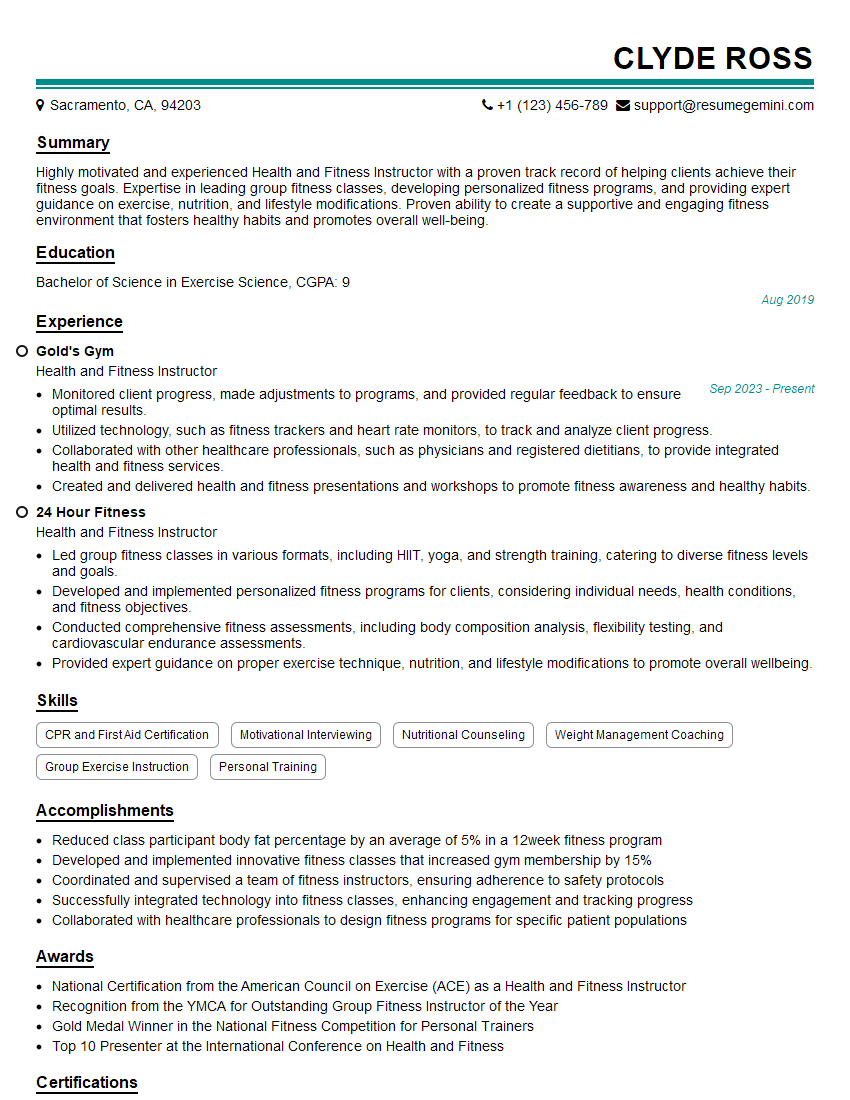
Health and Fitness Instructor Resume Sample

Clinical Exercise Physiologist Resume Sample

Exercise Physiologist Resume Sample

Occupational Therapist Resume Sample
Explore more articles
Users Rating of Our Blogs
Share Your Experience
We value your feedback! Please rate our content and share your thoughts (optional).
What Readers Say About Our Blog
To the interviewgemini.com Webmaster.
Very helpful and content specific questions to help prepare me for my interview!
Thank you
To the interviewgemini.com Webmaster.
This was kind of a unique content I found around the specialized skills. Very helpful questions and good detailed answers.
Very Helpful blog, thank you Interviewgemini team.