Feeling uncertain about what to expect in your upcoming interview? We’ve got you covered! This blog highlights the most important AAC (Augmentative and Alternative Communication) interview questions and provides actionable advice to help you stand out as the ideal candidate. Let’s pave the way for your success.
Questions Asked in AAC (Augmentative and Alternative Communication) Interview
Q 1. What are the different types of AAC systems?
AAC systems are incredibly diverse, catering to a wide range of communication needs and abilities. They can be broadly categorized as:
- No-tech AAC: These are low- or no-cost options, often relying on gestures, facial expressions, picture cards, and objects. Think of a child using a picture of a juice box to request a drink. This is a great entry point, especially for younger children or those just beginning their AAC journey.
- Low-tech AAC: This category includes simple communication boards or books with pictures or words. They are easy to use and transport. For example, a communication board with pictures of common needs like ‘eat,’ ‘drink,’ ‘bathroom,’ and ‘help’ can empower an individual to express themselves effectively.
- High-tech AAC: These involve sophisticated electronic devices such as speech-generating devices (SGDs) or apps. SGDs can have synthesized speech, digitized recordings, or a combination of both. They often offer customizable vocabulary and features. Think of an iPad app with a robust vocabulary and picture support or a dedicated SGD with text-to-speech capabilities. These are particularly beneficial for individuals with complex communication needs.
The choice depends on the individual’s abilities, communication needs, and environment. It’s crucial to remember that these categories aren’t mutually exclusive; many individuals use a combination of systems.
Q 2. Describe the assessment process for selecting an appropriate AAC system.
Assessment for AAC is a multi-faceted process, requiring collaboration between speech-language pathologists (SLPs), occupational therapists (OTs), parents, educators, and the individual themselves whenever possible. It’s crucial to assess the individual’s strengths and weaknesses across several areas:
- Communication Needs: Identifying the individual’s current communication methods, frequency of communication attempts, and areas where communication breaks down is key.
- Cognitive Abilities: Evaluating cognitive skills like attention, memory, and problem-solving helps determine the complexity of the AAC system that can be effectively used.
- Physical Abilities: Assessing motor skills, including fine motor skills (for selecting symbols or using a keyboard) and gross motor skills (for pointing or using alternative access methods), is critical to system selection.
- Sensory Abilities: Considering the individual’s vision, hearing, and touch sensitivities ensures the chosen system is accessible.
- Literacy Skills: Evaluating reading and writing abilities guides the decision between symbol-based and text-based systems.
- Social and Environmental Factors: The individual’s social context, including family, school, and community, needs consideration to ensure system integration and successful communication.
The assessment uses a variety of tools including standardized assessments, observations of communication in natural settings, and trial periods with different AAC systems. This iterative process allows for adjustments and refinement until the most suitable system is found. It’s not a one-size-fits-all approach; personalized assessment is critical.
Q 3. How do you address the social and emotional needs of individuals using AAC?
Addressing the social and emotional needs of individuals using AAC is just as important as addressing their communication needs. Many face challenges related to self-esteem, social isolation, and frustration due to communication barriers. Here’s how we address these:
- Promoting Self-Esteem: Celebrating communication successes, however small, and actively reinforcing the individual’s communication attempts build confidence. This involves providing positive feedback and recognizing their effort, not just the accuracy of their communication.
- Enhancing Social Interaction: We facilitate opportunities for social interaction, ensuring communication partners are trained to effectively interact with AAC users. Role-playing and social stories help prepare them for various communication scenarios.
- Addressing Frustration: Strategies include teaching self-regulation techniques, providing opportunities for choice and control, and building in breaks to minimize frustration during communication attempts. Identifying triggers for frustration and proactively addressing them is key.
- Collaboration and Support: Working closely with families and educators to foster consistent communication strategies across all settings is essential. This shared understanding ensures a unified and supportive communication environment.
Remember, social inclusion and a sense of belonging are crucial for overall well-being. We advocate for individuals to participate fully in all aspects of their lives.
Q 4. Explain the difference between aided and unaided AAC.
The difference between aided and unaided AAC lies in the use of external tools or devices:
- Unaided AAC: This involves using the individual’s own body to communicate. Examples include gestures (pointing, waving), facial expressions, sign language (like ASL), and vocalizations. It’s often the first step in communication development and can be used in conjunction with other methods.
- Aided AAC: This utilizes external tools or devices to facilitate communication. Examples include communication boards, speech-generating devices (SGDs), picture exchange systems (PECS), and apps. Aided AAC expands the range and complexity of communication.
Many individuals use a combination of aided and unaided strategies to best express themselves. For example, a person might use sign language (unaided) to indicate a general need and then select a picture on a communication board (aided) to specify what they need.
Q 5. What are some common challenges faced by individuals using AAC, and how do you address them?
Individuals using AAC face numerous challenges, including:
- Communication Breakdown: Difficulties with vocabulary, sentence structure, or partner understanding can lead to communication breakdowns. We address this through vocabulary expansion, communication strategy training for partners, and the use of visual supports.
- Social Stigma: Negative perceptions and misunderstandings about AAC can lead to social isolation. Addressing this requires educating others about AAC and promoting its acceptance and understanding.
- Physical Limitations: Physical challenges can affect the ability to effectively use an AAC system. This is addressed by adapting the system to meet individual needs, using alternative access methods (like head pointing or eye gaze), and employing assistive technology.
- Technological Issues: Issues with device malfunction, software updates, or access to technology can disrupt communication. Addressing this involves proactive troubleshooting, regular maintenance, and access to technical support.
- Fatigue and Cognitive Overload: Using AAC can be cognitively demanding, especially for those with complex needs. Strategies include pacing communication, simplifying language, and utilizing assistive technologies to reduce cognitive load.
Addressing these challenges requires a collaborative approach involving the individual, their family, educators, and professionals. Focusing on empowering individuals to communicate effectively and participate fully in their lives is paramount.
Q 6. How do you integrate AAC into a client’s daily routines?
Integrating AAC into daily routines is vital for successful communication. It shouldn’t be confined to therapy sessions but seamlessly incorporated into everyday life. Here’s how we do it:
- Modeling: We consistently model appropriate AAC use in all interactions. This demonstrates its functionality and acceptance.
- Opportunities for Choice: We incorporate AAC into activities by offering choices using the AAC system, such as selecting which activity to do next or what to eat for a snack.
- Routine Integration: We integrate AAC into daily routines such as mealtimes, getting ready for bed, and classroom activities. This makes communication natural and predictable.
- Environmental Supports: We use visual supports such as schedules, photographs, and communication boards in everyday environments to help the individual anticipate activities and engage in communication.
- Collaboration: We work closely with caregivers and educators to ensure consistency in using the AAC system across all settings. This creates a supportive environment and minimizes confusion.
By weaving AAC into the fabric of daily life, we ensure communication becomes an integral part of the individual’s experiences, fostering independence and participation.
Q 7. Describe your experience with various AAC devices (e.g., speech-generating devices, visual supports).
I have extensive experience with a variety of AAC devices and supports. My work includes:
- Speech-Generating Devices (SGDs): I’ve worked with various SGDs, from simple single-message devices to sophisticated systems with extensive vocabulary and synthesized speech. This experience allows me to select the most appropriate device for individual needs based on features like voice options, vocabulary organization, and access methods.
- Visual Supports: I’ve utilized various visual supports, including schedules, communication boards, picture cards, and symbol systems (e.g., PECS, Boardmaker symbols). Understanding the effectiveness of different visual supports for various learners and contexts is crucial for successful communication.
- Apps and Software: I’m familiar with a wide range of AAC apps for various devices (iPads, smartphones). This includes apps with text-to-speech, voice output, and customizable vocabulary. My knowledge spans various operating systems and software platforms to ensure appropriate system selection and ongoing support.
- Alternative Access Methods: I’ve worked extensively with individuals requiring alternative access methods like head pointing, eye gaze, switch access, and mouth sticks. Adapting systems to meet specific physical needs is a significant part of my practice.
My experience encompasses a wide range of individuals, from toddlers to adults, with diverse communication needs and abilities. This allows me to tailor my recommendations and support to each individual’s specific circumstances.
Q 8. How do you collaborate with other professionals (e.g., SLPs, OTs, educators) to support AAC users?
Collaboration is the cornerstone of effective AAC intervention. I believe in a truly interdisciplinary approach, viewing the AAC user holistically. With SLPs (Speech-Language Pathologists), I coordinate to ensure the AAC system aligns with the individual’s communication goals and targets. This involves selecting appropriate vocabulary, grammatical structures, and communication strategies. OTs (Occupational Therapists) are crucial in assessing fine motor skills and recommending adaptations to the AAC system or recommending alternative access methods if needed. For example, if a user struggles with dexterity, the OT might suggest a head-mounted switch or eye-gaze technology. With educators, I collaborate to integrate the AAC system into the classroom environment, ensuring consistent communication strategies across all settings. We co-create individualized education programs (IEPs) that outline specific AAC goals and strategies to be implemented, and regularly evaluate progress and make adjustments as needed. This could involve adapting classroom activities to utilize the AAC system effectively and providing professional development to educators on using the system effectively.
Q 9. How do you measure the effectiveness of an AAC intervention?
Measuring the effectiveness of AAC intervention is multifaceted and requires a combination of quantitative and qualitative data. Quantitative measures might include tracking the frequency of communication attempts, the number of words or phrases used, and the effectiveness in achieving functional communication goals. For example, we might track how often a child uses their AAC device to request items or participate in conversations. Qualitative data is equally important and involves observing the individual’s communication skills in natural settings, assessing their engagement and participation in activities, and gathering feedback from caregivers and teachers. We use observation checklists and questionnaires to assess communication effectiveness and social interaction. A successful intervention would show an increase in both frequency of communication and improved communication skills in various contexts. Regular progress monitoring enables us to adapt the intervention strategy based on the individual’s response, making the process iterative and responsive.
Q 10. Explain your understanding of augmentative and alternative communication strategies for different age groups.
AAC strategies vary significantly across age groups due to developing cognitive and physical abilities. For young children (preschool), we often use picture exchange systems (PECS) or simple visual schedules to build foundational communication skills. Play-based activities and the use of engaging, age-appropriate visuals are crucial. For school-aged children, we might transition to more sophisticated devices with synthesized speech or text-to-speech capabilities. Literacy skills are incorporated into communication strategies. For adolescents and adults, the focus shifts towards more complex language, including abstract concepts and nuanced expressions. Customized vocabulary, social skills training and functional communication training are integrated. Adults may require highly individualized systems reflecting their unique needs and life experiences. For example, a young child may use a picture book for communication, while an adult might use a sophisticated tablet-based system with a vast vocabulary and text prediction capabilities. Each approach is tailored to the individual’s specific communication needs, cognitive abilities, and physical limitations.
Q 11. What are some ethical considerations in AAC intervention?
Ethical considerations in AAC intervention are paramount. One key aspect is ensuring the individual’s autonomy and choice in selecting their AAC system. We must respect their preferences and avoid imposing systems that don’t align with their needs or desires. Confidentiality and data privacy are essential, especially when using technology-based AAC systems. We must ensure responsible data handling and comply with all relevant privacy regulations. Another ethical consideration is advocating for access to appropriate resources and services. This might involve advocating for funding for devices, training, or ongoing support. Finally, we must be mindful of the potential impact of AAC intervention on the individual’s social interactions and self-esteem, actively mitigating any negative impacts and promoting positive social integration. For instance, a person might feel embarrassed using a device; therefore, we must work towards building confidence and celebrating communication successes.
Q 12. How do you adapt AAC strategies for individuals with various disabilities (e.g., cognitive impairments, motor impairments)?
Adapting AAC strategies for individuals with diverse disabilities requires a highly individualized approach. For individuals with cognitive impairments, we might use simpler vocabulary, visual supports, and structured communication strategies to enhance comprehension. For those with motor impairments, we select access methods that accommodate their physical limitations. This might involve switch access, eye-gaze technology, or specialized keyboards. We might use dynamic displays, which are visual displays that adjust based on the individual’s progress and needs, and which can support users with various cognitive and physical needs. We need to consider the individual’s strengths and preferences when adapting an AAC system. For example, a user with limited fine motor skills could use a head-mounted switch or eye gaze, while someone with visual impairments may rely heavily on auditory feedback. The focus is always on maximizing their communication potential within their capabilities, using assistive technologies and adapted strategies to bridge the communication gap.
Q 13. Describe your experience using specific AAC software or apps.
I have extensive experience using various AAC software and apps, including Proloquo2Go, TouchChat, and LAMP Words for Life. Proloquo2Go is a powerful app that offers a user-friendly interface and a wide range of vocabulary options. It is highly customizable, allowing for adjustments to vocabulary and visual supports to meet individual needs. I’ve used TouchChat, which includes features like visual scene displays and customizable symbol sets, in cases where users benefit from visual organization of their communication options. LAMP Words for Life has a unique core vocabulary-focused approach and has been particularly useful when working with users needing to develop core word combinations. The selection of software depends on the individual’s needs, cognitive abilities, and motor skills. The choice of software also depends on whether we’re targeting receptive or expressive language skills. For example, I might use one app for core vocabulary development and another for creating visual schedules.
Q 14. How do you teach caregivers to effectively support AAC use?
Training caregivers is a vital part of successful AAC intervention. I use a combination of methods, including hands-on training sessions, individualized instruction, and ongoing support. We start by thoroughly explaining the AAC system, its features, and how it works. I teach caregivers strategies for modeling effective communication using the AAC system, demonstrating and practicing communication in various scenarios and communication partners. We work on strategies to encourage consistent use of the AAC system across all settings and develop consistent communication strategies to promote a unified approach to communication. I also provide resources and materials, such as handouts and video tutorials, to reinforce the training and offer ongoing support via email, phone, or video conferencing. Regular follow-up sessions allow us to address questions, troubleshoot challenges, and modify strategies as needed. This collaborative approach empowers caregivers to become effective communication partners and helps ensure the continued success of the AAC intervention.
Q 15. What are some strategies to encourage communication partners to interact effectively with AAC users?
Encouraging effective communication with AAC users requires a shift in perspective from the communication partner. It’s not just about *using* the AAC system, but about *understanding* the individual’s communication attempts and responding appropriately.
Active Listening and Patience: Communication partners need training on observing subtle cues like eye gaze, facial expressions, and body language that the AAC user might be using to supplement their AAC device. They must be patient and allow sufficient time for the individual to communicate. Imagine trying to speak a language you’re still learning – it takes time and understanding.
Modeling Effective Communication: Partners should model clear, concise communication. For example, they should use the AAC system themselves while engaging with the AAC user, demonstrating how to effectively select words and build sentences.
Expanding Communication Opportunities: Create opportunities for the AAC user to communicate in various settings and about different topics. This might involve structured activities like story telling, or unstructured play time where communication naturally arises.
Positive Reinforcement: Reward attempts at communication, no matter how small. Focus on effort rather than perfection. A simple “That’s great, you told me you wanted juice!” goes a long way in encouraging further communication.
Collaboration and Training: Family members, educators, and therapists should work together to ensure consistent and supportive communication strategies. Regular training sessions on AAC use and strategies are crucial.
Career Expert Tips:
- Ace those interviews! Prepare effectively by reviewing the Top 50 Most Common Interview Questions on ResumeGemini.
- Navigate your job search with confidence! Explore a wide range of Career Tips on ResumeGemini. Learn about common challenges and recommendations to overcome them.
- Craft the perfect resume! Master the Art of Resume Writing with ResumeGemini’s guide. Showcase your unique qualifications and achievements effectively.
- Don’t miss out on holiday savings! Build your dream resume with ResumeGemini’s ATS optimized templates.
Q 16. Explain the importance of assessing the individual’s communication needs before implementing an AAC system.
Assessing an individual’s communication needs before implementing an AAC system is paramount. It ensures the chosen system aligns with their capabilities and goals, maximizing its effectiveness and preventing frustration. This process involves a comprehensive evaluation of several areas:
Communication Strengths and Weaknesses: This involves identifying existing communication methods (e.g., gestures, vocalizations), their frequency of use, and limitations. For example, does the individual primarily use gestures? How reliable are these gestures in conveying meaning?
Cognitive Abilities: Assessing cognitive skills like attention, memory, and symbol comprehension is crucial to determining the appropriate level of complexity for the AAC system. A person with limited attention span may benefit from a simpler system.
Physical Abilities: Motor skills, visual acuity, and sensory sensitivities should be evaluated to determine the most appropriate access method (e.g., direct selection, scanning, switch access). A person with limited fine motor skills would benefit from a system that employs switch access.
Linguistic Skills: Assessing receptive and expressive language skills helps determine the vocabulary and grammatical structures needed in the AAC system. This may involve standardized language assessments or informal observations.
Social and Environmental Factors: Understanding the individual’s social environment (home, school, community) and communication partners is essential for choosing a system that integrates seamlessly into their daily life.
A well-conducted assessment guides the selection of an AAC system that truly empowers the individual, rather than just providing a technology.
Q 17. What are the benefits and limitations of different AAC modalities (e.g., low-tech, mid-tech, high-tech)?
AAC modalities range from low-tech to high-tech, each with its own benefits and limitations.
Low-Tech AAC: These systems are simple and inexpensive, requiring minimal training. Examples include picture cards, communication boards, and simple gesture systems.
Benefits: readily available, portable, easy to use, and require minimal technical skills.
Limitations: limited vocabulary, may be inflexible, not suitable for complex communication needs.Mid-Tech AAC: These systems offer more flexibility than low-tech options and often include features like voice output. Examples include electronic communication boards with voice output, and simple speech-generating devices (SGDs) with limited vocabulary.
Benefits: increased vocabulary, portability, more flexibility than low-tech systems, and easy to use.
Limitations: limited vocabulary compared to high-tech systems, may lack sophisticated language features, and customization options can be limited.High-Tech AAC: These systems offer advanced features, including large vocabularies, customizable displays, and synthesized speech. Examples include sophisticated SGDs, eye-gaze systems, and dynamic symbol displays.
Benefits: extensive vocabulary, customizable communication options, advanced features like language prediction, and greater independence.
Limitations: high cost, require extensive training and technical expertise, may be complex to use, and depend on technology functionality.
The choice of modality depends entirely on the individual’s needs, abilities, and environment.
Q 18. How do you address literacy development in individuals who use AAC?
Literacy development for AAC users is crucial for maximizing their communication potential and participation in society. It’s not just about reading and writing; it’s about understanding and using language in its entirety.
Integrating Literacy into AAC System: The AAC system should actively support literacy development. This involves using a system with consistent symbols that map onto written words and phrases, creating a bridge between the visual support offered by the AAC and the written word.
Explicit Literacy Instruction: AAC users require explicit instruction in phonological awareness, letter recognition, reading comprehension, and writing skills, similar to typically developing children. However, the methodology may need adaptations to their specific communication style and needs.
Multimodal Approach: Combining different modalities to teach literacy is effective. For example, using the AAC system alongside pictures, real objects, and tactile materials aids in comprehension.
Environmental Print: Exposure to environmental print (signs, labels, books) is equally crucial for expanding literacy knowledge and understanding the purpose of written language.
Adaptive Strategies: The teacher or therapist needs to adapt the teaching methods, considering the AAC user’s strengths and weaknesses. This could involve adjusting the pace of instruction, providing visual supports, and using various assistive technologies.
Remember, literacy development for AAC users is a long-term commitment that necessitates consistency and individualized instruction.
Q 19. Describe your experience with AAC assessment tools.
My experience with AAC assessment tools is extensive. I’ve used a variety of standardized and non-standardized assessments, tailored to the specific needs of each individual.
Standardized Assessments: These provide a structured way to evaluate different aspects of communication, including language comprehension, expressive language, and cognitive skills. Examples include the Communication Matrix and the Communicative Development Inventories. These provide a baseline, but must be interpreted in the context of the individual.
Non-Standardized Assessments: These assessments are more flexible and allow for a more individualized approach. This includes observation in natural settings, play-based assessments, and informal language samples. These offer insight into the individual’s communication in their natural environment.
Trial Periods with AAC Systems: I often recommend trial periods with different AAC systems, allowing the individual to explore and determine which system best suits their needs and preferences. This is critical for successful implementation and user buy-in.
Combining these methods allows for a comprehensive understanding of the individual’s communication abilities, strengths, and needs, leading to a more informed decision about AAC system selection and implementation.
Q 20. How do you adapt AAC strategies to different communication contexts (e.g., home, school, community)?
Adapting AAC strategies to different contexts is vital for promoting successful communication and participation across settings. It’s about making the AAC system a seamless part of the individual’s daily life.
Home: AAC strategies at home should focus on integrating the system into family routines and interactions. This may involve using the system during mealtimes, playtime, or bedtime stories. The goal is to make communication a natural part of family life.
School: School settings require collaborative strategies between the AAC user, teachers, peers, and therapists. This could involve creating a visual schedule, using the AAC system for classroom participation, and providing peer support training. The classroom needs to be adapted to support the AAC user’s needs.
Community: Community participation requires preparing the AAC user for diverse communication contexts, such as ordering food, asking for directions, or engaging in conversations with strangers. Role-playing and modeling can be very effective strategies here.
Consistent Strategies: Regardless of the context, it is essential to maintain consistent strategies for using the AAC system. This will minimize confusion for both the AAC user and their communication partners. This might involve employing a consistent vocabulary across different settings.
Careful planning and adaptation are crucial to ensure the AAC system supports the individual’s communication needs and fosters successful social participation across diverse settings.
Q 21. Explain your understanding of symbol systems used in AAC (e.g., PCS, Bliss symbols).
Symbol systems are the foundation of many AAC approaches. Different systems offer different advantages and disadvantages.
Picture Exchange Communication System (PECS): PECS focuses on initiating communication. It starts with physically handing a picture to a communication partner to request an item or action. It’s highly effective for non-verbal individuals and emphasizes functional communication.
Bliss Symbols: Bliss symbols are semasiographic (meaning-based) symbols. They are designed to be relatively easily understood across cultures and languages as they directly represent concepts rather than words. However, they require learning the symbols themselves.
Other Symbol Systems: Many other symbol systems exist, including line drawings, photographs, and abstract symbols. The choice of symbol system depends on several factors: the individual’s cognitive abilities, visual perceptual skills, and cultural background.
Choosing the appropriate symbol system is crucial for success. Consider the individual’s cognitive abilities, visual skills, and learning style when making this selection. A system that is easily understood and used will promote better communication outcomes.
Q 22. What are some strategies to facilitate language development in individuals using AAC?
Facilitating language development in individuals using AAC requires a multifaceted approach focusing on maximizing communication opportunities and providing rich language models. We don’t just teach the *how* of using the AAC system, but also the *why* and the *what* of communication.
Modeling: Consistently modeling language alongside actions and objects. For example, if a child is playing with blocks, I would narrate my actions: “I’m putting the red block on top of the blue block.” This provides a clear link between actions and words.
Environmental Arrangement: Carefully structuring the environment to prompt communication. If a child wants a specific toy, we might place it slightly out of reach, encouraging them to request it using their AAC system.
Expansions and Extensions: When a child communicates, even minimally, we expand on their utterance. For example, if a child points to a picture of a cat and says “cat” on their AAC device, I might respond, “Yes, that’s a fluffy, grey cat.” This adds vocabulary and grammatical complexity.
Interactive Storytelling: Engaging in shared storytelling using visual supports and the AAC system. This helps build vocabulary, narrative skills, and comprehension.
Partner-Assisted Scanning: For individuals who have difficulty selecting symbols independently, partner-assisted scanning can be effective. The clinician or caregiver slowly scans the choices on the AAC system, and the individual indicates their selection through eye gaze or other signals.
Q 23. How do you incorporate AAC into therapy sessions?
Incorporating AAC into therapy sessions is not about replacing traditional therapy, but rather integrating it as a vital tool. The AAC system becomes a central part of the communication environment.
Activity-Based Therapy: We build therapy around engaging activities that require communication. For example, baking a cake provides opportunities for requesting ingredients, following instructions, and describing the process using AAC.
Functional Communication Training (FCT): This approach teaches individuals to use their AAC system to express needs and wants effectively, reducing challenging behaviors that may arise from communication frustration.
Milieu Teaching: We embed communication opportunities within naturally occurring contexts. If a child wants a toy, we might wait for them to initiate communication through their AAC system before providing it, reinforcing their efforts.
Data Collection and Progress Monitoring: I meticulously track the individual’s communication attempts, successes, and the types of language used. This data informs adjustments to therapy strategies and system modifications.
Q 24. What are some common myths or misconceptions about AAC?
Several myths and misconceptions surrounding AAC hinder its effective implementation.
Myth 1: AAC will hinder speech development: Research overwhelmingly shows that AAC can actually *support* speech development, especially when used in conjunction with other strategies.
Myth 2: AAC is only for individuals with severe disabilities: AAC can benefit individuals with various communication needs, including those with autism, apraxia, or aphasia.
Myth 3: It’s too late to introduce AAC later in life: Individuals can benefit from AAC at any age, regardless of the onset of their communication challenges.
Myth 4: AAC is a quick fix: AAC implementation is a process that requires ongoing support, training, and adjustments. It’s a journey, not a destination.
Q 25. Describe your experience with different AAC intervention approaches (e.g., aided language stimulation).
My experience spans various AAC intervention approaches. Aided Language Stimulation (ALS) is a cornerstone of my practice.
Aided Language Stimulation (ALS): I consistently model language using the individual’s AAC system. When communicating with them, I point to the symbols and use the system myself, making the connection between spoken language and symbols explicit.
Picture Exchange Communication System (PECS): I’ve used PECS with younger children, particularly effective in building early communication skills by teaching them to exchange pictures to represent their wants and needs.
Augmentative and Alternative Communication (AAC) for individuals with aphasia: I’ve supported individuals with aphasia in utilizing AAC systems (high-tech and low-tech) to regain and enhance communication after stroke or brain injury.
I tailor my approach based on the individual’s needs, cognitive abilities, and communication preferences.
Q 26. How do you ensure the AAC system is accessible and usable for the individual?
Ensuring accessibility and usability is paramount. It’s about creating a system that seamlessly integrates into the individual’s life.
Assessment: We conduct thorough assessments to identify the individual’s communication needs, strengths, and preferences. This helps determine the most appropriate AAC system (low-tech, high-tech, or a combination).
System Customization: We customize the AAC system’s vocabulary, symbols, and layout to reflect the individual’s interests and communication needs. This might involve adding pictures of family members, favorite foods, or objects relevant to their daily routine.
Training and Support: We provide comprehensive training to the individual, family members, and caregivers on how to use the AAC system effectively. Ongoing support is essential for addressing any challenges or questions that arise.
Environmental Considerations: We assess the environment to ensure it’s conducive to AAC use. This might include adjustments to lighting, seating, or noise levels.
Q 27. Describe your experience with individuals who use AAC across different cultural backgrounds.
Working with individuals from diverse cultural backgrounds has enriched my understanding of the complexities of AAC. I’ve learned that language is deeply intertwined with culture.
Cultural Sensitivity: I ensure that the AAC system’s symbols, vocabulary, and communication styles reflect the individual’s cultural background. This may involve incorporating images or symbols relevant to their culture.
Language Considerations: When working with bilingual or multilingual individuals, I incorporate their native language into their AAC system, ensuring their communication preferences are respected.
Family Involvement: Collaboration with family members is particularly crucial, given the critical role they play in supporting the individual’s communication.
Cultural Competence Training: I am committed to ongoing learning regarding the cultural nuances of communication and accessibility for all.
Q 28. What continuing education or professional development have you undertaken related to AAC?
My professional development in AAC is an ongoing commitment. I actively seek out opportunities to expand my knowledge and skills.
Conferences and Workshops: I regularly attend conferences and workshops focusing on AAC, keeping abreast of the latest research and best practices.
Professional Organizations: I am an active member of professional organizations dedicated to AAC, allowing me to network with other professionals and engage in continuous learning.
Mentorship: I actively seek out mentorship from experienced AAC professionals, gaining insights into practical approaches and challenges.
Continuing Education Courses: I regularly pursue continuing education courses, focusing on specific areas such as assistive technology, language acquisition, and cultural competence in AAC.
Key Topics to Learn for AAC (Augmentative and Alternative Communication) Interview
- Types of AAC Systems: Understand the differences between low-tech (e.g., picture exchange systems, sign language) and high-tech (e.g., speech-generating devices, apps) AAC systems, and their appropriate applications.
- Assessment and Selection of AAC: Familiarize yourself with the process of assessing an individual’s communication needs and selecting the most suitable AAC system. This includes considering cognitive abilities, physical limitations, and communication partners.
- Implementation and Training: Know the steps involved in implementing an AAC system, including training the individual, family members, and other communication partners. Consider strategies for successful integration into various settings.
- Communication Strategies and Techniques: Explore various communication strategies such as aided language stimulation, modeling, and environmental modifications to maximize effectiveness of AAC.
- Ethical Considerations in AAC: Understand the ethical implications of AAC implementation, including client autonomy, privacy, and cultural sensitivity.
- Technology and AAC: Be prepared to discuss the role of emerging technologies in AAC, such as advancements in speech synthesis, artificial intelligence, and accessibility features.
- Evidence-Based Practice in AAC: Understand the importance of using evidence-based practices in the selection, implementation, and evaluation of AAC interventions.
- Collaboration and Teamwork: Discuss the importance of collaborative teamwork with speech-language pathologists, educators, occupational therapists, and families in providing comprehensive AAC support.
- Addressing Challenges and Problem-Solving: Be ready to discuss common challenges encountered in AAC implementation and the strategies used to overcome these challenges (e.g., communication breakdowns, system limitations, social barriers).
Next Steps
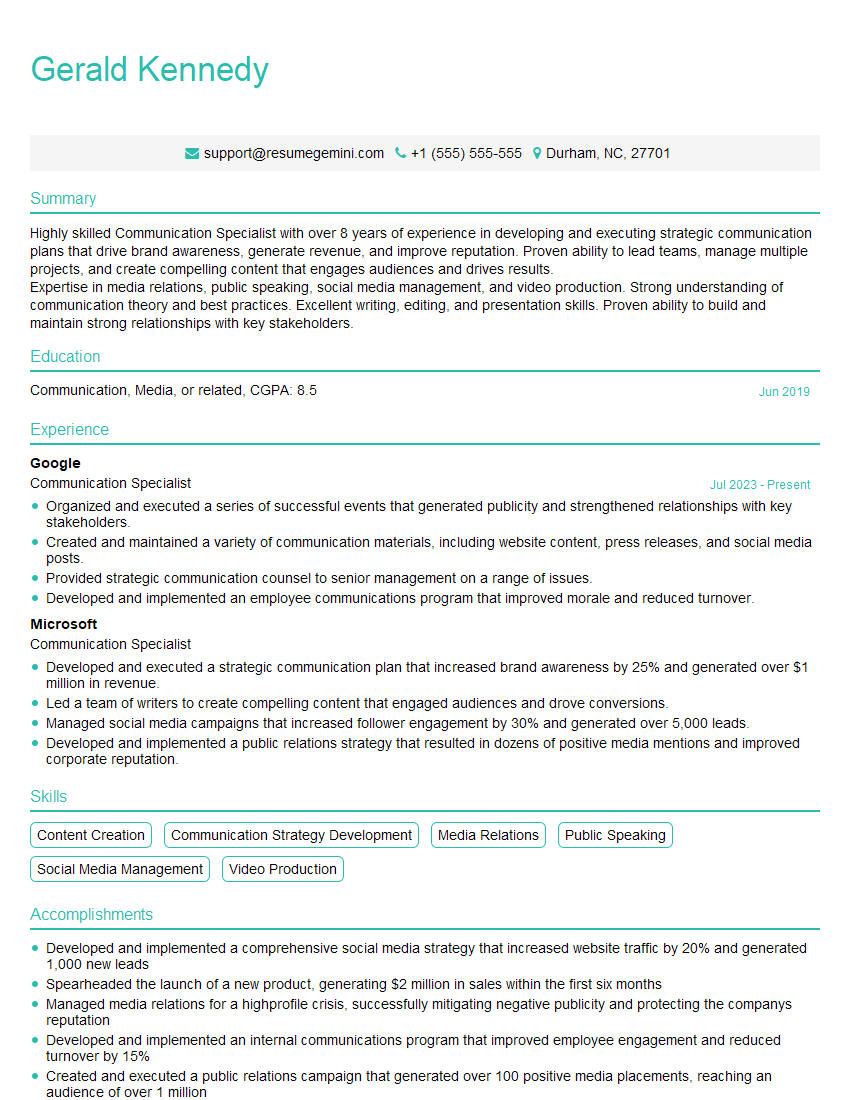
Mastering AAC is crucial for a rewarding and impactful career. A strong understanding of these concepts will set you apart and showcase your commitment to helping individuals communicate effectively. To enhance your job prospects, create an ATS-friendly resume that highlights your skills and experience. ResumeGemini is a trusted resource that can help you build a professional and impactful resume. Examples of resumes tailored to AAC (Augmentative and Alternative Communication) are available to guide you.
Explore more articles
Users Rating of Our Blogs
Share Your Experience
We value your feedback! Please rate our content and share your thoughts (optional).
What Readers Say About Our Blog
To the interviewgemini.com Webmaster.
Very helpful and content specific questions to help prepare me for my interview!
Thank you
To the interviewgemini.com Webmaster.
This was kind of a unique content I found around the specialized skills. Very helpful questions and good detailed answers.
Very Helpful blog, thank you Interviewgemini team.