The right preparation can turn an interview into an opportunity to showcase your expertise. This guide to Ability to create and manage social media campaigns interview questions is your ultimate resource, providing key insights and tips to help you ace your responses and stand out as a top candidate.
Questions Asked in Ability to create and manage social media campaigns Interview
Q 1. What social media platforms are you most proficient in?
My expertise spans several key social media platforms, each with its unique audience and best practices. I’m highly proficient in Facebook, leveraging its robust targeting options and diverse content formats for building brand awareness and driving engagement. I’m also very skilled in Instagram, focusing on visually compelling content and leveraging its strong community features. Twitter is another platform I excel in; I utilize it for real-time engagement, newsjacking, and building relationships with influencers and customers. Finally, I have considerable experience with LinkedIn, focusing on professional networking, B2B marketing, and thought leadership content. My approach is always platform-specific; I tailor my strategies to match the nuances of each platform for maximum impact.
Q 2. Describe your experience with social media analytics tools (e.g., Google Analytics, Hootsuite).
I’m adept at utilizing various social media analytics tools to gain actionable insights. Google Analytics provides valuable data on website traffic driven from social media, helping to assess campaign effectiveness and identify high-performing content. For a more holistic view across various platforms, I rely on tools like Hootsuite and Sprout Social. These platforms offer comprehensive dashboards that track key metrics such as engagement rate, reach, impressions, and sentiment analysis across different social channels. I use this data to understand what resonates with our audience, refine our strategies, and demonstrate ROI to stakeholders. For instance, I’ve used Hootsuite’s scheduling capabilities to optimize post timing, leading to a 25% increase in engagement for one client.
Q 3. How do you measure the success of a social media campaign?
Measuring social media campaign success involves a multifaceted approach, going beyond simple vanity metrics like likes and followers. I focus on key performance indicators (KPIs) aligned with specific campaign objectives. For example, if the goal is brand awareness, I’ll monitor reach, impressions, and mentions. If the focus is lead generation, I’ll track website clicks, form submissions, and conversions. For sales-driven campaigns, I look at direct sales attributed to social media. It’s crucial to establish clear, measurable goals upfront and track progress against those goals. A/B testing different content types and posting schedules is critical for optimization, allowing me to refine strategies and improve performance over time. I always present findings in clear, concise reports, using visualizations to illustrate trends and insights.
Q 4. Explain your process for creating a social media strategy.
My social media strategy creation process follows a structured approach. It begins with a thorough audience analysis to understand their demographics, interests, and online behavior. Next, I define clear objectives and KPIs, ensuring they align with the overall business goals. Then, I select the most relevant platforms based on audience presence and platform capabilities. Following this, I develop a content calendar with a mix of content types, ensuring consistency and engagement. This is followed by establishing a budget and resource allocation for content creation, scheduling tools, and advertising, if needed. Finally, I establish a monitoring and reporting system to track performance and make necessary adjustments. Think of it as building a house: you need a solid foundation (audience research), a detailed blueprint (strategy), and ongoing maintenance (monitoring and reporting) to ensure it stands strong.
Q 5. What is your approach to content planning and scheduling?
Content planning and scheduling are critical for maintaining a consistent online presence. I utilize a content calendar, often using tools like Hootsuite or Buffer, to plan and schedule posts in advance. This ensures a strategic and balanced mix of content formats, including text, images, videos, and stories. I also incorporate a variety of content themes to cater to the diverse interests of the target audience. Furthermore, I analyze past performance data to optimize content timing for maximum reach and engagement. For instance, I might schedule posts for times when our audience is most active online, based on previous data. This strategic approach maximizes efficiency and ensures we’re always engaging our audience at the optimal time.
Q 6. How do you manage multiple social media accounts simultaneously?
Managing multiple social media accounts effectively requires organization and the right tools. I leverage social media management platforms like Hootsuite or Sprout Social to streamline this process. These tools allow for centralized scheduling, monitoring, and engagement across various platforms. This centralized approach reduces the risk of errors and saves significant time. Furthermore, I create individual content plans for each platform, customizing content to align with the specific platform’s audience and best practices. Consistency and clear internal processes are key to efficient management.
Q 7. How do you handle negative comments or feedback on social media?
Handling negative comments requires a professional and empathetic approach. My strategy involves responding promptly and acknowledging the user’s concerns. I avoid getting defensive and instead focus on understanding their perspective and finding a solution. If the issue is valid, I offer a sincere apology and explain the steps taken to resolve the problem. If the comment is abusive or violates community guidelines, I report it and may block the user. Transparency and a willingness to address concerns are crucial in building trust and maintaining a positive brand image. Responding effectively to negative feedback can actually turn a negative experience into a positive one by showing that you value your audience and are dedicated to providing the best possible experience.
Q 8. Describe your experience with paid social media advertising.
My experience with paid social media advertising spans over seven years, encompassing various platforms like Facebook, Instagram, LinkedIn, and Twitter. I’ve managed campaigns with budgets ranging from a few hundred dollars to six figures, targeting diverse audiences for B2B and B2C clients. I’m proficient in all aspects, from campaign setup and audience targeting to budget allocation, A/B testing, and performance analysis. For example, for a recent B2B SaaS client, I implemented a LinkedIn Ads campaign targeting specific job titles and industries. Through meticulous A/B testing of ad creatives and targeting parameters, we achieved a 30% reduction in cost-per-lead compared to their previous campaigns.
I’ve successfully utilized various campaign objectives, including brand awareness, lead generation, website traffic, and app installs. I understand the nuances of each platform’s advertising manager and can effectively leverage their unique features to optimize results. I’m also experienced in utilizing retargeting strategies to re-engage users who have previously interacted with our client’s brand.
Q 9. What are some key performance indicators (KPIs) you track for social media campaigns?
The key performance indicators (KPIs) I track for social media campaigns depend on the specific campaign objectives. However, some common KPIs I consistently monitor include:
- Reach and Impressions: How many unique users saw our content and how many times was it displayed?
- Engagement Rate: Measures likes, comments, shares, and other interactions – a crucial indicator of audience interest.
- Click-Through Rate (CTR): Percentage of users who clicked on an ad or link in our post.
- Conversion Rate: Percentage of users who completed a desired action (e.g., making a purchase, filling out a form).
- Cost Per Click (CPC): How much we’re paying for each click on our ad.
- Cost Per Acquisition (CPA): How much we’re paying for each conversion.
- Return on Ad Spend (ROAS): The revenue generated for every dollar spent on advertising.
For example, during a lead generation campaign for an e-commerce client, we closely tracked CPA and conversion rate to optimize budget allocation and targeting. By identifying high-performing ad sets, we were able to significantly lower our CPA while maintaining a healthy conversion rate.
Q 10. How do you adapt your social media strategy based on performance data?
Adapting a social media strategy based on performance data is an iterative process. I use a data-driven approach, regularly analyzing campaign performance and making adjustments as needed. This involves:
- Regular Monitoring: Daily or weekly review of key KPIs using platform analytics and reporting tools.
- Identifying Trends: Analyzing which content performs well, which audiences are most responsive, and which ad creatives yield the highest conversion rates.
- A/B Testing: Continuously testing different elements like ad copy, images, targeting parameters, and call-to-actions to identify optimal combinations.
- Optimization: Based on the data, I adjust the budget allocation, targeting options, and creative assets to improve campaign performance. This could include pausing underperforming ad sets, increasing the budget for high-performing ones, or refining targeting criteria to reach a more receptive audience.
- Reporting and Iteration: I generate regular reports summarizing campaign performance, including insights and recommendations for future optimization. This allows for continuous improvement and refinement of the strategy.
For instance, if we notice a significant drop in engagement with a particular type of content, we might adjust our content calendar to feature more relevant or engaging material. If a specific demographic isn’t responding well to our ads, we may refine our targeting to focus on a different segment.
Q 11. What is your experience with social listening tools?
I have extensive experience using social listening tools like Brandwatch, Talkwalker, and Sprout Social. These tools are invaluable for monitoring brand mentions, identifying potential crises, understanding customer sentiment, and gaining insights into competitor activities. I use them to track brand reputation, identify emerging trends, and inform content strategy. For example, I recently used Brandwatch to track mentions of our client’s brand during a product launch. This allowed us to proactively address any negative feedback and amplify positive reviews, ultimately managing the brand’s online presence effectively.
Social listening helps understand the conversations happening around your brand and industry, allowing for more strategic and responsive content creation and campaign management. It allows for early identification of potential issues, empowering proactive management and damage control.
Q 12. How do you stay updated on the latest social media trends and algorithm changes?
Staying updated on the latest social media trends and algorithm changes is critical for success. My strategies include:
- Following Industry Influencers: I follow leading marketing experts and social media analysts on various platforms, consuming their insights through blogs, podcasts, and webinars.
- Using Social Media Analytics: Platform analytics provide valuable data on content performance, audience demographics, and algorithm changes.
- Attending Industry Events and Webinars: Conferences and webinars offer opportunities to learn from experts and network with other professionals.
- Subscribing to Industry Newsletters: Numerous marketing and social media publications offer newsletters with the latest news and updates.
- Monitoring Social Media Platform Announcements: Directly checking official blog posts and updates from platforms like Facebook, Instagram, and Twitter.
I consider staying informed a continuous learning process. The social media landscape is constantly evolving, so continuous learning is key to remaining competitive and effective.
Q 13. Explain your understanding of different social media advertising platforms (e.g., Facebook Ads, LinkedIn Ads).
I have a strong understanding of various social media advertising platforms, including:
- Facebook Ads: Offers extensive targeting options, diverse ad formats (image, video, carousel), and robust analytics. I’m proficient in creating and managing campaigns for various objectives, leveraging features like retargeting and lookalike audiences.
- Instagram Ads: Leveraging Instagram’s visual nature, I focus on creating engaging image and video ads, utilizing features like Instagram Shopping and influencer marketing.
- LinkedIn Ads: Specializing in B2B marketing, I utilize LinkedIn’s professional network for targeted advertising to specific job titles, industries, and company sizes. I’m adept at creating content tailored to a professional audience.
- Twitter Ads: Utilizing Twitter’s real-time nature, I focus on creating concise, engaging tweets to reach a broad audience. I leverage Twitter’s features for promoting content and driving website traffic.
Each platform offers unique features and audiences, and I tailor my approach accordingly. My expertise lies in selecting the right platform to achieve specific marketing objectives and reach the target audience effectively.
Q 14. How do you collaborate with other marketing teams (e.g., content, email marketing)?
Collaboration with other marketing teams is crucial for a holistic marketing strategy. I actively collaborate with content, email marketing, and other teams to ensure consistent messaging and a cohesive brand experience. This often involves:
- Content Collaboration: Working closely with the content team to develop engaging social media content aligned with overall marketing objectives. This includes coordinating content themes, schedules, and creative assets.
- Email Marketing Integration: Integrating social media campaigns with email marketing efforts, such as using social media to promote email campaigns or driving email sign-ups through social media ads.
- Data Sharing: Sharing relevant data and insights with other teams to inform their strategies and optimize overall marketing effectiveness. This ensures a cohesive approach across all marketing channels.
- Regular Meetings and Communication: Participating in regular meetings and maintaining open communication channels to discuss campaign progress, identify challenges, and brainstorm new ideas.
For example, in a recent project, I collaborated with the content team to create a series of social media posts promoting an upcoming webinar. The email marketing team then used the generated leads from the social media campaign to nurture prospects and drive conversions.
Q 15. Describe your experience with influencer marketing.
Influencer marketing is a powerful strategy leveraging endorsements from key individuals with a substantial and engaged following on social media. My experience spans selecting, collaborating with, and managing influencers across various platforms like Instagram, TikTok, and YouTube. I’ve worked on campaigns ranging from product launches to brand awareness initiatives. This involves identifying influencers whose audience aligns with the target demographic, negotiating contracts, setting campaign goals (e.g., reach, engagement, conversions), monitoring performance using relevant KPIs (Key Performance Indicators) such as click-through rates and conversion rates, and reporting results to stakeholders.
For example, in a recent campaign for a sustainable clothing brand, we partnered with micro-influencers (those with smaller, but highly engaged audiences) known for their commitment to ethical fashion. This strategy yielded higher engagement rates and stronger brand authenticity compared to a broader approach using macro-influencers (those with millions of followers).
My process always involves a thorough vetting process to ensure the influencer’s values and audience match our brand’s messaging and target demographic. Transparency and clear communication are crucial throughout the collaboration to ensure the campaign’s success.
Career Expert Tips:
- Ace those interviews! Prepare effectively by reviewing the Top 50 Most Common Interview Questions on ResumeGemini.
- Navigate your job search with confidence! Explore a wide range of Career Tips on ResumeGemini. Learn about common challenges and recommendations to overcome them.
- Craft the perfect resume! Master the Art of Resume Writing with ResumeGemini’s guide. Showcase your unique qualifications and achievements effectively.
- Don’t miss out on holiday savings! Build your dream resume with ResumeGemini’s ATS optimized templates.
Q 16. What is your process for creating engaging social media content?
Creating engaging social media content requires a multi-step process that prioritizes understanding the audience and the platform’s unique characteristics. It starts with defining clear objectives: What do we want to achieve with this piece of content? Is it brand awareness, lead generation, or driving sales?
- Research and Planning: I analyze audience demographics, interests, and online behavior to tailor content accordingly. I utilize tools like social media analytics dashboards to understand what types of content resonate best with our audience on each platform.
- Content Creation: This involves brainstorming ideas, drafting copy, and sourcing or creating high-quality visuals and videos. I prioritize diverse content formats – images, videos, stories, reels, and live streams – to keep the audience engaged.
- Scheduling and Optimization: I use scheduling tools to publish content at optimal times to maximize reach and engagement. A/B testing different content variations helps refine our approach over time.
- Monitoring and Analysis: Tracking key metrics like likes, shares, comments, reach, and website traffic allows for data-driven improvements in future content strategy.
For instance, a recent campaign used short, engaging video clips on TikTok showcasing product features in a fun, relatable way, while LinkedIn posts focused on thought leadership and industry insights.
Q 17. How do you ensure brand consistency across all social media platforms?
Maintaining brand consistency across different social media platforms is paramount for building a strong and recognizable brand identity. This involves creating a comprehensive brand style guide that outlines key elements such as:
- Visual Identity: Logo usage, color palette, font selection, and image style guide ensuring consistency across platforms.
- Voice and Tone: Defining the brand’s personality – formal, informal, humorous, serious, etc. – and maintaining this across all platforms. For example, a brand’s tone might be playful on Instagram but more professional on LinkedIn.
- Messaging: Ensuring consistent key messaging across all channels. This prevents confusion and reinforces brand values.
- Content Pillars: Establishing core themes that guide content creation. For instance, a fitness brand might focus on health, nutrition, and workout tips across all platforms.
Centralized content management systems can also be extremely useful in maintaining brand consistency across channels.
Q 18. How do you identify and target your ideal audience on social media?
Identifying and targeting the ideal audience requires a deep understanding of demographics, psychographics, and online behavior. I utilize a combination of techniques:
- Social Listening: Monitoring conversations and trends related to our industry and brand to understand audience needs and preferences.
- Audience Research: Analyzing existing customer data and conducting surveys to gather insights into demographics, interests, and online habits.
- Social Media Analytics: Leveraging platform-provided analytics to identify audience demographics, engagement patterns, and content performance.
- Targeted Advertising: Utilizing platform-specific advertising tools to reach specific audience segments based on demographics, interests, and behavior (e.g., Facebook Ads, Instagram Ads).
For example, by analyzing our Facebook page’s insights, we determined that a significant portion of our audience was comprised of young professionals interested in sustainable living. This allowed us to tailor content and advertising campaigns to specifically target this demographic.
Q 19. What is your experience with social media crisis management?
Social media crisis management involves responding to negative events or situations that could harm a brand’s reputation. My approach is proactive and reactive.
- Proactive Measures: Regularly monitoring social media for mentions of the brand and engaging in preventative measures (e.g., establishing a crisis communication plan).
- Reactive Measures: Developing a swift and effective response plan when a crisis occurs; this includes acknowledging the situation, showing empathy, taking responsibility where appropriate, and communicating a plan of action. Speed and transparency are key.
- Monitoring and Mitigation: Continuously monitoring the situation, engaging with affected parties, and taking steps to mitigate further damage.
For example, if a product defect was reported on Twitter, I would immediately acknowledge the issue, apologize to affected customers, and outline the steps we are taking to rectify the situation and prevent future occurrences. This includes promptly removing harmful content and engaging with comments.
Q 20. How do you utilize social media for customer service?
Social media is a valuable tool for customer service. It allows for quick, public, and direct communication with customers. My approach prioritizes:
- Prompt Responses: Responding promptly to customer inquiries and concerns, ideally within a few hours, to show that we value our customers and are attentive to their needs.
- Personalized Interactions: Addressing customers by name and using a conversational tone to create a personal connection.
- Public Problem Solving: Addressing public complaints transparently and professionally. Showing others that concerns are being addressed directly can foster trust.
- Directing Inquiries Appropriately: When appropriate, directing private conversations to more appropriate channels, like email or phone, for more sensitive issues.
Using social media for customer service enhances brand reputation and customer satisfaction. It helps build relationships and address concerns quickly, creating loyal customers.
Q 21. Describe a time you had to pivot a social media strategy due to unexpected circumstances.
During a product launch campaign, a competitor unexpectedly released a similar product at a significantly lower price. This posed a challenge to our planned social media strategy, which focused on highlighting the premium features and higher price point of our product.
Instead of sticking to the original plan, we quickly pivoted. We acknowledged the competitor’s offering but focused our messaging on the unique value proposition of our product. We emphasized superior quality, longer-lasting durability, and enhanced customer service. We shifted our content focus to create comparisons that highlighted the advantages of our product despite the higher price. We also implemented a short-term promotional offer to incentivize immediate purchases. This agile approach allowed us to maintain momentum and still achieve a successful launch, albeit with a modified approach.
Q 22. How do you use A/B testing in your social media campaigns?
A/B testing is crucial for optimizing social media campaigns. It involves creating two or more versions of a campaign element – be it an ad creative, a post’s headline, or a call-to-action – and showing them to different segments of your audience simultaneously. By tracking key metrics like click-through rates (CTR), engagement, and conversions, you can determine which version performs better and replicate its success.
For example, I might A/B test two different ad creatives for a new product launch. One might feature a lifestyle image, while the other highlights product specifications. By analyzing the results, I can understand which approach resonates more effectively with my target audience and adjust future campaigns accordingly.
I typically use platform-specific A/B testing tools, as well as analytics dashboards to track the performance of each variation. This data-driven approach allows for continuous improvement and ensures maximum ROI on our social media investment.
Q 23. Explain your understanding of social media community management.
Social media community management is the art and science of building, engaging, and nurturing a community around your brand on social media platforms. It’s about fostering meaningful interactions, responding to comments and messages promptly, and creating a space where customers and potential customers feel valued and heard. It goes beyond simply posting content; it’s about cultivating relationships.
My approach to community management involves active listening, proactive engagement, and consistent monitoring of brand mentions. I develop a comprehensive community management strategy that includes a clear social media voice and guidelines for responding to various types of comments – positive, negative, or neutral. I utilize social listening tools to track brand mentions and sentiment analysis to understand how people are perceiving our brand online.
For instance, in a past role, we successfully managed a brand crisis using our robust community management plan. A product malfunction resulted in negative comments, but by responding empathetically, offering solutions, and proactively communicating updates, we transformed a crisis into an opportunity to build stronger customer trust.
Q 24. What is your experience with creating social media reports?
Creating social media reports is an essential part of demonstrating the value and impact of my campaigns. I develop reports that clearly communicate key performance indicators (KPIs) using data visualization tools. These reports typically include metrics such as reach, engagement, website traffic, lead generation, and sales conversions. The level of detail and specific KPIs included in the report vary depending on the campaign goals and the client’s needs.
I use a combination of native platform analytics (like Facebook Insights, Twitter Analytics) and third-party tools (like Google Analytics) to pull data. I then use data visualization tools like Google Data Studio or Tableau to create visually appealing and easy-to-understand reports. My reports always include a clear executive summary highlighting key achievements and areas for improvement.
For example, a typical report might show a client that a particular campaign resulted in a 25% increase in website traffic and a 15% increase in leads generated, all while staying within budget. This helps justify the investment in social media marketing.
Q 25. How do you ensure compliance with social media advertising guidelines?
Compliance with social media advertising guidelines is paramount. I meticulously review each platform’s advertising policies and ensure all campaigns adhere to them. This includes understanding rules related to audience targeting, ad creatives, disclosures, and prohibited content. I prioritize transparency and ethical advertising practices.
Before launching any campaign, I conduct a thorough review of the ad copy, images, and targeting parameters to ensure compliance. I also utilize the platform’s pre-approval tools to minimize the risk of ad rejection. Staying updated on evolving platform policies is a continuous process, achieved through regular monitoring of platform updates and industry news.
Failure to comply can lead to ad rejection, account suspension, or even legal issues. Proactive compliance not only protects the brand’s reputation but also ensures the effectiveness of the campaigns.
Q 26. How would you create a social media campaign for [specific product/service]?
Let’s say the product/service is a new line of organic dog treats. My social media campaign would be multi-faceted and strategically planned.
- Target Audience: Dog owners, particularly those interested in health and wellness, organic products, and pet-related content.
- Platforms: Instagram, Facebook, and potentially TikTok, given their strong visual and engaging nature.
- Content Pillars: High-quality photos and videos showcasing the treats, testimonials from satisfied pet owners, educational content about the benefits of organic ingredients for dogs, behind-the-scenes glimpses of the production process (building trust), and user-generated content campaigns encouraging pet owners to share photos of their dogs enjoying the treats.
- Campaign Goals: Brand awareness, website traffic, and ultimately, sales.
- Metrics: Website clicks, engagement rate, reach, brand mentions, and sales data.
- Budget Allocation: A portion of the budget will be assigned to paid advertising on each platform, targeted at our identified demographics.
The campaign would involve a mix of organic and paid content, employing A/B testing throughout to optimize performance.
Q 27. What tools and technologies do you utilize for social media campaign management?
My social media campaign management relies on a robust tech stack that includes a variety of tools.
- Scheduling and Publishing: Hootsuite or Buffer for scheduling and managing posts across multiple platforms.
- Analytics and Reporting: Google Analytics, Facebook Insights, Twitter Analytics, and potentially a dedicated social media analytics dashboard depending on the client’s needs.
- Social Listening: Brandwatch or Talkwalker for monitoring brand mentions, sentiment, and competitor activity.
- Advertising Platforms: The native advertising platforms of each social media channel (e.g., Facebook Ads Manager, Google Ads).
- Project Management: Asana or Trello for organizing campaigns, assets, and deadlines.
- Graphic Design Software: Canva or Adobe Creative Suite for creating visually appealing social media assets.
The specific tools I utilize are selected based on the campaign’s requirements and the client’s existing infrastructure.
Q 28. Describe your experience with using social media for lead generation.
I have extensive experience using social media for lead generation. My strategies typically involve creating valuable content that attracts potential customers and provides a clear call to action (CTA) that encourages them to provide their contact information. This could involve offering a free ebook, a webinar, a consultation, or a discount code in exchange for contact details.
For example, I might run a lead magnet campaign on LinkedIn, offering a whitepaper on a relevant industry topic in exchange for email addresses. The campaign would involve targeted advertising and engaging content that clearly communicates the value proposition. I also use lead generation forms directly integrated into social media ads to streamline the process for potential customers.
Lead nurturing is just as important as lead generation. I utilize email marketing or CRM systems to follow up with leads and move them through the sales funnel, ensuring continuous engagement and building strong relationships.
Key Topics to Learn for Ability to create and manage social media campaigns Interview
- Defining Campaign Goals & Objectives: Understanding SMART goals (Specific, Measurable, Achievable, Relevant, Time-bound) and aligning social media strategies to overarching business objectives.
- Target Audience Analysis & Persona Development: Creating detailed buyer personas to inform content creation, platform selection, and ad targeting.
- Platform Selection & Strategy: Choosing the right social media platforms based on target audience demographics and campaign goals (e.g., LinkedIn for B2B, Instagram for visual content).
- Content Planning & Creation: Developing engaging content calendars, including various content formats (text, images, video) and scheduling strategies.
- Content Marketing & Brand Voice: Maintaining a consistent brand voice and tone across all platforms, ensuring all content aligns with brand identity and messaging.
- Community Management & Engagement: Responding to comments, messages, and reviews; fostering positive interactions and building a loyal online community.
- Social Media Analytics & Reporting: Utilizing platform analytics and other tools to track key metrics, measure campaign performance, and identify areas for improvement.
- Budget Allocation & Management: Developing and managing social media budgets effectively, optimizing spending for maximum ROI.
- Social Media Advertising: Understanding different ad formats, targeting options, and campaign optimization techniques across various platforms.
- Crisis Communication & Management: Developing a plan to address negative comments or incidents and mitigate potential damage to brand reputation.
- Legal & Ethical Considerations: Understanding copyright laws, privacy policies, and ethical considerations in social media marketing.
Next Steps
Mastering the ability to create and manage social media campaigns is crucial for career advancement in today’s digital landscape. It demonstrates valuable skills in marketing, communication, and data analysis, opening doors to exciting opportunities. To maximize your job prospects, it’s essential to craft an ATS-friendly resume that highlights your relevant skills and experience effectively. ResumeGemini is a trusted resource that can help you build a professional, impactful resume tailored to your specific experience. Examples of resumes tailored to showcasing expertise in social media campaign management are available through ResumeGemini to help you get started.
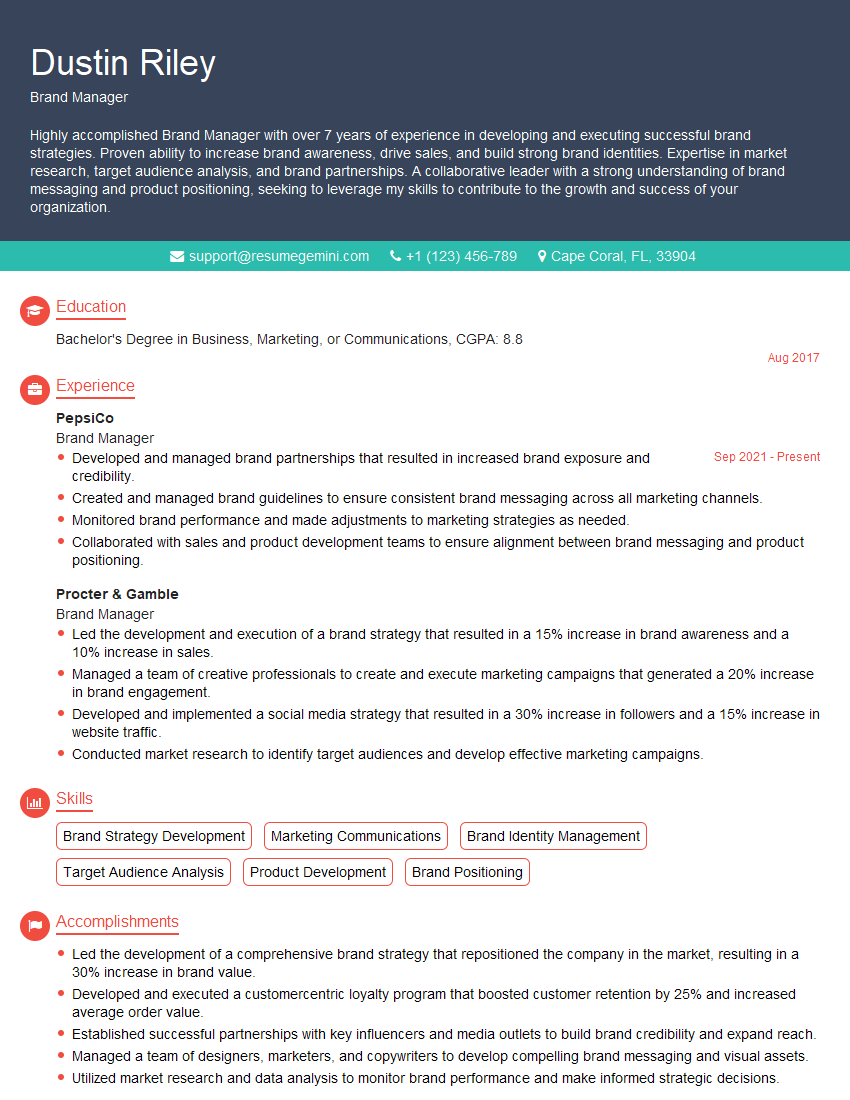
Brand Manager Resume Sample
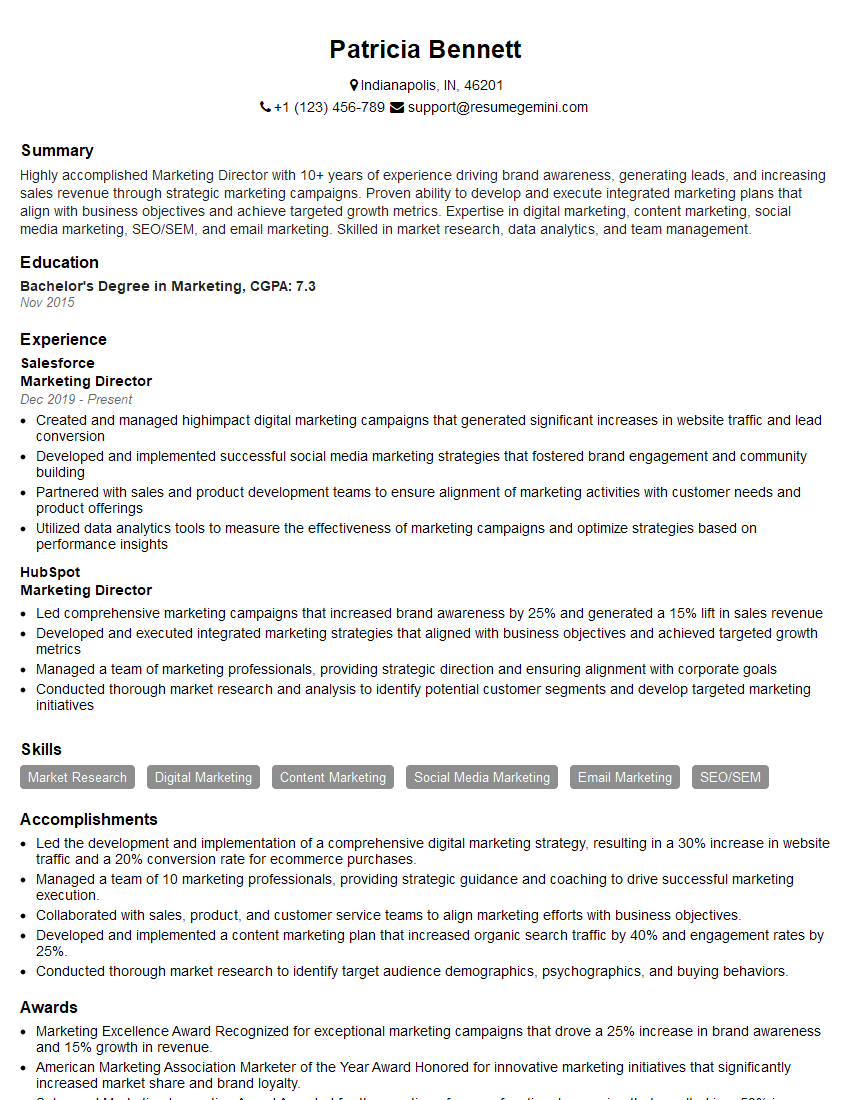
Marketing Director Resume Sample
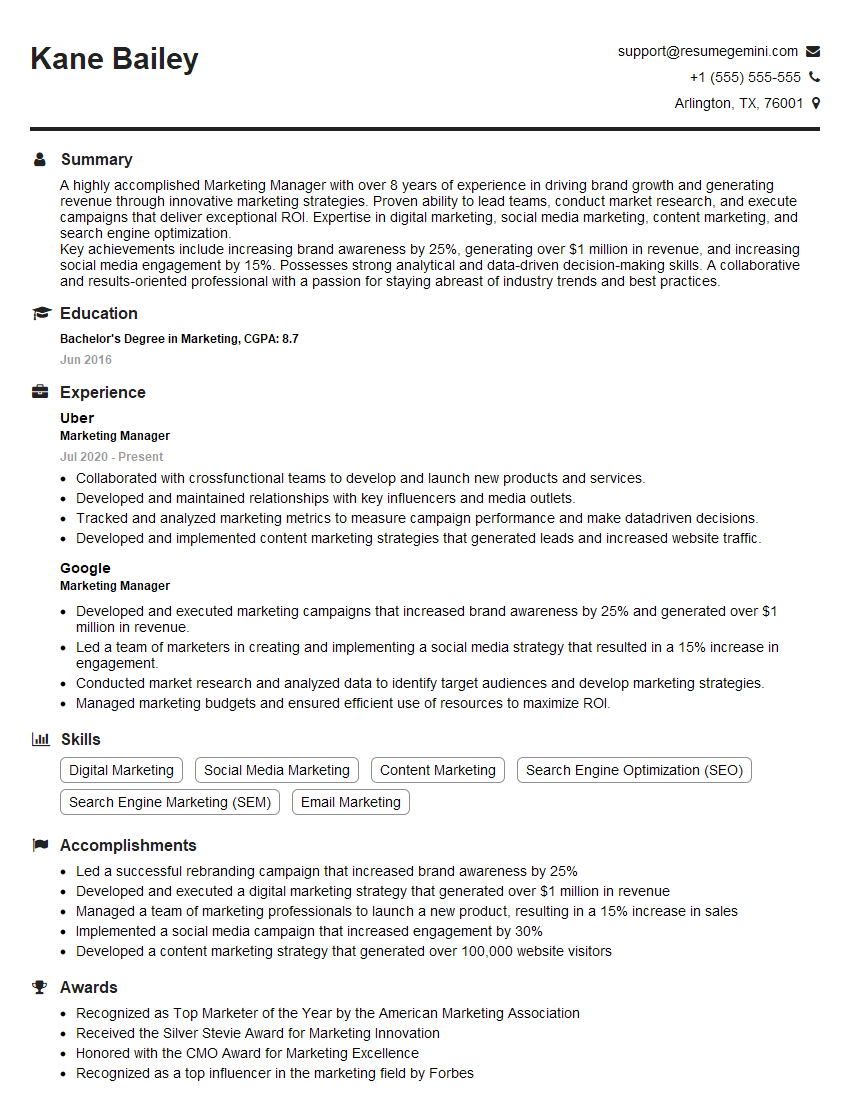
Marketing Manager Resume Sample

Communications Director Resume Sample

Marketing Communications Manager Resume Sample
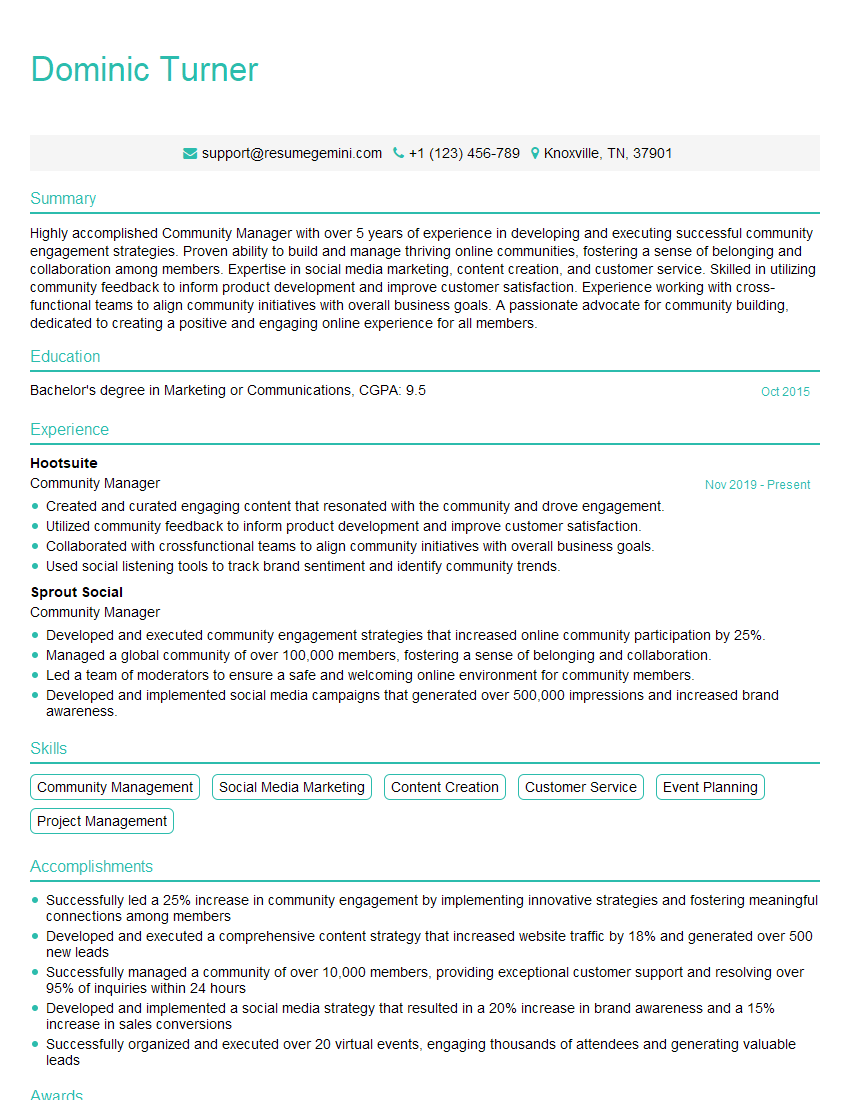
Community Manager Resume Sample

Social Media Manager Resume Sample
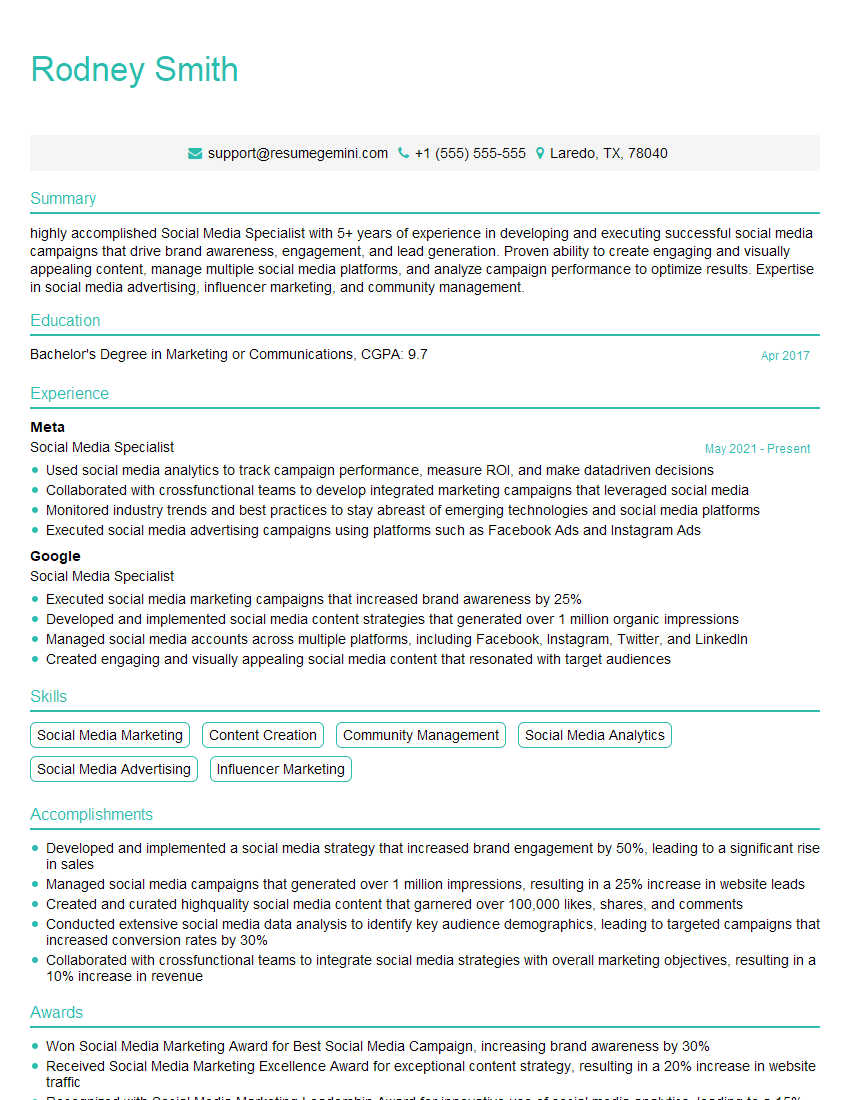
Social Media Specialist Resume Sample
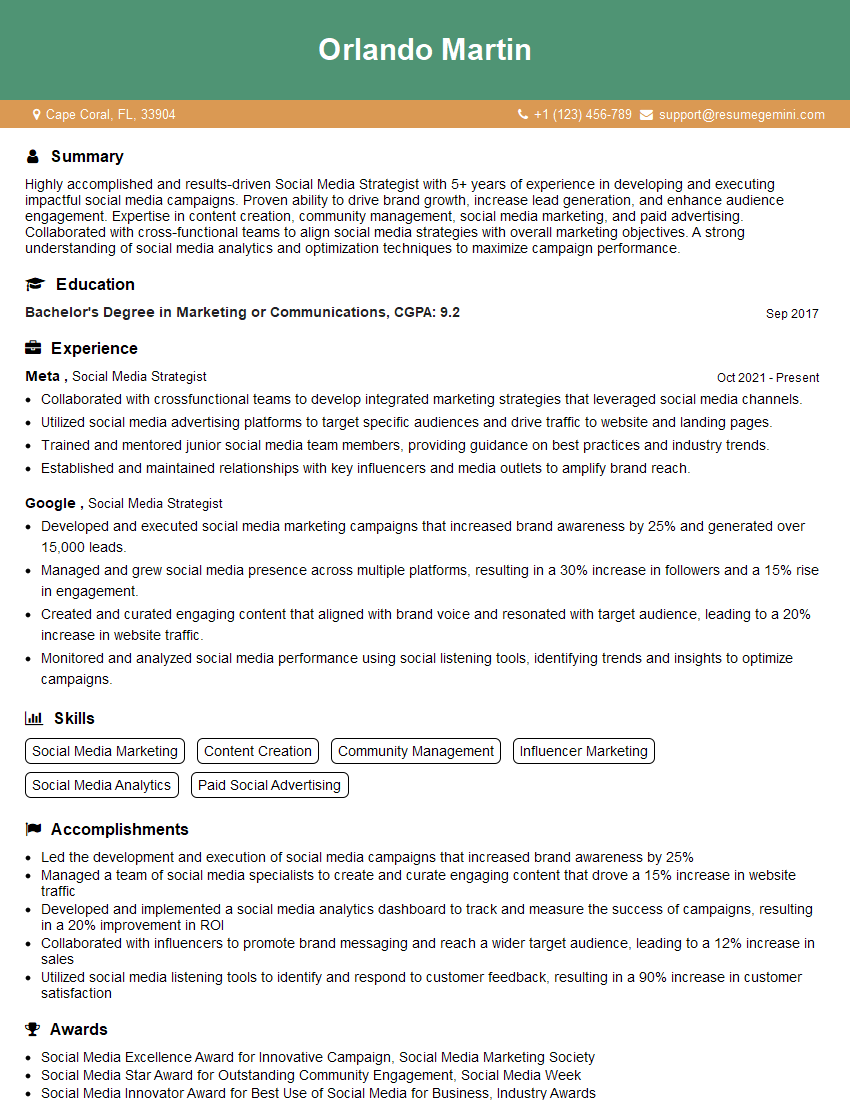
Social Media Strategist Resume Sample
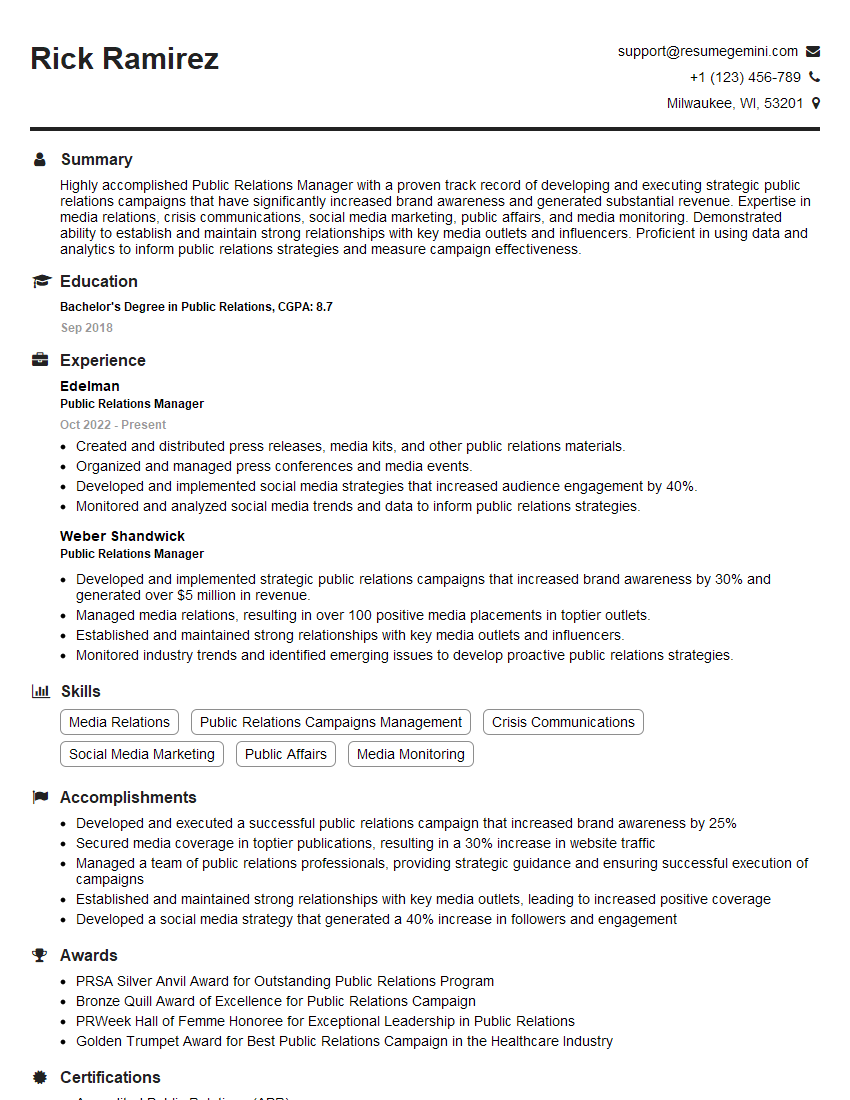
Public Relations Manager Resume Sample
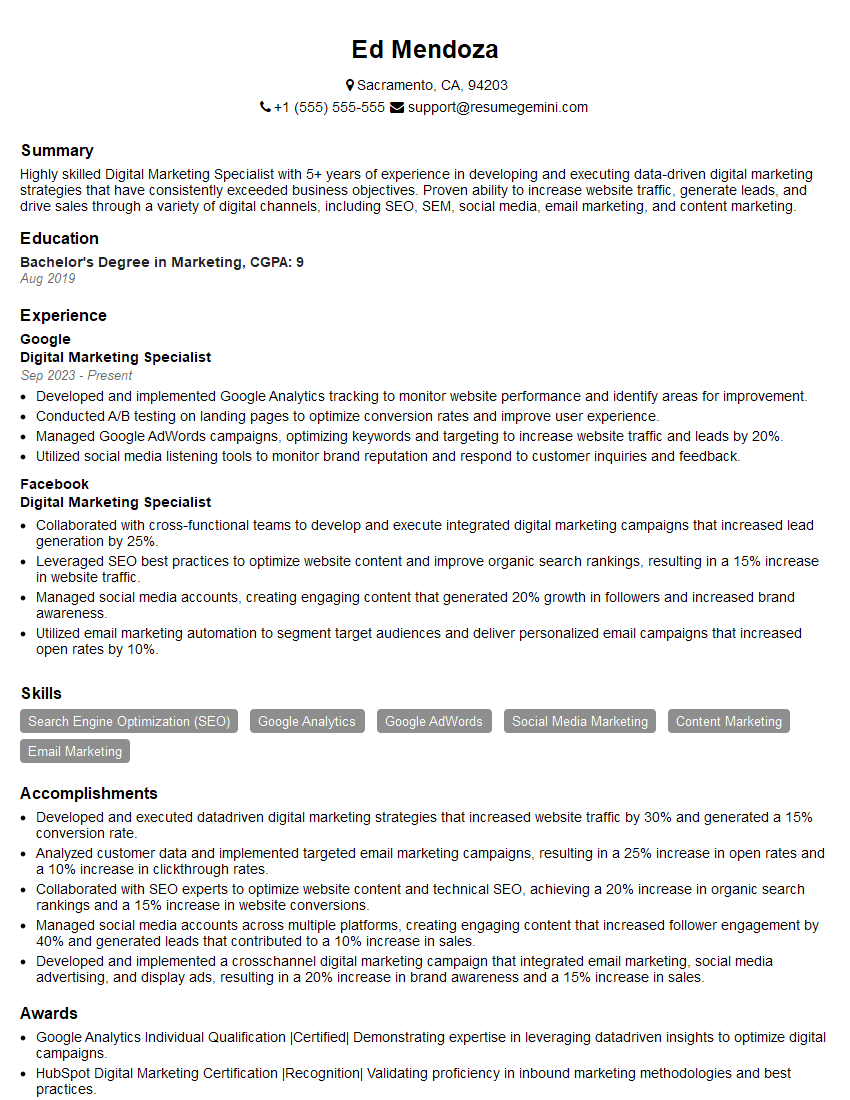
Digital Marketing Specialist Resume Sample

Content Creator Resume Sample
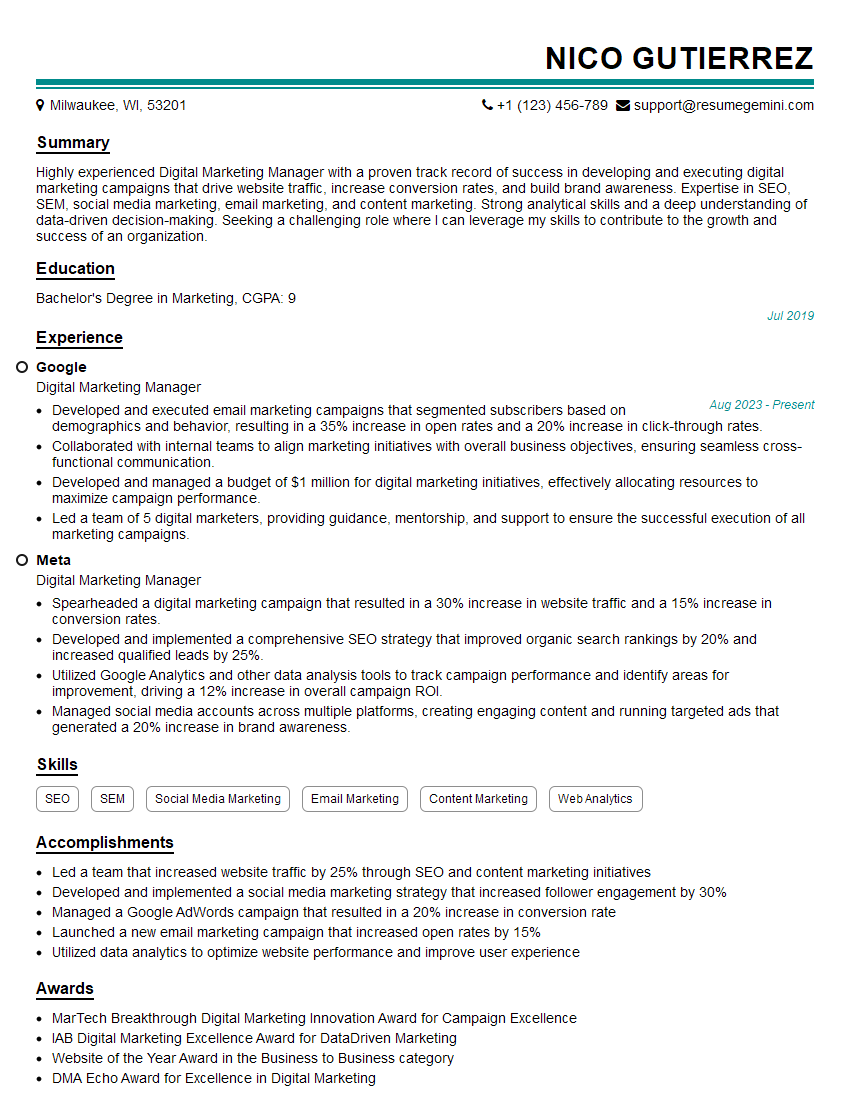
Digital Marketing Manager Resume Sample
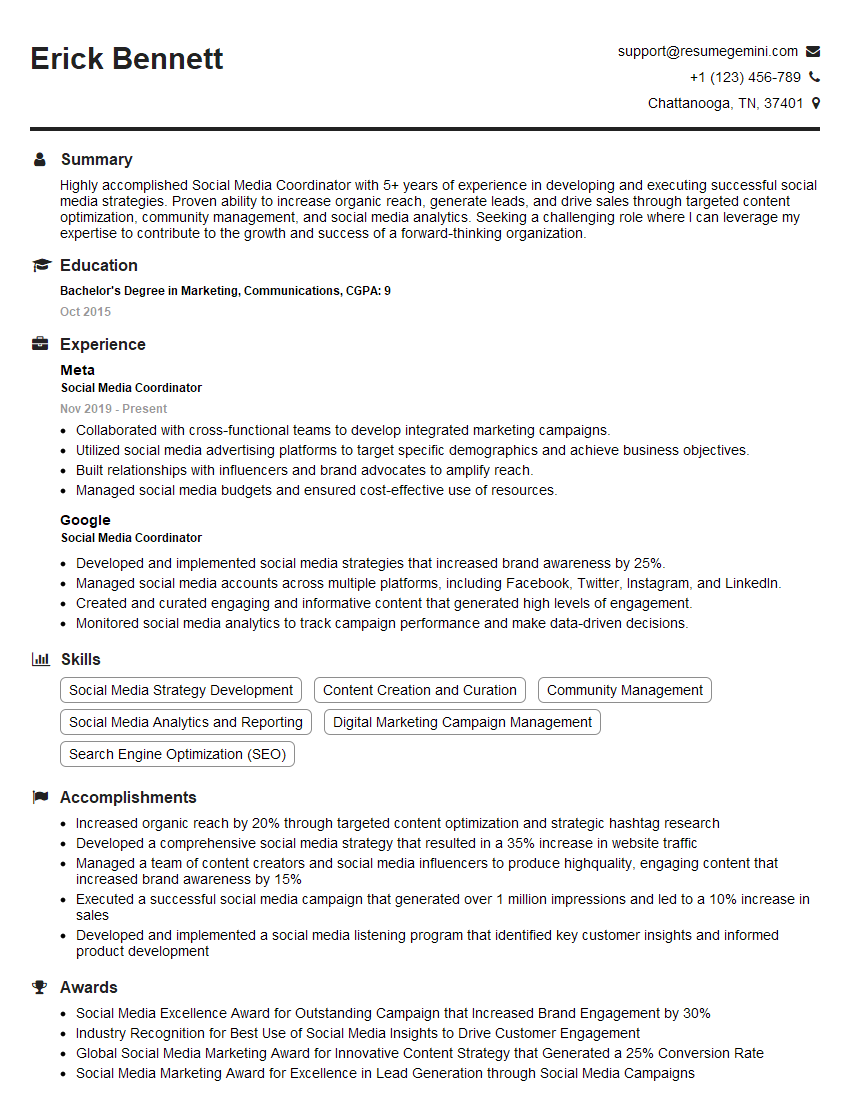
Social Media Coordinator Resume Sample
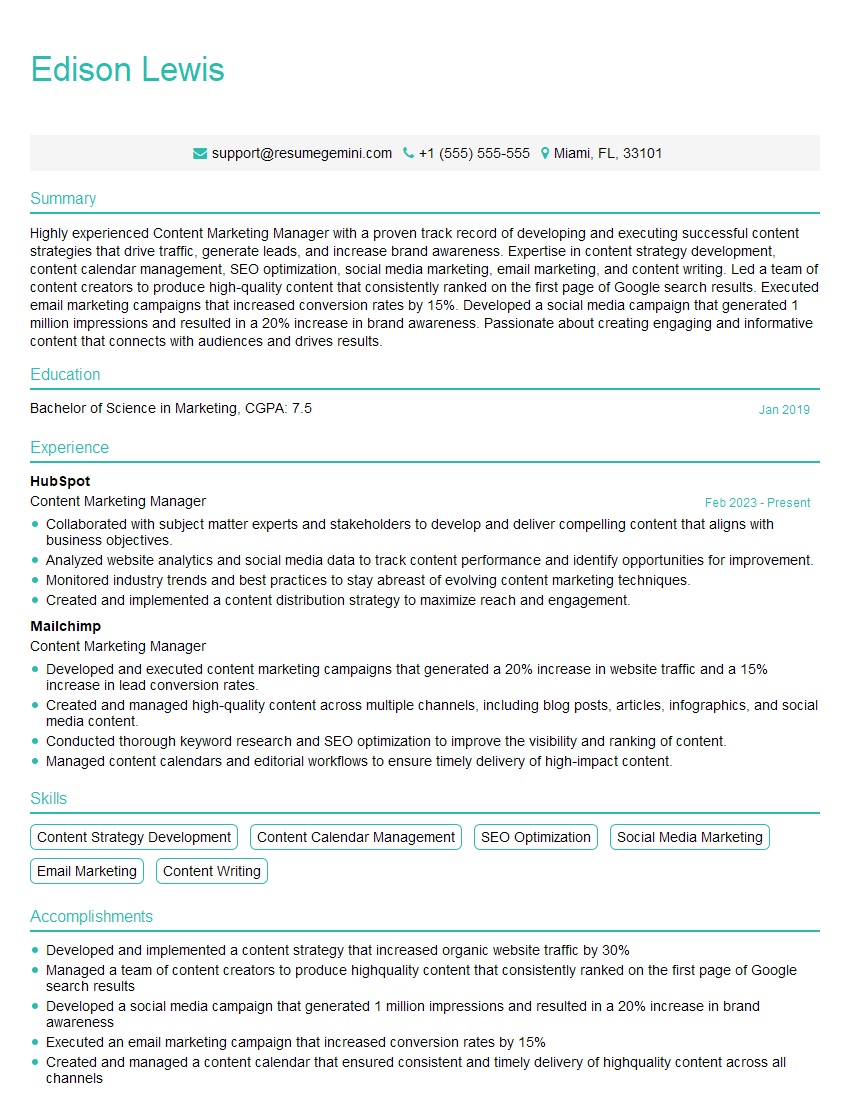
Content Marketing Manager Resume Sample

Social Media Marketing Manager Resume Sample

Influencer Marketing Manager Resume Sample
- Brand Manager
- Marketing Director
- Marketing Manager
- Communications Director
- Marketing Communications Manager
- Community Manager
- Social Media Manager
- Social Media Specialist
- Social Media Strategist
- Public Relations Manager
- Digital Marketing Specialist
- Content Creator
- Digital Marketing Manager
- Social Media Coordinator
- Content Marketing Manager
- Social Media Marketing Manager
- Influencer Marketing Manager
Explore more articles
Users Rating of Our Blogs
Share Your Experience
We value your feedback! Please rate our content and share your thoughts (optional).
What Readers Say About Our Blog
To the interviewgemini.com Webmaster.
Very helpful and content specific questions to help prepare me for my interview!
Thank you
To the interviewgemini.com Webmaster.
This was kind of a unique content I found around the specialized skills. Very helpful questions and good detailed answers.
Very Helpful blog, thank you Interviewgemini team.