Are you ready to stand out in your next interview? Understanding and preparing for Customs Clearance and International Trade interview questions is a game-changer. In this blog, we’ve compiled key questions and expert advice to help you showcase your skills with confidence and precision. Let’s get started on your journey to acing the interview.
Questions Asked in Customs Clearance and International Trade Interview
Q 1. Explain the difference between Incoterms 2020 rules and their implications for customs clearance.
Incoterms 2020 rules define the responsibilities of buyers and sellers in international trade transactions, specifically concerning delivery and associated costs. These rules are crucial for customs clearance because they determine which party is responsible for import/export formalities, and the point at which ownership and risk transfer. Different Incoterms impact the customs entry process significantly.
- For example: Under EXW (Ex Works), the seller fulfills their obligation when the goods are made available at their premises. The buyer is responsible for all export customs processes and the costs associated with getting the goods to their destination. Conversely, under DDP (Delivered Duty Paid), the seller is responsible for all export and import costs and customs procedures. This dramatically changes who files customs declarations and pays import duties.
- Implications for Customs Clearance: The choice of Incoterms dictates which party prepares and submits the necessary documentation (commercial invoice, packing list, etc.) to customs authorities. It affects the location where customs clearance occurs (buyer’s or seller’s country) and the party responsible for paying duties and taxes. Incorrect Incoterm selection can lead to delays, disputes, and financial penalties.
Q 2. Describe the process of classifying goods under the Harmonized System (HS) code.
Classifying goods under the Harmonized System (HS) code is critical for determining the applicable tariffs, trade regulations, and import/export restrictions. It’s a six-digit code, internationally standardized, forming the basis for national tariff schedules. The process involves a systematic examination of the product’s characteristics and its legal definition.
- Detailed Product Description: Start with a precise description of the product, including materials, function, and manufacturing process.
- HS Nomenclature: Consult the HS Nomenclature, a detailed hierarchical structure categorizing products. This usually involves referring to official HS publications or online databases.
- Legal Definitions and Interpretative Rules: Pay close attention to legal definitions and interpretative rules within the HS to resolve ambiguities.
- Exclusionary and Inclusionary Rules: Carefully note exclusionary and inclusionary rules to ensure proper classification.
- Binding Rulings: In cases of uncertainty, you can obtain a binding ruling from the customs authority. This ruling provides a legally binding classification for a specific product.
Example: Classifying a wooden toy car. You might find the relevant section describing ‘toys’ and further sub-sections detailing specific toy types, leading you to the correct 6-digit HS code. Incorrect classification can result in significant financial penalties.
Q 3. What are the common documents required for customs clearance of imports and exports?
The specific documents required for customs clearance vary depending on the country, the nature of goods, and the trade agreement, but some are essential for both imports and exports:
- Commercial Invoice: A detailed invoice from the seller to the buyer, describing goods, quantity, value, and other relevant information.
- Packing List: A list of the contents of each package, including weights and dimensions.
- Bill of Lading (for sea freight) or Air Waybill (for air freight): Documents of title that prove ownership and shipment details.
- Certificate of Origin: Certifies the country of origin of the goods, often needed to benefit from preferential tariffs.
- Import/Export License (if required): Permits granted by authorities for specific goods subject to trade controls.
- Other Documents (as required): Depending on the goods and destinations, you may need other documentation such as sanitary/phytosanitary certificates, safety certificates, etc.
Q 4. How do you handle customs audits and investigations?
Customs audits and investigations can be challenging, but proactive preparation and a clear understanding of regulations are crucial.
- Maintain Accurate Records: Thorough record-keeping is paramount, including all import/export documents, contracts, and financial records.
- Internal Compliance Program: Implement a robust internal compliance program that regularly reviews procedures and ensures adherence to customs laws.
- Cooperation with Authorities: If an audit or investigation is initiated, cooperate fully with authorities by providing all requested documentation promptly and accurately.
- Seek Professional Advice: Consult with experienced customs brokers or legal counsel to navigate complex procedures and represent your interests.
- Transparency and Communication: Maintain open communication with the investigating officers and address their concerns directly.
Example: During an audit, if an inconsistency is found between the declared value and supporting evidence, readily provide additional documentation to clarify the discrepancy. Non-cooperation can lead to significant penalties.
Q 5. Explain the concept of ‘Free Trade Agreements’ and their impact on import duties.
Free Trade Agreements (FTAs) are treaties between two or more countries that aim to reduce or eliminate tariffs and other trade barriers. These agreements foster economic cooperation and integration by creating preferential trade terms.
- Impact on Import Duties: FTAs significantly impact import duties by reducing or eliminating them on goods originating within the participating countries. This makes imports cheaper and more competitive, stimulating trade between member nations.
- Rules of Origin: FTAs typically have rules of origin that determine whether goods qualify for preferential treatment. These rules specify the percentage of value added or processing that must occur within FTA member countries.
- Example: If the US and Canada have an FTA, goods originating in Canada imported into the US may be subject to lower or zero tariffs compared to goods originating from a non-FTA partner country.
Understanding FTA rules and complying with them is crucial for businesses to reap the benefits of reduced tariffs. Misinterpretation of rules of origin can lead to the denial of preferential tariffs and result in financial losses.
Q 6. What are the different types of customs duties and taxes?
Customs duties and taxes are levied on imported goods to generate revenue and protect domestic industries. There are several types:
- Ad Valorem Duty: A percentage of the goods’ value.
- Specific Duty: A fixed amount per unit of goods (e.g., per kilogram or per item).
- Combined Duty: A combination of ad valorem and specific duties.
- Anti-dumping Duties: Imposed on goods sold below market value to prevent unfair competition.
- Countervailing Duties: Offset government subsidies provided to foreign producers.
- Value Added Tax (VAT) or Goods and Services Tax (GST): A tax levied on the value added at each stage of production and distribution.
The specific duties and taxes applied vary greatly depending on the country, the product, and applicable trade agreements.
Q 7. How do you determine the correct tariff classification for a product?
Determining the correct tariff classification requires careful attention to detail and adherence to established procedures. It’s a crucial step in international trade, influencing costs and compliance.
- Precise Product Description: Begin with a precise and comprehensive description of the product, including its material composition, manufacturing process, and intended use.
- Consult the HS Nomenclature: Thoroughly consult the Harmonized System (HS) Nomenclature, using keywords and descriptions from the product description to navigate the hierarchical structure.
- Interpretative Rules: Apply the interpretative rules of the HS Nomenclature to resolve ambiguities and to choose the most specific heading.
- Legal Definitions: Pay close attention to any legal definitions provided within the HS Nomenclature. These legal definitions can be crucial in determining the correct classification.
- Seek Expert Advice: If uncertainty persists, seek professional guidance from a customs broker or trade specialist who can assist in determining the proper classification, potentially through obtaining a binding ruling.
Example: A seemingly simple product like a ‘jacket’ might require careful consideration of materials (leather, cotton, synthetic), construction (stitching, lining), and function (sportswear, formalwear) to pinpoint the correct HS code.
Q 8. Explain the process of obtaining an import/export license.
Obtaining an import/export license is a crucial first step in engaging in international trade. The process varies significantly depending on the country and the specific goods involved. Generally, it begins with identifying the relevant licensing authority – often a government agency like the Department of Commerce or a similar body. You’ll then need to submit an application, typically online, providing detailed information about your business, the products you intend to import or export, and your intended trading partners. This will include things like your company registration details, tax identification numbers, and a detailed description of the goods, including their Harmonized System (HS) codes – a standardized international system for classifying traded products.
The application process often involves thorough scrutiny, with the authorities verifying your information and ensuring you meet all necessary compliance requirements. This might include background checks, inspections of your facilities, and demonstrating adherence to industry regulations. For example, exporting certain sensitive technologies might necessitate additional security clearances. After review, the licensing authority either approves or denies your application. If approved, you will receive a license with specific stipulations and validity periods. These licenses can be quite specialized, and some goods may require multiple licenses from various regulatory bodies. Think of it like getting a driver’s license – you need to meet specific criteria and follow specific rules to operate legally. In the same vein, import/export licenses ensure you’re operating within the legal frameworks of international trade.
Q 9. Describe your experience with customs bonded warehouses.
Customs bonded warehouses are a vital part of the international trade landscape. I have extensive experience utilizing these facilities for clients involved in various import and export operations. Essentially, a bonded warehouse is a secure facility, licensed by customs authorities, where imported goods can be stored temporarily without paying import duties and taxes. This provides several significant advantages. Businesses can defer payment of duties until the goods are released for consumption within the country, improving cash flow and reducing storage costs in the short term. It’s also useful for breaking down large shipments into smaller, manageable units, allowing for more efficient distribution. I’ve worked with warehouses specializing in various goods, from high-value electronics to perishable agricultural products.
My experience includes managing the logistics of goods entering and leaving bonded warehouses, ensuring all documentation is compliant and coordinating with customs officials for regular inspections. For example, I once worked on a project involving a large shipment of medical equipment where utilizing a bonded warehouse allowed us to stagger the release of goods, ensuring efficient distribution to various hospitals while optimizing the payment schedule and minimizing storage costs. Successful management of bonded warehouse operations requires meticulous record-keeping, detailed understanding of customs regulations, and strong relationships with both warehouse operators and customs officials.
Q 10. How do you manage and mitigate risks associated with international trade?
Managing risks in international trade is paramount. It’s a multi-faceted challenge requiring a proactive and comprehensive approach. Key risks include currency fluctuations, political instability in trading partner countries, supply chain disruptions, non-payment by buyers, and customs delays or penalties.
My risk mitigation strategy is built upon a foundation of thorough due diligence. This includes careful vetting of potential trading partners, conducting credit checks, and obtaining strong guarantees for payments. We utilize diverse financial instruments, such as letters of credit and insurance policies (e.g., cargo insurance) to mitigate financial risks. For supply chain disruptions, I leverage multiple sourcing strategies and build relationships with reliable logistics providers to ensure redundancy and flexibility. To handle potential customs issues, maintaining meticulous documentation and ensuring accurate classification of goods under HS codes are crucial. Regular monitoring of international trade news and engaging with knowledgeable customs brokers are vital to staying ahead of potential regulatory changes or disruptions. A strong risk management approach is a continuous process of monitoring, assessing, and adapting to the ever-evolving dynamics of global commerce.
Q 11. What software or systems are you familiar with for customs clearance processes?
I am proficient in several software systems commonly used in customs clearance. This includes specialized platforms like Descartes Global Logistics Network and CargoWise One. These systems streamline the process by providing tools for document management, electronic filing of customs declarations, tracking shipments, and managing compliance requirements.
My experience also extends to using Automated Commercial Environment (ACE) in the US context, as well as various other country-specific customs portals. Beyond these dedicated platforms, I utilize general business software like Microsoft Excel and ERP (Enterprise Resource Planning) systems for data analysis, reporting and overall management of trade operations. Proficiency in these tools allows for efficient processing of large volumes of data, quick identification of potential discrepancies, and smooth communication with various stakeholders involved in the supply chain.
Q 12. Explain the importance of accurate documentation in international trade.
Accurate documentation is the backbone of successful international trade. Without precise and complete documentation, shipments can be delayed, penalties can be incurred, and even the entire transaction could be jeopardized. Every document serves a crucial purpose in verifying the legitimacy of the transaction and compliance with regulations.
This includes everything from commercial invoices, packing lists, bills of lading (for sea freight), and air waybills (for air freight) to certificates of origin, import permits, and customs declarations. Each document needs to accurately reflect the goods being traded, their value, the parties involved, and the route of transportation. Inaccuracies can lead to customs delays, hefty fines, and even seizure of goods. For example, a discrepancy between the quantity stated on the commercial invoice and the physical count at the port could result in significant delays and fines. Think of it as the legal blueprint for your international shipment. If the blueprint is faulty, the construction (i.e., trade) will falter.
Q 13. How do you handle discrepancies in shipping documents and customs declarations?
Handling discrepancies in shipping documents and customs declarations requires a systematic approach. The first step is to identify the discrepancy precisely. This often involves carefully comparing all relevant documents – commercial invoice, packing list, bill of lading, and the customs declaration. Once the discrepancy is identified (for instance, a mismatch in the weight or description of the goods), I thoroughly investigate the root cause. This might involve contacting the shipper, the carrier, or the buyer to obtain clarification or corrected documents.
Depending on the nature and severity of the discrepancy, I might need to submit amendments to the customs declaration or provide supporting documentation to justify any differences. In some cases, it might involve appealing a customs decision or negotiating with customs officials to resolve the issue. Transparency and prompt communication with all involved parties are crucial to efficient resolution. My approach emphasizes proactive error detection through robust internal controls and careful data validation before documents are submitted to customs. Document discrepancies can lead to significant financial and logistical problems, so prompt action and thorough investigation are key.
Q 14. Describe your experience with customs valuation methods.
Customs valuation is a critical aspect of international trade, determining the dutiable value of imported goods. I have experience with the various methods used, each with its own complexities and applications. The primary methods include the transaction value method, where the price actually paid or payable for the goods is the basis for valuation. If the transaction value isn’t readily available or reliable, other methods may be used, such as the transaction value of identical or similar goods, the deductive value method (working backward from the resale price), or the computed value method (calculating the value based on the cost of production and other factors).
Accurate valuation is vital to ensure the correct amount of duties and taxes are paid. Incorrect valuation can lead to significant financial penalties and disputes with customs authorities. I have dealt with situations requiring the application of different valuation methods based on the specific circumstances of the import. For example, I once helped a client resolve a valuation dispute by providing detailed evidence and documentation to justify the use of a specific valuation method, successfully avoiding penalties. Understanding the intricacies of customs valuation, and having the ability to select and justify the appropriate method, is crucial for minimizing financial risks and ensuring compliance.
Q 15. What is your understanding of rules of origin?
Rules of origin are the criteria used to determine the nationality of a product. They are crucial in international trade because they determine whether a product qualifies for preferential tariff treatment under trade agreements like free trade agreements (FTAs). Essentially, they answer the question: ‘Where did this product truly originate?’
Determining origin isn’t always straightforward. It often involves examining where the goods were manufactured, assembled, or processed, and the value added at each stage. Different FTAs have different rules, some focusing on the percentage of value added in a specific country, while others emphasize where the final transformation took place. For example, a car assembled in Mexico using parts from both the US and Canada may qualify for preferential tariff treatment under NAFTA (now USMCA) if it meets the specific value and transformation criteria defined by the agreement.
Understanding rules of origin is critical for businesses to minimize import duties and ensure compliance with trade regulations. Incorrectly classifying a product’s origin can result in significant financial penalties and trade disputes.
Career Expert Tips:
- Ace those interviews! Prepare effectively by reviewing the Top 50 Most Common Interview Questions on ResumeGemini.
- Navigate your job search with confidence! Explore a wide range of Career Tips on ResumeGemini. Learn about common challenges and recommendations to overcome them.
- Craft the perfect resume! Master the Art of Resume Writing with ResumeGemini’s guide. Showcase your unique qualifications and achievements effectively.
- Don’t miss out on holiday savings! Build your dream resume with ResumeGemini’s ATS optimized templates.
Q 16. How do you ensure compliance with customs regulations in different countries?
Ensuring compliance with customs regulations across different countries requires a multi-faceted approach. It starts with a thorough understanding of the specific regulations of each country involved. This involves researching the Harmonized System (HS) codes for the goods being traded, understanding import/export licenses and permits required, and staying abreast of any changes in regulations.
I utilize a combination of resources, including official government websites, specialized trade databases, and consultations with customs brokers and legal experts familiar with the specific regions. Prior to shipment, I meticulously prepare all required documentation, including commercial invoices, packing lists, certificates of origin, and any other necessary permits. Accurate and complete documentation is paramount. It minimizes delays and ensures smooth clearance.
Proactive engagement with customs authorities is also key. This might involve pre-lodging information or participating in pre-clearance programs designed to expedite the process. Regular monitoring of shipments and maintaining detailed records are crucial for audit compliance.
Q 17. Describe a situation where you had to resolve a complex customs issue.
I once encountered a situation where a shipment of high-tech medical equipment was detained in customs due to discrepancies between the declared value and the customs authority’s assessment. The equipment had been shipped to a hospital in Brazil. The initial declared value was significantly lower than the market value, raising concerns about potential under-invoicing and evasion of import duties.
To resolve this, I meticulously gathered supporting documentation, including purchase orders, commercial invoices, manufacturer’s certificates, and independent valuation reports that confirmed the actual market price. I presented this evidence to the Brazilian customs authorities and explained the discrepancy, highlighting the fact that the original lower value was a clerical error. This demonstration of transparency and thorough documentation resulted in the release of the shipment after a thorough review. The experience highlighted the importance of accurate documentation and proactive communication with customs officials.
Q 18. Explain your experience with different modes of transportation in international trade.
My experience encompasses all major modes of transportation in international trade: sea freight, air freight, and road transport. Each mode presents unique considerations regarding cost, speed, and suitability for different types of goods.
Sea freight is cost-effective for large volumes of less time-sensitive goods. I have managed numerous shipments via container vessels, understanding the complexities of booking space, handling port procedures, and managing potential delays.
Air freight is ideal for smaller, high-value, or time-sensitive goods. I’ve managed air cargo shipments, understanding the importance of complying with aviation regulations and managing expedited clearance procedures.
Road transport is often utilized for regional or cross-border shipments, especially for goods needing shorter transit times. This includes coordinating transportation across borders, ensuring compliance with various trucking regulations and documentation requirements across different countries.
Q 19. How do you handle delays or disruptions in the supply chain?
Supply chain disruptions are an inevitable part of international trade. My approach involves proactive risk management and contingency planning.
When delays or disruptions occur (e.g., port congestion, natural disasters, geopolitical events), I initiate a systematic response:
- Assess the impact: Determine the extent of the delay and its implications on delivery timelines and costs.
- Communicate proactively: Inform all stakeholders (clients, suppliers, logistics partners) of the situation and potential mitigation strategies.
- Explore alternative solutions: This could involve rerouting shipments, utilizing alternative modes of transportation, or sourcing alternative suppliers.
- Monitor progress: Continuously track the shipment’s progress and adapt the response as needed.
- Document everything: Meticulous record-keeping is crucial for demonstrating compliance and justifying any potential cost adjustments.
The key is to remain flexible, adaptable, and resourceful in the face of unforeseen challenges.
Q 20. What is your understanding of sanctions and export controls?
Sanctions and export controls are critical aspects of international trade. They are government-imposed restrictions on the import or export of certain goods, services, or technologies for national security, foreign policy, or human rights reasons.
Understanding these controls is paramount. I meticulously check the relevant sanction lists (e.g., OFAC’s SDN list, EU sanctions list) to ensure that neither the goods being traded nor the involved parties are subject to any restrictions. This involves careful due diligence on the end-users and end-uses of the goods.
Export licenses may be required for specific items or destinations. I’m experienced in obtaining the necessary licenses and ensuring compliance with all reporting requirements. Ignoring these regulations can lead to severe legal and financial consequences.
Q 21. How familiar are you with the various customs procedures and processes?
I have extensive familiarity with various customs procedures and processes, including import and export declarations, tariff classification, valuation, rules of origin, customs audits, and bonded warehousing.
My experience covers a wide range of customs regimes, such as the simplification procedures offered under various FTAs and specialized procedures for specific goods (e.g., perishable goods, hazardous materials). I’m adept at utilizing various customs systems and electronic data interchange (EDI) to facilitate efficient customs clearance.
I understand the importance of complying with customs regulations to avoid penalties and ensure timely shipment delivery. My expertise enables me to anticipate and mitigate potential customs issues proactively.
Q 22. Describe your experience with electronic data interchange (EDI) for customs purposes.
Electronic Data Interchange (EDI) is the electronic exchange of business documents in a standardized format between trading partners. In customs, this drastically speeds up the clearance process by automating the submission of documents like commercial invoices, packing lists, and bills of lading. My experience with EDI spans over 10 years, working with various platforms and protocols, including ANSI X12 and EDIFACT. I’ve successfully implemented and managed EDI systems for multiple clients, resulting in significant reductions in processing times and improved accuracy. For example, I once helped a client transition from manual customs declaration submissions to a fully automated EDI system, reducing their clearance time from an average of 5 days to under 24 hours. This involved not only configuring the EDI software but also coordinating with customs authorities to ensure seamless integration and compliance with their specific requirements. This also minimized the risk of human error associated with manual data entry.
We implemented robust error handling mechanisms to identify and resolve issues promptly. For instance, a failed transmission due to an incorrect data element would trigger an automated alert, allowing for immediate correction and re-submission, reducing delays and potential penalties.
Q 23. Explain how you would handle a shipment that is seized by customs.
A customs seizure is a serious event requiring immediate and decisive action. My first step would be to immediately contact the customs authorities to understand the reason for the seizure. This involves obtaining a detailed explanation of the alleged violation, reviewing any supporting documentation, and identifying the specific regulations that were potentially breached. Then, a thorough investigation would commence to ascertain the facts and determine the best course of action. This might involve reviewing the shipping documents, confirming the accuracy of the declared goods, and possibly engaging independent experts like cargo surveyors to inspect the shipment and provide an unbiased assessment.
Depending on the circumstances, we might negotiate with customs, potentially offering additional documentation or correcting inaccuracies. In some cases, a formal appeal process may be necessary. If the seizure is deemed justified, we would work with the client to determine the best way to resolve the issue, which may involve paying duties and penalties, forfeiting the goods, or arranging for their return to the shipper. Throughout the process, meticulous record-keeping is crucial to document every step taken, supporting any subsequent actions or appeals.
Q 24. What strategies do you use to minimize customs clearance costs and delays?
Minimizing customs clearance costs and delays requires a proactive and strategic approach. Key strategies include:
- Accurate and Complete Documentation: Ensuring all required documentation is accurate, complete, and readily available is paramount. Errors can lead to significant delays and penalties.
- Proper Classification of Goods: Accurate Harmonized System (HS) code classification is critical to determining the correct duties and taxes. Incorrect classification can result in substantial financial penalties.
- Utilizing Free Trade Agreements (FTAs): Leveraging FTAs can significantly reduce or eliminate tariffs on qualifying goods. Thorough understanding of FTA requirements is vital.
- Efficient Customs Brokerage: Engaging a reputable and experienced customs broker can streamline the process, leveraging their expertise and network to navigate customs regulations efficiently.
- Pre-arrival Processing: Submitting documentation in advance of arrival allows for pre-clearance and reduces processing time upon arrival.
- Strategic Inventory Management: Optimizing inventory levels to avoid unnecessary storage costs and potential penalties for goods held in customs.
For example, I once helped a client reduce their customs clearance costs by 15% by carefully reviewing their HS code classifications and identifying opportunities to utilize a free trade agreement. The key was not just understanding the rules but implementing a system to ensure consistent accuracy across all shipments.
Q 25. How do you ensure the security and integrity of shipments during international transit?
Ensuring the security and integrity of shipments during international transit requires a multi-layered approach. This involves:
- Secure Packaging: Utilizing robust packaging materials to protect goods from damage and theft during transit. This includes appropriate labeling and marking.
- Cargo Insurance: Obtaining comprehensive cargo insurance to protect against losses or damage during transit. This minimizes financial risk for the shipper.
- Container Security: Employing security seals and tracking devices to monitor the shipment’s location and condition throughout its journey. Real-time tracking provides valuable insights and alerts in case of tampering or unauthorized access.
- Compliance with Security Regulations: Adhering to all relevant security regulations, including the Customs-Trade Partnership Against Terrorism (C-TPAT) program, contributes to a secure supply chain.
- Partner Selection: Collaborating with reputable and reliable shipping carriers and logistics providers who prioritize security and have established security protocols.
For instance, I assisted a client in implementing a real-time tracking system for their high-value shipments. This allowed them to monitor the shipment’s journey and instantly detect any deviations from the planned route or any signs of tampering, significantly reducing the risk of theft or loss.
Q 26. How would you advise a company on implementing a robust trade compliance program?
Implementing a robust trade compliance program involves a structured and systematic approach. Key steps include:
- Risk Assessment: Conducting a thorough assessment to identify potential trade compliance risks associated with the company’s operations.
- Policy Development: Creating clear and comprehensive trade compliance policies that encompass all relevant areas, including customs regulations, sanctions, and export controls.
- Training and Education: Providing comprehensive training to employees on trade compliance procedures and responsibilities.
- Documentation Management: Establishing a robust system for managing all trade-related documentation, ensuring accuracy and retention.
- Internal Controls: Implementing internal controls to prevent and detect compliance violations, such as segregation of duties and regular audits.
- Audits and Monitoring: Conducting regular internal and external audits to ensure compliance with all relevant regulations. This includes monitoring changes in legislation and adapting accordingly.
- Record Keeping: Meticulous record-keeping is essential, including all transactions, documentation, and compliance activities.
A strong trade compliance program helps minimize the risk of penalties, fines, and reputational damage. It’s not just about avoiding problems but also about building a culture of compliance within the organization.
Q 27. What are your strengths and weaknesses when it comes to managing international trade regulations?
Strengths: My strengths lie in my deep understanding of international trade regulations, my ability to analyze complex scenarios and identify potential compliance risks, and my proactive approach to problem-solving. I possess strong negotiation and communication skills, allowing me to effectively interact with customs authorities and resolve disputes. My experience spans diverse industries and regulatory environments, making me adaptable to various situations.
Weaknesses: While I possess extensive knowledge, the ever-evolving nature of international trade regulations presents a continuous learning challenge. Staying abreast of all changes across multiple jurisdictions requires ongoing effort and dedication. Similarly, reliance on technology for data management means that system failures could temporarily impede my efficiency. I actively address this by investing in continuous professional development and maintaining redundant systems.
Q 28. Describe your experience with negotiating with customs authorities.
Negotiating with customs authorities requires a combination of preparation, diplomacy, and firmness. My approach involves:
- Thorough Preparation: Before any negotiation, I meticulously review all relevant documentation, understand the customs authority’s perspective, and prepare a clear and concise presentation of my case.
- Professionalism and Respect: I maintain a professional and respectful demeanor, recognizing that customs authorities are there to enforce regulations.
- Clear Communication: I communicate clearly and concisely, avoiding jargon and focusing on the key facts of the situation.
- Data-Driven Approach: I support my arguments with verifiable data, documentation, and expert opinions whenever appropriate.
- Flexibility and Compromise: I am open to exploring mutually agreeable solutions, demonstrating a willingness to compromise when necessary without compromising ethical standards or compliance.
For example, I once successfully negotiated a reduction in duties for a client by presenting compelling evidence of the product’s origin and value. The key was presenting a well-researched and persuasive argument, demonstrating a thorough understanding of the relevant regulations and a willingness to find common ground. Successful negotiation often involves building rapport with the customs officers, treating them not as adversaries but as partners in ensuring compliance.
Key Topics to Learn for Customs Clearance and International Trade Interview
- International Trade Regulations & Agreements: Understand key trade agreements (e.g., WTO, NAFTA/USMCA) and their impact on import/export processes. Be prepared to discuss the nuances of different trade policies and their practical implications.
- Customs Procedures & Documentation: Master the intricacies of customs declarations, import/export licenses, and other required documentation. Practice applying this knowledge to hypothetical scenarios, focusing on accuracy and efficiency.
- Tariff Classification & Valuation: Demonstrate your understanding of the Harmonized System (HS) code and its role in determining tariffs and duties. Be ready to discuss different valuation methods and their impact on import costs.
- Trade Compliance & Risk Management: Discuss strategies for ensuring compliance with all relevant regulations and minimizing the risk of penalties or delays. This includes understanding anti-dumping and countervailing duties.
- Logistics & Supply Chain Management: Explain your knowledge of global supply chains and the role of customs clearance within this process. Be prepared to discuss transportation methods, warehousing, and inventory management.
- Customs Brokerage & Agent Roles: Understand the functions and responsibilities of customs brokers and other intermediaries involved in international trade. Discuss how these roles contribute to efficient and compliant processes.
- Technology in Customs Clearance: Familiarize yourself with technologies used in customs clearance, such as electronic data interchange (EDI) and automated systems. Discuss the benefits and challenges of these technologies.
- Problem-Solving & Critical Thinking: Prepare to analyze case studies or hypothetical situations involving customs issues, demonstrating your ability to identify problems, develop solutions, and make informed decisions under pressure.
Next Steps
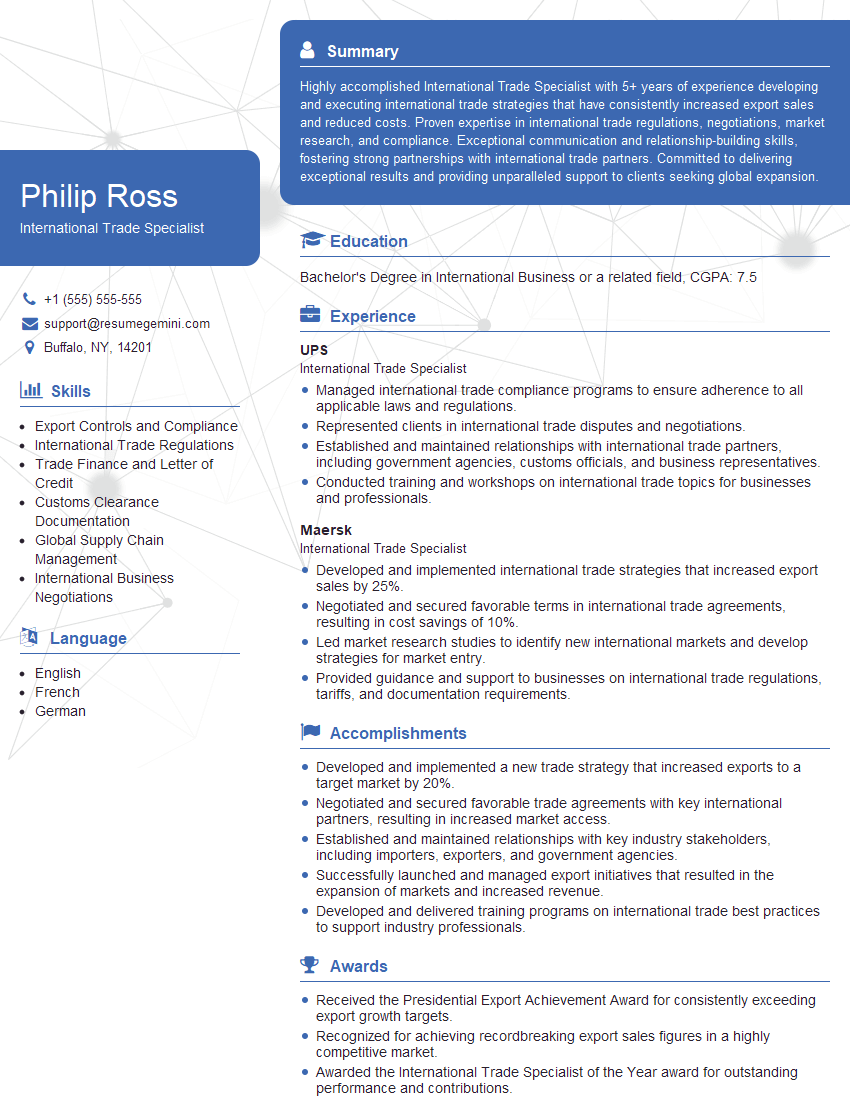
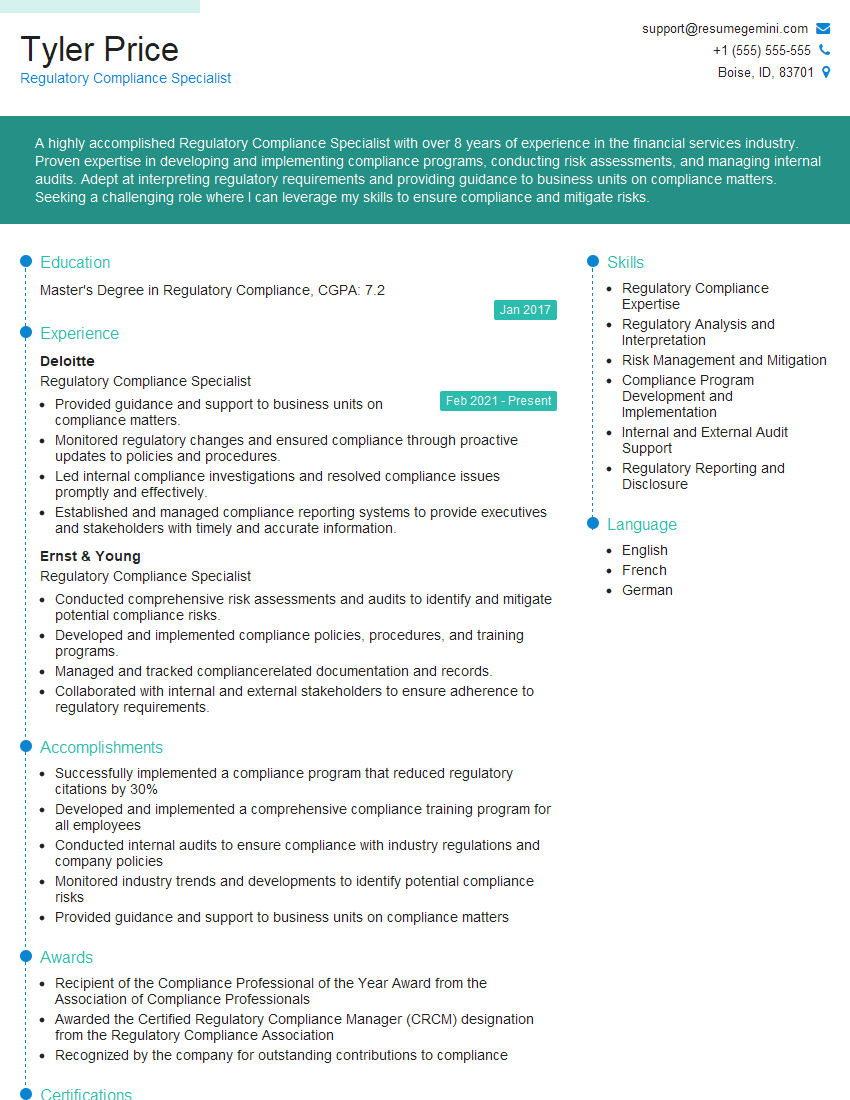
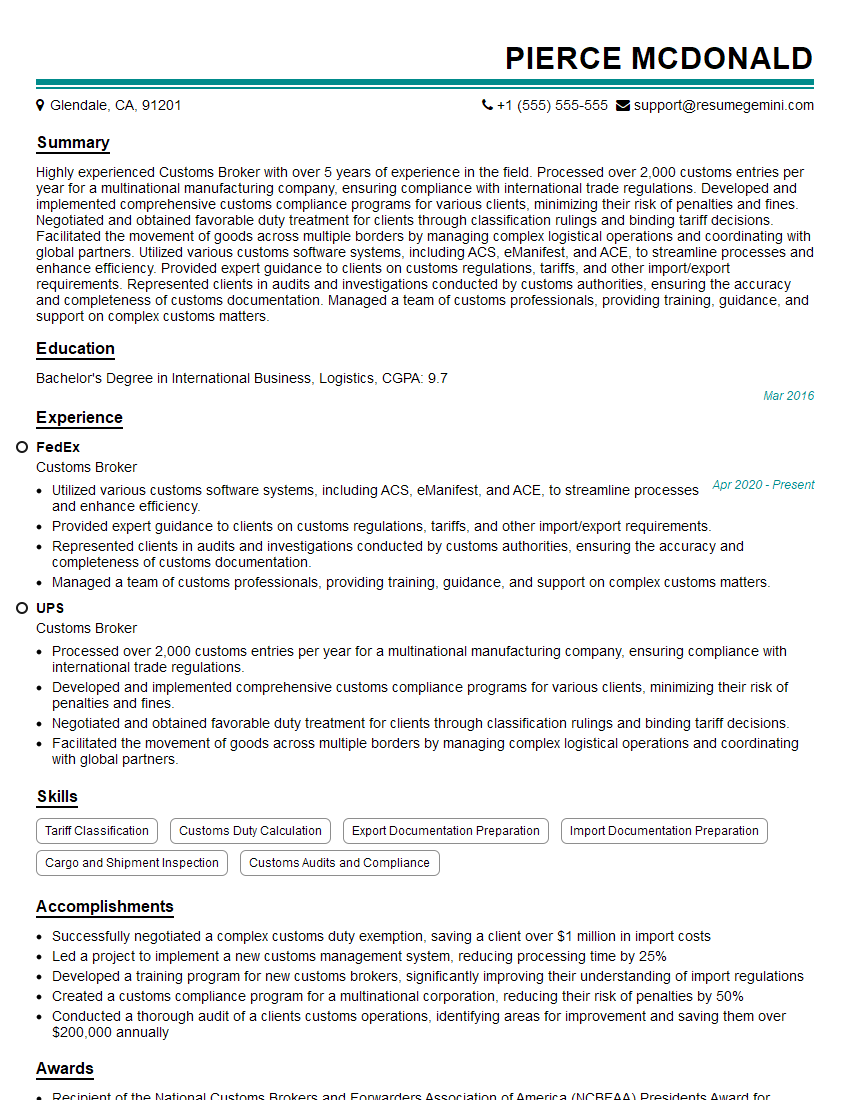
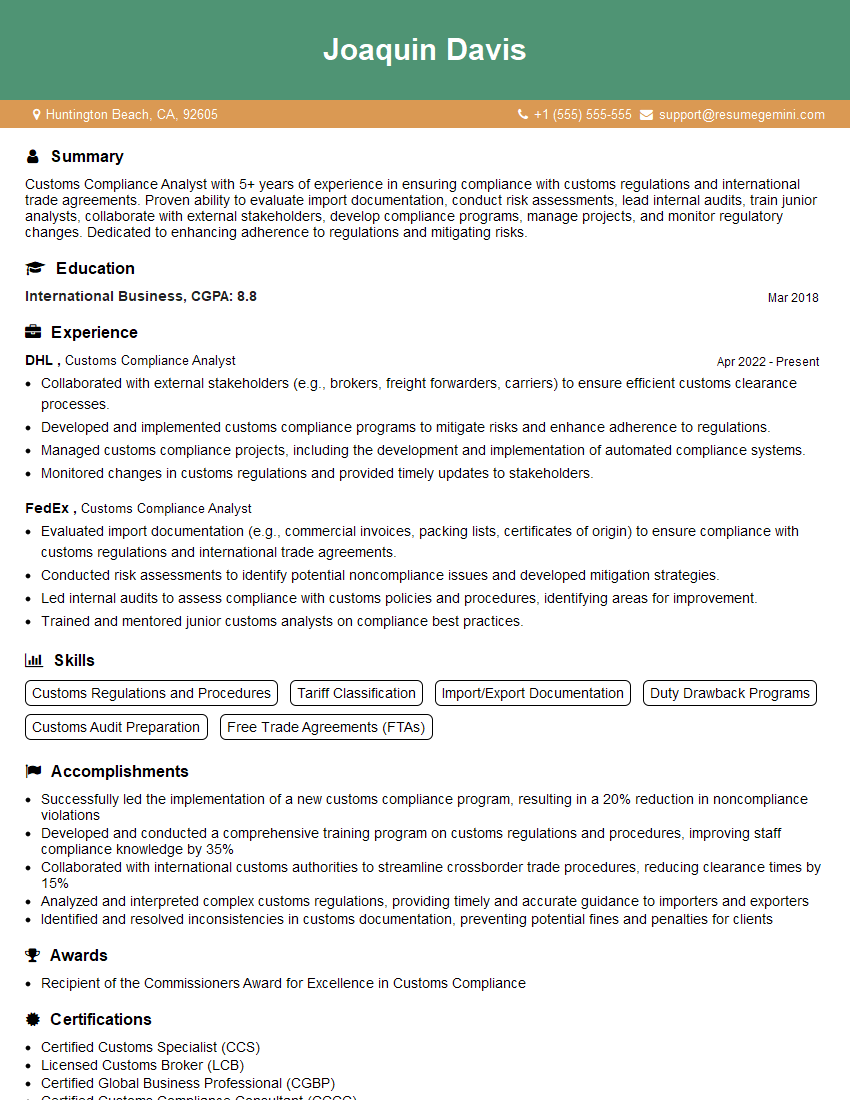
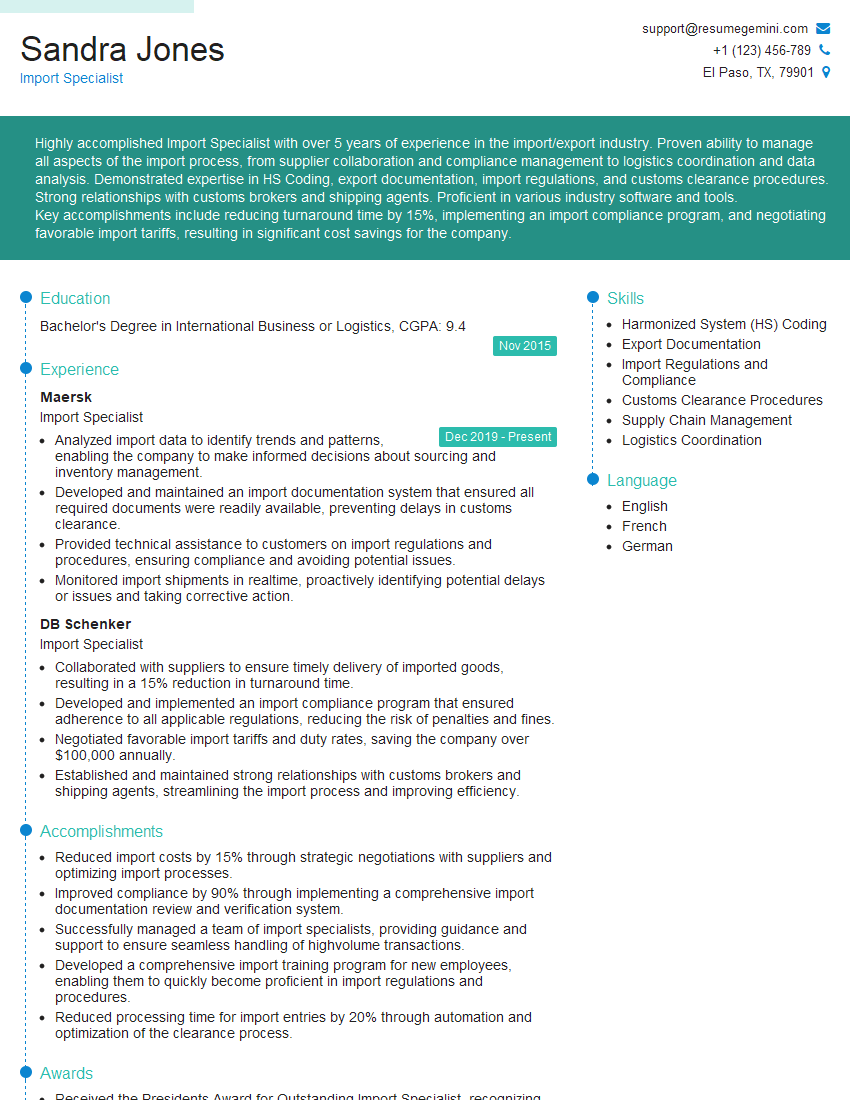
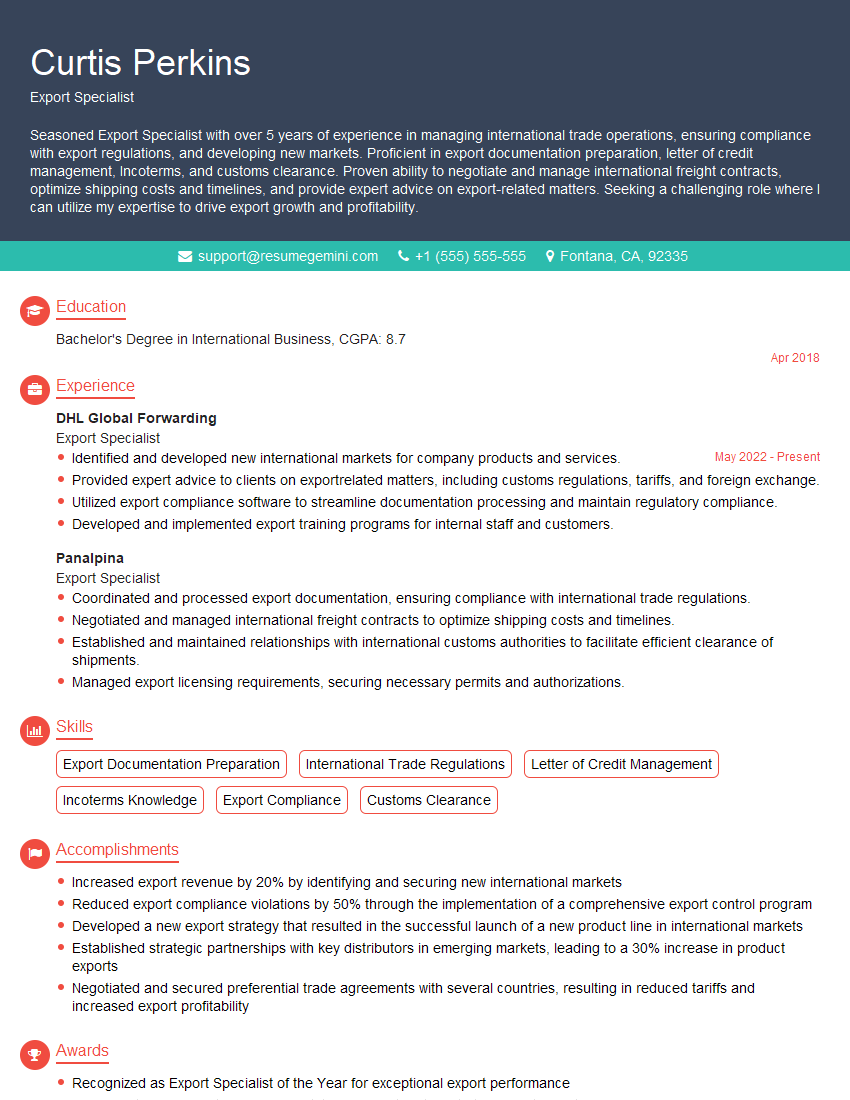
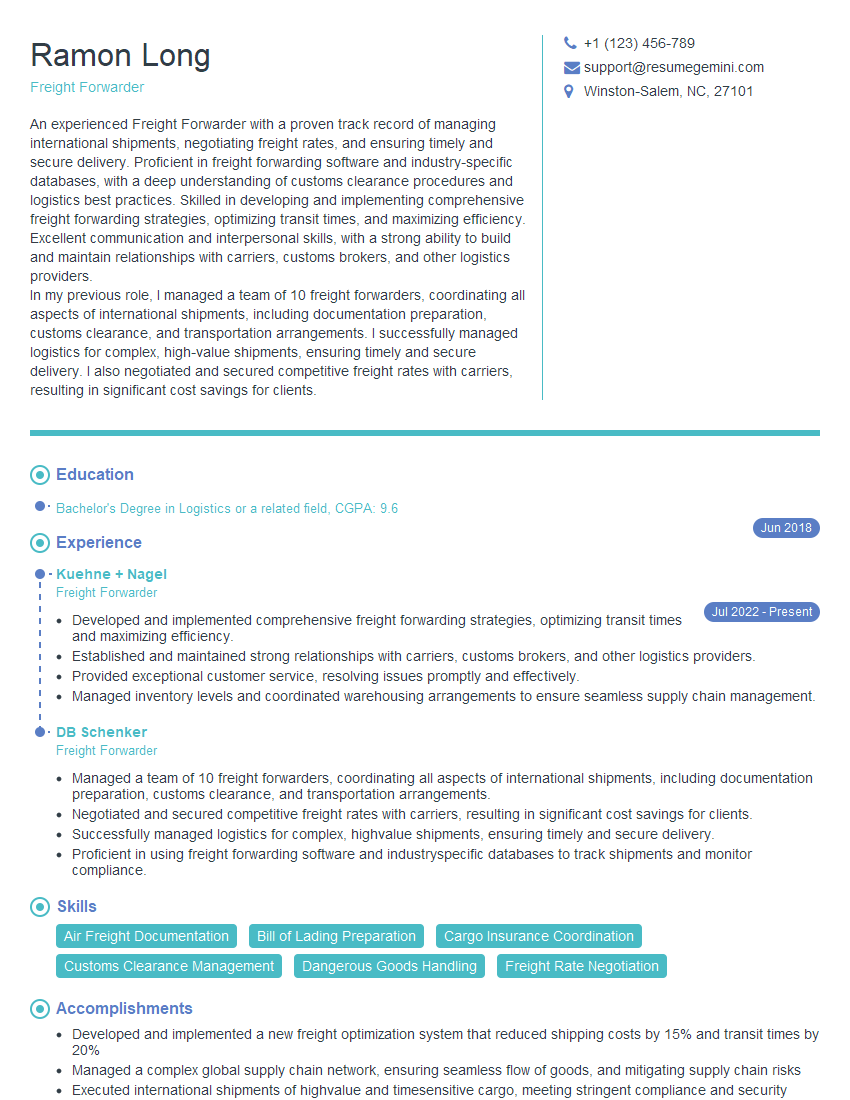
Mastering Customs Clearance and International Trade opens doors to exciting career opportunities in a dynamic and globally connected field. A strong understanding of these concepts is crucial for success in securing your ideal role. To significantly boost your job prospects, invest time in creating an ATS-friendly resume that highlights your skills and experience effectively. ResumeGemini is a trusted resource that can help you build a professional resume that stands out. They offer examples of resumes tailored to Customs Clearance and International Trade professionals, providing you with the perfect template to showcase your qualifications. Take the next step towards your dream career today!
Explore more articles
Users Rating of Our Blogs
Share Your Experience
We value your feedback! Please rate our content and share your thoughts (optional).
What Readers Say About Our Blog
To the interviewgemini.com Webmaster.
Very helpful and content specific questions to help prepare me for my interview!
Thank you
To the interviewgemini.com Webmaster.
This was kind of a unique content I found around the specialized skills. Very helpful questions and good detailed answers.
Very Helpful blog, thank you Interviewgemini team.