Interviews are more than just a Q&A session—they’re a chance to prove your worth. This blog dives into essential Ability to develop and execute science communication campaigns interview questions and expert tips to help you align your answers with what hiring managers are looking for. Start preparing to shine!
Questions Asked in Ability to develop and execute science communication campaigns Interview
Q 1. Describe your experience developing a science communication campaign from concept to execution.
Developing a science communication campaign is a multi-stage process, much like building a house. You need a solid foundation (concept), a detailed blueprint (strategy), and skilled workers (team) to bring it to life (execution). I begin by clearly defining the campaign’s goals – what message needs to be communicated and what change we aim to achieve. This might involve increasing public understanding of a specific scientific concept, influencing policy decisions, or encouraging behaviour change. Next, I conduct thorough research to understand the existing knowledge landscape and identify potential knowledge gaps. This informs the development of key messages, tailored to resonate with the target audience. We then select appropriate communication channels – social media, traditional media, educational materials, public events, etc. – based on audience preferences and campaign objectives. Finally, the execution phase involves deploying the materials, monitoring the campaign’s progress, and making any necessary adjustments based on data-driven insights. For example, in a campaign promoting the benefits of vaccination, we would create visually appealing infographics and short videos, share them on social media and collaborate with influencers and healthcare professionals to maximize reach and credibility.
An example of a successful campaign I developed involved communicating complex climate change research findings to the general public. This included creating a series of interactive online modules, designing engaging social media posts using compelling visuals, and organising workshops in community centres. The results exceeded expectations, demonstrating a significant increase in public understanding and engagement.
Q 2. What metrics do you use to measure the success of a science communication campaign?
Measuring the success of a science communication campaign goes beyond simple metrics like ‘likes’ or ‘shares’. We need a multi-faceted approach focusing on both quantitative and qualitative data. Quantitative metrics could include website traffic, social media engagement (likes, shares, comments, retweets), survey responses measuring knowledge gain or attitude change, media coverage (number of articles, reach), and attendance at events. However, equally crucial are qualitative metrics which capture the depth and quality of engagement. This includes analyzing the tone and sentiment of online comments, conducting focus groups to understand audience perceptions, and gathering feedback from stakeholders through interviews. For example, a successful campaign would show a significant increase in public understanding of the scientific topic, a positive shift in attitudes or behaviours related to the issue, and increased media attention that accurately reflects the key scientific findings.
Q 3. Explain your process for identifying your target audience for a science communication campaign.
Identifying the target audience is paramount. A ‘one-size-fits-all’ approach rarely works. My process starts with defining the campaign’s goals and then creating detailed audience personas. These personas encompass demographic information (age, gender, location, education), psychographic information (values, beliefs, attitudes), and media consumption habits (preferred social media platforms, news sources). For instance, a campaign targeting policymakers would necessitate different messaging and channels compared to a campaign targeting schoolchildren. I use a combination of methods to gather this information, including surveys, focus groups, existing research data, and analysis of social media analytics. Once the personas are developed, I can tailor the campaign’s messaging, channels, and tone to effectively resonate with each specific group. Understanding the existing knowledge and misconceptions of the target audience is crucial to designing effective communications. This may involve using pretest surveys or pilot studies.
Q 4. How do you tailor your communication style to different audiences (e.g., scientists, general public, policymakers)?
Tailoring communication style is crucial for effective science communication. Scientists appreciate detailed data and rigorous methodology, so I’d use technical language and focus on data visualization in communications directed towards them. For the general public, however, I would employ simpler language, avoiding jargon. I would prioritize storytelling and relatable analogies to make the information more accessible and engaging. For policymakers, the focus is on concise and impactful messages, highlighting the implications of the science for policy decisions. The language is clear, direct, and avoids excessive technical details. I would also emphasize the policy-relevant aspects of the research and potential economic or societal impact. Ultimately, the goal is always clarity and impact, while adapting to the needs and knowledge base of the audience.
Q 5. Describe a time you had to simplify complex scientific information for a non-scientific audience.
I once had to simplify complex genomic research on personalized medicine for a non-scientific audience. The research involved intricate statistical analysis and highly technical jargon. To make it accessible, I used the analogy of a tailor-made suit. Just as a tailor makes a suit that perfectly fits a person’s body, personalized medicine uses an individual’s genetic information to tailor treatments, leading to better outcomes. I avoided complicated terminology and instead focused on the practical implications, such as how personalized medicine could improve cancer treatment or help manage chronic diseases. Using visual aids such as simple infographics and short videos helped in further clarifying the complex concepts. We tested the comprehension using a post-campaign questionnaire showing significant improvement in public understanding following the campaign.
Q 6. What strategies do you use to engage audiences on social media for science communication?
Engaging audiences on social media requires a strategic approach. I leverage various strategies to maximize reach and interaction. This includes creating visually appealing and easily digestible content, such as short videos, infographics, and interactive polls. I also utilize storytelling, sharing personal narratives that connect with the audience on an emotional level. Employing relevant hashtags and engaging in discussions on trending topics is crucial for increasing visibility. Interactive content, such as Q&A sessions and live streams with scientists, fosters a sense of community and encourages participation. Using data analytics helps understand what content resonates most, allowing us to adapt our strategy over time and target our messages to relevant audiences. Running targeted ad campaigns can boost reach and awareness among specific demographics.
Q 7. How do you address skepticism or misinformation related to scientific topics?
Addressing skepticism or misinformation requires a nuanced and evidence-based approach. I avoid directly confronting misinformation, which can often be counterproductive. Instead, I focus on providing accurate, credible information through trusted sources and using clear, concise language. I often use storytelling and relatable analogies to connect with audiences on an emotional level and build trust. It’s important to acknowledge and address common concerns or misconceptions directly and respectfully, while reinforcing the scientific consensus and highlighting the potential consequences of misinformation. Fact-checking websites and reputable scientific organizations serve as excellent resources for verifying information and countering false claims. Ultimately, the key is to build trust and credibility by demonstrating transparency, providing reliable information, and fostering open dialogue.
Q 8. Describe your experience working with different media formats (e.g., videos, infographics, articles).
My experience spans a wide range of media formats, each chosen strategically to reach different audiences and communicate complex scientific concepts effectively. For instance, I’ve produced engaging explainer videos using software like Adobe Premiere Pro, breaking down intricate research findings into easily digestible segments with compelling visuals and concise narration. Infographics, created using tools like Canva and Adobe Illustrator, have been instrumental in distilling key data points and presenting them in a visually appealing manner, ideal for social media or website inclusion. I also regularly write articles and blog posts, tailored for different publications and online platforms, ensuring the tone and style are appropriate for the target readership. A recent project involved writing a series of articles for a science magazine explaining climate change research, while simultaneously developing an infographic for social media highlighting the main findings. This combined approach significantly broadened the campaign’s reach.
Q 9. How do you ensure accuracy and clarity in your science communication materials?
Accuracy and clarity are paramount in science communication. To ensure both, I employ a rigorous multi-step process. Firstly, I collaborate closely with scientists and researchers, verifying all information against peer-reviewed publications and primary research sources. This fact-checking stage is crucial in eliminating inaccuracies and biases. Secondly, I use plain language, avoiding jargon whenever possible. If technical terms are unavoidable, I provide clear, concise definitions. Thirdly, I always have a colleague or peer review my materials for clarity and accuracy before publication, catching any potential misunderstandings or inconsistencies. For example, in a recent project explaining genomic sequencing, I collaborated with a geneticist to ensure that all terms and concepts were not only accurate but also communicated simply. This collaborative approach guarantees both scientific rigor and audience accessibility.
Q 10. What are some ethical considerations in science communication?
Ethical considerations in science communication are crucial. Transparency is key—clearly disclosing any conflicts of interest, funding sources, or limitations of the research is essential to maintain public trust. Accuracy, as previously mentioned, is paramount, avoiding misrepresentation or oversimplification of scientific findings. Responsible use of visuals is also vital; images should not be misleading or taken out of context. Furthermore, we must be mindful of the potential impact of our communication on different audiences, avoiding perpetuation of stereotypes or biases. For example, when communicating about genetically modified organisms, it’s crucial to present both the potential benefits and risks, avoiding overly enthusiastic or alarmist language. A balanced and nuanced approach is ethically crucial.
Q 11. Describe your experience using data visualization techniques to enhance science communication.
Data visualization is an invaluable tool in science communication. I’ve used various techniques to make complex datasets accessible and engaging, including charts (bar graphs, line graphs, scatter plots), maps, and interactive dashboards. For instance, in a campaign on air pollution levels across a city, I used a heatmap to visually represent the concentration of pollutants across different neighborhoods, making it instantly clear where the highest concentrations were located. For a project on global deforestation rates, I created an interactive timeline showing changes over several decades. The choice of visualization technique depends entirely on the data and the message. Tools like Tableau and R are essential in creating these visualizations, but a strong understanding of visual communication principles ensures effective messaging.
Q 12. How do you handle criticism or negative feedback regarding your science communication efforts?
Constructive criticism is valuable. I view negative feedback not as an attack but as an opportunity for improvement. My first step is to carefully review the criticism, understanding its context and identifying valid points. Then, I engage in open dialogue with the critic, clarifying any misunderstandings and addressing their concerns. If the feedback highlights an actual error, I promptly correct it and issue a public correction or update if necessary. I also use the feedback to inform future campaigns, ensuring that I avoid repeating past mistakes and continually improve my communication strategies. Transparency in acknowledging and addressing criticism builds trust and enhances credibility.
Q 13. How do you measure the impact of your science communication campaigns?
Measuring the impact of science communication campaigns involves a multifaceted approach. Website analytics (e.g., Google Analytics) provide data on website traffic, page views, and time spent on specific pages. Social media analytics track metrics like engagement (likes, shares, comments), reach, and audience demographics. Surveys and focus groups can assess audience understanding and attitudes before and after the campaign. Finally, I also monitor media coverage and news mentions to assess the broader impact of my work. The combination of quantitative and qualitative data provides a holistic understanding of the campaign’s success in raising awareness, changing attitudes, or influencing behavior.
Q 14. What software or tools do you use for science communication (e.g., design software, social media analytics)?
My toolkit includes a variety of software and tools. For visual communication, I rely heavily on Adobe Creative Suite (Photoshop, Illustrator, Premiere Pro, After Effects) for creating infographics, videos, and other visual assets. For data visualization, I use Tableau and R. Social media management tools like Hootsuite or Buffer help schedule posts and monitor social media engagement. Google Analytics provides website traffic data. I also utilize project management tools like Asana or Trello to stay organized and track project progress. Finally, specialized software may be needed for certain projects; for example, I’ve used dedicated software for 3D modeling and animation to create visually rich and informative materials.
Q 15. Explain your experience with science communication budget management.
Science communication budget management requires a strategic approach that balances creativity with fiscal responsibility. It’s not just about allocating funds; it’s about maximizing impact within budgetary constraints. My experience includes developing detailed budgets encompassing all aspects of a campaign, from media buys and content creation to event planning and personnel costs. I utilize project management software to track expenses, ensuring transparency and accountability. For example, in a recent campaign promoting climate change awareness, I developed a budget that prioritized online advertising targeting key demographics, alongside the creation of engaging infographics and short videos. This allowed us to reach a wider audience effectively while remaining within the allocated budget. I also negotiate with vendors and explore cost-effective solutions without compromising the quality of the campaign.
Career Expert Tips:
- Ace those interviews! Prepare effectively by reviewing the Top 50 Most Common Interview Questions on ResumeGemini.
- Navigate your job search with confidence! Explore a wide range of Career Tips on ResumeGemini. Learn about common challenges and recommendations to overcome them.
- Craft the perfect resume! Master the Art of Resume Writing with ResumeGemini’s guide. Showcase your unique qualifications and achievements effectively.
- Don’t miss out on holiday savings! Build your dream resume with ResumeGemini’s ATS optimized templates.
Q 16. How do you collaborate with scientists and other stakeholders in a science communication campaign?
Collaboration is the cornerstone of successful science communication. I foster strong relationships with scientists by actively listening to their concerns and ensuring their research is accurately and engagingly portrayed. This includes translating complex scientific concepts into language understandable to the target audience. I use collaborative tools like shared online documents and project management software to facilitate communication and ensure everyone is on the same page. Furthermore, I involve stakeholders early in the process, seeking their input on messaging and campaign strategy. For example, during a campaign on a new medical breakthrough, I worked closely with the research team, medical professionals, and patient advocacy groups to ensure the information was accurate, sensitive, and accessible to diverse audiences.
Q 17. What is your understanding of science communication best practices?
Science communication best practices center around the principles of clarity, accuracy, engagement, and accessibility. This involves tailoring the message to the specific audience, using visuals effectively, and employing storytelling techniques to make complex information memorable and relatable. Key practices include:
- Audience Segmentation: Identifying specific target audiences (e.g., policymakers, the general public, students) and tailoring the message to their needs and understanding.
- Storytelling: Framing scientific findings within a narrative context that resonates emotionally and intellectually with the audience.
- Visual Communication: Employing infographics, videos, and other visual aids to enhance comprehension and engagement.
- Multi-channel Approach: Utilizing a variety of communication channels (social media, traditional media, events) to maximize reach.
- Evaluation and Iteration: Tracking campaign effectiveness through metrics like website traffic, social media engagement, and media coverage, and adapting the strategy accordingly.
Q 18. Describe a challenging science communication project and how you overcame the challenges.
One challenging project involved communicating the complexities of genetic engineering to a skeptical public. The initial challenge was navigating the misinformation and fear surrounding the topic. To overcome this, I implemented a multi-pronged strategy. First, we partnered with trusted community leaders and influencers to build credibility and address concerns. Second, we developed a series of short, easily digestible videos that explained the science in simple terms, focusing on the benefits of genetic engineering in agriculture and medicine. Third, we held town hall meetings to engage directly with the public and address their questions and concerns. By fostering open dialogue and transparent communication, we were able to shift public perception and increase understanding of the technology.
Q 19. What is your approach to crisis communication in the context of science?
Crisis communication in science requires a swift, transparent, and accurate response. My approach involves:
- Rapid Assessment: Quickly assessing the situation to understand its scope and potential impact.
- Accurate Information Dissemination: Providing timely and accurate information to the public, correcting misinformation promptly.
- Open Communication: Maintaining open communication with all stakeholders, including the media, the scientific community, and the public.
- Empathy and Transparency: Showing empathy for those affected and being transparent about uncertainties.
- Proactive Communication: Anticipating potential crises and developing communication strategies in advance.
For instance, during a scientific controversy, I would focus on disseminating accurate information from reputable sources, actively engaging with critics, and emphasizing the ongoing research and investigation process.
Q 20. How familiar are you with different communication channels (e.g., traditional media, online platforms)?
I’m highly familiar with various communication channels. My experience encompasses traditional media (press releases, interviews, op-eds), digital platforms (social media, websites, blogs, email marketing), and events (conferences, workshops, public lectures). I strategically select channels based on the target audience and campaign goals. For example, a campaign targeting younger audiences would heavily utilize social media platforms like TikTok and Instagram, while a campaign aimed at policymakers might focus on traditional media outlets and direct lobbying efforts. I utilize analytics to track the effectiveness of each channel and optimize campaign performance.
Q 21. Explain your approach to developing a compelling narrative around scientific research.
Developing a compelling narrative around scientific research requires understanding the broader context and identifying the human element. I begin by identifying the core message – what is the key finding or implication of the research? Then, I weave a story around this message, incorporating elements of conflict, suspense, and resolution. This involves focusing on the “why” – why is this research important, what problem does it solve, and how does it impact people’s lives? For example, when communicating research on a new cancer treatment, I would highlight the stories of patients who benefited from the treatment, emphasizing the human impact of the scientific discovery. This makes the research relatable and memorable, moving beyond the technical details to connect with the audience on an emotional level.
Q 22. How do you adapt your science communication strategy to different cultural contexts?
Adapting science communication to different cultural contexts is crucial for effective outreach. It’s not just about translation; it’s about understanding and respecting the nuances of each culture. This includes considering communication styles (e.g., direct vs. indirect), values, beliefs, and existing knowledge about science.
For example, when communicating about climate change in a community where traditional knowledge systems are deeply rooted, I would incorporate these perspectives, demonstrating how scientific findings align with or complement existing understanding. I might use storytelling and participatory methods to engage the audience, building trust and fostering a sense of shared responsibility. In contrast, a campaign targeting a scientifically literate audience might employ more technical language and focus on data-driven arguments.
My approach involves thorough research: understanding the target audience’s cultural background, preferred communication channels, and potential sensitivities. I collaborate with local experts and community members to co-create messages that resonate authentically.
Q 23. How do you evaluate the effectiveness of various science communication methods?
Evaluating the effectiveness of science communication methods requires a multifaceted approach. We can’t rely solely on anecdotal evidence; we need data. I employ a range of evaluation methods, both quantitative and qualitative.
- Quantitative methods: These include measuring website traffic, social media engagement (likes, shares, comments), survey responses (measuring changes in knowledge, attitudes, and behaviors), and attendance at events.
- Qualitative methods: These provide in-depth understanding. Focus groups, interviews, and content analysis of feedback can reveal audience perceptions, identify areas for improvement, and understand how messages resonate (or don’t) with different segments of the population.
For instance, after a social media campaign, I would analyze the reach of posts, the sentiment of comments, and conduct a post-campaign survey to assess changes in understanding and intended behaviors. This combination of quantitative and qualitative data paints a comprehensive picture of the campaign’s impact.
Q 24. Describe your experience with creating visually engaging science communication materials.
I believe that visually engaging materials are essential for effective science communication, particularly for diverse audiences. I have extensive experience creating infographics, videos, animations, and interactive exhibits.
For example, I recently developed an animated video explaining the complex process of photosynthesis for elementary school children. The video used bright colors, simple language, and relatable characters to make a potentially dry topic engaging and accessible. Another project involved designing an interactive exhibit for a science museum, using touchscreens and 3D models to showcase the diversity of life in the ocean. My approach involves careful consideration of visual elements – color palettes, typography, imagery – to ensure the materials are not only aesthetically pleasing but also support the communication goals. Usability testing is crucial to refine designs and ensure accessibility for people with diverse visual needs.
Q 25. How familiar are you with science communication theories and models?
I am very familiar with a range of science communication theories and models. My understanding encompasses the Deficit Model (which emphasizes filling knowledge gaps), the Contextual Model (highlighting the importance of audience values and beliefs), and the Public Engagement Model (emphasizing dialogue and reciprocal learning). I also understand the role of framing, narrative structure, and persuasive communication techniques in crafting effective messages.
For instance, I use the framing theory to carefully choose the language and imagery that will resonate with a specific target audience and influence their perceptions of a scientific issue. Understanding these models helps me tailor my communication strategy to the specific context and audience, moving beyond simply disseminating information to fostering meaningful dialogue and engagement.
Q 26. What is your experience with accessibility in science communication (e.g., creating materials for people with disabilities)?
Accessibility is paramount in science communication. I ensure materials are inclusive and cater to people with diverse needs. This includes providing alternative formats like audio descriptions for videos, transcripts for podcasts, and large-print versions of printed materials. I also use color contrast checkers to ensure readability for people with visual impairments and consider the needs of people with cognitive disabilities by using clear and concise language, avoiding jargon, and providing visual aids.
For example, when designing a website, I adhere to WCAG (Web Content Accessibility Guidelines) standards. This involves using alt text for images, providing keyboard navigation, and ensuring sufficient color contrast. I regularly consult accessibility guidelines and work with accessibility experts to ensure inclusivity in all my projects. This is not just ethical, but vital for ensuring our messages reach the broadest possible audience.
Q 27. What is your understanding of the role of storytelling in science communication?
Storytelling is a powerful tool in science communication. It transforms complex scientific information into relatable and memorable narratives. People connect with stories on an emotional level, making them more likely to engage with and retain information.
I use storytelling techniques to humanize science, making it relatable to diverse audiences. I may incorporate personal anecdotes, case studies, or fictional narratives to illustrate scientific concepts. For example, when communicating about the impact of pollution on marine life, I might tell the story of a specific species affected, emphasizing the consequences for the ecosystem and potentially connecting it to the audience’s personal experiences with nature. A well-crafted narrative can capture attention, foster empathy, and ultimately influence attitudes and behaviors.
Q 28. Describe your experience with evaluating the impact of a science communication campaign on audience attitudes and behaviors.
Evaluating the impact of a science communication campaign on audience attitudes and behaviors requires a rigorous evaluation plan, implemented both during and after the campaign. This isn’t just about measuring whether people learned facts but also whether their beliefs, opinions, and actions changed as intended.
For example, in a campaign promoting sustainable energy practices, pre- and post-campaign surveys would measure changes in self-reported energy-saving behaviors (e.g., switching to energy-efficient appliances, reducing energy consumption). Focus groups would help understand the reasons behind any observed changes, identifying barriers and facilitators. Tracking media mentions and website traffic would provide indicators of campaign reach and engagement. Analyzing this data provides a comprehensive picture of the campaign’s effectiveness in achieving its intended behavioral goals, enabling refinement of future campaigns.
Key Topics to Learn for Ability to Develop and Execute Science Communication Campaigns Interview
- Identifying Target Audiences: Understanding the knowledge level, interests, and communication preferences of diverse audiences (e.g., general public, policymakers, scientists).
- Crafting Compelling Narratives: Transforming complex scientific information into engaging and accessible stories using various storytelling techniques.
- Selecting Appropriate Communication Channels: Choosing the most effective platforms for your message (e.g., social media, websites, presentations, publications, public events).
- Developing Multi-Channel Communication Strategies: Creating integrated campaigns that leverage multiple channels to maximize reach and impact.
- Measuring Campaign Effectiveness: Utilizing metrics to assess the success of your communication efforts and make data-driven improvements.
- Crisis Communication Planning: Preparing for and effectively managing potential negative publicity or misinformation related to scientific topics.
- Ethical Considerations in Science Communication: Understanding and adhering to principles of accuracy, transparency, and responsible communication of scientific information.
- Budgeting and Resource Allocation: Planning and managing the resources required for a successful science communication campaign.
- Collaboration and Teamwork: Working effectively with scientists, designers, writers, and other professionals to achieve communication goals.
- Utilizing Data Visualization Techniques: Presenting complex scientific data in a clear, concise, and visually appealing manner.
Next Steps
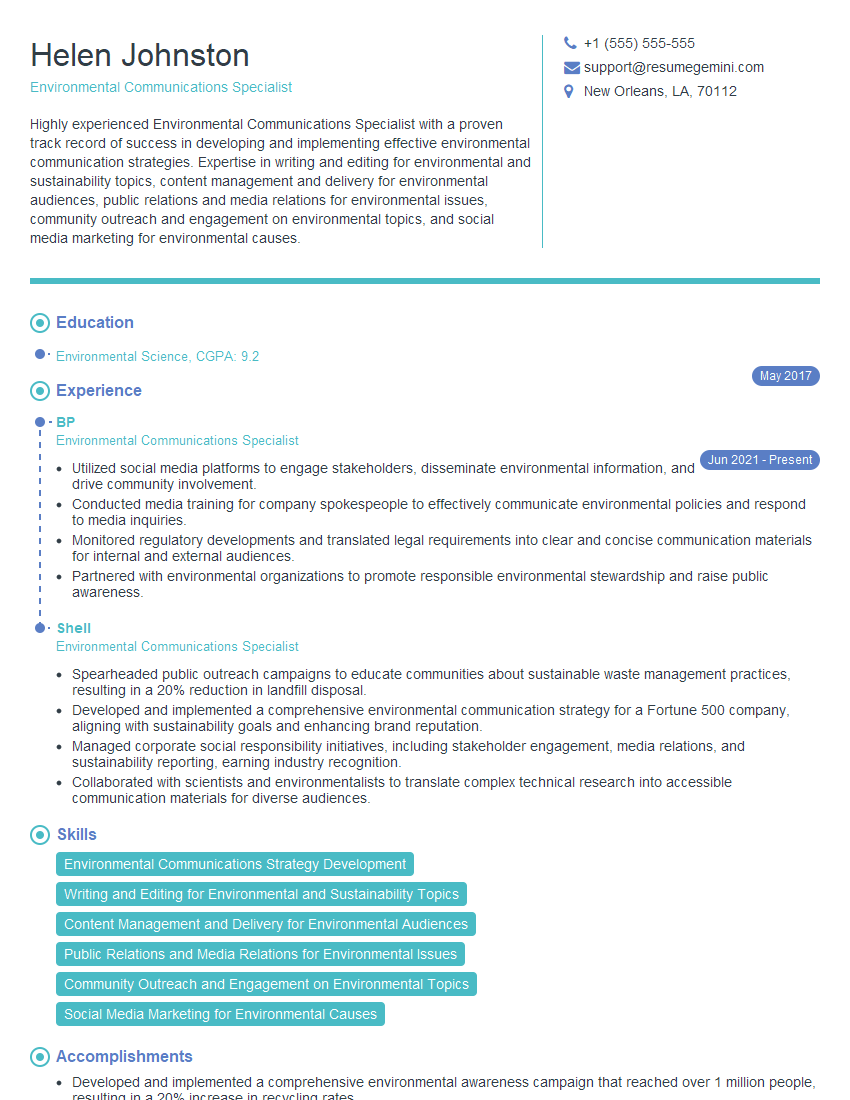
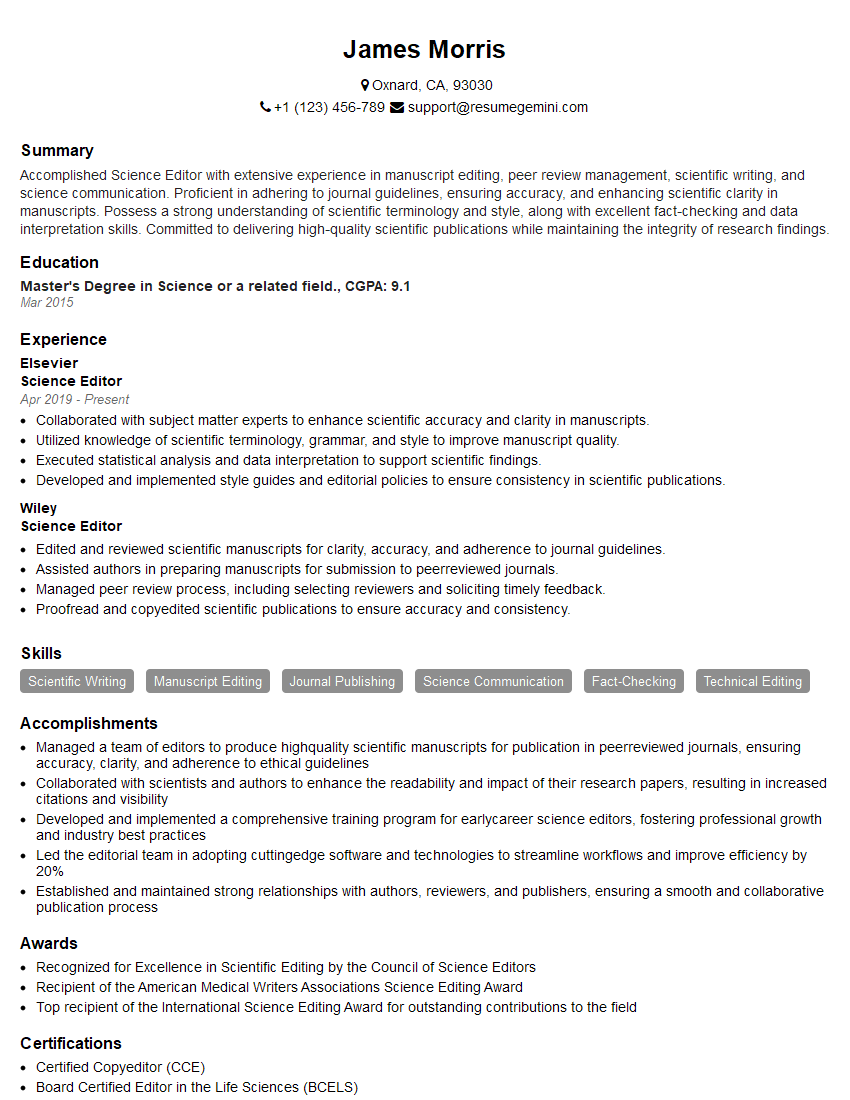
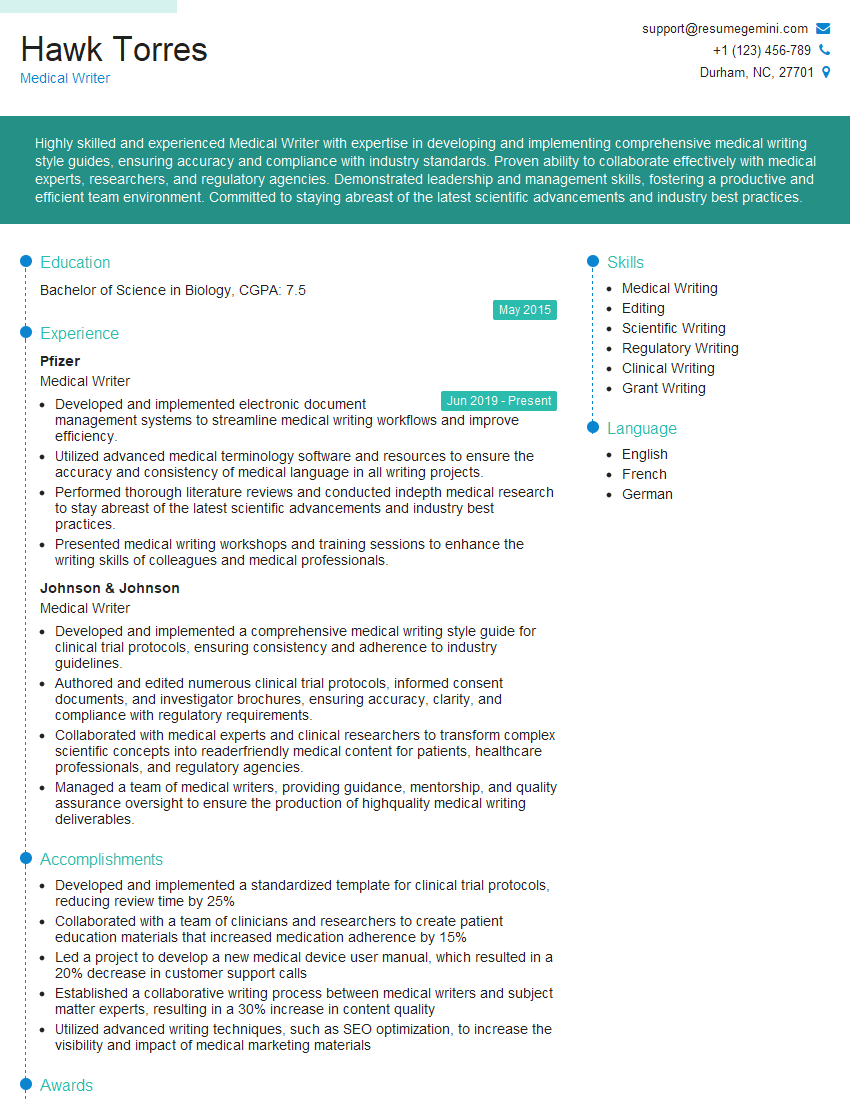
Mastering the ability to develop and execute science communication campaigns significantly enhances your career prospects in research, science policy, outreach, and related fields. A strong, ATS-friendly resume is crucial for showcasing your skills and experience to potential employers. ResumeGemini is a trusted resource to help you create a professional and impactful resume that highlights your abilities in this area. Examples of resumes tailored to science communication campaigns are available to help guide your preparation. Invest time in crafting a compelling resume—it’s your first impression and a vital step toward securing your dream role.
Explore more articles
Users Rating of Our Blogs
Share Your Experience
We value your feedback! Please rate our content and share your thoughts (optional).
What Readers Say About Our Blog
To the interviewgemini.com Webmaster.
Very helpful and content specific questions to help prepare me for my interview!
Thank you
To the interviewgemini.com Webmaster.
This was kind of a unique content I found around the specialized skills. Very helpful questions and good detailed answers.
Very Helpful blog, thank you Interviewgemini team.