Cracking a skill-specific interview, like one for Interpretive Services, requires understanding the nuances of the role. In this blog, we present the questions you’re most likely to encounter, along with insights into how to answer them effectively. Let’s ensure you’re ready to make a strong impression.
Questions Asked in Interpretive Services Interview
Q 1. Explain the difference between simultaneous and consecutive interpretation.
Simultaneous and consecutive interpretation are two primary modes of interpreting, differing significantly in their timing and techniques. Simultaneous interpretation involves rendering the source language into the target language at the same time as the speaker is speaking. Think of it like a live, real-time translation. The interpreter listens and speaks almost simultaneously, with a slight delay to process the information. This requires exceptional multitasking and linguistic agility.
Consecutive interpretation, on the other hand, involves the interpreter listening to a section of speech (usually a sentence or a short paragraph), taking notes, and then rendering the message into the target language after the speaker pauses. This method allows for more accurate and nuanced translation as the interpreter can take time to process meaning and select appropriate vocabulary. Imagine it like summarizing a chapter after reading it.
In short: Simultaneous is live, real-time; consecutive is segmented and delivered after the speaker pauses. The choice of mode depends heavily on the context; simultaneous is better suited for long speeches or conferences, while consecutive works better for smaller meetings or legal proceedings where precise phrasing is crucial.
Q 2. Describe your experience with different interpretation modes (e.g., whispered, chuchotage).
My experience encompasses a wide range of interpretation modes. Whispered interpretation (chuchotage), often used in small group settings, involves quietly interpreting into the ear of one or two individuals. This requires a soft, clear voice and excellent focus to ensure the listener understands despite the low volume and proximity. I’ve used chuchotage extensively in museum tours and small business meetings, ensuring participants can follow discussions in their native language without disturbing the larger group.
Beyond chuchotage, I’m proficient in simultaneous and consecutive interpretation, as previously explained. I’ve worked extensively in conference settings for simultaneous interpretation, utilizing specialized equipment, and in legal settings for consecutive interpretation where precision is paramount.
The ability to adapt to various modes highlights my adaptability and expertise across diverse situations and settings. Each mode demands distinct skill sets; my proficiency reflects a versatile skill set capable of handling any interpretation challenge.
Q 3. How do you handle challenging terminology or unfamiliar subject matter during interpretation?
Encountering unfamiliar terminology or complex subject matter is inevitable in interpretation. My approach involves a multi-pronged strategy:
- Clarification: I politely ask the speaker to clarify the meaning, using nonverbal cues or interjections where appropriate. This ensures I’m accurately conveying the information.
- Contextual Inference: I leverage the context of the conversation to infer the meaning of unknown terms. By paying close attention to the surrounding words and phrases, I can often deduce the intended meaning.
- Research (when appropriate): For highly specialized topics, I might discreetly research the term during a pause in consecutive interpretation or quickly consult online resources during a simultaneous interpretation (if time permits and technology allows). But this is always done ethically, maintaining the integrity of the communication.
- Paraphrasing: If a direct translation isn’t possible, I skillfully paraphrase to convey the essence of the message in the target language.
For instance, during a medical interpretation, I might ask the doctor to explain a complex medical term using simpler language, then convey that simplified explanation to the patient. Transparency and clarification are key to maintaining accuracy.
Q 4. What strategies do you use to maintain accuracy and fluency while interpreting?
Maintaining accuracy and fluency requires a combination of skills and preparation.
- Deep Linguistic Knowledge: A strong command of both source and target languages is fundamental. This goes beyond vocabulary; it encompasses grammar, idiomatic expressions, and cultural nuances.
- Active Listening: I focus intensely on the speaker’s message, not just the individual words. This allows me to grasp the overall meaning and convey the intended tone.
- Memory and Mental Agility: In simultaneous interpretation, holding information in short-term memory and quickly translating it is crucial. For consecutive, effective note-taking ensures accurate recall.
- Professional Development: I continually refine my skills through continued education, attending workshops, and practicing interpretation exercises.
An example of this in action would be during a business negotiation. I wouldn’t just translate individual words; I’d focus on the speaker’s intent and convey that intent accurately and fluently, using appropriate language that reflects the business context.
Q 5. How do you manage note-taking during consecutive interpretation?
Note-taking in consecutive interpretation is a specialized skill that involves a system of symbols, abbreviations, and keywords, rather than verbatim transcription. My system is adapted from the well-known PICA system which emphasizes keywords and grammatical relationships. It’s not about writing down everything the speaker says, but about capturing the core message and its structure.
My notes are highly personalized and optimized for speed and clarity. I use a combination of symbols (e.g., arrows to indicate cause and effect, abbreviations for common terms) and keywords (the most important words and concepts) to create a concise yet meaningful outline. I then use these notes as a framework to reconstruct the message in the target language, adding fluency and precision to the final interpretation. Practice and refinement of this system are crucial.
Imagine trying to translate a complex legal argument. Effective note-taking allows me to retain the main points, the logical flow, and the specific legal terminology, ensuring that nothing critical is missed in the interpretation.
Q 6. Explain your understanding of ethical considerations in interpreting.
Ethical considerations are paramount in interpreting. My core values revolve around:
- Confidentiality: Information shared during interpretation is treated with utmost confidentiality. I never disclose any sensitive information outside of the interpretation setting.
- Accuracy: I strive for accuracy in my interpretation, avoiding any biased or subjective additions or omissions.
- Impartiality: I maintain neutrality, never favoring one party over another. My role is to facilitate communication, not to influence it.
- Professionalism: I maintain a high level of professionalism in my demeanor, attire, and interactions with all participants.
- Competence: I only accept assignments for which I have the necessary linguistic and subject matter expertise.
A breach of confidentiality, for example, could have serious consequences, from professional sanctions to legal repercussions. Adhering to these ethical principles builds trust and ensures the integrity of the communication process.
Q 7. Describe your experience with interpreting in various settings (e.g., medical, legal, business).
My experience spans diverse settings, each requiring a unique approach:
- Medical Interpreting: This necessitates a deep understanding of medical terminology and sensitivity to patient privacy. Accuracy is crucial to ensure proper diagnosis and treatment. I have experience working in hospitals, clinics, and doctor’s offices.
- Legal Interpreting: This demands precision and attention to detail, with a strong understanding of legal proceedings and terminology. I have experience interpreting in courtrooms, depositions, and legal consultations.
- Business Interpreting: This involves adapting to various business contexts, from negotiations and meetings to conferences and presentations. Understanding business terminology and etiquette is vital for effective communication.
For example, in a medical setting, I might need to explain complex medical procedures to a patient, ensuring that they understand their treatment options. In a business context, I might be interpreting during a high-stakes negotiation, where my accuracy and fluency could significantly impact the outcome.
Q 8. How do you adapt your interpreting style to different audiences and communication styles?
Adapting my interpreting style hinges on understanding the audience’s cultural background, communication preferences, and the context of the interaction. For instance, interpreting a technical medical briefing for physicians requires a highly precise, formal style, focusing on accurate terminology and avoiding ambiguity. However, interpreting a casual conversation between friends demands a more informal and natural approach, reflecting the relaxed tone and incorporating colloquialisms where appropriate, while still maintaining accuracy. I observe body language, listen for cues about the audience’s comprehension, and adjust my register (formal vs. informal), pace, and even choice of words to best suit the situation. I also consider the power dynamic: interpreting between a judge and a defendant necessitates neutrality and precision, whereas interpreting for a teacher and student allows for more flexibility and interaction.
For example, in a legal setting, I’d focus on accurate rendition of legal terms, while in a community meeting, I might use simpler language and explain complex ideas in a way that is easily understood by the participants.
Q 9. How do you handle interruptions or distractions during an interpretation session?
Interruptions and distractions are inevitable. My approach is proactive and prioritizes maintaining the flow of communication. If an interruption is minor (a cough, a brief noise), I may simply pause and resume as seamlessly as possible. For significant disruptions (e.g., a side conversation, a technical issue), I politely but firmly address the issue, requesting the interruption cease or seeking technical assistance if needed. I clearly state to both parties that I’ve missed part of the conversation due to the disruption and request that the speaker repeat the relevant information. Transparency and clear communication are key. I also have strategies for minimizing disruptions, such as choosing a quiet environment for in-person interpretation and ensuring stable internet connection for remote sessions.
In a recent medical interpretation, a loud alarm interrupted the doctor’s explanation. I calmly acknowledged the interruption, waited for the situation to resolve, and politely asked the doctor to repeat the interrupted sentence. This ensured that both parties were on the same page, and trust was maintained.
Q 10. What technology are you proficient with for remote interpreting?
I am proficient in various technologies for remote interpreting, including video conferencing platforms like Zoom, Skype, and Microsoft Teams. I’m also familiar with specialized interpreting platforms designed for secure and high-quality communication, including those offering features like real-time transcription, screen sharing, and secure communication channels. Additionally, I have experience using assistive technologies such as speech-to-text software for situations where note-taking is difficult or impractical. My proficiency extends to ensuring optimal audio and video quality to ensure clear transmission of both the source and target language, and I am adept at troubleshooting technical issues promptly and efficiently.
For example, I’ve successfully used Zoom’s breakout room feature to manage simultaneous interpretations in multilingual meetings. I also regularly use screen sharing features to help interpreters follow along with presentations, medical records or documents during remote sessions.
Q 11. How do you ensure confidentiality in your interpretation work?
Confidentiality is paramount. I adhere to strict ethical codes, which includes signing confidentiality agreements before each assignment. I never discuss the content of interpreted conversations outside the professional context. All electronic communications and notes relating to assignments are securely stored and protected using password-protected systems and encrypted channels. Physical notes are securely destroyed after the assignment is completed. My professionalism extends to appropriately disposing of any printed materials related to the interpreted content and avoiding any public discussion on social media or other platforms that could reveal confidential information.
Imagine interpreting for a patient disclosing sensitive medical information. My commitment to confidentiality ensures their privacy is protected, reinforcing trust in the healthcare system.
Q 12. Describe a situation where you had to make a difficult decision regarding accuracy versus fluency.
During a medical interpretation, a doctor used highly technical jargon that didn’t have a direct equivalent in the patient’s language. I had to choose between maintaining absolute accuracy, potentially leading to a confusing explanation for the patient, and offering a more fluent, albeit slightly less technically precise, translation. I opted for a balanced approach: I used simpler language to convey the core meaning while explaining the technical details in a more accessible manner. I ensured the patient understood the critical information while maintaining the medical accuracy as closely as possible. I then confirmed comprehension with both the doctor and the patient to ensure there were no misunderstandings.
This situation highlighted the importance of cultural awareness, as the patient’s understanding of medical procedures could have been affected by a rigid, overly literal interpretation. It is crucial to balance accuracy with clarity in sensitive situations.
Q 13. How do you deal with interpreters who lack professionalism or competence?
If I encounter unprofessional or incompetent interpreters, I would first try to address the issue privately, offering constructive feedback if appropriate. If the behavior persists or if competence is seriously lacking, I’d report the matter to the relevant authority, which might be the organization hiring the interpreters or a professional association, depending on the context. This ensures ethical standards are maintained within the profession, protects the rights of the clients who are depending on reliable interpretation services, and safeguards the reputation of the interpreting profession as a whole.
Maintaining professional standards is crucial to ensure accurate and ethical interpretations, benefiting all stakeholders involved.
Q 14. What is your process for preparing for an interpretation assignment?
My preparation process is thorough and adaptable depending on the assignment. It always begins with understanding the context: the subject matter, the speakers’ backgrounds, and the purpose of the communication. For technical or medical assignments, I’ll research relevant terminology and familiarize myself with any specialized vocabulary. For legal settings, I’ll study legal documents or case materials. I always aim to understand the nuances of language and culture relevant to the communication, and try to familiarize myself with any potentially sensitive issues that could arise. I also plan my note-taking strategy (if necessary) and prepare any technology required. The goal is to be fully prepared and confident in providing the highest quality interpretation service.
For instance, preparing for a legal interpretation involves reviewing legal documents beforehand to grasp the relevant legal terminology, while preparing for a medical interpretation necessitates researching specific medical conditions and procedures.
Q 15. How do you handle cultural nuances and differences in communication styles?
Handling cultural nuances is paramount in interpretation. It’s not just about translating words; it’s about conveying meaning within a specific cultural context. This requires deep understanding of both source and target cultures, including nonverbal communication, social customs, and even humor. For example, directness is valued in some cultures, while indirectness is preferred in others. A direct translation in the latter case could be misconstrued as rude. I approach this by actively researching the cultural backgrounds of individuals involved before an assignment. I also employ strategies like paraphrasing to ensure meaning is conveyed appropriately, rather than simply performing a word-for-word translation. During interpretation, I pay close attention to nonverbal cues, such as body language and tone, to gauge the speaker’s emotional state and adapt my interpretation accordingly. For instance, in a business negotiation, a slight shift in body language might indicate a change in the speaker’s position, and I would reflect that in my interpretation. This necessitates constant learning and adaptation; I regularly seek opportunities to interact with diverse groups and engage in cross-cultural training to continually refine my skills.
Career Expert Tips:
- Ace those interviews! Prepare effectively by reviewing the Top 50 Most Common Interview Questions on ResumeGemini.
- Navigate your job search with confidence! Explore a wide range of Career Tips on ResumeGemini. Learn about common challenges and recommendations to overcome them.
- Craft the perfect resume! Master the Art of Resume Writing with ResumeGemini’s guide. Showcase your unique qualifications and achievements effectively.
- Don’t miss out on holiday savings! Build your dream resume with ResumeGemini’s ATS optimized templates.
Q 16. Describe your experience working with assistive technology for interpreting.
My experience with assistive technology in interpreting encompasses various platforms and tools. I’m proficient in using CART (Communication Access Realtime Translation) services for real-time captioning, which is vital for deaf and hard-of-hearing individuals. I’ve also utilized specialized software for interpreting video conferences, allowing me to provide simultaneous interpretation for remote participants. In one instance, I worked with a client who used a specialized hearing aid with Bluetooth connectivity. I seamlessly integrated the technology into my workflow, ensuring the client received clear and timely interpretation. This required me to adjust my microphone technique and to be aware of potential technical glitches, solving any issues quickly and professionally. I’m comfortable troubleshooting such technological issues and am always learning about new assistive technologies to enhance accessibility and provide the best possible service.
Q 17. What are your strengths and weaknesses as an interpreter?
My strengths as an interpreter include excellent listening and comprehension skills, rapid processing speed, and adaptability to diverse contexts. I’m also a skilled communicator, able to convey nuanced meanings accurately and naturally. My language proficiency is high in both my working languages, and I strive for clarity and accuracy in my interpretations. However, like all professionals, I also have areas for development. One area I’m focusing on is further developing my expertise in specialized terminology, particularly in the medical and legal fields. While I have a solid foundation, continuous learning in these domains will enhance my ability to interpret complex information with absolute precision. Another area I’m working on is improving my resilience in handling particularly emotionally charged situations, ensuring I can maintain professionalism and provide support in sensitive circumstances.
Q 18. How do you handle stressful situations or high-pressure environments?
High-pressure situations are part of the job. I handle them by prioritizing clear communication, both with the individuals involved and with my own internal monologue. This includes deep breaths to manage stress, focusing on clarity, and using active listening techniques. I also practice mindfulness and stress reduction techniques outside of work to ensure I can manage the demands of the job effectively. For example, during a high-stakes medical interpretation, where a crucial diagnosis was being relayed to a patient, I deliberately slowed my pace, ensured absolute clarity, and confirmed understanding with both the doctor and the patient. Thorough preparation, including reviewing background information where possible, also significantly reduces stress and allows me to focus on interpreting accurately.
Q 19. What is your approach to continuing education and professional development?
Continuing education is essential. I actively participate in professional development activities, including attending conferences, workshops, and online courses. I also engage in peer review with other interpreters to get feedback and identify areas for improvement. Staying current with terminology and trends in both my source and target languages is paramount. This often involves reviewing professional journals, participating in online communities of practice, and pursuing specialized certifications. I also dedicate time to self-study, using language learning apps and materials to maintain and enhance my proficiency. For instance, I recently completed a course in medical terminology, enhancing my ability to accurately interpret medical conversations.
Q 20. Describe your experience with different language pairs.
My primary language pairs are English-Spanish and English-French. I have a high level of fluency in all three languages, both in spoken and written forms. My experience extends to various settings, from medical and legal interpretations to business negotiations and community events. In my English-Spanish work, I’ve noticed subtle nuances in regional dialects which I carefully adjust for. For example, the word “usted” in Spanish reflects formality, which isn’t always directly translatable to English. My experience with English-French involves a different set of challenges, especially with idiomatic expressions that often don’t have a direct equivalent in the other language. I’ve worked in situations requiring cultural sensitivity, such as interpreting for asylum seekers, which required a deep understanding of both the legal terminology and the cultural backgrounds of the individuals involved.
Q 21. How familiar are you with the various types of interpreting equipment and technology?
I’m familiar with a range of interpreting equipment and technology, including sound systems, microphones, remote interpreting platforms, and assistive listening devices. This includes experience with both wired and wireless systems, and I’m adept at troubleshooting technical difficulties. I am proficient in using remote interpreting platforms, such as Zoom or Skype, to provide interpretation for virtual meetings and events. My understanding extends to assistive listening devices used to support individuals with hearing impairments. In a recent assignment, I had to troubleshoot a malfunctioning microphone during a large-scale conference. By quickly identifying the problem (a faulty cable), I ensured minimal disruption to the proceedings. My knowledge of this technology ensures that I can provide seamless and efficient interpreting services across diverse settings.
Q 22. What is your preferred method for managing your workload and client communications?
I manage my workload and client communications using a project management system that allows for task prioritization, scheduling, and progress tracking. This ensures I meet deadlines and maintain clear communication with clients. For example, I utilize a combination of a digital calendar (like Google Calendar) for scheduling appointments and setting reminders, and a project management tool (like Asana or Trello) for tracking projects, noting deadlines, and storing relevant documents. Client communication is handled primarily through email, confirming appointments, providing updates on project progress, and addressing any queries promptly. I also offer a dedicated phone number for urgent issues, ensuring a quick response time and proactive communication throughout the entire process. This organized approach ensures I handle multiple projects simultaneously without compromising quality or client satisfaction.
Q 23. How do you handle feedback on your interpretation skills?
Feedback on my interpretation skills is invaluable for continuous improvement. I actively solicit feedback from clients, colleagues, and supervisors, seeking constructive criticism on all aspects of my performance, including accuracy, fluency, clarity, and cultural sensitivity. I treat all feedback seriously, analyzing it to identify areas for improvement and implementing strategies to address them. For instance, if feedback highlights a tendency to paraphrase excessively, I’ll practice techniques to ensure more concise and accurate rendering of the source language message. I document all feedback, tracking trends to monitor progress and identify persistent challenges. This systematic approach enables me to refine my skills and maintain a high standard of professional practice.
Q 24. Describe your proficiency in different areas of interpreting (e.g. medical terminology, legal jargon).
My interpreting proficiency spans various domains, with particular expertise in medical and legal settings. In medical interpretation, I possess a strong grasp of medical terminology, anatomical structures, and clinical procedures. This allows me to accurately convey complex medical information between healthcare providers and patients, ensuring effective communication and informed consent. For example, I’m comfortable interpreting discussions about diagnoses, treatment plans, and medication instructions. In legal interpreting, I understand legal jargon, courtroom procedures, and ethical considerations. This enables me to provide accurate and impartial interpretation in legal proceedings, safeguarding the rights of all parties involved. My experience includes interpreting depositions, courtroom proceedings, and client consultations. I continuously update my knowledge in both areas through professional development courses and self-study, ensuring my vocabulary and understanding remain current.
Q 25. Explain your understanding of different interpreting frameworks (e.g., sight translation, liaison interpreting).
I understand various interpreting frameworks, including sight translation and liaison interpreting. Sight translation involves interpreting a written text into the target language without prior preparation. It demands a high level of linguistic proficiency and immediate comprehension skills. For example, sight translating a patient’s medical history from Spanish to English requires instant understanding and accurate rendering. Liaison interpreting involves facilitating communication between two or more parties who do not share a common language. It requires adaptability and a deep understanding of the context to ensure clear and accurate message transfer. This often involves shuttling between speakers, conveying information faithfully and efficiently. I adapt my approach depending on the context and needs of the situation, always prioritizing accuracy, clarity, and cultural sensitivity.
Q 26. How do you stay up-to-date with changes in terminology and technology in the field of interpreting?
Staying current with terminology and technology is crucial in this dynamic field. I achieve this through a multi-pronged approach: I regularly attend professional development workshops and conferences to learn about the latest advancements and best practices. I subscribe to professional journals and online resources, remaining updated on changes in terminology across different fields. I also actively engage with online professional communities, participating in discussions and sharing knowledge with other interpreters. Moreover, I’m proficient in using Computer-Assisted Translation (CAT) tools, enabling efficient translation and interpretation processes and enhancing overall workflow. This commitment to continuous learning ensures my expertise remains relevant and up-to-date.
Q 27. Explain your experience with quality assurance procedures in interpreting.
Quality assurance is paramount in my practice. My experience involves implementing several quality control measures. These include meticulous preparation before any assignment, reviewing relevant materials to ensure thorough understanding of the subject matter. I also employ self-evaluation techniques, recording and reviewing my own interpretations to identify areas for improvement. Peer review, where colleagues assess recordings of interpretations, provides another valuable quality check, offering diverse perspectives and constructive criticism. Furthermore, I actively seek client feedback to gauge satisfaction and identify areas where my performance can be enhanced. This multi-faceted approach ensures high quality and accuracy in my interpretations.
Q 28. What is your understanding of the importance of cultural sensitivity in interpretation?
Cultural sensitivity is fundamental to effective interpretation. It goes beyond mere linguistic accuracy; it involves understanding and respecting the nuances of different cultures. This includes being aware of non-verbal communication, differing communication styles, and potential cultural misunderstandings. For instance, direct eye contact can be considered respectful in one culture but aggressive in another. I actively strive to understand the cultural context of the communication, adapting my interpretation style to avoid misinterpretations and ensure the message is conveyed appropriately and respectfully. Cultural sensitivity fosters trust and facilitates effective communication, leading to more productive interactions.
Key Topics to Learn for Interpretive Services Interview
- Ethical Considerations: Understanding confidentiality, impartiality, and the importance of accurate interpretation in various settings (medical, legal, business).
- Modes of Interpretation: Practical experience and theoretical knowledge of simultaneous, consecutive, sight translation, and whispered interpretation, including their strengths and limitations in different contexts.
- Cultural Nuances and Linguistic Competence: Demonstrating awareness of cultural differences in communication styles and the ability to adapt your interpretation style accordingly. This includes understanding non-verbal communication and its impact.
- Memory and Note-Taking Techniques: For consecutive interpretation, showcasing effective note-taking strategies for recalling and accurately conveying information.
- Professionalism and Communication Skills: Highlighting strong interpersonal skills, ability to build rapport with clients, and maintaining composure under pressure.
- Technical Proficiency: Familiarity with relevant technologies used in interpreting, such as interpretation equipment and software (if applicable to the specific role).
- Troubleshooting and Problem-Solving: Demonstrating the ability to handle challenges such as communication breakdowns, difficult terminology, and unexpected situations.
- Continuing Education and Professional Development: Showcasing a commitment to ongoing learning and staying current with best practices in the field.
Next Steps
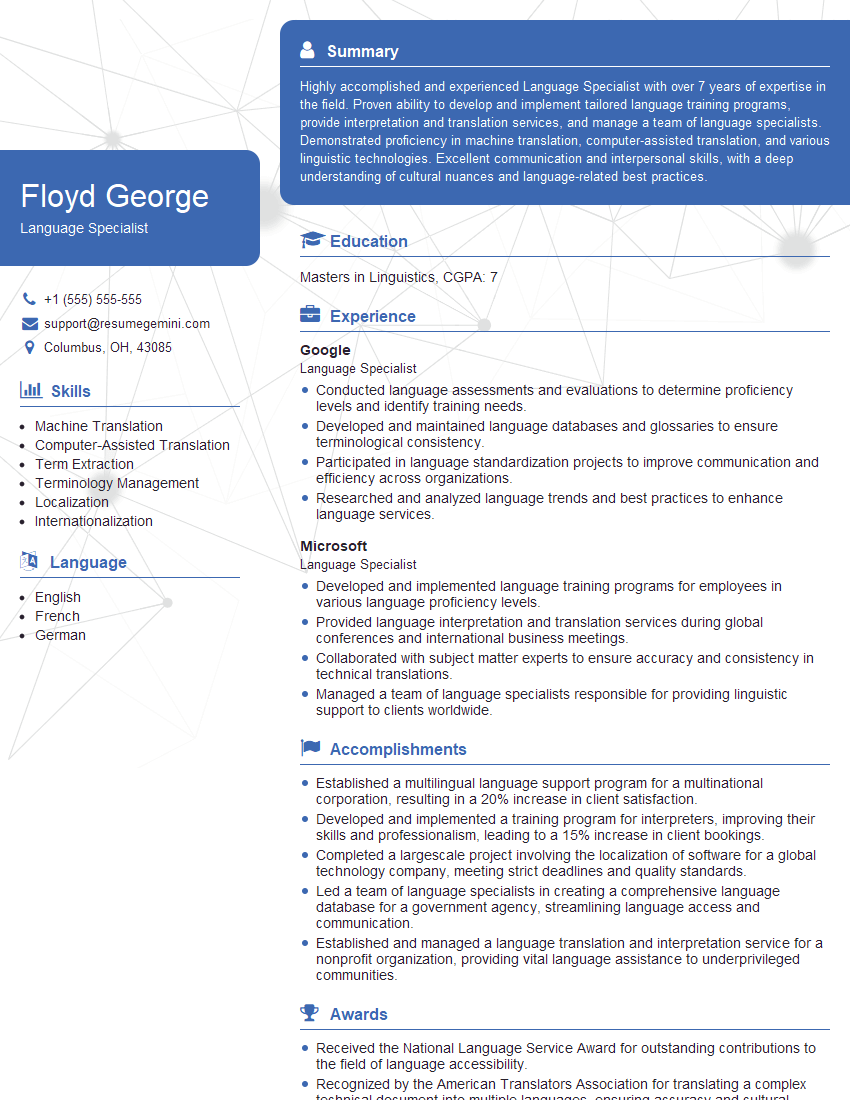
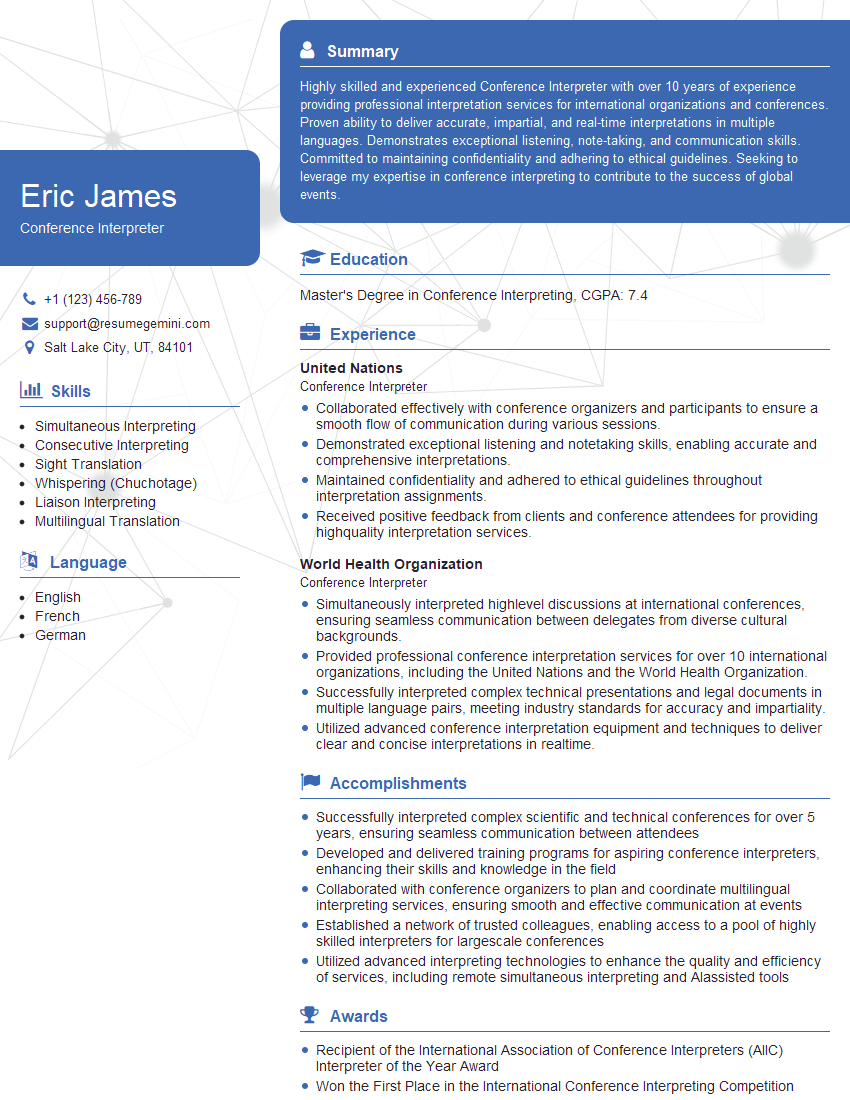
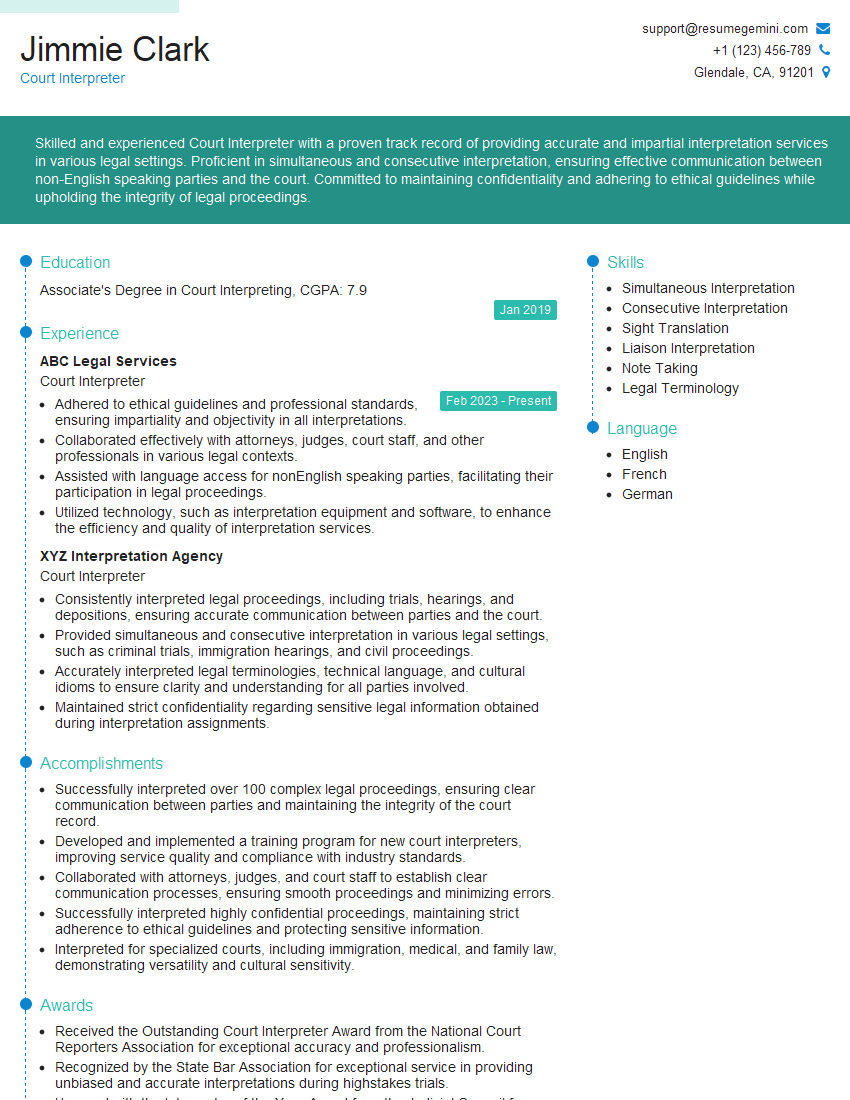
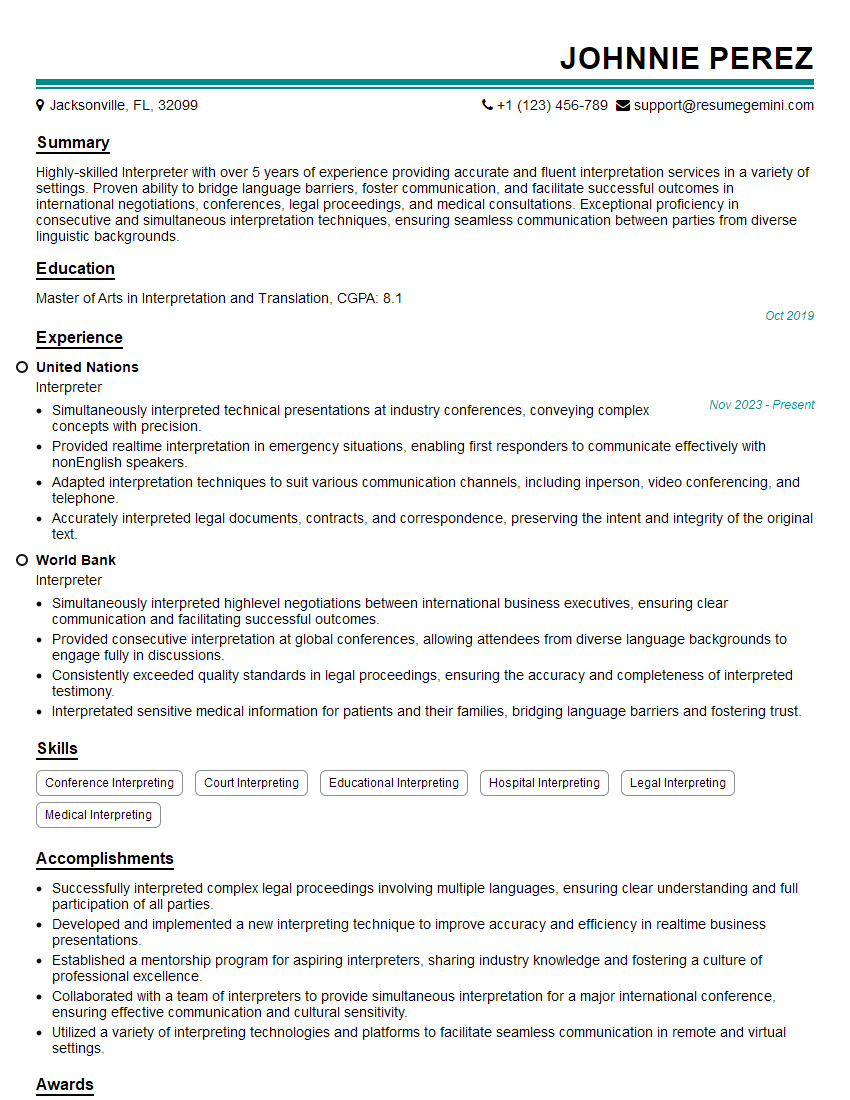
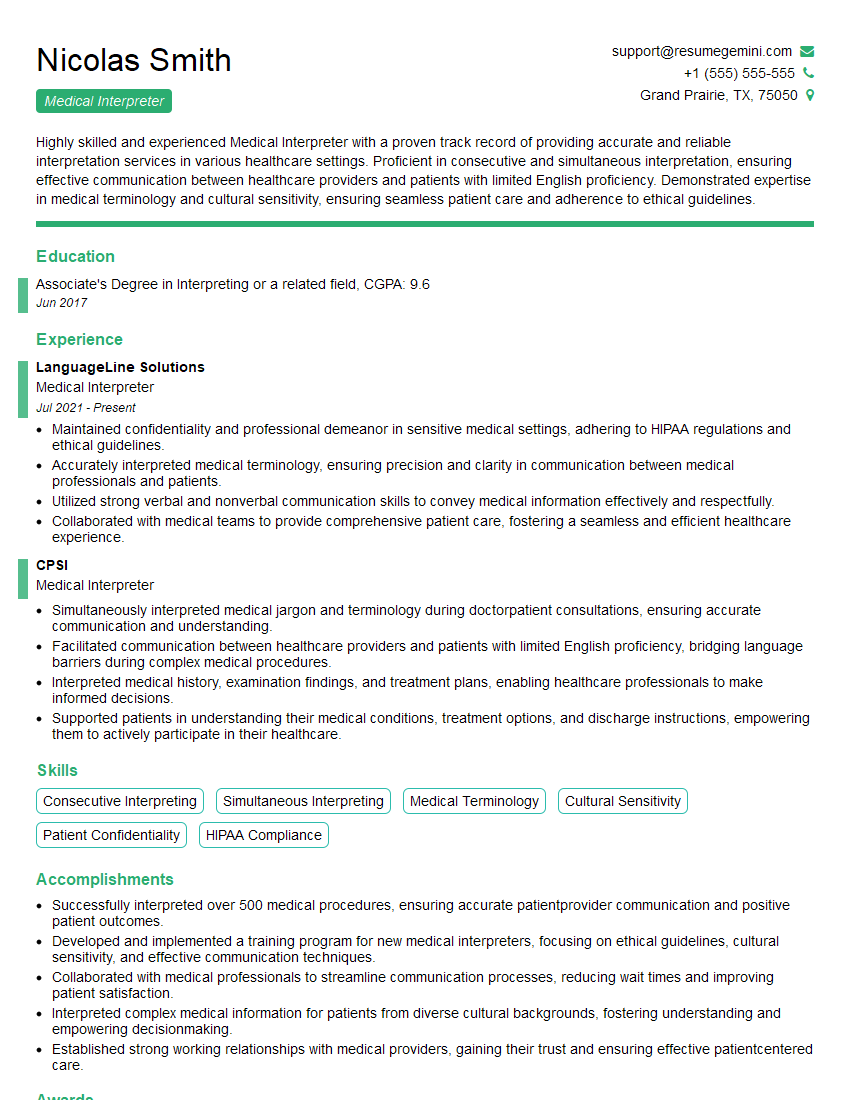
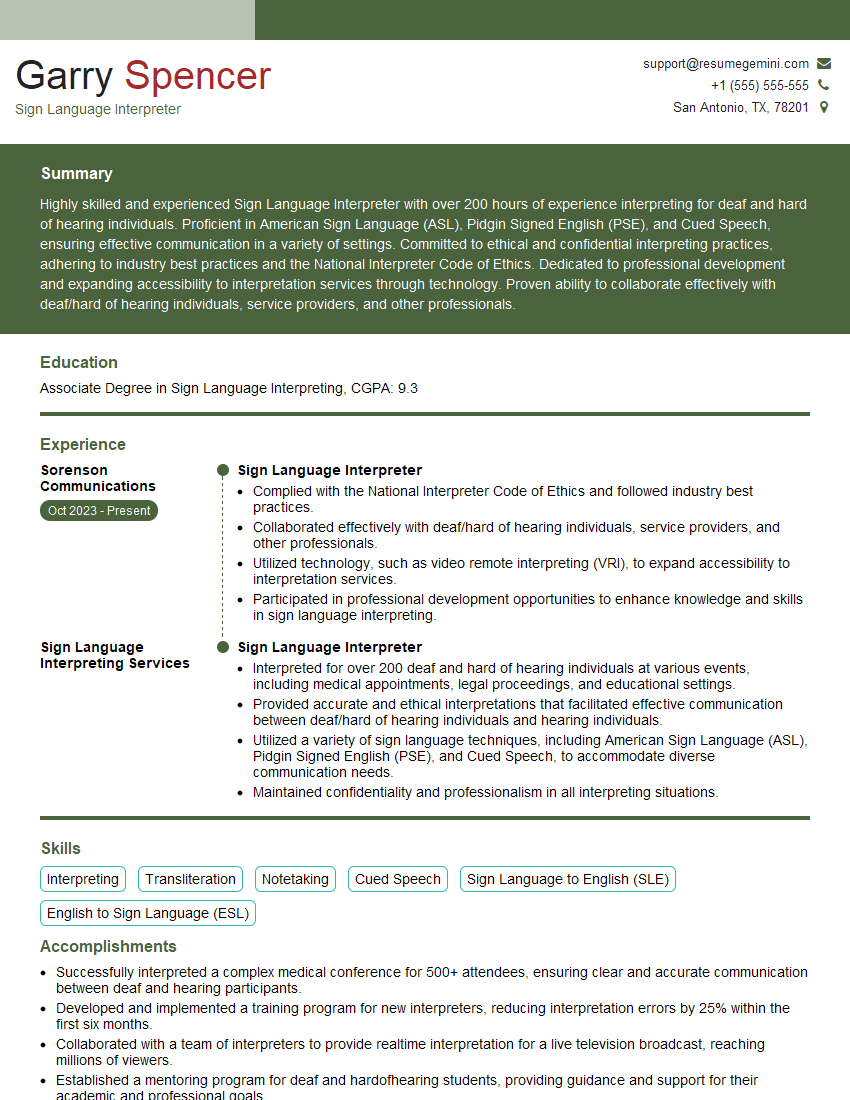
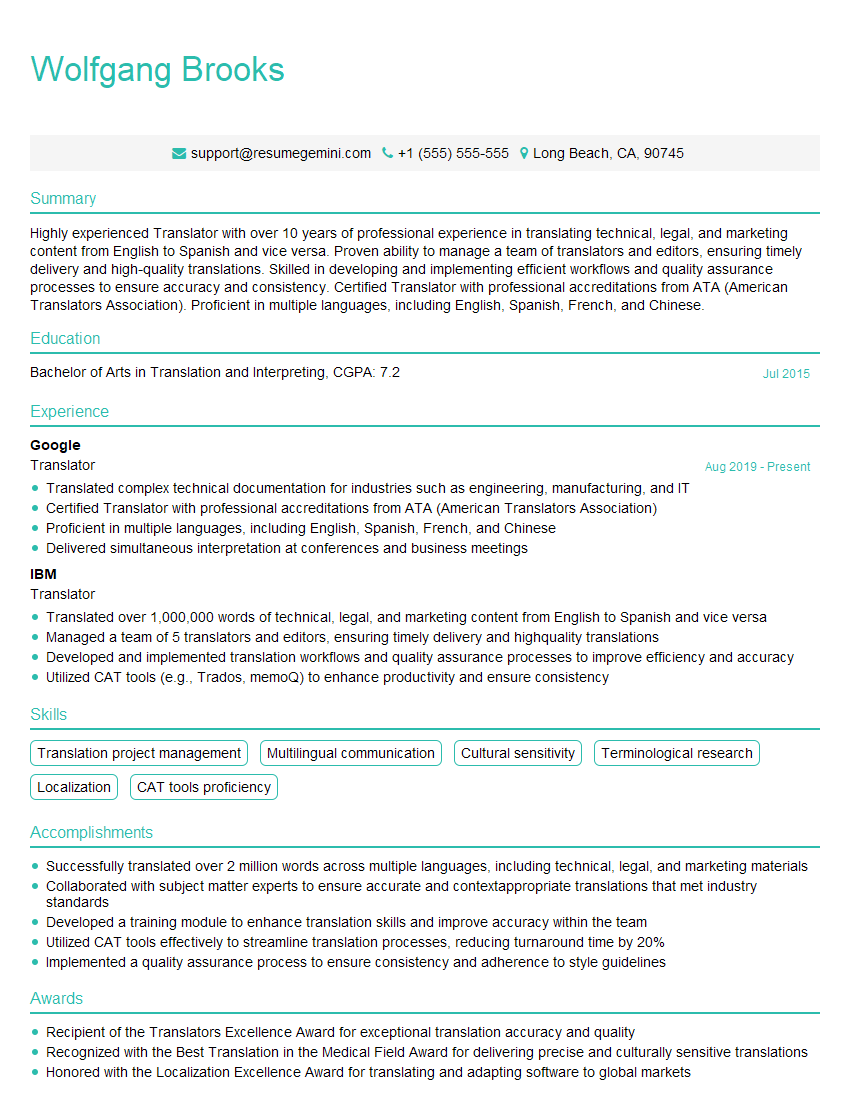
Mastering Interpretive Services opens doors to a rewarding career with diverse opportunities for growth and specialization. To maximize your job prospects, creating a strong, ATS-friendly resume is crucial. ResumeGemini offers a trusted platform to build a professional resume that showcases your skills and experience effectively. We provide examples of resumes tailored to Interpretive Services to help you create a compelling application. Take advantage of this resource to present yourself in the best possible light and secure your dream role.
Explore more articles
Users Rating of Our Blogs
Share Your Experience
We value your feedback! Please rate our content and share your thoughts (optional).
What Readers Say About Our Blog
To the interviewgemini.com Webmaster.
Very helpful and content specific questions to help prepare me for my interview!
Thank you
To the interviewgemini.com Webmaster.
This was kind of a unique content I found around the specialized skills. Very helpful questions and good detailed answers.
Very Helpful blog, thank you Interviewgemini team.