Are you ready to stand out in your next interview? Understanding and preparing for Ability to write and edit science-based content interview questions is a game-changer. In this blog, we’ve compiled key questions and expert advice to help you showcase your skills with confidence and precision. Let’s get started on your journey to acing the interview.
Questions Asked in Ability to write and edit science-based content Interview
Q 1. Explain your experience editing scientific manuscripts for grammar, style, and clarity.
My experience in editing scientific manuscripts encompasses a multi-faceted approach to ensuring grammatical accuracy, stylistic consistency, and crystal-clear communication. I meticulously review each manuscript for grammatical errors, ensuring proper subject-verb agreement, punctuation, and tense consistency. Beyond grammar, I focus on refining the writing style to enhance clarity and flow. This involves streamlining complex sentences, eliminating jargon where appropriate, and ensuring logical transitions between paragraphs and sections. I strive to make the scientific content accessible and engaging without compromising its accuracy.
For instance, I recently worked on a manuscript about gene editing. The original draft was dense and overly technical. Through careful editing, I simplified complex terminology, restructured convoluted sentences, and improved the overall readability, making the research findings accessible to a wider audience of scientists and potentially, policy makers. I also ensured consistent use of terminology throughout the manuscript, addressing inconsistencies and ambiguities.
Q 2. Describe your process for fact-checking scientific information.
Fact-checking scientific information is a critical aspect of my editing process. My approach is multi-pronged and rigorous. First, I carefully examine the cited sources, verifying that they support the claims made in the manuscript. I cross-reference information from multiple reputable sources to ensure accuracy and consistency. I’m adept at identifying potential biases in the cited research, looking for inconsistencies or contradictions between different studies.
If discrepancies or missing information arise, I engage in further research using reliable databases such as PubMed, Web of Science, and Google Scholar. I meticulously check data presented in tables and figures, ensuring accuracy and consistency with the text. If I find any inconsistencies, I will directly consult with the authors to clarify and resolve these issues. This careful cross-referencing and independent verification ensures the accuracy and reliability of the final product.
Q 3. How do you adapt your writing style to different target audiences (e.g., laypersons, researchers)?
Adapting my writing style to different audiences is crucial for effective scientific communication. When writing for laypersons, I prioritize clarity and simplicity. I avoid jargon and technical terms whenever possible, using analogies and relatable examples to explain complex concepts. I focus on conveying the main findings and their implications in a way that’s easily understood by a non-scientific audience.
For researchers, my approach is different. I maintain a formal tone and employ more precise and technical language. I focus on providing sufficient detail and ensuring accuracy of the scientific method and reporting. I might include more in-depth explanations of methods, data analysis, and statistical significance. Essentially, I tailor my vocabulary, sentence structure, and level of detail to the specific knowledge and interests of the intended audience.
Q 4. What software or tools are you proficient in for scientific writing and editing?
I am proficient in a variety of software and tools relevant to scientific writing and editing. My expertise includes Microsoft Word, where I utilize advanced features for editing and formatting manuscripts, including tracking changes and incorporating feedback from authors and reviewers. I am also skilled in EndNote for managing and citing references, ensuring consistency and accuracy in bibliographic information.
Furthermore, I am familiar with LaTeX for typesetting complex scientific documents and Adobe Illustrator and Photoshop for editing scientific figures, creating visually appealing and informative illustrations. Proficiency in these tools ensures a streamlined and efficient workflow, allowing me to produce high-quality, polished manuscripts.
Q 5. How do you handle conflicting information from different scientific sources?
Handling conflicting information from different scientific sources requires a systematic and critical approach. My first step is to carefully evaluate the credibility and reliability of each source. I consider factors such as the journal’s impact factor, the authors’ expertise, and the methodology employed in the research. I look for potential biases and limitations in each study. Often, conflicts arise due to differences in methodology, sample size, or study population.
After assessing the sources, I attempt to reconcile the conflicting information by identifying underlying factors that might explain the discrepancies. If the differences are irreconcilable, I clearly state the existence of conflicting findings in the manuscript, presenting a balanced overview of the various perspectives and acknowledging the uncertainties. This ensures transparency and encourages further research to resolve the discrepancies.
Q 6. Explain your experience working with scientific figures, tables, and illustrations.
My experience with scientific figures, tables, and illustrations is extensive. I understand that these visual elements are crucial for conveying complex data effectively. I work closely with authors to ensure that figures and tables are clear, concise, and accurately reflect the results presented in the manuscript. I ensure that all figures and tables have informative captions and legends that clearly explain their content.
I’m also skilled in using software like Adobe Illustrator and Photoshop to edit and improve the visual appeal of figures, enhancing their clarity and readability. I pay close attention to detail, ensuring that all labels, axes, and data points are accurately displayed. I often work with authors to improve the visual quality and effectively communicate the research data.
Q 7. Describe a situation where you had to simplify complex scientific concepts for a non-scientific audience.
In one instance, I was tasked with simplifying a complex research paper on epigenetics for a non-scientific audience. The original manuscript heavily relied on technical terminology and intricate explanations of cellular mechanisms. To make the content accessible, I used analogies to explain complex concepts. For example, I compared DNA methylation to a switch that turns genes on or off.
I focused on explaining the implications of the research findings in clear, straightforward language, emphasizing the practical applications and potential benefits. Instead of delving into detailed molecular pathways, I emphasized the broader implications for health and disease. The resulting piece was published in a popular science magazine and received positive feedback for its clarity and engaging style.
Q 8. How familiar are you with different citation styles (e.g., APA, MLA, Chicago)?
I’m proficient in several major citation styles, including APA, MLA, and Chicago. My familiarity extends beyond simply knowing the basic formatting rules; I understand the underlying principles of each style and how these choices impact the credibility and context of scientific communication. For instance, the choice between APA, frequently used in social sciences and psychology, and Chicago, common in humanities and history, significantly alters the presentation of references, particularly regarding footnotes and bibliography formatting. I can readily adapt my approach based on the specific requirements of a given journal, publisher, or institution. I also have experience with other styles as needed, such as AMA (American Medical Association) for medical publications.
- APA: Focuses on author-date citation within the text and a comprehensive reference list at the end.
- MLA: Primarily uses in-text parenthetical citations and a Works Cited page, with a greater emphasis on author’s name and publication date.
- Chicago: Offers both a notes-bibliography system (footnotes/endnotes and bibliography) and an author-date system.
I regularly use citation management software like Zotero and Mendeley to ensure accuracy and consistency in my citations, minimizing the risk of errors and plagiarism.
Q 9. Describe your experience with peer review processes.
I have extensive experience participating in both the giving and receiving ends of the peer-review process. I’ve served as a peer reviewer for several scientific journals, providing constructive criticism and evaluating the rigor and validity of research findings. This involved assessing the clarity of the methodology, the statistical analysis, the interpretation of results, and the overall contribution to the field. My feedback focuses on improving the manuscript’s quality and ensuring that it meets the journal’s standards.
As an author, I’ve benefited significantly from peer review. Receiving feedback, even when critical, allows me to refine my arguments, strengthen my methodology, and ensure that my work is as clear, accurate, and impactful as possible. The constructive critiques often lead to significant improvements in the manuscript, ultimately resulting in a more robust and credible publication. Learning to effectively incorporate feedback is a crucial skill for any scientist, and I’ve developed a process that facilitates meaningful revisions.
Q 10. How do you ensure the accuracy and reliability of scientific information in your writing?
Accuracy and reliability are paramount in scientific writing. My approach involves a multi-step process to ensure the integrity of information:
- Thorough Research: I consult a wide range of credible sources, prioritizing peer-reviewed journal articles, reputable books, and validated data sets.
- Verification of Facts and Figures: I meticulously cross-reference information from multiple sources to confirm its accuracy. Any data or statistics included are carefully cited and presented transparently.
- Critical Evaluation of Sources: I assess the credibility and potential bias of each source, considering factors such as the authors’ expertise, publication history, and funding sources.
- Fact-Checking and Proofreading: I meticulously review all content for accuracy, consistency, and clarity, using a combination of manual checks and software tools to identify and correct potential errors.
I consider the potential impact of any inaccuracies and strive to present information in a balanced and objective manner, acknowledging any limitations or uncertainties.
Q 11. What strategies do you use to improve the readability and understandability of scientific documents?
Improving readability and understandability of scientific documents is crucial for effective communication. My strategies include:
- Clear and Concise Language: Avoiding jargon and technical terms unless absolutely necessary, defining them clearly if used. Opting for active voice wherever possible.
- Logical Structure and Flow: Organizing information logically, using headings, subheadings, and bullet points to break down complex information into manageable chunks.
- Visual Aids: Incorporating tables, figures, and graphs to enhance understanding and presentation of data.
- Effective Use of Examples and Analogies: Illustrating complex concepts with simple, relatable examples and analogies to clarify difficult points.
- Targeted Audience Consideration: Tailoring the language and complexity of the writing to suit the specific knowledge and expertise of the intended audience.
For example, when explaining a complex statistical analysis, I might first present the concept visually before delving into the technical details. This multi-modal approach ensures that even readers unfamiliar with statistical methods can grasp the essential points.
Q 12. How do you manage multiple writing or editing projects simultaneously?
Managing multiple projects requires a systematic and organized approach. I utilize project management tools to track deadlines, tasks, and progress. This includes creating detailed schedules, prioritizing tasks based on urgency and importance, and regularly reviewing progress to stay on track. I also leverage time management techniques like the Pomodoro Technique to maintain focus and avoid burnout. Prioritizing tasks and setting realistic deadlines is critical to preventing feeling overwhelmed. Communication with clients or supervisors is vital for keeping everyone updated on progress and managing expectations effectively.
Furthermore, breaking down large projects into smaller, manageable tasks makes them less daunting and easier to track. I often use task management software to organize these smaller tasks and monitor their progress, ensuring timely completion of each element.
Q 13. Describe your experience with writing different types of scientific content (e.g., research papers, grant proposals, technical reports).
My experience encompasses a wide variety of scientific content. I’ve written and edited:
- Research Papers: From literature reviews and methodology sections to results and discussions, I’m comfortable crafting compelling narratives that effectively communicate research findings.
- Grant Proposals: I’ve crafted compelling proposals that clearly articulate the research objectives, methodology, budget, and potential impact, highlighting the significance of the work and securing funding.
- Technical Reports: I can present complex technical information in a clear and concise manner, suitable for a variety of audiences, including both technical experts and lay audiences.
- Scientific Reviews: I’ve synthesized existing literature and presented it in a cohesive manner, highlighting key findings and trends.
- Scientific Articles for Public Consumption: I’ve simplified complex scientific research to make it accessible and engaging for the general public.
Adapting my writing style and approach to the specific requirements of each type of content is essential, and I’ve developed the skills to do so effectively.
Q 14. How do you handle feedback from reviewers or editors?
I view feedback as an opportunity for improvement. My process for handling feedback involves:
- Careful Review and Consideration: I read all feedback thoroughly, paying close attention to both the positive and negative comments.
- Understanding the Rationale: I try to understand the reviewer’s or editor’s perspective and the reasons behind their suggestions.
- Implementing Revisions: I make the necessary revisions, ensuring that the changes improve the quality and clarity of the manuscript.
- Communication and Clarification: If I have questions or concerns about the feedback, I proactively communicate with the reviewer or editor to seek clarification.
- Documentation of Changes: I carefully document all changes made and provide a response letter addressing each comment and explaining the modifications.
Even critical feedback is valuable, as it identifies areas for improvement and helps me refine my writing skills. I strive to maintain professional and respectful communication throughout the process, acknowledging the reviewers’ expertise and time.
Q 15. What are your preferred methods for collaborating with scientists and researchers?
Effective collaboration with scientists and researchers hinges on clear communication, active listening, and a deep understanding of their research goals. My preferred methods involve a multi-faceted approach. Firstly, I initiate detailed discussions to thoroughly grasp the scientific findings, ensuring I understand not only the results but also the underlying methodology and its limitations. This often involves asking clarifying questions and probing for further detail. Secondly, I leverage collaborative writing platforms like Google Docs or Overleaf to facilitate real-time editing and feedback. This allows for seamless integration of edits and ensures transparency throughout the writing process. Thirdly, I prioritize regular check-ins and feedback sessions, encouraging open dialogue and incorporating the researchers’ input at every stage, from outlining to final review. For example, during a recent project on avian migration patterns, I regularly consulted with the ornithologists involved, using shared documents to incorporate their detailed data and nuanced interpretations into the manuscript. This resulted in a publication that accurately reflected their research findings while maintaining a clear and accessible narrative for a broader audience.
Career Expert Tips:
- Ace those interviews! Prepare effectively by reviewing the Top 50 Most Common Interview Questions on ResumeGemini.
- Navigate your job search with confidence! Explore a wide range of Career Tips on ResumeGemini. Learn about common challenges and recommendations to overcome them.
- Craft the perfect resume! Master the Art of Resume Writing with ResumeGemini’s guide. Showcase your unique qualifications and achievements effectively.
- Don’t miss out on holiday savings! Build your dream resume with ResumeGemini’s ATS optimized templates.
Q 16. How familiar are you with ethical considerations in scientific writing and publishing?
Ethical considerations are paramount in scientific writing and publishing. I am deeply familiar with issues such as plagiarism, data fabrication, and authorship disputes. I meticulously cite all sources using a consistent citation style (e.g., APA, MLA, Chicago), ensuring accurate attribution and avoiding any potential instances of plagiarism. I also prioritize transparency and integrity in data presentation. This includes clearly stating limitations of the research and avoiding any misleading or exaggerated claims. I am well-versed in the ethical guidelines of various scientific journals and publishing houses, understanding the procedures for conflict of interest disclosure and data sharing. For instance, in a recent project involving human subjects, I was particularly diligent in ensuring compliance with IRB (Institutional Review Board) protocols and anonymization procedures to safeguard participant privacy and anonymity. My commitment to ethical conduct reflects not only professional standards, but also an understanding that public trust in science depends on ethical practices.
Q 17. Explain your experience with using style guides and house style manuals.
My experience with style guides and house style manuals is extensive. I am proficient in adapting my writing to adhere to specific guidelines, ensuring consistency and clarity in the final product. I’ve worked with various style guides, including the AMA Manual of Style, the Chicago Manual of Style, and numerous journal-specific style guides. I understand the importance of consistent formatting for elements such as headings, citations, figure captions, and numerical data. Furthermore, I’m adept at using style guides to ensure consistency in terminology and voice throughout a document. For example, in a recent manuscript submitted to a medical journal, adhering to the AMA style guide was crucial for acceptance. I paid meticulous attention to formatting, ensuring the manuscript was consistent with the journal’s requirements, resulting in a smooth and efficient peer-review process. My ability to seamlessly integrate style guide requirements into my workflow ensures high-quality, error-free publications.
Q 18. How do you ensure that your scientific writing is free of bias?
Ensuring scientific writing is free of bias is crucial for maintaining objectivity and integrity. My approach involves a multi-step process. Firstly, I critically evaluate the source material for potential biases, including selection bias, reporting bias, and confirmation bias. Secondly, I use inclusive language, avoiding gendered or culturally biased terms and opting for neutral alternatives. I meticulously review data representations, ensuring they are accurately presented and don’t misrepresent results. I also seek diverse perspectives, consulting with colleagues or subject matter experts to identify potential biases I might have overlooked. Finally, I strive for transparency, acknowledging any limitations or potential biases in the study design or data analysis. For example, when writing about the effectiveness of a particular medical intervention, I carefully considered potential biases related to patient demographics and access to care, ensuring that the conclusions were nuanced and took these factors into account. This meticulous approach guarantees the accuracy and reliability of the scientific communication.
Q 19. Describe your experience with using content management systems (CMS).
I have significant experience with various content management systems (CMS), including WordPress, Drupal, and specialized platforms used for scientific publications. My proficiency extends beyond basic content input to include template customization, user management, and content optimization for search engines (SEO). I’m comfortable working with different content types, including text, images, videos, and interactive elements. For instance, I used WordPress to create a website for a scientific research group, enabling easy content updates and improved collaboration amongst the team. My knowledge of CMS allows for efficient content organization, version control, and streamlined workflows, leading to increased productivity and better dissemination of scientific information.
Q 20. How do you stay current with developments in your field?
Staying current in the ever-evolving field of science requires a proactive and multi-pronged approach. I regularly subscribe to relevant scientific journals and online databases (like PubMed and Web of Science) to keep abreast of the latest research publications. I actively participate in online forums and communities, engaging in discussions with other scientists and researchers. Attending conferences and workshops allows me to directly interact with experts and learn about cutting-edge discoveries. I also utilize advanced search tools and utilize alert systems to receive notifications about new publications related to specific areas of interest. Furthermore, I carefully monitor the work of leading researchers and institutions in my field. This comprehensive strategy guarantees that my writing incorporates the most recent advancements and perspectives, enhancing the relevance and accuracy of the content I produce.
Q 21. How would you explain a complex scientific concept in a short social media post?
Explaining a complex scientific concept in a short social media post requires a concise and engaging approach. Imagine explaining CRISPR gene editing. Instead of delving into the intricate molecular mechanisms, I would use an analogy. For example: “Think of DNA as a cookbook for life. CRISPR is like a precise editing tool that lets scientists change individual recipes (genes) to correct errors or add new ones – a powerful technology with huge potential for treating diseases! #CRISPR #geneediting #science.” This approach leverages clear, simple language, a relatable analogy, and relevant hashtags to effectively convey a complex topic within the character limits of a social media post.
Q 22. Describe a time you identified and corrected a factual error in a scientific document.
During a recent project reviewing a manuscript on the effects of climate change on coral reefs, I noticed a significant factual inaccuracy. The paper stated that ocean acidification was primarily caused by increased carbon dioxide absorption from the atmosphere, while neglecting the substantial role of ocean warming in disrupting carbonate chemistry. This is crucial because ocean warming leads to reduced carbonate ion concentrations, hindering coral calcification.
To correct this, I first consulted several peer-reviewed publications and reputable scientific reports (IPCC reports, for example) to confirm the correct understanding of ocean acidification’s multifaceted nature. I then drafted a detailed explanation for the authors, highlighting the limitations of their initial claim and presenting compelling evidence for the combined effects of CO2 absorption and ocean warming. My suggested edits included adding a section specifically discussing the role of thermal stress in coral bleaching and the interaction between temperature and carbonate chemistry. The revised manuscript presented a more accurate and nuanced perspective on the complex issue.
Q 23. How do you ensure the visual appeal and layout of a scientific document are effective?
Effective visual appeal and layout are crucial for clear scientific communication. I approach this by adhering to established principles of scientific publishing and using design elements to enhance readability and understanding. This involves:
- Clear and Concise Figures and Tables: Using high-resolution images, ensuring proper labeling, including concise captions that clearly convey the data presented. Avoid clutter.
- Logical Flow of Information: Structuring the document with clear headings, subheadings, and consistent formatting to guide the reader through the information logically. This is particularly important in long and complex documents.
- Appropriate Use of White Space: Using sufficient white space around text and figures to avoid a cramped feel. This improves readability and visual appeal.
- Consistent Font and Style: Sticking to a single, easily readable font for the body text, and using distinct styles for headings, subheadings, and captions.
- Use of Color Strategically: Color can highlight key features, improve visual appeal and enhance comprehension but needs to be used carefully, considering colorblindness and avoiding overstimulation.
For example, I recently worked on a report that included complex statistical analyses. By using clear and well-labeled graphs and charts, I was able to transform a page filled with numbers into an easily digestible visual representation, making the findings accessible to a broader audience.
Q 24. What is your experience with SEO optimization for scientific content?
While SEO is not my primary focus, I understand its importance in ensuring scientific content reaches a wider audience. My approach integrates SEO best practices subtly, without compromising scientific accuracy or style. This includes:
- Keyword Research: Identifying relevant keywords related to the topic and using them naturally in titles, headings, and throughout the text. I avoid keyword stuffing, which can harm readability and authenticity.
- Meta Descriptions: Crafting concise and informative meta descriptions that accurately reflect the content and attract readers searching online.
- Use of Headings and Subheadings: Structuring the content logically with relevant headings and subheadings, which not only improves readability but also helps search engines understand the content’s organization.
- Link Building (with caution): Linking to reputable sources where appropriate and using internal links within the site to improve navigation. However, I prioritize accurate and reliable sources over link building.
For instance, I recently optimized a research paper abstract by incorporating relevant keywords like “climate change,” “coral reefs,” and “ocean acidification” without disrupting the flow of language.
Q 25. How do you approach writing about controversial or sensitive scientific topics?
Writing about controversial or sensitive scientific topics requires a nuanced approach that prioritizes accuracy, neutrality, and respect for different perspectives. I begin by thoroughly researching the topic from multiple perspectives, ensuring a balanced representation of the available evidence.
My approach emphasizes:
- Presenting Evidence Objectively: Clearly presenting both supporting and contradicting evidence to avoid bias or oversimplification.
- Acknowledging Uncertainty: When scientific understanding is incomplete or inconclusive, I clearly communicate this to the reader.
- Avoiding Sensationalism: Presenting findings in a factual and objective manner, avoiding hype or overly emotional language.
- Respectful Language: Using inclusive and respectful language toward all stakeholders involved, avoiding inflammatory or judgmental statements.
- Contextualization: Providing sufficient context to help the reader understand the broader implications and potential consequences of the research findings.
For example, when writing about genetically modified organisms (GMOs), I would present both the potential benefits (increased crop yields, enhanced nutritional value) and the potential risks (environmental impacts, potential health concerns) while acknowledging the ongoing debate and uncertainties associated with their use.
Q 26. Describe your experience with translating complex scientific jargon into plain language.
Translating complex scientific jargon into plain language is a core skill for effective science communication. I approach this by:
- Identifying Jargon: Carefully identifying technical terms and complex concepts that may be unfamiliar to a general audience.
- Finding Simpler Alternatives: Replacing jargon with clearer, more accessible alternatives without sacrificing accuracy. This often involves using analogies or metaphors to explain complex concepts.
- Defining Terms: When necessary, providing concise and easy-to-understand definitions of technical terms, either within the text or in a glossary.
- Active Voice and Concise Sentences: Using active voice and concise sentence structure enhances readability and clarity.
- Testing for Comprehension: Ideally, testing the readability of the translated text with a target audience to ensure it is easily understood.
For instance, instead of writing “The in vivo study demonstrated a significant elevation in serum cytokine levels,” I might write “The experiment showed a large increase in the levels of proteins in the blood that are involved in the immune response.”
Q 27. What are your strengths and weaknesses as a science writer/editor?
My strengths lie in my ability to synthesize complex scientific information into clear and engaging narratives, coupled with a meticulous attention to detail and accuracy. I am proficient in various styles of scientific writing and editing, adapting my approach depending on the target audience and publication. I also excel at collaborating effectively with scientists and researchers, ensuring a thorough and accurate representation of their work.
A potential weakness is my occasional tendency towards perfectionism, which can sometimes slow down the writing process. I am actively working on managing this by prioritizing deadlines and focusing on achieving a high level of quality within a reasonable timeframe.
Q 28. Where do you see yourself in five years in the field of science writing/editing?
In five years, I envision myself as a senior science writer/editor with extensive experience in a specialized area of science communication, potentially focusing on environmental science or public health. I aspire to lead projects, mentor junior writers, and contribute to impactful science communication initiatives that increase public understanding of complex scientific issues and inform evidence-based decision-making. I would also like to explore opportunities to leverage emerging technologies, such as interactive media or virtual reality, to enhance engagement and knowledge retention.
Key Topics to Learn for Ability to write and edit science-based content Interview
- Scientific Writing Principles: Understanding clarity, precision, accuracy, and objectivity in conveying complex scientific information to diverse audiences (laypersons, experts, etc.). This includes mastering different writing styles (e.g., IMRaD for research papers).
- Data Visualization and Interpretation: Ability to translate complex datasets into meaningful visuals (graphs, charts, tables) and explain their implications clearly and concisely. This requires understanding statistical concepts and their appropriate representation.
- Editing and Proofreading: Mastering grammar, punctuation, style guides (e.g., APA, MLA), and the process of effectively editing for scientific accuracy, consistency, and clarity. This includes recognizing and correcting common errors in scientific writing.
- Audience Awareness: Tailoring your writing style and level of detail to suit the intended audience. Understanding how to simplify complex concepts without sacrificing accuracy.
- Ethical Considerations: Adherence to principles of plagiarism, data integrity, and responsible reporting of scientific findings. Understanding the implications of misrepresenting or manipulating data.
- Content Management Systems (CMS): Familiarity with popular CMS platforms used in scientific publishing and communication (e.g., WordPress, specialized journal submission systems).
- SEO and Keyword Optimization (for online content): Understanding how to optimize scientific content for online search engines to improve its discoverability and reach.
Next Steps
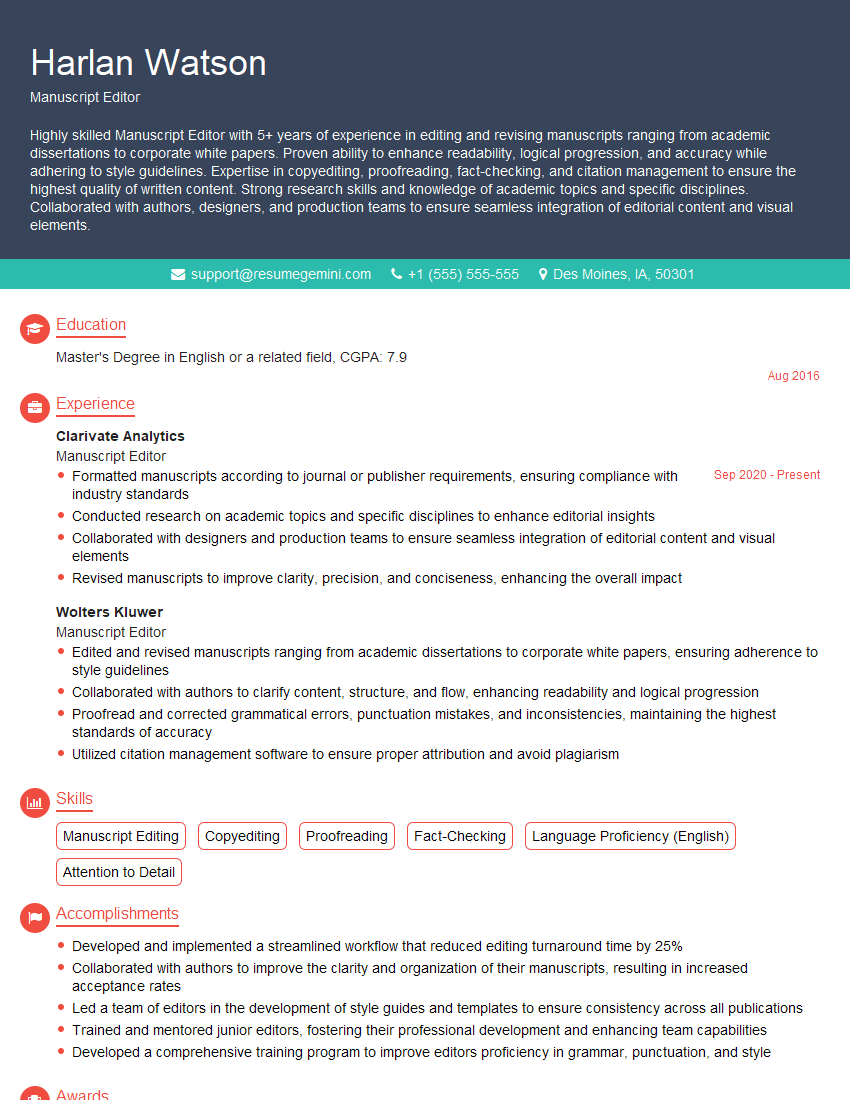
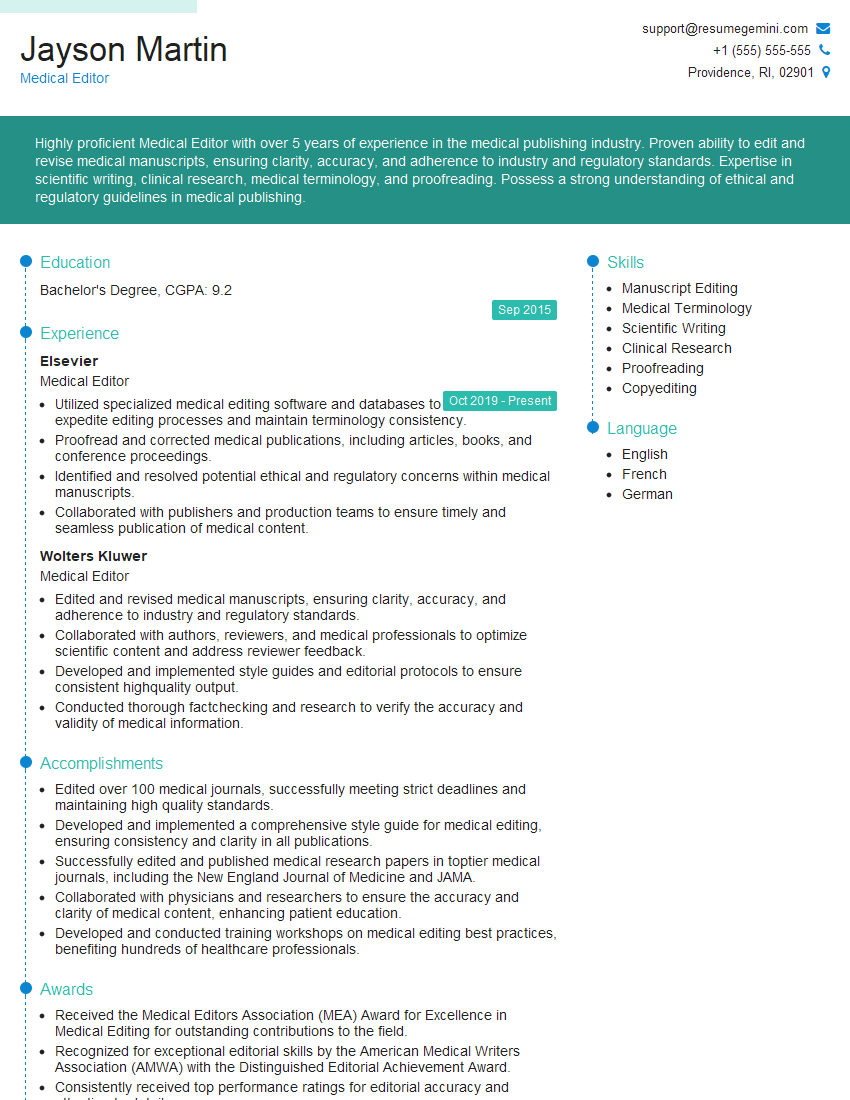
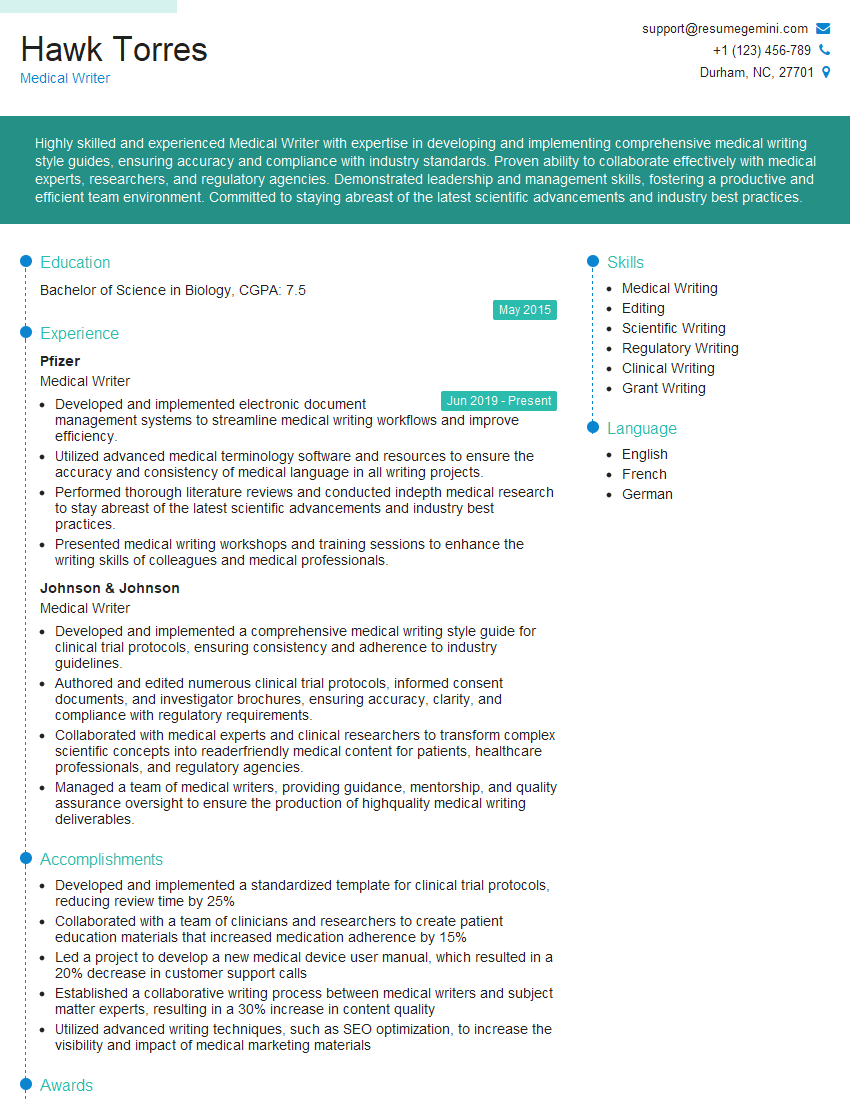
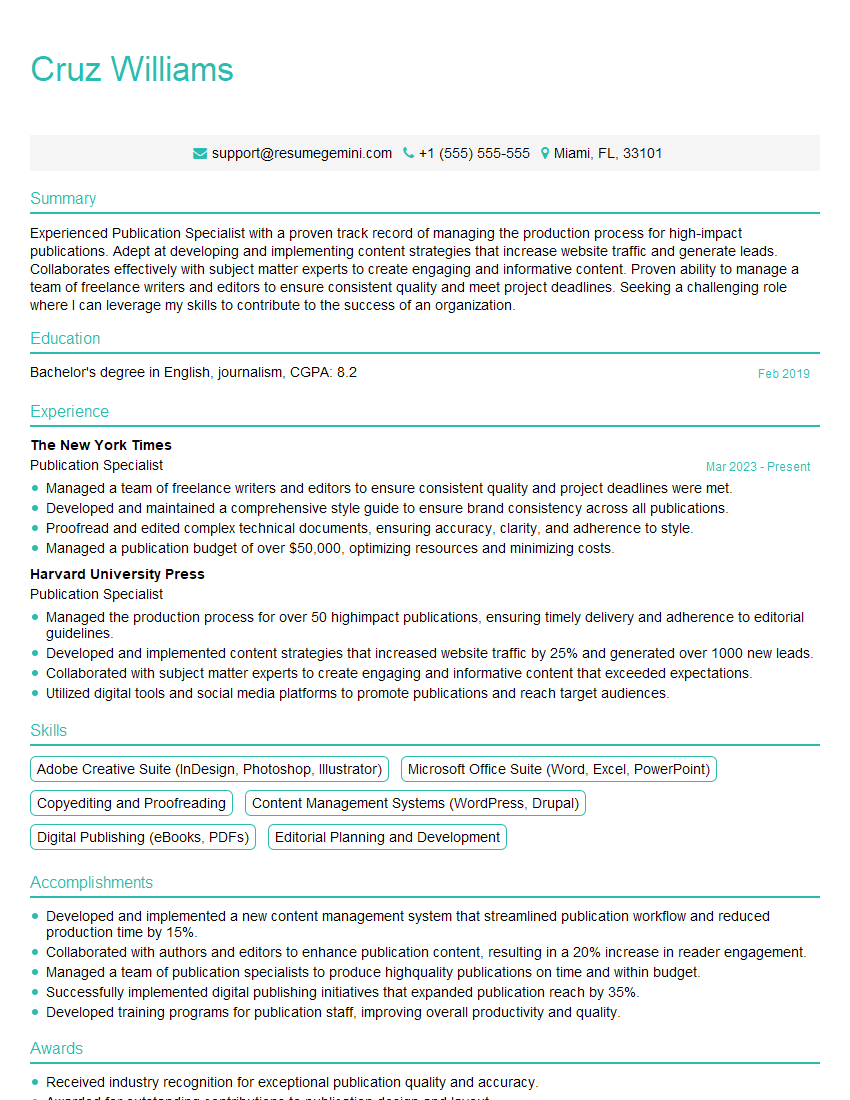
Mastering the ability to write and edit science-based content is crucial for career advancement in research, science communication, technical writing, and many other scientific fields. A strong command of this skill opens doors to exciting opportunities and significantly enhances your professional profile. To maximize your job prospects, crafting an ATS-friendly resume is essential. This ensures that your qualifications are effectively highlighted to applicant tracking systems, increasing the chances of your application being reviewed by a human recruiter. ResumeGemini is a trusted resource that can help you build a compelling and effective resume. We provide examples of resumes tailored to highlight experience in writing and editing science-based content, giving you a head start in showcasing your skills and experience.
Explore more articles
Users Rating of Our Blogs
Share Your Experience
We value your feedback! Please rate our content and share your thoughts (optional).
What Readers Say About Our Blog
To the interviewgemini.com Webmaster.
Very helpful and content specific questions to help prepare me for my interview!
Thank you
To the interviewgemini.com Webmaster.
This was kind of a unique content I found around the specialized skills. Very helpful questions and good detailed answers.
Very Helpful blog, thank you Interviewgemini team.