The thought of an interview can be nerve-wracking, but the right preparation can make all the difference. Explore this comprehensive guide to Pest and Damage Control interview questions and gain the confidence you need to showcase your abilities and secure the role.
Questions Asked in Pest and Damage Control Interview
Q 1. Explain the difference between preventative and reactive pest control strategies.
Preventative pest control focuses on stopping pests from entering and establishing themselves in a given area, while reactive pest control addresses an existing infestation.
Think of it like this: preventative control is like locking your doors to prevent a burglar; reactive control is like calling the police after a burglary has already occurred.
- Preventative strategies include sealing cracks and crevices, proper sanitation, eliminating food and water sources, and using exclusion methods (screens, mesh, etc.). These are proactive measures that minimize the risk of an infestation ever starting.
- Reactive strategies involve identifying the pest, assessing the infestation’s extent, and implementing targeted control measures, such as using pesticides or traps. These are actions taken *after* a pest problem has developed.
For example, a restaurant employing preventative strategies would maintain impeccable cleanliness, store food properly, and regularly inspect for pest activity. If an infestation occurs despite these efforts, they would then implement reactive measures, potentially involving professional pest control services.
Q 2. Describe your experience with Integrated Pest Management (IPM) techniques.
Integrated Pest Management (IPM) is a holistic approach that emphasizes minimizing pesticide use while effectively controlling pest populations. It’s about finding a balance between environmental protection and effective pest management.
My experience with IPM includes developing and implementing customized programs for various clients, from residential homes to large commercial properties. This involves a thorough inspection to identify the pest, its life cycle, and its preferred habitats. We then develop a control strategy that prioritizes non-chemical methods such as sanitation, exclusion, and monitoring. Chemical control is only used as a last resort and only with the least toxic and most targeted pesticides available.
For example, in a recent residential IPM project, we discovered a termite infestation. Instead of immediately resorting to broad-spectrum pesticides, we first implemented measures to eliminate moisture sources around the foundation, repaired damaged wood, and installed physical barriers. We then used targeted bait stations to control the colony while minimizing impact on the environment and the residents.
Q 3. What are the common pests found in residential and commercial settings?
Common pests vary depending on location and climate, but some frequently encountered pests include:
- Residential: Ants, cockroaches, rodents (mice and rats), spiders, bed bugs, termites, flies, and silverfish.
- Commercial: Similar to residential pests, but with added concerns like stored product pests (weevils, moths), rodents impacting food storage, and pests affecting specific industries (e.g., clothing moths in textile stores).
The specific pests present are influenced by factors like building construction, sanitation practices, and the surrounding environment. For instance, poor sanitation can lead to cockroach infestations, while cracks in walls can provide access for rodents.
Q 4. How do you identify different types of pests?
Pest identification involves careful observation and may require using specialized tools. I use a multi-pronged approach:
- Visual inspection: This includes noting the pest’s size, shape, color, and any distinguishing features. Photographs can be incredibly helpful in later identification.
- Trap analysis: Sticky traps or other types of traps provide samples of the pest for close examination.
- Damage assessment: The type of damage caused (e.g., gnaw marks, frass, webbing) can provide strong clues about the pest responsible.
- Literature and resources: I utilize field guides, online databases, and university extension resources to confirm identification. Often, consulting with other experts enhances the accuracy of identification.
For example, identifying a termite infestation requires careful examination of wood for tunnels, frass (termite droppings), and live termites. Differentiating between subterranean and drywood termites requires even more specific knowledge and potentially microscopic analysis.
Q 5. What safety precautions do you take when handling pesticides?
Safety is paramount when handling pesticides. My approach adheres strictly to safety regulations and includes:
- Personal Protective Equipment (PPE): This always includes gloves, eye protection, and respirators appropriate for the specific pesticide. The choice of PPE depends on the toxicity and application method of the pesticide.
- Proper ventilation: Ensuring adequate ventilation during application and after is crucial to minimize inhalation risks.
- Label reading and adherence: I meticulously read and follow all instructions, warnings, and precautions on the pesticide label. This includes understanding the application rate, the target pest, and potential health hazards.
- Safe storage: Pesticides are stored in a locked, secure location, away from children, pets, and food.
- Emergency preparedness: I am familiar with emergency procedures in case of accidental exposure, including knowing the location of safety data sheets (SDS) and having access to emergency contact information.
For instance, when applying a broad-spectrum insecticide, I would use a respirator with appropriate filters, chemical-resistant gloves, and eye protection to ensure complete personal protection.
Q 6. Describe your experience with various pesticide application methods.
My experience encompasses a range of pesticide application methods, selected based on the specific pest, location, and environment:
- Spot treatments: Used for localized infestations, applying pesticide directly to the pest or its hiding places.
- Crack and crevice treatments: Applying pesticide to gaps and crevices where pests might be hiding.
- Barrier treatments: Creating a perimeter treatment around a building to prevent pest entry.
- Broadcast treatments: Applying pesticide over a larger area, generally used for outdoor applications.
- Baiting systems: Utilizing bait stations to attract and eliminate pests, particularly effective for rodents and some insects.
- Fumigation: A more intense method, used for severe infestations where a building is enclosed and treated with gaseous pesticides.
The choice of method is critical. For example, a cockroach infestation in a kitchen might involve spot and crack and crevice treatments, while a termite infestation may require a more extensive baiting system or even soil treatment.
Q 7. How do you determine the appropriate pesticide for a specific pest and situation?
Selecting the right pesticide involves several factors:
- Pest identification: Accurate identification is the first and most crucial step. The pesticide must be effective against the specific pest.
- Location and environment: The pesticide must be suitable for the location of application (indoor vs. outdoor), the type of surface (wood, concrete, etc.), and the presence of sensitive areas (e.g., gardens, water sources).
- Toxicity and environmental impact: I prioritize using the least toxic pesticide that is effective. This considers the potential impact on human health, pets, and the environment.
- Regulations and label instructions: All pesticide use must comply with local and national regulations and label instructions.
For example, if I’m dealing with a spider infestation in a residential home, I would choose a low-toxicity, contact insecticide suitable for indoor use. However, if I’m dealing with a termite infestation, the choice will likely involve a termiticide specifically designed for soil treatment or baiting systems, carefully considering its environmental impact.
Q 8. What are the legal regulations surrounding pesticide use in your area?
Pesticide use is heavily regulated in my area to protect human health and the environment. These regulations are primarily enforced at the state and federal levels, with local ordinances sometimes adding further restrictions. Key aspects include licensing requirements for applicators, restrictions on the types and amounts of pesticides that can be used, and mandatory safety precautions during application. For example, there are specific rules about buffer zones around water sources to prevent contamination, and detailed requirements for proper disposal of used containers. The Environmental Protection Agency (EPA) sets standards for pesticide registration, ensuring that products meet safety and efficacy criteria before they can be sold. Failure to comply with these regulations can result in significant fines and legal repercussions.
Specific regulations vary depending on the type of pesticide (insecticide, herbicide, fungicide, etc.) and the location. Knowing these regulations is paramount to operating legally and responsibly. My company maintains up-to-date records of all permits, licenses, and safety data sheets (SDS) related to the pesticides we use. We regularly update our training to keep pace with changes in regulations.
Q 9. Explain the process of creating a pest control plan for a residential property.
Developing a comprehensive pest control plan for a residential property is a multi-step process. It begins with a thorough inspection to identify the pests present, their entry points, and the areas most affected. We use this information to assess the level of infestation and determine the best course of action. Next, we create a customized treatment strategy that accounts for factors such as the client’s preferences, the type of pest, and the environmental sensitivity of the property. This might involve a combination of methods such as sanitation, exclusion (sealing entry points), and the targeted application of pesticides.
- Inspection: A detailed walkthrough of the property to identify pest activity, including signs like droppings, gnaw marks, or nests.
- Identification: Correctly identifying the pest species is crucial for effective treatment. Misidentification can lead to ineffective treatments and unnecessary costs.
- Treatment Plan: This outlines the chosen methods (e.g., integrated pest management strategies, targeted pesticide application, or a combination). It should also specify the frequency of treatments and the types of pesticides to be used.
- Implementation: Careful and safe application of the chosen treatment methods, adhering to all safety and regulatory requirements.
- Monitoring and Evaluation: Regular follow-up visits to monitor effectiveness and make adjustments as necessary.
For example, if we find carpenter ants, the plan may involve treating the nest directly, sealing entry points, and applying a preventative barrier around the foundation. This detailed plan ensures efficient pest elimination while minimizing environmental impact.
Q 10. How do you manage customer expectations regarding pest control outcomes?
Managing customer expectations is crucial for maintaining a positive relationship and avoiding misunderstandings. We achieve this through open communication and realistic assessments. During the initial consultation, I clearly explain the limitations of pest control, emphasizing that complete eradication is not always feasible. Some pests are persistent, and even after treatment, there’s a possibility of re-infestation. I discuss the different treatment options, their efficacy, potential side effects, and the expected timeline for results. I also provide realistic expectations regarding the frequency of treatments, noting that ongoing monitoring and preventative measures are often necessary.
For instance, I might explain to a client that while we can significantly reduce the cockroach population, we can’t guarantee complete elimination without addressing underlying sanitation issues. Providing written documentation of the treatment plan and follow-up visits ensures transparency and allows for regular updates on progress. This proactive approach helps set realistic expectations and fosters trust.
Q 11. Describe your experience dealing with difficult customers or situations.
Dealing with difficult customers or situations requires patience, empathy, and effective communication. I’ve encountered clients who were frustrated by the persistence of pests despite treatment, or those who were skeptical about the effectiveness of our methods. In these cases, I listen carefully to their concerns, validate their feelings, and patiently explain the situation. I may review the treatment plan, reassess the situation, and offer alternative solutions. Thorough documentation is essential in these instances to demonstrate the steps taken and justify any adjustments made.
One example involved a client who was unhappy with the ongoing presence of rodents despite multiple treatments. Upon further investigation, we discovered that there were gaps in their exterior walls that we hadn’t initially identified. By working with the client to address these structural issues, alongside continued pest control measures, we were able to resolve the problem successfully and restore the client’s confidence in our services. Transparency and a collaborative problem-solving approach are crucial for navigating these challenges.
Q 12. How do you handle pesticide spills or emergencies?
Pesticide spills or emergencies require immediate and decisive action. Our company has a detailed emergency response plan that includes procedures for containing, cleaning, and reporting spills. This plan outlines the steps to take to mitigate environmental damage and protect human health. In case of a spill, we immediately isolate the area, use appropriate absorbent materials to contain the spill, and follow the instructions outlined on the pesticide label and SDS. We contact the appropriate authorities (e.g., environmental agencies) to report the incident and follow their guidance on remediation.
Emergency response training is a mandatory part of our employee onboarding. We conduct regular drills to ensure that everyone is familiar with the procedures. Proper personal protective equipment (PPE) is essential for handling spills safely, and we maintain a sufficient supply of appropriate PPE and cleanup materials. Detailed records of all incidents, including the date, time, location, type of pesticide, amount spilled, and actions taken, are meticulously maintained.
Q 13. What is your understanding of pest biology and behavior?
Understanding pest biology and behavior is foundational to effective pest management. It allows us to target treatments effectively and minimize environmental impact. This understanding includes knowledge of a pest’s life cycle, feeding habits, breeding patterns, and preferred habitats. For instance, knowing that termites are social insects with complex colony structures helps us develop strategies that target the entire colony rather than just individual insects. Similarly, understanding the behavior of rodents, such as their preference for dark, hidden places, allows us to focus preventative measures on those areas.
My knowledge extends to various pest types, including insects, rodents, and other organisms, which helps create customized strategies. I am familiar with the different methods of pest control, including chemical, biological, and physical, and understand how to use them in an integrated pest management (IPM) approach. IPM seeks to minimize pesticide use by using other methods where possible. This understanding is essential for developing effective, sustainable, and environmentally responsible pest control plans.
Q 14. Describe your experience with termite inspections and treatment.
I have extensive experience with termite inspections and treatments. These inspections typically involve a visual assessment of the property, looking for signs of termite activity such as mud tubes, damaged wood, or swarming insects. I use specialized tools like moisture meters to detect areas with high moisture content, which is conducive to termite infestation. We sometimes use a method like termite detection dogs, to help pinpoint termite activity in hard to see places. More thorough inspections may include the use of destructive techniques such as drilling into suspect areas to examine the wood. Based on the findings, I develop a treatment plan, which may involve liquid termiticide treatments, baiting systems, or fumigation, depending on the severity and extent of the infestation. Post-treatment monitoring is crucial to ensure the effectiveness of the treatment and prevent future infestations.
For instance, in a recent inspection, we found subterranean termites in a client’s home. We used a combination of liquid termiticide treatments to eliminate the active termites and a baiting system to target the colony. Regular monitoring followed to ensure the treatment was successful and prevent future infestations. Clearly outlining the treatment process and expectations to the client ensures understanding and promotes transparency.
Q 15. What are the signs of rodent infestation and how do you treat it?
Rodent infestations often leave subtle yet telling signs. Think of it like a detective’s work – you’re looking for evidence of their presence. Common indicators include droppings (size and shape vary by rodent), gnaw marks on food packaging, furniture, or electrical wires, rub marks along walls where they frequently travel, and unusual noises, especially at night. You might also find nests made of shredded paper or fabric in hidden areas.
Treatment involves a multi-pronged approach. Firstly, sanitation is crucial. Removing food sources, water sources, and clutter eliminates attractants. Secondly, exclusion methods involve sealing entry points into the structure—this could be anything from caulking gaps in walls to replacing damaged weather stripping. Thirdly, control methods such as traps (snap traps, glue traps, or electronic traps), bait stations containing rodenticides (always used cautiously and following label instructions), or even the deployment of trained pest control dogs can be employed. The choice of method depends on the severity of the infestation, the environment (residential, commercial, etc.), and local regulations. For example, in a food processing facility, the type of rodenticide used must be carefully chosen to prevent contamination. For large infestations, professional help is essential for safe and effective treatment.
Career Expert Tips:
- Ace those interviews! Prepare effectively by reviewing the Top 50 Most Common Interview Questions on ResumeGemini.
- Navigate your job search with confidence! Explore a wide range of Career Tips on ResumeGemini. Learn about common challenges and recommendations to overcome them.
- Craft the perfect resume! Master the Art of Resume Writing with ResumeGemini’s guide. Showcase your unique qualifications and achievements effectively.
- Don’t miss out on holiday savings! Build your dream resume with ResumeGemini’s ATS optimized templates.
Q 16. How do you monitor the effectiveness of pest control treatments?
Monitoring the effectiveness of pest control is as important as the treatment itself. It’s about confirming that the problem is truly under control and preventing future infestations. This involves a combination of visual inspections, trapping data analysis, and potentially other monitoring techniques.
- Visual Inspections: Regular checks for evidence of pest activity (droppings, gnaw marks, insects) in key areas are essential. For example, checking for cockroach activity near sinks and drains or checking for rodent droppings near food storage areas. Frequency of inspection depends on the nature of the problem and the environment; it might be daily in a food processing plant and weekly in a residential setting.
- Trapping Data: If traps are used, carefully recording the number of pests captured each day provides a good indication of the treatment’s effectiveness. A consistent decrease in catches over time is a positive sign. This data can also help to target future control efforts more effectively.
- Monitoring Devices: Electronic monitoring devices can detect pest activity, providing objective data beyond visual inspections. These devices might include ultrasonic sensors, insect monitoring systems, or specialized cameras.
The data collected needs to be documented and reviewed regularly to assess the efficacy of the control methods. Changes to the treatment strategy might be needed if the infestation persists or recurs.
Q 17. What are your experience and knowledge of different pest control equipment?
My experience encompasses a wide range of pest control equipment, from simple tools to sophisticated technologies. I’m proficient in using various types of traps, including snap traps, glue traps, and electronic traps. I am also skilled in operating bait stations and applying insecticides, adhering strictly to safety regulations and label instructions. Furthermore, my experience includes the use of specialized equipment like fumigation machines, thermal foggers, and ULV (ultra-low volume) sprayers. I’m also familiar with using monitoring devices such as insect light traps and pheromone traps, as well as advanced equipment for detecting pest activity like infrared cameras.
For instance, in a large-scale infestation, I would utilize thermal foggers for rapid and widespread insecticide application, while in a food processing facility, I’d employ more targeted methods, such as bait stations, to minimize contamination risks.
Q 18. Explain your understanding of various pest control techniques (e.g., baiting, trapping, fumigation).
Pest control techniques are varied and their application depends on the type of pest and the environment. Imagine it as a toolbox with different tools for different jobs.
- Baiting: This involves strategically placing baits containing insecticides or rodenticides to attract and eliminate pests. The type of bait (e.g., sweet, oily, protein-based) depends on the pest’s preferences. Bait placement is critical—it needs to be accessible to the target pest but inaccessible to humans or pets.
- Trapping: Trapping involves using various trap types to capture pests. Snap traps are effective for rodents; glue traps can catch a variety of insects; pheromone traps attract specific insect species; electronic traps offer a humane approach for rodent control.
- Fumigation: This is a drastic measure typically employed for large-scale infestations or for treating enclosed spaces. It involves releasing gaseous pesticides that penetrate and kill pests. Fumigation requires strict safety precautions and adherence to stringent regulations as it poses a risk to human health and the environment. It’s usually reserved for situations where other methods have failed.
Integrated Pest Management (IPM) is a holistic approach that combines these techniques to minimize pesticide use while maximizing control effectiveness. IPM emphasizes prevention, monitoring, and targeted treatment. For example, a program for a food processing facility might integrate sanitation practices, exclusion techniques (sealing cracks), monitoring traps, and only resorting to insecticide application if absolutely necessary.
Q 19. How do you maintain accurate records and reports related to pest control activities?
Accurate record-keeping is essential for demonstrating compliance with regulations, tracking treatment effectiveness, and informing future control strategies. I maintain detailed records using both physical and digital methods. For each treatment, I document:
- Date and time of treatment: This is critical for monitoring trends.
- Location of treatment: Precise location pinpointing helps in targeted treatment.
- Type of pest: Identifying the specific pest allows for selecting the appropriate control methods.
- Methods used: This includes the specific pesticides or equipment used, as well as their quantities.
- Results of treatment: This documents the effectiveness of the chosen method – e.g., the number of pests trapped, the area treated, etc.
- Any safety precautions taken: This is especially important for the safety of my team and the environment.
All records are kept securely, and regular reports are generated to provide an overview of pest control activities, highlight any trends, and guide future planning. Reports might include summaries of activity, graphs showing pest activity levels, and recommendations for improvements.
Q 20. What are your skills in using pest control software or management systems?
I am proficient in using several pest control software and management systems. My experience includes using platforms designed for tracking pest activity, scheduling treatments, managing inventory, generating reports, and ensuring regulatory compliance. For example, I have used software that provides real-time dashboards of pest activity levels across multiple sites, allowing for proactive interventions. The software I’ve used has capabilities for creating customized reports for clients, showing the effectiveness of our pest control measures, and allowing them to track our work.
Knowledge of these systems allows for efficient management of pest control programs, ensuring data accuracy, and providing easy access to important information. This streamlines operations, improves decision-making, and ultimately leads to more effective pest control.
Q 21. Describe your experience with pest control in specific environments (e.g., food processing, healthcare).
My experience spans diverse environments, each posing unique pest control challenges. I’ve worked in food processing plants, healthcare facilities, and residential settings, among others.
- Food Processing: In these environments, strict hygiene protocols and the use of food-grade pesticides are paramount to prevent contamination. Regular monitoring and meticulous record-keeping are essential for compliance with food safety regulations. I’ve employed strategies that minimize pesticide use, such as integrated pest management (IPM) approaches, and utilized equipment that minimizes the risk of contamination.
- Healthcare: Healthcare settings demand a high level of hygiene and pest control to protect patient safety and prevent the spread of diseases. My experience includes working with stringent protocols to prevent pest infestations, considering that some pests can be vectors for disease. The selection of pesticides and methods must be carefully chosen to minimize any risks to patient health. The emphasis here is on prevention and prompt action to control any pest outbreaks.
The approach to pest control varies significantly between these environments, highlighting the importance of adaptability and a deep understanding of the specific regulations and risks associated with each.
Q 22. How do you ensure compliance with all relevant health and safety regulations?
Ensuring compliance with health and safety regulations is paramount in pest control. It’s not just about following the rules; it’s about protecting our team, our clients, and the environment. We begin by meticulously reviewing and understanding all applicable local, state, and federal regulations, including those concerning the safe handling and application of pesticides. This includes familiarizing ourselves with Material Safety Data Sheets (MSDS) for every product used, understanding personal protective equipment (PPE) requirements, and adhering to strict protocols for waste disposal. For example, we always use appropriate respirators when working with potentially hazardous materials, wear protective clothing to prevent skin contact, and meticulously follow label instructions for pesticide application. Regular training and certification updates are crucial; we all participate in ongoing professional development courses to stay abreast of any regulatory changes and best practices.
Furthermore, we maintain detailed records of all pesticide applications, including the date, location, product used, and quantity applied. These records are essential for auditing purposes and demonstrate our commitment to transparency and accountability. We also conduct regular safety inspections of our equipment and vehicles to ensure everything is functioning correctly and safely. A proactive approach to safety not only ensures compliance but fosters a culture of responsibility and prevents accidents.
Q 23. How do you identify and address potential health risks associated with pest control?
Identifying and addressing potential health risks is an integral part of every pest control operation. We take a multi-faceted approach, starting with a thorough risk assessment at the beginning of each job. This involves identifying potential hazards, such as the type of pest, the environment where the treatment will take place (e.g., residential home, commercial kitchen, hospital), and the potential exposure to pesticides for both our technicians and building occupants. For example, if we’re dealing with a rodent infestation in a food processing plant, we prioritize minimizing the risk of contamination by using baits and traps strategically and meticulously cleaning up after treatment. We always inform clients about the potential risks associated with specific treatments and provide clear instructions on precautionary measures to take, like keeping children and pets away during application and adequate ventilation post-treatment.
We also prioritize the use of Integrated Pest Management (IPM) strategies whenever feasible, which emphasizes preventative measures and non-chemical control methods to minimize pesticide use and its potential health impacts. Furthermore, emergency response plans are in place, including immediate access to safety data sheets, emergency contacts, and protocols for handling spills or accidental exposures. Regular health check-ups for our technicians and continuous monitoring of our equipment ensure that any potential health risks are promptly identified and addressed.
Q 24. What are your strategies for preventing pest infestations?
Preventing pest infestations is far more cost-effective and less disruptive than dealing with a full-blown problem. Our preventative strategies are built on a foundation of sanitation, exclusion, and monitoring.
- Sanitation: This involves eliminating food sources, water sources, and harborage areas that attract pests. Think cleaning up spills promptly, storing food in airtight containers, regularly emptying trash cans, and maintaining a clean and organized environment. We often advise clients on proper waste management and storage techniques.
- Exclusion: This involves sealing entry points to prevent pests from entering a building. This includes sealing cracks and crevices in walls, repairing damaged screens on windows and doors, and ensuring proper sealing around pipes and utility lines. We use high-quality sealant and materials to ensure effective exclusion.
- Monitoring: Regular inspections help detect early signs of pest activity. We use various monitoring techniques, such as sticky traps, pheromone traps, and visual inspections, to identify potential infestations before they become major problems. This allows for prompt intervention with minimal disruption.
For example, in a restaurant setting, we might recommend regular cleaning of grease traps, proper food storage practices, and the installation of mesh screens over windows and vents. By combining these proactive steps, we significantly reduce the likelihood of pest infestations and provide long-term protection for our clients.
Q 25. Describe your problem-solving skills in addressing complex pest control challenges.
Pest control often involves complex challenges requiring creative problem-solving. I approach these issues systematically, employing a structured process:
- Thorough Assessment: First, I conduct a detailed inspection to fully understand the nature and extent of the infestation. This involves identifying the pest species, determining the points of entry, and assessing the level of damage.
- Data Analysis: I analyze the gathered data to identify patterns and potential contributing factors. This might include reviewing historical pest activity, environmental conditions, and client practices.
- Strategy Development: Based on the analysis, I develop a customized treatment plan that addresses the specific needs of the situation. This plan outlines the control methods to be used, the timeline for implementation, and the expected outcomes.
- Implementation & Monitoring: The plan is implemented, and the progress is closely monitored. Adjustments are made as needed based on the observed results. This iterative approach ensures effectiveness and efficiency.
- Evaluation & Reporting: Finally, the effectiveness of the control measures is evaluated, and a detailed report is prepared for the client, outlining the findings, actions taken, and recommendations for future prevention.
For instance, dealing with a persistent ant infestation might involve initially identifying the species to tailor bait selection, then thoroughly inspecting to locate the colony’s nesting sites, which might require careful investigation of wall voids. Persistent monitoring and adjustments to the treatment plan based on observations are critical in resolving the problem.
Q 26. How do you stay current with the latest developments and research in pest control?
Staying current in pest control is crucial due to the evolving nature of pests and the development of new control methods. I actively pursue continuous professional development through several avenues:
- Professional Organizations: I am a member of relevant professional organizations, such as [mention specific relevant organizations], which provide access to the latest research, best practices, and industry updates.
- Conferences & Workshops: I regularly attend conferences and workshops to learn about new technologies, techniques, and regulations in the field. These events often feature presentations by leading experts and provide opportunities for networking.
- Industry Publications: I subscribe to reputable industry journals and publications that keep me informed about new research findings and emerging pest control trends. This includes online resources, webinars and peer-reviewed publications.
- Online Learning Platforms: I utilize online resources and training platforms to supplement my learning and maintain my certifications.
Keeping up with the latest information allows me to provide the most effective and environmentally responsible pest control solutions for my clients, including understanding the impact of climate change on pest populations and behavior.
Q 27. Explain your experience with training other pest control technicians.
I have significant experience training other pest control technicians. My approach focuses on both theoretical knowledge and practical skills. I begin by providing comprehensive training on relevant health and safety regulations, including the proper handling and application of pesticides, the use of PPE, and emergency response procedures. Then, I move on to practical training, demonstrating proper techniques for inspection, identification, and treatment of various pests. This includes hands-on experience with various control methods and equipment. I incorporate role-playing scenarios to simulate real-world situations and encourage critical thinking. This helps technicians develop problem-solving skills and adapt their approach to different scenarios. Regular feedback, observation, and mentorship are key elements of my training methodology. I use both written and practical assessments to evaluate their progress and knowledge retention. This is an ongoing process, ensuring that technicians are consistently updated on the latest techniques and advancements in pest control.
For instance, I’ve mentored new technicians on identifying different ant species, which requires keen observation skills and understanding of their unique characteristics; this ultimately improves their ability to select the most effective treatment strategy.
Q 28. Describe your experience with preparing and presenting detailed reports to clients.
Preparing and presenting detailed reports is a crucial aspect of my work. These reports provide clients with a comprehensive overview of the pest control services provided, including findings, actions taken, and recommendations. I structure my reports clearly and concisely, using both text and visual aids like photographs and diagrams when appropriate. The reports typically include:
- Site Information: A description of the location, size, and type of structure.
- Pest Identification: Accurate identification of the pest species involved.
- Inspection Findings: A detailed account of the inspection process and the extent of the infestation.
- Treatment Plan: A clear outline of the treatment strategy employed, including the methods and products used.
- Recommendations: Suggestions for preventing future infestations.
- Follow-up Instructions: Clear instructions for the client on post-treatment procedures.
I present these reports in a professional manner, ensuring that the clients understand the information and can ask any questions they might have. I believe clear communication and transparency are essential for building trust and ensuring client satisfaction. Providing detailed and well-documented reports adds value to the service and showcases a high level of professionalism.
Key Topics to Learn for Pest and Damage Control Interview
- Integrated Pest Management (IPM): Understand the principles of IPM, including preventative measures, monitoring, and targeted control strategies. Consider the economic and environmental impacts of different approaches.
- Pest Identification and Biology: Learn to identify common pests (insects, rodents, etc.) in various settings (residential, commercial, agricultural). Understand their life cycles, behaviors, and vulnerabilities.
- Pest Control Methods: Become familiar with various control methods, including chemical, biological, and physical controls. Discuss the advantages and disadvantages of each, and safety protocols associated with their use.
- Safety and Regulations: Understand relevant safety regulations, handling of pesticides, and personal protective equipment (PPE). Be prepared to discuss compliance with local, state, and federal laws.
- Equipment and Technology: Familiarize yourself with common equipment used in pest control (sprayers, traps, monitoring devices). Discuss your experience with any relevant technologies.
- Customer Service and Communication: Explain your approach to interacting with clients, addressing concerns, and providing professional service. This is crucial for building trust and maintaining a positive reputation.
- Problem-Solving and Critical Thinking: Be prepared to discuss how you approach diagnosing pest infestations, developing treatment plans, and resolving client issues effectively and efficiently. Demonstrate your ability to think on your feet.
- Record Keeping and Documentation: Explain your experience with maintaining accurate records of treatments, client interactions, and pesticide applications. This is essential for compliance and effective pest management.
Next Steps
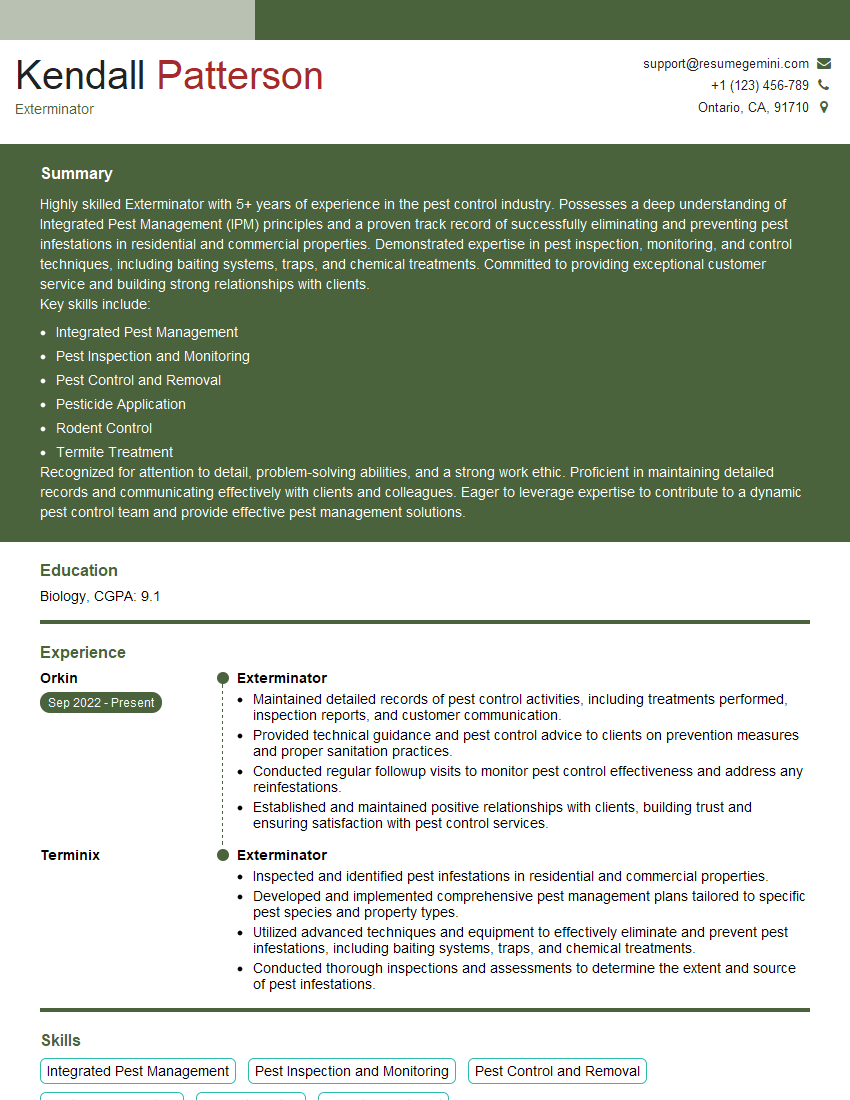
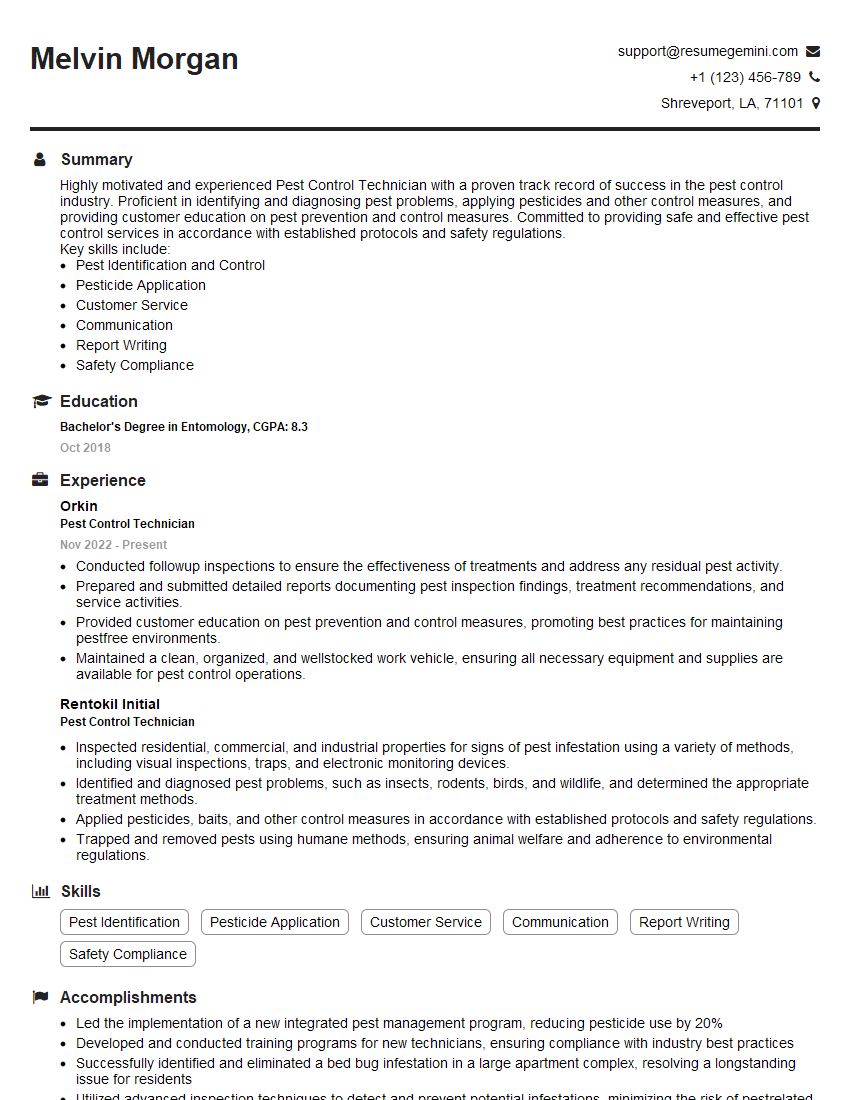
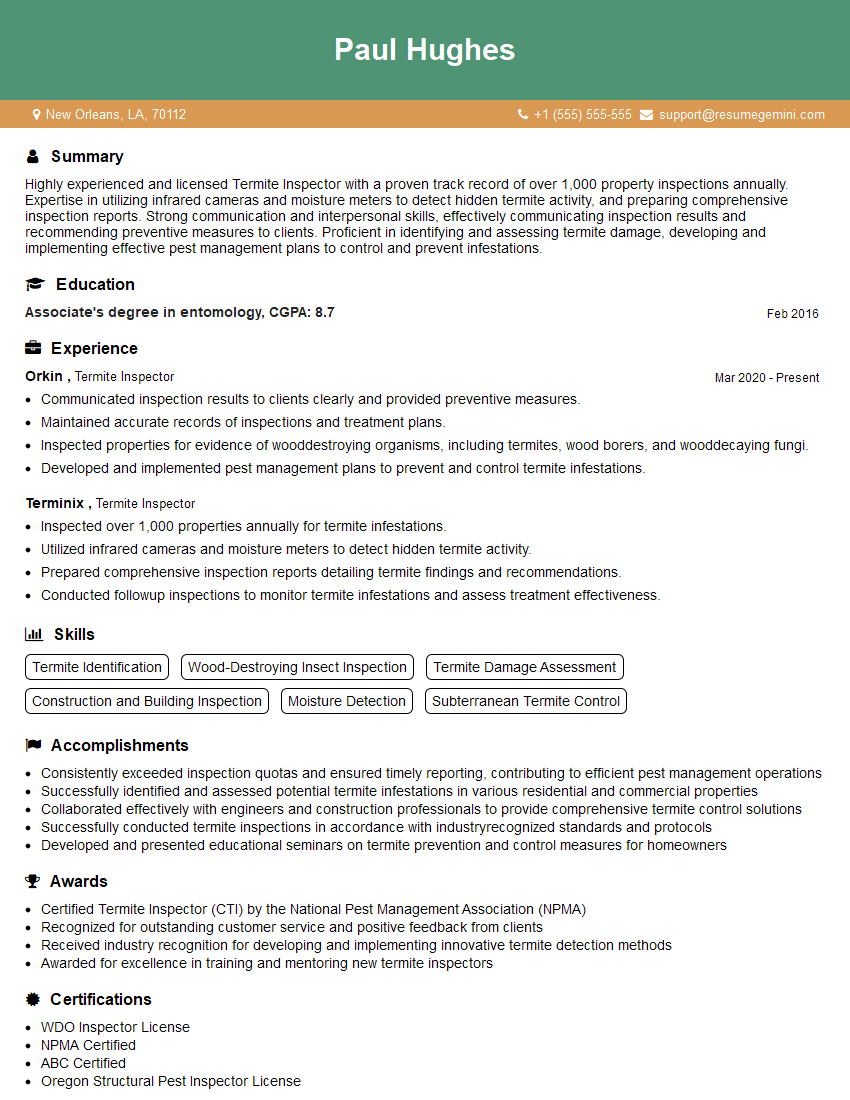
Mastering Pest and Damage Control opens doors to a rewarding career with excellent growth potential. To maximize your job prospects, create a compelling and ATS-friendly resume that showcases your skills and experience. ResumeGemini is a trusted resource to help you build a professional resume that stands out from the competition. We offer examples of resumes tailored specifically to the Pest and Damage Control industry to help guide you. Invest time in crafting a strong resume – it’s your first impression on potential employers.
Explore more articles
Users Rating of Our Blogs
Share Your Experience
We value your feedback! Please rate our content and share your thoughts (optional).
What Readers Say About Our Blog
To the interviewgemini.com Webmaster.
Very helpful and content specific questions to help prepare me for my interview!
Thank you
To the interviewgemini.com Webmaster.
This was kind of a unique content I found around the specialized skills. Very helpful questions and good detailed answers.
Very Helpful blog, thank you Interviewgemini team.