Interviews are opportunities to demonstrate your expertise, and this guide is here to help you shine. Explore the essential Administering psychological assessments and interpreting results interview questions that employers frequently ask, paired with strategies for crafting responses that set you apart from the competition.
Questions Asked in Administering psychological assessments and interpreting results Interview
Q 1. What are the ethical considerations involved in administering psychological assessments?
Ethical considerations in administering psychological assessments are paramount. They revolve around ensuring the client’s well-being and protecting their rights. This includes obtaining informed consent, ensuring confidentiality, maintaining test security, and using assessments appropriately. Informed consent means the client understands the purpose, procedures, and potential implications of the assessment before agreeing to participate. Confidentiality is vital, meaning test results and discussions are protected and only shared with appropriate parties with the client’s permission. Test security involves preventing unauthorized access to test materials to preserve their validity. Using assessments appropriately means selecting tests relevant to the referral question and interpreting them accurately and ethically, within the limits of the examiner’s competency. For example, if I am not trained on a specific instrument, I would not administer it.
- Confidentiality breach example: Failing to properly secure test materials or discussing a client’s results with an unauthorized individual.
- Informed consent example: I would explain to a client that the results of the assessment may affect their treatment plan, and obtain their explicit agreement before starting the assessment.
Q 2. Explain the difference between norm-referenced and criterion-referenced tests.
Norm-referenced tests compare an individual’s performance to the performance of a larger group, or norm group, who have taken the same test. The results are presented as a score relative to this norm group, such as percentiles or standard scores. Think of it like a race – your performance is evaluated relative to other runners. Criterion-referenced tests, on the other hand, measure an individual’s performance against a predefined standard or criterion, rather than against others. The focus is on whether the individual has mastered a specific skill or met a particular standard, regardless of how others perform. Imagine a driving test; you are assessed against the criteria of safe driving, not against other drivers.
- Norm-referenced example: The Wechsler Adult Intelligence Scale (WAIS) compares a person’s IQ to a standardized population.
- Criterion-referenced example: A mathematics test where a student must achieve 80% accuracy to pass.
Q 3. Describe your experience with administering the Wechsler Adult Intelligence Scale (WAIS).
I have extensive experience administering the Wechsler Adult Intelligence Scale (WAIS). My training involved rigorous coursework and supervised practice, ensuring I can administer the test accurately and confidently. The process involves building rapport with the client, carefully following standardized administration procedures, and accurately recording responses. I ensure the testing environment is quiet, comfortable, and free from distractions. I pay close attention to client demeanor, noting any signs of fatigue or frustration. Each subtest is administered according to the manual’s instructions, ensuring the client understands the task and has sufficient time to complete it. I regularly review my administration techniques and consult updated research to maintain my proficiency.
For instance, I recently administered the WAIS-IV to a client referred for cognitive assessment following a head injury. I carefully observed the client’s performance on each subtest, noting both their strengths and areas of difficulty. Following this, I meticulously scored the results using the standardized scoring system, ensuring accuracy.
Q 4. How do you ensure test security and confidentiality during assessment administration?
Maintaining test security and confidentiality is crucial. Test materials are kept in a locked cabinet, accessible only to authorized personnel. Client data, including test results, are stored securely, complying with HIPAA regulations and relevant ethical guidelines. When administering tests, I ensure the testing environment is private, free from interruptions, and that no unauthorized individuals are present. All client information is handled with strict confidentiality and only shared with those who have a legitimate need to know, always with the client’s consent. I also use secure electronic storage for client data and follow protocols for data disposal.
Example: I would never leave test booklets unattended and would always securely dispose of any identifying information after the assessment is complete.
Q 5. What are some common sources of error in psychological assessment?
Several sources of error can affect the accuracy of psychological assessments. These can be broadly classified as test-related errors, administrator-related errors, and client-related errors. Test-related errors may include poorly constructed items, unclear instructions, or insufficient standardization. Administrator errors might include inconsistent administration procedures, inaccurate scoring, or biases in interpretation. Client-related errors can stem from factors like fatigue, anxiety, lack of effort, or misinterpreting instructions. Minimizing these errors requires careful test selection, rigorous adherence to standardized procedures, and careful consideration of the client’s individual circumstances. I often use multiple methods of assessment to reduce the potential impact of errors from a single source.
Example: A client’s low score on a test measuring attention could be due to anxiety rather than actual deficits. This needs to be considered during interpretation.
Q 6. How do you handle a situation where a client becomes distressed during an assessment?
If a client becomes distressed during an assessment, my priority is their well-being. I would immediately stop the assessment and address their distress. This might involve offering a break, a drink of water, or simply allowing them to talk about what is bothering them. The key is to create a supportive and empathetic environment. Depending on the level of distress, I may need to reschedule the assessment or consult with a supervisor or other mental health professional. It’s vital to carefully document the event and any changes made to the assessment procedure.
Example: If a client starts crying during a personality test, I would pause, offer comfort, and gently ask if they are feeling overwhelmed. If the distress persists, I may need to postpone the test.
Q 7. Describe your process for interpreting and reporting assessment results.
My process for interpreting and reporting assessment results begins with a careful review of all collected data. This includes test scores, behavioral observations, and any relevant background information. I analyze the data to identify patterns and relationships, considering the client’s specific circumstances and referral question. I avoid making generalizations and instead focus on strengths and weaknesses, offering specific and actionable recommendations. The final report is written in clear, concise language, avoiding technical jargon whenever possible. It includes a summary of the findings, interpretations, and recommendations for intervention. This report is always tailored to the intended audience and adheres to ethical guidelines and legal requirements. I would always provide feedback in a way that is easily understandable for the client.
Example: Instead of writing ‘the client demonstrates low verbal comprehension,’ I might state ‘the client had difficulty understanding complex instructions, suggesting a need for support in this area.’
Q 8. How do you integrate assessment findings with other sources of information, such as clinical interviews?
Integrating assessment findings with other sources, like clinical interviews, is crucial for a comprehensive understanding of a client. Think of it like assembling a puzzle – the assessment provides some pieces, but the interview provides others, revealing the full picture. I don’t treat assessment results in isolation. Instead, I use a collaborative approach. For example, if a personality assessment suggests high levels of anxiety, I’d corroborate this by exploring the client’s experiences during the interview. Did they express similar concerns? Do their descriptions of daily life align with the assessment’s findings? Discrepancies between the interview and the test results warrant further investigation and might indicate the need for additional assessment tools or a deeper exploration of specific issues. Ultimately, this triangulation leads to a more nuanced and accurate diagnosis and treatment plan.
For instance, a client might score high on a depression scale, but during the interview, express frustration about a recent job loss rather than persistent sadness. Understanding this context significantly changes the interpretation of the assessment results and helps create a targeted intervention.
Q 9. What are the limitations of psychological assessments?
Psychological assessments, while valuable, have inherent limitations. It’s crucial to acknowledge these to avoid misinterpretations. Firstly, tests measure only what they are designed to measure; they don’t capture the full complexity of human experience. A personality test, for instance, won’t reveal everything about a person’s motivations or past trauma. Secondly, test results are influenced by factors like the client’s motivation, current emotional state, and cultural background. A client feeling unwell or anxious might perform differently than they would under optimal conditions. Thirdly, the interpretation of test results requires professional judgment and expertise. A superficial reading can lead to inaccurate conclusions. Finally, self-report measures, which are common in psychological assessments, rely on the client’s honesty and self-awareness, which can be unreliable.
Let’s illustrate this with an example: A client undergoing an intelligence test might score lower than their true potential due to test anxiety. This doesn’t necessarily mean they have lower intelligence, just that the testing environment influenced the result. Understanding these limitations is paramount for responsible assessment practice and responsible clinical judgment.
Q 10. Explain the concept of test validity and reliability.
Test validity and reliability are fundamental concepts in psychometrics. Validity refers to whether a test measures what it claims to measure. Reliability refers to the consistency of the test results. Imagine a scale measuring weight. A valid scale accurately reflects a person’s weight, while a reliable scale consistently provides the same measurement for the same weight, even if it might be systematically wrong (e.g., always 2 pounds off).
Validity: There are different types of validity, including content validity (does the test cover the relevant domain?), criterion validity (does the test correlate with relevant outcomes?), and construct validity (does the test measure the theoretical construct it’s designed to measure?).
Reliability: This involves internal consistency (do items within the test correlate?), test-retest reliability (does the test yield similar results over time?), and inter-rater reliability (do different raters score the test similarly?).
A test can be reliable but not valid (a consistently inaccurate scale). Ideally, a good psychological assessment is both reliable and valid, giving consistent and accurate results.
Q 11. How do you choose the appropriate psychological assessment for a given client or situation?
Choosing the appropriate assessment is a crucial step, requiring careful consideration of several factors. Firstly, I need to define the assessment goals. What specific questions need to be answered? Are we trying to diagnose a disorder, assess personality traits, or measure cognitive abilities? Secondly, I consider the client’s age, cultural background, and cognitive abilities. A test suitable for an adult might not be appropriate for a child. Thirdly, the referral question from the client’s physician or other healthcare provider is vital. The assessment must align with this. Finally, I need to consider the available resources: time, cost, and the availability of trained professionals to administer and score the tests. Ethical considerations always come first, including client consent and confidentiality.
For example, if a client is referred for suspected ADHD, I would consider using standardized assessments of attention and hyperactivity, coupled with behavioral rating scales from parents or teachers. The choice isn’t arbitrary – it’s a deliberate process of selecting the most appropriate tools given the specific situation and objectives.
Q 12. Describe your experience using different types of assessment instruments (e.g., projective, objective).
My experience encompasses both projective and objective assessment instruments. Objective tests, such as standardized personality inventories (like the MMPI-2-RF or NEO PI-R) and cognitive tests (like the WAIS-IV), offer quantifiable scores and are relatively easy to administer and score. They provide valuable quantitative data. I find them particularly useful for identifying patterns and comparing scores to normative data.
Projective tests, such as the Rorschach Inkblot Test or the Thematic Apperception Test (TAT), offer a qualitative approach, providing insights into a client’s unconscious processes and emotional patterns. While less structured than objective tests, they can be rich sources of information about personality dynamics. Interpretation, however, is subjective and requires extensive training and experience. I use both approaches, recognizing their strengths and limitations, to develop a comprehensive understanding. The choice between them depends heavily on the specific clinical questions.
Q 13. How do you explain complex assessment results to clients and other professionals?
Explaining complex assessment results requires clear, empathetic communication tailored to the audience. With clients, I avoid technical jargon and use analogies to explain abstract concepts. I focus on explaining the implications of the results for their lives rather than just presenting raw data. I encourage questions and create a safe space for open discussion.
With other professionals, I’m more precise and technical, using professional language and statistical data. I present findings in a way that facilitates collaborative case conceptualization. Regardless of the audience, I emphasize the limitations of the assessment and the need to consider other factors in formulating a diagnosis or treatment plan. Transparency and collaboration are crucial to responsible interpretation and communication of assessment results.
For example, I might explain a low score on a measure of self-esteem to a client by saying something like, “The results suggest you may be experiencing some challenges with feeling good about yourself. Let’s explore that further.” For a colleague, I’d use more specific language, such as “The client scored below the 10th percentile on the Rosenberg Self-Esteem Scale, indicating significantly low self-esteem.”
Q 14. How do you maintain your professional competence in administering and interpreting psychological assessments?
Maintaining professional competence requires ongoing commitment to learning and development. I regularly attend workshops and conferences on the latest advancements in psychological assessment. I engage in continuing education activities focused on new assessment tools and best practices. I’m a member of relevant professional organizations which provide access to continuing education and peer support. I actively seek supervision and peer consultation when tackling complex cases, which helps maintain ethical integrity and broadens perspective. I also maintain a personal library of up-to-date assessment manuals and related literature. Furthermore, I actively participate in research activities and keep abreast of research findings on psychological assessment.
The field of psychological assessment is dynamic, with new tests and methodologies constantly emerging. Continuous learning is essential for remaining current, providing the best possible care to clients.
Q 15. What are your strategies for managing time effectively during the assessment process?
Effective time management during psychological assessments is crucial for both the client’s comfort and the accuracy of results. My strategy involves meticulous planning and execution. Before the assessment, I carefully review the chosen instruments, estimating the time required for each section. I then create a flexible schedule, allowing for potential deviations due to client needs or unexpected challenges. During the session, I maintain a clear and concise communication style, guiding the client smoothly through each stage. I use timers discreetly to ensure we stay on track without creating undue pressure. Following the assessment, I allocate specific time blocks for scoring, report writing, and any necessary follow-up communications. This organized approach ensures efficient use of time while maintaining a professional and supportive environment.
Career Expert Tips:
- Ace those interviews! Prepare effectively by reviewing the Top 50 Most Common Interview Questions on ResumeGemini.
- Navigate your job search with confidence! Explore a wide range of Career Tips on ResumeGemini. Learn about common challenges and recommendations to overcome them.
- Craft the perfect resume! Master the Art of Resume Writing with ResumeGemini’s guide. Showcase your unique qualifications and achievements effectively.
- Don’t miss out on holiday savings! Build your dream resume with ResumeGemini’s ATS optimized templates.
Q 16. What software or technology are you familiar with for administering and scoring psychological assessments?
I’m proficient in several software applications used for administering and scoring psychological assessments. These include widely-used platforms like Pearson Assessments, which offers online administration and scoring for various tests including the MMPI-2-RF and the NEO PI-R. I also have experience with Q-Global, known for its comprehensive suite of tools for test administration, scoring, and report generation. Furthermore, I’m comfortable using TestWiser for online assessments and data management. My familiarity extends to standalone scoring software specific to certain instruments, as well as spreadsheet programs like Microsoft Excel for data analysis and manipulation when needed. The choice of software always depends on the specific assessment and the client’s needs.
Q 17. Describe a situation where you had to adapt an assessment procedure to meet the needs of a client.
I once worked with a client who experienced significant anxiety during a standardized test. The test required sustained attention and concentration, which was severely impaired by their anxiety. Simply adjusting the administration wouldn’t have been enough. I adapted the procedure by incorporating brief, scheduled breaks throughout the assessment. These breaks included simple relaxation techniques like deep breathing exercises, which helped manage their anxiety. I also allowed for flexibility in the order of subtests to minimize the impact of fatigue. While this deviated from the standard protocol, I meticulously documented the modifications made and their rationale in the report, ensuring that the results were interpreted within the context of these adjustments. The client felt significantly more comfortable, leading to a more accurate assessment.
Q 18. How do you ensure cultural sensitivity in the assessment process?
Cultural sensitivity is paramount in psychological assessment. I begin by considering the client’s cultural background and its potential influence on their responses. This includes understanding their language, values, beliefs, and experiences. I use assessments that have been validated within their cultural group whenever possible, or select assessments that minimize cultural bias. During the assessment, I pay close attention to nonverbal cues, ensuring clear communication and avoiding language or concepts that may be unfamiliar or misinterpreted. I also actively create a safe and welcoming environment where the client feels comfortable expressing themselves openly and honestly. Furthermore, I carefully consider how cultural factors might influence the interpretation of the results, avoiding premature generalizations or stereotypical assumptions.
Q 19. How do you handle discrepancies between different assessment measures?
Discrepancies between assessment measures are common and require careful consideration. My approach involves a multi-faceted analysis. First, I critically examine the reliability and validity of each measure used, understanding their strengths and limitations. Second, I investigate potential reasons for the discrepancy, including factors like response bias, test anxiety, or situational influences. Third, I explore qualitative data from the assessment, such as interview notes or observations, to gain a more comprehensive understanding of the client’s presentation. Finally, I integrate all information to arrive at a holistic interpretation, highlighting the inconsistencies and explaining their possible sources. It’s important to remember that a single assessment score rarely provides the whole picture; multiple data points are crucial for a balanced and nuanced interpretation.
Q 20. Describe your experience with scoring and interpreting specific assessment instruments (e.g., MMPI, Beck Depression Inventory).
I have extensive experience with the MMPI-2-RF and the Beck Depression Inventory (BDI). With the MMPI-2-RF, I’m skilled in interpreting the various clinical scales, validity scales, and content scales, recognizing the importance of understanding the interplay between them. I pay particular attention to identifying potential response styles and considering their impact on the profile. For the BDI, I understand the scoring system and the interpretation of the different symptom severity levels. I’m aware of the limitations of both instruments and consider contextual factors alongside the scores. I always integrate findings from these assessments with information gathered through clinical interviews and other relevant data to form a comprehensive and nuanced understanding of the client’s situation.
Q 21. What are your strategies for identifying and addressing potential biases in assessment results?
Identifying and addressing potential biases in assessment results is a continuous process. I actively look for evidence of response bias, such as acquiescence (agreeing with everything) or social desirability (responding in a way to appear favorable). I critically examine the test’s psychometric properties, including its standardization sample and the potential for cultural or gender bias. When interpreting results, I carefully consider the context of the client’s life and experiences, avoiding generalizations based on assessment scores alone. I continuously strive to improve my awareness of my own biases and their potential influence on the assessment process. Regular professional development and consultation with colleagues help in refining my skills in this critical area. Ultimately, minimizing bias requires a thoughtful and self-reflective approach at every stage of the assessment.
Q 22. What steps do you take to ensure the accuracy and integrity of assessment data?
Ensuring the accuracy and integrity of assessment data is paramount in psychological assessment. It’s like building a house – a shaky foundation leads to a flawed structure. My approach involves a multi-faceted strategy focusing on standardization, procedural fidelity, and data management.
Standardization: I meticulously follow the standardized administration and scoring procedures outlined in the assessment manual for each test. This includes adhering to specific instructions regarding timing, materials, and the order of test items. Any deviation is carefully documented.
Procedural Fidelity: This goes beyond just following the manual. I create a detailed record of the assessment session, including any unusual occurrences (e.g., interruptions, client fatigue). This record is essential for validating the results and ensuring the integrity of the process. Think of it as a detailed construction log for the house.
Data Management: Secure storage and handling of assessment data are critical. I utilize encrypted digital storage adhering to HIPAA and other relevant regulations. Raw data, scoring sheets, and interpretations are kept separate and securely archived for confidentiality and potential future reference. This safeguards against data loss and unauthorized access.
Test Selection: I carefully select assessments appropriate for the client’s age, cognitive abilities, and presenting issues. Using an inappropriate test is akin to using the wrong tools to build a house; it will be ineffective and potentially damaging.
Q 23. How familiar are you with different statistical methods used in interpreting psychological assessment data?
My familiarity with statistical methods used in interpreting psychological assessment data is extensive. Understanding these methods is key to accurately interpreting test scores and forming valid conclusions. I’m proficient in a range of techniques, including:
Descriptive Statistics: Measures like mean, standard deviation, and percentiles are fundamental to understanding the distribution of scores and comparing individual performance to normative samples. For example, understanding a client’s percentile rank on an IQ test provides context for their cognitive abilities compared to others of the same age.
Inferential Statistics: Techniques such as t-tests, ANOVAs, and correlations allow us to make inferences about populations based on sample data. This is crucial when analyzing the relationship between different variables or comparing groups.
Factor Analysis: Understanding underlying latent factors within a test helps analyze complex psychological constructs. This provides more in-depth understanding beyond surface-level scores.
Reliability and Validity Analyses: Critical to assessing the quality of the assessment instrument itself. Understanding reliability coefficients (e.g., Cronbach’s alpha) and validity evidence (e.g., criterion validity) is essential for confidence in the test’s accuracy.
I utilize statistical software packages like SPSS and R to perform these analyses, ensuring the accuracy and reliability of my interpretations. Statistical proficiency allows me to avoid misinterpretations that might arise from a solely qualitative approach.
Q 24. Describe a situation where you had to deal with a challenging or unusual assessment situation.
In one instance, I assessed a client who exhibited significant emotional lability and difficulty concentrating during the testing. This made it challenging to obtain reliable data. This was like trying to build a house during a hurricane—constant interruptions and disruptions threatened the integrity of the project. My approach involved:
Flexibility: I adjusted the testing schedule, incorporating breaks and allowing for changes in the testing environment. For example, taking a short break to calm the client or moving the assessment location to create a less overwhelming setting.
Rapport Building: I spent extra time building rapport with the client before beginning the assessment. This created a safe and comfortable space to mitigate some of the anxiety and improve their focus.
Careful Documentation: I thoroughly documented the challenges encountered during the assessment, noting any potential influences on the results. This approach was about acknowledging the challenges without ignoring them. The documentation became a key part of the assessment process itself.
Supplementary Information: I sought additional information from other sources – like family members or previous clinicians – to gain a more complete understanding of the client’s behavior and context.
Ultimately, while the data wasn’t perfect, the careful documentation and consideration of context allowed for a nuanced and clinically useful interpretation. The focus was on creating the best possible assessment given the challenges, just as one might adapt building plans when facing unexpected weather.
Q 25. How do you maintain a professional and ethical relationship with clients during the assessment process?
Maintaining a professional and ethical relationship with clients during the assessment process is paramount. It’s about creating a safe and trusting environment where the client feels comfortable and respected. This involves:
Informed Consent: I ensure clients fully understand the purpose, procedures, and limitations of the assessment before beginning. This includes discussing the potential uses of the results and the limits of confidentiality.
Confidentiality: Client information is handled with the strictest confidentiality, adhering to all relevant ethical and legal guidelines. I explain the limits of confidentiality upfront.
Respectful Communication: I use clear, simple language, avoiding jargon, to ensure the client understands the process and results. Active listening is crucial to building trust and understanding.
Empathy and Sensitivity: I recognize that psychological assessments can be emotionally challenging for clients. I approach each assessment with empathy and sensitivity, addressing any concerns the client may have.
Cultural Competence: I am mindful of cultural differences and strive to provide culturally sensitive assessments. This includes using culturally appropriate language and adapting the assessment process to meet the needs of diverse clients.
By consistently applying these principles, I strive to create an ethical and respectful assessment process that empowers clients to participate actively and confidently.
Q 26. What is your understanding of the legal and regulatory requirements related to psychological assessment?
My understanding of the legal and regulatory requirements related to psychological assessment is comprehensive. This includes a thorough awareness of the ethical guidelines established by the American Psychological Association (APA) and relevant state and federal laws, particularly HIPAA (Health Insurance Portability and Accountability Act). Key aspects include:
Confidentiality: Strict adherence to maintaining client confidentiality and the appropriate release of information with informed consent.
Competence: Utilizing only assessments for which I am properly trained and qualified. It is unethical and potentially illegal to perform assessments outside of one’s expertise.
Informed Consent: Obtaining informed consent from clients before any assessment is conducted. This involves a clear explanation of the process, potential benefits and risks, and the client’s rights.
Test Security: Maintaining the security and integrity of assessment materials and preventing unauthorized access or distribution. Unauthorized use could compromise the validity of the tests.
Record Keeping: Maintaining accurate and complete records of all assessments, including raw data, interpretations, and any relevant communication with clients or other professionals. Proper record keeping is essential for legal compliance and clinical continuity.
Staying abreast of these regulations is a continuous process and I regularly engage in professional development to maintain compliance.
Q 27. How do you stay up-to-date on current trends and best practices in psychological assessment?
Staying current with the latest trends and best practices in psychological assessment is an ongoing commitment. It’s like keeping up with new building codes and innovations in construction materials – necessary to stay competitive and produce quality work. My strategies include:
Professional Journals and Publications: Regularly reading peer-reviewed journals such as the Journal of Consulting and Clinical Psychology and Assessment to stay informed on new research and assessment techniques.
Professional Conferences and Workshops: Attending conferences and workshops to learn about cutting-edge assessment methods and best practices from leading experts in the field.
Continuing Education: Participating in continuing education programs to earn CE credits and maintain my licensure. These programs often cover current issues and developments in the field of psychological assessment.
Networking with Colleagues: Collaborating and discussing current practices with peers in the field to share experiences and learn from one another. Professional collaboration is a vital source of knowledge.
Staying Informed on Regulatory Changes: Staying updated on legal and regulatory changes, such as changes to HIPAA and other guidelines relevant to privacy and data security.
This multifaceted approach ensures I provide the highest quality assessment services using the most current and ethical standards.
Key Topics to Learn for Administering Psychological Assessments and Interpreting Results Interview
- Ethical Considerations: Understanding confidentiality, informed consent, and appropriate test selection based on client needs and limitations. Practical application: Discussing scenarios where ethical dilemmas might arise and how to navigate them.
- Test Administration Techniques: Mastering standardized administration procedures for various assessment types (e.g., projective tests, intelligence tests, personality inventories). Practical application: Demonstrating knowledge of how to create a comfortable and unbiased testing environment, handle unexpected situations during testing, and accurately record observations.
- Scoring and Interpretation of Results: Proficiency in accurately scoring assessments and understanding the nuances of interpreting results within the context of relevant theoretical frameworks (e.g., psychodynamic, cognitive-behavioral). Practical application: Explaining how to translate raw scores into meaningful interpretations, considering individual differences and cultural factors.
- Report Writing: Developing clear, concise, and objective reports summarizing assessment findings and recommendations. Practical application: Structuring a report that effectively communicates complex information to various audiences (e.g., clients, clinicians, legal professionals).
- Diagnostic and Assessment Frameworks: Familiarity with DSM-5 and ICD-11 criteria and their application in interpreting assessment results. Practical application: Identifying potential diagnoses based on assessment data and justifying the diagnostic conclusions.
- Understanding Limitations: Acknowledging the limitations of psychological assessments and the importance of integrating assessment data with other information (e.g., clinical interviews, collateral information). Practical application: Articulating the strengths and weaknesses of specific assessment tools and the potential impact of biases or limitations on interpretations.
- Case Conceptualization: Integrating assessment findings into a comprehensive understanding of the client’s presenting problems and developing treatment recommendations. Practical application: Creating a case formulation based on observed data and applying theoretical knowledge to develop a treatment plan.
Next Steps
Mastering the administration and interpretation of psychological assessments is crucial for career advancement in this field, opening doors to diverse and rewarding opportunities. A strong, ATS-friendly resume is vital for showcasing your expertise and securing interviews. To create a compelling resume that highlights your skills and experience effectively, we recommend using ResumeGemini. ResumeGemini offers a user-friendly platform and provides examples of resumes tailored specifically to roles in administering psychological assessments and interpreting results, helping you present yourself as the ideal candidate.
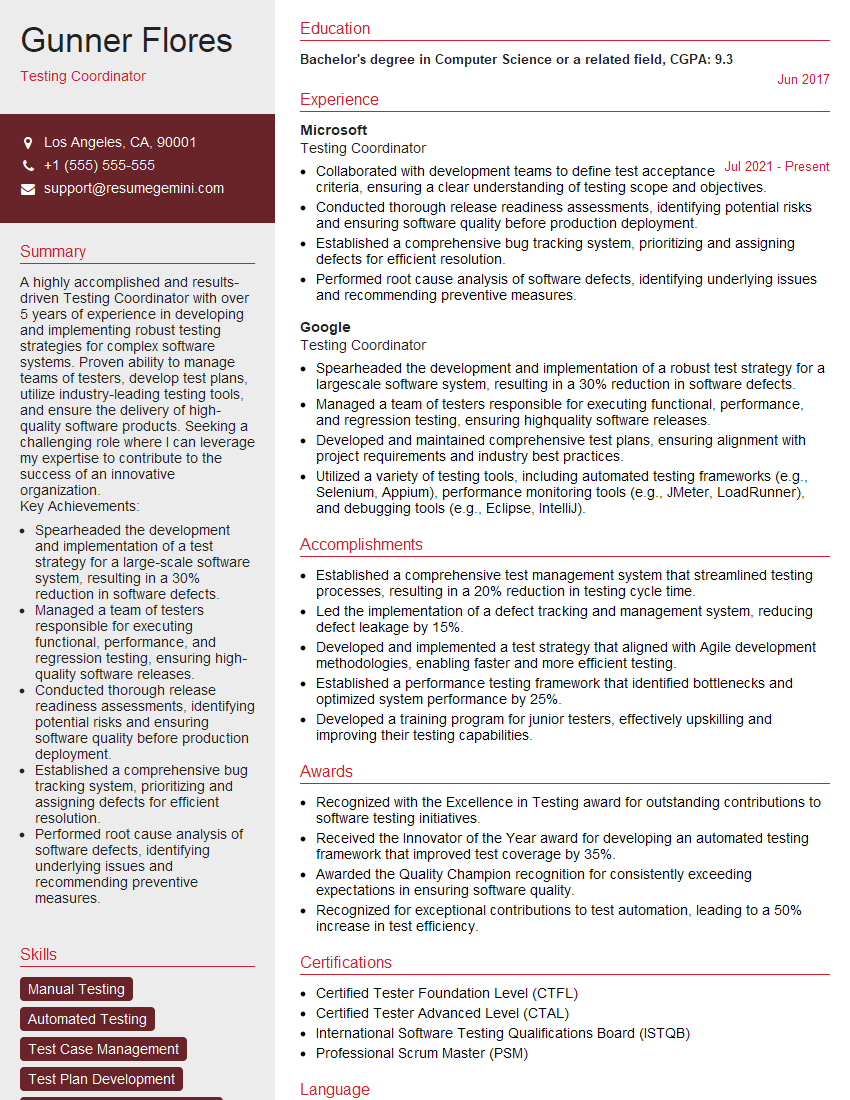
Testing Coordinator Resume Sample
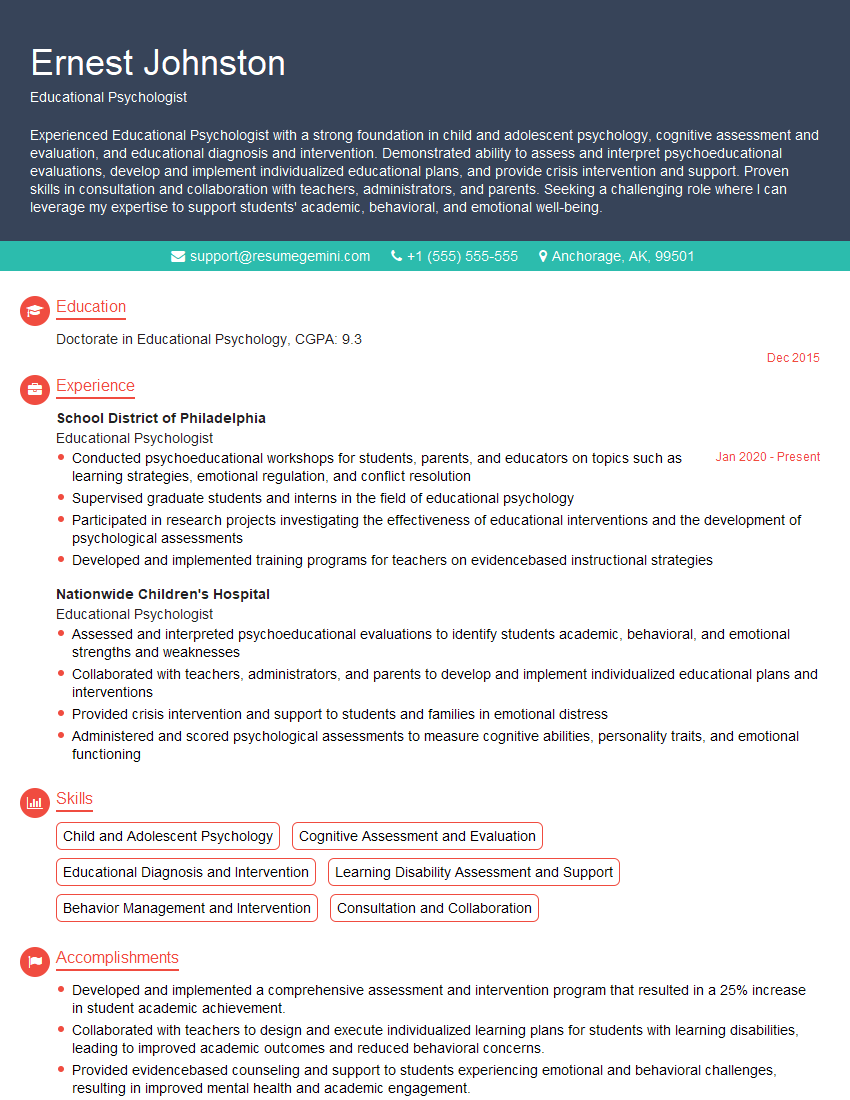
Educational Psychologist Resume Sample
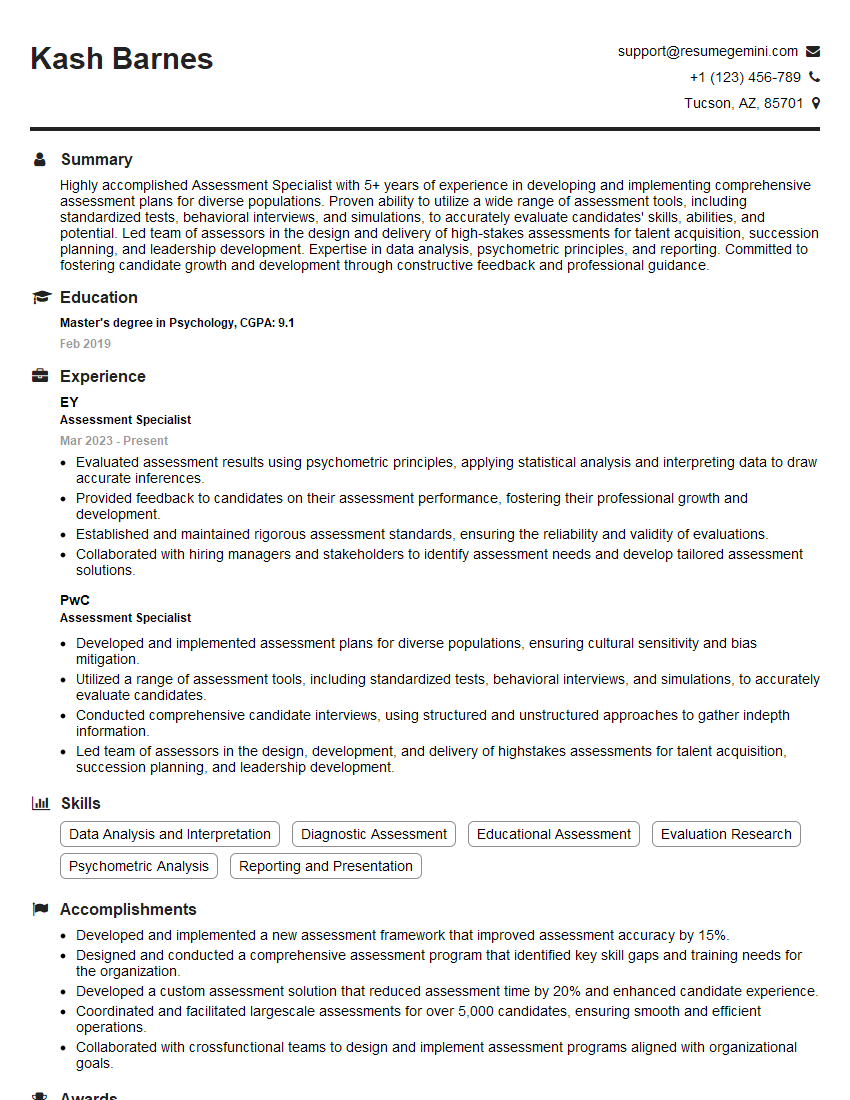
Assessment Specialist Resume Sample
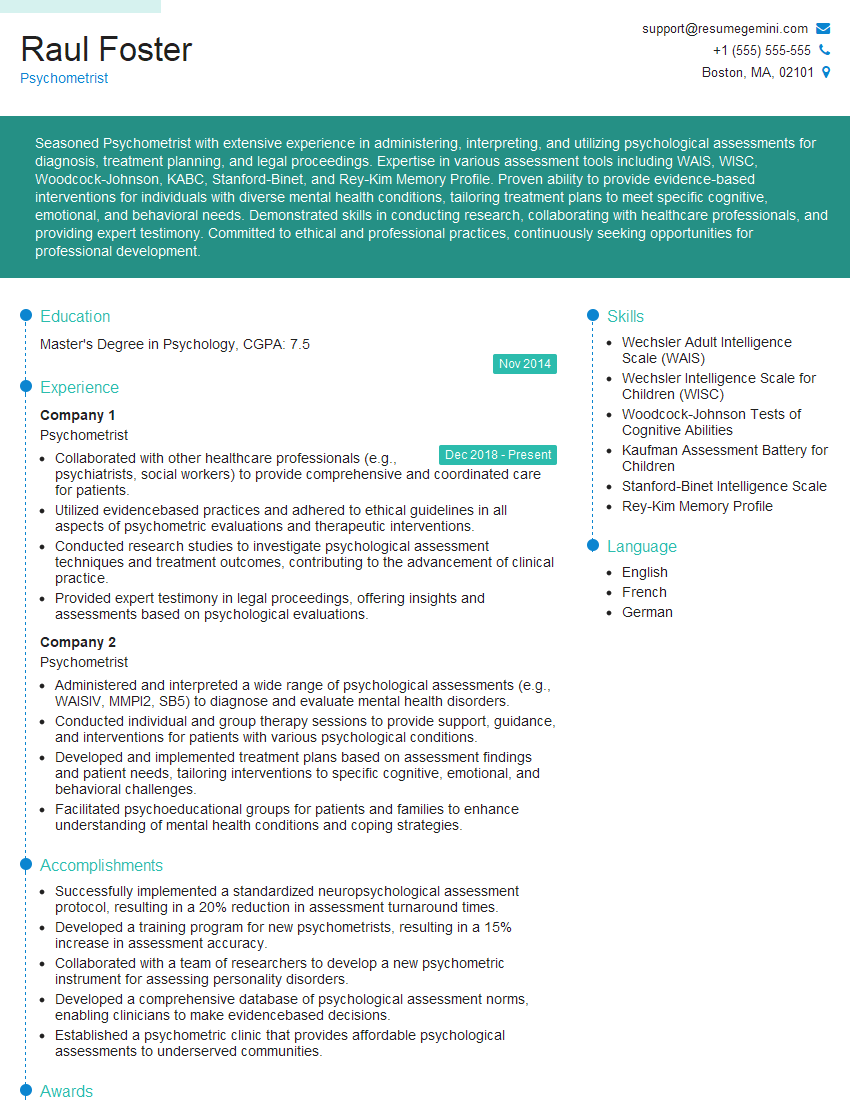
Psychometrist Resume Sample
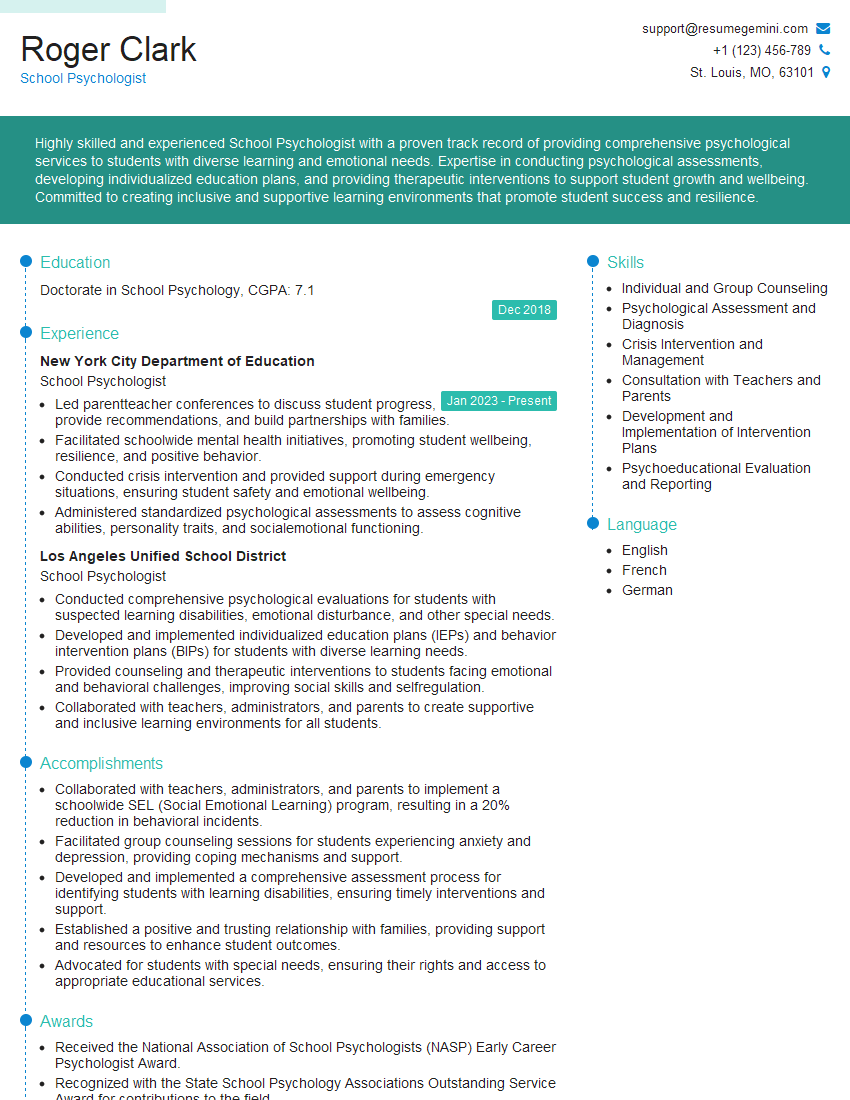
School Psychologist Resume Sample
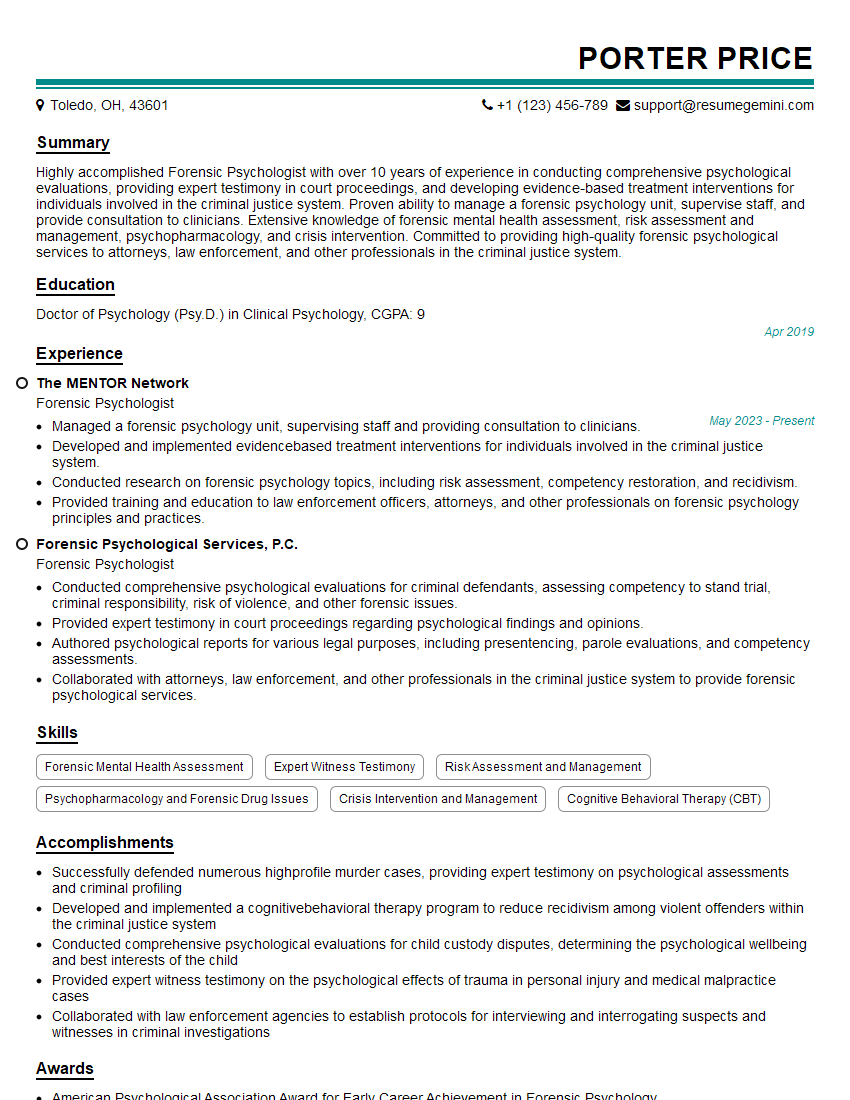
Forensic Psychologist Resume Sample
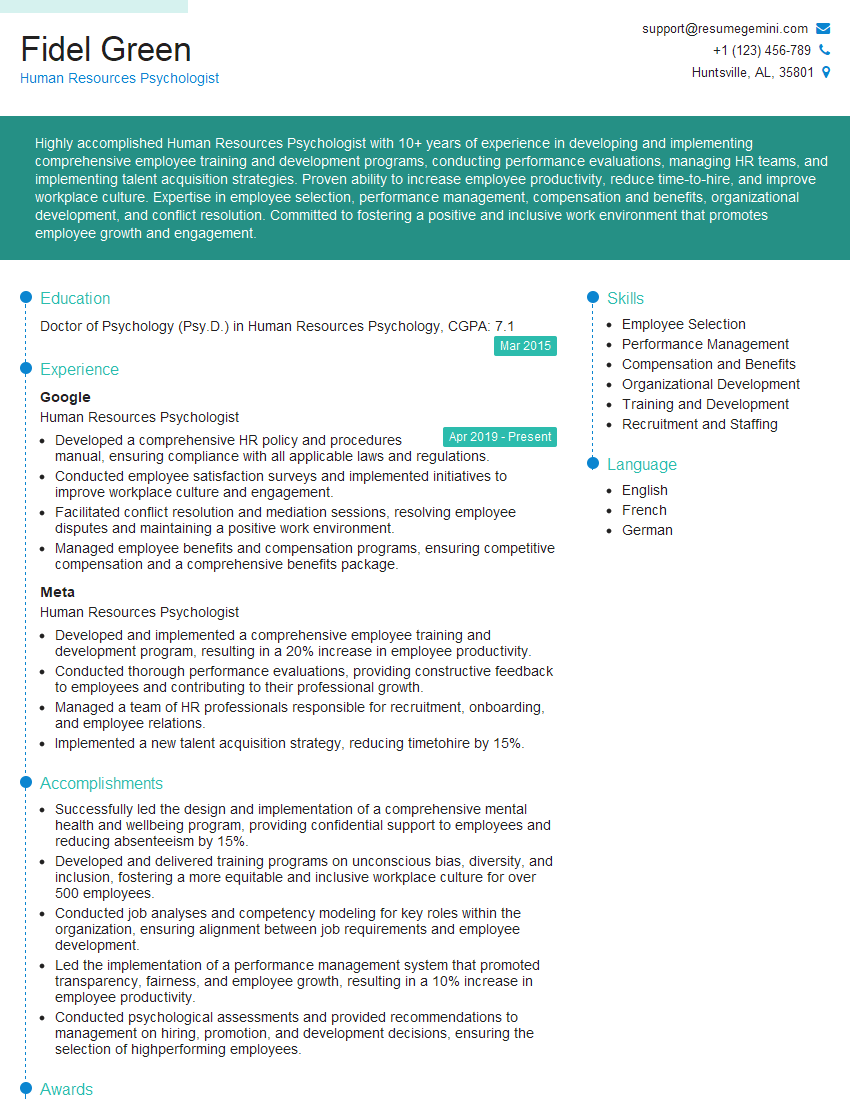
Human Resources Psychologist Resume Sample
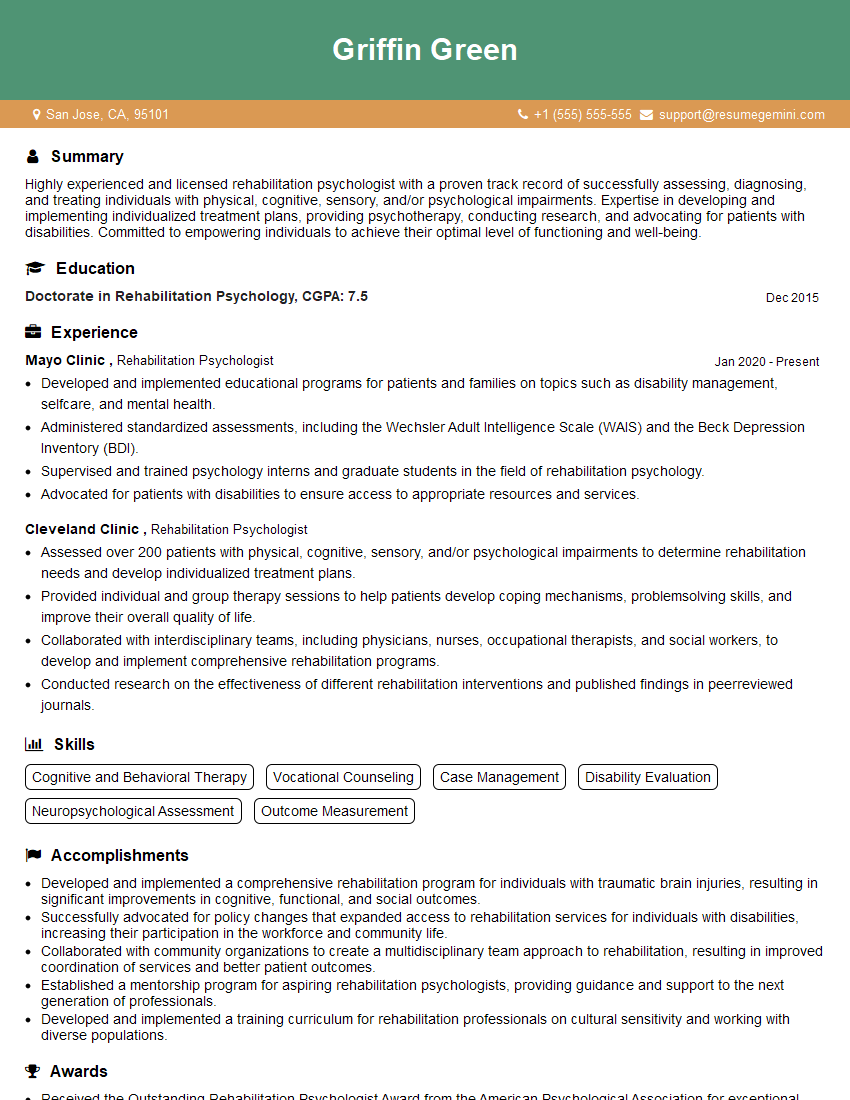
Rehabilitation Psychologist Resume Sample
Explore more articles
Users Rating of Our Blogs
Share Your Experience
We value your feedback! Please rate our content and share your thoughts (optional).
What Readers Say About Our Blog
To the interviewgemini.com Webmaster.
Very helpful and content specific questions to help prepare me for my interview!
Thank you
To the interviewgemini.com Webmaster.
This was kind of a unique content I found around the specialized skills. Very helpful questions and good detailed answers.
Very Helpful blog, thank you Interviewgemini team.