Every successful interview starts with knowing what to expect. In this blog, we’ll take you through the top Arc Fault Circuit Interrupter (AFCI) Testing interview questions, breaking them down with expert tips to help you deliver impactful answers. Step into your next interview fully prepared and ready to succeed.
Questions Asked in Arc Fault Circuit Interrupter (AFCI) Testing Interview
Q 1. Explain the purpose of an Arc Fault Circuit Interrupter (AFCI).
Arc Fault Circuit Interrupters (AFCIs) are safety devices designed to protect against electrical fires caused by arc faults. An arc fault is an electrical malfunction where electricity flows through an unintended path, creating an arc that generates intense heat. This heat can ignite nearby combustible materials, leading to a fire. Think of it like a short circuit, but often less obvious and potentially more dangerous because it might not immediately trip a standard circuit breaker. AFCIs detect these subtle arcing conditions and quickly interrupt the power flow, preventing a potential fire hazard.
Q 2. What are the two types of AFCIs and how do they differ?
There are two main types of AFCIs: 1. Parallel AFCIs and 2. Series AFCIs. The difference lies primarily in their wiring configuration and how they monitor the circuit for arc faults. Parallel AFCIs are wired in parallel with the circuit, meaning they sit alongside the load. They monitor the current flowing through the circuit, sensing changes that might indicate an arc fault. Series AFCIs, on the other hand, are wired in series with the circuit, meaning the current flows directly through the AFCI. They also monitor current, but their design often allows for a greater sensitivity in detection. While both types protect against arc faults, the specific detection methods and sensitivity can vary slightly between manufacturers and models.
Q 3. Describe the different methods for testing AFCIs.
Testing AFCIs involves several methods to ensure proper operation. The primary method is the built-in self-test. Most AFCIs have a test button; pressing this simulates an arc fault and should cause the breaker to trip. This is a critical test to ensure the AFCI is functioning correctly. Beyond the self-test, electricians may use specialized testing equipment, such as an arc fault simulator, to induce various arcing conditions and evaluate the AFCI’s response time and sensitivity. Regular visual inspection is also important. Look for any signs of damage, loose wiring, or unusual heating around the device. A comprehensive testing approach combines these methods for a thorough assessment.
Q 4. How do you identify a faulty AFCI?
Identifying a faulty AFCI can be done through several observations. A consistent failure to trip during the self-test is the most obvious sign. If the test button doesn’t trip the breaker, it indicates a malfunction requiring immediate replacement. Frequent nuisance tripping (tripping without an actual arc fault) can also point to a problem, though not necessarily a faulty AFCI itself (see next question). Other signs include a persistent ‘buzzing’ or humming sound from the AFCI, visible scorching or burning around the device, or a breaker that is persistently tripped and can’t be reset. If you encounter any of these issues, it’s crucial to replace the AFCI immediately to avoid potential fire hazards.
Q 5. What are the common causes of AFCI nuisance tripping?
AFCI nuisance tripping is a common frustration. Several factors can cause this. High-impedance loads, such as dimmer switches, electronic fluorescent ballasts, or certain motor-driven appliances, can generate signals that the AFCI might misinterpret as an arc fault. Loose wiring anywhere on the circuit can also trigger false trips. High-frequency switching devices like some power supplies and switching power adapters can generate electromagnetic interference that affects the AFCI’s sensitivity. Poor wiring practices during installation, including improper grounding or excessive wire length, can also increase the chance of nuisance tripping. Troubleshooting nuisance tripping involves carefully examining the entire circuit for these potential problems.
Q 6. Explain the difference between a GFCI and an AFCI.
While both GFCIs (Ground Fault Circuit Interrupters) and AFCIs are safety devices that protect against electrical hazards, they target different types of faults. GFCIs protect against ground faults, which occur when current leaks to ground, often through a damaged appliance or wiring. Think of a person accidentally touching a live wire – the GFCI will quickly shut off the power, preventing electrocution. AFCIs, on the other hand, protect against arc faults, which involve arcing within the circuit itself, often resulting in fire hazards. GFCIs sense current imbalances between hot and neutral wires, while AFCIs detect rapid changes in current and voltage that are characteristic of arcing conditions. They are distinct safety devices with different protection mechanisms. In some cases, both GFCI and AFCI protection may be required in a single circuit, especially in bedrooms.
Q 7. How often should AFCIs be tested?
The frequency of AFCI testing depends on the specific application and local regulations. However, a good rule of thumb is to perform a monthly self-test using the test button. This ensures the AFCI’s internal mechanism is still functioning correctly. In addition, a visual inspection should be part of any regular electrical system maintenance. Professional electricians typically perform more comprehensive testing during routine inspections or if there are any indications of a problem. Regular testing helps prevent potentially devastating electrical fires.
Q 8. What are the code requirements for AFCI installation?
AFCI installation code requirements vary slightly depending on your location (e.g., National Electrical Code (NEC) in the US, CEC in Canada), but the overarching principle is to protect people and property from electrical fires. Generally, AFCIs are mandated in specific circuits within residences. Think of it like this: your home’s electrical system is like a network of roads; AFCIs act as speed bumps and traffic lights, preventing electrical ‘accidents’ that could lead to fires.
- NEC 210.12(A): This section of the NEC often specifies which branch circuits require AFCI protection, typically those supplying bedrooms and other high-risk areas. The exact requirements will depend on the year of the code and any local amendments.
- Specific Circuit Requirements: You’ll find precise details in your local building codes, specifying exactly which circuits need AFCIs. These often include circuits powering outlets, lighting fixtures, and other electrical devices in bedrooms, living areas, and kitchens. Bathrooms might also be included.
- Combination AFCI/GFCI Breakers: These combine the arc-fault protection of an AFCI with the ground-fault protection of a GFCI (Ground Fault Circuit Interrupter), offering a double layer of safety, often required in certain wet locations like bathrooms.
Always consult the most current version of your local electrical code for the definitive requirements in your area. Failure to comply with these codes can lead to fines and safety hazards.
Q 9. What are the safety precautions when testing AFCIs?
Safety is paramount when testing AFCIs. Improper testing can result in electrical shock or equipment damage. Always remember: electricity can be lethal.
- De-energize the Circuit: Before any testing, always turn off the power at the breaker panel to the circuit you’re working on. Double-check with a non-contact voltage tester to ensure the circuit is indeed dead.
- Use Proper PPE: Personal Protective Equipment (PPE) is essential. This includes safety glasses to protect your eyes, insulated gloves to protect your hands from electric shock, and appropriate work clothing.
- Follow Manufacturer’s Instructions: Each AFCI will have specific testing procedures outlined in its instruction manual. Adhere to these guidelines meticulously.
- Test in a Controlled Environment: Test in a well-ventilated area, free from flammable materials. Never work alone; always have a qualified person nearby to assist in case of an emergency.
- Understand the Test Buttons: Most AFCIs have test buttons. Use these to simulate a fault condition and verify the breaker’s operation. Understand the difference between a test for series and parallel arc faults if the device offers this functionality.
If you’re unsure about any aspect of AFCI testing, consult a qualified electrician. Their expertise will ensure your safety and the proper functioning of your electrical system.
Q 10. How do you troubleshoot an AFCI that is not tripping?
Troubleshooting a non-tripping AFCI requires a systematic approach. Remember, always de-energize the circuit before starting any troubleshooting.
- Visual Inspection: Check the AFCI breaker for any visible damage, loose wires, or burned components. Look for signs of overheating.
- Test Button: Press the test button(s) on the AFCI. If it doesn’t trip, it might indicate an internal failure. Note the type of test – series or parallel – and whether both functions are failing.
- Check for Loose Connections: Examine all wiring connections to the AFCI breaker, ensuring they are tight and secure. Loose connections can impede the proper functioning of the device and can create an arc-fault condition.
- Check Wiring Upstream and Downstream: Inspect the wiring leading to and from the AFCI for damage, chafing, or loose connections. Faulty wiring in other areas of the circuit could cause the AFCI to not trip, as it is trying to detect a fault and it does not exist at the location of the AFCI.
- Load Test (with caution): With the circuit de-energized, briefly connect a known load to the circuit, energize the breaker, and observe the AFCI’s response. You could use an incandescent bulb to test the circuit.
- Replace the AFCI: If all else fails, replace the AFCI breaker with a new one from the same manufacturer. This is the most likely solution.
Remember, if you are not comfortable performing these steps, consult a qualified electrician. Improper troubleshooting can be dangerous.
Q 11. Explain the role of AFCIs in fire prevention.
AFCI’s play a crucial role in fire prevention by detecting and interrupting dangerous arc faults before they can ignite a fire. Arcing is a silent killer; often, the only sign is smoke or flames. AFCI’s act as a safety net.
Imagine a frayed wire behind your wall; the constant sparking from the exposed wires creates an arc fault, generating intense heat. This heat can easily ignite nearby flammable materials like wood framing or insulation, leading to a devastating fire. An AFCI continuously monitors the electrical current, detecting these subtle changes in current caused by arcing. When an arc fault is detected, the AFCI instantly interrupts the power flow, stopping the heat generation and potentially preventing a fire.
AFCI’s are particularly effective in preventing fires caused by:
- Worn or damaged wiring: Old or deteriorated wiring is highly susceptible to arcing.
- Loose connections: Poor connections can create resistance and lead to arcing.
- Overloaded circuits: Overloading can cause excessive heat, leading to arcing.
- Damaged appliances: Faulty appliances can cause arcing and fires.
By proactively identifying and interrupting arc faults, AFCIs significantly reduce the risk of electrical fires, protecting homes and lives.
Q 12. Describe the internal components of an AFCI.
The internal components of an AFCI are sophisticated and designed for arc fault detection. While the specifics vary depending on the manufacturer and model, key components typically include:
- Current Sensors: These monitor the electrical current flowing through the circuit. Changes in current flow, indicating a potential arc fault, are detected.
- Microprocessor: The heart of the AFCI, the microprocessor analyzes the data from the current sensors, applying advanced algorithms to distinguish between normal current fluctuations and dangerous arc faults.
- Signal Processing Circuitry: This section filters out noise and other disturbances in the current signal to ensure accurate arc fault detection.
- Trip Mechanism: This is the component that interrupts the power supply when an arc fault is detected.
- Internal Wiring and Connections: The internal wiring and connectors must be of high quality to withstand the current and temperature fluctuations.
- Test Buttons: These simulate arc fault conditions to allow users to test the AFCI’s functionality.
The precise arrangement and interaction of these components create a complex system capable of detecting both series and parallel arc faults, ensuring enhanced safety and protection.
Q 13. How do AFCIs detect series and parallel arc faults?
AFCI’s detect arc faults through sophisticated algorithms analyzing the electrical current. Series arc faults involve a break in the conductor, while parallel arc faults occur due to insulation breakdown or a short circuit. Here’s how they differ in detection:
- Series Arc Fault Detection: A series arc fault happens when a break occurs in the electrical conductor, causing a high impedance and resulting in a relatively small current flow. AFCIs detect this by analyzing the high-frequency components of the current signal and looking for characteristic changes in its waveform. Think of it as a subtle disruption in the smooth flow of electricity, like a pebble in a river.
- Parallel Arc Fault Detection: A parallel arc fault occurs when there’s an unintended path for current to flow, often through insulation breakdown or a short circuit. This results in a high current, accompanied by high-frequency noise. AFCI’s detect this by recognizing changes in the harmonic content of the current, a disruption more like a dam break in the river analogy.
Many AFCIs incorporate both series and parallel arc fault detection algorithms, offering comprehensive protection against a wide range of arc fault conditions. The algorithms are proprietary and complex, involving signal processing, mathematical analysis, and expert-level electrical engineering.
Q 14. What are the limitations of AFCI technology?
While AFCIs significantly improve electrical safety, they do have limitations:
- Nuances in Detection: AFCIs are not perfect. They may not detect all types of arc faults, especially those involving very low currents or those occurring in specific types of wiring or appliances. Think of them as very good but not perfect guardians.
- False Tripping: In some instances, AFCIs may trip unnecessarily due to unusual electrical activity caused by certain types of electronic loads or high-frequency noise in the system. This can be frustrating, but it’s often a sign the device is working.
- Appliance Compatibility: Some types of electronic loads, such as dimmer switches, fluorescent lighting, and some motor-driven appliances, may cause false tripping or inhibit AFCI functionality. This is due to the specific characteristics of the current they draw.
- Wiring Considerations: The type of wiring and its installation method can influence the AFCI’s performance. Incorrect wiring or a faulty installation can impact the efficiency of detection.
- Cost: AFCIs are generally more expensive than standard circuit breakers, increasing the upfront cost of electrical installations.
Understanding these limitations is key to using AFCIs effectively and integrating them into a robust electrical safety plan. Regular maintenance, proper installation, and careful consideration of load compatibility will help maximize the benefits of AFCI technology.
Q 15. How do you interpret the results of an AFCI test?
Interpreting AFCI test results involves understanding its two primary functions: detecting series arc faults and parallel arc faults. A successful test will show the AFCI tripping (switching off) correctly when presented with simulated arc fault conditions. This is typically done using a specialized AFCI tester that generates these simulated conditions. Failure to trip indicates a potential problem. The results should be documented, noting the specific test performed and whether the AFCI responded appropriately. For example, if the tester simulates a series arc fault and the AFCI doesn’t trip, it suggests a potential malfunction in its ability to detect series arc faults requiring further investigation or replacement. Similarly, failure to trip during a parallel arc fault simulation points to a different potential failure point within the AFCI. Always consult the manufacturer’s instructions for specific details on testing and interpretation of results for the particular model.
Career Expert Tips:
- Ace those interviews! Prepare effectively by reviewing the Top 50 Most Common Interview Questions on ResumeGemini.
- Navigate your job search with confidence! Explore a wide range of Career Tips on ResumeGemini. Learn about common challenges and recommendations to overcome them.
- Craft the perfect resume! Master the Art of Resume Writing with ResumeGemini’s guide. Showcase your unique qualifications and achievements effectively.
- Don’t miss out on holiday savings! Build your dream resume with ResumeGemini’s ATS optimized templates.
Q 16. What are the common types of arc faults?
Arc faults are essentially electrical discharges that occur when current flows through an unintended path. They can be categorized into two primary types:
- Series Arc Faults: These occur when a high-resistance arc forms in a wire due to damage (e.g., fraying, wear, or rodent damage). Think of it like a tiny spark slowly burning away insulation. The current still flows, but with increased resistance, resulting in heat build-up and potentially a fire.
- Parallel Arc Faults: These happen when a lower-resistance arc forms between two conductors (wires), usually due to insulation breakdown or contact with a conductive material. This is more like a sudden, potentially more powerful, short circuit that creates a significant arc. Imagine two wires touching that weren’t designed to; a large arc would be created.
Both types are extremely dangerous, as the heat generated can ignite nearby flammable materials. AFCI devices are designed to detect both, minimizing the risk of fire.
Q 17. What is the difference between a Class A and Class B AFCI?
The difference between Class A and Class B AFCIs lies in the types of arc faults they’re designed to detect:
- Class A AFCIs: These are designed to protect branch circuits supplying 120-volt, single-phase, 15- or 20-ampere receptacles and lighting loads in residential occupancies. They primarily focus on detecting arc faults in the wiring itself.
- Class B AFCIs: These offer broader protection, covering both Class A arc faults and arc faults in the equipment itself. This makes them suitable for protecting branch circuits supplying 120-volt, single-phase, 15- or 20-ampere receptacles, lighting loads, and other appliances in residential occupancies. It’s as though they provide a more comprehensive safety net.
In short, a Class B AFCI provides more comprehensive protection than a Class A AFCI, but both are critical for fire safety.
Q 18. How does an AFCI differ from a standard circuit breaker?
While both AFCIs and standard circuit breakers protect circuits from overcurrents, their core functionalities differ significantly:
- Standard Circuit Breakers: These primarily respond to overloads (too much current) and short circuits (a direct path for current with minimal resistance). They act as a simple switch, breaking the circuit when the current exceeds a predetermined threshold. Think of them as safety valves for excessive current.
- AFCI: AFCIs detect and respond to arc faults, even those that don’t necessarily trigger an overload. They sense the characteristic electrical signatures of an arcing fault, which are subtle enough to go unnoticed by a standard circuit breaker. They are more sensitive detectors focusing specifically on the risk of fire from arcing.
Essentially, standard circuit breakers protect against too much current, while AFCIs protect against the hazardous heat generated by arcs.
Q 19. Explain the concept of ‘arc flash’ and its relation to AFCIs.
An arc flash is a dangerous electrical hazard resulting from a sudden release of energy in an arc. It’s an extremely powerful flash that generates intense light, heat, and pressure. The intense heat can cause severe burns, and the light can cause eye damage. AFCIs are not designed to directly prevent arc flashes. They address the underlying problem—the arc fault—that *can* lead to an arc flash. By detecting and interrupting the arc fault *before* it escalates into a dangerous flash, AFCIs contribute to a safer environment and reduce the risk of severe electrical incidents, including arc flash.
Q 20. Describe the process of replacing a faulty AFCI.
Replacing a faulty AFCI requires careful attention to safety and adherence to local electrical codes. The process generally involves these steps:
- Turn off the power: Before touching any wiring, always switch off the power to the circuit at the breaker panel. This prevents electric shock and injury.
- Remove the AFCI: Unscrew the AFCI from the electrical box. Take pictures of the wiring connections for reference.
- Inspect the wiring: Carefully inspect the wiring connected to the AFCI for any damage or signs of arcing. Address any such issues before installing the replacement.
- Install the new AFCI: Connect the wiring to the new AFCI, matching the wiring colors and configurations to the original setup (using your photos as a guide). Ensure tight connections.
- Secure the AFCI: Screw the AFCI firmly into the electrical box.
- Test the AFCI: Turn the power back on and test the new AFCI by using a dedicated AFCI tester. Ensure it functions correctly.
- Document the work: Keep a record of the replacement, including the date, AFCI model number, and any observations made.
If you are not comfortable performing this task, it’s crucial to call a qualified electrician. Improper installation can lead to safety hazards.
Q 21. What are the potential consequences of a malfunctioning AFCI?
A malfunctioning AFCI can have severe consequences:
- Fire hazards: The primary risk is that an undetected arc fault can lead to overheating of wires and surrounding materials, resulting in a fire.
- Electrical shock: A faulty AFCI may not interrupt the circuit properly, leaving exposed wires live and increasing the risk of electrical shock.
- Property damage: A fire resulting from a malfunctioning AFCI can cause extensive damage to property and possessions.
- Injury or death: In the worst-case scenario, a fire or electrical shock caused by a faulty AFCI can result in serious injury or even death.
Regular testing and timely replacement of faulty AFCIs are essential for ensuring electrical safety.
Q 22. How do you determine the appropriate AFCI for a specific application?
Selecting the right AFCI depends on several factors. First, you need to understand the type of circuit you’re protecting. Are you protecting branch circuits in a residential dwelling, or are you dealing with a commercial setting with different load requirements? Residential AFCIs are typically designed for 120V branch circuits and often come in 15-amp or 20-amp configurations. Commercial applications might require higher amperage ratings or specialized features. Second, consider the wiring method. The type of cabling (e.g., NM, BX) and installation method influences the AFCI selection. Finally, look for certifications from organizations like UL or Intertek to ensure the device meets safety standards. For example, a kitchen circuit, known for potential arc faults from appliances, would require a high-quality AFCI rated appropriately for the circuit’s amperage. A less demanding circuit like a bedroom lighting circuit could use a standard AFCI.
Q 23. What are some common AFCI testing equipment and tools?
AFCI testing involves specialized equipment. A crucial tool is a qualified AFCI testing instrument capable of simulating arc fault conditions. These devices generate the specific types of electrical disturbances that an AFCI should detect. Beyond this, you’ll need basic electrical testing tools like multimeters to verify voltage and circuit continuity, as well as non-contact voltage testers for safety. Sometimes, a clamp meter might be useful for measuring current draw. It’s important to use equipment that is calibrated and regularly maintained for accurate results. Think of the AFCI tester as a sophisticated diagnostic tool, akin to a mechanic’s code reader for a car’s electrical system; it lets you see if the AFCI is working as designed.
Q 24. Describe the procedure for documenting AFCI test results.
Meticulous documentation is paramount. Your documentation should include the date and time of the test, the location of the AFCI (circuit identification), the serial number of the AFCI, and the test equipment used. Most importantly, the test results should be clearly documented. This could be a simple pass/fail notation or a more detailed description of any detected issues. Any corrective actions taken should also be recorded. Photographs of the testing setup, wiring configurations and the AFCI itself can be incredibly helpful. Think of this like a medical chart; it records the patient’s (AFCI’s) vital signs and any treatment administered.
A well-maintained log provides a clear history of the AFCI’s performance, aiding in troubleshooting future problems and demonstrating compliance with safety regulations.
Q 25. How do you handle false positives during AFCI testing?
False positives, where the AFCI trips unnecessarily, can be frustrating. The first step is to investigate the cause. This involves carefully checking for loose wiring connections, damaged insulation, or the presence of high-impedance faults that might be misinterpreted as arc faults. Sometimes, certain types of loads or equipment (such as some types of dimmer switches or motor-driven appliances) can trigger false positives. If loose connections or faulty wiring are found, addressing these will solve the issue. If the false positives persist despite thorough inspection, it may be necessary to replace the AFCI or consult with a qualified electrician to determine if a specific load is causing the problem. Think of this like diagnosing a medical condition: You start with simple checks (loose wiring), then move to more advanced diagnostics if the simple solutions don’t work.
Q 26. What are the latest advancements in AFCI technology?
Recent advancements focus on improving sensitivity and reducing false trips. Many newer AFCIs utilize more sophisticated algorithms for arc fault detection. These algorithms can better differentiate between harmful arc faults and benign electrical events. Improved signal processing helps detect a wider range of arc fault signatures. Another advancement involves the incorporation of communication capabilities. Some AFCIs can communicate with building management systems, providing real-time status updates and diagnostics. The trend is toward smarter, more responsive devices that reduce nuisance tripping while still providing reliable protection against arc faults.
Q 27. What are the environmental factors that can affect AFCI performance?
Environmental factors can significantly affect AFCI performance. Extreme temperatures (both high and low) can impact the internal components and circuitry of the AFCI, affecting its sensitivity and reliability. High humidity can also lead to corrosion and insulation breakdown, increasing the risk of malfunction. Dust or debris accumulating within the AFCI enclosure can interfere with its operation. So, protecting the AFCI from excessive heat, cold, and moisture is crucial for optimal performance and longevity. Think of it like a sensitive electronic device that needs a stable environment to function correctly; just as extreme temperatures can damage a phone, they can affect the AFCI.
Q 28. Explain the importance of regular AFCI maintenance and inspection.
Regular maintenance and inspection are critical for ensuring the AFCI’s continued protection. This is not just about safety; it also helps extend the lifespan of the device and avoid costly repairs or replacements. Regular visual inspections should check for any signs of damage, such as loose connections, burned wiring, or physical damage to the enclosure. As part of routine electrical maintenance, testing the AFCI’s functionality according to manufacturer’s instructions is essential. This ensures the device is operating as expected and can effectively detect arc faults. Proactive maintenance is analogous to regular car maintenance; it is cheaper and safer than dealing with breakdowns.
Key Topics to Learn for Arc Fault Circuit Interrupter (AFCI) Testing Interview
- Understanding Arc Faults: Delve into the physics of arc faults, their causes, and the dangers they pose. Explore different types of arc faults (series and parallel) and their unique characteristics.
- AFCI Operation and Technology: Learn how AFCIs work, including the various detection methods employed (e.g., current sensing, voltage sensing). Understand the nuances of different AFCI technologies and their limitations.
- Testing Procedures and Techniques: Master the practical aspects of AFCI testing, encompassing both the use of testing equipment and the interpretation of test results. Familiarize yourself with relevant safety protocols.
- Code Compliance and Regulations: Understand the relevant building codes and regulations pertaining to AFCI installation and testing. Know how these codes impact testing procedures and requirements.
- Troubleshooting and Diagnostics: Develop problem-solving skills related to AFCI malfunctions. Learn to identify common issues, interpret error codes, and perform effective troubleshooting to restore functionality.
- Practical Applications and Case Studies: Explore real-world examples of AFCI testing scenarios in various settings (residential, commercial). Analyze successful and unsuccessful case studies to sharpen your analytical abilities.
- Emerging Technologies and Future Trends: Stay updated on advancements in AFCI technology, including improvements in sensitivity, accuracy, and integration with smart home systems. This demonstrates forward-thinking.
Next Steps
Mastering Arc Fault Circuit Interrupter (AFCI) testing is crucial for advancing your career in electrical engineering and related fields. It showcases your expertise in safety regulations and your ability to solve complex technical problems. To significantly increase your job prospects, crafting a strong, ATS-friendly resume is essential. ResumeGemini is a trusted resource to help you build a professional and impactful resume that highlights your skills and experience effectively. We provide examples of resumes tailored specifically to Arc Fault Circuit Interrupter (AFCI) Testing to guide you in creating your own compelling application.
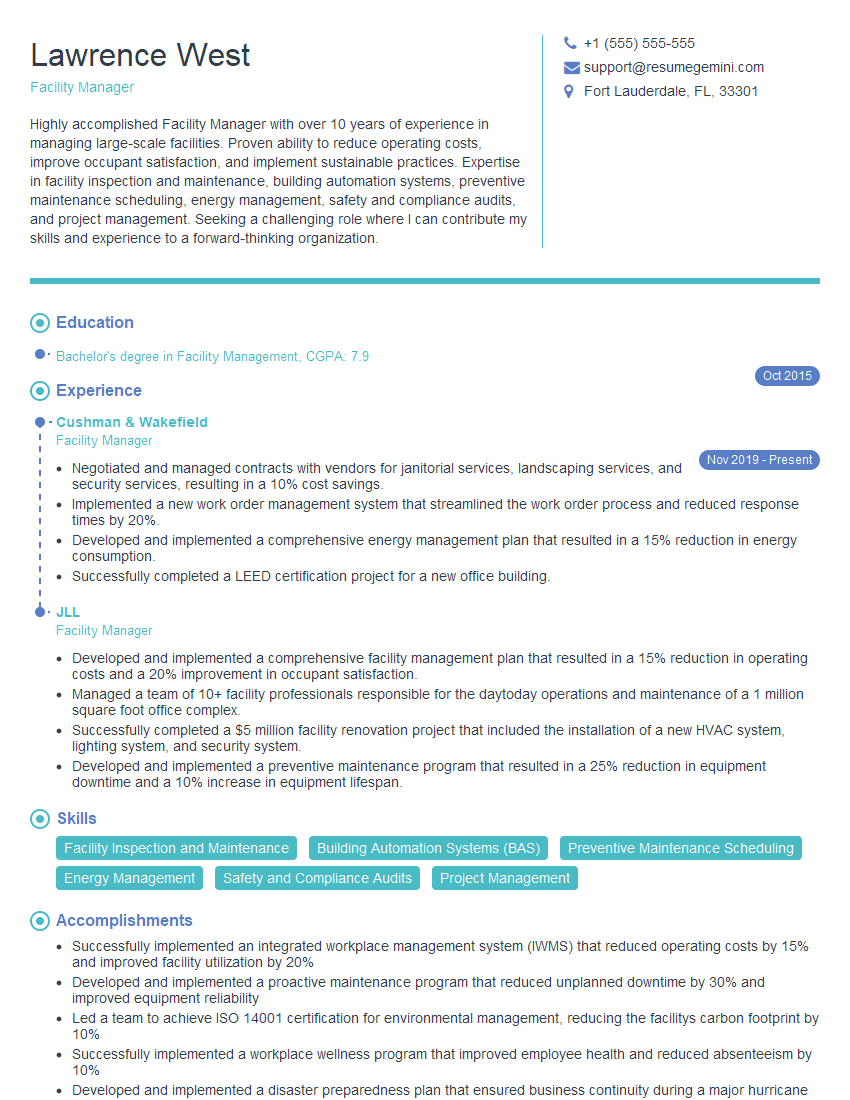
Facility Manager Resume Sample

Compliance Specialist Resume Sample

Power Systems Engineer Resume Sample
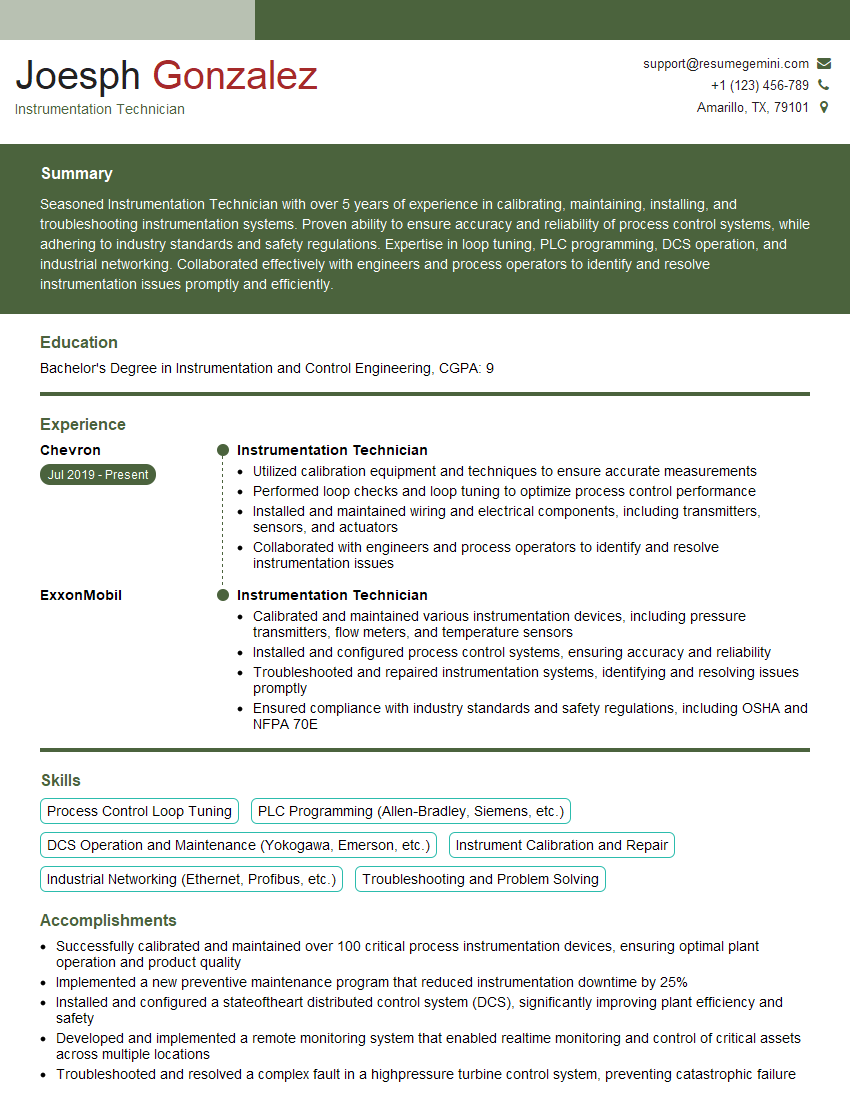
Instrumentation Technician Resume Sample
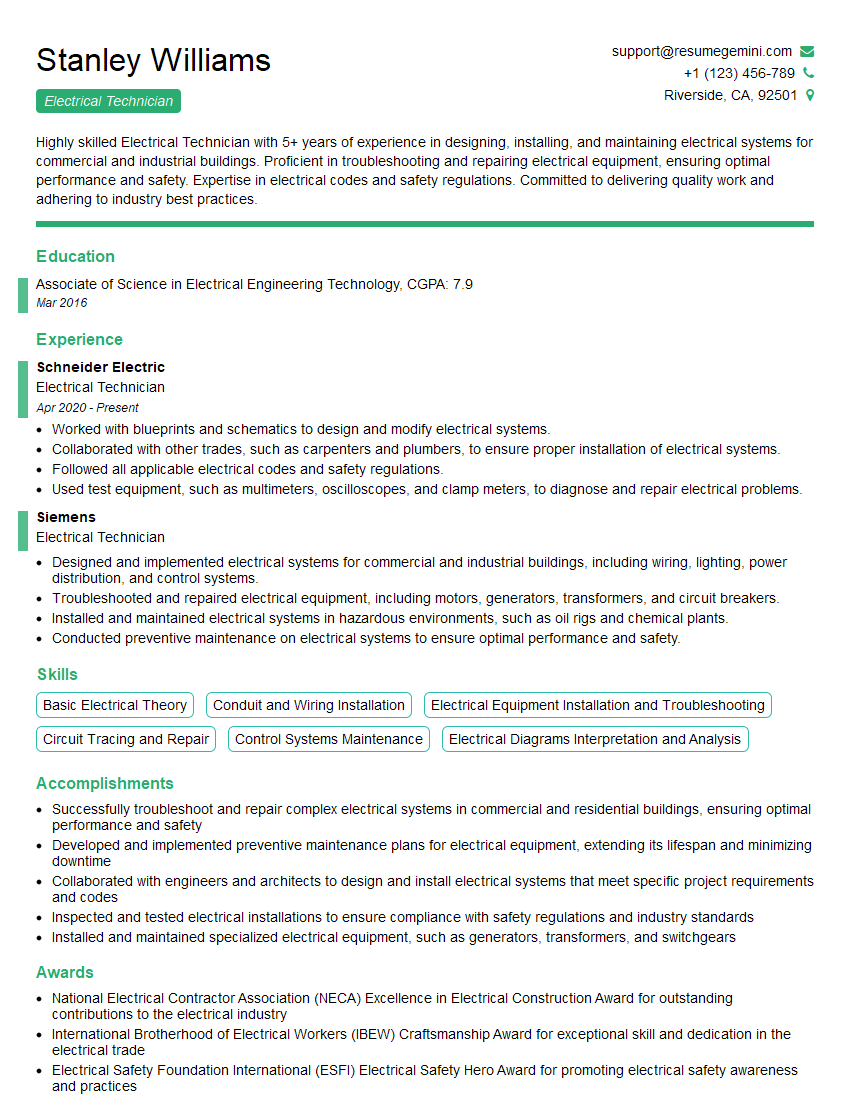
Electrical Technician Resume Sample
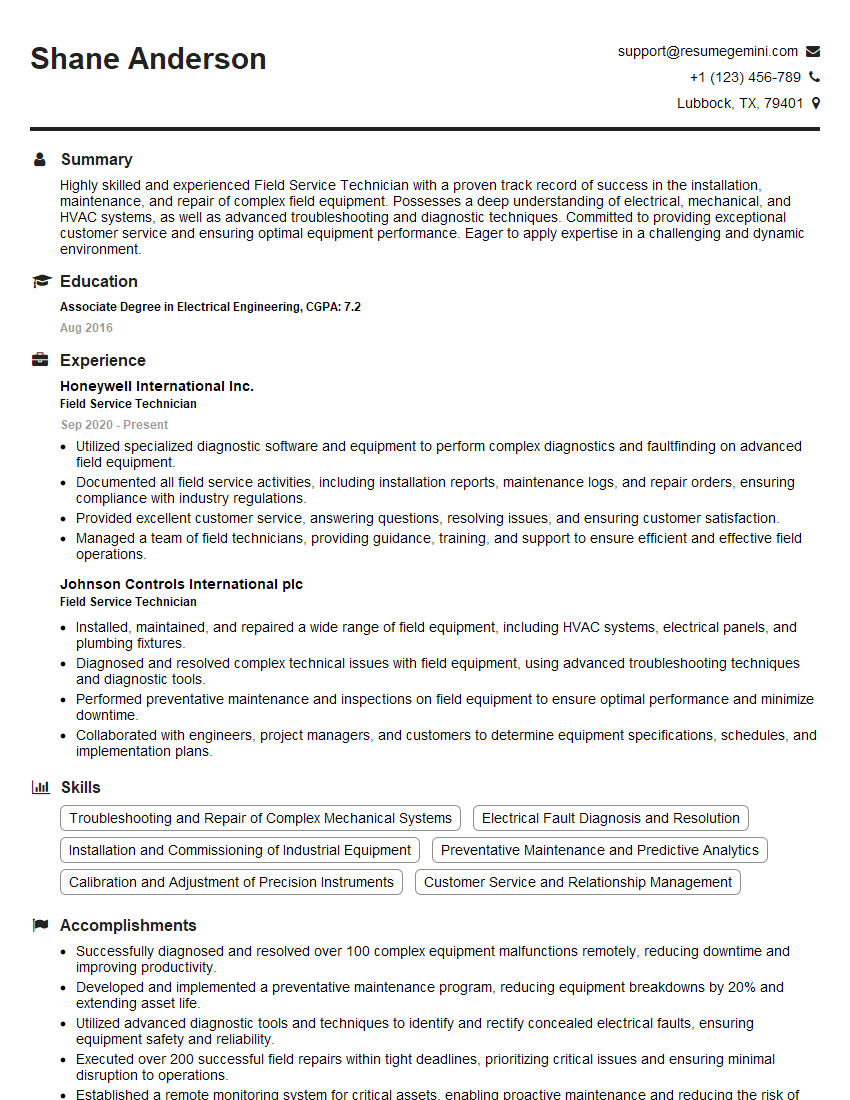
Field Service Technician Resume Sample
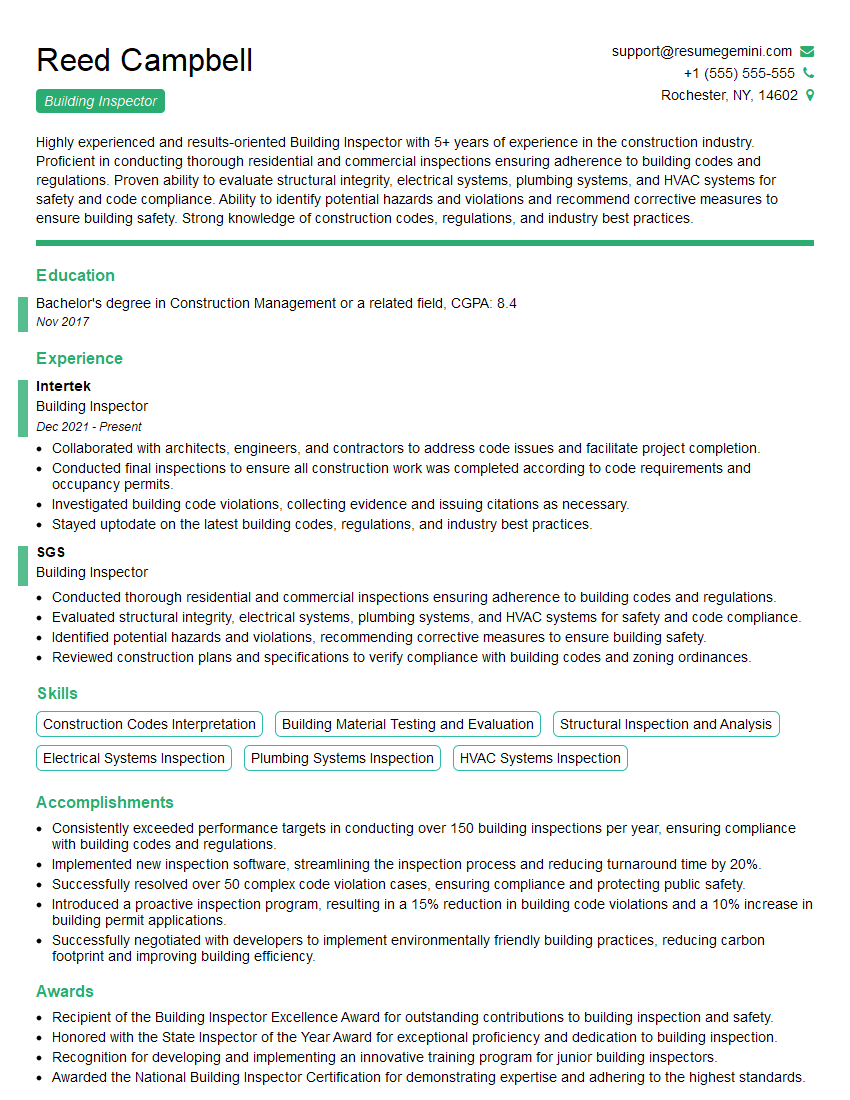
Building Inspector Resume Sample

Building Maintenance Supervisor Resume Sample

Electrical Foreman Resume Sample
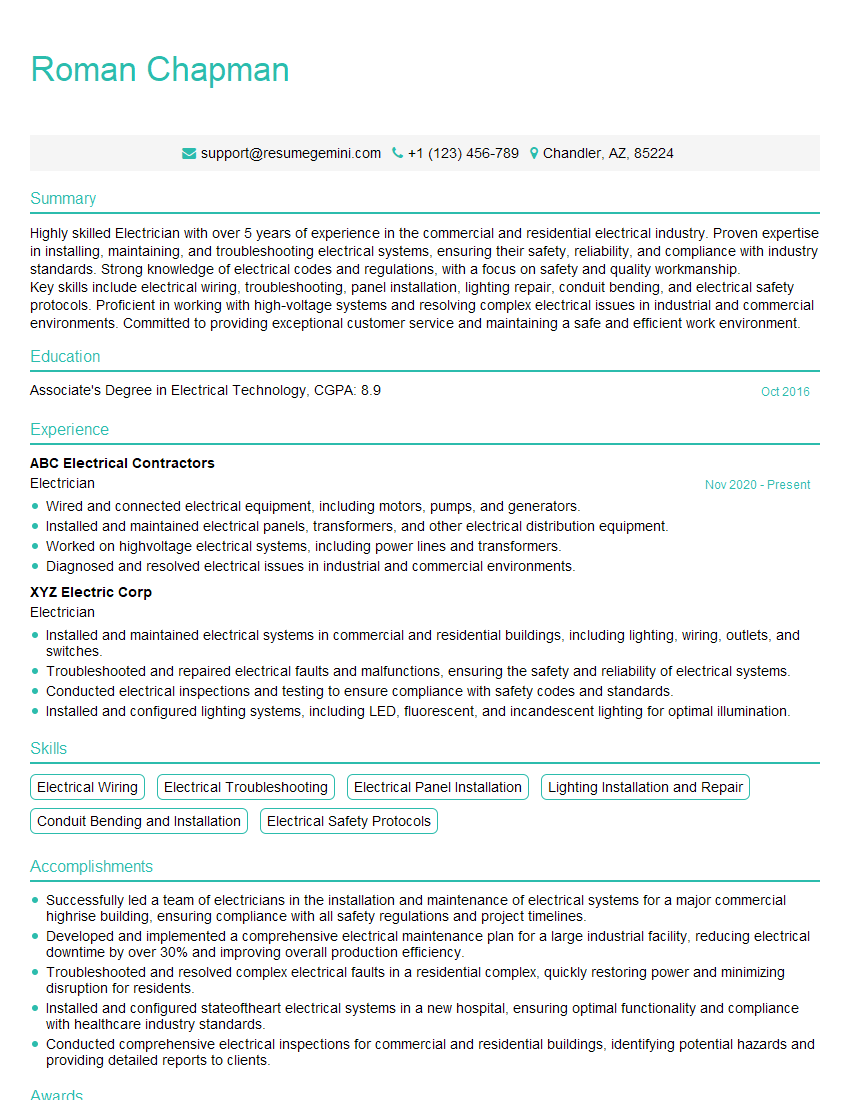
Electrician Resume Sample

Journeyman Electrician Resume Sample

Maintenance Electrician Resume Sample

Apprentice Electrician Resume Sample
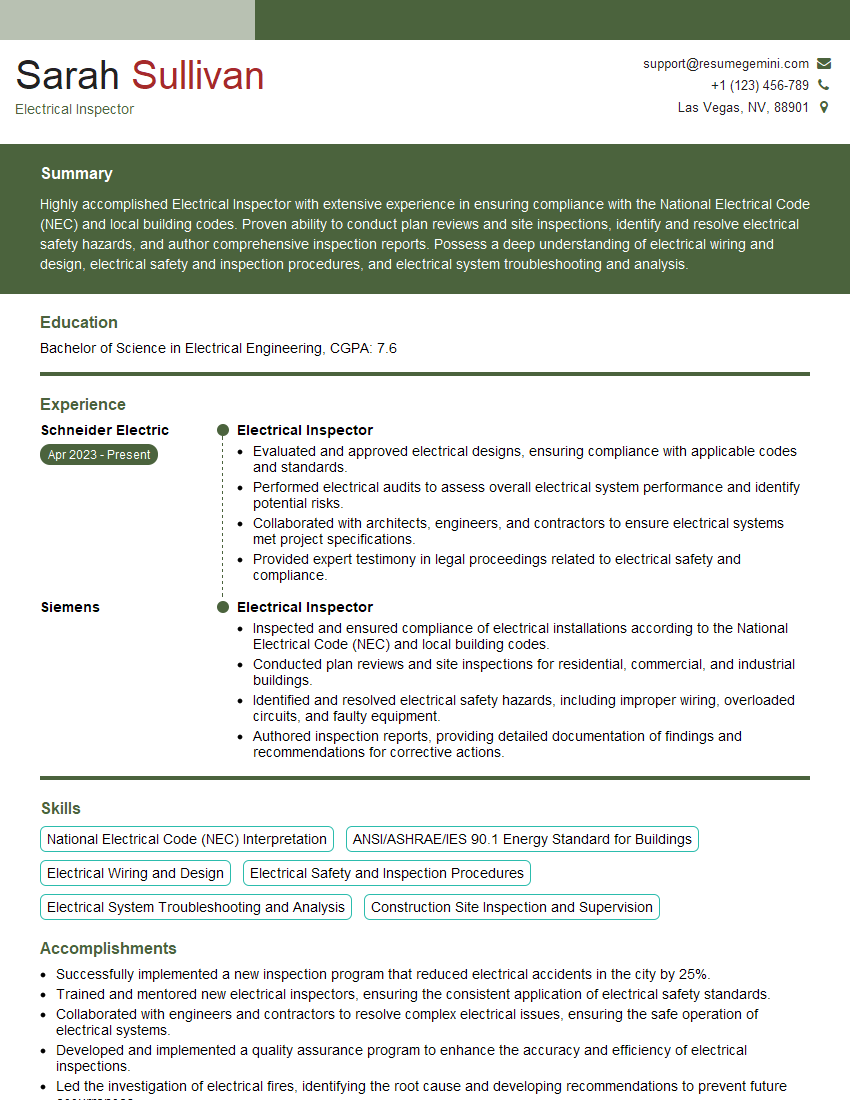
Electrical Inspector Resume Sample
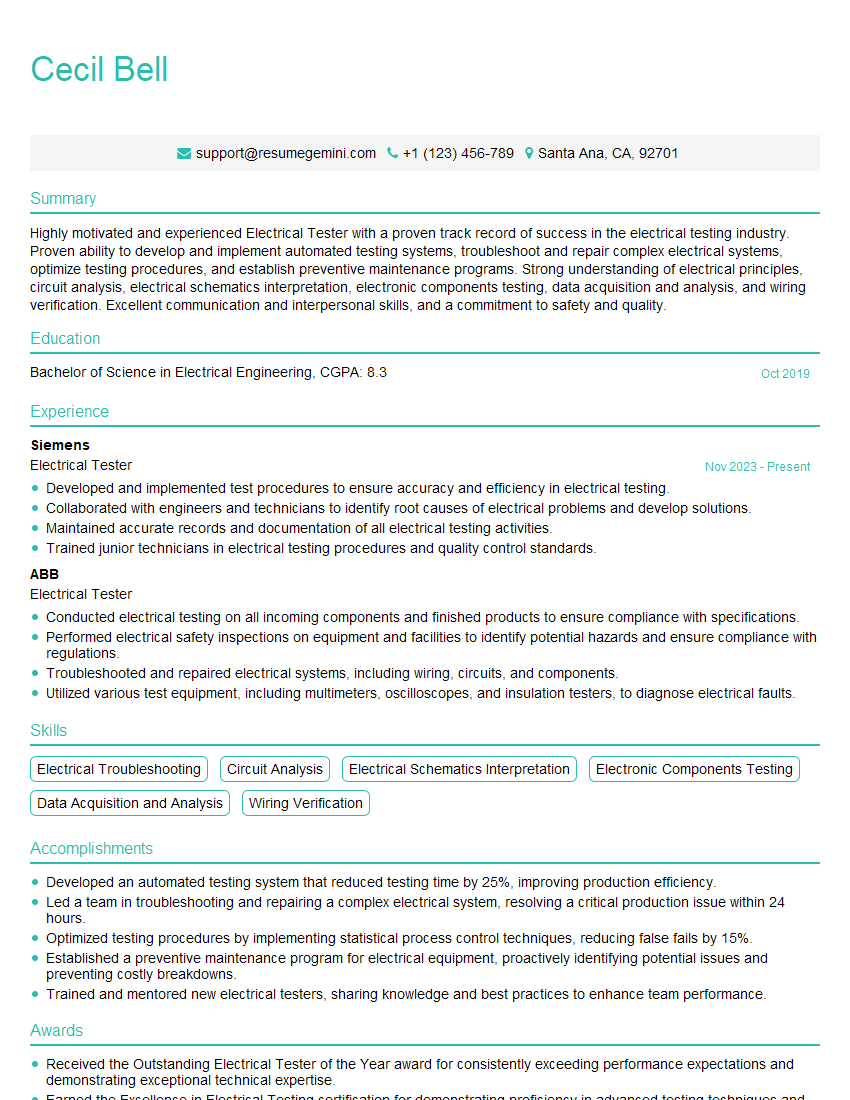
Electrical Tester Resume Sample

Quality Control Inspector Resume Sample
- Facility Manager
- Compliance Specialist
- Power Systems Engineer
- Instrumentation Technician
- Electrical Technician
- Field Service Technician
- Building Inspector
- Building Maintenance Supervisor
- Electrical Foreman
- Electrician
- Journeyman Electrician
- Maintenance Electrician
- Apprentice Electrician
- Electrical Inspector
- Electrical Tester
- Quality Control Inspector
Explore more articles
Users Rating of Our Blogs
Share Your Experience
We value your feedback! Please rate our content and share your thoughts (optional).
What Readers Say About Our Blog
To the interviewgemini.com Webmaster.
Very helpful and content specific questions to help prepare me for my interview!
Thank you
To the interviewgemini.com Webmaster.
This was kind of a unique content I found around the specialized skills. Very helpful questions and good detailed answers.
Very Helpful blog, thank you Interviewgemini team.