Interviews are opportunities to demonstrate your expertise, and this guide is here to help you shine. Explore the essential Clinical Music Therapy interview questions that employers frequently ask, paired with strategies for crafting responses that set you apart from the competition.
Questions Asked in Clinical Music Therapy Interview
Q 1. Describe your experience with various music therapy approaches (e.g., Nordoff-Robbins, Bonny Method).
My clinical music therapy practice integrates several established approaches, tailoring my methods to the unique needs of each client. I’m proficient in the Nordoff-Robbins approach, which emphasizes the inherent musicality of individuals and uses improvisation as a primary tool to foster communication and emotional expression. I’ve found this particularly effective with clients experiencing communication difficulties. For example, I worked with a nonverbal autistic child who, through improvised musical interaction, began to express emotions and needs previously inaccessible. I also have experience with the Bonny Method of Guided Imagery and Music (GIM), a profoundly introspective approach using evocative music to access the unconscious mind. GIM has proven incredibly helpful in addressing trauma and fostering self-discovery. With a client struggling with PTSD, carefully selected music coupled with guided imagery created a safe space for emotional processing and healing. My training also includes elements of other approaches like receptive music therapy, where the focus is on listening to carefully chosen music to evoke relaxation or specific emotional states, making it very useful for managing anxiety.
Q 2. Explain your understanding of the role of improvisation in clinical music therapy.
Improvisation is the cornerstone of many music therapy approaches, acting as a powerful vehicle for therapeutic change. It allows for a spontaneous and flexible interaction between the therapist and the client, creating a safe space for authentic self-expression. Think of it like a conversation, but instead of words, we use music. The client’s musical responses, even if unintentional, provide invaluable insights into their emotional state and cognitive functioning. For instance, a sudden shift in tempo during an improvisation might indicate an underlying anxiety, while changes in dynamics could reflect fluctuations in mood. The therapist can then use this information to guide the session and address the client’s needs. In my practice, I use improvisation to build rapport, facilitate emotional release, improve communication skills, and enhance cognitive function. It’s a dynamic, responsive tool adaptable to a wide range of therapeutic goals.
Q 3. How do you assess a client’s musical abilities and preferences in the context of therapy?
Assessing a client’s musical abilities and preferences is a crucial initial step. This involves a combination of observation, informal assessment, and sometimes standardized music assessments depending on the client’s needs and the therapy goals. I begin by observing the client’s spontaneous responses to music, noting their reactions to different genres, tempos, and dynamics. I might start with playing simple melodies or rhythms, observing their engagement, and gauging their responses. I’ll also ask about their musical history, if any; what kind of music they enjoy or dislike, what instruments they play or have played, and their singing experiences. For instance, I might ask ‘What kind of music makes you feel happy? What makes you feel calm?’ This provides a starting point for building a therapeutic relationship and choosing music that resonates with them. Sometimes, formal assessments are used, particularly for children or clients with cognitive impairments, to measure specific musical skills, like rhythm discrimination or melodic recall. The goal is to craft a therapeutic program that’s engaging and motivating for the individual client.
Q 4. Outline your process for developing a music therapy treatment plan.
Developing a music therapy treatment plan is a collaborative process. It starts with a comprehensive assessment of the client’s needs, strengths, and preferences as described earlier. Then we identify specific goals and objectives – these could be related to emotional regulation, communication skills, social interaction, or cognitive function. For example, a goal might be to reduce anxiety levels or to improve nonverbal communication skills. Once goals are set, we collaboratively develop the treatment plan which outlines the methods and techniques we’ll be using – types of musical activities (improvisation, songwriting, listening to music, playing instruments), the frequency and duration of sessions, and how we’ll measure progress. We’ll track the client’s progress regularly, adjusting the plan as needed based on their responses and the overall effectiveness of the intervention. This is not a static document; it’s a living document that evolves with the client’s needs and progress.
Q 5. Describe a situation where you had to adapt your therapeutic approach based on a client’s needs.
I once worked with a client diagnosed with severe depression who initially showed very little engagement in any musical activity. My initial approach, which involved active music making through improvisation, proved ineffective. Recognizing this, I adapted my approach to a receptive music therapy model, focusing on carefully selected music with slow tempos and soothing melodies. We started with guided imagery and meditation techniques paired with calming music. This created a safe and supportive space where my client felt comfortable engaging with the music. Slowly, we started incorporating simple singing and instrumental activities. This gradual and personalized adaptation allowed the client to open up and participate actively in the therapy, leading to significant improvements in their mood and overall well-being. It highlighted the importance of flexibility and responsiveness in clinical practice.
Q 6. How do you measure the effectiveness of your music therapy interventions?
Measuring the effectiveness of music therapy interventions requires a multifaceted approach. We use both quantitative and qualitative measures. Quantitative measures might involve standardized assessments measuring specific skills, such as a communication scale or an anxiety inventory. These provide objective data that track changes over time. However, quantitative measures alone are insufficient. Qualitative data are also critical, gathered through observations, clinical notes, and feedback from the client, family, or caregivers. This provides insights into the client’s subjective experiences and the qualitative changes in their emotional well-being, relationships, and overall quality of life. For instance, for a client with PTSD, I might observe a reduction in anxiety symptoms, or measure their improvements in self-reporting of emotional regulation. The combination of quantitative and qualitative data creates a comprehensive understanding of the intervention’s effectiveness.
Q 7. Discuss your experience working with clients with specific diagnoses (e.g., autism, dementia, PTSD).
My experience spans various diagnoses. With clients diagnosed with autism, music therapy often focuses on developing communication skills, social interaction, and emotional regulation. I use improvisation, rhythmic activities, and sensory-based musical experiences to enhance their sensory processing, communication, and self-expression. For individuals with dementia, music therapy can help improve cognitive function, memory recall, and emotional well-being. Familiar songs and musical activities stimulate memories and provide opportunities for social interaction. In the case of PTSD, music therapy facilitates emotional processing, relaxation, and self-soothing through guided imagery, songwriting, and improvisation. The approach is always tailored to the individual needs, utilizing different techniques and focusing on the client’s unique strengths and vulnerabilities. In each case, ethical considerations and a collaborative approach with the treatment team are paramount.
Q 8. How do you address ethical dilemmas in clinical music therapy?
Ethical dilemmas in music therapy, like any healthcare profession, are approached through a framework of ethical principles, primarily beneficence (acting in the client’s best interest), non-maleficence (avoiding harm), autonomy (respecting client choices), justice (fair and equitable treatment), and fidelity (maintaining trust and professional obligations). I always begin by carefully considering the specific ethical conflict, consulting relevant ethical guidelines from organizations like the American Music Therapy Association (AMTA), and seeking supervision or consultation when needed. For instance, if a client reveals a situation that requires mandated reporting (e.g., child abuse), I would prioritize my legal and ethical obligation to report while ensuring client safety and maintaining a therapeutic relationship to the extent possible. This may involve a sensitive conversation explaining the legal necessity of reporting. Balancing confidentiality with the need to protect vulnerable individuals is a constant consideration.
Another common scenario involves boundary issues. For example, if a client seeks personal friendship outside of therapy sessions, I’d reinforce professional boundaries by explaining the importance of maintaining the therapeutic relationship, while expressing empathy and understanding. Documentation of these situations is crucial. I would clearly document the ethical dilemma, the steps taken, and the rationale behind those decisions.
Q 9. Explain your understanding of the importance of documentation in music therapy.
Thorough documentation in music therapy is paramount for several reasons. It provides a comprehensive record of the client’s progress, treatment plan, and the effectiveness of interventions. This allows for continuous monitoring of outcomes, modification of the treatment plan based on client response, and facilitates communication with other healthcare professionals involved in the client’s care. In addition, it serves as legal protection for both the therapist and the client. My documentation adheres to AMTA guidelines and generally includes the client’s presenting problem, assessment findings (including observations during music therapy sessions), goals, interventions used, the client’s responses to these interventions, and a summary of each session. I also meticulously document any changes to the treatment plan, significant events, and any ethical considerations. Imagine a situation where a client’s progress plateaus. By reviewing session notes, I can identify potential reasons, adapt my strategies, and continue working towards therapeutic goals. Adequate documentation also protects the therapist should there ever be a legal challenge.
Q 10. Describe your experience with collaborating with other healthcare professionals.
Collaboration is integral to effective healthcare, and I have extensive experience working with various professionals including psychologists, psychiatrists, occupational therapists, physical therapists, and social workers. In my work with a pediatric patient struggling with communication difficulties, I collaborated with a speech-language pathologist. We created a cohesive treatment plan where I used music-based interventions to improve communication skills, and the speech therapist focused on more direct speech therapy. Regular meetings and joint assessments helped us understand the client’s progress holistically and ensured a consistent approach. This collaborative approach allows for a more comprehensive and effective therapeutic experience for the client, leveraging each professional’s specialized skills and knowledge. I always prioritize clear and open communication, ensuring everyone is on the same page and working towards shared goals. Sharing session notes, progress reports, and attending multidisciplinary team meetings are essential components of this process. I find that creating a shared understanding fosters an environment of mutual respect and allows for optimal client care.
Q 11. How do you maintain client confidentiality and adhere to professional boundaries?
Maintaining client confidentiality and professional boundaries is foundational to ethical music therapy practice. I adhere strictly to HIPAA regulations and AMTA’s code of ethics, which dictate that client information remains strictly confidential unless legally mandated to be disclosed. This means protecting client records from unauthorized access, maintaining the privacy of sessions (both physical and virtual), and avoiding any disclosure of client information to third parties without their explicit consent. Professional boundaries are established from the outset of the therapeutic relationship through a clear understanding of the roles of both client and therapist. This includes setting appropriate time limits for sessions, avoiding dual relationships (e.g., becoming friends with a client), and refraining from self-disclosure that could be detrimental to the therapeutic process. For instance, I would never engage in social media interactions with a client, maintaining a clear professional distance. I believe in always prioritizing the client’s well-being and maintaining their trust by carefully adhering to these boundaries.
Q 12. What are your strategies for managing challenging client behaviors?
Managing challenging client behaviors requires a flexible and individualized approach, always prioritizing client safety and well-being. My strategies focus on understanding the underlying causes of these behaviors, implementing proactive measures, and developing appropriate responses. This might involve assessing whether sensory sensitivities are contributing to the behavior. For example, if a client with autism spectrum disorder exhibits disruptive behaviors during group sessions, I might modify the environment by lowering the volume of the music or changing the activity to one that better suits their sensory needs. If a client displays aggression, a structured approach might be implemented. This could involve utilizing calming techniques, brief breaks, and a pre-determined plan to de-escalate the situation. However, physical restraint is avoided. Careful documentation of all behaviors, interventions, and their effectiveness is essential to inform subsequent sessions. Collaboration with other healthcare professionals is critical in these situations as the behaviors may be indicative of a broader underlying issue, requiring a multifaceted therapeutic approach.
Q 13. Describe your experience with group music therapy sessions.
Group music therapy provides a unique setting for clients to engage with others, learn social skills, and build community. My experience encompasses facilitating various group modalities, including those focused on stress reduction, social skills development, and emotional expression. The structure of each group varies depending on client needs and goals, however, clear guidelines and expectations are established at the outset. A group focused on stress reduction might employ guided imagery and relaxation techniques through music, while a group aiming to improve social skills could incorporate improvisation exercises and collaborative songwriting. I actively foster a safe and supportive environment where clients feel comfortable sharing their experiences and working together. Observation of group dynamics is crucial, allowing for adjustments in facilitation and ensuring all participants feel valued and included. I also carefully monitor for and address any conflicts or power imbalances within the group, creating a healthy therapeutic environment for everyone.
Q 14. How do you incorporate the client’s cultural background into your therapeutic approach?
Incorporating a client’s cultural background is vital for providing culturally sensitive and effective music therapy. This involves understanding the client’s cultural values, beliefs, and traditions that might influence their responses to music and therapeutic interventions. I do this through active listening, open-ended questions, and seeking to understand their musical preferences and experiences. For instance, if working with a client from a culture where certain musical instruments or genres hold specific cultural significance, I would incorporate these elements into the therapeutic process. Or, if a client finds comfort and connection through traditional songs from their culture, this might become a central focus during sessions. Respectful collaboration and avoiding stereotyping are crucial. Moreover, actively seeking out resources and training on culturally appropriate practices ensures that my approach is both ethical and effective. It’s not about simply ‘adding’ cultural elements; it’s about deeply understanding and integrating cultural contexts into the very core of the therapeutic relationship and intervention strategies.
Q 15. Explain your understanding of evidence-based practice in music therapy.
Evidence-based practice (EBP) in music therapy means integrating the best available research evidence with clinical expertise and client values to make informed decisions about treatment. It’s not just about using any study; it’s about critically evaluating research quality and relevance to the individual client’s needs and preferences.
For example, if a client struggles with anxiety, I wouldn’t just choose any music therapy technique. Instead, I would review research on the effectiveness of various techniques for anxiety reduction, such as guided imagery with music, improvisation, or lyric analysis. I’d then consider the client’s musical preferences and personality to select the most appropriate approach. This process ensures that the intervention is both scientifically supported and tailored to the client’s unique circumstances.
EBP also involves ongoing assessment and monitoring of treatment effectiveness. If a chosen approach isn’t working, I would reassess the client’s needs and the available evidence to adjust the treatment plan. It’s a continuous cycle of research, assessment, intervention, and evaluation.
Career Expert Tips:
- Ace those interviews! Prepare effectively by reviewing the Top 50 Most Common Interview Questions on ResumeGemini.
- Navigate your job search with confidence! Explore a wide range of Career Tips on ResumeGemini. Learn about common challenges and recommendations to overcome them.
- Craft the perfect resume! Master the Art of Resume Writing with ResumeGemini’s guide. Showcase your unique qualifications and achievements effectively.
- Don’t miss out on holiday savings! Build your dream resume with ResumeGemini’s ATS optimized templates.
Q 16. What are your strengths and weaknesses as a music therapist?
My strengths include a strong foundation in various music therapy techniques, excellent interpersonal skills allowing me to build rapport quickly with diverse clients, and a creative and flexible approach to treatment. I’m particularly skilled in adapting techniques to meet individual needs and preferences, even when presented with complex clinical cases.
An example of this is my work with a child with autism who initially resisted structured music therapy. By adapting improvisation techniques, incorporating his favorite musical styles, and making sessions playful, we built a strong therapeutic relationship, and significant progress was made.
However, like all clinicians, I also have areas for growth. While comfortable with various assessment tools, I could improve my skills in quantitative data analysis and research design to further contribute to the field. I am actively working to enhance these areas by participating in continuing education opportunities and collaborating with researchers.
Q 17. How do you stay current with the latest research and developments in music therapy?
Staying current in music therapy requires a multifaceted approach. I regularly subscribe to and read journals such as the Journal of Music Therapy and Music Therapy Perspectives. I actively participate in professional organizations like the American Music Therapy Association (AMTA), attending conferences and workshops to learn about the latest research findings and best practices.
Furthermore, I engage with online resources such as databases like PubMed and Google Scholar to access relevant research articles. I also participate in continuing education courses and webinars focused on emerging trends and techniques within music therapy. Networking with colleagues and participating in peer supervision provides valuable opportunities for learning and exchanging knowledge.
Q 18. Describe your experience with different assessment tools in music therapy.
My experience encompasses a range of assessment tools, both formal and informal. Formal assessments may include standardized measures like the Profile of Music Perception Skills (PMPS) to assess auditory processing, or the Music Therapy Assessment Battery (MTAB) to evaluate musical abilities and their relationship to various therapeutic goals.
Informal assessments are equally important and often form the basis of my initial evaluations. These include observations of client behavior during musical activities, informal musical interactions to gauge engagement and responses, and client interviews to understand their musical background, preferences, and treatment goals. I also often use creative arts methods for assessment, like using music composition or improvisation as a window into emotional expression and coping mechanisms.
The choice of assessment tools depends entirely on the client’s needs, presenting issues, age, and overall context. I always prioritize using a range of assessment methods to gain a holistic understanding of the client’s strengths and challenges.
Q 19. How do you ensure the safety of your clients during music therapy sessions?
Client safety is paramount in music therapy. This starts with establishing a safe and therapeutic environment, both physically and emotionally. This includes ensuring the physical space is clutter-free, properly lit, and comfortable for the client. I establish clear boundaries and expectations at the outset of therapy, and I make sure that the client understands the purpose and process of each session.
During sessions, I am mindful of potential triggers and adapt techniques accordingly. For example, with clients who have experienced trauma, I use a gentle and trauma-informed approach, avoiding potentially triggering music or activities. I also incorporate relaxation and grounding techniques if needed. Throughout, I actively monitor the client’s physical and emotional state, being responsive to any signs of distress and making necessary adjustments.
Mandatory reporting procedures are strictly followed, and I have a well-defined plan for managing crises or emergencies. Maintaining proper documentation is critical to ensuring continuity of care and protecting client safety.
Q 20. What is your philosophy of music therapy?
My philosophy of music therapy is rooted in the belief in the inherent healing power of music and its ability to facilitate human growth and well-being. I see music therapy as a collaborative process where the client and I work together to achieve meaningful change. I believe in a holistic approach, addressing the client’s physical, emotional, cognitive, and social needs through music.
I draw upon various theoretical frameworks, including psychodynamic, humanistic, and cognitive-behavioral approaches, tailoring my approach to each client’s unique needs and experiences. I view music as a powerful means of self-expression, communication, and emotional regulation, and I strive to create a safe and supportive space for clients to explore their inner world through music.
The process is always client-centered, respecting their preferences and autonomy. My role is to guide and facilitate, using music as a catalyst for growth and transformation.
Q 21. Explain your approach to termination of music therapy services.
Termination of music therapy services is a carefully planned and collaborative process. It begins well before the actual final session, involving open communication with the client about the anticipated end date and reasons for termination. We discuss their progress, what they’ve achieved, and develop strategies for maintaining those gains after therapy concludes.
We collaboratively create a plan that might include connecting them with community resources, practicing learned skills independently, or suggesting alternative support systems. The final session is often dedicated to reviewing their progress and celebrating their accomplishments, offering a sense of closure and empowerment. Follow-up contact is sometimes established to monitor their progress and provide support as needed.
For example, with a client recovering from depression, we might collaboratively create a list of self-care strategies using music and identify local support groups they could join. This structured approach ensures a smooth transition and aims to prevent relapse.
Q 22. How do you handle situations where a client is resistant to music therapy?
Resistance to music therapy can stem from various factors, including discomfort with music, past negative experiences, or simply a lack of understanding of the therapy’s benefits. My approach is always client-centered and begins with building rapport and trust. I start by actively listening to their concerns and validating their feelings. I might ask open-ended questions like, “What are your thoughts about using music in therapy?” or “What are your concerns about today’s session?”.
Next, I collaboratively tailor the therapeutic approach to the client’s preferences. This might involve exploring different musical genres, instruments, or activities. If singing is uncomfortable, we might focus on listening to music or playing percussion instruments. If they express a preference for a specific style of music, we incorporate that. It’s about finding a comfortable entry point.
For example, I once worked with a teenager who initially resisted music therapy due to a negative past experience with band class. Instead of pushing musical activities, we started by simply discussing his favorite artists and songs, gradually introducing musical elements as he felt more comfortable and confident. The key is patience, flexibility, and a willingness to adapt the therapy to meet the individual’s needs.
Q 23. Describe your experience working with clients of different ages and abilities.
My experience spans a wide range of ages and abilities, from working with children with autism spectrum disorder to adults recovering from stroke. With children, I often use playful, interactive activities like rhythm games, singing songs, or creating simple musical improvisations. The focus is on engagement and fostering communication and self-expression. For example, I’ve used puppets and storytelling with younger children to make sessions fun and less intimidating.
Working with adults requires a different approach. With stroke survivors, for instance, I might focus on neurologic music therapy techniques to improve motor skills, speech, and cognitive function. This often involves targeted musical exercises, such as repetitive rhythmic patterns to improve coordination, or melodic intonation therapy to aid in speech recovery. With older adults experiencing cognitive decline, I might employ reminiscence therapy using familiar songs and melodies to stimulate memories and evoke positive emotions.
Regardless of age or ability, my approach always centers around the client’s individual needs and goals. I collaborate with other professionals such as therapists, doctors, and educators to develop a holistic plan that supports each client’s unique challenges and strengths. I carefully consider their physical and cognitive abilities when designing sessions, adapting methods as needed.
Q 24. How do you advocate for the benefits of music therapy to others?
Advocating for music therapy involves demonstrating its effectiveness through research, education, and collaboration. I regularly attend conferences and workshops to stay updated on the latest research and share my own clinical experiences. I present my work at professional conferences and publish articles in peer-reviewed journals, effectively showcasing evidence-based results. Furthermore, I actively participate in community outreach programs and present workshops for professionals and the public, educating them on the applications of music therapy in various settings.
For example, I’ve collaborated with local schools to introduce music therapy techniques for students with learning disabilities. I’ve also given presentations to medical professionals, demonstrating the positive effects of music therapy on pain management and stress reduction in patients undergoing treatment. Effective advocacy involves demonstrating the value of music therapy through tangible results and clear communication. I also maintain an active presence online using websites and social media channels for promoting music therapy’s benefits to wider audiences.
Q 25. How do you manage your time and prioritize tasks effectively in a busy clinical setting?
Time management in a busy clinical setting requires a structured approach. I utilize electronic health records (EHRs) to schedule appointments, document sessions, and manage client information efficiently. I employ time-blocking techniques to allocate specific time slots for different tasks, such as client sessions, administrative duties, and professional development. I prioritize tasks based on urgency and importance, using a system that helps me focus on the most pressing needs. For example, I may use a prioritized to-do list with deadlines, ensuring that crucial aspects such as client care are never neglected.
Delegation, when possible, is also critical. I collaborate with colleagues to share administrative burdens, and when appropriate, assign certain tasks to support staff. Regular review and adjustments of my schedule and workflow are essential. By regularly evaluating my efficiency, and proactively addressing bottlenecks or inefficiencies, I can enhance my time management and ensure client care remains at the forefront.
Q 26. What is your experience using technology in music therapy?
Technology has significantly enhanced music therapy practice. I utilize digital audio workstations (DAWs) like GarageBand or Ableton Live to create custom music for clients, tailoring it to their specific needs and preferences. These tools allow for precise control over tempo, rhythm, and instrumentation, creating highly individualized musical experiences. For instance, I might create calming soundscapes for anxiety reduction, or rhythmic exercises to improve motor skills.
Telehealth platforms, such as Zoom or Skype, have become essential, allowing me to provide remote music therapy sessions. This expands accessibility for clients with mobility issues or those in remote areas. Furthermore, I utilize apps for music creation and therapeutic interventions. Such apps can facilitate interactive activities, providing diverse and engaging experiences for a range of clients. This expands both the options and reach of therapy provided.
Q 27. Describe a time you had to overcome a significant challenge in your clinical work.
One significant challenge involved a client with severe PTSD who initially resisted all forms of engagement. He expressed deep distrust and exhibited significant anxiety in the therapeutic setting. My initial attempts at traditional music therapy techniques were ineffective. I realized I needed a completely different approach. After numerous sessions focused on building trust and rapport through non-musical activities like simply talking and sharing, I discovered his passion for nature sounds. We then began incorporating these nature sounds into the sessions, gradually introducing minimal musical elements.
The transition was slow but steady. Over time, he began to associate these calming sounds with a sense of safety and relaxation. We progressed to creating improvised soundscapes together, using simple instruments initially and gradually increasing complexity as his trust deepened. This journey taught me the importance of flexibility, patience, and a willingness to adapt my methods to the individual’s unique needs and emotional landscape. This demonstrated that success requires tailoring the therapy to the individual’s specific needs, rather than adhering rigidly to pre-planned structures. The outcome was profoundly rewarding, highlighting the power of individualized therapeutic approaches.
Q 28. Explain your understanding of the role of music in human development and well-being.
Music plays a fundamental role in human development and well-being, impacting us from infancy through old age. In early childhood, music fosters language development, cognitive skills, and emotional regulation. Singing lullabies, for instance, creates a bond between caregiver and child, promoting feelings of security and comfort. As children grow, music facilitates social interaction, creativity, and self-expression through group singing, instrumental playing, and musical games.
Throughout adolescence and adulthood, music continues to shape our emotional landscape, influencing our moods, memories, and sense of identity. Music can be a powerful tool for stress reduction, emotional processing, and self-discovery. In older adulthood, music can improve cognitive function, stimulate memory, and promote social engagement. Familiar songs can evoke powerful memories and emotions, fostering a sense of connection to the past and enriching the quality of life. Music therapy leverages this inherent connection between music and well-being to address a wide range of physical, emotional, and cognitive challenges.
Key Topics to Learn for Your Clinical Music Therapy Interview
Preparing for your Clinical Music Therapy interview requires a comprehensive understanding of the field’s theoretical foundations and practical applications. The following areas are crucial for demonstrating your expertise and passion:
- Therapeutic Approaches: Understand the various music therapy approaches (e.g., Nordoff-Robbins, Bonny Method, neurologic music therapy) and their specific applications in different clinical settings. Be prepared to discuss the strengths and limitations of each approach.
- Assessment and Treatment Planning: Familiarize yourself with the process of assessing clients’ musical abilities, therapeutic needs, and goals. Practice articulating how you would develop and implement individualized treatment plans based on these assessments. Consider various populations you might work with (e.g., children, adults, geriatrics).
- Ethical and Legal Considerations: Demonstrate a strong understanding of ethical guidelines and legal frameworks relevant to music therapy practice. This includes informed consent, confidentiality, and professional boundaries.
- Documentation and Record Keeping: Be prepared to discuss your experience with accurate and thorough documentation of client sessions, progress notes, and treatment plans. This is vital for effective communication and accountability within the healthcare system.
- Interprofessional Collaboration: Explain your understanding of working collaboratively with other healthcare professionals (e.g., physicians, nurses, occupational therapists) to provide holistic patient care. Showcase examples of successful teamwork.
- Research and Evidence-Based Practice: Demonstrate familiarity with current research in music therapy and the importance of integrating evidence-based practices into your clinical work. Be prepared to discuss relevant research articles or studies.
- Self-Reflection and Professional Development: Highlight your commitment to ongoing professional development and self-reflection, showcasing your capacity for continuous learning and improvement within the field.
Next Steps: Launching Your Music Therapy Career
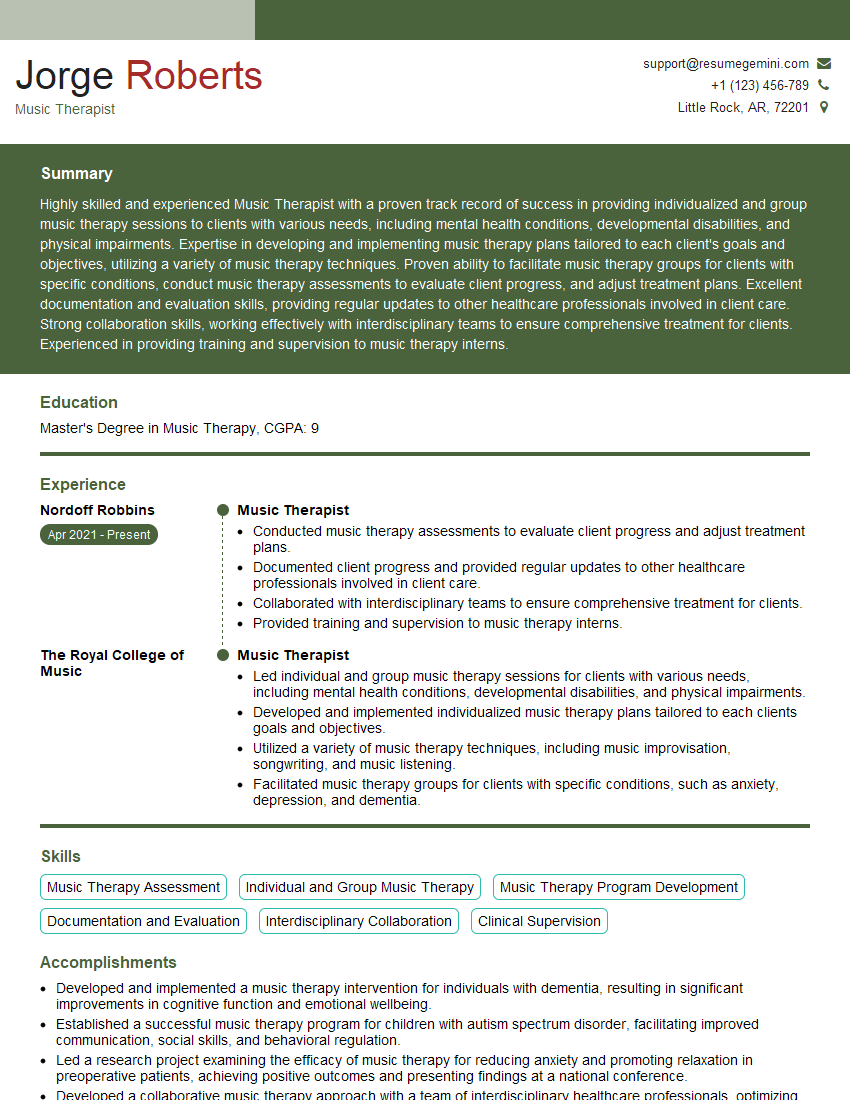
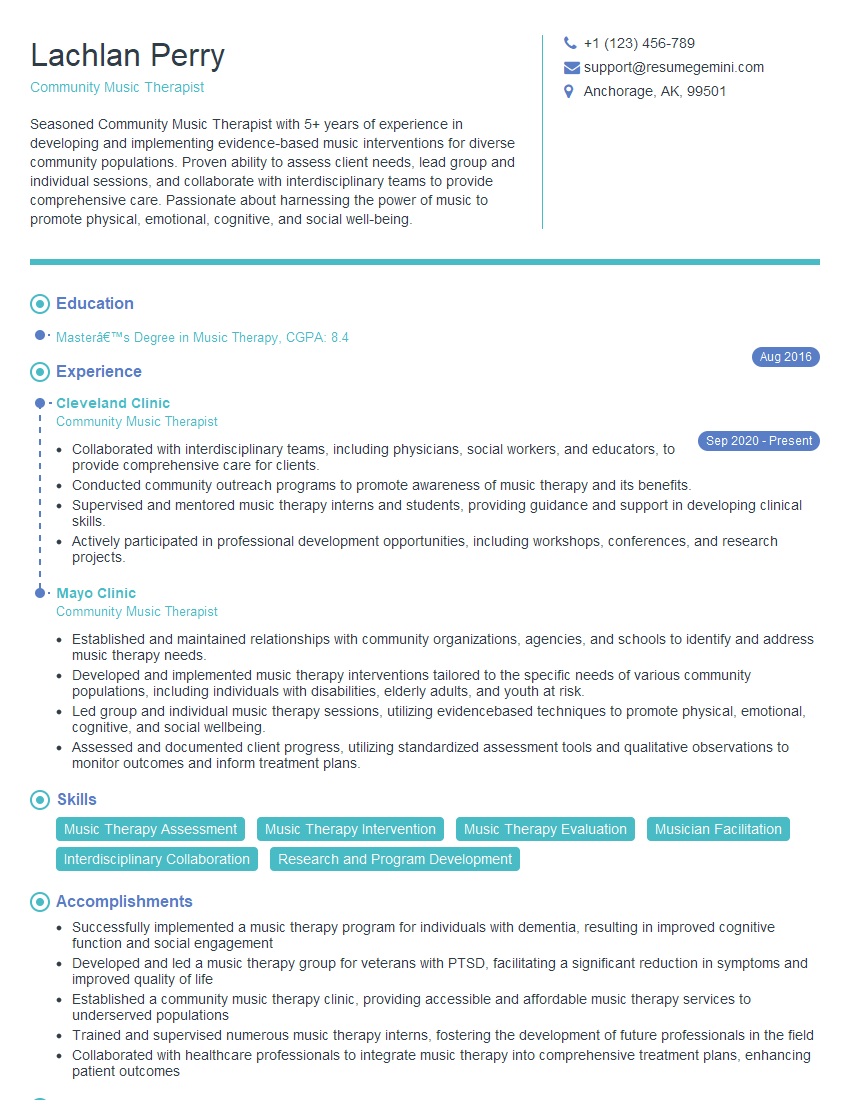
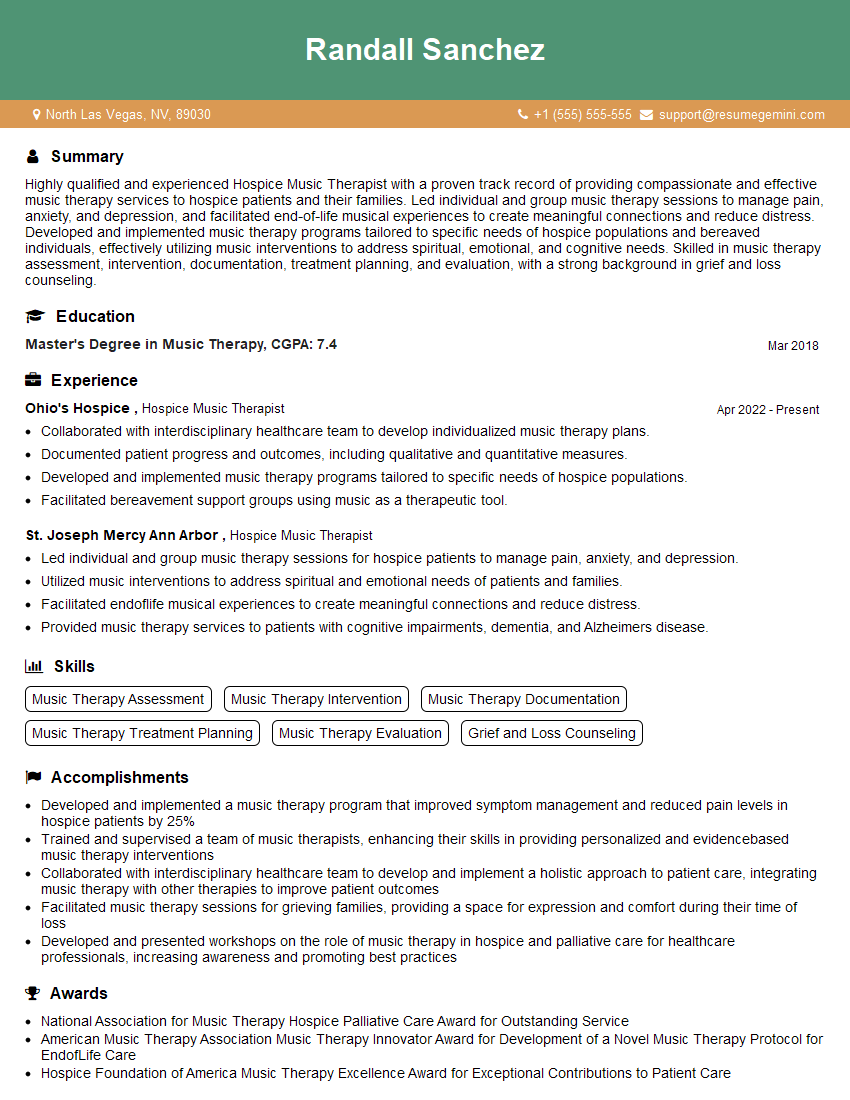
Mastering these key areas will significantly enhance your interview performance and position you for success in your Clinical Music Therapy career. Building a strong professional presence starts with a compelling resume. An ATS-friendly resume is essential for navigating Applicant Tracking Systems and maximizing your chances of landing interviews. We highly recommend using ResumeGemini to craft a resume that showcases your skills and experience effectively. ResumeGemini provides examples of resumes tailored specifically to Clinical Music Therapy, helping you create a document that truly stands out.
Explore more articles
Users Rating of Our Blogs
Share Your Experience
We value your feedback! Please rate our content and share your thoughts (optional).
What Readers Say About Our Blog
To the interviewgemini.com Webmaster.
Very helpful and content specific questions to help prepare me for my interview!
Thank you
To the interviewgemini.com Webmaster.
This was kind of a unique content I found around the specialized skills. Very helpful questions and good detailed answers.
Very Helpful blog, thank you Interviewgemini team.