Cracking a skill-specific interview, like one for Arc Flash Hazard Assessment, requires understanding the nuances of the role. In this blog, we present the questions you’re most likely to encounter, along with insights into how to answer them effectively. Let’s ensure you’re ready to make a strong impression.
Questions Asked in Arc Flash Hazard Assessment Interview
Q 1. What are the key components of an Arc Flash Hazard Assessment?
An Arc Flash Hazard Assessment is a critical safety procedure that identifies and quantifies the potential risks associated with electrical arc flashes. It’s not just a theoretical exercise; it’s about protecting lives and preventing potentially catastrophic injuries. The key components include:
- System information gathering: This involves detailed documentation of the electrical system, including one-line diagrams, equipment specifications (such as breaker ratings and transformer details), and protective device settings. Think of this as creating a complete ‘blueprint’ of the electrical system.
- Short-circuit current calculations: This crucial step determines the maximum fault current that can flow through a circuit. This information is vital for calculating incident energy.
- Arc flash calculation: Using specialized software, we input the system data and short-circuit calculations to determine the incident energy – the amount of energy released during an arc flash event at various points in the system. This is usually expressed in cal/cm².
- Arc flash boundary determination: Based on the calculated incident energy, we define the distances from energized equipment where different levels of personal protective equipment (PPE) are required.
- PPE selection and training: We then select the appropriate PPE (arc flash suits, face shields, gloves, etc.) based on the calculated incident energy and arc flash boundary. Crucially, workers must be properly trained in the use and limitations of this equipment.
- Report generation and documentation: The assessment is summarized in a formal report, including labeled one-line diagrams showing the arc flash boundaries, PPE requirements for each work location, and other relevant safety information. This report is a crucial safety document used for planning and executing electrical work.
Q 2. Explain the difference between incident energy and arc flash boundary.
Incident energy and arc flash boundary are closely related but distinct concepts in arc flash hazard analysis. Imagine a bomb explosion; the incident energy is the total energy released, while the boundary is the area affected by that energy above a certain damaging level.
Incident energy (usually expressed in cal/cm²) is the amount of thermal energy released during an arc flash that reaches a worker. It’s a measure of the potential for severe burns. Higher incident energy translates to a more severe burn potential.
Arc flash boundary is the distance from energized equipment where the incident energy reaches a specific level (typically 1.2 cal/cm² or 4 cal/cm² depending on the standard). This distance defines the area where workers need specific levels of PPE to protect themselves. Beyond the boundary, the incident energy is lower and the risk is reduced. For example, an arc flash boundary might be 1 meter from a particular switchgear. Anyone working within that 1 meter radius needs to wear appropriate PPE.
Q 3. How do you calculate incident energy?
Calculating incident energy isn’t a simple calculation done by hand; it requires specialized software that incorporates numerous factors and complex equations. The software uses the system information (gathered in step 1) and short-circuit calculations as inputs. The process involves applying industry-recognized formulas and databases, such as IEEE 1584, which considers factors such as:
- Available fault current: The maximum current that can flow during a fault.
- Arc duration: The length of time the arc flash lasts.
- Arc voltage: The voltage of the electrical arc.
- Working distance from the arc: Distance between the arc and the worker.
- Equipment type and configuration: Specific characteristics of the electrical equipment involved.
The software uses these inputs and complex algorithms to calculate the incident energy at various distances from the equipment. A simplified calculation may use a formula such as: Incident Energy = k * I^2 * t , where ‘k’ is a constant, ‘I’ is the arc current, and ‘t’ is the arc duration. However, this equation should only be applied under very specific and well-defined conditions, and using specialized software is highly recommended.
Q 4. What are the different arc flash hazard categories and their associated PPE requirements?
Arc flash hazard categories, usually based on incident energy levels, dictate the necessary PPE. These categories are typically defined by standards like NFPA 70E. Each category corresponds to a different level of risk and requires progressively more protective gear:
- Category 0: Minimal risk; PPE may not be required.
- Category 1: Low risk; minimal PPE requirements (e.g., safety glasses).
- Category 2: Moderate risk; requires additional PPE (e.g., insulated gloves, arc-rated clothing).
- Category 3: High risk; necessitates comprehensive PPE, including a full arc flash suit, face shield, and other protective gear.
- Category 4: Extreme risk; demands the most robust PPE and specialized work procedures. The risks here are so high that the work may require significant changes in equipment or process.
The specific PPE requirements for each category are detailed in NFPA 70E and other relevant safety standards. It’s crucial to consult these standards for the most up-to-date information. The selection isn’t arbitrary; it’s directly linked to the calculated incident energy to ensure adequate worker protection.
Q 5. Describe the process of performing a short-circuit calculation.
A short-circuit calculation determines the maximum current that could flow during a fault in an electrical system. It’s a fundamental step in arc flash hazard analysis, as this fault current directly influences incident energy. The calculation process typically involves these steps:
- Gathering system data: This involves obtaining information about the system’s components (transformers, generators, cables, protective devices, etc.), including their impedance, voltage ratings, and other relevant parameters.
- Developing a one-line diagram: This diagram simplifies the electrical system, representing each component with its relevant impedance values.
- Applying circuit analysis techniques: Methods like symmetrical components or impedance calculations are used to determine the fault current at various points in the system. Software tools are commonly used for larger and more complex systems.
- Considering protective device settings: The calculation must factor in the interrupting capacity of circuit breakers and other protective devices to ensure the accuracy of the fault current values.
- Verifying results: It is critical to check the calculated short-circuit currents against the interrupting ratings of the protective devices to ensure they can safely clear the fault. If any protective device is insufficient, changes need to be made and the analysis repeated.
Think of it like figuring out the maximum water flow rate from a water tower—we need to know the size of the pipe and the pressure to calculate that flow. This ‘water flow’ in an electrical system is the fault current during a short circuit. Software tools are typically used to perform these calculations, as they are complex and involve extensive data.
Q 6. What are the limitations of using simplified arc flash calculation methods?
Simplified arc flash calculation methods, while easier and faster, have limitations. They often rely on assumptions and approximations that may not accurately reflect real-world scenarios. These limitations include:
- Simplified models: They may not account for all the complexities of a real electrical system, such as non-linear impedance behavior of some components.
- Inaccurate assumptions: Assumptions made about arc duration, arc voltage, and other parameters might not be precisely applicable to the specific system under evaluation.
- Lack of detailed analysis: They often overlook factors that could significantly impact the results, leading to underestimation or overestimation of the arc flash hazard.
- Limited applicability: They are usually suited for simpler systems and may not be suitable for complex or unusual electrical setups, which are common in industrial environments.
Using simplified methods may result in inaccurate incident energy values and incorrect arc flash boundaries. In such cases, there is a significant risk of underestimating the hazard, leading to inappropriate PPE selection and increased risk of injury to workers. For critical applications, detailed calculations are essential.
Q 7. How do you determine the appropriate arc flash PPE?
Determining appropriate arc flash PPE is a critical step that directly impacts worker safety. This process is guided by the results of the arc flash hazard assessment. The key steps are:
- Identify the arc flash boundary: Determine the distances from energized equipment where different incident energy levels exist.
- Consult the incident energy calculations: Use the calculated incident energy values at each work location.
- Refer to NFPA 70E or other relevant standards: These standards provide tables that correlate incident energy levels with appropriate PPE categories.
- Select PPE based on the highest incident energy: PPE selection is always based on the worst-case scenario within the work area. If multiple arc flash boundaries exist in the workspace, the PPE must protect the worker from the highest incident energy.
- Ensure proper fit and functionality: The chosen PPE must fit correctly and be in good working condition. Regular inspection and maintenance are also required.
- Provide worker training: Workers must receive adequate training on how to properly use and care for the selected PPE.
Remember, it’s not just about selecting the right PPE; it’s about ensuring workers understand how to use it correctly and that it’s regularly inspected and maintained to maintain its protective capabilities. An arc flash incident is a serious event, and using the wrong PPE can have devastating consequences.
Q 8. What are the requirements of NFPA 70E?
NFPA 70E, the standard for Electrical Safety in the Workplace, outlines requirements for preventing electrical hazards, including arc flash. It mandates a comprehensive approach, from hazard assessment and risk reduction to worker training and protective equipment. Key requirements include:
- Arc Flash Hazard Analysis: Performing a detailed analysis to identify potential arc flash hazards and determine the incident energy levels at various equipment locations.
- Labeling: Clearly labeling electrical equipment with arc flash hazard information, including incident energy and arc flash boundary.
- Safety-Related Work Practices (SRWP): Implementing procedures to minimize risk during work on or near energized equipment. This includes things like lockout/tagout, using appropriate PPE, and implementing safe work permits.
- Personal Protective Equipment (PPE): Requiring workers to use appropriate PPE based on the assessed arc flash hazard, such as arc flash suits, face shields, and gloves.
- Training: Providing comprehensive training to employees on arc flash hazards, safe work practices, and proper use of PPE. This training must be tailored to the specific risks they face.
- Electrical Safety Program: Implementing a robust electrical safety program that addresses all aspects of electrical safety, including arc flash hazards, regularly reviewing and updating it to reflect changes in equipment and working conditions.
Essentially, NFPA 70E aims to create a safety-conscious work environment where electrical hazards are proactively identified, mitigated, and controlled, minimizing the risk of severe injury or fatality.
Q 9. Explain the importance of lockout/tagout procedures in relation to arc flash hazards.
Lockout/Tagout (LOTO) procedures are absolutely critical in preventing arc flash incidents. They are a crucial element of NFPA 70E’s safety-related work practices. Before any work is performed on electrical equipment, LOTO ensures that the equipment is de-energized, isolated from any power source, and physically locked to prevent accidental energization. The tag provides additional visual warning and information about the work being performed.
Imagine a scenario where an electrician is working on a circuit breaker. If the LOTO procedure isn’t followed meticulously, someone else might accidentally re-energize the circuit, leading to a catastrophic arc flash when the electrician is still working on it. LOTO provides that crucial layer of protection, making sure the power is off and can’t be accidentally restored.
In short, LOTO prevents accidental energization which is the most common underlying cause of arc flash incidents. It’s not just a procedure; it’s a life-saving measure.
Q 10. What are some common causes of arc flash incidents?
Arc flash incidents are often the result of a combination of factors, but some common causes include:
- Equipment Failure: Faulty equipment like worn insulation, loose connections, or damaged components can lead to arcs. Think of a frayed wire – it’s an accident waiting to happen.
- Human Error: Improper work practices, such as failing to follow lockout/tagout procedures, incorrect wiring, or accidental contact with energized equipment, significantly contribute to arc flash events. This often stems from inadequate training or lack of adherence to established safety protocols.
- Improper Maintenance: Neglecting regular maintenance and inspections can lead to deterioration of equipment and increased risk of arc flash. A regular inspection schedule is crucial in preventing these kinds of issues.
- Unintentional Contact: Accidental contact with energized conductors or equipment, especially if the worker is not wearing appropriate protective equipment. This can happen due to a variety of reasons, from poor lighting to oversight of energized equipment.
- Overloads and Short Circuits: Exceeding the designed current capacity of equipment or unintended short circuits can generate intense arcs. Imagine the effect of a surge in electricity far beyond the device’s capability; the resulting overload can lead to serious consequences.
Preventing arc flash requires addressing all these root causes through a combination of proactive measures, stringent safety procedures, and employee training.
Q 11. How do you interpret arc flash labels?
Arc flash labels are vital for communicating the level of hazard associated with electrical equipment. They typically include:
- Arc Flash Boundary: This indicates the safe working distance from the equipment. Staying beyond this boundary helps minimize exposure to the arc flash.
- Incident Energy (I2t): This value represents the amount of energy released during an arc flash, measured in cal/cm2. It is a crucial parameter in selecting appropriate PPE.
- Arc Flash PPE Category: This is determined by the incident energy and indicates the level of PPE required for safe work near the equipment (Categories 1-4).
- Voltage: The voltage rating of the equipment provides context for the hazard assessment.
- Date of Study: Indicates when the arc flash hazard analysis was conducted. Studies should be reviewed and updated periodically to ensure accuracy and reflect changes in the system.
For example, a label might state: “Arc Flash Hazard – Incident Energy 4.0 cal/cm2 – Arc Flash PPE Category 2.” This informs workers that the incident energy is 4.0 cal/cm2 and they need to wear PPE designated for Category 2 protection. It’s important to understand and comply with the information provided on these labels to maintain safety.
Q 12. Describe different arc flash mitigation techniques.
Several techniques can mitigate arc flash hazards. These can be broadly classified into engineering controls and administrative controls:
- Engineering Controls: These involve physical modifications to the electrical system. Examples include:
- Reduced Voltage Systems: Operating equipment at lower voltages reduces the potential for severe arc flash incidents. For instance, using 480V instead of 4160V would significantly reduce the incident energy.
- Arc Flash Relays: These devices quickly detect and interrupt arc faults, minimizing the duration and severity of an arc flash.
- Current Limiting Fuses: These fuses quickly break the circuit in the event of a fault, reducing the incident energy.
- Improved Equipment Design: Using equipment with better insulation, more robust enclosures, and features that minimize the risk of arcing.
- Administrative Controls: These involve procedures and training to manage the risk.
- Lockout/Tagout Procedures: As discussed previously, these are fundamental to safe work practices.
- Arc Flash Training: Training personnel about arc flash hazards, PPE selection, and safe work practices.
- Safe Work Permits: Requiring permits for working on energized equipment, ensuring that all safety measures are followed before starting work.
- Regular Inspections and Maintenance: Periodic inspection and maintenance programs can identify and address potential problems before they become hazards.
The optimal approach often involves a combination of engineering and administrative controls to achieve the highest level of safety.
Q 13. What is the role of a relay protection system in mitigating arc flash hazards?
Relay protection systems play a critical role in mitigating arc flash hazards by providing fast fault detection and interruption. These systems constantly monitor the electrical system for faults, such as short circuits and ground faults. Upon detecting a fault, the relay quickly trips circuit breakers, isolating the faulty section of the system and minimizing the duration and severity of any arc flash. The faster the system operates, the less energy is released.
Think of a relay system like a highly sensitive smoke detector in a house. If a fire starts, it quickly signals the alarm, allowing occupants to escape before the fire spreads. Similarly, a relay system detects a fault in an electrical circuit and quickly isolates it, before the arc flash can cause significant damage or injury.
Modern relay systems use advanced algorithms and protective schemes to detect faults with high speed and accuracy. They are instrumental in minimizing the risk of severe arc flash incidents, protecting both equipment and personnel.
Q 14. Explain the concept of arc flash reduction through equipment modifications.
Arc flash reduction through equipment modifications involves making physical changes to the electrical system to lower the incident energy levels. This can significantly reduce the severity of an arc flash event. Here are some examples:
- Replacing Older Equipment: Out-dated equipment often has inferior insulation and is more prone to arc flash. Replacing it with modern, improved equipment that meets current safety standards significantly lowers the risk.
- Upgrading Insulation: Improving insulation on conductors and equipment can help prevent arcing by providing a greater barrier to current flow.
- Adding Grounding: Proper grounding helps to dissipate fault currents, minimizing the potential for arcing. Ensuring all systems are effectively grounded prevents a build-up of charge.
- Installing Arc Flash Relays: As mentioned earlier, these relays provide fast fault detection and interruption, minimizing the duration and severity of an arc flash.
- Implementing Current Limiting Devices: These devices restrict the amount of current flowing during a fault, directly reducing the incident energy.
Equipment modifications are often a more permanent and effective solution for mitigating arc flash hazards compared to solely relying on administrative controls. However, these modifications often require significant investment and expertise and should be planned and executed carefully to avoid any disruptions to the electrical system. A proper risk assessment is critical before implementing any modifications.
Q 15. What is the significance of system impedance in arc flash calculations?
System impedance is crucial in arc flash calculations because it directly influences the available fault current. Think of it like this: impedance is the resistance to the flow of electricity. A lower impedance means a higher fault current, leading to a more severe arc flash event. A higher impedance means a lower fault current and thus a less severe arc flash.
In calculations, we use the system impedance (often represented as Zsys) to determine the short-circuit current (Isc) at a specific point in the electrical system. This short-circuit current is a primary input for arc flash software to calculate incident energy and other arc flash parameters. For example, if we have a system with low impedance, the calculated Isc will be high, resulting in a higher incident energy value and a more significant arc flash hazard.
The impedance value is obtained through a variety of methods including one-line diagrams, manufacturer’s data, and short circuit studies. Accurate impedance data is critical for accurate arc flash calculations. Using incorrect impedance values can lead to underestimating or overestimating the hazards, which can have serious safety consequences.
Career Expert Tips:
- Ace those interviews! Prepare effectively by reviewing the Top 50 Most Common Interview Questions on ResumeGemini.
- Navigate your job search with confidence! Explore a wide range of Career Tips on ResumeGemini. Learn about common challenges and recommendations to overcome them.
- Craft the perfect resume! Master the Art of Resume Writing with ResumeGemini’s guide. Showcase your unique qualifications and achievements effectively.
- Don’t miss out on holiday savings! Build your dream resume with ResumeGemini’s ATS optimized templates.
Q 16. How do you assess the effectiveness of existing arc flash mitigation measures?
Assessing the effectiveness of existing arc flash mitigation measures requires a multi-pronged approach. It’s not just about looking at the equipment in place, but verifying that everything is working as designed and providing the intended protection.
- Verification of PPE ratings: We need to confirm that the Personal Protective Equipment (PPE) used, such as arc flash suits, is rated for the calculated incident energy levels at each work location. This involves reviewing the PPE labels and ensuring they match the latest arc flash study results.
- Testing of protective devices: Regular testing of protective devices like circuit breakers and fuses is crucial to confirm they are operating correctly and within their specified trip times. This ensures they interrupt a fault current quickly enough to limit the duration and severity of an arc flash.
- Inspection of grounding and bonding: Effective grounding and bonding are essential for preventing dangerous voltage build-ups. We would inspect all grounding connections for corrosion or damage to ensure proper functionality.
- Review of lockout/tagout procedures: We need to verify that proper lockout/tagout procedures are in place and being followed to de-energize equipment before any work is performed. This is a critical step to eliminate the arc flash hazard completely before any maintenance activity.
- Re-assessment after changes: Any changes to the electrical system, such as adding new equipment or modifying existing wiring, necessitate a reassessment of the arc flash hazards.
By systematically checking these elements, we can determine if the existing mitigation measures are sufficient and effective, and identify any areas needing improvement.
Q 17. What are the key considerations when developing an arc flash safety program?
Developing a comprehensive arc flash safety program requires careful consideration of several key aspects:
- Arc Flash Hazard Assessments: Regular and thorough assessments are the cornerstone, providing the data for informed decision-making. This involves detailed electrical system analysis and calculations using appropriate software.
- Mitigation Strategies: After the assessment, we need to implement appropriate mitigation strategies. These could range from engineering controls (e.g., reduced voltage systems, improved equipment design) to administrative controls (e.g., lockout/tagout procedures, training programs), and the use of personal protective equipment (PPE).
- Worker Training and Competency: All personnel who may be exposed to arc flash hazards must receive adequate training on the hazards, safe work practices, PPE use, and emergency procedures. This training should be regularly updated and reinforced.
- Emergency Response Plan: An effective plan should outline procedures for dealing with arc flash incidents, including first aid, evacuation, and communication protocols. Regular drills are essential.
- Labeling and Warning Systems: Clear and conspicuous arc flash labels must be placed on all electrical equipment indicating the incident energy levels and required PPE. This ensures that workers are aware of the hazards and can select the proper protection.
- Program Management and Documentation: The entire arc flash safety program must be documented, including assessments, training records, maintenance logs, and incident reports. This documentation ensures accountability and continuous improvement.
- Compliance with Standards: Adherence to relevant standards (like NFPA 70E and IEEE 1584) is paramount to ensure the program’s effectiveness and legal compliance.
A well-structured and regularly reviewed program proactively mitigates risk and protects workers from the devastating effects of arc flash.
Q 18. Describe your experience with arc flash risk assessment software.
I have extensive experience using various arc flash risk assessment software packages, including ETAP, SKM PowerTools, and EasyPower. My experience extends beyond simply running the software; I understand the underlying principles and can critically evaluate the results. I know how to input data correctly, interpret the output, and identify potential sources of error. For example, I’ve had experience where incorrect input data regarding system impedance led to a significant underestimation of the arc flash hazard. This highlights the importance of thorough data verification and understanding the limitations of software.
My expertise also includes using these programs to perform short-circuit studies and coordinating protection studies, which are integral to a comprehensive arc flash analysis. I’m proficient in generating reports that clearly communicate the findings to both technical and non-technical audiences. This ensures that everyone involved understands the risks and the actions needed to mitigate them.
Q 19. How do you communicate arc flash hazards and mitigation strategies to non-technical personnel?
Communicating arc flash hazards and mitigation strategies to non-technical personnel requires a clear and concise approach, avoiding technical jargon as much as possible. I use a combination of techniques:
- Visual aids: Using diagrams, photographs, and videos to illustrate the hazards and the effectiveness of PPE helps convey the information more effectively. A simple image of an arc flash event can be far more impactful than a complex technical explanation.
- Analogies and real-world examples: Relating the concept of arc flash to everyday experiences, such as a short circuit in a household appliance, can make it easier to grasp.
- Simplified language: I avoid using technical terms like “incident energy” or “short-circuit current” unless absolutely necessary. Instead, I use plain language, explaining the concepts in simple terms.
- Interactive sessions: Interactive training sessions, including hands-on demonstrations of PPE and safety procedures, are highly effective in promoting engagement and knowledge retention.
- Storytelling: Sharing real-life examples of arc flash incidents and their consequences can effectively highlight the importance of safety procedures.
The goal is to make the information accessible and understandable, ensuring everyone is aware of the risks and how to stay safe.
Q 20. How do you ensure compliance with relevant safety standards and regulations?
Ensuring compliance with relevant safety standards and regulations, primarily NFPA 70E (Standard for Electrical Safety in the Workplace) and OSHA regulations, is a critical aspect of my work. This involves:
- Staying updated on standards: I regularly review the latest revisions of NFPA 70E and other applicable standards to ensure our practices reflect the current best practices and legal requirements.
- Implementing and documenting procedures: I ensure all our arc flash procedures, including assessments, mitigation, training, and emergency response, comply with the relevant standards. This documentation serves as proof of compliance during audits.
- Regular audits and inspections: Regular internal audits and inspections are conducted to verify compliance with established procedures and identify areas for improvement. These audits follow a structured checklist to ensure thoroughness.
- Training and competency verification: I ensure that all personnel involved in electrical work receive appropriate training and their competency is regularly assessed. This includes both theoretical knowledge and practical skills.
- Incident investigation and reporting: Thorough investigation of any electrical incidents, including arc flashes, is critical to identify root causes and prevent future occurrences. Reports are filed according to regulatory requirements.
Maintaining strict adherence to safety standards and regulations is not merely a compliance issue; it’s a fundamental commitment to worker safety and minimizing risk.
Q 21. Explain the importance of regular arc flash hazard assessments and their frequency.
Regular arc flash hazard assessments are essential because electrical systems are dynamic. Changes, however small, can significantly affect the arc flash hazard. These changes might involve adding new equipment, modifying wiring, or even replacing components. Without regular assessments, there’s a risk of outdated data, leading to inadequate safety measures and increased risk of injury or fatality.
The frequency of assessments depends on several factors, including the complexity of the electrical system and the frequency of changes. However, NFPA 70E recommends that arc flash hazard assessments be reviewed at least every 5 years or whenever significant changes occur to the electrical system. More frequent assessments may be necessary in high-risk environments or where frequent modifications are implemented.
Imagine a scenario where a new piece of equipment is added to a system without a reassessment. The added equipment might introduce a lower impedance pathway, drastically increasing the fault current. This could lead to a significantly more severe arc flash event than what the previous assessment accounted for. Regular assessments minimize this risk by ensuring that safety measures are always current and aligned with the actual system conditions.
Q 22. What are the potential consequences of not performing regular arc flash assessments?
Failing to conduct regular arc flash assessments carries significant risks, potentially leading to severe injuries, fatalities, and substantial financial losses. Arc flash incidents, resulting from electrical short circuits, release tremendous energy in the form of heat and light, causing devastating burns, hearing loss, and even death. From a financial standpoint, neglecting assessments can result in costly equipment damage, downtime, insurance claims, legal repercussions, and worker’s compensation expenses. Imagine a scenario where an unqualified electrician works on a panel without proper PPE (Personal Protective Equipment) determined by an arc flash study; the resulting accident could cost the company millions in legal fees and lost productivity. Regular assessments proactively identify and mitigate these hazards, ensuring a safer workplace and protecting the bottom line.
- Severe Injuries and Fatalities: Arc flash incidents can cause catastrophic injuries such as third-degree burns, blindness, and even death.
- Equipment Damage: The intense energy released can damage or destroy electrical equipment, requiring costly repairs or replacements.
- Downtime and Production Losses: Incidents often lead to significant downtime, impacting productivity and profitability.
- Legal and Insurance Costs: Companies may face lawsuits and increased insurance premiums after arc flash incidents.
Q 23. How do you handle discrepancies in data used for arc flash calculations?
Discrepancies in data used for arc flash calculations are a serious concern, potentially leading to inaccurate hazard assessments and compromised safety. Handling such discrepancies requires a methodical approach. First, I’d thoroughly investigate the source of the discrepancies. This might involve verifying the accuracy of input data – like equipment ratings, fault current calculations, and system impedance. I’d cross-reference data from multiple sources if available, and compare against manufacturer specifications and site documentation. If discrepancies persist after this initial review, I’d consult with other experts in the field to get a second opinion. Sometimes, discrepancies highlight missing data; therefore I ensure that all necessary data is sourced before proceeding with calculations. Transparency is crucial – I meticulously document all data sources, discrepancies identified, and the resolutions implemented to maintain auditability and build confidence in the final assessment.
Consider a scenario where the calculated fault current is significantly higher than expected. I’d review the system impedance calculations, double-check the accuracy of the short-circuit study, and ensure the correct equipment ratings are used. If necessary, I’d conduct field measurements to verify the data before revising the calculation and updating the arc flash study.
Q 24. Describe a time when you had to overcome a challenge during an arc flash assessment.
During an assessment of a legacy industrial facility, we encountered significant challenges accessing accurate system documentation. The facility had undergone numerous modifications over several decades, and the existing records were incomplete and often contradictory. To overcome this, we implemented a multi-pronged strategy. We first meticulously documented the existing system using infrared thermography, detailed photographic records, and physical inspection of equipment nameplates. Next, we interviewed experienced electricians who had worked in the facility for many years to gain insight into system configurations and past modifications. Finally, we supplemented our findings with professional short-circuit analysis software and advanced testing methods to accurately determine system parameters. By combining these methods, we successfully completed the arc flash hazard assessment, providing a comprehensive and reliable analysis for the client despite the initial data limitations. This experience highlighted the importance of adaptable strategies and combining different data gathering methods to achieve accurate results, even in complex scenarios.
Q 25. How do you stay current with the latest developments and changes in arc flash safety standards?
Staying current in the field of arc flash safety requires continuous professional development. I regularly attend industry conferences and workshops, such as those offered by organizations like IEEE. I actively participate in professional societies, such as the IEEE Power & Energy Society, and subscribe to relevant industry publications and journals. Furthermore, I track updates issued by organizations responsible for developing and updating arc flash safety standards, ensuring that my methodologies and calculations always meet the latest best practices and regulations. Online resources, training courses, and manufacturer updates also keep me informed about technological advances and new equipment in arc flash mitigation and protection.
Q 26. What is your experience with different types of arc flash protective equipment?
My experience encompasses a wide range of arc flash protective equipment (AFPE), including various types of arc flash suits, arc flash face shields, arc flash gloves, and arc flash footwear. I am familiar with different classes and ratings for this equipment, understanding their limitations and ensuring proper selection based on calculated incident energy levels. I have practical experience using both traditional and newer, more technologically advanced, AFPE materials. For example, I’m familiar with different arc rating categories (ATPV, arc thermal performance value) and their significance in ensuring appropriate protection based on the specific arc flash hazard level. The selection of equipment is critical and involves careful consideration of the incident energy level and other potential hazards present at the work location. Additionally, I have experience with the proper inspection, maintenance, and testing protocols for ensuring the ongoing effectiveness of this equipment.
Q 27. Explain your understanding of the IEEE 1584 standard.
IEEE 1584 is a widely recognized standard for calculating arc flash boundary distances and incident energy levels. It provides a methodology for estimating the potential hazards associated with arc flash incidents. The standard outlines a detailed process involving several parameters: system characteristics (like voltage, fault current, and impedance), equipment characteristics (like available fault current, arc duration), and various calculation methods. Essentially, it’s a set of equations and procedures used to determine the energy released during an arc flash event and the associated risk. It’s crucial to remember that IEEE 1584 is not just about numbers; it’s a framework for understanding and mitigating the potential hazards. Using the calculations provided by this standard, we can determine appropriate PPE, establish safe working distances, and implement other safety measures to protect workers.
Q 28. How do you ensure the accuracy and reliability of your arc flash hazard assessments?
Ensuring the accuracy and reliability of arc flash hazard assessments requires a rigorous, multi-faceted approach. First, I meticulously verify the accuracy of all input data by cross-referencing from multiple sources – manufacturer specifications, system drawings, and field measurements. I utilize industry-standard software packages validated for such calculations. Second, I employ a quality control process that includes peer review of the calculations and results by other qualified professionals. Third, I document all steps involved in the assessment, including data sources, assumptions, and calculations, ensuring complete transparency and auditability. In addition to the above, regular calibration of the measuring equipment is crucial for ensuring accuracy of field measurements. Finally, I strive to stay up to date with the latest advancements in both calculation methodologies and testing equipment to maintain the highest level of accuracy and reliability in my assessments.
Key Topics to Learn for Arc Flash Hazard Assessment Interview
- Arc Flash Incident Energy Calculations: Understanding the theoretical basis of incident energy calculations, including the impact of system voltage, fault current, and working distance. Practical application: Performing calculations using industry-standard software and interpreting results to determine appropriate PPE.
- Arc Flash Boundary Determination: Mastering the methods for determining the arc flash boundary, including the use of software and risk assessment methodologies. Practical application: Developing and implementing safe work practices based on calculated boundaries.
- Personal Protective Equipment (PPE) Selection: Understanding the different types of PPE available and how to select appropriate PPE based on calculated incident energy levels. Practical application: Specifying and procuring the correct PPE for various tasks and working conditions.
- Electrical Safety Regulations and Standards: Familiarity with relevant codes and standards (e.g., NFPA 70E) and their application in arc flash hazard assessments. Practical application: Ensuring compliance with regulations during assessment and implementation of safety measures.
- Risk Assessment and Mitigation Strategies: Developing comprehensive risk assessments and implementing effective mitigation strategies to reduce arc flash hazards. Practical application: Designing and implementing procedures to minimize risk during maintenance and other electrical work.
- Software and Tools for Arc Flash Studies: Proficiency in using industry-standard software for arc flash calculations and analysis. Practical application: Utilizing software to model electrical systems and generate accurate risk assessments.
- Incident Investigation and Reporting: Understanding the importance of thorough incident investigations to identify root causes and prevent future occurrences. Practical application: Contributing to post-incident analysis and reporting to improve safety procedures.
Next Steps
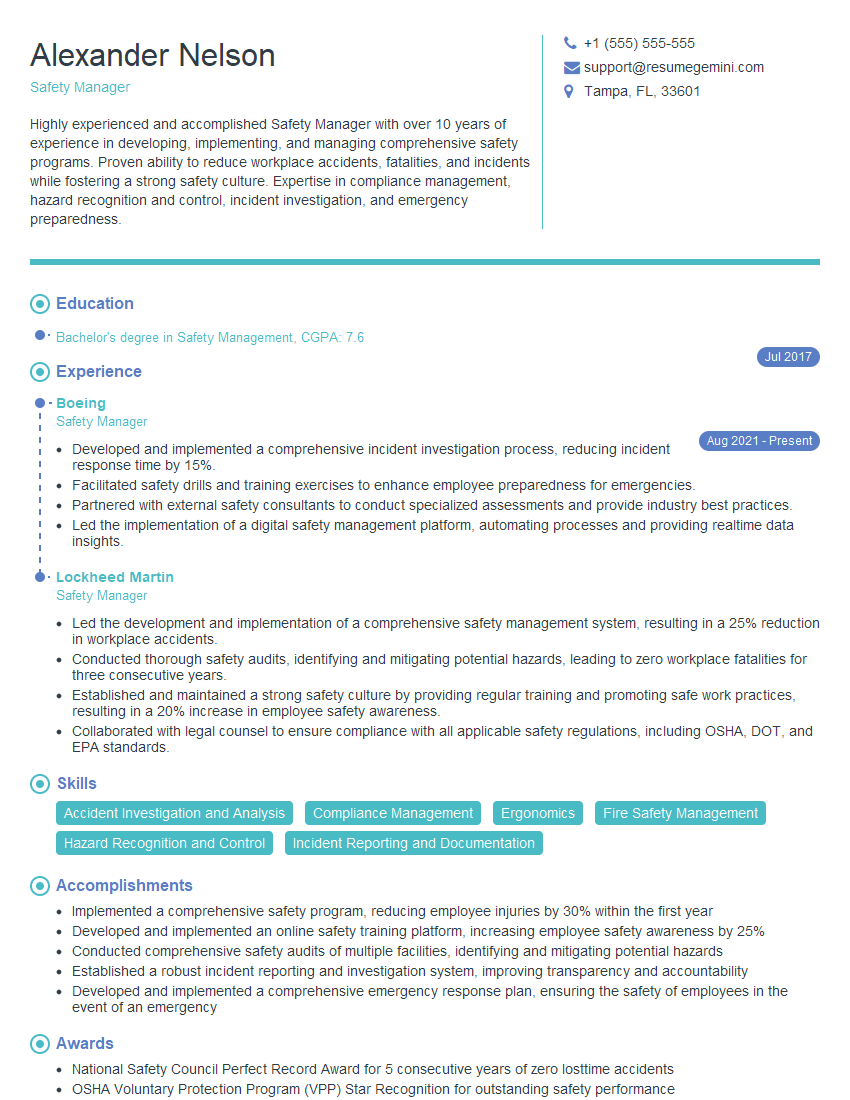
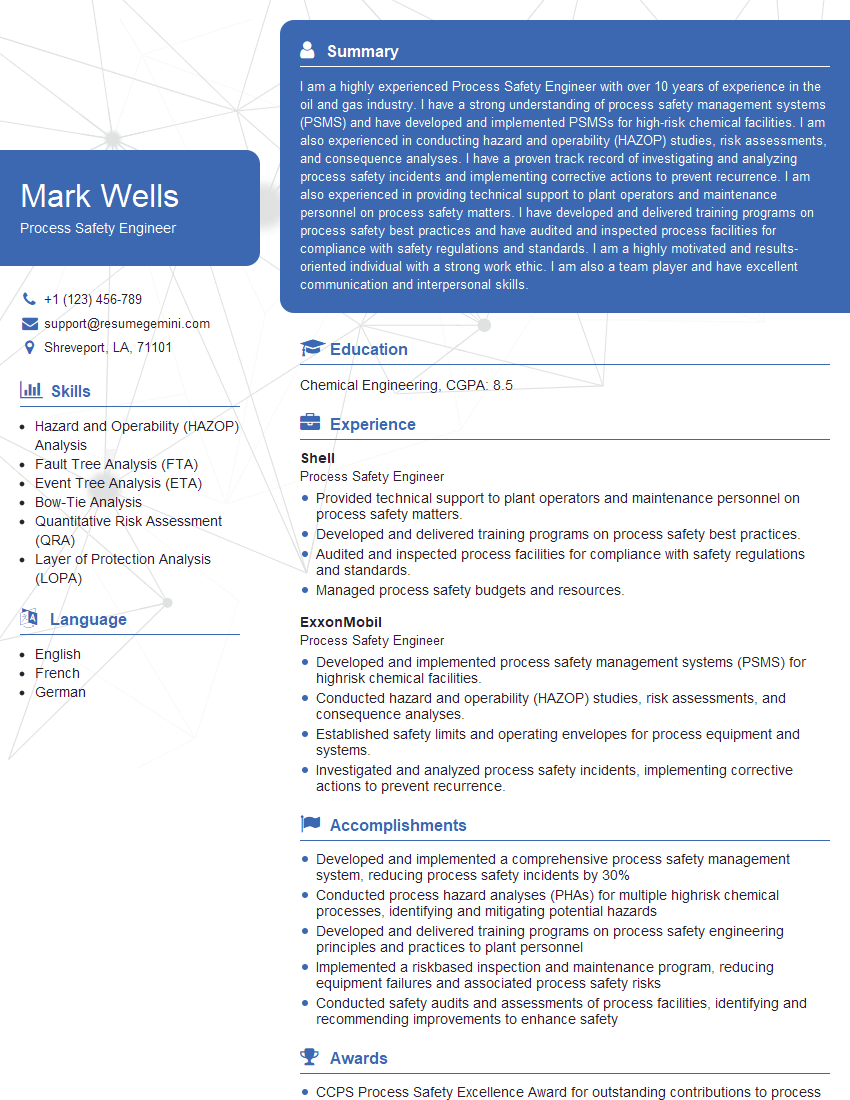
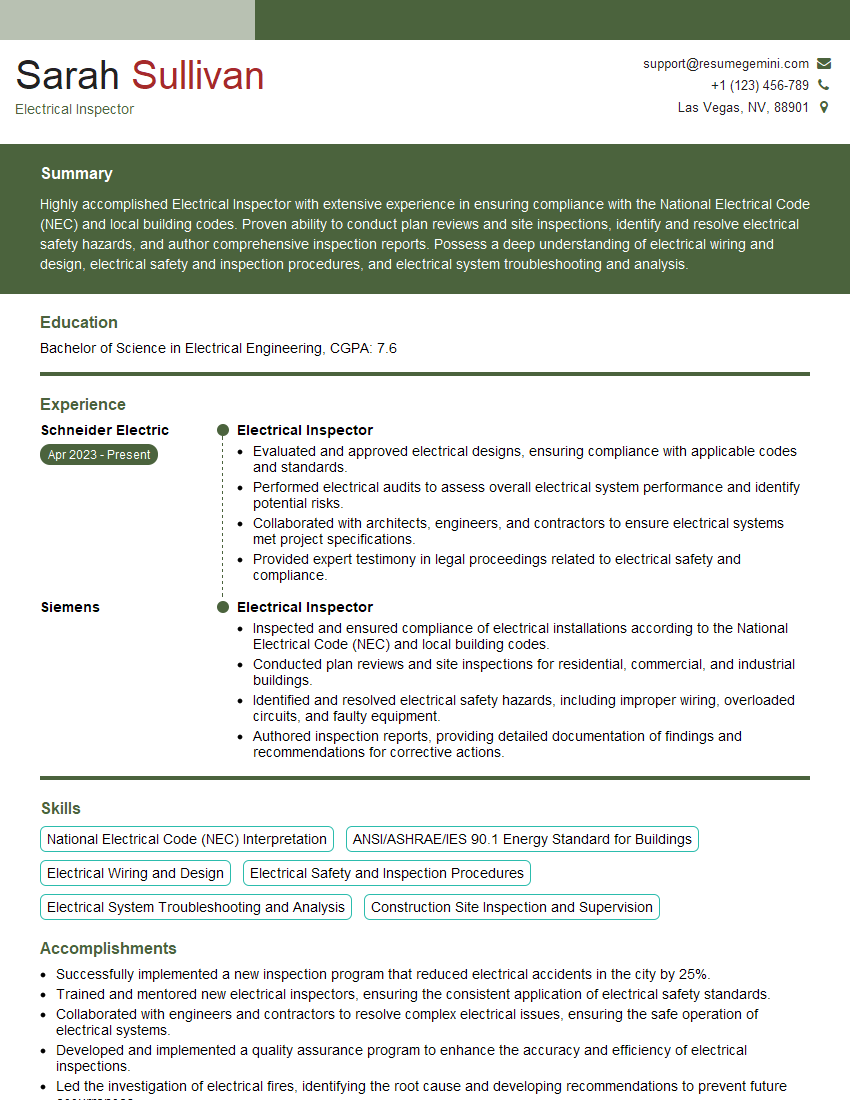
Mastering Arc Flash Hazard Assessment is crucial for career advancement in electrical safety and engineering. A strong understanding of these concepts demonstrates your commitment to safety and your ability to contribute significantly to any team. To increase your job prospects, focus on creating an ATS-friendly resume that highlights your skills and experience effectively. ResumeGemini is a trusted resource that can help you build a professional resume tailored to the specific requirements of your target roles. Examples of resumes tailored to Arc Flash Hazard Assessment are available within ResumeGemini to guide you.


Explore more articles
Users Rating of Our Blogs
Share Your Experience
We value your feedback! Please rate our content and share your thoughts (optional).
What Readers Say About Our Blog
To the interviewgemini.com Webmaster.
Very helpful and content specific questions to help prepare me for my interview!
Thank you
To the interviewgemini.com Webmaster.
This was kind of a unique content I found around the specialized skills. Very helpful questions and good detailed answers.
Very Helpful blog, thank you Interviewgemini team.