Interviews are opportunities to demonstrate your expertise, and this guide is here to help you shine. Explore the essential Architectural Glass Design and Specifications interview questions that employers frequently ask, paired with strategies for crafting responses that set you apart from the competition.
Questions Asked in Architectural Glass Design and Specifications Interview
Q 1. Explain the different types of architectural glass and their applications.
Architectural glass comes in a wide variety of types, each suited for different applications. The choice depends on factors like aesthetics, performance requirements (strength, insulation, light transmission), and budget.
- Annealed Glass: This is standard, basic glass. It’s relatively inexpensive but shatters into sharp shards upon impact, limiting its use to applications where safety isn’t paramount, such as interior partitions or shelving.
- Tempered (Heat-Strengthened) Glass: This glass is heated and rapidly cooled, making it four to five times stronger than annealed glass. It breaks into small, relatively harmless granules upon impact, making it suitable for exterior applications like storefront windows, doors, and curtain walls.
- Laminated Glass: This consists of two or more layers of glass bonded together with a polyvinyl butyral (PVB) interlayer. The interlayer holds the glass fragments together even after breakage, preventing penetration and offering enhanced safety and security. It’s commonly used in automotive windshields, hurricane-resistant glazing, and high-traffic areas.
- Insulated Glass Units (IGUs): These are made of two or more panes of glass separated by a hermetically sealed air or gas space, improving thermal insulation and reducing noise pollution. IGUs are ideal for energy-efficient buildings.
- Low-Emissivity (Low-E) Glass: This glass has a microscopic coating that reflects infrared radiation, reducing heat transfer. It significantly improves energy efficiency and is widely used in both residential and commercial buildings.
- Tinted Glass: This glass absorbs a portion of the visible light spectrum, reducing glare and solar heat gain. It’s often used in sunny climates to improve comfort and reduce cooling loads.
- Patterned Glass: This glass features decorative patterns or textures, offering privacy while still allowing diffused light transmission. It’s often used in bathrooms or office partitions.
For instance, a high-end residential project might use laminated Low-E IGUs for optimal energy efficiency and safety, while a commercial building might opt for tempered glass in its curtain wall for durability and impact resistance.
Q 2. Describe the process of specifying glass for a high-rise building.
Specifying glass for a high-rise building is a complex process requiring collaboration between architects, engineers, and glazing contractors. It involves a thorough analysis of several factors:
- Structural Performance: The glass must withstand wind loads, seismic activity, and its own weight. This necessitates detailed engineering calculations to determine the required thickness and type of glass.
- Thermal Performance: Energy efficiency is crucial. The specification should include details on U-values (heat transfer coefficient) and solar heat gain coefficient (SHGC) to meet energy codes and reduce operational costs. This often leads to the selection of Low-E coated IGUs.
- Acoustic Performance: In urban environments, noise reduction is paramount. The glass specification should address sound transmission class (STC) ratings to minimize noise intrusion.
- Safety and Security: High-rise buildings often require laminated glass or other safety-enhancing features to prevent glass breakage and potential injury. Impact-resistant glass might also be necessary.
- Aesthetics: The appearance of the glass is essential to the building’s design. The specification should include details on color, reflectivity, and transparency.
- Durability and Maintenance: The chosen glass should be durable and resistant to weathering, scratches, and cleaning agents. The long-term maintenance implications should also be considered.
- Budget: Cost is always a factor. The specification needs to balance performance requirements with budgetary constraints.
The process involves creating detailed specifications, drawings, and samples to ensure that the chosen glass meets all performance requirements. Regular quality control inspections throughout the construction process are also necessary to guarantee compliance.
Q 3. What are the key considerations for designing a curtain wall system?
Designing a curtain wall system involves careful consideration of numerous factors to ensure structural integrity, weather resistance, and aesthetic appeal. Think of it as a sophisticated puzzle where each piece must fit perfectly.
- Structural Design: This is paramount. The system must withstand wind loads, seismic forces, and dead loads (weight of the wall itself). Engineers use sophisticated software to model the building’s response to these forces.
- Weather Resistance: The system needs to be completely airtight and watertight. This requires meticulous detailing of the connections between the glass panels, framing members, and sealant systems. The choice of sealant and its application method are crucial here.
- Thermal Performance: Energy efficiency is crucial. The system should minimize heat transfer, reducing energy consumption for heating and cooling. The use of thermal breaks in the framing and highly insulated glass units is crucial.
- Aesthetics: The design should complement the overall architecture. This involves choosing materials, finishes, and glazing systems to create the desired visual effect. Considerations include glass type, color, reflectivity, and framing materials.
- Accessibility and Maintenance: Design should incorporate features that allow for easy cleaning and maintenance of the exterior glass. This often involves incorporating cleaning systems or planning access for window washers.
- Safety and Security: The system should meet safety codes and provide adequate protection against intrusion. This requires attention to details such as the type of glass, connection systems, and security features.
Imagine designing a curtain wall for a skyscraper: You’d need to carefully balance all these factors, using advanced software simulations and extensive engineering calculations to ensure the building’s safety and long-term performance.
Q 4. How do you ensure compliance with building codes and safety standards for glass installations?
Ensuring compliance with building codes and safety standards for glass installations is non-negotiable. Failure to do so can have serious consequences, including legal liability and structural failure.
- Code Research: The first step is a thorough review of all applicable building codes and standards. These vary by location and jurisdiction, so it’s essential to identify the specific requirements.
- Material Selection: Selecting appropriate glass types and thicknesses is crucial. This is based on performance requirements dictated by the building codes and the specific building’s location and exposure.
- Engineering Calculations: Detailed engineering calculations are necessary to demonstrate that the glass system can withstand the design loads. This ensures that the glass will not fail under wind, seismic, or other external loads.
- Testing and Certification: Independent testing and certification are often required to verify that materials and the entire system meet the specified performance criteria. This might involve wind load testing, impact testing, or other relevant tests.
- Installation Standards: Adherence to proper installation practices is critical. This involves following manufacturer’s instructions and employing skilled and qualified installers. Regular quality control inspections are important throughout the process.
- Documentation: Maintaining comprehensive documentation is crucial. This includes design calculations, test reports, material certifications, and installation records. This documentation is vital for demonstrating compliance in the event of an inspection or legal dispute.
For example, in a hurricane-prone region, the building codes will mandate the use of impact-resistant laminated glass to protect against high winds and flying debris. All this documentation is crucial for permitting and insurance purposes.
Q 5. Explain the difference between annealed, tempered, and laminated glass.
These three types of glass represent different levels of strength and safety:
- Annealed Glass: This is the standard, basic glass produced through a controlled cooling process. It’s relatively inexpensive but prone to shattering into sharp, dangerous fragments upon impact. Think of ordinary window glass.
- Tempered Glass (Heat-Strengthened): This glass is heated to a high temperature and then rapidly cooled. This process introduces compressive stresses into the surface, making it significantly stronger than annealed glass. When broken, it shatters into small, relatively harmless granules, making it safer than annealed glass. It’s often used in applications where impact resistance is important, like shower doors and car side windows.
- Laminated Glass: This comprises two or more layers of glass bonded together by an interlayer, usually polyvinyl butyral (PVB). Even if the glass breaks, the interlayer holds the fragments together, preventing penetration and significantly enhancing safety. It’s commonly used in car windshields, security glazing, and hurricane-resistant windows.
Imagine a simple analogy: annealed glass is like a single brick; it’s easily broken and creates sharp edges. Tempered glass is like a tightly bound bundle of bricks; it’s much harder to break. Laminated glass is like a brick wall with a strong adhesive holding it together; even if some bricks break, the wall remains largely intact.
Q 6. What are the advantages and disadvantages of using different types of glass coatings?
Glass coatings offer significant advantages in terms of performance and aesthetics, but they also have some drawbacks.
- Low-E Coatings: These coatings reflect infrared radiation, reducing heat transfer and improving energy efficiency. Advantages: Reduced energy bills, improved comfort. Disadvantages: Can slightly reduce visible light transmission, and some coatings are more susceptible to scratching than others.
- Solar Control Coatings: These coatings reduce solar heat gain, minimizing glare and cooling loads. Advantages: Reduced cooling costs, improved comfort. Disadvantages: Can affect the color appearance of the glass, potentially reducing visible light transmission.
- Self-Cleaning Coatings: These coatings make cleaning easier by breaking down dirt and grime. Advantages: Reduced maintenance costs. Disadvantages: Can be more expensive than standard glass, and the coating’s effectiveness can degrade over time.
The choice of coating depends on the specific application and priorities. For a building in a hot climate, solar control coatings might be preferable, while in a cold climate, Low-E coatings might be more suitable. Cost, longevity, and potential impact on aesthetics are all critical considerations.
Q 7. How do you calculate the structural load capacity of a glass panel?
Calculating the structural load capacity of a glass panel is a complex engineering task requiring specialized software and expertise. It’s not something that can be easily explained with a simple formula.
The process generally involves:
- Determining the loads: This includes dead loads (weight of the glass itself), live loads (occupancy loads, snow, wind), and any other relevant forces (seismic loads).
- Analyzing the stresses: This involves using finite element analysis (FEA) software to simulate the behavior of the glass panel under various load conditions. The software considers the glass’s material properties, its dimensions, and the support conditions.
- Determining the safety factor: A safety factor is applied to account for uncertainties in the load calculations and material properties. This ensures a sufficient margin of safety.
- Checking for compliance: The results of the analysis are checked against the relevant building codes and standards to ensure that the glass panel meets the required safety and performance criteria.
This requires the expertise of a structural engineer specializing in glass design. They will use sophisticated software and consider various factors to ensure the safety and reliability of the glass installation.
Attempting to calculate this without the necessary expertise and software is dangerous and could lead to serious consequences.
Q 8. What are the common methods of attaching glass to a building structure?
Attaching glass to a building structure requires careful consideration of the glass type, building design, and environmental factors. Several common methods exist, each with its own advantages and disadvantages.
- Structural Silicone Glazing (SSG): This method uses a high-performance silicone sealant to bond the glass directly to the frame or building structure. It’s favored for its clean aesthetic and ability to accommodate movement. I’ve used this extensively on curtain walls, offering excellent weather resistance and longevity. Think of it like a strong, flexible glue perfectly suited for large glass panels.
- Spigot and Channel Systems: These systems use metal components to support the glass, offering a robust and adjustable solution. The glass sits within a channel, and spigots (small metal pins) provide additional support. This method is ideal for heavy glass panels and allows for easy replacement if needed. I used this on a recent project involving very large, thick glass panels for a museum atrium – the adjustability was key during installation.
- Point-Fixed Systems: In point-fixed systems, the glass is held in place by small, discreet fasteners at specific points. This approach creates a minimalist, visually appealing design often seen in modern architecture. However, careful calculations and high-quality components are vital to ensure structural integrity. This system’s elegance is perfect for sleek, contemporary facades, but requires precise engineering.
- Frameless Glass Systems: These systems use specialized connectors to join glass panels together without visible frames. This approach delivers a stunning, uninterrupted view, but necessitates high-precision fabrication and installation techniques, along with robust structural calculations to account for the lack of traditional framing. I was involved in a project utilizing this system for a luxury penthouse suite; the challenge was meeting stringent aesthetic standards while ensuring structural safety.
Q 9. Describe your experience with different types of glass sealants and gaskets.
My experience encompasses a wide range of sealants and gaskets, each chosen based on specific project requirements. The selection criteria involve factors like weather exposure, glass type, movement accommodation, and longevity.
- Silicone Sealants: I’ve worked extensively with structural silicone glazing sealants, both one-part and two-part systems. The choice often depends on the cure time and specific performance characteristics needed (e.g., high movement capability, UV resistance). I’ve found that selecting a high-quality, reputable brand is crucial for ensuring a long-lasting, reliable seal.
- Polyurethane Sealants: These sealants are known for their excellent adhesion and flexibility, making them suitable for various applications. However, they require careful handling due to their relatively quick curing time. I’ve used these in conjunction with other sealing methods to enhance overall weather tightness.
- EPDM Gaskets: Ethylene Propylene Diene Monomer (EPDM) gaskets are incredibly durable and resistant to UV degradation and ozone, making them a common choice for many framing systems. They provide a reliable compression seal, helping to prevent water and air infiltration. I’ve frequently specified these for their long-term performance, especially in harsh climates.
- Neoprene Gaskets: Offering good flexibility and sealing properties, neoprene gaskets are another viable option, often used in conjunction with other sealing methods. Their use depends on specific project needs; they’re less weather-resistant than EPDM in the long term.
Understanding the chemical compatibility between different sealants and glass types is critical to avoid premature failure. I always carefully review the manufacturer’s recommendations and conduct thorough testing when needed.
Q 10. How do you address potential issues related to thermal bridging and condensation in glass designs?
Thermal bridging and condensation are significant concerns in glass design. Addressing these requires a multi-pronged approach.
- Thermal Bridging Mitigation: Thermal bridging occurs when heat flows easily through conductive materials, such as metal framing. To mitigate this, I specify thermally broken framing systems that incorporate insulation within the frame, effectively reducing heat transfer. I’ve found that using high-performance insulating glass units (IGUs) with low-E coatings is equally critical in minimizing heat transfer.
- Condensation Control: Condensation is caused by warm, humid air encountering a cold glass surface. To prevent this, we employ strategies such as selecting IGUs with appropriate spacing and gas fills (argon or krypton) to improve insulation. Proper ventilation and desiccant systems can also help control humidity levels within the building envelope. In projects with particularly challenging climates, I might specify heated glass or incorporate specialized coatings to further reduce condensation.
Proper detailing and specifying appropriate materials are key to success in preventing both thermal bridging and condensation. I always conduct thermal simulations to analyze the performance of the proposed designs, ensuring they meet the required standards for energy efficiency and comfort.
Q 11. Explain your experience with BIM software for glass design and detailing.
BIM (Building Information Modeling) software is indispensable in my work. I’m proficient in several leading BIM platforms, using them extensively for glass design and detailing.
- Model Creation: I use BIM to create accurate 3D models of glass systems, including framing, connections, and IGUs. This allows for thorough clash detection and coordination with other building elements, eliminating potential issues during construction.
- Quantity Takeoffs: BIM simplifies quantity takeoff, providing accurate measurements for materials and labor estimations. This leads to more precise budgeting and scheduling.
- Fabrication Drawings: I leverage BIM to generate precise fabrication drawings for glass fabricators, reducing ambiguity and errors. This ensures that the fabricated components perfectly integrate into the building.
- Collaboration and Coordination: BIM facilitates seamless collaboration with architects, engineers, and contractors. I’ve found it particularly useful for resolving design conflicts and coordinating installations effectively.
My BIM proficiency ensures the projects meet the highest quality and precision standards, minimizing rework and delays.
Q 12. How do you manage the budget and schedule for a glass installation project?
Managing budget and schedule for a glass installation project necessitates careful planning and execution.
- Detailed Cost Estimation: I work closely with quantity surveyors to develop comprehensive cost estimations based on the design, material specifications, and labor rates. I’ve learned that accounting for contingencies is crucial to ensure the budget can absorb unexpected issues.
- Realistic Scheduling: Creating a realistic schedule involves considering the lead times for material procurement, fabrication, and installation. I utilize critical path analysis techniques to identify potential bottlenecks and ensure timely completion. I also factor in potential weather delays, especially for exterior glazing.
- Value Engineering: During the design phase, I proactively explore value engineering opportunities, suggesting alternative materials or construction methods to optimize costs without compromising quality. This involves careful trade-off analysis between cost, performance, and aesthetics.
- Regular Monitoring and Reporting: Throughout the project lifecycle, I maintain meticulous records, tracking expenses and progress. Regular reporting keeps all stakeholders informed and allows for proactive adjustments to the budget and schedule as needed.
A proactive approach, combined with detailed planning, is crucial for successful budget and schedule management.
Q 13. Describe your experience with sustainable glass solutions and their impact on energy efficiency.
Sustainable glass solutions are increasingly important, offering significant energy efficiency benefits. My experience encompasses a range of these solutions.
- Low-E Coatings: Low-emissivity coatings reduce heat transfer through the glass, minimizing energy consumption for both heating and cooling. I often specify these coatings for IGUs to maximize energy savings. I’ve seen significant reductions in energy bills in projects that utilize low-E glass.
- Solar Control Glass: This glass is designed to reduce solar heat gain, keeping buildings cooler during the summer months and minimizing the load on air conditioning systems. I carefully consider the solar heat gain coefficient (SHGC) when specifying glass for different climates and orientations.
- Recycled Glass Content: Increasingly, I opt for glass products with a higher percentage of recycled content, reducing the environmental impact of construction. This aligns with sustainable building practices and contributes to reducing landfill waste.
- Triple Glazing: Triple-glazed IGUs offer even higher insulation values compared to double glazing, significantly reducing energy loss. The added cost is often justified by the long-term energy savings, especially in cold climates.
Incorporating sustainable glass solutions improves a building’s environmental performance, contributing to a reduced carbon footprint and lower operating costs.
Q 14. What are the common challenges in working with glass in different climates?
Glass performance varies significantly depending on climate. Addressing these challenges requires careful material selection and design considerations.
- Extreme Temperatures: In extreme temperatures (both hot and cold), the thermal expansion and contraction of glass can lead to stress and potential cracking. I select glass types with appropriate thermal properties and employ design strategies that minimize stress. For instance, using thermally broken framing helps to mitigate the effects of temperature fluctuations.
- Humidity and Moisture: High humidity can contribute to condensation and potential corrosion of metal components. I address this by specifying appropriate sealants and gaskets, ensuring adequate ventilation, and considering the use of moisture-resistant materials. In coastal areas, selecting glass resistant to salt spray is also essential.
- Wind Loads: High wind loads can impose significant pressure on glass facades. I utilize structural analysis and engineering calculations to ensure the design meets the necessary wind load requirements. This might involve the use of laminated glass or increased glass thickness.
- UV Degradation: Prolonged exposure to UV radiation can degrade glass and sealants over time. I specify glass with UV-resistant coatings and high-quality sealants to minimize these effects. For projects in areas with intense sunlight, additional protection might be needed.
Careful consideration of climate-specific factors during the design and specification phase is crucial for ensuring the long-term performance and durability of the glass system.
Q 15. How do you address issues related to glass breakage and safety?
Addressing glass breakage and safety is paramount in architectural glass design. It involves a multi-pronged approach focusing on material selection, robust installation, and safety features.
- Material Selection: We specify laminated glass for areas requiring high safety, like entrances or balustrades. Laminated glass, with its interlayer (usually PVB or SentryGlas), holds the glass shards together even after breakage, preventing injuries from falling fragments. For high-impact areas, we might specify toughened (tempered) glass, which shatters into small, relatively harmless pieces.
- Installation Practices: Proper installation is critical. This includes using appropriate fixings, ensuring the glass is correctly supported, and avoiding stress points that could lead to breakage. For instance, improper sealant application can cause significant stress on the glass over time. We meticulously review installation plans and conduct site inspections to ensure best practices are followed.
- Safety Features: In high-risk locations, we may specify safety films or other protective coatings. These films can significantly improve impact resistance and hold the glass together in case of breakage. We also consider the use of protective screens or barriers where appropriate.
For example, in a recent project involving a large glass atrium, we specified SentryGlas interlayer laminated glass for its superior strength and impact resistance, greatly reducing the risk of injury in case of accidental damage.
Career Expert Tips:
- Ace those interviews! Prepare effectively by reviewing the Top 50 Most Common Interview Questions on ResumeGemini.
- Navigate your job search with confidence! Explore a wide range of Career Tips on ResumeGemini. Learn about common challenges and recommendations to overcome them.
- Craft the perfect resume! Master the Art of Resume Writing with ResumeGemini’s guide. Showcase your unique qualifications and achievements effectively.
- Don’t miss out on holiday savings! Build your dream resume with ResumeGemini’s ATS optimized templates.
Q 16. Explain your experience with different types of glass testing and certification.
My experience encompasses a wide range of glass testing and certifications. We routinely specify and verify that the glass used meets relevant international standards and local building codes.
- Impact Resistance Tests: These assess a glass’s ability to withstand impacts from objects of varying weights and speeds. We use test results to verify the suitability of the glass for specific applications. For example, we might require a test to verify impact resistance for a glass storefront in a high-traffic area.
- Thermal Shock Tests: These are crucial for applications where the glass experiences rapid temperature changes, such as curtain walls. These tests ensure the glass can withstand thermal stress without cracking or shattering.
- Acoustic Testing: For projects demanding sound insulation, acoustic performance tests are conducted to determine the glass’s sound reduction capabilities. We use this data to select the appropriate glass thickness and specifications to meet the acoustic requirements.
- Certifications: We work with manufacturers who hold certifications like CE marking (European Conformity) or ANSI (American National Standards Institute) to ensure that the glass meets recognised standards of quality and safety.
In a recent hospital project, we ensured that all the glass used in operating theatres met stringent acoustic standards to minimize noise pollution and maintain a quiet surgical environment. This involved specifying laminated glass with an acoustic interlayer and rigorous testing to validate its performance.
Q 17. How do you select appropriate glass for specific performance requirements (e.g., acoustic, solar control)?
Selecting appropriate glass for specific performance requirements involves a careful consideration of several factors. This is a balance between aesthetics and performance.
- Solar Control: For reducing solar heat gain, we might specify low-e (low-emissivity) coated glass, which reflects infrared radiation, keeping the building cooler. The specific coating type depends on the climate and desired level of solar control. We often use computer modeling to simulate solar performance and optimize the glass selection.
- Acoustic Performance: To reduce noise transmission, we select laminated glass with specific interlayers designed to dampen sound waves. The thickness of the glass and the interlayer also impact acoustic performance. The glass needs to meet the acoustic targets, typically expressed as Sound Transmission Class (STC) ratings.
- Thermal Performance: We consider the U-value (thermal transmittance) of the glass, which indicates its ability to insulate. Lower U-values represent better insulation. This becomes particularly important in energy-efficient building designs. The climate, the local building codes, and the overall energy efficiency of the project dictate this.
- Light Transmission: The level of visible light transmittance (VLT) is also important for interior lighting. We select glass with appropriate VLT values to ensure sufficient natural light while managing glare and heat gain.
For instance, in a high-rise office building project, we selected a triple-glazed unit with low-e coatings and an acoustic interlayer to provide excellent thermal and acoustic performance, as well as sufficient natural light and glare reduction.
Q 18. Describe your experience with different types of glass hardware and fittings.
My experience includes a wide range of glass hardware and fittings, understanding their specific applications and limitations is essential.
- Spigots and Clamps: These are used for fixing glass to frames. The choice depends on glass thickness, weight, and the type of frame material. We carefully select spigots and clamps to ensure a secure and aesthetically pleasing installation, avoiding stress on the glass.
- Hinges and Pivots: These are critical for operable windows and doors. We specify hinges and pivots based on the weight and size of the glass, ensuring smooth operation and durability.
- Sealants and Adhesives: The appropriate sealant is crucial to prevent water ingress and maintain the structural integrity of the glass system. We specify sealants with appropriate properties for the specific application and environmental conditions.
- Glass Fittings: This encompasses a broad range of items from handrails and balustrade fittings to specialized fittings for shower enclosures or internal partitions. The choice depends on safety requirements, aesthetic considerations, and the overall design intent.
In a recent project involving a large glass facade, we carefully selected structural silicone sealants with high movement capabilities to accommodate thermal expansion and contraction of the building and the glass.
Q 19. What are your methods for troubleshooting problems during glass installation?
Troubleshooting glass installation problems requires a systematic approach.
- Visual Inspection: We begin with a thorough visual inspection to identify any obvious issues like cracked glass, improper sealing, or misaligned frames. This often reveals the root cause of the problem.
- Check Installation Drawings: We cross-reference the observed issues with the original installation drawings to identify deviations from the specified procedures. We confirm that the glass is properly supported and fixed, and if not, we figure out the reasons why it is not.
- Material Testing: If the issue persists, we may conduct on-site tests to determine the integrity of the glass or sealants. This might involve checking the structural capacity of the support system or testing the adhesion properties of sealants.
- Consult with Specialists: In cases of complex issues, we engage structural engineers or glass specialists to evaluate the situation and recommend corrective solutions. This ensures that the issue is resolved effectively and safely.
For example, if we notice excessive deflection in a glass panel after installation, we will investigate whether it’s due to an overload, inadequate support structure, or material issues, leading us to a suitable solution, possibly re-engineering the support structure or replacing the glass.
Q 20. How do you handle changes in designs and specifications during the project lifecycle?
Handling design and specification changes is a critical aspect of project management. We establish a clear change management process to mitigate disruptions.
- Formal Change Requests: All changes must be documented formally as change requests. This ensures that the impact of the changes is fully assessed before implementation.
- Impact Assessment: Each change request is carefully reviewed to determine its impact on the project schedule, budget, and performance requirements. We may involve other stakeholders, like architects or contractors, in this assessment.
- Revised Drawings and Specifications: Once approved, revised drawings and specifications are issued to all relevant parties. This ensures everyone works from the latest information.
- Cost Implications: Any cost implications associated with the changes are clearly documented and agreed upon. We maintain transparency by clearly communicating these cost changes to the relevant stakeholders.
In a recent project, a change in the design required a modification to the glass specification. We followed a formal change management process, including impact assessments and cost analysis, to ensure the project was completed efficiently and without compromising the design or quality.
Q 21. Explain your experience with different types of glass fabrication methods.
My experience covers various glass fabrication methods, each suited for different applications and designs.
- Float Glass Production: This is the most common method, involving floating molten glass on a bed of molten tin to create a flat, uniform sheet. We often specify float glass as a base for further processing.
- Tempering (Toughening): This process involves heating the glass to a high temperature and then rapidly cooling it, increasing its strength and resistance to impact and thermal shock. This is essential for many structural applications.
- Laminating: This involves bonding two or more glass sheets together with an interlayer, typically PVB or SentryGlas. This creates laminated glass, which provides enhanced safety, acoustic performance, and security.
- Insulating Glass Units (IGUs): These are assembled by sealing multiple glass panes with a spacer bar to create an air or gas-filled cavity, improving thermal insulation and acoustic performance.
- Digital Printing and Coating: Advances allow for digital printing of images or designs directly onto glass, and specialized coatings can be applied for enhanced performance characteristics, including solar control and self-cleaning.
The choice of fabrication method depends entirely on the project’s design, performance requirements, and the budget. For instance, in a museum project, we specified laminated glass with a UV-protective interlayer to protect valuable artifacts while also employing digital printing on the glass to create an aesthetically pleasing design.
Q 22. How do you ensure the quality of the glass products used in your projects?
Ensuring the quality of glass products is paramount. It starts long before installation. We begin by specifying precise glass types, thicknesses, and performance characteristics in the project documentation. This includes specifying the required performance standards for factors like strength (impact resistance), thermal performance (U-value), and solar control (SHGC). We then work closely with the selected supplier to verify that their manufacturing processes align with these standards. This involves requesting certifications, such as CE marking for European standards or ANSI/AISC standards for North America, and reviewing mill test reports (MTRs) for individual batches of glass. On-site inspections during the installation phase also help verify that the glass delivered matches the specifications and is handled properly to prevent damage. Finally, regular quality checks throughout the project lifecycle help to ensure consistent quality.
For instance, on a recent high-rise project, we specified laminated glass with a specific interlayer to meet stringent blast resistance requirements. We received MTRs for every pane to verify compliance and even conducted independent testing on a sample to be completely certain. This level of scrutiny minimized risk and ensured the building’s safety.
Q 23. What are the key considerations for selecting a glass supplier?
Selecting a glass supplier involves a thorough vetting process that goes beyond just price. We look for suppliers who demonstrate a commitment to quality, reliability, and innovation. This includes evaluating their:
- Experience and Reputation: We research their track record on similar projects, looking for evidence of successful project delivery.
- Manufacturing Capabilities: Do they have the capacity to produce the required volume and types of glass in a timely manner? Do they possess modern, state-of-the-art equipment?
- Quality Control Processes: What measures do they have in place to ensure consistent product quality? Access to detailed quality control documentation and certifications is critical.
- Financial Stability: A stable supplier ensures that they can fulfill their obligations, even if there are unforeseen delays or complications.
- Logistics and Delivery: Can they reliably deliver the glass on schedule and in perfect condition? This includes careful packaging and handling procedures.
Ultimately, the selection process prioritizes finding a reliable partner committed to delivering high-quality products that meet or exceed the project’s requirements. We don’t solely rely on price; the long-term consequences of choosing a substandard supplier are far greater.
Q 24. Describe your experience with managing subcontractors involved in glass installation.
Managing subcontractors for glass installation requires proactive and detailed planning. Before the project even begins, we carefully vet potential subcontractors, focusing on their experience, safety record, insurance, and licensing. We establish clear communication channels, ensuring that all parties understand their roles and responsibilities. We provide detailed specifications and drawings, and hold regular meetings to discuss progress, address potential challenges, and resolve conflicts before they escalate. A crucial aspect is establishing a strong safety protocol – glass installation is inherently risky, and ensuring compliance with all safety regulations is a top priority. Regular site visits and inspections help to monitor progress, enforce quality standards, and identify any potential issues.
In one project, we discovered a subcontractor’s crew using an improper lifting technique. Addressing this immediately through retraining and on-site supervision prevented a potential accident and ensured the project’s success. Thorough planning and communication are keys to managing subcontractors effectively.
Q 25. How do you manage risk associated with glass projects?
Risk management in glass projects involves a multi-layered approach. We identify potential risks early in the design process through a thorough risk assessment, considering factors such as glass type, building height, environmental conditions, and installation complexity. This assessment guides the selection of materials, designs, and installation methods to mitigate these risks. For example, using appropriate anchoring systems, choosing impact-resistant glass, and employing skilled installers reduce the risks of breakage or failure. We also build contingency plans into the schedule and budget to account for potential delays or unexpected issues. Insurance coverage is crucial, ensuring that the project is protected against unforeseen events. Detailed documentation and regular communication help to track progress, identify emerging risks, and implement appropriate corrective actions promptly.
Q 26. What are some innovative trends in architectural glass design?
The field of architectural glass design is constantly evolving. Some exciting trends include:
- Smart Glass: Electrochromic, thermochromic, and photochromic glass technologies offer dynamic control over light transmission, reducing energy consumption and improving occupant comfort.
- Printed Glass: Digital printing allows for intricate designs and patterns to be applied directly to the glass, creating unique aesthetic effects.
- Laminated Glass Innovations: New interlayers offer improved performance in terms of impact resistance, acoustic insulation, and security.
- Sustainable Glass: Recycled content and improved energy efficiency in manufacturing are increasingly important considerations.
- Large-Format Glass: Advances in manufacturing allow for the creation of extremely large glass panels, maximizing natural light and creating stunning architectural features.
These innovations offer architects and designers more creative possibilities while also improving the sustainability and performance of buildings.
Q 27. Describe your experience in designing for accessibility requirements with glass.
Designing for accessibility with glass requires careful attention to detail. We prioritize the use of clear, durable glass to ensure that those with visual impairments can easily navigate spaces. We adhere strictly to building codes related to the placement and labeling of glass elements, using tactile warnings where required to help people avoid accidental collisions. For example, using strategically placed decals, markings, and other warning systems can improve the safety of glass installations significantly. In addition, we consider the strength and robustness of the glass, particularly in areas where impact is more likely, to ensure the safety of all users. Properly specified and designed glass installations are vital to create inclusive and accessible buildings for everyone.
Q 28. How do you ensure the long-term maintenance and durability of glass installations?
Ensuring the long-term maintenance and durability of glass installations involves several key steps. First, we specify high-quality, durable glass that is appropriate for the building’s environment and intended use. We work with the building owner or property manager to develop a comprehensive maintenance plan, specifying appropriate cleaning and inspection schedules. This plan should outline procedures for cleaning glass surfaces, inspecting for damage, and addressing any issues promptly. Regular inspection allows early detection of potential problems, preventing them from escalating and causing more extensive damage. The choice of cleaning agents and methods is also critical, and we guide building managers to use suitable and non-abrasive products. Finally, clear documentation of the glass type, specifications, and maintenance procedures is crucial for ensuring long-term performance and preventing costly repairs down the line.
Key Topics to Learn for Architectural Glass Design and Specifications Interview
- Glass Selection & Properties: Understanding various glass types (e.g., annealed, tempered, laminated, insulated), their performance characteristics (strength, thermal properties, acoustic insulation, light transmission), and appropriate applications based on project requirements.
- Performance & Energy Efficiency: Applying knowledge of U-values, solar heat gain coefficients (SHGC), visible light transmittance (VLT), and calculating energy performance of glazing systems to meet building codes and sustainability goals. Practical application involves selecting appropriate glass and coatings to optimize energy efficiency.
- Structural Design & Calculations: Understanding the principles of glass stress, deflection, and load bearing capacity. Ability to interpret structural calculations and ensure the chosen glass meets the necessary structural requirements. This includes familiarity with relevant building codes and standards.
- Glazing Systems & Details: Familiarity with different types of glazing systems (e.g., curtain walls, windows, storefronts), their components, and detailing requirements for water tightness, air leakage, and thermal performance. Practical application includes understanding system limitations and selecting the appropriate system for the design.
- Code Compliance & Regulations: Knowledge of relevant building codes, standards, and safety regulations pertaining to architectural glass design and specifications. This includes understanding requirements for safety glass, impact resistance, and accessibility.
- Sustainability & LEED Considerations: Understanding sustainable glass options, their environmental impact, and incorporating them into designs to meet LEED or other green building certification requirements.
- Problem-solving & Design Challenges: Ability to identify and solve common design challenges related to architectural glass, such as condensation, solar glare, thermal bridging, and acoustic issues. This involves creative problem-solving and finding optimal solutions within design constraints.
Next Steps
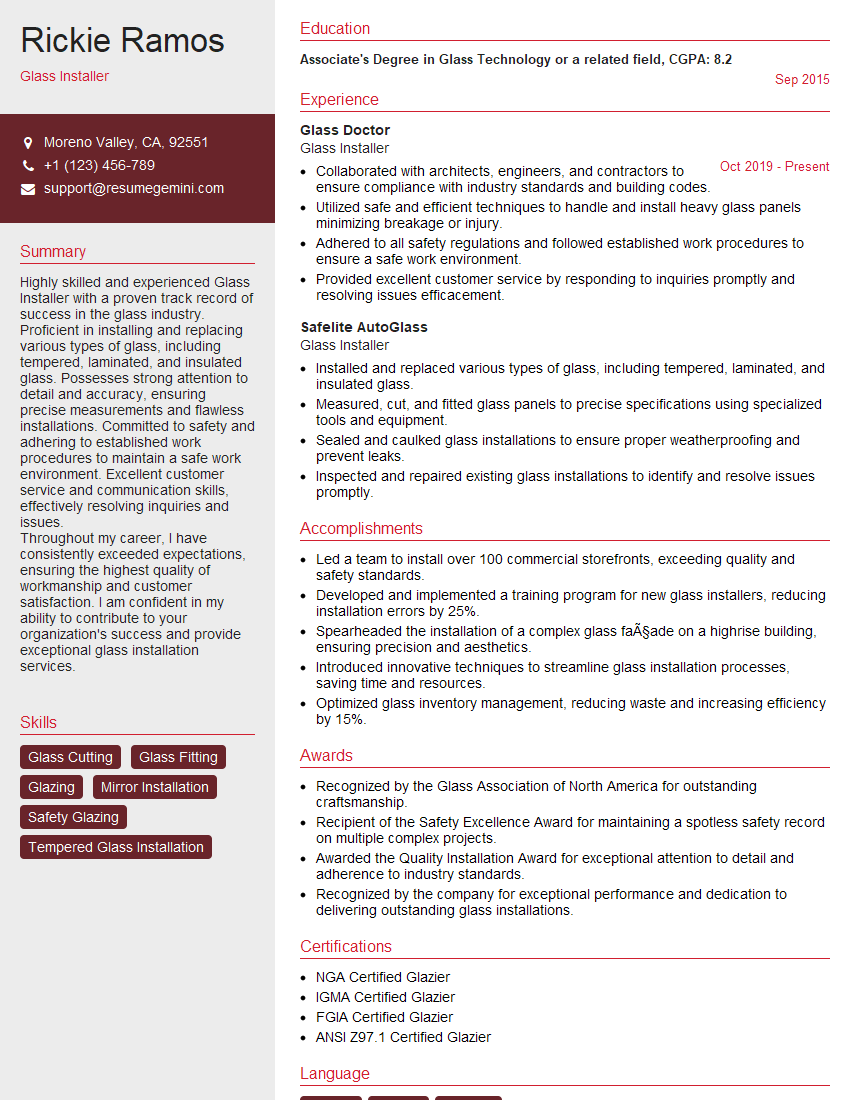
Mastering Architectural Glass Design and Specifications is crucial for career advancement in the architectural and construction industries. A strong understanding of these topics demonstrates your technical expertise and ability to contribute significantly to project success. To increase your job prospects, it’s vital to create a compelling and ATS-friendly resume that highlights your skills and experience effectively. ResumeGemini is a trusted resource that can help you build a professional and impactful resume, tailored to the specifics of Architectural Glass Design and Specifications. Examples of resumes tailored to this field are provided to help guide you.
Explore more articles
Users Rating of Our Blogs
Share Your Experience
We value your feedback! Please rate our content and share your thoughts (optional).
What Readers Say About Our Blog
To the interviewgemini.com Webmaster.
Very helpful and content specific questions to help prepare me for my interview!
Thank you
To the interviewgemini.com Webmaster.
This was kind of a unique content I found around the specialized skills. Very helpful questions and good detailed answers.
Very Helpful blog, thank you Interviewgemini team.