Every successful interview starts with knowing what to expect. In this blog, we’ll take you through the top Art Therapy for Cognitive Rehabilitation interview questions, breaking them down with expert tips to help you deliver impactful answers. Step into your next interview fully prepared and ready to succeed.
Questions Asked in Art Therapy for Cognitive Rehabilitation Interview
Q 1. Describe the theoretical underpinnings of using art therapy in cognitive rehabilitation.
Art therapy’s effectiveness in cognitive rehabilitation stems from its unique ability to tap into non-verbal communication and emotional processing, areas often affected by cognitive impairment. Several theoretical frameworks support this. Neuropsychological perspectives highlight how engaging in creative activities stimulates brain plasticity, strengthening neural pathways and promoting cognitive recovery. Psychodynamic theories emphasize the role of art-making as a means of accessing and processing unconscious emotions and experiences that may contribute to cognitive difficulties. Cognitive behavioral therapy (CBT) principles are also relevant, with art therapy providing a practical outlet for challenging maladaptive thought patterns and developing coping strategies. For example, a patient struggling with memory loss might create a visual diary through collage, strengthening memory through visual association and emotional engagement with past experiences.
Q 2. Explain the role of art therapy in improving executive functions (e.g., planning, problem-solving).
Art therapy plays a crucial role in improving executive functions by providing a structured yet flexible environment for planning, problem-solving, and self-regulation. Activities like sequential art-making (e.g., creating a multi-step painting project) demand planning and organization. Patients are challenged to break down complex tasks into smaller, manageable steps, fostering improved planning skills. Problem-solving is enhanced through activities requiring creative solutions, such as using limited materials to create a desired image, encouraging flexible thinking and resourcefulness. Furthermore, the process of self-reflection on the artwork can improve self-awareness and emotional regulation, vital components of executive functioning. For instance, a patient might be asked to reflect on their choices during the creation process, identifying areas of strength and weakness in their approach to problem-solving.
Q 3. How would you adapt art therapy techniques for patients with different cognitive impairments (e.g., memory loss, attention deficits)?
Adapting art therapy techniques requires careful consideration of the specific cognitive deficits. For patients with memory loss, simple, repetitive activities focusing on sensory engagement (e.g., texture-based art) can be beneficial, reducing cognitive load and promoting immediate gratification. Short-term memory exercises could involve creating a series of small drawings based on a verbal or visual prompt, gradually increasing the complexity. For patients with attention deficits, activities need to be highly structured with clear instructions and minimal distractions. Utilizing calming colors and focusing on one step at a time can improve focus. Incorporating mindfulness techniques during art creation can further enhance concentration. For example, a patient might focus on the sensation of the brush against the canvas or the texture of the clay, promoting a meditative state and enhancing focus.
Q 4. What assessment tools would you use to measure the effectiveness of art therapy interventions in cognitive rehabilitation?
Assessing the effectiveness of art therapy interventions requires a multi-faceted approach. Standardized cognitive assessments (e.g., MMSE, MoCA) provide objective measures of cognitive performance before and after intervention. Qualitative measures, such as art-based assessments, provide insights into the patient’s emotional and cognitive processes. These can involve analyzing the patient’s artwork, their descriptions of their process, and observing their engagement levels. Furthermore, patient self-report measures can provide valuable subjective data on perceived improvements in cognitive function, mood, and overall well-being. The combination of quantitative and qualitative data offers a comprehensive understanding of the impact of art therapy.
Q 5. Discuss the ethical considerations involved in using art therapy with individuals with cognitive impairments.
Ethical considerations are paramount in art therapy with cognitive impairments. Informed consent is crucial, adapting the process to suit the patient’s cognitive abilities. Confidentiality must be strictly maintained, and the therapist should be sensitive to the potential for emotional distress triggered by art-making. It is important to discuss the purpose and process of art therapy, respecting the patient’s autonomy and decisions. Collaborating with other members of the healthcare team (e.g., neuropsychologists, family members) is essential for ensuring holistic and ethical care. The therapist should also be prepared to adapt their approach based on the client’s reactions and needs. For example, if a patient becomes overwhelmed, the therapist should adjust the activity or provide a break, always prioritizing the client’s emotional well-being.
Q 6. How would you address challenges such as frustration or emotional outbursts during art therapy sessions with cognitive rehabilitation patients?
Frustration and emotional outbursts are common in cognitive rehabilitation. A therapist should respond with empathy and understanding, recognizing that these behaviors are often symptoms of cognitive impairment or emotional distress. Strategies include adjusting the task complexity, providing more support, or offering alternative activities. A calming and non-judgmental environment is key. Techniques such as deep breathing exercises, mindfulness practices incorporated into the art process, or a change of activity can help regulate emotions. Verbalizing and validating the patient’s feelings is essential, ensuring they feel understood and supported. For example, a patient may get frustrated when they cannot achieve the desired result. In this case, it is crucial to praise their effort and to reframe the activity as an opportunity for learning rather than a performance.
Q 7. Describe your experience working with specific populations (e.g., stroke survivors, traumatic brain injury patients).
I have extensive experience working with stroke survivors and traumatic brain injury (TBI) patients. With stroke survivors, art therapy has been instrumental in improving motor skills, reducing aphasia-related frustration, and promoting self-expression. I’ve seen patients regain fine motor control through activities requiring precise hand movements. For TBI patients, art therapy aids in cognitive rehabilitation by improving attention, memory, and problem-solving skills through tailored creative activities. One memorable case involved a stroke survivor who struggled with expressive aphasia. Through collaborative art-making, she gradually regained the ability to communicate her emotions and experiences, leading to a significant improvement in her emotional well-being. Adapting the therapeutic approach to each individual’s specific challenges and progress is crucial for optimizing outcomes.
Q 8. What art modalities are most effective for cognitive rehabilitation, and why?
Several art modalities prove highly effective in cognitive rehabilitation, each targeting specific cognitive domains. The choice depends on the individual’s needs and deficits.
- Drawing and painting: These encourage visual-spatial processing, planning, and sequencing. For example, a patient working on visual perception might start with simple shapes and progress to complex scenes, gradually improving their ability to perceive and represent visual information.
- Sculpting and 3D art: These activities boost fine motor skills, hand-eye coordination, and problem-solving. A patient with impaired motor control might start with simple clay rolling and gradually work on more intricate forms, improving dexterity and precision.
- Collage and mixed media: These foster creativity, organization, and symbolic thinking. Patients with executive function difficulties could use collage to organize ideas or memories, improving planning and sequencing skills.
- Mandala art: The repetitive nature of creating mandalas can improve focus, concentration, and reduce anxiety, supporting attention and cognitive flexibility.
The effectiveness stems from art’s ability to engage multiple cognitive functions simultaneously, making it a holistic and engaging approach compared to solely verbal or written exercises.
Q 9. Explain your approach to collaborating with other members of a rehabilitation team (e.g., neuropsychologists, occupational therapists).
Collaboration is crucial for optimal patient outcomes. My approach involves regular communication and case conferences with neuropsychologists, occupational therapists, and other team members. I actively share observations from art therapy sessions, such as the patient’s cognitive performance, emotional state, and response to specific tasks.
For instance, if an occupational therapist reports difficulty with fine motor skills, I can adapt art activities to address this, perhaps using larger tools or simpler techniques. Similarly, I might adjust the complexity of art projects based on the neuropsychologist’s assessment of cognitive capacity. A shared understanding of the patient’s strengths and weaknesses, alongside a collaborative treatment plan, ensures the efficacy of the overall rehabilitation process.
Q 10. How do you incorporate evidence-based practices into your art therapy interventions?
I integrate evidence-based practices by grounding my interventions in established research. This includes utilizing techniques supported by literature on cognitive rehabilitation and art therapy. For example, I might incorporate elements of cognitive remediation therapy within art projects, focusing on specific cognitive skills like memory, attention, or executive functioning.
Furthermore, I regularly review and update my practice based on emerging research findings. This involves staying current with relevant journals, attending professional development workshops, and actively seeking supervision to ensure that my techniques remain aligned with best practices and yield the most effective outcomes for my patients.
Q 11. Describe a situation where you had to modify an art therapy intervention to meet the specific needs of a patient.
I once worked with a patient who experienced significant visual-spatial deficits following a stroke. Initially, I planned to use detailed drawing exercises. However, I quickly noticed his frustration and inability to complete even simple tasks.
I modified the intervention by focusing on tactile sculpting using clay. This allowed him to engage with the creative process without the pressure of fine motor control and visual-spatial demands of drawing. We started with simple shapes and gradually progressed to more complex forms. This adaptation significantly increased his engagement and allowed us to target cognitive goals in a more accessible and successful manner. His progress in spatial awareness and problem-solving improved markedly as he began to manipulate the clay in three dimensions.
Q 12. How do you ensure patient safety and well-being during art therapy sessions?
Patient safety and well-being are paramount. Before each session, I create a safe and comfortable environment, ensuring the studio is free of hazards. I select art materials carefully, considering any potential allergies or sensitivities.
Furthermore, I establish clear boundaries and guidelines at the start of therapy to ensure a supportive and respectful therapeutic relationship. I pay close attention to the patient’s emotional state during the session, providing support and adjusting the activity if needed. If a patient expresses distress or discomfort, I pause the activity and provide emotional support, possibly modifying the task or ending the session early. Documenting all aspects of the session, including any safety concerns or adjustments, is crucial for maintaining a safe and effective therapeutic environment.
Q 13. What are the limitations of art therapy in cognitive rehabilitation?
While art therapy offers significant benefits, it’s crucial to acknowledge its limitations in cognitive rehabilitation.
- Not a stand-alone treatment: Art therapy is most effective when integrated with other therapeutic modalities like speech therapy or occupational therapy. It’s a supportive tool, not a replacement for other essential interventions.
- Subjectivity in interpretation: Interpreting artistic creations can be subjective, requiring careful consideration and collaboration with other members of the rehabilitation team to ensure accurate assessment and progress tracking.
- Not suitable for all patients: Patients with severe cognitive impairments or those unable to engage in creative tasks might not benefit from art therapy.
- Time-consuming: Art therapy requires time and patience, which may not be feasible for all patients or clinical settings.
Understanding these limitations allows for realistic goal setting and effective integration of art therapy within a broader treatment plan.
Q 14. How do you document the progress of patients in art therapy for cognitive rehabilitation?
Documentation is vital for demonstrating progress and evaluating the effectiveness of the intervention. My documentation includes:
- Qualitative data: Detailed descriptions of the patient’s engagement, emotional state, and creative process during each session. This includes observations on their cognitive performance, such as attention span, problem-solving abilities, and use of visual-spatial skills.
- Quantitative data: Objective measures of progress. This might involve tracking the completion of tasks, level of detail in artwork, or improvements in specific cognitive skills, based on standardized assessments administered by other professionals.
- Examples of artwork: Photographs or scans of patient’s artwork illustrating progress over time. This offers a visual record of improvement in various cognitive skills.
- Progress notes: Regular updates summarizing the patient’s progress, challenges, and adaptations made to the intervention plan. These notes clearly link the art therapy interventions to the patient’s overall cognitive rehabilitation goals.
This comprehensive documentation ensures transparency, accountability, and effective communication with other healthcare providers involved in the patient’s care.
Q 15. How would you integrate art therapy with other cognitive rehabilitation techniques?
Integrating art therapy with other cognitive rehabilitation techniques is crucial for holistic recovery. It’s not about replacing other methods, but rather complementing them. For example, after a patient completes a session focused on memory exercises, we might use a collage-making activity. The patient selects images representing personal memories, reinforcing the information learned during the memory exercise through a creative, engaging process. This multimodal approach leverages the strengths of both methods: targeted cognitive training and the emotional and expressive power of art. Similarly, following speech therapy, we might engage in a collaborative storytelling activity using drawings or painting, to improve verbal fluency and narrative skills in a non-threatening environment. The key is to align the art therapy activity with the specific cognitive goals targeted by other therapies, creating a synergistic effect.
Another example would be using art therapy to manage the frustration experienced during occupational therapy sessions aimed at improving fine motor skills. Creating something visually pleasing can help patients regain a sense of accomplishment and reduce anxiety, supporting their progress in motor skill development.
Career Expert Tips:
- Ace those interviews! Prepare effectively by reviewing the Top 50 Most Common Interview Questions on ResumeGemini.
- Navigate your job search with confidence! Explore a wide range of Career Tips on ResumeGemini. Learn about common challenges and recommendations to overcome them.
- Craft the perfect resume! Master the Art of Resume Writing with ResumeGemini’s guide. Showcase your unique qualifications and achievements effectively.
- Don’t miss out on holiday savings! Build your dream resume with ResumeGemini’s ATS optimized templates.
Q 16. Describe your experience with different types of art materials and their application in cognitive rehabilitation.
My experience spans a wide range of art materials, each with unique applications in cognitive rehabilitation. For example, clay sculpting is excellent for improving fine motor skills, hand-eye coordination, and spatial reasoning. The tactile nature of clay offers sensory input that can be particularly beneficial for patients with sensory processing challenges. Drawing and painting, using various mediums like pencils, paints, and pastels, helps enhance visual perception, attention to detail, and planning skills. Patients can be guided to focus on specific aspects of their artwork to improve concentration. Collage-making facilitates memory retrieval and organization as patients select and arrange images to create a cohesive piece. Other materials like sand trays provide opportunities for non-verbal expression and can be particularly therapeutic for patients struggling with verbal communication.
The selection of materials depends greatly on the patient’s cognitive abilities and the specific therapeutic goals. For patients with severe cognitive impairments, simpler activities like finger painting may be more appropriate initially, gradually progressing to more complex techniques as their abilities improve. For patients with higher cognitive functioning, we might use more nuanced techniques, such as working with mixed media or exploring different artistic styles.
Q 17. What is your understanding of the neurobiological basis of cognitive functions and how art therapy impacts them?
Art therapy’s impact on cognitive functions is deeply rooted in our understanding of the brain’s plasticity and its interconnectedness. Cognitive functions like memory, attention, and executive function are not localized in isolated brain regions but are supported by complex neural networks. Art therapy engages multiple cognitive domains simultaneously. For instance, creating a painting requires visual processing, planning, problem-solving (composition), and motor control. This multi-faceted engagement stimulates neural pathways, promoting neuroplasticity—the brain’s ability to reorganize itself by forming new neural connections.
Specifically, the act of creating art activates areas in the brain responsible for planning, memory encoding, and emotional regulation. The process also engages sensory and motor regions, fostering improved coordination and dexterity. Studies have shown that art therapy can improve attention span, memory recall, and executive function in patients with various cognitive impairments. Furthermore, the emotional expression facilitated through art can indirectly influence cognitive functions by reducing stress and anxiety, which are often detrimental to cognitive performance.
Q 18. Explain how you would address a patient’s resistance to participating in art therapy sessions.
Addressing resistance to art therapy requires empathy, understanding, and a flexible approach. It’s vital to remember that art therapy is not forced; it’s a collaborative process. I would begin by actively listening to the patient’s concerns, acknowledging their feelings, and validating their hesitancy. Sometimes, resistance stems from past negative experiences with art or a fear of self-expression. In such cases, building trust and rapport is paramount.
I would then introduce the therapeutic process in a gentle and non-threatening manner. Instead of directly pushing them into creating art, I might start with simple activities like looking at artwork together or discussing different art forms. This helps the patient become more comfortable with the concept of art therapy before engaging in any creative tasks. We could also start with less demanding activities, such as simple coloring or choosing colors that reflect their mood. If the resistance persists, we need to explore the underlying reasons, perhaps collaborating with other members of the treatment team to address co-occurring issues like depression or anxiety, which might be contributing to the patient’s resistance.
Q 19. How would you adapt your art therapy approach to address the specific needs of patients with different cultural backgrounds?
Adapting my art therapy approach to diverse cultural backgrounds is essential for effective and culturally sensitive care. This involves recognizing that art making varies greatly across cultures. The materials used, the symbolic meanings attributed to colors and forms, and the preferred methods of expression can all be influenced by a person’s cultural background. Therefore, a culturally sensitive approach starts with understanding the patient’s cultural values, beliefs, and artistic traditions.
I achieve this through open-ended discussions about the patient’s background and preferences before commencing art therapy. For instance, I might avoid imposing Western artistic styles and materials if a patient is from a culture with distinct artistic traditions. Instead, I might incorporate elements of their cultural art forms into our sessions, providing culturally relevant materials or themes. The goal is to create a safe and inclusive space where the patient feels comfortable expressing themselves authentically within their cultural context. This respectful approach fosters a stronger therapeutic alliance and facilitates a more meaningful therapeutic experience.
Q 20. Discuss the importance of goal setting in art therapy for cognitive rehabilitation.
Goal setting is fundamental to successful art therapy for cognitive rehabilitation. It provides direction, motivation, and a measurable framework for evaluating progress. Goals should be collaboratively established between the therapist and the patient (or caregiver, if appropriate), ensuring they are attainable, relevant to the patient’s needs and cognitive strengths, and aligned with their overall rehabilitation goals.
These goals can range from improving specific cognitive skills (e.g., increasing attention span by completing a detailed drawing over a set time), enhancing emotional regulation (e.g., using art to express and process difficult emotions), to fostering self-esteem (e.g., creating a piece of artwork the patient feels proud of). Regularly reviewing and adjusting these goals is important. We may start with simpler, more achievable goals that can gradually progress as the patient’s cognitive abilities improve. The process of setting and achieving goals fosters a sense of accomplishment and promotes self-efficacy, reinforcing motivation and engagement in the therapeutic process.
Q 21. Describe your approach to building rapport and therapeutic alliance with patients.
Building rapport and a strong therapeutic alliance is the cornerstone of effective art therapy. It creates a safe and trusting environment where patients feel comfortable exploring their emotions and experiences through art. I establish this by prioritizing active listening, empathy, and unconditional positive regard. I start by creating a welcoming and non-judgmental atmosphere, allowing the patient to set the pace and feel in control of the process.
I also use verbal and nonverbal cues to demonstrate genuine interest and understanding. This might involve reflecting back what the patient says, acknowledging their emotions, and using appropriate body language to show I am fully present and engaged. Understanding their personal history, experiences, and interests helps me tailor sessions to their specific needs and preferences, further strengthening the therapeutic relationship. Consistent, reliable attendance and a willingness to adapt my approach according to the patient’s unique needs all contribute to building a solid therapeutic alliance based on mutual trust and respect.
Q 22. How would you differentiate between cognitive and emotional challenges during therapy sessions?
Differentiating between cognitive and emotional challenges in art therapy for cognitive rehabilitation requires a nuanced understanding of the patient’s presentation. Cognitive challenges relate to difficulties with thinking processes such as memory, attention, executive function, and problem-solving. Emotional challenges, on the other hand, encompass feelings and mood states like anxiety, depression, frustration, or anger. These often intertwine, influencing each other significantly.
For example, a patient with a traumatic brain injury might struggle to remember recent events (cognitive challenge) and simultaneously experience intense anxiety about their altered cognitive abilities (emotional challenge). In therapy, I observe how these manifest in their artwork. A patient struggling with memory might produce fragmented or incomplete pieces, while someone experiencing anxiety might use harsh lines or dark colours. Through careful observation, questioning, and active listening, I discern the underlying cognitive deficits and the accompanying emotional responses. I utilise projective techniques such as drawing, painting, or sculpting to understand the interplay between these factors. This helps me tailor interventions to specifically address both the cognitive and emotional aspects of their condition.
Q 23. Describe how you would measure and track functional improvement in a patient.
Measuring and tracking functional improvement requires a multi-faceted approach, combining standardized assessments with qualitative observations from art therapy sessions. Standardized neuropsychological tests can assess specific cognitive domains like memory and attention. However, these tests often lack the depth to capture the nuances of functional improvement in real-world settings.
In art therapy, I use functional outcome measures which assess performance on daily tasks. For instance, a patient might initially struggle to complete a detailed drawing, but with therapy, they demonstrate improved attention span and planning skills, as shown by their ability to complete increasingly complex artwork. This improvement can be documented using a rating scale, photographs of their artwork, and detailed session notes.
I also employ qualitative data – observations about their behaviour, emotional regulation, and self-reported experiences. For example, a patient might report feeling more confident in their ability to manage their daily tasks following a series of art therapy sessions focused on executive function. This is valuable contextual information that adds depth to the quantitative data obtained from standardised tests. Combining these quantitative and qualitative methods allows for a more comprehensive and accurate assessment of functional improvement.
Q 24. How would you handle a situation where a patient experiences a significant emotional setback during a session?
Emotional setbacks are common in cognitive rehabilitation, particularly when dealing with traumatic experiences or the frustration of cognitive deficits. My immediate response to a significant emotional setback is to prioritize the patient’s safety and emotional well-being. I create a safe and supportive space, validate their feelings without judgment, and offer strategies for coping.
For example, if a patient becomes overwhelmed during a session, I might encourage them to take deep breaths, step away from the art materials, or simply talk about what they’re feeling. I use a collaborative approach, involving them in deciding how to proceed. We might adjust the session’s focus, shifting from a cognitively demanding task to a more expressive, emotion-focused activity like freeform painting or journaling. If the situation escalates beyond my capabilities, I would immediately reach out to the patient’s other healthcare professionals, such as their psychologist or psychiatrist, and potentially arrange a referral for further support.
The goal is not to avoid difficult emotions but to help the patient process them in a healthy and constructive way, utilizing the art-making process as a means of expression and self-regulation. This is essential as emotional regulation is intrinsically linked to cognitive performance.
Q 25. What are the key indicators of successful cognitive rehabilitation through art therapy?
Successful cognitive rehabilitation through art therapy is indicated by a combination of factors. Firstly, there should be demonstrable improvements in specific cognitive domains, as measured by standardized tests or functional assessments. This could manifest as improved attention span, better memory recall, enhanced problem-solving abilities, or increased organizational skills. Secondly, there’s noticeable progress in the patient’s emotional well-being, including increased self-esteem, reduced anxiety or depression, and improved coping mechanisms. The art itself might reflect these positive changes: perhaps the artwork becomes more organized and detailed, demonstrating improved planning skills, or shows brighter colors and more positive imagery, reflecting improved mood.
For example, a patient with traumatic brain injury may initially produce fragmented and disorganized artwork, reflecting their cognitive impairments and frustration. As they progress through art therapy, their artwork might become more coherent, demonstrating improved attention and planning. Concurrently, they may report feeling less anxious and more self-assured, suggesting improvements in their emotional well-being.
Finally, there should be a noticeable transfer of skills from the art therapy setting to real-world situations. Improvements in cognitive skills and emotional regulation should lead to better performance in everyday activities and enhanced quality of life.
Q 26. How do you maintain your professional competence in the field of art therapy and cognitive rehabilitation?
Maintaining professional competence requires a multifaceted approach. I actively participate in continuing education opportunities, attending workshops, conferences, and seminars focused on art therapy, cognitive rehabilitation, and related fields like neuropsychology. This keeps me updated on the latest research, techniques, and best practices. I also engage in regular supervision with experienced art therapists, to reflect on my practice, discuss challenging cases, and receive constructive feedback. This helps refine my clinical skills and ensures ethical practice. Furthermore, I regularly review professional literature, subscribing to relevant journals and staying informed about current trends in the field. Networking with colleagues through professional organizations also allows for collaborative learning and the exchange of ideas.
Q 27. What are your career goals within this field?
My career goals involve specializing in the use of art therapy for individuals with acquired brain injuries. I aim to expand my knowledge of specific therapeutic interventions that target particular cognitive deficits. I envision conducting research to investigate the efficacy of different art therapy approaches in various populations. Ultimately, I aspire to contribute to the development of evidence-based guidelines and best practices for art therapy in cognitive rehabilitation, enhancing the quality of care and improving outcomes for patients.
Q 28. Describe your understanding of the role of art therapy in promoting long-term recovery.
Art therapy plays a crucial role in promoting long-term recovery by fostering self-awareness, promoting self-regulation, and enhancing cognitive and emotional flexibility. Through art-making, individuals gain insight into their strengths and challenges, allowing for greater self-acceptance and improved emotional coping. Art therapy also provides a non-threatening means for exploring and processing difficult emotions related to their injury or condition. This process of emotional regulation is critical for cognitive function.
Moreover, art therapy builds resilience and fosters a sense of agency and control. The creative process itself encourages problem-solving and strategic thinking, strengthening cognitive skills. By engaging in creative activities, patients develop a sense of accomplishment and mastery, boosting self-esteem and motivation for continued recovery. The skills learned through art therapy—such as self-expression, emotional regulation, and problem-solving—are transferable to various aspects of life, contributing to long-term functional independence and improved quality of life.
Key Topics to Learn for Art Therapy for Cognitive Rehabilitation Interview
- Neurological Foundations: Understanding the impact of brain injury or neurological conditions on cognitive function (memory, attention, executive function) and how art therapy can address these challenges.
- Therapeutic Approaches: Exploring various art therapy modalities (e.g., expressive arts, neuro-aesthetic approaches) and their application in cognitive rehabilitation. This includes understanding the rationale behind choosing specific techniques for individual clients.
- Assessment & Goal Setting: Familiarizing yourself with standardized cognitive assessments and how to integrate art-based assessments to inform treatment planning and measure progress. Understanding how to collaboratively establish meaningful and achievable goals with clients and their families.
- Practical Application: Developing a strong understanding of how to adapt art therapy techniques to address specific cognitive deficits (e.g., using imagery for memory rehabilitation, structured art activities for attention training). Being prepared to discuss case examples (hypothetical is fine) showcasing your problem-solving abilities within a therapeutic context.
- Ethical Considerations: Understanding the ethical implications of working with clients experiencing cognitive impairments, including confidentiality, informed consent, and appropriate boundaries.
- Collaboration & Communication: Highlighting your ability to collaborate effectively with other healthcare professionals (neurologists, occupational therapists, speech therapists) and communicate effectively with clients and their families regarding treatment progress and challenges.
- Research & Evidence-Based Practice: Demonstrating familiarity with current research on the effectiveness of art therapy in cognitive rehabilitation. Being able to discuss the evidence supporting the use of specific techniques and interventions.
Next Steps
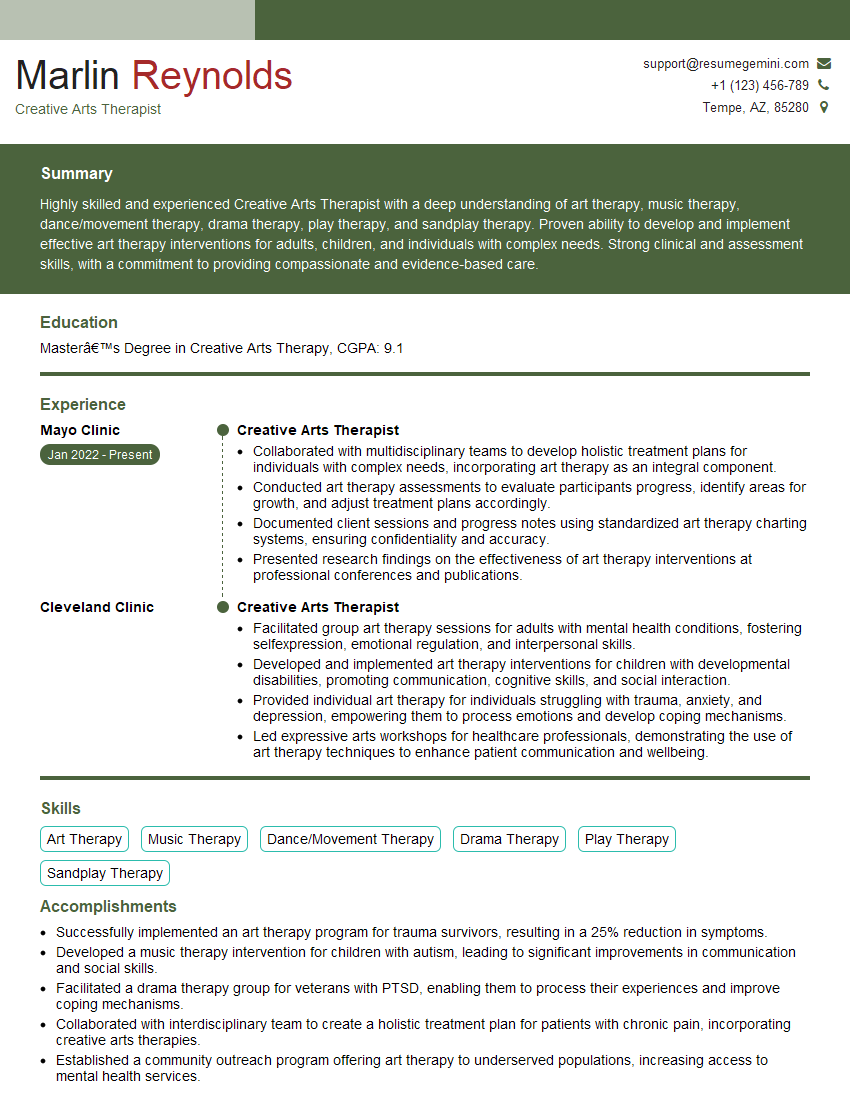
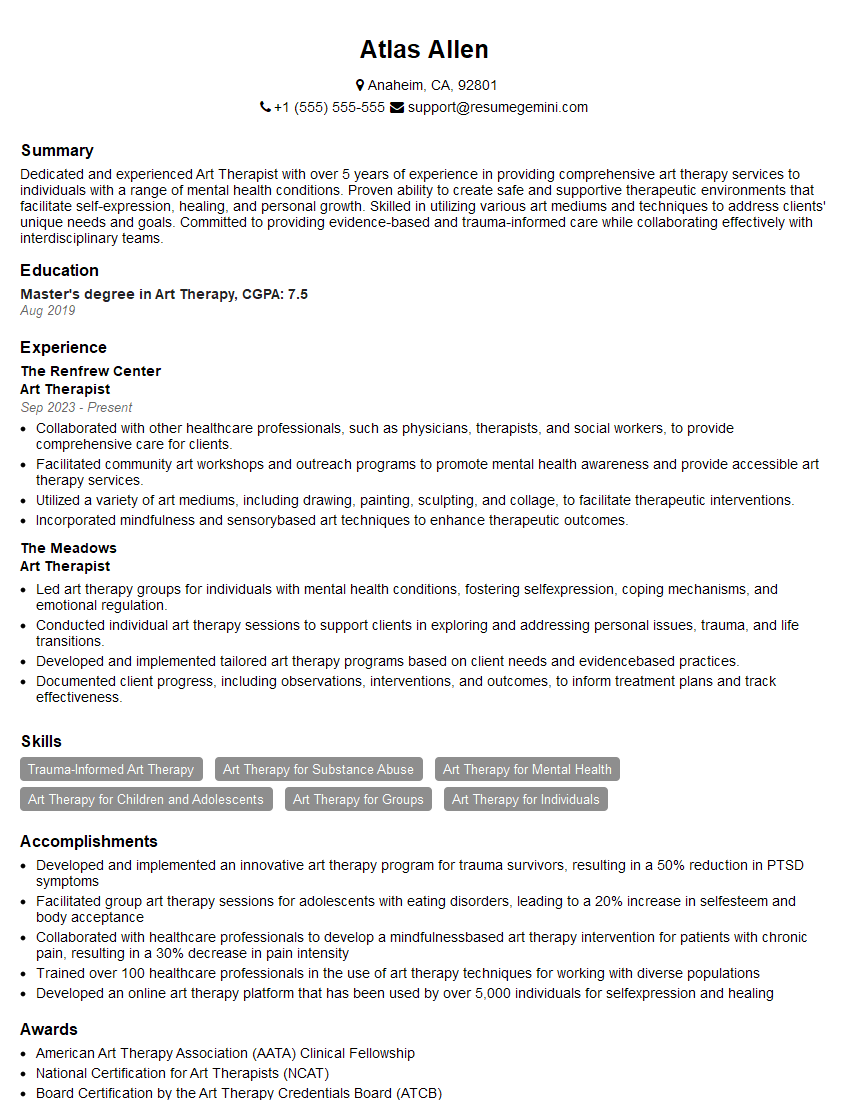
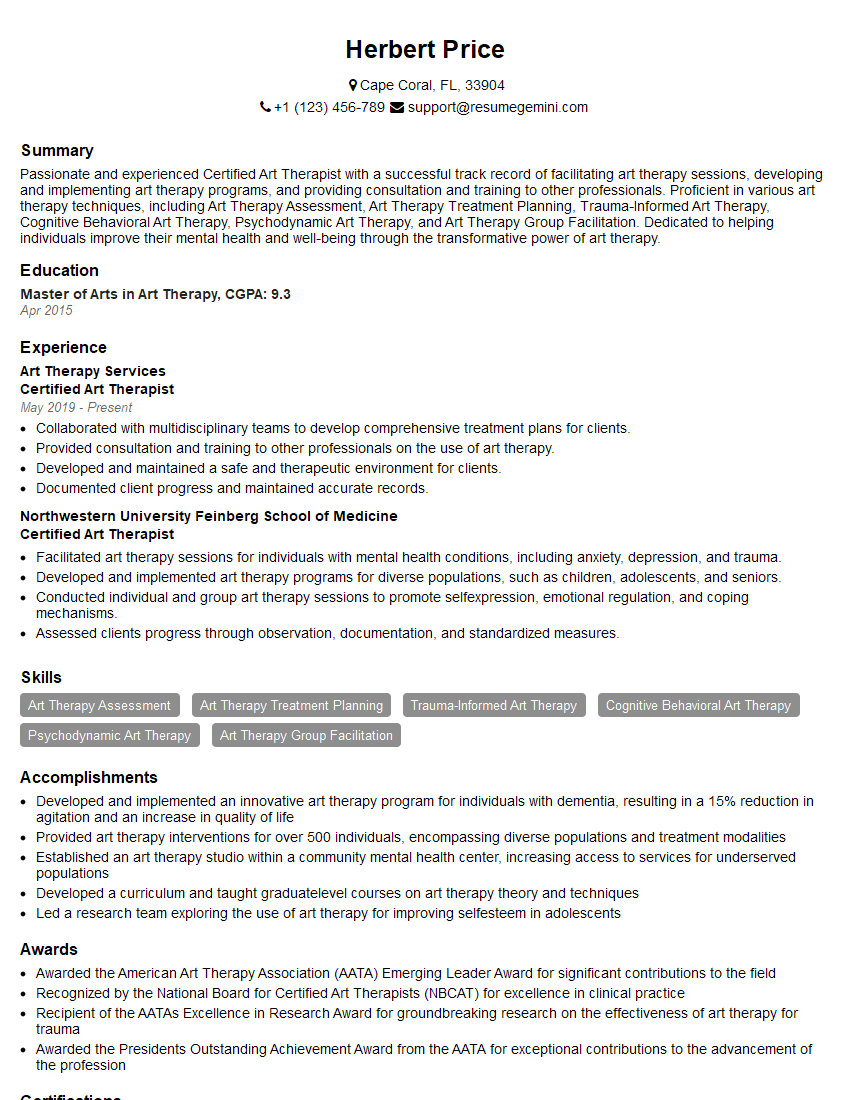
Mastering Art Therapy for Cognitive Rehabilitation opens doors to a rewarding career with significant impact. Demonstrating a strong understanding of this specialized field is crucial for securing your dream position. To stand out, it’s vital to present yourself professionally through a well-crafted resume optimized for Applicant Tracking Systems (ATS). ResumeGemini is a trusted resource to help you build an ATS-friendly resume that highlights your unique skills and experience. ResumeGemini provides examples of resumes tailored to Art Therapy for Cognitive Rehabilitation, offering a valuable head start in your job search. Invest the time to create a compelling narrative showcasing your expertise – it will significantly improve your chances of landing your ideal role.
Explore more articles
Users Rating of Our Blogs
Share Your Experience
We value your feedback! Please rate our content and share your thoughts (optional).
What Readers Say About Our Blog
To the interviewgemini.com Webmaster.
Very helpful and content specific questions to help prepare me for my interview!
Thank you
To the interviewgemini.com Webmaster.
This was kind of a unique content I found around the specialized skills. Very helpful questions and good detailed answers.
Very Helpful blog, thank you Interviewgemini team.