The right preparation can turn an interview into an opportunity to showcase your expertise. This guide to Art Therapy for Community Engagement and Empowerment interview questions is your ultimate resource, providing key insights and tips to help you ace your responses and stand out as a top candidate.
Questions Asked in Art Therapy for Community Engagement and Empowerment Interview
Q 1. Describe your experience facilitating art therapy groups in a community setting.
My experience facilitating art therapy groups in community settings spans over ten years, working with diverse populations including youth, adults, and seniors facing various challenges such as trauma, mental health issues, and social isolation. I’ve led groups in various locations, from community centers and schools to hospitals and homeless shelters. A typical session involves a warm-up activity to foster connection and a sense of safety, followed by a focused art-making activity relevant to the group’s theme or individual needs. Processing and sharing are facilitated through verbal discussion, guided imagery, or collaborative storytelling around the artwork produced. For example, in a group for survivors of domestic violence, we used collage to visually represent their journeys, fostering a sense of agency and empowerment. In a group working with youth at-risk, we explored self-expression through graffiti art, providing a safe outlet for expressing anger and frustration.
I emphasize a non-judgmental, supportive environment where participants feel comfortable exploring their emotions and experiences without pressure. Group cohesion is crucial; hence, I use various techniques like icebreakers, sharing circles, and collaborative art projects to build trust and rapport among group members. Regular feedback and evaluation are vital, allowing for ongoing adjustments to the group’s structure and content to meet the evolving needs of the participants.
Q 2. Explain your approach to adapting art therapy techniques for diverse populations.
Adapting art therapy techniques for diverse populations requires cultural sensitivity and awareness. It is crucial to understand and respect the unique cultural backgrounds, beliefs, and values of each individual and community. This includes considering factors such as language, religious practices, and societal norms. For example, in a group with predominantly immigrant women, I might adapt the art materials to incorporate their cultural symbols or traditions, or I might use storytelling or narrative art techniques to facilitate self-expression in their native language.
My approach involves collaborating with community leaders and cultural experts to tailor art therapy interventions that are relevant and culturally appropriate. I also actively seek feedback from participants throughout the process to ensure that my interventions are indeed effective and respectful. Flexibility is key; rigid adherence to a standardized approach wouldn’t work in most community contexts. I might adjust the art media, the therapeutic process, or even the whole session’s structure depending on the participants’ needs and preferences. Sometimes, simply altering the physical space to feel more inclusive and comfortable can make a world of difference.
Q 3. How do you assess the effectiveness of your art therapy interventions in a community context?
Assessing the effectiveness of art therapy interventions in a community context involves a multifaceted approach that combines both quantitative and qualitative data. Quantitative data might include pre- and post-intervention assessments of participants’ emotional well-being using standardized measures such as anxiety and depression scales. However, these measures alone are insufficient. Qualitative data, such as observations of participant engagement and interactions during group sessions, interviews with participants, and analysis of their artwork, provide a richer understanding of the impact of the intervention. For example, I might analyze the changes in the themes and colors in participants’ artwork over time to gauge their emotional progress.
Participant feedback is essential. Anonymous questionnaires and individual feedback sessions offer valuable insights into their experience and perceptions of the intervention’s effectiveness. Focus groups with participants can further provide valuable insights about the overall program’s effectiveness and identify areas for improvement. Finally, I regularly review session notes, and analyze trends to assess overall program success, identify what works well, and refine areas needing improvement.
Q 4. Describe a time you had to overcome a challenge while implementing a community-based art therapy program.
In a community art therapy program for at-risk youth, I faced the challenge of limited resources and funding. We had initially planned a vibrant mural project, but the allocated budget was insufficient to purchase the necessary high-quality paints and materials. To overcome this, I collaborated with local businesses and community organizations, presenting a compelling proposal highlighting the positive impact of the project on the youth’s emotional well-being and community development. This collaborative approach secured sponsorships and in-kind donations of art supplies.
Furthermore, we engaged the youth in fundraising activities to foster a sense of ownership and responsibility. They organized a bake sale, a community cleanup drive, and even created and sold smaller artwork to raise funds. This experience taught them valuable life skills, such as teamwork, resourcefulness, and entrepreneurship. The final mural project was a powerful testament to the resilience of the community and its youth, showcasing their artistic talents and highlighting their shared vision for a better future. The collaborative effort not only ensured the project’s success but also strengthened community bonds.
Q 5. What are the ethical considerations specific to art therapy within community engagement?
Ethical considerations in community art therapy are paramount. Confidentiality is crucial, especially when working with vulnerable populations. I ensure all participants understand the limits of confidentiality and obtain informed consent before starting any art therapy intervention. Maintaining professional boundaries is essential, avoiding dual relationships and power imbalances. Cultural sensitivity and awareness are also vital, ensuring that the interventions are respectful of the participants’ cultural backgrounds and beliefs.
Furthermore, ethical practice requires careful consideration of potential risks and benefits, ensuring that the interventions are beneficial and do not cause harm. For example, it is crucial to have appropriate referrals in place for participants who might need additional support beyond the scope of art therapy. A thorough understanding of relevant regulations and guidelines related to data privacy and ethical practice is essential. This involves understanding and adhering to regulations such as HIPAA in the US or similar data protection laws in other countries.
Q 6. How do you incorporate trauma-informed practices into your community art therapy work?
Trauma-informed practices are integrated into my community art therapy work by prioritizing safety, trustworthiness, and collaboration. I create a therapeutic environment that is non-judgmental, empowering, and respects each participant’s pace and experience. I avoid triggering activities and provide ample opportunities for self-regulation and emotional processing. For instance, I might offer a range of art materials, allowing participants to choose what they feel most comfortable using in that moment.
I emphasize choice and control, ensuring participants have autonomy over their art-making process. This might involve providing a variety of sensory materials, offering options for different art projects, or simply allowing for unstructured free expression. I regularly check in with participants to assess their comfort levels and adjust the pace and intensity of the session as needed. Collaboration with other professionals, such as social workers or therapists, is vital when providing comprehensive care to those who have experienced trauma. Emphasis is always placed on building resilience and fostering a sense of hope and empowerment.
Q 7. What methods do you use to build rapport and trust with community members?
Building rapport and trust with community members requires patience, empathy, and genuine interest in their experiences. I begin by actively listening to their concerns and perspectives, making sure to show that I value and respect their unique stories. I prioritize creating a welcoming and inclusive environment where participants feel comfortable sharing their experiences without judgment. This might involve using icebreakers and collaborative activities that help participants connect with each other. Building trust often takes time, and it’s a process based on mutual respect and understanding.
I engage in regular community outreach activities such as workshops and presentations to build relationships with community members. Showing up consistently and demonstrating a commitment to the community helps build trust and credibility. I actively seek feedback from participants throughout the process, demonstrating a willingness to adapt my approach based on their input. Building positive relationships with community leaders and organizations helps to create a sense of collective support and strengthens the trust among community members and myself. Transparency about the art therapy process and its goals is vital in fostering open communication and collaborative partnerships.
Q 8. Explain your understanding of the role of art therapy in promoting social justice and advocacy.
Art therapy plays a crucial role in social justice and advocacy by providing a voice to marginalized communities and challenging oppressive systems. It empowers individuals to express their experiences of injustice, trauma, and discrimination through creative means, fostering self-awareness and resilience. This creative expression then becomes a powerful tool for social change.
For example, working with a community facing environmental injustice, we might use art-making to visually represent their concerns, creating powerful images to advocate for policy changes. Similarly, in a community experiencing systemic racism, art therapy can provide a safe space to process intergenerational trauma and build collective strength for advocacy.
Art therapy can also be utilized to educate the broader community about social issues. By exhibiting artwork created during therapy sessions (with informed consent, of course), we can raise awareness and foster empathy. This transforms the art-making process into a form of social action, generating dialogue and promoting understanding.
Q 9. How do you ensure the sustainability and accessibility of community art therapy programs?
Ensuring sustainability and accessibility of community art therapy programs requires a multi-pronged approach. Firstly, securing diverse and stable funding sources is crucial. This includes exploring grants, corporate sponsorships, and community fundraising initiatives. Building partnerships with local organizations, schools, and community centers expands our reach and reduces reliance on a single funding stream.
Accessibility involves creating programs that cater to the diverse needs of the community. This means offering sessions in various formats (e.g., individual, group, family), times, and locations, considering factors like transportation, language barriers, and physical accessibility of the space. Utilizing a sliding scale fee structure or offering free sessions ensures financial accessibility for lower-income individuals.
Training community members as art facilitators can help build capacity and create a more sustainable model, empowering the community to continue the work even after external funding ends. Finally, strong evaluation and data collection help demonstrate the program’s impact, strengthening the case for continued funding and support.
Q 10. Describe your experience collaborating with other professionals in community settings.
Collaboration is paramount in community art therapy. I regularly work with social workers, psychologists, educators, healthcare professionals, and community leaders. For example, in a project addressing youth violence prevention, I collaborated with a local school counselor to identify at-risk youth and integrate art therapy into their existing support system. The counselor provided insights into the students’ emotional and social needs, while I facilitated art-based interventions.
In another instance, I partnered with a public health agency to address the mental health needs of individuals impacted by a natural disaster. My role focused on providing trauma-informed art therapy, while the agency provided essential resources like housing and food assistance. The collaborative approach ensures a holistic response to the community’s needs, maximizing impact and avoiding duplication of efforts.
Successful collaboration requires effective communication, shared goals, and mutual respect. Regular meetings, joint planning sessions, and clear roles and responsibilities are essential for ensuring a smooth and fruitful collaboration.
Q 11. How do you measure the impact of your art therapy work on community well-being?
Measuring the impact of community art therapy requires a comprehensive approach combining quantitative and qualitative methods. Quantitative data might include pre- and post-intervention assessments measuring changes in participants’ anxiety levels, self-esteem, or social skills using standardized scales. Qualitative data, equally crucial, captures participants’ experiences through interviews, focus groups, and observations of changes in their art-making processes and behaviors.
For example, we could use questionnaires to assess changes in participants’ self-reported stress levels, complemented by analyzing the themes and emotions expressed in their artwork over time. Observations of group dynamics and interactions during sessions offer insights into improvements in social skills and communication. Finally, gathering feedback from community members and stakeholders helps us understand the program’s broader impact on community well-being.
Careful documentation and analysis of this combined data provide a rich understanding of the program’s effectiveness and allow us to refine our methods and enhance future interventions.
Q 12. How do you integrate cultural considerations into your art therapy practice within a community?
Cultural considerations are fundamental to ethical and effective community art therapy. It’s essential to understand and respect the cultural values, beliefs, and practices of the community I serve. This involves actively engaging with community members to learn about their cultural norms, ensuring art materials and methods are culturally appropriate and sensitive.
For instance, when working with an indigenous community, I would ensure that the art materials used reflect their traditions and that the therapeutic process respects their cultural protocols. Using culturally relevant themes and symbols in art-making activities can be especially powerful. In a diverse community, I might offer different art mediums that align with the preferences of diverse cultural groups.
Culturally competent art therapy also involves being mindful of potential power dynamics and biases, ensuring that the therapeutic relationship is built on trust and mutual respect. It’s crucial to avoid imposing my own cultural framework onto the community.
Q 13. What are the key elements of a successful community art therapy program?
A successful community art therapy program is built upon several key elements: a strong community partnership, culturally sensitive and responsive approaches, accessible services, skilled and trained facilitators, clear goals and objectives, robust evaluation, and sustained funding. The program must be genuinely collaborative, responding to the identified needs of the community rather than imposing a pre-determined model.
Strong leadership and effective program management are vital for coordinating resources, overseeing operations, and ensuring the program’s sustainability. A program’s success is also measured by its impact on community well-being, shown through improvements in mental health, social cohesion, and community resilience. The use of creative, accessible art forms also plays a key role in engaging a wider population.
Regular feedback loops and evaluation processes, which may include community forums and stakeholder meetings, ensure the program remains relevant and responsive to evolving community needs.
Q 14. Describe your experience working with marginalized or underserved communities.
My experience working with marginalized and underserved communities has been deeply rewarding and transformative. I’ve worked extensively with refugee populations, supporting them in processing trauma and adapting to a new culture through art-making. The artwork created often served as a bridge between their past experiences and their hopes for the future. In other instances, I’ve collaborated with communities impacted by poverty, providing a creative outlet for expressing their struggles and building a sense of collective empowerment.
Working in these settings demands humility, cultural sensitivity, and a deep commitment to social justice. Building trust is paramount; I strive to establish a safe and non-judgmental space where individuals feel empowered to express themselves authentically. It’s crucial to recognize the systemic factors contributing to their marginalization and to advocate for systemic change alongside providing individual support.
The strength and resilience of these communities are always inspiring, and witnessing their growth and healing through art therapy is a privilege. This experience has profoundly shaped my understanding of the role art therapy can play in social change and empowerment.
Q 15. How do you address potential barriers to accessing art therapy services in a community?
Addressing barriers to accessing art therapy in a community requires a multifaceted approach. Many communities face challenges like financial constraints, geographical limitations (lack of accessible locations), cultural stigma surrounding mental health, and lack of awareness about art therapy itself.
To overcome these, I employ several strategies:
- Financial Assistance: Collaborating with local organizations and securing grants to offer subsidized or free sessions.
- Outreach Programs: Bringing art therapy directly to communities through mobile units or partnerships with community centers, schools, and hospitals.
- Cultural Sensitivity: Adapting art therapy approaches to resonate with diverse cultural backgrounds and beliefs, considering specific customs and values.
- Education and Awareness: Conducting workshops and presentations to educate the community about the benefits of art therapy and debunk misconceptions.
- Community Partnerships: Building relationships with local leaders, healthcare providers, and social workers to refer individuals to services and create a supportive network.
For example, in one community, we addressed transportation barriers by partnering with a local bus service to provide free rides to art therapy sessions. This simple solution significantly increased access for many individuals.
Career Expert Tips:
- Ace those interviews! Prepare effectively by reviewing the Top 50 Most Common Interview Questions on ResumeGemini.
- Navigate your job search with confidence! Explore a wide range of Career Tips on ResumeGemini. Learn about common challenges and recommendations to overcome them.
- Craft the perfect resume! Master the Art of Resume Writing with ResumeGemini’s guide. Showcase your unique qualifications and achievements effectively.
- Don’t miss out on holiday savings! Build your dream resume with ResumeGemini’s ATS optimized templates.
Q 16. What strategies do you use to empower individuals through art therapy within a community context?
Empowering individuals through community-based art therapy hinges on creating a safe, inclusive, and validating space. The process is centered around self-discovery, skill-building, and fostering a sense of agency.
I utilize strategies such as:
- Collaborative Art-Making: Engaging in group projects that promote teamwork, shared experiences, and a sense of collective accomplishment. This fosters social connections and reduces isolation.
- Voice and Choice: Ensuring individuals have autonomy in choosing their art materials and expressions, respecting their personal preferences and artistic styles.
- Narrative Building: Guiding individuals in exploring their personal narratives through art, enabling them to process emotions, experiences, and trauma in a creative and empowering way.
- Skill Development: Integrating art techniques that build confidence and self-esteem, such as learning new skills in painting, sculpting, or digital art.
- Community Exhibitions and Presentations: Providing opportunities for individuals to showcase their artwork and share their stories, promoting self-expression and building social connections.
In a recent community project, participants collaboratively created a large mural depicting their hopes and dreams for their neighborhood. This empowered them to express their collective voice and visually transform their environment.
Q 17. How do you maintain confidentiality and ethical boundaries in community-based art therapy?
Maintaining confidentiality and ethical boundaries in community-based art therapy is paramount. It requires a proactive and diligent approach that integrates best practices from both art therapy and social work ethics.
My approach includes:
- Informed Consent: Clearly explaining the limits of confidentiality, including situations where mandated reporting may be required (e.g., child abuse).
- Data Security: Implementing strict protocols for storing and managing client records, including secure electronic storage and physical file security.
- Professional Boundaries: Maintaining clear boundaries between the therapeutic relationship and social interactions outside of sessions, avoiding dual relationships.
- Supervision and Consultation: Regularly engaging in supervision and consultation with experienced colleagues to discuss ethical dilemmas and ensure adherence to best practices.
- Cultural Sensitivity: Acknowledging and respecting cultural norms surrounding privacy and disclosure.
For instance, I always obtain written consent before sharing any client information, even in anonymized forms. I also actively engage in reflective practice to ensure I’m consistently upholding ethical standards.
Q 18. What are some examples of art modalities you effectively utilize in community settings?
The choice of art modality depends on the specific needs and preferences of the community and individuals involved. However, I frequently utilize:
- Visual Arts: Painting, drawing, collage, sculpture – these modalities provide versatile avenues for self-expression and exploration.
- Creative Writing: Poetry, journaling, storytelling – fostering narrative building and emotional processing.
- Drama and Role-Playing: Helpful for exploring social dynamics, building communication skills, and enhancing self-awareness.
- Music Therapy (in collaboration): When appropriate, integrating music to address emotional needs and promote relaxation.
- Digital Arts: Using technology to broaden creative opportunities and accessibility for younger generations.
In a recent project working with at-risk youth, we used graffiti art as a means of self-expression and community engagement, transforming a neglected wall into a vibrant piece of public art.
Q 19. Explain your understanding of community needs assessment and how it informs your art therapy practice.
Community needs assessment is crucial for informing effective art therapy practice. It involves a systematic process of identifying the specific needs, challenges, and resources within a community to tailor interventions that are relevant and impactful.
My approach encompasses:
- Data Collection: Gathering information through surveys, interviews, focus groups, and secondary data analysis (e.g., census data, health reports) to understand community demographics, needs, and existing resources.
- Community Engagement: Working collaboratively with community members, stakeholders, and leaders to ensure that the needs assessment process is participatory and culturally sensitive.
- Needs Prioritization: Analyzing collected data to identify the most pressing needs related to mental health and well-being, focusing on areas where art therapy could offer meaningful support.
- Resource Mapping: Identifying existing resources and services within the community to avoid duplication and ensure collaboration and coordination.
- Program Design: Using the findings of the needs assessment to guide the development of targeted art therapy programs and interventions.
For example, a needs assessment might reveal that a community is experiencing high rates of stress and anxiety related to unemployment. This would guide the development of art therapy programs focused on coping skills, stress reduction, and self-efficacy building.
Q 20. How do you evaluate the appropriateness of art therapy interventions for individuals in a diverse community?
Evaluating the appropriateness of art therapy interventions for diverse communities requires cultural humility and an understanding of individual differences. It’s not a one-size-fits-all approach.
My process involves:
- Cultural Competence Training: Continuously seeking out training and education to enhance my understanding of different cultural values, beliefs, and communication styles.
- Individualized Assessments: Conducting thorough assessments to understand each individual’s unique needs, preferences, and experiences, taking into consideration their cultural background and potential barriers to participation.
- Culturally Adapted Interventions: Modifying art therapy approaches and materials to be relevant and respectful of cultural norms and practices. This might involve using culturally significant symbols, themes, or art materials.
- Collaboration with Community Leaders: Partnering with community leaders and cultural experts to ensure interventions are culturally appropriate and sensitive.
- Ongoing Evaluation and Feedback: Regularly soliciting feedback from clients and community members to assess the effectiveness and cultural appropriateness of the interventions.
For instance, when working with a refugee community, I’d carefully consider the potential impact of trauma and integrate culturally appropriate storytelling and art forms into the sessions to facilitate healing and resilience.
Q 21. Describe your experience in program planning and evaluation for community art therapy initiatives.
Program planning and evaluation are critical for ensuring the sustainability and effectiveness of community art therapy initiatives. It’s a cyclical process that involves careful design, implementation, monitoring, and refinement.
My experience includes:
- Needs Assessment (as previously described): Forms the foundation of program planning.
- Program Development: Creating detailed program plans that outline goals, objectives, target population, intervention strategies, timelines, and evaluation methods.
- Implementation: Putting the program plan into action, managing resources, and providing effective supervision and training to staff.
- Data Collection: Gathering quantitative and qualitative data throughout the program’s implementation to monitor progress and assess outcomes.
- Evaluation: Analyzing collected data to determine the program’s effectiveness, impact, and sustainability, identifying areas for improvement.
- Reporting and Dissemination: Sharing findings with stakeholders, funders, and the community, using clear and accessible language.
For example, in evaluating a community art therapy program aimed at reducing youth violence, I would track metrics such as program participation rates, changes in participants’ self-reported aggression levels, and feedback from community stakeholders. This information is crucial for improving the program and demonstrating its impact to funders and the community.
Q 22. How do you engage stakeholders and build partnerships to support community art therapy programs?
Building successful community art therapy programs hinges on strong stakeholder engagement and collaborative partnerships. I approach this by actively seeking out and cultivating relationships with various community organizations, schools, healthcare providers, local businesses, and government agencies. This involves attending community events, presenting at relevant conferences, and proactively reaching out to potential partners.
- Needs Assessment: I begin by conducting thorough needs assessments to understand the specific challenges and aspirations of the community, ensuring the program directly addresses felt needs.
- Collaborative Planning: I facilitate collaborative planning sessions involving stakeholders to co-create program goals, activities, and evaluation methods. This ensures buy-in and shared ownership.
- Resource Mobilization: Partnering with organizations allows us to leverage resources, such as funding, space, and volunteers. For example, a local hospital might provide a space, while a business might offer art supplies.
- Ongoing Communication: Maintaining open and transparent communication throughout the program’s lifecycle is crucial for maintaining strong partnerships and addressing challenges effectively. Regular meetings, progress reports, and feedback mechanisms are essential.
For instance, in one community, I collaborated with a local YMCA to offer art therapy groups for children facing trauma, leveraging their facilities and existing youth programs to reach a wider audience. This partnership fostered a shared sense of community ownership and strengthened the program’s impact.
Q 23. How do you handle situations where a client’s artwork reveals sensitive or concerning information?
When a client’s artwork reveals sensitive or concerning information, ethical considerations and client safety are paramount. My response is guided by my ethical obligations as an art therapist and mandated reporter laws. I follow a structured approach:
- Documentation: I meticulously document the artwork and the session, noting specific details of the concerning content without interpretation. This is crucial for legal and ethical protection.
- Client Safety: I prioritize the client’s safety and well-being. If the artwork indicates imminent self-harm or harm to others, I take immediate steps to ensure safety, which may include contacting emergency services or engaging other professionals.
- Client Discussion: I approach the client with empathy and sensitivity, fostering a safe space for them to discuss the artwork if they choose. I never force a client to reveal more than they are comfortable sharing.
- Consultation and Supervision: I consult with supervisors and other professionals as needed to guide my response and ensure I’m providing the best possible care. This process is crucial for navigating complex ethical dilemmas.
- Ethical Considerations: I always balance the client’s confidentiality with the responsibility to protect the client and others. I am acutely aware of legal and ethical limitations on confidentiality.
For example, if a child’s drawing depicts violence, I would document this carefully, assess the child’s immediate safety, and gently inquire about the drawing’s meaning in a way that is non-judgmental and child-centered. I would then consult with my supervisor to determine the best course of action, which may involve collaborating with the child’s family, school counselor, or other relevant professionals.
Q 24. How do you adapt your art therapy approach based on the specific needs and resources of the community?
Adaptability is fundamental in community art therapy. I tailor my approach to the specific needs, resources, and cultural context of each community. This involves considering factors such as:
- Community Needs: Understanding the community’s primary concerns, whether it’s trauma recovery, grief support, social isolation, or another issue, is crucial. I adapt program content to directly address these needs.
- Resource Availability: Some communities may have limited access to art supplies or suitable spaces. I adapt by utilizing readily available materials (like recycled items) or conducting sessions outdoors, if appropriate.
- Cultural Considerations: I respect cultural sensitivities and traditions when selecting art forms and therapeutic approaches. It is important to be aware of cultural contexts and practices and adapt the therapy accordingly.
- Accessibility: I ensure accessibility for individuals with disabilities by adapting techniques and materials to meet their unique needs, perhaps incorporating sensory art or assistive technologies.
For example, in a low-income community with limited access to art supplies, I might design a program using nature-based art materials, such as found objects, leaves, and natural dyes. In a community dealing with significant loss and grief, the program might focus on expressive art techniques that facilitate the processing of emotions.
Q 25. What are some creative fundraising or grant writing strategies you’ve employed for community art therapy?
Securing funding for community art therapy programs requires a multifaceted approach. I have successfully employed the following strategies:
- Grant Writing: I meticulously research and apply for grants from foundations, government agencies, and private organizations that support community arts initiatives and mental health programs. Tailoring proposals to fit each funder’s specific priorities is essential.
- Crowdfunding: Platforms like GoFundMe or Kickstarter enable us to reach a wider audience and build community support. Creating compelling narratives that highlight the program’s impact is crucial for attracting donors.
- Corporate Sponsorships: Partnering with local businesses that align with our mission can provide valuable financial support. We might offer recognition in return for sponsorship, such as program naming rights or showcasing corporate logos at events.
- Fundraising Events: Organizing art exhibitions, workshops, auctions, and other community events can generate income and raise awareness. The events also offer opportunities for engagement and building community connections.
- In-Kind Donations: Seeking in-kind donations, such as art supplies, space rental, or volunteer services, can significantly reduce program costs.
For example, I successfully secured a grant from a local arts council to support a trauma-informed art therapy program for refugee children, using compelling data on the positive impact of art therapy in trauma recovery to strengthen the grant application.
Q 26. Describe your experience working with different age groups within community settings using art therapy.
My experience working with diverse age groups within community settings has taught me the importance of adapting techniques to developmental stages. I utilize different approaches depending on the age group:
- Children (Preschool – Elementary): Play therapy and expressive techniques like collage, painting, and drawing are often used to encourage self-expression and emotional regulation. The focus is on fostering creativity and a safe space for exploration.
- Adolescents: Techniques like mixed media, journaling, and digital art can be integrated to explore identity, peer relationships, and emotional challenges. Providing a space for self-discovery and autonomy is key.
- Adults: More introspective approaches, including sculpture, painting, and other media are used to explore personal narratives, life transitions, and coping mechanisms. Adult sessions may involve deeper processing and more focused therapeutic goals.
- Older Adults: Sensory art, memory-based projects, and collaborative art-making can promote cognitive stimulation, social connection, and emotional expression. The focus may be on reminiscence, life review, and maintaining creativity in later life.
I remember one experience working with elderly adults in a senior center. We created a collaborative mural representing their life experiences, leading to rich storytelling, emotional sharing, and a renewed sense of community among the participants.
Q 27. How do you address potential conflicts or disagreements among participants in a community art therapy group?
Conflicts among participants in a community art therapy group can arise, but they also offer opportunities for growth and learning. My approach involves:
- Establishing Group Norms: From the outset, I establish clear guidelines for respectful communication and interaction. This includes emphasizing empathy, active listening, and non-judgmental feedback.
- Facilitation: I carefully facilitate group discussions, creating a space where participants feel comfortable expressing their thoughts and feelings. I gently intervene when conflicts arise, encouraging participants to communicate their concerns respectfully.
- Mediation: If conflicts escalate, I utilize mediation techniques to help participants understand each other’s perspectives and find common ground. This might involve role-playing or other creative techniques to facilitate resolution.
- Individual Support: I may offer individual sessions to participants who are struggling with interpersonal issues or require additional support in resolving conflicts.
- Boundary Setting: It’s crucial to maintain clear boundaries and address any behavior that disrupts the group’s therapeutic process.
For example, if two participants disagreed about the use of a particular art supply, I would facilitate a discussion where they could express their perspectives, explore compromise, and find a mutually acceptable solution. This fosters a sense of shared responsibility and problem-solving skills within the group.
Q 28. Describe your experience with documentation and record keeping in community-based art therapy.
Documentation and record-keeping in community-based art therapy are crucial for ethical practice, program evaluation, and potential legal purposes. My approach emphasizes:
- Confidentiality: I adhere to strict confidentiality protocols, storing all client records securely and in compliance with relevant regulations (HIPAA, etc.).
- Informed Consent: I obtain informed consent from each participant or their legal guardian, clearly outlining the purpose of documentation and the limits of confidentiality.
- Detailed Session Notes: I maintain detailed session notes that include observations of the client’s artwork, verbal expressions, and non-verbal cues, while avoiding subjective interpretations. I use a consistent and structured note-taking format.
- Artwork Storage: Artwork is either stored securely by the client or stored by the program with appropriate security measures. Clients’ rights regarding their artwork are always respected.
- Program Data Collection: I collect data on program participation, outcomes, and impact. This data may include quantitative measures (e.g., attendance rates) and qualitative data (e.g., client feedback). Data is anonymized when possible to protect client confidentiality.
In my experience, maintaining meticulous records not only ensures ethical compliance but also provides valuable information for program evaluation and future planning. For instance, by analyzing participant feedback and program data, we can identify areas for improvement, adapt our program to better meet community needs, and demonstrate the impact of our work to funders and stakeholders.
Key Topics to Learn for Art Therapy for Community Engagement and Empowerment Interview
- Theoretical Foundations: Understanding key art therapy theories (e.g., Jungian, Gestalt, psychodynamic) and their application within community settings. Consider how these theories inform your approach to group and individual work.
- Community Needs Assessment: Developing skills in identifying and assessing the specific art therapy needs of diverse communities. This includes understanding cultural sensitivity and adapting therapeutic approaches accordingly.
- Program Design and Implementation: Designing and implementing effective art therapy programs tailored to community needs, including considerations for program evaluation and sustainability.
- Group Dynamics and Facilitation: Mastering the skills necessary to lead and facilitate art therapy groups in a community setting, addressing group dynamics and conflict resolution.
- Ethical Considerations: Understanding ethical guidelines and best practices in community art therapy, including confidentiality, informed consent, and cultural competence.
- Collaboration and Advocacy: Building effective partnerships with community organizations, stakeholders, and other professionals to advocate for the benefits of art therapy.
- Practical Applications: Demonstrating a clear understanding of how art therapy techniques can be utilized to address specific community issues (e.g., trauma, grief, social isolation, substance abuse).
- Outcome Measurement and Evaluation: Understanding methods for evaluating the effectiveness of art therapy interventions in community settings and demonstrating the impact of your work.
- Crisis Intervention and Safety Planning: Developing skills in identifying and managing crisis situations within a community art therapy setting, including safety planning and appropriate referrals.
- Documentation and Record Keeping: Maintaining accurate and ethical documentation of client interactions and program activities, complying with relevant legal and ethical standards.
Next Steps
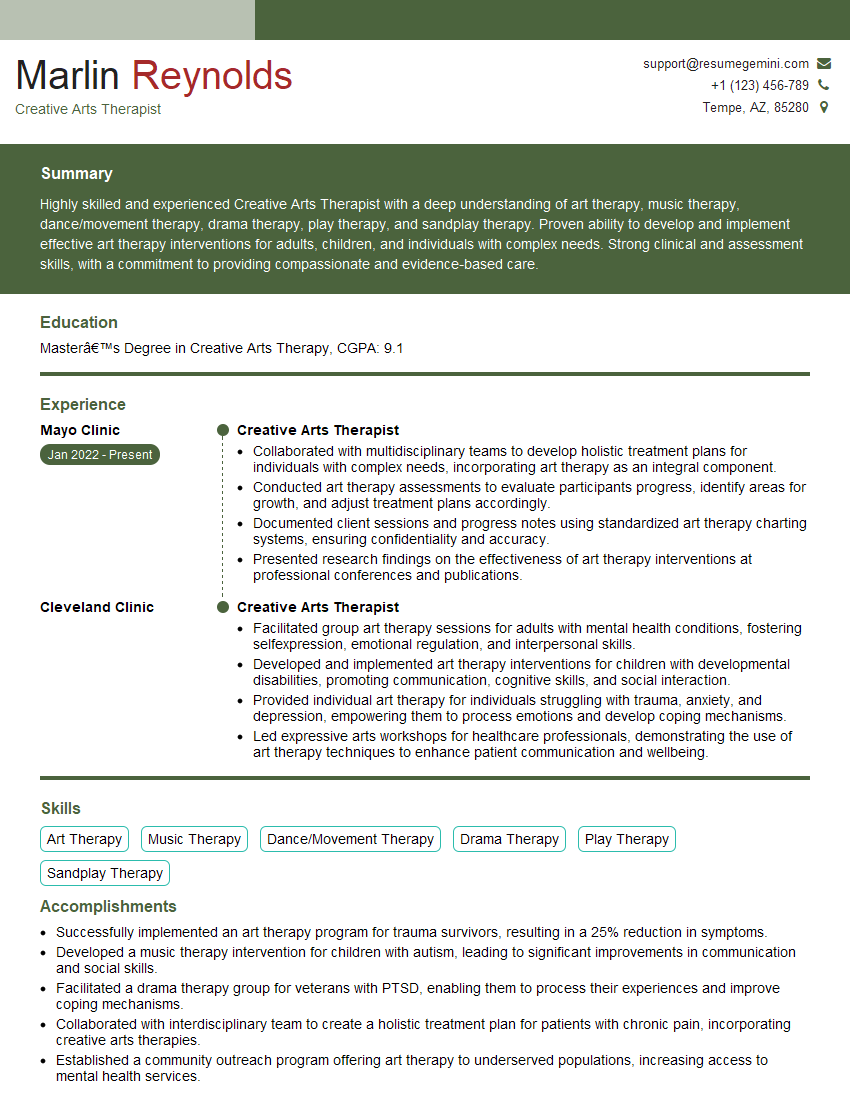
Mastering Art Therapy for Community Engagement and Empowerment opens doors to fulfilling and impactful careers, allowing you to make a tangible difference in the lives of individuals and communities. To maximize your job prospects, creating a strong, ATS-friendly resume is crucial. ResumeGemini is a trusted resource to help you build a professional and effective resume that highlights your unique skills and experience. Examples of resumes tailored to Art Therapy for Community Engagement and Empowerment are available to guide you through the process. Invest the time to craft a compelling resume—it’s your first impression and a key to unlocking your career aspirations.
Explore more articles
Users Rating of Our Blogs
Share Your Experience
We value your feedback! Please rate our content and share your thoughts (optional).
What Readers Say About Our Blog
To the interviewgemini.com Webmaster.
Very helpful and content specific questions to help prepare me for my interview!
Thank you
To the interviewgemini.com Webmaster.
This was kind of a unique content I found around the specialized skills. Very helpful questions and good detailed answers.
Very Helpful blog, thank you Interviewgemini team.