Every successful interview starts with knowing what to expect. In this blog, we’ll take you through the top Art Therapy for Healing and Transformation interview questions, breaking them down with expert tips to help you deliver impactful answers. Step into your next interview fully prepared and ready to succeed.
Questions Asked in Art Therapy for Healing and Transformation Interview
Q 1. Describe your experience using different art modalities in art therapy.
My experience with art modalities in therapy is extensive, encompassing a wide range of techniques tailored to individual client needs. I frequently utilize painting, drawing, and sculpting to explore emotions and experiences non-verbally. Collage provides a powerful tool for self-expression and integration, allowing clients to assemble fragmented thoughts and feelings into a cohesive whole. Clay work offers a unique tactile experience, facilitating the expression of deep-seated emotions through the manipulation of form and texture. I also incorporate expressive writing alongside the visual arts, creating a synergistic approach that enhances self-discovery and processing. For example, a client struggling with grief might use clay to sculpt representations of their loss, then write a poem reflecting their feelings about the created piece. Another client dealing with trauma may find collage helpful to piece together fragmented memories and experiences.
- Painting: Exploring emotions through color and form.
- Drawing: Detailed self-portraits to foster self-awareness and expression.
- Sculpting: Working with three-dimensional forms to externalize internal experiences.
- Collage: Integrating disparate elements to create a sense of wholeness and meaning.
- Expressive Writing: Integrating journaling and poetry to enhance emotional processing.
Q 2. Explain your understanding of transference and countertransference in the art therapy context.
Transference and countertransference are crucial concepts in art therapy, mirroring the dynamics found in other therapeutic approaches. Transference refers to the client’s unconscious redirection of feelings and behaviors from significant figures in their past onto the therapist. In the art therapy context, this might manifest as assigning symbolic meaning to the therapist or the artwork, reflecting past relationships. For example, a client might unconsciously paint the therapist in a controlling manner, reflecting a past controlling parent. Countertransference, conversely, involves the therapist’s emotional reactions to the client, shaped by their own personal experiences and projections. It’s vital to recognize that countertransference is not inherently negative but rather reflects the intensity of the therapeutic relationship. A therapist might feel unusually irritated by a particular client’s art, potentially revealing an unconscious connection to their past experiences. Recognizing and managing both transference and countertransference through self-reflection and supervision is vital for maintaining a therapeutic environment.
Q 3. How do you adapt your therapeutic approach to clients with diverse cultural backgrounds?
Adapting my approach to clients with diverse cultural backgrounds requires sensitivity, cultural humility and a commitment to culturally responsive care. I begin by actively listening to and learning about each client’s unique cultural context, respecting their beliefs and traditions. This involves acknowledging that art-making practices and their interpretations can vary significantly across cultures. For example, certain colors or symbols might hold deeply personal meanings within a particular culture that would not be immediately apparent to an outsider. I avoid imposing my own cultural biases on their artwork and interpretations, instead working collaboratively to understand the symbolism and personal meaning within their chosen media. This might involve researching the client’s cultural background or including consultations with cultural consultants to gain a richer understanding.
Q 4. What are the ethical considerations involved in using client artwork?
Ethical considerations surrounding client artwork are paramount. Confidentiality is key; artwork is considered privileged communication, just as verbal disclosures are. I ensure proper storage and disposal of artwork, adhering to strict privacy protocols. Clients have ownership of their work unless otherwise agreed upon. If a client wishes to share their artwork publicly, informed consent is absolutely required. Discussions about the potential use of their artwork – for example, in presentations or publications – should occur upfront and in detail. Any use must be anonymized to protect client confidentiality and comply with all relevant ethical guidelines and regulations. Ultimately, the client’s comfort and autonomy in determining how their artwork is used and protected remains the highest priority.
Q 5. Explain your process for assessing a client’s artistic abilities and how it informs your therapeutic approach.
Assessing a client’s artistic abilities is not about judging skill level, but rather understanding their creative process and expression. I observe their choice of media, color palette, composition, and the overall energy in their work. This provides insights into their emotional state, coping mechanisms, and subconscious processes. For instance, a client who consistently uses muted colors and closed-off forms might be expressing feelings of depression or withdrawal. Someone using vibrant colors and dynamic compositions might exhibit more energy and optimism. The assessment informs my approach by tailoring the therapeutic activities to their comfort level and expressive capabilities. For a client less comfortable with traditional media, I might incorporate alternative techniques like sand tray therapy or movement-based activities. The focus remains on the therapeutic process, not artistic proficiency.
Q 6. Describe a situation where you had to manage a client’s crisis during an art therapy session.
During a session with a client experiencing severe anxiety, their artwork suddenly shifted from calm landscapes to chaotic, aggressive strokes and dark colors. Their breathing became rapid, and they began to visibly tremble. Recognizing a crisis, I immediately shifted my approach. I created a safe and supportive space by gently verbalizing my observations of their artwork and emotional state without judgment. I offered deep breathing techniques and encouraged a brief break from the art-making, while offering to get them a drink of water or to simply sit quietly. I verbally validated their experience, ensuring they felt understood and safe. By remaining calm, empathetic and supportive, I guided them toward managing the intense feelings. Once they felt more grounded, we collaboratively explored the emotions manifested in their artwork, facilitating healthy emotional expression and processing.
Q 7. How do you integrate art therapy with other therapeutic modalities?
Art therapy integrates seamlessly with various other modalities, creating a holistic and comprehensive therapeutic approach. For instance, combining art therapy with Cognitive Behavioral Therapy (CBT) can help clients identify and challenge negative thought patterns while simultaneously expressing these thoughts and emotions visually. A client dealing with trauma might benefit from the integration of art therapy with EMDR (Eye Movement Desensitization and Reprocessing), using art to process and integrate traumatic memories. Art therapy also complements mindfulness practices, using creative exercises to enhance self-awareness and emotional regulation. Ultimately, the integration of modalities is customized to each client’s unique needs and therapeutic goals. The choice depends on the presenting problem and the client’s response to different interventions.
Q 8. What are your strategies for building rapport with clients who are reluctant to engage in art-making?
Building rapport with reluctant clients is crucial in art therapy. It’s about creating a safe and non-judgmental space where they feel comfortable expressing themselves, even if it’s not through art initially. I begin by emphasizing that there’s no pressure to create a masterpiece; the focus is on the process, not the product.
- Empathetic Listening: I start with open-ended questions, actively listening to their concerns and anxieties about art-making. This shows genuine interest and validates their feelings.
- Collaborative Approach: I involve them in choosing materials and the direction of the session. For example, if they’re hesitant about painting, we might explore sculpting with clay or collage with found objects – finding a medium that feels less intimidating.
- Demonstrating the Process: I might start by engaging in art-making myself, showing them that it’s okay to experiment and make mistakes. This normalizes the experience and makes it less daunting.
- Alternative Expressive Methods: If art-making remains a significant barrier, we can explore alternative expressive methods, such as guided imagery, journaling, or even simply talking, gradually incorporating art as they feel more comfortable. For instance, we might use simple mark-making exercises to release tension before moving on to more complex projects.
For instance, I once worked with a client who expressed intense fear of failure. We started with simple finger painting, focusing on the sensory experience of the paint itself. Slowly, we progressed to more structured activities, eventually leading to her creating a powerful self-portrait.
Q 9. How do you maintain client confidentiality in the context of art therapy?
Maintaining client confidentiality is paramount in art therapy, and it’s governed by ethical guidelines and legal regulations. It’s not just about protecting their artwork; it encompasses all aspects of our therapeutic relationship.
- Secure Storage: Artwork and session notes are stored in locked cabinets or secured electronic files, inaccessible to unauthorized individuals.
- Anonymity in Presentations: When presenting case studies or research, I ensure client identities are completely protected through anonymization or pseudonymization techniques.
- HIPAA Compliance: I adhere strictly to HIPAA regulations (or equivalent regulations in other countries) regarding the storage, transmission, and disclosure of Protected Health Information (PHI).
- Informed Consent: Clients are fully informed about confidentiality policies at the outset of therapy, including exceptions such as mandated reporting of child abuse or imminent harm to self or others.
- Disposal of Materials: Art materials and artwork are disposed of securely and ethically, adhering to environmental regulations where applicable.
It’s crucial to establish trust by explicitly explaining confidentiality policies and continuously reinforcing the importance of protecting sensitive information. Transparency and open communication on this matter are key to building a strong and safe therapeutic alliance.
Q 10. Describe your experience working with clients who have experienced trauma.
Working with trauma survivors requires a trauma-informed approach. This means understanding that trauma impacts a person’s emotional regulation, sense of safety, and ability to connect with others. My approach emphasizes creating a safe and predictable therapeutic environment.
- Establishing Safety: I prioritize building trust and rapport, ensuring the client feels completely safe and in control of the therapeutic process. This includes setting boundaries and respecting their pace.
- Body-Based Techniques: I often incorporate body-based techniques, such as somatic experiencing, to help clients process trauma stored in the body, often manifested as physical tension or sensations.
- Expressive Arts: Art becomes a powerful tool for nonverbal expression, allowing clients to safely explore and process traumatic experiences without having to verbalize them directly. We might use techniques like sand tray therapy or expressive writing alongside visual art.
- Mindfulness and Regulation: I introduce mindfulness practices to help clients manage overwhelming emotions and regulate their nervous system. This could involve simple breathing exercises or body scans integrated into the art-making process.
- Collaboration with Other Professionals: In cases of complex trauma, I collaborate with other professionals, such as psychiatrists or social workers, to provide holistic care. A multidisciplinary team can offer comprehensive support.
For example, I worked with a client who had experienced childhood abuse. Initially, she was unable to verbalize her trauma. Through sand tray therapy, she created a symbolic representation of her experience, allowing her to gradually process her emotions and start building a narrative around her trauma in a safe and contained environment.
Q 11. Explain your understanding of the role of creativity in the healing process.
Creativity is not merely a tool in art therapy; it’s an inherent part of the healing process. It’s about tapping into our innate capacity for self-expression, problem-solving, and self-discovery.
- Nonverbal Expression: Art provides a non-verbal language for expressing emotions and experiences that might be difficult to articulate verbally. This is particularly important for clients who struggle with verbal communication or have experienced trauma.
- Symbolic Representation: The creative process allows clients to symbolize their inner world, giving shape to complex feelings and experiences. Art becomes a metaphor for understanding and processing internal conflicts.
- Self-Discovery and Insight: The act of creating provides opportunities for reflection and self-discovery. The artwork itself can act as a mirror, revealing unconscious patterns or beliefs.
- Emotional Regulation: Engaging in creative activities can promote emotional regulation, helping clients manage intense emotions in a healthy and constructive way. The focus and concentration required in art-making can be grounding and soothing.
- Empowerment and Agency: Through the creative process, clients regain a sense of control and agency, empowering them to take ownership of their healing journey.
Think of creativity as a pathway to self-understanding – a way to unlock hidden resources and strengths. It’s not about creating perfect pieces of art, but about using the creative process as a vehicle for personal growth and transformation.
Q 12. How do you document client progress in art therapy?
Documenting client progress in art therapy is crucial for tracking changes, informing treatment, and ensuring ethical practice. My documentation includes both qualitative and quantitative data.
- Session Notes: I meticulously document each session, noting the client’s mood, behavior, expressed thoughts and feelings, art-making process, and any significant insights gleaned from the session. This includes descriptions of the artwork created, focusing on its symbolic meaning and emotional impact for the client.
- Artwork Photographs: I take photographs of the client’s artwork with their permission, adding contextual information such as date, materials used, and a brief description of the process. This creates a visual record of the client’s progress over time.
- Progress Reports: I periodically write progress reports summarizing the client’s overall progress, highlighting achievements, challenges, and any changes in treatment plan. This aids in case review and collaboration with other professionals.
- Assessment Tools: Depending on the client’s needs and the therapeutic goals, I might utilize standardized assessment tools, both art-based and verbal, to track changes in mood, anxiety, or other relevant variables.
- Client Feedback: Regularly soliciting client feedback is crucial to understanding their experience and ensuring the effectiveness of the therapeutic approach. This information is incorporated into the documentation.
Maintaining accurate and thorough documentation is vital for ensuring the client’s safety, effective treatment, and legal compliance.
Q 13. What are the limitations of art therapy, and how do you address them?
Art therapy, while powerful, does have limitations. It’s not a suitable solution for every client or every problem. Recognizing these limitations and addressing them ethically is essential.
- Severe Mental Illness: In cases of severe psychosis or acute suicidal ideation, art therapy may not be the primary or sole treatment modality; it requires careful integration with other forms of mental health intervention.
- Physical Limitations: Certain physical limitations, like severe motor impairments, can hinder participation in some art-making activities. In such cases, alternative adapted methods or assistive technologies are employed.
- Resistance to Art-Making: Some clients may be deeply resistant to art-making, making it challenging to establish a therapeutic alliance. Alternative approaches, such as using verbal processing or other expressive modalities, might be necessary.
- Lack of Access to Resources: Access to art materials and a conducive therapeutic space can sometimes be limited, creating barriers for some clients. Finding creative solutions, like utilizing readily available materials or adapting the setting as needed, is vital.
- Subjectivity of Interpretation: The interpretation of artwork is inherently subjective. Although I provide guidance, the client ultimately determines the meaning of their work, and my interpretations are always offered cautiously and collaboratively.
Addressing these limitations often involves a flexible and creative approach, adapting treatment plans based on client needs and exploring alternative expressive modalities when necessary. Referrals to other professionals are sometimes appropriate, ensuring that clients receive comprehensive care.
Q 14. How do you ensure the safety and well-being of clients during art therapy sessions?
Ensuring client safety and well-being is the cornerstone of ethical art therapy practice. It’s an ongoing process, requiring careful consideration at each stage of the therapeutic relationship.
- Risk Assessment: A thorough risk assessment is conducted at the beginning and throughout therapy, identifying any potential risks related to the client’s mental state, past trauma, or current circumstances. This includes assessing suicide risk and potential for self-harm.
- Safe Environment: I create a safe and supportive therapeutic space, free from distractions and potential hazards. Materials are carefully selected, avoiding anything that could be used to inflict self-harm.
- Clear Boundaries: Clear professional boundaries are established and maintained, safeguarding both the therapist and the client. This includes addressing power dynamics and avoiding dual relationships.
- Crisis Management Plan: A plan is developed in collaboration with the client for managing potential crises or emotional distress, outlining steps to take if the client experiences a significant emotional escalation during sessions.
- Self-Care for the Therapist: Practicing self-care is crucial for therapists working with potentially vulnerable clients. This includes regular supervision, continuing education, and personal stress management techniques to maintain professional competence and prevent burnout.
Safety isn’t just about physical safety; it also includes emotional safety and psychological well-being. Creating an environment where clients feel understood, respected, and empowered is central to ensuring their safety and facilitating the healing process.
Q 15. Describe your experience working within a multidisciplinary team.
Collaboration is the cornerstone of effective mental health care. In my experience working within multidisciplinary teams, I’ve found that a shared understanding of the client’s needs and goals is paramount. This involves regular communication with psychiatrists, psychologists, social workers, and other professionals involved in the client’s care. For instance, I might collaborate with a psychiatrist to understand the client’s medication regimen and its potential impact on their artistic expression, or work with a social worker to address environmental factors contributing to their distress. Effective communication, active listening, and a willingness to share expertise are key to successful interdisciplinary teamwork. We often hold case conferences to discuss progress, challenges, and adjust treatment plans collectively. This collaborative approach ensures a holistic and well-rounded approach to care, maximizing the client’s potential for healing and transformation.
Career Expert Tips:
- Ace those interviews! Prepare effectively by reviewing the Top 50 Most Common Interview Questions on ResumeGemini.
- Navigate your job search with confidence! Explore a wide range of Career Tips on ResumeGemini. Learn about common challenges and recommendations to overcome them.
- Craft the perfect resume! Master the Art of Resume Writing with ResumeGemini’s guide. Showcase your unique qualifications and achievements effectively.
- Don’t miss out on holiday savings! Build your dream resume with ResumeGemini’s ATS optimized templates.
Q 16. How do you handle ethical dilemmas that may arise in art therapy practice?
Ethical dilemmas are an inherent part of the art therapy profession. Confidentiality, for example, is crucial. I always ensure clients understand the limits of confidentiality, particularly concerning issues of self-harm or harm to others. I adhere strictly to the ethical guidelines established by professional organizations, such as the American Art Therapy Association. One specific scenario I encountered involved a client expressing violent thoughts. While maintaining confidentiality, I followed protocol by consulting with my supervisor and informing the appropriate authorities to ensure the safety of both the client and others. Ethical decision-making involves careful consideration of the client’s well-being, professional boundaries, and legal requirements. Regular supervision is essential to navigate these complex situations, ensuring that ethical considerations remain at the forefront of my practice.
Q 17. Explain your understanding of different art therapy theories and models.
My understanding of art therapy theories and models is broad, encompassing various approaches. For example, Jungian theory emphasizes the unconscious and uses art as a vehicle for exploring archetypes and personal symbolism. Psychodynamic approaches focus on exploring underlying conflicts and patterns revealed through the creative process. Gestalt therapy emphasizes the present moment and utilizes art to enhance self-awareness and integration. Narrative therapy helps clients reframe their stories and find new meaning through artistic expression. I integrate these theories depending on the client’s individual needs and goals. I might use elements of Jungian analysis with a client exploring their dreams through symbolic artwork, or employ a Gestalt approach with a client focusing on immediate bodily sensations and emotional responses while creating. This flexible approach ensures that the therapeutic intervention is tailored to the unique circumstances of each individual.
Q 18. What are your strategies for managing challenging behaviors in an art therapy group?
Managing challenging behaviors in group art therapy requires a multifaceted approach. Establishing clear group guidelines and expectations from the start is essential. I use a combination of strategies, including setting firm but compassionate limits, providing individual attention and support, and facilitating group discussions to address conflict constructively. For instance, if a client is disrupting the group, I might gently redirect their behavior, emphasizing the importance of respecting others’ space and time. If the behavior persists, I might engage in a brief individual session to understand the underlying reasons and collaboratively develop coping mechanisms. It’s also important to recognize that challenging behaviors can sometimes signal deeper emotional distress, requiring a modification of the therapeutic approach or referral to other professionals if necessary.
Q 19. How do you assess the effectiveness of art therapy interventions?
Assessing the effectiveness of art therapy interventions is a complex process involving both quantitative and qualitative data. Quantitative measures might include standardized assessments of symptoms, such as anxiety or depression scales, administered before and after the intervention. Qualitative data is gathered through ongoing observation of the client’s creative process, changes in their artwork, and verbal reflections on their experiences. For example, I might notice a reduction in the intensity of dark colors in a client’s paintings, reflecting a potential shift in their emotional state. I also regularly discuss progress and challenges with the client, incorporating their subjective experiences into the overall assessment. The most effective assessments incorporate both objective and subjective data, providing a comprehensive understanding of the therapy’s impact.
Q 20. Describe your approach to supervision and continuing education.
Supervision and continuing education are crucial for maintaining professional competence and ethical practice. I engage in regular individual supervision with a qualified art therapist, discussing complex cases, ethical dilemmas, and personal reflections on my practice. This provides a safe and supportive environment to process challenges and refine my therapeutic skills. I actively seek out continuing education opportunities, such as workshops, conferences, and advanced training, to stay updated on current research, innovative techniques, and best practices. Continuing education ensures that I maintain a high level of expertise and provide the best possible care to my clients. Staying current in the field also allows me to adapt my approach to meet the evolving needs of diverse populations.
Q 21. What are the legal and regulatory requirements for practicing art therapy in your area?
The legal and regulatory requirements for practicing art therapy vary by location. In my area, it’s mandatory to hold a license or registration as a professional art therapist, demonstrating competency and adherence to professional standards. This typically involves completing a master’s degree in art therapy from an accredited program and passing a licensing examination. Maintaining professional liability insurance is also a legal requirement. Moreover, I am obligated to comply with all relevant laws concerning patient confidentiality, data privacy (HIPAA), and reporting requirements for child abuse and neglect. Staying informed about evolving legislation and maintaining up-to-date certifications is essential for legal and ethical practice.
Q 22. How do you maintain your own professional well-being while working as an art therapist?
Maintaining professional well-being is paramount in the demanding field of art therapy. It’s akin to a pilot needing regular maintenance checks for their aircraft – crucial for safe and effective flight. My approach is multi-faceted and includes:
Regular Supervision: Meeting regularly with a supervisor to process challenging cases and discuss my own emotional responses. This provides a safe space to explore countertransference and refine my therapeutic approach.
Self-Care Practices: Prioritizing activities that nourish my mind, body, and spirit. This might involve engaging in my own creative pursuits, practicing mindfulness, exercising, or spending time in nature. It’s about actively replenishing my own emotional resources.
Maintaining Boundaries: Setting clear professional boundaries with clients to protect against burnout. This includes respecting appointment times, limiting contact outside of sessions, and recognizing when to refer a client to another professional.
Continuing Education: Staying up-to-date with the latest research and best practices in art therapy through workshops, conferences, and professional development activities. This keeps me engaged and sharp.
Peer Support: Connecting with other art therapists to share experiences, offer support, and engage in mutual supervision. Knowing I’m not alone in the challenges of the profession is invaluable.
Q 23. Describe your experience using art therapy with specific populations (e.g., children, adults with PTSD).
My experience spans various populations. With children, art therapy often becomes a playful exploration of emotions. For instance, a child struggling with anger might create a volcano painting, allowing them to express their intense feelings in a safe and controlled manner. The process of creating becomes the therapeutic tool, enabling them to process and understand their emotions better.
Working with adults with PTSD is significantly different, requiring a trauma-informed approach. Here, art can serve as a non-verbal avenue for expression, bypassing the potential barriers of verbalizing traumatic experiences. I’ve used techniques like creating collages representing their past, present, and future, or using sand trays to symbolically represent their internal landscape. The focus is always on empowerment and building resilience. Maintaining a safe and supportive therapeutic relationship is paramount, ensuring clients feel heard, understood, and validated.
Q 24. What are the key differences between art therapy and other creative therapies?
While art therapy shares similarities with other creative therapies like music therapy or drama therapy, there are key differences. The core distinction lies in the intentional use of the creative process itself as the primary therapeutic modality. In art therapy, the visual arts – painting, drawing, sculpting, collage – are not merely tools for self-expression; they are the vehicle through which psychological issues are explored and resolved. Other therapies might use creative methods as supplemental tools, but in art therapy, the art making is the central focus of the therapeutic work. The analysis of the artwork, the process of creating it, and the client’s reflections on it are all key aspects of the therapy.
Q 25. How do you utilize art therapy to promote self-awareness and self-esteem in your clients?
Art therapy fosters self-awareness and self-esteem by providing a safe space for self-expression without the pressure of verbal articulation. Clients can explore their inner world through their artwork, uncovering hidden emotions and beliefs. For example, a client struggling with low self-esteem might create self-portraits that initially reflect a negative self-image. Through the process, we can explore these representations, identifying the origins of these feelings and gradually fostering a more positive self-perception. We might experiment with different art materials, styles, and colors, leading to a shift in the client’s self-representation and a gradual increase in self-esteem as they witness their own growth and progress through the art-making process.
Q 26. What is your approach to incorporating technology in art therapy?
Technology offers exciting possibilities in art therapy. I use digital art platforms to expand the range of creative options available to clients, offering opportunities for animation, digital painting, and photo manipulation. This can be particularly beneficial for clients who prefer a less traditional approach or who have physical limitations. However, I always consider the therapeutic goals and the client’s comfort level with technology. It is important to remember that the technology should enhance, not replace, the human connection at the heart of art therapy.
Q 27. Describe your understanding of the role of the therapeutic relationship in art therapy.
The therapeutic relationship in art therapy is the cornerstone of effective treatment. It’s a collaborative and empathic partnership built on trust, respect, and unconditional positive regard. It’s a space where clients feel safe to explore their vulnerabilities and express themselves without judgment. My role is not just to interpret the artwork, but to provide a safe and supportive environment where the client feels empowered to explore their inner world through the creative process. This involves active listening, reflective responses, and a deep understanding of the client’s unique experiences and perspective.
Q 28. How do you address countertransference in your practice?
Countertransference, the therapist’s unconscious emotional reactions to the client, is a natural phenomenon but needs careful management. I address countertransference through regular supervision, where I can process my emotional responses to clients with a trained professional. This helps me to identify personal triggers and understand how my own experiences might be influencing my therapeutic approach. Self-reflection and maintaining strong personal boundaries are also crucial. By acknowledging and understanding my own emotional reactions, I can ensure that my personal biases do not interfere with providing effective and ethical art therapy.
Key Topics to Learn for Art Therapy for Healing and Transformation Interview
- Theoretical Foundations: Understanding key art therapy theories (e.g., psychodynamic, humanistic, Gestalt) and their application in healing and transformation.
- Therapeutic Techniques: Mastery of various art modalities (e.g., painting, sculpting, collage) and their therapeutic uses in addressing trauma, grief, anxiety, and other mental health concerns.
- Client Assessment & Treatment Planning: Developing effective assessment strategies to understand client needs and designing personalized art therapy interventions.
- Ethical Considerations: Understanding professional ethics, boundaries, and legal considerations within the art therapy context, including confidentiality and informed consent.
- Group Art Therapy: Knowledge of group dynamics and the application of art therapy techniques within group settings.
- Crisis Intervention & Safety Planning: Recognizing and responding to client crises and implementing safety plans.
- Documentation & Record Keeping: Maintaining accurate and comprehensive client records according to professional standards.
- Cultural Sensitivity & Inclusivity: Adapting art therapy approaches to meet the diverse needs of clients from various cultural backgrounds.
- Collaboration & Consultation: Working effectively with other healthcare professionals (e.g., psychiatrists, social workers) within a multidisciplinary team.
- Self-Care & Professional Development: Understanding the importance of self-care practices and ongoing professional development for effective art therapy practice.
Next Steps
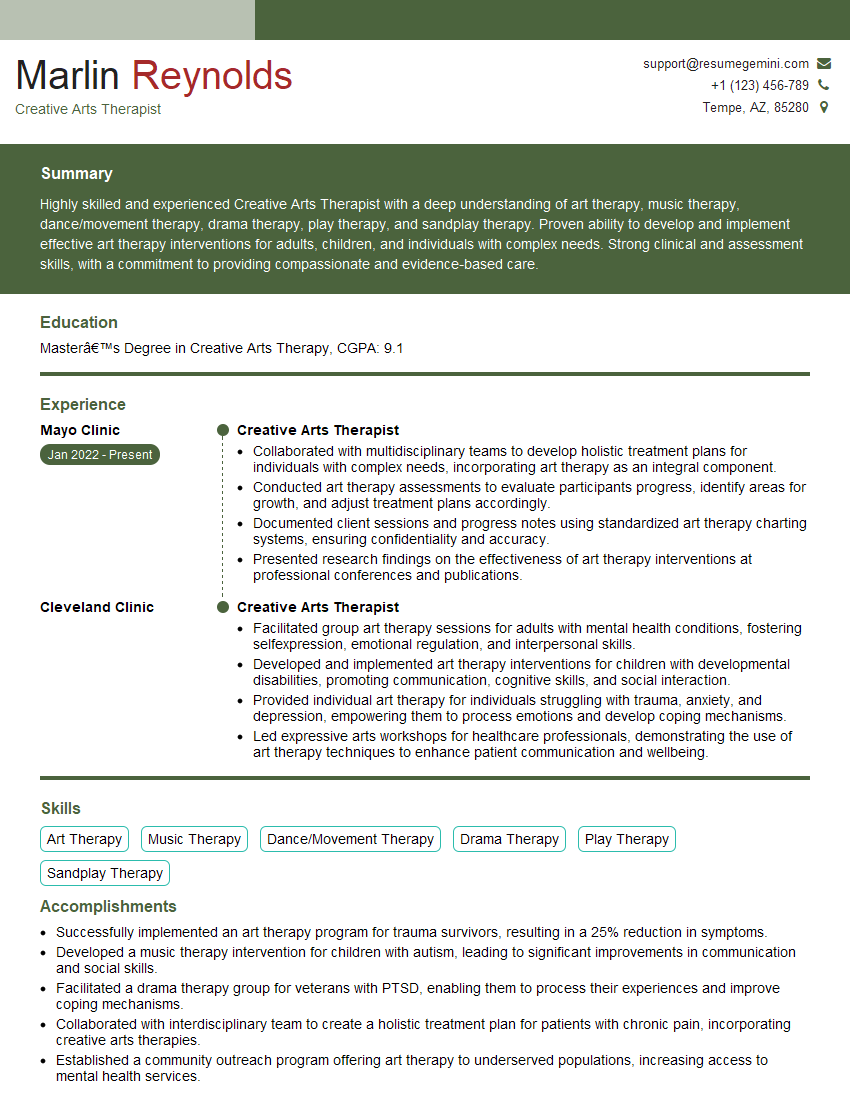
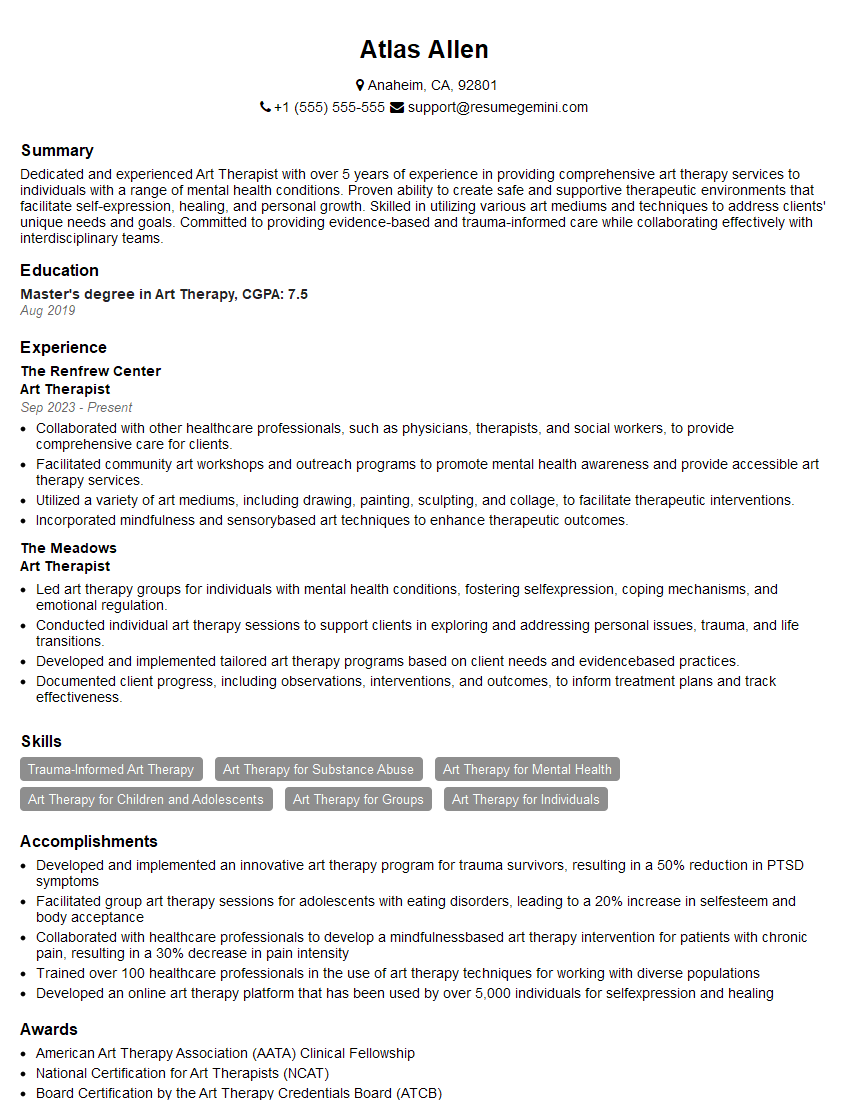
Mastering Art Therapy for Healing and Transformation opens doors to rewarding careers impacting lives profoundly. A strong resume is crucial for showcasing your skills and experience to potential employers. Creating an ATS-friendly resume significantly increases your chances of getting noticed. ResumeGemini is a trusted resource to help you build a professional, impactful resume that highlights your unique qualifications. Examples of resumes tailored specifically to Art Therapy for Healing and Transformation are available through ResumeGemini, ensuring your application stands out.
Explore more articles
Users Rating of Our Blogs
Share Your Experience
We value your feedback! Please rate our content and share your thoughts (optional).
What Readers Say About Our Blog
To the interviewgemini.com Webmaster.
Very helpful and content specific questions to help prepare me for my interview!
Thank you
To the interviewgemini.com Webmaster.
This was kind of a unique content I found around the specialized skills. Very helpful questions and good detailed answers.
Very Helpful blog, thank you Interviewgemini team.