Cracking a skill-specific interview, like one for Art Therapy for Empowerment and Self-Expression, requires understanding the nuances of the role. In this blog, we present the questions you’re most likely to encounter, along with insights into how to answer them effectively. Let’s ensure you’re ready to make a strong impression.
Questions Asked in Art Therapy for Empowerment and Self-Expression Interview
Q 1. Describe your approach to adapting art therapy techniques for clients with different diagnoses.
My approach to adapting art therapy techniques centers on the principle of individualized treatment. I don’t believe in a one-size-fits-all method. Instead, I carefully assess each client’s unique strengths, challenges, and cognitive abilities, considering their diagnosis as one piece of a much larger puzzle. For example, a client with anxiety might benefit from calming, repetitive activities like mandala coloring or clay sculpting, focusing on building a sense of control and focus. Conversely, a client experiencing depression might find more benefit in expressive techniques like collage or painting, allowing them to externalize their inner turmoil and explore their emotions visually. Clients with cognitive impairments may benefit from simpler, more tactile activities, like finger painting or working with large-format materials. The key is flexibility and adapting techniques to meet the client where they are, always ensuring safety and comfort.
I also take into account the client’s personal preferences. Does the client prefer working with vibrant colours or muted tones? Do they enjoy working independently or collaboratively? Does texture play a significant role in their sensory experience? These factors are crucial in tailoring an effective art therapy experience.
Q 2. Explain how you assess a client’s readiness for art therapy and establish therapeutic goals.
Assessing readiness for art therapy involves a thorough initial assessment, including a comprehensive intake interview and possibly psychological testing. I look for the client’s willingness to engage in the process, their ability to tolerate frustration and ambiguity (as creative processes can be unpredictable), and their capacity for self-reflection. It’s crucial to establish a strong therapeutic alliance based on trust and mutual respect. This assessment helps determine if art therapy is an appropriate modality for the individual’s needs.
Establishing therapeutic goals is a collaborative process. I work closely with the client to identify their specific concerns and desired outcomes. These goals are often expressed verbally, but also reflected in their artwork. For instance, a client struggling with self-esteem might set a goal to create a self-portrait that reflects a more positive self-image. These goals are measurable, achievable, relevant, and time-bound (SMART goals), ensuring a clear pathway toward progress. Regular review and adjustment of these goals ensures that therapy remains focused and client-centered.
Q 3. How do you integrate ethical considerations into your art therapy practice?
Ethical considerations are paramount in my practice. This includes maintaining client confidentiality (HIPAA compliance), obtaining informed consent before starting therapy, and ensuring that the therapeutic relationship is always professional and ethical. I am mindful of power dynamics and avoid exploiting the therapeutic relationship. This includes establishing clear boundaries regarding physical touch, the use of social media, and maintaining professional distance outside of therapy sessions. I also adhere to strict guidelines regarding the handling and storage of client artwork, ensuring their privacy and safety.
Furthermore, I am actively engaged in ongoing professional development, staying updated on the latest ethical guidelines and best practices in the field of art therapy. In situations where I am faced with ethical dilemmas, I consult with supervisors and colleagues to ensure that I’m making decisions that prioritize the client’s wellbeing and adhere to the highest ethical standards.
Q 4. Describe your experience using art therapy to address specific trauma symptoms.
I have extensive experience using art therapy to address trauma symptoms. Many trauma survivors struggle with verbalizing their experiences, and art provides a non-threatening avenue for expression. Techniques such as trauma-informed art making, narrative art therapy, and sand tray therapy are particularly useful. For instance, a client who experienced childhood abuse might use collage to represent fragmented memories and feelings, gradually piecing together their narrative through the creative process.
The goal isn’t to force the client to recount traumatic events in detail, but to create a safe space where they can explore their emotions, process their experiences at their own pace, and develop coping mechanisms. Body-focused art techniques can be incredibly valuable, allowing clients to reconnect with their bodies and regain a sense of ownership over their physical selves. It’s crucial to pace the work carefully, recognizing the potential for re-traumatization, and providing ample support and validation throughout the process.
Q 5. What art mediums do you find most effective for facilitating self-expression and empowerment?
The most effective art mediums for facilitating self-expression and empowerment are those that resonate with the individual client. However, I find certain mediums lend themselves well to specific therapeutic goals. Clay, for instance, allows for both structure and fluidity, mirroring the process of emotional regulation. Painting can be cathartic, allowing clients to express intense emotions through color and texture. Collage facilitates the integration of disparate elements, representing the complexities of the self. Sand tray therapy is particularly useful in exploring the inner world and creating symbolic representations of inner conflicts.
Ultimately, the best medium is the one that allows the client to access their emotions and experiences most effectively. My role is to guide them in their exploration, offering suggestions but always prioritizing their choice and comfort level.
Q 6. How do you manage challenging behaviors or emotional outbursts during art therapy sessions?
Managing challenging behaviors or emotional outbursts requires a calm and empathetic response. Safety is paramount, so my first priority is to ensure the client and myself are safe. I would create space and time for the client to regulate their emotions. This might involve taking breaks, engaging in calming activities like deep breathing exercises or simply sitting in quiet contemplation. I would validate the client’s feelings without judgment, showing compassion and understanding. It’s essential to reflect back what I’m observing, for instance, saying, “I can see you’re feeling very overwhelmed right now.”
Depending on the intensity and frequency of these outbursts, I might adjust the therapeutic approach, offering alternative activities or exploring the underlying reasons for these disruptions through verbal processing or other therapeutic interventions. Collaboration with the client’s other healthcare providers might be necessary in cases of severe or persistent challenges.
Q 7. Explain your understanding of the role of transference and countertransference in art therapy.
Transference and countertransference are crucial concepts in art therapy. Transference refers to the client’s unconscious redirection of feelings and desires from one person to another, often the therapist. In art therapy, this might manifest as the client projecting their feelings onto their artwork or the therapist. For example, a client might create a very aggressive painting, unconsciously reflecting anger directed at a significant figure in their life. Understanding transference is key to interpreting the artwork and helping the client work through these unresolved feelings.
Countertransference, on the other hand, refers to the therapist’s emotional reactions to the client. It’s important for therapists to be self-aware and to process their own countertransference in supervision, ensuring that their personal feelings don’t interfere with the therapeutic process. For instance, a therapist might find themselves feeling intensely protective towards a client who is sharing experiences of childhood neglect; recognizing this reaction allows the therapist to maintain professional boundaries while still offering compassionate support.
Q 8. How do you maintain client confidentiality and adhere to relevant professional standards?
Maintaining client confidentiality is paramount in art therapy, and I strictly adhere to ethical guidelines established by organizations like the American Art Therapy Association (AATA). This includes obtaining informed consent before starting therapy, ensuring secure storage of client records (both physical and digital), and limiting discussions about clients to only necessary professional collaborations. I never disclose any identifying information about my clients without their explicit permission, unless legally obligated to do so (e.g., mandated reporting of child abuse).
My practice involves using HIPAA-compliant software for electronic health records and employing secure physical storage for paper files. I routinely review my practices to guarantee ongoing compliance with all relevant confidentiality regulations and professional standards. For example, if a client discusses a concerning event, I’ll carefully document my response while safeguarding their privacy within the written record. I also regularly engage in continuing education to stay abreast of evolving privacy regulations and best practices.
Q 9. Describe your experience working with diverse populations.
I have extensive experience working with diverse populations, including individuals from various socioeconomic backgrounds, ethnicities, ages, and with a wide range of diagnoses. This includes working with children processing trauma through play therapy techniques integrated with art, adolescents grappling with identity issues and self-esteem, adults navigating career changes or relationship difficulties, and seniors dealing with loss and grief. My approach is culturally sensitive and informed by an understanding of the unique challenges and strengths within each population.
For instance, when working with refugee children, I might incorporate familiar cultural symbols and imagery into the art-making process to facilitate communication and build trust. Similarly, when working with older adults, I’ll adapt the art materials and activities to meet any physical limitations, focusing on techniques that foster both cognitive engagement and emotional expression.
I continuously strive to cultivate cultural humility, regularly seeking to expand my knowledge and awareness of different cultural perspectives and their influence on the therapeutic process. This ongoing commitment ensures I can best meet the diverse needs of my clients.
Q 10. How do you document client progress and outcomes in art therapy?
Documentation is crucial for tracking client progress and ensuring effective art therapy. My documentation process involves detailed session notes that include observations of the client’s artwork, verbalizations, and non-verbal cues. I document the therapeutic techniques used, client goals, and any significant events that occurred during the session.
This is often done using a combination of narrative descriptions and standardized assessment tools relevant to the client’s specific needs. For example, I may use a standardized scale to track changes in mood or anxiety levels, supplementing this with my own qualitative observations of the client’s artwork over time. This allows for a comprehensive view of the client’s progress. Client artwork is typically photographed and stored securely, referenced in the notes with descriptions of significant elements.
I regularly review these records to identify patterns, track progress towards goals, and adjust my interventions as needed. The documentation allows for clear communication with other professionals (if necessary) and serves as a valuable resource for future reference and ongoing professional development.
Q 11. What are some common misconceptions about art therapy that you address with clients?
Many people harbor misconceptions about art therapy. A common one is that it’s only for children or for people who are ‘artistic’. I emphasize that art therapy is a powerful modality for all ages and abilities. It’s not about creating masterpieces, but about using the creative process to explore emotions, thoughts, and experiences.
Another misconception is that it’s a passive or solely expressive activity. I clarify that it’s an active, collaborative process where clients are guided and supported to make meaning from their artwork. For instance, I might ask a client to explain their use of color or discuss the emotions evoked by a particular image, guiding them towards deeper self-understanding. I might also use prompts and specific techniques to encourage self-reflection or problem solving.
Finally, some believe art therapy is merely a ‘fun’ activity. I highlight the therapeutic depth involved, emphasizing that it’s a process that can address complex emotional issues, trauma, and mental health challenges in a safe and supportive environment.
Q 12. How do you assess the effectiveness of your art therapy interventions?
Assessing the effectiveness of my art therapy interventions involves a multifaceted approach. It’s not just about whether a client’s artwork improves aesthetically but about evaluating their overall progress toward their therapeutic goals. I use a variety of methods, including:
- Regularly scheduled assessment sessions: These sessions involve open discussions, review of artwork created between sessions, and use of standardized questionnaires or rating scales to track changes in mood, anxiety, or other relevant symptoms.
- Goal attainment scaling: Before starting therapy, we collaboratively define specific, measurable, achievable, relevant, and time-bound (SMART) goals. I regularly assess the client’s progress in relation to these goals throughout the course of therapy.
- Qualitative analysis of artwork: I carefully observe changes in the client’s art-making process, including the choice of materials, colors, imagery, and composition, paying attention to symbolic meaning and shifts in emotional expression over time.
- Client feedback: Regular feedback from the client is vital to gauge their perception of progress and satisfaction with the therapy.
Combining these methods provides a comprehensive picture of treatment effectiveness, allowing for necessary adjustments to therapy plans as needed.
Q 13. Explain your experience with crisis intervention techniques within the art therapy context.
Crisis intervention within the context of art therapy requires a combination of rapid assessment, supportive interventions, and collaboration with other professionals as needed. My approach focuses on creating a safe and contained space where the client can express their immediate distress. This might involve encouraging free expression through art-making, using techniques like expressive writing or guided imagery to manage overwhelming emotions, or simply providing a non-judgmental listening ear.
For example, if a client experiences a panic attack during a session, I might encourage them to engage in calming art activities such as coloring or mindful drawing. I’d prioritize providing immediate emotional support and validation, while also helping them to identify and label their feelings. If the situation requires more intervention than I can provide, I would immediately contact appropriate support services (such as crisis hotlines, emergency services, or the client’s psychiatrist) and collaboratively develop a safety plan for the client.
My crisis intervention training emphasizes safety and de-escalation techniques tailored to the art therapy setting. I regularly review my training and my emergency plan to ensure I’m prepared for various crisis scenarios.
Q 14. How do you incorporate feedback from clients into your treatment plans?
Client feedback is integral to creating effective treatment plans. I actively solicit feedback at various points during the therapeutic process, including at the beginning, throughout therapy, and at the end of each session. This feedback can be verbal, nonverbal, or expressed through their artwork.
For instance, I might ask, “How did you feel about today’s session?” or “What aspects of the session were most helpful?” I also pay close attention to the client’s non-verbal cues – their body language, engagement level, and emotional responses to the art-making process. Their artwork itself is also a rich source of feedback, revealing their emotional state, inner world, and progress toward their goals.
This feedback informs my treatment planning by allowing me to: adjust my interventions based on the client’s needs and preferences; modify goals or strategies as required; strengthen the therapeutic relationship by demonstrating that I value their input and partnership in the process. I consider their feedback as an important component of collaborative decision-making within the therapeutic alliance.
Q 15. How do you handle ethical dilemmas that might arise in your art therapy practice?
Ethical dilemmas in art therapy, like confidentiality breaches or boundary issues, require careful consideration. My approach involves a multi-step process. First, I thoroughly review the relevant ethical codes, specifically those of the American Art Therapy Association (AATA). This provides a framework for understanding my responsibilities and potential conflicts. Second, I engage in self-reflection, considering my own values and biases to ensure they don’t influence my decision-making. Third, I consult with supervisors or other experienced art therapists to gain different perspectives and explore various solutions. Finally, I document the entire process, including the dilemma, my considerations, the decision made, and the rationale behind it. For example, if a client reveals intentions of self-harm, mandated reporting procedures must be followed, balancing client confidentiality with their safety. This requires careful consideration of the legal and ethical implications, and often involves consultation with a supervisor and potentially legal counsel.
Career Expert Tips:
- Ace those interviews! Prepare effectively by reviewing the Top 50 Most Common Interview Questions on ResumeGemini.
- Navigate your job search with confidence! Explore a wide range of Career Tips on ResumeGemini. Learn about common challenges and recommendations to overcome them.
- Craft the perfect resume! Master the Art of Resume Writing with ResumeGemini’s guide. Showcase your unique qualifications and achievements effectively.
- Don’t miss out on holiday savings! Build your dream resume with ResumeGemini’s ATS optimized templates.
Q 16. Describe your approach to building rapport and trust with clients.
Building rapport and trust is fundamental in art therapy. I begin by creating a safe and welcoming environment – a space where clients feel comfortable expressing themselves without judgment. This involves actively listening, using empathetic language, and demonstrating genuine interest in their experiences. I explain the process clearly, focusing on the client’s autonomy and control over the therapeutic experience. I encourage them to actively participate in setting goals and choosing art materials. For instance, I might ask, “What kind of art materials are you drawn to today?” or “What are your hopes for our sessions together?” These open-ended questions demonstrate respect for their preferences and agency. Gradually, through consistent reliability, respect, and genuine engagement with their creative process, a trusting therapeutic relationship develops.
Q 17. Explain your understanding of the therapeutic relationship in art therapy.
The therapeutic relationship in art therapy is a collaborative partnership built on mutual respect, trust, and a shared understanding of the therapeutic goals. Unlike traditional talk therapy, the art-making process itself becomes a crucial component of this relationship. The artwork acts as a bridge between the conscious and unconscious, allowing clients to express emotions and experiences that might be difficult to articulate verbally. The therapist’s role is not just to interpret the artwork, but also to support the client’s self-discovery through active listening, reflective questioning, and a non-judgmental approach. A strong therapeutic relationship fosters a sense of safety, allowing clients to explore vulnerable aspects of themselves without fear of criticism. This dynamic interplay between the client’s creative process and the therapist’s guidance is what makes the art therapy relationship unique and powerful.
Q 18. How do you use art therapy to promote self-awareness and self-esteem?
Art therapy offers potent tools to boost self-awareness and self-esteem. Activities focusing on self-portraits, for example, can encourage clients to explore their self-image and identify aspects they appreciate or wish to change. Creating mandalas or other symmetrical designs can promote a sense of order and calm, fostering self-regulation. The act of creating something beautiful or meaningful can itself be a significant affirmation of self-worth. I might guide clients to reflect on their artwork, asking questions like, “What feelings did you experience while creating this?” or “What does this artwork represent to you?” Through this reflective process, clients gain insight into their inner world and build confidence in their creative abilities, enhancing their overall self-esteem. Successes, even small ones, are acknowledged and celebrated. For example, the completion of a difficult piece can be a significant milestone for a client, reflecting increased self-efficacy and resilience.
Q 19. Describe your familiarity with different theoretical approaches to art therapy.
My art therapy practice integrates several theoretical approaches. I utilize psychodynamic principles to explore unconscious conflicts revealed through the symbolic language of art. I also draw on Jungian analytical psychology to interpret archetypes and symbols appearing in the client’s artwork, helping them understand deeper patterns in their lives. Cognitive Behavioral Therapy (CBT) principles are integrated to challenge negative thought patterns and replace them with more adaptive ones, often utilizing art as a tool for visualizing and processing cognitive distortions. Finally, I incorporate elements of Gestalt therapy, encouraging clients to experience their emotions fully through the art-making process and to achieve greater self-acceptance. This eclectic approach allows for flexibility and tailoring interventions to the unique needs of each client.
Q 20. How do you integrate art therapy with other therapeutic modalities?
Art therapy integrates seamlessly with other modalities. I often collaborate with other professionals, such as psychologists or social workers, to provide holistic care. For example, I might work alongside a psychiatrist to help a client manage symptoms of depression or anxiety, using art therapy to explore underlying emotional issues and to develop coping skills. Art therapy techniques can be incorporated into other therapies. For example, in conjunction with CBT, clients might create collages that represent their negative automatic thoughts and then use art to visually explore alternative, healthier perspectives. This integrated approach provides a richer and more comprehensive therapeutic experience.
Q 21. What strategies do you employ to ensure the safety and well-being of clients during art therapy sessions?
Ensuring client safety and well-being is paramount. I establish clear boundaries and guidelines at the outset of therapy, discussing expectations regarding confidentiality, session structure, and the appropriate use of materials. I create a physically and emotionally safe space, free from distractions and potential hazards. I am alert to any signs of distress, self-harm, or risk to others and have established protocols for responding to such situations, which includes having a plan in place for crisis intervention, consultation with colleagues, and potentially contacting emergency services if needed. For clients experiencing intense emotions, I employ techniques like mindfulness and grounding exercises to help them regulate their feelings. The focus is always on creating a therapeutic environment that prioritizes the client’s safety and facilitates their healing journey.
Q 22. Explain your approach to working with clients who have limited art skills or experience.
My approach to working with clients who have limited art skills or experience centers on the understanding that art therapy is not about producing masterpieces, but about the process of self-discovery through creative expression. I emphasize that there are no right or wrong ways to create. Instead of focusing on technical skill, I focus on the emotional and psychological impact of the creative process.
I begin by building rapport and trust, creating a safe and non-judgmental space. I offer a wide variety of materials – not just paints and pencils, but also clay, collage elements, found objects, and digital tools. This allows clients to choose mediums that resonate with them and feel comfortable using, regardless of their prior experience. We might start with simple exercises like mark-making on paper, exploring textures, or free-flowing movement with clay. The goal is to gradually build confidence and allow self-expression to unfold organically.
For example, a client might feel intimidated by painting. Instead of pushing them to paint, we might begin with exploring different textures using various papers and collage materials. The act of layering and experimenting might unlock their creative energy and lead them to painting later on. The emphasis is always on the therapeutic process, not the aesthetic outcome.
Q 23. How do you incorporate creativity and innovation into your art therapy practice?
Creativity and innovation are at the heart of my art therapy practice. I encourage experimentation and exploration by introducing new materials, techniques, and approaches regularly. This might involve integrating digital art, music therapy elements, movement, or even nature-based art experiences. I also tailor my approach to each client’s individual preferences and goals, ensuring that the creative process is always engaging and meaningful.
For instance, I might use digital art programs like Procreate to allow clients to explore self-expression in a unique way, especially those who are more digitally inclined. Or, for clients who struggle with fine motor skills, we might use large-scale collaborative art projects or focus on movement and dance therapy to facilitate creative expression.
I stay current with innovative approaches by attending workshops, conferences, and actively engaging with professional organizations within the art therapy field. This keeps my practice fresh and responsive to emerging trends and best practices.
Q 24. Describe your experience with art therapy in various settings (e.g., schools, hospitals, private practice).
My experience spans various settings, each offering unique challenges and rewards. In school settings, I’ve worked with children and adolescents addressing issues like anxiety, trauma, and social-emotional difficulties. Art therapy in this context often focuses on developing coping mechanisms, improving self-esteem, and fostering communication skills through creative expression. Group art therapy sessions are particularly effective in this setting.
In hospital settings, I’ve supported patients dealing with illness, injury, or chronic pain. Art therapy here can help manage emotional distress, process difficult experiences, and promote healing and well-being. Individual sessions are more common in this setting, tailoring the interventions to meet the specific needs of each patient.
In private practice, I work with a diverse clientele addressing a wide range of issues, from grief and loss to relationship challenges and personal growth. The focus is usually long-term therapeutic work, allowing for a deeper exploration of the self through art. The therapeutic relationship is paramount in private practice.
Q 25. How do you adapt your art therapy interventions for clients with physical or cognitive limitations?
Adapting art therapy interventions for clients with physical or cognitive limitations is crucial for ensuring accessibility and inclusivity. My approach involves carefully assessing the client’s abilities and limitations, choosing suitable materials and techniques that are achievable and engaging. This might involve using adaptive art tools, adjusting the work surface, or simplifying techniques.
For a client with limited mobility, I might use adapted tools like large paintbrushes, assistive technology, or focus on verbal and visual brainstorming to create art collaboratively. For clients with cognitive limitations, I might simplify instructions, break down complex tasks into smaller steps, or use symbolic representations to enhance understanding. The key is to focus on the process and the client’s unique experience, rather than on achieving a specific artistic outcome.
Collaboration with other healthcare professionals, such as occupational therapists and physical therapists, is essential in these cases to ensure a holistic and supportive approach.
Q 26. How do you ensure the accessibility and inclusivity of your art therapy practice?
Ensuring accessibility and inclusivity is a core value in my practice. This includes creating a physically accessible space, offering a variety of materials to accommodate diverse needs and preferences, and being sensitive to cultural and individual differences. I actively seek to understand and address any barriers that might prevent individuals from fully participating in art therapy.
This might include offering sessions in various languages, adjusting session times to fit client schedules, providing financial assistance, or using assistive technology for clients with disabilities. Creating a welcoming and culturally sensitive environment is critical. I actively engage in ongoing professional development to expand my understanding of diversity and inclusion within the art therapy field.
I always begin by creating a collaborative dialogue with each client to determine their individual needs and preferences, ensuring that my practice remains responsive and adaptable.
Q 27. What is your approach to termination and the continuation of progress after art therapy ends?
Termination in art therapy is a carefully planned process aimed at consolidating gains made during therapy and supporting the client in maintaining progress after the sessions end. We collaboratively establish a timeline for termination, gradually reducing the frequency of sessions and exploring strategies for self-management and continued growth. This might involve creating a personalized “art toolkit” with coping mechanisms and techniques learned during therapy.
The final session often involves reflecting on the journey, celebrating achievements, and identifying ways to integrate the insights and skills gained into daily life. I also encourage clients to engage in creative self-expression on their own as a method of continued self-care and self-discovery. I am available for brief follow-up sessions if needed, providing ongoing support during this transition period. Building a strong therapeutic alliance throughout the process helps ensure a smooth and successful transition.
Q 28. How do you maintain your own professional development and stay current in the field of art therapy?
Maintaining professional development is paramount in the ever-evolving field of art therapy. I actively engage in continuous learning through various avenues. This includes attending workshops and conferences presented by leading experts in the field, participating in ongoing supervision with experienced art therapists, and engaging in professional organizations like the American Art Therapy Association (AATA).
I regularly review current research and literature on art therapy techniques and approaches, ensuring that my practice is informed by evidence-based practices. I also maintain a strong network of colleagues, engaging in peer supervision and discussions to share best practices and address professional challenges. Continuous learning keeps my practice relevant and effective, constantly enhancing the quality of care I provide to my clients.
Key Topics to Learn for Art Therapy for Empowerment and Self-Expression Interview
- Theoretical Foundations: Explore key theories underpinning art therapy, such as psychodynamic, humanistic, and cognitive-behavioral approaches, and how they apply to empowerment and self-expression.
- Creative Modalities and Techniques: Demonstrate familiarity with various art media (painting, sculpting, collage, etc.) and therapeutic techniques used to facilitate self-discovery and personal growth.
- Therapeutic Relationship & Ethical Considerations: Understand the importance of building a strong therapeutic alliance, maintaining ethical boundaries, and addressing potential challenges in the therapeutic process.
- Assessment and Goal Setting: Discuss methods for assessing client needs and collaboratively setting achievable goals aligned with empowerment and self-expression objectives.
- Group Art Therapy: Explore the dynamics and techniques specific to facilitating group art therapy sessions focused on empowerment and shared experiences.
- Client Case Conceptualization: Practice formulating a comprehensive understanding of a client’s presenting issues, using art therapy principles to guide treatment planning.
- Documentation and Record Keeping: Understand the importance of accurate and ethical documentation of client sessions and progress.
- Cultural Sensitivity and Inclusivity: Demonstrate awareness of diverse cultural perspectives and their impact on art-making and the therapeutic process.
- Self-Care and Professional Development: Discuss strategies for maintaining personal well-being and engaging in ongoing professional development to enhance your practice.
- Practical Application Examples: Be prepared to discuss specific examples of how you would use art therapy to address issues such as trauma, anxiety, depression, or identity exploration.
Next Steps
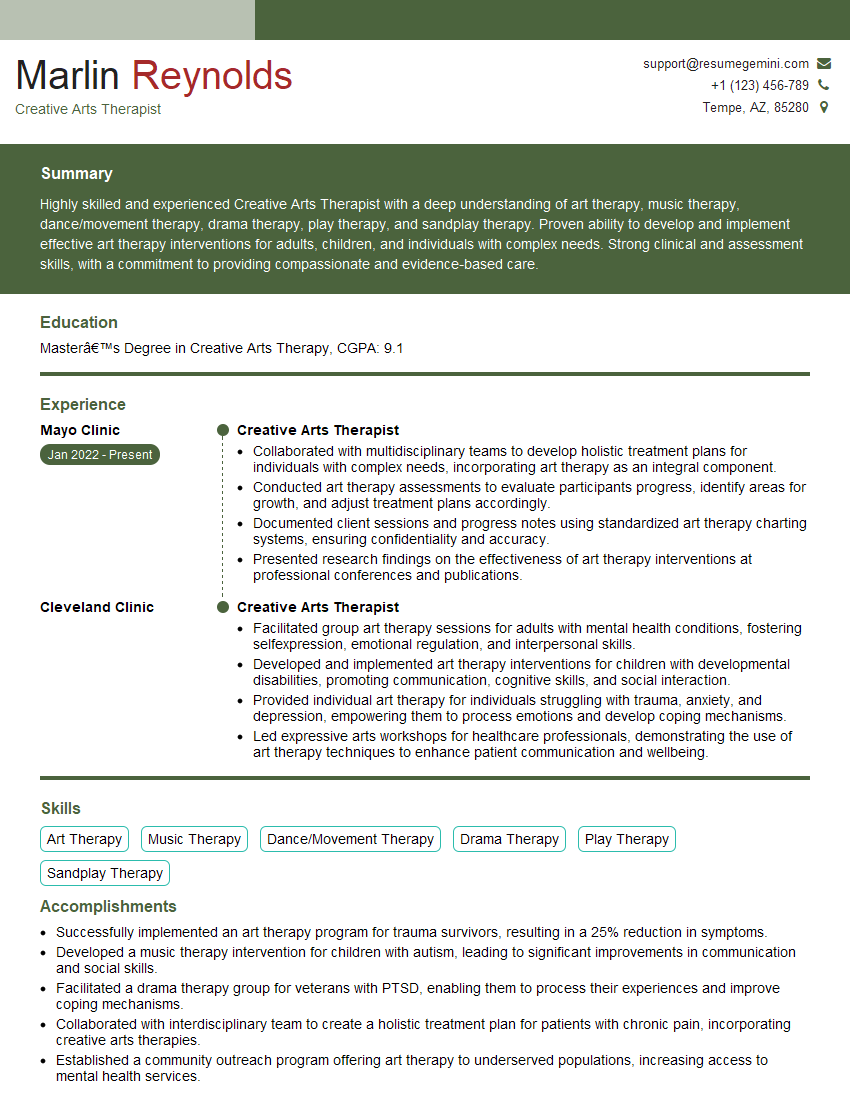
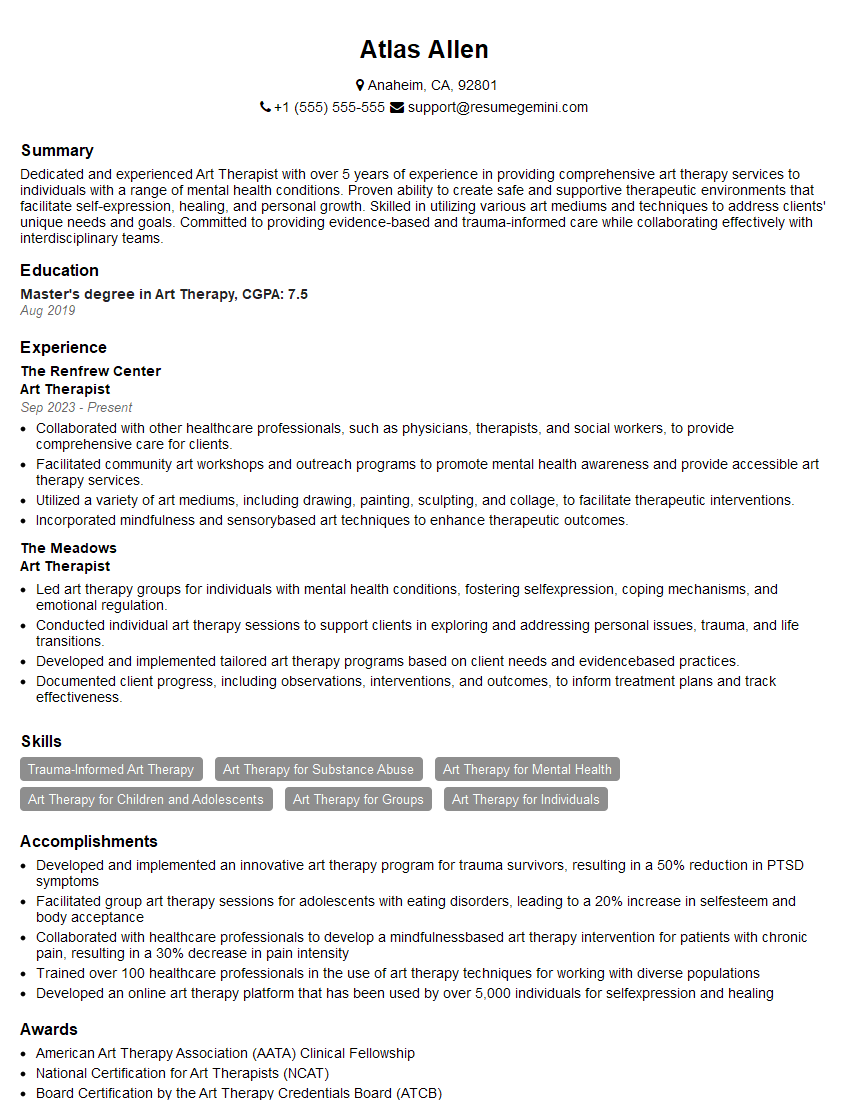
Mastering Art Therapy for Empowerment and Self-Expression is crucial for a fulfilling and successful career. It allows you to make a profound impact on clients’ lives, fostering their growth and resilience. To maximize your job prospects, creating a strong, ATS-friendly resume is essential. ResumeGemini is a trusted resource that can help you build a professional and impactful resume tailored to highlight your skills and experience. ResumeGemini provides examples of resumes specifically designed for Art Therapy for Empowerment and Self-Expression to help guide you. Invest time in crafting a compelling resume – it’s your first impression on potential employers.
Explore more articles
Users Rating of Our Blogs
Share Your Experience
We value your feedback! Please rate our content and share your thoughts (optional).
What Readers Say About Our Blog
To the interviewgemini.com Webmaster.
Very helpful and content specific questions to help prepare me for my interview!
Thank you
To the interviewgemini.com Webmaster.
This was kind of a unique content I found around the specialized skills. Very helpful questions and good detailed answers.
Very Helpful blog, thank you Interviewgemini team.