Cracking a skill-specific interview, like one for Art Therapy for People with Trauma, requires understanding the nuances of the role. In this blog, we present the questions you’re most likely to encounter, along with insights into how to answer them effectively. Let’s ensure you’re ready to make a strong impression.
Questions Asked in Art Therapy for People with Trauma Interview
Q 1. Describe your experience working with clients who have experienced trauma.
My experience working with trauma survivors spans over a decade, encompassing a wide range of trauma types, including childhood abuse, domestic violence, accidents, and natural disasters. I’ve learned that the impact of trauma is deeply individual, manifesting differently in each person. Some clients express their experiences directly through their art, while others might use symbolism or abstract imagery to convey their internal world. My approach is always client-centered, respecting their pace and ensuring a safe and supportive environment. For example, I worked with a client who experienced childhood neglect. Initially, she was hesitant to create, expressing feelings of inadequacy and unworthiness. Through gentle encouragement and exploring different art mediums – starting with simple clay sculpting – she slowly began to express her emotions, eventually creating powerful self-portraits that reflected her journey towards self-acceptance.
Q 2. What trauma-informed approaches are you most familiar with?
I’m highly familiar with several trauma-informed approaches. Trauma-sensitive yoga, for instance, helps clients connect mind and body, promoting self-regulation and reducing stress responses. Narrative therapy assists clients in reframing their traumatic experiences, creating new narratives that empower them. I also utilize sensorimotor psychotherapy, which focuses on body-based experiences and helps clients connect with their physical sensations to process trauma more effectively. Furthermore, EMDR (Eye Movement Desensitization and Reprocessing), while not strictly an art therapy approach, is a valuable tool that I sometimes integrate with art therapy techniques. The combination allows clients to process traumatic memories while simultaneously expressing their experiences creatively, providing a multi-faceted approach.
Q 3. How do you assess the impact of trauma on a client’s art-making?
Assessing the impact of trauma on a client’s art-making involves a multifaceted approach. It’s not just about the content of the art, but also the process. I observe several key aspects:
- Thematic Content: Recurring themes of violence, isolation, or helplessness in the artwork can indicate unresolved trauma.
- Color Palette: A predominance of dark or muted colors might suggest feelings of sadness or despair, while bright, vibrant colors could signal hope or resilience.
- Art Medium Choice: The chosen medium can reveal how the client is coping. For example, a client who uses sharp, aggressive tools might be expressing pent-up anger.
- Process Observations: I note the client’s emotional state during the art-making process, paying attention to moments of frustration, anxiety, or emotional release.
- Client’s Self-Reflection: Guided discussions about the artwork and the creative process help clarify the emotional meaning and connection to their trauma experience.
Q 4. Explain your understanding of the therapeutic relationship in trauma-informed art therapy.
The therapeutic relationship in trauma-informed art therapy is paramount. It must be built on a foundation of safety, trust, and collaboration. I prioritize creating a non-judgmental and empathetic space where clients feel comfortable expressing themselves without fear of criticism or pressure. This involves active listening, validation of their experiences, and respecting their pace and boundaries. It’s crucial to establish clear boundaries and collaboratively set goals. It is also very important to maintain a respectful distance while also ensuring that they feel safe enough to open up. Think of it as a partnership, where I provide guidance and support while the client leads the journey of healing through their art. This shared understanding of the therapeutic contract is essential to successful treatment.
Q 5. What are the ethical considerations when working with trauma survivors using art therapy?
Ethical considerations are central when working with trauma survivors.
- Confidentiality: Maintaining strict confidentiality is crucial, respecting the client’s right to privacy.
- Informed Consent: Clients must be fully informed about the therapy process, including potential risks and benefits, before they begin treatment.
- Boundaries: Clear professional boundaries must be established and maintained at all times to prevent potential exploitation or harm.
- Dual Relationships: Avoiding dual relationships (e.g., becoming friends or engaging in other relationships outside of therapy) is essential to ensure objectivity and avoid potential conflicts of interest.
- Mandated Reporting: In cases of suspected child abuse or neglect, I am legally obligated to report this to the appropriate authorities.
- Cultural Sensitivity: Being aware of and respecting cultural differences is essential to providing culturally competent and appropriate care.
Q 6. Describe a time you had to adapt your art therapy approach to meet a client’s specific needs related to trauma.
I recall working with a client who experienced a severe car accident. She was initially unable to engage in traditional art-making activities due to severe anxiety and flashbacks. The very thought of holding a paintbrush or using clay brought back overwhelming sensory experiences connected to the accident. To address this, I adapted my approach by incorporating sensory activities like aromatherapy and guided imagery, allowing her to gradually reconnect with her body and emotions in a safe space. We began with simple tactile exercises, like playing with textured fabrics or molding Play-Doh, to slowly desensitize her. Later, we progressed to painting with watercolors which she found less intense. Over time, she was able to create increasingly detailed artwork, her pieces representing her healing journey and her regaining of control over her experience.
Q 7. How do you handle countertransference when working with trauma?
Countertransference – the therapist’s emotional reaction to the client – is inevitable, particularly when working with trauma survivors. It’s crucial to be aware of and manage these reactions responsibly. I address countertransference through regular self-reflection, supervision, and consultation with colleagues. This helps me identify and understand my own emotional responses, ensuring they don’t interfere with the therapeutic process. For example, if I find myself becoming overly protective of a client, it might reflect my own past experiences. Recognizing this and seeking support allows me to maintain a professional and supportive distance, providing effective and ethical care while managing my own emotional wellbeing. Continuous professional development, including attending workshops on trauma and self-care, is crucial to staying equipped to handle these complex dynamics.
Q 8. What are the limitations of art therapy in treating trauma?
Art therapy, while incredibly powerful, isn’t a magic bullet for trauma. Its limitations stem from several factors. Firstly, severe trauma can manifest in ways that make engagement with art difficult. Individuals may experience intense dissociation, flashbacks, or emotional overwhelm making it challenging to focus on creative tasks. Secondly, resistance to processing trauma is common. Some clients might avoid confronting painful memories, even through the indirect medium of art, requiring significant therapeutic rapport and trust building. Thirdly, co-occurring disorders, like substance abuse or psychosis, can significantly complicate treatment and impact the effectiveness of art therapy alone. Finally, art therapy’s effectiveness is highly dependent on the therapist’s skill, experience, and the therapeutic relationship established. It’s not a stand-alone solution and often requires integration with other therapies.
For example, a client struggling with PTSD might find it overwhelming to even hold a paintbrush due to hyperarousal. In such cases, a gradual approach, incorporating sensory regulation techniques prior to art-making, is crucial. Similarly, a client might create art that avoids direct confrontation of their trauma, requiring the therapist’s skilled interpretation and guidance.
Q 9. How do you integrate art therapy with other therapeutic modalities for trauma treatment?
Integrating art therapy with other modalities is crucial for comprehensive trauma treatment. A common approach is combining it with trauma-focused psychotherapy like Cognitive Processing Therapy (CPT) or Eye Movement Desensitization and Reprocessing (EMDR). Art can provide a non-verbal pathway to express emotions and experiences that might be difficult to articulate verbally, complementing the cognitive and emotional processing work done in therapy. For instance, a client might create a self-portrait reflecting their feelings before and after an EMDR session, visualizing the shift in their emotional state. Furthermore, art therapy can be integrated with somatic experiencing, helping clients connect with their bodily sensations and trauma responses, facilitating somatic release. It can also be paired with medication management, where art provides a supplementary tool for emotional regulation alongside pharmacological interventions.
Think of it as a team approach; each modality strengthens the others. CPT might help a client cognitively reframe their traumatic experiences, while art therapy offers a creative outlet to process the emotions associated with those experiences.
Q 10. Explain your understanding of different trauma models (e.g., attachment, developmental, complex trauma).
Understanding various trauma models is essential for tailoring treatment. Attachment trauma focuses on disruptions in early caregiver-child relationships impacting the individual’s ability to form secure attachments. Developmental trauma considers the cumulative impact of adverse childhood experiences on the developing brain and nervous system. Complex trauma refers to prolonged or repeated trauma exposure, often involving betrayal and interpersonal violence, leading to profound disruptions in self-concept, relationships, and emotional regulation.
For example, a client with attachment trauma might present with difficulties with intimacy and trust, while a client with complex trauma might exhibit dissociation, self-harm, and difficulty regulating emotions. Recognizing these different models allows for targeted interventions. An attachment-based approach might focus on building a secure therapeutic relationship and exploring past attachment patterns through art, while working with complex trauma might necessitate a more phased approach focusing on stabilization and safety before deeper trauma processing.
Q 11. Describe your experience working with specific trauma populations (e.g., children, adults, veterans).
My experience spans working with diverse trauma populations. With children, I often use play therapy techniques integrated with art, employing sand trays, drawing, and collage to express their experiences. For example, a child struggling with abuse might use dolls to reenact the event non-verbally, allowing them to process their feelings in a safe space. With adults, I utilize more abstract art forms, encouraging exploration of emotions and memories through painting, sculpting, or journaling alongside art. For instance, an adult survivor of domestic violence might create a series of self-portraits reflecting their journey of healing. My work with veterans focuses on processing combat trauma, utilizing techniques like expressive writing combined with art to externalize their experiences and address symptoms of PTSD. This might involve creating art that depicts their deployment experiences, allowing for symbolic processing of difficult emotions.
Each population requires a tailored approach, acknowledging their developmental stage, coping mechanisms, and unique trauma experiences.
Q 12. How do you ensure client safety and well-being within the art therapy process for trauma?
Client safety and well-being are paramount. This begins with establishing a strong therapeutic alliance built on trust and respect. I clearly define the boundaries of the therapeutic relationship and prioritize creating a safe and supportive space. I employ techniques like grounding exercises and mindfulness practices to help clients regulate their emotions during challenging sessions. If a client exhibits signs of acute distress or retraumatization, I immediately pause the art-making process and focus on stabilization techniques. Depending on the severity, this might involve contacting emergency services or adjusting the treatment plan. Furthermore, I regularly assess the client’s emotional state, ensuring they are comfortable and not overwhelmed by the process. This might involve limiting the duration or intensity of sessions as needed.
For instance, if a client starts experiencing a flashback, we would shift the focus to grounding techniques like deep breathing or sensory engagement before resuming the art process.
Q 13. How do you work with clients who experience emotional dysregulation during sessions?
Emotional dysregulation is common in trauma survivors. When this occurs during a session, my first priority is to ensure the client’s safety and help them regain a sense of control. I utilize co-regulation techniques, offering a calm and reassuring presence, mirroring the client’s breathing, or using gentle touch if appropriate and agreed upon. We might engage in grounding exercises to reconnect the client to the present moment, such as focusing on their senses or physical sensations. Mindfulness practices, such as focusing on the breath or body scan, can also be helpful. Depending on the intensity of the dysregulation, we may need to adjust the art-making activity or even end the session early.
For example, if a client becomes overwhelmed during a painting session, we might pause, engage in deep breathing exercises, and then switch to a less intense activity like drawing or collage.
Q 14. What are some common art-making techniques you use with trauma survivors?
Many art techniques are effective in trauma work. Mandala creation promotes focus and centering, allowing clients to regulate emotions through repetitive movements. Collage enables exploration of fragmented memories and experiences, facilitating integration. Body mapping helps clients externalize and process somatic sensations associated with trauma. Expressive writing integrated with art allows for both verbal and visual expression of emotions. Mask making offers a powerful way to explore different aspects of the self, including hidden or suppressed emotions. The choice of technique depends on the client’s preferences, needs, and the therapeutic goals.
For instance, a client grappling with body image issues might use body mapping to visually represent their feelings about their body, while someone struggling with identity might create a series of masks reflecting different facets of their self.
Q 15. How do you utilize art as a means of processing trauma memories?
Art therapy offers a unique pathway for processing trauma memories by bypassing the need for direct verbalization, which can be overwhelming for trauma survivors. Instead, clients use visual mediums – painting, sculpting, collage, etc. – to express their experiences and emotions non-verbally. The act of creating becomes a powerful tool for emotional release and understanding.
For example, a client might paint a scene representing a traumatic event, using color and imagery to convey feelings of fear, anger, or sadness. By externalizing these internal experiences onto the canvas, the client gains a degree of distance and control, making processing less daunting. We then collaboratively explore the artwork, interpreting its symbolism and meaning together. This process helps the client to make sense of their trauma and identify recurring patterns or themes.
Another example could involve a client using clay to sculpt a representation of their feelings. The physical act of manipulating the clay can be cathartic, allowing them to express aggression or frustration safely. The resulting sculpture can then be a tangible representation of their emotional state, allowing for further exploration and understanding.
Career Expert Tips:
- Ace those interviews! Prepare effectively by reviewing the Top 50 Most Common Interview Questions on ResumeGemini.
- Navigate your job search with confidence! Explore a wide range of Career Tips on ResumeGemini. Learn about common challenges and recommendations to overcome them.
- Craft the perfect resume! Master the Art of Resume Writing with ResumeGemini’s guide. Showcase your unique qualifications and achievements effectively.
- Don’t miss out on holiday savings! Build your dream resume with ResumeGemini’s ATS optimized templates.
Q 16. How do you help clients develop coping mechanisms through art therapy?
Art therapy facilitates the development of coping mechanisms by providing clients with creative tools to manage stress, regulate emotions, and build self-esteem. We might use progressive muscle relaxation techniques combined with drawing mandalas to promote mindfulness and reduce anxiety. Alternatively, we could encourage journaling alongside painting to develop self-awareness and emotional literacy.
For instance, a client struggling with anxiety might create a series of calming nature scenes. The process of focusing on detail and color can be meditative, providing a sense of calm and control. Through this, they develop a coping strategy they can utilize independently when feeling overwhelmed.
Similarly, clients can explore self-affirmations through creating self-portraits or designing personalized symbols representing their strengths and resilience. This fosters self-acceptance and empowerment, enhancing their ability to cope with future challenges.
Q 17. Explain your process for documenting client progress in art therapy for trauma.
Documenting client progress in trauma-focused art therapy is crucial for ethical practice and effective treatment planning. My process involves a multi-faceted approach, combining both qualitative and quantitative data.
- Session Notes: Detailed written records of each session, including a description of the artwork created, the client’s emotional state, significant themes discussed, and any observed changes in their behavior or affect.
- Artwork Photographs/Scans: I maintain a secure, organized system for storing photographs or digital scans of the client’s artwork. This visual record is an invaluable resource for tracking changes in their creative expression and emotional processing over time.
- Client Self-Reports: Utilizing standardized scales or questionnaires to assess changes in symptoms such as anxiety, depression, or PTSD symptoms. This provides quantitative data complementing the qualitative information gathered through observations and discussions.
- Progress Summaries: Periodic written summaries (e.g., monthly or quarterly) integrating all collected data to paint a comprehensive picture of the client’s progress, challenges, and treatment goals. These summaries are shared with the client and, if appropriate, with other healthcare professionals involved in their care.
Confidentiality is paramount, and I ensure all documentation is stored securely and in accordance with HIPAA regulations (or equivalent guidelines).
Q 18. How do you maintain client confidentiality and comply with relevant ethical guidelines?
Maintaining client confidentiality is of utmost importance. I adhere strictly to ethical guidelines, such as HIPAA (in the US) or similar professional codes of conduct. This involves:
- Informed Consent: Clearly explaining to clients the limits of confidentiality, potential risks and benefits of treatment, and how their information will be stored and used.
- Secure Storage: Storing all client records (physical and electronic) securely, utilizing password-protected electronic files, locked cabinets, and HIPAA-compliant software.
- Limited Access: Restricting access to client records to only authorized individuals involved in their care.
- Data Anonymization: When presenting case studies or research, I anonymize all identifying information to protect client privacy.
- Mandatory Reporting: Adhering to mandatory reporting laws related to child abuse, elder abuse, or threats of harm to self or others.
My practice prioritizes transparency and builds trust through open communication with clients regarding confidentiality procedures.
Q 19. How do you manage difficult or challenging behaviors in clients with trauma?
Managing challenging behaviors in trauma clients requires a trauma-informed approach focused on understanding the root causes of these behaviors. These behaviors are often manifestations of past trauma and are not intended to be disruptive.
- Safety Planning: Creating a collaborative safety plan with the client to address potential triggers and develop strategies for managing overwhelming emotions. This may involve identifying safe spaces, relaxation techniques, or communication strategies.
- Regulation Techniques: Employing grounding techniques, deep breathing exercises, or sensory regulation activities to help clients manage their emotional state in the moment.
- Collaboration: Working closely with other professionals such as psychiatrists, psychologists, or social workers to develop a comprehensive treatment plan tailored to the client’s needs.
- Self-Compassion: Helping clients develop self-compassion and understanding for their behaviors, recognizing that these are survival mechanisms developed in response to trauma.
For example, if a client exhibits anger, we would explore the underlying emotional pain causing this response instead of directly confronting the anger. We might use art to express this underlying pain, leading to a healthier coping mechanism.
Q 20. How do you assess a client’s readiness for trauma-focused art therapy?
Assessing a client’s readiness for trauma-focused art therapy involves careful consideration of their current emotional state, coping skills, and overall mental health. It’s crucial to ensure they are in a safe and stable enough place to engage in potentially emotionally challenging work.
- Trauma History: Gaining a thorough understanding of their trauma history and its impact on their current functioning.
- Mental Health Evaluation: Considering their current mental health status, including the presence of acute symptoms such as severe depression, psychosis, or active suicidal ideation. Treatment for these conditions may be necessary before engaging in trauma-focused art therapy.
- Coping Mechanisms: Assessing their current coping mechanisms and their ability to manage emotional distress.
- Support System: Evaluating the availability of a strong support system to assist the client outside of therapy sessions.
- Therapeutic Alliance: Establishing a strong therapeutic alliance built on trust and collaboration.
If a client is not ready, I would recommend focusing on stabilization and developing coping skills before introducing trauma-focused work. This might involve grounding techniques, relaxation exercises, and exploration of less emotionally charged topics through art.
Q 21. Describe your experience with crisis intervention in the context of art therapy.
Crisis intervention in art therapy involves immediate response to acute distress, utilizing art as a means of stabilization and de-escalation. This requires a flexible and adaptable approach, prioritizing the client’s safety and well-being.
In a crisis situation, the primary focus is on grounding and stabilizing the client’s emotional state. This might involve simple, repetitive art activities such as drawing simple shapes or coloring mandalas. The process itself, rather than the final product, becomes the focus. The act of creating something tangible can provide a sense of control and anchor them in the present moment. We might also use expressive writing techniques alongside art-making to help process and communicate overwhelming emotions.
If the crisis involves self-harm or suicidal ideation, I would immediately prioritize safety by assessing the risk, collaborating with the client to develop a safety plan, and contacting emergency services if necessary. Ethical guidelines necessitate prioritizing the client’s safety above all else.
Q 22. What are some potential challenges associated with art therapy and trauma, and how would you address them?
Art therapy with trauma survivors presents unique challenges. One significant hurdle is the potential for re-traumatization. Clients may experience intense emotional distress during sessions as they confront painful memories or feelings through art-making. Another challenge is managing the client’s level of trust and safety. Building a strong therapeutic alliance based on empathy and respect is crucial, as many trauma survivors have difficulty trusting others. Finally, clients may exhibit resistance to the therapeutic process, such as avoiding emotional expression or engaging in self-sabotaging behaviors.
To address these, I prioritize creating a safe and supportive therapeutic environment. This includes establishing clear boundaries, collaboratively setting session goals, and employing trauma-informed techniques like pacing and checking in regularly about the client’s comfort level. If re-traumatization occurs, I’ll pause the activity, offer grounding techniques (which I will discuss further in another answer), and validate the client’s experience. Building trust involves actively listening, validating their feelings, and respecting their pace. For resistance, I would collaboratively explore the reasons for it, adjusting the therapeutic approach to better suit the client’s needs and preferences. This might involve exploring alternative art modalities or focusing on less emotionally charged activities initially.
Q 23. Describe your familiarity with relevant diagnostic criteria for trauma-related disorders.
My understanding of diagnostic criteria for trauma-related disorders is rooted in the DSM-5 (Diagnostic and Statistical Manual of Mental Disorders, 5th Edition) and the ICD-11 (International Classification of Diseases, 11th Revision). I am familiar with the diagnostic criteria for Posttraumatic Stress Disorder (PTSD), Acute Stress Disorder (ASD), Adjustment Disorders with anxiety or depressed mood, and Complex PTSD (CPTSD), which often requires a deeper understanding of relational trauma. This familiarity extends beyond just symptom recognition; it also includes understanding the nuances of how trauma manifests differently in individuals and across diverse populations.
For example, I recognize that PTSD symptoms can vary significantly, including re-experiencing symptoms like flashbacks or nightmares, avoidance symptoms like emotional numbing or avoiding trauma reminders, and hyperarousal symptoms like increased anxiety or irritability. I also understand that the presentation of CPTSD often involves more pervasive and long-lasting difficulties with self-regulation, identity, affect regulation, and interpersonal relationships.
This knowledge guides my assessment of clients and helps me tailor the art therapy interventions to address their specific needs and challenges. Knowing the diagnostic criteria helps me communicate effectively with other professionals involved in the client’s care.
Q 24. How do you collaborate with other professionals (e.g., psychiatrists, social workers) in treating clients with trauma?
Collaboration with other professionals is essential for effective trauma treatment. I believe in a holistic approach, where art therapy complements other interventions. With psychiatrists, I discuss medication management and its potential impact on the client’s emotional and cognitive functioning, ensuring a consistent and integrated approach. For instance, medication might help manage anxiety or depression, creating a more conducive environment for art therapy to explore deeper trauma-related issues. With social workers, I coordinate case management and resource access to support the client’s overall well-being. This could involve providing referrals for housing, financial assistance, or legal aid, ensuring the client’s basic needs are met.
Regular case conferences, where we discuss the client’s progress, challenges, and treatment strategies, facilitate seamless integration of various therapeutic modalities. I always maintain clear and open communication with other professionals to avoid any conflicting approaches and ensure we have a shared understanding of the client’s goals and progress. This collaborative process strengthens the overall effectiveness of treatment and maximizes positive outcomes for the client.
Q 25. Describe your understanding of the role of embodiment in trauma recovery within an art therapy context.
Embodiment refers to the connection between our minds, bodies, and experiences. In trauma recovery, embodiment is crucial because trauma is often stored in the body as physical sensations, memories, and emotional responses. Art therapy provides a unique avenue to address these embodied aspects of trauma.
For instance, activities like body mapping, where clients draw or paint their body and map physical sensations related to the trauma, can help them externalize and process bodily experiences. Movement-based art therapy or somatic experiencing techniques can facilitate the release of trapped energy and emotions. Clay sculpting, for example, allows clients to work with tactile sensations and shape physical representations of their emotions or trauma memories, allowing for a sensory pathway to trauma processing. Working through these embodied sensations in a safe therapeutic space can help clients regain a sense of control over their bodies and reduce the impact of trauma.
Q 26. How do you incorporate mindfulness and grounding techniques into your art therapy sessions for trauma?
Mindfulness and grounding techniques are vital in trauma-informed art therapy. They help clients regulate their emotions and stay present in the moment, reducing the likelihood of re-traumatization during sessions. Mindfulness exercises, such as focusing on the breath or body sensations, can help clients manage intense emotions that may arise during art-making. Grounding techniques, which involve engaging the senses, further enhance the client’s awareness of their present surroundings and body, offering a sense of safety and stability.
I might incorporate these techniques in several ways. Before starting an emotionally charged art activity, I may guide the client through a short mindfulness exercise, focusing on their breath or noticing physical sensations. During the activity, if the client becomes overwhelmed, I can offer grounding techniques, such as having them describe the textures of the art materials or focus on the sounds in the room. I also may encourage the client to use art materials in ways that promote grounding, such as working with heavy clay or focusing on repetitive movements. These techniques help create a sense of safety and control, enabling clients to explore their trauma in a more manageable way.
Q 27. How would you adapt your art therapy approach for clients with diverse cultural backgrounds and experiences of trauma?
Adapting my approach for clients with diverse cultural backgrounds and trauma experiences is crucial for effective and ethical art therapy. It’s important to recognize that trauma is experienced and expressed differently across cultures, and that cultural sensitivity is paramount.
I begin by understanding the client’s cultural context, including their beliefs, values, and family dynamics. This involves active listening, asking open-ended questions, and respecting the client’s perspective. I would then adapt my use of art materials and techniques to align with the client’s cultural preferences and background. For example, I may choose art materials and themes that resonate with their culture or use symbolic imagery that is meaningful to them. Moreover, I actively seek consultation and supervision from colleagues with expertise in specific cultural contexts to further enhance my understanding and practice. The goal is to create a culturally safe and sensitive space where clients can freely express themselves without fear of judgment or misunderstanding. This might involve adapting the language used, understanding cultural attitudes towards mental health, and respecting the client’s personal preferences throughout the process.
Q 28. What are your professional development goals related to trauma-informed art therapy?
My professional development goals focus on deepening my knowledge and skills in trauma-informed art therapy. I aim to specialize further in working with specific trauma populations, such as those who have experienced complex trauma or interpersonal violence. I plan to pursue additional training in evidence-based interventions, such as EMDR (Eye Movement Desensitization and Reprocessing) and somatic experiencing, to integrate these methods into my art therapy practice.
I also aim to enhance my cultural competency through continuing education, supervision, and collaboration with colleagues who have expertise in working with diverse populations. I recognize the importance of ongoing learning in this constantly evolving field and plan to actively participate in workshops, conferences, and peer supervision to refine my skills and stay abreast of the latest research and best practices in trauma-informed art therapy. Ultimately, my goal is to provide the most effective and compassionate care possible to my clients.
Key Topics to Learn for Art Therapy for People with Trauma Interview
- Trauma-Informed Care Principles: Understanding the impact of trauma on the brain and body, and how to adapt therapeutic approaches accordingly. This includes recognizing symptoms of PTSD, C-PTSD, and other trauma-related disorders.
- Therapeutic Modalities: Proficiency in various art therapy techniques, such as expressive art, narrative art therapy, and sandtray therapy, and their application to trauma processing. Be prepared to discuss your preferred methods and rationale.
- Safety and Boundaries: Establishing and maintaining a safe and ethical therapeutic environment for clients with trauma histories. This includes understanding countertransference, vicarious trauma, and ethical considerations in working with vulnerable populations.
- Trauma-Specific Interventions: Familiarity with evidence-based interventions for trauma, such as EMDR (Eye Movement Desensitization and Reprocessing), somatic experiencing, and narrative exposure therapy, and how they integrate with art therapy.
- Assessment and Treatment Planning: Developing comprehensive assessment strategies to understand clients’ trauma histories and tailor treatment plans effectively. This involves utilizing art-based assessments and collaborating with other professionals as needed.
- Case Conceptualization: Demonstrating the ability to formulate a clear and concise understanding of a client’s trauma experience and how it impacts their present functioning, informing treatment goals and progress monitoring.
- Ethical Considerations and Cultural Sensitivity: Addressing the ethical implications of working with trauma survivors, including informed consent, confidentiality, and cultural sensitivity in working with diverse populations.
- Crisis Intervention and Safety Planning: Understanding how to respond to crisis situations and develop safety plans for clients experiencing acute distress or suicidal ideation.
Next Steps
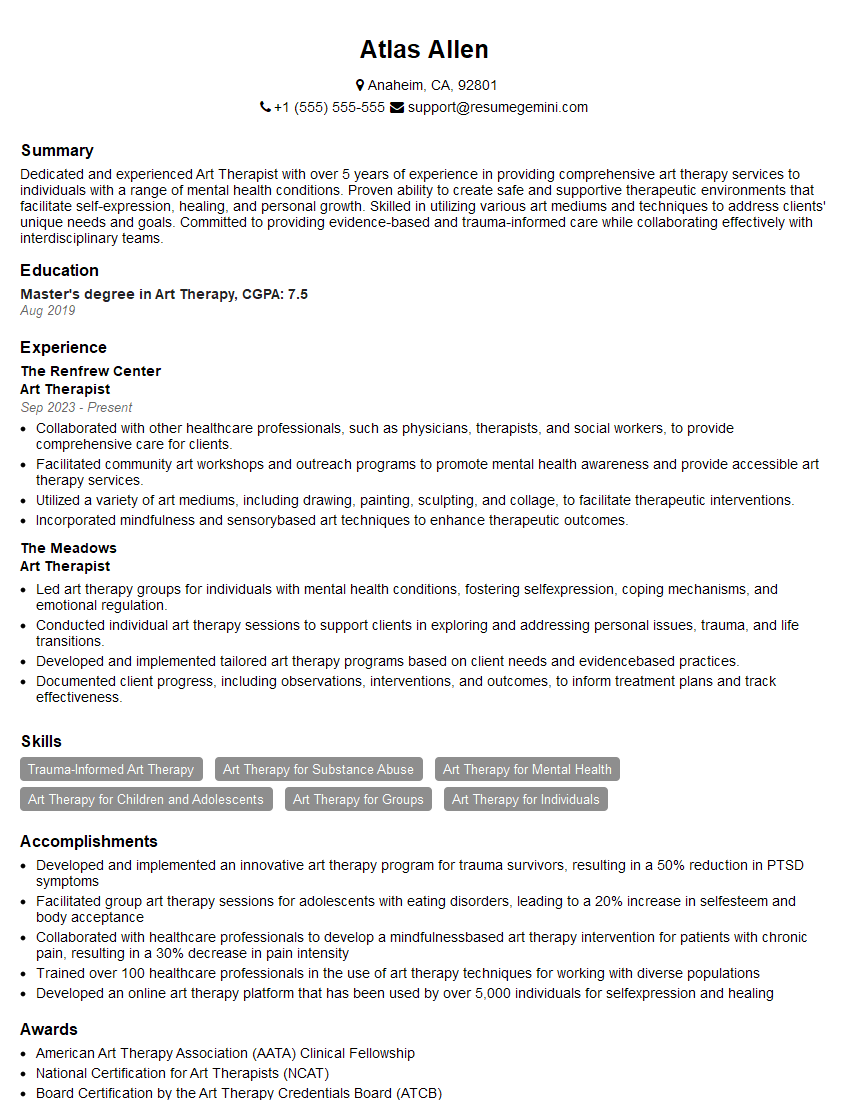
Mastering Art Therapy for People with Trauma opens doors to a rewarding career with significant impact. Demonstrating expertise in this specialized field significantly strengthens your candidacy. To maximize your job prospects, crafting a compelling and ATS-friendly resume is crucial. ResumeGemini is a trusted resource to help you build a professional and impactful resume. They provide examples of resumes tailored to Art Therapy for People with Trauma to guide you, ensuring your skills and experience shine.
Explore more articles
Users Rating of Our Blogs
Share Your Experience
We value your feedback! Please rate our content and share your thoughts (optional).
What Readers Say About Our Blog
To the interviewgemini.com Webmaster.
Very helpful and content specific questions to help prepare me for my interview!
Thank you
To the interviewgemini.com Webmaster.
This was kind of a unique content I found around the specialized skills. Very helpful questions and good detailed answers.
Very Helpful blog, thank you Interviewgemini team.