Cracking a skill-specific interview, like one for Articulate Interpretation, requires understanding the nuances of the role. In this blog, we present the questions you’re most likely to encounter, along with insights into how to answer them effectively. Let’s ensure you’re ready to make a strong impression.
Questions Asked in Articulate Interpretation Interview
Q 1. Explain the difference between simultaneous and consecutive interpretation.
Simultaneous and consecutive interpretation are two primary modes of interpreting, differing significantly in their timing and techniques. Simultaneous interpretation involves rendering the source language message into the target language at the same time as the speaker is delivering it. Think of it like a real-time, live translation. This requires exceptional linguistic agility and the ability to process and transmit information almost instantaneously. Consecutive interpretation, on the other hand, involves the interpreter listening to a segment of speech (a sentence, paragraph, or even a longer speech section), taking notes, and then rendering the message in the target language after the speaker pauses. This allows for more precise wording and greater attention to detail, as the interpreter isn’t working under the same immediate pressure.
Imagine a live news broadcast. Simultaneous interpretation is used for live subtitles or broadcast translation. A business meeting might utilize consecutive interpretation, where a speaker pauses after each point for the interpreter to relay the information.
Q 2. Describe your experience with different interpretation modes (e.g., whispered, chuchotage).
My experience encompasses a range of interpretation modes. Whispered interpretation (chuchotage) is a form of simultaneous interpretation where I whisper the translation directly to one or two individuals. This is particularly useful in small meetings or situations where a full simultaneous booth isn’t necessary or practical. I’ve frequently employed chuchotage in private consultations and small business gatherings. I’ve also worked extensively in consecutive interpretation settings, such as conferences, legal proceedings, and medical consultations, developing a sophisticated note-taking system for efficient and accurate rendering of the source message. The versatility of these methods allows me to adapt to varied communicative environments efficiently.
For example, during a recent medical consultation, I used chuchotage to translate the doctor’s explanation of a treatment plan to a patient who only spoke Spanish. In a larger conference, my consecutive interpretation skills were crucial for accurate translation of technical presentations, allowing for careful selection of terminology suitable for the audience.
Q 3. How do you handle challenging terminology or unfamiliar subject matter during interpretation?
Encountering unfamiliar terminology or complex subject matter is an inherent part of interpretation. My approach involves a multi-pronged strategy. Firstly, I employ context clues within the speech to infer meaning. Secondly, if possible, I discreetly ask for clarification from the speaker, ensuring not to disrupt the flow excessively. Thirdly, I utilize my extensive linguistic resources, including dictionaries, specialized glossaries, and online research tools. When dealing with highly technical topics, pre-session preparation involving reviewing relevant material is essential.
For instance, while interpreting a presentation on nanotechnology, I encountered an unfamiliar term. I quickly looked up its meaning during a natural pause in the speaker’s delivery, ensuring I maintained fluency in the translation without compromising accuracy.
Q 4. What strategies do you employ to maintain accuracy and fluency while interpreting?
Maintaining accuracy and fluency is paramount. I achieve this through a combination of techniques. Firstly, solid linguistic skills form the foundation. This includes a deep understanding of both the source and target languages, encompassing their nuances, idioms, and cultural contexts. Secondly, active listening and anticipatory thinking are crucial. By anticipating what the speaker is likely to say, I can prepare the equivalent phrases in the target language, enabling smoother delivery. Thirdly, regular professional development and ongoing language study are essential to refining skills. Finally, practicing different interpretation styles allows me to adapt my methods to various scenarios.
One method I find particularly useful is the technique of ‘chunking.’ This involves breaking down complex sentences or lengthy paragraphs into smaller, manageable units, which eases the translation process and improves the quality of the interpreted message.
Q 5. Describe your process for note-taking in consecutive interpretation.
My note-taking system for consecutive interpretation is a personalized, highly efficient method combining symbols, abbreviations, and keywords. It’s not about writing down everything verbatim, but rather capturing the essence of the message. I use a combination of linear and branching note-taking approaches, adapting the style depending on the speech structure and content. I organize my notes spatially to reflect the logical flow of the argument or narrative. This organized system enables me to reconstruct the message accurately and fluently.
For example, I might use symbols to represent common phrases or concepts. For instance, an arrow might represent a causal relationship, while a circled number might indicate a specific point in a list. This allows me to reconstruct a complex argument logically and accurately.
Q 6. How do you adapt your interpretation style to different audiences and contexts?
Adapting my interpretation style is key to successful communication. I consider the audience’s linguistic proficiency, cultural background, and the overall context. For example, a technical presentation to experts might require a more formal and precise style, while interpreting for a general audience may necessitate a more explanatory and simplified approach. The setting also matters; a formal conference requires a more professional demeanor than a casual meeting.
In a recent conference, I adapted my style for an audience of technical experts. The terminology was very specialized, and my approach was highly precise and detailed. In contrast, when interpreting a speech for a broader audience at a community event, I simplified the language and incorporated illustrative examples to ensure understanding.
Q 7. Explain your understanding of ethical considerations in interpretation.
Ethical considerations are central to my practice. Confidentiality is paramount. I never disclose information shared during an interpretation, respecting the sensitive nature of the conversations I facilitate. Impartiality is also critical; I remain neutral, avoiding any bias in my rendering of the message. Accuracy is non-negotiable; I strive for faithful reproduction of the speaker’s meaning, while adapting to different communication styles. Finally, professionalism guides my conduct, maintaining a courteous and respectful demeanor in all situations.
For instance, during a legal proceeding, maintaining confidentiality regarding sensitive information shared by clients or witnesses is an absolute priority. Similarly, I ensure that my interpretations accurately reflect the intentions of both parties, without injecting my personal opinions or biases.
Q 8. How do you manage stress and maintain focus during long interpretation sessions?
Maintaining focus and managing stress during lengthy interpretation sessions is crucial for accuracy and effectiveness. It’s a marathon, not a sprint! My approach is multi-faceted and involves meticulous preparation, mindful techniques, and self-care strategies.
Preparation: Thoroughly researching the topic beforehand significantly reduces anxiety and allows for a smoother interpretation. Knowing the terminology and context helps me anticipate potential challenges.
Mindfulness and Breaks: I utilize short, regular breaks to stretch, breathe deeply, and refocus. Even a few minutes can significantly improve concentration. I employ mindfulness techniques like focusing on my breath to help center myself during moments of high stress.
Physical Well-being: Adequate sleep, hydration, and nutrition are non-negotiable. I ensure I’m well-rested and nourished before any significant assignment. Regular exercise helps manage stress levels overall.
Mental Strategies: I actively practice mental resilience techniques, such as positive self-talk and reframing challenging situations. I view obstacles as opportunities for growth and learning.
For example, during a three-day conference, I schedule short breaks every hour, taking a mindful walk during lunch, and prioritizing sleep the night before.
Q 9. Describe a situation where you had to interpret complex technical information.
I once interpreted a complex technical discussion during a medical device trial. The speakers were engineers and physicians discussing intricate details about a new cardiac implant, involving specific technical terminology related to biocompatibility, algorithms, and surgical procedures. The challenge lay not only in understanding the precise technical vocabulary but also in conveying the nuances of the discussion to an audience of investors who lacked this specialized knowledge.
My approach involved several steps:
Pre-Session Research: I spent considerable time familiarizing myself with the relevant medical and engineering terms. I consulted technical documents and online resources to build a solid understanding of the device and its functionality.
Active Listening: During the session, I focused intently on the speakers, paying close attention to their tone, emphasis, and non-verbal cues. I clarified any ambiguous terminology immediately by asking questions.
Concise and Clear Interpretation: I translated the technical jargon into clear, understandable language for the investors, using analogies and simple explanations where necessary. I ensured that the key concepts and implications were accurately conveyed without sacrificing precision.
Maintaining Neutrality: It was crucial to maintain an impartial stance, avoiding any subjective interpretation of the technical data.
The successful interpretation hinged on my ability to bridge the gap between highly specialized technical language and lay understanding, ensuring a clear and comprehensive understanding for everyone involved.
Q 10. How do you ensure cultural nuances are accurately conveyed during interpretation?
Accurately conveying cultural nuances is paramount in interpretation. It goes beyond simply translating words; it’s about understanding and transmitting the underlying cultural context. This requires cultural sensitivity, awareness, and adaptability.
Research and Knowledge: I conduct thorough research into the cultures involved, paying attention to their communication styles, non-verbal cues, and social norms. This includes understanding potential differences in formality, directness, humor, and even the use of silence.
Contextual Awareness: I pay close attention to the context of the conversation, considering factors like the participants’ relationship dynamics, the setting, and the overall purpose of the interaction.
Adapting Language and Style: I adapt my language style to match the cultural norms of the target audience. This may involve adjusting formality, tone, and register to ensure the message resonates effectively.
Sensitivity to Non-verbal Cues: I’m attentive to body language, facial expressions, and other non-verbal cues that can carry significant cultural meaning, and I ensure these are conveyed appropriately.
For instance, interpreting a business negotiation between Japanese and American executives requires understanding the cultural differences in communication styles – the indirectness often used in Japanese communication versus the directness preferred by many Americans. I ensure that the intended meaning, despite these differences, is clearly communicated to all parties.
Q 11. What technology are you proficient in for remote interpretation?
I’m proficient in various technologies for remote interpretation, including:
Video Conferencing Platforms: Zoom, Microsoft Teams, Google Meet – I’m comfortable using these platforms for real-time interpretation, ensuring optimal audio and video quality.
Interpretation Platforms: I have experience with specialized platforms designed for remote interpretation, which often offer features like simultaneous interpretation modes, real-time transcription, and secure communication channels.
CAT Tools (Computer-Assisted Translation): While not directly for interpretation, CAT tools can be helpful in pre-session preparation, allowing for efficient research and terminology management.
Recording and Playback Software: I’m familiar with software for recording and archiving interpretation sessions, adhering to any relevant confidentiality protocols.
My technological proficiency allows for seamless integration into various remote settings, ensuring efficient and high-quality interpretation irrespective of geographical limitations.
Q 12. How do you handle interruptions or distractions during an interpretation assignment?
Handling interruptions and distractions during interpretation requires composure and professionalism. My strategy involves several key steps:
Maintaining Focus: I try to minimize distractions by creating a quiet and focused workspace, and I communicate my need for minimal interruption beforehand.
Politely Addressing Interruptions: If an interruption occurs, I politely but firmly address it, ensuring the flow of conversation is minimally impacted. Depending on the context, I may ask for the interruption to be delayed or handled by another party.
Note-Taking: I utilize concise note-taking techniques to keep track of the conversation’s flow and ensure I don’t miss crucial details during brief interruptions.
Requesting Clarification: If an interruption caused me to miss information, I will tactfully request clarification from the speaker, ensuring accuracy isn’t compromised.
For example, if a phone call interrupts a meeting, I’ll politely ask the speaker to defer the call or quickly signal to the caller that I’m currently involved in a crucial interpretation and will return the call shortly.
Q 13. How do you deal with disagreements or conflicting interpretations between parties?
Disagreements or conflicting interpretations are inevitable, especially in sensitive or high-stakes situations. My approach focuses on maintaining neutrality, facilitating understanding, and promoting effective communication.
Neutral Facilitation: I act as a neutral facilitator, ensuring that all parties have the opportunity to express their viewpoints and clarifying any misunderstandings that may have arisen.
Clarification and Paraphrasing: I use clarification techniques and paraphrase statements to ensure mutual understanding and address potential sources of disagreement.
Highlighting Key Differences: I clearly articulate the differing interpretations without taking sides, emphasizing the need for further discussion and potential compromise.
Professional Detachment: Maintaining a professional and impartial stance is vital. My role is to accurately convey information, not to take a position in the disagreement.
I once encountered a disagreement between two parties during a contract negotiation regarding the interpretation of a specific clause. Instead of offering my own interpretation, I carefully highlighted the differing understandings, encouraging the parties to clarify their positions and potentially find common ground.
Q 14. Explain your experience with interpreting in different linguistic settings.
My experience spans diverse linguistic settings, encompassing various languages and cultural contexts. I have interpreted in formal settings like international conferences, legal proceedings, and medical consultations, as well as informal settings such as community events and business meetings.
Language Pairs: I am fluent in [List specific language pairs, e.g., English-Spanish, English-French, English-Mandarin]. This fluency extends to both simultaneous and consecutive interpretation modes.
Cultural Contexts: My experience extends to interpreting across vastly different cultural contexts, including those with significant variations in communication styles, non-verbal cues, and social etiquette. This includes experience in [mention specific regions/cultures, e.g., Latin America, East Asia, Europe].
Adaptability: I am comfortable adapting my approach and style to suit the specific linguistic and cultural demands of each assignment.
This broad experience has enhanced my ability to not just translate words but also to convey the true meaning and intent behind the message, fostering clear and effective cross-cultural communication.
Q 15. How do you maintain confidentiality in your interpretation work?
Confidentiality is paramount in interpretation. It’s not just about professional ethics; it’s often legally mandated. I treat all information I receive during an interpretation assignment as strictly confidential. This includes not discussing the content with anyone outside of the interpreting context, even with colleagues, unless explicitly authorized by the client. I follow strict protocols for data handling, including secure storage and disposal of any documents or recordings related to the assignment. Imagine being a translator for a high-profile business negotiation – revealing any details would severely compromise the client’s position. My commitment to confidentiality extends beyond the assignment itself, ensuring no sensitive information is ever inadvertently disclosed.
Career Expert Tips:
- Ace those interviews! Prepare effectively by reviewing the Top 50 Most Common Interview Questions on ResumeGemini.
- Navigate your job search with confidence! Explore a wide range of Career Tips on ResumeGemini. Learn about common challenges and recommendations to overcome them.
- Craft the perfect resume! Master the Art of Resume Writing with ResumeGemini’s guide. Showcase your unique qualifications and achievements effectively.
- Don’t miss out on holiday savings! Build your dream resume with ResumeGemini’s ATS optimized templates.
Q 16. Describe your approach to professional development in the field of interpretation.
Professional development in interpretation is an ongoing process. I regularly attend workshops and conferences to stay updated on best practices, new technologies, and emerging trends. This includes continuous improvement in my language skills through dedicated study, including focused vocabulary building within specialized fields. I actively seek feedback on my performance to identify areas for improvement, and I regularly participate in mentoring programs, both as a mentor and a mentee, to foster shared learning and development within the field. Continuous learning is essential; language is constantly evolving, and so are interpreting techniques.
Q 17. How do you handle situations where you don’t understand a word or phrase being spoken?
If I encounter a word or phrase I don’t understand, I use a variety of strategies to maintain the flow of communication. Firstly, I attempt to infer the meaning from context, using the surrounding words and the overall tone of the conversation. If that’s insufficient, I may politely ask for clarification, depending on the setting. For example, in a less formal setting, I might say, ‘Could you please rephrase that?’ In more formal settings, I’ll likely discreetly consult a dictionary or online resource if time allows, always aiming to find a suitable paraphrase that conveys the speaker’s intended meaning. The key is to maintain professionalism and transparency while ensuring the message is accurately conveyed.
Q 18. Describe your experience with interpreting in high-pressure situations (e.g., court, medical).
I have experience interpreting in high-pressure environments like medical settings and court proceedings. These contexts demand precision, accuracy, and rapid thinking. In a medical setting, for example, the accurate translation of symptoms and diagnoses is crucial for patient safety. In legal contexts, every word carries legal weight, demanding an even higher level of attention to detail and precision. Maintaining composure and focus under pressure is essential, and I’ve honed my ability to quickly process information and translate it accurately even in stressful circumstances. I’ve trained myself to anticipate potential challenges and develop strategies for managing them effectively.
Q 19. How do you manage your time effectively during consecutive or simultaneous interpretation?
Effective time management is vital for both consecutive and simultaneous interpretation. In consecutive interpretation, I use note-taking techniques that allow me to capture the essence of the speaker’s message concisely and efficiently. These techniques are specifically designed for speed and clarity. In simultaneous interpretation, constant mental agility is required. I focus on anticipating the speaker’s flow to keep up, and I manage my mental resources carefully to avoid fatigue or errors. Regular breaks, staying well-hydrated, and maintaining a healthy work-life balance are crucial in minimizing errors and ensuring high-quality interpretation throughout the assignment.
Q 20. How do you prepare for an interpretation assignment, including research and understanding the context?
Preparation is key to successful interpretation. Before any assignment, I conduct thorough research, focusing on the subject matter, terminology, and cultural context. I familiarize myself with the speakers and their backgrounds to anticipate their style and potential terminology. For example, if I’m interpreting a medical discussion, I’ll review relevant medical terms and ensure I understand the nuances of the medical context. Similarly, if I’m interpreting a legal proceeding, I’ll review any relevant legal documents or case information. This comprehensive preparation allows me to interpret accurately and confidently, ensuring the nuances of language and meaning are not lost in translation.
Q 21. What are your strengths and weaknesses as an interpreter?
My strengths lie in my adaptability to various situations and my ability to remain calm under pressure. I’m quick on my feet, capable of grasping complex information rapidly and rendering it accurately in the target language. I am also adept at managing multiple tasks concurrently, which is essential for interpreting. However, like any professional, I strive for continuous improvement. One area I’m actively working on is even further honing my ability to adapt to unforeseen linguistic challenges and to improve my ability to consistently maintain accuracy even when working for extended periods.
Q 22. Why are you interested in this specific interpretation role?
My interest in this specific interpretation role stems from a deep passion for bridging communication gaps and facilitating meaningful interactions between individuals and groups. This position aligns perfectly with my skills and experience in Articulate Interpretation, particularly in [mention specific area like medical, legal, or conference interpretation]. I’m drawn to the organization’s commitment to [mention something specific about the organization that appeals to you, e.g., diversity, inclusion, or a particular project]. The opportunity to contribute my expertise to such a valued organization is incredibly appealing.
Q 23. Describe your experience working with interpretation technology (e.g., booths, headsets).
Throughout my career, I’ve extensively utilized various interpretation technologies. My experience encompasses working in soundproof booths for simultaneous interpretation, using wireless headsets for whispered interpretation, and employing remote interpretation platforms for virtual events. For example, during a large-scale international conference, I proficiently managed simultaneous interpretation using a state-of-the-art Bosch conference system, ensuring clear audio and seamless communication between speakers and delegates. My familiarity extends to troubleshooting technical difficulties, such as microphone issues or headset malfunctions, ensuring minimal disruption to the interpretation process.
Q 24. How do you ensure the clarity and comprehensibility of your interpretation?
Clarity and comprehensibility are paramount in interpretation. I achieve this through a multi-pronged approach. Firstly, I meticulously listen to the source language, ensuring a complete understanding of the nuances, including tone, emotion, and context. Secondly, I employ precise and natural language in the target language, adapting my style to the specific audience and setting. Finally, I regularly seek feedback from clients and colleagues to identify areas for improvement and refine my technique. For instance, if interpreting a technical presentation, I prioritize accuracy and precision, while for a casual conversation, I would focus on maintaining a natural and conversational flow.
Q 25. What is your experience with interpreting for individuals with disabilities?
I have experience interpreting for individuals with various disabilities, including hearing impairments, visual impairments, and cognitive differences. This experience has involved utilizing different techniques to ensure clear communication. For hearing-impaired individuals, I’ve used visual aids and clear, concise language. With visually impaired individuals, I provided detailed verbal descriptions. For individuals with cognitive differences, I adapted my language to their comprehension levels, using simpler terms and avoiding jargon. I believe in adapting my approach to best suit each individual’s specific needs.
Q 26. How do you handle feedback and criticism on your interpretation performance?
I view feedback and criticism as invaluable opportunities for professional growth. I actively seek feedback, both positive and negative, to identify strengths and weaknesses in my interpretation skills. Constructive criticism is taken as a chance to learn and improve. I approach feedback with a receptive and professional attitude, analyzing it objectively and using it to refine my technique. For example, if feedback indicates a tendency to omit details, I would focus on improving my note-taking and active listening skills. I believe continuous self-assessment and adaptation are crucial for maintaining high professional standards.
Q 27. Describe a time you had to overcome a significant challenge during an interpretation assignment.
During a medical interpretation assignment, the speaker unexpectedly transitioned into highly technical jargon related to a rare disease. My initial understanding was limited, and a direct translation would have been inaccurate and potentially harmful. To overcome this, I immediately requested clarification from the speaker, while simultaneously utilizing online medical resources to ensure I understood the terminology correctly before conveying it into the target language. This proactive approach ensured accuracy and prevented any miscommunication that could have had serious consequences. This experience underscored the importance of resourcefulness and quick thinking in challenging interpretation situations.
Q 28. What are your salary expectations for this role?
My salary expectations for this role are in the range of $[lower bound] to $[upper bound] annually. This range reflects my experience, skills, and the market value for similar roles with comparable responsibilities. I am, of course, open to discussing this further based on the specifics of the position and the overall compensation package.
Key Topics to Learn for Articulate Interpretation Interview
- Understanding Articulate Storyline’s Core Functionality: Mastering the interface, timeline, states, and variables is fundamental. Practice creating interactive elements and branching scenarios.
- Advanced Interactions and Simulations: Explore building complex interactions, including quizzes, simulations, and branching narratives. Demonstrate your ability to create engaging and effective learning experiences.
- Articulate 360 Suite Integration: Showcase your knowledge of working with different Articulate 360 tools, such as Rise 360 and Studio 360, and how they complement each other in e-learning development.
- Accessibility and Best Practices: Understand and apply accessibility guidelines (WCAG) to ensure your e-learning content is inclusive. Demonstrate familiarity with best practices for e-learning design and development.
- Content Strategy and Instructional Design Principles: Explain how you would apply instructional design theories (ADDIE, SAM, etc.) to create effective e-learning experiences using Articulate tools. Show a deep understanding of learning objectives and audience analysis.
- Troubleshooting and Problem-Solving: Be prepared to discuss common challenges encountered during Articulate development and how you would approach troubleshooting and finding solutions. This includes debugging interactions and resolving technical issues.
- Version Control and Collaboration: Demonstrate your understanding of version control systems (like Git) and collaborative workflows for larger projects. Explain how you would manage changes and ensure consistent quality within a team environment.
Next Steps
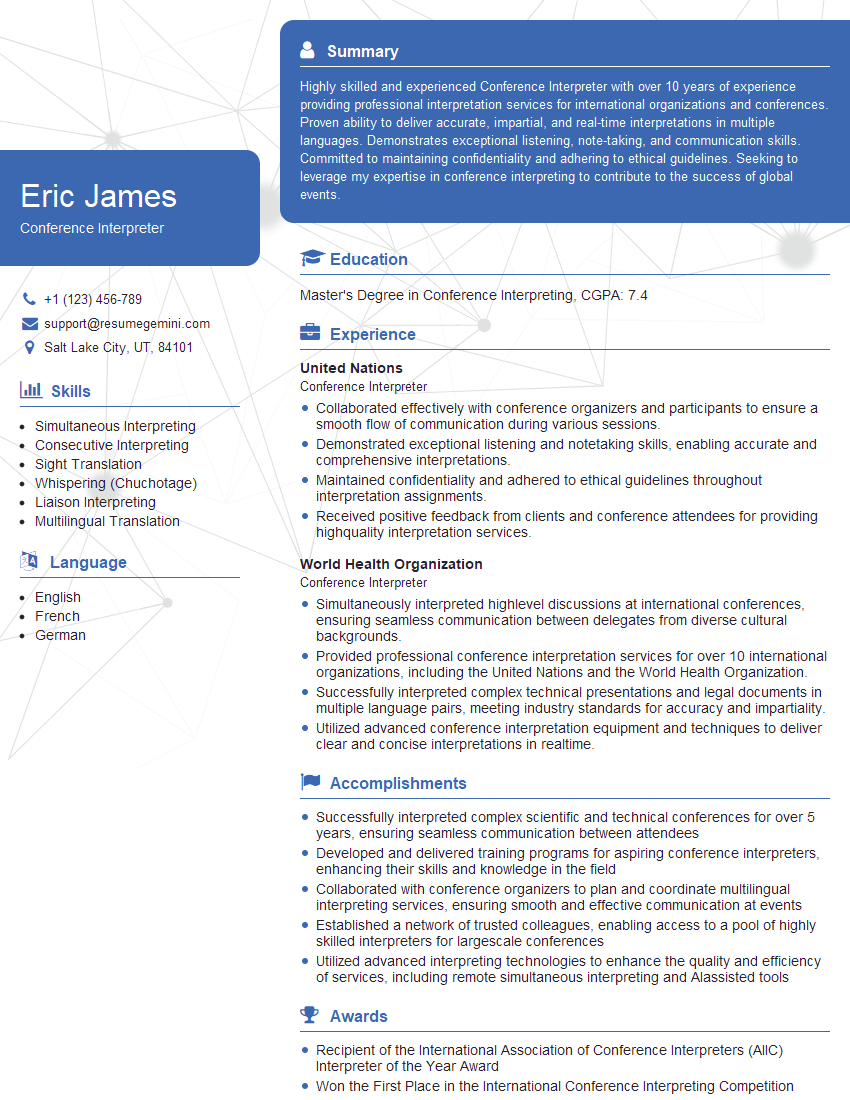
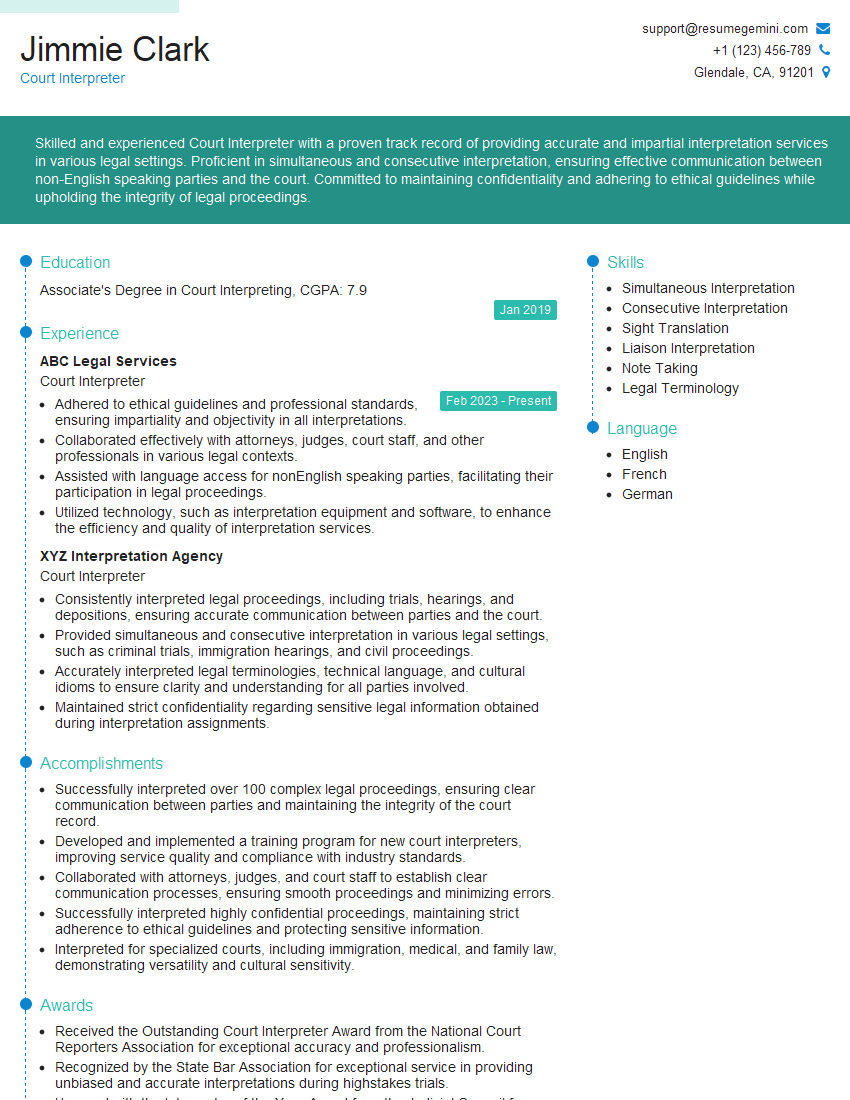
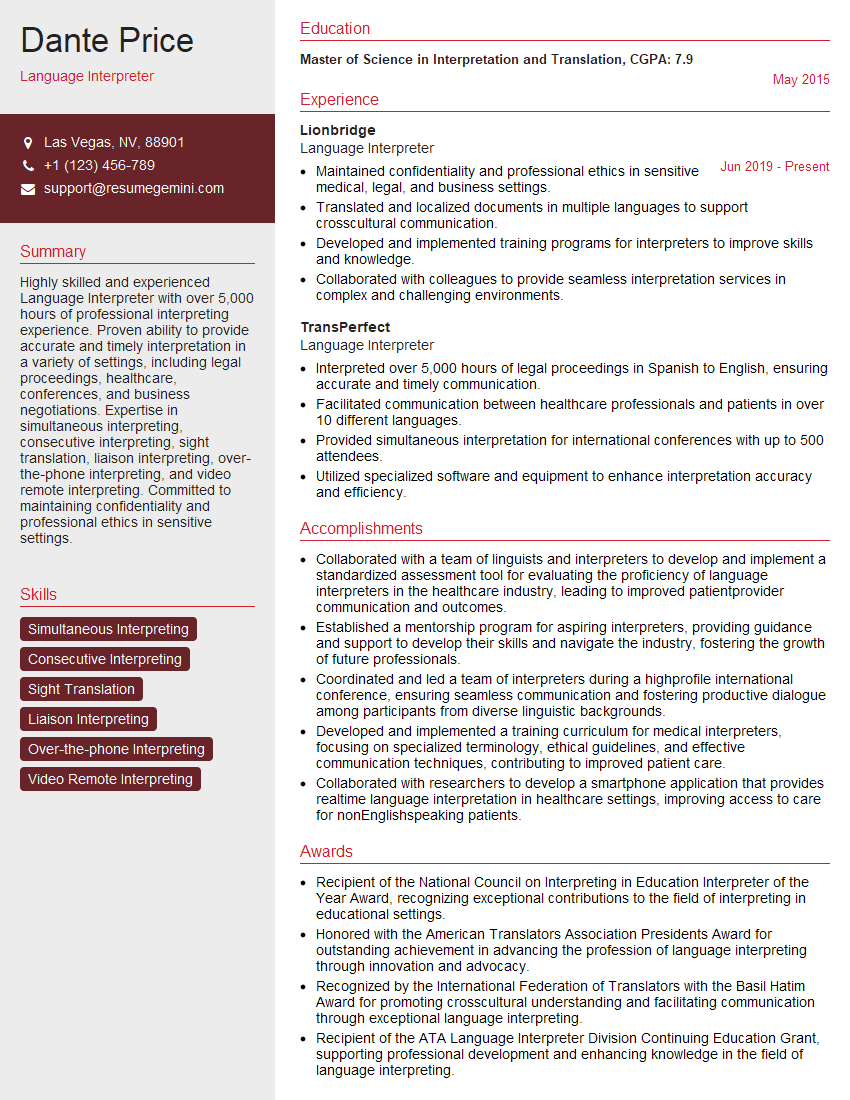
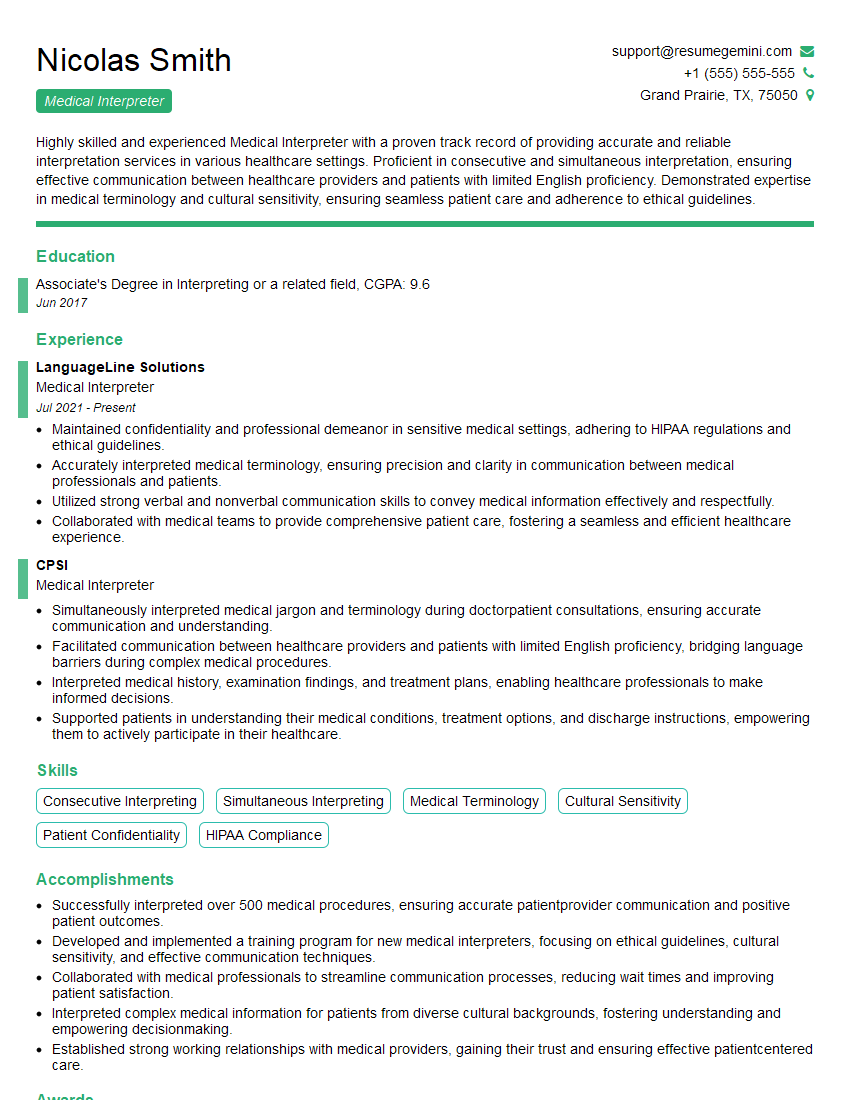
Mastering Articulate Interpretation opens doors to exciting career opportunities in e-learning development and instructional design. To maximize your job prospects, a well-crafted, ATS-friendly resume is crucial. ResumeGemini is a trusted resource to help you build a compelling resume that highlights your skills and experience effectively. We provide examples of resumes tailored specifically to Articulate Interpretation roles, to help you showcase your expertise.
Explore more articles
Users Rating of Our Blogs
Share Your Experience
We value your feedback! Please rate our content and share your thoughts (optional).
What Readers Say About Our Blog
To the interviewgemini.com Webmaster.
Very helpful and content specific questions to help prepare me for my interview!
Thank you
To the interviewgemini.com Webmaster.
This was kind of a unique content I found around the specialized skills. Very helpful questions and good detailed answers.
Very Helpful blog, thank you Interviewgemini team.