Cracking a skill-specific interview, like one for Articulation and Phonology Assessment, requires understanding the nuances of the role. In this blog, we present the questions you’re most likely to encounter, along with insights into how to answer them effectively. Let’s ensure you’re ready to make a strong impression.
Questions Asked in Articulation and Phonology Assessment Interview
Q 1. Describe the difference between articulation and phonological disorders.
Articulation and phonological disorders both involve difficulties with speech sound production, but they differ significantly in their underlying causes and manifestations. Articulation disorders are characterized by difficulties producing individual speech sounds (phonemes) accurately. Think of it as a motor skill issue – the child knows the sound but struggles to physically produce it correctly. For example, a child might consistently replace the /r/ sound with a /w/, saying “wabbit” instead of “rabbit.” This is a problem with the motor execution of the sound.
Phonological disorders, on the other hand, are characterized by difficulties with the sound system of a language. It’s a pattern-based problem; the child may not fully grasp the rules governing how sounds are used and combined in words. They might demonstrate patterns like simplifying consonant clusters (saying “poon” for “spoon”) or substituting one sound for another across a whole class of sounds. The child might not know the correct sound to use, or might not understand how to organize sounds in a way that reflects the adult target.
In essence, an articulation disorder is a motor speech problem, while a phonological disorder is a linguistic problem.
Q 2. Explain the process of conducting a comprehensive phonological assessment.
A comprehensive phonological assessment involves several key steps. It begins with a thorough case history, gathering information about the child’s developmental milestones, family history of speech difficulties, and any relevant medical information. Next, we conduct an oral-peripheral examination to assess the structure and function of the articulators (tongue, lips, teeth, palate). This helps to identify any structural anomalies that might be contributing to the speech difficulties.
The core of the assessment is the speech sample analysis. This involves recording the child’s spontaneous speech in a naturalistic setting, allowing for a comprehensive view of their sound production in context. We then analyze this sample for both the presence and frequency of speech errors. This sample is often supplemented with a standardized articulation test to obtain a quantitative measure of performance and compare the child’s skills to age-matched peers. This data gives us a profile of the errors made.
Following the speech sample analysis, we analyze any phonological processes present, such as stopping, fronting, or cluster reduction. We would also examine the child’s ability to discriminate between sounds (phonetic perception testing) which may be a contributing factor. Finally, we synthesize the results to determine a diagnosis, create a treatment plan tailored to the child’s specific needs, and establish goals for therapy.
Q 3. What standardized articulation tests are you familiar with and what are their strengths and weaknesses?
I’m familiar with several standardized articulation tests, each with its own strengths and weaknesses. The Goldman-Fristoe Test of Articulation-Third Edition (GFTA-3) is widely used and offers a comprehensive assessment of consonant and vowel sounds in different phonetic contexts. A strength is its ease of administration and scoring, but a weakness is its limited sampling of spontaneous speech. The Khan-Lewis Phonological Analysis (KLPA-3) provides a detailed analysis of phonological processes, which is beneficial for identifying patterns. However, its reliance on a relatively small set of target sounds can limit the scope of evaluation. The Clinical Assessment of Articulation and Phonology (CAAP) is another widely used assessment, it’s known for its efficient design and inclusion of both articulation and phonological analysis.
The choice of test depends heavily on the individual client’s needs and the specific focus of the assessment. For a child suspected of having a phonological disorder, the KLPA-3 may be more appropriate than the GFTA-3, focusing on underlying patterns rather than just isolated sound errors. However, the GFTA-3 can often serve as a good starting point to get an overview of the sounds.
Q 4. How do you analyze a child’s speech sample for phonological processes?
Analyzing a child’s speech sample for phonological processes involves a systematic approach. First, we transcribe the entire sample, noting all instances of errors and correct productions. We then identify patterns in the errors. This can involve examining how often certain sounds are substituted, omitted, or distorted across different word positions and contexts. The goal here is to identify consistent patterns (phonological processes). For example, we may observe that the child consistently uses stopping of fricatives (replacing /s/ with /t/), or cluster reduction (reducing consonant clusters such as ‘tr’ to ‘t’).
Software programs designed for phonetic transcription and phonological analysis can assist in this process. These programs can automatically identify and quantify various phonological processes based on the transcribed speech sample. However, it is still important that a clinician reviews this analysis for accuracy and clinical relevance; software cannot account for individual nuances.
Q 5. What are some common phonological processes seen in children?
Many common phonological processes are observed in typically developing children. These processes are often considered developmentally appropriate at certain ages, but their persistence beyond a certain age point would indicate a potential disorder. Some common examples include:
- Final Consonant Deletion: Omitting the final consonant in a word (e.g., “ca” for “cat”).
- Cluster Reduction: Reducing consonant clusters to single consonants (e.g., “poon” for “spoon”).
- Stopping: Replacing fricatives (e.g., /s/, /f/) with stops (e.g., /t/, /p/) (e.g., “too” for “shoe”).
- Fronting: Replacing velar sounds (e.g., /k/, /g/) with sounds produced further forward in the mouth (e.g., /t/, /d/) (e.g., “tat” for “cat”).
- Gliding: Replacing liquids (/l/, /r/) with glides (/w/, /j/) (e.g., “wabbit” for “rabbit”).
It’s important to remember that the presence of these processes does not automatically indicate a disorder. The age of the child and the frequency and consistency of these processes are critical factors in determining if intervention is warranted.
Q 6. Explain the difference between a phonological delay and a phonological disorder.
The difference between a phonological delay and a phonological disorder lies primarily in the pattern of errors and the child’s overall developmental trajectory. A phonological delay indicates that the child’s speech sound development is slower than expected for their age, but they are following a typical developmental sequence. The child shows errors consistent with younger children, but as they get older, they are likely to catch up. Think of it as a delay on the typical developmental timeline.
A phonological disorder, however, shows atypical patterns of errors that are not typically observed in normally developing children, even younger ones. These errors are not just delayed; they are different. For example, using unusual substitutions or sound patterns not seen in younger children may indicate a phonological disorder. The child may not catch up without intervention.
Q 7. How do you differentiate between organic and functional articulation disorders?
Differentiating between organic and functional articulation disorders relies heavily on a thorough assessment. An organic articulation disorder is caused by an underlying structural, neurological, or medical condition that affects the speech mechanism. Examples include cleft palate, cerebral palsy, hearing loss, or neurological damage. These disorders often present with obvious physical limitations or medical histories. A thorough oral-peripheral examination is critical here, to identify any structural anomalies like a high-arched palate or abnormal tongue movement. Medical records should be reviewed to identify neurological conditions or history of trauma.
A functional articulation disorder, on the other hand, has no identifiable organic cause. The child’s speech sound production is impaired without any known underlying medical or structural issue. While a thorough oral peripheral assessment is still important to rule out structural factors, the key difference lies in the lack of a clear organic etiology. Many articulation errors fall into this category and frequently respond well to speech therapy.
In practice, it’s essential to consider both possibilities and conduct a comprehensive evaluation. A team approach involving medical professionals (pediatricians, otolaryngologists) and other specialists may be needed to rule out organic causes before concluding a functional diagnosis.
Q 8. Describe your approach to intervention for a child with a phonological disorder.
My approach to intervention for a child with a phonological disorder is highly individualized and data-driven. It begins with a comprehensive assessment to identify the child’s specific phonological patterns and error types. We’re not just looking at individual sounds, but at the underlying system – how the child organizes sounds and the rules they use. This is crucial because targeting individual sounds in isolation may not be effective if the underlying phonological system is flawed.
Intervention focuses on establishing phonological contrasts that are missing. For instance, if a child collapses /s/ and /ʃ/ (like saying ‘ship’ as ‘sip’), we’d work on activities that highlight the difference in place and manner of articulation. This might involve minimal pairs therapy, using words like ‘sip’ and ‘ship’ in contrasting activities. We would use a variety of techniques, including cycles approach (targeting multiple sounds in a cyclical manner) and metaphonological activities (teaching the child to reflect on and manipulate their own speech sounds). Regular monitoring of progress is vital, with adjustments made as needed to ensure the therapy is effective and engaging for the child.
For example, with a child who consistently uses a fronting pattern (replacing back sounds like /k/ and /g/ with front sounds like /t/ and /d/), we might start with minimal pairs like ‘car’ and ‘tar’, using visual aids and tactile cues. As progress is made, we would gradually increase complexity.
Q 9. What are some evidence-based intervention techniques you use for articulation disorders?
Evidence-based intervention techniques for articulation disorders include:
- Traditional articulation therapy: This focuses on the precise production of individual sounds, starting with auditory discrimination, then moving to phonetic placement and production, and finally generalizing to spontaneous speech. For example, for a child struggling with /r/, we might start with tactile cues to help them position their tongue correctly, gradually progressing to words, phrases, and sentences.
- Multiple oppositions: This targets multiple sound errors simultaneously, addressing the underlying phonological patterns. This is more efficient than traditional therapy, especially for children with multiple errors. For example, a child substituting /w/ for /r/, /l/, and /j/ would work on all three contrasts at once, which speeds up the process.
- Cycles approach: This targets multiple phonological patterns, focusing on each pattern for a specific period before cycling back to it. It’s particularly helpful for children with multiple errors and limited phonological awareness. We might focus on stopping, then fricatives, then affricates, etc., cycling through these sound categories multiple times.
- Stimulability approach: This leverages a child’s ability to produce sounds correctly with cues. We might use models, visual supports, or tactile prompts to elicit correct sound production. If a child shows stimulability, the intervention is likely to be more effective.
Q 10. How do you incorporate play-based therapy into your articulation and phonology sessions?
Play-based therapy is crucial for engaging young children in articulation and phonology sessions. It allows children to learn and practice speech sounds in a fun and natural context, enhancing their motivation and reducing anxiety. The key is to seamlessly integrate speech therapy goals into the play activities.
For example, we might use puppets to practice target sounds, engage in storytelling activities where the child has to use specific sounds, or play games like ‘I Spy’ that require the child to produce target words. Building blocks can be used to target specific sounds in naming activities. Role-playing scenarios (like playing doctor or shop) naturally incorporate many opportunities to use new sounds in meaningful ways. The play should be child-led, but with the therapist subtly guiding the activity to incorporate the target sounds organically.
Q 11. How do you assess the intelligibility of a child’s speech?
Assessing a child’s speech intelligibility involves both subjective and objective measures. Subjectively, I’d listen to a sample of the child’s spontaneous speech, noting how easily I can understand them in different contexts. A rating scale might be used (e.g., 50%, 75%, 100% intelligible) to quantify this.
Objective measures are more formal. One approach is to transcribe a sample of speech and calculate the percentage of intelligible words. We could also count the number of unintelligible utterances within a specific timeframe. Standardized tests sometimes include intelligibility measures, providing a quantifiable score to compare against norms. Context matters significantly. Intelligibility might be higher in familiar situations and lower with unfamiliar listeners or topics.
Q 12. Describe how you would assess a child with suspected childhood apraxia of speech.
Assessing a child with suspected childhood apraxia of speech (CAS) requires a thorough evaluation encompassing multiple areas. It’s a complex disorder, and we need to rule out other potential causes like dysarthria or other neurological conditions.
The assessment will include:
- Case history: Detailed information about developmental milestones, medical history, and family history is crucial.
- Oral-motor examination: Assessing the child’s oral motor skills to rule out structural or motor limitations that might mimic CAS. We’ll observe their range of motion and coordination.
- Speech assessment: Evaluating the child’s speech production, including sound accuracy, consistency, prosody (rhythm and intonation), and rate of speech. We’ll look for inconsistencies in sound production, even with the same word repeated multiple times.
- Language assessment: Assessing receptive and expressive language to determine if other language difficulties are present (CAS frequently co-occurs with other language issues).
- Standardized tests: Specific tests like the Apraxia Profile, Kaufman Speech Praxis Test, or the Fluharty Preschool Speech and Language Screening Test might be used. These tests often examine a child’s ability to imitate sounds and sequences.
It’s important to remember that a diagnosis of CAS is often made through exclusion. It is critical to rule out other speech sound disorders.
Q 13. What are the key features of childhood apraxia of speech?
Childhood apraxia of speech (CAS) is a neurological speech sound disorder characterized by difficulty planning and sequencing the movements of the articulators (tongue, lips, jaw) to produce speech sounds. It’s not a problem of muscle weakness (like in dysarthria), but rather a problem of motor planning. Key features include:
- Inconsistent errors: The child might produce a sound correctly sometimes but incorrectly other times, even when producing the same word.
- Groping behaviors: Visible attempts to find the correct articulatory position, with noticeable struggling or searching movements.
- Limited sound repertoire: A smaller range of sounds than expected for their age.
- Prosodic difficulties: Problems with stress, intonation, and rhythm, making speech sound monotonous or choppy.
- Difficulties with multisyllabic words: Longer words are often more challenging, with increased errors.
Children with CAS often exhibit difficulty with imitation tasks, demonstrating that their difficulty lies not with sound production itself, but with the planning and execution of articulatory movement sequences.
Q 14. What are some common assessment tools used to assess CAS?
Several assessment tools are commonly used to evaluate children with suspected CAS. It’s crucial to remember that no single test definitively diagnoses CAS; rather, the diagnosis is based on a comprehensive clinical picture. Some common tools include:
- Kaufman Speech Praxis Test (KSPT): This test assesses various aspects of speech production, including imitation tasks, sequencing, and spontaneous speech.
- Apraxia Profile: This test focuses on assessing the distinctive features of apraxia.
- Fluharty Preschool Speech and Language Screening Test: This is a broader screening test that can identify potential articulation and phonological problems, including red flags for CAS.
- Dynamic Assessment: This focuses on assessing the child’s responsiveness to prompts and cues and is useful in guiding intervention planning.
In addition to standardized tests, clinicians use informal measures such as observing the child’s spontaneous speech, noting their oral-motor skills, and collecting information from parents and teachers.
Q 15. How do you differentiate between CAS and dysarthria?
Differentiating Childhood Apraxia of Speech (CAS) from dysarthria requires a careful assessment focusing on the underlying cause of speech difficulties. Both impact speech production, but the mechanisms are distinct. CAS is a neurological speech-motor planning disorder; children with CAS struggle to sequence the movements needed for speech, even though their muscles are typically strong. Dysarthria, on the other hand, results from weakness, incoordination, or slowness of the muscles used for speech, often due to neurological conditions like cerebral palsy.
- CAS Characteristics: Inconsistent errors, difficulty with sequencing sounds, groping behaviors (visible attempts to find the right articulation), and better performance on automatic speech (e.g., singing) compared to intentional speech are common signs.
- Dysarthria Characteristics: Consistent errors, weakness or slowness in speech movements, slurred speech, and often difficulties with respiration, phonation, and articulation are key features.
Think of it like this: CAS is like having a great recipe but struggling to follow the steps; dysarthria is like having shaky hands that prevent you from following the recipe accurately.
Diagnosis involves a comprehensive evaluation including case history, oral-motor examination, speech sample analysis, and often further neurological investigations to rule out other conditions.
Career Expert Tips:
- Ace those interviews! Prepare effectively by reviewing the Top 50 Most Common Interview Questions on ResumeGemini.
- Navigate your job search with confidence! Explore a wide range of Career Tips on ResumeGemini. Learn about common challenges and recommendations to overcome them.
- Craft the perfect resume! Master the Art of Resume Writing with ResumeGemini’s guide. Showcase your unique qualifications and achievements effectively.
- Don’t miss out on holiday savings! Build your dream resume with ResumeGemini’s ATS optimized templates.
Q 16. How do you collaborate with other professionals (e.g., teachers, parents) to support children with articulation and phonology disorders?
Collaboration is crucial for successful intervention. I regularly communicate with teachers, parents, and other professionals (e.g., occupational therapists, special educators) using a multidisciplinary approach. This involves:
- Regular meetings: Sharing assessment findings, treatment plans, and progress updates.
- Joint goal setting: Collaboratively developing goals that align with the child’s overall needs and educational setting.
- Information sharing: Providing parents and teachers with strategies to support speech sound production at home and school. This could include specific activities and modifications to classroom routines.
- Consistent communication: Maintaining open communication channels to address concerns, make adjustments to the treatment plan as needed, and celebrate successes.
For example, I might work with a teacher to modify classroom activities to minimize pressure on speech production, such as allowing the child to answer questions in writing or using assistive technology for communication. With parents, I’d collaborate to practice speech sounds at home in a playful and engaging way, ensuring consistency between therapy sessions and the home environment.
Q 17. Describe a challenging case involving articulation and phonology, and how you managed it.
I once worked with a 7-year-old boy with severe phonological disorder and significant articulation difficulties who also had a history of ear infections and oral motor difficulties. His speech was highly unintelligible, significantly impacting his social interaction and academic progress. He demonstrated inconsistent error patterns, making it difficult to pinpoint the underlying phonological processes at play. His oral motor exam indicated subtle weakness and reduced range of motion in his tongue.
Management Strategy: I employed a multimodal approach. This involved:
- Comprehensive assessment: Thoroughly evaluating his phonological system, articulation skills, oral motor skills, and language abilities.
- Targeted therapy: Focusing on improving oral motor strength and range of motion through exercises and play-based activities.
- Cycle approach to phonological treatment: Targeting several phonological patterns over multiple cycles, cycling back to previously addressed processes as needed.
- Stimulability training: Focusing on sounds that were partially stimulable.
- Collaboration with other professionals: Working with an occupational therapist to address his oral motor weakness and a special educator to support his learning in the classroom.
Regular monitoring and progress tracking allowed me to adapt the therapy plan, celebrate small victories, and build the child’s confidence. His intelligibility greatly improved within a year.
Q 18. How do you select appropriate intervention targets for a child with a phonological disorder?
Selecting appropriate intervention targets for phonological disorders involves a systematic approach. I consider several factors:
- Developmental appropriateness: Prioritizing sounds and phonological processes that typically emerge earlier in development.
- Frequency of occurrence: Targeting sounds that appear frequently in the child’s language.
- Stimulability: Focusing on sounds where the child demonstrates some ability to produce the sound with cues.
- Impact on intelligibility: Prioritizing sounds that, when corrected, will significantly improve the child’s overall speech intelligibility.
- Phonological processes: Analyzing the child’s speech to identify the patterns of errors (e.g., stopping, fronting, cluster reduction) and targeting those patterns for remediation.
For example, if a child consistently uses stopping (replacing fricatives with stops, e.g., saying ‘too’ for ‘shoe’), I would target fricatives that are frequently used and are stimulable. This makes therapy more efficient and motivating for the child.
Q 19. What is your approach to monitoring progress and making adjustments to treatment plans?
Monitoring progress and adjusting treatment plans is an ongoing process. I typically use a combination of methods:
- Regular probes: Administering short, informal probes to assess the child’s production of target sounds in various contexts.
- Data collection: Recording the child’s performance during therapy sessions (e.g., percentage correct, number of trials), visually charting the data to monitor progress. This also helps to identify plateaus and adjust strategies.
- Parent and teacher feedback: Regularly checking in with parents and teachers to gather their observations on the child’s speech progress in different settings.
- Treatment plan revisions: Adjusting the treatment plan based on progress data, client response, and stakeholder feedback. This could involve changing targets, treatment approaches, or intensity of therapy.
For instance, if a child is not making progress on a specific target, I may modify the treatment approach or select a different target that is more stimulable or developmentally appropriate.
Q 20. How do you measure the effectiveness of your intervention?
Measuring the effectiveness of intervention involves a multifaceted approach. I use both quantitative and qualitative data:
- Quantitative data: This includes percentage of correct productions, intelligibility measures (e.g., percentage of words understood by a listener), and standardized articulation tests administered pre- and post-intervention.
- Qualitative data: Observations of the child’s performance during therapy sessions, feedback from parents and teachers, and analysis of the child’s speech samples to assess changes in phonological patterns.
I compare pre- and post-intervention scores on standardized tests to quantify improvements in articulation and phonological skills. The qualitative data provides a richer understanding of the child’s progress and helps to tailor the treatment plan to meet their individual needs.
Q 21. Explain the concept of stimulability in articulation therapy.
Stimulability in articulation therapy refers to a child’s ability to produce a correct sound imitation, with or without cues, even if they don’t spontaneously produce the sound correctly in their regular speech. It’s a valuable indicator of a child’s potential for learning and making progress in therapy.
For example, if a child cannot produce the /s/ sound correctly in words, but can produce it after receiving auditory or visual cues (e.g., seeing the therapist’s mouth movements, hearing a model of the sound), they are considered stimulable for the /s/ sound. High stimulability often indicates a better prognosis for therapy. Stimulable sounds are generally prioritized as treatment targets because they represent sounds the child has some ‘access’ to, making the learning process more efficient and motivating.
Q 22. How do you address the needs of children from diverse linguistic backgrounds with articulation and phonology disorders?
Assessing articulation and phonology in children from diverse linguistic backgrounds requires a nuanced approach. It’s crucial to differentiate between a speech sound disorder and a difference in pronunciation due to their first language. A child might produce sounds differently because their native language doesn’t utilize those sounds, or because the sound production is phonetically different.
My approach involves:
- Careful case history: Gathering detailed information about the child’s linguistic background, including the languages spoken at home and the age of acquisition for each. This helps establish a baseline and identify potential influences.
- Using culturally sensitive assessment tools: Employing standardized tests that have been validated for the child’s specific language or dialect, or adapting existing tests to account for linguistic differences.
- Considering phonological processes specific to the child’s native language: Being aware of the typical phonological patterns of the child’s language allows for differentiating between a developmental pattern and a true disorder.
- Collaborating with interpreters and bilingual professionals: This ensures accurate communication and effective assessment. An interpreter can assist in gathering information from parents and conducting assessment, providing essential context.
- Utilizing contrastive analysis: This involves comparing the sounds of the child’s first language to those of the target language to identify sound differences that might be interfering with speech development.
For instance, a Spanish-speaking child may substitute /θ/ (as in ‘thin’) with /t/ because the /θ/ sound doesn’t exist in Spanish. This isn’t necessarily a disorder, but a difference. My goal is to determine if the child is having difficulty producing sounds beyond the expectations of their native language and if intervention is needed.
Q 23. What are some common error patterns you look for during articulation assessments?
During articulation assessments, I look for various error patterns, which can be categorized as substitutions, omissions, distortions, and additions.
- Substitutions: Replacing one sound with another (e.g., replacing /s/ with /t/ in ‘sun’ resulting in ‘tun’). This is a common pattern.
- Omissions: Leaving out sounds completely (e.g., saying ‘poon’ instead of ‘spoon’). This often indicates difficulty with sound production or sequencing.
- Distortions: Producing sounds that are imprecise or altered (e.g., a lateralized /s/, where the sound is produced on the sides of the tongue rather than the center). This often involves a motor component.
- Additions: Adding extra sounds to words (e.g., saying ‘buh-lack’ instead of ‘black’). This can reflect difficulties with syllable structure.
Beyond individual sound errors, I also analyze patterns across different word positions (initial, medial, final) and across different word types. For example, a child might only produce the /r/ sound correctly in word-final position but not initially or medially. This provides valuable information about the nature and severity of the articulation difficulty.
Q 24. Explain the use of phonetic transcription in articulation assessment.
Phonetic transcription is essential in articulation assessment because it provides a precise and detailed record of the child’s speech sounds. Unlike written language, which may not accurately capture the subtle nuances of pronunciation, phonetic transcription uses a standardized system of symbols (the International Phonetic Alphabet or IPA) to represent the sounds as they are actually produced.
For instance, instead of writing that a child says ‘sun’ as ‘tun,’ I’d transcribe it phonetically using the IPA: [tʌn]. This precisely conveys the actual sounds produced, providing more valuable information than the traditional orthographic representation.
Phonetic transcription allows for a thorough analysis of the types of errors, their consistency, and patterns across sounds and word positions. This detail is critical for developing an effective treatment plan. It helps me track progress over time, demonstrating the efficacy of intervention strategies. Furthermore, sharing phonetic transcriptions with other professionals ensures everyone has a clear understanding of the child’s speech production.
Q 25. What is your understanding of motor speech disorders?
Motor speech disorders are neurological impairments that affect the planning, programming, and execution of speech movements. These disorders affect the physical mechanisms of speech production resulting in difficulties with articulation, phonation, respiration, and prosody (rhythm and intonation).
Several conditions fall under this umbrella, including:
- Dysarthria: Characterized by weakness, incoordination, or spasticity of the muscles involved in speech. This can lead to slurred speech, imprecise articulation, and difficulty with voice control. The cause can range from stroke to cerebral palsy.
- Apraxia of speech: An impairment in the planning and sequencing of speech movements, even though the muscles themselves may be intact. This results in inconsistent speech errors, difficulty initiating speech, and struggling to produce multisyllabic words.
Differentiating between motor speech disorders and other speech sound disorders is crucial for appropriate intervention. A thorough assessment, including consideration of the child’s medical history, neurological examination, and oral-motor assessment, is essential for accurate diagnosis and treatment.
Q 26. How do you counsel parents about their child’s articulation and phonology difficulties?
Counseling parents about their child’s articulation and phonology difficulties requires sensitivity, empathy, and clear communication. My approach involves:
- Explaining the assessment findings in a straightforward manner: I avoid jargon and use simple language to explain the nature and severity of the disorder, its potential impact, and the likely prognosis.
- Collaborating with parents to set realistic goals: Treatment is a team effort, so including parents in goal setting allows for better compliance and engagement.
- Offering practical strategies for supporting their child’s speech development at home: This might include specific activities to practice sounds or strategies to encourage communication.
- Providing emotional support and reassurance: I validate parents’ feelings and concerns while emphasizing the positive aspects of early intervention.
- Offering resources and support groups: Connecting parents with additional resources empowers them and can ease their anxieties.
For example, I might reassure a parent that although their child’s speech is delayed, many children make significant progress with early intervention, explaining the potential impact of early intervention with clear examples. I also make sure to answer all their questions in a friendly and approachable manner.
Q 27. What professional development activities have you undertaken to enhance your knowledge in articulation and phonology?
I am committed to ongoing professional development in articulation and phonology. My recent activities include:
- Participation in workshops and conferences: Attending conferences focused on the latest research and best practices in speech-language pathology.
- Continuing education courses: Completing courses on advanced assessment techniques and evidence-based treatment approaches, including specific training on AAC (Augmentative and Alternative Communication) techniques.
- Membership in professional organizations: Actively participating in professional organizations like ASHA (American Speech-Language-Hearing Association) to stay abreast of current trends and research.
- Mentorship and collaboration: Regularly engaging in discussions and collaborative case studies with experienced colleagues.
I’ve also independently pursued continuing education focusing on culturally responsive practices in speech-language pathology, specifically in diverse linguistic and multicultural settings. This allows me to adapt my assessments and interventions to ensure they are culturally appropriate and effective for all children. My commitment is to maintain current certifications and to maintain my expertise.
Q 28. Describe your familiarity with different assessment and treatment approaches for dysarthria.
My familiarity with dysarthria assessment and treatment is extensive. It requires a multidisciplinary approach, often involving collaboration with neurologists, physiatrists, and other specialists.
Assessment typically involves a detailed case history, oral-motor examination to assess muscle strength and coordination, and analysis of speech samples for intelligibility and characteristics of dysarthria (e.g., breath support, articulation precision, resonance). I use standardized tools designed to assess specific types of dysarthria.
Treatment varies depending on the type and severity of dysarthria and may involve:
- Speech exercises to improve muscle strength and coordination: These exercises target specific muscles involved in speech production, using techniques like oral motor exercises.
- Respiratory exercises to improve breath support: Effective breathing is fundamental for speech. This is very important for dysarthria.
- Techniques to improve articulation precision: These may include strategies to enhance the accuracy and clarity of speech sounds.
- Augmentative and alternative communication (AAC): For individuals with severe dysarthria, AAC methods provide alternative ways to communicate. This might include using picture exchange systems or speech-generating devices.
- Management of co-occurring medical conditions: Addressing any underlying medical conditions that affect speech production (e.g., managing drooling using medication).
The focus is on maximizing communication effectiveness through a combination of targeted exercises, compensatory strategies, and assistive technologies. Regular monitoring of progress is crucial to ensure the treatment plan remains effective and adaptive.
Key Topics to Learn for Articulation and Phonology Assessment Interview
- Phonetic Transcription: Mastering the International Phonetic Alphabet (IPA) and its application in accurately transcribing speech sounds is fundamental. Consider practicing with diverse speech samples and focusing on identifying subtle phonetic variations.
- Articulation Disorders: Develop a strong understanding of different types of articulation disorders (e.g., substitutions, omissions, distortions) and their underlying causes. Practice diagnosing hypothetical cases based on provided phonetic transcriptions.
- Phonological Processes: Gain expertise in identifying and analyzing common phonological processes (e.g., stopping, fronting, gliding) in children’s speech. Be prepared to discuss the developmental trajectories of these processes and their clinical implications.
- Assessment Tools and Procedures: Familiarize yourself with various standardized and informal assessment tools used in articulation and phonology evaluations. Practice administering and interpreting sample data from these assessments.
- Intervention Strategies: Understand different therapeutic approaches for addressing articulation and phonological disorders, including articulation therapy techniques and phonological awareness activities. Be ready to discuss the rationale behind choosing specific interventions.
- Data Analysis and Report Writing: Develop your skills in analyzing assessment data, interpreting results, and writing comprehensive reports that clearly communicate findings and recommendations to parents and other professionals.
- Ethical Considerations: Understand and be prepared to discuss the ethical considerations involved in conducting assessments, including confidentiality, informed consent, and cultural sensitivity.
Next Steps
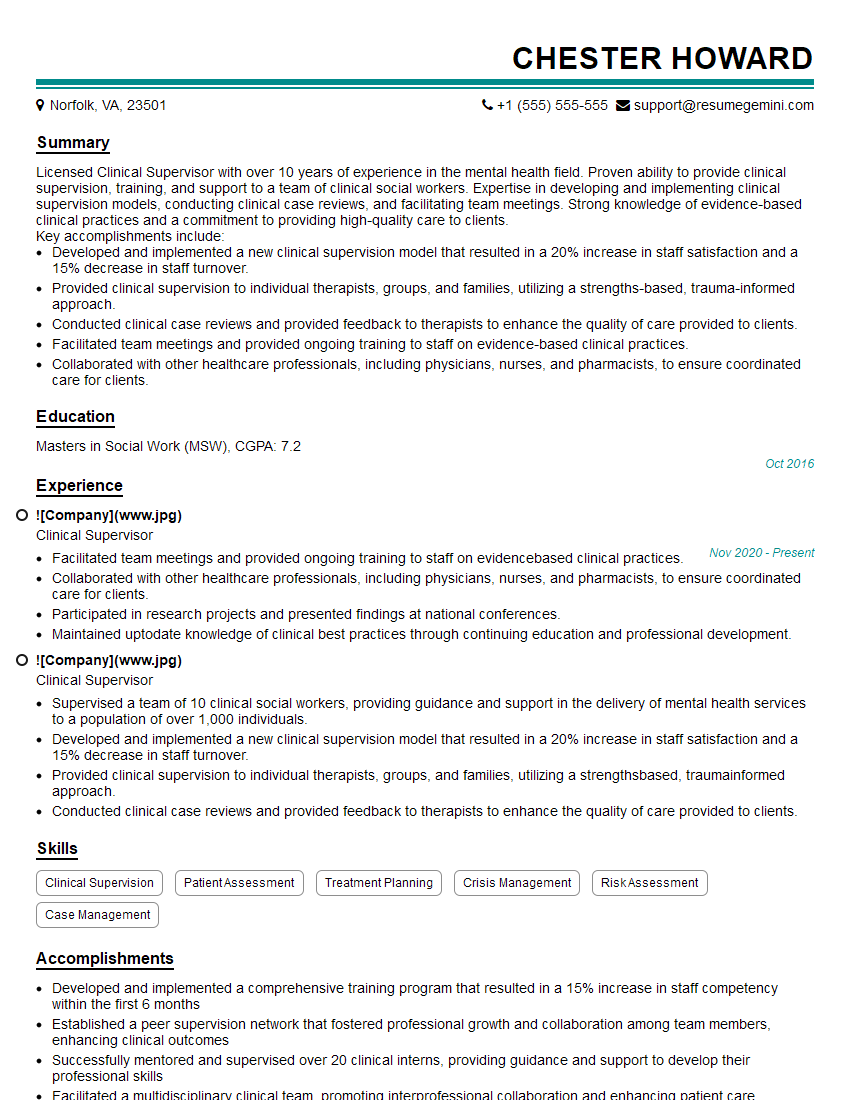
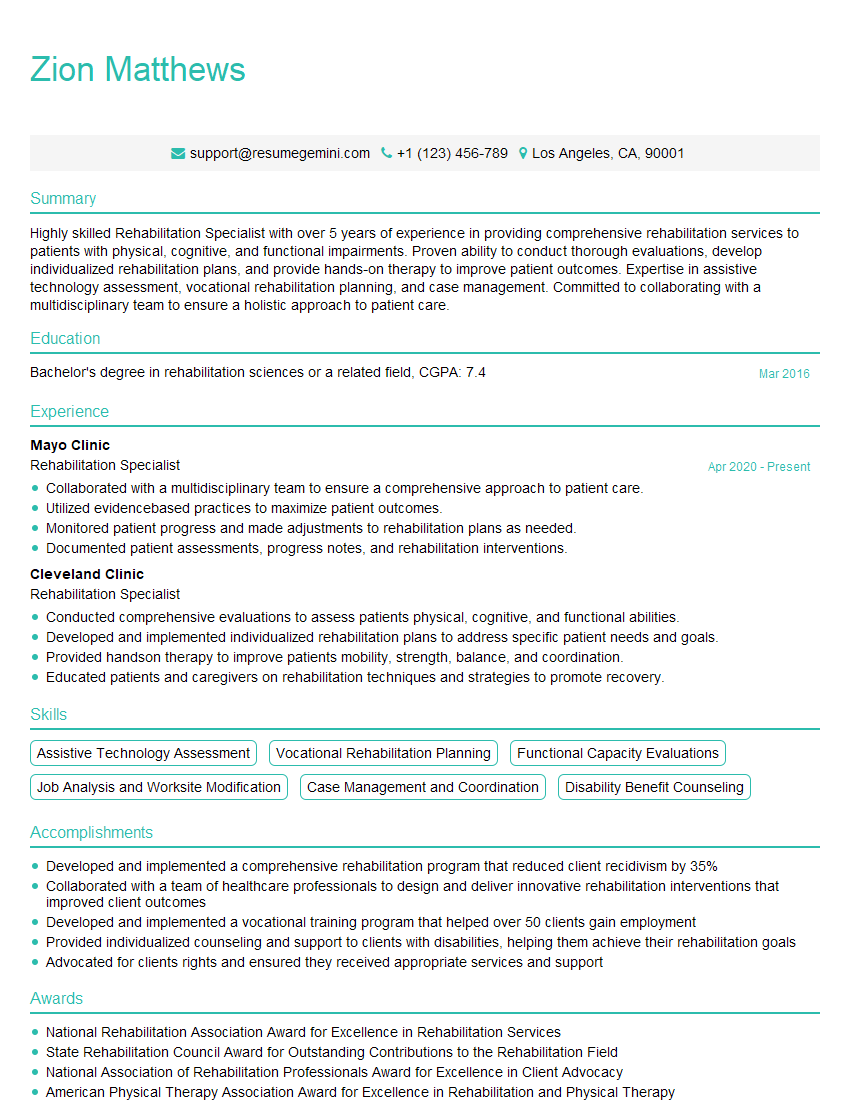
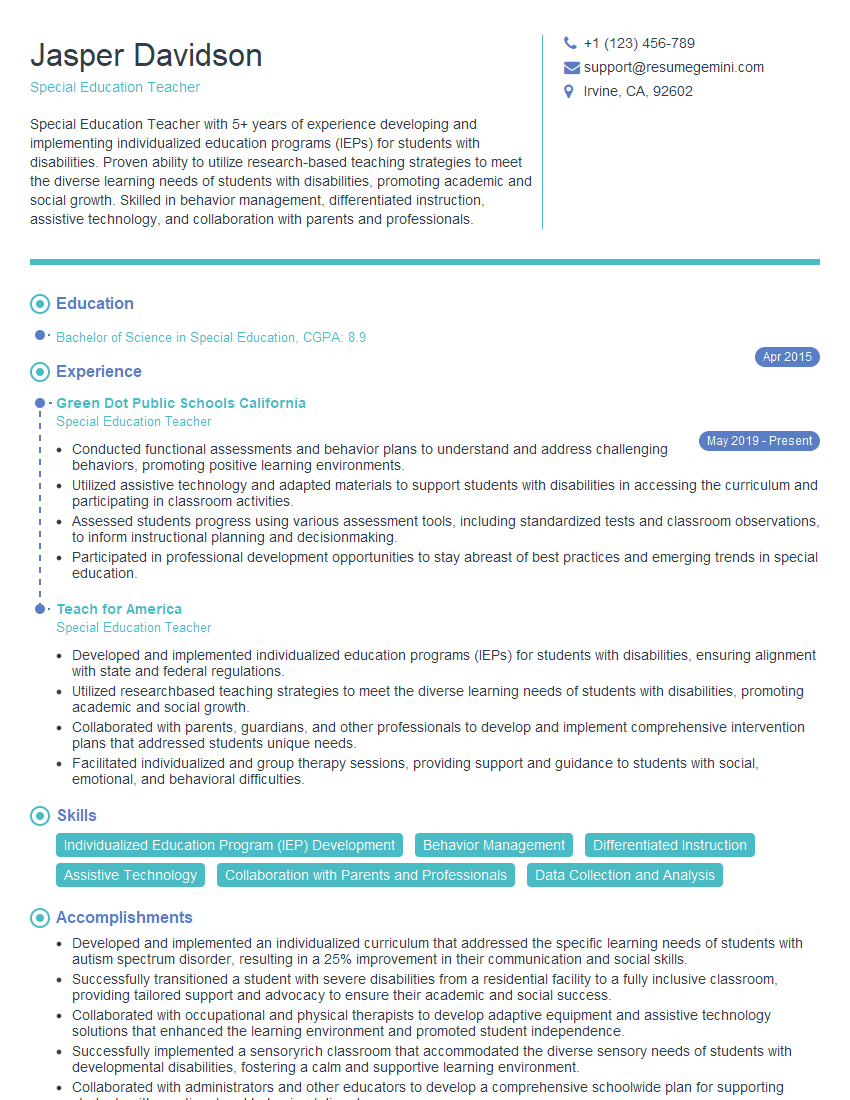
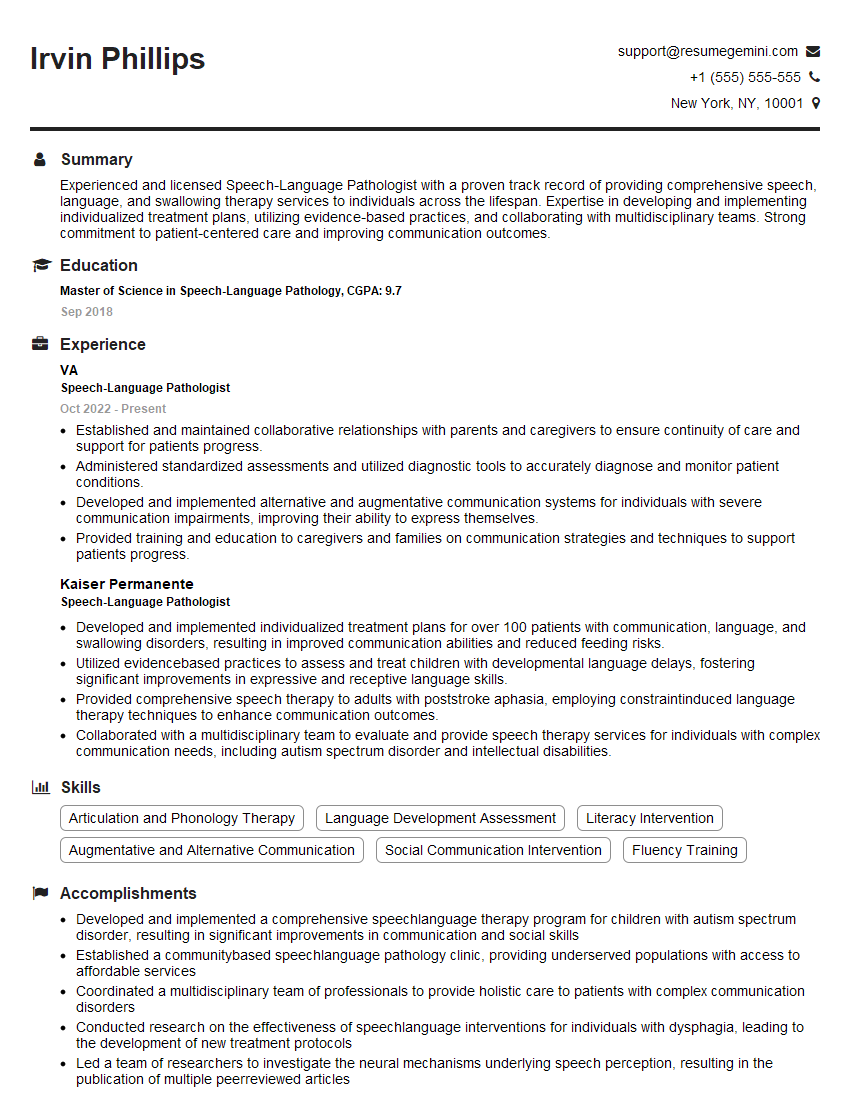
Mastering Articulation and Phonology Assessment opens doors to rewarding careers in speech-language pathology, offering diverse opportunities to work with children and adults across various settings. A strong resume is your key to unlocking these opportunities. Building an ATS-friendly resume is crucial for getting your application noticed. ResumeGemini is a trusted resource that can help you craft a compelling and effective resume, ensuring your skills and experience shine. ResumeGemini provides examples of resumes tailored to Articulation and Phonology Assessment professionals, helping you create a document that highlights your unique qualifications. Take the next step towards your dream career – build your best resume with ResumeGemini today!
Explore more articles
Users Rating of Our Blogs
Share Your Experience
We value your feedback! Please rate our content and share your thoughts (optional).
What Readers Say About Our Blog
To the interviewgemini.com Webmaster.
Very helpful and content specific questions to help prepare me for my interview!
Thank you
To the interviewgemini.com Webmaster.
This was kind of a unique content I found around the specialized skills. Very helpful questions and good detailed answers.
Very Helpful blog, thank you Interviewgemini team.